In short
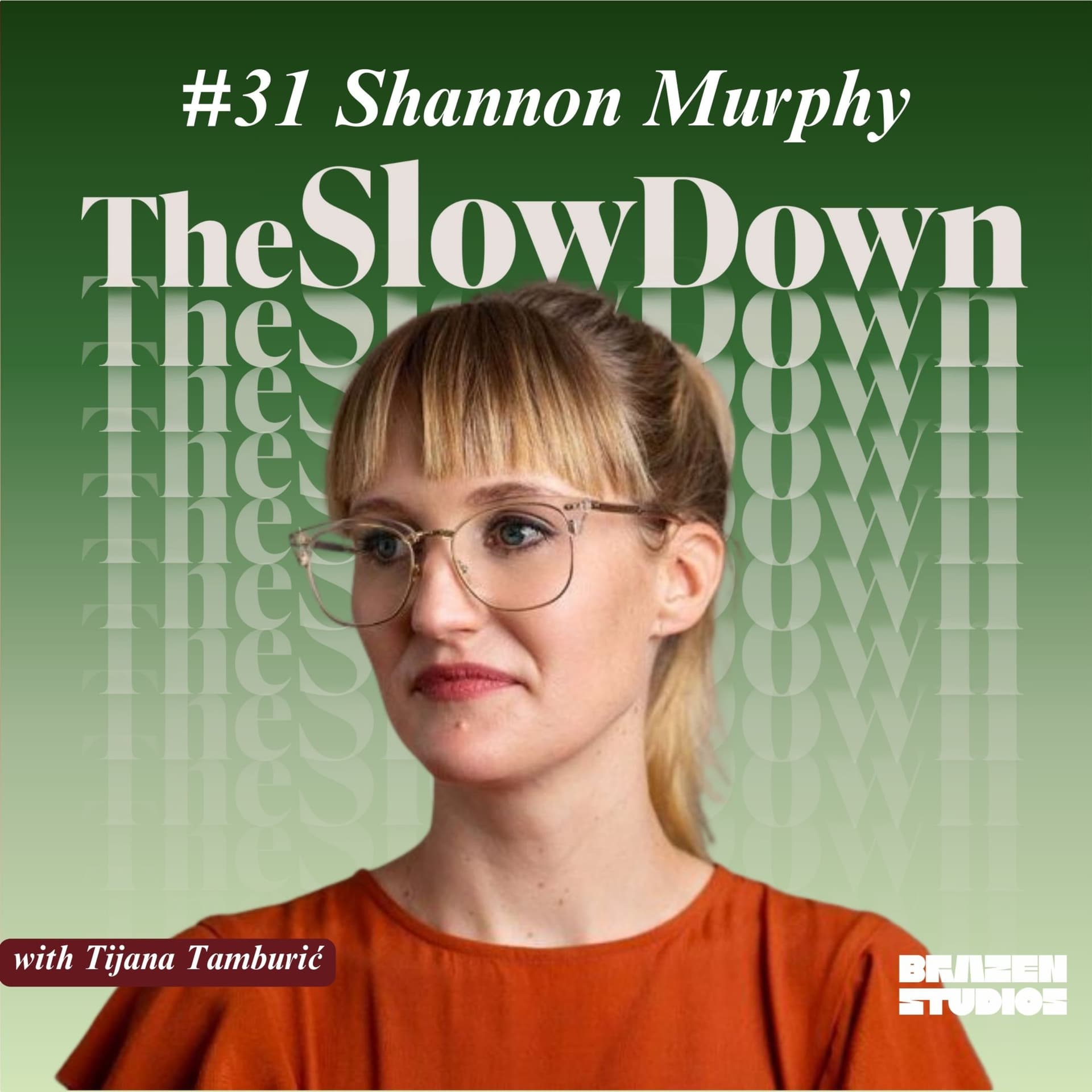
Director Shannon Murphy discusses how she finds her creative voice and leads emotionally sensitive, tone-driven screen work—shaped by an international childhood, theatre training, and experiences as a woman director. She also covers gender dynamics in directing, building collaborative all-female teams, balancing intense production schedules with motherhood, and her approach to comedy, grief, and burnout.
Guest backgrounds
Shannon Murphy is an Australian filmmaker/director. Her debut feature Baby Teeth premiered at Venice Film Festival (2019) and earned major acclaim. She later directed TV including an Emmy-nominated Killing Eve episode, and worked on series such as Dave and Dying for Sex.
Key claims
Women are often steered away from directing through “male leader” assumptions; Murphy says she avoids obstacles by shifting creative lanes. She believes original storytelling requires the “female gaze.” She prioritizes truthful performances, tonal experimentation, and actor/crew collaboration over rigid shot lists.
Notable examples
Baby Teeth (grief-focused debut); Venice premiere standing ovation; The Power (collaborative directing model learned from Reed Morano); Dying for Sex (comedy + darkness; writers Kim Rosenstock and Liz Merriweather; Rob Delaney, Jenny Slate, Michelle Williams, J.D. Plass).
Written by AI. May contain mistakes. Listen to the episode to check what was said.
Chapters
Tap a time to open that second in VOShannon Murphy's Early Life and Influences
0:45 to 3:45
Discussion about Shannon's childhood, international upbringing, and how it shaped her worldview.
“I wanted to know how she finds her voice and stands her ground, how she practices patience and creates such emotionally sensitive work.”
The Concept of Success in Shannon's Family
3:45 to 6:45
Shannon describes the high-achieving nature of her parents and their impact on her view of success.
“So it's actually not that unusual, I think, for people in the creative arts, in film and TV at least.”
Shannon's Journey into Storytelling
6:45 to 9:30
Exploration of how Shannon's passion for storytelling and directing developed throughout her youth.
“And I think all my teachers just kept saying this is something that you seem to be good at.”
Navigating Gender in Directing
9:30 to 12:15
Shannon shares her experiences and challenges as a female director in a male-dominated industry.
“And I was like, yeah, but I'm the only female most of the time in a season of all male directors.”
Collaborative Female Directing
12:15 to 14:01
Shannon discusses the importance of female perspectives in filmmaking and her collaborative experiences.
“And to add to that, I was wondering, why do you think it's so important to see things through the female gaze as opposed to the male gaze, especially with the sorts of projects that you work on?”
Creating Emotional Moments in Film
14:01 to 17:47
Explore how Shannon Murphy approaches sensitive storytelling in her work.
“that it's not, you know, you have to win the job.”
First Premiere Experience at Venice
17:48 to 22:58
Shannon shares her emotional first premiere experience at the Venice Film Festival.
“and some of them started crying as they were talking to us and that's when we knew that it had had an impact.”
Navigating Comedy and Drama in Directing
22:59 to 26:06
Discusses the balance of humor and seriousness in directing performances.
“Yeah, they're right next to me and they would throw out these new ideas and even the crew would burst out laughing.”
The Intensity of Directing Projects
27:08 to 28:00
Shannon discusses the rhythm and intensity of her work in film and television.
“drop a comment on Spotify and a review on Apple.”
The Creative Process and Ebb and Flow
28:00 to 29:09
Explore the importance of downtime for creativity and how personal experiences shape artistic vision.
“I did an advert at the beginning of the year and then I really do need the ebb and flow of that because shooting something is so intense and you're on a project for a long time in post-production.”
Show all 22 chapters
Balancing Motherhood and Career
29:10 to 30:58
Hear how motherhood influences creativity and the challenges of balancing work and family life.
“But when you have just got back off 50-day shoot, 60-day shoot, as a mother, how have those two things worked for you?”
Navigating Career Uncertainty
30:59 to 32:24
Understand the emotional journey of managing career uncertainty and the importance of trusting the process.
“I've done like crazy stuff like typing up transcripts for, you know, reality TV shows and anything that could make money at the time.”
Recognizing and Recovering from Burnout
32:25 to 34:37
Learn about the signs of burnout and the importance of self-care and support in recovery.
“I love being with my friends, going for big walks, exercising.”
Chaos and Collaboration on Set
34:38 to 36:22
Discover how chaos can enhance creativity and the value of teamwork in filmmaking.
“Has filmmaking taught you anything about yourself that has surprised you?”
The Importance of Authenticity in Film
36:23 to 37:36
Discuss the relationship between authenticity in filmmaking and leadership style on set.
“But I think there's a fear in clients, especially now with marketing purse strings being so tight to really, they feel like they need to know exactly what they're going to get.”
Managing Stress and Leadership in Filmmaking
37:37 to 40:06
Explore how to handle stress on set while maintaining effective leadership and communication.
“to feel you sort of have to live and breathe that ethos really.”
Awards and Recognition in Filmmaking
40:07 to 42:02
Reflect on the role of awards in filmmaking and the collective achievement of a creative team.
“So you can have those moments where you're sort of, you know, yelling on top of a mountain at each other, trying to get something to happen.”
Exploring Artistic Growth and Competition
42:02 to 44:32
Shannon Murphy discusses her approach to creativity, competition with herself, and the influence of cultural inputs.
“In fact, the idea of getting up and making a speech is horrifying.”
Defining Legacy and Success
44:32 to 47:28
Shannon reflects on her legacy, the importance of making meaningful work, and her evolving definition of success.
“I guess overall there's a sense of work being quite physical, quite colourful, having a very dark, unusual sense of humour.”
Balancing Creativity with Personal Life
47:28 to 49:26
Discussion on the desire for solitude, recharging creatively, and the impact of family on artistic vision.
“For me, it's not like a goal of a certain budget or a certain company to work with or a certain scale of story.”
Influences and Techniques in Directing
49:26 to 52:18
Shannon shares her admiration for theatrical techniques and how they influence her directing style.
“Is there a frustration in that process of really falling in love with a certain film and then it not going through its financing or whatever it might be?”
Self-Care: The Key to Successful Leadership
52:18 to 53:26
The importance of self-care in directing and maintaining mental health for effective leadership.
“And really simple things are like breaking the fourth wall, looking directly at the audience.”
Transcript
Automatic transcript. May contain errors.0:04Welcome to The Slowdown, your time to redefine success and growth on your own terms with a little inspiration from others. A few years ago, I watched the film Baby Teeth, which premiered at the Venice Film Festival in 2019 to standing ovation. At last check, it had 94 % score on Rotten Tomatoes. I was moved to tears many times by this film and was surprised to learn that it was the directorial debut of Australian filmmaker Shannon Murphy. I've since gone on to watch many things that she has directed, including Killing Eve, her episode of which was nominated for three Emmys, Dave, which is literally one of my favourite TV series ever, and Dying for Sex, which has been nominated for dozens of awards last year.
0:50she has a way of capturing nuance raw humanity and emotion in a way that really stays with you it lingers through sheer London happenstance I ended up at dinner at Shannon's home last year and have been amazed by the volume of work she puts out and the way she thinks about creativity and life I know being a film director of the highest caliber is not easy add to that being a single mother, continents away from your family. I wanted to know how she finds her voice and stands her ground, how she practices patience and creates such emotionally sensitive work. I hope you enjoy this episode with director Shannon Murphy.
1:32Thank you Shannon for being here. Thanks for having me. I love to start at the beginning with this show and a bit of a context into your early world. So where did you grow up and what kind of stories shaped you as a young child?
1:50Shannon Murphy:So my parents met at the Nairobi Hilton, actually, in Kenya. My father was working in the hotel and my mum was there on a conference that she actually had nothing to do with. My grandmother was a travel agent and sent my mum instead. And so my parents met in Africa, fell in love. I was born in Joburg, even though we lived in Botswana at the time. And then I grew up in Asia primarily and mainly in Hong Kong and had a very sort of international upbringing. And I guess that sort of informed my view of the world and sort of sense of humour and I would say often my colour palette because I love sort of neon and bright colours from Hong Kong.
2:36Shannon Murphy:And I also lived in Singapore for a little bit and Melbourne in Australia. And, yeah, it was kind of a fascinating way to kind of experience different schools. My brother and I went to quite a lot of different schools. And my parents were very adventurous, so they'd always take us to kind of different countries and get us to really be curious about sort of other cultures that weren't our own. so yeah it's interesting because I think some people find that kind of childhood difficult like they don't like being dragged around and moved and they would look back at that with the sort of negative lens in the sort of world I am now of film and tv I do find that there's a lot of people who have a similar upbringing to me who have had to move schools a lot and adapt really regularly to different environments and that's why I think they are drawn to this sort of circus lifestyle of moving to different countries and suddenly forming a family with a lot of people in a short amount of time and just diving straight in and making connections really quickly.
3:46Shannon Murphy:So it's actually not that unusual, I think, for people in the creative arts, in film and TV at least. Yeah. That was one of the things I liked about being a creative director and actually having been a model since I was 15, showing up in totally new environments and meeting a new team on every single job. And our jobs would usually just be one day. So it'd be like a whole new team just for the day. How was success modeled for you when you were growing up? What did you think success was? Or what did that look like? I guess I never really thought about that too much. But But I definitely had, you know, parents who were really high achievers.
4:25Shannon Murphy:And, you know, my father was a hotelier and loved his work and we lived our life around his work. And my mom is an occupational therapist and she's extraordinarily dedicated to her work of working with children with ADD and autism. And I'd watch how she would plan her sessions with them and be so committed to their progress. and you know anytime we left a country people would just drown her in sort of compliments and gifts and were devastated she was leaving because of the impact she'd had on their lives so I feel like for me my parents were my model of success yeah and at what point did storytelling start to feel like it was a language in a world that you wanted to work in I mean when I used to read even picture books as a child I remember I'd get so lost in them like in an extreme I realize it's an extreme way now because I have a 10 year old daughter and she's never really been as obsessed and um sort of overwhelmed by stories quite in the same way I mean she did watch E.T.
5:31Shannon Murphy:once and cried for about two hours afterwards and I was like that's the kind of response that I used to have to um storytelling because I believe it's so strongly I used to draw a lot and kind of read things and then create further stories based on those characters. And I was obsessed with things like Jim Henson's The Storyteller series, which I found so dark and mysterious and full of really interesting visuals. Anthony Minghella actually wrote them. And they're still extraordinary now. You can watch them on YouTube. But I think there was, I was always drawn to really dark, but kind of colourful and interesting stories.
6:11And then how did you realise that that could be a job, that that could be something that you did? Like how did you actually get to your first bit of filming?
6:20Shannon Murphy:You know, school. I had like amazing drama teachers and I remember when I was about 16, 17, when you're at GCSE level and they start saying, what do you want to do as a profession? You should do the subjects that you really love and are drawn to. And I was like, well, I love theatre and that's like a hobby. And how's that going to be a job? And then luckily, you know, I had teachers who were like, you know, we think that you're really drawn to being behind the scenes. And like I didn't love performing ever. I always wanted to be directing. And so I liked sitting outside it. And I think all my teachers just kept saying this is something that you seem to be good at.
7:01Shannon Murphy:You should keep pursuing it. And so if I hadn't been given the confidence or the guidance to even think of it as a profession, I probably wouldn't have. And was it immediately directing as a subject? You know, like even at universities when I was there, there were no directing courses unless you went to like a really amazing, expensive sort of creative arts school. It was always kind of pitched to me as directing. It was a bit bossy. Yeah, it's interesting because I remember it really stayed with me this memory in 2017, a documentary called Winnie came out about Winnie Mandela by Pascal Lambsche and she won a bunch of awards for it.
7:38And I went to a premiere of it where she was there and she answered some questions. and I remember her saying that as a female director it was really difficult in the sense that she'd been given the advice young to be a producer women make good producers they said they don't make very good directors because they have to be leaders and assertive and masculine in order to command that bigger crew of people who are typically male as well and so she was told like women aren't suited for that role and there are obviously significantly fewer female directors So I was wondering if you have a different experience of that, like because of your personality that maybe you were told, yes, you should do this.
8:19And then why you think there are so few female directors?
8:23Shannon Murphy:Oh, it's a big question. Initially, I guess, you know, when you're younger, gender is not really something I think you think about too much. When you're at school, everyone's on an even playing field. And even at university, I never felt that. And then you sort of graduate and come out into the real world. And it wasn't until I moved to Australia that I realised my gender was talked about a lot in terms of directing. I have heard mad comments from producers saying things not dissimilar to that, which is that, you know, you need a man to lead an army into battle as though that's what filmmaking is.
9:01Shannon Murphy:And, you know, only male actors can fund films like, you know, it's this was like about 15 years ago. But still, I think even though we're pushing so much equality in this field for women, it's still there's a lot of that mindset. In terms of, I guess, I didn't ever really feel it myself except when I was in the theatre world a little bit because I was always getting the jobs. So people were like, well, the men were a bit like, you know, don't complain. You're at least in the season. And I was like, yeah, but I'm the only female most of the time in a season of all male directors. And I know so many amazing women.
9:40Shannon Murphy:And why aren't they getting these jobs? But there was a bit of a like, shh, quiet because you're getting the work, which I found deeply frustrating, which is actually why I moved from theater to film and television, because I was like, I want the bigger budgets. I want to be able to have bigger casts. I know that even though I keep getting employed, I'm getting the smaller projects, the more sort of indie work, even if it was professional. And that was super frustrating. so yeah I mean even if you look at the the content now it's quite hard for women to get the bigger budget projects and when you're pitching on I mean let's even look at advertising how many women direct car ads or airline ads the big ones still go to the men because that's where the you know strong leadership has to come in so there's that and also I would say you know action films and certain things are still often you know go towards men um but I've not really ever been in that situation because I've found a way out like I would go into different areas you know I started doing some opera I did performance art as soon as I see a obstacle I just shift um because I don't want to lose my sense of creative freedom and you mentioned there this idea of you might be one female director on a season of episodes does that then create a sense with other female directors of oh it's going to be you or me and so there's a sense of disagreement my question I suppose in its whole is do you interact with other female directors and how do you support each other yeah it's only in theater that I was one woman out of all the men in tv my experience has been vastly different because I actually think that the second I moved into television I noticed there were so many women, female producers, especially in Australia, female directors.
11:29Shannon Murphy:I was often surrounded by female directors. In fact, it was like one man sometimes directing a season. So it was actually the opposite. Now, I did happen to go into television by coincidence just as the Me Too movement was sort of starting. So there was a huge shift happening. When I do projects now, it usually is an all-female directing team and we're super collaborative. So I learned this actually from Reed Morano when I worked on a project called The Power. She would get all of us together on Zooms and like talk about her creative vision and, you know, still give us extraordinary freedom. But she wanted us to all feel like we were in this together and not sort of operating on our separate sort of individual blocks, which I loved.
12:14Shannon Murphy:And so I still do that today with the projects that I lead. And to add to that, I was wondering, why do you think it's so important to see things through the female gaze as opposed to the male gaze, especially with the sorts of projects that you work on? Well, because in many ways, it's completely original because we've spent so many centuries, you know, watching, reading everything through a male gaze. So if you want original content, you basically need to hire women is how I feel. And then take me back through the timeline, because I think we've gone out of chronology. I'm obviously obsessed with the film Baby Teeth.
12:54That was your debut. So how did you get to that film and how did you manage to get that film made?
13:00Shannon Murphy:So fortunate and easy for me in many ways, because the producers and executive producer, so Jan Chapman, who made The Piano and so many extraordinary Australian films, was our executive producer. and Alex White, our producer, had seen the play version of Baby Teeth, which was written by Rita Kanye, who also did the screenplay. Well, they came to me and said, have a read of this script and see what you think. Now, I had been a theatre director for eight years before that in Australia and then I had started doing television. And Screen Australia, which is our big funding body, they had been helping me by giving me money to be mentored and had been really supporting and tracking my career and they were kind of going, where's your feature film?
13:47Shannon Murphy:And I don't write so I always have to wait till something comes to me that feels like my voice even though I didn't write it. And the second I read this script, the pressure was actually enormous because I knew that this was the film but I also knew that it's not, you know, you have to win the job. And I walked in for my interview and this always makes me laugh but as I walked in Alex went, oh, well, this is the piano from the piano. And I was like, oh, my God. I was like, OK, just breathe. And I sat through the interview and we just were all on the same page about how we saw the film and it got funded very quickly.
14:27Shannon Murphy:It was a low budget feature and very fortunate to get the cast that we did. And I loved every second of making that. And there's obviously very sensitive scenes in that. And I think having watched more of your work, for me, one of the thread lines was this, the sensitivity around those emotional human moments, especially grief. And was that something you developed in theatre? Was that something you figured out on the job? How do you create that moment? I mean, I think I'm drawn to stories that somehow reflect my worldview or my emotional world. and I'm a very sensitive, emotional person. And also I love a really dark sense of humour.
15:15Shannon Murphy:And I do think that films and television and everything really that directors do has a huge amount of their personality in it, whether they write it or not. And so that's I often feel like what happens with the work. I always want to direct things where I feel like we have not quite seen this scene and this story this way before. and I'm always working with the actors to try and push it to another level and keep playing with what the scene could be so that we can feel something so completely unique but also feel so grounded in reality. And that can be quite theatrical sometimes in how far we push the performances but as long as it's grounded in something truthful, I like to try and get away with it.
15:58And then you took that to Venice. How was that? Was that your first big premiere experience? of you in this fundamentally young cast, the two actors were how old at the time?
16:10Shannon Murphy:Oh, gosh, they were so young. I mean, Eliza was like 20 or something and Toby was probably only like 22 or 23. I can't even, yeah. But we, well, we were shocked because we were this small India-Australian project and we were in main competition, which we could not believe. And we were up against like Ad Astra and all these massive, massive million dollar films. So we sort of just got the giggles a lot and like couldn't believe we were there. It was very emotional. I remember we were in the car on the way to the red carpet and Toby's so beautiful. He was playing some music to try and relax Eliza and I.
16:45Shannon Murphy:And when we got out, this song, Santiana, it's an old fishing folk song, which we had recorded with children from a local school choir in Australia. They played it as we came out and we all just were like, don't cry, don't cry. This is really overwhelming. But we also just kind of loved it. I mean, what's scary about going to a festival like that is it was the first time anyone had seen our film because we'd only finished it just in time to make Venice. So we screened it. I didn't know what the audience really thought or felt. And you have to do a panel. And I'm not really comfortable with public speaking.
17:22Shannon Murphy:I can pull it off, but it's not. It doesn't feel natural to me. And so I definitely ate a lot of beta blockers beforehand and just tried to relax. but all the journalists came in and they were very serious and now I know that the Italian journalists just take cinema so to heart and are so thoughtful about their questions but at the time I was like, oh my God, they hated it and we were all sitting on that panel and I was like, oh God and then the questions started and they were so moving and some of them started crying as they were talking to us and that's when we knew that it had had an impact.
17:57It landed, yeah. There's also a well-known standing ovation that happens at these premieres. How did that make it, sort of how long did it go on for? How did that make you feel?
18:07Shannon Murphy:I can't remember. It was something ridiculous, like eight, nine minutes, which it's just really horrifying when you're in that moment because at first you're like, this is so lovely. And then as Australians, we all can't handle it. And everyone's like, oh, gosh. And I was like, please tell me, like, we can sit back down. And Ben Mendelsohn was like, absolutely not. You have to keep standing. And I was like, I'm dying. We're just dying. But it's so nice, you know. but you just, yeah, you're sort of overwhelmed and you really are trying not to cry because you're just so relieved that people, you know, responded.
18:37Are you still in touch with that cast and that team? Is there a carry-through? Do you work with the same crew?
18:45Shannon Murphy:Yeah, I mean, Toby and I were just messaging the other day because he's just got an amazing, massive job. He's going to do Andor and, yeah, we are all still in touch. Eliza moved here to do Dope Girls with me a few years ago, a TV series. And yeah, the crew, I really love having a very tight knit sort of group of collectives that I work with. And Andy Comis, the cinematographer, and I are still incredibly close. And Cherie Phillips, the designer, moved here to do work with me. And yeah, now I run a bit of a cult. I love that. And it sounds like a lot of that work had been in Australia. so theatre work in Australia and then that movie made in Australia and then you started doing some big American TV shows.
19:31What was the difference for you in the American way of doing things, the TV way of doing things? Was there things that surprised you or was it all amazing?
19:42Shannon Murphy:No, I mean it's funny because whenever people do interviews about TV and film and they're like, oh, it's just such a wonderfully easy process. It's rubbish. It's like so challenging always. because you're always working with a huge amount of people. But I would say, you know, Australian sets are, we're not as heavily unionised to the extent where, like, you can't move a prop or you can't do this or that. I mean, I sort of do it anyway because I think we should all just muck in and be in it together and I'm not trying to undermine anyone's position when I do it. But in Australia everyone's sort of really grabbing the equipment and running when you have to get a train shot or, you know, whatever's going on.
20:22Shannon Murphy:And in America, it's much more rigid about who does what and times and breaks and all of that, which I think is both really important so that people don't abuse that, but it's also quite rigid and I would say sometimes unproductive occasionally. but you know you just get used to the models and you find your best way to work in amongst them you know. Were you ever sort of starstruck by any of the actors that you worked with on those shows it was Killing Eve, The Power? Yeah I mean look I get starstruck by actors that I think have really long careers that I'm so impressed by. Like Eddie Marzahn for me on The Power or John Leguizamo, they were people I was so excited to work with because I've watched so much of their work over the years.
21:23Shannon Murphy:And, yeah, I think it's always sort of not necessarily the most famous actors that I get blown away by, but often character actors that have been really sort of doing various, like really varied performances for a long time that I find impressive and that are really kind and generous on set to the other actors. I was going to say maybe a better question is who is your favourite person to direct? Oh, gosh, that's such a good question. Ben Mendelsohn was someone that blew me away in the sense that he's a very strong, eccentric personality. And sometimes I think you think that might come with, you know, a really solid sense of, like, no, I know what I'm doing.
22:03Shannon Murphy:I don't really need too much of your input but I have to say he's so free when it comes to direction and Michelle Williams was the same you know where you watch them have all this knowledge and body of work and they're so brilliant at their craft but at the same time they're still so open and wanting direction and needing it and wanting a lot of it and I find that that sort of surrender to the process so admirable um and yeah I really love it because I've run a very playful set and a very physical process and you sort of need to get on board in order to get the greatest benefit from it and I'm always really delighted when they do.
22:46Dying for Sex, watched all of it, loved it. When you make a a show like that that is quite what's the right word evocative um unusual not not ordinary are you hoping that people get it like are you like I hope this lands or you do you feel like there's enough writers there's enough it's gone through enough hands for me to feel like this is going to land in the way that I hope it does or are you still is there an element of yeah I really hope that people understand what we're
23:14Shannon Murphy:trying to do here I mean I only say yes to projects because I read them and I go oh this tone is so challenging like that's my favorite thing and it's the reason I pick projects so with Dying for Sex it's written by two extraordinary women Kim Rosenstock and Liz Merriweather and they are two of the funniest people I have ever met like I have never wept so hard laughing on set and also they had to remove my laughter from some of the soundtracks because I would never normally laugh in a take but we'd lose it because they'd throw out lines improvised at the last minute to the The writers were there.
23:50Shannon Murphy:Yeah, they're right next to me and they would throw out these new ideas and even the crew would burst out laughing. You know, we'd had many times where like the sound boom was like shaking. So I think, yeah, tonally I love when I go, oh, here we go, and all of us are there going, we hope it works because, you know, there's so many elements that create tone, you know, the design, the shots, the performance levels. And that's why I like a range of performance so that we can shapeshift it all in the edit we know that we've got the funny version of that tape but we also know that we've got the more dramatic version so that you can you know put it together like a piece of music later on and sort of track where it um can best sound you know that was one of the things I really wanted to ask which was about comedy I tried my hand a couple of kind of ads where you know client would be like want it to be funny yeah just kind of funny and so I was like I could do funny right and when you when you when you write the script you're like that's quite funny and then when you see it acted out it's just not funny anymore and so I'm wondering did it yeah so part of it was like having the comedy writers there to be able to improv I feel like that would be a really because you might go this just isn't reading is funny right now live when we're seeing it in the moment so yeah are there any other hot tips for how to how to make things funny like or what you find works or doesn't work comedy?
25:17Shannon Murphy:I mean, look, with Dying for Sex, it's this really interesting mix of performance because you've got Rob Delaney and Jenny Slate who are masters of comedy and improv. And then you've got Michelle Williams and J.D. Plass who, I mean, J is so funny in his own way, but they're more dramatic performers. And it's actually I always think about mixing the two because comedy is nothing without the darkness or the tragedy. So I think I'm also really open with actors when we're trying to make something funny and I'm like, it's just not funny. It's not working. Help. Let's all come, like, let's brainstorm again.
Read the full transcript
25:51Shannon Murphy:It doesn't need to be more physical. It doesn't need to be more subdued. Just throw away the line. Maybe that's what makes it funnier. And I think it's just about experimenting and knowing when you thought something was funny on the page and then it wasn't. I love working with comedic writers who are like, God, that's just completely bombed. How did we, you know, we never saw that coming. but so you have to think so quickly on your feet and I think just keep trying keep trying until you nail it you know it's um it's trial and error really with comedy I made a commitment to being transparent about the making of this podcast right from the start so here's a quick update of the financial side season four of the slowdown does not currently have a sponsor I really want this podcast to bring to light people stories and approaches to life that I admire and don't often see in mainstream media.
26:40So I'm taking on the studio editing and making costs of this season myself. If you're a brand or if you know a brand that cares about bringing honest and applicable career advice to people at all stages of their journey, please reach out. I'm eager to find the right partner, hopefully long term, to help fund and continue the show so that it can keep growing. In the meantime, your comments, reviews and shares of this episode are so important. If you're not already, hit subscribe, share this episode with a friend, drop a comment on Spotify and a review on Apple. It really does make a difference and continues to inspire the change that we're hoping to make in slowing down.
27:18Thank you so much for your support.
27:23And over the last, I guess like more than five years basically since Baby Teeth, you've worked on how many projects. I'm just trying to get a sense of how busy you are. Like, what are we, how long are these projects? How intense are they? What's the cadence and the rhythm of work?
27:40Shannon Murphy:Honestly, I don't know how many projects I've done since baby teeth, but yeah, they, I mean, filming is intense. I just came off a 50 day shoot last night and ironically I'm here on a podcast called The Slowdown and I most certainly have not been doing that. but earlier this year I was in development for kind of six months. I did an advert at the beginning of the year and then I really do need the ebb and flow of that because shooting something is so intense and you're on a project for a long time in post-production. So I'm so looking forward, for example, to next year only focusing on film and very much going into my slower mode of working which is just where I can open up my creative headspace again.
28:31Shannon Murphy:Someone described it to me recently as every time you do a project it's like a bottle of water and all your creativity is kind of drunken down to this last little bit and you always have to make sure that there's a bit reserved so you can build that back up again. And, you know, the way that the science of creativity works is you have to have those moments of sort of slumps in order to have those epiphanies again. And so I need to go into a space where I'm reading and just going to galleries and cuddling my daughter on the couch and letting my brain kind of go a bit mushy in a way so that I can have all those sparks happening again.
29:06Yeah, they say boredom is the wellspring of imagination and we don't allow ourselves to be bored that often. But when you have just got back off 50-day shoot, 60-day shoot, as a mother, how have those two things worked for you? Like what role does motherhood play in your work life? How have you been able to balance those two things, if at all?
29:27Shannon Murphy:Honestly, being pregnant was one of the most creative moments of my life. I was directing an opera at the Art Gallery of New South Wales, and I remember just feeling so alive with creativity. And also, you know, something people don't talk about often is like when you're pregnant and in the last trimester and then when you're breastfeeding, you're basically stoned all the time from the hormones. And that's an incredible feeling where creatively you start firing off differently and go into this sort of beautiful headspace of daydream. And so I actually found having a child really added to creativity, but also they make you see a very different version of the world and also force you to have downtime in the most fabulous way.
30:12Shannon Murphy:You know, one of my favorite things is just sitting for hours and cuddling and listening to her rabbit on about whatever she's currently into. Yeah, I think it actually makes you a better creative can do. You mentioned there the kind of balance and the cadence between projects. I have friends who are actors who really struggle with that shift, like this really drastic shift from being on set with this circus family all day, you know, late into the night, you build these relationships and then you're kind of thrown back into your one bedroom alone in a different city. And without the knowing of when you will have your next project.
30:58but it sounds like you have built a better relationship with that cadence is that something that you that you built over time this knowing of something else will come and I will have this experience again or have you always just been comfortable with that rhythm no I think you know
31:14Shannon Murphy:when you're starting out it's very hard because you you need to know when that next job's coming because of the paycheck and you're not making enough money to kind of you know even pay your bills usually for most creatives at the beginning you know decade even um but I'm definitely comfortable with it now because I know I mean my brother's hilarious he's always like how do you live your life not knowing like what paycheck is coming when and balancing finances and I said you just have to give into that if you worried about that you couldn't do your job so you just have to trust and of course there's been moments in my life a while ago now but I would have to I say to my friends, like, has anyone got a job?
31:51Shannon Murphy:I've done like crazy stuff like typing up transcripts for, you know, reality TV shows and anything that could make money at the time. And that's just part of it. And I think it makes you, you know, you're a bit of a survivalist initially and then you start to enjoy the balance and the fact that you do get breaks. Like you need them. It's impossible not to have them. I think I'm so good at it now because I actually really look forward to the breaks. Whereas before it was like, oh gosh, will I ever work again? But now I just have to trust that I will. What do you do in your breaks? What's your idea of slowing down?
32:31Shannon Murphy:I love being with my friends, going for big walks, exercising. Like we're so unfit when we're shooting and we're so fit at the start. We always love joking, like take a photo before and after a shoot. and it's such a different thing. Your skin changes. You don't have any sleep. I mean, last night when I got on the plane, I finally kind of realised that the shoot was finished and I had a big cry, but it was great. It was like this wonderful release of tension and I am going to miss that crew so much. But you also go, we'll work together again. You do run into the same people over and over again, but you have to learn how to release that incredible attachment that you get to people.
33:11Shannon Murphy:And I do it by looking ahead. so they were like how come you seem fine with ending tomorrow and I was like because I've really moved forward into the future and I am someone who's very in the present and in the future and that's how I stay from getting too sad when a project finishes. And reverse problem have you ever had burnout from a really intense shoot or you know maybe there wasn't a very nice person leading that project that you felt overwhelmed by how did you know that you were feeling that because I feel like our bodies tell us before we realise. And then how were you able to recalibrate?
33:46Shannon Murphy:Yeah, I most certainly have had that. And you have to be so careful when those situations happen, especially if there's one where you haven't been getting along with someone and it's been affecting your ability to do your job well. That's, I think, for me, the worst kind of example of burnout. It's only happened to me once, but it was really destructive and I had to kind of build myself back up. And I think the way I did that though was, you know, I think it's really important to keep a dialogue with the people closest to you and listen to their advice. And I had a lot of people really help me feel strong enough to kind of set boundaries with that person.
34:22Shannon Murphy:It didn't kind of reverse how challenging it had been. And yes, it gets into your body and takes time to kind of release their effect on you. But I would say, yeah, you just have to spend time getting back down to who you are and ground yourself, you know, as an artist so that you don't lose that incentive or feel like you don't want to do it anymore. Has filmmaking taught you anything about yourself that has surprised you? yeah I think I'm um surprised at how much I love chaos um and love the bigger the team almost now the better like I really am excited about the people management side of it I really love that I love having so many people on set and um all of us having a good time like yesterday my cinematographer Annika who you know brought a whole bunch of uh light up scrunchies, which she was like, it's Christmas vibes.
35:23Shannon Murphy:And my one kind of looks like a rave on set. But we had so much fun and everybody had them in their hair and we were taking photos and, you know, we're just making jokes all day long. And I think when you have an environment like that, it does take a lot of energy to create that, but it's just my favorite way to work. And just the fact that everyone, you know, we give up a lot, all of us time with our loved ones and, you know, our energy and our sleep but if we can come to work every day and be excited and also feel like we're all focused on the same thing I'm not someone who storyboards or shot lists so when we when we're on set together everyone in the room I need your ideas and I need your attention because we're genuinely creating this together and best idea wins so let's go so I love that level of focus from the whole crew yeah it's something I feel is so missing now I recently did a brand shoot where they wanted everything on paper you know it's this outfit to this location to this pose and this is just photography like not even a film yeah and I'd look at the reference picture and I'd go but this reference image was something that they took all day to shoot in a creative spontaneous way and now you want me to recreate that spontaneity you know like that's not how this works and you'll get a much better outcome if you just let these 10 incredible creatives who've come together just make something with whatever the environment presents itself with.
36:48But I think there's a fear in clients, especially now with marketing purse strings being so tight to really, they feel like they need to know exactly what they're going to get.
36:58Shannon Murphy:There's a mistrust of creatives, I feel. And there's a lack of understanding that the energy that you're excited by when you see that image, or you watch that piece of moving image, is something that you cannot fake. Like you have to create an environment where that really comes alive. Like that electricity that you feel is a real feeling and energy so you can't just construct it. And if you're sitting there just like ticking off shot lists, I mean, you don't need a director. Anyone can do that. Yeah, and I think the thing about your work is it really feels true and honest and raw. And I guess that is reflected in how you then run the set, right?
37:35Shannon Murphy:Yeah, I think the way that you want the work to feel you sort of have to live and breathe that ethos really. I can't ask my actors or my crew to do something that I'm not doing myself you know and I do really believe that you have to be as open and honest as the the work you're trying to make. These days I really do enjoy sort of just slowing my breathing or just not talking. I really think that if someone else is sort of getting aggravated or kind of getting on a hamster wheel about something or in some way, I think, you know, maybe being aggressive or blocking ideas or whatever. I sort of now let them sort of spin and burn themselves out rather than get sucked into that energy.
38:18Shannon Murphy:I feel like if they want to operate that way, that's fine. I don't have to really engage. I can sort of give myself a mini lobotomy for a little while. And I think things need more time. We're in a society that rushes so much and needs immediate answers and solves but we don't need to and I think the best decisions are made with a bit more thought and time and so I don't jump as much to respond to that sort of desire for immediate attention and I think that sort of preserves then my own thinking rather than getting swept up in someone else's. I love like you know it's so basic but But sort of having a cup of tea and looking out my window and letting myself sort of just settle more physically, I think it's really important.
39:08Shannon Murphy:Like I love doing yoga or Pilates on a regular basis. I think getting back into my body really helps me. In a role where, as we said earlier, you know, there's a sense of you're leading us into war. You know, you have to be this like strong, loud leader. How does that then marry with the silence? Oh, on set. No, I'm not silent with that stuff. No, there's no time for that. Oh, no, all those things I suggested. Absolutely, no, not on set. I think it's also okay, though, to have a moment where you might have, like, an outburst of frustration or passion. Or, you know, on this last job, I just did the Age of Innocence.
39:47Shannon Murphy:There were two days. One was an issue with sound, and we had a little bit of a go at each other. And the other one was, oh, we were running out of light, and it was super stressful. and we had like, you know, 200 extras on set and carriages and horses. And, you know, there was just a miscommunication amongst me and the AD team, but we're so tight. So you can have those moments where you're sort of, you know, yelling on top of a mountain at each other, trying to get something to happen. And then two seconds later, we do this thing where we're like, come on, give me a hug. And we all hug each other because it's not personal and we've all got the same goal and we can laugh about it afterwards.
40:23Shannon Murphy:words but it's also okay to have those moments where you have to you know yell at the top of your voice over 200 people and everybody's got to communicate fast and run around and um that's that's okay you know doesn't make you a bad leader makes you someone that cares yeah and I'm curious what your relationship with awards is because I think as opposed to an individual who is saying, oh, I've just won this award for myself. Winning an award for a film is winning for the whole team. So it's less selfish in a sense. I mean, I don't really have that many. I just, I've been nominated. Look, I love collecting gold stars.
41:04Shannon Murphy:I always joke, like I love getting those little, you know, stickers of appreciation like you did in primary school. I think I'm always moved more so by the fact that, you know, especially when awards are voted by your peers, I find that really moving. And I also think it is so nice to have someone acknowledge your work. But like you said, for me, it's an enormous amount of people that did that with me. And so I get excited when we all know that, that that was a group sort of achievement. But also when actors get nominated, I'm so proud because, you know, I saw how hard they worked and how brilliant they were and it's being acknowledged.
41:47Shannon Murphy:I'm not someone who, I'm competitive with myself. I'm not competitive with other people. So being nominated is something that I love, but I'm never, you know, that bothered whether I win or not. In fact, the idea of getting up and making a speech is horrifying. So my mom's always like, why do you look so happy when you lose? And I'm like, because I didn't have to get up and talk. But it's nice to, you know, go and have fun at those parties and see a lot of people and celebrate you know the year of creative work that's been made but I don't ever think about it when I'm working it's not it's not a goal for me in any way I hope that people like the work but I'm there to make what I think is the most interesting version of that story.
42:30When you say you're in competition with yourself what does that look like in practice?
42:35Shannon Murphy:I guess I'm always trying to do something I haven't done before and keep myself stimulated So it's like competing always with myself in the last work I did. How can I do it better next time? And what is it that I'm exploring? The last two times I've done jobs at a period drama, the second I'm watching it and I'm like, oh, my gosh, this looks like a period drama. I'm like panicking because I want it to feel different somehow. And I guess it is just about always expanding myself as an artist to push myself to be exploring something different. And the way that I mainly do that is I'm influenced by everything else that's out there in the zeitgeist.
43:09Shannon Murphy:And when I went to drama school, they always used to say, you have to be an informed artist, you have to know everything that's going on in every practice of the creative arts. And I do love staying in that headspace. How do you stay informed? What are your favourite cultural inputs? I mean, I love going to galleries, I love watching documentaries and films. I love going to music concerts, dance, mad performance art or experimental work. You know, I just like seeing what everyone's kind of doing and stealing ideas constantly. Like that's we all do that. You know, we're like, what's that? What's that?
43:47Shannon Murphy:And put it together. And then it looks like something different, you know. And you say you're always trying to, you know, do something new, keep yourself entertained. But do you feel like there has been some kind of through line of your work of something that you want people to feel at the end? I mean, I feel like other people always articulate back to me what those things are. Like that's why I love doing interviews or I love hearing like what critics have said about things. I mean, I'm hypersensitive, so I also get really sad, obviously, if they don't like stuff. But I love hearing it described back to me because I don't think in that way.
44:28Shannon Murphy:but I find it interesting to have my work defined by others. I guess overall there's a sense of work being quite physical, quite colourful, having a very dark, unusual sense of humour. Again, tone, it comes back to tone really. That leads me to legacy and I guess so much of this podcast for me was me really trying to redefine success for myself, figuring out at what point did I define it was it something that was sort of defined for me when I was 18 and I've been living that out for the rest of my life without ever actually stopping and wondering I had this overwhelming sense of I have to leave something behind there has to be this resonating sense of legacy and as I get older I'm sort of unshackling myself from that more and more but when you make film it's a physical present thing that literally lasts on and so I'm wondering what your idea of legacy is and again if it has changed over time.
45:29Shannon Murphy:I guess when I really think about it I love the idea of people watching the work that I make and feeling like they can have deeper conversations with their loved ones I think that's what it comes down to. I also love that you said quoting you I want to leave behind a body of work that my daughter will be able to watch when she's an adult and feel proud of is that part of the legacy for next generation yeah you're trying to make me cry um for sure I've always loved the younger generation I used to teach acting to teenagers for years in Australia and it was my favorite thing to do because they are so um vibrant and their view of the world is so black and white and their opinions are so strong and there's this incredible confidence and I would just feed off that energy.
46:21Shannon Murphy:And I guess in many ways a lot of times my work is not immature but it's very much accessible to also that age group because I think I'm always drawn to inspiring them because that was the age that I was kind of most inspired as well, around sort of 17, and I just think that people don't always take the younger generation seriously and I think they're kind of amazing. I get a real sense of those like strong-willed characters in your work for sure that are quite binary that do see things in a certain way and you know as I mentioned I'm trying to redefine success for myself so other people's input is really valuable.
47:00I'm wondering what your current working definition of success is.
47:05Shannon Murphy:I guess I still just want my mum and dad to be proud of me more than anything and And for me, it's about success is about continuing to work with the amazing artists that I get to work with. And all of us, you know, as contemporaries, pushing ourselves and creating more and more interesting work as we go. That's really all I want. For me, it's not like a goal of a certain budget or a certain company to work with or a certain scale of story. I mean, I love really tiny stories that have a big impact and I'm genre agnostic. I don't mind what worlds I'm creating as long as we're all feeling like we've made something special together, really.
47:51And do you think your parents are all proud of you?
47:53Shannon Murphy:I do, actually. They don't really tell me to my face that much, but they tell other people. And I've always been like, I've got a hilarious story about when I was nominated for a BAFTA and I told my parents and I was so excited to tell them. And they were like, who else is nominated? And when I listed everyone, they were like, oh, Chloe Zhao. Oh, yeah, we loved her film. She's totally going to win. And I was like, that's not the response you're supposed to give me. But then I thought, oh, that's why I'm such a high achiever, because I'm constantly just wanting their gold stars. Is there anyone's life that you look at and admire and think is a wonderful way to live and want to emulate?
48:31Shannon Murphy:When I look at some of the producers that I work with who have a lifestyle where they have somewhere to also escape to, I mean, that's something that I think would be a dream to sort of have a serene place to sort of always go to and sort of hide away. You know, I think often creatives are actually also quite shy and we present as very energetic and we are, but there needs to be like a real sense of solitude. So I can't think of anyone specifically, but I do feel like the people that I admire a lot at the moment in how they work and how they've had such long careers, it's because they've always had this ability to come back to the basics of, you know, having somewhere where they can just be quiet and read and cook food and be with the people they love.
49:20Shannon Murphy:And that would be a real goal for me. A recharging of the batteries for longevity of the creativity. And what's next? What are you really looking forward to? what makes you feel alive what project is making you feel alive right now I don't know what's next I kind of always actually love that you know that I'm like I have no idea I've got quite a few films in development that I'm so in love with and hoping that one will go next year otherwise honestly I'm so excited to come back to 2026 and reground myself in London and spend time with my daughter and friends and be really slow until I can't. Is there a frustration in that process of really falling in love with a certain film and then it not going through its financing or whatever it might be?
50:09Shannon Murphy:I mean, I'm very fortunate that I'm working with people like House Productions and Searchlight and Plan B who are all incredibly skilled at getting films up. And so I really just do give incredible trust over to them knowing that these films will get up once we get the right actor attached and the scripts are finished. Maybe I'm delusional, but I kind of feel like they'll all get up at some point and they'll get up at the right time. You know, projects can't be ready before they're ready. And you have to not be impatient about that, I feel. It's a good metaphor for a lot of things in life. The last question I always ask everybody is, if I had to watch one film or read one book or have one cultural experience that would help me understand you better, what would it be?
50:57Shannon Murphy:I would say like in terms of someone who's probably influenced me the most and has, you know, novels, practitioner books that you can read. Bert Albrecht is someone that really changed my life when I studied him at GCSE Drama. I had the most amazing teacher called Ian Baker who took his philosophies and turned them into a sort of context that us as young students could really grab onto. And I used so many of his techniques in my theatre work and my film and TV work. He was a German theatre maker who had this idea that work shouldn't just be emotional or intellectual. There should always be a juxtaposition between the two, you know, in its most basic form.
51:41Shannon Murphy:It's like if you have a funny scene, the next scene is quite dramatic. Or also don't trick the audience and lead them on, like maybe announce exactly what's going to happen in the scene at the beginning or use text on screen. Or, you know, for him it was on stage or use music to break things up in a certain way. But it was never sometimes people misinterpreted and think it makes the work cold. But I believe it's the complete opposite. it. It's so that you are both emotionally engaged, but also intellectually engaged in the form and what you're experiencing. And so the goal is that afterwards, it lingers in your bones much longer than just a piece that's been manipulative.
52:18Shannon Murphy:And so I really love that. And really simple things are like breaking the fourth wall, looking directly at the audience. Those are sort of the most known versions of his techniques. I definitely would say that the word lingers is a word I would associate with your directing and the work that I have seen. It stays with you for a very long time. Is there anything else that you wanted to add on this theme of slowing down or redefining success, redefining growth? Anything in your journey or motherhood or anything that you feel? It's interesting though, because I always think about my first day at film school.
52:56Shannon Murphy:We had Gillian Armstrong, who's an amazing film director from Australia who did Little Women and many other great films. And she said to us, the biggest thing you can do as a director is work out how to make sure you sleep well, how to take care of your mental health, and how to stay in shape all the time. And I always think about that, that actually it had nothing to do with the other skills of directing. It was to take care of yourself first. And I think you really need to in order to kind of be a true leader in that way. Thank you so much. Thanks. Thank you. Thank you so much for tuning in.
53:37This episode has been hosted and created by me, Tiana Tambridge, produced by Whitney Rosenthal, sound and video production and recorded at Brazen Studios, cover art design by Natalia Ruhe. Please subscribe to The Slowdown to be notified of upcoming episodes, tell a friend and leave a review. It really does help a new podcast like this get out in the world. And remember, we're all heading to the same destination and there is no prize for getting there early, so we might as well slow down.
From the publisher
Sex, Death, Comedy: Enter the nuanced world of Shannon Murphy
Shannon Murphy is the director of 2019 debut hit Babyteeth (94% on rotten tomatoes at last check). I was moved to tears many times by the film and have since gone on to watch other things she has directed including Killing Eve, her episode of which was nominated for 3 EMMYs, Dave which is literally one of my favourite TV series and Dying for Sex, for which she won the Outstanding Directorial Achievement at the 2026 Director’s Guild of America (DGA) Awards.
I know being a female director of the highest calibre is not easy - add onto that being a single mother, continents away from your family. I wanted to know how she finds her voice and stands her ground in her industry, how she practices patience between projects and creates such emotionally sensitive and nuanced work.
In this episode we cover:
From Nairobi to Hong Kong: how a globally nomadic childhood shaped her creative voice
The reality of being a female director: bias, breakthroughs, and finding your own path in film & TV
Why the “female gaze” isn’t just important—it’s where the most exciting stories are right now
What it really feels like to premiere at Venice—and survive an 8-minute standing ovation
Why comedy is so hard: what works, what bombs, and how great directors fix it in real time
Inside high-pressure film sets: chaos, creativity, and leading hundreds of people
Creative intensity & recovery: the ebbs and flows of a creative life and how to balance it
Mentons:
Bertolt Brecht
Jim Henson’s Storyteller series by Anthony Mingela
Winnie (documentary film) by Pascal Lampshe
Santiana - old fishing folk song
Links: