In short
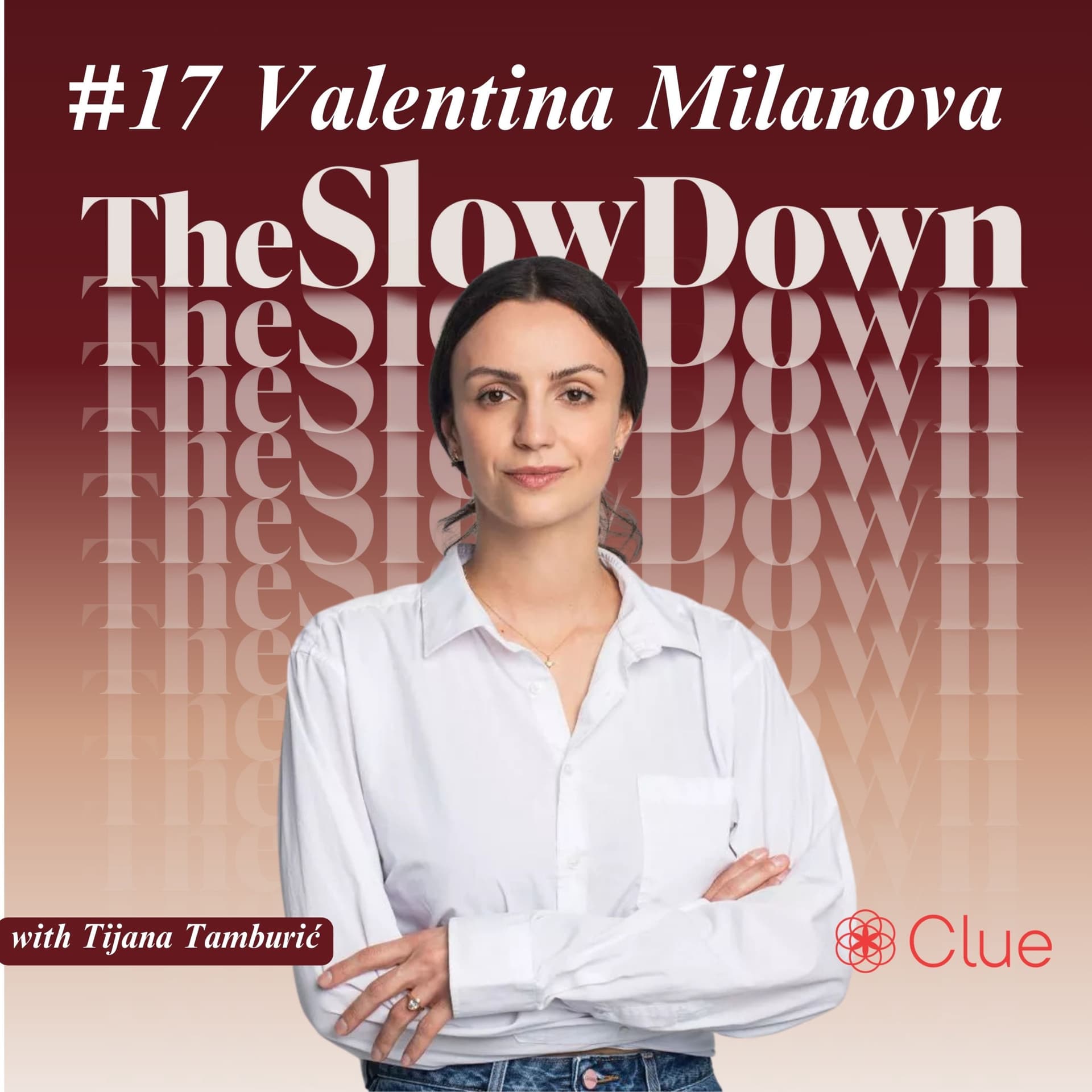
Valentina Milanova, founder/CEO of Day, discusses building femtech/medical devices to close the gender health gap—especially menstrual health and at-home diagnostic tampons for STIs and cervical cancer prevention. She also reflects on her upbringing in Bulgaria, underfunding in women’s health, and how she “slows down” through therapy, coaching, cycle-based routines, and stress tools.
Guests
Valentina Milanova (Bulgarian-born). Background: Bulgarian upbringing during major social/economic transition; studied business and law; later studied public health at Imperial (focused on cervical cancer prevention). Published research in Journal of Endometriosis and Uterine Disorders and Journal of Human Reproduction; featured on Forbes 30 Under 30 (two years). Founded Day.
Key claims
Tampons are treated as hygiene products, not medical devices, despite being used internally; this limits regulation, testing, and quality standards. Day’s diagnostic tampon enables more convenient, accurate self-sampling and reduces painful clinic experiences. Cervical cancer could be eradicated by 2040 if screening and vaccination increase.
Notable examples
Day launched the world’s first CBD tampon (2019) and a “Time Invention of the Year” diagnostic tampon. She describes getting her first STI and the painful clinic process that inspired the at-home diagnostic concept. She cites tampon-based self-sampling studies (including work with sex workers) and describes NHS collaboration challenges and cost-saving via self-sampling for HPV.
Written by AI. May contain mistakes. Listen to the episode to check what was said.
Chapters
Tap a time to open that second in VOValentina's Journey to 'Day'
0:46 to 2:00
Valentina describes her background, the initial vision for Day, and early challenges.
“cycle tracking app that helps you understand yourself better.”
Growing Up in Bulgaria
2:00 to 6:40
Valentina shares her upbringing in Bulgaria during a time of significant transition and challenges.
“I've always loved our time together and I'm sure today will be no different.”
Defining Success in a Difficult Environment
6:40 to 11:00
Discussion on how success was perceived in Bulgaria during Valentina's childhood and its impact on her life choices.
“I'm very grateful that I had this upbringing now because it really enabled me to see a different less privileged part of life.”
Starting Day and Financing the Venture
11:00 to 14:01
Valentina explains how she financed the early stages of Day and the challenges of being a female founder.
“No one had had a conversation with me about what to expect and, you know, how to apply a pad on my underwear, etc.”
Navigating the Early COVID Crisis
14:01 to 17:06
Learn about the challenges faced during the onset of COVID-19 and its impact on a small team.
“And all of a sudden, you know, I had a team of about 20 people in the UK and people just stopped coming to work.”
Processing Grief and Responsibility
17:07 to 19:31
Explore how personal loss and business pressures intertwined during a difficult time.
“I actually, until very recently, couldn't even scroll back on my phone, you know, on my iPhone photos.”
The Reality of Entrepreneurship for Women
19:32 to 23:06
Understand the unique struggles faced by female entrepreneurs in a challenging environment.
Building a Complex Business in Gynecological Health
23:07 to 25:02
Discover the intricacies of creating a healthcare company focused on women's health.
“And that can be really damaging for particularly early stage or first time founders.”
Building a Complex Business in Gynecological Health
25:59 to 26:14
Discover the intricacies of creating a healthcare company focused on women's health.
“I'll also attach the direct link with the discount already embedded in the show notes.”
Insights on Menstrual Health Research
26:15 to 28:00
Delve into the surprising findings and challenges in menstrual health research.
“in the topic that they're trying to start a business in.”
Show all 25 chapters
Regulatory Challenges in Women's Health Products
28:00 to 29:40
Explore the difficulties in getting tampons recognized as medical devices and the efforts to improve their safety and quality.
“So that means they're in the same category as toilet paper.”
The Birth of the Diagnostic Tampon
29:40 to 31:18
Learn about the inspiration behind the diagnostic tampon and the journey to bring it to market.
“Well, for the diagnostic tampon, the very funny and true story of how I had the idea is that I had sex with someone and they called me and said, I have a STI, you need to get checked.”
Advancing Women's Health Diagnostics
31:18 to 33:04
Discover how the diagnostic tampon can be used for cervical cancer screening and its significance for underserved populations.
“So you order it online or you pick it up from a place like Boots.”
Eradicating Cervical Cancer by 2040
33:04 to 34:36
Discuss the potential to eliminate cervical cancer and the importance of vaccination and screening.
“So some of our clinical trials were with people who had never used a tampon before, with South Asian populations, with Muslim populations who don't engage with cervical cancer screening programs.”
Navigating the NHS as a Startup
34:36 to 36:30
Understand the challenges and privileges of collaborating with the NHS to provide innovative health solutions.
“Well, I'll start by saying that it feels like a huge privilege that we even have the opportunity to work with the NHS and to help them because they've also committed to eradicating cervical cancer by 2040.”
The Balancing Act of Female Entrepreneurship
36:30 to 40:00
Examine the challenges of being a female founder, including team building and managing expectations.
“So it's incredibly fragmented, it's incredibly bureaucratic.”
Syncing Work with Menstrual Cycles
40:00 to 42:00
Learn how to align work routines with menstrual cycles for better health and productivity.
“It takes trial and error and it takes commitment and honesty and being candid and giving each other feedback and creating a safe space where you can actually do that.”
Cycle Syncing and Hormonal Health
42:00 to 43:55
Learn about the importance of cycle syncing and its benefits for overall health.
“I need to also set the vision and inspire people to deliver on that vision.”
The Societal Importance of Women's Health
43:55 to 45:54
Explore why women's health is crucial for societal and economic progress.
“And then for our first jobs up until our first child, we tend to be better compensated than men, and we tend to progress faster.”
Tools for Stress Management
45:54 to 47:55
Discover practical techniques for managing stress in daily life.
Redefining Success Beyond Work
47:55 to 49:54
Understand how personal definitions of success can evolve over time.
“I'm not really sure that I care about success.”
The Influence of Childhood on Work Ethic
49:54 to 52:11
Examine how childhood experiences shape work habits and fears of poverty.
“that's a really great work-life balance and way to do things and that's something I aspire to or do you try not to kind of look at people in that way?”
Financial Conversations Among Women
52:11 to 56:01
Learn about the importance of discussing finances among women for empowerment.
“Then I was a misfit at university because I was so OK.”
Conversations About Financial Prudence
56:01 to 57:35
Explore the importance of discussing finances openly and the cultural differences in financial conversations.
“That's not something we should talk about.”
Cultural Reflections Through Art and Literature
57:35 to 59:24
Discover recommendations for books, films, and art that reflect personal and cultural histories.
Transcript
Automatic transcript. May contain errors.0:00I was born in 94. I'm actually part of the smallest cohort of Bulgarian babies ever. We had hyperinflation, so over 800 % inflation. And when my mother was pregnant with me, she would frequently get stopped on the street by random strangers who would say, how could you be pregnant at a time like this? What are you going to feed your baby?
0:22Valentina Milanova:Welcome back to The Slowdown, Season 3. our space to redefine success and growth for ourselves and explore ways to slow down in our speed obsessed culture i'm so happy to be back here at brazen studios in london bridge i'm very excited to share that we have a sponsor for this season it was really important to me that if a brand did get involved that it would feel much more like a collaborative partnership and that is exactly what i have found in clue if you don't know already clue is a female founded period and cycle tracking app that helps you understand yourself better. It's an app I use daily and the topic of work and cycles, somatic wisdom, connecting back to ourselves has been such a huge topic on this podcast already that it was the perfect fit.
1:08Valentina Milanova:And now on to my first guest. We're kicking off the season with Bulgarian-born Valentina Milanova who founded gynecological health research and development company Day with a mission to raise standards in women's gynecological health. Known for launching the world's first CBD tampon in 2019 to creating the revolutionary diagnostic tampon last year, she's a fierce advocate for science-backed stigma-free solutions. With less than 1 % of health research funding allocated to women's health issues and only two percent of VC funding in the UK going to solo female founders in the UK, Valentina finds herself regularly frustrated.
1:50Valentina Milanova:I wanted to know her unfiltered reality of building a femtech company from scratch and when the mission is so big and the stakes are so high, is there any space to slow down? I hope you enjoy this episode. Well hi Valentina. Hi Keanu. Thank you so much for being here. I've always loved our time together and I'm sure today will be no different. Thanks for inviting me. Just by way of a quick top line, because there's honestly so much I could share about your incredible work and your journey. Let me share that my guest Valentina Milanova is the founder and CEO of Day, a gyne health research and development company seeking to close the gender health gap with proprietary medical and diagnostic devices aimed at common yet underserved gyne health conditions ranging from period and pelvic pain to cervical cancer prevention.
2:42Valentina Milanova:Valentina's research has been published in the Journal of Endometriosis and Uterine Disorders as well as the Journal of Human Reproduction. Valentina was featured on Forbes 30 Under 30 two years running and the day diagnostic tampon was named as Invention of the Year by Time magazine. When you first started day did you think that this would be your bio eight years later? When I first started date was more of an intellectual curiosity project. I just felt really excited about the idea of developing this new medical device. My first idea was for a pain relieving tampon. And then shortly after I had the idea for the diagnostic tampon.
3:19And when I was first setting up my research, anyone that I spoke with, whether it was my parents or my friends or my peers, everyone said like, you're crazy. Like, what is this? Like, why are you going to work on tampons? Just why? If this was a good idea, Procter and Gamble would have invented it already. Don't waste your time. So for a while, I actually stopped working on day because I was so discouraged by my environment. But the idea just kept sitting in the back of my mind nagging at me. And then for the first about 12 months, I just worked on day very secretly and silently. And then I actually only told my mother that I had quit my job and started a company about a year after I fundraised, I think.
4:00Valentina Milanova:That's such an interesting start. And obviously, I'd love to wind it way further back than that, because I think it's so crucial for people to have context and understand that these things don't just happen. And so obviously I know that you're Bulgarian, but where were you raised, by whom, what was the kind of context of your upbringing? Yeah, so I was raised in Bulgaria at the time of huge social transition. So the Berlin Wall fell in 89, and then the communist government in Bulgaria was dismantled. And the communist regime in Bulgaria was so strong, so powerful. It really eroded social trust.
4:34if you said a joke about the communist prime minister you had to go to jail to an actual work camp actually not not even just jail so when the communist government fell in bulgaria people were afraid to leave their houses for three days because they weren't sure if this was like a type of test from the government to see if they were loyal to the communist party or not and then throughout the 90s i was born in 94 i'm actually part of the smallest cohort of bulgarian babies ever we had hyperinflation so over 800 inflation and when my mother was pregnant with me she would frequently get stopped on the street by random strangers who would say like how could you be pregnant at a time like this what are you going to feed your baby you know there's no formula there's bread cues there's milk cues so she actually had to develop a standard response she used to tell people i'm just going to feed my baby mountain blueberries and i actually really love mountain blueberries
5:28Valentina Milanova:east now well that's that's great it's not a dissimilar upbringing obviously to to mine in Serbia and what happened with with our war and um NATO bombing us in 99 and my mum's stories of you know there not being milk in the supermarkets and it was interesting COVID happening in the UK and people panicking around supermarkets and my mum went I've done this before as you were growing up what did being successful look like because obviously coming from a communist or socialist background, success is almost like not a good thing in some ways? Well, because Bulgaria was such a challenging country to be in in the 90s in the early 2000s.
6:07So what happened after the huge economic transition in the 90s is that we had a bunch of Russian oligarchs come and buy a lot of the state assets. So then they formed these little factions and they started hiring like Bulgarian boys who didn't have any other jobs to do to protect them. And then the mafia was formed and up until we went into the European Union in 2007 which led to just another hugely dramatic like almost overnight change in in society Bulgaria was a very challenging place to grow particularly as a child there was you know like gun violence there was poverty I'm very grateful that I had this upbringing now because it really enabled me to see a different less privileged part of life.
6:51But what it also meant when it comes to the way in which I define success is that I'm part of the generation which was brainwashed that you have to leave the country in order to be successful or in order to have a shot of just living a normal life. So when I was growing up, I was prepared to be the perfect little immigrant. And everyone in my generation was, you know, in Bulgaria, once you finish primary school, when you go to seventh grade, you have to choose whether you go to the German high school or the French high school or the Spanish high school or the American college. And when you're there, you study all of the subjects in that language.
7:27You study like German history or American history, German literature, American literature. So everyone in my generation was really brainwashed to hate the country and to think that there's nothing good that can come out of staying in the country. And then during COVID, a really exciting thing happened, which is that people came back to Bulgaria for what they thought was going to be two weeks or four weeks and they discovered how the country had changed and I think a lot of us were also starting to realize the disillusionment from the immigrant life particularly you know in countries like the UK, Germany, the US there is less so in the US but particularly in the UK there's a lot of negative sentiments particularly around Bulgarians and Romanians because you know we're coming here to steal your jobs as Nigel Farage told us.
8:12So yeah now there's a lot of people that are coming back and I'm part of these people. But when I was growing up, success was defined as just leave as soon as you can.
8:20Valentina Milanova:Wow, it's so interesting. And you know, when you set up day, you set it up originally in the UK with its like offices here in South London. And now your operation is much more in Bulgaria or like, I don't know what the percentage breakdown is between the London Bulgarian operation. But could you speak more into why you ended up maybe shifting more of the workforce there? Yeah, it was very accidental. My whole moving to the UK was very accidental. I accidentally found a university online, literally by Googling, which offered me a scholarship, which is how I was able to afford to study in the UK.
8:56And then as a result of that, I had my first jobs in the UK. So it's really where I built my professional network. But then after Brexit, having a physical products company, having manufacturing, having a global supply chain centered in the UK became incredibly challenging. We constantly had pieces of our supply chain get stuck at customs for way too long. And the official advice from the government at that time was, if you want to trade with Europe, then set up a European company. So I took that advice to heart. And we set up our subsidiary in Bulgaria. And we still have our operations in London.
9:30But they is very much a global company now. You know, we have an office in New Mumbai. We have team members in the US. In Bulgaria, we set up our manufacturing. And through that, I discovered how great the local talent was. Again, because it coincided with this period of a lot of Bulgarians were moving back home from, you know, having really fancy, interesting jobs in London, in New York. Post-COVID, they had come back to Bulgaria. So all of a sudden, I had this incredible untapped talent pool that I could jump into. And now we have about 70 % of our operations in Bulgaria. and then very country-specific roles in the UK, US.
10:10And we have incredible engineers in New Mumbai.
10:13Valentina Milanova:Yeah, it's so interesting. There's kind of people are very much returning a lot to their country's lower price of living, closer to family, all of these different things. You mentioned education, obviously, and I kind of flip-flopping around in the timeline. But getting back to your sort of school days as a young girl in Bulgaria, there's a great story that you have. And so I wanted to give you the prompt and you could tell the story, which is school and your first period. Yeah, I had my first period when I was really young, strangely young. So I was nine years old. And at that time, it was very unusual for girls to start their menstrual bleed.
10:51So so young now it's less unusual. It's becoming more common. And when I was in school, I didn't really know how to manage my period because I had it so young. No one had had a conversation with me about what to expect and, you know, how to apply a pad on my underwear, etc. So I would bleed through my trousers. I would bleed through my jeans. And my school very fortunately had white plastic chairs. So I used to live in constant fear of standing up and seeing that I had bled all over the white plastic chair. But when I had my period so young, it was like three, four years until other girls from my grade had started menstruating.
11:31So I had a lot of time to build up expertise and know how. So by the time that the other girls in my school started their periods, I knew all of the tips and knew all of the tricks and was very eager to make sure that they didn't have the same experiences as I did. So I think it kind of planted the original seed.
11:49Valentina Milanova:And then you went on to study business and law at university. and then you also have another great story of how obviously you went up to actually financially set up day because as you mentioned you didn't come from a background where you had a lot of money or family backing or connections or support in this country so what did actually like being a female founder and setting up a business look like about eight years ago for you yeah I mean no one from my family has even like been to the UK I don't think or they've only come for like a quick tourist trip. I initially used my salary for my full-time job and a couple of credit cards.
12:28So I was very fortunate that I discovered a hack in the system, which is that the Bulgarian banking system and the UK banking system don't have a shared credit rating. So I could take out credit cards in Bulgaria, take out credit cards in the UK and use them both, which allowed me to finance the initial product development, the initial clinical trials, the initial IP filings, because there wasn't funding available and there still isn't it's one of the biggest challenges within the gynecological health space there's an overwhelming lack of both public and private funding for for innovation but the way in which i justified that to myself is i was thinking okay well i'm spending on these credit cards about as much as i would spend for an mba i'm kind of getting an mba through experience so whatever happens even if i have to wash dishes for the rest of my life I'll be able to pay this off.
13:15Valentina Milanova:Wow and it paid off. I mean it definitely wasn't an immediate thing because I mean very quickly after you know you set everything up 2019 ready to launch first 100 customers super super important and then COVID happens. What was the reality of those first few months of actually like going to market as a two-consumer business during COVID? Yeah it was horrendous. So at the end of 2019, we started our alpha testing program. So we had a small number of subscribers. And then in March 2020, we had the most perfect of timings ever, we opened up our subscriptions to everyone who wanted it. And we started growing really quickly.
13:54But at the same time, we also had one of the, I think it was one of the first COVID outbreaks in the UK, because it was at the end of February. And all of a sudden, you know, I had a team of about 20 people in the UK and people just stopped coming to work. They stopped engaging online. They completely disengaged. Everything completely shut down. People were worried to come into production because of all of the information in the media. We didn't know what COVID was. We didn't know if it was a super, super serious disease. And there was all of these news articles about how there's a shortage of beds in hospitals and different people from the team started going to different places in the UK to try and make sure that there will be a hospital bed for them there.
14:40It was just horrendous. And then from this initial outbreak that we had within the company, people went home and they infected their parents and grandparents. So all of a sudden we had this horrendous period of about three months where parents or grandparents of my very small team at that time just kept passing away so it was hugely emotionally traumatic and I at the same time had to figure out okay how do I make sure that this company doesn't just end here and now not just from a production perspective but I also had to fundraise at the same time because we were you know we fundraised in late 2018, early 2019, we did a bit of a merged round.
15:25And the summer of 2020 was when we were scheduled to fundraise again. So we're going to run out of money if I didn't find a way to massively cut our costs and also find new financing. So it was the toughest time of my life by far. We had a production space in the Biscuit Factory here in South London. We still have our office here. So I was, you know, running the machines, folding boxes, picking and packing, doing everything. Like literally my fingers were bleeding. And then I called two really good friends of mine from Bulgaria that I grew up with. And I said, like, I think this is going to be the end of my business unless you're able to come and help me.
16:08And both of them quit the jobs that they had and literally moved in with me in the biscuit factory in South London. And we started kind of gradually overcoming what was the worst time. But just to dig deeper a little bit into this period, it was so challenging to have to put people on furlough so that we could save costs while at the same time, you know, these people are stuck at home. Their job could potentially be a distraction, but I'm taking that distraction away and doing it while they're in a huge time of family crisis because they're losing their dad, they're losing their mother. It was the worst possible challenge I faced.
16:51And then my own father passed away in May, very unexpectedly, not through COVID in a freak elevator accident. So, yeah, just you couldn't, I couldn't process anything. I actually, until very recently, couldn't even scroll back on my phone, you know, on my iPhone photos. 2020 whenever I was scrolling back to my photos I couldn't look at any memories because it was just so triggering um but I worked with the therapist all throughout that time and she really helped me process the the challenges but yeah we made it on the on the other end I'm I'm very grateful we were we were very lucky but what a horrible horrible time yeah it's interesting you mentioned the um
17:36Valentina Milanova:when you process stuff because I've found as well that if you don't in any way try to process it in the moment it will catch up with you later do you feel like that grief landed for you like later or were you able to still manage it somehow in the moment partially in the moment partially later uh because i was sleeping maybe four hours a night max on this like tiny little sofa it was our office sofa and it was just every day there was a new challenge you know every day the wrapping machine would break or we would get a surge in our subscriber numbers and I would have to fold more boxes or you know at the same time we also struck our first retail partnership we went into planet organic and I had to find a way to stock all of the different planet organic shops by myself so I had to like rent a bus and drive around London so every day there was another challenge and then when my dad passed away I had to start looking after my little brother because he was living with my dad so all of a sudden he had he moved to london with me and i had yet another distraction yet another responsibility so i didn't have physically the time um but i never experienced depression in my life until my dad passed away um and then for the first time in my life and i'm very embarrassed that i used to not feel as much empathy as i can now for the experience of depression for six months all i could think about was just obsessive suicidal thoughts like sorry should have said maybe trigger warning um all i could think about was okay am i like at the tall enough story to jump off and kill myself like is this bus moving fast enough and that's when i connected with my therapist and was like okay we need help i need structure i need to like work through all of these different things and I need to be there for for my team but yeah horrible horrendous time what was she able to help you with what kind of structure could she provide you with what was the like key thing that maybe made quite a lot of difference the key thing was just working through all of these very traumatic episodes that had happened to me and had happened to other members of the of the day team and just figuring out how can I because you have so much responsibility as the founder of a company you convince people to join you on this super turbulent journey where you have nothing but ambiguity nothing is promised everything is going to be super challenging and I always took this responsibility very closely to heart but when things are outside of your control it can feel so debilitating that you're not able to create this perfect environment that you dreamed you would create for for everyone else so that was the most important thing that I worked with my therapist we actually started with okay how can I help the day team heal their trauma like how do we we started doing four day weeks during COVID in order to yeah just have some measures that would make the team feel better and ensure that they have time to be with their families and look after themselves and then once I felt that the team was in a better place and the company was a bit more stable I could open up the the whole Pandora's box of you because I also wasn't very close with my dad so it's very challenging I think to lose a parent that you have so many unfinished conversations with and you always think to yourself like oh that last conversation we could have had and it would have been so revelatory and we would have made peace with each other but yeah that's also another illusion I think.
21:12Valentina Milanova:I mean this one of the conversations that I always have with you and we meet up that I'm always amazed by is the amount of work that you do as as a female founder and this episode during covid and all of these things that seem to layer on top of one another feels like uh you know an extreme unique case of what might be happening given that there was a global pandemic and the unlikeliness of all of this stuff but the reality i think is that you face challenges and struggles all the time and i think firstly your work exists at this nexus of double underfunding where it's your underfunded as a female founder underfunded gynecological health research and so I was hoping you could paint a picture of them maybe the following few years as a founder I don't want to kind of glamorize like the founder hustle or struggle but I just want people to get a sense of what the day-to-day was like once that kind of initial COVID period ended because there were so many other kind of challenges and things constant challenges and I actually feel really strongly about declamourizing the founder experience because when I first became an entrepreneur in the UK I used to go to these founder meetups in in London and I it really hurt my mental health because I would go there with like a laundry list of all of the issues in my company and expect that other people would also go to a founder meetup with the laundry list of the issues in in their company but in the UK in particular entrepreneurial culture is very toxic in the sense that all the people can talk about, it seems, is their successes and how, you know, their fundraise only took them two weeks and it took them six months to get to 10 million annual recurrent revenue and everything's going amazing.
22:56And my team are fantastic and my investors love me. And that is in my experience when I've actually gotten to know the reality of not just my own business, but other businesses, never the case. It is always super messy. And I wish more entrepreneurs were more candid about that, because otherwise, when you're not aware that every company early stage is super messy, you think there's something wrong with you or you think you're not taking the right measures. And that can be really damaging for particularly early stage or first time founders. But the issue with day beyond the central issue, which is the underfunding, is that I created a very complex business.
23:33so the gynecological health space requires a lot of really complex solutions and I think because of the way that I was raised and just my personality I don't like to do things half asked you know when I see that there's something that's wrong I really want to dig deep into the issue and find a genuine problem so Day is a company that operates in you know three regulated markets the UK the US the EU so we need regulatory approvals across these three categories Day is a company that builds and designs its own medical and diagnostic devices, which means that we have to have design engineering, we have to have machine manufacturing, in-house production, and then we also run our own clinical trials.
24:14So that is why my day-to-day is so intense. I'm also a single founder that also contributes. So I'd say that my experience of entrepreneurship is just unusually complex, partially because of the consequences of my own actions and partially because the industry is so under-innovated and there's so many deep problems to solve for. And I wouldn't want my legacy with day to be one of like, oh, well, I kind of tried. You know, I gave it a go. I want to feel in my heart of hearts that I've given it everything that I possibly could have. And if it doesn't work, it doesn't work. But I wouldn't feel calm with myself if I didn't fully look at every single problem that we have in gynecological health and try and resolve it.
25:02Valentina Milanova:This season of The Slowdown is brought to you by Clue, the period and cycle tracking app that goes deeper than dates on a calendar. I talk a lot on this podcast about somatic wisdom and tuning into the signals from your body. And that really starts with understanding your cycle better. Clue is an essential part of my daily routine, not just knowing when my period is coming, but knowing what phase of my cycle I'm in, how I'm feeling, my energy, my sleep, and now I use it in the trying to conceive mode. If you've ever felt like your body was trying to tell you something but you weren't quite sure what, this is where Clue comes in.
25:37Valentina Milanova:It's science-backed, inclusive, and totally ad-free so that you can reclaim your rhythm one insight at a time. And especially for the slowdown listeners, Clue is offering a 75 % discount code on their annual Clue Plus subscription via their website. To redeem this, go to helloclue.com and enter the code SLOWDOWN at checkout. That's SLOWDOWN, one word. I'll also attach the direct link with the discount already embedded in the show notes. So download Clue today and start making space for the signals your body's been sending all along. I think another unique problem is that a male founder wouldn't typically be asked if they even have a degree.
26:21Valentina Milanova:in the topic that they're trying to start a business in. But I think as a female founder, a lot of people have asked you, what are your expertise in gynecology? It still happens to this day. I have, I think, eight published papers in gynecological health research. Still to this day, first question I get, also, what is your background? How come you came up with this company? And I know that you did go back whilst also running this business and doing everything we've just described. you went to Imperial, did night school. Tell me more about what you're studying. I'm studying public health at the Faculty of Medicine.
26:56So public health covers epidemiology, clinical trial design, statistics for public health, preventing public health outbreaks, and I'm focused on cervical cancer prevention in my research.
27:09Valentina Milanova:And so let's dive into some of that research. What were some of the most shocking truths that you uncovered whilst researching this field? Well, I started with menstrual health. So I started by wanting to redesign the menstrual tampon, because I realized that strangely, despite how common tampons are, everyone uses or has used a tampon. It's one of the last greatly monopolized industries out there. So whether you're buying one of the big, well-known conventional brands or the organic brands, they're all manufactured in the same facility, using the same machines with the same conditions. So that I found surprising.
27:46And then just white labeled into lots of businesses. The only difference is the branding, like the wrapper or the color of the applicator. And then the other thing that I realized is that tampons and pads, they're not treated as medical devices. They're treated as general hygiene products. So that means they're in the same category as toilet paper. And we treat hand sanitizer as a medical device. Band-Aids are a medical device. But tampons, for some reason, are not, even though they go inside the human body next to the highly absorbent vaginal mucosa. So that was one of the key ways in which I added complexity to the business, because we decided that we're not only going to bring manufacturing in-house, but also take it upon ourselves to change the regulatory standards for tampons.
28:27So one of the key difficulties we had to overcome is we had to beg the regulators to allow us to get audited and regulated because tampons are not within the category. So it's like a computer says, no, you can't get the certification. We can't even audit you because you're not within the right product category. And then we had to come up with our own quality management systems, like our own quality procedures, work instructions in order to treat the tampon as a medical device, which it really should be. It's absolutely shocking that tampons are not sanitized, that we don't do lab testing, that there's no metal detectors.
Read the full transcript
29:00And now that I've actually set up this tampon manufacturing, I know that it's not that expensive. You can afford to do it. Like gamma irradiation is a standard process that enables you to have a clean tampon at the end of your production process. metal detectors are not that expensive lab testing is not that expensive um but at the same time it's it's challenging to introduce a better tampon to the market because it seems that the consumer mostly cares about price and less so about all of the other like sustainability absorbency safety
29:34Valentina Milanova:components yeah there's a massive education piece to the customer and i remember when day started outside of it being absolutely beautiful and the design being so wonderful and the branding and just that immediately catching my eye um there was the education piece vitals was the blog where you were sharing more information more education around um not just obviously product but the period experience and um all of the things that go with that and um sexually transmitted infections and diseases and how did that then kind of naturally segue into the diagnostic? Well, for the diagnostic tampon, the very funny and true story of how I had the idea is that I had sex with someone and they called me and said, I have a STI, you need to get checked.
30:20I was like, oh my god, it was my first STI, I was so shocked. So then I tried to book an appointment in a sexual health clinic in London. It was a Monday that I found out the first appointment was on a Saturday. So I spent a whole week in pain, nervous, worried, like, oh my God, I've never had an STI. What is this? Is my vagina going to fall off, etc. So then I went to the sexual health clinic. It was super awkward. I had to wait for like a few hours in this waiting room with a bunch of other people who are also obviously there for an STI test. And then I went to a room, a nurse gave me a swab.
30:54I swabbed myself. And then a few days later, I got the results via SMS. And then I had to go and find a pharmacy that would give me the antibiotics. It was so painful, so unnecessarily painful as an experience. And at that time, I was already working on the pain relieving tampon. So like literally, as I was walking out of the sexual health clinic, the thought popped into my head, like, why is this being done with a swab? And why can I not use a tampon to get tested at home? and then I started looking at literature and it turns out that we've known since the 1980s that's when the first paper on this was published the tampons as a self-sampling device increase the sensitivity and specificity or the diagnostic accuracy of STI testing there was a study that was done in South Africa with with sex workers yeah and then we designed our tampon diagnostic tampon process and ran clinical trials and now it's on on the market and what's the process now
31:48Valentina Milanova:So like what happens if I was to get the diagnostic tampon? So you order it online or you pick it up from a place like Boots. You then go home. You use a tampon on your sofa as you normally would. You take it out. You place it in a pouch and then you drop it off in a red postal box outside of your house. And then you get the results online a few days later. And if you do test positive, you get a 30 minute complimentary phone call from one of our sexual health nurses who are trained to be very empathetic. and they're trained on the latest clinical standards. And then you can get prescription treatments delivered to your door if you need any prescription treatments so that it's not such an invasive and painful process.
32:27Valentina Milanova:Yeah. And so much of this whole field is also shame and embarrassment and trying to figure out kinder ways around that is so important. And you've also discovered that this diagnostic tampon could be used for other things. Where's the research at with that? Yeah, so we've completed our clinical trials and they're published now in the Journal of Clinical Microbiology and BMC Women's Health. And what we were able to demonstrate is that for cervical cancer prevention, you can use a tampon as well. And it again offers the same advantages around convenience, increased diagnostic accuracy, higher acceptability, particularly amongst underserved patient populations.
33:11So some of our clinical trials were with people who had never used a tampon before, with South Asian populations, with Muslim populations who don't engage with cervical cancer screening programs. So again, you can use a diagnostic tampon at home to see if you have a high risk HPV strain, which is the cause of 99.98 % of cervical cancer cases. And the women's health space in general can often be quite depressing, right? It's underfunded. It's under-innovated. And still to this day, there's worsening female health outcomes across the UK, across the US. But one of the real bright spots, I think, in women's health today is that it's perfectly feasible that we eradicate cervical cancer as a disease by 2040.
33:53We need more people to get screened regularly. We need more people to get vaccinated. But we have excellent methods for screening. We have really reliable vaccines. And if you are vaccinated, you still need to get screened. A lot of people assume that if I'm vaccinated, I'm good to go. the vaccine doesn't protect against all high-risk HPV strains, it protects against some. But how exciting is that? The deadliest female cancer on a global level, 600 ,000 women will die of cervical cancer every year, can be eradicated within our lifetime. Perfectly feasible if more people get screened and vaccinated.
34:27Valentina Milanova:It's incredible. And obviously, in order to implement that large scale, you'd probably need to work with something like the NHS. How does it feel to work with a sort of slow moving administrative giant like the NHS? Well, I'll start by saying that it feels like a huge privilege that we even have the opportunity to work with the NHS and to help them because they've also committed to eradicating cervical cancer by 2040. And particularly now in the context of integrated care boards, ICB budgets being reduced by 50%, the NHS being on the brink of bankruptcy, we do need to find ways to optimize costs.
35:02And self sampling for HPV is a great way to save costs and to free up appointments because you can you're perfectly capable to do it by yourself, you know, with the help of a tampon that enables you to reach your cervix by yourself without the speculum exam. But the two main questions that I have around working with the NHS first the nhs is this country's religion so um private companies that are trying to deliver health care outside of the nhs context are often um attack blasphemous yeah on on social media especially one of the key comments that we get is the nhs should offer this this should be free on the nhs like why are you charging money like very happy to offer to the nhs but it takes 10 years for any type of change to happen through the NHS.
35:52And then I also ask myself, because it is such a traditional British organization, in a lot of conversations that I'm having with different NHS stakeholders, I often think to myself like, hmm, how do you feel about a Bulgarian that's trying to provide better solutions for cervical cancer screening? Like there is that feeling of, you know, I get a lot of questions like, oh, where's that accent from? Oh, where did you go to school? Just those like trying to place you in a box questions. And then the other question that I have about the NHS is given that there's so many systemic challenges, how come is the NHS still so focused on, and I'm not obviously against equity in healthcare, but there's so many different tick box exercises that you have to go through that no one really reviews, that no one's fully bought into to show equity and inclusion for the sake of it, rather than because you're actually going to deliver equity and inclusion in healthcare.
36:53So it's incredibly fragmented, it's incredibly bureaucratic. And it seems that a lot of NHS decision making is based on who you know, who you grew up with, who you went to school with that can recommend you to someone else, versus like a genuine meritocracy. So I'm really curious to see what Keir Sammer does with his NHS reforms.
37:17Valentina Milanova:Yeah, it's such an interesting field, obviously, because there's such a dichotomy between those two worlds, the fast paced startup world, as you're saying, where you're trying to get solutions to people, but they have to be paid for versus trying to get into the NHS. And you're trying very hard, it sounds like we're working with the NHS now, but it's a slow, slow process. Obviously, we've spoken about how intense it is to be a female founder doing all of these things are there any solutions or ways that you've found to create more space for yourself recently has there been a way that you've been able to take some or any of that responsibility off your shoulders some of the absolute musts i think if you're an entrepreneur is to create a system around you that encourages reflection so i believe it's absolutely a must even though it's expensive and it's costly to have a therapist and to have a professional coach, especially if you're going to be a single founder.
38:13But even if you're not a single founder, your life moves at such an incredibly fast pace, you never have time for reflection. And that really robs you from the ability to look back, look forward and make high impact strategic decisions. So I actually started therapy really early. I was 18 when I first started therapy and then I stopped when I was 22 and then I started again in COVID. And now recently my therapist has fired me and I really miss her because she said like, I don't think we should continue. This is, you've had enough. But I work with my professional coach. I have, you know, a weekly session with him where I go through daily challenges that I've had, but also reflection upon what I want this company to be, what the opportunities are, how do I reduce the complexity in the business.
39:05And then I also WhatsApp with him during the week. He's very generous in allowing me to WhatsApp with him. And I'm currently focused on addressing my extreme workaholic tendencies. I have this complete misconception that I'm capable of doing everything and anything. and I just keep piling and adding to my plate. And now day is at the stage where it would really benefit from me doing less and delegating more. And I can also afford that luxury now because we have an incredible leadership team and an incredible team of individual contributors. And there's a lot that I don't have to be involved with anymore at the level that I was before.
39:51But that takes a really long time. Building a strong leadership team takes a really long time and don't believe anyone that tells you that, you know, they just met someone off the street and two weeks after they had the perfect relationship. It takes trial and error and it takes commitment and honesty and being candid and giving each other feedback and creating a safe space where you can actually do that. It takes years.
40:14Valentina Milanova:Would you say that hiring and building a team is maybe the hardest part of your business? One of the hardest parts for sure. And just making sure that everyone is looked after, that everyone has their personal and professional needs looked after. And I think part of this comes from the fact that I am a female founder. So people look to me naturally to be maternal and nurturing. I think if I was a male founder, that probably wouldn't be the case. It would be someone else that would have taken this role. but because I am a female founder people do look to me a lot for that maternal nurturing component of management which can be quite hard that can be quite mentally draining.
40:54Valentina Milanova:I was going to say how do you do both how do you both be the leader and the visionary and the hard-on people pushing them to be better but then also be the shoulder to cry on or the person to come to if you're looking for you know more time off for family issues or something like that. It's very challenging. I'm laughing because literally last week I was having this conversation in one of my weekly syncs with one of our design engineers. The most important manager trait, in my opinion, is consistency. I think the worst managers are those that like love bomb you one second and then tell you that you've done an absolutely terrible job.
41:30So what I strive to be is consistent. So I strive to have like consistent values on the basis of which I make consistent decisions. But it is so hard to be both the bad cop and the good cop. Like, I haven't cracked that. I haven't figured it out. And mostly, yeah, I mean, I really have to be both because no one else wants to be the bad cop, right? It's a very unattractive role. And then I can't only be the bad cop because then people become very demotivated. I need to also set the vision and inspire people to deliver on that vision. So I haven't cracked that code.
42:06Valentina Milanova:Yeah, it's a lot to try and do all in one go. Another part of being a female founder is obviously being a woman, literally in that sense. And you also have a period. What is your relationship with your period like? Are you aware of your phases? Is that something that you think about when it comes to work? It's been really helpful for me to arrange my routines and my calendar around my cycle. And I think people often really misunderstand what cycle syncing means. So it doesn't mean that before your menstruation and during your menstruation, you like take all of your meetings from bed. For me, what it means is, you know, there's different seeds that I eat, like poppy seeds, etc.
42:51Sunflower seeds in the different stages of my cycle. And I have found this to be one of the most incredible interventions, seed cycling for overall hormonal health and for lowering the intensity of the pre-PMS and post-PMS hormonal changes, or at least the way in which they impact me. And I also tweak my workouts around my menstrual cycle. So I know that, you know, during ovulation, but then also on the second and third day of my menstrual cycle, I have the most physical strength. so it's when I try and do the most progressive overload when I'm doing weight lifting and then in the few days before my cycle I do gentler exercises or I just push myself less in the gym I'll do fewer reps I do a lot of sauna and a lot of cold plunging which I just do it throughout my cycle and I found that to be one of the most helpful interventions for for stress management it's just the high is so incredible from uh going from the sauna to the cold plunge and then back again a few times it makes me feel like someone has taken a microfiber towel to all of my individual
44:00Valentina Milanova:cells and like polished them tell me again about which seeds should i eat when what's the order so everyone should google seed cycling there's a lot of really strong clinical evidence so it's it's a holistic measure that actually has clean co-evidence behind it it's actually my husband that manages this for me so because he makes me breakfast so he adds it to my to my uh breakfast um so i'm not sure what he does he knows he's the best no he really is um but it's poppy seeds sunflower seeds pumpkin seeds and um flax seeds and then you alternate which ones you take uh up until ovulation and then after ovulation and you just need like one spoonful a day super interesting we mentioned there your partner why do you think it's important for men to know more about these things because i think the conversation is spreading among women but why is it important for men to also hear what we've been talking about oh women's health is human health um we can't have healthy societies or healthy economies if over half of the population is stuck at home with a hot water bottle or drops out of their career because of unmanaged menopause symptoms um women are graduating from universities at higher rates than men, we tend to have higher grades at universities.
45:15And then for our first jobs up until our first child, we tend to be better compensated than men, and we tend to progress faster. So women are an incredible asset to society, which is currently put to put to one side. And until we have modern medicine, fully understand how to diagnose and how to treat the female physiology we're not fully taking advantage of the incredible resource that we have in the face of women in in society so i i see women's health not just as a feminist issue or a health care issue it's a societal and economic issue great answer yeah have how do you find ways
45:53Valentina Milanova:to slow down in your day-to-day do you have any tools if there's a particularly anxiety inducing thing about to happen if there's a big meeting about to happen or something do you have any tools tips tricks that you've maybe picked up from therapy or elsewhere that you do on a micro level in your day-to-day yeah well at this stage this company has faced so many issues and i have personally faced so many issues that it really takes a lot to get me out of my equilibrium um but i have a reminder on my phone i have a little alarm that goes off four times a day to do a parasympathetic sigh do you know what that is it's like the simplest routine ever um and it produces an immediate stress relieving effect so basically you just take one really deep breath from your mouth like this and then you top it up with a little breath from your nose like really top it up and then you exhale and you you can do it a few times i usually only have time to do it once um but it's just an immediate stress reliever puts you in your body i try to be really strict with exercising so i try because it's such an outlet for me it makes my sleep so much better i find that on the days when i exercise i need less sleep and i sleep more restfully and i wake up earlier yeah um and um you've seen the photos but my my husband and i installed a sauna in our living room because we're super sauna in enthusiasts and there was a sauna that was 60 percent off when we were driving one day so we literally just went and picked it up um so the the difference between hot and cold exposure for me it's just such a reset i try and do it at least once a week like an hour of 20 minutes in the sauna cold plunge 20 minutes in the sauna it feels like a complete reset for for the week and if you don't have a sauna a hot bath that you alternate with the cold shower does the same thing yeah i love that um and there's like diminishing returns i think also my you know a lot of people try and like compete with each other about how long they can spend in very very cold water and it's like about 90 seconds is quite good and then beyond that diminishing returns like there's no need need for it um so given that the business is still has these huge visions and goals for the future what does success look like for you now like have you redefined success for yourself in any way from when maybe you were 18 or when you started the business because you started so young?
48:23Such an interesting question. I've never asked myself this. I'm not really sure that I care about success. I would really like for these products and services to make a positive impact in the lives of others. I would really like to get to a place where I have a bit more time for things that I enjoy outside of work I would really not like to get divorced um but I I don't know that I ever did you grow up thinking about success is that an Eastern European thing where we didn't really care about that socialism like I think how
48:59Valentina Milanova:you've just defined success is wonderful the impact that you're creating for others to change society but very rarely do people sit and actually define what it means for themselves and so that's kind of the the question yeah I don't think I've done that for myself I just try and gravitate towards more things that make me happy and help me stay in a state of calm so yeah some of the things that I want is yeah quite literally for our products and services to reach more people and for my marriage to continue being a really healthy space where I feel good and connected to to another human being I actually think that my marriage is the good karma for all of the bad karma that I've had building this business I think it's the reward for for all of the hard work well that's a nice way of thinking about it but you also just are such a great match you and Anton yeah um is there anybody else's life and story that you look at and admire and think that's a really great work-life balance and way to do things and that's something I aspire to or do you try not to kind of look at people in that way?
50:08I really love reading autobiography. So I'm very curious about the lives of others. But I was never competitive as a child. People used to not really, and still to this day, like when we play board games, I always want everyone to win. So I'm like telling people what they could do, like what a better strategy is. I do get a lot of inspiration from others. I get a lot of inspiration from the people a day. But I wouldn't say that I look to others for how they live. I guess because the way in which I was raised, my parents never tried to tell me what to do. My parents were very disengaged parents.
50:49So my dad was 42. He already had four children with other wives. My mom was super young, like in her early 20s. So she was figuring herself out. So I was given so much freedom as a child. I grew up at the coast. my like I would pack my own bags and my dad would give me like a wad of cash and that's the money that I had to manage for the whole summer and like I was six when when this would happen and I lived with these Roma families because they had trucks outside of our house and we would like ride wild horses and have potato soup and things like that so and still to this day like my mother is very reserved, not in a code way.
51:34She just lets me do my thing. Like no one ever, when I was growing up, told me this is what you have to do. Other than my grandparents, they had really high expectations as every good Bulgarian communist did. But I just grew up with so much freedom. I think I didn't, I never developed that muscle of caring about what society tells me I should be. And I also always felt like such a misfit in every situation. You know, I'm very tall. And I've been one meter 75. What is that? Almost six feet since the fourth grade. So I was literally two heads taller than all of the children in my school. So I was always a misfit.
52:16Then I was a misfit at university because I was so OK. Primary school was very tall. High school, I had to work. So I was never around for like parties or anything like that. You know, I had jobs. University, I was like the weird Bulgarian girl. And then I went and I worked in these like fancy companies in London where everyone was from Eton and Oxbridge. And so I never thought that I had a chance of fitting in. So I never tried. Never tried. I was like, whatever. There's no point. Yeah.
52:46Valentina Milanova:Earlier, you described yourself as a workaholic. Where does that come from then? if you were sort of allowed to do anything that you wanted where do you think that fire comes from I have a big fear of poverty so I grew up in a lot of poverty extreme financial insecurity so I started working for money not like I'm shadowing my dad at his office job when I was 12 and all throughout high school I worked in bakeries in restaurants I cleaned houses I cleaned the entrances of houses then when I when I was at university you know I had the night shifts in the library. I worked in Bister Village. Shout out Bister Village.
53:24And I never want to be poor again in life. I never want to be so limited in what I can do by finances because the way we grew up, you know, my mother would mark the orange juice to where she, the bottle of the orange juice to where she had poured it so that we wouldn't sneak orange juice from the fridge when when she was away um and then when i moved to the uk and i went to waitrose and i saw those like freshly squeezed orange juice bottles i was so impressed with myself that i could buy them for myself and some of that feeling hasn't gone away like whenever i go and i get myself a takeaway coffee i'm like look at you look at you spending six pounds on a coffee i'm wondering because i feel
54:12Valentina Milanova:this all the time my partner doesn't have this at all he's just um you know raised in plenty and um and doesn't have this feeling of of lack and i i don't know if it's i say it's like being war-torn or something but i i often eat meals like i don't know when i'm gonna eat again like i eat like i'm like i don't know when the next meal is so i'm gonna really go for it like i always overeat if there's food i hate food waste it's literally my my worst thing in the world in my country I will I will finish other people's food because I don't want it to go to waste and my partner will say like you're not a bin like what are you doing and I'm like no I just I can't I can't have that happen I never got into coffee at all because I just felt that was such a waste of money um I never got into alcohol I still even now and earning like an okay living I will obviously always look at the prices on a menu and and determine what I'm going to order based on said price but i will look at like the price of a dessert and the price of a cocktail and go well i'll have the dessert instead of the cocktail like i would never have both um i have the same math in my head yeah it's such an interesting like a hang-up i suppose but also like not a terrible one to have in the sense of like i don't want to be wasteful yeah it's good to be financially prudent and we we don't talk enough about how important it is to be able to manage your own finances as women it always shocks me that like we know who does your nails like like you okay you and I have very different conversations but with my usual friends I know who does their eyebrows I know who does their hair like I know who where they go for laser hair removal but I know nothing about their financial investment strategy so I started doing this with my female friends where I would like bring up finances um specifically because I I think we should talk about this more and everyone was completely outraged.
56:00Like, oh, that's not, why are you bringing this up? That's not something we should talk about. But it's so important to be financially prudent.
56:06Valentina Milanova:Yeah, and, you know, I don't think men have the same issue. Like, a lot of my male friends have crypto WhatsApp groups and investment WhatsApp groups and all these kinds of things and we just get left behind because we're not having these conversations. So I 100 % agree. And, you know, it's also a very Eastern European thing. Unfortunately, my dad will make people very uncomfortable regularly by just being like, how much do you make? Like, how much do you make? like what is what is the takeaway you know and I think but they're also keen to learn right so like my dear friend Ramit was over last weekend and my parents had a lot of he's a millionaire and so they were like we have a lot of questions because and also like coming from the kind of socialism show us your credit card and then the oligarchy and the mafia in Serbia it's like well if you made a lot of money in the 90s something's got to give because you didn't make that in a fair honest proper way you made that in a slightly gray zone nefarious way and so my parents like grilled him with questions you know and and he answered and he was very open and very honest and i think they were surprised by his honesty they were surprised that somebody would sit them down like almost with a pen and go well this is how i made this money and then this is what i do with that money and they were like wow he's so willing to share and i'm like a lot of people are willing to share I just think there's this older mentality of we hold money you know under the mattress and it's all a big secret as to how much you have and and how to make more of it and that shouldn't be shared with other people so it's very interesting but how to manage it you know exactly and I think you know we're um we've um veered off course here I wanted to share a final question with you which is what I ask all of my guests if I had to watch one film read one book or see one piece of art that would help me understand you better what would it be oh this is a hard question but i'd like it um book uh from east of the west miroslav penkov hopefully it's in english so you're not going to need to translate it it's this um bulgarian who moved to the us and is a university professor in the us and published just an incredibly beautiful book of short stories about life in bulgaria but also life in the balkan so he talks about the war in serbia and kosovo and actually i learned a lot about balkan history from reading his book so east of the west absolutely love that book movie um have you ever seen the disney movie anastasia yeah of course love love that film grew up with that film watched it non-stop i still know all of the songs by heart and piece of art that's a hard one you don't have to answer all three it's more like pick a cultural thing that you think is interesting was it one of the three and i try you can answer it however i mean you're an overachiever by nature so that makes total sense but yeah i like ophelia ophelia yeah the feeling of just like floating like in the sea yeah is there a sea you prefer the bulgarian sea is the best where i grew up of course yeah see this is the thing it's like i'm so tied to the adriatic and that kind of sea just warm calm you know i'm going to lisbon next week and everyone's like oh we want to live by the ocean i'm like i don't understand it it's cold it's huge waves like i don't get it it's too much salt i don't follow so yeah what you're used to is usually good well thank you so much for your time thanks for having me winding and wonderful conversation that's gone in a lot of different directions a lot more questions I could obviously ask you but we'll stop there thank you thank you so much thank you for tuning in this episode was hosted and created by me Tiana Tambridge it was produced by Whitney Rosenthal with sound and video produced and recorded at Brazen Studios cover art and design by Natalia Ruhe and the sponsor for this whole season is Clue please subscribe to the slowdown to be notified of upcoming episodes tell a friend and leave a review because it really helps a podcasts like this get out there into the world.
1:00:06Valentina Milanova:And remember, we're all heading to the same destination and there is no prize for getting there early, so we might as well slow down.
From the publisher
Meet solo female founder Valentina Milanova. Creator of the Diagnostic Tampon and the CBD Tampon.
After years of hard work in an underfunded industry - Valentina shares her experience and desire to 'de-glamorize' the founder experience.
She is the founder and CEO of Daye, a gynae health, research and development company seeking to close the gender health gap with proprietary medical and diagnostic devices aimed at common, yet under-served gynae health conditions, ranging from period and pelvic pain to cervical cancer prevention. Valentina's research has been published in The Journal of Endometriosis and Uterine Disorders as well as The Journal of Human Reproduction. Valentina was featured on Forbes 30 Under 30 two years running (!), and The Daye Diagnostic Tampon was named as Invention of the Year by TIME Magazine in their 2024 list.
In this episode we cover:
Being brought up to be the ‘perfect little immigrant’
Starting a business using credit card debt
The harrowing experience of launching during COVID
Healing trauma as a company
Ending Cervical Cancer by 2040
Seed Syncing for your cycle
Being a recovering workaholic
Mentions:
East of the West - Miroslav Penkov
Anastasia - Disney Film
Ophelia - painting by Sir John Everett Millais
Links:
https://www.linkedin.com/in/valentina-milanova-🇺🇦-13899564/
https://time.com/7094682/daye-diagnostic-tampon/
Season 3 of The Slow Down is created in partnership with period and cycle tracking app Clue.
Especially for The Slow Down listeners, CLUE is offering a 75% discount on the annual Clue Plus subscription via their website. To redeem, go to helloclue.com and enter the code SLOWDOWN at checkout). So, download Clue today in the App Store or Google Play, and start making space for the signals your body’s been sending all along.
Link to sign up with discount already included: https://helloclue.com/login?discount_code=SLOWDOWN