In short
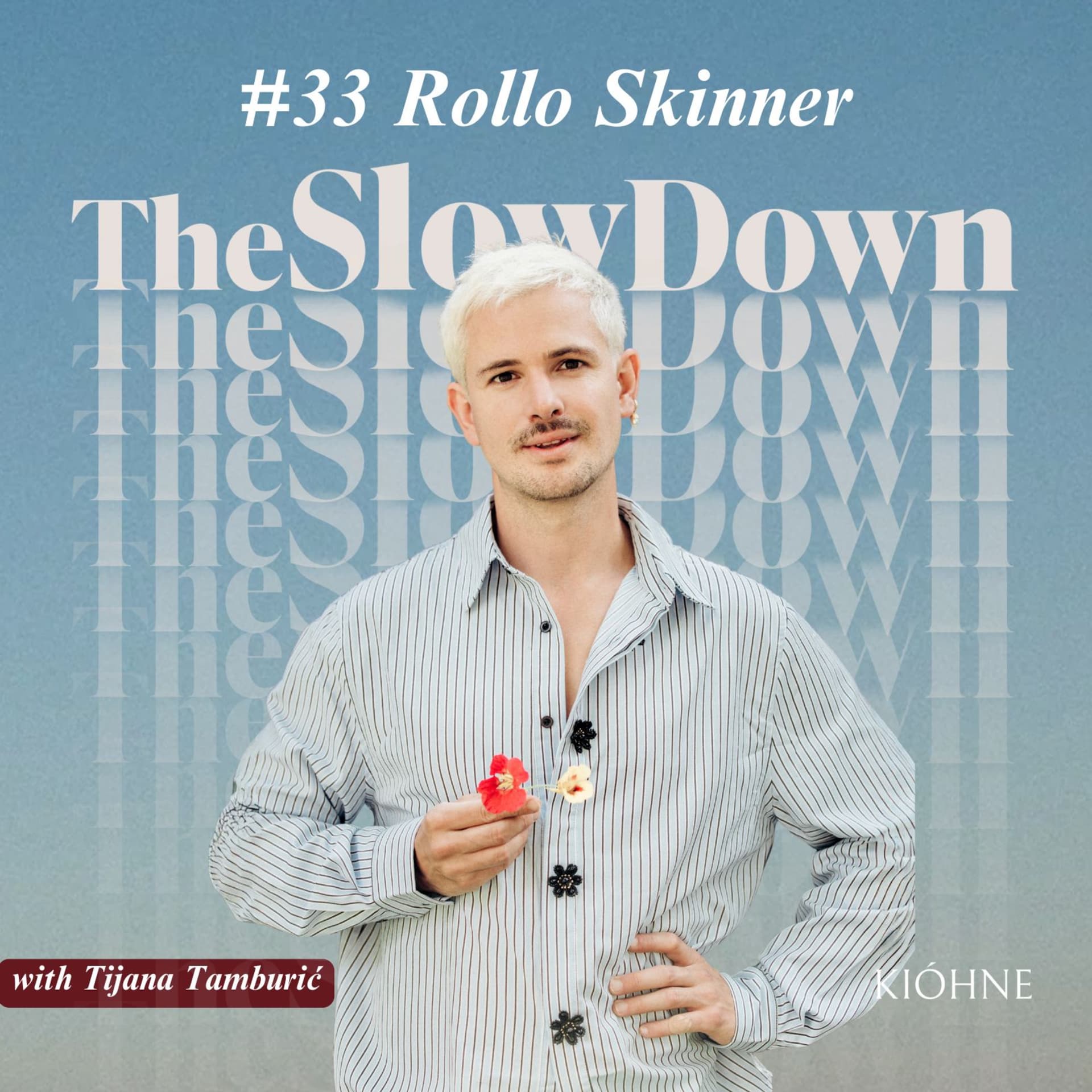
Rollo Skinner’s “long way home” from acting and advertising into floristry and botanical set design, and his arguments for returning to nature, rejecting greenwashing and burnout, and embracing queer self-acceptance and a multi-hyphenate identity.
Guest backgrounds
British artist, author, and botanical set designer. Grew up on the Wiltshire–Dorset border in an old farmhouse raised by his parents and two brothers; nature and woods were his refuge. Came out as gay in a hostile 1990s context; later trained via drama school, then set-design/creative school in Brixton. Diagnosed with Lyme disease at 21; describes health anxiety. Worked in advertising, then learned large-scale floral work at the London Flower School. Lives in a shepherd’s hut on family land.
Key claims
“Success” can be an exhausting grind; nature helped him survive and rebuild. Advertising often masks greenwashing (e.g., PepsiCo recycling vs plastic). Instagram is both a cage and a lifeline for sharing his polymath work. Returning to land and community is a healthier model than individualism.
Notable examples
Netflix tween show Free Rein (he declined); PepsiCo recycling brief; flower reawakening during lockdown; first big job: music video for Arlo Parks with sunflowers/delphiniums; Tim Walker/Barber bouquet for Alexa Chung after Glastonbury; debut illustrated queer fable (published in Netherlands/Germany first).
Written by AI. May contain mistakes. Listen to the episode to check what was said.
Chapters
Tap a time to open that second in VOIntroduction to Rollo Skinner
0:45 to 2:28
An introduction to Rollo Skinner's journey and connection to nature.
“When I was thinking about this new season, I reflected on how much of modern life is about adding.”
Rollo's Childhood and Relationship with Nature
2:28 to 11:21
Rollo discusses his upbringing, connection to nature, and experiences growing up.
“I hope you enjoy this episode with Rollo Skinner.”
The Wrong Turns of Rollo's 20s
11:21 to 14:00
Rollo reflects on the challenges and decisions of his 20s, including drama school.
“And you describe your 20s as kind of a series of wrong turns.”
Navigating Career Challenges in Acting
14:00 to 17:09
Learn about the struggles and unexpected successes in Rollo's acting career.
“I'm making money, I'm booked and busy, I'm doing things, I'm a jobbing actor, but I'm not in my purpose, not doing anything that I really love.”
Realizing True Passions and Health Struggles
17:10 to 19:28
Discover Rollo's journey of self-discovery amidst health challenges while filming.
“And it was kind of six months of filming.”
The Decision to Leave Acting Behind
19:29 to 23:12
Explore Rollo's decision to reject a major role due to personal identity conflicts.
“also being told you can't be gay uh by literally everyone within the industry I then went out and yeah, shaved my head.”
Creative School Experience and Advertising
23:13 to 26:58
Rollo shares his transformative experience at a creative school and entering advertising.
“The principal of the school's office was in the DJ booth.”
Burnout and Disillusionment in Advertising
26:59 to 28:00
Understand the effects of burnout and disillusionment while working in advertising.
“And, and I think that was just, I guess, like a symptom being utterly burnt out, isn't it?”
Disillusionment in Advertising
28:00 to 29:40
Explore the burnout and realization of greenwashing in advertising.
“it was like another wrong turn, as you would describe it.”
Rediscovering Childhood Passions
29:40 to 31:54
Discover how Rollo reconnects with his childhood love for nature and floristry.
“Like I wouldn't, I didn't spend any money on my own enjoyment.”
Show all 23 chapters
The Shift to Floristry During Lockdown
31:54 to 33:02
Learn about Rollo's transition to floristry during the COVID lockdown.
“And then cut to So, you know, two weeks later, the world goes into lockdown, COVID.”
Learning and Growing in Floristry
33:02 to 35:26
Hear how Rollo honed his skills in floristry and began taking on projects.
“I was then, on Saturdays, I would go and work at local florist and kind of make bouquets and then do my job, you know, the other five days a week.”
Creative Work with Flowers
37:40 to 40:02
Rollo shares a memorable job experience and the essence of his floral style.
“And you've worked with, as you say, Gucci, Mulberry, Barber, Tim Walker, the photographer.”
Returning to Nature and Family
40:02 to 42:01
Discussing the significance of returning to family land and its impact on Rollo.
“I absolutely love what you've just said.”
Finding Identity Through Nature and Creativity
42:01 to 44:34
The speaker reflects on their connection to nature and how it shapes their identity and creative pursuits.
“So my shepherd's heart has arrived six months ago.”
The Journey to Authorship and Self-Discovery
44:35 to 48:08
The speaker narrates their journey of writing a book that intertwines their experiences and creative expression.
“and realised I'd not kind of fully realised myself as a gay man and wanted to have these conversations with my family about what it means to be gay.”
Navigating the Publishing World and Social Media
48:09 to 50:40
The speaker discusses the challenges of getting published and the role of social media in building their brand.
“I like finished the book and then I sent it out to loads of agents and I heard nothing and I heard nothing.”
The Dichotomy of Modern Life and Creativity
50:41 to 55:08
The conversation explores societal expectations versus personal expression and the challenges of being multifaceted.
“And it doesn't, it wasn't something I naturally had wanted to do.”
Lessons from Nature and the Value of Stillness
55:09 to 56:00
The speaker reflects on the vital lessons learned from nature, emphasizing stillness and joy.
“the woods, what are like the three things that you really learn from spending so much deep kind of listening and contemplative time in nature?”
Finding Stillness in Nature
56:00 to 58:14
Discover the importance of stillness and joy found in nature.
“never do we allow ourselves to do nothing.”
Creative Inspiration and the Hot Air Balloon
58:14 to 1:02:30
Explore how curiosity fuels creativity and hear the story of a significant art piece.
“What are the things that still keep you creatively inspired?”
The Importance of Slowing Down
1:02:30 to 1:05:23
Learn practical tips for slowing down and managing anxiety in a busy life.
“me think there that like, we've said like, it's hard to be multitudes and it's difficult.”
Music and Life Transitions
1:05:23 to 1:08:27
Understand how music reflects life's transitions and imperfections.
Transcript
Automatic transcript. May contain errors.0:04Hello and welcome to The Slowdown. I'm so pleased to be back with season five of this podcast. Thank you for listening. If you could do just one thing for me, it would be to like, subscribe and review this episode or the podcast, depending on what platform you're listening on. It really does help. And of course, share this episode with a friend you think needs to hear it. I'm doubly pleased that this season is also sponsored by a sustainable swim and resort wear brand I absolutely love called Keone. Founded by two extraordinary women in Athens, I actually wanted to interview them for an episode, but they really wanted all of my guests to be on board.
0:44So, and because it's my podcast and I design it how I want, rather than a repeated ad in each episode of this season, I'm sharing eight short bespoke stories about the brand instead for you to get to know them a bit more. When I was thinking about this new season, I reflected on how much of modern life is about adding. Adding credentials, followers, achievements, building an identity out of accumulated things. But what if the path back to yourself isn't about adding anything at all? What if it's about stripping away and returning? Today, I spoke to Rollo Skinner, British artist, author, and botanical set designer.
1:24Rollo tried to embrace big city life and took a series of self-described wrong turns in his 20s and only began a floristry work experience at the age of 30, eventually finding his way back to the natural corner of the world where he grew up. And that return changed everything. He spends his time in a shepherd's hut on family land and has grown a practice that spans illustration, painting, botanical installations and set design, working with the likes of Gucci, Mulberry, Barber and the legendary fashion photographer Tim Walker. He's also published a debut illustrated fable about queerness and self-acceptance.
2:08We talk about what it means to recreate yourself, why so many of us abandon the parts of ourselves that actually make us whole, and how the natural world became both his biggest inspiration and his anchor. Recorded at Brazen Studios and sponsored by swim and resort wear brand Keone, I hope you enjoy this episode with Rollo Skinner. Hi Rollo, welcome to The Slowdown. Thank you so much for being here. Thank you so much for having me. Well, I'd like to start first with your childhood. It's always a place that I like to begin because I think it provides context. So I'm curious, where were you raised, by whom, and what were your kind of early examples or understandings of success?
2:54okay so i was raised on the wiltshire dorset border by my mom and dad and i guess you know my two brothers i was the middle of three boys um and we grew up in an old farmhouse and and i guess in a way you know as much as i was raised by the family i was very much raised by the natural world around me and by the trees and by the landscape um was very very formative for me growing up it was my you know it was my refuge um and I guess my definition of success uh from a young age was just slog it and you know just punish yourself until you achieve the thing and it's all in the achievement you know it's not in the process it's all in the the accolade, the thing that you can achieve.
3:47And yeah, this real kind of exhausting grind mentality somehow imprinted into me at a young age, as I'm sure it doesn't to so many of us, but it's kind of mad that from a young age, you know, the way I approached exams was just like slog away, like squeeze every last drop of effort out of myself to be able to achieve the thing that I'm trying to achieve. Do you think it was unusual that you were so connected to the natural world? Like, were your brothers also like that? Did you play in the woods a lot? Or were you kind of the kid at school that was like unusually connected to nature? I think, I think sort of somewhere in the middle of all of that, you know, I think I would, like, you know, I was that weird kid at school because I would like go off, you know, behind the trees and write little poems to birds, You know, whilst also managing to kind of maintain this quite good, you know, facade of, you know, being able to kind of just about fake it enough to be able to fit in so that people didn't think I was a complete weirdo.
4:49But then having this kind of very private part of myself that would want to go off and retreat, I guess, into natural spaces. Yeah, I think my I do have a very, I guess, green fingered family. You know, my dad is a big gardener. My mum loves flowers. My grandmother was a apple farmer and a fruit farmer. And my other grandmother was an incredible gardener. So I think it's it's there. But for me, it was very dormant for many, many years. I was given a tiny little flower bed behind the house and it was north facing and it was like filled with rocks. And it was really a very difficult place to grow things.
5:31And I was given it, I think maybe when I was like six, I was like allowed to have this little space. and I put you know everything sort of died that went in there I I think eventually just these like few ferns and some hellebores survived um I think I tried to grow like a mulberry bush in there that some kind of godparent gave me which just I think perished um and actually something I really loved growing up um was every year the like local village fair there were kind of different categories you know people are entering in like you know the wonkiest piece of fruit or whatever the wonkiest vegetable they've grown and the for kids there was this category of making these miniature gardens in tea trays and you know I became really obsessed with it every year and I would put like these little forget-me-nots in there like these tiny little blue flowers and then have tin foil as the kind of pond and little things of moss and primroses and yeah I think I just I yeah I don't really know why I'm why am I telling you that story I guess it shows that as a child you were really interested and fascinated in this stuff in a way that some people might be in like reading on their own or being super social or being into sports like clearly this wasn't just the context of where you were living that you were so physically connected to nature but it seems like there was just an interest in this from a really young age Completely.
6:59And I think, yeah, I think I, I think I really, you know, I grew up gay and still am. And really, it was so hard. You know, it's incredibly hard trying to fit into a world that isn't really designed for you. And, you know, in the 90s, thinks you're absolutely, you know, abhorrent just by being. I really, yeah, I really found it.
7:31I found it so hard to fit into the human world, you know, and both at school and at home, because all of my natural instincts were wrong or like deemed wrong by society. um you know even at seven you can always tell if there's like a seven-year-old is gay like it's sort of you know it shows you know within their within their character and the way they react to things and it's so wonderful it's so amazing and at that time it was not seen as amazing it was seen as something people would be very ashamed of and and so for me you know I just found that I would kind of always trip up in kind of social situations and not really understand what I was doing wrong, but know that fundamentally I was, there was something very flawed about me that people found uncomfortable and difficult.
8:18And so, so really for me, nature became this incredible refuge. And I was very, very fortunate that I grew up in this old farmhouse and we have, which where my parents still live today. And we have this long strip of trees, which we call the woods, but really it's sort of a strip of trees that is kind of crushed between two arable fields between us and the neighbouring farmer and that for me was this real refuge as a child and I would spend so much time there um watching you know I in a way you know you asked me these questions like did was I aware of that being kind of different but I thought of sort of thought that everyone was everyone was doing that you know everyone was going into nature and really studying and watching the natural world as it kind of grows and moves and shifts and changes around you I felt incredibly safe there and obviously that's an incredible luxury you know you can't a child can't just go off into any old wood and feel incredibly safe watching the natural world but I was very fortunate I did have this little cocoon of space to go to I found it hard both at home and at school my nervous system was so uh in a defense mode all the time and the defense was you know stick a big happy grin on my face and be as lovely and nice and easy as I can be just to stop any um you know just to stop upsetting the world you know not to stop like the wrath of the world turning on me yeah because you're like I'm already in my sexuality and my choices upsetting the world completely and at that time I had no idea that was because I was gay right but it was just I just felt I just felt fundamentally like I was this weirdo you know people just thought I was weird and like my my natural instincts were a bit weird like what they weren't you know but I'd love to dress up as a girl you know I'd love to like be Cinderella in the school play you know and like flash my knickers to the entire school like I had so much joy in that and yeah obviously that's such fodder to be absolutely rinsed by your classmates and then and at my elder brother was so embarrassed by me all the time and we were always at the same school and he was just you know mortified by my presence if I like came and said like oh hey at school if I kind of went up to him he's you know his heart you know you'd see his heart sink and that's just like a horrible feeling to to have day in day out for all of all of your life really it sounds like there was sort of we're starting at this kind of bifurcation of your life of like the nature side that is like joyous and and childlike and then the realities of the world and things that you have to step into academic and then going out into the world of work.
11:21And you describe your 20s as kind of a series of wrong turns. And so I'm wondering, what was the first wrong turn? And did it feel wrong at the time? Or is it just when you look back in hindsight? I mean, I think, you know, there were so many wrong turns in my teens. You know, I should never have been in an all boys boarding school, you know, like that was really difficult. But I guess, you know, when I had my own agency, um my first you know I always see it as a wrong turn but of course all of those every every decision I've made has got me to you know sit here talking to you right now so they're all learning along the way and you know um it's the the journey but um yeah so I was I loved drawing growing up I love that was really like a very evident skill that I had um was drawing and art and and I um but I was in I also loved acting but it wasn't perhaps that didn't perhaps come as naturally to me or it did if I was playing Cinderella do you know I mean like I think I could have made a fabulous drag queen but I would I was always cast in these quite like straight roles or these quite like young romantic lead roles and I ended up doing I was doing Les Miserables at school and the musical because I can sing that was like that's one of my one of my my favorite things to do in the world is sing and there was a casting director came and they saw me and said told you know one of the members of staff that I should go to drama school and should apply to drama school and I sort of I was so malleable at that point and I really had no sense of who or what I wanted to do or who I was at all and so I was like right well obviously I'll go and do what this person has said like I trust this other person's view of me better than I trust listening to my own innate instincts and what I want to do and I think also there was probably a part of me that had so much unprocessed emotion, like so many tears that I wanted to cry.
13:33And I think, you know, going to drama school is a wonderful place to go and be out kind of gay person who's able to, you know, go and cry in a room. I very quickly realized that to work in the industry, it's mad now because, you know, here we are 10, 15, 20 years later, you know, every straight actor is playing gay you know it's so like it's the coolest thing to be queer but at the time but at the time it was really not um and so I kind of came out of drama school and my agent the first thing he said to me was you know I don't want to know if you're gay don't tell me um so that was kind of horrible and then and then I proceeded to have like lots of these very difficult um difficult things but I was very fortunate that I was I was cast in I kept on getting jobs um and so I was able to through doing the job which coincidentally one of them was called Wrong Turn Six and it's it's you know the sixth film in one of the longest running horror franchises it's a slasher gore film I was playing like the main guy's best friend it's like I was like this little American journalist it's 20th Century Fox it's like a very legitimate thing but i hate god i hate god they they um these mutant hillbilly cannibals hogtied me tight like caught me in the woods tied me up into a tree and then someone like came out of this like hut and he's going it's like this terrifying man with this like horrible like really long nose and this massive machete came out of this log cabin and gutted me and like gored me and i was so scared because you know when you hear about those awful stories of you know the gun being switched on you know the film set i suddenly thought right what if i actually what if that machete has been switched for a real one and he then gored he gored me and i then and it was so i really screamed for my life it was just like they were like this is great great take they were really like this is great and i was like that's the best thing i've ever done in my life and then these children come out these like mutant hillbilly children come out of this cabin and all eat my entrails and then someone has sex underneath my body oh wow so there we go so i guess but what's interesting to me there is like this notion of you go down a wrong path but you still get booked on the jobs so it's very difficult because you're going but i'm achieving in society's idea of success.
16:05I'm making money, I'm booked and busy, I'm doing things, I'm a jobbing actor, but I'm not in my purpose, not doing anything that I really love. Totally. Yeah. It, it was very incremental. You know, it really took a while and a lot of, you know, I had to really gather a lot of evidence to be like, okay, no, this is, this is not the right thing for me. But it was like, you know, the promise of the thing to come and you're kind of building, you're building on this thing. You've invested so much time into it. You know, you've trained to do this. And also that thing of like, anyone else would kill for this opportunity.
16:42And so feeling so guilty that you're not actually enjoying it when you're experiencing it. It all came to a head when I, so I was filming this TV show called The White Princess and it had Jodie Comer in it and it was The War of the Roses. And I was playing the head of the Royal Tudor Stables, the Tudor Royal Stables. I don't know how to say that, but, you know, as the stable boy and the slightly Machiavellian stable boy. And I and it was the most dreamy gig because I got to ride the Lloyd's TSB horses across the great British countryside throughout the entire summer. And it was kind of six months of filming.
17:20And I would, you know, I was very in and out. You know, I was just doing a kind of, you know, come in for a day. and but I was filming at like an Arundel Castle and Cardiff Castle and these beautiful places but anyway it was during filming that I was like okay this is my dream to be riding these beautiful horses um I also should I should say I was I'd also been diagnosed with Lyme disease when I was 21 which was which has been a whole thing within my family and so I was kind of I was struggling a lot uh internally with health things and for me it was largely anxiety it was health anxiety and I was filming this tv show and my I was just so terrified every time I'd leave my trailer I'd be so terrified of walking on set and delivering my lines in front of people because I was also just like struggling with this internal battle so anxious about my health I realized right this is my dream gig and it's not I'm not happy at all I'm like actually so far from being happy i'd applied to this school called the school of school of communication arts um which is in brixton it's like a tiny little school and i somehow managed to get i found out i'd managed to get into it um because i just knew i i was so envious of all of the the set design people the prop people the um you know the florists the lighting people you know anyone who's helping craft the visual world and tell that that wider visual story I was I felt like I had that to offer within myself I thought god I really could do that but I kept on suppressing it and kept on suppressing it within every job but it was on this job that was really like no Rolla you've got to listen to that feeling so I found out I got into the school I applied it all happened quite quickly and I was still filming the show at the time and so I went out and because I was wearing a wig and I had this like long golden hair and it was like glued onto my head essentially I could it meant I could go and shave my head for the first time since leaving drama school because they always say you know never shave your head right you look different exactly totally you've got to keep your you know hair look the same you've got to look the same that's so restrictive especially being queer and like wanting to kind of inhabit my queer identity but also being told you can't be gay uh by literally everyone within the industry I then went out and yeah, shaved my head.
19:40And I walked back into my flat and I was feeling so elated because I was like, oh my God, I'm claiming my future for myself. I can go and go to this kind of creative school and go and, you know, just be myself. And my phone rang and it was my agent. And he was like, oh my God, Rollo, congratulations, you've done it. You've been cast as the lead in a Netflix show. and the show was called Free Rain and it was all about horses and like it was basically like Pony Club, the TV show. And it was for like, you know, 13 year old girls. And I literally felt like I'd been shot through the stomach. I was like, this is the worst possible news.
20:25And I was kind of gasping for air on the phone being like, yeah, okay. And even then I was still like, yeah, okay. Yeah, I'll do it. I'll do it. Just, you know, my soul utterly destroyed. and I guess why was I so feeling like that was because I was going to have to again play this like I was 25 at the time and I was going to have to be playing this 15 year old you know romantic interest for a kind of 13 year old girl and so I was going to basically have to go fully back into the closet to do this and it would then and you know that thing of being like at that time if an act was suspected of being gay, it was like front page news.
21:04Like, oh my God. You don't get GQ man of the year award. Exactly. You're just like the laughingstock. And I was like, I don't want to be the laughing, I just don't want to be that, but I want to go and be myself. But then why didn't you feel like you could say no? Well, because I was, the expectation. Your agents worked so hard too, you don't want to let them down. Totally. And just thinking, right, I can just, I was, I think I was just like, right, it's three months I can do it like and it was good money and then like an hour went by and I was just in such a gloom and then suddenly the phone calls again he's like great news it's for three seasons and I'm just sorting out the contract now and I'm like I can't do it like that was the that was the moment that I was like I can't do this and he obviously completely imploded and it was a horrible conversation the first of like a few horrible conversations where i had to continually be like no i'm not going to be an actor anymore i sort of needed this kind of quite climactic end i think i don't know why um but you know some i needed to be able to say no to say a full no to the the real deal as it were you know and i kind of i at the time was like if this show is really successful i have to be okay with saying no to this you know knowing that the show could possibly be really successful and i had a really strong instinct that it would be really successful and it was an incredibly successful show for netflix it was like one it was like their number one tween show for like three years it was like a major show and look but then you would be that guy completely and you know that guy has now got nearly a million followers on Instagram and you know it's doing very very well and I'm so pleased because that was his that's the thing is his dream like if he wanted that you know to be doing something you don't really want to be doing and have a million followers of tweens that you know completely you're going you're at the top of the wrong ladder he actually also met his wife on that show so I'm you know could not have been more perfect um that he went and did that you know that I didn't take that job so then I went to the school and I was free and it and it felt like the first time where me who I am you know wasn't being put under the microscope for people to kind of analyze and say yes or no and what were you learning um so I went into the school thinking it was going to be a very entrepreneurial focus it was it was all quite kind of smoke and mirrors the school like to get into it it was all it was like in an old nightclub in the top of the church in Brixton it was yeah it It was, yeah, the nightclub was called Mass.
23:46The principal of the school's office was in the DJ booth. Like it was so, it was so sort of renegade and kind of freeing and exactly, exactly what I needed to go and do. But I went into it on the kind of understanding that I was going to be kind of slipstreamed into this kind of entrepreneurial thing. And they took in kind of 24 people in a year. And normally how it was divided was you'd have like one or two people who went into the entrepreneurial thing. And then kind of the other remainders would all be focusing on advertising. And it was basically like a year's speed dating for creatives for advertising.
24:20So the way that a creative team works for advertising is you've got the copywriter and the art director. And so the two of you are paired together traditionally in kind of traditional advertising creative departments. and somehow I suddenly found myself slightly again like in this play like in this speed dating for creatives doing something I actually didn't really want to do I didn't want to go and work in advertising um but it hadn't really been very clear to me and to be honest I'm sure I could have you know had a few more conversations before saying yes to the school but you were 25 and you were like design I need an answer exactly anything but this anything but advertising anything but acting and I need it to be, um, yeah, exactly something design based.
25:03And, but it was, it was an amazing year in, in many ways. It was so intense and it was such an, an incredible grind. And we were really, I mean, it was the most kind of, you know, the grindiest grind there is. It was just like, go. And there was constantly like this leaderboard of, you know, who was on top and who was like the second and third teams and it was it was really hard but I did also really enjoy it and um I think it taught me a lot about how to have ideas and how to kind of shape creative ideas and um I went in as an art director but then there was always a kind of question mark around whether I'd also be a copy whether I'd be a copywriter um but then I eventually found my lovely partner creative partner, Miranda.
25:49And the two of us then formed this creative team. And we were then hired out of there in a very small startup, you know, advertising agency. This was right when kind of social purpose marketing had really kind of taken off. And the idea of this agency was to work with brands like, you know, Budweiser, Adidas, Mars, to help to make the world a better place ultimately you know went into it very you know excited and it was it was a great it was an amazing environment very very smart people but it was also incredibly hard work and such a slog I and I really really struggled um I kind of managed you know also because I was in a team dynamic and Miranda was so kind of relaxed and like at ease in that environment and so brilliant and so she kind of you know propped me up I think um I stayed much longer because of her ultimately and and because I loved lots of people there but I really really kind of struggled and I was also in a very very difficult relationship at that time which was very subtly controlling and increasing increasingly and it was really robbing me of my confidence and of my agency and of my self-worth I was like scraping the barrel of who I was and I was exhausted you know I was really like burning myself out because I had no escape I had no respite I didn't have you know the woods of my childhood you were in London I was in London and I was just knackered and um so stressed and I reached a point where I actually stopped taking the tube because I was just kind of, I became terrified that I was going to throw myself in front of it, not because I was feeling suicidal, but because I just had these incredibly intrusive thoughts.
27:45And, and I think that was just, I guess, like a symptom being utterly burnt out, isn't it? You know, I, I, I didn't trust myself and I was just, I, yeah, I, I, it was a very, very, very, very low point. It sounds like in spite of the learnings that you got from that experience, it was like another wrong turn, as you would describe it. Was it that you started to realise, as so many of us did, that all of these campaigns were a lot of greenwashing for a lot of big brands? There was also like a disillusionment factor, like what were the elements that came together? Or was it just a burnout that made you again say, I have to say no?
28:22It was all of those things, definitely disillusionment with the industry. You know, It was working on this PepsiCo brief where we were, you know, we were having to research recycling. And PepsiCo were wanting to kind of come out as these big champions, these leaders within the world of recycling. And at the same time, they were just, you know, pumping out this plastic into the world. And when we were then pitching all of our ideas, you know, things that were actually trying to help, actually genuinely trying to help make a kind of positive impact and reduce the amount of plastic that they used and they didn't want to have any of it you know and you were suddenly like wait okay this is this is actually greenwashing and I think I was also just inhabiting this like digital world and I was going to bed so late you know I was sleeping on my laptop so late every night and getting up so early to make sure that I could kind of do all this like massive routine of yoga and things just to make sure I was in a, you know, relaxed headspace to be able to survive the day.
29:24And I, yeah, I was, was really searching for something. I was like, something has got to change and I don't know what the hell it is. And, and I was reading lots of different kind of, lots of different self-help books at that time. You know, it's really like looking, there's got to be a better answer than this and I was really examining this question of like what do I what did I love doing as a child was just the thing I was like I know that somewhere along the way I took a wrong turn from a path as a little boy where was that wrong turn like how far back can I trace myself back up that path to find something that I genuinely remember love I loved doing you know before the noise of school and and I thought back to those little fairy gardens you know I thought back to just being in nature and I went and bought these tulips for four pounds and I came home and I sat down with them and it just felt so good like I felt so giddy just the fact that I'd actually bought myself something to have a play you know I didn't I I didn't even have colouring pencils or, you know, paints.
30:37Like I wouldn't, I didn't spend any money on my own enjoyment. And so I started to play with these flowers and it was just a really wonderful feeling. And I thought, God, this is so uplifting and peaceful and quiet. And I felt so connected, I guess, back to that little boy who loved being in the woods. and loved getting mud into my nails and being messy and dirty and free and i loved the messiness of it you know it's messy but like working with flowers and the leaves and just this tactile thing with my hands i've been spending so long tapping away on computers um and that was you know a a a big shift for me because i was you know suddenly like right okay there is this whole dormant part of myself that I really now need to uncover.
31:33And so it was the flowers. And then I got, you know, coloring pencils and started kind of drawing and scribbling away. I suddenly was like, right, I want to go do like a little day's flower course. And I'm going to take the day off work, which I'd never done for like something just for myself, you know. And it was so amazing. And it felt so radical to allow myself to have a day off work. Like it was mad. And then cut to So, you know, two weeks later, the world goes into lockdown, COVID. And it was very fortunate timing for me because, you know, I was really had reached this like complete burnout and I was exhausted.
32:14And I'd suddenly discovered this little thing. And I found myself back at my mum and dad's. You know, I was. Had you been furloughed? I exactly I was furloughed I'd go to the woods and just kind of play with flowers and kind of and twigs and things kind of bring them back and make these little sculptures on the kitchen table for my family to kind of bring a bit of you know light and levity to that time and I became really kind of obsessed with it and I was so fortunate to be furloughed because it just gave me this space where I was actually being paid to experiment and play with no real, you know, I wouldn't have to show it to anyone.
33:00And it was so luxurious. And so when I came back to London, I was then, on Saturdays, I would go and work at local florist and kind of make bouquets and then do my job, you know, the other five days a week. And so it was a slow transition. It wasn't just an instant I'm quitting my job I'm out of here it was this kind of yeah this shift that took a you know probably the course of like a year a year and a bit how did it feel to to be a beginner again because I suppose you'd there's the second time that you've left kind of a successful part in your career and you're trying to learn something again um it was so I just turned 30 I broke up with the boyfriend and it felt like this kind of giddying new lease of life and I'd also started going to therapy I was like he I was healing you know all aspects of myself so I had so much energy um and I was so kind of hungry and excited by this new thing it was very hard to find work it's very hard to find people to assist because there were no events at the very beginning And I really want, I knew I didn't want to work in a shop.
34:08I actually hated working in a flower shop and making bouquets. It was soul destroying. You know, I'm just like so sensitive. I like have to find the exact right thing. So I knew it was flowers, but I knew I wanted to make big, big scale things. Did botanical set designer exist in your consciousness as a role? Like, did you know that that was a job? No, God, no. No, before that, not at all, you know. But I think, you know, in all of this kind of introspection, I'd sort of kept on coming back to this idea that like, you know, making big sets with flowers, you know, I was like, it's so niche, but I just think I can just feel absolutely that that's something I'd love to do.
34:47I don't really know how or where I can do that or, you know, who else is doing that. And I kept on asking people if I could assist them and they kept me like, we're so sorry, we don't have any work. You know, we're allowed like two people on the team. and so I ended up going to a place called the London Flower School which had a four-week course and there I really learned how to make things at scale I just think I'm good at spatial design feels quite innate to me for the first time I was like yes this is it that I can do this this is my thing and then I kind of came out of that and I was just so fortunate because I had this grounding there um and because of my advertising experience and connections I just you know my first job actually my first job was was to do a music video for Arlo Parks and you know which is terrifying to think that would be your first job and but it was so exciting and they wanted tons of sunflowers and tons of delphiniums and I just after I'd clicked order to buy them they um they changed to breathe literally and then they were like we're so sorry and I'm like I'm so sorry because I can't cancel that order and so then they were like okay well do you want to keep the flowers so then I had this like a thousand pounds worth of sunflowers and delphiniums coming to my mom and dad's house so then I made this installation in the greenhouse and then that was kind of became this kind of calling card you know that was like my first like proper thing that I could be like that I've made that and then from that I just started to get like amazing from the off amazing jobs coming in so it was really mad.
36:25It was mad, yeah. Kiyone was co-founded by Lydia Vusvouni and Amelia Thorodoropoulou, two women in their 30s, both mothers, both Greek, both deeply in love with their country and its craftsmanship. What they've built together in just a few years is extraordinary. A brand now recognised across Greece and internationally, loved by celebrities, featured in major press, and even worn on screen in a Yorgos Lanthimos film. and they say they continue their journey with the same enthusiasm with which they began. That's the thing about building something from genuine love rather than just ambition. The enthusiasm doesn't run dry.
37:06When I look for partners for the slowdown, these are the kinds of stories I want to be able to tell. So I was overjoyed when they wanted to be our partner for season five. Their support pays for this studio and our amazing production and editing team and keeps this podcast going. But there's also something in it for you. Keone are offering a 20 % discount to The Slowdown listeners. Just use the code THESLOWDOWN, one word, at checkout on their website, keone.com, for 20 % off your first shop. I hope you check them out and support this female-founded brand the way that they are supporting this show.
37:43And you've worked with, as you say, Gucci, Mulberry, Barber, Tim Walker, the photographer. is there any particular job that comes out to you now as like a great example of the kind of thing that you love to do so I did a job with Tim Walker it was it was the day after Glastonbury it was and I was at Glastonbury and it was and it was with Alexa I'd only been asked like you know two weeks before and I was like I'm not going to not go to Glastonbury because of this so I'm going to make it all work and you know I made it all work and you know on the Sunday of Glastonbury I was like driving back via my parents' house to cut loads and loads of like flowers to make this massive, massive bouquet for Alexa Chung to stand in this allotment in Stratford for Barber.
38:33And I just I love that image because it's so it's so kind of uplifting and kind of glorious and wild. And and I feel it really kind of captures captures my style of I love abundance and natural things that have grown in the UK that feel really real and kind of but also kind of whimsical. and um yeah and and also there's a kind of also there's a kind of melancholy to it as well which i find very very beautiful so yeah that that image i will be very pleased with when i die you know um they're all great jobs you mentioned there a couple times obviously doing a lot of this stuff back at your parents house and you effectively like lived or moved back for a period of time to your parents house with your sheepdog in a cabin on family land western capitalism's idea of success would say that that's actually a failure, that that's like a step back from what you should be achieving.
39:32Where do you stand with that? This kind of concept of returning, not being so popular, but you did it anyway, because I feel we've gone sideways as a society, like that leaving our parents, not investing back in the land that we came from, not continuing to build together, focusing so much on individualism and kind of going off and doing better than the generation before has left an entire generation behind and homes behind and land behind. And so I'm just wondering if you felt a level of other people will see this as like me backtracking, but actually this is how I see it. I absolutely love what you've just said.
40:14Like I've never really thought of it like that. And it's so true. And it's so mad, isn't it? That we all just kind of completely continue to kind of fracture and splinter away from before. Whereas, you know, if you go back thousands of years, we would absolutely stayed in that kind of, you know, group, that unit or within the same area. Yeah, for me, I think it was just that I realised how much importance and kind of significance to me that little bit of land had to the child me. and how much I needed to be near it. And, you know, I'm not at a point where I want to be buying my own home in the countryside.
41:01You know, I've got my flat in London and I've spent, you know, quite a lot of the gravity of my life is up here with work. And there was a part of me that's yearning to be back there by those woods and to be close to my family. You know, at this point where my parents are getting older, my nephews and nieces are all lived down there, my brothers, you know, all my family down there. But I didn't want to have my own home. And so it just made so, you know, we've got this field and it's actually, it's an old agricultural field. It's been very over farmed for many years. And actually the field has always made me feel very sad.
41:39I've always felt very depressed by that field because it's just heavy clay soil. It's been really over farmed. the land is knackered and there's so much water surface runoff and it's very depleted and you feel it and a year ago it's stopped from a year ago it stopped being farmed and it's been sewn over with wildflowers and i i you know i see so much of myself in that field you know and and so So my shepherd's heart has arrived six months ago. Although, you know, over the winter, I've like, you know, been slow to get curtains and that sort of thing. So I've not had lots of nights sleeping there yet.
Read the full transcript
42:21But as we come into spring now, I've got a lot more time there. Did you compare yourself at all to peers your age that were maybe climbing corporate rungs in a way that was more expected? Or was that just not something you did? I know because I just think that's so batshit I just think it's so mental um the this kind of corporate world like it feels so inhumane to me and so unnatural so to me I think that's the ludicrous thing for me nothing makes more sense than to return to to nature um and to really slow down um I so with the flowers you know I found the kind of flowers taking off but very quickly I you know can burn myself out so quickly with the flowers it's such hard such physically hard work if you know and when the budgets are small which they often are and they have been since covid you know it's it's you have to have like smaller teams and they want you know so much from you and i'm i've it's taken me a long time to not be that person who just like goes yes i will deliver something to 200 % at, you know, cost of my soul and make this so perfect for you.
43:37I realized very quickly, like flowers are not going to be the only thing for me. They can't be. And I have to find other ways to, yes, to make money, but also just to live because I'm not a single person. I'm much more polymathic in the way that I live. You know, I love writing and writing music and painting and drawing and so you know part of that having the shepherd's hut um back at home was about to have a little space of my own that is it doesn't have a loo or a shower but it does have a bed and a little kitchenette um but a little space where i can sit and put my phone in a box you know i've got a little timer lock box which i can lock away for hours on end and just you know be that little kid watching the natural world again and write and draw um to me that feels like the ultimate success I feel I feel like I found a little dream in that one in that one little room but also so fortunate to have a foot still in the city because I love the city I'm it's so I've got so many friends here and it's so alive and exciting and I think I would I think I need both somehow in my life the balance the balance I think people struggle to figure out how can I be multitudes in a system that really is only really geared to help you have a personal brand that does one thing and so I think Instagram has been a really good tool for you to express all of these different parts of yourself and so my questions are how did Instagram and the content of that come into play because it's how I found you and do you see it now as still as a place of creative freedom and inspiration and a way of getting yourself out there or do you see it as a bit of a cage in its kind of algorithmic um requirements so you know I've kind of spoken about how you know I suddenly discovered flowers but I also discovered started to draw again and I You know, I found myself during lockdown at home and whilst I was going off into the woods, I was also I was I was kind of almost having this kind of second coming out where I had been started seeing a therapist and was having these conversations about what it meant to be a gay man.
46:08and realised I'd not kind of fully realised myself as a gay man and wanted to have these conversations with my family about what it means to be gay. And they were just so terrified of that and terrified of like talking about really, you know, the thing beneath the thing beneath the thing, you know, the thing at the heart of, you know, difficulties we were experiencing in the family, you know, the real truth of the conversation. And so I would go off into the woods and I would find myself genuinely kind of using the trees as a sounding board to, God, this is a really roundabout story to how I got into Instagram, but I'll get that, I'll get that.
46:55Okay. Using the trees as sounding boards, therapizing myself with these big, beautiful, ancient things that have watched me my entire life and know me incredibly well. These kind of almost like grandparent type figures to me, or at least that's how I view them, these big old oak trees. And I started kind of writing and drawing and I kind of found this story beginning to emerge about my childhood and about, you know, my life and kind of this return to nature. And I suddenly realised, wait, this is, I think this is really, really beautiful and this should be a book. I think this could be a book.
47:38So I kind of borrowed away and I kind of really, you know, whilst I always thought that flowers were like above ground of my reawakening and beneath the ground, like beneath the soil, in amongst the roots was this story, this book that I was creating. And it was kind of amazing, I like kind of came, it became a fable and it was a kind of, it's an illustrated fable. Um, and I called it queer by nature at the time, which was never really a name I loved because it felt, didn't feel like it represented the book. Um, but it felt strategic. I like finished the book and then I sent it out to loads of agents and I heard nothing and I heard nothing.
48:17And I was, you know, completely like, who the hell are you? You don't have an Instagram or you do. I did have Instagram, but I was just like me and my friends and, you know, and months went by and nothing and then suddenly I had this crazy I had this email where it was like hi love the book can I see the full manuscript within a week I suddenly had seven offers from agents and it was so overwhelming it's like crazy and then a few days later the book then I then like signed with an agent and a few days later the book went out to publishers and I immediately got a publishing deal in the Netherlands and in Germany.
48:53I then kept on going to British publishers who I received these wonderful gushing emails from people saying, this is so beautiful, what a profound book. And I'd love to, you know, I would love to take this on, going to take it to acquisition meetings. And the way that books are acquired in the UK versus Europe are very different. And in the UK, you have to get the entire publishing house team on board. and and so what would happen is they take it to these internal meetings and then all the money men the kind of business heads the kind of finance people these you know men in suits as i always saw them would you know look at the book and say you know this is a very expensive book to make because it's on brown paper and it's illustrations and who the hell is this guy like there's no he's we don't see any of his work online he's not like an illustrator and so they were basically like you know you need to grow your social media and then that came back over and over again for months you know I felt so embarrassed um because I was like yeah at the beginning I joking said you know I'm gonna be the guy who's got a publishing deal and I'm not gonna be able to read my own book and then like you know two years on I'm I am that guy and I'm so incredibly proud of that you know it's so remarkable it's so amazing if it's not that if it's not the outcome that you'd sort of dreamed of you then see it as this crazy failure which is because it was published into other languages not English totally which is so mad because I mean that's amazing like so remarkable and and those books are so beautiful and I got to go and do my you know book launch in Amsterdam and then it came out in Germany and you know I'm able to be so incredibly proud of it now but at the time I felt so embarrassed and like I'd failed um and so you know this kept coming back to me get on Instagram you know make it and so I did and I sort of slogged away at it and I suddenly found this way I actually am quite I'm quite good at you know creating a story and a video and editing it together and putting it out there into the world and it but also you know it's so hard I also find it so incredibly hard like I can do the actual process of doing it but it's so hard constantly having to to share yourself with the world.
51:11And it doesn't, it wasn't something I naturally had wanted to do. I'm, as much as I loved, you know, being on camera as a child and, you know, making music videos and that kind of thing. You were acting. I was, yeah, exactly. And I didn't like being, putting yourself up, you know, for the scrutiny of everyone to decide, deem very simply with a like or not, whether what you're doing is a value or not. How are you able to do it then? Do you see it as personal brand? I have to for my work. It's my portfolio. Or have you realised like, wow, there's actually an audience that likes what I share and I'm helping people.
51:47And there is an entire community in this space. That's definitely the driver. Like it feels so wonderful when you get these wonderful responses from people who you're genuinely, who feel you brightened their day by your video it is a lovely feeling um but i do find it really hard you know and i you know because they say you should be posting three times a week or whatever like i just can't do that and i'm so i'm not very good at being consistent but when i'm in it i'm fully in it and i really for me it feels like there's no point doing it if what i'm doing is not going to bring a lot of value to the viewer so it is it's not something i've figured out yet at all um kind of far from but i when it's when it's good it's a wonderful thing you know and then and then it's also a complete drain and a complete bore but it is a real force for good in the world um as much as it is a force for bad you know i remember someone once saying the world is getting better and better and worse and worse faster and faster and it's so true i think it's you know a double-edged sword.
53:01Are there any other societal or cultural things that you think are holding you or us back from being ourselves? Yes, the need to be one thing, which we've touched upon. You know, I think we are multitudes. We contain so many different things. You know, we're like trees with so many limbs and branches to ourselves. And yet, you know, social media has got better, but for so long, it's really benefited the specialist, the person who does the one thing. But, but I think, you know, for, you know, there are those people and I'm really envious of the people who are that. But for me, it's been about allowing myself to be polymathic, allowing myself to delve into all of the things I'm curious about.
53:57You know, I found flowers and old me would have flogged myself until I could no longer do the flowers and had to find the next thing. But instead, what I've realised is it's a sort of portfolio. Like, it's going to be a portfolio career. It's lots of different things. And I think society really admires that, but it finds it very difficult to compute it at the beginning. Once someone's established, it's like, wow, how did you do that? But it finds it really unsettling that someone wants to pursue multiple things. I think someone described it to me once as like, so much of our life is built on our current system, which is binary, zeros and ones.
54:40Totally. And so you've got to be a zero or a one. Totally. Like we're not building lives on systems that are designed for more than two options. And so you have to be quite uniform. And when I thought about it like that, you start to realize like how much of our life and society and being human is trapped into binary and this zeros and one idea. And it's very hard to break out of that. on the kind of reverse question, having spent so much time in nature, let's say in your cabin in the woods, what are like the three things that you really learn from spending so much deep kind of listening and contemplative time in nature?
55:24I mean, stopping. You watch an animal, like a dog, let's say like ben he will just stare at the trees for hours this is our sheepdog who's absolutely terrified of sheep but loves trees i mean everyone says he's looking for squirrels but i've never once seen a squirrel in the tree that he's staring at so i mean he probably you know is searching for movement but he goes into this zen-like trance and it's so peaceful watching him and you know never do we allow ourselves to do nothing. And it's mad that we've constructed this entire world where we're all just running around desperately trying to survive.
56:14And it's so exhausting, you know, socially, you know, in our work, you know, like literally every part of society is set up to be exhausting. And then you look at the natural world, you walk into the wood and it's still and it's quiet and it's the wind through the trees everything is everything is moving everything is alive it's so gentle rhythmically um so yes stillness is definitely one of the things i think um um i think that thing that that the baseline is joy you know you feel it in the natural world, the kind of like the baseline energy is, there's just joy and kind of love and, and, and a good, a good feeling.
57:03And so trying to bring that good feeling into one's own life, you know, trying to find that baseline of joy, really look at things, really examine things, because the more you look at nature, the more it will sort of reciprocate back. It enjoys you watching it and it will put on a kind of play and display. The longer you watch, you know, nature feels you watching her and she wants to dazzle you and sparkle you, you know, show, show, put on a little show for you. You know, which we normally go, okay, right. Yes, that's a, you know, that's an oak tree. Yeah. Clock. Yeah. Right. Oh, there's some moss.
57:43Yeah. Clock. Walk, walk, walk. You know, we don't go and just watch and admire the soft subtlety of the way the oak leaves are moving or shimmering or the light just dancing. And the longer you look, the more you see and, you know, you look deeper and deeper and deeper. And nature loves to be looked at. And so it's, yeah, the slower we can go, I think the planet would be so grateful. What are the things that still keep you creatively inspired? There's no one thing, you know. For me, it's following what I'm curious about, you know, over and over. Curiosity is the key to inspiration. I mean, I'm really fascinated by lanterns.
58:33And so I made this hot air balloon at the Garden Museum, this big, beautiful kind of canvas. Actually, when you said, what is my work? The one thing that represented my work, I should have said the hot air balloon. because that was, I called it flowers will take you where you need to go. And it was very much about my story of discovering flowers. And I painted it with 19 silhouettes of the wildflowers and plants from the woods next to my mum and dad's. It was the theme of that year at the Garden Museum was Cecil Beaton's Garden Party. And I'd visited Cecil Beaton's house in Wiltshire, Reddish House, and it's had this wonderful cloud topiary, this amazing clouds um cloud hedging and so it was kind of an homage to that this big kind of stretched canvas hot air balloon and it was whilst I was kind of painting that I was suddenly I was terrified of painting I was suddenly like oh painting's quite fun oh maybe I should get into painting so now I'm actually you know I've now entered a period where painting is really fascinating suddenly suddenly to me you know for so many years I thought painting it's stressful like not really my gig, I'm not a painter.
59:49And now suddenly, I'm completely obsessed with and inspired by paint. And the process of putting paint onto canvas or paper or wood and mixing it and the consistency of it. This year, I'm giving myself a year of painting experimentation. And lanterns are somehow featuring in that as well. Because what I realised with this hot air balloon is that I could illuminate it. It was such a shame that I didn't get to illuminate it there because it was all during the day it was you know it was during daytime that people could see it so it was kind of pointless but it was kind of amazing because I met Queen Camilla appeared and you know it was it was this it felt like a real triumphant moment the the hot air balloon that really felt like um this is me what did Camilla think she I was standing there on the stage like waiting for her to come up and everyone's there like all lined up in their kind of suits all their best everyone's very excited there's a kind of nervous excited energy within the museum and she kind of went around and she looked at another exhibit one of the other exhibitors work and then another person and then she went into this like side room where there was an exhibition on on Cecil Beaton and I thought she'd just be you know five ten minutes but like 20 minutes went by and I'm sort of standing there and I knew I was kind of next and I suddenly had this very dry mouth and I was like, I need water.
1:01:16And I was like, and actually I need the loo. And then I was like, I'm actually, I think I'm going to faint. I was like, I feel so dizzy because I spent the, like the day before I've been slogging away and making this thing. Cause it was, you know, the Royal opening. And suddenly just as I was like, Oh, would you grab me some water? She came out the door. So he didn't bring the water. And I was standing there thinking, Oh my God. Oh my God. What am I going to say? Is it mom or mam? Or, you know, it's mam rhymes with ham. and then suddenly out she comes out the doors with all of these like bodyguards and like camera people all walking down like this long church towards me in the museum and my mouth was so dry and then she kind of walks up to me with this lovely grin on her face and she goes I love your balloon and then I just felt so disarmed by how charming she was and then we just chatted about her garden and about you know the balloon and about Wiltshire where she'd spent so many years and about, you know, her favourite plants.
1:02:11And I'd used lupins with these orange lupins with the flame inside the basket. And we talked about her lupins and her fox gloves. And she was just so down to earth and really very, very lovely person. And it put me so at ease. So yeah, it was an amazing, amazing moment. I love that. Yeah. But, you know, also just made me think there that like, we've said like, it's hard to be multitudes and it's difficult. But actually I think what you've achieved is to find what Simon Sinek calls a meta-narrative. Like actually if you have a bigger umbrella idea of who you are, I think in our society with you know LinkedIn and stuff people think it has to be a job like entrepreneur, florist, set designer, like very specific and you have to just do that.
1:02:58But who said so? And actually he describes his meta narrative and what he puts on his badge when he's at a conference is optimist he's like a you can't take that away from me if you're an athlete and you have an injury who are you right so he's like optimist you can't take away from me optimist is something i put into everything and so having this like meta narrative of this like umbrella idea for you that is like artist or curious natural mind or whatever you want it to be then actually all of the things that you do the portfolio career sits under one thing. So true. Yeah. That's definitely how I'm living my life now.
1:03:37Totally. One thing that we always love to get tips on on this show is slowing down in your day to day. I completely understand like the benefits of spending prolonged times in nature and all of those things and actually spending time at your home there. But when you are in London and things are busy and you have to make decisions or it's a really hectic day, there's a lot going on team to manage are there like three small things that you do in your day-to-day i i am a vedic meditator so i do i meditate twice a day um once in the morning and once in the afternoon um i mean sometimes i miss the afternoon if the day is really busy but i will always do the morning without fail um for 20 minutes so that for me has been very very trans i've been a meditated for seven years so that's been a very you know core part of what I do you know core part of slowing me down but something that I do when like I'm feeling so frazzled and the day is just rushed away with me is just going for a walk I mean it's so simple but just walking around the block in London you know walking down the street if you can get 20 minutes walking and when you walk.
1:04:48It's not just to walk and just, you know, muddle over all the stuff you're worrying about, you know, look, walking and looking at the world around you. If there are trees, amazing, looking at the trees, you know, walking slowly. And another thing just to slow down, it's just, just when you suddenly start noticing that you're, you know, being a bit clumsy, you're like dropping things, things are just slightly off kilter, just stop, just stop everything. Nothing, nothing needs to be done that quickly you know just stop take a deep breath and okay now can I say this one because I think this is the best thing putting your hand on your chest and just slowly you know just slowly stroking it I was taught this in therapy and oh my god this helps my anxiety all the time and just brings me back into my body rather than being up here I just settle um so i'd say that is the the easiest quickest thing that we can all do at any point are there any particular flowers that you think are more calming to have in the home or around i think um i think i love branches you know beech branches green leaves for me wafty green branches are the most calming because flowers you know they're so beautiful but they're going they die quicker than the leaves you know and and I'm actually I love flowers but I'm more of a foliage boy I love I love just like you know the green stuff I love that and the last question that we ask everyone is if I had to watch a movie or read a book or go see a piece of art or go to a particular place that would help me understand you better what would it be and why so I had a song is that okay yeah okay so it's a song called lifeboat lovers rock by the penguin cafe orchestra do you know it not as a name but maybe I've heard it um it's it's it's been such a like significant song for me it's it's like helped me through so many moments of transition in my life it's got this like wonderful kind of momentum to it and but it's also kind of jaunty and it's sort of got this slightly like I don't know rhythmically it doesn't quite land on the notes it's got I've got this sort of slightly strange imperfect quality to it and yet it moves along with this kind of charming flow and it sort of somehow feels melancholic it's sort of somehow got a lot of sadness but a lot of but it also feels so hopeful as well and you know if i would have like a theme tune of those moments of transition in my life it would be that with you know perhaps maybe a kind of disco moment you know in there somewhere because i love a little boogie um but yeah i'd say that song is is really yeah represents a lot for me the duality the like two things can be possible in one totally and it's like and there's this wonderful cello within it and this clarinet it opens with this very like quite soft and quite like mournful clarinet but then it steps into this hopeful uplifting like rhythm and yeah it yeah that how something that is imperfect can suddenly kind of work and you know perfection has held me back a lot in life and so I like the fact that it kind of moves forward and it's not quite right but it sounds it's able to move forwards because it isn't quite fully right if you know what I mean thank you so much Rolo really appreciate your time thank you Tiana thank you thank you for tuning in this episode was hosted and created by me Tiana Tambridge, produced by Lulu Goad, sound and video production and recorded at Brazen Studios, cover art designed by Natalia Ruhe.
1:08:56This season was sponsored by Keone. Please subscribe to the Slowdown to be notified of upcoming episodes, tell a friend and please leave a review. It really does help a new podcast like this get out there in the world. And remember, we're all heading to the same destination and there is no prize for getting there early so we might as well slow down.
From the publisher
Rollo Skinner is a British artist, author and botanical set designer (clients include: Gucci, Barbour, Mulberry, and renowned fashion photographer Tim Walker) whose work is rooted in a deep love of the natural world. Based between Dorset and London, Rollo feels most at home amongst the trees in the woods by his family farmhouse, dreaming up stories and new creations with Ben (the family sheepdog who’s terrified of sheep). Having taken a series of self-described wrong-turns throughout his twenties, reconnecting with the natural world of his childhood has become both his inspiration and his anchor.
Rollo has grown a practice that spans illustration, storytelling, painting, botanical installations and set design. He realised that by creating things, he was recreating the self that he had lost along the way, and is now committed to following his curiosity, repeatedly, over and over again – his mission is to inspire others to do the same.
In this episode we cover:
Growing up queer in the countryside
His acting career & saying no to a Netflix TV deal
Why the advertising years broke him
How lockdown led him to flowers
Reframing Return: Why going home isn't going backwards
Working with Tim Walker & other dream jobs
Building a practice where you can explore our multitudes
Mentions:
Lifeboat (Lovers Rock) by The Penguin Cafe Orchestra (https://www.youtube.com/watch?v=QIgrtSkUOEc)
Links:
https://www.instagram.com/rolloskinner/
This season of The Slow Down is sponsored by female-founded, greek swim and resortwear brand Kiohne. The Slow Down listeners can use code theslowdown for 20% off their first shop on kiohne.com Enter their world, explore their collection and buy beautiful pieces designed to be enjoyed while slowing down this summer.