Ask ChatGPT
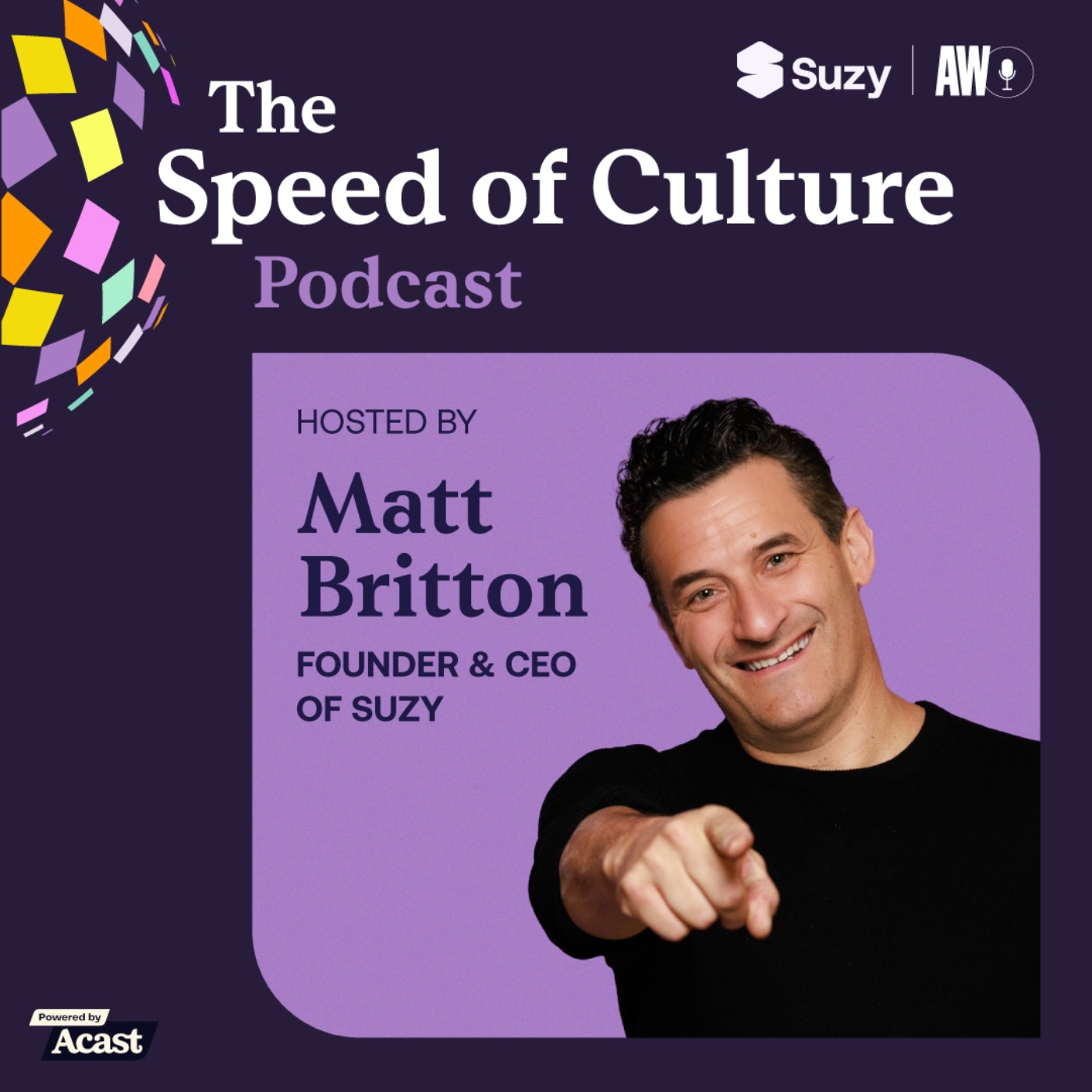
 The Speed of Culture Podcast
28 Jul 2026 · 20m · 15 chapters
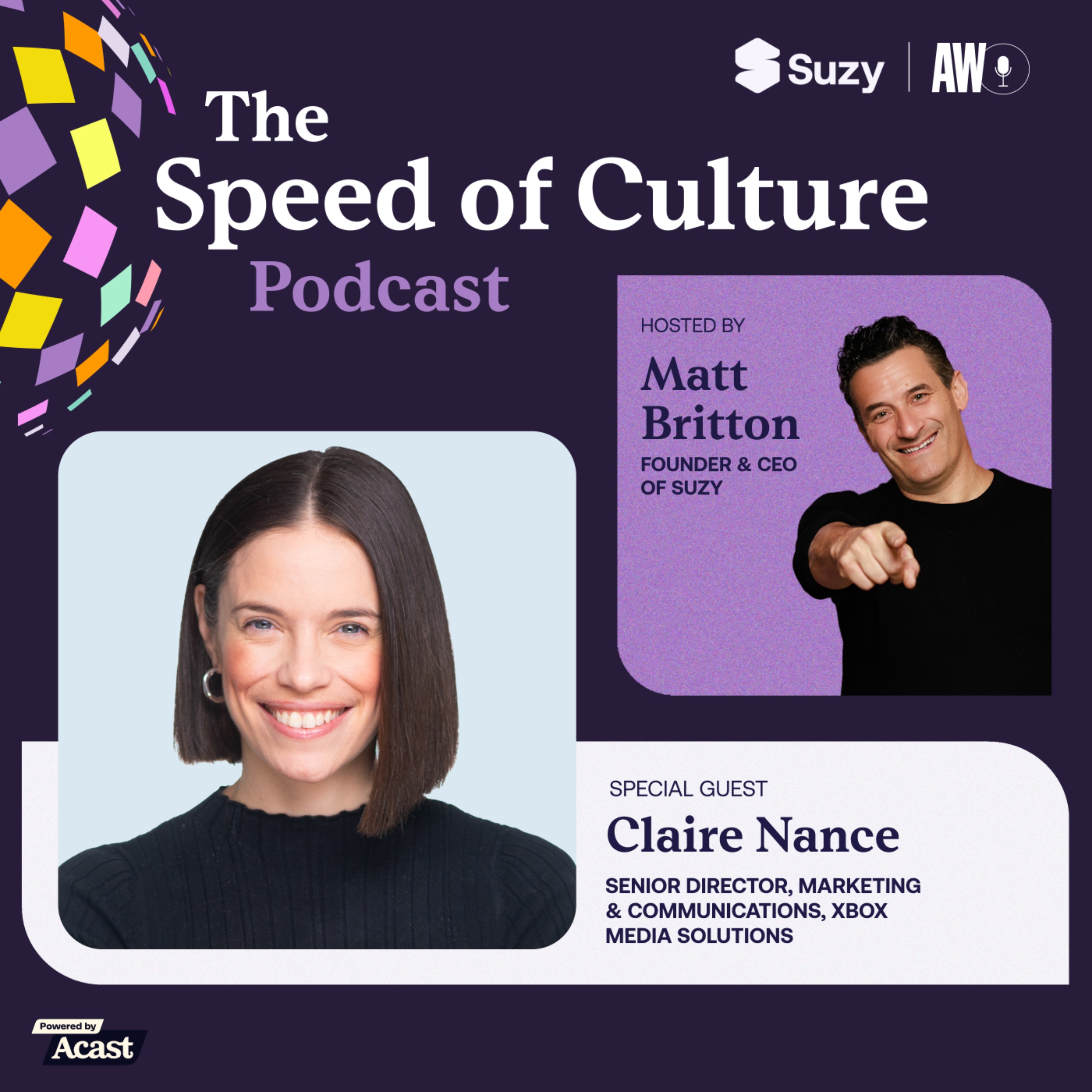
Xbox Media Solutions explains how brands should navigate the gaming advertising ecosystem, emphasizing player-first, opt-in formats, and a rubric for ads in/adjacent/outside games.
Claire Nance, Senior Director of Marketing Communications at Microsoft’s Xbox Media Solutions. Previously at Activision Blizzard, one of the first marketing communications hires for an early ads business; Activision Blizzard was later acquired by Microsoft.
Gaming is massive (3.6B gamers globally; ~80% of U.S. people play). Xbox can offer cross-platform ads (mobile, PC, console) and uses a “player first” philosophy (no disruptive ads). Ads should be placed at natural breaks and be additive, not interruptive.
rewarded video in mobile games like Candy Crush (watch ad to earn rewards); playable ad mini-games; Xbox dashboard ad units; “intrinsic vs adjacent vs outside” framework (intrinsic not offered by Xbox).
Written by AI. May contain mistakes.
Meet Matt Britton and Claire Nance, discussing gaming and marketing.
“Over 4 million businesses have skipped the line with Stamps.com.”
Meet Matt Britton and Claire Nance, discussing gaming and marketing.
“In gaming, we've already got that attention.”
Explore Claire's career from Activision to Xbox Media Solutions.
“We're here live in South Beach at the Possible Conference, and today we are thrilled to welcome Claire Nance, the Senior Director of Marketing Communications at Microsoft's Xbox Media Solutions.”
Discuss how the Xbox Media Solutions rebrand affects gaming ads.
“in the advertising industry and how that's evolved.”
Understand the growth and demographics of the gaming industry.
“You know, with that, the depth and breadth of the portfolio that we have.”
Learn about the evolution of gaming technology and experiences.
“So that shift, you know, what we saw with COVID, there was obviously a lot of people kind of picking up gaming again.”
Discover how mobile gaming increases accessibility for all.
“Yeah, I still think the mobile gaming space is growing because it's that access.”
Examine how ads are integrated into games without disrupting play.
“My last question, the gaming space is obviously Xbox has Game Pass and it's a subscription service.”
Examine how ads are integrated into games without disrupting play.
“behind unified reach and what that could mean for how your campaigns are measured and valued.”
Explore the different types of gaming ads and their impact.
“Over 4 million businesses have skipped the line with Stamps.com.”
Explore the different types of gaming ads and their impact.
“How about in-game advertising like you're playing FIFA World Cup and you see banners on the field?”
Discuss emerging technologies and how they will shape gaming experiences.
“There's a lot of different formats, a lot of different genres.”
Learn how to break down misconceptions and engage with brands in gaming.
“So we're here at the Possible Conference in Miami.”
Discover non-linear career paths and opportunities in the gaming industry.
“And I think I would imagine one of the big selling points is just the level of engagement that you have from this audience.”
Wrap up the conversation with final insights and reflections on gaming.
“I think about the gaming space with you and really thankful that you said to take the time out of your busy schedule here if possible.”

Get the gist, explore an idea or ask about something said.
 Claude
On The Speed of Culture Podcast, what are the key points of this episode?
Searching your listeningAutomatic transcript. May contain errors.
0:00Brand Week is back September 15th through the 17th in downtown Atlanta. And if you're serious about where marketing is going, this is the room for you. I'm Jenny Rooney, Chief Brand and Community Officer at Adweek. And for three days, we're bringing together the sharpest minds in marketing for the ideas, insights and connections shaping what comes next for brands. Get your tickets now at brandweek.com and use code BW26 for 20 % off. That's brandweek.com, code BW26. Still waiting in line? Again? That's time you'll never get back. Save time and money with Stamps.com. Over 4 million businesses have skipped the line with Stamps.com.
0:43Join them to save up to 90 % off carrier rates from your computer or phone right now. Print postage for certified mail, registered mail, and packages in seconds. Then schedule a pickup right from your home or office. For a limited time, go to stamps.com and use code podcast for a free welcome gift. Taxes and fees apply. If you like marketing conversations with actual receipts, I've got a podcast for you. The Marketing Architects digs into effectiveness research behind what drives growth, especially on topics marketers love to debate, like what happens when brand and sales goals collide. It's thoughtful, a little contrarian, and focused on ideas you can take back to your team.
1:22Search for the Marketing Architects podcast wherever you're listening right now. Marketing Architects. Blowing ad budget on metrics that look great till the CFO sees them. That's bull spend. And marketers are calling it out in dashboard confessions. I remember telling my boss, it'll be good for the brand when leads were slow. Yeah, it wasn't. Cut the bull spend. LinkedIn lets you target by company, job title, and more. Advertise on LinkedIn. Spend$250 on your first campaign and get a$250 credit. Go to linkedin.com slash campaign. Terms and conditions apply. As marketers traditionally, we think about, like, we need to get attention.
2:03Like, how do we cut through? How do we capture attention? In gaming, we've already got that attention. To thrive in a rapidly evolving landscape, brands must move at an ever-increasing pace. I'm Matt Britton, founder and CEO of Suzy. Join me and key industry leaders as we dive deep into the shifting consumer trends within their industry, why it matters now, and how you can keep up. Welcome to the Speed of Culture.
2:31We're here live in South Beach at the Possible Conference, and today we are thrilled to welcome Claire Nance, the Senior Director of Marketing Communications at Microsoft's Xbox Media Solutions. Claire leads B2B marketing communication for Microsoft's gaming advertising business, helping brands understand why gaming has become one of the world's most powerful channels for culture, connection, and modern entertainment. Claire, so great to see you today. It's great to be here. Absolutely. Thank you for having me. So you've been in the gaming space for quite a while, correct? Yeah, yeah. So tell us about your journey.
3:00Yeah. So I was previously at Activision Blizzard, which is one of the world's biggest video game partners. And then, of course, Activision Blizzard was acquired by Microsoft a number of years ago now. I came into Activision Blizzard. They had kind of what was back then a very early stage ads business. And I came in as one of their first Marcoms hires. And it was my job was really like, how do I help the industry understand gaming and the ad industry and marketers understand gaming? And so it helped kind of like build that team and build that business from scratch. And then now since the Microsoft acquisition, we're now under the Xbox Media Solutions banner.
3:34So we've kind of had this rebrand, which is really exciting and represents more of the properties that we're now going out to market with. So I've been in this space for a long time, as you mentioned, and really seen, I think, the evolution of the conversation around gaming amongst marketers and in the advertising industry and how that's evolved. How has life changed for you and your other colleagues formerly at Activision since the Microsoft acquisition? Yeah, I mean, it's been really exciting. We have the power of Microsoft, which is obviously one of the biggest and best companies in the world.
4:04And to have that kind of power behind us, it now means for us in terms of like the amplification of the message and the storytelling that we're able to do, we're able to do that so much more. And even from a product perspective, when we were on the Activision Blizzard side, we were mainly talking about mobile gaming. So ads within the mobile gaming space. Candy Crush is, you might have heard of it. I can't get my mom off of it. Yeah. You know, I think it's one of the most ubiquitous mobile titles, right? Yeah. And so we were doing a lot in the mobile space. post-acquisition, we're now also in console, we're now also in PC.
4:40So when you think about the gaming landscape and you think about it through these kind of like these three channels or these three platforms, mobile, PC, and console, we now have an offering across that entire spectrum. Whereas previously, we were much more focused in the mobile space. So for us, that's been a really, I think, important step for us as a business, but candidly, even for the gaming ads industry in the gaming ad space because no one else can really compete with us through that lens. Yeah. You know, with that, the depth and breadth of the portfolio that we have. And so being able to work with marketers and brands and have them come to us and say like, yo, I'm interested in gaming.
5:17Like, where do I start? We can now help them be like, this is the best channel or the right audience for you rather than having a narrow portfolio. Right. So gaming is big. Just how big is it? I know like during COVID, obviously, when you were stuck at home, all they could do is play video game. Five years later, what is the state of gaming today? And what are some of the areas that are growing the fastest? So does this stat, you're going to hear it a number of times if you haven't already, 3.6 billion gamers globally. That's the number that gets taught a lot. I think it's about 80 % of people in the U.S.
5:50are playing games. So like, wow, that's a lot of people from mobile games. Absolutely. iPhone. Absolutely. Absolutely. Xbox hardcore. Yeah, absolutely. And I do think one of the reasons that there's not this quite, like, this understanding of the power and just how big gaming is, is because a lot of people don't call themselves gamers. Or they don't think of, like, the mobile game and playing Candy Crush. Like, is that gaming? Right. And it is, right? And we see that of those numbers. It's 3.6 billion. Like, it's so ubiquitous. Big number. It is really big. Yeah. So that shift, you know, what we saw with COVID, there was obviously a lot of people kind of picking up gaming again.
6:24And we actually saw that it was more people returning to gaming. So people who had played maybe when they were younger and still had that console at home. COVID happened. They actually like picked it up again because they had a little bit more time. It was a great way for social connection. Like, wow, this is not like Atari growing up. Yeah. Just for those who haven't played video games in a while, like it's just incredible. Just the evolution that the gaming experience has undergone. It's so lifelike. It's incredible. Exactly. Well, even when you think about mobile games, too, like the technology advancement in mobile games, too, like from where it was to where it is today, like the level of graphics that you can have.
7:00And connectivity with other people. Yeah. And that was a big thing during COVID, obviously. But I think even beyond that, that it wasn't just about, oh, having a call with someone, like sharing an activity together. Right. So when you're gaming and you're just, you know. Share the experience. Exactly. And that's really, really important. So I do think that sometimes gets missed when we think about this idea of gaming. And I think this kind of like social connection piece, we see that extend outside of the game as well. So a lot of gaming audiences are connecting off platform. So even again, I know I've mentioned Candy Crush a couple of times here, but we actually, that is a single player mobile game.
7:35But we actually see that communities connect in forums offline to talk about like their favorite levels and like why is this level so hard? So that connection extends like, yes, some of it is in game and those multi-game experiences, but it also extends beyond that. So I think when you ask about the state of gaming today, I think it's continuing to grow. We see that gaming is kind of this precursor for technological advancement. So we know that people use gaming as a way to really understand technology and understand it through play. And so I think we're seeing kind of this evolution there. We're seeing the technological advancement there and kind of getting bigger and better.
8:13And what are some of the fastest growing titles or categories that you're seeing across the gaming landscape here in 2026? Yeah, I still think the mobile gaming space is growing because it's that access. Yeah, just like anybody can grab onto it. You can, right? That's for all ages. You don't have to be a gamer. You have essentially like a gaming device in your pocket. It removes a barrier to entry. And I think some of the barriers to entry historically was the card cost of a console, right? And the equipment. Then you're adding on the games. And so if you're not sure, like that's a lot to kind of commit to up front.
8:45Mobile gaming, there's the device piece. You already have the hardware. You don't need that level of investment. But I think the other critical piece is that the mobile game development and the gameplay itself and the mechanics are actually created so that it's really easy to start playing a game and enter into playing a game. Like you can pick up a new game and get really comfortable and familiar with it. And they're designed that way. It's not really a learning curve. Yeah, yeah. It's complicated. So I do think this idea of access is really important. And candidly, that's also where we see the kind of like the ads piece and the media piece come into play.
9:18Because that can play a really critical role in providing audiences with more access to more games or titles through a monetization kind of stream that hasn't necessarily been used in gaming before. The advertising piece in a second. My last question, the gaming space is obviously Xbox has Game Pass and it's a subscription service. Yeah. I was growing up and I went to have a Nintendo game. I'd have to go to the store, buy the cartridge. Yeah, yeah, yeah. And then over time you were able to download it, but you had like a day to download it. Now it downloads instantly and now you could subscribe.
9:51And is that how you're seeing more people in the console world actually access games? I think it's one of the ways. I do think it's about giving people choice so that they can choose how they want to engage with the games, whether it's through the subscription model, whether it's still through the purchasing, the title as we talked about. Not buying CDs. Yeah, you know, the digital stores make it a lot easier these days. But I do think we've seen, and we've seen this in CTV as well, like the shift to that subscription model. There's an understanding and a comfort level for consumers with that.
10:20So I think it really is about choice, giving gaming audiences the options so they can play how they want to play. They can access the games how they want to play because not every person who plays games is the same. So your role, obviously, is to drive awareness and buy-in to a gaming platform under Microsoft's Xbox Media solution. Yeah. So ultimately what that means is you have a massive audience of people who are playing games, to your point, across multi-digital devices, and you can reach them. Yeah. So tell me about how that works. Like, am I seeing ads when I'm playing games or is it something a little bit more subliminal?
10:56Yeah, yeah, yeah. I think like the really critical piece and core kind of philosophy that we have operated under, and this was back in Activision Blizzard days and it continues today, is every experience, like we are player first in terms of any ad or brand experience, whether it's in the game. Go ads first, forget about it. Yeah. And like what I used to kind of say to people a lot is like we are a game publisher first. So like the studios that we work with are very careful about the experience for the players. And they will not let us put a bad ad in the game, which is a good thing, to be clear, because that means a better experience for players, better outcomes for brands.
11:32So I think when we look at the mobile space, that's where we really think about like rewarded video. So where there's those natural breaks in gameplay, everything we do is opt in. So you're playing Candy Crush, you get to the end of the level, you run out of lives. You have an option to watch an ad and then you get rewarded. Or you can purchase more coins, right? It's like, yeah. Oh, you can do neither. Right, right, right. But you get rewarded for watching the ad experience. We also have playable ad experiences, which are really fun. So there's this value exchange. And I think that is really critical and making sure that it's in these natural moments.
12:04It's not, yeah, nothing's popping up during gameplay. Like we've all played those mobile, you know, back in the day, like your mobile games and the ads and you're trying to exit out of it. And that is very much not the experience. And then when you think about the console side of things with the Xbox dashboard, we have ad units that sit on the dashboard itself. So that's kind of like the entryway. People are selling first-party games or? Yeah, games. Yeah, exactly. Entertainment partners as well. So that dashboard is really like the entryway into this gaming ecosystem, this entertainment ecosystem.
12:34So nothing about it is disruptive. It's fitting like very seamlessly within to the environment. And again, there's often that kind of like, how is this adding value for the player and being additive to the player experience? We'll be right back with The Speed of Culture after a few words from our sponsors. If you like marketing conversations with actual receipts, not vibes, not vanity metrics, quick recommendation for you. I've been listening to the Marketing Architects podcast, and it's one of those shows that makes you stop and think for a second. They dig into effectiveness research around topics marketers love to debate, like TV advertising, measurement, AI, and what happens when brand and sales goals collide.
13:10It's thoughtful, little contrarian in the best way and focused on ideas you can take back to your team. For smart, honest marketing conversations on crafting goals your CMO and CFO agree on, search for The Marketing Architects wherever you're listening right now. Marketing Architects. What counts as a video impression? Sounds like a simple question, but it isn't. Because when it comes to unified reach, different measurement providers can evaluate the exact same campaign and deliver very different results. And those differences matter. In fact, 79 % of agencies and marketers say that if they don't feel confident in unified reach metrics, they cannot fully trust campaign outcomes.
13:52So Warner Brothers Discovery Advertising took a closer look. The result is a new white paper, The Unified Reach Paradox. Learn what's really driving the differences behind unified reach and what that could mean for how your campaigns are measured and valued. Different assumptions, different results. Download the full report today. Visit advertising.wbd.com slash unified. That's advertising.wbd.com slash unified.
14:44And use code BW26 for 20 % off. That's brandweek.com, code BW26. Still waiting in line? Again? That's time you'll never get back. Save time and money with Stamps.com. Over 4 million businesses have skipped the line with Stamps.com. Join them to save up to 90 % off carrier rates from your computer or phone right now. Print postage for certified mail, registered mail, and packages in seconds. Then schedule a pickup right from your home or office. For a limited time, go to stamps.com and use code podcast for a free welcome gift. Taxes and fees apply. How about in-game advertising like you're playing FIFA World Cup and you see banners on the field?
15:33Is that part of your offering as well? That's not part of our offering. Yeah, I know that there are some ad tech companies out there that do. That's kind of what we call intrinsic advertising. So that's when you think of you're playing that car racing game and you see the billboards, you know, on the road. Toyota and Toyota is actually paying for the drugs. Exactly. So that's intrinsic advertising. So I think a really helpful way to think about gaming advertising is through this kind of this rubric, which is in the game, adjacent to the game and outside of the game. Got it. So in the game is that intrinsic, like you're actually seeing the ad within the gameplay experience itself.
16:09Does Xbox doesn't do any of that even with its own first party games? Xbox does not. Wow. Yeah. So again, it's really about that player experience, but I know that other games and other ad tech companies do that. So intrinsic is that in the game example. The adjacent to the game is what I talked about, the rewarded video, like natural breaks in play, the opt-in. That's a really clear example of that. And then the outside of the game is like when I was talking about these communities that connect off platform. And so that can be even things like streamers, you know, the watching, like that kind of component.
16:42Esports is obviously really big as well. That's where we see that outside of the game. So I think thinking about like in the game, adjacent to the game and outside of the game is like a helpful rubric to understand. Like there is a complex ecosystem. Gaming advertising is there's a lot there. There's a lot of different ways to advertise. There's a lot of different formats, a lot of different genres. And so having that rubric can help simplify it for brands a little bit. So I would imagine that if an advertiser is coming to Xbox Media Solutions, based upon the title, that title has a certain demographic that they're going to want to reach.
17:15So that will kind of dictate the types of titles that they will advertise on. Yeah, I think like one of the things we think about when we work with brands is like know your objective and know your audience. So rather than coming in and being like, I want to do gaming, if you kind of really focus on like what it is as a brand that you're trying to achieve, who is the audience that you're going to reach? We can then work with those brands and be like, hey, this is the type of experience that's going to match that. Yeah. This is the type of, you know, you look at something like Candy Crush and Call of Duty, not necessarily going to have crossover in terms of audience.
17:47So like it is actually about even though gaming can be this kind of like overwhelming and a little bit complex for brands, actually really simplify it and taking it back to that core starting point as a marketer of like, who am I trying to reach? What am I trying to do? First principles. And then, you know, kind of figuring out, OK, what is the right gaming experience? How much is that? And is this a programmatic media buy or is it just sort of like one off premium buy? Within the mobile space, we do both. So we sell programmatically. And then we also have bespoke, like those playable mini games that I talked about, more bespoke experiences as well.
18:24So we have a bit of a spectrum. Got it. So more broadly, where do you see the gaming space going? I was at CES this year. Yeah. So many innovations, especially when you bring in the power of AI. Yeah. The gaming experience, I mean, some people are talking about how people are going to be able to put themselves in the games and write the future. Yeah. Like, where do you see that? You obviously are passionate about the gaming space. Yeah. Just personally, where do you see it headed? Yeah. I think, again, we're going to see more people playing. And I think the more technology grows, the more we're going to see some of those access barriers.
18:53Like, it's going to be even easier to game. And I think we're already seeing that. And we're seeing this kind of more people are playing different types of games. And I think we're only going to see that continue. And I think the technological advancements are going to be really exciting because there's going to be more that can be done within a game environment and more immersive styles of play and different styles of play. And I think that's going to just continue to attract more people. So I think gaming as a space is somewhere that really is able to kind of like push the boundaries a little bit more.
19:22And I'm excited to see where that goes. Yeah. So we're here at the Possible Conference in Miami. And obviously, I'm sure top of your list is getting an audience with the right people to tell the story about why this is a powerful medium. What are some of the effective ways that you've been able to capture the attention of advertisers like from a B2B marketing standpoint? What's worked? The biggest part of my job is actually not even selling kind of Xbox or Activision Blizzard. It's actually selling gaming. And really a lot of what I do is this education piece. And that's kind of the core part of my job.
19:56Like what we're doing today through this conversation. Exactly what we're doing today, which is like breaking down like some of the misconceptions about gaming. So like teenage boy in the basement, you know, that kind of stereotype, which is very much not who the gaming audience is today. So breaking down some of the misconceptions, helping them understand the space, understanding the different ways they can activate. That's really like the core, almost like overarching kind of part of the job because the titles and the platforms that we work with and some of the IP we work with is some of the best in gaming.
20:27You know, it's so well known. So it's less about selling that and more really about that education piece. Yeah. And I think I would imagine one of the big selling points is just the level of engagement that you have from this audience. You know, they're a captive audience. 100%. They're engaged in what they're doing. And if you reach them contextually and you can put your brand into that environment, because we're in a world where everyone's clamoring for attention. There's a million things popping up in every direction. But when you're immersed in the game, it's almost like no other experience.
20:55And it's a great place for a brand. We often say that gaming superpower is its immersion. Like, as you said, like when you're in that game, that's all you're thinking about. And so again, as we think about these brand experiences, for us, it's not about disrupt. We don't want to break that immersion. We want it to be much more seamless and it's almost thinking about it the opposite way. Like as marketers traditionally, we think about like, we need to get attention. Like how do we cut through? How do we like capture attention? In gaming, we've already got that attention. So we actually don't want to be breaking it.
21:26We want things to feel seamless within that environment. Yeah. So as we wrap up here, a lot of our listeners of the podcast are younger listeners who at the beginning of their career and a lot of people always told, do what you're passionate about. And obviously gaming is a passion point. Yeah. Just curious how you found your way into the gaming space and any advice you might have for some of our young listeners to follow their dreams as to what they're most passionate about. I think the biggest piece of career advice I always say is careers are not linear. You know, you kind of often start out in your career and you think there's this path that you're going to follow.
21:57My career was not linear. I've worked in TV, I've worked in media, I've worked in advertising, and now I find myself in gaming. I came into the gaming space through advertising. So I previously worked at IPG. So again, a very non-traditional way to come into the gaming space. I think for people who are really interested in gaming, I always kind of remind them that there are so many different types of roles in the gaming space. You don't just have to be like a game developer or an engineer. You can work in HR, you can work in marketing, you can work in all these different facets of the industry.
22:27So I always like to remind people that there's probably jobs out there they didn't even realize and in the future haven't even been invented yet when we think about mine. So, yeah, I always kind of tell people to really think big and broad. And if you're passionate about it, you have conversations with people in this space and learn and just know your stuff. Very cool. So to wrap up here, we always ask our guests if there's a saying or mantra. Yeah. That's helped sort of encapsulate their career journey. Just what is yours? Mine is where's the benefit. Okay. And it's a question I ask myself before doing anything.
23:02And it's if we're going to be doing something, whether it's we're going to be doing a marketing campaign or we're going to be doing some kind of activity or making an investment in something, where is the benefit in doing that? And being really crystal clear on the why rather than just doing. Because I think especially very fast-paced environments, there's a lot going on. There can be this kind of tendency. Especially with AI, it lowers the barrier to entry in almost anything. But if you don't know why you're doing it, you're just going to be doing a lot of doing and not making a lot of progress.
23:29Exactly. So that was the benefit. It's a question I ask my people. I love that. Well, lots of benefit today. Absolutely. I think about the gaming space with you and really thankful that you said to take the time out of your busy schedule here if possible. Thank you. Share with us and wishing you nothing but success in 2026. Thank you. It's a great chat. It's a great space. Exactly. Absolutely. On behalf of Susie and I, we team. Thanks again to Claire Nance, the Senior Director of Marketing Communications at Microsoft's Xbox Media Solutions for joining us today. Be sure to subscribe, rate, review the Speed of Culture podcast on your favorite podcast platform.
23:58Until next time, bye-bye.
24:24Click follow so you don't miss out on any future episodes. On behalf of the team here at Susie, thanks for listening.
24:54My boss asked for results, so I opened my dashboard for the only positive-sounding metric I had. Impressions. Cut the bull spend. See revenue, not just reach. LinkedIn delivers the highest return on ad spend of major ad networks. Advertise on LinkedIn. Spend$250 on your first campaign and get a$250 credit. Go to linkedin.com slash campaign. Terms and conditions apply. Brand Week is back September 15th through the 17th in downtown Atlanta. And if you're serious about where marketing is going, this is the room for you. I'm Jenny Rooney, Chief Brand and Community Officer at Adweek. And for three days, we're bringing together the sharpest minds in marketing for the ideas, insights, and connections shaping what comes next for brands.
25:37From culture and creativity to growth, leadership, and consumer behavior, Brand Week is where brand leaders come to think bigger, connect deeper, and leave with a clearer plan for what's ahead. Get your tickets now at brandweek.com and use code BW26 for 20 % off. That's brandweek.com, code BW26. Your team just added its 67th AI tool and also your 67th security blind spot. The good news? The Vanta agent works like a GRC engineer in the background, finding every app your team uses, scoring the risk, and drafting fixes for you. Vanta is the platform used by over 16 ,000 fast-moving companies like Ramp, Cursor, and Harvey, who are shaping the future with AI and staying ahead of AI risk.
26:22Get started at Vanta.com.
In this episode of The Speed of Culture podcast, Matt Britton welcomes Claire Nance, the Senior Director of Marketing Communications at Microsoft's Xbox Media Solutions. Claire explains the transition of the gaming business following Microsoft's acquisition of Activision Blizzard and how the company now offers a full spectrum of opportunities across mobile, PC, and console. The discussion focuses on the global reach of 3.6 billion gamers, the role of mobile gaming in providing universal access, and why the industry must move past outdated stereotypes to understand the modern gaming audience. Claire also shares her philosophy on player-first advertising and her non-linear career path that led her into one of the most immersive sectors of entertainment.
Follow Suzy on Twitter: @AskSuzyBiz
Follow Claire Nance on LinkedIn
Subscribe to The Speed of Culture on your favorite podcast platform.
And if you have a question or suggestions for the show, send us an email at [email protected]
Hosted on Acast. See acast.com/privacy for more information.