Ask ChatGPT
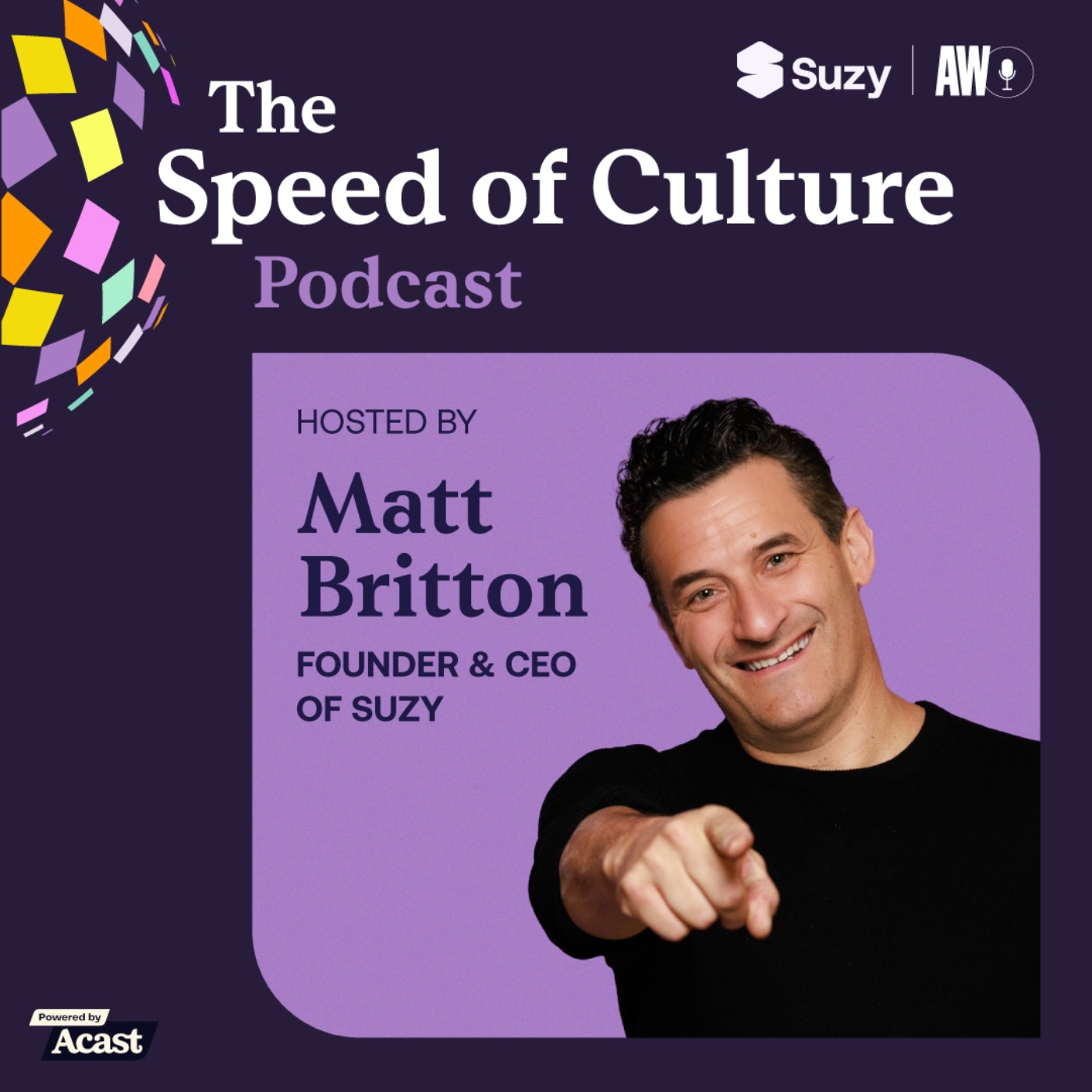
 The Speed of Culture Podcast
27 Oct 2026 · 27m · 11 chapters
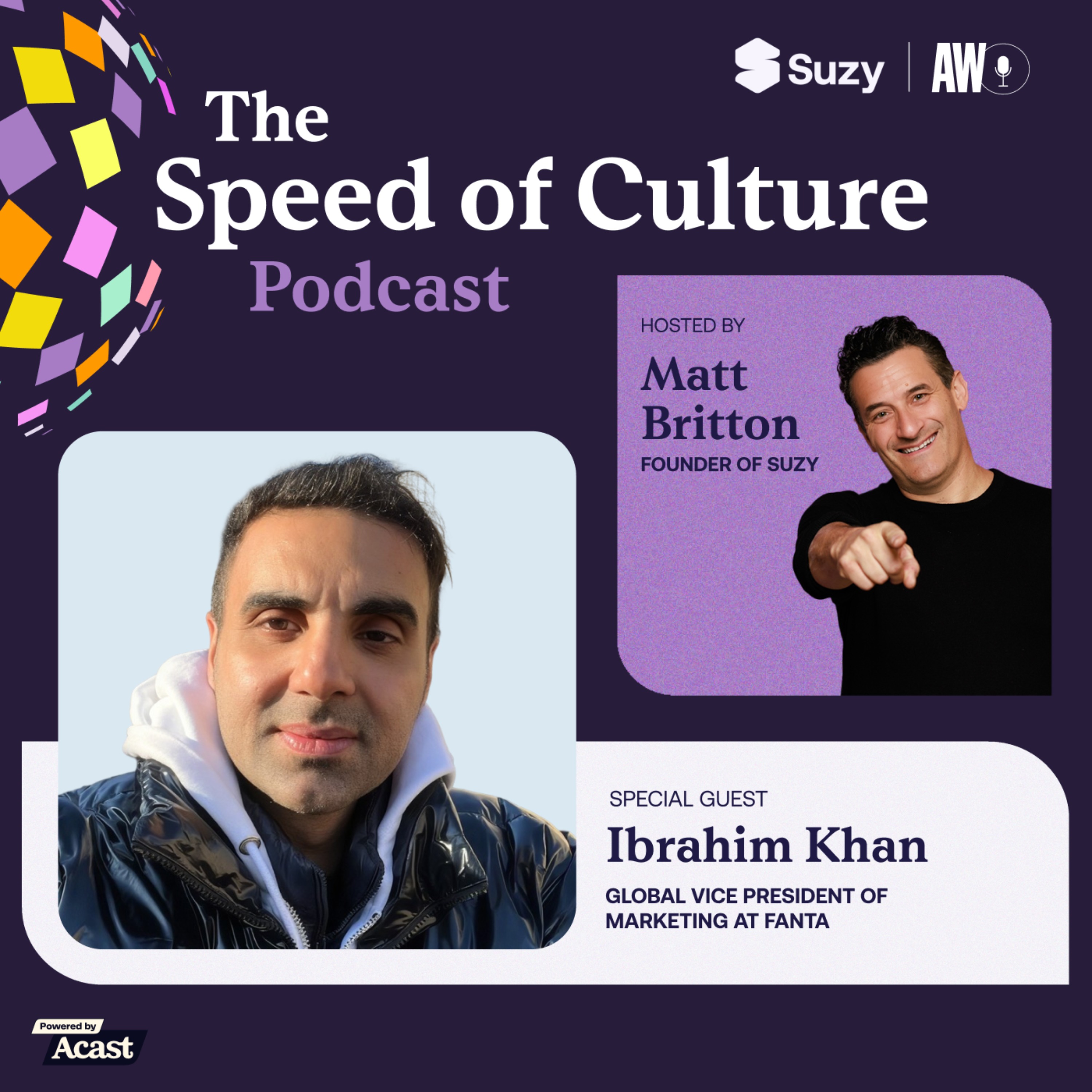
Marketers should stop chasing vanity metrics and “TV-era” brand building; consumers now “hold the mic,” so brands must drive attention through the full product/retail/live/paid bundle. The episode also focuses on Fanta’s global Halloween platform and how AI can support creative work while humans keep the taste and ethical decisions.
Ibrahim Khan, Global Vice President of Marketing at Fanta. Nearly two decades in beverage marketing across Coca-Cola, Sprite, and Fanta in global markets including Pakistan and Southeast Asia.
Brand fundamentals (e.g., Fanta as tasty, fun refreshment) stay consistent across markets, but consumer experience changes via channels, language, and cultural consumption occasions. Packaging must cut through “infinite shelves” and match local cultural expectations. Halloween partnerships should be authentic to the product.
Fanta’s Haunted Universe with AI entertainment studio Grail; scaled Halloween platform in 2024; prior collaborations with Warner Bros. and Universal (horror crossover, including Ghostface).
Written by AI. May contain mistakes.
Ibrahim discusses his global marketing experience and fundamental brand principles.
“Up today on the Speed of Culture podcast, we're thrilled to welcome Ibrahim Khan, the Global Vice President of Marketing at Fanta.”
Ibrahim explains how Fanta defines its competition across different contexts.
“If people buy your brand because it tastes good, that's probably why they're going to buy it anywhere in the world.”
A discussion on how cultural relevance affects brand strategy in different markets.
“Look, for me, I'm a very big product purist.”
Insights on how packaging must adapt to market needs and consumer expectations.
“Because as a CPG marketer, obviously, we've seen post-COVID the way that people purchase your product changes.”
Ibrahim shares Fanta's connection to Halloween and how they leverage the occasion.
“And so packaging then also becomes very important in that, in terms of how you express it in one culture versus how you express it in another culture.”
Discussion on the role of AI in Fanta's creative marketing initiatives.
“I mean, look, let me start off by saying we've been doing Halloween on Fanta for the better part of the last 10 years.”
Explore how technology, especially AI, impacts the creative process in marketing.
“And that's really the role that technology plays in this.”
Understand strategies for brands to gain consumer attention amidst a noisy market.
“How do you look at gaining attention, making sure that some of these initiatives like Haunted Universe actually gets in front of the consumer and captures eyeballs?”
Discover career reflections and advice from a Coca-Cola marketing executive.
“So yeah, you have to think through these things for sure.”
Discuss the shift in marketing strategies as consumers move away from traditional TV.
“of what you think will make the next marketing leader?”
Wrap up insights on collaboration and the future of marketing.
“factor of TV is still there, but people are also time shifting and streaming.”

Get the gist, explore an idea or ask about something said.
 Claude
On The Speed of Culture Podcast, what are the key points of this episode?
Searching your listeningAutomatic transcript. May contain errors.
0:00Ibrahim Khan: Are your ad campaigns lighting up the dashboard, but not the pipeline? That's bull spend, and marketers are calling it out in dashboard confessions. My boss asked for results, so I opened my dashboard for the only positive-sounding metric I had. Impressions. Cut the bull spend. See revenue, not just reach. LinkedIn delivers the highest return on ad spend of major ad networks. Advertise on LinkedIn. Spend$250 on your first campaign and get a$250 credit. Go to linkedin.com slash campaign. Terms and conditions apply. I think as a marketing community, we need to get through the hangover of the TV era.
0:3720, 30 years ago, you could build 99 % of the opinion of a brand, making one thing, and it was called a 30-second TVC. Frankly speaking, I think it made us a little bit lazy as an industry. To thrive in a rapidly evolving landscape, brands must move in an ever-increasing pace. I'm Matt Britton, founder of Suzy. Join me and key industry leaders as we dive deep into the shifting consumer trends within their industry, why it matters now, and how you can keep up. Welcome to the Speed of Culture.
1:15Up today on the Speed of Culture podcast, we're thrilled to welcome Ibrahim Khan, the Global Vice President of Marketing at Fanta. Ibrahim brings nearly two decades of marketing experience across some of the world's biggest beverage brands, including Coca-Cola, Sprite, and Fanta across global markets. He now leads global strategy for Fanta, an$18 billion retail value brand that's going beyond advertising that creates own entertainment. So great to see you this morning, and thanks for joining the podcast. Thank you for having me, Matt. Great to be here. Absolutely. In looking at your background, I've seen that you've sort of built your career across a pretty wide global spectrum, including markets like Pakistan, Thailand, and Southeast Asia, and now on the global stage.
1:55If you look at your sort of career journey, what's one principle that's really held true everywhere on a global level and one that you've had to kind of completely rethink when you've gone to a new market? Yeah, well, Matt, let me start by saying it's quite a privilege to have the opportunity to work across markets that are diverse and now on a global scale and on a handful of brands in the world that give you that opportunity. So that's great. I think going from small single markets to big giant markets, multi-market roles, and now in a global role, the biggest thing I reflect on is how the fundamentals of a brand or a business rarely change when you go from one market to another or even at a global scale.
2:40If people buy your brand because it tastes good, that's probably why they're going to buy it anywhere in the world. You know, unless a brand has a very distinct and different history in terms of how people grew up with it in a market, that rarely changes. I think what does change when you travel around the world and work in different markets, and now from a global perspective, I see a lot of those differences, is how people experience a brand. The channels change. A consumer's day changes. Language certainly changes together with which market you're in. Language does make a bigger difference than we think it does.
3:16And so in other words, the fundamentals don't change, but how you can express or execute those fundamentals can change depending on the market. Right. And when you look at the Fanta brand, specifically the brand you're working on now, how do you define Fanta's competition? Is it around sort of the product category or the consumption occasion or even the consumer mindset? How do you frame that in a market that's really evolving so quickly? Look, for me, I'm a very big product purist. Matt, and when I say the fundamentals of a brand don't change, a lot of that stems from what the product is designed to do.
3:51And Fanta, at its very simplest, a very tasty refreshment and a very fun brand. And that is my competition. And so the most adjacent product categories would be soft drinks. But you go a little bit wider than that and you start to see other beverage categories come into play. But if you go a little bit wider than that, like take the context of Halloween, which is where we're live right now. Are we competing with confectionery? If you look at the marketing we're doing, are we competing with other sources of entertainment on Halloween? And so really, it depends on how you slice the market. But it also depends a lot on what the very basic truths about your product and your brand are.
4:32Yeah, of course, those basic truths remain. But when you go into all these incredible new diverse markets, I would imagine there is some notion of being culturally relevant, making sure you're sort of landing the plane to the local culture. What is your take on cultural relevance and how you actually scale that across all the markets? I think it makes all the difference, Matt. And having worked across so many different markets, you do see cultures and how assumptions can be almost your worst enemy in doing global marketing across those markets. I can give you a couple of examples like in the soft drink category, consumption with food is a very big occasion for us.
5:11But you see habits around consumption with food so dramatically different between Eastern and Western markets just because of how those habits were built or how those cultures consume liquids with their food and how they don't. And so that really dramatically changes how your brand and your business strategy come to life in a market. For example, in Asia, soft drink consumption with food is not as developed as it is in the West. And therefore, we have to lean in a lot more on what I call the leisure occasion for Fanta in Asia, but a lot more on food occasions here in the West. And that's a big difference if you think about how we invest our resources in marketing and building our business.
5:52And what about packaging? Because as a CPG marketer, obviously, we've seen post-COVID the way that people purchase your product changes. Obviously, we have the explosion of platforms like Instacart, which changes the way that people buy. How has packaging evolved for Fanta, whether it's the packaging form factor, size, or even the way that you merchandise it at retail? Yeah, I'll bring two thoughts together. One is your packaging needs to reflect more and more with simplicity and purity what your brand stands for. Like there's just a lot more that you have to cut through. Yeah, so much more noise, right?
6:29Yeah, exactly. If 20 or 30 years ago, you had to cut through a shelf with maybe an assortment of 20 brands, now you have to cut through a virtually infinite shelf where you can buy anything on demand, you know, and now with LLMs and AI is like, it's even vast, it's even expanding every day. So you have to be very, very clear what signals your brand and there's a few formats more important than packaging in terms of how you give that signal. But I'll also touch a bit on what you said earlier around cultural differences. is when I was in Asia and in that market, when you would go into the store and you would walk across the aisles and you'd see the packaging and you'd see the merchandising and you'd see the point of sale communication, it was very overwhelming at first.
7:13It almost felt like an attack on my senses, like my mind could not process the amount of information that I was being given in the store. And my instinct as a global marketer or marketer that was at least trained more on Western marketing principles, my instinct was to simplify. And it took me a couple of years to understand that for whatever the reason, then I never got quite to the bottom of it, that that was the norm in those markets. And consumers did expect that. And if you didn't go that route in terms of aesthetic, in terms of information, in terms of what you're providing to the consumer, you would get left behind.
7:50And that was something that then, you know, when I moved back into other markets, I realized that it's just one of those distinctions, which somehow stems from culture and you have to lean into them. And so packaging then also becomes very important in that, in terms of how you express it in one culture versus how you express it in another culture. Right. And I would imagine things like serving sizes as well. You talk about the occasions that people drink around the world. Well, I would think the serving sizes matter. as well. When you go to Europe, you see the cans smaller. So that's part of the overall picture as well.
8:25Absolutely. Absolutely. So you mentioned Halloween as a big moment for the brand. What is the connection between Fanta and Halloween? Why did you think this was the right moment to really lean into? Because I want to dive into something big that you're working on right now around the Halloween occasion. Well, I mean, to start off with, not every festivity needs a brand and not every brand needs a festivity. So you only do it if it makes sense. And I think the connection between Halloween and Fanta is pretty straightforward. Halloween is a festival of trick-or-treats. It's the one time of the year where you get permission to indulge a little bit in delicious food and drink and having a bit of fun.
9:04And Fanta is nothing if it's not delicious and fun. That's really what this brand stands for. And having said that, I am very disciplined, and we're very disciplined about making sure that our product has a genuine authentic role in the occasion and the festive that we're activating. You know, very often you start seeing brands marketing to passion points or to occasions or to trends where frankly the product has no business being and it becomes a very inauthentic effort. And so Fanta and soft drinks in general play a very big role in Halloween. Soda consumption is quite high during the occasion and therefore it also make sense for us to be there.
9:43And of course, this year around Halloween, the brand's taking a real creative leap with Haunted Universe, which is a big initiative that you're doing with the AI powered entertainment studio, Grail. Would love to hear more about that initiative and really dig deep into how you look at AI's role in the creative process. Yeah. I mean, look, let me start off by saying we've been doing Halloween on Fanta for the better part of the last 10 years. we've been doing it in smaller more fragmented ways across different markets it was really just three years ago we started to scale this into a global repeatable platform for the brand in 2024 we had our first effort the results were incredible that was a ip collaboration with warner brothers last year we did what we thought was even bigger we went with universal and we did this whole crossover collaboration into the horror genre.
10:39And what we started seeing was not just incredible results, but fans of the genre, fans of the festive, of the brand asking now not whether Fanta will do Halloween next year, but what will Fanta do for Halloween next year. And so it showed us the potential for this to become for Fanta what Christmas all that time ago had become for Coke. that required us to move a little bit, Matt, from this mindset of year-on-year collaborations into something that we could build for many, many decades to come. More of a platform. Yeah, exactly. A platform that we could invest in and build and give consumers a consistent but fresh experience every year.
11:21Something that, you know, the brand manager on Fanta 20 years would look back and say, who did that? Who thought this was it? I mean, so that's kind of what we're building towards. And this felt like the right time. Also, from a technology perspective, we felt like we could do things that we perhaps would have been unable to do 10 or 20 years ago. We're not the first brand to try leaning into entertainment and building our own entertainment IP. And we certainly won't be the last. It's not an easy thing to do, but we've been at this now for more than a year. It was somewhere last year that we made the decision to sort of build our own universe of characters and of stories and of lore and of experiences.
12:03And this space, you know, the one thing with Halloween that really took me by surprise is how giant horror fandom is and how passionate they are about it and how Halloween really horror is one way, such one effective way to get into Halloween. And so it's not something you want to step into with your eyes closed. You want to get in there really having done your homework, having done your research, thinking through, making sure it's relatable, making sure there's something fresh, because a lot of things have been tried and tested. And so we've been working on this, Matt, for more than a year. We've been researching archetypes from pop culture.
12:42We've been researching archetypes from different cultures around the world, because horror exists everywhere. we've been figuring out what is the best way to start and what is our roadmap going forward so we have a bit in the pipeline as well researching histories cultures lore sensitivities fandoms building our own story so you know the campaign that went live every character has a backstory that we are going to reveal bit by bit everything has some interconnection that we'll reveal bit by bit. This was just a first dipping our toes in the water, if you will. And Grail, which is our entertainment studio partner in all of this, has been invaluable because they come from the entertainment world.
13:26They come from the production world. And they've really been helping us do a lot of what we have done. Technology has enabled it, Matt. Like I often share with the team, back in the 80s, before computer graphics were a thing, everything was hand-drawn. It's hard to imagine any of the entertainment properties that my generation or generations following mine grew up with would have existed if people were still hand drawing everything. So I just don't think it would have happened. And so we're just at that next evolution of technology where now we can create even bigger worlds, bigger experiences.
14:02And that's really the role that technology plays in this. Yeah, it's so interesting because I speak to a lot of CMOs, marketing leaders on the podcast around AI's role in the creative process. And the overwhelming takeaway I get is that brands are sort of fearful that consumers are really going to push back. And it kind of like touches a nerve. But to your point, if you look at animation, like ever since we're kids, we look at animation and Disney. If you look at electronic dance music, which is so popular, which is music that's made by computers, I just don't think we're going backwards. And I think ultimately it's about how this makes the consumer feel and if it actually drives the entertainment value i think the way it's produced is secondary now obviously i believe there needs to be disclosure if you're using ai for creative if it's not a real person you obviously have to disclose it but just curious like do you find that in the marketing community that there is this fear what's your take on it overall look i think there are some genuinely important conversations that need to be had around this particular technology and what it implies for not just our industry, but for us as people.
15:17And there's a lot of those conversations online and some very smart people having them. So I don't want to dismiss or minimize any of that. I think those are important. I think, look, when it comes to marketing, a great deal of marketing is art. And art is something that at least for now, I believe is inherently human, you know, things around taste. And for example, would I want to outsource ethical decision-making to a computer? Absolutely not. You know, I don't think it can be creative the way that a human being can be creative. And I don't think it has the taste that a human being can have.
15:53And so all of those things, even now in the effort that we've done around Halloween, there are so many people, so many passionate people who have put their blood, sweat and tears into this program over the last year. And so is the fear there? Yes. Are there important conversations to have around it? Absolutely. But I think we can also do much better in helping people understand how we're using it and where humans are still playing the bigger role in all of this, which is the case in what we have done around Halloween. We'll be right back with The Speed of Culture after a few words from our sponsors.
16:29Ibrahim Khan: Are your ad campaigns lighting up the dashboard? But not the pipeline. That's bull spend. And marketers are calling it out in dashboard confessions. My boss asked for results, so I opened my dashboard for the only positive-sounding metric I had. Impressions. Cut the bull spend. See revenue, not just reach. LinkedIn delivers the highest return on ad spend of major ad networks. Advertise on LinkedIn. Spend$250 on your first campaign and get a$250 credit. Go to LinkedIn.com slash campaign terms and conditions apply. When you think about, obviously, this is a huge content initiative, you're not going to be successful in driving ROI from a content initiative unless you capture the consumer's attention.
17:09And the same way that attention is so much harder to capture on shelf, as you explained earlier, it's also equally as hard just to capture attention in the world when they're being bombarded with messages from every medium constantly. How do you look at gaining attention, making sure that some of these initiatives like Haunted Universe actually gets in front of the consumer and captures eyeballs? I mean, look, there's a few things to think about in all of this. One is, you know, it's a little bit easier when you're working on a brand the size and scale of Fanta. I will say that. I mean, there's a lot that comes with that that I certainly won't take credit for.
17:45It has seven years of history and people much better than myself that have built that salience, equity and the distribution that comes with it. And so that definitely helps. But I think making sure that you're authentic to what you're trying to connect with. As I said, we could have been very lazy in terms of how we did this universe and the character building and the storytelling, but we weren't. We did a lot of homework and research and testing and feedback from consumers to understand and make sure that we're getting things right. And I think a little bit of that people haven't even seen yet.
18:22It's to come. And so it may be hard to see how deep we've gone in trying to be authentic as that. I think you want to be familiar and relatable. That goes without saying. So we could have invented characters and stories, or we chose to go with something that people can still relate to and find familiar to some degree in the context and in the season. And then you also want to be fresh. And that's really where the challenge comes. I was reading some comments. Every morning I wake up, I start reading comments on social media on the stuff that we're putting out there. Is that healthy? It certainly keeps you honest, I tell you that.
18:59But someone used this word, fresh consistency, which I love. And I think that's really what we're trying to do here. So we want to be consistent, but we also want to be fresh. And so look, for example, we decided that we don't want to close the door on collaborations. We want to find a way of bringing popular IPs and partners into this universe, which as you saw this year, we did with Ghostface. And that works both for the IP owner and for us because it was something surprising. It was something fresh and no one expected it. And so that could be one way of making sure that we're cutting through and people take notice.
19:36And over time, we start building what we're trying to build. So yeah, you have to think through these things for sure. So shifting gears, as we wrap up here, nearly 16 years ago, you started your Coca-Cola journey as a junior brand manager in Pakistan, Afghanistan region, and sort of like worked your way up the chain. And here you are in Atlanta as a global vice president of marketing, which is just an amazing story. When you look back at your career journey, especially during your Coca-Cola tenure, what are some of the things that you think you did right along the way to put yourself in the position to where you are today, where so many others, 99 % of others that would start in a more remote market would never end up in this position?
20:19I think there's more stories like MindMath than you would imagine. Or maybe I see them more often just because it's like what you've seen and what you see around you. And I think that's just one of those wonderful things about companies like Coke that give opportunities to people from anywhere in the world with any background. and if you have value to add to the company and to the business, you will get the opportunity in a company like Coke. I think that's really my biggest reflection on that. But you're taking yourself out of it respectfully. Like obviously there's something that you've done right to put yourself in this position.
20:57What would that be? Yeah, for myself, look, what I've always believed in, Matt, is being curious. A bit of it is just part of the personality, but also a lot of encouragement and opportunity. You get to be curious. You get to experiment on some really big brands with some really significant investments. You learn from that. You grow from there. You're encouraged to take risks. You should take risks early on in your career, whether it is career risk or whether it is risk with the work that you're putting in the market. I believe, and it's something that I try to build in the teams that I lead as well, Matt, in something called this sense of adventure.
21:36I feel like people need to wake up in the morning and look forward to what they're doing. It needs to be exciting. It needs to be fun, even if it's a little bit risky. And it needs to have sort of this shared experience. I think as a marketer, one of my biggest learnings or mantras is that it is a team sport. It's a bit of a peeve when I hear people say, I was the one behind such and such idea or such and such a campaign. There's many people, you know, who have been in the room and then who later on go to take credit for big things. I just don't think that's our profession or that's our industry or that's the sport we're in.
22:10It's a team sport. It's impossible to trace any one big thought back to any one single person. As is the case with anything big in the world, man, not just marketing, but anything. It's rarely just one person behind it. And that mindset honestly has helped generate more luck for me than I think I would have had I been of the mindset that it's me and just me. So knowing sort of where you're getting your help and your launching pads and the people who take bets on you and the teams that you work with, they help you go much farther than if you think you're doing it all by yourself. And to the next marketing leader, to somebody who, starting right now in a remote office and wants to one day move up the chain themselves, what's some advice that you have to people starting off on their journey in terms of areas that they should focus on and really key attributes of what you think will make the next marketing leader?
23:03Look, I'll give you an answer specific to our field on that one, which I'm particularly passionate about right now. And that is that I think as a marketing community, we need to get through the hangover of the TV era. If I may be very blunt on that, okay? Look, 20, 30 years ago, you could build 99 % of the opinion of a brand making one thing and it was called a 30-second TVC. you had a captive audience and the role that the tv played in a consumer's life was enormous your news your friends your family your discovery everything was centered around that and that's why it was such a powerful tool for us as marketers and frankly speaking i think it made us a little bit lazy as an industry and i think the more we can push ourselves out of that and i think marketing has come full circle back to the product and using the product as your most important channel to get people to talk about you, that will be my biggest advice in terms of skill set and thinking to the marketer of tomorrow.
24:11I think consumers hold the mic now, Matt. We don't hold the mic if they're not talking about what we're doing. Nobody cares. Taglines, copy, TV. It has a place, man, but it's just not as central as it used to be 20, 30 years ago. We need to think now four Ps. We need to think about the entire bundle. We need to think beyond just the communication that we do. And it's become way more important now and will continue to be with the advent of AI and with the advent of agentic shopping. Being clear about the full bundle that your brand offers and your product offers is the marketer's job, not just the communication.
24:53That's well put. And I think really accepting the end of this sort of TV industrial complex, it's kind of time we're there, right? You look at younger people, Gen Z, the average age of a first-time mother in the U.S. this year is Gen Z. She grew up with the iPhone in the household, not with the TV, right? So like this is no longer your alternative younger consumer. It's your core consumer that is not revolving their life around the television. Absolutely. And you'd be surprised, not just the young consumers, Matt. You know, I get to meet consumers around the world. We go in their homes, we see an old TV set catching dust somewhere in the corner of the room, and even grandma now gets her news from YouTube and TikTok.
25:32And it's just a different world. And not to vilify TV or TV advertising, it has its role. It's just not the same role that it had 30 years ago. Well, the form factor of TV is still there, but people are also time shifting and streaming. So, you know, I think obviously that's why the NFL commands such power, because it's the last bastion of live entertainment that you can really drive that traditional 30-second spot model over. Exactly. And if I may, you know, at Coke, like, we're very forward thinking about this, you know, so we start from the product experience, then we think about the retail experience, then we think about the live experience, and then we think about the paid experience of which TV is one part.
26:14And that's why we've been able to endure for as long as we have across our brands, you know, because it's just constantly evolving with the times. So to wrap up here, and it's been such a great discussion, I would love to hear from you. We always ask our guests if there's a saying or mantra that helps sort of encapsulate their professional journey of the day. Just wondering what comes to mind for you. I have different ones for different situations. I try to avoid it. Sometimes I feel very pretentious. when people quote themselves or other people. But I would just say like, to the point around marketing is a team sport.
26:46I think if you want to go far in this industry, you have to take people along for the ride and for the journey. And there's a lot of quotes around that. But for me, that's probably the most important thing in our industry. Yeah, greatness is in the agency of others, as they say. So certainly the case with marketing and it's something that Coca-Cola has proven over the years. Well, thank you so much for joining. It's been such a great discussion. It's been awesome to hear about your journey and wishing you best of luck with this Halloween season and everything that you and Fanta have ahead. Thank you so much, Matt.
27:17Appreciate it. Absolutely. On behalf of Susie Adweekin, thanks again to Ibrahim Khan, the Global Vice President of Marketing at Fanta, for joining us today. Be sure to subscribe, rate, and review the Speed of Culture podcast on your favorite podcast platform. So next time, bye-bye. See you soon, everyone. Take care.
27:35The Speed of Culture is brought to you by Suzy as part of the Adweek Podcast Network and A-Guest Creator Network. You can listen and subscribe to all Adweek's podcasts by visiting adweek.com slash podcasts. To find out more about Suzy, head to suzy.com. And make sure to search for The Speed of Culture in Apple Podcasts, Spotify, or anywhere else podcasts are found. Click follow so you don't miss out on any future episodes. On behalf of the team here at Suzy, Thanks for listening.
28:16Ibrahim Khan: Flowing ad budget on metrics that look great till the CFO sees them. That's bull spend. And marketers are calling it out in Dashboard Confessions. I remember telling my boss, it'll be good for the brand. When leads were slow. Yeah, it wasn't. Cut the bull spend. LinkedIn lets you target by company, job title, and more. Advertise on LinkedIn. Spend$250 on your first campaign and get a$250 credit. Go to linkedin.com slash campaign. Terms and conditions apply.
28:48Rubrik is the security and AI operations company. Built for what happens after an attack hits, not just the moments before. AI has turned the threat landscape into quicksand, Moving too fast for any human to fully predict. That's why an agentic cyber resilience platform matters. Automated recovery. Clean data. A business that keeps moving no matter what hits. One platform. Not a patchwork of stitched together tools and gaps. Don't wait for the next attack. Secure and accelerate your business at rubric.com. Again, rubric.com.
Can legacy brands transcend into becoming their own entertainment platform? In this episode of The Speed of Culture, Ibrahim Khan, Global Vice President of Marketing at Fanta, explores how one of the world’s biggest beverage brands balances global consistency with local culture, why packaging matters more in an infinite digital shelf, and how they’re turning Halloween from an annual campaign into its own entertainment platform. He also discusses the role of AI in creative work, why brands should resist attaching themselves to every cultural moment, and why the next generation of marketers needs to think beyond the 30-second TV spot.
Follow Suzy on Twitter: @AskSuzyBiz
Follow Ibrahim Khan on LinkedIn
Subscribe to The Speed of Culture on your favorite podcast platform.
And if you have a question or suggestions for the show, send us an email at [email protected]
Hosted on Acast. See acast.com/privacy for more information.