Ask ChatGPT
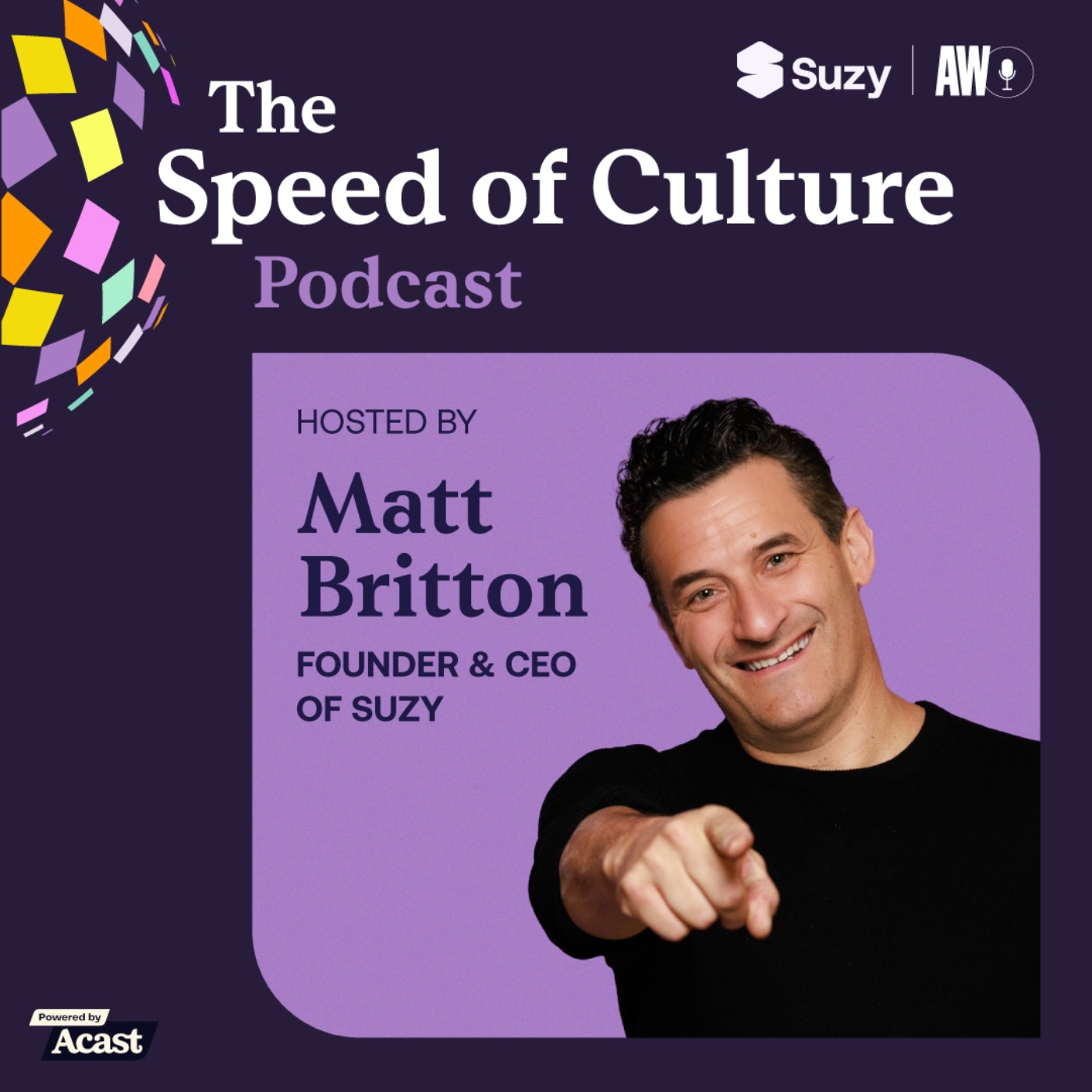
 The Speed of Culture Podcast
7 Oct 2026 · 27m · 14 chapters
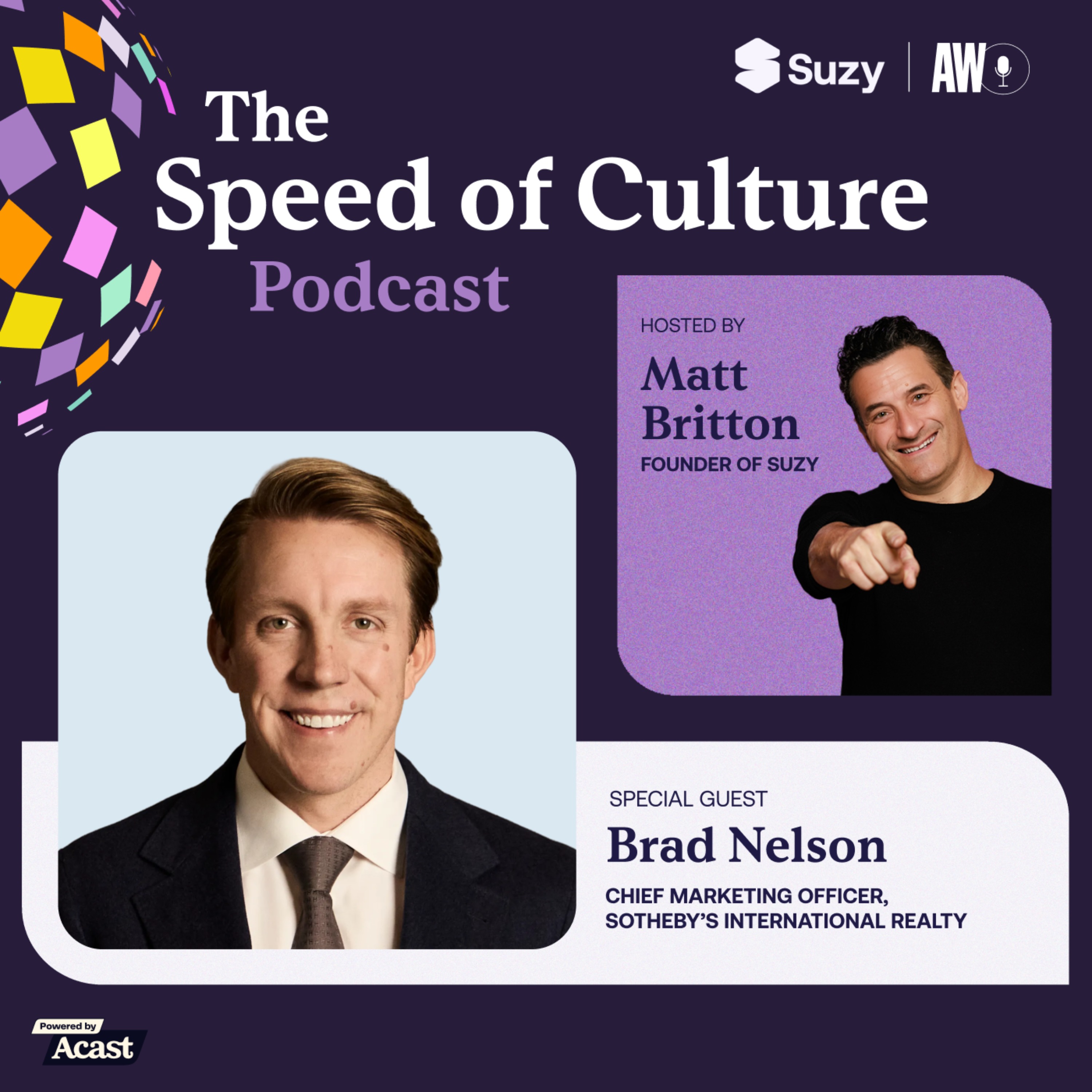
The episode discusses how next-generation buyers are reshaping luxury real estate, and how Sotheby’s International Realty stays culturally relevant through a “lifestyle first” approach, advisor-led guidance, and marketing built around human connection.
Brad Nelson, Chief Marketing Officer at Sotheby’s International Realty. He has spent 15+ years at Sotheby’s, including regional work in Florida, and now leads marketing for the brand’s global luxury real estate presence.
Luxury buyers increasingly prioritize lifestyle (commute, traffic patterns, weekend access) over pure price. With abundant online information, the advisor’s job is to help clients process it. Luxury demand is driven more by equity performance, wealth-creation events (e.g., IPO speculation), and wealth transfer than by interest rates.
New York buyers choosing Brooklyn for commute; Hudson Valley/Berkshires benefiting from predictable weekend travel; San Francisco’s luxury rebound tied to AI wealth creation; Aspen’s high prices pushing demand to emerging markets like Deer Valley (Four Seasons/Waldorf Astoria branded condos); a Sotheby’s referral case where a Provence property turned out to be Julia Child’s house, sold quickly after global PR and expert connection.
Written by AI. May contain mistakes.
Therapy's effectiveness lies in small, often unnoticed moments of growth.
“Therapy's biggest impact doesn't show up in some dramatic breakthrough.”
An insight into the challenges of selling luxury homes, which are emotional purchases.
“Are your ad campaigns lighting up the dashboard, but not the pipeline?”
An insight into the challenges of selling luxury homes, which are emotional purchases.
“It does not pass the test of the shelter that's required for kind of human life.”
Discussion on the unique focus of Sotheby's on quality properties over price.
“I was digging into your background and prep for today's interview, and I saw that you've spent now more than 15 years at Sotheby's Realty.”
Exploring how affluent consumers' desires in luxury real estate have changed.
“And you've obviously, through your time at Sotheby's, really had a front row seat to luxury through a lot of major shifts in technology and culture and wealth creation.”
Buyers prioritize lifestyle factors over traditional luxury markers in homes.
“Clients here in New York City that work on Wall Street, maybe they grew up and their parents were in the same profession.”
Discussion on how the pandemic shifted perspectives on luxury homes.
“And that sort of made them look at, I believe, those homes in a different way, like they can get a lot more value out of it.”
Explaining how luxury real estate markets are influenced by wealth creation and economic factors.
“And a predictive indicator for us, we publish a thought leadership report twice per year.”
The rise of multi-generational living and wealth transfer impacting real estate.
“the average sales price of a single family home in Aspen, depending on the quarter, it's not uncommon for it to hover in the$20 million range.”
Understand how emotional connections drive luxury real estate purchases.
“I think it really starts with producing the highest quality content that you can.”
Learn about a new campaign focused on human connection in luxury real estate.
“Would love to just talk to you about that campaign, how you landed on it and what you hope to accomplish for the brand with it.”
Discover valuable career lessons from years at Sotheby's and the importance of problem-solving.
“And I think that sometimes the best marketing ideas are the most obvious.”
Learn about the importance of transparency and understanding underlying issues in real estate.
“The second thing is if you can't solve somebody's problem, it's much better to be transparent and tell them that quickly than it is to hope they'll forget about it.”
Discover key life lessons and management advice from Brad Nelson's career.
“It's such a great brand, and you're stewarding in the right direction, and wishing you nothing but luck into Sotheby's 50th year, and can't wait to see what's next for you and Brad.”

Get the gist, explore an idea or ask about something said.
 Claude
On The Speed of Culture Podcast, what are the key points of this episode?
Searching your listeningAutomatic transcript. May contain errors.
0:00Therapy's biggest impact doesn't show up in some dramatic breakthrough. It shows up in the smallest moments. You bite your tongue instead of escalating. You put your phone down instead of firing off that text. You say what you actually mean instead of what would hurt someone else the most. Nobody applauds those moments, but they quietly change your life. That's what growing feels like. And that's exactly what Grow Therapy is here for. Grow is therapy that works, covered by insurance. Sessions average$21 with insurance, and some pay as little as$0, depending on their plan. There are no subscriptions, no long-term commitments.
0:37You just pay per session. Grow connects you with thousands of high-quality, licensed therapists across the U.S., offering both virtual and in-person sessions, nights and weekends. You can search by what matters, like insurance, specialty, identity, or availability. And you can book a therapy session in minutes and begin in as little as two days, not the national 48-day average. See if you could pay as little as$0 for therapy in seconds at growtherapy.com slash ACAST. That's growtherapy.com slash ACAST. growtherapy.com slash ACAST. Availability and coverage vary by state and insurance plan. Are your ad campaigns lighting up the dashboard, but not the pipeline?
1:24That's bullspend, and marketers are calling it out in dashboard confessions my boss asked for results so i opened my dashboard for the only positive sounding metric i had impressions cut the bull spend see revenue not just reach linkedin delivers the highest return on ad spend of major ad networks advertise on linkedin spend 250 on your first campaign and get a 250 credit go to linkedin.com slash campaign terms that conditions apply. No one needs a luxury home. It does not pass the test of the shelter that's required for kind of human life. So this is an emotional purchase by definition. Anything that's a luxury is not a necessity.
2:07So that's a challenge in the sales role because you're selling something that no one necessarily needs.
2:14Brad Nelson: To thrive in a rapidly evolving landscape. Brands must move in an ever-increasing pace. I'm Matt Britton, founder of Suzy. Join me and key industry leaders as we dive deep into the shifting consumer trends within their industry, why it matters now, and how you can keep up. Welcome to the Speed of Culture.
2:35Brad Nelson: Up today in the Speed of Culture podcast, we're thrilled to welcome Brad Nelson, the Chief Marketing Officer at Sotheby's International Realty, which is celebrating its 50th anniversary this year. Brad has spent more than 15 years with Sotheby's, helping shape how one of the world's most recognized names in luxury real estate shows up across markets, channels, and generations. Brad, so great to see you today. Thanks so much for joining. Thanks for the invitation. Absolutely. I was digging into your background and prep for today's interview, and I saw that you've spent now more than 15 years at Sotheby's Realty.
3:06Brad Nelson: What have you learned about why some legacy brands stay culturally relevant? Because obviously we've seen so many become sort of artifacts of their own history, but Sotheby's still has sort of withstood the test of time. Well, thanks for both making me feel old and the compliment there. You and I both, Brad. What I think makes Sotheby's International Realty unique in this category is it has never tried to be all things to all people. And it's maintained a very clear focus on the segment of the market that it wants to play in. And that's specifically properties that are really unique. When I started at the brand more than 15 years ago, working in a regional capacity in Florida, one of the first things that I learned was that properties should not be measured solely by their price, but instead by their quality.
4:00And price varies so dramatically. Even in a lot of communities, these properties on the same road, if one's on the ocean and the ones on the other side are inland, that can have a huge swing. So we really want to have an emphasis on what makes a property unique and how do we focus on what makes that property special, tell its story, focus on representing homes of the highest quality and all of the different price categories.
4:27Brad Nelson: Sure. And you've obviously, through your time at Sotheby's, really had a front row seat to luxury through a lot of major shifts in technology and culture and wealth creation. What's changed the most about what affluent consumers actually want from luxury? So I think there's two questions there. The first is how has the category changed? And obviously, when I started my career more than 20 years ago, just to put it in perspective, Zillow didn't exist. And the primary means of sharing information about homes for sale was through newspaper ads. So today we see clients have access to more information than ever before.
5:11And that is on one hand, amazing. And on the other side of the equation, overwhelming. So we really find the role of an advisor at Sotheby's International Realty today is helping clients process and analyze and arrive at conclusions from that information that may be readily accessible as opposed to being the sole provider of the information. That, I would say, has been the biggest change in the category. In terms of what our clients value and how this is evolving generationally, I think homes used to, in many ways, be status symbols. And we can think of some cultural references like Robin Leach's Lifestyles of the Rich and Famous that personified all of these.
5:57MTV Cribs, right? MTV Cribs. I mean, the examples go on. And especially when you think of millennials in the marketplace today, it's a generation that grew up on HGTV and they grew up understanding that this means of entertainment, unlike the news, was never going to upset them. And so they spent a significant amount of time like emotionally invested and dreaming about what their property might become. In terms of how we've seen buyers evolve, we see them prioritize lifestyle above all else. So they're going to determine what lifestyle they want to live, and then they will back into their home.
6:39I'll give you a great example. Clients here in New York City that work on Wall Street, maybe they grew up and their parents were in the same profession. We see a lot of people prioritize buying in Brooklyn as opposed to in Westchester or Connecticut, where you may have access to more space because they want a shorter commute. And so the distance of their commute and the lifestyle is the most important thing to them. Similarly, we see clients make lots of traffic-oriented decisions. So if you've ever been on the Long Island Expressway on a Friday at 5 p.m., it's not a pleasant experience. And that really has created an enormous luxury market in the Hudson Valley and in the Berkshires and in other weekend commuting distance destinations outside of New York City that have more predictable traffic patterns.
7:28So it's that lifestyle first emphasis that's really shifting which luxury home a buyer ultimately chooses.
7:36Brad Nelson: Yeah. And I would imagine COVID has a lasting impact as well because I have a home out in Bridgehampton and I know that that market has really accelerated because more and more people had the ability, it might not have been five days a week, but at least a couple days a week where you can work remotely. And that sort of made them look at, I believe, those homes in a different way, like they can get a lot more value out of it. COVID threw the real estate market on its head in the luxury category and what you describe is spot on. The interesting thing has been the equal boomerang as major employers, particularly those with the highest value career opportunities had returned office mandates.
8:18So I can remember in 2018, we would describe San Francisco as a city that had a major PR problem. Lots of people issues, people leaving, companies leaving, significant challenges in the city. And today, it's one of the hottest luxury real estate markets in the world as a result of the resurgence that the AI industries had on that market.
8:40Brad Nelson: And that's a new thing, right? Like two, three years ago, that wasn't even the case because it was really struggling coming out of COVID San Francisco. San Francisco was struggling and we called it at Sotheby's International Realty in June of 2025. And a predictive indicator for us, we publish a thought leadership report twice per year. It's called Luxury Outlook. And we simply survey our advisors who are active in the 10 million plus market. So anyone who's transacted in that price category the past six months, we're having both quantitative and qualitative conversations with them to try to get a read on what's happening before it shows up in sales data.
9:19And what we heard was just so many clients moving back to San Francisco because they recognized that it was going to be the AI revolution was going to be the next great wealth creation opportunity and people didn't want to miss out. Shortly thereafter, after we saw the commercial real estate begin to, from a vacancy perspective, completely be leased up and the residential real estate trades have followed. It's not uncommon for a property to be in a bidding war and sell for millions of dollars over its asking price today.
9:50Brad Nelson: And are you seeing just overall in the US, just more consolidation into what has traditionally been the hot real estate markets like Palm Beach, the Hamptons, Aspen, areas like that? Or are you seeing more diversification into new areas? Like you'd mentioned the Berkshires, which kind of surprised me. I know like the North Fork of Long Island has gotten hot. Like, is that real or is it still just a consolidation of the core places where people want to be? Yes and yes. So the answer is both. I mean, if you look at the record number of billionaires, you look at the growth of the high net worth individual population.
10:28So just the pool of buyers that can afford a luxury home is bigger than it's ever been. And so that means that certain markets like Aspen, I mean, the average sales price of a single family home in Aspen, depending on the quarter, it's not uncommon for it to hover in the$20 million range. That's unprecedented. It's really difficult to get your mind wrapped around in those core neighborhoods. And so while that market remains so hot, desirable, attractive, and there's a certain profile of client that that is the only place they will consider being for social reasons or otherwise, it has unlocked huge opportunity in emerging markets.
11:10So Utah, and in particular Deer Valley, is one of the hottest ski destinations in the country right now. The expansion of Deer Valley's East Village has brought more luxury product onto the market with condominiums branded by the Four Seasons and the Waldorf Astoria that have just introduced so much more product offering. And as Aspen gets more and more expensive, it makes alternate locations like Deer Valley even more attractive. And it has some upsides.
11:40Brad Nelson: The airport's a little bit more accessible there too. Yeah, for sure. And I know the Aspen airport's going through some construction coming up, I hear. Everyone in Aspen reminds me that the big private jets land at a different airport already. So it's maybe not so much of an inconvenience. There you go. And the rising interest rates had any impact on the luxury market? I know there's a a lot of cash purchases, but is there any headwinds you see as a result of that? I think it's a great question. What we have seen in the last few years is that the mass real estate market and the luxury real estate market are increasingly operating independently.
12:12Interest rates have a significant and outsized impact on the mass real estate market. The primary drivers that we see in the luxury real estate market are the performance of the equities markets or the stock market, also wealth creation events. So the SpaceX IPO, the forthcoming Anthropic and OpenAI IPOs, a lot of speculation of this being the single greatest wealth creation moment in history. And then the final piece is just wealth transfer in general. It's overly simplified as the silver tsunami, but it's simply inheritance. It's just we've never seen so much wealth pass from one generation.
12:49And the primary recipients of that from a demographic perspective are Gen X and millennials.
12:54Brad Nelson: Yep. Great wealth transfers coming. The baby boomers, I read are passing, I don't know, like something like 70 or$80 trillion over the next 20 years. And it's going to obviously end up in the hands of future homebuyers. And that obviously is going to create a lot of opportunity. No, and it's not only coming, it's here. So it's growing in momentum every year. The other thing that we're seeing is a rise of multi-generational family living. There's this concept of instead of waiting for an inheritance event to provide capital for you to go purchase a home, let's actually buy it together as a family trust now.
13:33And maybe the property has dual primary suites. Maybe there's a guest house. Maybe there's an ADU. There's some way for multiple generations of a family to enjoy that property. Maybe not 52 weeks a year, but maybe you overlap for two weeks in August. That has been kind of a financial planning tool for families as well in the real estate market.
14:17company, job title, and more. Advertise on LinkedIn. Spend$250 on your first campaign and get a$250 credit. Go to linkedin.com slash campaign terms and conditions apply.
14:30Therapy's biggest impact doesn't show up in some dramatic breakthrough. It shows up in the smallest moments. You bite your tongue instead of escalating. You put your phone down instead of firing off that text. You say what you actually mean instead of what would hurt someone else the most. Nobody applauds those moments, but they quietly change your life. That's what growing feels like, and that's exactly what Grow Therapy is here for. Grow is therapy that works, covered by insurance. Sessions average$21 with insurance, and some pay as little as$0, depending on their plan. There are no subscriptions, no long-term commitments.
15:07You just pay per session. Grow connects you with thousands of high-quality, licensed therapists across the U.S., offering both virtual and in-person sessions, nights and weekends. You can search by what matters, like insurance, specialty, identity, or availability. And you can book a therapy session in minutes and begin in as little as two days, not the national 48-day average. See if you could pay as little as$0 for therapy in seconds at growtherapy.com slash ACAST. That's growtherapy.com slash ACAST. Growtherapy.com slash ACAST. Availability and coverage vary by state and insurance plan. The most effective people at work aren't working harder than everyone else.
15:51They're working smarter inside better systems. Superhuman Go, from the makers of Grammarly, is the AI chat that works inside every tool you already use. Always ready and already aware of what you're working on. It's a teammate whose only job is to help you be better at yours. With Go working with you, you can show off what you do best. See what Superhuman Go can do at superhuman.com. That's superhuman.com.
16:41Brad Nelson: well? I think it really starts with producing the highest quality content that you can. So means architectural photography, that means cinematic film. No one needs a luxury home. It does not pass the test of the shelter that's required for kind of human life. So this is an emotional purchase. By definition, anything that's a luxury is not a necessity. So that's a challenge in the sales role because you're selling something that no one necessarily needs. And so you have to create that emotional connection for it to be something that they want. We have definitely seen an evolution from the marketing channels that we use and how we invest in them kind of categorically.
17:32So print media, for example, may still have value in a resort market where clients are in residence for a very short period of time. But by and large, digital and social channels have more targeted reach. And the relationships we already have, CRM, database, as boring as those things may sound, are the primary drivers for our business.
17:57Brad Nelson: And obviously, when you talk about the huge wealth influx from the upcoming Anthropic and OpenAI IPOs, those are going to be a lot of younger buyers. And those younger buyers are going to be reached over places like TikTok and Instagram, not necessarily places that you would have thought you'd want to reach. Maybe 10 years ago, you think about, oh, the Rob report is where you're going to want to reach people. But it's going to be an influx of younger wealth creation. So I'd imagine you have to follow where they are. Not only do you have to follow where they are, but you have to build an audience before they arrive for you to have credibility.
18:35So we have the most YouTube subscribers of any real estate brand in the category. We have the most Instagram followers of any luxury real estate brand, brokerage, franchise system. and we have invested a lot in building that audience over a long period of time. It is interesting. I mean, we do get DMs from household names, celebrities that want to look at 30 million plus properties and everyone on the team, whatever that happens, just thinks to ourselves, like, can this actually be real? So that's quite amazing. But with this next generation of buyers, what I would actually say, I think that Instagram and YouTube influence what they think of our brand before they interact with us.
19:27But oftentimes, especially with a purchase as large as one in our category, they're reaching out to someone for a recommendation or a referral. So if someone's just had a big liquidity event or unlock through one of the IPOs, it's oftentimes asking a financial advisor, an attorney, your parents, someone that is a business mentor of yours who has had this financial capacity for a few more years than you have, who do you trust? Who do you recommend? So word of mouth is a huge part.
20:02Brad Nelson: It's the biggest part. Right. Which means obviously that your job doesn't end after you've sold somebody a property. You need to make sure you're continuing to add value. So you're top of mind when it comes time to make that recommendation. That's the whole flywheel. Right. So one thing I wanted to ask you before we go into maybe some of your campaigns is it just strikes me that real estate, and you had mentioned this earlier, is just so interesting if you look at like Million Dollar Listing, which is like the first big real estate reality show, and then you have like Selling Sunset, and there's so many out there.
20:32Brad Nelson: What is it about real estate that fascinates people so much, that makes them want to watch TV shows about it? not only the real estate industry, but like the process of buying and selling homes. It's totally a form of entertainment. But I think what it is, there was an article a few years ago, HGTV had eclipsed CNN in viewership. And so they'd moved from the number four most watched channel to number three. I don't know if that's still accurate today, but the article was interviewing some of their most passionate viewers as to why they spent so much time watching real estate content. And the answer was, it will never upset me.
21:14So if you turn on the news today, it will upset you. The news will upset you. There's a chance that something will trigger you. And this concept of daydreaming about a Nancy Meyers set as your future home and kind of the vision board for the future of your life, it just, it's something that is not going to upset you. So I think that's a big piece of the equation. I also think that, like you mentioned your home in Bridgehampton. I'm sure when you had an opportunity to purchase that, how many houses did you look at? A bunch, right? A bunch. 10 to 15. Perfect. So 10 to 15 houses. So I could spend 30 minutes being generally curious about how you and your family chose the one that you did as opposed to other 14 options.
22:02I think our home is our most personal form of self-expression and it really tells us a lot about what we value. Maybe you value bordering to a reserve where even though you're on a half acre, it feels like you're in the middle of nature and that reminds you of where you grew up as a child before you moved to New York. Maybe you value being within walking distance of town because you hate to drive. So it's like just the most personal of domains and why people choose them, I think is there's always an interesting story there.
22:36Brad Nelson: Really interesting. So as I mentioned in the onset, it's the 50th anniversary of the brand. I know there's a new campaign that you're rolling out around being well connected. Would love to just talk to you about that campaign, how you landed on it and what you hope to accomplish for the brand with it. So in the era of more and more technology and more and more AI, we have a core thesis that human connection is going to be a true definer of real luxury. And so when you think about our community of advisors at Sotheby's International Realty, we wanted to lean into the spirit of connection that we have with one another, with our clients, and ultimately how it benefits our clients.
23:19I tell a story. A few years ago, I got a phone call from a colleague of mine in Houston, Texas, and she had just joined our company. And she was so excited. Her name was Martha Turner. And Martha calls me and she's like, Brad, I have an opportunity for a referral for a property in France. And I started asking her about the house so I can figure out who to connect her to. and she tells me that it's somewhere in Provence and it's very rural location in the countryside and it sounds quite humble. And the more and more that she's describing it, I'm actually afraid that I'm not going to have someone in such a remote geographic location who's able to like adequately service the client.
24:03But she kind of buried the lead. And then at the very end, she tells me, and oh, by the way, it was Julia Child's house. It was amazing. And obviously from Julia Child's other home, that kitchen ended up in the Smithsonian. And when we saw photographs of the property, I mean, literally the pegboard on the wall, I mean, it was Julia Child's kitchen. So we immediately got Martha in touch with the right colleague in the South of France. And then we immediately got them all in touch with our amazing in-house award-winning, sorry, I got to brag on them, PR team. We launched the property in the, what was then the International Herald Tribune, the International New York Times, Global sensation, went viral before that was a word, had a very successful sale quickly.
24:48But when you really reflect on that, how Martha was able to add value to her client from Houston, Texas, was by being a part of Sotheby's International Realty. And by being a part of this, Martha was well-connected. That's really what our team members are in each of these locations. And I think that sometimes the best marketing ideas are the most obvious. And so again, And more technology, more AI. In contrast to those things, what does a luxury experience value its connection? And I think our team is well-connected and that really creates value for our clients.
25:24Brad Nelson: Right, ultimately you need to be connected to who the right sellers are, be connected to the right information so you truly understand the market that you're in. Exactly. So to wrap up here, I'd love to talk about you and your journey within Sotheby's because I see you've been there now over 16 years. So we are in a world where so many people are jumping around from one place to the next. What value do you think you've gotten of staying with the same place? I know you've changed roles and continue to sort of move up the chain, so to speak. But what's some of the value you think you've gotten out of that?
25:54Brad Nelson: I have met the most interesting people in the world. And every single day when I come to work, I work alongside a team that is incredibly curious, very creative. I think every time that a client hires us, we think that it's both a privilege and some pressure because now we have to deliver if someone's put so much trust in us. And it's just never become boring to me. Every day is a new challenge to solve. It's how can we improve in this arena or that arena? Every time someone asks you a hard question, it's an opportunity to anticipate it the next time. So I've just enjoyed it because honestly, are the people that I work with.
26:35Absolutely.
26:36Brad Nelson: It's about the people. And it's about, obviously you've had to, I would imagine, gain more skill sets over time as well. Like you mentioned, you started off in Florida working for every one market. Here you are as a CMO. What were some of those skill sets and areas that you leaned into that you think in the rear view mirror were really fortuitous and helped put you in the seat that you're in today? I think I can remember an experience where I had a big jump in my career and I was going on a listing tour to a dozen markets all around the country. and in every single place, someone gave me their to-do list of the eight things that annoy them that I should fix.
27:14And I had such a temptation, not a temptation. I gave into the temptation. I wanted to be a people pleaser and I wanted to prove to folks that I was the right person for this opportunity. And I came back after visiting 12 markets with 10 suggestions each with 125 things on a to-do list that were impossible. And so I really set myself up for failure. I think the two things I learned as a result of that is when people offer you suggestions, take the time to ask follow-up questions and specifically open-ended follow-up questions. Oftentimes someone is prescribing you a solution, but you haven't taken the time to diagnose the problem.
27:59And so if you really understand what problem they're trying to solve, you're in a better position. The second thing is if you can't solve somebody's problem, it's much better to be transparent and tell them that quickly than it is to hope they'll forget about it. As you have a larger role, what you need to do is identify, well, where are problems showing up or where opportunities showing up quite consistently. And so if you visit 12 markets, you hear the same thing in eight places, you know, that you're onto something. So definitely no monopoly on good ideas, ask good follow-up, open-ended questions.
28:33I would say that was a skill set that I had to learn the
28:35Brad Nelson: hard way. Yeah. And often people might just be pointing to the same problem when you could go to 10 different markets, hear 10 different things, but the underlying cause couldn't really be the same thing. Maybe there's not the right level of information sharing, or maybe onboarding isn't as good as it should be or whatever it may be. And I think ultimately you're right, just digging deeper, having those open-ended questions will help you get to what those underlying issues are quicker. Exactly. Absolutely. So we often end our podcast by asking our guests if there's a saying or mantra that's helped sort of encapsulate their career journey and just wondering, Brad, what comes to mind for you?
29:10Brad Nelson: Maybe there's two. The first, I might not get this perfect, but Bezos was once giving comments about the Washington Post. And I think he said something along the lines of complaining is not a business strategy. You have to respond to the world as you find it, not as you would have it be. Whenever I'm around someone who's facing a problem and is frustrated by it, I think just reminding ourselves kind of serenity prayer, what can we control? What can we not is the most productive way through it. And the second life lesson, my mom worked for 40 years in a professional environment and her number one rule of management was never ask someone to do something that you're not willing to do yourself.
29:50And so I always try to keep that at the center of our team.
29:52Brad Nelson: I love that. Great advice, great feedback, and great insights into your story at Sotheby's. It's such a great brand, and you're stewarding in the right direction, and wishing you nothing but luck into Sotheby's 50th year, and can't wait to see what's next for you and Brad. 50 years forward. Thanks for having me. You got it. Thanks so much. On behalf of Susie and I, we team. Thanks again to Brad Nelson, the Chief Marketing Officer of Sotheby's International Realty, for joining us today. Be sure to subscribe, rate, review the Speed of Culture podcast on your favorite podcast platform. So next time, see you soon, everyone.
30:20Brad Nelson: Bye-bye.
30:25Brad Nelson: The Speed of Culture is brought to you by Suzy as part of the Adweek Podcast Network and Agass Creator Network. You can listen and subscribe to all Adweek's podcasts by visiting adweek.com slash podcasts. To find out more about Suzy, head to suzy.com. And make sure to search for the Speed of Culture in Apple Podcasts, Spotify, or anywhere else podcasts are found. Click follow so you don't miss out on any future episodes. On behalf of the team here at Suzy, thanks for listening.
31:06Are your ad campaigns lighting up the dashboard, but not the pipeline? That's bullspend, and marketers are calling it out in dashboard confessions. My boss asked for results, so I opened my dashboard for the only positive-sounding metric I had. impressions. Cut the bull spend. See revenue, not just reach. LinkedIn delivers the highest return on ad spend of major ad networks. Advertise on LinkedIn. Spend$250 on your first campaign and get a$250 credit. Go to linkedin.com slash campaign terms and conditions apply. Rubrik is the security and AI operations company built for what happens after an attack hits, not just the moments before.
31:46AI has turned the threat landscape into quicksand, moving too fast for any human to fully predict. That's why an agentic cyber resilience platform matters. Automated recovery, clean data, a business that keeps moving no matter what hits. One platform, not a patchwork of stitched together tools and gaps. Don't wait for the next attack. Secure and accelerate your business at rubric.com. Again, rubric.com.
This episode of The Speed of Culture Podcast welcomes Brad Nelson, Chief Marketing Officer at Sotheby’s International Realty. Taking us behind the scenes of a 50-year-old legacy, Brad explains how the brand has stayed relevant by focusing on quality over price, and adapting to how affluent consumers define luxury today. He zooms in on the rise of lifestyle-first buying, the impact of AI-driven wealth creation, the role of social media in building credibility, and why trusted human relationships still matter most in high-value decisions.
Celebrate 50 years of Sotheby’s International Realty with a new advertising campaign highlighting connections built over the decades and The Art of Refined Living, created with Assouline to showcase the brand’s heritage through extraordinary properties, architecture, and cultural moments.
Follow Suzy on Twitter: @AskSuzyBiz
Follow Brad Nelson on LinkedIn
Subscribe to The Speed of Culture on your favorite podcast platform.
And if you have a question or suggestions for the show, send us an email at [email protected]
Hosted on Acast. See acast.com/privacy for more information.