Ask ChatGPT
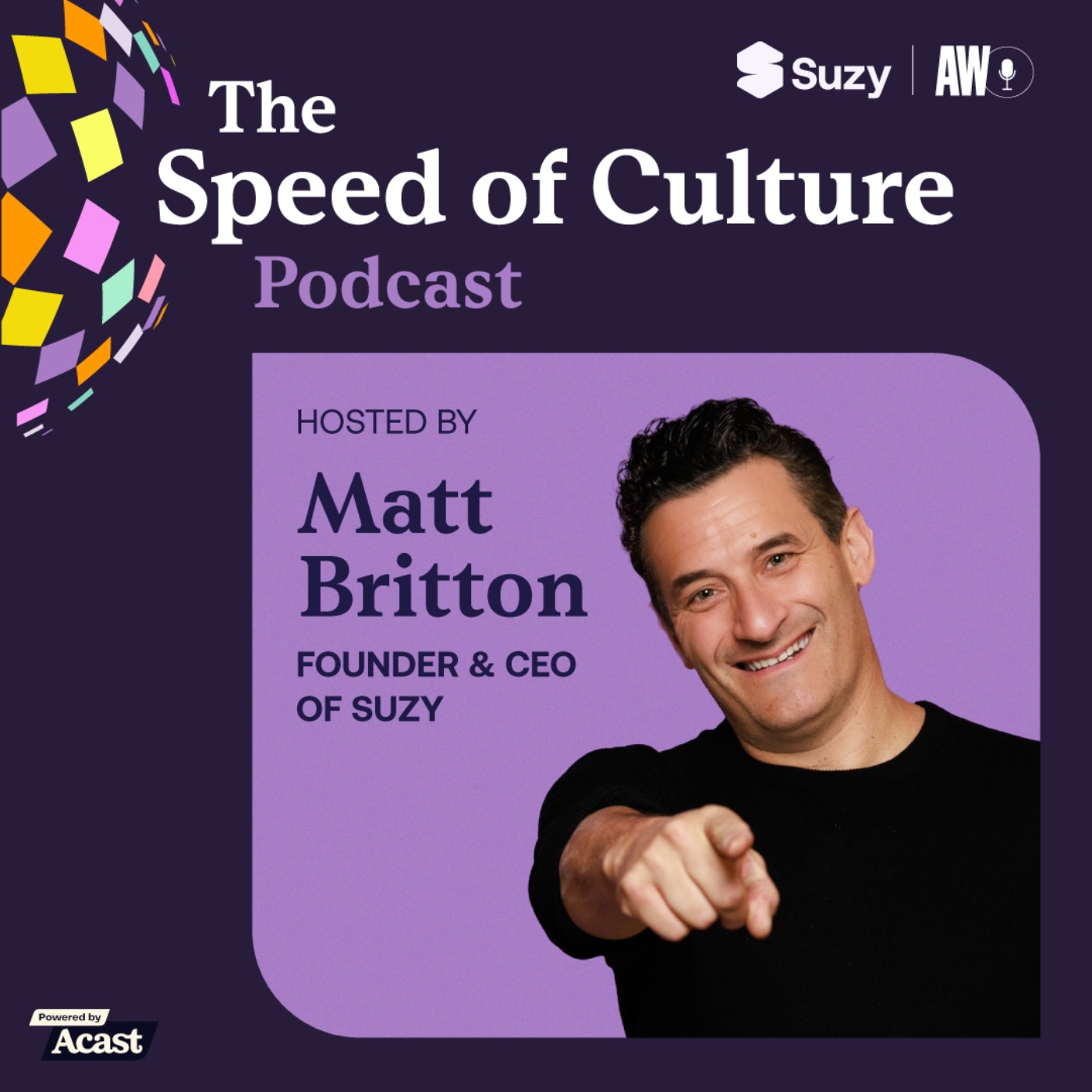
 The Speed of Culture Podcast
3 Nov 2026 · 27m · 13 chapters
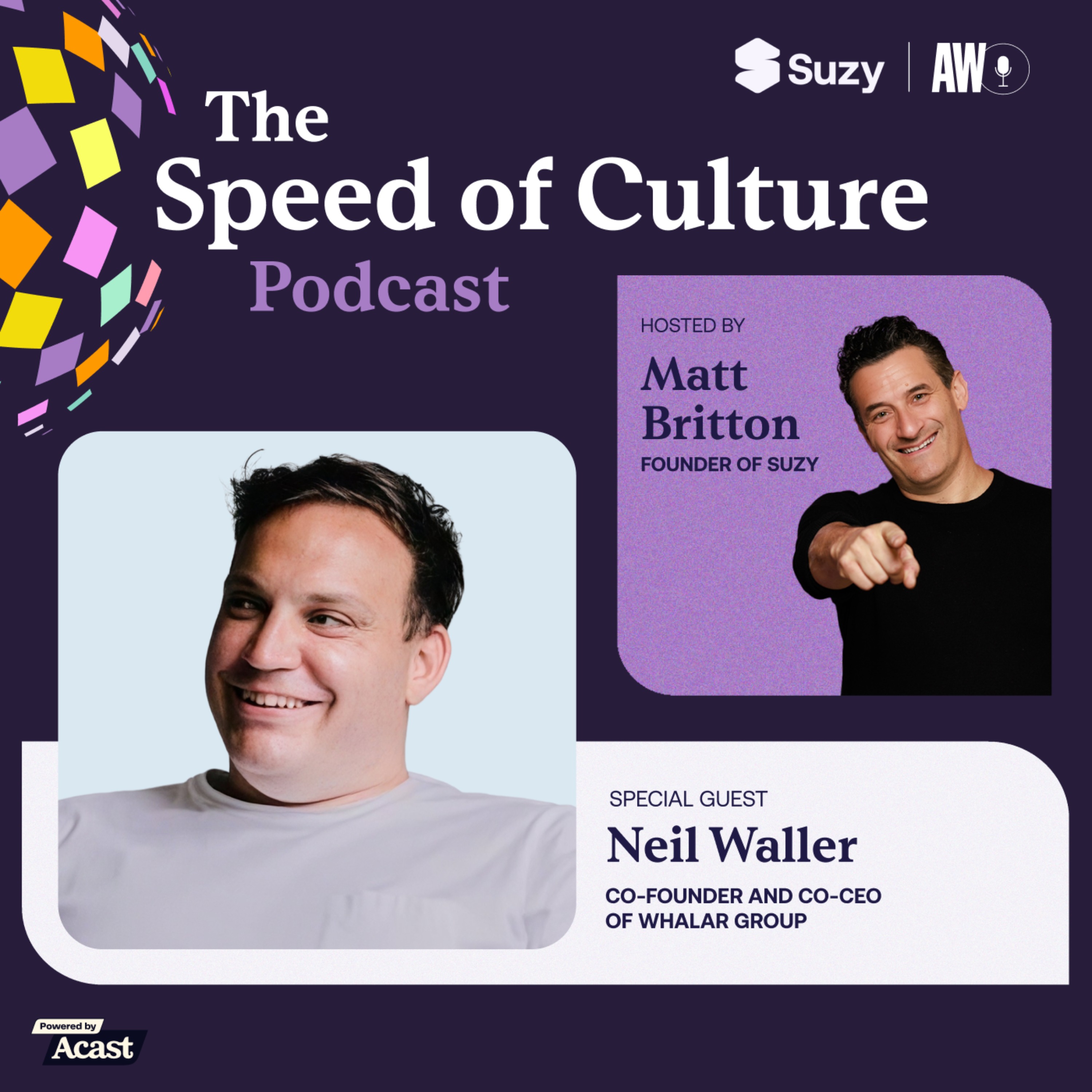
Neil Waller, co-founder/CEO of Whaler Group, explains how creator-brand partnerships should be built on respect (not “authenticity” alone), how Whaler evolved from selling D2C products with creators to a multi-company creator ecosystem, and what AI may do to social feeds (a “barbell” of AI content plus human taste-making).
Neil Waller co-founded Whaler in 2016; it grew from an influencer market agency into a six-company creator ecosystem. He previously built D2C brands on Shopify and later led Whaler’s creator-focused strategy and operations.
Brands should include creators at strategy “from day one”; control should be balanced via mutual respect; business plans can be dangerous—iterate from market feedback; operational rigor is the difference-maker; AI will increase content volume but make the “middle” harder to survive.
Early Whaler watch brand with interchangeable straps (repeat customers; early Instagram advertising; Shopify Build a Business winner). Mentions creator-led collaborations like Cole Bennett’s Lyrical Lemonade TV. Accenture acquisition of Whaler’s agency component (deal with Accenture; Whaler retains creator-stakeholder companies).
Written by AI. May contain mistakes.
Neil discusses the early days of Whaler and the evolution of the creator economy.
“Neil co-founded Whaler in 2016, long before the creator economy had become the cultural and commercial force it is today.”
Neil explains how trial and error shaped their approach to product sales.
“I remember back then still being in meetings and brands would be like, why should I be on Instagram?”
Neil shares insights on how they identified and marketed successful products.
“So my co-founder, James and I, co-founded everything with.”
Neil reflects on how their experience selling products gave them an edge in marketing.
“Because that's what we're in the business of doing in the ad agency world is helping brands, but they've never sold their own products.”
Discussion on the evolution of Whaler's approach to brand collaborations with creators.
“What went into productizing that offering and really gaining conviction on what the business was going to ultimately become in the early days?”
Neil argues that respect is more crucial than authenticity in collaborations.
“We knew we were rooted in creators being a creative workforce, not just a media channel, their insights, their intelligence as consumers of brands.”
Neil explains how creators are now integral to brand strategies from the start.
“And over time, of course, creators did become bigger and your original thesis started to prove out.”
Explore the shifting dynamics of brand partnerships in the creator economy.
“as the iPhone proliferated into the main media consumption device amongst Gen Z and younger consumers, that same notion of A-list celebrities started to kind of transcend into creators.”
Understand the importance of operational excellence in scaling creative businesses.
“And how have you been able to do that at scale as a business?”
Analyze how AI is reshaping the creator economy and content consumption.
“And of course, speaking of pushing boundaries, right now everybody is focused on pushing the boundaries via AI.”
Learn about the strategic decisions behind the acquisition of the agency business.
“So you mentioned this earlier, but earlier this year, Centure agreed to acquire a part of the business, but you didn't go along with the acquisition.”
Gain insights into the entrepreneurial process and the importance of resilience.
“So congrats on getting across the finish line.”
Explore insights on overcoming challenges and the importance of perspective in professional journeys.
“So we're constantly going through things.”

Get the gist, explore an idea or ask about something said.
 Claude
On The Speed of Culture Podcast, what are the key points of this episode?
Searching your listeningAutomatic transcript. May contain errors.
0:00You save. You invest. You keep an eye on spending. So why do your finances still feel so complicated? Quicken helps you put the whole picture together and make sense of what to do next. Connect accounts from more than 14 ,000 financial institutions and see how all the different pieces of your financial life fit together. With Quicken, you can make sense of your options and decide what to do next. Quicken. Know what to do next. See how at Quicken.com.
0:25Suzy: Shipping, billing, admin, payroll, marketing. You're managing all the things. So why waste time sending important documents the old-fashioned way? Mail and ship when you want, how you want with Stamps.com. Print postage on demand 24-7 and schedule pickups from your office or home. Save up to 90 % with automated rate shopping. That's why over 1 million small businesses trust Stamps.com. Go to Stamps.com and use code PODCAST to try Stamps.com risk-free for 60 days. Are your ad campaigns lighting up the dashboard, but not the pipeline? That's bullspend, and marketers are calling it out in dashboard confessions.
1:07Suzy: My boss asked for results, so I opened my dashboard for the only positive-sounding metric I had. Impressions. Cut the bullspend. See revenue, not just reach. LinkedIn delivers the highest return on ad spend of major ad networks. Advertise on LinkedIn. Spend$250 on your first campaign and get a$250 credit. Go to linkedin.com slash campaign. Terms and conditions apply. I actually think you're going to end up in this world of a barbell. So on the one hand, we're going to have tons of AI generated content, tons of stuff more personalized to your unique tastes. On the inverse, I think it's also going to cause a humans and culture and people running back to the other end of the barbell.
1:49Suzy: To thrive in a rapidly evolving landscape, Brands must move at an ever-increasing pace. I'm Matt Britton, founder of Suzy. Join me and key industry leaders as we dive deep into the shifting consumer trends within their industry, why it matters now, and how you can keep up. Welcome to the Speed of Culture.
2:10Suzy: Up today on the Speed of Culture podcast, we're thrilled to welcome Neil Waller, co-founder and CEO of the Whaler Group. Neil co-founded Whaler in 2016, long before the creator economy had become the cultural and commercial force it is today. Whaler has since grown from an influencer market agency into a six-company creator ecosystem. And today, Neil is helping creators to run influence into lasting businesses while preparing Whaler for a creator-led future across media and culture and commerce. Neil, it's so great to see you today. I've been looking forward to this. Thanks, Matt. Very much. Looking forward to chatting as well.
2:42Suzy: Great. So way back in 2016, when you were getting going with the origins of your business, so many brands were looking at creators as more of like an experimental media channel. What did you see then that kind of gave you conviction to really dive into this area? You know what? I don't even think back then they were thinking of creators as an experimental media channel. I remember back then still being in meetings and brands would be like, why should I be on Instagram? That's how quickly everything has evolved. And it's really, you know, as much as I'm one passionately pushing for the creator economy to continue to grow and continue to have more impact and there'd be bigger opportunities for it.
3:21I then just think back to that 10 years ago and like, wow, it's come a long way in 10 years. To answer your question, I think the kernel, the truth for us was we had our own D2C brands on Shopify, did pretty well with them. And we're really, it was through collaborating with influencers and creators that we were both creating great content that we were using ourselves, using organically, using and paid. How did you know what products to sell? So my co-founder, James and I, co-founded everything with. We were college dropouts. The Whaler was our ninth business. So before that, we tried lots of different things.
3:59trial and error and experimentation and listening to the market and saying we are no crystal ball readers. We just try and read the market and move and learn as we go along.
4:12Suzy: So you're saying you were selling products. So you said you had your own Shopify platform, you're actually selling physical products. What types of products and how did you know those are the right ones to bet on? Even again, I'm going to go to a bit of trial and error. I mean, the beauty of Shopify and the internet was that you could spin things up pretty quickly. and test them and get reaction to things. We had a watch brand and it had interchangeable straps. It was like a hundred to$150 price point. It was something people would buy for themselves. People would buy as gifts. You could market it online.
4:43The beauty of the interchangeable straps was we had repeat customers. So normally you sell a watch and that's it. When will they buy another watch? We were able to sell to a customer and then bring out new straps and have them come and buy and you should actually turn it into kind of a fashion accessory as much as a kind of time piece. Luck and timing in everything. We were one of the early advertisers on Instagram. We actually won Shopify's Build a Business competition with that brand. So in 2015, we had the top selling fashion and apparel brand worldwide on Shopify. But you know, if you'd started it five years earlier, it might've been too early.
5:19If you'd started five years later, the market was more saturated so luck and timing goes into all these things a little but we're also pretty good at like experimenting on things learning and then fast following into things that work and i think honestly that's more of the story of how we got conviction and things and tried things and work than any moment of genius where we bet big and we're right because i think most
5:41Suzy: of the time you do that and you're wrong more than you're right it's interesting i think a key takeaway is also kind of like eating your own dog food right like so many people stand on stage and they throw out these buzzwords that they're going to be supposedly helping brands sell product, right? Because that's what we're in the business of doing in the ad agency world is helping brands, but they've never sold their own products. And here you are basically finding products to sell, proving a model by partnering with creators, and actually being able to stand up there in pitches or on stage and saying, we're doing it, it's working, and it can work for you too.
6:15It's funny because as the journey of Whaler and became the Whaler Group went on, that story got told less. But in those early days, that was the thing that got people's attention because it's like, how have you built a D2C brand to have such growth? And of course, the thing is like, we knew nothing about the marketing and advertising world. You know, the first one went to CanLine, I never knew what it was. I'd never heard of WPP or Publicist or Omnicom or IPG. Like, these were foreign concepts to me. What we had learned was if you've got a physical product or any product or service to sell, if you can't get that in front of audiences and convince them to by you, you're running a charity or a hobby.
6:53So unbeknownst to ourselves, entered into the marketing and advertising world without having a clue that that was a thing. And so yes, in those early days, that was the thing that got us all the meetings to people like, oh, I want to hear how they're doing and how they've been instructed. Three or four years in that story stopped being told because influencer marketing, becoming the greater economy, Whaler becoming Whaler Group and the group of everything that became the success. But at the start, that was the thing
7:18Suzy: that got us in the door. So how did you refine your approach from selling products with creators to helping brands do the same? What went into productizing that offering and really gaining conviction on what the business was going to ultimately become in the early days? It's a great question. I don't want this to be too boring an answer, but it's the honest answer. Again, it's like iterative improvement. James, my co-founder, has Kaizen tattooed on him. So you would go in front of a brand and you'd be like, well, that wasn't the right pitch. like that didn't land. They didn't understand it. And how did you even get in front of the brand?
7:51Suzy: Because there's a lot of people who listen to the podcast that want to start and get into the advertising world, et cetera, like yourselves, when you don't really have that internal knowledge. What were you doing? Were you just knocking down doors? How'd you get in front of brands? And do you remember like one of the first instances where you're like, wow, I can't believe we actually won that business? Lots. So look, dogged determination. You don't hear no's. You just keep going. Every no gets you close to the yes, right? Yeah. And it's kind of like, if you knew it was going to take 26 no's to get to a yes, how good would you feel about no number 20 that you're that much closer?
8:24You just don't know how many no's it's going to be. I think people would also say in those early days, like how many clones of you are there, Neil, because you're everywhere and you kind of have to be as well. I'm fortunate not to have to do that quite so much anymore. And I think you use the word, and I love this word for it, like naivety. You have to be willing to be naive and go for it and just try. And you listen and learn and you adapt. And look, I want to be clear. It sounds like we're speaking the same language a lot. I want to be clear. Like I'm no Oracle. This is an opinion of one. And there are other ways that people can succeed where it's the polar opposite of the path that I took.
9:04I personally have this thing where I think business plans are fucking dangerous because
9:08Suzy: you're like oh well it says on page six especially here in 2026 especially where we are right now because you can't say it says this on page six no take what you heard in market and learn and adapt you have to be careful not to just listen to everything and then stand for nothing and not go off right because then you're a ping pong ball bouncing around with that vision right so the shitty part of what i'm talking about is it's very difficult to like find this right path through but generally speaking like listen to the market adapt see what works i don't think it's any different from like a comedian going and do testing stand-up like what works oh i'll lean into that mold that message landed in that way and i want to be clear amongst all this irisitive process is also not a long-term business plan but an ambition and aspiration of where to take things.
10:00We knew we were rooted in creators being a creative workforce, not just a media channel, their insights, their intelligence as consumers of brands. We knew our job was to elevate where it was and be a thought leader. So everything also ladders up to a bigger picture.
10:17Suzy: But honestly, it's one step at a time. Yeah. And I imagine along the way, you probably ran into and probably still run into this notion that brands, especially larger companies, don't want to give up control, but the best creators want that control. They want to be able to express themselves. How have you dealt with that friction over time? The way I thought about it as well was for a long time, the kind of buzzword was authenticity. And I kind of went out on a tirade and said, look, it's about respect more than authenticity, because a collaboration between two parties can be an authentic right collaboration.
10:52But if there's no respect and they're not respecting each other, then one dominates and ruins it. And I don't think it's about a complete cessation of control. I think it's about finding neutral respect, right? The reason you want to work with that creator and their team and their audience is because of what they represent as a community and as a kind of tastemaker and a Sherpa to that audience and that community. But they also have to respect what the brand stands for and what the brands look for. And I think it's like it's focusing on truly setting up collaborations and relationships of respect.
11:25That's where you then land in that right place. So I actually don't agree that it's about a cessation of total control. It's about that correct middle ground partnership.
11:36Suzy: Absolutely. And over time, of course, creators did become bigger and your original thesis started to prove out. Where did your typical client engagement start to sort of formulate over time, where once the business captured scale. I'm sure obviously every engagement is a little bit different, but what are the things that even today Whaler is doing for its clients in the creator space? I just think it's gone from being an afterthought. We've got some leftover budget that we're going to play here. We're planning on launching something, announcing something, rebranding something. Creators are at the table as the strategy from day one.
12:13And also not just as a marketing tool but again as a creative collaborator as a resource into insights into the market be it the creators themselves or their audiences and now i don't know if you saw the news about markiplier and taking was it like a seven or nine percent share ownership in gopro or marques brownlee took a share in that's a company that does like camera cases and stuff about a ridge I think it was. So I just think like these worlds are just coming together in a more interesting way where creators are seeing, you know, again, the tip of the sphere are seen as media and entertainment companies.
12:53And so the thought of collaboration, and I don't want to overplay it, it's not at this scale, but it's like how a Mattel might partner with whoever made Barbie and stuff like that. Like it's just a higher level of collaboration and a deeper level. And that's an exciting opportunity for where the industry is going.
13:10Suzy: We'll be right back with the Speed of Culture after a few words from our sponsors. Are your ad campaigns lighting up the dashboard, but not the pipeline? That's bull spend, and marketers are calling it out in dashboard confessions. My boss asked for results, so I opened my dashboard for the only positive-sounding metric I had. Impressions. Cut the bull spend. See revenue, not just reach. LinkedIn delivers the highest return on ad spend of major ad networks. Advertise on LinkedIn. Spend$250 on your first campaign and get a$250 credit. Go to linkedin.com slash campaign. Terms and conditions apply.
13:46Running a small business means wearing a lot of hats. Between managing employees, handling payroll, and keeping up with paperwork, there's a lot to juggle. Luckily, Gusto makes it easier. Gusto is online payroll and benefits software built for small businesses. It's all-in-one, remote-friendly, and incredibly easy to use. so you can pay, hire, onboard, and support your team from anywhere. From automatic payroll tax filing to simple direct deposits and benefits options for nearly every budget, Gusto helps simplify the process. Plus, enjoy unlimited payroll runs for one monthly price with no hidden fees or surprises.
14:21And with automated tools for onboarding and offer letters, you can focus on what matters most. Try Gusto today at gusto.com slash tech and get three months free when you run your first payroll. That's three months of free payroll at gusto.com slash tech. One more time, gusto.com slash tech. You've got big plans for your money. You invest, you track, you plan ahead. But does your financial app actually help you decide what to do next? Quicken helps you go beyond balances and basic reports. Project your cash flow, dig into your investments, and use Quicken AI to understand what matters across your finances.
14:57With Quicken, you can make sense of your options and decide what to do next. Quicken. Know what to do next. See how at Quicken.com.
15:31Suzy: as the iPhone proliferated into the main media consumption device amongst Gen Z and younger consumers, that same notion of A-list celebrities started to kind of transcend into creators. And today, so many of the best brands in B2C, and I think increasingly in B2B, are going to have that sort of partnership that you first created way back when, 10 years ago, where you have people that have distribution, that have an audience that cares. And again, everything is becoming increasingly easy to make. Like I can make a toothbrush, you can make a toothbrush. In the past, that just wasn't the case. What's going to make our toothbrushes different?
16:06Suzy: Well, it's going to be the brand. And what makes the brand in a world where people aren't watching TV the same way they used to? It's going to be who you partner with, who's the voice behind the brand. And I think that's where creators are really just getting started, I believe, in terms of becoming the new brand. To build on that as well, and it's like what makes like a great product company succeed to your toothbrush analogy, but also what makes a great creative business succeed. There's also just operational rigor and excellence of execution. And that is still the difference maker. And so I think you've got to have both.
16:40But the interesting thing there as a slight segue is what gives me a lot of confidence and excitement about this next wave of these creators becoming even bigger businesses is the operational expertise and rigor that's coming to work for creators and their teams and joining their teams and the ecosystems that are partnering around them that's really professional and really robust because these are real sizable companies that have even bigger opportunities. And yes, you have to have a connection with the community and audience. You have to have creative excellence. But if you have shitty operational rigor, it's going to fall apart at some stage all the time.
17:19And so I still think ideas are cheap, operational execution of great ideas, that's kind of a big difference maker.
17:27Suzy: And how have you been able to do that at scale as a business? How many employees do you have right now at the company? Well, pre the sale of the agency extension, we were about 500. We're now about 300. Gotcha. So when you have a business between three and 500 people, executing at a high level at scale is not easy. What have been some of your, I guess, tried and true methods to harness and grow and retain great talent? We still improve at this all of the time. I'd say a few things I've learned along the way. The time and effort of leaders to convey the kind of principles that you're trying to build as a company and the direction you're going in.
18:09It's kind of that notion of like, you know, if anyone veers off course at first, if you veer off course by 1%, it doesn't look like very much. And then you look a year later and it's like, oh God, you've gone far. Right. It's like death by a thousand cuts, so to speak. Death by a thousand cuts. So making it so that anyone can make a decision in the business and that decision has got more chance of being aligned with where the business is trying to go than not through that communication layer is really important. Because the second build on that is that to succeed, you need to be able to delegate a lot of autonomy and authority to make decisions quickly and build in smaller teams.
18:46That doesn't work if like it would be death by a thousand cuts and things were going off. But again, we're by no means experts improving all of the time. But that effort of explaining where we're going, what are the principles? We have a thing called the 10 philosophies that make us whaler that gives people, you know, one of them, for example, is fast, but no shortcuts. And so it's like, it's that people can make decisions knowing what the rubric of where you're trying to get in the way you're trying to operate as business that then allows that greater autonomy to go. And then you give that autonomy so you can be quick at a market and do things.
19:20One of them is poop emoji. So we have a Slack channel. We have a poop emoji channel where people share the mistakes. Like we expect to make mistakes. We're not pushing the boundary. If we're not willing to do them, we'll celebrate them. Don't make the same mistake two or three times, but we do it so everyone can learn from everyone else's mistakes. So it's also not fear of failure. And I think there's some founder mentality that gets built in that helps take risks and still grow and push the boundaries on things.
19:47Suzy: And of course, speaking of pushing boundaries, right now everybody is focused on pushing the boundaries via AI. And obviously AI is already having a massive impact on the creator economy. Just curious from where you sit, how is AI going to mold the feeds, the mobile social feeds of consumers around the world in the years to come? So I think two parts of the answer. One part, like for creative businesses that are built more lead than traditional companies, right? Because they've all generally been bootstrapped. There hasn't been a ton of like funding resources. And also they're just built in that more modern day era.
20:28they are more able to lean into ai tools to amplify every part of their operation and what they do whereby a small team of one two three four ten people twelve people can now operate like a much bigger business and a much bigger team and so it's going to enable creators to compete with larger production entities at a fraction of the budget and it's going to just allow them to grow and do more and that's super exciting you then have the question on what's it going to do to the social feed and consumers and content consumption. I mean, obviously, it's going to balloon the amount that is made. I actually think you're going to end up in this world of a barbell.
21:09So on the one hand, we're going to have tons of AI generated content, tons of stuff more personalized to your unique tastes, and it will be even less of a monoculture than we already have. And it will be lots. And I think people will gravitate. And by the way, You know, I know people call it AI slot. It's going to get that. There's going to be great stuff in that. On the inverse, I think it's also going to cause a humans and culture and people running back to the other end of the barbell, which is going to be taste made cultural decisions where someone is your tastemaker and is pointing out what to watch and what's interesting and actually more monoculture in those ways.
21:51And I think it's a great time to be a trusted brand or a trusted creator where people go, we launched lyrical lemonade TV with a big creator called Cole Bennett. And I think there's a demand where it's like, I want to know what Cole and his team think is cool and interesting. And I want them to taste make for me. Where I think it's going to be interesting is the middle is probably going to be hard to survive in. I think that's the case for every brand. And probably actually is the trend in everything, in all types of businesses, like the middle becomes a hard ground.
22:18Suzy: 100 % agree. So you mentioned this earlier, but earlier this year, Centure agreed to acquire a part of the business, but you didn't go along with the acquisition. We'd just love to hear about what the impetus was behind that transaction, how it impacts you and the business moving forward. So our agency business, Wailer, so that was the advertising agency component that works with brands and then does all the kind of strategy and collaboration with creators for their campaigns. That was the first business we started. Hugely successful business. and we worked with Accenture on a few clients. And then just through natural working and collaborating, they essentially asked, would you be open to us acquiring the business?
23:00And then we just went on that exploratory journey together. We never ran a big process. It was kind of a one-of-one conversation with them of, hey, is there a good fit here? Is this one plus one equals three? Is the team that runs that business? We had two fantastic leaders of that business, Joe and Emma, they were co-CEOs. One of them, Joe, was in New York. Emma was in London. They'd been with the business eight years. They'd been running it for three. And them and the team got really excited about the prospects of growing with Accenture and what that could bring to the table. And eventually, the deal terms and the opportunity was sufficient enough to say, OK, let's do this.
23:37Why not? And I think that business is going to have huge growth potential inside Accenture, which is exciting. than we. I mean, I was just on a call this morning with the Accenture team, with Indeedy, the CEO, talking about future collaboration between Whaler Group and Accenture going forward. So there's kind of a collaborative opportunity there. It also then for us is a ton of capital, some that we've taken off the table and then plenty that we've left in the business to kind of invest. Really what remains in the business is our companies where the creators are the stakeholders. So the advertising agency, see the brands were the stakeholders back to our origins and our belief of where our value is in the ecosystem that build with creators and help them build big companies and so we've now got the capital and the firepower to do that and even more relationships with brands through the partnership
24:26Suzy: of Accenture as well yeah which is a great business and obviously their Accenture song unit has tons of deep brand relationships so sure can unlock a lot of opportunities so it's great congratulations on that I know firsthand. That's an easy process, super stressful to go through, lots of twists and turns. So congrats on getting across the finish line. Thank you very much. So as we wrap up here, Neil, I'd love to hear from you as you look back on your career journey. And you've already talked about some of these things in terms of just the naivete of the entrepreneurial journey and every no gets you closer to a yes.
24:58Suzy: And I think those are such important lessons for people to understand in a world where I think people are increasingly impatient. They want that success now, but it doesn't come as easily. But when you look at the life cycle of building your business over the last 10 years, or some of the other things you think you did right, perhaps operationally, how you position the business that put you in the position that you're in today? That is a great question. So I think, and it's still a value that we sort of hold true today, we always took the approach of how do we behave like a larger company? So I remember we were one of the first companies in our space to go to CanLion.
25:39And then we took a physical space in CanLion before anyone had really heard of the creator economy. Like, where do you need to show up so that the rest of the industry takes note? And it's all very well and good and knocking on people's doors and saying, hey, we're a disruptive new thing that's interesting and you should be paying attention to. But people need to work with stuff that feels safe, that feels like it's going to be around that feels like it has some scale that feels like it behaves like things that they are used to seeing and hearing and in ways they're used to seeing and you know i saw a fellow founders and i think i get i want to be clear like there's different ways of doing it i'm by no means the only way to get things right but i saw in fellow founders like this concept like we just disrupt us fuck the system you guys do it all wrong and i was like no be more respectful like be additive like there are things to learn from there and there are ways of working that if you don't adapt to work with you won't be able to work in bigger ways with brands and so it's finding that balance and i think we always worked out how to be respectful how to play bigger how to play for the long term and i think that really like paved a way of difference it also means that we were having to make investments in like marketing and showing up in places that were i think bigger checks than other people would have written in things because it was like a compounding effect over years that that benefit came.
27:03But we basically said, how would you behave if you were a bigger company?
27:06Suzy: There's a little bit of fake it till you make it, right? Yeah. And especially in the early days. Yeah. The key there, though, is like, don't trade on today, trade on next week, but don't trade on next year because you're also only as good as your word. And if you get like known for like not living up and not like succeeding. By the way, to be clear, we made mistakes a lot. People do. But then we made it right with people. And we didn't oversell to a level where they're like, you never have, you were just lying. And a lot of that happens as well. So like trade on tomorrow, for sure there's fake it till you make it, but don't fake it too far out.
27:42I always loved the thing that Zuck, you know, there's that story, like the Facebook campus at Palo Alto, you was the old sun microsystems campus and on the back of the facebook sign was sun microsystems sign still so that he was like don't think that you're so successful that you're in this campus that you can't fail because the company that used to be in this campus no longer exists so i think the other thing is like we were always in a state of we don't know what we're doing we could fail like never get like the difference between confidence and arrogance is a very thin line but like don't get complacent don't get arrogant don't overstep like know that this can go away and they're like i think we also you know we had our own journey to go on there but getting that right as well is something to watch out for i love that so neil to wrap up here and it's been such a
28:30Suzy: great discussion we always ask our guests that there's a saying or mantra that's helped sort of encapsulate the professional journey so what comes to mind for you it's one of our 10 philosophies mountains look like molehills in the rear view mirror. So we're constantly going through things. We're like, how the hell are we going to get past this? This seems insurmountable. And you look back and you're like, okay, it was tough, but it was okay. And it just, the more you go through it, it quicks you to do more. And so the whole team know mountains look like molehills in the rear view mirror. That's amazing.
29:01Suzy: And it's so true. It's like when you first get something in front of you, you do even a little bit of imposter syndrome sometimes, right? Who am I to do this? but afterwards it all kind of makes sense. So I think that's great advice. There's so many great nuggets here on the podcast for our listeners today. So again, congrats on all your success and your recent transaction and wishing you nothing but further heights in the years to come. So thanks so much for taking the time, Neil. Thanks, Matt. Enjoy chatting. Thank you. On behalf of Susie and every team, thanks again to Neil Waller, co-founder and co-CEO of Whaler Group for joining us today.
29:32Suzy: Be sure to subscribe, rate, and view the Speed to Culture podcast on your favorite podcast platform. Until next time, see you soon. Bye-bye.
29:41Suzy: The Speed of Culture is brought to you by Suzy as part of the Adweek Podcast Network and Agass Creator Network. You can listen and subscribe to all Adweek's podcasts by visiting adweek.com slash podcasts. To find out more about Suzy, head to suzy.com. And make sure to search for the Speed of Culture in Apple Podcasts, Spotify, or anywhere else podcasts are found. Click follow so you don't miss out on any future episodes. On behalf of the team here at Suzy, thanks for listening. Hey!
30:22Suzy: Flowing ad budget on metrics that look great till the CFO sees them. That's bull spend. And marketers are calling it out in Dashboard Confessions. I remember telling my boss, it'll be good for the brand when leads were slow. Yeah, it wasn't. Cut the bull spend. LinkedIn lets you target by company, job title, and more. Advertise on LinkedIn. Spend$250 on your first campaign and get a$250 credit. Go to linkedin.com slash campaign. Terms and conditions apply.
30:55Suzy: Cash Now, More Later from Opendoor. Gives you cash up front for your home, plus all the profit later. That's no chaos now, no cash left behind later. Skip the showings now. Pocket extra profit later. This is so simple now. This is so awesome later. Or sell fast now and pop the champagne later. Cash now more later. Now available nationwide. Start your offer at opendoor.com slash ACAST. Profits calculated after fees and costs, eligibility and offer price may vary. You've got big plans for your money. You invest. You track. You plan ahead. But does your financial app actually help you decide what to do next?
31:33Quicken helps you go beyond balances and basic reports. Project your cash flow, dig into your investments, and use Quicken AI to understand what matters across your finances. With Quicken, you can make sense of your options and decide what to do next. Quicken. Know what to do next. See how at Quicken.com.
This episode of The Speed of Culture Podcast welcomes Neil Waller, Co-Founder and Co-CEO of Whalar Group. Neil reflects on how creator marketing evolved from brands questioning the value of Instagram to creators becoming strategic collaborators, business owners, and media companies. He breaks down why respect matters more than authenticity in brand partnerships, how operational discipline helps creative businesses scale, and why AI could make trusted tastemakers even more valuable as content becomes increasingly abundant.
Follow Suzy on Twitter: @AskSuzyBiz
Follow Neil Waller on LinkedIn
Subscribe to The Speed of Culture on your favorite podcast platform.
And if you have a question or suggestions for the show, send us an email at [email protected]
Hosted on Acast. See acast.com/privacy for more information.