Ask ChatGPT
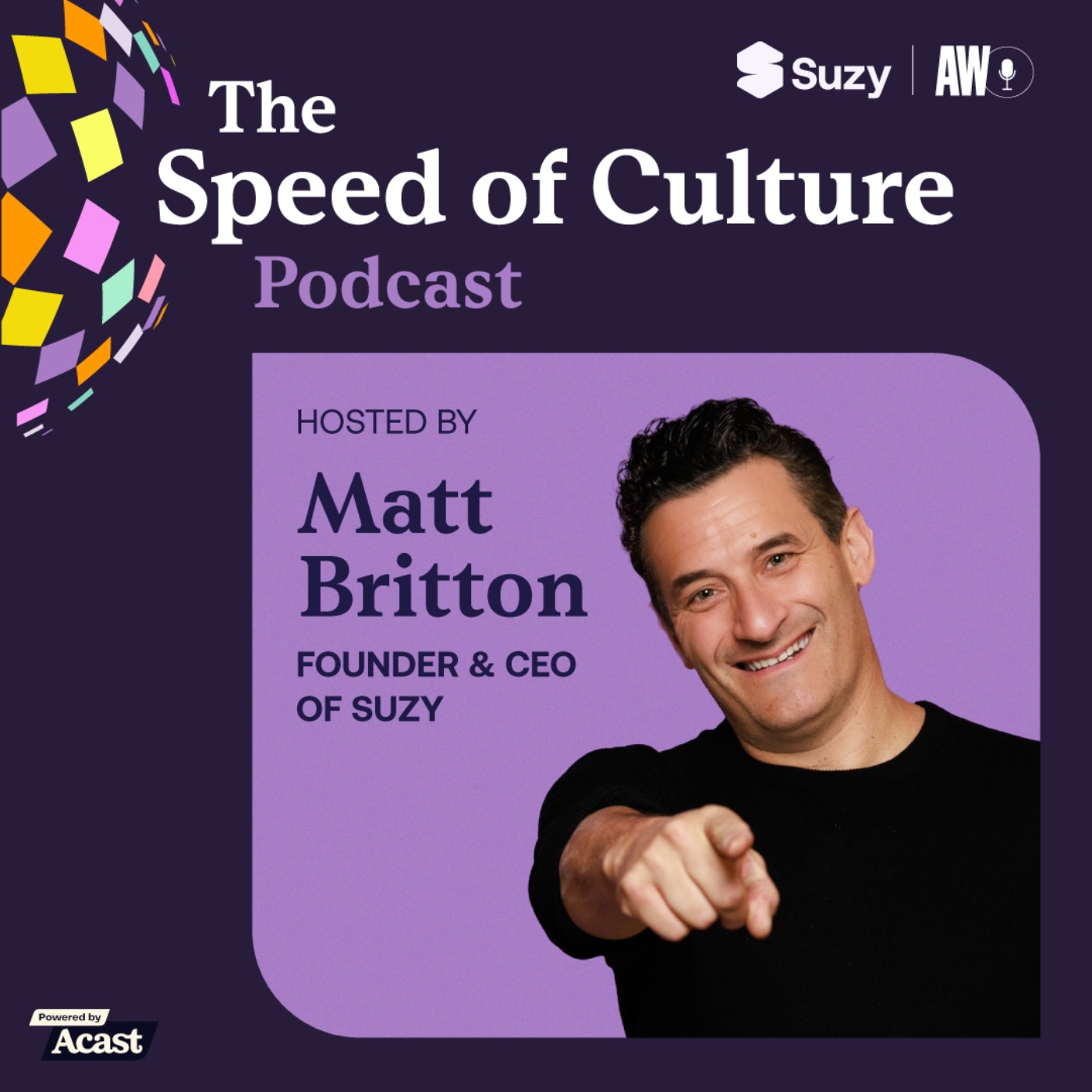
 The Speed of Culture Podcast
13 Oct 2026 · 37m · 13 chapters
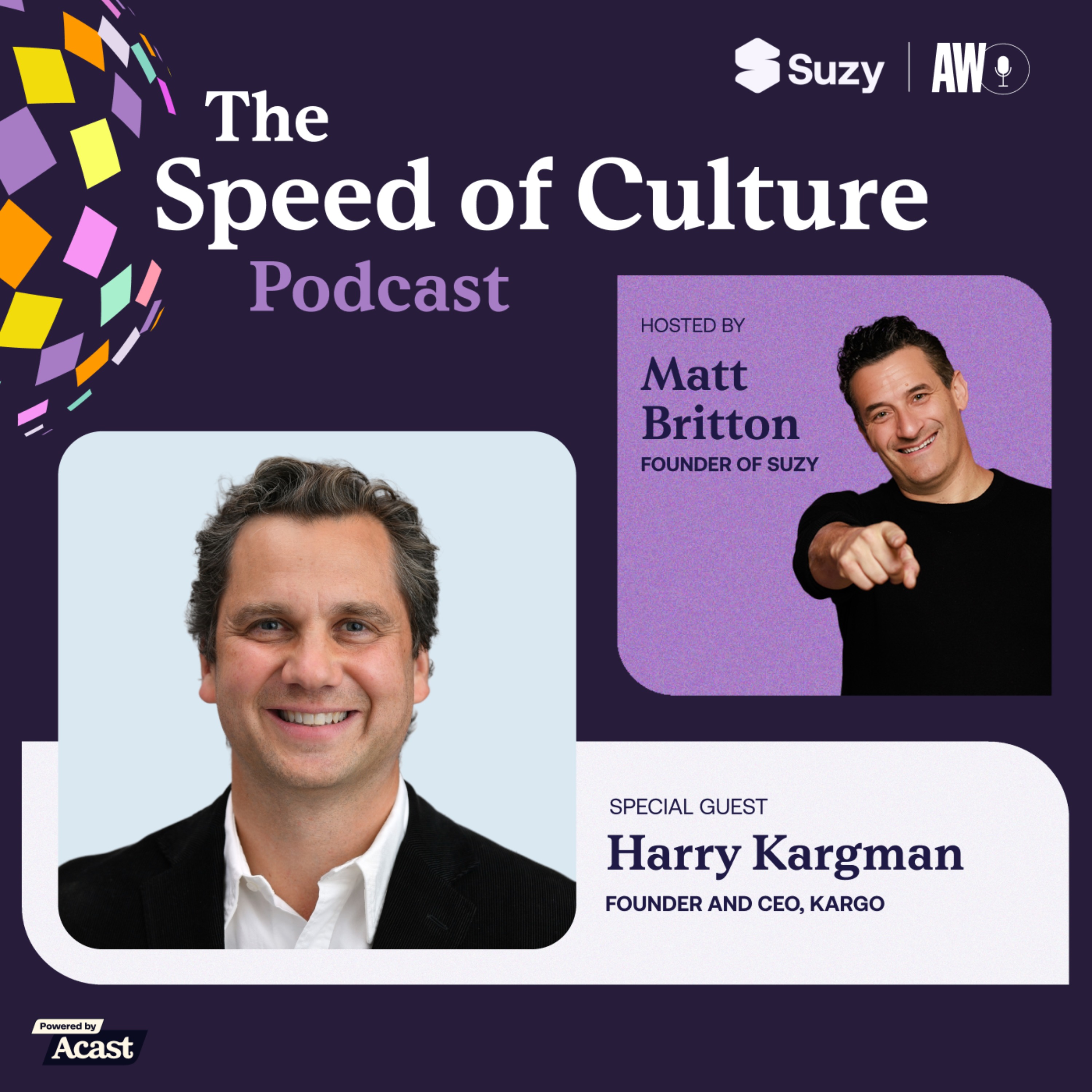
Cargo’s founder Harry Kargman discusses “Pivot or Perish,” Cargo’s evolution in ad tech, and the launch of Carlo, described as the first AI media buying platform. The episode covers Cargo’s shift from mobile/open-web rich media to social and CTV, its data/contextual targeting approach, and why the company keeps pivoting as markets change (e.g., Netflix/Disney/Amazon ad-supported CTV). It also proposes using creator content for CTV and potentially AI influencers.
Harry Kargman, founder and CEO of Cargo (built Cargo since 2003; background in advertising/tech/creative; expanded across open web, social, and CTV). Host: Matt Britton, founder of Suzy.
Great creative + contextual targeting can reach even unidentified users under privacy limits; Cargo’s 23-year API/publisher integrations enable “democratized” AI buying for mid-market brands; Carlo will run video assets across CTV and online video with brand-safety rules and chat-based planning.
“First mobile ad in North America”; contextual targeting by genre (e.g., crime drama for 60-year-olds); Netflix’s ad-supported tier as the pivot trigger; CTV creative “frame” using influencer/social assets; integrations with Canva/Adobe/Higgs field and analytics from Meta/TikTok/Snap/Pinterest/Reddit.
Written by AI. May contain mistakes.
Harry Kargman shares the history and evolution of Kargo in the advertising industry.
“Up today on the Speed to Culture podcast, we're thrilled to welcome Harry Kargman, the founder and CEO of Cargo.”
Discussion on Kargo's unique ad formats and integration with publishers.
“I'm a grandfather of sort of rich media advertising.”
How Kargo utilizes data to enhance ad targeting and performance.
“And where does data play into this in terms of your ability to properly connect the brand with the publishers and the audience and, of course, the analytics side that comes out on the other side?”
Harry discusses navigating market shifts and CTV advertising's rise.
“That's not to say that their data, it doesn't sit in some database somewhere.”
The importance of company culture in adapting to industry shifts and change management.
“There's no advertising in any of those good places.”
Insights on future opportunities in advertising and the necessity of embracing change.
“They have to believe that that's really the case.”
Explore the importance of embracing change in media strategies and the potential of new technologies.
“And so it's not like you get momentum every time you get momentum on some things, you got to continue to sort of believe in it and and storytell and have confidence and come across like, I know this is going to happen.”
Discover the features and implications of Kargo's new AI media buying platform.
“Availability and coverage vary by state and insurance plan.”
Discover how Cargo plans to make media buying accessible to mid-market brands.
“And I mean, is the idea behind this that you're gonna be democratizing buying media?”
Learn about the importance of API integrations for effective media solutions.
“Of course, when you're buying using one of these LMs, you're in cloud code, all your context is there.”
Understand Cargo's strategy for growth and market penetration over the next year.
“So what does this mean for you as an ambassador of this new revolution in media buying?”
Explore key decisions and mindset shifts that have contributed to success.
“So hopefully it will actually serve the marketplace in a really great way.”
Hear about the importance of maintaining focus on long-term goals in business.
“And a lot of ways, it sounds like it's things that are maybe important, but not necessarily urgent, right?”

Get the gist, explore an idea or ask about something said.
 Claude
On The Speed of Culture Podcast, what are the key points of this episode?
Searching your listeningAutomatic transcript. May contain errors.
0:00Harry Kargman: Therapy's biggest impact doesn't show up in some dramatic breakthrough. It shows up in the smallest moments. You bite your tongue instead of escalating. You put your phone down instead of firing off that text. You say what you actually mean instead of what would hurt someone else the most. Nobody applauds those moments, but they quietly change your life. That's what growing feels like. And that's exactly what Grow Therapy is here for. Grow is therapy that works, covered by insurance. Sessions average$21 with insurance, and some pay as little as$0, depending on their plan. There are no subscriptions, no long-term commitments.
0:37Harry Kargman: You just pay per session. Grow connects you with thousands of high-quality, licensed therapists across the U.S., offering both virtual and in-person sessions, nights and weekends. You can search by what matters, like insurance, specialty, identity, or availability. And you can book a therapy session in minutes and begin in as little as two days, not the national 48-day average. See if you could pay as little as$0 for therapy in seconds at growtherapy.com slash ACAST. That's growtherapy.com slash ACAST. growtherapy.com slash ACAST. Availability and coverage vary by state and insurance plan. Flowing ad budget on metrics that look great till the CFO sees them.
1:24That's bull spend. and marketers are calling it out in dashboard confessions. I remember telling my boss, it'll be good for the brand when leads were slow. Yeah, it wasn't. Cut the bull spend. LinkedIn lets you target by company, job title, and more. Advertise on LinkedIn. Spend$250 on your first campaign and get a$250 credit. Go to linkedin.com slash campaign. Terms and conditions apply. If you have a healthy respect for the fact that the market is going to change out from underneath you, then you're constantly searching for what's going to disrupt and what's going to destroy the company. To thrive in a rapidly evolving landscape, brands must move at an ever-increasing pace.
2:09I'm Matt Britton, founder of Suzy. Join me and key industry leaders as we dive deep into the shifting consumer trends within their industry, why it matters now, and how you can keep up. Welcome to the Speed of Culture.
2:25Up today on the Speed to Culture podcast, we're thrilled to welcome Harry Kargman, the founder and CEO of Cargo. Harry has spent more than two decades building Cargo at the intersection of advertising, technology, and creative innovation, which started as a ringtone business, evolved through mobile publishing and advertising into an omni-media platform, serving brands and premium publishers across CTV, social, the open web, and retail media, and lots more to come. Harry, so great to see you today. Great to see you, Matt. Absolutely. You know, you've been such a staple in advertising and advertising technology, ever since I've been in the business.
2:56But for those who don't know you and Cargo, we'd love to just hear a high-level overview of the business and how it's evolved over time. Sure, so Cargo's been around since 2003, so it's 23 years now. I can't believe, I think I have a little more gray hair than I had previously. You and me both, my brother. Yeah, I don't know what happened. Really focused originally on the mobile device. We probably could have gone in a lot of different directions. Maybe we should have built a social network. Or maybe we should have gone and done an Uber car riding or order from restaurants. But focus of the business is really on advertising.
3:28How do you put great ad creative on that device? All the places that actually matter. So we started in the open web. We did deals with virtually all the major publishers that had print editorial and video. And we created these beautiful editorial creative units formats that sapped in the middle of the page, but really inspired consumers to engage and pay attention. Better than sort of the standard IAB stuff. And we always thought, if we can integrate in places with beautiful, creative, consumers would actually see it, pay attention, and would grow whatever the brand is. So that was like the premise of the company.
4:07So you basically created a distribution network of leading publishers, and you had inventory that you were able to sell into these platforms. Right. We created, I think I actually ran the first mobile ad in North America, probably. I'm a grandfather of sort of rich media advertising. Maybe not on desktop, but definitely on mobile. NTD Docomo was before us in Japan, but in the US, I think we probably were right up there in the first few. But then the idea was like, okay, can we do things beyond just editorial? And we started to evolve ourselves into brand new what we call surfaces. And that happened with an acquisition that we did in, it was about four years ago, focused on social.
4:49So we're like, can we integrate really beautiful, creative functionality inside of meta TikTok, Snap Pinterest across all the social platforms? And then we did a CTV acquisition about three years ago. And we said, can we actually bring these creatives to screens, not just in terms of the pod, the ad pod, where sort of typical commercials show up, But on the home screen of the TV, can we be between when you're watching something in a pause ad? And can we create net new formats that didn't exist before so that consumers will basically see what we did on mobile and bring that to other screens? So over time, the common theme has been where are the consumers eyeballs going?
5:30How can you create kind of like unique bespoke channels into these overall platforms and then essentially work with these advertisers to make sure they can take advantage of it and build their brand? It's that simple. You do a great job. And where does data play into this in terms of your ability to properly connect the brand with the publishers and the audience and, of course, the analytics side that comes out on the other side? Yeah. So our approach was, if we're going to lead on creative in formats and performance out of creative in formats, then we're going to work with the best of breed on the data side.
6:01So did a deal with LiveRamp, did a deal with TransUnion and all of their graphs, did a deal with all their agencies around Epsilon and Axiom and all of the various different, even like the Merkle ID around sort of all the data IDs from the major agencies. and then even worked with a number of third parties that had sort of proprietary graphs. So we took the vantage point that a lot of people spent a lot of time and effort on the audience side of things. And we would plug into that and enable that across these beautiful formats and all of the editorial. Where we did think we could make a huge difference is that by having tag on page and these unique APIs into all these places, could we lead it from a contextual targeting perspective?
6:44Could we actually say, because we build beautiful creative, you know where you want that to show up. You want articles that all look and feel like this. You want shows that all look like this genre. It fits for teenage girls, or it's a crime drama series for 60-year-old couples that are sitting at home. And so can we actually build the next generation of contextual targeting that has that beautiful, unique ad format and creative that sits in CTV show up alongside those genres where you know the audience? For the most part, there are outliers, but for the most part, you can find those audiences.
7:26And a lot of the audience members, I really believe this, don't necessarily show up in the live ramps and trend unions right at that moment. they're not because of all the work that Apple's done around ad blocking and privacy. I feel like if you build great and like really novel contextual targeting strategies, you can find lots of users that are unidentified. That's not to say that their data, it doesn't sit in some database somewhere. It's just as unidentified at the time that the ad is requested. So you can find that right genre type, that person that leans into that just because their ID is not identified at the moment where an ad could be served.
8:05Yeah, and it's interesting how you bring up the big Apple privacy change, because I remember when that news broke and everyone thought, oh, it's going to change publishing forever. And it did change a lot, but obviously platforms like Meta came up with new interesting ways to target and they triangulated and worked around it, et cetera. And just hearing that you've been doing this now for 23 plus years, I'm sure you've seen several of those moments. And I guess my question for you is, what you think has given your company the staying power in what is really a rapidly evolving space. You speak about it almost as a matter of fact, but when you started, there was no YouTube, there was no Facebook, there was no Instagram, there was barely Google, it was just starting.
8:46And you're one of the few companies I know of that's really withstood the test of time, probably fended off a lot of acquisition offers over time, which we can get into. What do you think you can attribute that to in terms of your ability to re-imvent? You just summed it up, which is if you have a healthy respect for the fact that the market is going to change out from underneath you, then you're constantly searching for what's going to disrupt and what's going to destroy the company. I call it like sort of these moments of existential change. And so like from a tectonics plate, if you don't change the company as the moments are coming, you'll have a few years, but sooner or later, you'll find out that the business that you've built is not going to be a business that will survive the change.
9:30And so we're constantly asking ourselves, are we set up for success? Are we seeing moments where the market is changing? And do we need to change in those moments? So I'll give you a great example that I think for the audience will enjoy. I was dead set against doing CTV. I was like, I am not doing CTV. I have no interest in CTV and we're not going to do CTV. So people are like, but that's where all the eyeballs are. People are excited about CTV. And I go, well, I look at it. Disney has no ads. Netflix has no ads. Amazon has no ads. All the good stuff, the good places. There's no advertising in any of those good places.
10:11So why would I do CTV? I said, the day that Netflix does advertising in CTV, that's the day that we will pivot and go into CTV. Right. It's almost the notion that people pay to avoid advertising. So the only people you could reach are the people who are less desirable. Less desirable, less household income, less interesting for the advertiser. But, and nobody thought it would ever happen, Netflix announces an ad-supported tier of Netflix because they need to grow. And the day of that announcement, I go up. What hell has, what do they say, frozen over? Netflix is doing advertising. Disney is doing advertising because they announced just after that, I think, or was it just before?
10:56And I'm like, and you know what? Cargo is now doing CTV. So then we said, okay, how do we get into this business? How do we accelerate? If we try to do it ourselves internally, we're probably not going to get there. Found a small challenger startup with the right sort of mojo already in CTV, no great publisher relationships, decent tech. Right. So they needed you and you needed their expertise and probably a little bit of their new youthful energy in this new space. And now that business for us, non-existent three years ago, will probably be about$100 million this year. But that was basically setting a post in the sand that said, when I see Netflix or Amazon or Disney go into ad-supported CTV, that is the moment where I know that my decision-making is changing.
11:46And I think a lot of the industry and my peers and people and companies that have disappeared don't necessarily look at the future and say, when I see these metrics or these moments, I know that the moment has changed when these things happen, if they ever happen. And then when those things do happen, if they do happen, and again, it's a big if, now it just looks like, oh, well, that's an obvious thing. But at the time, it was like, that's never happening. It was the opposite of that. People came out and be like, that will never happen. They will never have advertising in those platforms. But the second that announcement happened, I go, no, you got to start working on it because the market is changing.
12:26Right. And a big part of taking advantage of these new opportunities isn't just you deciding as a CEO, I'm going to go in that direction, but there's a lot of change management internally. You need to get people bought in, you need to onboard them and train them so they can talk to your customers the right way. Has that been something that you have found has been easier to do over time? Because my experience has been sometimes people can be stuck in their way. It's so tough. But you talk about it as like, if we're not doing this, you're not going to survive. But they have to believe you, though.
12:56They have to believe that that's really the case. I think the good news is that by being around as long as we're around and talking about it, I commissioned some art in our offices, and it was this really tongue-in-cheek guy. And we have, you can see it over there, we have in our conference room, there's this arrow, and it has like a bunch of band-aids on the center with like cracks and it's like pivot, pivot, pivot, pivot. Like they know that without the pivot, you don't survive. And so I think that's part of the culture. I think there's still going to be, you know, people don't like change, just they naturally have an aversion to change.
13:30But if they know that that is the culture of the company, and if you sort of say, well, we have to get there, if we don't get there, we're dead. And you talk about it just like I did. We weren't going to do it until this happened and it happened and so we have to do it, then everybody goes, oh yeah, I know that story and it did happen. So we got to do it now. And so you can sort of create the mythos around why this is the moment where we have to make these things happen. But there's a lot of other product ideas and products that I know need to happen and still we're semi-stuck. And so it's not like you get momentum every time you get momentum on some things, you got to continue to sort of believe in it and and storytell and have confidence and come across like, I know this is going to happen.
14:15Either we're going to do it or some other company is going to eat our lunch. And I think as long as you have that sort of confidence, but also like just clarity about what the future is going to look like. And when you say it, it's so obvious. I think people, they're just adverse to change. And so it's all about, can you get them to realize that not only is it obvious, but now is the moment that we need to embrace and be willing to actually accept that. And then the question is, do you have the right people and can you hire for that change so that you can move fast? It's interesting when you talk about CTV, because I've long thought a great strategy for the companies you've mentioned, whether it be Disney or Netflix or Amazon or Apple, would be for them to buy like a low margin TV manufacturer and just kind of give the TVs away for free so they would have the distribution.
15:03Is that something that you've ever thought of before? It's almost like the Gillette model and some, I know that Walmart bought Vizio, so I guess that's kind of an example of it. But I'm just surprised that that hasn't happened. Well, there are a few things like that. You don't need to buy the TV, but you could invest in or buy the operating system too. So I think that's why Jeff, and I think it's failed, but that's why Jeff at the trade desk tried to build a TV operating system. It's actually a really interesting TV operating system based in Europe. This one is actually pretty good. There's Titan OS.
15:33It's nicely done. We'll see what TVs actually adopt it. But I was really sort of impressed by the clarity and cleanliness of Titan OS. I think Roku's done a great job, right? Like, why do you think they just got bought? They got bought because they actually own that operating system relationship with the consumer. But I agree. And so I think there are more of those models. And then we have a partner that builds TVs and gives them away for free. Actually, we have one in the other room. It's coming to me. I'm having a brain fog today. But there's definitely a model. I think they're the only ones called Tele.
16:07I think it's called Tele TV. And I think they've done a great job. And the quality of the product, I think, is really, really good. What is your stance on creators? Obviously, they are obviously continuing to grow in their importance and their share of eyeballs. What is Cargo's play there in terms of putting brands contextually in the feed? We've done a good job in terms of lifting creator-built content for brands and extending that into TV. So we think that there is huge differentiation instead of coming to TV as here's what I do in linear and I'm going to bring that to CTV this way. And so all I'm really doing is I'm taking my linear ads, I'm pushing it into CTV, and then I'm just watching those same linear ads and see TV.
16:54That's pretty boring. There's nothing differentiated. I get it. That's a simple leap. Taking influencer built content that you know works well on YouTube, know works well on Facebook, on Instagram, on TikTok, where you take that asset that is not necessarily meant for TV, but there's ways and Cargo does a great job in terms of reformatting that asset for TV. building that plus we call a frame around it and building that into a new TV ad format and then pushing that into a standard 15 second spot placement using contextual targets on CTV. That is a brand new practice for CTV that we think is really differentiated in market.
17:42We don't know of anybody else doing that. And it gives a new lease on life in terms of leveraging these largest TVs that have so much real estate that's great and put an asset that you already know is tested and works and is viral and is your best thing and feels organic. Yes, it feels organic on social or on YouTube, but you know it works and you bring that over here. how is that not going to be a great augmentation of what you're doing just trying to bring your linear stuff over that means that you'll always have new fresh assets because if you're always doing these influencer campaigns you're always going to have those assets at your fingertips so like i'll complain like oh i can't run anything because i actually don't have any of the assets because my creative team hasn't delivered them yet or you just want to keep something fresh It totally changes the depth of your library of creative and brings you creative that you know is proven to be successful and brings it onto a new screen to actually amplify what you think and know already works because of feedback in a different channel that's lower cost.
18:52So I just feel like that to us is a super simple approach and fully scalable and changes the market. So like that to us is a great approach. I do think there is a way. The reason that we haven't done more influencer campaigns ourselves is that there's a lot of friction in that. If you're a CPG product, I was talking to a friend who used to be CMO at Unilever. If you're a CPG, you got to take the product, you have to ship the product, the influencers got to get the product, they've got to come up with a script for the product, they got to put it in, you got to rinse and repeat, and you got to do that how many times to actually get to market for a huge brand like Unilever to prove a needle.
19:37And so that organizational challenge to basically get a large enough set of influencers, I don't think the celebrity influencers really move the needle as much as these micro influencers. So the scale of the micro influencers you have to reach to actually move the needle on a big brand, I think is, to me, that is not a business operationally that I think is that interesting for us just because I love the digital business from an idea to a screen is seconds, not even seconds, milliseconds. This is like months and months of planning that could go south and then the product, whatever. So I'm trying to figure out like, and we're working on it.
20:16If there were people that know it, maybe even small companies that have figured out how do you unlock influencer marketing at scale that doesn't require shipping a product, doesn't require directly interfacing with the influencer. Well, you know why it might be, Harry? This is a great tradition, is it could just be these AI-powered influencers because I do think over time, it's going to become indistinguishable. Now, of course, brands are freaked out about that because they think that consumers are going to have backlash. But I think, like the analogy I always give is 500 ,000 people go to the Electro-Ogay-Z Carnival in Las Vegas to see DJs press buttons playing music that weren't made by instruments, but they don't care because they care how the music makes them feel.
20:55So why would they care if an influencer isn't a real person, if it still entertains them and gives them information. So that's sort of what I think about all the time, but that would enable you that scale. That would. So maybe we should be leaning into AI influencers only. Maybe there's another ad format that will work with existing influencers, human influencers, but can allow us to scale. So like we're working on that idea. I like what we're doing today, which is to take that content and become the amplification engine on CTV. That, to me, is something that is obvious, scalable, and hasn't been done.
21:30And I think it's highly differentiating for CART. We'll be right back with the Speed of Culture after a few words from our sponsors. Flowing ad budget on metrics that look great till the CFO sees them. That's bull spend. And marketers are calling it out in Dashboard Confessions. I remember telling my boss, it'll be good for the brand when leads were slow. Yeah, it wasn't. Cut the bull spend. And LinkedIn lets you target by company, job title, and more. Advertise on LinkedIn. Spend$250 on your first campaign and get a$250 credit. Go to linkedin.com slash campaign. Terms and conditions apply.
22:09Harry Kargman: Therapy's biggest impact doesn't show up in some dramatic breakthrough. It shows up in the smallest moments. You bite your tongue instead of escalating. You put your phone down instead of firing off that text. You say what you actually mean instead of what would hurt someone else the most. Nobody applauds those moments, but they quietly change your life. That's what growing feels like. And that's exactly what Grow Therapy is here for. Grow is therapy that works, covered by insurance. Sessions average$21 with insurance and some pay as little as$0 depending on their plan. There are no subscriptions, no long-term commitments.
22:45Harry Kargman: You just pay per session. Grow connects you with thousands of high-quality, licensed therapists across the U.S., offering both virtual and in-person sessions, nights and weekends. You can search by what matters, like insurance, specialty, identity, or availability. And you can book a therapy session in minutes and begin in as little as two days, not the national 48-day average. See if you could pay as little as$0 for therapy in seconds at growtherapy.com slash ACAST. That's growtherapy.com slash ACAST. growtherapy.com slash ACAST. Availability and coverage vary by state and insurance plan. So shifting gears here, because I want to make sure we get to the real topic that we're going to talk about, but I couldn't help myself because I think you and your career trajectory and your business is so fascinating.
23:37And I know our audience would find all this information equally as fascinating, but you last week had a major announcement on an extension of your business. And I'd love for you to talk about it. First, introduce what you're launching and why. So we're introducing what we know is literally the very first AI media buying platform out there. So if you think about that, the idea of talking to agents, having a intelligence that you can chat with and talk to and having that intelligence give you ideas. Here's where you want to run. Here's what works with some of your other companies in your category.
24:12here's what creative should look like. You can have connectors into amazing places. We announced that we have connectors into Canva. We have connectors coming for Adobe into Higgs field. So wherever you want to create your creative, we even have amazing creative tools in the platform itself. Super simple because we know that most of the people on the platform are media people and not creative people, but they do want performance. And so we were going to give suggestions in terms of creative performance. what they can do to the creatives that will actually unlock their performance. But the idea of going into Carlo, and you can find it at Carlo, K-A-R-L-O, like cargo, but it's Carlo, carlo.com.
24:53You go there, you sign up for an account, you put in your information, you drop in all your assets. So this is the other thing that makes it really special. Unlike a programmatic platform, which is all configuration, configuration, you could just chat with it. You can drop in a bunch of assets. You can drop in your media plan, your brand guidelines, it's going to take all of that and it's going to incorporate that into your campaign. So no longer do you have to worry about running on non-brand sake because you can just drop your brand safety guidelines and placements in there. And it's going to look at that.
25:27It's going to assume all of those attributes and it's going to make those as rules around your campaign. So you don't have to think about it anymore. And we do have integrations coming into DV and IS. You really need to think about it. You just log in with your credentials. We'll pull all of your requirements. And so like all of that is basically built into the platform. And then to start, we're on video and no platform that does this today. And we'll do this across the board, but you just drop your video assets in. And when I say video assets, I don't mean just your CTV assets. I mean, you can drop in your TikTok video assets.
26:01You can drop in your YouTube video assets and it will run not only on CTV, but it will run across all the online video placements as well. There's no platform that does that today. We want to be nice and narrow to start so that we can drive that performance. But then after that, you will actually add in all of these other amazing places. What we're known for, high impact, rich media across the open web, across all the social platforms, and so forth and so on with lots of new places. We'll even bring out of home in the coming year. So this will be the single platform you can go to. You can drop your assets in.
26:35You can drop your brand guidelines in. You can drop your brand safety in. You can drop your audiences in. You can drop your contextual alignment in. You can chat with it and ask it questions. It will actually help you plan and strategize. And then when you say, yes, I want to spend$100,$1 ,000,$100 ,000, a million dollars. And you say, I'm going to spend between this date and this date. And I've got the plan lined up and locked. You press go. Unlike every other place, it will run and it will run that moment into all those places based upon where you're going. And I imagine you could also get the analytics or any other information by chatting with it as well.
27:14The analytics are all beautifully baked in and you pull those analytics directly from the platform. So because of this acquisition, we got direct analytics out of meta, TikTok, Snap, Pinterest, Reddit. We get it out of ChatGPT. we get them out of our own analytics, out of the open web, we're directly integrated with JavaScript. So we actually have supply side analytics, which is stronger than the demand side. And then of course on CTV, we're directly integrated into all the CTV placements and we will pull those analytics from those placements as well. So the idea is to have one holistic place.
27:46It could even drop into an Amazon data cluster or a Snowflake cluster and you can pull it out and pipe it directly into whatever dashboard you like. And we'll be announcing sort of attribution and measurement partnerships in the very near future. I mean, this is amazing. And I mean, is the idea behind this that you're gonna be democratizing buying media? Like, do you see more people, either client side or the agency side, being able to buy now because it's so much easier and there's so many less layers? Like, what do you think, if done right, the implications of this are for the market and for your business?
28:22You said it. I don't even have to say it. I mean, the idea is we spent 23 years building these publisher, social platform, CTV partnerships, 23 years. Right now, how we access that, how we leverage that is the white glove service of our sales team for very unfortunate 500 to Fortune 1000 customers. But we spent so much time building that foundation where the only ones integrated into the APIs of all those places were deeply positioned today to unlock that for all the mid-market brands and eventually small. But when I say mid-market brands, think about every brand you're talking about. Healthcare systems in every state, local banks, small local QSR restaurant chains.
29:08We're not talking about like that small little shop on the corner. We will get there, but we're just talking about reasonably successful businesses that are not operating at the large holdco level, which is where most of our time is spent, who are just looking for what is the easiest and fastest way to grow my business. And if we can be the underlying technology, the platform, the infrastructure that democratizes letting them put in what they have, whatever they have, they may not have a lot, but whatever they have from a creative perspective, from a goals perspective, and we can even prompt them.
29:42hey, if you had a little bit more, go use these platforms, go use SYNX Field, there's Canva to go build a few more things. Then here are all the platforms and placements that you can unlock. Here's your targeting that we suggest, but you can drop in your first-party audiences. You can borrow other audiences from other platforms that you trust and press go. We think that that is the easiest, most straightforward way for tons and tons of companies to actually get to market and to grow their brands. We want to be the fundamental platform that enables growth of brands when they're looking for, hey, my product's great.
30:17I'm making good money, but I could do so much more. I just need an easy way to get to market and to get attention. We want to be the fundamental attention platform in market. That's amazing. Of course, when you're buying using one of these LMs, you're in cloud code, all your context is there. So there's such a rich amount of information in terms of what's important to your brand. Who is your audience? What are the metrics that matter? And over time, as these models get smarter, it allows the person to really become so much more powerful in their ability to make the most out of your platform. I mean, the goal is to create all these interconnections.
30:54So if you want to do your planning and strategy and cloud code, if you want to do your creative in Higgs field, and we have those connectors and you just drop it in, and then you translate that into actual places that you will show up, and then press your budget, your dates, and press go, that's a great way to use the platform. And we think that that will become the future. But the reality is today, it took us 23 years to get all those API interconnections. That's not going to just be opened up to platforms overnight. The permissions, the cleanliness, the video transcoding. We have one CTV partner that's at 30 frames per second and another CTE partners at 60 frames per second.
31:36All of those, you need to have the intelligence that you know what you need to do to drop it against an API that's looking for very specific inputs and not break things. And then they need to trust that when you aggregate this in one place, that you're going to make sure that the content is appropriate, that the audiences are appropriate, that the APIs and the requests of the APIs are well constructed. And I think that that connectivity, at least for the next few years, is going to be closely held. And Cargo is one of the only companies, if not the only company, that can sort of draw upon 23 years of partnership and technical integration to basically open this up to the world.
32:20And we'll be very careful about how to do it in a way where everybody wins. The publisher wins. The advertiser wins. The media planner and buyer wins. The agency who's using it. There's going to be lots of mid-market agencies and other agencies using it. They're going to look like heroes as well. And they're going to be able to scale this where they wouldn't have been able to do it before because it would have been too complicated to get across all these places. So we feel like we can be the underlying solution to so many of the challenges in the larger ecosystem. And what do you think just education is going to look like after you roll this out?
32:57What does that mean for you as, you know, in your role as CEO? Obviously, a very successful business, and this is a big bet you're making. So what does this mean for you as an ambassador of this new revolution in media buying? You know, I think all these things are, and I was watching CNBC this morning and I saw, I forget exactly who was on, but it was the CEO of NVIDIA, Jensen. Right. What he said is these things take like this and then they hit their sort of execution curve. We're right here in that. We're going to be bubbling along, building functionality, making it better, but you've got to get the product in market.
33:34People need to know about it. We need to advertise it. We need to get that feedback loop and we'll probably lock it down to a very small number of initial advertisers so that we can work with them closely to make sure that the product gets all of their requirements in. And then when we feel like we've got all that analytics, all the measurement, all of the optimization for outcomes in there, then we'll open it up the aperture a little bit more, a little bit more, a little bit more. So that this time next year, we hope to have right now what we say is cargo as it exists is set up to serve about a thousand customers.
34:12We can serve a thousand customers really well. We have a pretty big organization. I have 160 percent sales team. We can serve about a thousand customers annually. What I'm hoping is this gets us to 10 ,000 customers over the next, call it 18 months to 24. And then from 10 ,000 to 100 ,000 probably could happen in like the next six to 12 months after that. So it's that curve. So we need to start today. We need to get that real-time market feedback. We need to get out in front. We need to build a superior product. And then I think we will change how medium-sized and eventually small brands go to market.
34:50And we will become a core platform that enables them to be successful. And we will add new surfaces and new places and just make it so easy where you can just turn it on and off. And then the level of competition in those placements in the auction system will rise all boats. So Paul was like, I haven't seen so much competition for my impression. So hopefully it will actually serve the marketplace in a really great way. Yeah, sounds like it. Very cool. Obviously, best of luck with it. And I can't wait to see how it evolves over time because it's such a fast moving space, which I'm sure you're well aware of.
35:27So to wrap up here, Ari, when you look back on your journey, which obviously you're very much still in the middle of, what do you think were some of the right decisions you've made along the way that put yourself in the position here 23 years later to be launching a very cool new AI product as clearly a market leader, which maybe we can impart some of your learnings on some of the younger listeners here at the podcast. Yeah, I have three sort of key things that I always turn to that I think has fueled our success today. Number one is an understanding that you're never going to get it right the first time.
36:01So that perseverance and grit, which is like, okay, we'll figure it out and give ourselves enough runway to figure it out. So you have to have that belief, but also perseverance and grit. And it has to happen. Like if it's not happening fast enough, you just need to shake shit up. Like you need to see that day-to-day progress. Otherwise, a lot of people can talk great, but they're not actually acting. I'm looking for, show me in a short period of time, how we can start to make mild, subtle progress toward whatever the goal is. So that perseverance, grit, and sort of a real focus on seeing things that make incremental focus on a weekly, if not monthly basis.
36:42Really like it's got to happen this week, this month. Otherwise you start to use faith that you're sort of going to get there and just celebrate that small little bit of incremental progress. That's number one. Number two is we're not afraid to pivot. If we see that the market that we're in is changing, we know that we need to change with it. And I think that openness to pivoting the business and being in a new business, I think is probably the thing that has driven our success. And number three, I think that we've had a generally positive attitude where we feel like we can actually make it happen.
37:15I think if you don't have that like positive attitude that you can overcome whatever the market forces are and figure out your own way forward, I think then you'll feel overwhelmed from time by time and then you shut down and then there's a lack of progress. So what I've seen is that like, stay positive, know that you have to get there and just keep on plotting. If you had to build a building and you expected it to go up in a day, you're going to be sorely disappointed. But if you say, listen, I have 10 years and every day I'm going to put a bunch of new bricks in the foundation, et cetera. It's amazing how after a year you look around and say, wow, I've actually really built a lot in this year.
37:56So I think that positive, like get something done every day attitude, I think has been sort of the thing that's driven a lot of our success going forward. Yeah. And a lot of ways, it sounds like it's things that are maybe important, but not necessarily urgent, right? Because the urgent thing is the kind of the fire drill du jour they need to jump on. And you might feel good if you respond to that email or take care of that issue, but you're not really moving the business forward. You're working in the business versus on the business. And what you're talking about is the incremental changes you make where you're working on the business to set yourself up.
38:30Or one day you can say, we're launching Carlo, we're making this big league. That's exactly right. And it's smart because that's pulling resource that you feel could be working on the business or in the business. And these are all things that should be working. And those are sometimes your best people are, should be working in the business and you pull them out to work on the business. But I think in the longterm, If you don't do that, you're dead. So you have to be prepared to make that what feels like a short-term sacrifice for a long-term runway and enabling that pivot toward the next sort of growth area for the business.
39:02But like, you don't know at this moment in time, hopefully we'll look at this podcast and go, wow, like, I can't believe I remember that moment when it wasn't anything yet. And we're still at the moment where it's nothing yet. But I'm hoping that we look back six months from now and be like, I can't believe that we got to this point. So we'll see. Hopefully it's successful. Well, I can't wait to see. And I have no doubts. It is a great product. I have to say it's a great product, but a great product and product market fit are two separate things. Right on. Well, it's been such a great discussion.
39:34Thanks again for joining, Harry, and congrats to your continued success. And best of luck with the launch of Carlo. Thanks, man. I really appreciate it. Talk soon. Likewise. On behalf of Susie and the Abwe team, thanks again to Harry Kargman, founder and CEO of Cargo, for joining us today. Be sure to subscribe, rate, review the Speed of Culture podcast on your favorite podcast platform. So next time, see you soon, everyone. Bye-bye.
39:57The Speed of Culture is brought to you by Suzy as part of the Adweek Podcast Network and Agass Creator Network. You can listen and subscribe to all Adweek's podcasts by visiting adweek.com slash podcasts. To find out more about Suzy, head to suzy.com. And make sure to search for The Speed of Culture in Apple Podcasts, Spotify, or anywhere else podcasts are found. Click follow so you don't miss out on any future episodes. On behalf of the team here at Susie, thanks for listening.
40:48My boss asked for results, so I opened my dashboard for the only positive-sounding metric I had. Impressions. Cut the bull spend. See revenue, not just reach. LinkedIn delivers the highest return on ad spend of major ad networks. Advertise on LinkedIn. Spend$250 on your first campaign and get a$250 credit. Go to linkedin.com slash campaign. Terms and conditions apply.
What does it take to genuinely reinvent yourself in the world of advertising, and to do it in a way that’s valuable? This episode of The Speed of Culture Podcast welcomes Harry Kargman, Founder and CEO of Kargo, for a reflection on 23 years of building through constant change in advertising. From mobile and the open web to social, CTV, and now AI-powered media buying, he explains why good timing starts with knowing which market signals actually matter, and how Kargo built a culture that expects reinvention. Harry also gives us an inside look at why its new platform, Karlo, is designed to make sophisticated media buying more accessible to mid-market brands.
Follow Suzy on Twitter: @AskSuzyBiz
Follow Harry Kargman on LinkedIn
Subscribe to The Speed of Culture on your favorite podcast platform.
And if you have a question or suggestions for the show, send us an email at [email protected]
Hosted on Acast. See acast.com/privacy for more information.