Ask ChatGPT
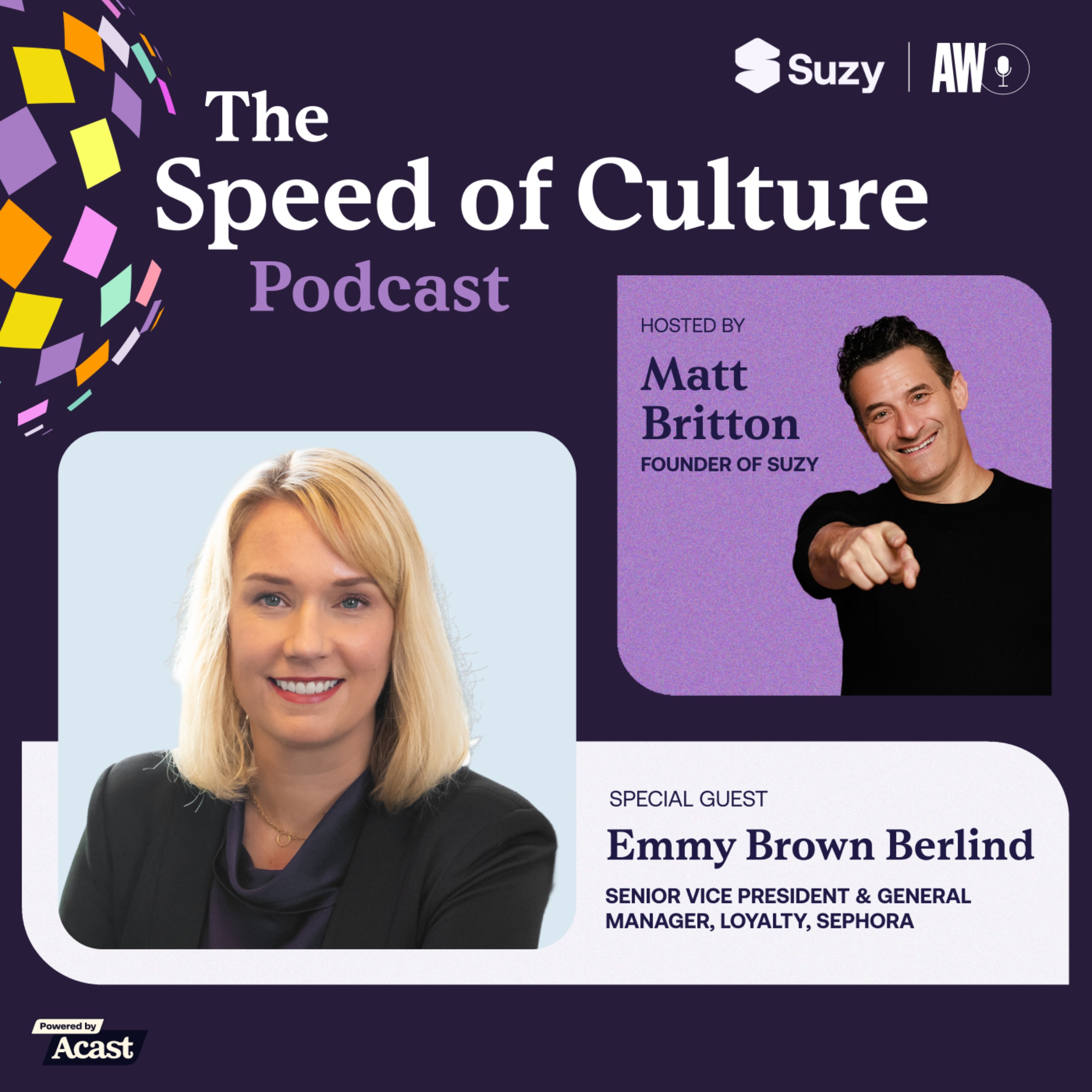
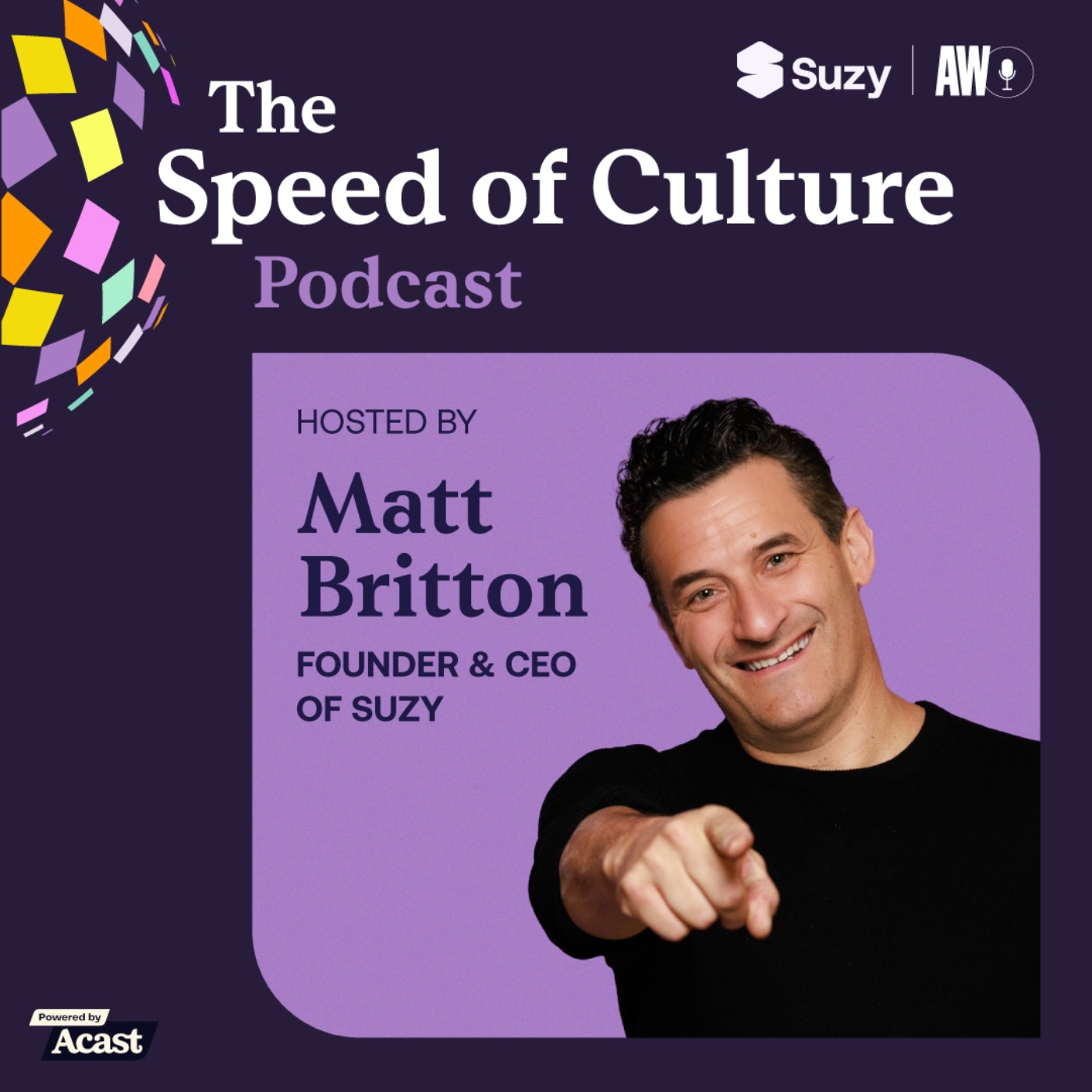
 The Speed of Culture Podcast
8 Sep 2026 · 27m · 11 chapters
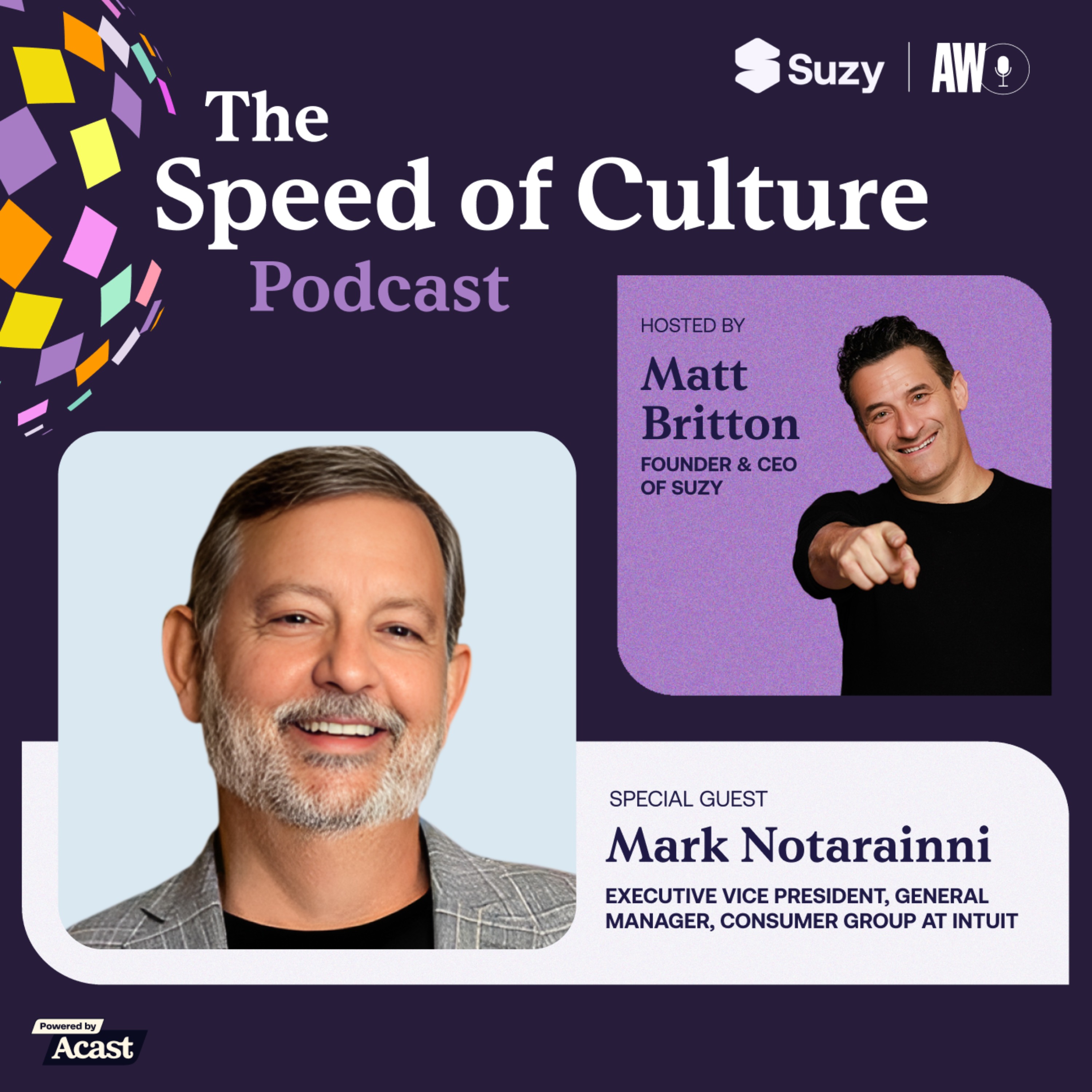
Intuit’s Mark Notriani discusses “kitchen table finances” and how AI can act like an always-on financial operating system—improving credit building, debt management, paycheck decisions, and year-round tax prep—while democratizing access to expert guidance.
Mark Notriani is EVP and General Manager of Intuit Consumer Group, leading TurboTax and Credit Karma teams that serve consumers with personal finance tools.
Financial literacy is missing in schools; AI can remove the “I have debt but don’t know what to do” hurdle; AI will personalize tax prep beyond filing season; headless/embedded AI (ChatGPT/Claude + MCP) will require seamless compliance handoffs.
Credit Karma “debt agent” monitoring revolving debt and saving up to $300/month; Credit Spark for thin/no-credit users; card optimizer and connected accounts (Mint capabilities); refund alerts (~$3,500) and “80% done” tax prep; TurboTax Live human+software model.
Written by AI. May contain mistakes.
Mark Notriani discusses Intuit's mission and financial platforms.
“A missed call doesn't feel like anything.”
Mark Notriani discusses Intuit's mission and financial platforms.
“That's the democratization of these capabilities and removing barriers and hurdles.”
The discussion highlights the need for financial education among young people.
“For those who don't know what Intuit is, obviously so many are familiar with your brands.”
Exploration of how technology, including AI, is impacting financial management.
“Because life hits you hard as soon as you leave and get out in high school, whether you go and start working full-time or you go wherever you're gonna go do, it hits you as soon as you leave high school.”
Mark details features of Intuit's products aimed at helping consumers manage their finances effectively.
“And I'm sure my dad told me I may not have listened.”
Explore how AI is transforming financial management and debt monitoring.
“So let's talk about some of the changes that are happening because, obviously, you mentioned AI earlier.”
Discover how AI can optimize tax preparation and financial decisions year-round.
“Taxes, you get your refund, is the largest paycheck of the year for most Americans.”
Understand the potential changes in tax preparation and the role of AI.
“And one question I actually had was just on AI and its role in taxes overall?”
Examine the evolving role of AI in software and its impact on Intuit's products.
“I want to shift gears a little bit and just talk about AI's impact on the software industry.”
Insights on adapting to rapid changes in consumer needs and technology.
“So as we wrap up here, Mark, we'd love to hear about how you spend your time during the day and how obviously a big part of your role in overseeing such exciting consumer products is understanding the consumer.”
Learn how perseverance shapes professional success and personal development.
“if there's a saying or mantra that's helped sort of encapsulate the professional journey today.”

Get the gist, explore an idea or ask about something said.
 Claude
On The Speed of Culture Podcast, what are the key points of this episode?
Searching your listeningAutomatic transcript. May contain errors.
0:00Brand Week is back September 15th through the 17th in downtown Atlanta. And if you're serious about where marketing is going, this is the room for you. I'm Jenny Rooney, Chief Brand and Community Officer at Adweek. And for three days, we're bringing together the sharpest minds in marketing for the ideas, insights and connections shaping what comes next for brands. From culture and creativity to growth, leadership, and consumer behavior, Brand Week is where brand leaders come to think bigger, connect deeper, and leave with a clearer plan for what's ahead. Get your tickets now at brandweek.com and use code BW26 for 20 % off.
0:36That's brandweek.com, code BW26. Your call has been forwarded to an automatic voice message system. A missed call doesn't feel like anything. No red flag, no notifications screaming at you. It just disappears into your call log. And nine times out of 10, that was someone ready to hand you money. That's why today's episode is brought to you by Quo, spelled Q-U-O. The business phone system built so you never miss a call. Here's what I like about it. All your calls, texts, and voicemails live in one place. So anyone on your team can pick up a conversation, see the full history, and respond fast. No more, wait, who talked to this customer last?
1:17And if you're worried about after-hours leads slipping through, Quo's optional built-in AI agent can answer questions and even book appointments while your team's offline. It's the number one rated business phone system on G2, and over 90 ,000 businesses already trust it to stay reachable. Money is on the line. Always say hello with Quo. Try Quo for free. Plus get 20 % off your first six months when you go to quo.com slash tech. That's Q-U-O dot com slash tech.
2:12on your first campaign and get a$250 credit. Go to linkedin.com slash campaign. Terms and conditions apply. That's the democratization of these capabilities and removing barriers and hurdles. I know when I was 18, I would not have had access to this kind of service. I just couldn't. I couldn't afford it. I couldn't find it. Now it's in the palm of your hand and it's always connected. To thrive in a rapidly evolving landscape, brands must move in an ever-increasing pace. I'm Matt Britton, founder and CEO of Suzy. Join me and key industry leaders as we dive deep into the shifting consumer trends within their industry, why it matters now, and how you can keep up.
2:51Welcome to the Speed of Culture.
2:57Up to the end of the Speed of Culture podcast, we're thrilled to welcome Mark Notriani, the EVP and General Manager of Intuit Consumer Group. Mark leads the teams behind some of the most widely used financial platforms in the world, including TurboTax and Credit Karma, helping millions of consumers make smarter, more confident financial decisions every day. Mark, so great to see you today, and thanks so much for joining Speed of Culture. Great. Thanks, Matt. Thanks for having me. Absolutely. For those who don't know what Intuit is, obviously so many are familiar with your brands. Tell us about the company and the brands that it brings to market and what your role is at the organization.
3:32Awesome. Yeah, Yeah, Intuit's a company that's a 40 plus years strong company that really all started about empowering our customers. And we have two really big customer segments with a third that we've just kind of reintroduced. So we really serve small businesses and really helping them manage their finances through products like QuickBooks. We have payroll and really becoming the operating system of small businesses, which is a fantastic business and an incredible customer base to serve. We have a consumer platform, which is empowering customers to manage their own personal finances. And that's through products like Credit Karma and TurboTax, as you mentioned.
4:13That's the group that I lead. And then we have a third customer base, which is accountants. And those accountants are very important in serving both consumers and small businesses, kind of manage their financial dreams and how we can empower our customer bases, collective customer bases to kind of achieve what they want to achieve, whether it's running a personal business or empowering them to run their personal life through finances. So someone who's overseeing the consumer finance business, by the way, I was a huge fan of the Mint product, which I guess you guys sunset into Credit Karma. Just had to give a shout out to Mint because I was one of the first and most avid users of it.
4:51Well, thank you for that. Yeah, it's a great product. So when you think about consumer finance, what are some of the things that consumers really still need to solve for? I mean, I believe it starts with like when kids are in school. We don't really teach them about how to budget, how to manage finances. We teach them what I consider a lot of useless facts. And as we all know, financial health is something that impacts your marriage, your personal health, your ability to take care of aging parents or send your kids to school. Yet it's something that we don't really talk about at early ages. And I think that has a trickle down effect to young adults and everyday working people don't really know how important it is to manage their personal finances.
5:31I think that's exactly right. And Matt, one of the things that Intuit has is this Intuit education program, actually, where we've brought our products through really gamification into schools and for free so that teachers can take that content, use it. We've had tens of millions of customers of students go through this where they learn by using our products in kind of use cases and we gamify the whole experience. So they start to get used to what a credit score is and what impacts your credit score and how to pay bills and what the implications of that are, how to save. And it's really amazing to see these young kids start to become financially literate at a much, much earlier age so that they can kind of exit high school and be ready for life.
6:16Because life hits you hard as soon as you leave and get out in high school, whether you go and start working full-time or you go wherever you're gonna go do, it hits you as soon as you leave high school. And so it's a really great program that we've developed there. It's interesting to say that. I mean, it is hitting, I think, younger people hard than ever. I mean, we saw what happened in New York City where, you know, an hourly socialist mayor got elected and on a platform basically to help. I think there's a lot of fear with young people. And I think it's rightly so. And when you look at an area like New York City, where the New York Knicks were just in the finals and people are paying$25 ,000 a ticket on one end of the spectrum and the other end of the spectrum, you have young people who can't afford rent.
6:56And then you have a mayor in the same city where Wall Street is basically saying, we're going to help you. We're going to give you. And no matter what side of the aisle you're on, it's smart to actually ignore what's happening. And I think there's also all the news out there about young people and entry-level jobs going away. So I think all the things combined make managing finances and understanding your financial situation probably more important than ever before for young people. I totally agree. It's a very interesting world that we're in. Technology, politically. But it's also, I think, when you look back, not much in terms of the anxiety and the fear.
7:34I know it's hard for me to look back at those days, but I have no idea how I got here. If I flash back to 18-year-old Mark, I'm like, wait a minute, what am I going to go do? Right? And what are the options out there? And there are other challenges that were facing the youth at that time. What I think is really empowering now, Matt, is I actually believe there are so many more ways for you to earn money. I've met with influencers and people that have taken their own control and just have gone out and built brands, their own personal brands. It's amazing time to build AI software tools or whatever it may be.
8:12Totally. It's super exciting, but it's that hurdle to get started is often the biggest step. And I think now with AI and the capabilities that are being built with products like Credit Karma in particular, you can start to demystify a lot of the financial management of your life. So many kids come out, you have a thin file or no file, you have no credit, you don't quote unquote exist to the financial system, right? Because you haven't paid bills, et cetera. And just getting people started on that journey, which we've launched a product specifically for that is incredibly important. But I didn't even know that when I started.
8:51I didn't know that. And my dad was very influential in my life in terms of getting me set up financially. And he was in the finance industry. So he helped me understand certain things. But even then, I came out, I had no idea what my credit score meant. None. And I'm sure my dad told me I may not have listened. Yeah. But you don't listen until it matters, right? And no one ever worked with their parents at that age anyway. I know. Totally. I've learned that with my own kids, for sure. Exactly. Me as well. So when you mentioned financial literacy, yeah, it's incredibly important. And I guess in that regard, as people get into the workforce and as they are looking for products to help give them that awareness and the budgeting, everything comes along with it.
9:33What are some of the features and functionalities within your credit card platform and other tools that you're thinking about rolling out that consumers are looking for? Yeah, I think, you know, when you look at the generation coming into the workforce, etc., the first thing is establishing yourself and creating your financial identity. And that starts with credit, our Credit Spark products, which really allows this generation to start building their credit score. And that's through your everyday expenses like rent, etc., where we could start building your credit through our product called Credit Spark.
10:06From there, you could start to get your credit cards. I remember my very first credit card. It's a very, very important part actually of your life because it does enable you to increase your purchasing power, to start to invest in yourself. However, it can be a very slippery slope. And so managing that credit card, not just finding the best credit card that's suited for you, but also managing your credit card through our card optimizer, which allows you to manage your credit and your credit spend more effectively and efficiently. There's$30 billion worth of credit card benefits that are left on the table every single year in this country.
10:46Right. That's lost money. You know, it's not like you're paying for it, but it's lost money. It's ways for you to travel more efficiently. It's ways for you to get cash back more efficiently so you can buy groceries, right? Like real important things. So that's very, very important part of our portfolio. And then as you grow with us, you mentioned Mint. I was a huge Mint user as well, obviously. We have brought over a majority of those capabilities through connected accounts where you can manage your net worth, you can manage your spend, you can manage your bills. And so that's really important to kind of start to set up a system for you to get ahead and stay ahead.
11:23And then of course, now we've got money products, which we can get you faster access to money through paycheck advances, but also help you spend more efficiently, cash in and cash out, which that's for me, I've talked about this a lot. The way I think about it, those are the kitchen table finances. Like how do you manage your life? These are the things that I remember my mom and dad talking about at the kitchen table. I remember my mom balancing the checkbook at the kitchen table, like sitting down with all the receipts and going through and balancing it all out manually. I vividly remember that every month she would do that.
11:58And so those are what tools allow you to do real time now and then start to get you ahead and make better decisions every single day. Yeah. One other feature that I like with your products is we all live in this subscription based economy and we sign up for things that we forget about. And that adds up over time. And there's nothing worse than finding out four years later that you've been paying 25 hours a month for something when you're basically$1 ,500. It vanished. You could have been investing. If you invest that in video, that's$10 ,000. Totally. Those are the trade-offs. Yeah. I mean, you think about it.
12:31It's amazing. It's funny. I hate to admit it, but I had five subscriptions to MLB that I just found out about. I'm like, how did I get here? So it happens at every stage of your life. What's your favorite team, by the way, Mark? My favorite team are the New York Yankees. I'm probably going to get half the country to hate me for saying that, but that was my very first baseball game was a New York Yankee game. And so from that point on, I've always loved the Yankees. We'll be right back with the Speed of Culture after a few words from our sponsors. Flowing ad budget on metrics that look great till the CFO sees them.
13:03That's bull spend. And marketers are calling it out in Dashboard Confessions. I remember telling my boss, It'll be good for the brand when leads were slow. Yeah, it wasn't. Cut the bull spend. LinkedIn lets you target by company, job title, and more. Advertise on LinkedIn. Spend$250 on your first campaign and get a$250 credit. Go to linkedin.com slash campaign. Terms and conditions apply.
13:32Brand Week is back September 15th through the 17th in downtown Atlanta. And if you're serious about where marketing is going, this is the room for you. I'm Jenny Rooney, Chief Brand and Community Officer at Adweek. And for three days, we're bringing together the sharpest minds in marketing for the ideas, insights, and connections shaping what comes next for brands. Get your tickets now at brandweek.com and use code BW26 for 20 % off. That's brandweek.com, code BW26. This message comes from Jackson. Taxes aren't something you can only think about once a year. With investments, planning for tax days year-round.
14:11Fortunately, Jackson offers tax-efficient products. Visit jackson.com for more information on how our products can make your tax bill a little bit less painful. Jackson is short for Jackson Financial Incorporated, Jackson National Life Insurance Company, Lansing, Michigan, and Jackson National Life Insurance Company of New York. Purchase New York. So let's talk about some of the changes that are happening because, obviously, you mentioned AI earlier. And it definitely is going to change the financial landscape and the service landscape in so many ways. I was with a wealth manager this weekend who was asking me, what's the future of his job?
14:49I turned on autonomous trading on a platform like Robinhood that basically I'm using an agent, very small test, that's basically trading for me. And I want to see if it's actually going to outperform how I trade. So it's a whole new world out there. And the world that you guys live in, AI can really become this financial operating system where just a lot like health data, where you have like your Apple Watch or your Oura Ring and all this data on your body can be unlocked with insights of AI. Obviously, the same exists with finances. So just curious, what is your take on how AI is going to impact the financial service space overall?
15:23And what is down the road for your product roadmap in terms of taking advantage of this incredible new innovation for your customers? Yeah, I think it's going to be an incredibly powerful, I love your example on like an Apple watch for health. I have several examples in my family with my mom where it detected something with her and it actually saved her in with some issues. And I think it's the same in financial services. So I'll give you an example. 57 % of the customers in our platform and Credit Karma in particular, they carry revolving debt, which is the worst thing that you could do. They don't even know that they're carrying it.
16:01They don't know what the implications are. But we have agents now, it's called our debt agent, which is constantly monitoring your spend and where it's going and what you're paying and comparing it against what you could get in the market. Because we have an incredible marketplace of lenders and financial instruments that are really hard to find on your own, but with an agent, it's simple and using your data plus our proprietary knowledge and our network of incredible partners, we can save someone$300 a month as an example. And it does it for them. So the hurdle is removed of, I know I've got this thing, but I don't know what to do.
16:43I know I'm carrying this revolving debt. I'm paying a very high interest rate on it. I don't know what to do. That's all removed now. And much like the Apple Watch, it's like, I know my heart is beating faster, but I don't know why or what's going on. But with an Apple Watch, it'll say, hey, you've got something going on. You should probably call your doctor. And that's where I think it becomes powerful. Now, in that example, that's deployed into our product right now. And we have several other examples. We have paycheck optimizers, right? Based on your connected accounts, your spend patterns, we can help customers make better decisions with their paycheck, where to put it, and that actually do it for them.
17:21So that kind of does take the role of a wealth manager, like in the very early stages where professionals can't afford a wealth manager. Basically, AI is telling you what to do for you. And that's the democratization of these capabilities and removing barriers and hurdles. You talked about the K-shape economy. It really starts to bring these capabilities. I know when I was 18, I would not have had access to this kind of service. I just couldn't. I couldn't afford it. I couldn't find it. Now it's in the palm of your hand and it's always connected. Much like your Apple Watch is always on you, right?
17:52Always monitoring your health, your scores, how you're doing, all the things that it monitors. That's what we're building within Credit Karma right now. And then for many people, this is what is very interesting. Taxes, you get your refund, is the largest paycheck of the year for most Americans. About$3 ,500 in refund for people that get a refund. That's a lot of money. And that's what I learned early on when I started 18 years ago here. I was in the TurboTax business and I got on the phone calls, taking calls with customers. And I really didn't appreciate what people did with their refunds. And I heard the stories, right?
18:27They were paying rent down. They were paying medical bills. They were doing things that were really, really important for them because it was the biggest paycheck. and that is really powerful when you can then take that refund and we have a relationship with you through Credit Karma, we can make really great recommendations and then the customers for us is always in control and they can click on buttons and say, I want to go into a high yield savings account with a thousand dollars of that and just does it for you. And it just removes friction and barriers, which I think is going to be so big.
19:05And then what it actually allows us to do, Matt, as well, you brought up the human side of this. We've got an incredible expert network where our services are changing rapidly. Instead of doing things for people like data entry work, et cetera, we're now becoming that confident advisor. So if you had a question about your taxes and you want to talk to a CPA, it's like, hey, am I doing this right? Just that added. And that's where I think the work of financial advisors, CPAs, whomever, is going to change because data and information is going to be available to them, and they'll have more access to advise people on what to do, and that's very confidence-inspiring for people.
19:43That's right. Like an accountant, their ability to do someone's taxes is going to be less valuable, but their ability to help walk people through big life decisions is going to be more valuable. A warrior's ability to write a contract is less valuable to consult you on if you should go to court or not, or what's most important, more valuable. And I think it's not about jobs going away. It's really about jobs changing. But some of these things do impact entry-level jobs because a lot of the lower level tests in any career journey tend to happen when you're younger. And for you to be able to make that leap to being able to be a true advisor and partner your customers when you don't have any experience, I think is where a lot of the fears from entry-level jobs come from, which is where, as you said earlier, people really have to be their own best advocate and take agency over their career and find ways to get that experience.
20:35Yeah. And there are so many avenues out there for people as well. And the other thing that I would say though, Matt, on that part is you can become educated much faster than the years and years of experience because technology will make next best action recommendations and you'll be able to learn much faster. And so I think we're all obviously in the super early innings, going back to baseball analogy, in this stage of how work is going to change. I know like we launched a product called TurboTax Live almost eight years ago, where we really started to fuse humans and software together. And from eight years ago to today, the role of that expert has changed dramatically, dramatically.
21:14But we've kept hiring and it's grown from when we started at 600 people to 15 ,000, right? So that's like for me where it's very daunting. But I also think if you could look through that to the opportunities that it creates, I think it's going to be a fantastic future for young people coming into the workforce. I really do. So Mark, you talk about TurboTax. And one question I actually had was just on AI and its role in taxes overall? Because as AI increasingly becomes adept at optimizing your finances over time, understanding what deductions you have, does the notion of tax season go away? And are you kind of optimizing year round?
21:55It's a great question. There's no doubt. We started as a company. Our product was this really amazing breakthrough with this interview, but it was very long and it was one to many, meaning everybody had to go through the same questions. And so that's really transforming how we deliver and build our products, right? AI data in will allow us to truly personalize it to you and your situation. And then the more you're with us, the more we learn so that it's not that the tax season will go away unless the government changes like tax filing time, but the tax prep experience we believe is going to change dramatically.
22:34And we're at the forefront of that. Like for instance, when you're a Credit Karma member and you've connected your accounts and it's constantly knowing what's going on, we could be, and we will be preparing your taxes in the back so that when you want your refund, your$3 ,500 will alert you and say, hey, it's ready, click it. And it's 80 % done. And maybe you have a couple of questions that are unique to you that AI can't pick up that you want to talk to somebody about, or you have some things that you want some advice around. But that's the future of it, right? It's really about how do we engage year round?
23:07How do we help you make better decisions? Because those tax decisions are actually happening in May, June, July, August, not just January through April. It's just that's when you actually just file your return. Yeah, for sure. I want to shift gears a little bit and just talk about AI's impact on the software industry. Because of course, Intuit is a software company and one of Silicon Valley's darling earliest software companies and a huge success story. And one big trend in software is this notion of headless, where basically people can access tools like QuickBooks or even Credit Karma anywhere.
23:40I know that QuickBooks, for example, has an MCP server where you can use a tool like Claude and access and even create invoices through Claude. And just curious, like how do you think that new evolution is going to impact your products and the way, frankly, you look at your job every day? It's definitely, we have MCP services as well. servers for TurboTax and Credit Karma. And so our belief is that we need to be where customers are. And if they're starting their journey in ChatGPT or Claude, we want to make sure that one, our content is really helping customers make good decisions and that feeds those LLMs.
24:19And second, when you get into the system of action, you want to start to do things, the compliance side, those elements. It's an easy process to either do some of that within the LLM or transfer that information over so that you can go in to the system of action and apply. I'll give you a great example on our credit cards. We're embedded within ChatGPT. You can go look at your credit score, et cetera. But what you can't do is you can't go file with the thousands of people that we have on our platform, thousands of partners that we have. that comes back into Credit Karma. We go through a product called Lightbox, which has all the underwriting, has all of the capabilities.
25:00And within five minutes, when you go through that, you can have the credit card in your digital wallet. And so that's really the progression. The way I look at it, it's an and. There's going to be elements where you're in and embedded and there are elements where it's going to have to be because of compliance, because of regulatory, because of data, because of other things that are relevant to that vertical. it's going to transfer. The thing is to make that as seamless as possible for consumers so we serve them best. Yeah. So as we wrap up here, Mark, we'd love to hear about how you spend your time during the day and how obviously a big part of your role in overseeing such exciting consumer products is understanding the consumer.
25:40How are you spending your time keeping your finger on the pulse of the consumer as things change at a rate faster than what we've ever experienced in our careers? Every day it changes. And so I'll tell you, there's been a big shift. I'll tell you, from managing the business, Claude has become my best friend because I've hooked it up to all my data sources and I ask Claude in the morning, how TurboTax do. And it doesn't change the fact that we need to have that data. We need to have it structured. Those are all still really important jobs. It's how I interface and go. I used to have to go through reports and data and it's almost like this is really going to age me.
26:17When I first started, we used to have big green dot matrix printouts of our sales that we'd have to go look at while we were converting to Excel. And Excel was way better for us to go pull data and information. This is way better than that, obviously, but it's a transition and it's changing the way that I work. It also helps me actually get research done because now I ask questions and it goes and finds all the information that's relevant to that and helps me sift through that versus spending hours on a Google search and opening up every single document and reading every single article, that the ability to assess and consume what's actually happening in the world is far greater now than it's ever been.
27:00And that's really helped me stay ahead of the payments industry, right? And what's happening in personal finances and what's happening in tax laws. So it's really liberating, actually. It really is. And it's not just finding information, is when you do find it, it's being contextualized to you based upon whatever model you're using knows about you and why it matters to you and what you should do about it. And it only gets better every time. That's the beauty. It knows me more and more about what I want to do or what I'm looking for. You know, I thought I had this morning mark, by the way. It's like, what if ChatGBT was invented during COVID when everyone was home and had all this free time on their hands?
27:37Like how will it change the world? Like you think about in like history, it kind of just missed. And I often think about that because it's so transformational. And so was COVID in terms of obviously shifting at home work, etc. Imagine if those two things collided. Yeah. Well, imagine the amount of change we'd have to process. Exactly. Awesome. So to wrap up here, we often asked our guests when we wrap up the podcast, if there's a saying or mantra that's helped sort of encapsulate the professional journey today. And just wondering what comes to mind for you. That's a great question. And for me, it's a funny story.
28:10When people ask me that, there's a word that always comes to my mind, which is just perseverance. And it's a funny story. I actually, when my kids, I have other sayings, but when people ask me that, the power of perseverance is, for me, such a massive driver for me. It was so much so that I took the word perseverance in the definition and I put it over each one of my kids' beds when they were little. They still make fun of me for doing that. But I think going back to change is constant. Change is absolutely constant. and you're coming out of the workforce now or you're a 56-year-old trying to figure out how to use this technology, embrace that and perseverance is at the core of that for me.
28:51100%. And I think even when you're like in the world of AI and you're trying to build, so many people just give up right away, but you just persevere and you look for ways in. And as we've discussed so much during today's conversation, which I think was an enlightening one, you do have your own agency as a consumer, whether you're an 18-year-old or whether you're in the later stages of your career. And perseverance and ambition is more important than ever before because it's not about having access to tools anymore. It's about what you're going to do about it. That's exactly right. And I try to live that every day and I try to help my kids through these times as well.
29:25And, you know, they're all in their 20s now, so. But we're going to leave it at that. I'm glad we persevered to get through the end of this podcast. Life is how you deal with what throws you. But I've really enjoyed our conversation and I know our audience will too. So thanks so much for joining us today. Thanks, Matt. I appreciate it. Absolutely. On behalf of Suzy and I, we team. Thanks again to Mark Notriani from Intuit for joining us today. Be sure to subscribe, rate, and review the Speed of Culture podcast on your favorite podcast platform. Until next time, see you soon, everyone. Bye-bye.
29:54The Speed of Culture is brought to you by Suzy as part of the Adweek Podcast Network and Agass Creator Network. You can listen and subscribe to all Adweek's podcasts by visiting adweek.com slash podcasts. To find out more about Suzy, head to suzy.com. And make sure to search for The Speed of Culture in Apple Podcasts, Spotify, or anywhere else podcasts are found. Click follow so you don't miss out on any future episodes. On behalf of the team here at Susie, thanks for listening. Hey!
30:35Are your ad campaigns lighting up the dashboard, but not the pipeline? That's bullspend, and marketers are calling it out in dashboard confessions. My boss asked for results, so I opened my dashboard for the only positive-sounding metric I had. Impressions. Cut the bull spend. See revenue, not just reach. LinkedIn delivers the highest return on ad spend of major ad networks. Advertise on LinkedIn. Spend$250 on your first campaign and get a$250 credit. Go to LinkedIn.com slash campaign. Terms and conditions apply. This message comes from Jackson. Taxes aren't something you can only think about once a year.
31:12With investments, planning for tax days year-round. Fortunately, Jackson offers tax-efficient products. Visit Jackson.com for more information on how our products can make your tax bill a little bit less painful. Jackson is short for Jackson Financial Incorporated, Jackson National Life Insurance Company Lansing, Michigan, and Jackson National Life Insurance Company of New York. Purchase New York. Rubrik is the security and AI operations company built for what happens after an attack hits, not just the moments before. AI has turned the threat landscape into quicksand, moving too fast for any human to fully predict.
31:45That's why an agentic cyber resilience platform matters. Automated recovery. Clean data. A business that keeps moving no matter what hits. One platform. Not a patchwork of stitched together tools and gaps. Don't wait for the next attack. Secure and accelerate your business at Rubric.com. Again, Rubric.com.
In this episode of The Speed of Culture podcast, Matt Britton connects with Mark Notarainni, EVP & General Manager of Intuit’s Consumer Group. They discuss how consumer finance through platforms like TurboTax and Credit Karma have evolved over the years. The conversation covers how AI helps people manage debt, the power of human expertise in digital tools, and why financial literacy is hitting younger generations differently.
Follow Suzy on Twitter: @AskSuzyBiz
Follow Mark Notarainni on LinkedIn
Subscribe to The Speed of Culture on your favorite podcast platform.
And if you have a question or suggestions for the show, send us an email at [email protected]
Hosted on Acast. See acast.com/privacy for more information.