Ask ChatGPT
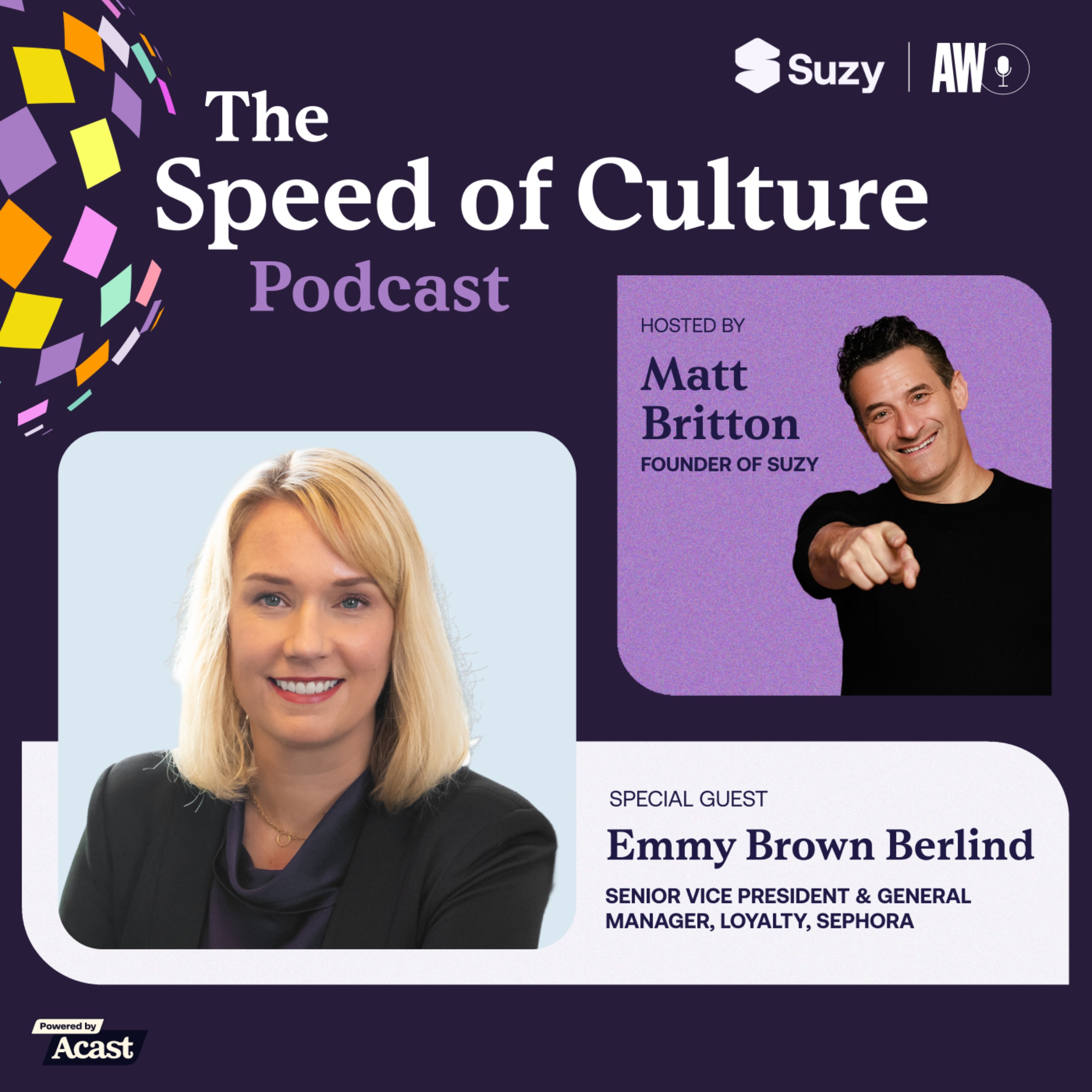
 The Speed of Culture Podcast
27 Jan 2026 · 24m · 14 chapters

CES 2026 as a business and culture catalyst—how the Consumer Technology Association (CTA) fuses policy, standards, research, and marketing to drive a global tech moment, with emphasis on AI moving from “theoretical” to “practical,” plus why in-person convening still matters.
Melissa Harrison, Vice President of Marketing and Communications at the Consumer Technology Association (CTA). Background: early career in public policy/politics; worked in the Obama administration at the US EPA; later joined Ogilvy to learn how brands are made; then moved into corporate marketing/communications; joined CTA after years covering CES.
CES is a B2B show that expands beyond gadgets into connected devices across every sector; CTA’s work includes government affairs, research, and ANSI-accredited standards (e.g., airplane mode, OTC hearing aids). AI at CES 2026 shows real-world deployments (AI, physical AI, digital twins, humanoids). Human serendipity and emotion can’t be replicated by Zoom.
Waymo testing autonomous driving in Las Vegas; Zoox on the show floor; CTA moving digital health to the Venetian to connect with smart-home monitoring; CES creator space evolution (built in 2025, expanded to Central Hall in 2026).
Written by AI. May contain mistakes.
Learn how personal challenges led to seeking therapy and support.
“When I found out I was going to be a parent, I immediately felt a lot of anxiety and worry.”
Understand why podcasts are a unique platform for brand communication.
“Learn more by visiting acast.com slash advertise.”
Understand why podcasts are a unique platform for brand communication.
“I think what we're seeing this year in 2026, which is going to be the giant leap forward, and this is just from what I'm seeing and what I've seen on the floor, this is the actual, we went from theoretical to practical.”
Explore Melissa's diverse background leading to her role at CTA.
“And today we are thrilled to welcome Melissa Harrison, the Vice President of Marketing and Communications at the Consumer Technology Association.”
Learn about the various functions of the Consumer Technology Association.
“I worked in the Obama administration at US EPA, dealt with a number of fun issues while there, and then had the opportunity to go to Ogilvy and really understand how brands are made.”
Discover how CES has transformed into a major business tentpole.
“I've actually worked with CTA for now nearly 25 years.”
Get insights into the planning and execution of a massive event like CES.
“And I think people want to be here for that.”
Explore the strategies to market and maintain CES's global relevance.
“Las Vegas has 150 ,000 hotel rooms, which we need.”
Learn how CES adapts to engage content creators and cater to their needs.
“What tactics are you using to make sure that it continues to be?”
Learn about the evolution of the creator space at CES and its community impact.
“And I kind of joked, I was like, Like if we build it, will they come?”
Explore how AI has transformed CES and its significance in tech discussions.
“So as I mentioned, I've been coming for 25 years and every couple of years is a new big theme.”
Understand the importance of in-person connections in business and events.
“I mean, you're looking at 29 meetings on average that our exhibitors are having.”
Gain insights on the future plans for CES and its evolving landscape.
“I was joking that half of my brain is 2026.”
Explore the challenges marketers face in demonstrating campaign success.
“That's bullspend, and marketers are calling it out in dashboard confessions.”

Get the gist, explore an idea or ask about something said.
 Claude
On The Speed of Culture Podcast, what are the key points of this episode?
Searching your listeningAutomatic transcript. May contain errors.
0:00When I found out I was going to be a parent, I immediately felt a lot of anxiety and worry. So I went on to BetterHelp to try to look for a therapist to help me with that. My relationship with my family and with my boyfriend and with myself were suffering. I really needed help. I was ruminating a lot. Really getting those thoughts out to a therapist and getting feedback was just life-changing. Discover what BetterHelp Online Therapy can do for you. Visit BetterHelp.com today. While every other channel is fighting for your customer's attention, podcasts are where they've already given it. No one accidentally listens to a podcast for 45 minutes.
0:39They choose to be here. They trust the voice in their ears. And when that voice talks about your brand, it doesn't sound like advertising. It sounds like a recommendation from a friend. Acast gives you that trust at scale. Digital precision, post-read authenticity, and performance data that proves it worked. Don't fight for attention. Buy it with Acast. Learn more by visiting acast.com slash advertise.
1:29of major ad networks. Advertise on LinkedIn. Spend$250 on your first campaign and get a$250 credit. Go to linkedin.com slash campaign. Terms, the conditions apply. I think what we're seeing this year in 2026, which is going to be the giant leap forward, and this is just from what I'm seeing and what I've seen on the floor, this is the actual, we went from theoretical to practical. You're going to see AI. You're going to see physical AI. You're going to see digital twins. You're going to see all the humanoids, right? Like, I feel like this is the year that we take that giant leap forward where you start to see all the things that we've been talking about in theory.
2:05To thrive in a rapidly evolving landscape, brands must move in an ever-increasing pace. I'm Matt Britton, founder and CEO of Suzy. Join me and key industry leaders as we dive deep into the shifting consumer trends within their industry, why it matters now, and how you can keep up. Welcome to the Speed of Culture.
2:26We are live in Vegas here at the CES show. And today we are thrilled to welcome Melissa Harrison, the Vice President of Marketing and Communications at the Consumer Technology Association. Melissa is a seasoned communications and marketing leader with deep experience shaping narratives at the intersection of technology, culture, and public policy. Melissa, thanks so much for joining us. Oh my gosh, it's such a privilege to be here. Thank you for having me. Absolutely. So we are here, CES week. We made it. Las Vegas, 2026, and you were kind enough to lend us some of your time in what I'm sure is a very busy week for you.
2:57Tell me about the road you took in your career to lead you to your current role as VP of marketing at CTA. We could talk for hours about that, but I'll try to keep it as simple as possible. I think if you looked at my resume, you would probably say that doesn't make a lot of sense, but I spent some time in my early career working in public policy and really at the intersection of politics and policy. And what I've realized is that turnout for voters is just like getting people to show up at a trade show in January, right? Someday I'm going to write about this, but there's a real intersection between just politics and policy and the work that I'm doing now, which I find very interesting.
3:33But yeah, so I spent some time there. I worked in the Obama administration at US EPA, dealt with a number of fun issues while there, and then had the opportunity to go to Ogilvy and really understand how brands are made. And it's a great place to cut your teeth, isn't it? I jokingly said to them, if you're crazy enough to hire me, I'm crazy enough to actually say yes, because most people start their careers at an agency and then work the other way. I sort of did the opposite. I came out of the Obama administration and was really interested in what don't I know? What do I want to do next in my career?
4:03What can I learn? And that is really where I just started to understand the intersection between marketing communications in a really fundamental way and started working more across the corporate sector. And so when CTA called, there was no way I was going to say, no, I've known about CES my whole career. CTA is well known in the Washington area for the policy and advocacy work that they do for the industry. It's a really great place to work with really great people. And so I had the opportunity and I jumped at it. So how much of your role is spending time on all the other stuff? And maybe we could talk about those other things that CTA does.
4:35That's right. It's more than just a show. That's right. Most people don't know that there's about 160 staff at CTA that do all of the things I'm going to say and the show on top of it. So we actually have a full government affairs team. So we're a huge policy advocacy organization working on behalf of the tech industry, not only in Washington, but across the states and across the globe. On top of that, we have a full research team. So we put out a ton of research, really setting the standards for the industry and helping people understand what's happening. And then on top of that, we also have a fully ANSI accredited standards team.
5:11Every time you turn on airplane mode, CTA made that. Wow. So it's just a gentle reminder that... These things are just coming out of nowhere, right? That's right. They don't come from nowhere. You know, we recently, the standards team and the policy team worked together for over-the-counter hearing aids to make them more accessible for people. And so none of this happens overnight, but that's all happening at the same time that we're getting ready to put on the world's best tech show. Yeah. And we're going to get into that. I've actually worked with CTA for now nearly 25 years. I worked with them when they were CEA.
5:39Yes. And my former agency, MRY, created something called the TKO Thunderdorm Tour, which basically it was like a technology infused dorm room. And we actually built it on the showroom floor to show what the future dorm room would be. It's crazy. There's companies like NVIDIA, I worked with through CEA back then, and they were just making Xbox accessories. Who knew it would be where it was? And over the last 25 years, as I've continued to come back to the show, it's just expanded. Right. And it used to just be about physical electronics. Right. And then you start to see some of the broadcasters and media companies come.
6:17Now you have Procter & Gamble here and PepsiCo and these companies. So why has it expanded? And why has this become really a tentpole in business across media, entertainment, technology, marketing, etc.? It is. It's super interesting because when I started, I was going through the history of the show. And there was a period of time where everybody wrote about the show. And it was the gadget show. Yeah. Right? And now we go out to do media interviews. And they say, you haven't talked about any gadgets. Are the TVs still going to be there? And I'm like, there's still going to be amazing TVs. Big TVs.
6:45Huge, amazing TVs. But the evolution of technology, I think we thought about them in individual devices, and now we're wearing them. Our car is a device. Everything that we touch, we always say that every company is a technology company. And that is proven true across CES because we touch every sector, every category, anything you can think about. It's really here. And I think this is where business gets done. And people want to kick off their year. They want to be together, the partnerships. When you walk the show floor, you may be not in the mobility sector, but you walk through West Hall. You can be inspired by anything that you see there.
7:26And that can ignite another idea of how to parlay that into something else or to move it from, hey, this works really well in the car. What if we moved it to this? And I think people want that excitement and that feeling at the beginning of the year. Everything's fresh and new. Let's get to the show. It sort of feels like a family reunion. People are hugging, saying hello to one another. But I do think that ultimately we are a B2B show. And you've just seen that grow over the years. The enterprise sector continues to grow. So much of what ends up being consumer technology really does start across enterprise.
8:00And so you can't walk the show floor and not be inspired. And I think people want to be here for that. Yeah. So what goes into putting on a show like this? I think I read that it's over 150 ,000 people. So last year we had 143 ,000 people. I can never tell you how many people are going to come. We can probably get into this. Because for those who have been at CES, there's a whole ecosystem around CES. Obviously, the convention center is sort of like ground zero to speak for the show. But then there's all these sort of pop up and satellite events. And it's sort of like it creates this huge gathering.
8:29So we have 13 total venues across Las Vegas. So people often ask us, why Las Vegas? Why January? So I'm going to give you that inside scoop. Why January? We start building the show in the middle of December. There's only one period of time across Las Vegas and the convention center that there is enough downtime to build out a show of our size. Wow. So it has to be that period of time. So you start everything loads in December. It takes two, three weeks to put everything together. Yes. The second is that we always, in Las Vegas, because there is no other place in the world that has enough floor space or hotel rooms.
9:04In the world. Correct. Wow. Correct. Las Vegas has 150 ,000 hotel rooms, which we need. Yeah, I mean, Las Vegas can really digest CES. That's right. It's crowded, but it doesn't seem chaotic. Yeah, yeah, yeah. Well, we do our best. Our operations team, who's phenomenal, does a lot to make sure that it doesn't feel overwhelming from the shuttles to everything else that we do to try to help people get around the town. But it's pretty incredible. So you asked, really, how do we do it? There's a core leadership team across all of the priority issues that you're thinking about. So we have marketing communications, we have operations, we have sales, we have anything you can think of.
9:38There's someone who needs to be a lead for that. Yeah. What I love to think about is my first day here, I just take a moment to sort of look around. It takes millions of pieces to put the show together. And we have a finite amount of people who do it. And it's just nice to take that moment, take a deep breath and say, we made it. And that's one of the great things about being in the event business, because if you're in a business where you create digital products, you can't really touch and feel it. that way. The physicality, the enormity of walking to the show and knowing that you played a role to bring this to life.
10:09Right. Especially, so last year when we did a wholesale brand change, so new look, new feel, and to show up and see it for the first time in a very tangible way. The website looks great. Our business cards look great, right? All of the things that us as marketers look at to make sure that everything's right. But to actually see coming up the escalator in the Venetian Expo and seeing the entire logo of 12-foot letters. There's really nothing better than that. So obviously your role is marketing the show. What does that look like? Who are you marketing it to? What tactics are you using to make sure that it continues to be?
10:50Because you can't take it for granted, right? There's other conferences, other places. You're at the top, but you don't want to lose that up. We never rest on our laurels and we make pretty audacious goals for ourselves. We like to bring new things to the table all the time. And global audience too, right? Exactly. And so we have to not only look at who's our core audience, that's who's been here before. We look at our basically the last three years of like, who's been here? How are we talking to them? But we also have to go out and grow. That's on top of everything we're doing. And we have to do that across not just the U.S., but globally.
11:22this year has been particularly interesting from a marketing perspective globally, right, where we've been dealing with geopolitical issues. We've been dealing with terrorists, right? So also you're a trade association. And many times in other countries, there's no separation between the government and a trade association. And so having to establish ourselves as we are a separate organization, this is what we stand for, this is who we are. We've been very, very vocal in our opposition to the tariffs. But all of that, as you know, starts to sort of co-mingle and you have to work through all of those nuances, which I will just say, I think it really comes down to personalization.
11:56And this is something that AI has just accelerated for us, for us to be able to talk to hundreds of thousands of people to get to that number of the 143 who actually show up on site. We've really broken it down. We have to know our audience so well, because we can't go and talk to you about mobility if that's not what you're actually interested in. It's not going to drive you to take any action. And so we've worked really hard on our audience personas, really thinking through how does this speak to our customer and what's going to drive them to make the decision to come to Las Vegas. And your customer is a two-sided marketplace.
12:33So it's the attendee and the exhibitor. That's exactly right. So we don't just get the privilege of looking at the attendee, right? As a marketing communications team, we're also talking to the exhibitors. We're also thinking about who's going to be keynoting and what that's going to be looking like and how do we weave that into what we're talking about there's just so many layers the media too is massive oh my gosh so we had over 6 500 media and content creators on the ground last year i think we're going to be bursting at the seams again this year especially now with the creator economy you have so many youtubers coming in that cover this stuff i mean my 18 year old son is here and he's a youtuber and he's the showroom for right now covering different things for all of his friends and his followers and i think that's a very cool new wrinkle in all of that.
13:14So I will say, I think one of the things that historically we sort of always did was lump them into media. They just assuming that they would sort of want the same services, the same like touch points. And we really took some time to step back and say, that's actually not how creators want to show up. And we did some very deep dives and conversations with creators to say, what is it that you want? Right. Let's like listen to what they actually want. They don't want to be in a media lounge. They want to be on the show floor, right? They want to be in the middle of action. And then watching the rate at which they are able to turn over content.
13:51It's crazy. Well, if you think about that. It's mind-boggling. Right. It used to be you had somebody there doing videography, photography. There's a different writer. There's an editor. Exactly. The creator's all in one with the phone doing it sometimes alive. So this, in 2025, we built the creator space for the first time. And I kind of joked, I was like, Like if we build it, will they come? Right. You dip your toe in the water and we got feedback as we were building it. We really tried to work with the creators that we work with to just really get insights of like, if we put a lounge, does that make sense?
14:20Do you, if there's a stage where you come and listen to other people, like, is that something that the community wants? And what we saw was that it was, it went gangbusters. Yeah. And so actually we had it in the central lobby and the feedback we got was it was so great, but can you put it on the floor? because we want to be able to pop in and hear someone speaking for a couple of minutes. And then we want to be able to get back out on the floor and produce content. And so we were like, we can absolutely do that. So we moved it into Central Hall this year. And the other thing is that we had it limited to just media badges so that the creators could get in.
14:53But then we were hearing from brands that they also wanted to be in there because they wanted to have conversations and other attendees. And publishers too. Absolutely. And so we said, you know what, this needs to be an open space for dialogue. We want to be a true thought leader where we are a convener, where we allow people to have these conversations. And that's how the media landscape has evolved. It used to be there's a select few that controlled the narrative and there are big media companies. Now we're all creators. We're all publishers, right? We all have this device that allows us to capture anything at any moment.
15:21That's right. And it's really interesting because we've also started to learn just the creator economy around our exhibitors as well and better understanding who they're bringing to the show and who they're working with. And then also for us, creators are like, it's great that we're coming to the show. We're having a lot of fun. We love putting out the content, but this is also our business. Right. How do we get to know the exhibitors? And so for us to better understand what's the role that we should play in that conversation, maybe a little bit of matchmaking and a little magic there. But it's been really interesting and really evolving.
15:51And it's been something that has been a little, for me, outside of what I typically have done. And so I've loved getting to learn and understand and really listening to provide a product that they want. We'll be right back with the Speed of Culture after a few words from our sponsors. This message is brought to you by Warner Brothers Discovery Advertising. And this is more than an ad. This is an invitation to be part of the stories the world can't stop watching. To connect with moments that dominate the conversation. To participate in culture, not just advertise around it. With the most sought after IP, passionate audiences, and an advanced AI-powered foundation, WBD Advertising transforms attention into influence and impressions into outcomes.
16:39This is innovation. This is impact. This is opportunity. This is Warner Brothers Discovery Advertising. Visit advertising.wbd.com to learn more. Are your ad campaigns lighting up the dashboard, but not the pipeline? That's bullspend. And marketers are calling it out in dashboard confessions. My boss asked for results, so I opened my dashboard for the only positive-sounding metric I had. Impressions. Cut the bull spend. See revenue, not just reach. LinkedIn delivers the highest return on ad spend of major ad networks. Advertise on LinkedIn. Spend$250 on your first campaign and get a$250 credit.
17:21Go to linkedin.com slash campaign. Terms and conditions apply. Marketers, you know that feeling when your creative clicks? When that social post sends engagement through the roof? When your outside-of-the-box campaign hits ROI positive? When a personalized homepage turns prospects into customers? It's utter marketing bliss. Contentful helps you create tailored omni-channel experiences without working overtime. No stress, no limits, only possibilities. Get the feels at contentful.com. When I found out I was going to be a parent, I immediately felt a lot of anxiety and worry. So I went on to BetterHelp to try to look for a therapist to help me with that.
18:01My relationship with my family and with my boyfriend and with myself were suffering. I really needed help. I was ruminating a lot. Really getting those thoughts out to a therapist and getting feedback was just life-changing. Discover what BetterHelp Online Therapy can do for you. Visit BetterHelp.com today.
18:26So as I mentioned, I've been coming for 25 years and every couple of years is a new big theme. And I remember when it was the iPhone and then there was all these iPhone accessory companies and app companies. And then you had the whole world of digital media and streaming. And then you had a lot of the broadcast networks coming. I remember one point, one of the years was like 3D technology, 3D printing, 3D TVs, all those things. And now this is the year, along with last year, but definitely this year of AI at CES. How big is AI of the CES story? And how do you see AI transforming the show itself?
19:01I think what's really interesting is that if you look over the course of the last few years coming out of the pandemic, AI has clearly been a part of the conversation. Would you guys cancel one year because of the pandemic? We actually did a digital show. That was right before I started. That's 2020 or 2021? 21. Right. So 22 was the first year back. The conversation was happening, but it felt like the gasoline got poured on the fire after Chachipiti, right? So that became a word that even my mom in Ohio was like, what's this? It's the AOL of the AI generation. AOL got everybody online, Chachipiti.
19:35100%, and then it just felt like it ignited a larger conversation. And we kind of laugh because we're like, well, AI has actually been a part of the show for many, many years. If you used an Uber to get here, if you flew on a plane, right? AI has been a part of all of this, but I think it started, once it kind of crossed over into that vernacular with like the normal, like Joe on the street, it really took off. I think over the last two years, what you've seen is a lot of talk about it. And everybody felt like it was like, I need to have AI and whatever I'm talking about. To figure it out. Right.
20:06I think what we're seeing this year in 2026, which is going to be the giant leap forward. And this is just from what I'm seeing and what I've seen on the floor. This is the actual, we went from theoretical to practical. You're going to see AI. You're going to see physical AI. You're going to see digital twins. You're going to see all the humanoids, right? Like, I feel like this is the year that we take that giant leap forward where you start to see all the things that we've been talking about in theory. And we're at the bleeding edge of it, right? Like companies that are making these breakthroughs, right?
20:36And they're saying, wow, this technology could really do interesting things with our product or service. People never dreamed of it. The first place they're going to bring to the public is here. That's right. And it is a privilege for us that they choose to do that. We love that people come here to make news. It's an incredible ecosystem between our exhibitors making news and the media wanting to be here gobbling it up. So it's really great that they want to start the year off here. And we've already had such incredible news. I mean, I just saw on my way here, I was literally scrolling through and Waymo had just gotten their approvals to start testing autonomous driving in Las Vegas, right?
21:09Zoox is already here. They're both on the show floor in West Hall. I mean, And it's, we've talked about these things and now they're really happening. The future's here, so to speak. That's right. And I think this is the window into tomorrow, today. And so I think it's fun to be here and see all of these things and to also have seen the things over the last few years and say, I don't know if that's ever gonna actually, is that ever gonna really happen? And then you're like, nope, it's here. Goes from concept to reality. That's right, that's right. So it's interesting because you brought up the pandemic and obviously one thing the pandemic brought to society and especially the business world is this whole remote culture.
21:43A lot of companies are remote. A lot of people are using Zoom to communicate. But there is still such power in human connection convening. And I would just love to hear your thoughts on why you think this is a business and an event that will stand the test of time based upon that. Thank you for saying that. I will tell you that for all of the running across halls that I've seen people doing when they see their friend that they haven't seen all year, but this is the one place where they see them or their business partner, et cetera, You cannot replace the serendipity of bumping into someone on the show floor and having a conversation.
22:18Or even the conversation you and I are having now. We do a lot of these podcasts over Zoom, but you have a connection. The interview is better, but you really feel like you know somebody. That's right. I mean, you're looking at 29 meetings on average that our exhibitors are having. Wow. Right? When you think about what it would take to fly all over the world to do all of those meetings or all the time it would take on Zoom, Zoom is great. It's also a tiny little box. If you're trying to make a business deal, it's hard to tell emotion. It's hard to understand. Is the other person still here? Is the dog barking?
22:50You know, the mailman come. What's happening? I just think you can't replace that human to human interaction. And CS brings all of that together. And we've really tried to build community. So we're here at C-Space, right? That's a community. But we also have the different categories across the show floor and people are able, you know, our digital health community continues to grow and grow. And you come here and it's your one chance to catch up with the other doctor who lives across the country. Right. Right. It's just you can't you just can't replace that in person. Yeah. And you mentioned I'm glad you brought up digital health because the power of AI is it's going to seep its way.
23:24Oh, my God. Every industry, every sector, which then brings those sectors. Right. So we actually. Whether it's construction, it doesn't really matter what it is. Right. So we made a strategic decision last year. We moved our whole health category to the Venetian because that's where the smart home category is. And there is a direct connection between digital health and monitoring and keeping people in the home longer. Interesting. And being in your home and remote monitoring to ensure that after you get out of the hospital, they can monitor you at home so that you don't have to stay in the hospital or go to some type of recovery center.
23:53And hopefully you stay well. And if they notice anything that's wrong, they can catch it before you have to go back to the hospital. So there's just this direct connection between those. And so we were seeing that happening in real time in the industry. And we said, OK, these need to be together. These two groups, they need to know each other and have conversations. It's fantastic. So I would imagine that planning for 2027 CES ends the day coming 26th. I wish it were that easy. I was joking that half of my brain is 2026. But when I get here and the other half is 2027. So what can we expect to see as the show evolves?
24:27Right. Let's say we're in the year 2030. What is CES going to be like? Do you see the show being in other venues as well globally? I know you have sort of like these pop-up side events during the year, but what's the future in terms of the expansion of the show? I think it's so interesting. I'm so bad at guessing the future, but I'm so proud of the work that our team does to ensure that the show is really great, that the show floor is really great, that we put a wonderful product forward for everyone who wants to be a part of CES. I'm excited because we just expanded to CES Foundry. So we're going to be at Fountain Blue this year.
25:06That's going to be on days two and three. That's all AI and quantum. Wow, I got to check that out. You got to go see it. I mean, there's going to be actual quantum demos and I would love to tell you that I can explain to you how quantum works. I cannot. That's why I do marketing. Yeah, but we're always looking at what's coming next? What categories should we be talking about? How do we put that forward in a meaningful way? And how do we go to market with it? Not only to attendees, but exhibitors. And so we're excited that we continue to find new ways to expand and grow in Las Vegas. And I don't know that I think the future is really bright.
25:39So who knows where you're going to see it? For sure. So to wrap up here, we always ask our guests that there's a saying or mantra that comes to mind that defines their career journey. And I would love to know what comes to mind for you. Yeah. on this busy week here in Vegas. There are two things. So one, I want to say, say yes. And that has a lot to do with my career, but also CES. I think you have to be open to the possibility, even if you don't think you're completely ready to step through that door, that the door has been opened. You need to say yes, like take the chance, make a new partnership, take the new job, do the things.
26:08That's something that - Go to that event. Go to that event, right? Like even if you don't know anybody, I think that we've lost a little bit of that coming out of the pandemic. And so I just encourage everyone to say yes. The other is a quote from Eleanor Roosevelt. She said that the future belongs to those who believe in the beauty of their dreams. That's been a quote that I've kept near and dear to me my whole life. And I've really tried to impart upon the people that I work with that if you don't believe in the beauty of your dreams in the future, how do you make them happen? How do you really think you've got to believe in yourself?
26:38You've got to believe in the excitement and the beauty that you're building. And so I've always tried to lean into that and then share that with the people that I work with. It's amazing. Well, there's a lot of excitement and beauty in what we're seeing here at CES. That's right. So thankful for you to take the time during this busy week to share the incredible story behind CES with all of us. Thank you so much for having me. And I hope you have a great show. Oh, I will. Thanks so much. On behalf of Susie and Adwee team, thank you again to Melissa Harrison, Vice President of Marketing and Communications at the Consumer Technology Association, producers of the CES show, which we're here in Las Vegas to check out.
27:10Be sure to subscribe, rate, review to Speed of Culture podcast on your favorite podcast platform. And we'll see you soon. Take care, everyone. Bye-bye.
27:19The Speed of Culture is brought to you by Suzy as part of the Adweek Podcast Network and A-Guest Creator Network. You can listen and subscribe to all Adweek's podcasts by visiting adweek.com slash podcasts. To find out more about Suzy, head to suzy.com. And make sure to search for The Speed of Culture in Apple Podcasts, Spotify, or anywhere else podcasts are found. Click follow so you don't miss out on any future episodes. On behalf of the team here at Suzy, thanks for listening.
28:00Are your ad campaigns lighting up the dashboard, but not the pipeline? That's bullspend, and marketers are calling it out in dashboard confessions. My boss asked for results, so I opened my dashboard for the only positive-sounding metric I had. Impressions.
28:32When I found out I was going to be a parent, I immediately felt a lot of anxiety and worry. So I went on to BetterHelp to try to look for a therapist to help me with that. My relationship with my family and with my boyfriend and with myself were suffering. I really needed help. I was ruminating a lot. Really getting those thoughts out to a therapist and getting feedback was just life-changing. Discover what BetterHelp Online Therapy can do for you. Visit BetterHelp.com today. Quick question. When was the last time a display ad changed your mind? Now think about the last time a friend told you about something they loved.
29:12Different feeling, right? That's how podcast advertising works. A host who's built real trust with their audience talks about your brand in their own words, in their own voice. It doesn't interrupt the experience. It's part of it. With Acast, you can access the world's largest podcast marketplace. Choose the right shows, the right audiences, the right format. Then watch the data tell you it worked. You're not buying impressions. You're buying influence. Learn more by visiting acast.com slash advertise.
In this episode of The Speed of Culture, Matt Britton sits down with Melissa Harrison, Vice President of Marketing and Communications at the Consumer Technology Association (CTA), live from CES 2026 in Las Vegas. Melissa breaks down how CES grew from a gadget showcase into a cross-industry business hub where enterprise innovation, media, creators, and global partnerships collide. They explore what it takes to build a 13-venue event at this scale, how CTA markets a two-sided marketplace of attendees and exhibitors, the rise of the creator economy at CES, and why AI at CES 2026 marks a turning point from theory to real-world application.
Follow Suzy on Twitter: @AskSuzyBiz
Follow Melissa Harrison on LinkedIn
Subscribe to The Speed of Culture on your favorite podcast platform.
And if you have a question or suggestions for the show, send us an email at [email protected]
Hosted on Acast. See acast.com/privacy for more information.