Ask ChatGPT
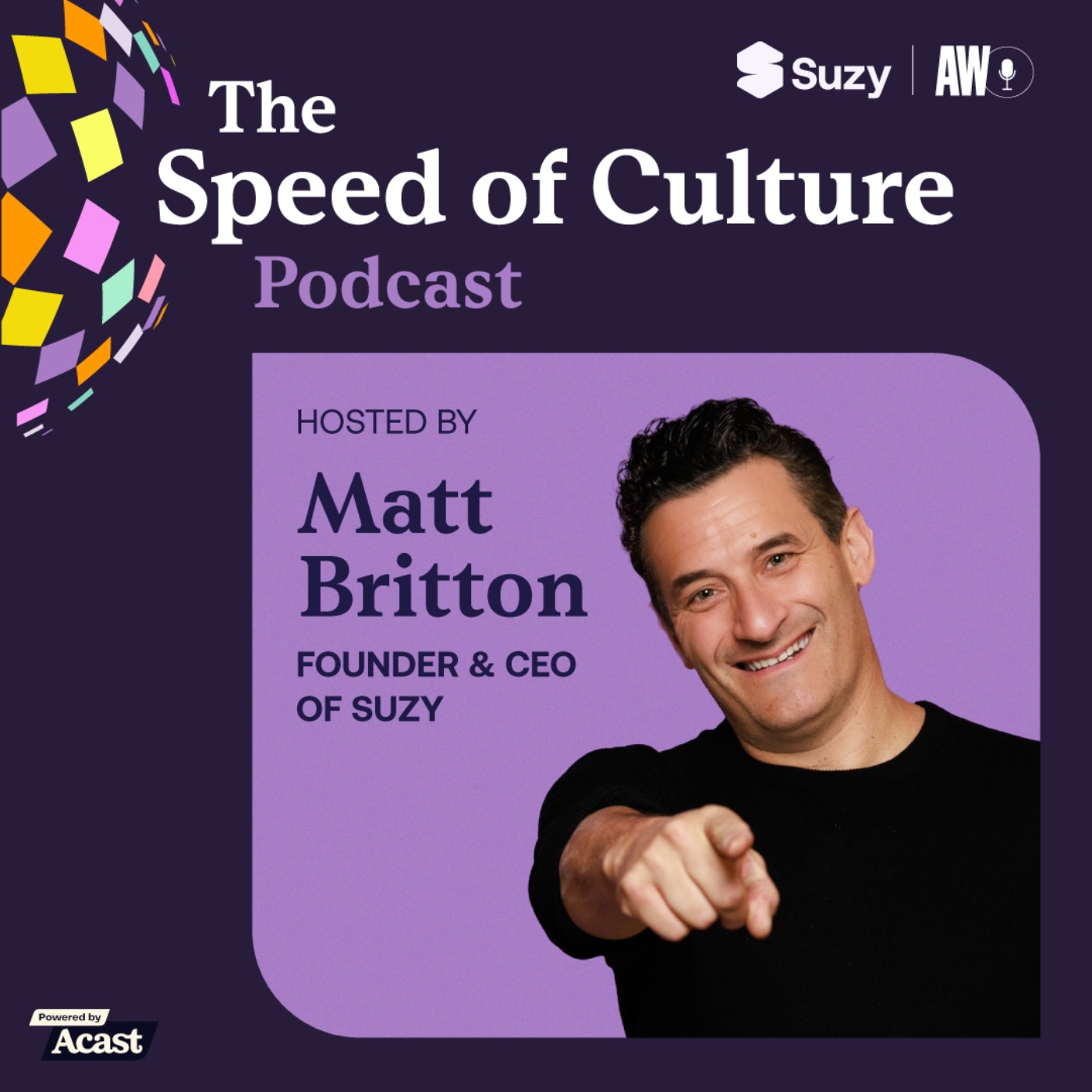
 The Speed of Culture Podcast
9 Dec 2025 · 26m

Real Estate: Corcoran’s CMO on Finding Emotional Resonance with Modern Buyers
Christina Panos, Chief Marketing Officer at The Corcoran Group
In this episode, Matt Britton engages with Christina Panos to explore the evolving landscape of real estate marketing, focusing on how emotional storytelling and consumer insights shape brand strategies to connect with Millennial and Gen Z buyers. The conversation highlights the need for adaptation in response to shifting consumer trends, including the impact of AI and social platforms on the real estate market.
Written by AI. May contain mistakes.

Get the gist, explore an idea or ask about something said.
 Claude
On The Speed of Culture Podcast, what are the key points of this episode?
Searching your listeningAutomatic transcript. May contain errors.
0:00So it was extremely transactional and also just very much focused on most companies were about who our agents are, what our listings are. And I'm sure you've seen a thousand ads out there of like, I'm the number one agent on the West Side or I'm the number one agent. That's basically, and the content of those ads was very much a bit of like all about me, whether it is about the agent. It was a very sort of egocentric business in terms of the types of marketing and advertising that was out there. So that was a big surprise to me. And of course, my first role here was to change that. To thrive in a rapidly evolving landscape, brands must move at an ever-increasing pace.
0:40I'm Matt Britton, founder and CEO of Suzy. Join me and key industry leaders as we dive deep into the shifting consumer trends within their industry, why it matters now, and how you can keep up. Welcome to the Speed of Culture.
0:57Up today on the Speed of Culture podcast, we are thrilled to be joined by Christina Pornos, the chief marketing officer at the Corcoran Group. Christina has been at the helm of Corcoran's marketing transformation, reshaping real estate advertising with emotionally resonant campaigns and leveraging creative leadership to drive brand growth across the luxury real estate market. Christina, so great to see you. Thanks for having me, Matt. Absolutely. Real estate is such an interesting industry. It's unlike any other, just because there's so much nuance to it. It's obviously a very complex industry as well.
1:25What are some things about the real estate industry that you've learned over time that maybe some people don't know? Well, you know, I came into the business as a bit of an outsider. I started my career on the agency side and was lucky enough to be brought to the client side at one point. And so I had really no understanding of the real estate business. I knew who Barbara Corcoran was because I grew up in the New York City area. And now she's on Shark Tank, so everyone knows her. Everyone knows her. But, you know, if you grew up in the 80s, it was sort of hard to miss Barbara because the brand was all about her.
1:57And she was kind of a pioneer and putting herself out there as the face of the brand. And that was really unique at the time. Also, something that I didn't realize about the business was how rare it was to have a female leader because there were, at the time, very few female-led real estate companies. And frankly, there still are very few. So that was something that being an agency side, there was a lot more balance between, I had a lot of female bosses, I had a lot of male bosses, and coming into an industry that was a lot more led by men was something that kind of, to begin with, put Corcoran in a different category and sort of set it apart from the way that it sort of expressed itself.
2:37What surprised me about the category was really coming from brands that were very sort of steeped in understanding consumer insights and research and understanding who their target was. when I came to the business, it was eye-opening for me to realize how differently the real estate business runs. There is no consumer research. There is no targeting. Very transactional. It didn't really attract the type of people who had come from the agency side and really wanted to delve into who the consumer is. When I asked when I first got here, what type of research do you have about your buyers and sellers?
3:12The answer was, we have nothing. Remember, the relationship between the agent and the consumer is owned by the agent. It is, they are independent contractors. It's akin to a franchise model almost. Yes, it is. And we also have a franchise business, which is a whole nother story because those are obviously independently owned. So the relationship between the agent and the client is owned by them. And so they know who they're reaching. They know what demographic these people are, but as the company itself doesn't necessarily have all that information. So it was extremely transactional and also just very much focused on most companies were about who our agents are, what our listings are.
3:49And I'm sure you've seen a thousand ads out there of like, I'm the number one agent on the West Side or I'm the number one agent. Famous bus station ads are everywhere. That's basically, and the content of those ads was very much a bit of like all about me, whether it is about the agent. Their picture's always on it. It's always airbrushed. It was a very sort of egocentric business in terms of the types of marketing and advertising that was out there. So that was a big surprise to me. And of course, my first role here was to change that. And so I saw that as a very big opportunity, but really sort of blown away by how very few real estate businesses understood that there is such an opportunity, not an opportunistic way, but there is just this whole like emotional aspect of buying and selling that nobody is talking about.
4:39So this idea of understanding what are the emotions that go into real estate was just sort of not talked about and not done. And that was something that I sort of took on as my project and rebranding Corcoran after Barbara left. But I'm very surprised at the difference in the sort of very transactional nature of real estate when I got into it. So in that regard, what has worked in terms of establishing Corcoran as a brand that people trust, and a true market leader. I think tapping into that emotional aspect of buying and selling real estate has and really our commitment to want to connect on an emotional level with people.
5:14So when I got here, the company was in transition because Barbara had recently left the company. Most people think she is still associated with the company, but certainly her halo is felt all these years later. So to me, it was important that we really explore what it is that's at the heart of buying and selling real estate, and that is connecting with an agent and feeling as though that agent really understands what it is that you are looking for and to find the home that expresses who you are, hence our tagline, live who you are. That's the biggest financial decision you're gonna make until you buy your next home.
5:47The biggest financial decision and usually accompanies a major life event. Oftentimes it's you're getting married, you're becoming an empty nester, you're having your first home. Home buying is an extremely emotionally rich territory, and we have tapped into that through our advertising, through all of our campaigns and really through the way that we train agents and how we really sort of, they're amazing at what they do and we sort of just make them even more aware of the deeper the connection they have with their customer and client, the longer the relationship's going to be. And we have agents here that help people buy their first apartment and now they're empty nesters and they're helping their grandchildren buy apartments.
6:25So there's so much longevity once you've made that connection. And so that's really our focus here. And I do think it's almost self-fulfilling. We attract agents at Corcoran who feel the same way about the business as we do. We attract affiliates because we are a franchise business who also view the real estate business the way that we do. And so it's really nice to kind of all share this philosophy and a philosophy that I think consumers connect with also. Right. And let's shift gears a little bit to the market itself, because obviously the home buying market has been through a whipsaw of conditions.
7:01We went through the zero interest rate environment and the COVID boom to then obviously interest rates spiking at a level unlike we've ever seen in history. And now everyone is trying to figure out what's next in a very uncertain market and world. What is the state and mindset of the modern home buyer today? And how do you think that impacts the way that Corker needs to evolve? brand? I think that people are very cautious. There is obviously a lot going on. We have an interesting mayoral race going on in New York, which has got people talking. We've got the sort of more national political climate that is uncertain.
7:36But people always need to buy homes. And so it hasn't obviously stopped the market. But I think that COVID really changed the way that people look at home buying. And really, the importance of home became magnified during COVID. And especially amongst a younger demographic, wanting to buy a home sooner possibly than they did 10, 20 years ago. And so there are a lot of younger people, millennials, Gen Z, who are looking at wanting to buy a home, but also wanting to really understand what they're getting into. And they are very hungry for information. They're very hungry for a partnership with an agent, interestingly.
8:19And they actually want to be led by somebody that they trust. And they have a very different attitude about it than, you know, sort of a little bit of the older demographic. But home is important. And just sort of this whole work from home climate that sort of came out of COVID has also made people want to look for a place that they can also work from home. And I just talked to somebody yesterday who's done rented an apartment, five different bedrooms, five different guys, each working from home in their own bedroom, you know. So there's a lot of different thoughts that go into the home buying process now than there were maybe five, six years ago before COVID.
8:54And it's made it really interesting. And it's also made it interesting for the agents to kind of expand the way that they talk to people about home. But there's going to be ups and downs all the time. I mean, I've been here since 2004. for. So I've seen the highs, I've seen the lows, and we've always weathered these storms because we kind of just like put our head down and focus on the fact that people are just going to need to move. And our job is to really connect with people. And look, maybe they don't buy immediately. Maybe we work with them over the period of a year, but things change. Interest rates are going down.
9:28There's always fluidity, but we just try to really stay consistent with the way that we do business. And it's just kind of it's worked out over the years. Yeah, you brought up younger consumers. Over time, home buying has become increasingly unaffordable for younger people, which is one reason why we are seeing this huge political shift in New York City right now, because I think younger people are really responding to the message that you're being left out. We're going to do something about it. And obviously, New York City has a lot of roots in capitalism. It's where Wall Street is. And that's playing out really all around the country.
10:02and we were taught growing up that a path to an American dream was buying a home, white picket fence, two car garages, two and a half children, whatever it may be. That's kind of changed as well. So how are younger people looking at buying homes as sort of a rite of passage relative to maybe how it was a couple of decades ago? I think that they are looking at it. I don't know if it's so much of a rite of passage, but the opportunity to create a community. I think community is something that has become really more and more important to people in general, but I think specifically to a younger generation.
10:37They are looking to connect more. And I think that is also an outgrowth of COVID. And so I don't know if it's as much as a rite of passage, like a badge the way maybe it was back for our parents. It's more that they are really craving a community of people to live close to. And I have a lot of younger friends, babysitters of mine, frankly, who have just kind of rented their first apartments. And I hear their stories. And it's amazing because they've all managed to kind of move into a neighborhood where they have a lot of friends. And I don't think that when I was getting in at my first apartment that like, I just wanted to like get the right location.
11:13I wanted to be with the right view. And I cared about those sort of a lot more badge worthy aspects of buying. And I think what people really care more about now is having a community in the neighborhood and to really be able to live a rich life. And so I don't know if it's as much of a right, but I do think that that is something that they crave. And obviously home buying is a step in that direction. But yes, I mean, New York is its own microcosm. I mean, rents are so, so expensive. And I think it's very different when you look outside of New York, but I think that it's the sense of community that's really driving a younger generation to put down roots more so than just needing to have a house or an apartment by a certain age, which I think was different in our generation.
11:59We'll be right back with the Speed of Culture after a few words from our sponsors. So obviously the big story here in 2025 in business is AI. And obviously the power of AI resides in data and real estate has tons of data. You have market data, you have individual data on prospects, and obviously cities like New York publish things like open data where they publish everything from crime rates to traffic to air quality by city block. So there's so much data that you can use in your role sitting on top of the courtroom brand. How are you looking at AI and how it's going to change the real estate industry?
12:36I hope that no matter what happens with AI, the home buying process will still be a person to person. You don't see a robot helping somebody buy a home anytime soon. I don't. And so I think that's the great news. And I think that that's a little bit of a protection for the business, but we are using it in every other way possible. I mean, it is incredible to really be a tool for the agents to be more efficient, to take care of a lot of the tasks that they would normally have spent a lot of their time doing to really free them up for the human stuff, so to speak, that they do best. So whether it's to free them up, whether it is to use AI to write property descriptions that are going to be more optimized for what people are looking for, whether it is being able to synthesize the data about neighborhoods.
13:23And I'm using it to make sure that I'm precise in who we're targeting. I'm using AI to understand how effective different creative is that I'm putting out there. And so I think that there are so many incredible ways to make us more efficient, to make us really more informed. But for the agent, I don't know that it's going to replace at least immediately what they do best and what is at the heart of the business, which is connecting with people and finding them homes. But it has been fascinating to start to use AI and see how it can make us really more efficient in our day to day and that of the agent too.
13:58Yeah. I mean, it's fascinating in terms of there's a lot of potential applications, obviously, of AI in the space, everything from using the power of virtual augmented reality to able to see places when you're not able to go, to giving people access to information about properties where they don't have to maybe talk to a broker as much. But I agree. I think if I were a broker, I would be spending more time building automation to do the things that aren't high touch and then focusing on the relationships because that's kind of the barbell, right? You can create the scale and the automation through AI, but you can't automate out relationships and trust and customers that you have over time.
14:35Absolutely. Real estate is, I'm glad you said, in a very high-touch business. And that's really what sets a good agent apart from another, really, is the ability to kind of double down on the high-touch aspect of the business. And it is a referral business. If you ask some of the best agents how they get their clients, it's through referrals. It's, I hate to say it, less from the advertising. That's the truth. Yeah, well, I think that the brand provides a level of trust. As someone who's bought plenty of real estate in my life, I don't know how I'd feel working with a broker of a brand that I've never heard of before?
15:08Because you question like the back office and can you trust them? And it's just, brand matters, right? I'm happy to hear you say that because believe it or not, that is a controversial topic in the real estate business, whether or not a brand does matter. And of course, my MO for 20 years is that brand matters very much, but that's not necessarily how all of my colleagues in the industry see it. And I think that that is a missed opportunity, especially as so much of the transactional aspects of this business do become automated, that the brand that is able to kind of transcend that and really have a message that is more human to human is to me the brand that's gonna have more longevity in the future.
15:47So let's talk about marketing and media and how you're getting the message out. So obviously you have a lot of different audiences that you target. What are some of the more interesting ways that you've been working to build the brand here in 2025 and what do you see being most effective moving forward? So I've been here long enough to remember the days where the majority of what our advertising was consisted of classified advertising in the New York Times. It was basically, you know, if you lived in New York in the 90s, pretty much the New York Times was the kind of the de facto MLS because that's really where people went to look for properties either on their website or in the newspaper.
16:19And so I've seen a complete and total revolution across the media landscape. And I always say this, that I think social media in a way was really meant for the real estate business because it has enabled agents to come out of their shells and really put out there what it is that they're all about, put their personality out there, put their experience out there, really show who they are in an authentic way. Otherwise, it's really hard to, you're in the middle of a very important transaction, as we said, when you're gonna buy a home with somebody and you don't really know who they are. You're gonna be spending a lot of time with them.
16:55You're gonna be divulging a lot of information to them. And so to be able to kind of see what they're all about on social media, I think has been a really incredible boon to the real estate business and to agents in general, especially those who are able to relax and be authentic online. So I think that's been amazing for agents in the business. for a brand like Corcoran that is kind of like unabashedly a little bit out there, a little bit very playful. We're willing to take risks. It's meant for us too, because we have been able to kind of show all the different aspects of our personality on there and not really be worried about looking stupid or looking silly.
17:36And that's kind of at the heart of look at Barbara. I mean, And like we said, the halo, I mean, all these years later, she is the queen of social media. And a big part of it is she's just willing to kind of let her hair down and be who she is. And that sort of heritage has been part of our brand ever since. And that's how we are, too. I mean, I myself put myself out there on social media more than I thought that I would be comfortable with. And I guess when I look at the other brands in the business, I think that we probably are the one that's most willing to be authentic and show our personality.
18:09And so social media, I think, has been really great for Corcoran. I mean, in the past year, our social presence has grown 25 percent and our nearest competitor is growing about 3 percent. We're a very early adopter in TikTok and have an extremely strong presence on TikTok. And so I think that to me, if I were to look at all of the sort of the media landscape, the social media platforms have been the most important for Corcoran to kind of sort of just grow an audience of people who now are able to see who we are as a brand, who our agents are. It's enabled us to really show people a little bit more in terms of what neighborhoods have to offer.
18:43It's given us a platform to talk about, to kind of guide people on the real estate process in a way. There's a lot of questions out there, especially for a younger generation. They are hungry for information. And for that kind of first time home buyer audience, we've been able to speak to them, not at them, about what the process is all about. Awesome. Totally makes sense. Yeah, I mean, it's crazy that if you think about the real estate industry, how much it seeped its way also into pop culture. Like these shows on Netflix just continue to do well. You have Ryan Serhan, obviously, in his show right now doing well.
19:14And obviously, we talked about Barbara and her stardom through Shark Tank. But then there's been so many shows selling Sunset and the list goes on and on. Why do you think real estate is such a fascinating topic for the mainstream consumer? It is a very voyeuristic business. And every party I go to, every dinner I sit down on, everyone wants to talk about real estate. And that has actually been the case since the day that I started. Right. You wouldn't think of it as something that's a sexy industry, but it kind of is. It is sexy. And look, people love to, they're voyeuristic in terms of looking into people's homes.
19:47And that's another reason why social media has been such an interesting component of this business is because it has led agents kind of do these tours and give people looks into the different nooks and crannies of some of these apartments in New York you'll never get into. I mean, the apartments that I've seen in my 20 plus years here, I could write a book about them. And so that has been almost like pulling back the curtain on what a lot of this real estate looks like. And that is very appealing to people. So I think it's sort of the voyeuristic aspect of looking to how people live. And the shows have really made the business even more kind of suspenseful and sexy.
20:23And it's added a lot of kind of, like you said, pop culture and enthusiasm about it. I mean, this was never really a business where I didn't see earlier on my career. It was always like a second career. People were like, oh, I was a lawyer and now I'm an agent or I was in finance. I'm an agent. Now you get kids coming out of college saying, I want to be a real estate agent. That had never happened before. And for sure, the shows, you know, it's look, it's fast paced. A lot of these agents on their shows have like glamorous lifestyles. They're like, they're doing well, too, because, you know, they're driving great cars and they're meeting interesting clients.
20:53And so I think that it's been the halo of that, even though we're not in a lot of those shows. We have one agent, a great agent of ours who's in one of the shows, but it's definitely put a spotlight on the business, which is good for all of us. Yeah, for sure. So wrapping up here, just would love to know from you, as you look back on your career, because you said, you know, you started off in the agency world and here you are, the CMO of Corcoran, such a well-established, prominent brand. And when you look back at your career journey, what were some of the things you think you did right along the way?
21:25Decisions that you made that in the end turned out fruitful, even if you might not have known it at the time. I didn't plan on getting into advertising. You know, my first job was at New York One News in New York. I was a roving camera woman and I thought I was going to be in the news business and quickly figured out that I didn't want to do that. And I ended up sort of falling into the agency world. But I think that was an incredible learning ground for me. And I always tell people who want to get into marketing that I think I still think even though it's gotten harder, I still think the agency business is a great way to start.
21:55I was able to really see all the different departments and thinking that goes into advertising. I learned to respect creative by spending a lot of time with the creatives. I learned a lot. Probably the most I've learned in my career have been from the planners and really respecting and understanding the types of research that goes into developing insights and coming up with big ideas. And so I think that it was a good move to have gotten to the agency side first. I got extremely lucky that a boss of mine at Thompson took me over to MasterCard. That was a lucky break. And I could have stayed at the agency side.
22:27So that was probably, if I look back on it, the best decision of my career was to hop over to the client side and see it from that perspective. If I had not had that experience at MasterCard working on Priceless, which I kind of campaign, then I would never have had the chutzpah, frankly, to go to Corcoran in my late 20s and say, oh, sure, yeah, I can rebrand this company after, you know, this incredible founder has been at it for all of these years. that gave me the courage to go ahead and do that. And also, let's be honest, a transactional business like MasterCard that became really planted its flag in the emotional high ground.
23:07OK, there was a similarity, obviously, in what I ended up doing at Corcoran. And so, you know, there's a lot of luck that I had in my career. But I think that also staying at places for a good amount of time, you know, I mean, you see younger people who jump around. I had about four and a half years at Thompson, four and a half years at MasterCard. And now I know I'm a dinosaur, 20 years at Corcoran, but there's a lot of benefit, I think, to staying out of place for a good amount of a period of time. And I don't think that's something that a younger generation really understands. But I'm a big proponent of it as long as you feel like you're still able to innovate and you're still able to feel fresh about what you do.
23:42Yeah, I love that. And I agree. I think people are prone to jump around. I think obviously you get to know the brand. It kind of becomes a part of you. And obviously, you continue to gain more deep domain knowledge on the real estate industry, which obviously, especially as an industry as dynamic as yours, I think becomes super helpful and critical over time. So, Christina, we always ask our guests when we wrap up the pods if there's a saying or mantra that comes to mind that encapsulates their career journey so far. So just curious what you got. I think I'm going to say go big or go home. I believe you got to take a lot of risks in life.
24:14And I have, especially creatively. It was a very big risk to rebrand the business all those years ago in a direction that no one was even thinking about. That was a risk. It was a risk to work with the types of photographers that I have over the years. Annie Leibovitz doing a real estate campaign, Tina Barney doing all the creative risks that I took, I think, were, I don't want to say paid off, but they were worth it. And I always feel that you can't really make an impact unless you take a risk. And so I do try to kind of talk to my team about that a lot in all of the creative decisions that we make.
24:50But beyond my work life, I feel like go big or go home when I'm planning a party, go big or go home when it's the holidays. You know, I really feel like you got to just go for it, get out of your comfort zone and go big because then you're going to have a regret. And who wants to have regrets? This is not a rehearsal, right? No, I mean, the time is now. We're not getting it back. Awesome. Well, given that and given how valuable your time is, I really appreciate you taking the time to share your insights and experience leading the Corkman brand today. It's been a fascinating conversation and a really unique industry.
25:20And I know that our audience is going to get a ton from it. So thanks for joining. Thanks, Matt. Absolutely. On behalf of Susie and every team, thanks again to Christina Panos, the Chief Marketing Officer of the Corkman Group, for joining us today. Be sure to subscribe or review the Speed of Culture podcast on your favorite podcast platform. Till next time, see you soon, everyone. Bye-bye.
25:39The Speed of Culture is brought to you by Suzy as part of the Adweek Podcast Network and Agass Creator Network. You can listen and subscribe to all Adweek's podcasts by visiting adweek.com slash podcasts. To find out more about Suzy, head to suzy.com. And make sure to search for the Speed of Culture in Apple Podcasts, Spotify, or anywhere else podcasts are found. Click follow so you don't miss out on any future episodes. On behalf of the team here at Suzy, thanks for listening. Hey!
In this episode of The Speed of Culture, Matt Britton sits down with Christina Panos, Chief Marketing Officer at The Corcoran Group, to discuss how emotion, trust, and creativity drive modern real estate brand strategy. Christina shares how Corcoran’s marketing uses emotional storytelling, community insight, and agent partnership to reach Millennial and Gen Z home buyers who want clarity and connection. She also discusses real estate and AI, social platforms, and the next era of real estate marketing trends across a shifting housing landscape.
Follow Suzy on Twitter: @AskSuzyBiz
Follow Christina Panos on LinkedIn
Subscribe to The Speed of Culture on your favorite podcast platform.
And if you have a question or suggestions for the show, send us an email at [email protected]
Hosted on Acast. See acast.com/privacy for more information.