
 Ask ChatGPT

- Podcasts
- The Story of Money
- A forgotten wallet and the surprising origin story of the credit card
The Story of Money11 Nov 2026 · 45m · 22 chapters
A forgotten wallet and the surprising origin story of the credit card
In short
How the credit card emerged from post–World War II consumer culture, starting with a “forgotten wallet” legend and culminating in Bank of America’s 1958 “Fresno drop,” a massive, fraud-prone rollout that later became profitable and helped normalize consumer credit.
Guests (hosts)
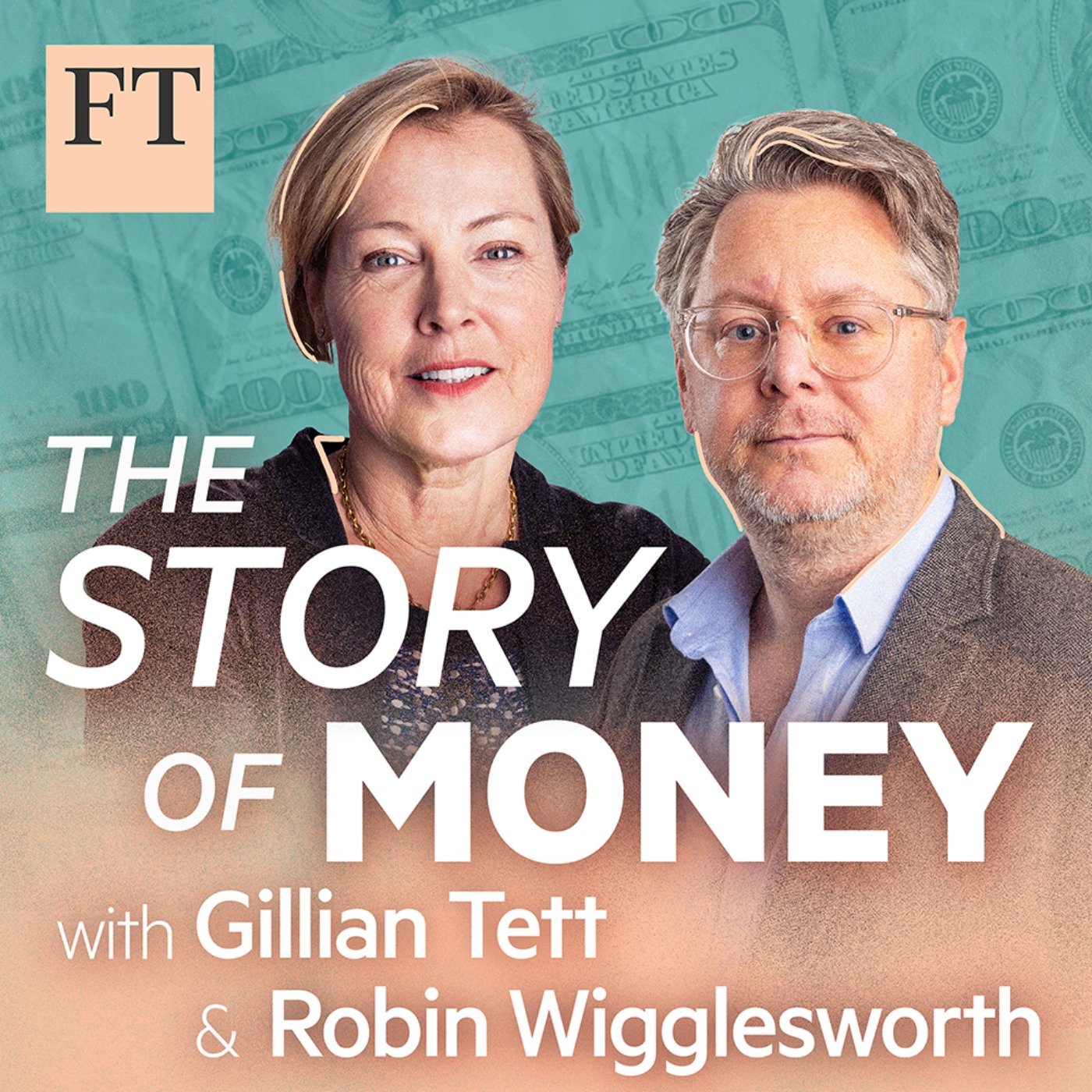
Gillian Tett (journalist; co-host of The Story of Money) and Robin Wigglesworth (journalist; co-host). They discuss the story with historical/financial context and anecdotes.
Key claims
Diners Club began as an aspirational charge card for traveling businessmen; early bank attempts at revolving credit failed until Bank of America’s Joseph Williams designed the Bank AmeriCard. The Fresno drop mailed 60,000 cards with about $500 credit each, producing high delinquency (22%) and losses (~$20 million), yet the program was tightened and eventually turned profitable (profit by 1961; $13 million by 1968).
Notable examples
Frank McNamara’s lunch-wallet incident (later disputed as myth); Fresno cards sent to dead people and even dogs; later competitors (American Express, MasterCard/Visa) and the shift to magnetic stripes and rewards.
Written by AI. May contain mistakes.
Chapters
0:29
The Birth of Credit Cards
Exploring the origins of credit cards and their societal impact.
“and how one unlikely event changed the way we spend forever.”
1:48
Frank McNamara's Lunch Disaster
The story of Frank McNamara's embarrassing lunch that led to innovation.
“Gillian, today we're going to be talking about a revolution in money, but really a revolution in credit.”
3:00
The Idea Behind Diners Club
How the Diners Club concept emerged from a lunch incident.
“He worked at the Empire State Building, actually.”
4:39
America's Post-War Consumer Culture
Understanding the rise of consumerism and its connection to credit.
“He worked for a short-term lending company that would make consumer loans.”
6:09
Shifts in Attitudes Towards Credit
Discussion on changing perceptions of credit post-World War II.
“The idea was it's primarily going to be used on restaurants by travelling salespeople, salespeople generally.”
7:31
The Evolution of the Diners Club
How the Diners Club adapted and expanded its services.
“So people are, you know, whether it's the radio, soon the television, the refrigerator, these things, a new car, these things become the sign of a forward-looking, optimistic country, essentially.”
10:12
The Role of Bank of America
Examining Bank of America's pivotal role in the credit card revolution.
“So we'll come back to the question about credit in a moment, but tell us how and why the Diners Club then was born and developed and took off.”
14:00
The Vision of Bank of America
Learn about the transformative vision of Bank of America for the middle class post-WWII.
“It's really focusing on the middle class consumer culture vision post-World War II, where people are trying to live nice suburban middle class lives.”
18:06
Joseph Williams and the Credit Card Concept
Discover Joseph Williams' role and vision in developing the credit card.
“So the charge card used to be actually just a cardboard card.”
19:51
Fresno: The Credit Card Experiment
Learn why Fresno was chosen as a test ground for credit cards.
“Visit nuveen.com slash future to learn more.”
Show all 22 chapters
22:19
The Fallout of the Fresno Drop
Explore the chaotic results of the Fresno credit card distribution experiment.
“because Bank of America stands behind it.”
28:00
The Reputation of Credit and Its Impact
Explore the moral and reputational implications of early credit practices.
“And it was also the moral stain, like the reputational hit.”
29:20
Salvaging the Bank of America Experiment
Learn about the challenges the Bank of America faced and their response to potential failure.
“They had short-circuited and very quickly gotten over a million cars into the hands of Californians.”
30:47
The Rise of Consumer Credit in America
Understand the explosion of consumer credit and its normalization post-WWII.
“had launched something that would become MasterCard.”
32:10
The Evolution and Technology of Credit Cards
Discover how technological advancements changed the landscape of credit cards.
“That, you know, after World War II, was there anything America couldn't do?”
33:59
Joseph Williams and the Credit Card Mythos
Examine the legacy of Joseph Williams and the creation myths surrounding credit cards.
“And in fact, sometimes that's what forges a little bit of resilience as well.”
36:28
Diners Club and the Importance of Adaptation
Learn how Diners Club failed to adapt and the consequences of stagnation in business.
“where you can not just organise what you buy, when you buy, but you take away the friction of actually doing that.”
37:29
The Creation Myth and Cultural Significance of Credit Cards
Discuss the cultural narratives that shape the perception of credit cards.
“MasterCard also that grew out of this other West Coast banking alliance.”
39:23
Evaluating Modern Credit Card Culture
Analyze the current state of credit card culture and its implications for consumers.
“And his wife turning up in her curlers looking hopping mad because she had to drive all that way with cash.”
42:03
The Dark Side of Credit Cards
Explore how the modern credit card industry can lead people into debt.
“But I don't, I have to admit, and maybe this sounds very Luddite or very old-fashioned, maybe.”
43:35
The Evolution of Payment Systems
Discover the shift from cash to digital payments and its economic impact.
44:46
A Fascinating Journey of Credit Cards
Learn about the unexpected history and personalities behind credit cards.
“I have not touched cash for a very long time.”

Ask about this episode
Get the gist, explore an idea or ask about something said.
 Claude
On The Story of Money, what are the key points of this episode?
Searching your listeningTranscript
Automatic transcript. May contain errors.
0:00What happens next in the story of money? Nuveen has spent over 125 years helping clients answer this question. By investing in the growth of businesses, real estate, infrastructure and natural capital, we continue to deepen our expertise across income and alternatives so investors can confidently write the next chapter of their own portfolio stories. Nuveen. Invest like the future is watching. Visit nuveen.com slash future to learn more. Investing involves risk. Principal loss is possible. Today on the story of money, a forgotten wallet, a terrible business lunch, and how one unlikely event changed the way we spend forever.
0:37Bank of America in 1958 decides to mail out 60 ,000 Bank AmeriCards. Even dogs apparently got credit cards. It was just a full on, let's just carpet bomb the Titan with credit cards and see who uses them. So basically you're giving an airdrop to a town and giving everyone$500 of credit immediately. with no strings attached and telling them to go mad, go wild. What happens? Well, they went a little bit mad. They went a little bit wild.
1:10Now, we're talking about the credit card, our so-called flexible friend that haunts our wallets, our phones, our lives. And it matters enormously because today the world is drowning in debt and the question of how this consumer culture and consumer debt first arose matters enormously. Yes, because the marriage of the American consumer culture that starts emerging after World War II and consumer debt, the democratisation of credit is kind of what made the American consumer a world-changing economic force. And potentially turned the American dream into a nightmare for some. This is The Story of Money.
1:49I'm Gillian Tett. And I'm Robin Wigglesworth.
1:56Gillian, today we're going to be talking about a revolution in money, but really a revolution in credit. And as we know, credit has been around, frankly, for longer than money, but is a big deal. And how, especially in the 20th century, mid-halfway through it, we saw these huge changes. I've been curious in your thoughts, given that you've been in the USA, lived there for so long, how you see consumer credit and credit cards especially as how important they are to America. Well, America in many ways is credit card nation because it's almost impossible to function there without a credit card. And it's changed the way the economy works and the way that we actually look at the financial system.
2:33But we're not going to be talking about this from a macroeconomic perspective. This is not Economics 101. We're going to talk about a human being, a person called Frank McNamara, and an extraordinary moment in the 1940s where he went out for lunch one day. Tell us about that, Robin. So Frank McNamara was a head of something called the Hamilton Credit Corporation, made short-term consumer loans. He lived in Long Island. He worked in Manhattan. He worked at the Empire State Building, actually. And yes, he used to take clients out for lunches all the time. You know, this is pre-Mad Men. You know, there's no Don Draper's quite yet.
3:12There's not that much of an advertising industry, but it's beginning. And people definitely took long liquid lunches. Right. So it was pre-Mad Men, but very much in the Mad Men. vibe. And in fact, we've got this menu from the restaurant in the time where he used to go out to at a place called Major's Cabin Grill. And you had things like chicken liver saute, sounds disgusting, or charcoal broiled boneless beef steak a la junior. I'm not crazy about liver myself, but I'm sure the martinis were really good. Absolutely. So tell us, they went out for lunch one day and then disaster strikes. Yes, possibly after a few too many Manhattans or martinis, we don't know.
3:54Frank McNamara discovers that he has no wallet. He's forgotten his wallet at home. And this is hugely embarrassing because he's taken some business associate out for lunch. And he actually has to telephone his wife all the way out in Long Island to ask her to bring his wallet. And she can't have been too pleased, can she? No. So the legend has it that she turns up with curlers in a hair sill and a hot look on her eye. She's very annoyed at this, but she does dutifully turn up with his wallet so he can settle his lunch. So playing into all the cliches about 1950s wives and all that. Yes, exactly.
4:26So he thinks, according to the story, I mean, there must be a way for paying for this meal without necessarily getting my wife to call up or pay it in cash. I mean, credit is a big factor of American life by then, a growing factor. He worked for a short-term lending company that would make consumer loans. Department stores, convenience stores would often give people, frequent customers, an account which they could charge against, essentially. So you had to pay the bill all the time. It wasn't really like a long-term or revolving loan, but you could charge your account to something. They had a little metal almost inspired by military dog tags, they looked like.
5:04And he thought, well, why don't we do something like that? But instead of being just for Bloomingdale's or just for Macy's or just for my local convenience store or this particular restaurant, why don't we do one for lots of restaurants? So he starts thinking about this and noodling around this idea, which is pretty revolutionary at the time. And then he does what many finances do in this situation, which is he turns to his lawyer. Julie, have you noticed like in almost every store we tell about America, there's always a lawyer somewhere? Absolutely. It's a nation of lawyers through and through.
5:32It's run by lawyers in every sense. Yeah, no, exactly. Well, the lawyer is in this case a crucial figure. So Ralph Schneider, he's called. So Frank McNamara is the visionary, has this idea. Because Ralph Schneider, the really kind of implementer, very down to earth kind of guy and clearly good at the execution bit. So they go to Major Cabin's grill and talk to them. That's their first customer, as it were, their first merchant to sign up. A place where he'd had this really embarrassing situation with his wife turning up and the girl is being furious, supposedly anyway. But they cook up this idea together and they call it diner's car, don't they?
6:09Or diner's club. Yeah. Where does that come from? The idea was it's primarily going to be used on restaurants by travelling salespeople, salespeople generally. So they call it the diner's club and they want to be sort of high end for the successful man in business. He was traveling around, seeing people who want to take people out for lunch or just pay for his own lunch or dinner. Right. So I've got this idea of the whole environment being a bit like Mad Men, where people go out for three martini lunches. But more widely, you know, what was actually happening in America at the time? It was an incredible time in America.
6:41As we know, after World War II, the U.S. had really publicly emerged as the superpower of the era, right? The victor in every sense. Yes, especially in the financial and economic sense. And there was this sense of credit, which has always been a bit of a dirty word, debt. Well, of course, after 1929, the nation was traumatized and hated the idea of debt. But were people spending money in the 1950s? Because, you know, they'd just gone through wild, you know, incredible austerity in World War II and all that. Well, you could almost say that the victory in World War II maybe helped heal some of that almost psychological, mass psychological trauma of the Great Depression.
7:21and that kind of insecurity. And you can see the emergence of this new assertive America. You can see the growth of a consumer economy, a new technology. A kind of consumer culture, yeah. So people are, you know, whether it's the radio, soon the television, the refrigerator, these things, a new car, these things become the sign of a forward-looking, optimistic country, essentially. So people were ready to go out and spend money and splash the cash, they say. and so I would imagine then in that case there must be a lot of interest in this new way to actually spend money without carrying wads of cash around was there well a lot of these things were super expensive for the era right you know new refrigerator is expensive even if you're a middle class person back then because there was such a new revolutionary technology and the easiest way to do that is credit and credit as you and I know it actually predates money it's been around forever But it was all very ad hoc, personal based.
8:17You could go to a bank and get a personal loan as well. But again, you had to turn up in a suit and tie. You had to look the part to show that you're a proper person that deserves some credit. So as economists would say, there was a lot of friction around getting ways to get credit and or spend money. Yeah. And of course, the Americans hate friction. No, especially when it comes to credit. And credit is, I think, the attitudes towards credit were changing. Did you ever go past the old Moody's headquarters on 99 church seats in New York? Yeah, yeah. And I was living there. I used to go there sometimes.
8:47Yeah. So in 1951, there was a new skyscraper. It was the first skyscraper in downtown Manhattan built since the Depression. It was finished in 1951, just to give you a sense of the time and the era. So above the door of this skyscraper, there is a frieze in metal that shows a bare-chested laborer holding the hands of a frontiersman, a buckskin-clad frontiersman. They're staring into each other's eyes. It's very romantic almost. And it has a quote by Daniel Webster, a 19th-century American statesman, that is all about credit and how amazing credit is. It says, credit is mankind's faith in mankind.
9:29It has exalted more people and more of humankind than a thousand mines. So that really just sums up like this changing attitudes towards credit. And no coincidence, this was also Moody's, the rating agency's headquarters at the time. Ha! And of course it plays into that Latin origin of the word credit, which comes from credere, meaning to believe or trust, and which will remind us all that finance is underpinned by trust and finance without faith is worth exactly naught. Yeah. And Hilarious, you'll appreciate this. That building, that little skyscraper, was torn down in 2008, and the freeze was basically recycled for scrap metal.
10:09So it felt quite fitting at the time, given what had happened to trust in the financial system. So we'll come back to the question about credit in a moment, but tell us how and why the Diners Club then was born and developed and took off. Well, so like I said, they focused most on restaurants. They later on added car rental companies. Sounds like the name on the tin, Diners Club is for dining. Yeah, exactly. But it was more for the traveling, high-powered businessmen, essentially. And the way they made money was not actually from credit, because you had to pay it back at the end of every month, but it was from the fees they charged the merchants.
10:42So by gaining access to this wealthy, affluent group of businessmen, and they're almost all businessmen, right, the merchants would pay 7 % of the expenses to them. That's how they made their money. That's their vig, essentially. So it really wasn't a credit card. It was more like a cash card or a charge card and stuff like that. But I say the merchants took part, presumably because they wanted the business, but it was very nice business for the people actually running this diners club thing. But it wasn't straightforward, though, actually getting Americans to embrace it, was it? No, I mean, these attitudes are hard to change.
11:17And it's a classic of chicken or egg situation. Like, how do you get merchants to sign up if you don't have a lot of customers? How do you get customers to sign up if you don't have a lot of merchants that participate? But they clearly were very good. They used marketing. Classic American salesman and all that. Yeah, but they made that aspirational pitch. I think that's very kind of, this is pre-Mad Men era, but it's very much that kind of sense of, if you're a successful businessman, you should be a Diners Club member. So it's a membership, really. And it was something aspirational. So they were actually quite good at getting, so within the first year, they had over 10 ,000 people signed up.
11:53Wow. And several hundred businesses. That's pretty astonishing because that was before the era of social media and trying to reach people and get them to sign up. No technology. Would have been pretty hard. Yeah. No, it's remarkable, really, because you can see success stories going back that long ago, but they were far slower than what we're used to today. So 10 ,000 within a year and tens of thousands within a few years. It was clearly a phenomenon, but it is not. It's kind of first time you can see a charge card, not a credit card quite, but you can see us tending towards that, that you can use in multiple businesses.
12:26So the idea is now out there that you can use short-term credit, because it is kind of a loan, as a way to let people buy now, pay later, essentially. Right. So the friction of spending is being taken away. We have a charge card. Did anyone try and turn that into what we now know as a credit card with debt as well? Or was that just too outlandish an idea back then? No. So there were definitely banks that saw the potential in this, that started experimenting, mainly in New York, around they'd have attaching credit to it and charging for rotating, like revolving balances. So if you didn't pay it back at the end of the month, they'd charge.
13:07For various reasons, it didn't work out for none of these banks. None of those early attempts really stuck around. So there was the Franklin National Bank in 1952. I tried something like this, it didn't really take. Really, it took a major bank to do it, and in a very major aggressive way. Tell us how this happened, because at this point, there's a big bank, as you say, that enters the picture and our story, which is Bank of America. How did they get involved? Well, the Bank of America was based in California. And this is the era of very strict banking rules after the Great Depression. So no bank is actually allowed to operate outside its state.
13:45And that gives, you know, Bank of America being based in California, the biggest state, a far greater advantage over, let's say, banks in Maine, or even in some cases, the banks in New York. At least the banks in New York, you know, that was Wall Street, the money center. But Bank of America emerges as the preeminent consumer bank in the US. So Bank of America is in California. It's really focusing on the middle class consumer culture vision post-World War II, where people are trying to live nice suburban middle class lives. And there's a guy called AP Giannini, who's the founder of the bank, who's driving a lot of this.
14:23Yeah. So he had this very strong vision, I mean, a marketing plot, really, of focusing on the little guy, this middle class, this new America. And, you know, that was quite transformational. Bank of America had a huge advantage in being based in California, the biggest and probably the most dynamic state after World War II. Well, that's how Californians like to think of themselves always. Yeah, probably not true any longer. I'm certainly the biggest still, but maybe not the most dynamic. But it was after World War II, I think, unambiguously. and Bank of America was a big part of it. It was a powerhouse there and kind of a powerhouse in America because of it.
14:59So there was a guy called Joseph Williams, wasn't there as well, who like many executives at the time was a demobilized soldier who'd served in Germany in World War II. I mean, you get a sense of how obsessive and visionary he was from my great friend, Joe Nassera, one of America's best financial journalists, I would argue, although I'm a bit biased because he's a friend of mine, but he wrote in a piece in the Washington Post in 1994 that Joseph Williams was, quote, 41 years old, a Philadelphia banker so disenchanted with the way banking was done in the East that practically the first thing he did upon returning from Germany after World War II was drive across the country to San Francisco and ask for a job at Bank of America.
15:39Well, that's kind of a bit weird. But anyway, he must have really loved Bank of America and was determined to try and change the way that banking and credit was done in America via the credit card. And he was also something of a visionary who ran their in-house think tank at Bank of America called the Customer Services Research Department. Not a very snappy name. But tell us why and how he mattered so much. Well, he was a real company man. His think tank was tasked with coming up with new ideas, new products for consumers. And given the success of the charge card by then, Dinah's Club is making, at the point, hundreds of thousands of dollars every month.
16:23It's in profit. It's starting to become phenomenally successful. And even though other banks have been unsuccessful in attaching credit to it, Bank of America is just bigger and more better resourcing. He thinks they can do this. That's his big grand vision, essentially. But tell us exactly what his vision was for that credit card. Well, like I said, credit was a fact of life and has been forever. you could get consumer loans, short-term consumer loans or long-term consumer loans from a bank, but you had to dress the part. You had to look respectable, show your financials, go into a bank and personally ask for it.
16:55And of course, it was pretty hard for women to get credit in those days, wasn't it? Exactly. And also, let's face it, other minorities. Yeah, black people couldn't get credit. It was basically just middle-class white men who could get credit. Yeah. And he realized there was so much friction involved in this. And the country was growing so quickly and it wanted to buy so much stuff and it believed that the future is always better than the past. So in that kind of case, it makes sense to borrow to buy these things or just generally just to have access to consumer credit. How could they make that more efficient?
17:27And the charge card, he realized, well, that can easily be the gateway. That can be the way in to democratizing this. And I mean, Joe wrote it beautifully, Joe Nassara. He said, quote, This is a moment when a simple, ordered, highly regulated world began to evolve, for better or worse, into an immensely complicated universe. And when the American middle class began to change the way it thought about and dealt with its money. Yeah. So in 1958, Joseph Williams comes up with what he calls the Bank AmeriCard, which is essentially Bank of America's take on the charge card, but with credit. So the charge card used to be actually just a cardboard card.
18:09It looks pretty ropey when you look at it. You can look it up online. It just looks flimsy. When you think of the heavy, serious pieces of plastic and metal we have today, there's no magnetic stripe, for example. It just had an account number. But he basically comes up with a vision for what this will look like. It's still not plastic, but it's starting to look a little bit more ornate. And it comes with, of course, Bank of America's imprimatur as America's biggest consumer bank of the era. Right. And as I understand, this Bank AmeriCard, which was what its official name was, essentially had about$500 worth of credit attached to it without any strings.
18:47And although the charge card had to be paid off at the end of each month, this was basically open-ended. I mean, the consumer could pay it back whenever they wanted, which frankly sounds to me like a recipe for disaster? Well, yes, it was a bit of a disaster. Hilariously so, in fact. It's something that financial historians or people like me love calling the Big Fresno Drop. Right. So, the Big Fresno Drop sounds a bit like a contradiction in terms because no one's quite sure where Fresno actually is most of the time. We'll probably talk about that after the break. Absolutely. And we'll also find out how sometimes your worst mistake can actually sow the seeds for your best success.
19:29The future of fixed income investing will continue to blur the lines between public and private markets. Nuveen's credit platform was built to navigate this shifting landscape, channeling capital toward the businesses, infrastructure and energy solutions that are shaping tomorrow's economy, all while aiming to deliver the resilience and returns that portfolios seek today. Nuveen. Invest like the future is watching. Visit nuveen.com slash future to learn more. Investing involves risk. Principal loss is possible.
20:03So let's go back to where we were with the story of how credit cards were invented. We started after World War II with radical changes in attitudes towards credit and the growth of the middle class consumer culture in America. And then we had the experiment with the Diners Club. And now we're actually going into California, to the unlikely city of Fresno, not known as the center of financial revolutions. But Fresno was a middle class town in California, which Bank of America decided was going to be the big Petri dish to test out these radical ideas about a credit card. Tell us, Robin, what happened and why Fresno turned out to be the scene of the action.
20:47Because, I mean, Fresno is not exactly famous for being the center of financial revolutions. No, and I think that's exactly why they chose it. So Fresno also was... It's a town in California, for those who aren't familiar with American geography, isn't it? Yeah. No, it's a town in California. So it was also one of the towns where Bacroma, America, had one of the highest penetration rates. They had a lot of customers in that town. So that's one of the reasons why they chose it. It was also a classic, upstanding, fast-growing, middle-class town where they thought, you know, consumer credit would work well.
21:15But also, crucially, it was a little bit anonymous. So to get around that chicken and egg problem about how do you get customers and merchants to sign up when you need both of them together, Bank of America in 1958 decides to mail out 60 ,000 Bank of America cards to its customers in the town. 60 ,000 cards. The Fresno drop was so untargeted and large that dead people got credit cards. Even dogs apparently got credit cards. It was just a full-on, let's just carpet bomb the Titan with credit cards and see who uses them. And I guess kind of hope for the best, right? Wow, it sounds like a social reality television experiment, doesn't it?
21:58Yeah, I'm Truman Show, but with credit cards. I mean, it's kind of wild just because, you know, nobody's really heard of this. The credit card was kind of a new concept. But at least then they could tell all merchants in that town that we're going to be mailing out 60 ,000. Most of the city is going to have these. and they could tell customers all instantly that lots of merchants will be accepting this because Bank of America stands behind it. We are the big bank in the town. It's how you kind of almost like short circuit or supercharge this and see how it goes. So basically you're giving an airdrop to a town and giving everyone$500 of credit immediately with no strings attached and telling them to go mad, go wild.
22:38What happens? Well, they went a little bit mad. They went a little bit wild. first of all some people just get angry they didn't ask for this this is you know direct mailing is not really a done thing right then this is completely new so some people send them back angrily other people use them to the delight some people steal them uh it just goes a little bit pear-shaped essentially because once people realize that these were cars that basically came almost pre-loaded with 500 dollars worth of credit 500 bucks was quite a bit of money back Yeah, huge amount. People would steal it. And so did people actually start engaging in fraud and all kinds of nefarious behaviour?
23:17You know, never has mankind and money interact in ways that didn't lead to some sort of fraud. And yes, there was a lot of it, essentially. And it was unambiguously, frankly, a debacle. So it's a bit like carpet bombing a town with dollar bills on the sidewalk or pavements and expecting people to behave in an honourable way. Yes. Unsurprisingly, as an anthropologist, they did not behave in an upright, honourable way in many cases. And the idea was that Bank of America was going to experiment with this in a controlled fashion. They knew it might go a little bit weird, but they'll try to keep it to Fresno.
23:52But then they find out that American Express is thinking about doing something similar. Don't they at that point decide to back off and say the experiment's gone wrong? No. They decide, okay, we cannot pause to take our key learnings, as McKinsey consultant might say today. They decide, okay, we're going to supercharge this. So double down. I mean, no, no, they do way more than double down. Quadruple, quintuple, you know, whatever the word is, you know, go mad. Well, yes, they go mad. They start mailing out cars across California. So, you know, every single town, every single, eventually within a year, they've mailed out a million credit cards to people.
24:29Yes. So they did not pause for key learnings. They just decided to gun ahead, essentially. Right. Well, that, of course, is the all-American way. But what actually happens? I mean, does the whole experiment implode or does it begin to take off? Well, implode is a strong word, but it is unambiguously a debacle. It ends up being a huge financial headache. First of all, it's the logistics, the processing. One of the reasons why Dinah's Card didn't set up a credit card themselves is that you need that logistical processing of things and all the loans and making sure the payments and checking people and chasing people and taking people to court and so on.
25:07And Dinah's Club couldn't do that. Bank of America could, but they radically underestimated the scale of what they were trying. They were going to start with a small experiment, a small but daring experiment, and they ended up being a massive experiment. So I'm kind of curious. I mean, back in 2007, 2008, you and I were working in New York and we used to look a lot at the question of defaults or delinquency rates in consumer credit. And of course, a delinquency rate is what happens when people don't pay back a loan, whether it's a subprime mortgage or a credit card or a student loan or something else.
25:40And it's what keeps bankers up at night, because when a bank has high delinquency rates or a credit card company has high delinquency rates, then you're heading for the rocks. What kind of delinquency rate do they have back then in Fresno? Well, the Bank of America had assumed 4 % because that's what they had across their consumer lending book beforehand. And they thought, well, why should this be any different? Lo and behold, obviously, there's a very radically different kind of almost emotional attachment to the loan when you go and borrow from an actual human banker in person and when you get a cardboard card mailed to you with 500 bucks of credit.
26:18So the delinquency rate was 22%. Wow. Way higher. So practically a quarter of the loans went into delinquency. Yeah. That makes 2008 financial crisis look like a walk in the park. Yes, the Fresno drop was the financial equivalent of a Great Depression, at least when it came to delinquency rates. So it just ended up being just a disaster. Right. And I imagine that culturally this has been quite a shock because, you know, on the one hand you had this post-World War II consumer culture boom, but you also had a lot of people with memories of the sins of debt seen after the Great Crash. Did people react with moral outrage to this at all?
26:58Yeah, I mean, I heard this interview with a Bank of America executive from that era, and he was involved with this, and he didn't want the card. He said, no, no, interest is stupid. Like, why would you pay this? Because what they did, they charged 1.5 % monthly on any balance that remained outstanding after the grace period, basically. So that's 18%. That's become the standard. That was the standard for credit cards for a long time. And it was basically as a back of the envelope, well, how much did we charge? Well, 1.5 % a month, essentially. And even bankers at the time thought this was a bad deal.
27:33So lots of people hated it. And aside from the very real financial repercussions that they lost a lot of money on these cars. How much did they lose in total? Or$20 million or so. Wow, which in those days was a lot of money. That was a lot of money back then. And especially for, you know, it's a thrusting, ambitious bank, but still not banks that still remember the Depression. You weren't set up to ever lose money. They're not as risk-hungry as they maybe are today in some cases. And it was also the moral stain, like the reputational hit. Right. You talk about that these cultures were still around.
28:11So everybody basically attacked them for like giving out credit. This was almost like a stain on the national character. It was helping corrupt the American spirit, essentially, that, you know, you're just giving away free credit. That is naturally a bad thing. So did Joseph get fired, Joseph Williams, for all this? Because, you know, the bank's lost a lot of money and it's created a bit of a scandal. Yes. No, he did leave. He did leave the bank soon after this. So Bank of America had even like a crucial board meeting where they have to discuss, do we just kill this project or do we try to salvage it?
28:45And I think this is really interesting. This is one of those areas that you can really almost tell the difference between American and European business cultures. Well, America embraces failure, doesn't it? As a, you know, merely a bump on the path to success, whereas in Europe, failure tends to be terminal. Yeah. So I think like if this had been a European bank and a European experiment, it would have died then. But Bank of America's board, although they are shocked at the project and how badly it's been mishandled, or they felt at the time, they could still see the kernel of something working.
29:19Because people were using those cars, I mean, quite often to abuse them, but they clearly was. They had short-circuited and very quickly gotten over a million cars into the hands of Californians. So they decide to salvage it. They decide to start tightening out who they send it to. Otherwise known as credit controls. Yeah, credit controls. Just doing basic due diligence. Not sending it out to dead people. Obviously. Good idea. Not sending it out to dogs. Yeah, exactly. These are, you'd think, fairly obvious things. Sadly, they forgot that lesson in the beginning of the noughties and 21st century, but in the run out to the great financial crisis.
29:53But there we go. Yeah. Well, we talked about it. At one point, maybe we should call this podcast, This Has All Happened Before. because there's nothing new in finance. It all comes around in different ways. So the Bank of America board is basically doubling down on this idea, although it's created such a seeming disaster. When did they actually start making any money out of it? I mean, did they decide to keep going with it? Is it still loss-making? Yeah, so by 1961, Bank of America card finally turns a profit. So three quite tough years. First, the massive losses right at the front, and then essentially this desperate salvage operation.
30:29And by 1968, it's starting to print money. So by 1968, Bank of America is making$13 million. Wow. It starts becoming very profitable. And that's despite the fact that by then, many rivals had launched their own product. So American Express had a credit card then. Something called the ICA Alliance, an alliance of West Coast Banks, had launched something that would become MasterCard. But because of this rather panicked, mass Californian carpet bombing of Bank of America cards, they are the dominant one. They are the ones that are making a ton of money then. And that just continues for several years afterwards.
31:07It's an amazing example of, let's say, that all-American spirit of if at first you don't succeed, try, try, try again and try harder. And in fact, going back to the wonderful Joe Nassara again, in one of his columns he wrote, Between 1945 and 1960, consumer credit exploded, going from$2.6 billion to$45 billion. And in decades later, in 1970, it stood at$105 billion. It was as if the entire middle class was betting on the come, i.e. betting that tomorrow will be better than today. I mean, this really was one of the first occasions when the American middle class became, you know, obsessed with credit, where credit was normalized as much as anything else.
31:53No, I think that normalization is important because that's really when you can see, I mean, culture changes slowly, as we know, right? But it does change. And this was a big, short shock that I think happened at the right time, at the right juncture for Americans, essentially. That, you know, after World War II, was there anything America couldn't do? No, of course not. And the future was so bright. Why wouldn't you borrow from the future to pay for something you wanted to hit now? And of course, unlike today, everyone assumed that their kids were going to have a better life than they did and that there was going to be progress and greater wealth, no matter what, extending indefinitely into the future.
32:33Yeah. Why not buy that Cadillac today? Why not buy that refrigerator? Why not buy that television set? It just made perfect sense for a lot of people. And the fact that obviously by the 1960s, IBM had invented the magnetic stripe as well. Suddenly you could put that, the card started becoming plastic, and you could put the metallic magnetic stripe on there. And it's just so much easier, just ching, swipe the card, swipe the card. Wonders of technology. I mean, one thing I find fascinating is I've just spent a weekend with a whole bunch of tech leaders. And this whole spirit of if it doesn't work at the beginning, keep trying.
33:08Failure is not terminal. It can actually be on the path to success. That's still very much driving Silicon Valley, isn't it? I mean, someone like Elon Musk has embraced so much of this failure as merely a way to embrace success in the future. That spirit. Well, I think, I mean, there's obvious survivorship basis. Like every business, like most businesses fail. So we only focus on the very successful ones that obviously quite had some sort of cinematic turn of fortunes. Like, oh, it looked like it was going to fail. And then it had a sort of a Phoenix-like resurrection. It's just very compelling.
33:42So those are the stories we remember. But obviously, the vast majority of businesses just fail and they just terminally fail. But I do think it is interesting that quite a lot of big, successful business people and businesses quite often have near-death experiences or certainly major setbacks. And in fact, sometimes that's what forges a little bit of resilience as well. Absolutely. Well, it's a badge of honor almost in Silicon Valley. But I'm curious, on that basis, could we actually come back now and say history shows that Fresno was a success? I think so. I mean, it was not a success in that they lost a lot of money that they weren't planning.
34:21And the fact that they radically supercharged their efforts to then basically carper bomb large parts of California with these credit cards was almost a little bit of an accident as well, caused by probably misplaced fears over some of their rivals. But again, those things ended up proving strokes of genius, or maybe, let's say, strokes of massive luck. But sometimes you need luck in life as well. So what happened to Joseph Williams in the end? Did he end up looking more like a hero than a disaster? Yes. No, today he is considered the father of the credit card. He himself always thought that he wasn't quite happy with how credit card culture emerged, essentially.
35:05He saw it genuinely as a service for people that needed small short-term loans and a way to democratize access to that to everybody. He did not quite like the idea that it just became a way of almost like buying now all the time and always putting off tomorrow. He was an old-fashioned banker in many respects, but I think probably quite proud of what he'd birthed. And in fact, the FT wrote an obituary of him when he died. I'm going to read a little bit because, again, it's gloriously ironic. Quote, I wanted people to understand that their goal should be to make credit pay them instead of having them pay for credit.
35:44What does that mean? Well, I think that he wanted the idea that one thing he talked a lot about, I kind of think it's more marketing than anything else, but you can often buy things on sale out of season. So you could buy cross-country skis, for example, for me in summer because they're on sale then. And then you can borrow money to buy them then and actually save money in the long run. Or in winter, you can buy your summer clothes and your swimming trunks. So that's what his idea was, that consumers could smooth their consumption over time for when it made most economic sense for them. In practice, I think it didn't really work out that way, but I like it as a marketing gimmick.
36:23So as a sense of giving people control over their lives, more agency. Yes. in a kind of pick and mix world where you can not just organise what you buy, when you buy, but you take away the friction of actually doing that. But I'm curious, and what about the other name in the story, Diners Club? They didn't survive, did they? No, they didn't. They never really managed to evolve. And again, this we also see in business so many times, right? You have an initially brilliant idea and you're not really able to basically develop it and eventually bigger, more better resourced rivals steal a march on you.
36:57So it stayed basically a charge card for affluent businessmen traveling around. I mean, even I vaguely remember hearing about Diners Club growing up in Norway. And essentially, it starts shrinking, their business starts getting taken over by other people. American Express, especially, gets very aggressive about using customer rewards. And this has frankly become a bit of a major pillar of the credit card industry, where Essentially, you get earmiles by using your American Express card. And also Visa that Bank of America became started doing this. MasterCard also that grew out of this other West Coast banking alliance.
37:35They also started using rewards. And frankly, then you can see exactly how this charge card just feels very old-fashioned. It feels like something that was invented in 1950. And especially those charges, because it didn't charge for credit. It was just a charge card. The 7 % they took from merchants, that sucked for the merchants. So it's back to the usual principle of adapt or die. Yes, essentially. And they just didn't adapt. So this is an amazing story of financial entrepreneurialism, of the all-American belief that you can essentially make mistakes, learn from them, and then turn that into extraordinary success.
38:13But it's not just a story about finance at all, is it? It's also about marketing and about hubris. If you were teaching this on an MBA course today, what would you say the lesson is about the marketing here? That's a lot, actually. I mean, I love that this is one of the first examples I've seen of hyperscaling. I mean, Bailey, it's a modern term for what Joseph Williams did back in Fresno with the big Fresno drop. He realized he needed to go big or go home. Exactly. Go big or go home, they say. So it was like a financial services hyperscaling. So it started with 50 ,000 cars. It was actually over 2 million after a year and a bit.
38:47It was incredibly aggressive, even frankly, by today's standards. That is pretty incredible. And the marketing, I think, around Dynast Club, aspirational, like selling a dream always really works, right? And I think financial products, there's this joke that financial products are never bought. They're sold. This is a good example of that. But even when the fundamental idea is a good one and you can see the demand, you still need to sell it. Of course, one of the ironies in this whole story, which I love as an anthropologist, is that, you know, there was this creation mythology around the birth of credit cards to do with Frank McNair running out of money or leaving his wallet behind at that restaurant.
39:27And his wife turning up in her curlers looking hopping mad because she had to drive all that way with cash. It's a great creation mythology. Like most creation mythologies, though, it may not have actually been quite true. No. So one of the Diners Club executives, the PR Supremo, basically later on in the 90s, admitted that it was all made up. Ha. Yes. So they had gone to Major's Cabin Grill and got them to sign up as the first customer. But he was a friend of Frank McNamara. As you'd expect, Frank McNamara didn't need to call his wife to get his bill paid, right? obviously could have just done an IOU.
40:09And I think it does speak to this kind of need in whether it's tech or finance or new businesses for a kind of a creation myth. Yeah. Like it's so embedded in how we see the world that we want people like, how did you meet your partner? How did your business start? We want to know the beginning and it's so much better if it's a good story. So, you know, Dynast Club still has this on their website as like the official sort of creation myth. But one of our producers, Lulu Smith, actually got in touch with the granddaughter of the restaurant owner and did find out, yes, it was complete baloney, essentially.
40:43Well, like so much is a slate of hand or a hall of mirrors in terms of how people present their origin stories. But I'm curious because a really interesting thing today is that here we are less than a century later and credit cards are utterly integral to American life now. And credit card debt drives so much of consumer spending in America. Now, we saw during the great financial crisis how badly wrong that can go at times. But when you look at it today, both in the US and the UK and elsewhere in the world, how do you evaluate our new credit card culture and credit card nations? Well, I also wanted to ask you that.
41:27But I'll say my thoughts is, like, obviously here in Europe, credit cards exist. And we've had them for a long time. But it's not as part of the culture. It's not as essential, as you put it. I mean, I did not have a credit card until I moved to the United States. And in the U.S., I realized quickly you had to have one. You cannot almost operate without a credit card. And that is mind-blowing to me. And, you know, I actually think, like, consumer credit gets a bad rap. And sometimes there's a limit to how much you want to nanny people and people should be allowed to make their own financial decisions within a large scope of freedom.
42:03But I don't, I have to admit, and maybe this sounds very Luddite or very old-fashioned, maybe. I think the modern credit card industry as it operates today is not really built on those principles that Joseph Williams sketched out, that it's about giving people freedom to be strategic or tactical about when they spend money. but it's really about tricking people into debt. Like the whole reward system that later on became so essential is a way of constantly trying to drag people to have to use credit and basically making sure that they only make money when we screw up and we don't pay it back on time.
42:38And I think that actually is somewhat distasteful and unfortunate, really. Absolutely. And of course, the issue about credit cards is that human beings are very bad at coping with abstract disembodied things. and the very fact you've taken away the friction of spending means that it's very hard for people to keep track of their money and to actually have a feeling of what it means to spend all that money. It's very easy to get into debt. And of course that's dangerous because human beings, again, aren't so good at juggling the idea of time or the time value of money. And whereas if you're putting pennies into a jar, you have a physical sense of what it means to spend and save.
43:17With credit cards, it's all an abstraction, isn't it? Yeah. And that's part of the magic, part of the point. That's not an unintended consequence. I think that was one of the things that they wanted to achieve back in the 50s and 60s when they invented this. That was kind of a way of freeing up people. But I think in this case, consumer credit, hugely valuable, an integral part in the US economy. certainly there's over 1.3 trillion dollars worth of credit card debt outstanding at the moment and it has helped people buy stuff it's kind of been a pillar of frankly the american consumer industry which is the biggest engine of the global economy over the past half century but i don't i i i can't help but feel a little bit iffy about the whole disembodied part of it exactly even monopoly money feels more real right yeah i mean of course again and with now with the advent of Apple Pay and essentially credit cards on the phone, it's now become even more abstract and even less constrained by any physical friction in terms of buying things or paying for things, hasn't it?
44:22Yeah. Maybe that's actually the ultimate good benefit of this credit card debt that at least I feel a little bit ambiguous about, that actually the payment rails, the system, the infrastructure that it has helped finance through Visa, Mastercard, for example, has been a boon for the global economy in the long run and has now meant that we now have a completely electronic payment system. I have not touched cash for a very long time. Well, it's absolutely amazing. And it's fascinating to think that something we just take for granted now, which is so ubiquitous in our life, has this extraordinary story of some colourful personalities, but also failure in a dramatic way, suddenly turning into success.
45:07So thank you, Robin, for telling this extraordinary story. It is indeed absolutely fascinating. That's it for this week's episode of The Story of Money. If you liked this episode, make sure to subscribe and review the show and comment underneath because we actually do read all the comments. I'm Gillian Tett. And I'm Robin Wigglesworth. We'll see you here next week. Thank you.
46:03Thank you.
From the publisher
Credit cards are a part of everyday life, consumer debt is widespread and access to credit has helped make America a worldwide economic force. But where did it all begin?
According to legend, in 1940s New York when businessman Frank McNamara was out for lunch with his associates. He forgot his wallet, and resolved to create a new way to pay. What emerged was the ‘Diners Card’. A few decades and a disastrous experiment later, this morphed into the credit card we know today.
Hosts Gillian Tett and Robin Wigglesworth discuss the invention of the credit card, consider a crazy scheme dubbed the ‘Fresno drop’, and reflect on how the flexible friend revolutionised the way we pay - and built a trillion dollar mountain of debt.
Further reading:
A Piece of the Action (1994) by Joe Nocera. Follow Joe Nocera on X @opinion_joe
Washington Post article by Joe Nocera: ‘The Day The Credit Card was Born’: https://www.washingtonpost.com/archive/lifestyle/magazine/1994/11/04/the-day-the-credit-card-was-born/d42da27b-0437-4a67-b753-bf9b440ad6dc/
‘How Credit Cards changed the way we spend’ by Tim Harford: https://www.bbc.co.uk/news/business-41916711
For more on the history of credit, check out our past episode ‘Why money is the biggest shared hallucination in human history: https://www.youtube.com/watch?v=MFM_JqnJVog
To enjoy future episodes, be sure to subscribe to The Story of Money wherever you get your podcasts, also on the show's dedicated YouTube channel here: https://www.youtube.com/@FTTheStoryOfMoney
Hosts: Gillian Tett & Robin Wigglesworth
Producer: Lulu Smyth
Senior producer: Michela Tindera
Executive producer: Kate Ford
Original music and sound design: Breen Turner
Video editor: Michael Saliba
Podcast development: Laura Clarke
FT global head of audio: Flo Phillips
Special thanks to Elizabeth Marcus.
Learn more at www.ft.com/tsom or get in touch at [email protected]
Read a transcript of this episode on FT.com
Hosted on Acast. See acast.com/privacy for more information.
More from The Story of Money
All episodesWe use cookies.They keep VO running smoothly and help us improve it. Privacy policy