
 Ask ChatGPT
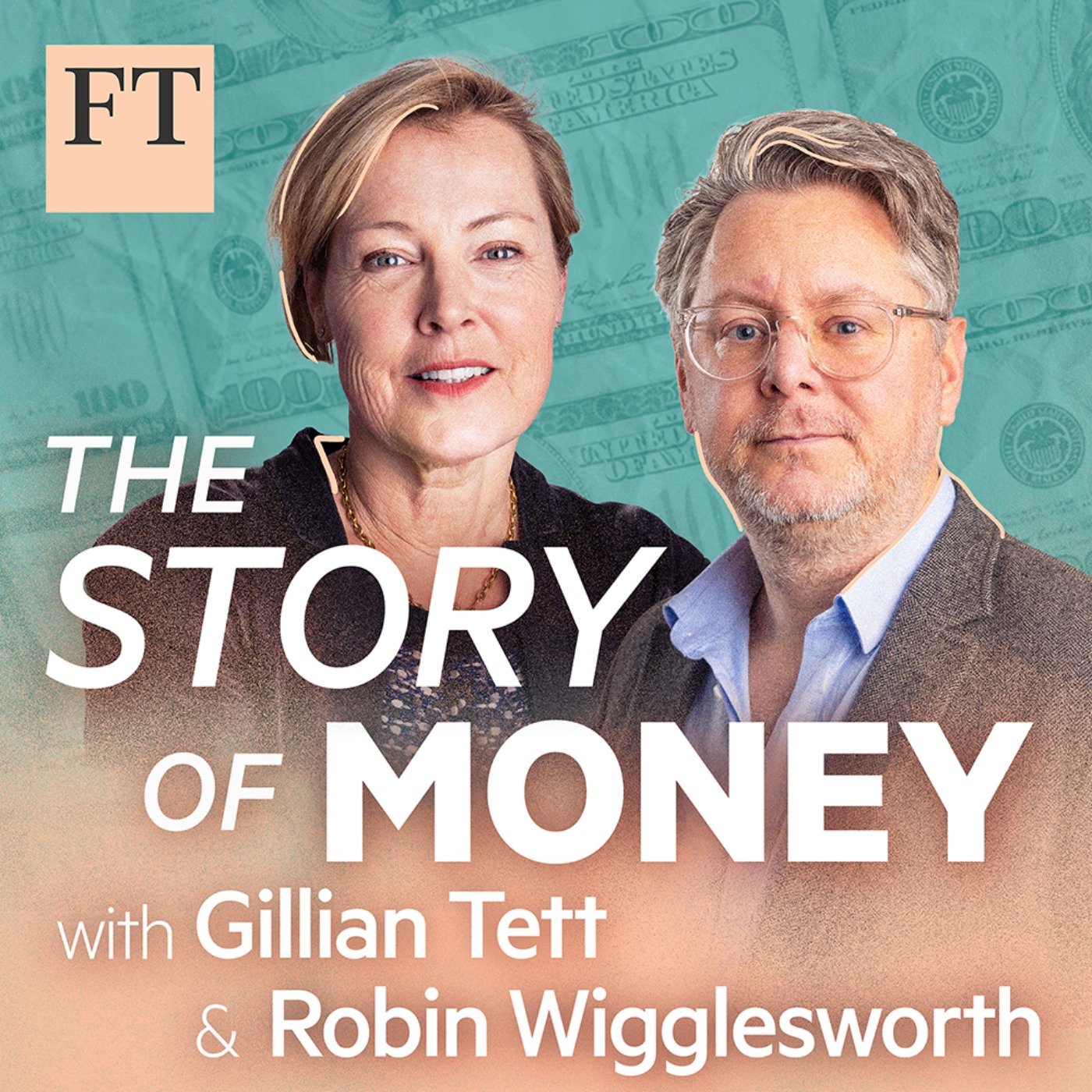

- Podcasts
- The Story of Money
- Can economics help explain Europe’s deadly witch trials?
The Story of Money28 Oct 2026 · 38m · 13 chapters
Can economics help explain Europe’s deadly witch trials?
In short
Whether economic hardship and shrinking food supplies helped drive Europe’s 16th–17th century witch trials, alongside religious competition and scapegoating.
Guests
Emily Oster, economics professor at Brown University; author of a 2004 paper (written as a Harvard undergrad) on the economic origins of witchcraft trials and executions. Hosts: Gillian Tett and Robin Wigglesworth.
Key claims
When crops failed and economic conditions deteriorated (linked to the Little Ice Age), communities sought explanations for bad outcomes and blamed vulnerable outsiders, especially women. Witch trials involved torture-based questioning, forced confessions, and implicating others; the Malleus Maleficarum (1480s) helped standardize accusations and prosecution methods.
Notable examples
hailstorms, crop/livestock harm, infertility, and infant killing accusations; the Catholic Inquisition’s early state-sponsored trials; later “fizzling out” as conditions improved; debate with a 2018 study (Leeson and Russ) finding no statistically significant weather link but some correlation with economic hardship.
Written by AI. May contain mistakes.
Chapters
0:29
The Dark History of Witch Trials
Exploring the witch trials and their economic explanations.
“He talks about witches as making pacts with the devil, but then also doing things like harming crops and livestock, having hailstorms, causing infertility.”
2:00
Meet Emily Oster
Introduction to guest Emily Oster and her work on witch trials.
“And to dig into this story, we're joined by Emily Oster.”
2:59
Interest in Witchcraft and Economics
Emily discusses her interest in witchcraft and economic data.
“And the paper looks at what happened when economic conditions deteriorated and asks whether that contributed to some of the witch trial phenomenon in Europe during this period.”
4:25
Setting the Scene in 16th Century Europe
Describing the hardships of ordinary people during the witch trials.
“which was about this time period in Europe in which a lot of crops failed.”
6:42
Religious Context and Conflict
The impact of the Protestant Reformation on witchcraft beliefs.
“What was happening religiously during this period?”
7:39
The Nature of Witchcraft Beliefs
Understanding historical beliefs about witches and their societal roles.
“I mean, lots of wars all the time as well.”
10:34
Witch Trials and Torture Practices
A grim look at how witch trials were conducted and their brutal methods.
“So I think all of these things were going to be very different.”
14:00
Exploring the 'Malleus Maleficarum'
Discussion of the influential witch trial manual and its impact.
“And then he talks about, then it's like a how-to about how to persecute them.”
24:30
Revisiting Witch Trials Research
Analysis of recent studies and the interplay of economics and religion.
“So I'm curious what you make of that, this kind of retesting of the hypothesis.”
28:00
Economic Drivers of Scapegoating
Explore how economic hardship correlates with witch trials and scapegoating.
“correlate very well with the witch trials, right?”
Show all 13 chapters
30:20
The Landscape of Historical Analysis
Discuss the interplay between economic perspectives and historical events.
“I mean, if you wanted to, you know, extend this research further, what would you want to try and understand or look at or what gets some of your graduate students or even undergraduate students to get cracking with?”
33:00
Psychology Behind Scapegoating
Delve into the psychological reasons people seek scapegoats during crises.
“drove this particular set of trials or this particular set of accusations.”
36:40
Thanking the Guest and Reflecting
Wrap up the discussion with thanks and reflections on the research.
“But it's just fascinating what you did with this.”

Ask about this episode
Get the gist, explore an idea or ask about something said.
 Claude
On The Story of Money, what are the key points of this episode?
Searching your listeningTranscript
Automatic transcript. May contain errors.
0:00What happens next in the story of money? Nuveen has spent over 125 years helping clients answer this question. By investing in the growth of businesses, real estate, infrastructure and natural capital, we continue to deepen our expertise across income and alternatives so investors can confidently write the next chapter of their own portfolio stories. Nuveen. Invest like the future is watching. Visit nuveen.com slash future to learn more. Investing involves risk. Principal loss is possible. Today on The Story of Money, can economics help explain the witch trials? He talks about witches as making pacts with the devil, but then also doing things like harming crops and livestock, having hailstorms, causing infertility.
0:43There's also quite a lot about how it's all these. What you want to imagine is very intense torture-based questioning. When things are not going well, it can't be just bad luck. And it's not so much that people want a scapegoat. When bad things happen, we are looking for an explanation. Blaming someone else is one of the categories of explanation.
1:09Welcome to the season of The Witch. That's right. We're taking a step back into the dark history of witch trials. Because hundreds of years ago, tens of thousands of mostly women, unfortunate women, were trialled and executed for being so-called witches in Europe. They were accused of making pacts with the devil, cursing babies, livestock, and so on. And the persecution reached its bloody height in the 16th and 17th centuries. But what led to this massive and widespread phenomenon? That's the question we're going to be focused on today. we're going to be asking whether we can use economic data to help explain this terrible phenomenon.
1:51And what does the study of scapegoating reveal about today? This is a story of money, the spooky story of money. I'm Gillian Tett. And I'm Robin Willsworth.
2:05And to dig into this story, we're joined by Emily Oster. Emily is a professor of economics at Brown University. And you might know her bestselling books because they're about pregnancy and parenting. And so you might also be wondering why on earth she is our guest today. But Emily is also the author of a fascinating paper exploring the economic origins of witchcraft trials and executions in 16th and 17th century Europe. And that's why we're so excited to be discussing this with her today. So Emily, welcome so much to the show. Thanks for having me. I'm excited to be here. So you wrote this paper we're going to be talking about today.
2:43I read it earlier this week and it was fascinating. But you wrote this when you were studying at Harvard. You were an undergrad at the time and it was published back in 2004. Can you tell us what is the central thesis of this paper and why do you think it might still be relevant for us today? The central thesis of the paper is trying to understand the relationship between economic hardship and scapegoating, and in this case, scapegoating of witches. And the paper looks at what happened when economic conditions deteriorated and asks whether that contributed to some of the witch trial phenomenon in Europe during this period.
3:24And I think in general, the idea of scapegoating people who are weak in, who have relatively little power in society for things that we think are going wrong is a universal phenomenon that goes across the centuries. Absolutely. I'm still infecting politics today. But I'm curious. I mean, you wrote this paper when you were just an undergraduate, which is probably pretty terrifying for all your undergraduates you're teaching today. What made you get interested in this topic of witches? One of the great things about being an undergraduate is that you get to think about a lot of different things that are interesting to you.
4:00And so this was, in some ways for me, a sort of perfect amalgamation of I was studying economics and I really like data and I was doing I do a lot of data analysis and that was sort of part of my academic portfolio. I was also just like very interested in witchcraft for God knows what reason. And I ended up taking a class at Harvard in the folklore and mythology department, which was about witchcraft. And then at the same time, I happened to be reading a book about the Little Ice Age, which was about this time period in Europe in which a lot of crops failed. And they sort of all came together in this paper that I wrote for this folklore and mythology class.
4:38Well, that is indeed the strength of the American liberal arts education, that you can bounce around from topic to topic as an undergraduate and pull those unlikely themes together, which we're now benefiting from. In honour of our topic today, I've even decorated my little home office here with some cobwebs since it's Halloween. The period we're going to be focused on is Europe in the sort of 1500s, 1500s, 1600s. But can you help basically set the scene a little bit? Because, you know, the past is a foreign country for most people, including us sometimes. And I'm curious, what was that period like in Europe for ordinary people?
5:15I got to be honest, it sucked. You know, for ordinary people, I think it's hard to understand from where we sit now, the level of hardship that you would experience as a 16th century, 17th century peasant. I think about like England or Germany, people are primarily farmers. They are mostly growing grain. They are primarily eating grain, drinking beer made from that grain. Maybe they have a cow for some milk. If any of that fails, if your grain harvest doesn't come in, your rye gets you flattened by a hailstorm, like that's it. Some of your kids starve to death. Infant mortality, you know, mortality in under fives was something between a quarter and a third of kids.
6:00Maternal mortality was extremely high. The chance of dying in childbirth over the course of a lifetime would be, you know, something like one in seven. The phrasing that people say is nasty, brutish and short. And that's that's kind of what it was like. And I think the important thing, important point there from the standpoint of understanding this paper is that people are really, really reliant on crop harvests. There's no like grocery store, there's no food aid, there's no, you know, social support more or less or very little social support. If an entire area's grain fails for some external reason, that is just leads to famine post-op.
6:37So they're really at the mercy of the elements and the mercy of, if you like, the gods or God. What was happening religiously during this period? Because it was normally Christian, wasn't it? Yeah, absolutely. And so I first I do want to say that I am not a historian. And so for the historians of medieval Europe and Renaissance Europe listening, I know some things here, but but I just I want to caveat that. But, you know, in this period, we're kind of in the middle of the Protestant Reformation. In 1517, Martin Luther nails his theses to the door that starts up the Protestant Reformation. And so this is a period that is dominated by conflict between Catholicism and Protestantism over, you know, in many areas of the world and places have different versions of that.
7:26But it's a sort of high conflict time in the religious space. Well, I think contested is the word that academics normally use to describe it, but highly, highly contested in every sense. Yeah, I mean, quite a lot of economic precarity and religious unsettling times. I mean, lots of wars all the time as well. But I'm curious how witchcraft fits into this cultural phenomenon, because, I mean, people talk about witches for centuries before that millennia, really. But I'm curious what role people thought, at least at the time, that witches played in society. Yeah, so, I mean, look, people have always believed in witches.
8:06And part of that is that there are a lot of phenomena, which maybe now we understand better, but which people did not understand. And so you could attribute that to various kinds of supernatural powers. But the idea that like there are some people who could, you know, manipulate nature or could change some kind of real outcome like that's that's very appealing. I'm not like appealing fun, but appealing like it helps you understand the world. So, you know, which is the idea of which is go back to the old to the Old Testament. the church has always had a kind of complicated feeling about witches.
8:43The idea of a belief in witchcraft was at some point heresy. This sort of turns during this period. I mean, that's certainly true because I mean, from the perspective of cultural anthropology, which I've been in mesh in for many years, you know, witchcraft is found all around the world and often very, very important. But I'm curious, when did witchcraft turn into something that was so dominant. When did the first witch trials actually start? I think to really think about where this starts, we had to go to everyone's favorite, the Catholic Inquisition, which really begins the first state church-sponsored witchcraft trials.
9:26And early on in this period, before the 15th century, it's really a lot of heresy. So it's a lot of witchcraft trials for heresy. And then there's kind of a lull. And then there's a sort of significant period of witch hunting that kind of begins in the middle of the 16th century and then continues. And that is all around Europe, Scandinavia. And that's the sort of period that I was most interested in. And it's the period where I think we get the most practical physical accusations or things that go beyond heresy to, you know, this person did the following thing to my cow crop grandmother, et cetera.
10:13And it becomes a whole phenomenon. There are witch trials in Germany, in Switzerland, in England, in Spain. I mean, it's actually a lot of like Northern Europe, Scandinavia, like every place. So tell us what actually happened in a witch trial. I imagine it was probably pretty vicious and bloody. I mean, I've got my image of Arthur Miller's play, The Crucible, in my mind. Was that typical? So I think all of these things were going to be very different. But a lot of what you want to imagine is, you know, very intense torture-based questioning of people under circumstances that would lead them to more or less say anything to make it stop.
10:56So people were deprived of sleep and various other things happened. Eventually, you were looking for they were looking for people to confess and also implicate others, which then allows the witch trial to sort of expand out from there. And then and then there's a punishment phase where people were executed in various in various ways. But I think the torture and confession piece of this was quite was quite crucial and involved a lot of really terrible stuff. absolute horror and you know i've often thought about the women involved and what they must have felt and thought i mean just horrific yeah i mean frankly also the fact that like you say emily that they were encouraged to name in others and when you're tortured you'll say anything but you also feel that moral anguish that you know you're by trying to make this pain end you're essentially inflicting it potential on other people as well to get just to end it yeah i think what's one of of the things about doing this kind of sort of bigger data work is it can be easy to forget that each of these number counts is a person.
12:04And it is really important to remember, like, these were all individual people with families and lives and things they were hoping to accomplish. When I was a teenager, I spent a lot of time in Devon, just near the monument to the last witch burning in England. And I often used to wonder how many other women were actually burned at the stake. So this 15th, 16th century period also, I mean, there was a lot going on economically, it was very insecure, there's political and religious tumult, but also a lot of technological change because the printing press was emerging. And I assume that meant that quite a lot of material around witches and witchcraft could then spread, right?
12:47Because at the end of the 15th century, there's this book called the Malleus Maleficarum, which is this famous book, right? I've even seen it referenced in Keanu Reeves films. Well done for getting the name right, by the way, Robin. It sounds like something straight out of Harry Potter. Well, you know, when it comes to pop culture, I'm on top of some of my witchcraft books, I guess. But Emily, can you tell us what was the Malleus Maleficarum? I mean, it's quite a fascinating sounding book. Yeah. So this, uh, this book, it was published in the late, uh, late 1400s, uh, in Germany, uh, written by a guy or put together by a guy named Heinrich Kramer, who was a German inquisitor.
13:28The book has really like three important parts. Uh, it, it talks about the idea that witches are real. Uh, so this was a sort of, there was an earlier period in which the idea that, that witches were real was heresy. He sort of says, no, which witches are real, it then talks about like what they do. And here, this is really quite important. He talks about witches as making packs with the devil, but then also doing things like harming crops and livestock, having hailstorms, causing infertility, killing infants, doing all kinds of specific things. And then he talks about, then it's like a how-to about how to persecute them.
14:06So it's really like a very comprehensive book. You know, what could you accuse them of? and how would you try them? And sort of importantly, the book is also quite a lot about how it's all these that are doing. So this is where we really, and actually the earlier witch trials had more of a mix, I think, because the heresy men can also do, but like Killing Your Crofts was ladies first. Right, so surprise advice, you have a powerful man who decided that everything could be blamed on the women and wrote this quasi self-help manual as to how to identify them and go ahead and actually act on that theory.
14:43So, Emily, I was so excited by this malus maleficarum, the hammer of witches, as it means. It's actually dug out or tried to dig out a picture of one of the original copies. I couldn't find that, but I did find a later reprinting. And I have it here in front of me, and it's quite impressive, actually. It's got black and red letters, and it's in Latin, of course. It just looks quite catchy. Having looked at archives, which Cambridge University has a lot of from that period, the main thing the printing press was used for was either producing yet more Bibles and prayer books or else it was accounts of the profits and incomes and revenues and expenditure of big institutions.
15:29And neither of those were particularly interesting to read. It's such a good example of the power of the written word and of sort of like, what could you do once you could print something? Well, actually, you could show a lot of different people. And like, that's, you know, it's the TikTok of the 60s. Yeah, exactly. For that era, yeah. It's like Stephen King, but for the 1600s. But what kind of impact did the book have? Did it really go viral then? So this is actually an interesting question because, you know, I think there's really a case that this matters quite a lot. And it pulled everything together and it gave people a script.
16:05It sort of fixed this image of the witch as a woman, you know, who was working together with the devil. The thing that's a little more complicated is it took quite a long time for this to get going. And so I think there's sometimes debate among historians about how important it was. this book comes out in the 1480s, we really don't get the kind of like bump up in these trials till about 50 years later. So, you know, I think there's a strong case that this was very important. There's also a lot of other things going on. So that's where your paper comes in, isn't it? I mean, tell us why you think exactly these trials suddenly exploded even 50 years later.
16:45What I got interested in here was the overlap in timing between something, it's called the Little Ice Age in Europe, and these witch trials. There's a period of time during roughly overlapping in this period when Europe got very cold. And there were more crop failures and sort of economic growth, which was almost entirely dependent on agricultural success, was much lower. lower. And so the sort of theory that my paper is interested in testing is whether these climatic variations, which would have driven some of these crop failures and hunger and so on, whether those were in fact a potential driver of the witch trials.
17:29And you can sort of see why that might happen. Like everything goes poorly, you're looking for someone to blame. In addition, your resources are more limited and so if we are thinking about some of this as you know there are some people on the margins of society who aren't really producing anything you know maybe there's a sort of value to culling them which is a terrible word to use there but uh i think for both of those reasons i thought there might be a potential link and that's kind of what the paper goes goes about trying to test but so i mean because i'm a bit of an economics nerd i'm interested in literally how you did the research, how you collected all the data, because I imagine there isn't fantastic data on that part of the world at that point in time, right?
18:13So how did you get the raw material, the sludge that you needed as it were to produce into this fascinating paper? This was 2001. And so the internet was around, but more limited. And so actually, most of the data collection here is secondary sources. So I spent a tremendous amount of time in the library. There's two pieces of data here. There's data about witch trials, and then there's data about weather. And so the data on witch trials, I pulled out of historians. Some historian had worked on the Geneva witch trials, and somewhere in some book inside the Lamont Library at Harvard was a list of, in these locations, the number of trials and deaths by decade or by year.
19:00And I kind of did a ton of sort of secondary source work to put that together into a data set. Then there was a question of how to measure temperature, because there's no like, you know, right now, if you wanted to measure temperature, you just like download the like NOAA data or really a million ways to do it. The main way I did it here is with tree rings. So when it's very cold, the trees grow more slowly. And there's also a little bit of economic growth data directly, which is based on populations. So we could see like in a time period in which you're limited by the fact that if you don't have enough food, people starve, you can actually get a sense of how good things were going by just how quickly the population is growing and we have some sense of that from cities.
19:50So it was an interesting data project because nothing in here is perfect, you know, in the kind of data that I have worked with in other parts of my life where it's like survey data or it's randomized trial data or it's like a huge administrative data set where you can see everything about everybody. You know, this is not like that, but it was really fun, actually. I remember this data project being like just a total, it was a total delight. Well, there aren't many undergraduates who get to do that kind of stuff. So if you're listening and you're a student, get inspired now. Well, I mean, Gillian and Emily, I mean, it reminds me, I mean, I'm going to sound like a very old person now, but you know, the way that we used to do data work at university, when I went to university in the 90s and early 2000, it felt like kind of trench warfare, whilst now it's all drones that you can just find and download massive data sets.
20:42And we had to kind of cobble together painstakingly from a mix of secondary and first-hand sources it was more hand-to-hand combat with the data but you know that can be more fun as you say emily i mean i think it was i remember this time so like joyfully um i mean i love data and like the sort of feeling of being the first one who like like you see something and then you figure it out like that is so cool yeah but why did you think population you mentioned population is a proxy for economic growth and sort of economic prosperity. Why do you think that's a good proxy for that period of time? I think the population works as a metric of economic growth, particularly city population, because you need relatively good economic conditions to generate enough food to support the growth of cities.
21:33So what kind of conclusions did you reach when you sort of mapped out those different data sets and compared them to each other? In the paper, I started from this idea that there's this big time overlap, like it was cold and also we were doing with trials at the same time. But that itself is not really the kind of evidence that I was producing inside economics. And so what I did was I collected more granular data about number of which trials by decade in a lot of different locations and the weather, some measure of weather or economic growth at that same timeframe. And I merged them together. And then I look at whether in the decades within a location, when it was colder, did you have more witch trials?
22:17So it's what economists would call a fixed effect design, but effectively just says, you know, looking within a location over time, are the decades in which things were going more poorly economically in terms of crop yields? Were those time periods with more witch trials? And that is what I find in the paper. In a sense, you're looking for correlations and trying to work out where you have patterns, not so much causations. Yeah. So I'm looking for associations and then trying to isolate a little bit more to get towards what I think could have a stronger causal interpretation by looking within a location over time.
23:00So different from just looking over time, we're just looking within a location. this tries to isolate the causality a little bit more. And I think that's the economics-y part of the paper. Because one of the things that makes your research fascinating is that you then looked at what happened when the witch trials actually slowed down in the late 1600s and compared that to the climate data as well. Did you see a correlation there as well or even a causation? The data set sort of books of the whole period and it kind of says, look, as this is, like in the times in which this is worse, there are more trials.
23:33and the times in which it's better, when it gets better towards the end of the period. I.e. war. There are fewer trials. Exactly. And so it sort of tries to link all of that together. Well, that's all fascinating. Well, coming up after the break, we're going to be digging into more of this research in the causes of the witch trials and talk about what it means to use economics to explain history, the benefits and the limits of that.
24:04The future of fixed income investing will continue to blur the lines between public and private markets. Nuveen's credit platform was built to navigate this shifting landscape, channeling capital toward the businesses, infrastructure and energy solutions that are shaping tomorrow's economy, all while aiming to deliver the resilience and returns that portfolios seek today. Nuveen. Invest like the future is watching. Visit nuveen.com slash future to learn more. Investing involves risk. Principal loss is possible.
24:38and we are back so emily uh i want to uh bring in some research that came out years after your paper in in 2018 just a few years ago two economists uh peter leeson and jacob russ published a study using a much larger data set because obviously we now have better and better data on this from the european witch trial period and they actually retested your hypothesis but they found no statistically significant relationship between colder climates and increased which trials. So I'm curious what you make of that, this kind of retesting of the hypothesis. I mean, it's a very interesting paper. And I think one of the things about science is as we add more data, sometimes we learn, sometimes we learn new things.
25:20You know, when you look at their results, they're like directionally similar. They're directionally the same. They're sort of magnitude-wise similar. They're less significant. This is how science works. I think that there is some other ways in which the way we did the analysis was different. They could drive some of the results. But, you know, I think their paper is super interesting and they are sort of they are coming into this and saying, well, there's something else going on. And I think in some sense, like there may be there are always going to be many things going on. And part of the job of economists is less about like, let's explain everything and more about let's look at the broad patterns and try to understand some of what was happening.
26:03So Lisa and Russ argue that the witch trials were largely driven by religious competition between Catholics and Protestants, which was happening just after the Reformation began. And they think that essentially what was going on was that the religious authorities were using witch trials to demonstrate their power and basically attract followers. Now, how does that fit in with your research? I mean, is it a case that when you have a shrinking economic pie, you always get these kind of political battles happening anyway, and people, you know, essentially pointing to scapegoats. Or do you think those two theories can be combined?
26:39I think these could fit together quite well in the sense that, you know, there surely is religious competition between these two groups. They are aiming for followers. And one of the things that you can take advantage of if you are trying to convince somebody to follow you rather than the other guy is to talk about the hardships that they have experienced. And these sort of witch trials are a kind of appealing, attractive way to say, you know, we're going to here's what we're going to be doing about this. Like, you know, these guys are not things are not going well under this incumbent. Like I got a plan for fixing this up.
27:18And it involves this, you know, blaming somebody else. And I think in some ways, when you put it like that, you could replace, you know, Catholic and Protestant with Republican and Democrat in the US with, you know, incumbent and challenger. And I think you would get a pretty similar sense of how the US midterm elections seem to be going. Well, yeah, let's hope that the midterms won't include any sort of witchcraft trials or anything like that as it can be for followers. But I do think that I agree on the economics, like you say, I mean, we always have imperfect data, but you have a hypothesis, you test it, you get more data, you test stuff, we all build on things again and again and again.
27:53And one thing that I think is really interesting with the Leeson-Russ paper is that although they don't agree with the weather hypothesis per se, they do find some evidence that lower incomes or economic hardship did correlate very well with the witch trials, right? So that clearly does open up the core assumption that economic hardship, insecurity, precarity, whatever you want to call it, is actually a big driver of essentially also political and social strife and scapegoating, which is kind of your bigger, broader theme, right? Yeah, I think here, you know, we're really in both papers, more so in mine than in theirs, but still in both papers, up against this historical, you know, data limitation that we talked about.
28:40You know, there's a lot of different stuff going on. And so we're all kind of like trying to learn something from imperfect data. But it does mean when we get new data, like the potential update is much bigger in some of the settings we study as economists. There's so much data already that like, even if you add a little more, you're not going to change your conclusions much. This is a place where there's a lot more, as long as we learn. Fascinating. I mean, I'm curious, probably the most famous set of witch trials that which people know about are those that took place in Salem in Massachusetts, not far from where you to do all this research.
29:16Does this thesis apply to that as well? Did you try and test it out there? I did not try to test it there in part because, you know, my work here is going to be based on the idea of like larger data, right? You sort of say like in Europe, this was a big phenomenon with a lot of people. A lot of people tried, a lot of people killed. And so to do the kind of data work that I am interested in, you need like large scale data sets where you can look, you know, over time within a place, you can like try to pull this explanation out from the other individual explanations, right? Every single one of these witch trials in Europe, if you went into them, you would see, well, there's also stuff going on where it's why is it this particular person, you know, something happened in the past with this person, they had a conflict with this other guy and they stole, you know, everything is both the sort of big picture and small picture.
30:10And I think me think about Salem. This particular thing was very singular and specific and super interesting, but not real amenable to this kind of large scale analysis. I'm curious. I mean, if you wanted to, you know, extend this research further, what would you want to try and understand or look at or what gets some of your graduate students or even undergraduate students to get cracking with? Yeah. I mean, you know, look, I'm always going to say like, it'd be interesting to have more data on stuff. I think one place that I think is very interesting is actually there's some related work that came out shortly after mine that was about which trials in Africa, like in the modern era.
30:45So this is also something that happens and sort of effectively looking at the same idea that like crops, crop failures were linked to an uptick in trials in the more modern day setting. So I think this issue of scapegoating is super interesting and it's something that one could bring other types of data to bear on. Well, when I was an undergraduate, I used to study the Azandi witch trials as part of my anthropology courses. And that, again, was very much part of the same pattern. But absolutely fascinating. I mean, I think what would be so interesting is to think about, are there settings of like, how much is this always women?
31:28Like in many of the settings we have seen, of course, it's not always women, but like, Are there settings where the scapegoats are somebody other than the sort of most vulnerable people in society? And could we learn anything from those examples? Or is it always the case that it's women or immigrants or some other group that is marginalized? Well, certainly in my own anthropology research, it almost always was women. I'm turning back to the historiographical and economic parts of this because I'm a big nerd. So I think this is fascinating. I think this does raise a question about how we understand history, to what extent we can look at it through an economic lens.
32:03Because your research offered one explanation for why the witch trials happened, why they suddenly, not suddenly, but fizzled out after a while, as the weather seemed to prove crops were more plentiful, economic growth was stronger. Then another study comes and challenges that. To what extent do you think, what does this say about how we study history? And to what extent can we or should we always look through an economic lens at some of these big events as well? I think that there is a tremendous amount of synergy between all of these different ways of trying to understand what happened in the past.
32:36And in some ways, I think both of these papers are a much more like economist approach to this than a historian approach. So that we're much more like, let me understand the broad picture of this phenomenon. Let me understand, like, you know, why this time period broadly, why some places more than others kind of writ large. What I always like the most about history and historians is the ability to sort of go more in depth on an individual location or an individual set of trials or say, like, you know, what exactly was happening in this environment that drove this particular set of trials or this particular set of accusations.
33:15And in my mind, the way we get to answers on big questions like that are sort of both. It can both be true, that big picture, you know, religious competition, economic hardship, whether whatever it is that those things played some large scale role and that at an individual level, you know, particular trials were driven by other things. and I don't know I mean I just think like putting all this stuff together maybe this gets back to the beginning but like what was so fun about this for me as an undergrad was like this was something I did before I siloed off into like being a PhD student it was a time when I could be like oh I'm taking classes of like the folklore mythology department did you know Harvard has that like I could be there and I could do this and I could combine it with this other stuff and that's that's really fun and once you get to be an academic you kind of don't get to do that as much.
34:05But I think one thing that happens inside academia is like your field rewards a particular set of things, a particular set of output. As that great California economist once said, Axel Leonhulford, you know, life amounts of econ. You know, economics is a very tribal discipline, but so are all disciplines in the academy, unfortunately. But in this case, what's fascinating about your paper is that there has been this long argument about whether history is driven by ideological issues or culture or by material conditions, i.e. economics. I mean, sounds a bit Marxist to say material conditions. But essentially, what you're doing in your paper is writing not so much about witches per se, but about the process of scapegoating, and how that's essentially sparked by economic pain when the pie is shrinking.
34:58And you think that's very important to look at, this sort of economics of scapegoating. Why is that? I think this is such a deep-seated psychological phenomenon for people, this idea that when things are not going well, it can't be just bad luck, or it can't just, it can't be something I did, but more than like it can't be something I did, like it's very hard to accept the idea, this is just the thing that happened. And I see my current work is a lot about now I write about pregnancy and parenting. Like that's my, that's my space now, you know, two and a half decades on from this, from this paper.
35:38And I think about this all the time, because, you know, when people have say an early pregnancy loss, most of the time, that's just like something like, it's just an act, you know, it's a chromosomal abnormality. Something happened that they didn't, it's just not their fault. It's not anybody's fault. It's just like, that's just, It's just this terrible thing that happened. And that's really hard to accept. And it's not so much that people want a scapegoat. It's like they want to blame themselves, but they want an explanation. And I think we are, when bad things happen, we are looking for an explanation.
36:09And blaming someone else is one of the categories of explanation. So I think this just comes up so much. And it is worth knowing our propensity to that because there are many social phenomena where we then end up blaming someone. And of course, that can lead to all kinds of other terrible things. We do define ourselves, not just by the things we love, but also what we hate or what looks different. And that really comes to the fore, maybe is not as apparent in some economically bounteous times, but really comes to the fore every time there's competition for resources, food in 16th century Europe, but also in the present day for jobs or homes or whatever, really uh and it's just sadly always there with us and we can't do anything about it maybe that's the horrible conclusion well that's cheerful robin well i know maybe we should have a cheerier uh ending since this is a halloween themed episode but uh you know we ended up in the dark spots i guess maybe that's also a little bit appropriate emily this is just fascinating um thank you so much for going back to your earlier research which i imagine you probably had to dust off and reread to remember all the facts and the arguments and things.
37:21But it's just fascinating what you did with this. And thank you for coming on to the show. And it gives us something very different to think about this autumn. Yeah, I really appreciate you having me. This was a total treat. It's so different from what I do, what I think about every day. And I had so much fun writing that paper. So it was fun to read it again. We had a lot of fun as well. But unfortunately, that is it for this week's episode of the story of money but before we go we do have some exciting news uh we won a signal award yes yay we got a gold medal a little badge a gold award in the money and finance category of the signal awards thanks to everybody who listened and watched and and voted for us and if you do like the show or even if you don't please leave us a review a comment, spread the word.
38:11And I'm Robin Wigglesworth. And I'm Gillian Tett. And we'll see you back here again next week.
38:39and energy solutions that are shaping tomorrow's economy, all while aiming to deliver the resilience and returns that portfolios seek today. Nuveen. Invest like the future is watching. Visit nuveen.com slash future to learn more. Investing involves risk. Principal loss is possible.
From the publisher
Hundreds of years ago, across Europe - from Germany to Scandinavia, France to Britain - tens of thousands of mostly women were executed, accused of being witches. The persecution reached its height in the 16th and 17th centuries. But why? And could economics help explain the hysteria?
Hosts Gillian Tett and Robin Wigglesworth are joined by Brown University economist Emily Oster, whose research explores whether colder temperatures during the Little Ice Age led to economic hardship and an increased number of witch trials. They discuss how Oster used historical weather and witch trial data to investigate the connection, how evolving economic data changes our perceptions of history and what Europe's witch hunts reveal about scapegoating.
Further reading:
Witchcraft, Weather and Economic Growth in Renaissance Europe, The Journal of Economic Perspectives, by Emily Oster
Witch Trials, The Economic Journal, by Peter T. Leeson and Jacob W. Russ
Malleus Maleficarum, by Heinrich Kramer
To enjoy future episodes, be sure to subscribe to The Story of Money wherever you get your podcasts, also on the show's dedicated YouTube channel here: https://www.youtube.com/@FTTheStoryOfMoney
Hosts: Gillian Tett & Robin Wigglesworth
Producer: Lulu Smyth
Senior producer: Michela Tindera
Executive producer: Kate Ford
Original music and sound design: Breen Turner
Video editor: Michael Saliba
Podcast development: Laura Clarke
FT global head of audio: Flo Phillips
Learn more at www.ft.com/tsom or get in touch at [email protected].
Read a transcript of this episode on FT.com
Hosted on Acast. See acast.com/privacy for more information.
More from The Story of Money
All episodesWe use cookies.They keep VO running smoothly and help us improve it. Privacy policy