
 Ask ChatGPT

- Podcasts
- The Story of Money
- The bloody birth of the bond market
In short
The origin of the bond market, arguing bonds began in medieval Venice as a wartime, tradeable loan instrument (prestiti) that later improved transparency and accountability.
Guests
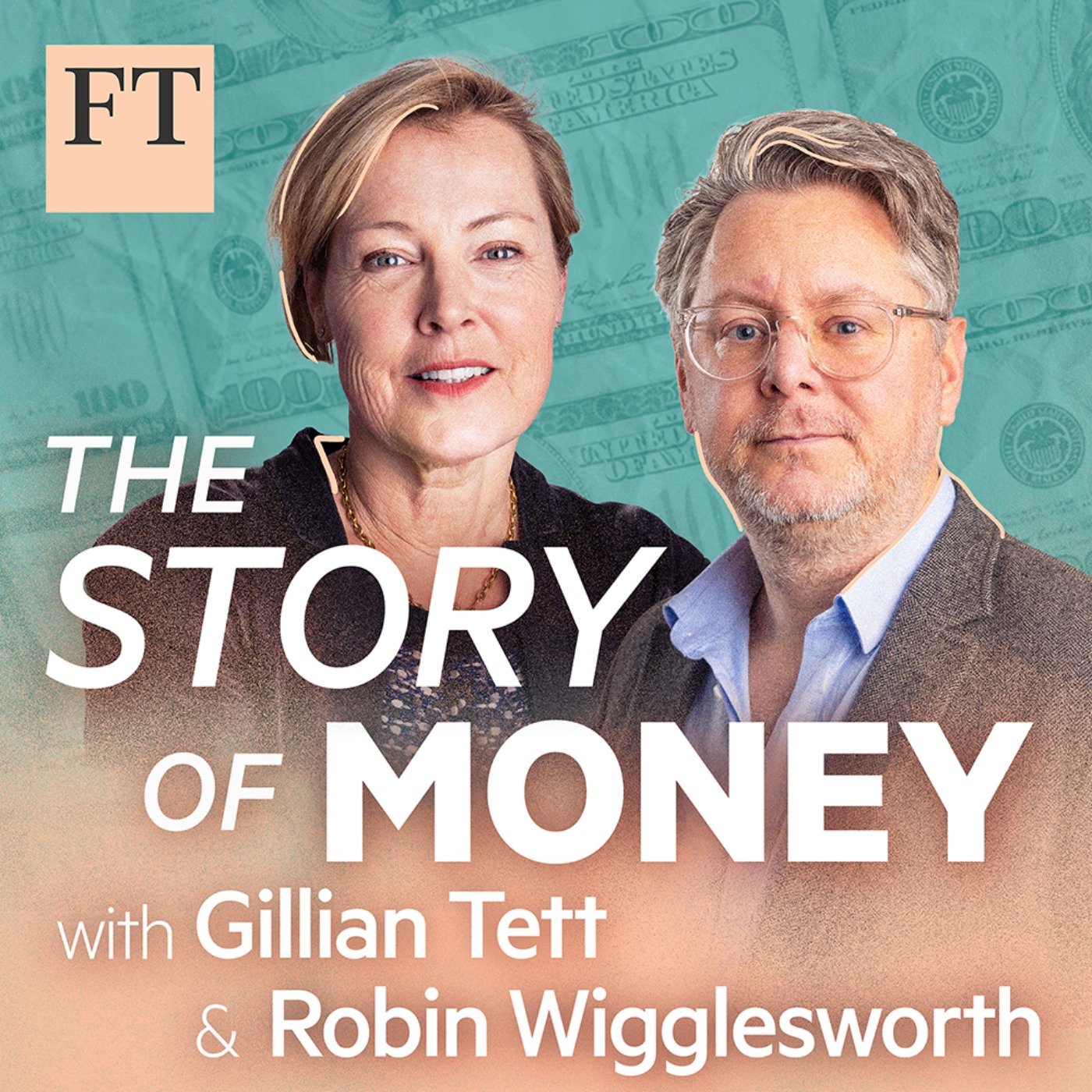
Gillian Tett (Financial Times journalist; hosts “The Story of Money”); Robin Wigglesworth (FT journalist; author of A Fabulous Debt).
Key claims
Bonds are “tradable loans” whose prices move inversely with yield. Venice’s 12th-century government created tradable war-loan receipts to finance conflict with the Byzantine Empire while navigating Catholic usury rules. After failure and plague, Venice reformed governance and maintained bond payments, turning debt claims into valuable, marketable assets.
Notable examples
Venice’s Rialto market (with moneylenders’ benches); Doge Vitale II Michiel; Emperor Manuel I Komnenos’ 1171 arrest of Venetians; the 1172 Venetian defeat and plague; the later 11-person camera/proto-parliament; “Legato Pecunie” creditor-priority law; later spread to other Italian cities and exchange models like Amsterdam.
Written by AI. May contain mistakes.
Chapters
0:27
Introduction to the Birth of the Bond Market
Explore the historical origins and significance of bonds.
“We're going to tackle the birth of the bond market.”
1:16
The Environment of Medieval Venice
Understand the unique conditions that led to the rise of Venice.
“And today we're going to be talking about a topic that matters to just about every single investor and which I'm very interested in, but actually Robin is even more excited about.”
2:16
From Swamp to City: Venice's Transformation
Learn how Venice was built by resilient refugees and merchants.
“We're going to tackle the birth of the bond market.”
4:05
Trade Dynamics in Venice
Dive into how Venice thrived on trade between cultures.
“In fact, I was there just recently at a conference.”
5:38
The Role of the Rialto Market
Discover the importance of the Rialto Market in Venice's economy.
“But quite often, if you have nothing else to live off, like oil or gas or gold or silver or iron, you have to live off your wits.”
8:00
The Cautious Leadership of Doge Vitaly II McHale
Examine the leadership of Doge Vitaly during a turbulent time.
“That's how the word bank, they were banky.”
10:13
Conflict with Emperor Manuel I Comnenos
Learn about the conflict between Venice and the Byzantine Empire.
“Well, Emperor Manny, we can call him if it makes it easier.”
12:05
The Venetian Response to Crisis
Explore how Venice handled the crisis initiated by the emperor.
“He sent out secret orders to all the heads of police across the Byzantine Empire to arrest every single Venetian in the entire empire.”
14:01
The Doge's Dilemma: War and Bonds
Discover how the Doge of Venice navigates political turmoil and financial innovation to fund a war.
“No, so, and this is why I said, I think Doge Vitale was a cautious man.”
25:16
Aftermath of the War: Bonds and Political Reform
Explore the consequences of the Doge's downfall and the evolution of Venice's governance and finance.
“And we have this really unfortunate turn of events.”
Show all 17 chapters
28:00
Venetian Bonds: A Financial Revolution
Learn how Venice's bond market transformed finance and governance.
“That suddenly you can buy something that pays you a 5 % income stream.”
30:55
The Birth of the Bond Market
Discover how the Rialto became the world's first bond market.
“as a citizen have a right to demand that kind of accountability.”
32:48
From War to Innovation: Bonds Through Time
Explore how wars historically fueled the growth of the bond market.
“And in many ways, that Rialto market, that was the world's first bond market, with its columns, became kind of almost the mental model for an exchange where you traded financial securities.”
35:30
Bonds as Tools of Accountability
Understand how bonds can exert democratic control over governments.
“I mean, people talk about bond market vigilantes.”
41:34
Tracing the Origins of Modern Bonds
Learn about the historical significance of bonds in capitalism's evolution.
“So just last question is, given that you are the Bond man, given that Bond is your middle name, not the 007 sort, but the financial sort, have you managed to track down one of those original prestiti?”
42:00
The Origins of the Bond Market
Explore the historical significance of bonds in the evolution of modern finance.
“I mean, as long as they have not asked me to play the new bond either.”
44:17
The Origins of the Bond Market
Explore the historical significance of bonds in the evolution of modern finance.

Ask about this episode
Get the gist, explore an idea or ask about something said.
 Claude
On The Story of Money, what are the key points of this episode?
Searching your listeningTranscript
Automatic transcript. May contain errors.
0:00In 1898, John Nuveen had a vision to underwrite municipal bonds that would propel American infrastructure into the 20th century. More than 125 years later, that vision lives on. Today, Nuveen has grown into a leading global asset manager with expertise spanning public and private markets, still investing with a future in mind. Nuveen. Invest like the future is watching. Visit nuveen.com slash future to learn more. Investing involves risk. Principal loss is possible. We're going to tackle the birth of the bond market. It was actually born in medieval Italy, in Venice. Everything that was going on in Venice at the time must have been incredibly stressful.
0:40He makes a dash for it, but is caught on the streets of Venice and stabbed to death. Wow. Yeah. There's no respect for financial innovators, is there, Gillian? But they quickly regret how they treated the doge. There's like a lot of soul searching in the city. A bit late for that.
1:00Hello and welcome to a live recording with an audience of the story of money. the FT's financial history show with me, Gillian Tett. And me, Robin Wigglesworth. We are here with you now in New York City. And thank you all for being here today. And today we're going to be talking about a topic that matters to just about every single investor and which I'm very interested in, but actually Robin is even more excited about. And that topic is the birth of the bond. Yes, I have never seen a fixed income instrument that I didn't find a little bit fascinating and mostly very, very interesting. Gillian sometimes teases me for being a massive Bond dork.
1:41Exactly. In fact, you are the Bond man, not quite 007, but a different kind of Bond. But it's great to be here. And we're doing this because we're celebrating a book that Robin's written precisely because he is so obsessed with Bonds called A Fabulous Debt. It's out this month. Do go out and buy it and read it. And it's all about the history of bonds and why they are indeed the hidden force behind some of humanity's greatest achievements and greatest financial disasters. Yes, and it often makes sense to begin at the beginning. So that's what we're going to do. We're going to tackle the birth of the bond market.
2:21And it wasn't invented by a bunch of financial engineering wonks at a big bank. It was actually born in medieval Italy, in Venice, precisely. And it was really, it was birthed by calamity, by a military disaster, the plague and murder. So in short, it's a pretty sexy story. All Bond stories are sexy, Julian. Of course, yes, particularly if you are the Bond man. But right now, it's an incredibly good moment to be talking about Bonds this autumn, because the bond markets are indeed going pretty nuts. Lots of investors around the world are pretty concerned about it or trying to work out what's going on.
3:01But to talk about this, we have to go back to the basics and say, ask the one question that most investors are afraid to ask, what the heck exactly is a bond? Yes. No, I mean, the bond market, the bond comes in more flavors than even Baskin-Robbins has. But broadly speaking, it's a tradable loan. It's a loan with a fixed interest rate that you can buy and sell just like a stock essentially and that's why you know it'll pay a fixed interest rate the coupon but the price going up and down means that the interest rate you basically get the yield can actually differ so if the price of it goes up the yield goes down and if the price goes down the yield goes up and that's why you know a lot of people sometimes get a little bit confused and maybe shy away from bonds it seems more complex and difficult but really it's it's it's fairly straightforward if you think of it as a tradable loan essentially Right.
3:51Well, that's why in the FT, we always keep saying that the yield went up because the price went down or vice versa. But listen, let's go about a basics again and say, where did bonds start and why are we suddenly talking about Venice? Yes. Have you been there, Gillian? Yeah, yeah. I've been to Venice quite a bit. In fact, I was there just recently at a conference. It's a beautiful place. It's the only place where you can land in the airport and then get straight on a water taxi to go to your hotel or anything else. It's wonderful. Okay, yeah, I haven't been there, but I took the train there, and I want to take one of those water taxis now straight from the airport.
4:25That sounds amazing. Well, it is. I mean, it's a beautiful place, as we both know. Maybe some people here also know. It's also incredibly special because Venice was not founded by some royal or some distant duke that needed to build a castle or something like that. It was founded by refugees, refugees fleeing the vandals. So these were the Visigoths of Germany that periodically would raid into northern Italy. And they fled to Venice, or that area that kind of the armpit of that gulf, because it was swampy and... No one else wanted to live there. Nobody else wanted to live there. It had nothing of value whatsoever.
5:03It had no good land. It was, you know, it had salt. And that's about it. So they built the city by hammering stilts into the seabed, essentially. Which you can actually see when you take your water taxi from the airport. You can see these original wooden logs. And it's just amazing to think about how a grand bunch of people did that in the Middle Ages. But tell us really what then drove Venice? Well, they had no natural resources. It had no serfs. It was a republic in a time when Europe was broadly feudal and despotic. And they had to live off something. And this, I think, is fascinating. You see it many times in history.
5:39But quite often, if you have nothing else to live off, like oil or gas or gold or silver or iron, you have to live off your wits. Just as Singapore. Yeah, exactly. Singapore is a great example of that. Necessity is a mother of invention, all that. So the Venetians were brilliant merchants. They were entrepreneurs in the original French sense of they would be intermediaries between everything. And they would trade with absolutely everybody, which drove everybody insane as well, because they were technically ruled by Constantinople, the capital of the Byzantine Empire at the point, because basically Charles the Great, Charlemagne, had not managed to conquer Venice.
6:17So that has stayed part of what was kind of the Byzantine Empire. But they were a Catholic country. They were part of Italy. So they also owed some fealty to the Pope in Rome. But they basically ignored everybody, driving everybody mad because they would trade with everybody. They traded with Christians. They would trade with Muslims. They once even sold war material to Egypt in the 800s, driving everybody. I mean, the Pope excommunicated them after that. But they use it to smuggle the body or allegedly the body of St. Mark of the Gospels in a barrel of pork. Wow. Out of Egypt and to Venice, which supposedly still sits.
6:56So we don't really know if it's the real body. So you have basically a bunch of freewheeling, independently minded hustlers living in what used to be a swamp with absolutely no natural resources. And yet out of that, they decide to build a city, which is now such a tourist destination. and in that they have the amazing Rialto. Tell us what that was and why it matters so much to our story. Well, Rialto, I mean, that was famous for centuries. It was basically the market of Venice and it's not just like any other market. It was so famous even centuries later, Shakespeare name-checked it. And when are we exactly talking about?
7:32What period? So Rialto probably was in some form or way around ever since the city was founded. but by the 1100s when we care about it's a it's a colonnaded courtyard it's vast it has a church at one end there's a famous clock there that is infamously inaccurate it's still it wasn't there in the 1100s but it came soon afterwards there's an inscription on the church that says tells the merchants that work in this space to treat people fairly uh there were benches that the the city would rent out to the money lenders. That's how the word bank, they were banky. Banker, the benches that people sat on.
8:11Yeah, and they were rented out to people to do their business. So the city made a lot of money from commerce. And because Venice was kind of perfectly situated between East and West and controlled so much trade in the Mediterranean, you'd get Levantine spices, silks, you'd have everything. I mean, Marco Polo... It was a key part of the Silk Road, wasn't it? That's where Marco Polo came from. Yeah. But tell us. So a thousand years ago. So we're talking about almost a thousand years ago, which is amazing to think about. There was a man in there, wasn't there, called Doge Vitaly II McHale. I got that name right.
8:42I've been practicing. Excellent. All right. Thank you. And he's very important to our story. What kind of person was he? Well, we don't really know, but we can from his actions judge that he was a very cautious person. So the Doge was at that time elected by the people. That was pretty radical. He was hemmed in. Doge just means basically leader. And we should stress, by the way, it's a different type of doge from Elon Musk's doge that's been smashing out government in Washington. So this is the original Venetian doge from a thousand years ago. It's not even the dogecoin. Right. The tradable cryptocurrency.
9:18No, so he was, you know, we see there are some paintings of him. He's got a goatee or a full beard. He's got quite small pursed lips. Maybe this is me overreading, but he looks very stressed in every painting I've seen of him. Right. And controlling Venice and everything that was going on in Venice at the time must have been incredibly stressful because it was such a unique city at that juncture of history. It had so many different competing interests. It was ruled by merchants. They kind of controlled it and hemmed in the doge. It was elected, directed by the people. But it seems, you know, broadly speaking, he was a wise, a very cautious ruler at the time.
9:55So he was running this weird city of hustlers in a swamp a thousand years ago called Venice, but it was part of the Byzantine Empire as well. And as far as I can tell, that was run by someone called Emperor Manuel I, Komenos, another difficult name. Tell us about that emperor. Well, Emperor Manny, we can call him if it makes it easier. Okay. He was not a cautious man. He had grand ambitions. so the byzantines thought of themselves as the the successors of the roman empire like they were like the real romans essentially they call themselves romans and he wanted to rebuild the roman empire so at one point uh he tried and wanted to invade southern italy to take over that part and venice which technically in theory he ruled refused to help them and he was mightily pissed off by this uh and venice actually had in the heart of constantinople a venetian quarter that was kind of like a tax-free trading entrepot in the heart of constantinople was granted in a few years earlier something called a golden ball which was kind of a proclamation and and this really annoyed him even more that like in in his own capital with this festering sore of annoying venetians uppity merchants that didn't respect the emperor's rule so he started granting some of venice's italian rivals like genoa and pisa their own tax-free uh trading entreposed colonies quarters in constantinople and started favoring them and that was when things really started to head towards a rupture and we don't know exactly what happened but we do know that the genoese quarter was raised were attacked wow and and people were murdered and comnenos or mani uh to friends like us he blamed the venetians for this we don't know whether the venetians actually did it could very be true it could also be that emperor manuel basically attacked it himself and use it as a ruse to do what he wanted to do right so it sounds a bit like game of thrones or something like that but you've so you've got the emperor who's trying to exert his authority over venice you've got these very anarchic free-wheeling independent-minded venetians what does the doge the cautious boring man in those portraits do next well he sends an emissary to the the emperor saying oh we don't know what happened here but you know we want to investigate find out and and comnenos says yes i'm not going to act rashly it's okay we're going to investigate But he lays a secret plan.
12:39And this plan is kind of wild. So I think it's March 12th, 1171. He sent out secret orders to all the heads of police across the Byzantine Empire to arrest every single Venetian in the entire empire. What, all of them? All of them. Tens of thousands. What, in the middle of the swamp? Yes, but not in Venice, but all the ones living in basically modern-day Turkey, Constantinople and some of the lands around that that he controlled directly. Incredibly, I mean, amazing OPSEC, this did not leak out. And he was able to instigate this incredible raid where they arrested, I think, over 20 ,000 Venetians, women, children, merchants, ships, shops, everything, put them all in prison.
13:24In fact, they didn't have enough place in the prisons. I was going to say, where did they put them? Yeah, I mean, they had to requisition monasteries to fit them all in. yeah there's overflow they had to build internment camps uh and this was you know this was his big move against venice he was no longer going to tolerate manny was no longer going to tolerate these uppity merchants so how did there was you know you've got half the population in internment camps or the the 12th century couldn't have internment camps what are the doge due next and how on earth is this going to be related to bomb markets yes well we're getting there uh promise The bomb is never far from my mind.
13:57Again, portfolio discussions are never this exciting. But yes, go on. No, so, and this is why I said, I think Doge Vitale was a cautious man. Because again, his instinct is to prevaricate. When word gets out and information travels slowly, when it finally reaches Venice, they just can't believe it. It just sounds so wild that this can't be true. So he takes all his senior councillors, the heads of all the big merchant families, royals, but generally the richest people in Venice were the royals, to consult and they decide, okay, caution, this can't be true. Let's send another emissary to Constantinople, find out what's really going on.
14:35But after they've decided this, a ship of people fleeing that managed escape the crackdown in Constantinople arrives in Venice at the worst possible time, at least for the Doge, spreading these stories of how these atrocities and suddenly the doge is hemmed in he can look because it's a republic people are infuriated they want to take constantinople down don't forget venice is an incredibly rich city at this point and quite powerful and they want to take constantinople down so they declare war yes he has to go to war essentially against his own basically rule yeah he does not want to do it uh but he does so what does that mean in practice i mean how do they actually get the means to go to war and where do they get the money from yes this is where bonds are coming in this is where the bond finally comes in um so then this was very rich as a city but this city state itself the the government was not it was kind of hemmed in the even the dojo not necessarily like a wealthy man he came from the one of the wealthy merchant families um so what they periodically did there was this very low you know income they they taxed these merchants and the rialto and a few other things um but for big uh costs like a war against big apex they had to borrow money and they used to go down to the bank the men with their banky and the rialto borrow money uh typically from some of the big royal families uh a few decades earlier they'd hit the royal some of the merchant families up for i think 20 30 ounces of silver for another little minor conflict the scale of the money they needed that was so great that they needed to do something else so he divided all of venice into six provinces they assessed the wealth of everybody and taxed them proportionally a one-off war tax but to make it a little bit more palatable to everybody they said well we're just gonna borrow the money right you have no choice but you have to we'll pay you five percent a year until we basically kind of kick constantinople's ass and we obviously make money back and can pay you back and to soften the blow as well we'll make the receipts tradable and presumably that only happened because it was a democratic city a republic and so they couldn't just order people, they had to persuade them and tempting them by the idea of it being a loan with some interest payments and things.
17:06Well, this first loan was involuntary, but it was clearly done with the blessing of the big royal founders who really were ahead. It was a proportional tax, so the poorest citizens were not forced to make this loan. It was the wealthy ones. And since they acquiesced, it was semi-voluntary, semi-involuntary. But right then, it was basically a forced war tax. Right. And the critical point is, and the reason why we're going to start talking about bombs is because those loans didn't just pay interest, they could also be traded. Exactly. So they knew that some people might need to kind of raise cash.
17:43And so they made the receipts of the loans tradable. There was a camera, an office of the Rialto where if you sold your receipt to somebody else, the new owner could be that would get the right to that 5 % income stream, they could basically be registered as a new owner. And this was incredibly valuable. So this Prestiti alone is a plural of Prestito. That's your good Latin or Italian. Yes, I know. And it became quite a good thing. And we don't know how much they raised, but they were able to raise a huge sum, enough to build 120 warships, galleys. So the Arsenale, which is Venice's famed shipyard.
18:22It's still a great tourist destination. I've seen it several times. Yeah, I did not get to go there, actually. It's where actually a lot of conferences happen these days, financial conferences. So if you're listening and you're a banker and you want to have a historic place to talk about bonds, go to the Arsenale. Oh, fascinating. You know, it was one of Europe's biggest industrial clusters for centuries. At this point, it hadn't quite hit its peak. It could still churn out war galleys and ships at an incredible speed. But the critical thing about this, as you say, you know, there had been practice around lending for many, not just decades, but centuries by then, by the 12th century.
18:55But what made these instruments, prestiti, unusual was that you could trade them, which is the definition in many ways of a bond. But there was also a religious reason why they wanted to introduce that novel twist about tradability, wasn't there? What was that? Well, the Catholic Church still took a very strict view on interest or usury. So it wasn't maybe quite as strict as Islam does, but it definitely frowned on interest in general and lending. And certainly you wanted to do something that would not anger the Catholic Church. By then it had morphed into a kind of that usury was exceptionally high interest.
19:34So it's kind of like, where do you interpret that? How do you cut it off? But the fact that it was permanent, it was a perpetual loan that would basically continue to go on until it was repaid. The fact that it was tradable made it palatable to the church as well. So in modern day financial parlance, it was a bit of regulatory arbitrage. They were taking the left of the law, but getting around the spirit. Yes, exactly. And it's the fact that, you know, it was like buying an income stream. So anyone who says, I don't want to touch derivatives because that's regulatory arbitrage, by going by a nice bond, doesn't know that in fact, bonds started as a form of regulatory arbitrage too.
20:12Yeah, well, I mean, to paraphrase the Wu-Tang Clan, as I like to do, regulatory arbitrage rules everything around us. Well, it drives a lot of financial innovation. But so what we have is a situation where we've got the doge, that seemingly cautious man who's forced to be radical, who's living in the swamp, goes to his citizens, raises all this money to fight a war with this extraordinary innovation called the bond that you love so much. But I guess the key question is, does his military campaign actually work? What happens to those 120 warships that go to war with Byzantine? It does not go well.
20:51Oh, dear. It does not go well whatsoever. So they have this incredible fleet, an armada before the Spanish had it. I don't know what an armada is in Italian, actually. But they start sailing on some of the Greek islands, which is called the outskirts of the Byzantine Empire. They wage war. They do incredibly well. And the desperate governor won one of these Greek islands. Kios. Kios. He offers desperate and please stop bombing and attacking us. I'll go to the emperor and plead your case to get the Venetians freed. Once again, the doge is so cautious that even though he has the upper hand then and could sail straight to Constantinople, he says, yes, let's give peace a chance.
21:35Ouch. So he does not have the killer instinct. No, no. Unusually for Europe at that age where, you know, caution was generally not the ruling trait that came to the fore. So he takes his fleet to winter and wait. Emissaries go back and forth. Komnenos realises that playing for time is the smart thing. So what happens then? Well, he sees emissaries. He doesn't see emissaries. He goes back and forth. But then the fleet is hit by the plague. Oh, my goodness. Wow. Was that the Black Death or was that before that? No, before that. This is some sort of pestilence. We don't know. It must have been quite horrific.
22:15They kept and also they thought if we just go to a different island. So they started island hopping, trying to escape the plague. Lo and behold, they brought it with them wherever they went. Right. Definition of an unwelcome visitor. Yes, exactly. So eventually the Doge, who's part of this war fleet, what's left of it? they have to limp back to Venice and admit defeat. So that's what, 1172, just looking at my notes? Yes, 1172. And Comnenos, you might be unsurprised to hear that he was a gloating type. He sends a letter to the Venetian doge saying, oh my God, you scoundrel, you nouveau riche, uppity little piece of trash.
22:57How dare you wage war on the Romans themselves? But yes, he has to go back and face the music basically. And then the democratic crowd begins to flex their muscles, don't they? Yes. So not only had he, you know, borrowed or forcibly borrowed money from all the wealthy families and some of the middle class families of Venice, and then promptly lost the entire fleet, blew in his hand, he brought the plague back to Venice. So people were... Doubly furious. They were pretty unhappy. Let's say his approval ratings were very low at that point. Right. But he has to have an open meeting where everybody can come in and complain and talk to him.
23:39He's there with all his advisors and people start getting more and more irate. You know how crowds can be. And this is, I see from my notes, May the 27th, 1172. Yes, exactly. You've got this mob coming together or this town hall, if you like, with a doge trying to talk to the citizens, explain why the hell everything has gone wrong, including those bonds. And then what happens? Well, it's kind of a listening. He just has to sit there and listen to them complain. But as happens with crowds, they whip each other up. The one person is angry. The next person becomes even more angry. Eventually, the Doge's advisors start tiptoeing towards the exits.
24:13Ouch. And he suddenly says, oh, my God, I'm alone here. He makes a dash for it, but he's caught on the streets of Venice and stabbed to death. Wow. OK. So this is not a... There's no respect for financial animators, is there, Gillian? No, I was going to say, this is not a great start to the bond market. No. Right. OK. Well, we're going to come back after the break to see what happens next in this extraordinary story about what really started the bond market. And it was not an algorithm.
25:00solutions that are shaping tomorrow's economy, all while aiming to deliver the resilience and returns that portfolios seek today. Nuveen. Invest like the future is watching. Visit nuveen.com slash future to learn more. Investing involves risk. Principal loss is possible.
25:22Okay, so Robin, we're back now. And we have this really unfortunate turn of events. It's not the kind of thing you get taught in any normal MBA course or economic history class. But we've got the situation where the Doge, the former ruler of Venice, is dead. However, he has created this remarkable thing called the bond. We've just had a mob essentially exercising their mob rule, ugly forces to murder the Doge. And we've also got a situation where Venice itself is in a terrible state because it suddenly had essentially plague sweep through the city. It's lost its fleet to the Byzantine Empire. And also, of course, people are wondering what on earth is going to happen to all of those loans, all those bonds.
26:11So, Robin, what happens next? Is this the end of the financial innovation wave? No, and it's not even the end of Venice. And this is why I think it's such a remarkable city and a remarkable people. They also shut out from all the Byzantine ports so you know commercially also is a disaster for them uh but they they quickly regret how they treated the doge there's like a lot of soul searching in the city yeah a bit late for port michelle and uh doge vitale but but it is pretty remarkable that they then regret in fact they execute the man who hit the the telling blow as it were uh they raise his house as a symbolic it kind of oh wow we really screwed up that one scapegoating yeah exactly he was the scapegoat but they also realized oh my god mob rule is probably not great so they actually set up kind of a proto-parliament and i think it's probably engineered by the wealthy families but something that basically they will elect this little group a camera basically like a group of people and they will elect the doge so it's kind of almost like a proto-parliament so your political reform is a bit like introducing athenian democracy into venice um and then what happens once that's installed i mean they end up with what an 11 person commission to select future rulers um but then what happens well they can't pay back that bond that prestity uh all that debt yeah all that debt is now unpayable so they they set up like um a procurator position basically like a finance minister that starts sending like uh sharing some financial detail and you mean bond market transparency or fiscal transparency well suddenly they owed all the citizens a ton of money and again annoyingly we don't know how much but it must be quite a bit uh so they have to show that we are going to pay this we can at least pay that five percent so they they tax the rialto stalls they tax people a little bit more but then they pay that five percent and people and this is what i think is so delightful that this kind of almost this annoying relic of venice's lowest point becomes a testament to their commercial genius that that prestige is transformed into something that's actually a valuable asset for them.
28:20That suddenly you can buy something that pays you a 5 % income stream. And that is super valuable. You can endow a monastery. You can add it to a dowry, for example. You can use those little receipts as collateral for loans. And this was quite different, wasn't it, from what was happening elsewhere in Europe, where kings were just either seizing money or grabbing loans or forcing people to give them loans and that was it there was no sense of actually being able to trade that loan or doing anything creative with it or even dare I said incorporate as part of a financial planning scheme for a household yeah exactly no it's that's the kind of the transformational bit that typically most people are borrowing it was kings or the royal families wasn't a country the country who was the king or the royal family at the time, but they would change and they would occasionally chop their heads off their lenders.
29:12In Venice, you were lending to the government itself and people quite liked that. It was quite sought after the right to be able to buy these loans, in fact. And you have to get approval of your non-Venetian, you have to get approval from the grand body, that 11-body camera. And it became a valuable bit that actually Venice used to supercharge its economic recovery. right it's obviously fascinating because if you if you were a financial historian you'd say at this point well actually what's really going on is that debt meets democracy yeah and that suddenly the people who are borrowing that money have to answer to citizens rather than just bully them and therefore they're forced to have some financial transparency which of course nowadays is very obvious but in those days was really quite radical wasn't it well this is and this is one of the things I did not expect when I started writing A Fabulous Debt and I was just delighted to find because you always you always want the hero of your book and in my book it's the bond to kind of be a hero and you want to see the best possible thing but I genuinely feel after having done oh so much research that bonds have actually helped usher in transparency and accountability in in the world or you could say the creation of bonds reflected rising levels of democracy and transparency and citizen power, but it then reinforced it once it came in.
30:34Yeah, because suddenly Venice, you know, its citizens were also its creditors. They had a vested interest in the good governance of its city. They kept people, they kept the doge and this camera, they kept them accountable. And that helped the government be lean. It helped the government run well because they knew they were accountable to citizens, not just as voters, but as creditors. And it's a really interesting message for anyone who goes out and buys bonds in their portfolio today, which, by the way, is just for anybody who has a pension or any type of investment or 401k, that actually bonds are part of a democratic system, sovereign bonds are, and you as a citizen have a right to demand that kind of accountability.
31:13But in those days, we're talking about the 12th century and then the 13th century when it carried on into the next century. How did that sort of trading system actually work? I mean, was it due to peoples and households and the everyday fabric of Venetian life? Well, it transformed it. So the Rialto became the world's first bond market. We don't have data on any numbers on some of the first, let's say, 50 or 100 years of trading. But we knew it was quite vibrant. And from around the 1200s and 1300s, financial historians have done God's work in piecing together. You know, there was around 10 % of the market would turn over all the year.
31:52So Venice would pay down its debts gradually. And then whenever there was a new war, and there was always a new war in Europe around there, and they would fight constantly between the Italian city-states. You'd use mostly German mercenaries led by a condottieri, the captain. And it was quite expensive stuff. And then they'd just sell more prostiti. and it would become a homogenous debt as well so they would have various debts but it became this homogenous pool of debt that people could trade and buy and occasionally they might miss an interest payment but then you could trade claims in almost bet make a prediction like a bet of when then we start repaying the the coupons so it became vibrant it became quite sophisticated and it became the model, frankly, for all the other Italian cities' sakes.
32:38They all copied and pasted. They saw how this was transforming Venice. So, Florence, Venice, Milan, Peacel, Genoa, they all copied it. And it started spreading across Europe as well. And in many ways, that Rialto market, that was the world's first bond market, with its columns, became kind of almost the mental model for an exchange where you traded financial securities. When the first exchanges cropped up in Amsterdam specifically, it looks a lot like the Rialto. That's really fascinating. Of course, the tragic element for this is that perennial truth that war tends to also breed a lot of innovation and creativity, doesn't it?
33:17Yeah. No, it's the mother and father of all inventioners. So, you fast forward a few centuries, bonds are spreading across the entire continent of Europe. People are looking at that. And out of that starts to grow the modern fixed income market that we all know. When you look at where we are today and look back to these very strange origins that I think very few people actually know and understand the degree to which bonds did emerge out of one, democracy, two, desperation, and three, a war. What do you think it tells us about how we should look at bonds right now well i think the the view of debt is something bad on the shoulder german guilt it's it's very embedded you know all the major world religions have some injunctions against interest or usury uh finance generally speaking is a day two word and yes quite often there are mankind at our worst moments is when we make big financial leap.
34:18So I understand that. But what Doge Michel, unfortunately, did not live to see that other people that follow him, other great people that I have in my book, like Alexander Hamilton, Sigmund Warburg, many other people realized that bonds were a tool. They're actually incredibly powerful tool. It's like a financial technology that allows us to take individually small streams of money and together make a gushing river. And as mankind became more and more advanced and our projects became bigger and bigger. It was an essential component to doing these things and also helped bind us together. They again gave us a vested interest.
34:56So this is something Nathan Meyer Rothschild did in the UK in the 19th century. He very deliberately said when other European countries wanted to borrow in London, wanted to borrow from England, that was the banker of the world, he said, well, English investors expect some accountability. They expect some democracy, some transparency. So if you want to borrow from British bondholders, investors, you have to ideally do it in sterling, but we can figure that out. But you have to do these things. So you see it becoming a force actually for good, despite often being born out of misery. But you see, that's really interesting, because in many ways, you know, today, bond markets are one of the few tools out there in the political economy that can actually be used by citizens and others to exert power and control over governments.
35:46I mean, people talk about bond market vigilantes. You had that famous James Carville quote that when I come back, I want to be reincarnated as a bond market because you get to terrify everyone. Yeah. My favorite quote, obviously. Exactly. Well, it's possible as we look at a country like America today, where the debt's now hitting$40 trillion and keeps rising, and people are going to say, is anything ever going to stop it? The one thing that will stop it will be bond investors. I am more skeptical that, for example, we are now obviously talking at a time where the bond market is having one of its periodic pukes, to put you as a technical term for it.
36:21I do think that could put pressure. I think it was fascinating to see after Trump's so-called liberation date, the big tariff he unveiled in April 2025, the stock market. People forget this, but people will talk about how Trump cares so much about the stock market and the stock market will be like the stock market vigilantes. Well, he started first like slapping tariffs on Mexican Canada and then the rest of the world. The stock market dropped almost 20 percent. And he was very much clear. Stay the course. I don't care. The bond market, the treasury market had two or three queasy days. And he was like, time out, stop, pause instantly.
36:57Literally, the evening before he put the pause, he was telling some donors, no, no, we're going to stay the course. Well, the word go around the street back then during the Liberation Day saga was that there was a 4.5 % put, which basically meant that if bond yields got above 4.5%, the idea was that Scott Besson, the US Treasury Secretary, would force President Trump or beg him to basically wind back those tariffs, which kind of seems to be what happened. Yeah. Except, of course, now 10-year bond yields are heading around 5%. Yes, and probably most likely heading higher. And I think how much pressure that can put on policy, the body politic, is going to be interesting.
37:38In Venice as well, we saw this periodically. Venice would occasionally, like, if the bond is a technology that allows you to borrow more money more efficiently, well, as we can probably guess, then we abuse that tool quite often, as did Venice as well. And periodically, we would have to restructure its debts, and people have to take losses. and typically that would come with some sort of accountability mechanism or political pressure that, okay, we'll restructure and we'll accept less money, but then the government has to do X or Y. For example, there was one in something called the Legato Pecunie where the Venetian citizens basically forced the government to pass a law that said that you can have, I think, sort of a thousand ducats to pay for the city's administration.
38:23then everything beyond that you have to pay creditors and only then can you pay military or the navy so creditors rank themselves after the very very basic running of the government creditors rank more highly so again that's a question of creating in financial jargon the first waterfall structure whereby you create a queue of people who you pay out if the proverbial hits a fan. But again, that underscores the fact that citizens' rights were being put in prime place rather than just chucked to the waste bin or into the waste bin behind everyone else. Yeah. And I do worry, here in the US, I don't think it's that, let's say, bond, when yields are going up, as we know, yields and prices move and burst.
39:06It means that bond prices are going down. I think the financial hit to people directly is not going to be clear until people see the stock market. When bond yields go so high that it affects the stock market, that's when you might see some Americans start hurting. Also, the cost of 30-year mortgage. Affordability is obviously a huge issue. And the cost of the Treasury market, for me, it represents the cost of money to the global economy. Because annoyingly, as it is for me, even when I live in Norway, when I borrow money from my bank, when I get a mortgage, I'm basically indirectly competing with the U.S.
39:37Treasury. Well, as I say, today, the U.S. Treasury's market is the dominant force in global financial markets in a country like UK, they joke that UK government bond markets is tethered to the tail of a drunken dragon. The drunken dragon being treasuries and the person in charge of America. So there you go. Yes, no, that's quite cutting. But I'm curious, a couple of questions I've got still about where we are today and how it links back to those days in Venice, 12th century Venice. I mean, war continues to be something that drives up government debt levels, doesn't it? and often drives up, you know, an issuance of bonds.
40:14I mean, we saw that with, you know, the First World War in America. There's a chapter in your book about that as well. But, you know, it's a fair bet that as we have military conflicts tragically erupting all over the world, once again, that's going to be dovetailing with bond market issuance. Yeah, I mean, the bond has been, I mean, it has primarily for a long time, for centuries, was used as a wartime measure. It's like you can't tax enough, you want to borrow, you're going to fight a big war, and then you hopefully win and you pay it back afterwards. That's what Britain did many times. And the US historically has now.
40:44It's just a big blob of borrowing that constantly happens, that the budget deficit was already big and it's going to become bigger because, for example, the recent war in Iran. It also will because it is pushing up inflation. Oil and energy prices are higher. Gas prices are higher. That hurts affordability, but it also flows directly into the cost of a 13 mortgage here. So maybe that will eventually put pressure. It's clearly let the US government now as the venison government is sensitive to this the cost of borrowing because of what it represents uh whether it's enough to the point where it will change um force a a change of direction i i'm still skeptical but uh venice was at least instructive in like it does get to the point you know it's if something's unsustainable it will eventually stop but it might take longer than we think.
41:34Absolutely. So just last question is, given that you are the Bond man, given that Bond is your middle name, not the 007 sort, but the financial sort, have you managed to track down one of those original prestiti? Do you have any framed at home in your bathroom or anything like that or got a picture of the original Doge who died because of his attempts to launch the war you know, the war effort? No. I mean, as long as they have not asked me to play the new bond either. I'm very hurt. So guys, if you know Barbara Broccoli, isn't it? If you want to give me a call, then you know, I'm your man. No, I have not.
42:14A lot of those bonds don't really exist. So we know a lot of the history, historians, lots of Italian historians, financial historians have done incredible work in piecing stuff together. It's such a fascinating kind of tale from almost the crucible of what modern capitalism is born around this time in Italy with banks and bonds. Right. But no, I've not found any sort of image or some of the coupons. So some of the loan offices ledges from the Rialto, it was like when you had, it was not a bearer bond. It was a registered bond. You have to register the new owners when one was bought and sold. We have that.
42:51And I've seen pictures of that, but that's only from, I think, the 1300s onwards. My most memorable trick to Venice was actually during COVID when the Italians were presidents of the G20 and they pulled me into chair of finance ministers meeting actually in the Arsenale. And amongst other things, they were talking a lot about debt issued to cope with pandemic strains. And I now realized that we missed a trick. We should have actually started off by talking about the Prestiti and how that was the original foundation stone, if you like, for the modern day bomb market, not just in Italy and Europe, but around the world.
43:28So thank you so much, Robin. Really fascinating discussion. And if you enjoyed it, and I hope you did, please remember to one, subscribe to the show. Two, tell everyone else about it and urge them to listen to it as well. and free, do please leave us a review, hopefully with five stars and a thumbs up, but whatever you feel like. And it really helps us to spread the word. So I'm Gillian Tett. And I'm Robin Wigglesworth. And remember, you can watch or listen to this, even read it if you want the transcript, every single week. So join us on the story of money next time.
44:16The future of fixed income investing will continue to blur the lines between public and private markets. Nuveen's credit platform was built to navigate this shifting landscape, channeling capital toward the businesses, infrastructure and energy solutions that are shaping tomorrow's economy, all while aiming to deliver the resilience and returns that portfolios seek today. Nuveen. Invest like the future is watching. Visit nuveen.com slash future to learn more. Investing involves risk. Principal loss is possible.
From the publisher
The US Treasury market - the world's largest government bond market - is worth about $32tn today, making it the largest pile of debt accumulated in history. But its roots lie in medieval Venice, a bloody military disaster and a leader who was forced to raise a loan to fund a war against the Byzantine Empire.
What followed was a catastrophe involving pestilence, defeat and the brutal murder of the Doge, or leader, himself on the streets of Venice. But out of this crisis emerges a financial tool that transformed global capitalism: a tradable loan that offered transparency, accountability and formed the foundations of the modern bond market.
In a special live recording from New York, Gillian Tett and Robin Wigglesworth dive into the origins of the world’s first tradable bond. Plus, why bonds remain the ultimate check on government power today and what 12th-century Venice can teach us about current market turmoil.
Further reading: A Fabulous Debt: How Bonds Made the Modern World by Robin Wigglesworth
To enjoy future episodes, be sure to subscribe to The Story of Money wherever you get your podcasts, also on the show's dedicated YouTube channel here: https://www.youtube.com/@FTTheStoryOfMoney
Hosts: Gillian Tett and Robin Wigglesworth
Senior Producer: Michela Tindera
Executive Producer: Kate Ford
Video Producer: Michael Saliba
Original music and sound design: Breen Turner
Broadcast engineers: Bianca Wakeman and Petros Gioumpasis
Podcast development: Laura Clarke
FT Global Head of Audio: Flo Phillips
Hosted on Acast. See acast.com/privacy for more information.
More from The Story of Money
All episodesWe use cookies.They keep VO running smoothly and help us improve it. Privacy policy