
 Ask ChatGPT

- Podcasts
- The Story of Money
- France’s colonial battle to control African money
In short
The episode explains how France used the CFA franc to maintain control over African money after colonial rule, focusing on its creation in 1945, the “France-Afrique” system, and the 1994 devaluation that imposed a 50% overnight currency drop. It also covers later “reforms” and current debates about replacing the CFA franc with a West African currency (ECO/ECO).
Guests
Ndongo Sambasila, Senegalese economist and left-wing critic of colonialism. He co-authored Africa’s Last Colonial Currency with French journalist Fanny Pigeot and works as Africa director at IDEAS (Global South think tank). He is also a four-time French-speaking Scrabble world champion.
Key claims
CFA franc control remained tied to Paris via monetary policy, reserves, and veto power; devaluation was enforced through IMF/French loan conditions; Washington allegedly stayed silent despite internal criticism.
Notable examples
Guinea’s 1958 “no” led to France-backed sabotage (Operation Purcell) including counterfeit banknotes; Togo’s independence attempt ended with a coup and Olympio’s killing; 1994 Dakar summit used Air Afrique as cover for currency talks; CFA countries’ real incomes fell after the 1994 shock.
Written by AI. May contain mistakes.
Chapters
0:30
Introduction to the CFA franc
Overview of the CFA franc's impact on African economies.
“It was a very big devaluation, 50 % overnight.”
0:46
Colonial Legacy in Africa
Discussion on the historical impact of colonialism on African currency and governance.
“The government, because we don't have an understanding of how these things worked.”
1:24
CFA franc Overview
Understanding the origins and implications of the CFA franc.
“And when France's empire collapsed, it also left behind a currency, which for decades after it used as a cudgel for control over a dozen or so African countries.”
1:52
Interview with Ndongo Sambasilla
Interview with the Senegalese economist discussing the CFA franc.
“It's full of political intrigue, dirty tricks, even an assassination.”
2:26
Personal Connection to CFA franc
Ndongo shares his personal journey and realization about the CFA franc.
“So it basically describes the long story of the CFA franc.”
3:10
CFA franc's Historical Context
Delving into the historical backdrop of the CFA franc's introduction.
“Now, before we get into the story, Ndongo, can you talk to us a little bit about your perspective?”
3:39
Economic Implications of the CFA franc
Analysis of how the CFA franc affected African economies post-World War II.
“Yet, for more than three decades, I lived with that currency.”
4:05
De Gaulle's Economic Strategies
Exploration of De Gaulle's strategies for maintaining control over African colonies.
“You know, I did my university studies in France and I never encountered the CFA francs.”
4:30
Responses to Colonial Policies
Discussion on the responses of African leaders and countries to French policies.
“But now I'm lucky that I could continue this research as Africa director at IDEAS, the International Development Economic Associates, which is Global South's think tank.”
4:58
The Birth of the CFA franc
Historical context surrounding the creation of the CFA franc in 1945.
“Am I right in thinking that you're also a national Scrabble champion?”
Show all 35 chapters
5:34
Geopolitical Significance of the CFA franc
How the CFA franc served France’s geopolitical interests.
“We're going to turn the clock back all the way to its birth in 1945, the immediate aftermath of World War II.”
6:12
Impact of Colonial Control
The implications of continued French influence on African economies.
“That's the original etymology of the name.”
6:40
De Gaulle's Vision for Africa
Exploration of de Gaulle's vision regarding French colonies during his presidency.
“And we have a great diversity among these countries in terms of climate, population density, but also economic specialization.”
7:10
Economic Dependencies and Challenges
Discussion on the economic dependencies created by the CFA franc.
“while these territories, they have a history stretching centuries, even millennia.”
7:42
Referendum and Its Outcomes
Details about the referendum organized by de Gaulle and its implications.
“created two federations, the Federation of West Africa in 1895.”
8:10
Guinea's Independence Stance
The unique stance of Guinea in the face of de Gaulle's referendum.
“So by 1945, France had been ruling over these vast areas of Africa for 50 years.”
8:30
Closing Remarks on Colonialism
Final thoughts on the legacy of colonialism and the CFA franc.
“You had inflation and the French currency had to be devalued.”
14:02
The Path to Independence in Guinea
Learn about Sekou Touré's unique approach to Guinea's independence.
“there were elections to choose people to represent the colonies at the French parliament.”
14:44
France's Economic Control Post-Independence
Explore how France maintained economic dominance in Africa after independence.
“It's quite a powerful statement to make, especially publicly.”
16:41
Operation Purcell: A Threat to Guinea
Discover the French operation aimed to undermine Guinea's economy.
“The one country to vote no in the referendums.”
17:46
Attempts at Currency Independence
Learn about other African nations' attempts to break free from the CFA franc.
“That reminds me, remember, the story of when Hitler dropped fake pans in the UK to try and undermine the British economy.”
18:56
Assassination and Political Turmoil in Togo
Examine the political assassination of Sylvanus Olympio in Togo.
“You know, Togo has a different story under Sylvanus Olympio.”
20:01
African Leaders Questioning French Control
Understand the growing dissatisfaction with French influence in Africa.
“So if we go into the 1970s, there's this very unhappy history, signs of rebellion.”
22:10
Rebranding the CFA Franc
Learn how the CFA franc's meaning evolved post-independence.
“I mean, the French are very, you know, clever when it comes to play with acronyms.”
23:20
Economic Shifts and Debt Accumulation
Explore the economic challenges faced by African nations in the 1980s.
“But then, of course, going forward, the economic situation did change in the next two decades and quite dramatically.”
25:01
The 1994 Summit in Dakar
Discuss the significant 1994 summit addressing the CFA franc crisis.
“Representatives of all the dozen or so African countries that used the CFA franc gathered there, including several heads of state, the IMF, and of course, the French government.”
26:12
The Impact of the 1994 Devaluation
Examine the consequences of the CFA franc's devaluation on African economies.
“Representatives from the 13 African nations that use the CFA franc have gathered in Dakar and something big was about to happen.”
28:01
Impact of Currency Devaluation on Ordinary People
Explore the personal and societal shocks following currency devaluation.
“But yet, you know, this 50 % devaluation rate was maintained uniformly across all these countries, despite the fact that the economic circumstances were different from one country to another.”
30:00
Leaders’ Reactions to Economic Crisis
Understand the responses of African leaders to economic turmoil caused by devaluation.
“For us, it was just a matter of mismanagement by our government and the people have to suffer from that.”
31:40
Endurance of the CFA Franc
Discuss why the CFA franc continues to be used despite its issues.
“And two of them are the CFA franc, you know, West Africa, Central Africa.”
33:46
Critique of the CFA Franc's Legacy
Evaluate the CFA franc's influence on African economies and political independence.
“Well, for me, the CFA franc has been and is a currency for empire and African elites.”
36:26
Proposed Changes: The ECO Currency
Learn about the discussions surrounding the ECO currency and its implications.
“Tell us about that and where that idea has come from and whether France is still on board with that or not.”
37:31
Challenges of a Unified Currency Zone
Examine the challenges faced by countries in forming a unified currency zone.
“And during his birthday, he said, oh, I have a gift for African people.”
40:24
Moral Argument Against the CFA Franc
Discuss the moral implications of maintaining the CFA franc for African nations.
“So it's not just the African countries that have that problem.”
42:01
Reflections on Africa's Economic Control
Discussion on the moral implications of Africa's economic infantilization.
“I think that's infantilizing Africa, isn't it?”

Ask about this episode
Get the gist, explore an idea or ask about something said.
 Claude
On The Story of Money, what are the key points of this episode?
Searching your listeningTranscript
Automatic transcript. May contain errors.
0:00In 1898, John Nuveen had a vision to underwrite municipal bonds that would propel American infrastructure into the 20th century. More than 125 years later, that vision lives on. Today, Nuveen has grown into a leading global asset manager with expertise spanning public and private markets, still investing with a future in mind. Nuveen. Invest like the future is watching. Visit nuveen.com slash future to learn more. Investing involves risk. Principal loss is possible. Today on the story of money. It was a very big devaluation, 50 % overnight. I mean, this is something you can't forget. From one day to another, prices of many items doubled.
0:42And your middle-class family, were you angry and who did you blame? The government, because we don't have an understanding of how these things worked. But the African countries and their leaders, they have to accept it Because the IMF and French insisted that if you do not accept this huge rate of evaluation, you will not have access to the emergency loans that you need to pay your civil servants and to run your government. It was a kind of a betrayal from France.
1:15When the colonial powers that had carved up the continent of Africa began to crumble, they left a deep and painful cultural and institutional legacy. And when France's empire collapsed, it also left behind a currency, which for decades after it used as a cudgel for control over a dozen or so African countries. Which has created a very weird situation because imagine you've been a sovereign, independent nation for more than 60 years, but the country that once ruled you as a colony still gets a say in your monetary policy. And this currency is called the CFA franc. And its history is incredibly murky.
1:55It's full of political intrigue, dirty tricks, even an assassination. At the tell it, we're joined by the Senegalese economist Ndongo Sambasilla. Ndongo, thanks so much for being here with us today. Thanks for having me. Now, Ndongo, you are a brilliant person to have on the show because you co-authored a book chronicling the history of the CFA franc. Yes, the book is called Africa's Last Colonial Currency. It's a book I co-offered with my friend and French journalist Fanny Pigeot. So it basically describes the long story of the CFA franc. And as we'll see, it has been a terrible currency for African economic development.
2:35And this is actually a great time to tell the CFA franc story because there are currently plans to replace this colonial relic with a new currency, a brand new currency for all of West Africa that actually be controlled by those countries rather than from Paris, right? Yes, it's a very interesting period because for a long time, the CFA franc has been a taboo topic among policy circles. But now there are many ongoing debates about how to replace it or reform it. Well, we love money debates here on the Story of Money. That's all coming up here on the show with me, Robin Wigglesworth. And me, Gillian Tett.
3:17Now, before we get into the story, Ndongo, can you talk to us a little bit about your perspective? Because you're joining us from your home in Dakar in Senegal, which is one of the nations that still uses the CFA franc to this very day. So I guess this story is also quite personal for you, right? Yes, yes. Because you know what? Until 2015, I knew nothing practically about the CFA franc. Yet, for more than three decades, I lived with that currency. I, you know, touched the bank notes, etc. I made payments in CFA francs without ever realizing that this is a currency controlled by French. All of that I did not know.
3:58Retrospectively, I would say that it is a bit shocking because I was trained as a development economist in France. You know, I did my university studies in France and I never encountered the CFA francs. It's only when I returned to Senegal at the end of 2000s that I started, you know, to see the CFA Frank as a big economic issue for Senegal's development. Wow. Well, that gives you an amazing perspective. We're talking about this. But you're not just an economist. You're also a pretty prominent left wing critic of colonialism as well. Yes, I am. And the funny thing is that, you know, it's sort of CFA Frank, I came to have this stance against, let's say, colonialism, neocolonialism, because I never realized, you know, the impact that this currency could have on African economic development and African politics simply.
4:48But now I'm lucky that I could continue this research as Africa director at IDEAS, the International Development Economic Associates, which is Global South's think tank. Am I right in thinking that you're also a national Scrabble champion? I am. World champion. Really? Wow. Four times world champion, yes. French-speaking Scrabble. Okay, that's quite impressive. I play a little Scrabble at home. Probably not even my family's champion, unfortunately. But in English, I'm not a champion at all. You could be sure of that. Okay, so maybe, well, you probably still would beat me in English, let's face it.
5:24But at least I can harbour some dream of that I might be able to beat you. To some extent. Okay, let's go back to the beginning of the CFA, Frank. We're going to turn the clock back all the way to its birth in 1945, the immediate aftermath of World War II. France has been liberated from Nazi occupation. Its wartime leader, General Charles de Gaulle, has triumphantly returned from exile to head up France's provisional government. And one of his first major economic acts, just a few months after the war ended, was to create a new currency for what were at the time France's African colonies. And they named it the Franc de Colonie Française d 'Afrique, the Franc of the French Colonies of Africa, or CFA Franc for short.
6:12That's the original etymology of the name. Well, the original etymology of the name indicates the badge of shame that has hung over it for such a long time. But let's start by getting a bit more specific. And Nongo, tell us exactly which African countries were involved with this and what was their backstory in economic terms? We are talking about countries locating south of the Sahara, a big region spanning from West Africa to Central Africa, at least a dozen territories having a size larger than the current European Union. And we have a great diversity among these countries in terms of climate, population density, but also economic specialization.
6:52You would have countries, besides in cash crops, other in mineral exports. And these territories, they have a very long story before, you know, the advent of colonialism. That's why sometimes it's strange to talk about, you know, pre-colonial Africa, because colonialism lasted only six decades. while these territories, they have a history stretching centuries, even millennia. In West Africa, you had very powerful empires like the Songhai Empire, the Mali Empire, and they were known for their prosperity and their vibrant trade links with the rest of the world. Then there was colonialism at the end of the 19th century.
7:32There was this so-called scramble for Africa and the European powers, they wanted each to have their share of this big continent that is Africa. And so the French created two federations, the Federation of West Africa in 1895. And years later, they would create the Federation of Equatorial Africa, that means Central Africa. And for France, having an empire in Africa was really important because the empire provided outlets for metal pattern products. It also provided cheap raw materials. It also provided a sense of prestige to the metropole in the great game between the great powers, European powers.
8:11So by 1945, France had been ruling over these vast areas of Africa for 50 years. So why did the gold choose that point to introduce a new currency? What currencies were they using even before this? Yeah. When the currency was created in 1945, 26 December officially, it was in the context of, let's say, war reconstruction in France. So you had many shortages in France. You had inflation and the French currency had to be devalued. And at that time, there was something called monetary unity, meaning that you had one currency for the French empire. So now a technical decision had to be taken. Should the devaluation of the French franc be uniform across the empire or should we have different rates of devaluation depending on the zone?
9:03And secretly, the decision was taken to have different rates of devaluation. And so the rate of devaluation applied in Africa, sub-Saharan Africa, gave birth to the CFA franc. So that's really interesting because a lot of people might wonder why on earth the French did this after World War II, given that they were essentially facing an economy in ruins and they'd been humiliated by the war and they had plenty of other things to focus on back at home in terms of reconstruction. And yet the fact they went away and made this a priority suggests it wasn't really to help the parts of the colonial empire that it had.
9:41It was actually really to help France, wasn't it? Yes, true. There was the need to have access to deep sources of raw materials in French currency. There was also the need to sell French products in captive markets because the French economy was not that vigorous to face international competition. And the shocking thing is that when the CFA franc was born, it had an external value higher than the French franc itself. and having accounts that is overvalued means that you are not that competitive, you know, in terms of export, so that only the French could buy your products. And at the same time, it's a subsidy on imports.
10:20So that provides a kind of pushing power that allow, you know, to buy French goods, you see. Wow. So yeah, that was really shocking. And so, you know, did the CFA franc actually achieve the aims of the French government? One could say so. Why? because the French wanted to reassess their dominance over their former empire. During World War II, the trade ties between France and the empire has been severed. And so this has to be recovered. And the CFA franc has been really instrumental in that. The CFA franc also helped the French to have access to U.S. dollars because after World War II, the US dollar emerged as the dominant currency for world trade and finance.
11:05And at that time, there was a scarcity of US dollars. The colonies had trade surpluses against the rest of the world. So trade surpluses meant that these colonies, they were accumulating US dollars, and those US dollars were controlled from Paris. So Paris could use those US dollars for the economic reconstruction of France. Okay, so France has imposed this new currency, really imposed it on its African colonies, mostly to engineer its own recovery and to exert financial control over these countries in the wake of World War II. So let's actually move on to the 1950s. And the good news for France is by the 50s, it was about to enter into this multi-decade economic boom.
11:50It would last into the 1970s. It's called the Trente Glorieuse in French, the 30 Glorious Years. But the bad news, well, for France at least, was that obviously its empire was starting to unravel. First, they lost Indochina, then Morocco, Tunisia. Algeria broke out into a hugely violent revolt. And this triggered a political crisis in France itself, which brought General de Gaulle back to power in 1958. As a kind of a national saviour figure, obviously still the grand man of French politics then, right? Absolutely. And of course, that then sparked a lot of soul-searching in Paris and a lot of concern that the sub-Saharan territories in the CFA Frank zone would then demand full independence as well.
12:36I would say that to some extent, Dougal epitomizes the French view on Africa, because the French never believed that they could be a world power without their former colonial empire in terms of access to natural resources, but also in terms of geopolitical influence. because most of, you know, the countries of the CFA Frank at the United Nations, they would vote in tandem with France. Whatever France would say, they would endorse it. So tell us, what was the strategy of de Gaulle when he took over in 1958? De Gaulle did not contemplate independence for the French African colonies. Oh, wow, I'm surprised.
13:17Even in 1958. I didn't see that coming whatsoever. Yes, he did not because, you know, So he had this idea called the French community. That means that we would no longer call them colonies, but, you know, a community. So the African territories would be in the French Republic having some form of autonomy, but with no independence. And so he decided to organize a referendum. And most of the colonies, they said yes, except for one country, Guinea. Why did Guinea say no? Because Guinea had a very special leader, Sekou Touré. What is interesting about French history is that during the colonial period, especially after 1945, there were elections to choose people to represent the colonies at the French parliament.
14:07And so the African post-colonial elite would be already trained in France. But Sekou Touré was different. He was a trade unionist. and he managed also to create a social basis in Guinea that would overcome, let's say, linguistic barriers, you know, ethnic barriers, etc. And so he was not like the old elites in other countries. So he said, no, we want to have our independence. And so Guinea obtained independence in 1958, the only one. So de Gaulle gave its African colonies kind of an all or nothing choice in these referendums. Either say yes or else France will cut you off economically. And there's this famous encounter, right, between Secoturé and de Gaulle publicly in Canacri in 1958, where Secoturé says that we prefer poverty and liberty to riches and slavery.
15:05It's quite a powerful statement to make, especially publicly. But after Guinea went its own way, how did France manage to ensure that its other African colonies remain within this newfangled community, as they're calling it? Yeah. In fact, once Guinea took independence, it was nearly irreversible that the other countries would also take independence. So Togol anticipated that. That's why they allowed for decolonization in a very special way. They said to African leaders at that time, we'll grant you independence, but you have to sign cooperation agreements, giving us, with the French, sovereignty over all these domains.
15:45Like, for example, the currency system, the financial system, the raw materials, all of these things. And these leaders, they agreed to do that because they were allowed to French interests. And that was their way of also of staying in power. So this was the basis of the system called France Afrique. So they created a web of spies, you know, they had military bases and the French would also intervene, you know, to help some allies who are in power and would be in a difficult position vis-a-vis their own people. Sometimes they would also help removal of leaders who would be disobedient. And so you have at least six decades from 1960 to now, six decades of permanent interventions by the French in the economic, political, diplomatic, cultural affairs of formerly seven African nations.
16:36And the CFA Frank is part of this whole system of France-Afrique. And the first great example of this new France-Afrique system back in 1960 was in Guinea, wasn't it? The one country to vote no in the referendums. the French launched a thing called Operation Purcell didn't they? Operation Purcell yes. Purcell was an operation by the French circuit services to overthrow Secutory because Secutory decided in 1960 to get rid of the CFA and to issue a national currency and France wanted to send a powerful message so there was one political path to overthrow Secutory but also another you know financial but to, you know, counterfeit banknotes printed by the French Secret Services in the economy of Guinea.
17:25Wow. So the French made fake Guinean banknotes to basically ruin the country's currency when they refused to join the CFA franc under Secre Toure. They essentially just tried to trash the economy. It's almost a punishment or to send a message to everybody else that you better be part of the CFA franc. Otherwise, you know, look what happened to Guinea. Wow. That reminds me, remember, the story of when Hitler dropped fake pans in the UK to try and undermine the British economy. Yeah, if anyone thinks that monetary policy is boring, think again. I mean, it can be used as a tool of war in an extremely aggressive way, be that in London in World War II or be that in Guinea in the 1960s.
18:06But I'm curious, so Guinea has stuck its head above the parapet and tried to defy France. Did anybody else try and do that, having seen the consequences? Yes. After Guinea, there was Mali under Modipo Keita. Modipo Keita wanted to remain within the CFA franc zone. And he tried to negotiate that with the French authorities. But they said, no, we would not give you the freedom you want using the CFA franc. So at one point, he had to leave the CFA franc and he launched the Malian currency in 1962. But Mali is a landlocked country, so it is heavily dependent on the trade with neighbors. But the neighbors, Senegal and Koteva, say, oh, we are going to serve a tri-trize.
18:46So this compounded the problem of Mali. That's why Mali would join the CFA Frank zone in 1984. Togo also decided to try and leave the CFA Frank, right? That's true. You know, Togo has a different story under Sylvanus Olympio. It's an amazing name, by the way. Sylvanus Olympio, that is, that's just killer. If I had another kid, I'm going to call him Sylvanus Olympio Wigglesworth. Like a kind of a Greek name, you see. So he said, we're going to exceed the CFA franc. We'll have a national currency. But months later, he was killed, you know, by some soldiers in France. And archives from the French Secret Services say that those soldiers who killed him in the front of, you know, the embassy of the U.S.
19:33in Lomé in Togo were, quote unquote, poor French elements. There is no evidence that France was directly involved, but those who made the coup were, you know, I mean, afterwards they had good relationship with France. So the Togo-Lis currency never saw the day. Sounds like another example of le bureau at work. Yes, it certainly doesn't sound like France minded Silvanus Olympia being assassinated and the coup that ousted his government. So if we go into the 1970s, there's this very unhappy history, signs of rebellion. France is determined to crush that rebellion. But a lot more African leaders are starting to question their whole relationship with France and the CFA, Frank.
20:17Yes, yes. In fact, the end of the 1960s and beginning of 1970s had been a period of, you know, major disruptions, globally speaking, in terms of finance. The French currency had been devalued, you know, at the end of the 1960s. And African head of state were not happy with that because they would also have inflation. So they said we would like to have, you know, to see some reforms. So by the 1970s, there were moves to Africanize the CFA franc, right? And to give these countries some more control over it. But what did Africanization entail in practice? First, the two central banks, because we have two, West Africa, South Africa, their headquarters were in Paris.
21:04Oh, they were sitting in Paris. Okay. In Paris, yes. And with the Africanization, their headquarters were moved to Yaoundé in Cameroon and to Dakar in Senegal. Their staff was 100 % French before. And now the staff has been Africanized. And also before, 100 % of the foreign exchange reserve of these countries, you know, had to be deposited at the French treasury, you know, in French franc, you know. And as the French franc was devalued, these countries would lose international purchasing power. So it was decided that the mandatory deposit rate would be lowered from 100 % to 65%. So the French are giving up a little bit of control, but not 100 % control.
21:48They still have their hand on the tiller, as it were. Exactly. But still, they maintained veto power. And also, they maintained the back of the CFA franc against the French franc. What about the currency's name? Did the C in CFA still stand for colonies? because that must have been getting quite touchy in the 70s, right? Yes, yes. I mean, the French are very, you know, clever when it comes to play with acronyms. You know, originally the acronym meant front of the French colonies in Africa. After the independencies, they changed the names. So it first became Front de la Communauté Française d 'Afrique in 1958.
22:31The French community, not the French colonies. French community, yes. So it was not an African currency, you could see. And after that, they changed to have, you know, Fonds of the Community for West Africa CFA franc. But for Central Africa, it remained FCFA, but we don't know what the FCFA meant until the mid-1970s, you see. And from there, they call it Fonds of the French Corporation in Central Africa. So now we have two CFA francs, you know, same acronym, two different definitions. In some ways, it's rather echoing what the British did with the word Commonwealth instead of colonies. But the point is, the currency arrangements and the political reality stayed largely the same in spite of the word change, didn't it?
23:20But then, of course, going forward, the economic situation did change in the next two decades and quite dramatically. Well, you could see that after independencies, even when we did not have progressive governments, there was a willingness to transform the economies. So from the 1970s, they started to borrow to boost their economic development. And that worked to some extent. There have been some form of progress created in those years. But the debt accumulated. And at the world stage, you have these oil shocks. And in the early 1980s, you have the increase in interest rates. And so this created a lot of difficulties.
24:01for, you know, African countries, especially those, you know, in the CFA franc zone. Why? Because the French economy itself was in trouble. And it started a strategy of disinflation based, you know, on pegging the French franc to the German currency. Yeah, to the Deutsche Mark. Yeah, there was like a strong franc policy, basically. And so the CFA franc zone also inherited that strong franc policy due to the peck against the French currency. And this complicated the recovery for these African countries. And so they have huge external debts in some form also of inflation and also high public deficits.
24:42Yeah, I mean, the strong French franc wasn't necessarily fun for France either. But it does sound like it was enormously painful for a lot of these African countries that found themselves becoming increasingly uncompetitive at a time where they'd borrowed a lot of money to develop their economies. And this all came to a crisis point in 1994 at a big summit in Dakar in Senegal, where you're talking to us from, Ndongo. Representatives of all the dozen or so African countries that used the CFA franc gathered there, including several heads of state, the IMF, and of course, the French government. And after hours of negotiations, they emerged with a dramatic decision, which we will come to after the break.
25:35The future of fixed income investing will continue to blur the lines between public and private markets. Nuveen's credit platform was built to navigate this shifting landscape, channeling capital toward the businesses, infrastructure and energy solutions that are shaping tomorrow's economy, all while aiming to deliver the resilience and returns that portfolios seek today. Nuveen. Invest like the future is watching. Visit nuveen.com slash future to learn more. Investing involves risk. Principal loss is possible.
26:10So welcome back. We've reached the 11th of January 1994, which is the crunch time. Representatives from the 13 African nations that use the CFA franc have gathered in Dakar and something big was about to happen. Nogo, tell us the story of what happened on that critical fateful day. Yeah, the official motive of that meeting was to discuss the future of an airline company, AirAfric. But everyone knew that it was not about AirAfric because when you have to devour your currency, you would not announce that because this could create panic. So AirAfric was this excuse. Really, they were quietly, secretly, they were talking about what to do with this currency situation.
26:51Yes, so that was the official motive. So they gathered, you had the French Treasury officials, you know, people from the World Bank, the IMF, and they negotiated for 17 hours, you know, because most African head of states were opposed to the devaluation of the CFF bank. Why was that? Why were they opposed to this, given that it was, at least to me, fairly obviously causing all sorts of economic and financial headaches? Yes, because they could anticipate the consequences. First one, you see, these countries are heavily import dependent, meaning that most of the things their population consumes, most of the raw materials used by their companies come from abroad.
27:33Their food, pharmaceutical products, industrial inputs would become, you know, more expensive as a result of the devaluation. Because it was a very big devaluation, 50 % overnight. And this was a shocking rate. The other thing is also that the domestic burden of the frank debt would increase. That means that you would need more CFA frank, you know, taxed from the people in order to repay the debt in frank currency. So they could anticipate that they would have, you know, social affeebles because people would be taxed more and people would face, you know, a higher cost of living. So all of this could be anticipated.
28:12But yet, you know, this 50 % devaluation rate was maintained uniformly across all these countries, despite the fact that the economic circumstances were different from one country to another. It didn't make any sense economically speaking. But the African countries and their leaders, they have to accept it because the IMF and French insisted that if you do not accept this huge rate of devaluation, you will not have access to the emergency loans that you need to pay your civil servants and to run your government. Presumably, you were alive when the devaluation happened. How old were you around then, Ndongo?
28:47I was 16, 15 even, yeah, 15, yeah. What did it mean for you personally? I mean, do you remember listening to that news or hearing about it? And what did it mean for you? Yes, I mean, this is something you can't forget. Why? Because at that point of time, there are many products we could afford, you know, going to the shop and, let's say, buying a tin of coffee, powdered milk, sugar, etc. But with the devaluation, we no longer could afford that. So you have just raised small sachets. So this has been a terrible shock for ordinary people. From one day to another, prices of many items doubled. And when you look at the data on the real incomes of the people, you would see that this was the period where the working classes, they lost their pushes in power.
29:35And they would not catch up, you know, until 20 years later. Two lost decades, essentially, because of it. In terms of pushes in power, yes. And your middle-class family, were you angry and who did you blame? The government, because we don't have an understanding of how these things worked. What would be, you know, the responsibility, let's say, of the French treasury or the central bank, etc. We don't have that understanding. For us, it was just a matter of mismanagement by our government and the people have to suffer from that. How did the leaders of these countries, which France had been cultivating all these cozy ties with, react to this?
30:14Did they also feel the same sense of shock and impoverishment that you felt? Yeah, they were shocked, most of them. And, you know, we have even testimonies from some presidents like the Senghais president at that time, Jouf, who say that he battled to the last ground just to say we have to oppose this declaration because they knew these consequences. So for some of them, it was a kind of a betrayal from France, but also a shock for the general population because after the devaluation, there had been massive, you know, affeebles by populations fighting against, you know, the high cost of living.
30:47If you would see, for example, the consumer price index, it was less than 1 % inflation in 1993. By 1994, it was more than 30%, you see. So it was a massive shock for people. But Ndongo, what I find fascinating and interesting and in fact I still don't really understand is that despite all the political baggage that comes with the CFA franc, all the economic and financial problems it's caused over the years, all that inflation, the devaluations, all that stuff, it's still around today. It's still being used in a lot of these countries. Why is that? In fact, last year in December, the CFA franc celebrated its 8th birthday, you see, 8 decades.
31:30Yeah, I mean, the euro is not that old. There aren't any other currency unions that old, I think, in the world today. You know, there are only, I think, four currency unions across the world. And two of them are the CFA franc, you know, West Africa, Central Africa. For me, there are three reasons why we still have the CFA franc. The first is that France managed, you know, to maintain a long-term control over the reproduction of elites, political elites and cultural elites. So that means basically it has been very difficult for the citizens in the CFA franc countries to elect civilians. That would be interesting in rule-winning CFA franc.
32:11That's the first reason. The second reason is that the teaching of economics in African universities since the 1980s is dominated by neoclassical economics. And most of our African economies, they adhere to monetarism. And they say, oh, money is available. It's not that important. So we have so-called monetary stability, meaning we have low inflation and the exchange rate does not depreciate compared to what is happening in other African countries. So the problem is not with the currency system. It's elsewhere, you know, mismanagement, you know, lack of industrial policies, etc. So they would say that.
32:45And the third reason I would say is the silence of Washington. When I say Washington, that means the U.S. government, but also the financial institutions. Because there have been reports by the U.S. government saying, oh, the CFA Frank is an neoclonal system, but these were secret reports. And there has been a former chief of the World Bank, he wrote an autobiography. He said, as a chief economist, I know the CFA Frank is not good for export capacity and structural transformation. But I could not say that when I was in Dhaka, because otherwise I would receive a call from Washington. He wrote that in an autobiography called The Poistmaker's Journal, published in 2021.
33:27So essentially what you're seeing is what someone like the French sociologist Pierre Pordieu used to call not just a pattern of political control and economic control, but also social and cultural influence shaping the way that these issues are viewed and discussed, which is very, very striking. But I'm curious, you know, when you look back today at this 80-year history of the CFA franc, do you think there actually were any benefits at all for the African nations that used it? Well, for me, the CFA franc has been and is a currency for empire and African elites. For example, whenever I travel, I could see how strong the CFA franc is, literally.
34:13let's say when i go to asia or when i go to north america i feel uh i am richer i have a high purchasing power why because you know the cfa franc is like a euro but the problem is we have the euro but we don't have the productive capacities associated with the euro zone and the elites african elites like that they like the overvalued currency yes because when they go abroad they obviously their their cfa francs buy a lot more but of course it hurts the people that aren't rich enough to go abroad because their exports their services are overvalued but i'm curious because i mean obviously there are some countries that have done pretty well inside the cfa francs zone the cote d 'ivoire for example so it must have some sort of attraction even if it's just this kind of sense of permanence or stability that you know like you say quite a lot of other African countries, I used to write a lot about the Zambi and Quacha, and that would go up and down a lot, right?
35:11And then that is also not fun for people, whether you're rich or poor. That's an interesting argument. I take it you disagree then? I'm not sure I agree with myself either, but I thought, you know, better do the steel man argument. He's being very polite. Nondongo, be less polite. Tell us what you really think. I'll try to offer a slight counter-narrative. But I don't think that Cote d 'Ivoire did well. Why? Cote d 'Ivoire is the biggest economy in terms of size in the front zone. But when you look at its real GDP per capita, its peak was in 1978, more than 3 ,000 U.S. dollars, constant U.S. dollars, you know.
35:51But in 2025, last year, its real GDP per capita was 18 % below its peak of 1978. That means that the people in Ivory Coast are poorer in average than they were, let's say, 48 years ago. And that's the same thing for Gabon. Same story for Cameroon, for Central Africa and Niger. So essentially you're arguing the CFA franc, the handcuffs imposed was a really bad idea, both economically but also in terms of political independence and agency. But today, 80 years after it was launched, there are now discussions under the government of President Macron to try and potentially rework it and launch something else that would replace it called the ECO or ECHO.
36:41Tell us about that and where that idea has come from and whether France is still on board with that or not. That's an interesting story, you see, because ECO initially is a short for ECOWAS. And ECOWAS is the acronym for the Economic Committee for West African States. So it's a group of 15 countries in West Africa, including the eight using the CFA franc. So since 1983, they have a project to have a single currency for the 15 states. And during the summer 2019, these 15 countries, they said, we are going to name our currency ECO, you know, summer 2019. Now, on December 21st, 2019, which is, you know, by the way, the birthday of Emmanuel Macron, he was in Abidjan.
37:32And during his birthday, he said, oh, I have a gift for African people. This will be the end of the CFA franc in West Africa. we are going to rename the CFA franc into ECO. And the people will say, oh, why would you take the name, you know, of another currency which has been agreed on by, you know, the 15th state? Yeah, he's hijacking it, essentially. So you have this longstanding project of the ECOWAS zone, which also includes big countries like Nigeria, of course, and Ghana. And Macron just comes in. It's like, oh, we'll just rename the CFA franc the ECO. I mean, even by the standards of grand politics, that's pretty cheeky, I think.
38:11But, you know, I mean, do they still have any influence? Yes, the French still have a lot of influence in the monetary management of CFFR using countries. When that announcement was made in 2019 in Abidjan that the CFFR would be reformed, Robin and Julian, you have to know that the central bank issuing the CFA franc was not informed of it. They knew it at the same time as the broader public. Can you imagine a reform of the UK monetary system without the Bank of England being informed of it? That's what happened. That's very much the expertise. Crazy. I mean, obviously, we deal most with historical stuff here on the story of money.
39:00But I mean, this, I mean, Gillian and I are super monetary nerds about these things. It's fascinating. And especially we should talk about this new currency being born. And Dongo, I'm curious, given that the choices seem to be, you know, whether to sever ties with France completely and create a truly South African currency called the ECHO, whether to then peg it to the euro or not, or whether each of these countries should have their own independent currency. I'm curious what you think would be the best solution here. Yeah, thanks for this question. You know, there is a literature on the so-called optimal currency zones.
39:39That means that literature examines under which conditions it's beneficial for countries to abandon their monetary sovereignty to be in a monetary union. And yet, all the literature says that the CFA franc is not an optimal currency area, for sure. But what is interesting is that, you know, for the ECOWAS project, there have been a number of criteria that have been put forward for countries to meet in order to be part of the West African single currency zone. But most of the CFA franc countries, they do not fit in those criteria. That means that they would like to be part of a new currency zone, but they are not filling in the criteria to be part of a currency zone.
40:18So that's the paradox. Well, frankly, that paradox could apply to a lot of the European Union countries. I mean, And Greece would not have fitted into a new currency zone either, as we've seen. So it's not just the African countries that have that problem. That's true. But the thing is, for example, if you look at Central Africa, they have the same currency for eight decades. And the regional trade, you know, within these countries is less than 5%. So why would you share the same currency? So the problem is not only that you have France in it, even if you remove France in it, are there economic benefits of sharing the same currency?
40:50I don't think so. Well, we know that money isn't just about economics. It's about politics and society and culture. And so I'm curious, leaving aside the economic rationale for having or not having the CFA franc, is there a straightforward political and moral argument for saying we should abolish it to get rid of colonialism? I could say so. You know, we are in 2026, 66 years after, you know, formal independents were achieved, you see. And we have 14 African countries, more than 200 million persons. And those defending the CFA, Frank, they are telling us we don't have financiers, we don't have economists able to run a regional or national currency.
41:40While, you know, you could have small countries like the Seychelles, 100 ,000 people plus, and they have their independent national currency, but 200 million people, they don't have the capacity to run themselves their own currency system. They have to rely on the French treasury for daily decisions about monetary and exchange rate policy. I think that's morally shocking. I think that's infantilizing Africa, isn't it? Yes, yes. Thank you very much indeed, Ndongo Sambasilia, for being on the show. It's been great chatting to you. Thank you very much, Robin and Jilan. It was really my pleasure to be here with you.
42:17So that's it from the story of money. And we'd like to give a particular shout out to Gabriel Cook, one of our listeners who wrote to us and planted the seed of the idea of doing the CFA Frank. We're really grateful. And if any of you listeners have got other brilliant ideas, please do tell us. Write to us at thestoryofmoneyatfe.com. I'm Gillian Tett. And I'm Robin Wigglesworth. We'll see you here next week.
42:55The future of fixed income investing will continue to blur the lines between public and private markets. Nuveen's credit platform was built to navigate this shifting landscape, channeling capital toward the businesses, infrastructure and energy solutions that are shaping tomorrow's economy, all while aiming to deliver the resilience and returns that portfolios seek today. Nuveen. Invest like the future is watching. Visit nuveen.com slash future to learn more. Investing involves risk. Principal loss is possible.
From the publisher
For 80 years, a currency created by France has remained in use across large parts of west and central Africa - even decades after the countries there gained independence. But is the CFA franc, as it’s called, a tool of economic stability, or a colonial relic that has allowed France to maintain its grip on its former colonies?
Senegalese economist Ndongo Samba Sylla joins Gillian Tett and Robin Wigglesworth to uncover the controversial history of the CFA franc, asking whether monetary independence is the missing piece of the post-colonial puzzle and whether former colonial powers can ever truly relinquish control. Who does the CFA franc really serve: African economies, their political elites, or France?
To enjoy future episodes, be sure to subscribe to The Story of Money wherever you get your podcasts, also on the show's dedicated YouTube channel here: https://www.youtube.com/@FTTheStoryOfMoney
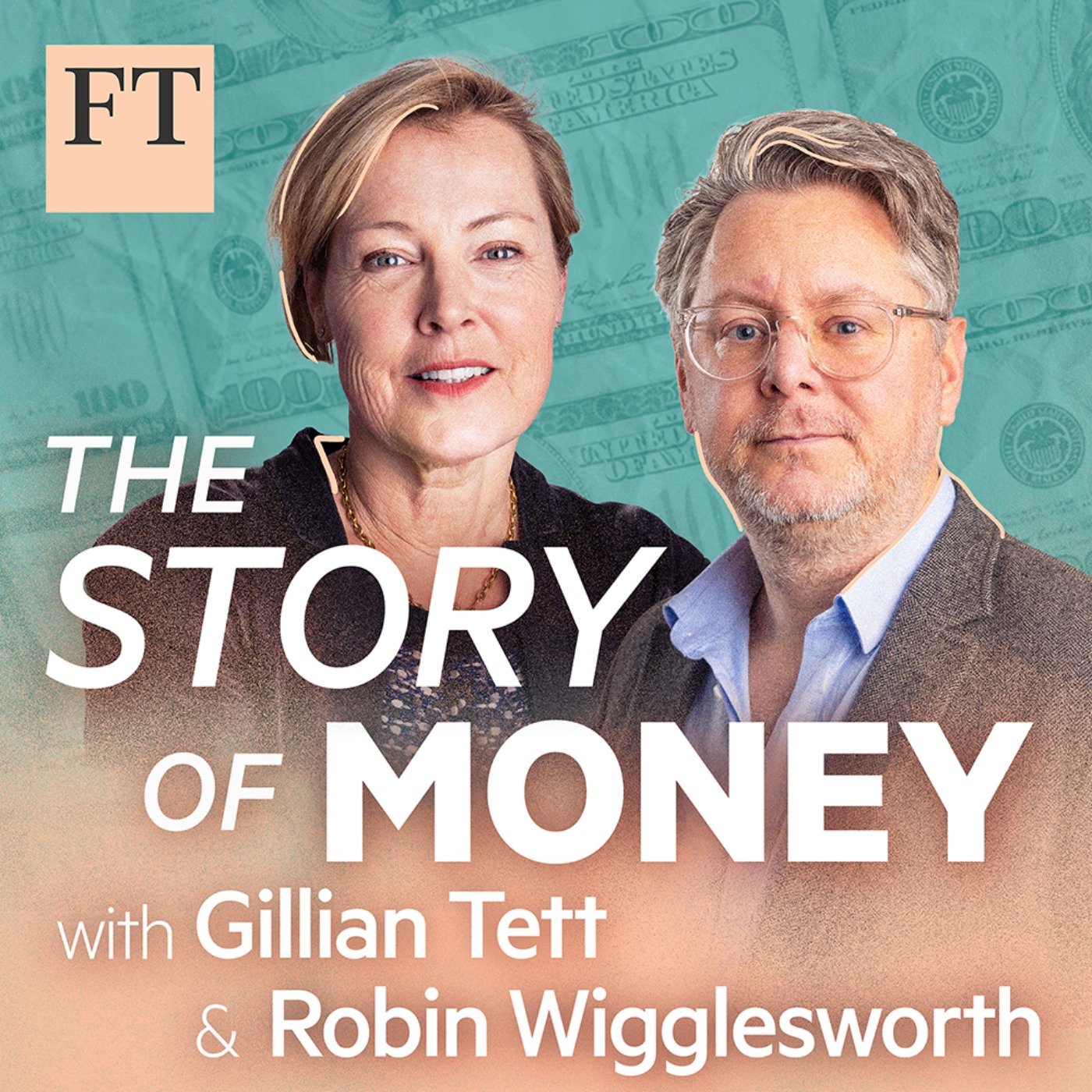
Hosts: Gillian Tett & Robin Wigglesworth
Senior producer: Laurence Knight
Executive producer: Kate Ford
Original music and sound design: Breen Turner
Video editor: Michael Saliba
Podcast development: Laura Clarke
FT global head of audio: Flo Phillips
Learn more at www.ft.com/tsom or get in touch at [email protected].
Read a transcript of this episode on FT.com
Hosted on Acast. See acast.com/privacy for more information.
More from The Story of Money
All episodesWe use cookies.They keep VO running smoothly and help us improve it. Privacy policy