
 Ask ChatGPT

- Podcasts
- The Story of Money
- How the US financed World War I using Charlie Chaplin and Girl Scouts
The Story of Money7 Oct 2026 · 40m · 12 chapters
How the US financed World War I using Charlie Chaplin and Girl Scouts
In short
How the US financed World War I through the Liberty Loan Program, turning bond sales into a mass patriotic propaganda campaign that helped build the modern Treasury bond market.
Guests/backgrounds
Gillian Tett and Robin Wigglesworth (hosts). Robin Wigglesworth discusses her co-written research/book A Fabulous Debt (about the Liberty Loan era).
Key claims
The US couldn’t fund the war via taxes alone (income tax was new; Treasury market was under $1B), so it borrowed. William McAdoo (Treasury Secretary) scaled a retail bond-selling model inspired by Civil War-era Jay Cooke, using branding (“Liberty”) and public relations (Edward Bernays). The campaign raised over $21B across five Liberty Loans (and $8B in loans/grants/material to allies before US troops arrived), never defaulted, and helped seed a lasting US investing culture.
Notable examples
Charlie Chaplin’s involvement (including the film The Bond), celebrity rallies (Douglas Fairbanks, Mary Pickford), Girl/Boy Scouts door-to-door sales, “You Buy a Bond” booth using a captured German submarine in Central Park, Four Minute Men speeches, and “dollar slackers” backlash/forced purchases.
Written by AI. May contain mistakes.
Chapters
0:45
The Liberty Loan Program
Understand how World War I transformed the US into an investor nation.
“We have to go back to the horror and hell of World War I.”
2:14
Finding Liberty Bonds
Explore the significance of Liberty Bonds in American financial history.
“It's fabulous to be talking about the Liberty Loan Programme.”
3:04
The Horrors of War
Dive into the devastating impacts of World War I on society and politics.
“I'm a very sad person or a heroic one, depending on your perspective.”
4:00
America's Entry into WWI
Learn about the factors that led to America's reluctant involvement in the war.
“There was an overwhelming sense that we should stay out of this.”
4:59
Funding the War Effort
Discover the financial challenges the US faced in funding its war efforts.
“also targeting American ships that were bringing supplies to Britain.”
6:20
William McAdoo's Role
Examine the role of Treasury Secretary William McAdoo in financing the war.
“It was just a few paltry bond issues, a fine.”
8:32
The Liberty Bonds Campaign
Understand how McAdoo's campaign for Liberty Bonds was structured and executed.
“One of the reasons why he offered to resign when he married Wilson's daughter.”
11:10
Celebrity Endorsements
Learn how celebrities like Charlie Chaplin were used to promote war bonds.
“Branding matters, and for America, the word liberty is a bit like motherhood and apple pie.”
14:03
Marketing Bonds through Celebrity Influence
Learn how celebrities helped market war bonds during WWI.
“So he's got, this is William McAdoo, who's the Treasury Secretary.”
21:31
The Impact of Liberty Loans on American Society
Discover the societal changes driven by the Liberty Loan Program during WWI.
“So we're back and we're looking at one of the weirdest phases in bond market history, which is a world mania that swept through America in 1917 around selling treasury bonds to finance America's entry into World War One.”
Show all 12 chapters
31:59
Cultural Shifts in American Investing
Explore how the Liberty Loan Program shaped American investing culture and identity.
“It was launched to transform the fabric of American finance and the American investing classes were to raise money to fight the biggest war the world has ever seen, the Great War.”
35:31
Lessons from the Liberty Loan Campaign
Discuss the relevance of the Liberty Loan campaign's strategies for modern finance.
“That's when you can see both stock and bond investing rates, you know, they ebb and flow.”

Ask about this episode
Get the gist, explore an idea or ask about something said.
 Claude
On The Story of Money, what are the key points of this episode?
Searching your listeningTranscript
Automatic transcript. May contain errors.
0:00In 1898, John Nuveen had a vision to underwrite municipal bonds that would propel American infrastructure into the 20th century. More than 125 years later, that vision lives on. Today, Nuveen has grown into a leading global asset manager with expertise spanning public and private markets, still investing with a future in mind. Nuveen. Invest like the future is watching. Visit nuveen.com slash future to learn more. Investing involves risk. Principal loss is possible. Today on the story of money, how the First World War transformed the United States into a nation of investors. The Liberty Loan programme was basically the genesis moment for the mightiest, biggest, baddest financial market on the planet.
0:45We have to go back to the horror and hell of World War I. It was apocalyptic. They even got celebrities involved in the selling campaign. Charlie Chaplin, Douglas Fairbanks, Mary Pickford, lots of the biggest movie stars of the era. They got Girl Scouts to go around and sell bonds door to door. They even used a captured German submarine. They turned it into a bond-selling booth in Central Park called You Buy a Bond.
1:13Our story begins at the depths of World War I, one of the deadliest, most destructive conflicts in human history, when America rode to the Allies' defence. And thanks to a creative Treasury Secretary, the country became hooked on a branding campaign unlike anything that anyone had ever seen before. He hatched a plan to make Americans part with their hard-earned cash and created something called the Liberty Loan Program to finance it all. Now, we all know who won the First World War, but what you probably don't know is how America funded it. Yes, the Liberty Loan Program was basically the genesis moment for the mightiest, biggest, baddest financial market on the planet, the US Treasury market.
1:57And it also laid the groundwork for how investing became such a central part of the American culture. So to illustrate this, we're going to be talking about a book that Robin Dun Dun Dun has written called A Fabulous Debt. I'm Gillian Tett. And I'm Robin Wigglesworth. It's fabulous to be talking about the Liberty Loan Programme. And this is the story of money. So, Robin, today we're going to be talking about these World War One bonds. And I gather that you've been out on a sleuthing campaign to actually find a physical one, haven't you? Did you get one? No, not yet. You know, I always thought I'd use some of my book advance to buy myself a little bit of a certificate from the Liberty Loan Programme because it's such an important market in the history of the bond market.
2:46They look pretty. It's full of eagles and American flags and heavily ornate borders and all sort of iconography. And I thought, I'll buy it. I'll frame it when I finally saw the book is out. Yeah, most people go off and get a holiday or a nice bottle of wine. But you want a certificate of a bond. Go for it. I'm a very sad person or a heroic one, depending on your perspective. Well, that's officially very geeky. But we're going to talk today about what drove that whole propaganda campaign with the Liberty Bonds. And to understand that, we have to go back to the horror and hell of World War I, don't we?
3:20Yes. Well, it started in 1914, and we're not going to dive all the way into it, but obviously it was enormously destructive. I mean, entire generations were almost wiped out. One of the deadliest conflicts in the world up until then, over 20 million people died. I mean, we've all seen pictures of the trench warfare. It was apocalyptic almost. And all of which has a horrible sense of déjà vu today. I mean, I've just come back recently from the front lines of the war in Ukraine, which is once again trench warfare, but with a drone related twist. It was hell. But what we're talking about today is a moment in 1917 when America joined the war.
4:00Tell us why that really mattered. Well, the U.S. at first didn't want to join the war. It did so belatedly. There was an overwhelming sense that we should stay out of this. Woodrow Wilson, the US president, actually won re-election in 1916 on a platform of, I kept us out of the war. But then by 1917, things had started to change. What made America in 1917 change its mind and decide to jump in? Well, it was a lot of things because there was a huge shift in public opinion. It was public opinion that changed rather than the politicians driving this. German atrocities in Belgium started changing the view of who were the baddies, essentially, in this conflict.
4:39German U-boats sank the American passenger ship for Lusitania in 1915. That sounds a bit of a self-defeating move if you suddenly get the American public angry. They stopped some of the unrestricted U-boat warfare after that. But later on, when Germany started getting desperate itself, they restarted this unrestricted U-boat campaign, also targeting American ships that were bringing supplies to Britain. And then there was this famous Zimmerman telegram scandal, one of the greatest intelligence coups in history, where the British managed to basically intercept and decrypt a message sent by Zimmerman, Arthur Zimmerman, the German foreign minister, to his Mexican counterpart, offering a secret alliance where they would help Mexico regain territories in America if Mexico sided with Germany, if America did enter the war.
5:26and this massive inflamed public opinion in the US and the US belatedly joined. So as a classic example of what Winston Churchill said is that America always does the right things after trying all the wrong things first. So after trying to ignore World War I, it then perhaps reluctantly jumped in, but it had to pay for it, didn't it? Because, and a bit like today, there was a real issue about the public being angry or potentially concerned about not wanting to spend taxpayer money on yet another war. Just also just the tax base couldn't really front up that kind of money. I mean, as you've seen in Ukraine, wars are incredibly expensive.
6:01And this was a total war where every senior of the national economy is subsumed by the war effort. The US had only introduced an income tax in 1913, just a few years before. It didn't really have the capacity. It had to borrow the money. The problem was the US government bond market, it's massive now, of course. At the time, it was less than a billion. It was just a few paltry bond issues, a fine. It paid like they were sold to pay for the Panama Canal. So it just wasn't really set up to either tax or borrow to pay for building a navy from scratch almost, building an army from scratch. America didn't really have military to speak of in 1917.
6:38Right. So today, of course, the US Treasury's market is 40 trillion, more or less. And the question is, do we even have the capacity in America to borrow anymore? But in those days, the issue was the Treasury's market was just$1 billion in size. And did it have the infrastructure to actually even borrow a little bit? And the person in the hot seat trying to solve that problem was William McAdoo, who was the Treasury Secretary. How did he end up in that position? Well, he was a former streetcar executive. Streetcar executive? Yes, exactly. Doesn't sound like an obvious background to become a big borrower, but anyway.
7:15A big donor as well, let's say. And he was very plugged into the Democratic establishment. He was a Southern Democrat. He was born during the Civil War. In fact, he married Woodrow Wilson's daughter. So he was also the president's son-in-law. So a big donor and the son-in-law, all of that is very smart. Again, very similar to where we are today in American politics. He had extremely retrograde views on racial politics. I mean, he introduced segregation to the Treasury. He was also weirdly progressive in his gender views. He was for equal pay and votes for women. And, you know, he was a complicated man.
7:52I actually have a picture of him here. Here you can see him in 1914 when he married Woodrow Wilson's daughter. He doesn't look like a lot of fun, I've got to say. I mean, he's looking very stiff, literally a stiff shirt kind of person or stuffy person with a very white collar and a rather grim expression. Yes, in a very dark suit. He's kind of turned in silhouettes, half enshrouded in darkness as well. He looks confident, though. And he was a very, very, very confident, energetic man. And you can kind of see that in this picture. He looks like he's in love with himself, to be honest. But anyway.
8:23Yes, I think he had an extremely healthy self-regard, shall we say. Well, people to change the world tend to have that. Yes, exactly. You know, he was the first head of the Federal Reserve. One of the reasons why he offered to resign when he married Wilson's daughter. but Wilson said no I need to keep you here because your main job is to birth the US Federal Reserve which the act to start the Federal Reserve had only been passed a year before the war in 1913 and you know that was an incredibly important thing for America and that was his first job really and just making sure that the US was protected from the financial ramifications of the Great War that had broken out in Europe.
9:00Well if you're going to work for the US government you might as well get parachuted into right at the top. Yes. But the question is, he came up with a pretty revolutionary idea to try and raise money for America. Tell us what it was and where he got that idea from. Well, he was a student of history, and he went back to look at what some of his predecessors had done at times of war and strife. And the best example was his predecessor, Sam and Chase, the Treasury Secretary at the time of the U.S. Civil War. Now, he was a slightly not useless character, but certainly not as impressive as McAdoo was.
9:35He didn't have the same energy. And he essentially privatized the role to a banker called Jay Cook. So Jay Cook became basically the main financier of the North's war efforts. And he did this massive propaganda campaign and sold bonds on a kind of a retail basis to Americans around the North. And he was hugely successful. And McAdoo studied this and thought he was going to do what Jay Cook had done, but he was going to do it as Treasury Secretary, and he was going to supercharge it. He was going to do it on a grander scale than anybody had ever foreseen before. So it sounds pretty darn ambitious, but how did he actually go about doing it?
10:14So at the eve of the war, he'd summoned some bankers to the Treasury and talked to them, like, how do we do this? And they said, well, there's less than a billion dollars worth of bonds. They're mostly socked away in the vaults of some banks. There's no real market. So you should only issue$1 billion worth of bonds at a time. There were only around 350 ,000 bondholders in the entire country. It was around 100 million people at the time. It wasn't really a bond market. So it was basically a pretty niche product in those days. It was a nothing burger. And they said, therefore, the bank has told him to be cautious, be careful, offer a juicy interest rate to entice investors and build slowly from there.
10:51and he said, and there's this phrase in his, because Americans didn't understand bonds, the bankers said, and he has this phrase in his diaries where he said, it might be that Americans do not understand or know little about bonds, but we will tell them. So what he does is he wraps it up in a very clever brand, which is Liberty. Branding matters. Branding matters, and for America, the word liberty is a bit like motherhood and apple pie. Nobody dares hate on the concept of liberty. So very clever. So he gets his plan to call them the liberty bonds. But when he starts testing the water, the public doesn't seem very enthusiastic, does it?
11:29I mean, not nearly as enthusiastic as you are about trying to find a bond yourself. No, that's a very hard thing to top. Well, so he went to Congress. And this is actually, you'll enjoy this. This is actually the genesis for the debt ceiling as well. Because up until then, Congress controlled the power of the purse. and every bond issuance by the US government had to be approved individually by Congress. But he goes to Congress and gets authorization to borrow up to$5 billion worth of bonds and$2 billion worth of bonds. Which was a lot of money then. It's chump change today. I mean, Scott Besson, the Treasury Secretary, will barely get out of bed for$5 billion.
12:03But those days, that was a lot. No, it was titanic. And so they basically said, like, borrow up until this point. And if you need more, come back to Congress for authorization. and it was hard but what he essentially did was set up an organization that was called the war loan organization and this was i mean really it was a propaganda campaign it was this i mean you can call it a marketing campaign but it is basically a multi-pronged organization with sub-organizations that was all dedicated to this one thing and that was to sell bonds he got edward Bernays, who's kind of the father of public relations, to work on a lot of the campaigns.
12:42They used lots of patriotic language around it. And they had to educate people from scratch. I mean, lots of people didn't know what a bond was. In fact, when they first started selling bonds, people quite often send a letter to the Treasury or to the new Federal Reserve branch, for example, asking, where do we send the interest? They didn't realize that we're lending money to the government. They thought it was giving money to the government. They'd have to pay a little bit money all the time. People just didn't understand this at all. It was kind of a completely new concept for the vast majority of Americans.
13:12So they needed to get the mechanics up and running, educate people, organize everything around it, and just make sure that every part of the country was involved. We actually have this clip from the Library of Congress archives that has one of these public appeals. It was given by a man called Richard Purdy. He was a member of the Four Minute Men. And they were called Four Minute Men because they'd go between the reels being shifted in cinemas and give little four minute speeches, spiels about why you should buy Liberty Loans. And I'll read up what Purdy said in this one, because it's quite interesting.
13:48In the great third Liberty Loan drama, just one statement seems necessary before an American audience. It is simply a question now of the survival of autocracy or democracy. Wow. So he's got, this is William McAdoo, who's the Treasury Secretary. So by 1917, he's got Congress on board. He's got the bankers on board. He's got a propaganda campaign up and running. But how does he think he can actually market those bonds, ship those bonds and actually pay for the war? They even got celebrities involved in the Ketisalan campaign because you need to kind of harness that fame. And again, it's something we see very much in the present day as well, that that fame matters.
14:31And people like Charlie Chaplin were involved, weren't they? Yeah, Charlie Chaplin, Douglas Fairbanks, Mary Pickford, lots of the biggest movie stars of the era. It's a bit like getting a combination of Rihanna and Tom Cruise and everyone else mixed up together and trying to flog treasuries. Yes, exactly. Well, maybe that's what they should be trying to do. That's what Besson should be doing. There's a little film you can see of Charlie Chaplin, moustacheless, playing a fake orchestra in front of the crowd in D.C. Wow. Wow. He was heavily involved. He gave a speech. There's a great speech, actually, that he gave in New York with Fairbanks and Pickford.
15:09I'll read out a little bit part of it here because it's so good. So he's shouting at it, a crowd of thousands of people gathered outside the sub-treasury building down on Wall Street. You people out there, I want you to forget all about the percentages in this third liberty loan because it was done in parts. Human life is at stake and no one ought to worry about what rate of interest the bonds are going to bring on or what he can make by purchasing them. Money is needed, money to support the great arms and navy of Uncle Sam. This very minute, the Germans occupy a position of advantage. And we have to get the dollars.
15:44It ought to go over so we can drive that old devil, the Kaiser, out of France. So essentially what they're saying is this is a moment of shared sacrifice where you all need to pull together and we all need to basically show that we're willing to do our own little bit for the war effort. Not so much about digging potatoes for peace, but rather digging into our wallets and our pockets to actually try and fund this together collectively. But we did have, didn't we, a film by Charlie Chaplin called The Bond. Yes, obviously my favourite film of all time. It's not quite like James Bond, that'd be even more sexy.
16:19But anyway, so tell us about the Bond film, the other Bond film. You know, James Bond was named James Bond because Fleming thought it was the most boring thing name he'd ever heard of. Right. So no one's going to spot a spy called Bond. I should have words with Ian Fleming about that. Yes. No, he financed this this three part reel called The Bond. And it goes through essentially different types of bonds. So he talks about the bonds of matrimony and the bonds of friendship. But the greatest in Charlie Chaplin's retelling is the war bond. It's actually the Liberty Bond. You can see it. He's hammering a Kaiser with a massive mallet, a fake mallet called Liberty Bonds.
17:02It's not very subtle, but it is pretty striking. But, you know, this was a completely new medium. This was like TikTok for the early 20th century. And it became a huge national unifying endeavor in America. because after the 19th century, it had just been an incredible amount of immigration from around the world. So we're talking about a really uniquely polydact country in the history of the world. And I'd say the Liberty Loan Programme, in many respects, became kind of glue that brought lots of groups together. People would compete, like Polish-Americans would compete against Italian-Americans.
17:38So who could subscribe the most? Who could be drafted the most as well? Who would go fight? So it just became this thing that you signaled your fealty and your loyalty to your new country by how much you signed up for, how much liberty loan marches you went on. They got Boy Scouts and Girl Scouts to go around and sell bonds door to door. Instead of Girl Scout cookies. Yeah, exactly. Not cookies, bonds. And they got priests to give sermons about this. They just got everybody involved. Women and black Americans were very implicitly, and in some cases explicitly told that, you know, by joining in and participating in these liberty loan programs, they could basically show how loyal they were to America.
18:21And this would manifest itself in the right to vote for women after the war and greater civil rights for black Americans. It sounds like a brilliant piece of social engineering. And remember, all of this was done in an era before we had email or Instagram or Twitter or TikTok to actually reinforce this kind of campaign. I'm curious, because they didn't have social media in those days, How did they get the message out apart from using silent movies with Charlie Chaplin? Radios. Cinema was a big thing. Newspapers. Leaflets. People, like I said, Boy Scouts and Girl Scouts would be handing out leaflets.
18:59At one point, they even used a captured German submarine. They turned it into a Bond-selling booth in Central Park called You Buy a Bond. That's pretty memorable. How the hell did they get that submarine actually into Central Park? I was thinking the same thing. I think if they managed to capture it, they must be able to transport it there. Wow, wow. Well, that's pretty astonishing. I'm sure lots of people would have flocked to it just to actually see the darn thing. No, exactly. I mean, it would have been a spectacle. And, of course, for some reason, those days were pretty newfangled. I mean, people would have been pretty blown away.
19:28Yeah, that's like super hot technology. It's fascinating. I think they use that. They use fascination. And, you know, there were some people that thought that they're borrowing tactics or they're almost verge on intimidation. So it got quite nasty at times. I mean, the people were getting lynched if there were dollar slackers. People that didn't subscribe to a Liberty Loan were known as dollar slackers. There was like some female clerks around and took one of their colleagues, another female clerk who wasn't subscribing in Ohio. They wrapped her up in an American flag and dragged her to the bank and forced her to take out her money to buy a Liberty Loan.
20:06So even in America, this was a future president, said Harding, that said that this is going too far. They call it Prussianized tactics. But it was a genuinely popular unifying campaign on the whole. So we have this extraordinary situation where America is discovering the joys of propaganda, of creating a bond market infrastructure, and then trying to go out and flog it to the public like never before. The bad news is that it created some nasty mob crowd psychology at times. The good news is that it got America to get really excited about bonds for arguably the first time in history. But the big question is, did this actually raise any money in addition to raising all that attention?
20:54We'll come back to that after the break.
21:03The future of fixed income investing will continue to blur the lines between public and private markets. Nuveen's credit platform was built to navigate this shifting landscape, channeling capital toward the businesses, infrastructure and energy solutions that are shaping tomorrow's economy, all while aiming to deliver the resilience and returns that portfolios seek today. Nuveen. Invest like the future is watching. Visit nuveen.com slash future to learn more. Investing involves risk. Principal loss is possible.
21:39So we're back and we're looking at one of the weirdest phases in bond market history, which is a world mania that swept through America in 1917 around selling treasury bonds to finance America's entry into World War One. And we just described some of the crazy marketing tactics that were rolled out then, not around social media or the internet like today, but around silent movies and other group events. But the crucial question, though, is, Robin, is did it actually work? Did it raise money? It was astonishingly successful. There were five Liberty Loan programs in total stretching out into 1920, the reconstructing and demobilization, which was also very expensive.
22:21it raised over 21 billion dollars at the time which you know again sounds like chump change and that's a lot more than they planned to raise wasn't it because they wanted to raise four billion or five billion originally yes exactly well they pumped money to the allies as well because it took time to build the military from scratch so until american soldiers could actually land in france they essentially sent money and material to the allies the french and the and the brits in many ways they kind of sent dollars to fight the war before they could send american soldiers $8 billion they sent to the allies directly in loans and grants and material.
22:56$21 billion in total. That's$9 trillion today. So the equivalent, if you look at the size of the U.S. economy then and now, it would be the equivalent of Scott Besant selling$9 trillion worth of bonds. And it's worth just remembering that the total U.S. borrowing today is$40 trillion. But, of course, Scott Besant, the U.S. Treasury Secretary, does indeed have to sell or refinance$10 trillion over the next year. So that's equivalent to what the whole program did back then. But I guess the question is, having raised all this money, did it enable America and the Allies to actually win the war? Was it a success in military terms?
23:29Yes, clearly so. Like I said, those dollars did were some substitutes for what American soldiers begin with. But soon enough, American soldiers did arrive on the shores of France and the tide was very decisively turned. But when America entered the war, it was only a matter of time, really, until Germany would be defeated. Tens, ultimately hundreds of thousands of American soldiers led by General Pershing. And, you know, Germany was doomed to lose at that point. So that's all going well then. But what does that mean in terms of the people who actually bought the bonds back in the U.S.? Because it's one thing to have the primary issues where you sell bonds to willing subscribers.
24:06But was there a secondary market for those as well? Well, yes, there was, because these were bonds that were listed on the New York Stock Exchange. New York Stock Exchange ironically started most as a bond trading venue. And, you know, quite often people would sign up for a loan, buy a chunk of a Liberty loan, and then actually you kind of needed cash or maybe they'd use as collateral for a loan or something. So it would get sold. It would get traded quite actively on the New York Stock Exchange and elsewhere. And that would, all things being equal, as more and more bonds were being sold, 21.4 billion in total, eventually economic forces, as you and I know, they eventually play in and the prices started sagging.
24:49And McAdoo hated this. He tried to brand anybody selling a Liberty Loan as German selling, basically kind of implying that they were sabotaging the war effort. In practice, I think some people just had overinvested. A lot of people had borrowed to invest in liberty loans, and eventually they'd have to sell. Even a young artillery captain called Harry Truman, when he returned from France, had to sell his liberty loans to basically pay for a suit, his first suit when he came back from the war. And he later, and he could only sell it, I think, 80 cents on the dollar. So he got far less from what he paid, and he recounted this story rather grouchly to the Federal Reserve Board many years later when he was the president of the United States.
25:32So on one level, that's bad news for the Treasury Secretary, the idea that prices of the bonds are falling. The other hand, though, you could also say that it's a sign that you're creating a market that's liquid and tradable and building infrastructure for the bond market in the future. And what's very clear is that we know that wars so often spark wild innovation. Necessity is mother of invention. We're seeing that in Ukraine, which is a conflict I know well. but people don't often think about the financial innovation that gets spurred by wars as well. And this is a classic example where you actually have a liquid bond market.
26:07Yeah. And this was something that kind of almost realized Alexander Hamilton's vision centuries earlier. So Alexander Hamilton had talked about how he wanted to create, in his poetic phrasing, public credit immortal, like a permanent government bond market. In practice, the U.S. kept borrowing to finance a big war, a big project like the Panama Canal, and then paying it down again. This marked the birth of the permanent treasury market. And ever since then, it has occasionally gone down, but it's mostly grown since then. And as much as debt is a dirty word in many cases, it is also an essential cog in the machinery of global finance, as you and I know.
26:49And, you know, the war, World War I, was kind of the genesis for this. The Federal Reserve played a hugely important role. The repurchase market was born in World War I. So the whole repo market, which now is kind of like the oil that keeps the machinery of finance going, that was actually just a bit of a fudge. That was the way that the Fed would lend money to banks so they could lend money to people to buy Liberty loans. So like you say, war is the mother of all invention. And some of those inventions are purely accidental, but they are still with us today. And I'm curious. So World War I created the channel for primary issuance of loans or bonds on a massive scale.
27:31It then created the framework for secondary market trading and associated products like repos. But what happened to those liberty bonds in the end? I mean, were they mostly short-term loans, long-term loans? And how did the population react to the sight of the price of those falling? Yes, they did not react well. I think people would be quite happy to accept below market interest rates. These were very cheap loans. The interest rates on them were very low. And that's why you had to kind of mobilize patriotic feather and get people excited about it. But they didn't like the prices falling. Like Harry Truman, that felt somehow wrong that, you know, they were lending them into the government.
28:14and they did get less back. There were quite long-term loans. There was inflation after the war. And this actually became quite a politically touchy subject. It really hurt the Democrats in the election after World War I. But what was a genuinely unifying movement spurred by the Liberty Loan Program kind of dissolved. You know, it was the Red Scare as well. The Russian Revolution, of course, stood fear of Bolshevik infiltration in the United States. Women did get the vote in America after the war, but black Americans were still largely disenfranchised. There was no sort of improvement. Many other minority groups did not quite see maybe the implicit promises of greater integration and participation.
29:01They were not really realized. But just to be clear, the US government didn't default on those bonds. No, no, no, no. It never defaulted. It paid back all those loans. It took many years, but no, no, they never defaulted. So if you hung on to them, you'd get your money back with a below market interest rate. It was more that if you tried to sell it in the secondary market, you lost that. Yeah, he crystallized it when he came back from France, where a lot of people were selling their Liberty loan, because there was a new big one, the big fifth one, I think was the largest one. So it was just bad timing.
29:28He crystallized the mark-to-market loss, essentially. Well, one that we all know from the bond market is when everyone wants to sell, that's the very worst moment to try and sell. But I'm curious, so what actually happened to the architect of this whole innovative program William McAdoo? Well, he went back into business. Running tram lines again? No, he founded United Artists with Charlie Chaplin. Wow, so all that experience of making that movie, The Bond, that silent movie with Charlie Chaplin, piqued his interest and he re-imagined himself, what, a Hollywood mogul? Basically, yes. I mean, it was the first big talent agency still around today.
30:04Charlie Chaplin, Douglas Fairbanks, Mary Pickford, other celebrities were involved. But he then, because he was the rising star in the Democratic Party at the time, he tried to make a tilt for president. He was very big in the Southern Democrat Party bit of it, which, you know, had even for the time, fairly retrograde racial views. He ran for president twice. He got defeated in very late ballots at the convention. He got endorsed by the Ku Klux Klan. He was not a Klansman, but he did not disavow them either because he wanted that Southern Democrat support. And in the last one, I think it was at the 34th ballot, he was finally defeated at the Democratic Convention.
30:48And this was when a comedian made that famous gag that I belong to no organized political party. I'm a Democrat because he was such a shambles, essentially. So he was a politician of great promise. But yes, his political career ended like so many others in tears and failure. And so did he go from being a stiff-shirted person in Washington to being a cool media mogul in Los Angeles with dark glass and all that? He wrote his memoirs, triumphing about all his successes and downplaying his failures. but he basically died, if not unknown, then relatively unremarked. American politics have moved on quite from him.
31:32Politics is a very cruel game, a bit like the movie business. But I'm curious, so he raises all this money through this extraordinary liberty bonds campaign, liberty loads campaign. It sounds like it certainly succeeded its aim of trying to raise money for the war effort because they did go forth and win the war. But when you look back at it now, almost a century later, would you have deemed it a rip-roaring success? Well, yes, on its main objectives. It was launched to transform the fabric of American finance and the American investing classes were to raise money to fight the biggest war the world has ever seen, the Great War.
32:14And by any measure, it was an incredible success. The sums are just astonishing. I think it was a very important moment in the history of America and probably underappreciated. This is what I find fascinating as someone who trained as an anthropologist, which is that, you know, one of the things that really defines America today is this obsession with financial markets and investing. And it's really quite subtly different from other countries I've lived in, like Japan or the UK. You know, being an investor is part of being, for many people, an American, up there with apple pie, motherhood, hot dogs and baseball.
32:49And I'm curious, do you think that was a moment culturally, this time during the Liberty bonds, when that concept of investing being an all-American activity really got laid down? I think so, because even before the Liberty loan program, you could see that kind of almost unique American animal spirits. The booms are bigger, the busts are bigger, everything's bigger, the food portions are bigger in the US. But this is really when you can see the fabric of American investing culture getting woven, essentially. At the beginning of the war, there were only around 300 ,000 people that held bonds and almost nobody held stocks.
33:31By the end of the war, a third of the country, 34 million Americans, had invested in the Liberty Loan. And obviously, far more had ingested just financial knowledge about what a bond was, what a stock was as well, for comparison. So you can even see people have studied for generations afterwards, counties that have greater liberty loan participation rates invested in far greater alacrity later on in stocks and bonds. So it kind of really seeded that investing culture. So economic historians have studied this and have shown that Americans would have probably invested, even as late as the 1960s, probably have held 20, 30 percent less stocks and bonds than they would have given what we can see in the patterns after the Liberty Loan program.
34:19That's truly fascinating. So the idea of investing really got entrenched in the mainstream out there with milkshakes and hot dogs and everything else. But I'm curious because today, most Americans regard bonds as being pretty darn boring. It's kind of what you do if you can't think of anything else to do with your money. And of course, equities is where people like to put their funds, particularly if they're being a bit risque, never mind about Bitcoin. But I'm curious, you know, in those days, did people just focus on bonds? Was it a natural progression? Was that the gateway drug to get them into equities later on?
34:55Or how did those two things dovetail? Yes, it was. I mean, you could almost say, you know, because there was obviously a huge stock market boom in the 1920s. You could almost say that the Liberty Loan program primed the American public to invest in general. And that really saw manifest itself in the roaring 20s and the stock market boom then. And again, it ebbed off in the Great Depression as well afterwards. And after that, Americans had to kind of re-fall in love with equities. But basically, that is the moment from whence everything else flows, I think, the Liberty Loan Program. That's when you can see both stock and bond investing rates, you know, they ebb and flow.
35:36But broadly speaking, they've been pointing upwards ever since in America. It brings me to another key question I'm really interested in, which is that today we have another Treasury Secretary, Scott Besant, who desperately needs to flog a lot more bonds. There's$40 trillion outstanding. He has to roll over and raise about$10 trillion of that. He's trying to shorten the maturities by selling a lot more short-term bonds instead of long-term bonds. But his challenge is not only are countries like China beginning to shy away, but a lot of the owners of bonds today are hedge funds overseas that tend to be very fickle and flighty.
36:13So we've got voices once again saying maybe it's time to tap into that patriotic, all-American zeal, either on the part of pension funds or banks or even maybe individual retail investors. Do you think Besant needs to take a leaf out of McAdoo's book and try some kind of propaganda advertising campaign again? Because there was discussion of that a few years ago, but it's not really been launched to any significant degree, has it? No, it's true. And I bet he would find the story inspirational, except, you know, you need a big war, not like a war against Iran. You need something that really basically gets the country unified and pointing in one direction.
36:58And wars are terrible, but they do tend to bring countries. Iran, the Iran war, it's so controversial. You couldn't do Iran, the Iran war, for sure. So you can't say, oh, buy treasuries to support our war in Iran. That just wouldn't work. And you couldn't even say buy treasuries to support our battle against climate change because half the country doesn't agree. I mean, the question is, is there anything right now America could rally around other than staving off bankruptcy, which is not a great marketing pitch? No, no, it isn't. And I suspect what he'd do is kind of a regulatory equivalent of the Liberty Loan program, where essentially you say that it is important for the nation's banks and pension plans and insurance companies to rally around America and make America great again.
37:35And you kind of do a lighter, kind of a Liberty Loan light version and essentially use the levers of regulatory power and say that, well, you just have to hold more treasuries. Financial repression, as economists call it. Absolutely. Well, financial oppression is a term that economists use when essentially you're forcing people to buy or encouraging people to buy bonds at essentially negative real interest rates, even slightly negative, which if they hold it for many years, the power of compounding means the government can essentially pay down its debt. That's how the government's got out of it in the US and UK.
38:06That's how they did in World War II, for example, where the Fed just basically pinned yield. They did yield curve control, as we called it when the Bank of Japan did it. But they basically just made sure that interest rates across the entire U.S. government bond market were below the rates of inflation. Right. Which is essentially what did happen with the Liberty loans in this time around. But it's not something which is well known. And trying to have a sort of call to arms around financial repression is not something that's going to go well on TikTok or Truth Social or anything else, is it? No, financial repression just doesn't sound cool on a poster, does it?
38:42I can't see Boy Scouts and Girl Scouts going around selling cookies and financial repression to the households of America. Well, it sounds a bit kinky, doesn't it? Not one for the Boy Scouts. But I'm kind of curious. I mean, is there anything that a Treasury Secretary in America or elsewhere can learn from this remarkable Liberty Loans campaign for today? Well, one of the things that has stuck with me ever since researching this for my book, A Fabulous That, is how this also wasn't just a start of American culture of investing, but the uniquely almost American culture of investing as an expression of identity.
39:18That you invest in liberty bonds to show that you are true blue American, whether you are Polish American, Italian American, black American woman, whatever. This was a sign of allegiance and identity. And we can see this even today that American congressmen, people have studied the investment portfolios of congressmen and congresspeople and have shown that what they invest in actually broadly fits their political views as well. That we use, I think we all are in danger of this. That obviously our cultural reviews will affect whether we buy big oil or an ESG-friendly stock and things like that.
39:54But Americans do it more. That investing is an expression of identity. That, I think, maybe is something that the current US government could and maybe will eventually try to tap into a little bit. Right. That's fascinating. I mean, if nothing else, it shows that the story of money is not just about numbers and balance sheets and equations and algorithms. It's also about culture and identity and, frankly, who we think we are as human beings and societies. It's also about the story of unintended consequences and how war can be an astonishing spur for innovation and invention. Yes. So thank you, Robin.
40:32I'm not sure you quite convinced me to be as obsessed with liberty loans as you are. I hope you do find it difficult eventually to put up somewhere in your house, maybe the loo or toilet for our non-British friends. But in the meantime, thank you for educating us. It's truly fascinating. And that's it for us for this week's episode of the story of money. If you liked the episode, please do make sure to subscribe and review the show and comment underneath. However rude, we would love to hear your views on Liberty Bonds and much else. And we do read your comments. So thank you. I'm Gillian Ted. Just don't be rude about Liberty Loans because that will hurt me a lot.
41:10We can't be friends then. And I'm Robin Wigglesworth, of course. And this is the story of money. We'll see you again next week.
41:26The future of fixed income investing will continue to blur the lines between public and private markets. Nuveen's credit platform was built to navigate this shifting landscape, channeling capital toward the businesses, infrastructure and energy solutions that are shaping tomorrow's economy, all while aiming to deliver the resilience and returns that portfolios seek today. Nuveen. Invest like the future is watching. Visit nuveen.com slash future to learn more. Investing involves risk. Principal loss is possible.
From the publisher
The first world war was one of the deadliest conflicts the world has ever seen. And when the US entered the war in 1917, it faced a massive financial challenge: how to pay for its contribution? Enter Treasury Secretary William McAdoo who launches the groundbreaking Liberty Loan Programme and - alongside an unprecedented national propaganda campaign featuring silent film stars like Charlie Chaplin, Girl Scouts, even a captured German submarine in Central Park - encourages thousands of Americans to ‘buy a bond’ as part of their patriotic duty.
But did it work? And what was the longtime impact? Hosts Gillian Tett and Robin Wigglesworth discuss how this campaign raised over $21 billion - the equivalent of around $9 trillion today - and in doing so, birthed the modern US Treasury market and transformed America into a nation of investors.
Further reading: A Fabulous Debt: How Bonds Made the Modern World by Robin Wigglesworth
To enjoy future episodes, be sure to subscribe to The Story of Money wherever you get your podcasts, also on the show's dedicated YouTube channel here: https://www.youtube.com/@FTTheStoryOfMoney
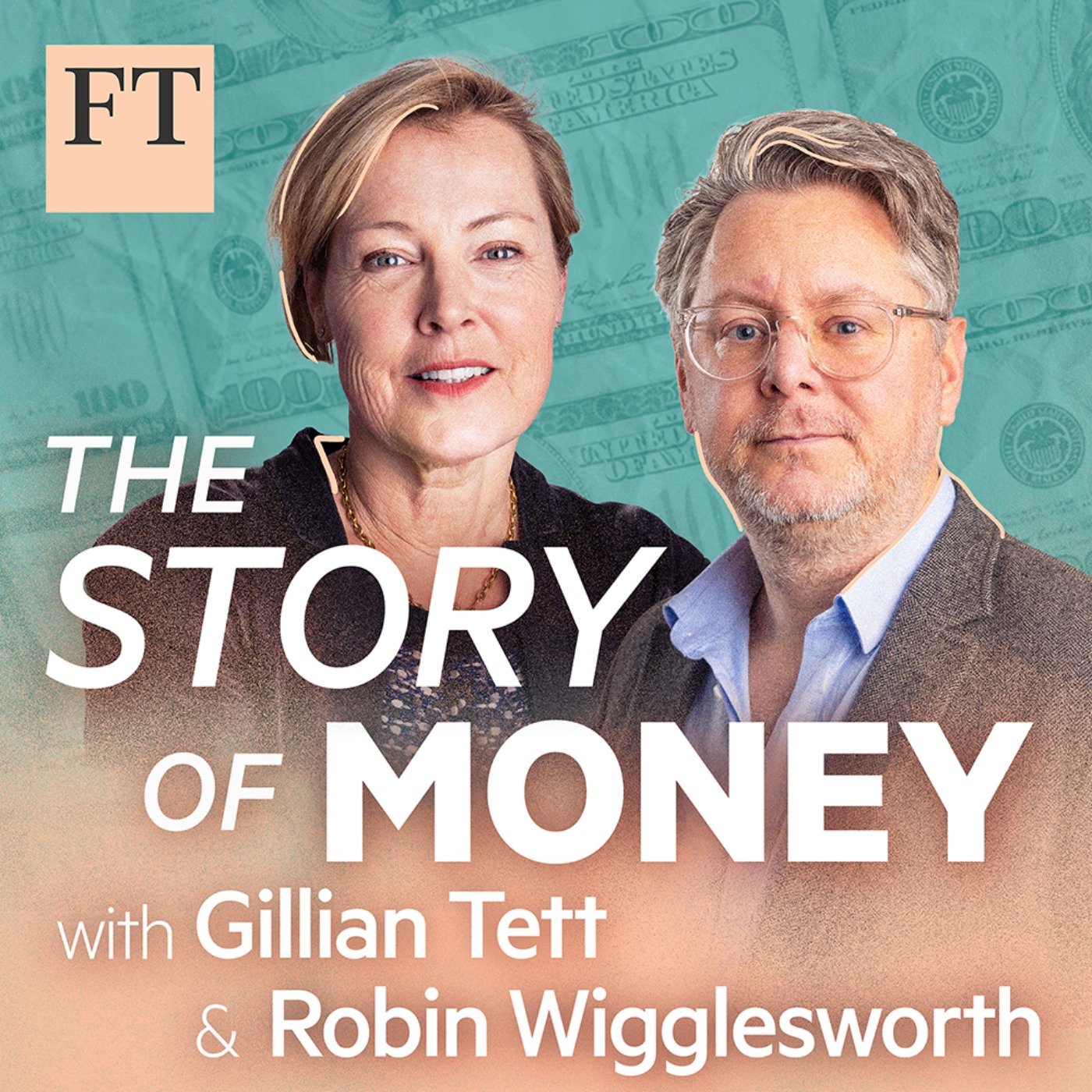
Hosts: Gillian Tett and Robin Wigglesworth
Senior Producer: Michela Tindera
Executive producer: Kate Ford
Original music and sound design: Breen Turner
Broadcast engineer: Gregory Bobillot
Video editor: Michael Saliba
Podcast development: Laura Clarke
FT global head of audio: Flo Phillips
Learn more at www.ft.com/tsom or get in touch at [email protected].
Read a transcript of this episode on FT.com
Read a transcript of this episode on FT.com
Hosted on Acast. See acast.com/privacy for more information.
More from The Story of Money
All episodesWe use cookies.They keep VO running smoothly and help us improve it. Privacy policy