
 Ask ChatGPT

- Podcasts
- The Story of Money
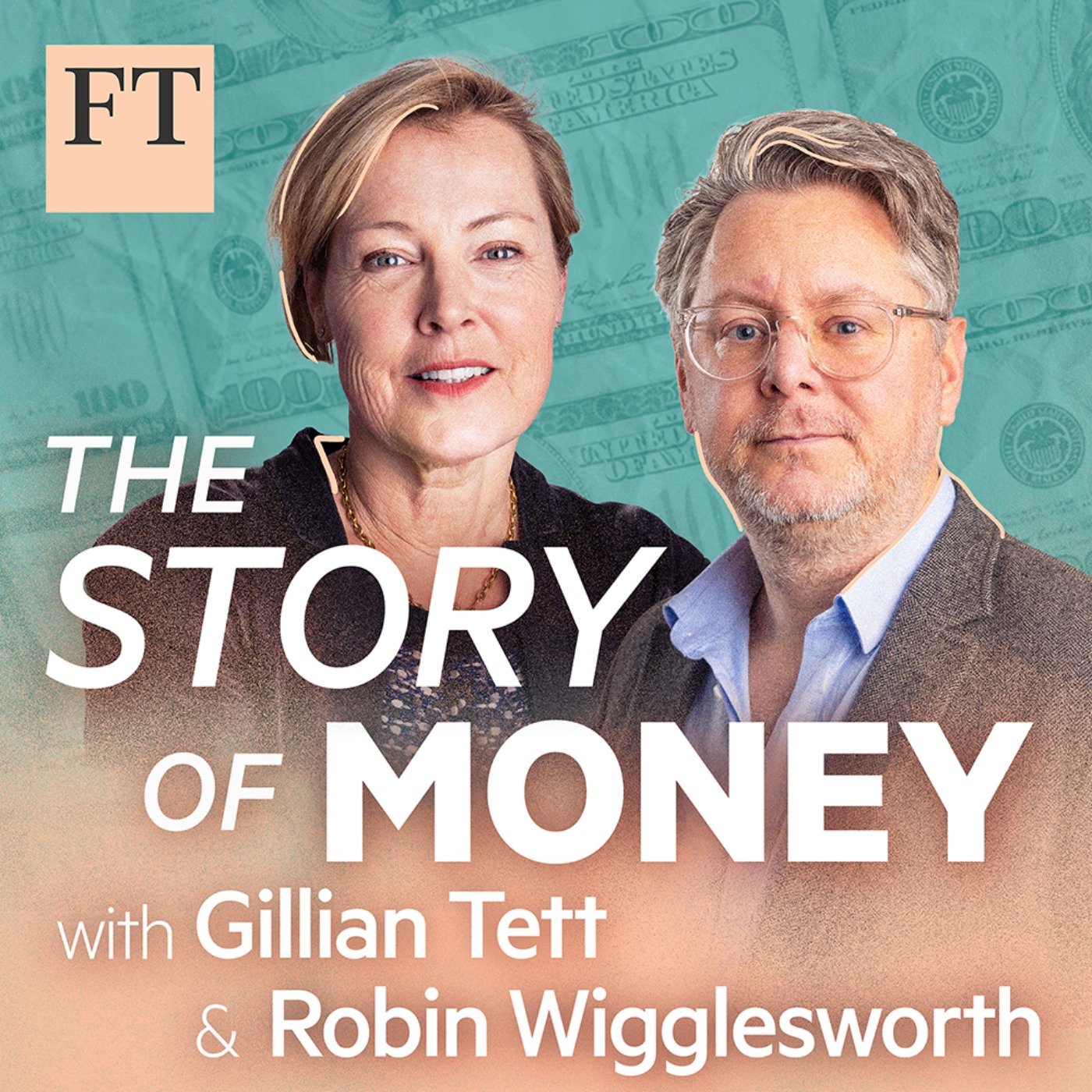
- The French Revolution's disastrous money experiment - Part 1
The Story of Money14 Oct 2026 · 49m · 22 chapters
The French Revolution's disastrous money experiment - Part 1
In short
Part 1 of “Why the French Revolution was a financial revolution” explains how France’s monetary and credit crisis—tied to political conflict—helped drive the Revolution. It traces the Estates General, the Tennis Court Oath, the July 14 storming of the Bastille, and the creation of the assignats (paper promises backed by nationalized church property), plus early debates over making them circulate as money.
Guests
Rebecca Spang, professor of history at Indiana University; author of Stuff and Money in the Time of the French Revolution.
Key claims
Standard accounts blame hyperinflation from overissuing paper money, but Spang argues trust in money collapsed before massive printing, because the monetary crisis was intertwined with revolutionary politics. The Revolution destabilized credit: people refused to trade on account, demanding cash.
Notable examples
Estates General (last met in 1614); Tennis Court Oath after representatives were locked out; Bastille storming after Necker was fired (7 prisoners, symbolic political violence); nationalization of Catholic Church property (Bien Nationaux) proposed by Talleyrand; assignats created in December 1789, then assigne-monnaie in April 1790; August–September 1790 Assembly debates over whether church-backed backing was legitimate and how to reimburse venal officeholders.
Written by AI. May contain mistakes.
Chapters
0:28
The Financial Roots of the French Revolution
Exploring how the French Revolution intertwined with financial issues.
“Today on the story of money, how the French Revolution's fight for liberty was also a fight over money.”
2:00
Context of the Old Regime
Understanding France's political and economic conditions before 1789.
“the storming of the Basis, to the development of a controversial new currency called at different times both a savior of France and a poison.”
3:00
Louis XVI: A Monarch in Crisis
Analyzing Louis XVI's character and the challenges he faced as king.
“I mean, the standard wisdom, such as it is, is that the French Revolution fails because the government overissues paper money.”
5:10
Economic Landscape of Pre-Revolutionary France
Examining the economic situation and financial systems in France before the revolution.
“And the king was Louis XVI at the time, right?”
7:40
The Constraints of Nobility and Taxation
Discussion on the nobility's resistance to taxation and its implications.
“Certainly, there were rumors that he enjoyed his wine, perhaps more than he should have.”
11:10
The Estates General: A Historical Gathering
Introduction to the Estates General and its significance in French history.
“The privilege of not having to pay taxes.”
12:00
The Trigger for the Estates General
Exploring the events leading to the summoning of the Estates General.
“So what was the Estates General exactly?”
14:03
The Estates General Meeting
Learn about the significant meeting of the three estates and the emergence of the National Assembly.
“But there's an enormous space at Versailles that's used for performances where they stage the opening ceremony of the Estates General with great pomp and splendor.”
18:01
Jacques Necker's Role and Influence
Discover the crucial role Jacques Necker played during the financial crises leading up to the revolution.
“And of course, a leading figure in the National Assembly is the Marquis de Lafayette, who was a hero of the American Revolution, who names his children George and Virginia.”
19:34
The Tennis Court Oath
Understand the significance of the Tennis Court Oath and its impact on the revolution.
“They discover that there's this indoor tennis court that's open.”
Show all 22 chapters
20:35
The Storming of the Bastille
Explore the events leading up to the storming of the Bastille and its historical significance.
“But let's talk about that after the break.”
21:26
Immediate Aftermath of the Bastille
Examine the chaotic aftermath of the Bastille storming and its effects on France's financial situation.
“Fast forward a month from that meeting of Versailles of the States General and the Tennis Court Oath.”
27:09
Nationalizing Church Wealth
Learn about the proposition to nationalize church wealth as a solution to financial troubles.
“How are they going to stay current on France's obligations?”
28:00
Talleyrand and the Nationalization of Church Properties
Learn about Talleyrand's motion to nationalize church properties and its implications.
“And, you know, we probably don't need four churches in this village of 1 ,200 people.”
30:04
The Reaction of the Clergy and the Pope
Discover how the clergy and the Pope reacted to the nationalization of church properties.
“I mean, remember that in 18th century France, Catholicism is the only legal religion.”
31:37
Assignats: A New Financial Instrument
Explore the creation of assignats and their role in financing the revolution.
“I mean, Talleyrand is born into a very old aristocratic family.”
32:41
The Use of Money and Credit in 18th Century France
Learn how ordinary people used money and credit during this tumultuous period.
“So at this point, the assignia are, they're not money at all.”
34:38
The Fragility of the Credit System
Understand the vulnerabilities in the credit system during the lead-up to revolution.
“So everything they do is with the same merchants.”
36:53
Legal Tender and the Assignat-Monnaie Hybrid
Examine the transition of assignats into a legal tender and its implications.
“And that's where the assignats start morphing a little bit.”
39:41
Debates in the National Assembly
Explore the contentious debates surrounding assignats and government positions.
“It's something that was backed by the hardest asset there is, like land and churches and buildings.”
42:09
The Debate on Assignats
Explore the heated discussions in the National Assembly regarding the assignats and their implications.
“And so that debate about how to reimburse the venal office holders, and they have to do it or the people stay in post and the revolution really isn't going very far.”
45:36
Tensions and Consequences
Understand the escalating tensions in the assembly and the stakes of not declaring bankruptcy.
“They have to find a way to reimburse and pay for everything.”

Ask about this episode
Get the gist, explore an idea or ask about something said.
 Claude
On The Story of Money, what are the key points of this episode?
Searching your listeningTranscript
Automatic transcript. May contain errors.
0:00What happens next in the story of money? Nuveen has spent over 125 years helping clients answer this question. By investing in the growth of businesses, real estate, infrastructure and natural capital, we continue to deepen our expertise across income and alternatives so investors can confidently write the next chapter of their own portfolio stories. Nuveen. Invest like the future is watching. Visit nuveen.com slash future to learn more. Investing involves risk. Principal loss is possible. Today on the story of money, how the French Revolution's fight for liberty was also a fight over money. Nobody at the time knew or expected that this was the French Revolution.
0:40So it's really a scene of bloody violence and horror. And very shortly after that, they say all of the existing taxes are illegal because we didn't vote on them. And then the next thing they say is, you should keep paying them anyway until we get some new taxes. Well, you can imagine which part of that message got heard and which part got ignored. It ruins everybody's finances because suddenly people can no longer expect that tomorrow is going to be just like yesterday. In fact, it's pretty obvious that tomorrow is going to be nothing like yesterday.
1:21Today on the story of money. Liberté, égalité, fraternité. The rallying cry of the French Revolution is very familiar. But what you may not know is that this crucial moment in European history was also a violent financial revolution. That's because money represented not just a way to buy and sell things, but also formed a piece of a larger social contract. And when that social contract is turned upside down, the results can be disastrous. So in today's show, part one of our series on the French Revolution, we'll be taking you through the revolution's origins under King Louis XVI, the storming of the Basis, to the development of a controversial new currency called at different times both a savior of France and a poison.
2:14This is monetary policy at the time of revolution. This is the story of money. Jillian's away this week and I'm Robin Wigglesworth. To tell this story, I'm joined by Rebecca Spang. Rebecca is a professor of history at Indiana University. She's also the author of the fabulous Stuff and Money in the Time of the French Revolution, which is a cracking title, Rebecca. Okay. Thanks so much for being here today. Thank you. I never want to turn down a chance to talk about the French Revolution. In your book, you make an argument that really kind of almost upends the conventional thinking around what happened with money during the French Revolution.
2:52Is it fair to say that to really understand the French Revolution, we have to understand the story of French money at the time? I definitely think so. I mean, the standard wisdom, such as it is, is that the French Revolution fails because the government overissues paper money. There's hyperinflation. It's a catastrophe. The whole thing falls apart. And that story has been used as a sort of point of reference every time there's a question about fiat currency, actually. And my argument is that that actually gets things kind of backwards, that money in France began losing people's trust way before the government printed enormous amounts of it.
3:42And that's because the monetary crisis was deeply entwined with the political and social conflict that was the revolution itself. Well, that sounds fascinating and right up our alley here at the Story of Money. Let's go to the beginning. Can you tell us a little bit about France and the situation there leading up to the revolution in 1789? What's the country like at the time? So France, before 1789, what is conventionally called the old regime, though, of course, nobody at the time knew they were living in an old regime. Right. I mean, they're living in the kingdom of France and the king of France is an absolute ruler.
4:32That means he's bound to no one. There are no representative bodies. And at the same time, that doesn't mean that the king has limitless wealth. Far from it. In fact, there's a lot of it in the hands of the nobility and that of the Catholic Church. And the monarchy would really like to be able to tap into some of that wealth because France in the 18th century is almost constantly at war, usually with Brits. Yeah, that sounds familiar. I've lost track of all the wars between France and England over the decades. Right. I mean, sometimes people call it the second hundred years war. And the king was Louis XVI at the time, right?
5:14Yes, yes. Louis XVI. I suppose Louis' most consistent character trait was his inconsistency. He's just not a strong leader. So on one hand, does he want to be a sort of model absolutist and the terror of his enemies, quote unquote, just like his great great grandfather, Louis XIV, the Sun King who built Versailles? Yes, he would like to be that. I mean, so would I, to be fair. That sounds like a pretty good gig being called the Sun King. True enough, true enough. And you get Apollo on the ceiling of your bedroom. And yeah, I mean, the whole world is sort of set up to revolve around you. But at the same time, Louis XVI also wants to be an enlightened modern monarch.
6:03He wants to sort of be efficient and organized. And that doesn't really go with the pageantry of absolutism. And personally, he really just likes sort of futzing around and playing with puzzles. Like mechanical puzzles, right? He had a thing for mechanical puzzles of some kind? He sort of fancied himself a bit of a locksmith. And poor Louis, his biggest weakness as monarch was actually something that wasn't of his own devising at all. It was his marriage to the young Austrian princess, Marie Antoinette. You may have heard of her. And the problem there is that France and Austria have been ancestral enemies for centuries.
6:51Centuries. So people hate her just because she's Austrian. And that's already there as a base long before her enemies at court start spreading rumors that she spends too much money, that she has lesbian orgies. so poor Louis it's just not a good setup okay well we actually have I mean there's lots of paintings of Louis XVI our own unfortunate absolute king come locksmith I'm looking at one here now and he's I mean maybe I'm throwing stones in glass houses here but he looks a little bit chubby he looks like he enjoys high court he's very well dressed in like an ermine coat he definitely looks like somebody who enjoys a glass of wine more than running a country.
7:40Is that fair, you think? Certainly, there were rumors that he enjoyed his wine, perhaps more than he should have. But what's really striking to me about this portrait is how much it is a copy of the famous Rigaud portrait of the great-great-grandfather Louis XIV. And Louis XIV had been a ballet dancer, so he'd like to show off his legs. Louis XVI is not much of a dancer, but he's still trying to do the showing off his legs thing. And in the portrait of Louis XIV, he's got a big wig that somehow sort of balances the bigness of his ermine robes. Whereas here, it's true, poor Louis XVI does look a little swamped by all of this pageantry that he's inherited.
8:39He's just sort of filling the role. And he's not exactly the right man in the right place at the right time. So let's go into the economics and the financial side of things. I mean, What does France's economy look like? How does its financial system look like at the time? Two things to think about here. One is how do the finances of the monarchy, of the state, work? And then the other is how do ordinary people function on a day-to-day basis? And credit is super, super important at both levels because there literally is not enough money to go around. And it's actually a quite thriving economy. France in the 18th century, like Britain, like the low countries, really sees something of a commercial revolution in which there are more goods available.
9:33Fifty percent of the households in Paris in the 1780s have a gold watch. So it's a reasonably prosperous place. And yet at the same time, everything is done on very small margins and we're not seeing a lot of industrialization. There are two main sources of wealth. One is going to be France's sort of historical source of wealth, which is that it's a fairly big country and it's a very strong agricultural country. And the other source of wealth is that France holds the wealthiest colony in the Americas, Saint-Domingue, which becomes Haiti, the poorest country in the world, which is a sugar plantation.
10:21Even up until spring 1789, France has what we would today call a good credit rating. People want to lend money to France. It has a strong economy. But for decades, the monarchy has been trying to tax the nobility because the nobility holds a lot of money. And for decades, the nobility has been resisting, saying that, no, no, no, no, no. for the king to try to do this is a sort of tyranny. It's despotism. And it's a really clever rhetorical maneuver on the part of the nobility to say that they're protecting themselves from despotism. Because what they're really doing is protecting their own privilege.
11:09Exactly. The privilege of not having to pay taxes. But they position themselves as defenders of French liberty, French tradition, and that makes them very popular with ordinary people. And so the monarchy is kind of stuck because the monarchy wants to be popular with ordinary people. The ordinary people don't have any more money to pay taxes. The monarchy can borrow internationally, but it's going to have to pay more and more to borrow. And sooner or later, it's going to have to tax to pay back those loans. This is all coming to a head in 1789, because that's when Louis XVI calls this meeting a gathering, a concave of sorts that hasn't happened in a very long time.
11:58It's called the Estates General. So what was the Estates General exactly? France is imagined as being made up of three estates, three categories of people. These arts, economic classes, their social status. So your first estate is the clergy and their first because they're closest to God. Second estate is the nobility. And the third estate is absolutely everybody else. So the third estate is 97.5 % of the population. And there had historically been meetings where representatives of each of those three estates would come together to discuss, well, for instance, whether there should be new taxes.
12:46But that meeting hadn't happened since 1614. That's 175 years. So imagine if something were to happen today that hadn't happened since 1851. Okay, so it's a huge deal. It was like a major announcement, in other words. It's a major announcement. So Rebecca, what triggered the calling of the Estates General, the summoning of this grand conclave? As I mentioned, for decades, the monarchy has been trying to impose a new and uniform tax code that would extract wealth from the whole country. And every time it tries, one of the representative bodies of the nobility protests and says, no, you can't do that.
13:34You have to call a meeting of the estates general. And, you know, monarchs have been like, no, we're not going to call a meeting of the estates general. What are you talking about? And then finally, this just keeps happening. And so in something like desperation, frustration, they're like, OK, fine, we'll have a meeting of the estates general. And where was this meeting taking place? Since the 1660s, the court has been based at Versailles, which is where Louis XIV built his enormous palace. And so, of course, all the representatives of the three estates need to go to where the king is. But there's an enormous space at Versailles that's used for performances where they stage the opening ceremony of the Estates General with great pomp and splendor.
14:22And the three estates each arranged in their own part of the room with their own costume so that we can very clearly visually see, ah, you're a representative of everybody else. And I'm over here with the nobility and the clergy are up there. But OK, so what did happen with this meeting now? All right. So almost from the beginning. Right. I mean, there's a grand ceremonial opening where Louis and his chief minister, Jacques Necker, make little speeches. But shortly after that, the representatives of the three estates are all sent away to sort of ratify their membership. And they're supposed to meet separately.
15:10So the first estate is going to meet in its room and it's going to debate an issue. And then it's going to say, oh, we're the clergy and we think this. And then the nobility is supposed to meet in its room and say, we're the nobility and we think this. And then the commoners are supposed to say, excuse us, we're the commoners. Does anybody want to listen to us? No, you probably don't. Oh, never mind. And what happens is that the people elected to be representatives of the third estate, many of them say, you know what? We are actually the whole bloody country. You know, we are the lawyers. We are the physicians.
15:49We are the farmers. We are the merchants. We are the butchers and the bakers and the candlestick makers. We are the nation. We are not going to meet as the third estate. We are the assembly of the nation. We are a national assembly. And that's how we're going to meet. Yeah, and they were the ones that were paying the vast majority of tax. So, Rebecca, you mentioned Jacques Necker, Louis XVI's chief minister, and he's obviously a hugely important person in France at the time, widely considered very competent and a good minister. Can you tell us a bit more about him and the role he played? Yeah, sure.
16:29So Nacquer comes in in 17 and quite early, actually, as Louis' financial minister and manages to get France through the American Revolution without imposing any new taxes. So everybody loves him. And he's a Genevan banker. So he has a reputation as being a financial whiz. He's tapped in to all the international circuits. And he's a Protestant. So he's a foreigner and he's a Protestant. And so lots of other people at court hate him. And so through court dynamics, court factionalism, he gets driven out and then he gets recalled in 1788. And that's one of the elements like calling of the Estates General that has people thinking, oh, something good is going to happen.
17:22Something exciting is going to happen. They've actually brought a competent person in, even if he is a Protestant Genevan banker, essentially. That kind of heightens expectations around this grand meeting. Right, because after all, he'd managed to get, as I said, through the American Revolution without any new taxes. So obviously, he's got lots of tricks. He knows lots of modern sorts of financing. We're going to be fine. I guess, again, it is in the wake of the American Revolution and the whole no taxation without representation must have been very much front and center for this third estate or new national assembly, as it were.
17:59Yes, yes. I mean, they're very, very cued into that rhetoric. And of course, a leading figure in the National Assembly is the Marquis de Lafayette, who was a hero of the American Revolution, who names his children George and Virginia. So there is definitely some echoing, some mirroring. So they say, no, we're a national assembly. And very shortly after that, they say, and what that means is that all of the existing taxes are illegal because we didn't vote on them. And then the next thing they say is, but you should keep paying them anyway until we get some new taxes on the books. And well, you can imagine which part of that message got heard.
18:46and which part got ignored. God, it does feel like things are slightly spinning out of Paulou with the 16th control quite quickly, right? But you said they all go into these different meeting rooms together. I mean, what I find so delightful is that there's actually quite an important thing that happens on a tennis court, like an indoor tennis court. There's something called the Tennis Court Oath. That's because the group that's calling itself the National Assembly one day gets locked out of the room in which it was scheduled to meet. And they panic. They assume that this is the lead up to them being permanently locked out, that because they've called themselves a national assembly, they're about to be sent home.
19:32And so they're trying to find a place to meet. They discover that there's this indoor tennis court that's open. They go in there. And in a very dramatic scene that's been represented many times by artists. They swear an oath never to be disbanded until they've written a constitution. And, you know, Louis XVI, there were probably people at court who wanted to send these guys away, but Louis wasn't planning on it. But by the accident of them getting locked out, it further intensifies their commitment to what turns out to be a quite revolutionary project. Kind of makes sense. I mean, not a lot of built up trust between those different estates.
20:17So I'm not surprised that when they found themselves locked out that they feared the worst. Things are now clearly coming to a head, Rebecca. It's June 1789. And a month later, on July 14th, a mob storms the Bastille, the imposing royal citadel in Paris, and formally starts what later becomes known as the French Revolution. But let's talk about that after the break.
21:04that are shaping tomorrow's economy, all while aiming to deliver the resilience and returns that portfolios seek today. Nuveen. Invest like the future is watching. Visit nuveen.com slash future to learn more. Investing involves risk. Principal loss is possible.
21:24And we are back. Fast forward a month from that meeting of Versailles of the States General and the Tennis Court Oath. And we're now in the early days of the revolution. July 14th, 1789, the day the Bastille is stormed. So, Rebecca, can you take us to that day, what it must have looked like at the time for people there? Because it's such an incredible moment in French, but really European history, right? Right. But again, remember, nobody at the time knew or expected that this was, quote unquote, the beginning of the French Revolution. It gets commemorated as such years and years later. But so what's happening here is the National Assembly is meeting in Versailles.
22:11Paris is 25 miles away. People get some news. They also get a lot of rumors. Louis, of course, is being indecisive. One day he absolutely refuses to deal with the self-styled National Assembly. And then the next day he's like, you know, OK, fine. Everybody else should actually go meet with them. So he's back and forth. But then he fires his very popular chief minister, Jacques Necker. And everybody imagines that if Louis has sacked Necker, his next step is going to be to shut down the assembly and maybe even to send the army against the assembly supporters in Paris. So a crowd in Paris tries to arm itself and it ends up at this huge, hulking medieval fortress on the far eastern edge of the city that was famous for its horrors, the Bastille.
23:11I mean, at this point, there are seven prisoners in the Bastille. It's not really being actively used. And so it's - But that's where they used to take political prisoners. That's why it's symbolically powerful as well. Right, it's symbolically powerful because political prisoners wrote about the horrors of the Bastille. But because it's so close to Paris, it also has a sort of familiarity. And it's sort of been looming over the city for centuries. So by summer of 1789, the regiment guarding it, it's not really a crack regiment. And so when there's this huge crowd there, first they're like, OK, go away.
23:54Then they're like, oh, well, sure. Well, you could come in to the outer courtyard. So they get down, get in through one drawbridge. But then something happens. Somebody fires a cannon. There's fighting. About 100 Parisians are killed. And while the Parisians, with the help of some soldiers who are stationed in Paris, do eventually take control of the fortress. They then also cut off the head of the man who'd been sort of the governor of the fortress and parade that around. So it's really a scene of bloody violence and horror. And the immediate reaction in the National Assembly in Versailles is to react with horror and just freak out about the crowd violence.
24:45But then just a day or two later, they realize that their calls for constitutional reform are actually going to be strengthened. They're going to have some muscle behind them if they claim common cause with this violent mob. And at the same time, people in Paris are thinking, ah, you know, it gives what we've just done a lot of legitimacy if we say we did that to defend the National Assembly. So it's a really unstable alliance, but it's absolutely key to understanding revolutionary dynamics. Yeah. And what happens to the royal family? Do they, I assume, they don't handle this with calmness, essentially?
25:32Well, Louis XVI's brothers both immediately flee the country, as do many other nobles. So that actually has an economic effect because they're some of the biggest spenders. Marie Antoinette would really like this whole thing to be put down and taken care of. Louis XVI famously on the night of the 14th of July writes in his diary nothing, but it was his hunting diary. And what he meant was, you know, he didn't kill anything that day. But the political and social chaos, right? So in the aftermath of this, there are attacks on Chateau across France. This chaos means that France's financial situation is much, much worse, right?
26:19Because, I mean, you don't need complicated, modern credit rating agencies to tell you that this is not really somebody you should be lending your money to. Yeah, so if there were rating agencies, they'd definitely be looking at France's credit rating and downgrading it a few notches at this chaos. But the National Assembly, they promise that they are going to stay current at all of France's debts. They say, we are not going to default. Just calm down, everybody. We have a lot of debts, I assume, are owned by certainly like bankers in Geneva and in England and in Netherlands, but especially also in the country, the nobles.
26:57And I guess they want to kind of make sure that they seem serious and proper people. That's right. They say we will never declare the infamous word bankruptcy. But given the financial situation is spiraling so out of control, how are they going to get the money to do that, though? How are they going to stay current on France's obligations? Well, there's quite a bit of uncertainty about that. But there's actually one enormous source of wealth within France that at the moment is completely untapped. And that's the wealth of the Catholic Church. Oh, the first estate, essentially. Right, the first estate.
27:36The people closest to God. They've got a big cookie jar of wealth that nobody dares touch until now. That's right. The Catholic Church has a reputation of not managing its property very well, just sort of hoarding it, sort of dragon-like. And so what if we could nationalize those properties? And, you know, we probably don't need four churches in this village of 1 ,200 people. So, you know, maybe we could like pay with a church or something. And so on a motion that's actually made by a member of the first estate, made by somebody who's a bishop, his name is Talleyrand. You may have heard of him.
28:29He ends up being Napoleon's foreign minister. Charles Maurice de Talleyrand Perigord, to use his full name. Can you tell us a little bit about him? Right. Well, as his name suggests, you know, if you've got that many names and you have a duh, you're a member of the nobility, right? So his family have been nobles for hundreds and hundreds of years. And the sons of nobles, you know, the first son is going to inherit the title and then the second goes into the army. But he has a little bit of a limp, which means that he's really not suited to a military career. So he very quickly becomes a bishop.
29:06It's just because of the family he was born into. Talleyrand makes a motion in the National Assembly that all of the properties of the church should be put at the disposal of the nation. They vote on that. It passes. And so what had been the properties of the Catholic Church are now the national properties, the Bien Nationaux. And that's an enormous pool. Nobody has any idea how vast it actually is or isn't on which France can draw to pay its debts. Okay. I mean, it sounds a little bit like what Henry VIII did with the church a few centuries earlier. But like you say, the Catholic Church in France is so much more entrenched and so wealthy, has been so powerful for centuries and centuries and centuries.
29:58I'm going to go out on a limb and say that they did not react well to this, though, right? Correct. I mean, remember that in 18th century France, Catholicism is the only legal religion. You could lose all your property if you were an out Protestant. It's an institution. It does most of the poor relief. And so while some members of the French clergy were uncomfortable with how wealthy the church had become over the centuries and actually quite welcomed the nationalization of the properties as restoring the church to its ancient primitive state of poverty. Right? I mean, nowhere did Jesus say to his disciples, go forth and be property developers.
30:47No. Right? So they really think that this is like what the church is supposed to be. It's not supposed to own things. And in contrast, about 50 % of the clergy and their followers believe that this is theft and sacrilege. And the Pope, of course, agrees with the latter. Yes, I'm entirely unsurprised by that. But just on Tyran, because he's such a famous, almost Machiavellian personality in French history. I'm curious, just quickly, did he propose this measure as a sort of a way of forwarding or increasing his political status, his position, that he could see the winds of change in where they were blowing?
31:31So he thought he could be a bishop who kind of is on the side of the people? Or did he genuinely feel that this deserved to be nationalized? Oh, I think it's more the former. I mean, Talleyrand is born into a very old aristocratic family. He has no particular interest in losing privilege, losing position, losing wealth. But OK, so France now has this huge pool of money and assets, really, like land and churches and maybe some golden money as well, in the form of all this stuff it sees from the church. how are they going to turn essentially a church or thousands of churches around the country into actual money that they can use to service their debts and pay for all other good stuff that presumably this new national assembly wants to do what they end up doing in december of 1789 is to create a new financial instrument backed by the future sale of those properties and it's called the assignia because it's assigned to the pool of money that is eventually going to come in from the sale of the properties.
32:52So at this point, the assignia are, they're not money at all. They're promises to pay and they're interest bearing and there's no expectation that they're going to circulate widely. It's a sort of short-term debt, much like the other sort of paper instruments that the monarchy had been using within various branches throughout the 18th century. Okay, so it's kind of like a short-term collateralized bond, with the collateral being this unknowably but surely huge, vast sum of church assets that they've just nationalized. Yes, that's exactly what it is. Yeah. What were the interest on the assignats?
33:41At this point, I think it's 5 % annual, which is a pretty good return. No, it's pretty okay, especially for the era. Okay, so we've talked about some of the macro issues, the bigger, broader pictures going with France's finances. How were ordinary people, how were they using money and credit in 18th century France at the time? Remember that for reasons of ideology in France as elsewhere in Western Europe at this time, money is defined in terms of gold and silver, but it's not like France has its own gold and silver mines. A big problem if you have that as your currency, you don't actually have that much gold yourself or silver for that matter.
34:26But it's really a situation where ordinary people are doing an awful lot of day-to-day life on credit. It's also a world in which most people, unless you're a member of the nobility or maybe you're in the army, most people don't move very far. So everything they do is with the same merchants. There's a lot of familiarity. And accounts will just get settled sometime. So think of the example of you're a Paris dressmaker and the Duchess de Nemours comes to you and says, you know, oh, I need a new dress for a ball. And, you know, oh, I like that silk. And, you know, are you going to make the Duchess pay in advance?
35:17Well, of course not. Because, I mean, she's a Duchess. And if she wears your dress, well, that's free advertising for your dressmaking shop. So you want her as a client. And she's a duchess. Her family has been prominent in France for possibly 600 years. No, she could pay you when she gets around to it. But because she pays you when she gets around to it, that means the dressmaker will be paying her suppliers, the people who sold her the silk, the people who sold her the lace, when she eventually gets paid. And she's going to be paying the seamstresses who work in her shop when she gets paid. So everybody is depending on everybody else.
36:05And it works fine as long as there's no shock to the system. Yeah, but it sounds incredibly fragile when you have a big shock, like an incipient revolution erupting all around you. And that kind of ruins your poor dressmaker's finances. It ruins your dressmaker's finances. It ruins everybody's finances because suddenly people can no longer expect that tomorrow is going to be just like yesterday. In fact, it's pretty obvious that tomorrow is going to be nothing like yesterday. And so suddenly everybody refuses to deal on credit. Everybody wants cash right away. And there just is not enough of it in the system.
36:49And that's a big problem. And that's where the assignats start morphing a little bit. So from being short term collateralized bonds that to raise money to keep carrying on the obligations, but not really envisaged as something you trade or let alone uses money. The assembly then starts thinking about turning it into something that is legal tender, right? Right. Well, kind of. So what they do in April of 1790 is to create this bizarre hybrid, the assigne-monnaie, where they say, well, you know, we've created these assigne, and there's this liquidity problem throughout the country. How about if we say that the assigne can circulate as money if you want them to?
37:40So they've got this, as I said, it's a hybrid because it's still interest-bearing, but it's supposed to be good in any transaction. So imagine you've got your interest-bearing Asenia for 500, and it's been in circulation for six months. So that means it's got 2.5 % interest on it. And you've got to calculate, well, is it still worth 500, or is it worth 500 plus 2.5 % of 500? So it's not an easy hybrid, but it does seem like this is actually going to solve the problem. We're going to have something that circulates. People can accept it if they want to. And we're getting closer and closer to being able to start selling off some of these extra churches.
38:30We've discovered that some cathedrals have far more storage space than we need. um you know we found some choir boy robes that nobody ever wears we're going to sell all this stuff i think the asking that sounds like actually a very good idea in in theory maybe even a genius idea that you're kind of nationalizing this vast pool of wealth that's in the country it's a national emergency uh so you help uh the government's finances to restore its credit worthiness and it maybe helps the economy by getting something that kind of maybe doesn't like quack like money but at least walks a little bit, waddles around a bit like money.
39:09Waddles around a bit like money and, in theory, is not going to be inflationary because they haven't created money. They've just created, as they said at the time, land in a form that can circulate. And when somebody eventually buys the church property, the properties that had been held by the church, then the Asenia is going to come back into the government and they're going to have a big bonfire and destroy them. So it actually sounds like a really good system. Yeah, like a hard money. It's something that was backed by the hardest asset there is, like land and churches and buildings. By now, in 1790, the National Assembly is meeting in central Paris, right?
39:53And the royal family, they've up sticks. They've moved to the city too, from the Versailles to the Tuileries Palace. and the ASIC NAT has become this massively controversial debate in this new National Assembly. So Rebecca, tell us, what were people arguing about? What was the issue with the ASIC NAT? So the issue here is that probably the best investment you could make in France before the Revolution was to buy yourself a position in the government. You could buy yourself a position as a judge, as a ceremonial judge. You could buy yourself a position as a major general. It cost a lot of money.
40:36And so the government was glad to sell those positions because it really needs money. But your reward was that it made you a member of the second estate. It made you a member of the nobility. And it may be some of these positions even ennobled your children. So in the course of the summer of 1789, the revolutionaries say, you know, that was really a corrupt system. We're getting rid of that. We're not going to do that anymore. At the same time, one of the most important things that the National Assembly does in August 1789 is agree to pass a declaration of the rights of man and the citizen. Obviously, this is in the decades after the American Revolution.
41:18So there's something in the air, as it were. Obviously, France played a pivotal role in the American Revolution. It begins with the statement that all men are created equal. Men are born and remain free and equal in rights. And that is such a complete challenge to the idea of a society made up of three separate estates. And then it says all sovereignty resides in the nation. And at the same time, item 17 says all property is sacred. So, wait, we're going to keep property relations equal, but we're going to change the social structure and we're going to change the political structure. So if we're going to abolish these venal offices, jobs that people bought, we have to reimburse them.
42:08Where are we going to get the money to reimburse them? Maybe we need to issue more assignats. And so that debate about how to reimburse the venal office holders, and they have to do it or the people stay in post and the revolution really isn't going very far. That debate takes an entire month. They come back to it over and over and over again through August and September of 1790. And as you said, by this point, they're meeting in Paris. They're centrally located. They're very close to the crowds in the Palais Royal. And at the other hand, they're meeting in what had been an indoor writing stable.
42:53I mean, they needed a big space. There are 1 ,200 of these guys. But remember, this is the 18th century. There's no electric lighting. There's no electric PA system. So it's going to be dark if they meet very late. and they've really got to use their outdoor voice if they want to be heard in this room. Wow. So, OK, so you have 1 ,200 men plus the occasional visitors and tourists gawping on in a very dark indoor stable shouting at each other very loudly throughout the day about massively important issues of national policy. I can see how that would get quite fraught even when the issues of monetary policy.
43:42Something that listeners may not know is that so the speaker is at one end of this big hall. And as it happened, the people who were eager for more change tended to sit on the speaker's left. And the people who wanted less change sat on his right. So our whole catalogue of left-right as political designations comes from the physical configuration of this room. I had no... Oh, wow, that's fascinating. I didn't actually know that. Oh, wow, okay. That's quite cool. Yeah. Okay. So, okay, let's turn to our sort of... I wouldn't call it our hero of the story, but the assignat, our protagonist, let's say.
44:25What were the arguments in the National Assembly about that? What was the right or the left, I guess, in this situation? What were they arguing to do about them? The right is arguing that we don't have, we don't really have any property backing the Asenia because the Catholic Church has not agreed to this arrangement. This is not ours, our property to have. And look at what happened in the United States with the continental dollar. That failed right away. We cannot be doing this. We are just going to have to not reimburse the venal offices. We're going to have to leave those people in post. That's basically the argument on the right.
45:10The people on the left are saying the Asenia are backed by the most solid thing there is, which is land. You can see it in front of your face. And we can't continue the revolution if we can't pay off these debts. Now, one thing that's really interesting, because remember, they said we will never pronounce the infamous word bankruptcy. They have to find a way to reimburse and pay for everything. So that's why the debate drags on and on and on through August and September, which are hot months. They have lots of other work to do, but it just keeps coming back to this. At one point, the Abbe Morrie, he sits on the right.
45:59He's a very conservative member of the clergy. He's rumored to carry a pistol under his vestments. He suggests that the way to resolve this is that he and the former Comte de Miribault, the leading speaker for the revolution on the left, should fight a duel to resolve the issue. There had been other duels fought in the assembly, actually. They don't. But instead, they just keep popping up to interrupt each other. And by the end of the fourth week of debate, there are actually 17 different motions on the floor. It's been declared we are going to vote today, but nobody even really knows what they're voting on.
46:42Yeah, I mean, it does not sound like a recipe for harmony. I mean, I've spent many summers in Paris. it gets quite warm and sticky and if you're all inside an indoor stable uh shouting at each other for days and weeks on end over important stuff uh i can see and not the national stereotype but the french do love a heated debate after all as well you can see how this gets quite tense maybe that duel would have been a good way of solving this um i'm curious so was this some um insistence on not declaring bankruptcy or not defaulting on any of these state debts from the old regime, though it wasn't obviously called the old regime yet.
47:24Was that because this National Assembly still actually had a lot of fairly middle class or upper middle class people that were creditors of this? Yes, I mean, they have a personal interest in making sure the government does not declare bankruptcy. Either they or their families have purchased venal offices. Others are definitely creditors of the government, but they also do see it as a moral issue. They want to do the honourable thing, and the honourable thing is to pay your debts. Well, the stakes of this National Assembly debate about what to do with the assignats is clearly reaching a very, very heated moment in the summer of 1790.
48:11is even leading to threats of jewels on the floor. But how does it all pan out? What happens to France's money during the rest of the revolution? Well, we'll have to tackle that in next week's episode. Rebecca, thank you so much for being here with us this week. That's sadly it for this week's episode of The Story of Money. But before we wrap it up, I just have one quick favour to ask you. We recently found out that our show was nominated for a Signal Award. Yay! It's a big deal in the podcasting world. So here's where you come in. There is a listener's choice category. And to help us win it over all those filthy, unwashed, horrible other podcasts, we want to ask you, our wonderful audience, to vote for us.
48:59Details and a link to vote are in our show notes. Don't forget, if you like what you just heard, or even if you didn't, please leave us a review and a comment. I'm Robin Wigglesworth. We'll see you again next week.
49:46Thank you.
From the publisher
The French Revolution was a bloody fight for liberty, equality and fraternity. But it was also a battle over money.
In part 1 of our series on the French Revolution, host Robin Wigglesworth explores the revolution’s economic origins with Rebecca Spang, historian and author of Stuff and Money in the Time of the French Revolution. They look at the time of the ‘ancien régime’ and the reign of King Louis XVI, to the storming of the Bastille and the development of a controversial new currency called, at different times, both a “saviour of France” and a “poison".
Further reading:
Stuff and Money in the Time of the French Revolution by Rebecca L. Spang
Vote for us! The Story of Money has been nominated for a Signal Award in the Money & Finance category. It’s a Listener Choice award, which means we need your help. Vote for us to win here. We appreciate your support!
To enjoy future episodes, be sure to subscribe to The Story of Money wherever you get your podcasts, also on the show's dedicated YouTube channel here: https://www.youtube.com/@FTTheStoryOfMoney
Host: Robin Wigglesworth
Senior Producer: Michela Tindera
Executive producer: Kate Ford
Original music and sound design: Breen Turner
Video editor: Michael Saliba
Podcast development: Laura Clarke
FT global head of audio: Flo Phillips
Learn more at www.ft.com/tsom or get in touch at [email protected].
Read a transcript of this episode on FT.com
Hosted on Acast. See acast.com/privacy for more information.
More from The Story of Money
All episodesWe use cookies.They keep VO running smoothly and help us improve it. Privacy policy