
 Ask ChatGPT

- Podcasts
- The Story of Money
- Meet the Fuggers: Europe’s richest family ever
In short
The episode traces how the 1500s Fugger family—especially Jakob Fugger “the Rich”—became Europe’s dominant financier by combining textile and mining wealth, meticulous bookkeeping, and political leverage over the Habsburgs and the papacy. It argues their money helped shape major events including the Reformation and the Holy Roman Empire’s succession, and it highlights the Fuggerai, an early social housing project.
Guests
Greg Steinmetz, former journalist and historian; author of The Richest Man Who Ever Lived.
Key claims
Fugger’s wealth is estimated using “book value” and economy-size comparisons; the episode claims this could imply trillions today. Fugger lobbied the Pope to legalize interest via risk-based rules, then used collateralized loans to become indispensable to emperors and popes. He allegedly bribed seven electors to secure Charles’s election as Holy Roman Emperor.
Notable examples
loans to Emperor Sigmund and later Maximilian; mining technology for higher yields; financing indulgence sales that provoked Martin Luther’s 95 Theses; Fugger-funded suppression of the 1522 German Peasants’ Revolt; Fugger’s 200-apartment Augsburg housing complex with rules (including praying three times daily).
Written by AI. May contain mistakes.
Chapters
0:00
Introduction to the Fuggers
Discover how the Fuggers influenced European history and wealth.
“In 1898, John Nuveen had a vision to underwrite municipal bonds that would propel American infrastructure into the 20th century.”
0:27
Introduction to the Fuggers
Discover how the Fuggers influenced European history and wealth.
“Compared to poor Elon at only$900 billion.”
1:02
The Rise of Jakob Fugger
Learn about Jakob Fugger, his empire, and wealth compared to today’s billionaires.
“If you want to understand how modern billionaires weaponise money, create monopolies and use politics to their advantage, well, you don't need to listen to a tech podcast.”
2:06
Fugger's Early Life and Family
Explore Jakob Fugger's family background and his early influences.
“And that's whose story we're going to tell today, because actually, this is a saga which might sound alarmingly familiar.”
3:22
Jakob's Education in Venice
Understand why Jakob Fugger's time in Venice was pivotal for his career.
“The way that economists and historians compare wealth through the ages is to take someone's net worth and divide it into the size of the economy at the time.”
4:59
Fugger's Innovative Accounting
Learn how Fugger revolutionized bookkeeping and financial management.
“It was at the crossroads between Venice, which handled all that Silk Road business, and the rest of Europe.”
6:16
The Role of Interest in Banking
Discover how Fugger navigated the ban on usury and influenced banking practices.
“So we're talking about really the 14th and 15th century as they developed.”
8:07
The Habsburg Connection
Explore the critical relationship between the Fuggers and the Habsburgs.
“But on the other hand, the fuggers hadn't returned one of their own to the priesthood.”
9:10
Fugger's Strategic Loans
Learn how Fugger's loans to the Habsburgs shaped his fortune and influence.
“Venice, like Augsburg, was structured as a city-state.”
14:00
The Rise of the Fuggers and Their Loans
Learn how Jakob Fugger established a financial empire through strategic loans to the Habsburgs.
“He spent all his money on himself, built himself a lot of castles.”
Show all 20 chapters
21:39
The Rise of the Fuggers and Their Loans
Learn how Jakob Fugger established a financial empire through strategic loans to the Habsburgs.
“The future of fixed income investing will continue to blur the lines between public and private markets.”
22:14
Jakob Fugger's Control and Political Maneuvering
Examine how Jakob Fugger consolidated power and influenced European politics and the papacy.
“And we are talking about Jakob Fugger, the richest dude in history, apparently.”
28:00
The Influence of Jakob Fugger
Learn how Jakob Fugger shaped European politics through financial power and strategic marriages.
“Remember, this is the time of Columbus, right?”
29:03
Fugger's Role in the Reformation
Discover how Jakob Fugger's financial dealings intertwined with Martin Luther's Reformation.
“He actually writes in 1523, we have a letter here which says, basically, it is well known that your imperial majesty could not have attained the crown without me, basically.”
30:34
Indulgences and Their Impact
Explore the scandal of indulgences and their role in sparking the Protestant Reformation.
“Jakob Fugli's wealth also gets tangled up with Martin Luther and his Protestant Reformation.”
32:59
Fugger's Social Legacy
Learn about Jakob Fugger's pioneering social housing project and its lasting influence.
“And what they were doing that was wrong was this scheme to pay back Fugler.”
35:37
Fugger's Final Days and Legacy
Analyze the tumultuous end of Jakob Fugger's life amidst societal upheaval and his enduring wealth.
“Jakob Fugger must have known about the old saying from Jesus Christ that it's easier for a camel to pass through the eye of a needle than a rich person to get into heaven.”
38:10
The Fate of the Fugger Family Business
Examine how Anton Fugger managed to uphold the family legacy after Jakob's death.
“I talk about it as the first battle between capitalists and communists.”
42:09
The Legacy of the Fuggers: Wealth and Power
Explore the traits and strategies that helped the Fugger family amass incredible wealth over generations.
“The fact that the family still has money, to me, is incredible.”
43:50
Key Takeaways on Wealth and Resilience
Discover important lessons about financial control and the nature of wealth in life and death.
“Well, my big takeaway is that balance sheet nerds shall inherit the earth.”

Ask about this episode
Get the gist, explore an idea or ask about something said.
 Claude
On The Story of Money, what are the key points of this episode?
Searching your listeningTranscript
Automatic transcript. May contain errors.
0:00In 1898, John Nuveen had a vision to underwrite municipal bonds that would propel American infrastructure into the 20th century. More than 125 years later, that vision lives on. Today, Nuveen has grown into a leading global asset manager with expertise spanning public and private markets, still investing with a future in mind. Nuveen. Invest like the future is watching. Visit nuveen.com slash future to learn more. Investing involves risk. Principal loss is possible. He would be worth about$4 trillion. Wow. Compared to poor Elon at only$900 billion. God, pathetic. Elon needs to get his finger out, really.
0:39Stoker was a glorified peasant. There's a risk of him being hauled off in chains and having a hot poker shoved through his cheek on the whim of the emperor. And he's saying, listen, buddy boy, I gave you this money. You got to pay back or else. Here's a banker who started probably the most seminal events in European history.
1:01Today, on the story of money. If you want to understand how modern billionaires weaponise money, create monopolies and use politics to their advantage, well, you don't need to listen to a tech podcast. Nope, you just need to listen to us and look to the Renaissance. Because although everyone's heard about the Medici's and how they revolutionised banking in medieval Italy, there was actually another family operating in Europe's north at the same time in the 1500s. And they were the most influential family you've never heard of, called the Fuggars. They were a textile and mining dynasty in the 1500s, who at their peak, depending on how you measure it, were richer than the Medici's, way richer, and in fact, richer even than Elon Musk or Bill Gates today.
1:49They were fabulously wealthy. They were also richer than the Trump family, if you can believe it. But the point is, 500 years before Silicon Valley, the man at the centre of the Vogel family, a man called Jakob Fugger, built a business empire that dwarfed today's tech titans. And that's whose story we're going to tell today, because actually, this is a saga which might sound alarmingly familiar. Yes, and to introduce us to the Fuggers, and in particular Jakob Fugger, we're joined by the former journalist and historian Greg Steinmetz, author of The Richest Man Who Ever Lived. Hi, Greg. Thanks so much for being here today.
2:27Thank you very much for having me. I love the Financial Times. I've been reading it forever, and this is an honor as well as a privilege. Okay, that was not a paid advert, but thank you. And we're fascinated by what we're going to be talking about today because there's such a lively debate about billionaires right now, And we need to look back to try and frame this more accurately. So before we go any further, the Fuggers are not as well known as other rich historical dynasties like the Medici's or the Rothschilds. And then Jacob was known as Jacob the Rich, Jacob Fugga, wasn't he? Yeah. And he gave himself that name.
3:03He was very proud of his wealth. That's all they cared about was making money. And he wanted to be known. And in fact, on his tombstone, he points out that he was second to none in the creation of extraordinary wealth. And for that reason, should not be numbered among the mortals. Elon Musk, get your heart out. I'm curious, how wealthy was he? The way that economists and historians compare wealth through the ages is to take someone's net worth and divide it into the size of the economy at the time. If you take his wealth, divide it into the size of the European economy, it came out to 2%, which is an enormous, enormous number.
3:44And that's even more than Rockefeller had at his peak. If you just work the math on that, that comes out to about$400 billion. I think as of this morning, Elon is worth about$900. But here's an interesting distinction. Fugger kept a balance sheet. That's how we know how much money he had. And what I'm giving you is what's called the book value for Fugger. That's just everything he owned minus what he owed other people. Now, Elon's, if you just look at Tesla, Tesla sells for about 13 times its book value. In SpaceX, we didn't even know what the book value is, but that sells at an even higher multiple.
4:26So if we were to take, if we were to apply the same sort of math to Fugler's book value, he would be worth about$4 trillion. Wow. Compared to poor Elon at only$900 billion. God, pathetic. Elon needs to get his finger out, really. I'm more curious, to be honest, about where he came from and how he got this money. He was born in the right place at the right time. Augsburg, let's say maybe it's sort of a distant suburb of Munich. takes an hour by train to get there. At the time, it was a great place. It was at the crossroads between Venice, which handled all that Silk Road business, and the rest of Europe.
5:05It was fairly close to the passes you needed to get over the Alps, but you could also get access up to the North, up to the Netherlands, Belgium. So that was a good place to be. Augsburg had carved out a niche as a textile center. That put Augsburg in a good place to build industry. And from that, we had banking. Another advantage that Augsburg has, it was an imperial city. Instead of answering to a duke or a bishop, it would answer directly to the emperor. And that gave them a lot of freedom so they could pursue their capitalist dreams in a way that the city controlled by a bishop or a Prince could not.
5:48So he was in the right place at the right time. His grandfather was a peasant, moved to Augsburg with a bunch of looms, got into the textile business, started getting other people to make textiles for him. And from that, they got into financing. So Jacob in the third generation took everything to a much higher level. And just to go back, this was in 1367 that the grandfather Hans Fugger moved to Augsburg. So we're talking about really the 14th and 15th century as they developed. His grandfather lived in sort of the outskirts of town. Every day, the city walls would open up, all the peasants would come streaming in, they'd do what they had to do in town, provide services for the rich people who lived behind the city walls.
6:37And then at night, they would get kicked out again, shoot out the back door. His grandfather made enough money that he was able to afford living within the city itself. And then his mother, she was a great businesswoman in her own right. Because it was an imperial city, women could own businesses. They could sign contracts. And she kept the thing together. I promise this is my only off-color joke here. But isn't there some funny gag about when Hans Fugger first arrives in Augsburg and how his name is written down in the tax registry? the latin name is fucker okay let's say it yes let's get it out there sorry i was fishing for it and some argue that the derivation of the word fucker came from fuger you know it's a disparaging comment about bankers oh wow that is amazing i didn't know that bankers but some people describe them with the f word so yes exactly it was lots of people's favorite word and if it derives from banking and then the jacob fuga that's that's fantastic i love that okay so jacob is born in in 1459 augsburg and it's it's a wealthy town it's kind of a metropolis really at least for the era what kind of childhood did he have was he was he spoiled or you know the fuga is quite strict I don't know, but I imagine as the 10th of 10 children and being a young boy, he probably was spoiled.
8:08But on the other hand, the fuggers hadn't returned one of their own to the priesthood. And Jacob was the one designated to go into the priesthood. And he was all set to do that. But then his mother recognized that he had a talent for business. And she sent him down to Venice to work in the German trading house there. And the Fundaco de Tedesco, whatever it was called down in Venice, served as the Harvard Business School of the day, not only because of the knowledge you would pick up there, but because of the connections you could make. Tell us a bit more about why Venice in particular. why was it like Harbour Business School at this time?
8:55Geography. Venice was as far north as you could get in that Mediterranean area to the rest of Europe. It was also being on the eastern side of the Italian boot, the closest you could be to the Silk Road and all the trade coming in from there. Venice, like Augsburg, was structured as a city-state. They could make their own rules. They were also very much driven by the profit motive. They wanted to make as much money as they can. They had all this trade coming in. They had the spices. They had the textile. They had everything coming from the East, and it was the crossroads. There was no greater financial center on Earth than Venice.
9:39And they loved finance in Venice, right? They were incredibly inventive and creative. Yeah. The Italians, they set the standards for banking and bookkeeping. Fugger learned accounting in Venice. And that was very important because unlike a lot of German merchants of his day, he was very meticulous in how he kept his books and kept his numbers. And he was honest with himself. If someone wasn't going to pay him back, he wrote it down. The other, his competitors just wrote numbers here and there on little scraps of paper and forgot what they had. Now, what Fugger did with bookkeeping, he took it to an even higher level because he was the first one to create a consolidated balance sheet.
10:22So he got a big picture view of his financial situation at any moment in time. Other people didn't have that. So he could make better decisions because he had better information. I'm a bit confused, though, because there was this flourishing financial industry then. But wasn't there a ban in Christianity at the time on charging interest or usury? How did they get around that? Well, they fudged. We have Islamic banking today, and there's workarounds for that. They were doing workarounds. But where this gets interesting is Fugger, like all the other bankers, knew that they were sort of in a gray area.
11:02And this comes later in Fugger's life. But Fugger lobbied to get Rome to change the rules. The Pope came out with a decree that says, okay, you can charge interest if you're putting your own money at risk. And the Pope, as the representative of God on earth, could put out these rules and people believe that that was the voice of God speaking. And Fugger got the voice of God to legalize money lending and make the world safe for banking. So we have him to thing for that. 15th century equivalents are trying to lobby the Basel Banking Committee on behalf of the banks or something like that. I mean, it sounds crazy.
11:39But so if we go to the 1480s, we've got Jakob leaving Venice, and he starts working for the family firm with his brothers Ulrich and Georg. Are they still dabbling in cloth or have they moved beyond nice soft shirts? They're dabbling in everything. They had a monopoly on a Brazilian tree bark that was a supposed cure for syphilis, jewels, textiles, spices, and then, of course, mining, which was the basis of their giant fortune. Yeah, because this is where the Habsburgs come into our tale, right? Because they really are the enabling force, or they have a mutually beneficial relationship. And they're the ones that really help the Fuggers, the Fugga family, get into metal mining, and silver in particular.
12:28there. Can you tell us a bit about maybe the Habsburgs, who they were and why we care so much about them? Well, the Habsburgs were not a big deal when Jacob got to know them. They had some territory around Innsbruck. They had some territory near Salzburg. And that was about it. But they had something else that was very important. They had the Holy Roman Empire ship. One of their own was the Holy Roman Emperor, and that gave him some authority with the Pope. Greg, just quickly, can you tell us who is the Holy Roman Emperor? What is that as a concept? The Pope was in charge of the spiritual well-being of the people and needed a secular equivalent to keep things straight in the material world.
13:21And that person was dubbed the Holy Roman Emperor. The leader of the family at the time was a guy named Sigmund, who lived near Salzburg. His claim to fame was he had a bunch of gold and silver mines in his territory. He came up with a coin that later became called the Taller, which we now know as the dollar. So Sigmund, his one contribution to history with that, Germany was a thousand different municipalities, bishoprics and principalities, you name it. The Holy Roman Emperor was the glue that held Germany together. It was a big deal. And with being the emperor came some privileges, it came a lot of respect.
14:03He was a bad king. He spent all his money on himself, built himself a lot of castles. Bankers didn't want to lend to him. And this is how Fugger got his foot in the door. At a time when everyone else was refusing to give him any money, Fugger stepped up, took enormous risk, made loans to this guy. But again, here's part of Fugger's genius. He wrote very strict contract terms and he made sure that he would get paid back because he put himself in charge of the mines. So he saw everything that was going in and going out. And the first person who got paid when you sold the ore, which he did himself, was himself.
14:43So he took enormous risks. As a young man, when no one else wanted to loan money to the Habsburgs, he was there and he maintained that relationship. The Habsburgs recognized that this guy was special. And there was a younger Habsburg coming up from Innsbruck, Maximilian. and when the time came, Fugger and Maximilian worked out a deal where they cut Sigmund off at the knees and Maximilian became Fugger's client. So in about 1487, the Fugger start giving loans to Sigismund and they're initially quite small, but they get bigger and bigger and bigger and end up being absolutely critical for the development of the Fugger family.
15:26Why on earth did the Fuggers want to give him any money at all? It doesn't sound like a very good credit risk. Well, they had a lot of silver. They're sitting on top of the biggest silver mine in Europe. As long as Fugger was getting collateralized and he was able to sell that ore and get repaid, he was willing to take that risk. Now, then as now, sovereign credit is a very risky thing. You loan to a government, the government defaults, you're in trouble. And in those days, it was even riskier because the emperor or the king or whoever it was, they could just decide not to pay back and just throw you in jail, chain you up and throw you away and even execute you, which happened in some case with lenders.
16:13But the Habsburgs recognized that they needed Fugger as much as he needed them. I think this is what really made Fugger different than everyone else. He made himself indispensable. So it sounds like the Fuggers and Jakob Fugger eventually, you know, they cut some canny deals and made sure they had collateral. They were clever about it. But how could they even afford the loans? I mean, they were lending to the holding Roman emperor's family, basically. and they were wealthy cloth merchants mainly, but how much capital did they really have at hand at the time? They were a bank like any other bank.
16:51They took deposits. And in those days, what are you going to do if you have money? You could put it in the mattress. You could turn it into silver plate and keep it in a drawer somewhere. Or you could earn some interest on it by giving it to Fugger. So he was a real modern bank in that sense. But also as more ore came out of the ground, that he just had more money and he could put that money to work. So he basically recycled the profits from his other businesses and other depositors and the money he was making from Sigismund and put that back into the lending business constantly, basically, to grow that.
17:35Yeah, it was like any other business. You take your money at the end of the year and you can either deploy the cash for growth or pay yourself dividends. He used it all to grow the business. Okay. Well, Sigismund, obviously, as you mentioned, is atrocious with money. And he actually retires in disgrace in 1490. And he has to give up this Tyrolean silver mine. And then in 1493, Frederick dies, the Holy Roman Emperor himself. and his son Maximilian becomes the new emperor. And he's a really important character in this story, right? Can you tell us a bit more about Emperor Maximilian? Maximilian had dreams of greater things for the Habsburgs.
18:18He wanted to accumulate titles and he wanted to accumulate land. And he really wanted to assert his authority in Italy. Now, Italy was technically part of the Holy Roman Emperor, but they didn't want any part of Austria's rule like that. So Venice fought back. Milan, in particular, fought back. Rome, which was a power under itself. They didn't want to be ruled by Austrians. But Maximilian kept trying. And he needed money to fight his wars in Italy. And Fugger was the one who gave him the loans when he thought that he could get repaid and when he thought that Maximilian could be successful. So the Fugers stick with Maximilian and they get a lot of mining privileges, smart business deal.
19:05But then they get more ambitious. Tell us about how they moved beyond the Tyrol and the world of silver. Well, the Hobsbuchs also controlled what later became the Hobsbjerg Empire in Eastern Europe. In places like Romania and Hungary, what's now the Czech Republic, there's a lot of copper. Fugger starts making the same sort of loans to the Habsburgs in copper country in the mountains there. And he brings something else to the party. He brings technology. He hired the best mining engineers that he could get. In particular, he hired one guy who had a special way of pumping water out of the mine, which created much higher yields from those mines.
19:53So what Fugger did in silver he repeated in copper copper was again scarce the world over except in that part of europe and this took fuger's business to a whole new level so by 1504 i think it was the fuger company is already one of the biggest in europe but i'm curious i mean there are other people that control silver and copper interests and cloth i'm curious what you think was the the secret sauce behind the Fugger family's success? Why were they so large by that point and already very influential? There wasn't that much copper and silver around. Fugger was able to convince the Habsburgs to use him more than anyone else.
20:37And he had that beautiful comprehensive balance sheet as well. He was an incredible bookkeeper, right? Because he had so much money, he had he had branches all over Europe. And unlike any other banker in Europe, he could just do bookkeeping entries, sort of like wire transfers today, instead of having to put gold in the back of a cart and hauling it to the next city to pay someone, he could just send a letter to his branch manager in another country or another city and say, okay, credit this guy's account and debit the other side. That gave him an advantage too. He was the first one to ever do that.
21:13After the break, let's turn to how Jakob becomes the leader of the family company, helps the Habsburgs basically take over half of Europe, inadvertently starts the Reformation, and also starts the first social housing project in history. That's all after the break.
21:39The future of fixed income investing will continue to blur the lines between public and private markets. Nuveen's credit platform was built to navigate this shifting landscape, channeling capital toward the businesses, infrastructure and energy solutions that are shaping tomorrow's economy, all while aiming to deliver the resilience and returns that portfolios seek today. Nuveen. Invest like the future is watching. Visit nuveen.com slash future to learn more. Investing involves risk. Principal loss is possible.
22:13And we are back. And we are talking about Jakob Fugger, the richest dude in history, apparently. He controlled a vast silver-copper empire. He started a bank. He started bankrolling the Holy Roman Emperor and the Habsburgs. It's now 1510, and change is afoot in Europe, and not least in Jakob Fugger's own family, because both of his brothers have died at this point, and Jakob decides to buy out basically his brother's ears, making him the sole operator of the family firm. How exactly does he manage to squeeze kind of all his nephews out of the business, Craig? Well, they recognize that he was better than they were.
22:58He wrote up a contract, summoned them all to a meeting. They grumbled. But at the end of the day, they realized that it was also in their interest to let the genius run the business and make them even richer. He actually has, I've got a bit of Jakob's own words here, which says, quote, I have determined to carry on and manage the business myself and to take industriously in hand my two brothers' sons. Furthermore, shall my above-mentioned four nephews collectively recognize and look upon me as a head of this my business together which such trades as i give them to do and accomplish well it sounds like a very polite way saying i'm going to be a little dictator and by the way you have no choice i mean honestly no choice yeah if they ever did a tv show about the fugus that would be a great scene the board exactly drama is this like sort of you know a succession meets sopranos kind of thing.
23:57It's succession with the genius and some idiot relatives surrounding him. Exactly. Well, in this case, the idiot relatives probably realized that they should just cede everything to Jakob Fugger, of course. Yeah, idiots, too harsh. They had the wherewithal to realize that this was in their best interest too. So what does the now extraordinarily powerful mini dictator Jakob Fugger actually do with his new control? He uses it to make more money. And he uses it to build his influence and do more than just finance the Habsburgs. He takes on the Hanseatic League, which controlled all the northern trade routes.
24:41They had Monopoly in the North Sea. Frugger didn't like that. He found a way to confront them and attack them and steal a lot of their business. he gets involved with lending to other monarchs he gets involved with lending to the pope and he diversifies tell us about the papacy i mean you talk about you know how early he'd lobbied quite successfully with the pope is it true did he bankroll literally the vatican itself he bankrolled a number of popes i think he had a relationship with with five different popes And he would, the same way with the Hubsburgs, he would get collateral and he would loan them money.
25:25Now, the papacy back then was much different than it is today, right? It pretended to have a spiritual side, but they were just in it for power. They were in it for money. There's a famous pope, Leo, that Fugger did business with who said, God has given us the papacy. Let us now enjoy it. They had an army. They were interested in accumulating power and they were able to use the hold they had on the people to make themselves more powerful and make even more money. And Jacob saw them not as a spiritual authority. He saw them as one more customer. And because they had a lot of money and territory, they were a good customer.
26:10Okay, so at this point, Jakob Fugger is already a hugely influential figure in Europe. He's caught his claws in virtually everything, from the Holy Roman Emperor's family to the papacy. But then Maximilian I dies. The head of the Habsburgs, the Holy Roman Emperor himself, passes away, and it's 1519. And by that point, he owes Jakob Fugger a staggering 350 ,000 guilders. That's almost$700 million in today's terms. And that's obviously a huge problem for Jakob, because you can have the most detailed balance sheet you want, but if suddenly a massive chunk of it potentially becomes imperiled, well, then you might struggle.
26:54He's deeply entrenched with Habsburgs. He's very exposed to this debt. And Jakob realizes what he wants is for Maximilian's grandson, Charles, to succeed him as Holy Roman Emperor. and thereby maybe keeping those debts current, sort of saving his financial empire. But the Holy Roman Emperor, it's very inconveniently elected instead of being appointed. So, Greg, I'm curious, what does Jacob do next to make sure that his favoured successor ascends to the Holy Roman Emperor throne, as it were? Well, there is a bidding war to become Holy Roman Emperor. The contest came down to Francis I of France, And even Henry VIII got involved.
27:39And Jacob did have some negotiations with Henry about this. But at the end of the day, it was clear to everyone that he would stay with the Habsburgs. So he bribes these seven electors to make sure that Charles becomes Max Millen's successor, and that the Habsburgs retain the imperial dignity and have the resources to keep paying back. So essentially, he bought an election? He bought an election. But before that, and this is important, he made the Habsburgs what they became by arranging some marriages, by financing the marriage of Charles and merging the Austrian territories with Spain, which was much bigger economically at the time because of all the trading that Spain was doing.
28:28Remember, this is the time of Columbus, right? And Spain was very important. And it was great for Fugger's financial health to have not only the Austrian assets to back the loans, but also the Spanish assets, and hence the New World assets. So he's buying elections. He's commercially and financially dominant. I mean, it puts anything that a Silicon Valley superback might do sort of into sharp relief. But I'm curious, I mean, at one point, by the way, he also has no scruples about letting Charles know how much he depends on him with the election. He actually writes in 1523, we have a letter here which says, basically, it is well known that your imperial majesty could not have attained the crown without me, basically.
29:17You know, I don't know whether anyone's written that to Donald Trump, but there you go. What kind of personality was he by then? I mean, was he a sort of, you know, an Elon Musk type character of his day? Oh, for sure. And that letter, he's writing to someone who the common people regard as a god almost, right? People would come up and try to touch the Holy Roman Emperor's robes thinking, okay, this is going to heal them. Fugger was a glorified peasant. So here you have this glorified peasant who there's a risk of him being hauled off in chains and having a hot poker shoved through his cheek. on the whim of the emperor.
29:55And he's saying, listen, buddy boy, I gave you this money in good faith. We have a contract. You got to pay back or else. And the or else was, well, I'm never going to loan you another dime and someone else is going to inherit the new world and it's not going to be you. It does really kind of illustrate how powerful Jakob was at the time. I mean, he's not just the banker to the most powerful family in Europe. He's basically controlling large parts of Europe, very directly. And at the peak of this period, because like you say, there's so many things going on in Europe at that time, it's just an incredibly vibrant, interesting, dynamic period.
30:34Jakob Fugli's wealth also gets tangled up with Martin Luther and his Protestant Reformation. He's involved with the papacy at a time when Luther comes to the fore. Now, remember what Luther did. He created this list of demands and indictments of the papacy. He nails his 95 thesis on the door of the Wittenberg Cathedral. Why did he do this? Luther was really pissed off about one thing. And he was pissed off about the sale of indulgences, which were these pieces of paper that people could buy that would give them a golden ticket to reduce their time in purgatory after they died. The indulgences came about, this was a financing scheme to pay back Fugger.
31:23Fugger financed the election of a bishop in one of these German principalities, bishoprics they were called. And in order for the newly elected bishop to pay back Fugger, he had to come up with a money raising scheme. They cooked up this deal to sell these indulgences. It was a get out of jail free card for people. Fugger and the bishop sent essentially salesmen all over Germany to sell these things. There was the salesman working for the bishop and there was Fugger's auditor right behind him collecting the cash. And half of that money went to the bishop and half of it went to Fugger to get repaid on the loan.
32:09Luther was horrified by this. He says, okay, this is the worst thing we've ever seen come out of the church and come out of Rome, that we're taking advantage of people's naivete. You're telling them lies. You're telling them fake stories. You're just trying to get money from what are already very poor people. And this is what provoked Luther to hang the 95 thesis. And that's what started the Reformation. And we have a confrontation between Luther and Fugger. For one night, Luther actually stayed in Fugger's palace and Luther famously went up before a tribunal with the emperor and refused to take back any of his comments about Rome and the papacy, where he famously said, here I stand, I can do no other.
32:58I have to be true to my convictions. Kill me if you must. But what you guys are doing is wrong. And what they were doing that was wrong was this scheme to pay back Fugler. But imagine here's a banker who started probably the most seminal event in European history, the Reformation. Wow. But I mean, just to go back to Jakob again, I mean, if we go back to the numbers, just how rich was he by this point? You know, is it actually, you know, lived wealth or just paper wealth? Yeah, because he doesn't have like my kids It's PlayStation 5, for example. So how do we compare these things? No, that's right.
33:35Not only did they not have PlayStation, they didn't have antibiotics. But he lived as well as anyone could. He had indoor plumbing, right? That was unusual. He had a palace. He had, you know, servants catering to his every whim. He traveled around in grand style, not only with his own carriage, but with an escort. He had the finest clothes, anything. I don't think he cared about this stuff, But he needed to show that he was rich. And he did that in grand style. Yeah. What kind of person did this make him, though? Did he spend money on people other than himself at all? He eventually started worrying about his soul and about his salvation.
34:17He creates this idea to build the world's first social housing project. Augsburg, like big cities today, there's a housing shortage. He built 200 apartments in a nice sort of walled off garden area of Augsburg where people could live for just a nominal amount, almost nothing, to live in this thing. And in return, they had to abide by Fugur's rules. One of them is they couldn't be drunk. Another was they had to be inside the walls of the complex by midnight. Right. And the third, and this is the most extraordinary, they had to pray for Fugger three times a day. And there were no other social housing complexes anywhere at that time.
35:07And that housing complex, it's called the Fuggerai. It's in Augsburg. Still to this day, there are people living there paying the exact same nominal amount, not the inflation adjusted amount, the nominal amount that Fugger was charging them. and they have to continue to play by Fugger's rules. Whether any of them actually pray for him, I don't know. But the thing still exists. And he was a pioneer when it comes to social housing. Well, as a one-time prospective priest, Jakob Fugger must have known about the old saying from Jesus Christ that it's easier for a camel to pass through the eye of a needle than a rich person to get into heaven.
35:49He knew scripture. He also knew about the restrictions on money lending that are mentioned in Luke. But he believed that the Lord would not have given him this ability to make money if he didn't want him to use it. So he was driven by what he thought was the Lord's command for what he should do, which is a great way if you want to sleep at night. So at this point, Jakob looks almost invincible. He's dominating European finance and politics. He's got all these people praying for him and his social housing project. Everything is going just right. But there's always a but. Just like everyone else, it's not to last.
36:31Because in 1525, Jakob finally dies. How exactly did he die? He died alone. His wife was with her lover somewhere else in town. She was quite a bit younger than he was. and she had an affair for a long time. I don't know if Jacob cared too much. He was so consumed by work and making money, but he died alone. Was he miserable? I don't know if he was miserable, but it does remind me of the Rosebud scene in Citizen Kane, where Kane is questioning, you know, why did he do everything he did? I didn't think Fugler felt that way. I think he was very happy and very proud of his accomplishments. But what happened right before Fugger's death is also interesting.
37:17We have the German peasants revolt in 1522, thereabouts. It was the first mass revolt in European history. Because of the printing press, people could communicate. All of Germany went up in flames because of the Reformation. The peasants with their pitchforks and torches were going after the rich people and the rulers. Fugger financed the counterattack. He wanted Rome for business reasons to stay in business. He wanted the Hobsbjerg to retain their authority. He financed the army that went after the peasants. And peasants were shot down and bayoneted mercilessly to put an end to this revolt. So at the end of Fugger's life, he was fighting for not only his own survival, but the survival of his business and everything that is stood for.
38:10I talk about it as the first battle between capitalists and communists. So it was a very tumultuous time when Fugger died, but he dies with the fortune intact. He had more money than he ever had at the time of his death. He was very rich. And that allowed the family to continue. Okay, so he dies with more money than God in 1525, but he has no sons, of course. He has no children whatsoever, at least legitimate ones that we know of. So the family business passes to his nephews, primarily one chap called Anton. Can you tell us about Anton Fugger? Because this isn't a classic case of the family genius dying and the younger generation blowing the fortune.
38:55Anton actually was quite competent. Yeah. Anton knew what he was doing. That was good because things got bad. Anton is in very deep with the Habsburgs. And that goes along fine for a while. But then in 1557, which is a long time after Jacob has left the scene, Philip II, who is Maximilian's successor, goes bankrupt. 1557, Philip II takes Spain into bankruptcy. Anton is left scrambling to save the business. Now, he does it. He restructures the loans, stretches out the terms. He gets a monopoly on the mercury business in Spain, which is important because that's how you extract silver for more, you need mercury.
39:44But the Fugers had 40 % of all the money that Spain and the Habsburgs and Philip II owed, 40 % of that was to the Fugers. It was a very dangerous time. Now, Anton must have been a very gifted business person in his own right, because he keeps the family business intact. I mean, this 1557 default of Spain, I think parts of the Netherlands, the Dutch states and France also defaulted then. Some historians have seen call it the Trinity default. It's the biggest wave of sovereign defaults in history. It's like the US and Japan and China all defaulting altogether at the same time. So it caused immense financial turbulence in Europe at the time.
40:29Looking back from our vantage point in history, what about the lasting legacy of Fugger? How did they really change the course of history? Did they? Was it the Reformation? Was it something else? How important are they on the ground scheme? I think they are hugely important. If the Reformation hadn't occurred, what would Europe look like today? What if we weren't allowed to loan money and interest? Where would we be today? These are enormous changes that Fugger brought about. And it's hard for me to come up with comparables because we were always told in history class, there is nothing bigger than the Reformation.
41:10The French Revolution, the Reformation, these were the things that changed humanity forever, took us into the modern world. And Fugger was at the center of one of them. So, Greg, I mean, we hear a lot about the Rothschilds, of course, but also the Medici's. these big imperial banking families that are still famous today. But the Fuggers, they aren't nearly as well known. And I'm curious why you think that is. Why don't people know about the Fuggers? People are remembered for making money. They're remembered for what they do with it. So if you devote your life to philanthropy at the end, you're remembered.
41:49The Medicis, they bought a lot of art. They were very patrons of the art. Fugger, he had a housing development. That's great. But had he been the leading patron of the artists of his day, had he done something where he was able to name something after himself that endured on a massive scale, then everyone remembering. The fact that the family still has money, to me, is incredible. How many generations? 22, 25? I'm curious, you know, how do the figures compare to other dynasties today? I mean, not just the Murdochs or the Rothschilds, but even, say, the Trumps. He didn't want to be a political power.
42:26He wanted to be the money behind the throne. He didn't care about power. He cared about money and money gave him power to make more money. So he also wasn't interested in self-promotion, making a name for himself. He wanted people to know that he was rich. He would make displays of wealth to prove that he was rich. I think that Trump's, that's not a good comparison. I think he has more, he's got some Elon in him. He's got some Buffett in him in terms of capital allocation, the ambition of Elon, the technical skills, I think, of both of those guys. But you can point to a lot of billionaires. All billionaires have a few things in common.
43:15One, they're very good at making money. Two, they believe they deserve to have all that money. And Fugger had both of those traits. Three things I take away from this is that one, autocratic control is often very useful for billionaires trying to make their mark. Secondly, they need to not only have control of commercial operations, but finance too and politics. But three, at the end of the day, we all die. and one has to wonder what he was thinking on his deathbed. Maybe he was happy, maybe he wasn't. We just don't know. Well, my big takeaway is that balance sheet nerds shall inherit the earth.
43:54And people who care about collateral as well. Yes, exactly. People should care about the collateral, the creditor's rights. Anyway, that's it for this week's episode of The Story of Money. Thank you so much, Greg, for joining us here today. Thank you. This was great fun. I appreciate the opportunity. And if you like this episode, please remember to like it and subscribe. So until then, I'm Gillian Tett. And I'm Robin Wigglesworth. I'll see you here next week.
44:41infrastructure and energy solutions that are shaping tomorrow's economy, all while aiming to deliver the resilience and returns that portfolios seek today. Nuveen. Invest like the future is watching. Visit nuveen.com slash future to learn more. Investing involves risk. Principal loss is possible.
From the publisher
Long before Silicon Valley, the grandson of a 15th Century German peasant named Jacob Fugger built a mining and banking empire that dwarfed today’s tech titans, accumulating a fortune estimated at $4 trillion in today’s terms. Richer than the Medici, Rockefeller or Elon Musk, he was the ultimate financial mastermind who bought imperial elections, legalised interest-bearing loans, and inadvertently sparked the Protestant Reformation.
In this episode, hosts Gillian Tett and Robin Wigglesworth are joined by historian and author Greg Steinmetz to unpack the saga of history's ultimate balance-sheet nerd. From pioneering wire-transfer systems and building the world’s first social housing project to bankrolling popes and Holy Roman emperors, they explore how Fugger weaponized capital, shaped modern finance, and redefined the relationship between money and power.
Further reading: The Richest Man Who Ever Lived: The Life and Times of Jacob Fugger by Greg Steinmetz
To enjoy future episodes, be sure to subscribe to The Story of Money wherever you get your podcasts, also on the show's dedicated YouTube channel here: https://www.youtube.com/@FTTheStoryOfMoney
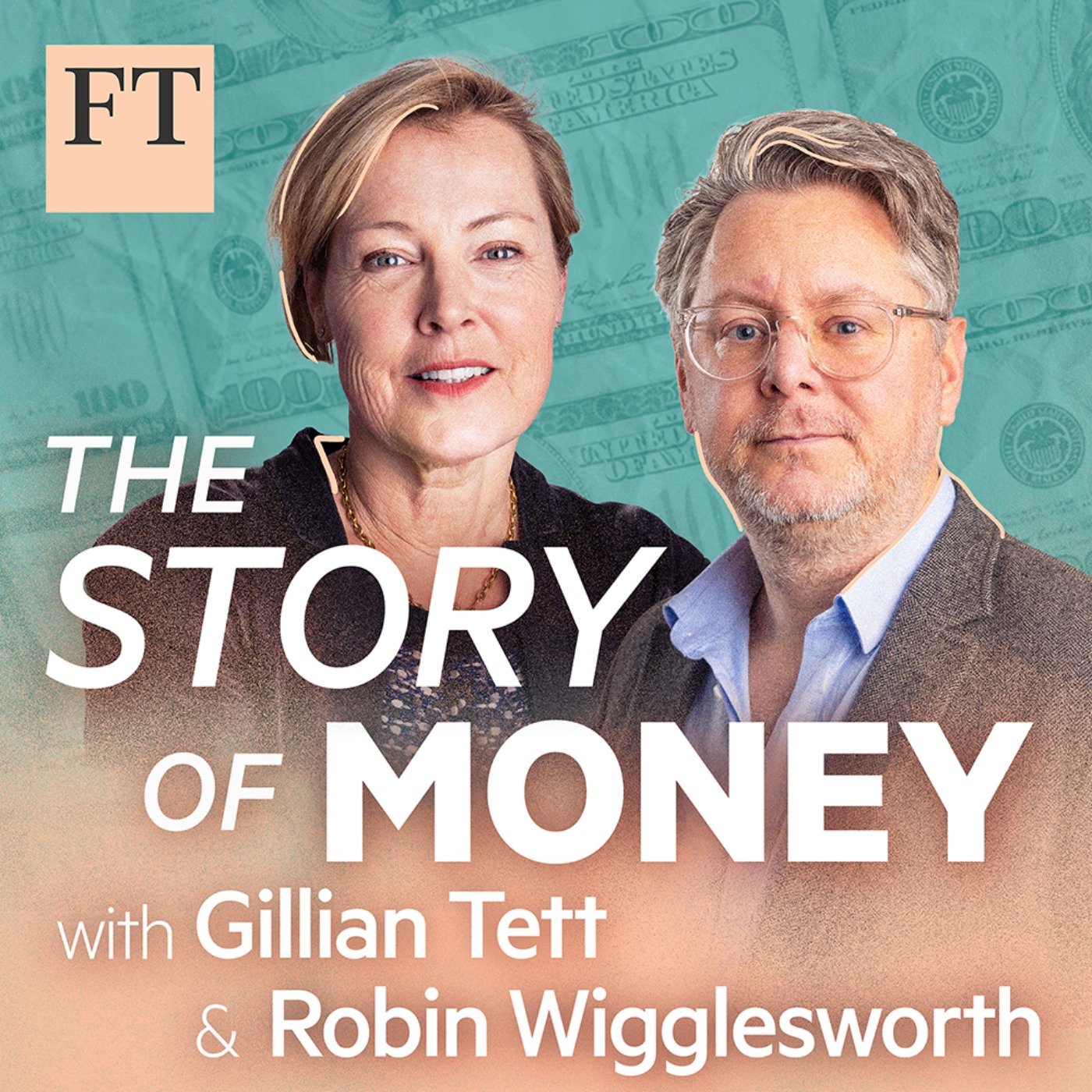
Hosts: Gillian Tett and Robin Wigglesworth
Producer: Lulu Smyth
Executive producers: Kate Ford and Manuela Saragosa
Original music and sound design: Breen Turner
Broadcast engineers: Bianca Wakeman and Petros Gioumpasis
Video editor: Michael Saliba
Podcast development: Laura Clarke
FT global head of audio: Flo Phillips
Learn more at www.ft.com/tsom or get in touch at [email protected].
Read a transcript of this episode on FT.com
Read a transcript of this episode on FT.com
Hosted on Acast. See acast.com/privacy for more information.
More from The Story of Money
All episodesWe use cookies.They keep VO running smoothly and help us improve it. Privacy policy