
 Ask ChatGPT
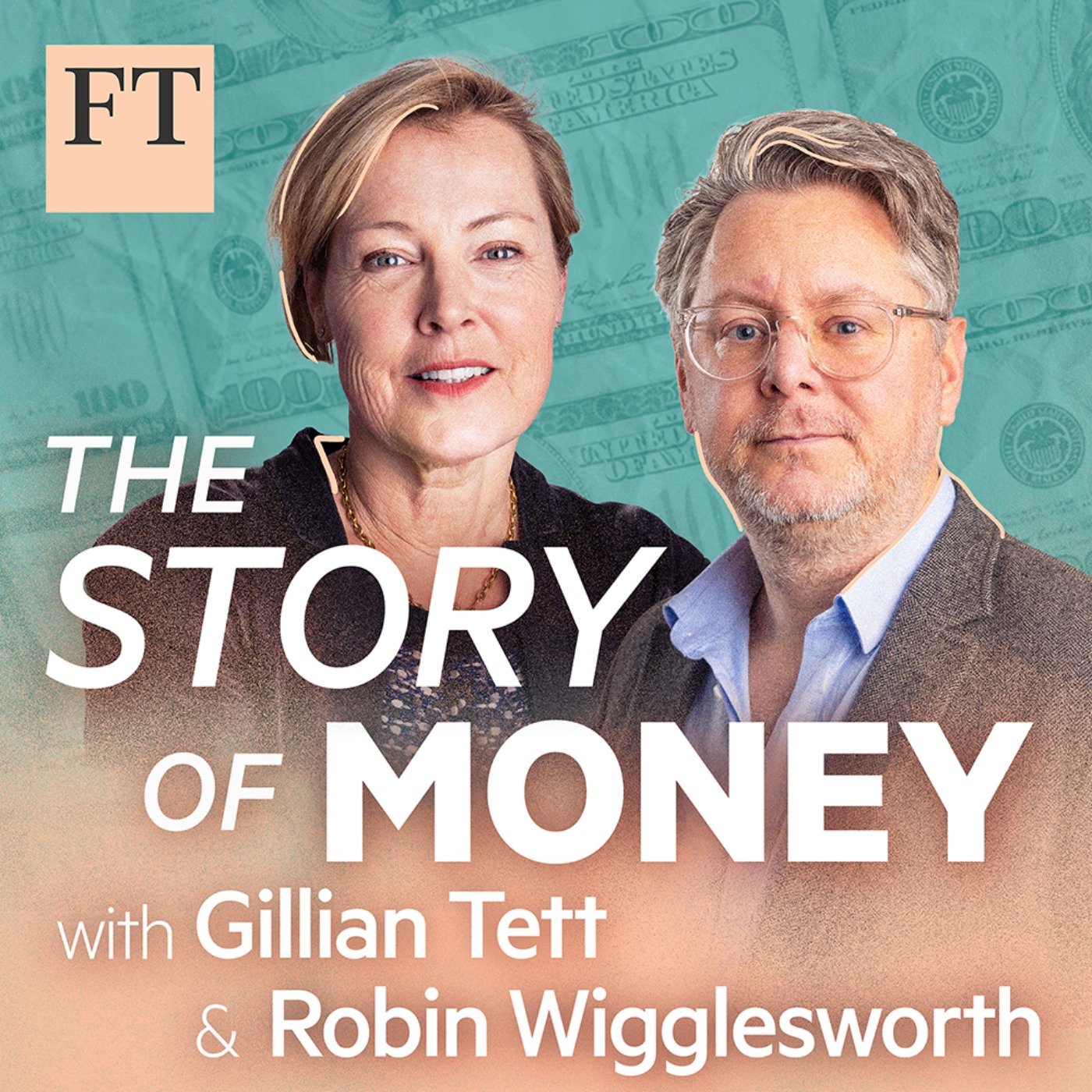

- Podcasts
- The Story of Money
- South Sea Bubble: the shoemaker’s son who sparked Britain’s first financial crisis
The Story of Money8 Jul 2026 · 52m · 16 chapters
South Sea Bubble: the shoemaker’s son who sparked Britain’s first financial crisis
In short
Britain’s South Sea Bubble (1720) and the first major international stock-market crash, reframed as a crisis of British government debt and a debt-for-equity swap that turned into stock “pumping.”
Guest backgrounds
Thomas Leveson, author of Money for Nothing and The South Sea Bubble; professor of science writing at MIT.
Key claims
The bubble wasn’t “about the South Seas” but about consolidating mounting war-driven national debt into tradable shares. A crucial 1720 change let the South Sea Company set the exchange price “with the market,” enabling profit on the spread (e.g., exchanging debt at 300 per share after trading rose). John Blunt and allies bribed political and court figures to secure support, while the company’s business became maintaining the share price rather than trading. The Bubble Act and falling dividends triggered the collapse; shares fell from about 1,000 to 120 by December.
Notable examples
Exchange Alley/Change Alley mania; Isaac Newton investing; other bubbles (Bank of England, East India Company); satirical “undertaking nobody knows what it is”; Bubble Act enforcement shutting smaller companies; 50% dividend then later a 5% dividend in late summer.
Written by AI. May contain mistakes.
Chapters
0:28
The South Sea Bubble Introduction
Exploring the context of the South Sea Bubble and its significance.
“Do you see these kind of episodes of mania as being intrinsic to capitalism?”
1:01
Setting the Stage in 1720 London
Describing the chaotic financial scene in London during the South Sea Bubble.
“Today on the story of money, one of the most notorious financial crashes in history.”
3:33
The Backstory of Government Debt
Understanding the roots of British government debt leading to the bubble.
“To get into the South Sea Bubble, we're joined by a special guest who's an expert at this.”
5:27
Political Dynamics of the Time
Analyzing the political shifts that influenced the creation of the South Sea Company.
“So, Tom, this isn't really a story about the South Sea, is it?”
9:01
John Blunt: The Antihero of the Bubble
Examining the life and actions of John Blunt, pivotal in the South Sea Bubble.
“Yeah, I mean, it's the birth of government debt, basically.”
14:00
The Rise of John Blunt and the South Sea Company
Learn about John Blunt's background, the establishment of the South Sea Company, and its early operations.
“Get on John Blunt and Robin Wigglesworth.”
28:00
Introduction to the Next Chapter
Transitioning into the second half of the podcast discussing the South Sea Company's debts.
“And that's where the story takes another turn.”
29:08
The South Sea Company's New Debt Swap
Exploring the significant changes in the South Sea Company's debt consolidation in 1720.
“The South Sea Company has been authorised to carry out an enormous new debt conversion and this time it covers virtually all of the British government's outstanding debts.”
30:28
The Rise of Share Prices and Market Psychology
Analyzing the factors that led to the dramatic rise in the South Sea Company's share prices.
“even though in some ways it looked very much the same.”
33:14
John Blunt's Role in the South Sea Bubble
Examining how John Blunt influenced the South Sea Company's rise and the surrounding corruption.
“So essentially they can use the conversion price to continually ratchet the price higher and higher.”
Show all 16 chapters
35:36
Public Sentiment and the Hysteria of Investment
Discussing the mass hysteria and public sentiment surrounding the South Sea Bubble.
“everybody was, at least on paper, making insane sums of money.”
39:49
The Bubble Act and Market Manipulation
Analyzing the events leading to the burst of the South Sea Bubble and its aftermath.
“Even John Blunt, justifiably maligned as he is, I don't think he fully realized how this had to end.”
42:00
The Rise and Fall of the South Sea Bubble
Explore the dynamics of the South Sea Bubble and key events leading to its crash.
“I mean, over the course, you know, they started selling relatively early in the rise of the bubble.”
44:41
John Blunt: The Fall from Grace
Understand the downfall of John Blunt and the public's reaction post-crash.
“So you have these bubble companies that are closed.”
48:34
Capitalism and the Nature of Bubbles
Discuss the relationship between capitalism and financial bubbles throughout history.
“But one of the things I find fascinating is that, you know, he becomes this villain, if you like, who has a lot, but not all of his money taken away, but keeps his baronetcy.”
53:20
Capitalism and the Nature of Bubbles
Discuss the relationship between capitalism and financial bubbles throughout history.
“The future of fixed income investing will continue to blur the lines between public and private markets.”

Ask about this episode
Get the gist, explore an idea or ask about something said.
 Claude
On The Story of Money, what are the key points of this episode?
Searching your listeningTranscript
Automatic transcript. May contain errors.
0:00Gillian Tett: What happens next in the story of money? Nuveen has spent over 125 years helping clients answer this question. By investing in the growth of businesses, real estate, infrastructure and natural capital, we continue to deepen our expertise across income and alternatives so investors can confidently write the next chapter of their own portfolio stories. Nuveen. Invest like the future is watching. Visit nuveen.com slash future to learn more. Investing involves risk. Principal loss is possible. This was the first time. People didn't know what was happening. Do you see these kind of episodes of mania as being intrinsic to capitalism?
0:38I mean, one of the things about the South Sea bubble itself is it's almost always told as a morality tale. Look at what greed does for you. It drives you mad. It ruins nations and so forth. You know, it reflects the badness of the individuals involved and the system.
1:01Today on the story of money, one of the most notorious financial crashes in history.
1:10Gillian Tett: The scene is autumn 1720 and we're in London in this tiny quaint cobble street called Exchange Alley. It's now called Change Alley and it's just 10 minutes walk away from the Financial Times headquarters, where I am right now. But it was once a thriving hub where jobbing traders gathered in Jonathan's coffee house to buy and sell shares. And on this particular morning in 1720, it was absolutely chock-a-block because the news has emerged that the South Sea Company's share price has fallen below£150, which is down a whopping 90 % from their peak in the summer. Yes, we are going to be talking about the South Sea Company.
1:53Thousands and thousands have lost their savings. From working class shopkeepers and footmen to some of the great thinkers of the era, like Isaac Newton and Edmund Halley, even King George himself has lost money. And people are angry. They want somebody to blame.
2:11Gillian Tett: And like any good disaster movie, there is a person in particular in the frame who's called John Blunt. And he was the architect of the South Sea Company. He was a shoemaker's son who'd risen up the social ranks to become the head of the most powerful company in the country. And the crisis he helped to engineer would take 300 years for Britain to pay it off. Yep. The last of the South Sea bubble debts was actually only payback in 2015 under Chancellor George Osborne. I remember that. I actually covered it for the FT. But was it fair to blame the entire bubble, this epoch-defining bubble, on just one person?
2:54Or was there something bigger at play here?
2:57Gillian Tett: So today, we're telling a story of the South Sea bubble, one of the most famous events in financial history, the world's first international stock market crash. But it's a funny one, right, Gillian, because it's also one of the most poorly understood events in financial history, actually. And at its heart, it's not actually about the South Seas at all, really. It's all about government debt, British government debt specifically. So, Robin loves talking about debt, but we're going to be talking about a very important wrinkle today. So, welcome to The Story of Money with me, Gillian Tett. And me, Robin Willsworth.
3:48Gillian Tett: To get into the South Sea Bubble, we're joined by a special guest who's an expert at this. Thomas Leveson, author of many books, including Money for Nothing, The South Sea Bubble, which of course is relevant today. Tom is a professor of science writing at MIT. So great to have you with us, Tom. Wonderful to be here. Thank you. We are going to start our story in 1710. So this is Britain right at the end of the reign of Queen Anne, the last of the Stuart monarchs. This is a nation bubbling with change. It's the eve of the Industrial Revolution. The Age of Enlightenment is on the horizon. And although there's no steam engines or palums quite yet, Britain is starting to build a naval trading empire.
4:35This is one of my favorite periods in English slash British history. Yes. You have wild political change. This is one of the periods when there's the most, not necessarily mobility, but possibility. Britons were trying everything. There was this sort of wild economic, irrational exuberance. Daniel Defoe, who's a marvelous character running through this whole period, one of his early works is an essay on projects, which are all the basic startups and enterprises that people were doing. And this is a huge tome with all kinds of wild stuff, you know, that people were willing to try anything and privately raised money for what they were doing.
5:15Gillian Tett: Sounds a lot like the Silicon Valley bubble today, doesn't it? It really is a bit. And of course, you know, an awful lot of those would-be enterprises didn't go anywhere in sort of catastrophic fashion, as do most startups today. So, Tom, this isn't really a story about the South Sea, is it? It's actually about British government debt. Explain to us what was happening with British government debt, because it was rising fast back then, wasn't it? This whole story is basically exclusively about figuring out how to pay for today's expenses with tomorrow's money. That is, say, the creation, in effect, of the first genuinely national debt, which the British started, the English started doing in 1693 or so, and then went gangbusters for a very long time afterwards.
6:02What was driving this whole focus on debt was the fact that Britain from the Glorious Revolution on was, you know, just a belligerent country. I mean, just, you know, hard men in the pubs late at night on Friday, you know, except it was worldwide. Well, there's that famous map showing the number of countries that the UK has invaded over the centuries. Right. So, I mean, just in the numbers, England and Britain fought wars between 1689 to 1815 when, you know, Wellington and Luger defeat Napoleon for 76 of those 126 years with over the course of the century, larger and more expensive military endeavors.
6:47So you can see how that would cost a lot of money, and the money has to come from somewhere. And starting very early on in this process, England is already trying to exert more force than it has ready money to pay for. So they have to borrow. And in essence, the South Sea bubble is all about trying to figure out how to deal with that debt and then the mountain of increasing debt that followed between the end of the Nine Years' War and the start of the actual stock market craziness in 1720.
7:21Gillian Tett: And of course, the interest rates were pretty high back then, weren't they? And it was all a bit fragmented and messy from what I understand. Early British, English and British debt was a complete dog's breakfast. You know. Known by the technical term. Exactly. Private borrowers could borrow at a pretty standard rate. It was based on, you know, the expected returns from land and so forth. And very often, you know, five, six percent maybe. The British government tended to borrow at a time when it most urgently needed the money and needed large chunks of it. So you can imagine the kind of terms that it would take to get that cash, especially as, you know, it wasn't entirely settled that the government was an entirely reliable creditor.
8:05So, you know.
8:06Gillian Tett: So it's a bit like a payday borrower kind of forced to get the, you know, any debt I could find at really high rates. Yeah. And, you know, again, when I talk about the national debt, that is to say, you know, parliament takes over the sort of financial governance of the nation from the king, from the monarch. Yeah. This is after the Glorious Revolution, right? Correct. Where they kind of import a lot of practices from some of the Dutch city-states and provinces and essentially start issuing bonds by parliament rather than the king himself personally hitting up some goldsmiths for some money. That's right.
8:40I mean, it's a huge change in the sort of financial structure of the British state, because now anything that was borrowed was guaranteed not by ultimately a single person. You know, Parliament says we're borrowing this and we as a nation will pay it back. And it's you know, it sounds like a little thing, but it's actually a huge transformation. Yeah, I mean, it's the birth of government debt, basically. I mean, true government debt, rather than some loans or bonds issued by a city-state or a nobleman or a king who, let's face it, in some cases could chop your head off if he didn't want to pay you back.
9:15Gillian Tett: And of course, there was another thing going on at the time as well, wasn't there? In that the growth of the coffee houses in London that was creating an ecosystem of wannabe traders sharing informational rumours. You had the Bank of England emerging as well. And so it was a very febrile time from what I understand. And if we start at 1710, which was a crucial year, that was when you also had a big change of government, don't you? Tell us about that, because the Tories had come in after 16 years of rule by their arch enemies, the Whigs, and they're the ones at the center of the South Sea Company story.
9:50That's right. Broadly, the Tories were the countryside, the orthodox religious side, the landed gentry and aristocracy, the party of all those people. And the Whigs were more the party of the cities of mercantile interests. But the Tories were interested in what became the South Sea Company and what it offered because the entire financial apparatus of the nation that had been built up in this sort of beginnings of the modern age of financial life had grown up under the Whigs and were largely controlled by Whig interests. So the Bank of England, the East India Company was a lot older, but was, again, controlled by the moneyed interests and hence sort of more naturally a wig leaning kind of institution.
10:40Gillian Tett: What modern day Trumpians would call the swamp. You had the swamp in charge. Yeah, exactly. And boy, did the Tories use rhetoric, at least the equal of Mr. Trump's, to describe their opponents. One of the great things about this age, just for anyone who wants to dive into it, is the level of eloquent vitriol was just so wonderful. I mean, and you have satirists, vicious satirists like Swift and Pope and many others who just were great at eviscerating their rivals. So what happens in 1710 is the Tories come in after the Whigs sort of overreach their power, and they're faced with the War of Spanish Succession that's just been piling up mountains of debt and debt that is incredibly complicated and confused.
11:35because, you know, the government borrowed in emergencies. They were doing, they sold lottery tickets that turned into interest-bearing bonds over, you know, after the prize drawing. There were tons of pensions and annuities. All this, you know, heterogeneous mountain of stuff was sitting on the books, consuming an enormous proportion of British government revenue. It's around nine million pounds, right? At the time, it was astronomically high. Oh, yeah. Yeah, super complicated, as you say. Multiply by well over, I mean, there are different measures of inflation over that period, but multiply by well over 100 to get the appropriate numbers.
12:12So, you know, basically, Tory government comes into power after all this time and they can't do anything because there's no money. And they don't even know how much no money there is. So the first thing they do is they try and figure out what the British government owes. And then they try and figure out, you know, when they realize it's this mountain and it's often very high interest and it's often on these really onerous terms for the government, irredeemable, long lasting, high interest rates, you know, all this stuff is out there. What do you do about it? Well, what you do about it is you try and figure a way to transform that debt into something that's more manageable.
12:48And that's where the South Sea Company comes in. You consolidate the debts, basically. So you had this, the Tories come into power in 1710. And they are faced with a fiscal black hole, I guess, in modern parlance, nine million pounds worth of debt. But the debts are also super complicated and they want to consolidate it into one sort of homogenous blob.
13:08Gillian Tett: So at this point, though, there were essentially two key characters to jump in. So one is Sir Robert Harley, who was a chancellor of the Exchequer at the time, formerly the Lord High Treasurer to Queen Anne. And he's the one who decides to set up a Tory-controlled company. But the other crucial person is John Blunt, our antihero, who's a really curious character. I mean, he's one of the most influential people in the financial history of the time. And what he actually does next is going to impact the world for a very long time. But he's also very, very mysterious. I mean, there aren't any biographies about him, really.
13:45Gillian Tett: I mean, he hasn't even got his own Wikipedia page. Which is just sad, right? Social exile. I know, I know. Does he even exist then if he doesn't have a Wikipedia page? You have a Wikipedia page, Jill, and I don't, though, so clearly, you know. I'm sure you will soon, Robin. And someone out there, get on John Blunt. He should definitely be memorialized. Get on John Blunt and Robin Wigglesworth. They both deserve their Wikipedia pages. Let's stick to John Blunt. He sounds like a far more fascinating character than I ever will be. He is a fascinating character, and I have to confess, I mean, this sort of maybe Stockholm Syndrome, seeing as I was shut up in a room with him for so long, but I've come to have a great deal of sympathy for him.
14:19You know, he was, you know, he's been he's been characterized as a villain, but I'm not sure that you can attribute malice or a sort of deliberate intention to defraud the nation, which is what he was eventually accused of. You know, the background on him, you know, there is very, very little, you know, primary source material on him. His father was a shoemaker and quite a successful one, ultimately, but, you know, clearly working class person. And Blunt himself was a, you know, a sort of go West young man figure He came to London from the hinterland And really without any, you know, significant connections or boost up Set out to make something of himself And did And at that point Change Alley, Exchange Alley was And the financial world it symbolizes was one of the only really immediately accessible places for someone with no capital to come in and start doing business.
15:21Yeah, he was a scrivener, wasn't he? Yes. Somebody who basically arranged his legal contracts. It's a clerk, essentially. Yes, he was that, and he apparently was decent at it. Most importantly for him, it appears to be where he made his first contact in the sort of financial world properly. and fairly shortly sort of after his stint or you know into his stint as a scrivener he begins to get directly involved with um kind of dicey stock market stuff weren't they all dicey though back in the day i mean the jobbers of change alley or exchange alley were infamously dicey characters weren't they chucked out of the royal exchange for being too loud too boisterous to everything, essentially.
16:03Yeah. I mean, again, I think certainly if you remember the sort of go-go 80s when you couldn't go to a restaurant and have a quiet meal without a table full of young bankers behaving badly. Think of that sort of on steroids in the 1690s. Okay. Well, okay. Let's pivot to the South Sea Company and how he starts involved in that. So it's 1710. When Tories are back in power and they want to make their mark, they have this unruly pile of debts they want to deal with. Robert Harley, the Lord High Treasurer, turns to John Blunt, wants him to do something, essentially. Can you walk us through the South Sea Company, how it was set up?
16:51What was the plan? Absolutely. They were really trying to respond to the changes that were already undergoing with this national debt and this profusion of financial instruments. And they had two models. One, they had the Bank of England, which was a banking concern that raised capital and loan money on fractional banking. And the East India Company, which was, of course, this fantastically successful mercantile trading company and then Empire. So those were the two sort of big models for financial powerhouses. And the South Sea Company was an attempt to kind of mush both of them together into a single entity.
17:33So what it was going to do is from the government side, they were trying it out first with, I think, on the order of a million pounds worth of debt. And what they want to do is take in those debts and exchange them. This is what sort of Blunt offered Harley and then they worked up together. Offer the people who handed in their debt shares in the South Sea Company. The British government would continue to pay interest on that debt, but it would be a reduced rate. And all these various debts that had been owed to different people suddenly became this one sort of tranche of a million pounds worth of exactly the same kind of note or instrument.
18:12And the crucial advantage for the people who traded, you know, they weren't just trading in their debt and getting a lower interest rate. They got two other things out of it. One is they got the possibility of sharing in profits from the trading half of the South Sea Company. And the other thing is they got liquidity.
18:29Gillian Tett: So just to jump in there, it's a bit like saying to people who might own treasury bonds today, you know, we'll take your treasuries and we're going to swap them for a bunch of, say, Elon Musk's latest speculative dream vision company or whatever. Is that roughly what's going on here? Because it's a pretty novel concept, taking government debt and swapping it for a pie in the sky, new venture instead? It wasn't simply pie in the sky because they were doing, you know, the punters got two genuine benefits out of it. As I said, there was the possibility of profit from a trading company. And this was, you know, the South Sea Company was promised a monopoly on British trade with the Spanish colonies of South America.
19:12So they were promised this monopoly of trade, including trade in slaves, as well as trade in trade goods. This was a valueless proposition at the time. Yeah, they were at war with Spain at the time, right? Exactly. So this was a, you know, when we get to this peace stuff, you know, if we get, whenever we get there, you'll be able to make out like bandits. And they explicitly held up the East India Company as the model for what they expected and hoped to be able to do. Again, huge hype, sort of musk levels of hype at the time, but still not entirely meaningless. There was, in fact, the possibility of that trade.
19:53But the other thing that was actually important to people, and I think this is one of the biggest reasons why the trade was ultimately this first debt for equity swap was effective, was if you held government debt in its sort of undigested form, you couldn't sell it to somebody else. You would get your six pounds or 100 pounds a year, whatever it might be. But that was it. But if you had shares in a chartered joint stock company, well, yeah, you just go down to Exchange Alley and you sell them. You can get access to your capital. And that was a big deal.
20:24Gillian Tett: So for the creditors, people holding British government debt, the idea of suddenly having liquidity in a way to cash out or what people today in Silicon Valley like to call a liquidity event was pretty attractive. And then for the British government, I would imagine they probably not only managed to consolidate the debts, but get a much lower rate of interest, didn't they? That's right. This was always billed as a win-win-win proposition every time this particular maneuver was tried. The government got lower interest rate and a more manageable debt, better terms. They could, you know, if the debts being swapped were irredeemable, this move turned them back into debts that the government could pay off before term.
21:02So they got very valuable things from the government point of view. Debt holders got still some income, a reduced interest rate, but they still got it. And they got both the gamblers flutter on the possibility of future profits and whatever the company was going to do. Kind of makes sense to me. I mean, it's kind of easy to dismiss as financial engineering, but it does actually sound like a genuine win-win-win in that it's an option. You can exchange a piece of highly liquid alone, basically, to the UK government. It's a hodgepodge of it for something more homogenous, a homogenous stock of tradable stock that pays a dividend, that kind of walks, talks and quacks a little bit like an interest payment as well.
21:50But you have liquidity and you have that kind of option on the air. Maybe at some point there'll be peace. and this company will enjoy the trade bonanza to the West, albeit with slaves, let's not gloss that over, as the East India Company had on the eastern side of the hemisphere. So I kind of see why this was actually a really smart idea. It was.
22:12Gillian Tett: It was a bit like Elon Musk trying to persuade everyone to back a mission to Mars. It's like, yes, we'll get there in the end, don't worry about it. I mean, it sounds lucid to us. Well, I mean, defence of blood. I think this sounds far more credible, slavery aside, than Elon Musk colonizing Mars. Yeah, with Musk, wake me up when they figure out the radiation problem traveling between here and there. Details, schmietels. Exactly. We don't care about those kind of things. You need the vision to see Mars. Exactly. But I mean, the thing about this, I think, Robin, you're exactly right. This was not a bad idea.
22:45It was actually a really good idea and the foundation of much financial development that followed. But just because it's a good idea doesn't mean you can't torque it into something quite different, which is kind of what happened.
22:58Gillian Tett: Absolutely. And of course, one of the other bits to this story, which has got glossed over in history so much, is that the economic opportunity everyone was excited, getting excited about, to put that in quotation marks, was actually about human beings in slavery. And, you know, again, Cambridge, like Oxford, like almost every British institution right now is having to recognize that its antecedents had a role in the slave trade, whether that was, you know, Isaac Newton or Alexander Pope, Daniel Defoe. There was almost nobody at the time who was entirely disconnected from the slave trade. And that just is a grubby truth about this period in history, isn't it?
23:38Yeah, there is this sort of moral crater at the heart of a lot of this early, I mean, one might say not just this early, but certainly present in the early rise of British imperial capitalism. So, I mean, yes, the South Sea Company was deeply involved in the slave trade. They weren't, particularly in the beginning, they weren't particularly good at it. It turns out there are skills involved even in the brutal trade in human bodies and lives. But, you know, when it was first set up, that wasn't the emphasis. You know, it was, again, trading with Spanish colonies was entirely notional. But, you know, in a couple, three years time, there was, you know, the war finally, you know, subsided to an exhausted end.
24:27And there was a treaty of, you know, it was called the Treaty of Utrecht that formalized the peace. And as part of that process, the South Sea Company gained, in addition to its alleged trade monopoly, it got a license to exclusively deliver, I think it was around 4 ,800 slaves per year to the Spanish colonies. and though they were not as I say initially very good at it ultimately you know as the company played out over the years that was one of its few you know for some time reliable sources of income of profit. So the South Sea Company was formed by 1711 formally and as Tom mentioned you had this peace treaty with Spain and this war finally subsides so they have this at least potentially lucrative if unsavory monopoly on slave trade with Latin America.
25:23But the reality is that, as Tom said, they weren't very good at this and it wasn't super valuable. And the share price doesn't really take off. It's kind of just bobbing along. And that's why I think it's so interesting that it were many years before the South Sea Company, the share, became kind of the the mega famous bubble that we know of. John Blunt, of course, is getting richer. And Tom, I'd love to hear what happens next after this peace treaty and after, essentially, the company is kind of in operation and John Blunt is on manoeuvres, but it hasn't quite taken off yet. How does we get to that point?
26:04It's really interesting because, you know, for most of its early life, the South Sea Company is an ordinary, moderately successful, very boring business. They do try a bunch of expedience to make the trading side of the company work. That's where the dream of wealth beyond imagining lay for Blunt and his associates, and presumably their shareholders. But really what it was, was very close to just a pass-through bank. It was just kind of like take the money in from the government every six months and send it out to the shareholders and clip your coupons and take your percentage off the top. And that was it.
26:43And you can live a comfortable life running something like that, but it's not dramatic, it's not exciting, and it's not going to make you epically rich, which is something that clearly Blunt wanted to do. So it's just poking along and doing its stuff until the point at which there's another change in power in London. The Tories get dumped after Queen Anne dies and the Whigs come back in. Yeah, 1714, right? Yeah, 1714. 1714, the Whigs come back to power. Right. And then there's a certain amount of time, A, getting revenge on the Tories for the insults they endured the last four years. But by 1717, they're sort of going, wait, we have the same problem that we had in 1710 and that the Tories have had since then and we now have, which is the debt hasn't gone away.
27:39Quite the reverse. They've been fighting wars more or less continuously. And the debt has grown enormously just in the intervening seven years between loss of power in 1717. So the new chancellor of the Exchequer, Robert Walpole, and his associates say, you know, we got to do something. And that's where the story takes another turn.
28:03Gillian Tett: And I seem to recall that the doing something meant they went out and consolidated the debts, which were now more than£30 million, into the South Sea Company, which once again seemed to make sense at the time until it all went horribly wrong. So that's where we're going to go to in the second half of this podcast. So come back after a quick break.
28:34Gillian Tett: The future of fixed income investing will continue to blur the lines between public and private markets. Nuveen's credit platform was built to navigate this shifting landscape, channeling capital toward the businesses, infrastructure and energy solutions that are shaping tomorrow's economy, all while aiming to deliver the resilience and returns that portfolios seek today. Nuveen. Invest like the future is watching. Visit nuveen.com slash future to learn more. Investing involves risk. Principal loss is possible.
29:08Welcome back to the show everybody. So it's the beginning of 1720. We're going to get into the action now. The South Sea Company has been authorised to carry out an enormous new debt conversion and this time it covers virtually all of the British government's outstanding debts. It's around 30 million pounds worth. and things are about to get a little bit crazy.
29:35Gillian Tett: Exactly, because for the last nine years, the company's share price has been kind of boring. It's been bobbing around at about£100 to£130 per share. But then over the next 12 months, it starts behaving like a meme stock. It goes up to£1 ,000 a share before then collapsing right back to where it started. And that, of course, means that not only did loads of investors get involved, but lots of them ended up facing financial ruin. But Tom, before we talk about exactly how the bubble unfolded and burst, can you tell us why it happened now? Because the South Sea Company was originally set up in 1711 to carry out a£9 million debt for equity swap.
30:18Gillian Tett: So what's different about the new debt swap that happened when the government tried to consolidate the debts and why did it create such a calamity? 1720 was very, very different from the first South Sea Company debt for equity swap, even though in some ways it looked very much the same. I mean, they were still issuing new shares to buy debt with. The punters were getting their shares and liquidity. All that good stuff was still there. But there was a crucial difference in the terms of the deal, as with all financial transactions. You know, the devil's in the details, right? In previous debt for equity swaps, the price at which a share would buy some debt was set.
31:01And it was set at the par value of the shares, 100 quid. But for the 1720 deal, which remember was going to consume this enormous, unprecedentedly large amount, all the outstanding British government debt, 30 million - Yeah, it was huge, right? It was just far bigger than the previous one as well. Oh, vastly, vastly bigger. And, you know, the critical detail there was instead of exchanging debt at par, so 100 pounds face value South Sea Company share for 100 pounds worth of debt, the price was allowed to float, quote, with the market. You know, the South Sea Company could charge what it could get people to pay, what the market would bear, sort of loosely connected to what this stock was trading for on Exchange Alley.
31:50So if people anticipated enormous gains, they would bid the stock up. And that's exactly what happened as the deal was being negotiated and discussed in parliament. Went from 100-some up into the 200s. So when the time came to actually launch the deal, South Sea Company exchanged its shares for debt at 300 quid per share, three times the par value. The terms of the deal meant they got to make new capital, new shares for every 100 pounds exchange. So somebody comes in 100 pounds, they create a new share. But they can sell that share for 300 pounds. They can do the exchange. So they have 200 quid profit right on top.
32:33Wow, nice. Yeah, not so shabby. With all these exchanges, each transaction they did put more cash or more shares. They could issue new shares against the capital onto the company's books, which made it increasingly appear more valuable. It held more wealth as capital as the share price stayed high and went higher. And that, in essence, both made the company appear wealthy and gave them not just an incentive, but an absolute vital necessity to keep the share price up. So all of a sudden, the business of South Sea Company became not banking, not trading. it became stock pumping. So essentially they can use the conversion price to continually ratchet the price higher and higher.
33:22That would make people wealthy or seemingly wealthy. And then eventually human psychology played its own role in just keeping the price going higher and higher and higher, almost without them needing to do the continuals of debt conversion ratchet operation, essentially. That's exactly right. I mean, a lot of the bubble turns on human emotion. You see a share going up. You want to get in on that. Yeah. I mean, can we go back to Blunt? What role is he playing here now? What kind of tactics does he use to make sure he's allowed to kind of almost like inflate the South Sea company? Well, you have to remember, this was a period in politics where sort of a certain amount of corruption was routine.
34:05You know, if you were, you could get very rich being a politician in certain jobs. Nothing like that happens these days. I'm sure it does not, of course, never. But there were sort of norms and expectations. There was sort of a limit to the amount of corruption you were supposed to do. And John Blunt, one of his great innovations, him and his close associates in the company, was to figure out how to bust through those norms in a gloriously, hideously, ultimately traumatic way. Basically, what they did over the course between January when the deal was first made public and the middle of spring when the deal went live, they bribed everybody who could possibly influence the decision.
34:49Almost every major politician who was in power at the time, you know, many members, more or, you know, more regular members of parliament who could vote on the right side, people in the court very close to the king. You know, they locked down as much support as possible by basically promising each of these people's shares in the South Sea Company that they would create when this capital came in and that they didn't have to pay for it. They received the shares at a nominal price on the books, but they never paid that price until they cashed out.
35:23Gillian Tett: So the question I have then is why didn't the existing investors look at this and cut and run? If they were going to be diluted out, why not panic and get out? That gets into sort of matters of the human heart. One of the reasons people didn't get out is that for a considerable amount of time in the bubble, everybody was, at least on paper, making insane sums of money. If you will notice that the structure of the deal, given that the South Sea Company can decide what price at which it will exchange shares, it looks like the company is getting richer and more powerful. Well, that's worth more money, isn't it?
36:01If you don't think deeply into what's going on, it can look like this transaction is a perpetual money machine.
36:08Gillian Tett: And of course, John Blunt himself is enjoying this alchemy too, because he had, what, 300 ,000 pounds worth of company stock on paper. And the modern day equivalent of that is 165 million pounds. I mean, that's extraordinary alchemy, isn't it? Wow, ka-ching. Not bad for a shoemaker's son. You know, this is a, you know, hellacious mobility in that time. You know, enough so that we may be leaping ahead in the story, but, you know, he was made a baronet for his services to the nation in managing the debt and making so many people so rich, including the people who award baronetcies. So it's easy to feel okay about hanging on to your shares even as you're, you know, being diluted.
36:51it's easy to feel okay about being a latecomer, buying in at an increased price compared to what it had been months ago if you believe that this has somehow cracked the financial decoder ring secret or whatever and can only keep going up. No, but it makes sense to me. I guess John Blunt is kind of the villain in our story and he deserves a lot of the blame for having ramped up almost deliberately the South Sea Company's shares and then using those shares to essentially co-opt and compromise the entire British establishment in the process. But obviously it seemed to come at this era of financial euphoria, of excitement.
37:44It was all new and the future was bright. So you had all these kind of other crazy companies also going nuts. Some of the Bank of England's shares also went nuts. The Bank of England, of course, was at the time a normal commercial bank. You had the East India Company's shares also went nuts. You had all these kind of new crazy companies that were going to make square cannonballs, flying machines, were going to plant walnut trees in Virginia. There's obviously that famous example of somebody satirically posting a notice to raise money for a company for carrying out an undertaking of great advantage, but nobody knows what it is, which is obviously almost like now, almost a famous expression of how kind of demented things became at the peak, right?
38:33Gillian Tett: Of course, you had even some brilliant minds like Isaac Newton getting sucked in. I mean, we talked about him on an earlier episode, and he got sucked into the mania as well. So with everyone going gangbusters for this, I mean, was there a sense that there was this mass hysteria that was beyond anyone's control? I think so. And I think, you know, there's this whole sort of formal economics debate is, you know, are bubbles real? Are people making rational decisions, you know, even in the midst of the bubble? And the answer is, you know, some people are. But I think you have to take seriously the experience of people on the ground during a bubble.
39:08and absolutely there was a money mania going on. Defoe is a wonderful chronicler. He's one of the first sort of really live-by-his-pen professional journalists and he sort of would do kind of color pieces in which he'd go around to churches on Sunday and see what people were talking about. And at the height of the bubble, you know, God wasn't in it. It was like, how goes the stock? Goes, it flies, you know. It was that kind of thing. So, and one of the things about the South Sea bubble to remember that genuinely makes it different from every subsequent bubble is this was the first time. People didn't know what was happening.
39:45We have, you know, we should be smarter than we are. The fact that we keep repeating the same mistakes that they made in 1720 does not reflect well on the capacity for the human species to do one trial learning. Even John Blunt, justifiably maligned as he is, I don't think he fully realized how this had to end. He knew and he admitted in writing early on during the rise of the stock that the businesses of the South Sea Company had become the business of keeping the stock price high. Again, that doesn't sound so unfamiliar to contemporary markets, does it? But he said that explicitly. We know that things start going wrong, right?
40:26I mean, as we know today that things inevitably crest. And that happened the summer of 1720. And I'd love to hear, you know, why the bubble burst? Why did this euphoria suddenly get, essentially disappear so quickly and things just collapse? Was there one thing that triggered it? There was a singular event that really sort of ended the mania, but it was building over the course of summer. I mean, when John Blunt said it was his business, the company's business to pump the stock, they did all kinds of things. They sold on the layaway plan so people didn't have to put up all the money. There were options available.
41:08They loaned money. And even the one, basically the only financial regulation at the time, they even secretly went, the South Sea Company went onto the market and bought back their own shares to keep pumping up the price. And there were a whole bunch of maneuvers like that that continued to sort of create the appearance of lots of demand when in fact there was much less.
41:32Gillian Tett: But then, of course, as I understand it, the issue that basically started to create the crash was that with all these shenanigans going on, we then had the Bubble Act, lovely name, of 1720, when actually Parliament began to say, this is not okay, we're going to ban joint stock companies. You began to get a liquidity crisis. And then classically, some of the South Sea Company directors began to start selling, even including John Blunt. Absolutely. I mean, over the course, you know, they started selling relatively early in the rise of the bubble. You know, these were not stupid people, right? And there were some private investors without inside information who also were clever enough to sell early and made real fortunes.
42:17And there were some who very much did not. But the South Sea Company supported the Bubble Act really as part of their attempt to keep the stock high because they felt that every pound that went into a company that isn't going to tell you what it does or whatever is a pound that wasn't available to serve as demand for its shares. So they – and they had – basically it said any company that doesn't have a royal charter can't trade on the stock market. They had a royal charter so they thought they were safe. And basically what happens immediately after the Bubble Act passes is not much. Nobody enforces it.
42:54They're still trading all these bubble companies. And in August, as demand seems to have plateaued, I mean, the shares peak at 1 ,050, I think it was, in June, and then noodle around between 850 and low 900s for much of the summer until August when the company goes back one more time, offering more shares to the public at, again, this 1 ,000 pound per share price. And in August, that subscription is well-subscribed. Isaac Newton, again, invests in that August subscription. So this is after six weeks or two months of kind of flat performance, somehow still the hype and allure of the company finds its last bigger fools, I guess.
43:45But then again, noting that they have to pump up demand, the share price hasn't gone up, and the fall stock trading season is almost upon them. I don't think they thought of it that way then, but that was what was going on. The South Sea Company itself urged the government to start enforcing the Bubble Act, and they did, shutting down four smaller companies that were trading, including one that had the Prince of Wales as an investor, which was, you know, I guess folly is no respecter of rank. No, and it's quite delightful that the South Sea Company itself encouraged the government to forceless act that would inevitably or eventually contribute to its own demise or decline.
44:34Gillian Tett: And of course, then the crash happens and the shares go from£1 ,000 a share to£120 in December. So you have these bubble companies that are closed. And I think smarter people than me have thought that that's one of the things that kind of shocks the trading public. And they realized that there's no more justification for the South Sea valuation than there was for some of these smaller companies trading at ridiculous sums. And there was one more thing. In order to continue to pump up the stock, one of the things that had worked earlier was the company offered a 50 % dividend. You get half a share for every share you owned early on.
45:16Paid in shares, not in cash, always a useful trick that this company used over and over again. And then in this period, in late in summer, they offered another dividend. And this was 5 % on par value. Well, it's starting to feel a little bit desperate, basically. Well, both desperate. And if you think about it, if you paid 1 ,000 pounds for a share at 100 quid par value, and you're going to get five pounds for that share, that's a half a percent interest on your 1 ,000 pound investment. And even worse, 5 % dividend on 100 pounds was the same amount of money basically you could get by lending money out on a perfectly ordinary private concern that had collateral and was much safer and so forth.
46:05And if the only thing this company was doing was delivering the sort of same old regular return you could get anywhere else. I think, you know, the penny dropped for a lot of people and, you know, they started running for the exits.
46:18Gillian Tett: So they start running for the exits and inevitably this starts to feed on itself. And you have a classic crash, which sucks in a lot of famous people like Jonathan Swift, Alexander Pope, Daniel Defoe. And, of course, what happens next is everyone starts looking for someone to blame. And John Blunt is in the frame. So what happens to him? It's really interesting. So, you know, after the crash, it becomes clearly irreversible. You know, people rush to Parliament and say, do something. You know, what are you going to do? Well, one of the things you can do is start prosecuting everybody who was involved.
46:57And they prosecuted members of the government who had been bribed. Everybody had been bribed, but they selected a few prominent figures pour encourager les autres. So there's this kind of, yes, we are chopping the heads off our own. Aren't you satisfied yet? And they pursued a lot of South Sea Company directors. And, you know, they would emerge with most of their fortunes taken away. But for John Blunt, there was no mercy at all. You know, in June, he'd been made a baronet and lauded as the greatest, you know, hero the nation had seen in centuries. Now he is the gum on the sole of your shoe, the scum of the scum, the worst you could imagine.
47:35And his 300 ,000 pound fortune is basically seized. He's allowed 5 ,000 pounds, which is not a trivial sum of money by any stretch. But its annual income, based at the sort of 5 % return rate, was about 250 quid, which is it's more than enough to keep a family's body and soul together. But it's not wealth by any stretch of the imagination. And he was allowed to keep his baronetcy, right? Even today, the Blunt baronetcy still exists. And apparently one of his descendants, I'm delighted to have learned, is credited with bringing Morris dancing back to the UK in the 20th century. So you could argue that the Blunt family has committed two horrific crimes on British society.
48:24Indeed. I'm not sure you can forgive the latter. But no, he was basically sort of banished from public life and banished from the business of trying to get rich quick.
48:34Gillian Tett: But one of the things I find fascinating is that, you know, he becomes this villain, if you like, who has a lot, but not all of his money taken away, but keeps his baronetcy. And yet, the reality is that it's way too easy just to blame John Blunt for everything, because there clearly was something else much bigger going on. And recognizing that really matters for how we look at the financial world today, doesn't it? Or any vision of capitalism? I mean, do you see these kind of episodes of mania as being intrinsic to capitalism? I mean, one of the things about the South Sea bubble itself is it's almost always told as a morality tale.
49:13Look at what greed does for you. It drives you mad. It ruins nations and so forth and so on. You know, it reflects the badness of the individuals involved and the system. Is our bubbles, you know, inevitable in capitalism? Capitalism writ large, I think, no, they're not inevitable. But certainly, you know, in the forms of financial capitalism that we have evolved, in which we certainly go through regular periods when we forget the dangers and relax oversight of the markets, oversight of the particular developments of the markets. it's very, very easy to construct new, sometimes potentially very good financial ideas that nonetheless can basically follow exactly the same pattern as the South Sea bubble and shoot out of sight.
50:02I mean, we're not all so terribly young and forgetful that we've forgotten the subprime mortgage crisis, which the mathematics is much more complicated. The derivatives involved are much more elaborate than the simple options available in 1720. But if you look at it sort of phase by phase, what was initially a very, very good idea, you have hundreds of thousands of individual mortgages that are serviced by one mom and pop bank in somewhere and whoever. If you instead create a secondary market in mortgages, just as you created a secondary market in government debt out of the South Sea bubble and you financialize them, it becomes much easier to trade mortgages.
50:44Money becomes cheaper. It becomes cheaper for people to buy homes and cars. And that's all great until you blow it up by layering more and more leverage on top so that a single adverse event can knock the whole thing down. That's almost sort of step for step what happened in the South Sea bubble, right? So I think it's not necessarily inherent in capitalism per se, but you put capitalism and human nature together, then yeah, bubbles are part of our daily life, I'm afraid. Yes. Well, I mean, sadly, we are getting to the end of this week's episode that we do love talking bubbles. And there is so much more to say about the South Sea bubble.
51:25The bursting left obviously a huge mess in its wake. It took centuries to pay back some of the perpetual debt that it left. And also, we needed some to clean the mess up. So there are lots of lessons to be learned, and somebody needs to put those lessons into action. So if this bubble, as you say, kind of represents the birth of modern capitalism, the marriage of financial capitalism and human nature, we needed somebody to kind of maybe put this new capital markets to better use.
51:59Gillian Tett: Absolutely. And I mean, at this point, enter stage right or stage left, depending on your political persuasion, in comes somebody none other than Sir Robert Walpole. He became the country's first ever prime minister. In fact, his longest serving prime minister. And he was a person who ended up riding to the rescue. Yes, but that is a tale for next week's episode, I think, Gillian. Until then, I'd love to thank you, Tom Levinson, for joining us this week. And I hope you'll be back here next week to help us talk about the cleanup operation after the South Sea bubble. Again, thank you so much for having me.
52:38And, you know, there's nothing more fun than talking, you know, massive human craziness and failure from a safe distance. Very true.
52:47Gillian Tett: Absolutely. We all love disaster movies, particularly financial disaster movies. But sadly, that's it from us. and this week's episode. I'm Gillian Tett. And I'm Robin Wigglesworth. Thanks for listening. And we'll see you all here next week.
53:20Gillian Tett: The future of fixed income investing will continue to blur the lines between public and private markets. Nuveen's credit platform was built to navigate this shifting landscape, channeling capital toward the businesses, infrastructure and energy solutions that are shaping tomorrow's economy, all while aiming to deliver the resilience and returns that portfolios seek today. Nuveen. Invest like the future is watching. Visit nuveen.com slash future to learn more. Investing involves risk. Principal loss is possible.
From the publisher
In 1720, the South Sea Company was one of the most valuable businesses in Britain until a spectacular collapse in its publicly traded shares triggered the country’s first major stock market crisis. At the centre of the story was John Blunt, a shoemaker’s son who rose through the ranks of the financial world to become one of the company’s key architects. In this episode, hosts Robin Wigglesworth and Gillian Tett speak to Professor Thomas Levenson about the speculation and financial engineering that inflated the South Sea Bubble, the strange copycat schemes it inspired and how its dramatic fallout helped reshape modern finance, while leaving Blunt disgraced and forever associated with one of history’s most notorious financial crashes.
Further reading:
Money for Nothing: South Sea Bubble and the Invention of Modern Capitalism (2020), by Thomas Levenson. Levenson’s latest book is A Pox on Fools: The Grifters and Sinners Who Want Us to Reject Vaccines (2026).
Credits: Getty Images
To enjoy future episodes, be sure to subscribe to The Story of Money wherever you get your podcasts, also on the show's dedicated YouTube channel here: https://www.youtube.com/@FTTheStoryOfMoney
Hosts: Gillian Tett and Robin Wigglesworth
Producer: Lulu Smyth
Senior Producers: Michela Tindera and Laurence Knight
Executive Producer: Manuela Saragosa
Original music and sound design: Breen Turner
Broadcast engineers: Bianca Wakeman and Petros Giuompasis
Podcast Development: Laura Clarke
FT Global Head of Audio: Flo Phillips
Video editor: Josh Divney and Kristen Kenyon at Podcast Discovery
Learn more at www.ft.com/tsom or get in touch at [email protected].
Read a transcript of this episode on FT.com
Hosted on Acast. See acast.com/privacy for more information.
More from The Story of Money
All episodesWe use cookies.They keep VO running smoothly and help us improve it. Privacy policy