
 Ask ChatGPT

- Podcasts
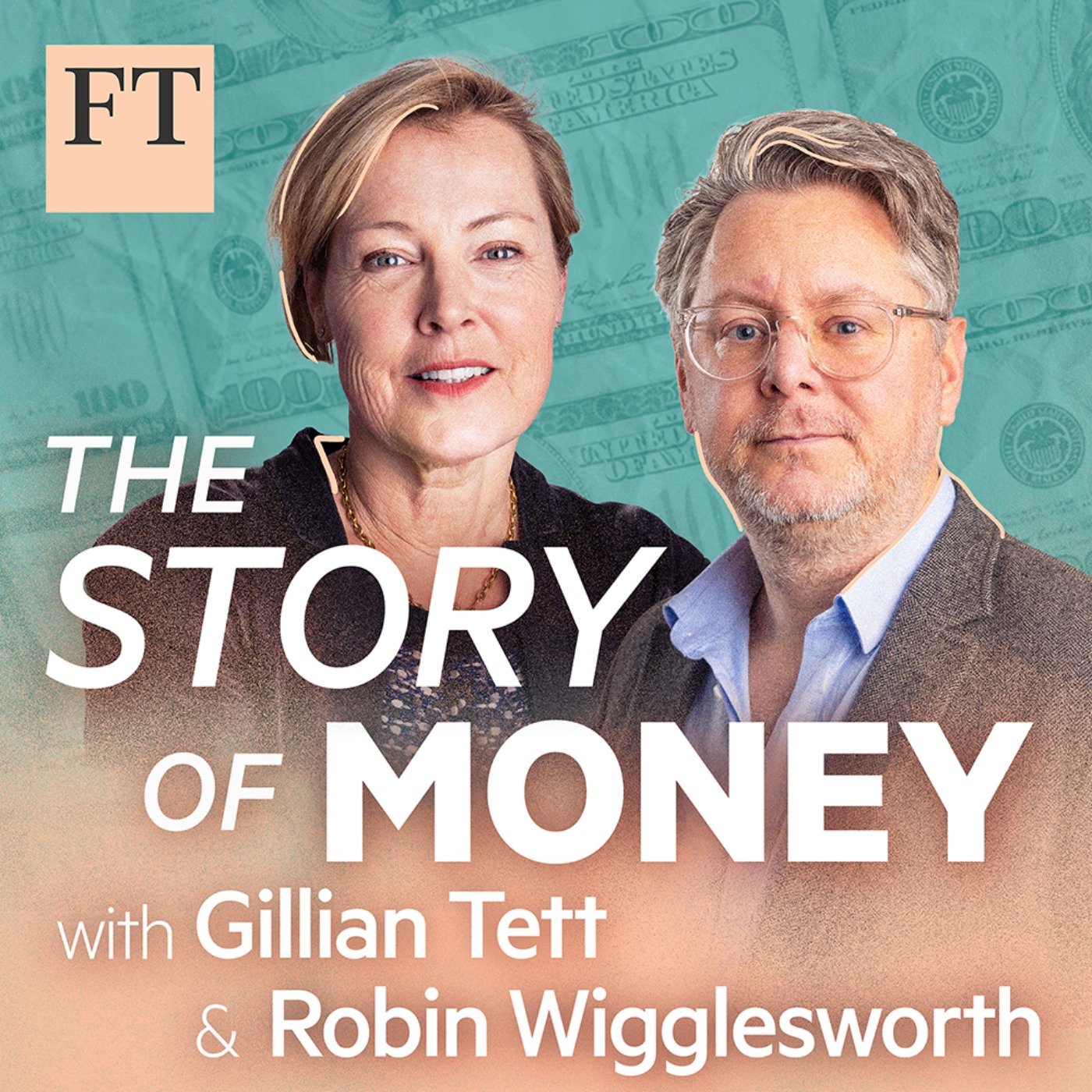
- The Story of Money
- The 1980s Garfield buyout that changed corporate finance
The Story of Money1 Jul 2026 · 55m · 25 chapters
The 1980s Garfield buyout that changed corporate finance
In short
How the 1980s leveraged buyout (LBO) wave—linked to “Gordon Gekko” ideology and even Garfield’s IP—created modern private equity, and why its value-creation story later drew backlash.
Guests
Hetty O’Brien, author of The Asset Class (The Guardian opinion/long-read writer). She researches why private equity expanded into everyday services after 2008 and traces its origins to late-1970s/early-1980s “renegade” financiers.
Key claims
William E. Simon (former US Treasury Secretary) is portrayed as the “father of private equity,” driven by pro-market, anti-government beliefs. The iconic Wes Ray deal proved LBOs could generate extreme investor returns, but later studies found less operational improvement and more leverage-driven financial engineering.
Notable examples
Wes Ray’s 1982 purchase of Gibson Greeting Cards (RCA-owned), using about $1m equity and ~$79m debt; Gibson’s Garfield the Cat rights were the valuable asset. Deal payoff: IPO ~18 months later, value ~$290m from ~$80m. Industry accelerants: SEC rule changes, bank capital reallocation after the Latin American debt crisis, and Michael Milken’s junk bonds. Controversy: critics like Lazard’s Felix Rowerton warned debt replaced permanent capital; Milken later indicted and Drexel Burnham Lambert collapsed.
Written by AI. May contain mistakes.
Chapters
0:21
The Connection Between Gekko and Garfield
Exploring the surprising link between Gordon Gekko and Garfield the Cat.
“Visit nuveen.com slash future to learn more.”
2:15
Understanding Leveraged Buyouts
An overview of leveraged buyouts and their significance in corporate finance.
“It's tons and tons of debt in order to gobble up a stodgy, inefficient company and then beating it into shape or breaking it up and selling it off for parts, essentially.”
2:53
Introducing the Guest: Hetty O'Brien
Introduction of Hetty O'Brien and her expertise on private equity.
“Welcome to the story of money from the Financial Times.”
3:23
Hetty's Perspective on Private Equity
Hetty discusses her journey into writing about private equity's impact.
“And Hetty is the author of a new book about private equity's influence on the world today.”
4:25
William E. Simon: The Father of Private Equity
Discussion on William E. Simon's role and beliefs in the private equity landscape.
“really see themselves as involved in this kind of revolution that is going to breathe life into America's tired economy.”
5:37
Simon’s Political Journey and Ideology
Exploring William E. Simon's political ideology and early experiences.
“Because he was kind of summed up this kind of more ideological bent that you mentioned, right?”
8:03
Simon’s Disillusionment and Shift
Simon's disillusionment with government and his pivot to business.
“but he also kind of despises government, or at least government at that point in time.”
9:15
The Birth of the Leverage Buyout Industry
How Simon stumbled into the leverage buyout industry through networking.
“So the Russians are buying caterpillar bulldozers.”
14:00
The Emergence of Leverage Buyouts
Learn how Simon's transition from government to business led to the inception of leverage buyouts.
“He's quite uncompromising, as I said, he really is quite black and white.”
17:11
The Formation of Wes Ray
Explore the partnership between Simon and Chambers and their initial ventures.
“which he really needed to make that up and hopefully make more as well.”
Show all 25 chapters
19:38
The Iconic Gibson Greeting Cards Deal
Discover the background behind the significant leverage buyout of Gibson Greeting Cards.
“I mean, just to be upfront about this, this wasn't the first ever leverage buyout to take place.”
21:00
Financing the Acquisition
Uncover the innovative financing strategy that made the Gibson deal possible.
“It's 1982 and Wes Ray is about to do this iconic deal, which made history, as you said.”
24:11
The Unexpected Success of the Deal
Examine how luck and market conditions contributed to the deal's massive profitability.
“Why did they even try and structure an LBO in the first place?”
27:30
The Ripple Effects on Wall Street
Learn about the impact of the Gibson deal on future business practices and culture on Wall Street.
“And it's fascinating that they didn't really do anything because like you say, that is actually a core part of the narrative back in those days.”
28:00
The Impact of the Gibson Deal
Learn how the Gibson greeting cards deal catalyzed a boom in LBOs.
“That was another factor, I think, that helped to explain why it became so astronomically profitable.”
29:45
Political and Economic Contexts of LBOs
Understand the political and economic factors that fueled the LBO explosion.
“News of this Gibson greeting cards deal's success has spread across Wall Street like wildfire.”
32:40
Michael Milken and the Rise of Junk Bonds
Explore how Michael Milken revolutionized the junk bond market and its role in LBOs.
“And in 1981, before these rules had been introduced, LBO funds raised$250 million, which was real money back then, but not massive.”
36:42
Controversies Surrounding LBO Practices
Delve into the criticisms and controversies of LBO strategies from the 1980s.
“So in many ways, it was a kind of insurgency, a use of asymmetric power, to use a term that's very popular today, and took a lot of people by surprise.”
42:00
The Rise and Fall of LBOs in the 1980s
Explore the history of leveraged buyouts (LBOs) and their tumultuous journey.
“I mean that was the story of credit derivatives, the story of LBOs and the story of so much else.”
43:30
William Simon's Legacy and Challenges
Discuss the life and investments of William Simon post-LBO boom.
“A lot of these firms start to instead use the term private equity.”
46:21
The Evolution of Private Equity
Understand how private equity transformed from LBOs and its current implications.
“And you often do end up with seemingly successful teams later falling out with each other.”
48:22
Critiques of Modern Private Equity
Examine the criticisms regarding modern private equity practices and their effects.
“You can't help but wonder this looks more like a way of gaming tax systems than it does a way of creating value.”
49:51
The American Phenomenon of Private Equity
Analyze the uniquely American roots of private equity and its ideological implications.
“And these are not people who think that, you know, companies should not be, you shouldn't be able to buy them and turn them around.”
53:13
Debt's Role in Corporate Stability
Discuss the impact of corporate debt on stability and economic fragility.
“But I think that there is also a kind of largesse now within the private equity industry, as we've kind of discussed.”
56:30
Debt's Role in Corporate Stability
Discuss the impact of corporate debt on stability and economic fragility.

Ask about this episode
Get the gist, explore an idea or ask about something said.
 Claude
On The Story of Money, what are the key points of this episode?
Searching your listeningTranscript
Automatic transcript. May contain errors.
0:00Gillian Tett: What happens next in the story of money? Nuveen has spent over 125 years helping clients answer this question. By investing in the growth of businesses, real estate, infrastructure and natural capital, we continue to deepen our expertise across income and alternatives so investors can confidently write the next chapter of their own portfolio stories. Nuveen. Invest like the future is watching. Visit nuveen.com slash future to learn more. Investing involves risk. Principal loss is possible. He sounds like he was quite a strong believer in capitalism and in the profit motive, dare I say, almost like a Gordon Gekko character who believed that greed was good.
0:38I think he doesn't necessarily believe that it's greed that is good, but rather entrepreneurialism or what he thinks of as being that. He genuinely believes that what needs to happen to America's economy is it needs somebody to come along and really breathe life into it. Somebody in government compared him to Genghis Khan at one point, right? Yes, and I think that gives you both a sense of where he's coming from politically, but also a sense of his character.
1:11Today on the story of money, we're going to be delving into a story that connects Gordon Gekko with Garfield the Cat.
1:20Gillian Tett: I love it. I mean, I was a teenager in the 1980s and they are both icons of the 1980s. Gordon Gekko famously said greed is good, epitomising the attitude of Wall Street in those days. And Garfield, well, what can I say? He was a cartoon character famous for loving lasagna. And believe it or not, that link is relevant. But there's something else that links them beyond being born in the 80s. And that's the subject of today's episode. And that is the business deal that launched the private equity industry. And I mean, let's be honest, it wasn't the first ever private equity deal out there. But the key point is that this was the deal that put private equity on the map.
2:06Gillian Tett: And back then, in fact, it wasn't actually called private equity. The key word is the leveraged buyout era of the 1980s. And that's where Gordon Gekko comes in, of course, because LBOs were all about borrowing up to the hilt. It's tons and tons of debt in order to gobble up a stodgy, inefficient company and then beating it into shape or breaking it up and selling it off for parts, essentially. And obviously, it's hugely relevant today because private equity now controls a swath of the corporate world. It's one of the biggest alternative asset classes out there in the world. And that means it's still pertinent to ask just how much value this more cutthroat, buccaneering form of capitalism born in the 1980s actually adds.
2:53Gillian Tett: Welcome to the story of money from the Financial Times. I'm Robin Wigglesworth. And I'm Gillian Tett, child of the 80s.
3:14Okay, so Gillian, I promise we will get to Garfield soon enough. But first of all, we have somebody much more important to introduce. And that's our guest today, Hetty O 'Brien. And Hetty is the author of a new book about private equity's influence on the world today. It's called The Asset Class, a killer name. And Hetty is also a fantastic opinion and long read writer at The Guardian. So Hetty, thanks for being here today.
3:37Gillian Tett: Thank you very much for having me. Now, Hetty, you work for The Guardian, which is not usually a publication that delves into the finer details of financial structures. So tell us, you know, what made you want to write about private equity? Well, I think that's part of the reason is that I kept finding private equity in places you just wouldn't expect it, whether that was in housing or in care homes or in our water system. And it just seemed as though after 2008 in particular, the industry had gone on this incredible spending spree, buying up everyday services and so on. And it just made me really curious.
4:13I was wondering what on earth is private equity and why has it grown seemingly so powerful? But I think the more I looked into it, the more I realized that it goes back way beyond 2008. And there is this fascinating story about this renegade group of financiers in the late 1970s and early 80s who really see themselves as involved in this kind of revolution that is going to breathe life into America's tired economy. And they believe that they've discovered this tool of kind of financial ingenuity that will do so and that will really revive entrepreneurialism. And yet, at the same time, now we're seeing all sorts of critiques directed at the industry.
4:52And so I think the sense in which it was trying to do something that perhaps it hadn't fully managed to achieve in the present day was just a contradiction that I found very interesting. I can understand that. And today, obviously we are going to be focused on one of those renegades you mentioned, those early days, long before, frankly, the term private equity had even been invented. And this renegade we're going to be focusing on is who you call the father of private equity. And I think lots of listeners might think that there's somebody like, you know, Kohlberg, Kravis, Henry Kravis, George Roberts, the founders of KKR, who did one of the first deals.
5:29Actually, we're going to be talking about former US Treasury Secretary William E. Simon. Can you tell us a bit about him? Because he was kind of summed up this kind of more ideological bent that you mentioned, right? Yeah. And I think compared to some of the other private equity people that we know and have heard about, he's largely been forgotten from the history books, which I thought was really interesting. He is this polarising, fascinating, quite abrasive figure. And he's born a year before the crash of 1929, or maybe a couple of years before the crash. And so he comes of age during the New Deal.
6:07He goes into the US Army, and then he ends up going into finance. He works at Salomon Brothers, where he is a bond trader. He's an incredibly good bond trader. It seems to really suit his kind of binary approach to things. There's no grey in the bond business. It's all yes, no, buy, sell. And he's very decisive as an individual.
6:27Gillian Tett: He sounds quite an unusual type of public servant then, because back in the 1960s and 70s, the people who were serving in high office usually weren't coming from Wall Street as such. And yet, he sounds like he was quite a strong believer in capitalism and in the profit motive, dare I say, almost like a Gordon Gekko character who believed that greed was good. Well, I think he doesn't necessarily believe that it's greed that is good, but rather entrepreneurialism or what he thinks of as being that. I mean, greed is more of a byproduct, perhaps. But I think he genuinely believes that what needs to happen to America's economy, which he thinks is really stuck in the doldrums, is it needs somebody to come along and really breathe life into it.
7:10And I think that when you think about where he was coming from, he really entered government. I think it was 1974. It was under the Nixon administration. He was Treasury Secretary. And during that period, Nixon's elected after Lynda B. Johnson, who is engaged in this huge Great Society program of using the power of the federal government to address all of these kind of social ailments. And all of that is based on vast deficit spending. And Simon looks at this and he thinks, firstly, as a conservative Catholic, that the family, not the state, should be really where people are turning to for help.
7:49And secondly, that this is a vast programme of government overreach that is extending far too deeply into people's lives and is also involving the running up of huge amounts of public debt. And so there's a kind of irony in the sense that, yes, he goes into government, but he also kind of despises government, or at least government at that point in time. Somebody in government compared him to Genghis Khan at one point, right? Yes, and I think that gives you both a sense of where he's coming from politically, but also a sense of his character. I do think he manages to alienate quite a few people on his journey.
8:25In your book, you make the case that there are a lot of key moments in his time from government that kind of really crystallise his conservative but extreme pro-market beliefs. What were those moments and why were they so formative for him? Well, I think the first moment is actually some of the trips he makes to the USSR during his time as Treasury Secretary. He makes, I think, two trips and he hangs out with Brezhnev, who he thinks is actually a very nice, jovial guy. And they have sturgeon caviar and vodka and they seem to have a really good time. Sounds very convivial. Yeah. It does sound very convivial.
9:01And Simon gets back on his plane back to the US and he writes about this later. And he says, actually, what he'd seen during his time in Soviet Russia was a sense in which the Russian economy was entirely propped up by Western ingenuity and invention. So the Russians are buying caterpillar bulldozers. They were buying synthetic fur coats. They were buying factories that had been completely ready made. And then they were importing those into Russia. And all of this stuff was coming from the West. And so whilst this Russian economic situation entirely depended upon the West, what he feared was happening was that that Soviet approach to government, the sense of overreaching state planners, was migrating from Russia westwards.
9:47And it was a sort of sickness infecting both Western Europe and eventually he feared it would infect America. So that was one of the first formative moments in his political journey. Another one was slightly later when he was made the energy czar during the oil crisis. And this was a period of huge panic and unrest. And there was a real sense of actually society is almost falling apart here because everything in America depends upon fossil fuels. And when he was put into that position, there was a lot of political pressure to introduce a rationing program that would conserve fuel by rationing it out.
10:29And he was really opposed to that. He thought rationing was kind of akin to the type of government planning that he'd seen in Soviet Russia. And so he instead decided to try and cobble together this system of fuel allocation that really didn't work. But to him, what he took away from that was that you cannot try and mimic the invisible hand of the market by using the levers of government.
10:54Gillian Tett: Essentially, what we have then in the middle of the 1970s is this hard-nosed, no-nonsense, free market ideologue, William E. Simon, who strongly believes that you need to have competition and the profit motive to drive efficiency and growth. and he's a former financial trader, so he knows how markets work. He's also been in the government during the 1970s under both Nixon and Ford and that's made him even more convinced, his experience of being in government and then seeing the Soviet Union, that you have to have free market forces to deliver growth. So that's our key character. And then in 1977, something critical happens.
11:38Gillian Tett: The Republicans lose power, get kicked out, and a brand new Democratic president comes in, Jimmy Carter. So how does that unleash what happens next? I mean, Simon is massively disillusioned by this. He was obviously hoping that Gerald Ford would win. And I think there's a sense in which Simon is almost 10 years too early in terms of his political instincts, because really later these take off during the Reagan administration. But Simon effectively takes a break from public service and he decides that he's really done with government. He goes back to New Jersey, where he's from, and he writes a book and that book becomes a bestseller.
12:19And that book is called A Time for Truth. It is a complete Jeremiah of a book. It's actually very funny at points and extremely polemical. And Simon really didn't like writing. So he managed to find a ghost writer called Edith Efron, who was a good friend of Ayn Rand, to write the book for him. And it made a series of arguments about why government intervention was a bad idea and why there was this risk that America was drifting towards what resembled more of a Soviet or what he called social democratic model. And I think then he decides partly because he's no longer in government, that he really wants to try and find a way of enacting his political instincts or principles in another sphere.
13:03So he decides to go back into business and at least look for ways within the kind of business realm that he can adopt some of these ideas and really enforce them and have a big effect. And so he becomes president of the Olin Foundation, which is a think tank that is really working to roll back some of those New Deal regulations and principles. He also gets involved with the Heritage Foundation, which is a similar think tank. And by the time Reagan is vying for the Republican presidential nomination, it really looks as though Simon is going to play a huge role within the Reagan administration if Reagan gets elected.
13:43But actually, Reagan basically takes one look at what Simon wants, which is control of levers of economic policymaking that are normally answerable to the president. And he basically says, I think this guy wants too much power. I'm not really willing to have a self-appointed czar in charge of my economic policies. For Simon, that really is a red line. He's quite uncompromising, as I said, he really is quite black and white. And so again, he decides, right, well, if I can't do this in government, I'm going to try and do this in business. And that really is a key moment, because that's when he starts to think about things that later become known as leverage buyouts.
14:23So he decides not to go into administration because he can't get what he wants out of Reagan. But how does he kind of stumble almost into this kind of leverage buyout industry, which, I mean, let's face it, it wasn't even an industry at the time, right? How did that happen? No, and it's actually really kind of serendipitous for him. He's golfing in New Jersey, and he has membership of a particular club where there's this other guy who also plays golf there called Ray Chambers. And Chambers is kind of the opposite of Simon. I mean, he's got a business background as an accountant. He used to work for Price Waterhouse.
15:00And he had become very successful during the 1970s because he had been involved with the nursing home business through a company called MetroCare. And it was during the 70s that there was a IPO for MetroCare that left Chambers with quite a lot of money. And rather than just retire, he'd actually had a second insight, which was that there were all of these undervalued companies hanging around in the late 1970s, many of which could support large amounts of debt on their balance sheet. And a kind of wily entrepreneur or somebody who was smart and realized that there was value to be tapped here could borrow against the value of those companies' assets and use that debt to finance their purchase, which is what looks a lot like a LBO.
15:47And so Simon and him got talking. And not only was a sense that, I guess, opposites attract in the sense that Simon could do the big picture stuff, the fundraising, the political networking, Chambers could do the detailed stuff. There was also a sense from Simon that Chambers had really spotted something, but he was doing it on a scale that could be far, far bigger. And Simon could see that actually you could apply this principle to much larger conglomerates. And that was where you could really start to have an effect.
16:21Gillian Tett: So in terms of their skill set, it seems a bit like a match made in heaven. And, you know, what was Simon hoping to get out of doing all this? Well, there's a number of things I think he was hoping to get out of it. One of them was personal. He did want to make money. Former bond trader. I'm assuming that was a large part of the motivation, especially after worked in government service for a bit. This was the era of breeders good, wasn't it? He also had seven children to support. Seven was that as well. I've got three and they are a massive financial drain, I can assure you. Yes. Yeah. So when he went into government, he had put his fortune from Salomon Brothers, which was roughly$5 million into a blind trust to avoid conflicts of interest.
17:07And when he left government, it had shrunk by about half. So there was a sense in which he really needed to make that up and hopefully make more as well. I think there was also, he spotted effectively opportunity. I think the post-war era was one in which this kind of managerial corporation emerged as being the dominant way of doing business. And there was a sense in which these CEOs who were in charge of these vast corporations had embarked on these empire building projects, buying up subsidiaries and unrelated companies that they really didn't know much about and forming these quite large, but quite shaky and quite bureaucratic conglomerates.
17:47And Simon compared these to watching a sumo wrestler compete in figure skating in the sense that many of these companies were completely the opposite of an efficient, lean, mean machine. And so I think he saw that that was a ripe opportunity. But also, at the same time, there was, you know, those ideological principles he'd been trying to do something about for a number of years. And actually, one of the things that he really wanted to do was to, as he saw it, really give some of these kind of inept managers a bit of a kicking and actually show them that it was entrepreneurs who should be in charge of the economy or at least you know private individuals who had a better sense of where value existed and weren't so complacent and weren't kind of dining out on the company credit card and having these various forms of corporate largesse.
18:43Yeah and probably not an entirely unfair critique in the 80s as well. So we're in 1981 21 now, Simon and Chambers decide to set up a partnership. I love that they call it Wes Ray. So William E. Simon, Wes and Ray from Ray Chambers. So they have this partnership called Wes Ray.
19:03Gillian Tett: And can I just say, by the way, I think Wes Ray is a dreadful name. But anyway, Hetty. I've heard worse than finance. I think we both have, haven't we, Gillian? Absolutely, yes. What did this ghastly named Wes Ray actually do? So, yeah, somewhat unimaginatively named Wes Ray. it was very much involved in small scale things at first. There was an oyster farm in Long Island. There was a subsidiary of a far larger company that sold cans and matchsticks and that sort of thing. And there was a company, I think, that rented musical instruments to children's schools or something. So these were not really particularly memorable or era defining deals.
19:40Right. I mean,
19:42Gillian Tett: just to be upfront about this, this wasn't the first ever leverage buyout to take place. Yeah, I mean, I thought the one I've always thought was the first one or generally considered it just wasn't as high profile is KKR, which I've already mentioned, purchase of Houdail Industries. But it just was far less high profile than the one Wes Ray put together that we're going to be exploring. Partly because just the one we're going to be digging into now was so insanely profitable, right? So it really kind of telegraphed to the entire world the financial potential of this new nascent embryonic LBO industry.
20:21It's not the first, but it's certainly the most significant in terms of the sheer amount of money that was made. And therefore it became a touchstone, a way of almost proving a proof of concept for the LBO as a form, because it showed that you could come away with an astronomic amount of money, of profit. So I think that's what makes it really, really significant. And in terms of the actual, just the sheer coverage that it generated, it was on the front of New York Magazine. The Times covered it. Everywhere was taught, everyone and every media outlet seemed to be talking about this at the time.
20:56So it really cut through.
20:57Gillian Tett: Okay, so you created a lot of narrative suspense here. Yeah. It's 1982 and Wes Ray is about to do this iconic deal, which made history, as you said. What was it? You wouldn't think it would be iconic, given that it was for a greeting cards company, which doesn't really seem to be one of the kind of industries of the future when we think about, you know, capitalist ingenuity. But it was for a company called Gibson Greeting Cards, which was a greeting cards company based out of Cincinnati. It had been manufacturing greeting cards for many, many years. Crucially, it was sitting on some very valuable intellectual property, which was Garfield the Cat.
21:34It owned the rights to Garfield the Cat, a very popular cartoon feline as we all know and it was also one of the textbook types of forms of value hidden within a conglomerate that Simon had been looking for Simon and Chambers Gibson was owned by Radio Corporation of America and they had bought the company without necessarily realizing the true value of the asset they were sitting on and now they were looking to unload it. And there was a sense in which it hadn't been fully optimized and there was value to be had here if you knew where to look. So they weren't just massive Garfield fans, essentially.
22:14That's not why they went for Gibson. No, I mean, they may have been, but that's, yeah, I guess that's not the main reason.
22:20Gillian Tett: So tell us exactly what happened. I mean, how did this deal all come together with or without the cat? So RCA sets this purchase price for about 80 million dollars um and wesray buys the company by investing just one million dollars of equity um that is made up of chambers and simon each put in i think around 330 000 dollars and the rest comes from wesray's other partner and employees and so they have basically bought the company using just a million dollars. How did they do this? They borrowed 79 million and also sold off some of the company's real estate assets to finance the transaction. And I don't think this has ever been done before that point in terms of buying a company for that little, injecting so little of your own capital into a deal.
23:16And Simon does loads of fundraising. There is, as I mentioned this piece in New York magazine after the deal goes through that says the deal is wrought as if by the hand of Uncle Sam because Simon relies heavily upon his contacts in the US government to open doors but also from his time as Salomon Brothers. So he's really the kind of hustling fundraiser and Chambers is doing the accounting and the detail and there is a moment when it looks like the deal is not going to go through when General Electric, which is one of the lenders for that 79 million, wants to pull out. And Simon says if he was still working at Salomon Brothers, he'd chuck you out of a window or something along.
24:01I'm paraphrasing, but it's something like that. And Chambers manages to talk him down from his perch. And so the deal completes. And that's what happens. And actually, during the time before they then take the company public, very little changes.
24:16Gillian Tett: Why did they even try and structure an LBO in the first place? Why didn't they just go and buy it in the normal way? There's a lot of benefits for doing it this way. First of all, if it fails, then Gibson, not them, are responsible for paying off that 79 million of debt. So they will only lose$330 ,000 each. Also, there's the fact that the interest payments on all of that debt, reduce their taxable profits, which means that more money gets rerouted to them as kind of capitalist disruptors rather than the government taxman, making it more profitable for them as a deal. And there's also the fees that they can charge the company for the privilege of being owned by them.
24:59And Simon is quite open about this. He says, we charge the company fees and then some, again, I'm paraphrasing, but it basically meant that they got the company for free by covering their initial 330 ,000 purchase equity that they had invested. They managed to recoup that by charging the company fees while they owned it. So there are a number of reasons why this just looks like an incredible opportunity. And it really is hard to overstate just how revolutionary that was. This had not been done before at this scale. Yeah. I mean, this is kind of, it's not even just LBO, it's like LBO maxing almost to use the modern vernacular where you're borrowing basically almost all the money and the tiny little sliver of equity you're putting in actually is covered by the fees almost instantly that the company itself is paying you which sounds incredible but so how did the deal play out how did i'm guessing they made out like bandits right yeah i think you could say that i mean i think that the thing that was really interesting to me while i was looking into this was i was trying to understand well what had they done during this period of ownership?
26:05Because they take it public roughly 18 months after the deal first closes. And the typical private equity narrative is that you instill kind of operational improvements. You basically turn a company around and you create value in a way that it didn't previously exist. One of the things that I found striking about this deal was that actually very little changed in the company. The management structure still looked pretty much the same. There hadn't been any dramatic kind of operational changes that had occurred during their period of ownership. And actually, Simon himself was pretty open about this.
26:43He was just lucky. They bought it when there was a downturn. The markets then recovered. They sold it 18 months later. And they effectively had borrowed when interest rates were low. and they had seen a massive opportunity and the timing had paid off. And so when the IPO happens 18 months afterwards, after the deal closes, its value has soared to something like$290 million up from the purchase price of$80 million. So for each dollar they invest, they make something like a$200 return on that investment. I would have loved to be involved in this. It just sounds like so fabulously profitable. probably wouldn't be a journalist.
27:26A 200 times return on 18 months sounds pretty incredible, right? Yeah, that is. And it's fascinating that they didn't really do anything because like you say, that is actually a core part of the narrative back in those days. And obviously today that, you know, private equity with the right incentives, the right management team, a more hard-headed approach to capital allocation, they'll turn, you know, coal into diamonds. And in this case, it was just basically luck. And also a few of Gibson's competitors went bankrupt in those 18 months, right? That was another factor, I think, that helped to explain why it became so astronomically profitable.
28:07I also liked the fact that Simon was quite open about this. I think at one point he said later on, this deal has been poured over by business professors, but actually it's very unlikely to be repeated because it was mainly luck. And I think there's something kind of refreshingly honest about that.
28:24Gillian Tett: And yet the reality is that when Wall Street saw what had happened and a 200 times return had just been created in this deal. In 18 months. In 18 months. Yeah. So, you know, the reality is that, you know, there's never an idea on Wall Street that other people don't want to replicate if it works and makes money. And so unsurprisingly, contrary to what William Simon said, we're about to see a dramatic boom in copycat LBOs. And that didn't just lead to specific deals. It began to change the wider business culture on Wall Street. It paved the way for the explosion in private equity we're living with today.
29:05Gillian Tett: Also, of course, it sparked a lot of controversy. So we'll be coming back to that after the break.
29:18Gillian Tett: The future of fixed income investing will continue to blur the lines between public and private markets. Nuveen's credit platform was built to navigate this shifting landscape, channeling capital toward the businesses, infrastructure and energy solutions that are shaping tomorrow's economy, all while aiming to deliver the resilience and returns that portfolios seek today. Nuveen. Invest like the future is watching. Visit nuveen.com slash future to learn more. Investing involves risk. Principal loss is possible.
29:54And we are back. So it's 1983. News of this Gibson greeting cards deal's success has spread across Wall Street like wildfire. It made William Simon quite rich, actually very, very, very rich, without very much work either on his end. And it seems everyone is now looking for ways to replicate this success.
30:20Gillian Tett: No surprise there. But this deal isn't the only reason why the LBO industry is about to explode. It just so happens that the excitement about a 200 times return was colliding with some other bigger structural factors that influenced how people regarded it as well. Hetty, explain to us why the bigger political economy context mattered so much. I think it's really important to understand this. I think what happens after the Second World War is that there is this period of American supremacy with a lot of the companies that emerged from that period really dominating the economy. But then towards the 1970s, you get the European and Japanese markets It had been somewhat sleepy after the Second World War, actually roaring back to life after factories are rebuilt from bomb damage and so on.
31:14And there is a sense in which a lot of these managerial corporations that had dominated the period after the Second World War in the US are now coming under competition from other places. At the same time, there is this point about the financing that I found really interesting when I was doing this research, which is that a lot of the banks prior to the LBO wave taking off were lending to countries like Mexico and Brazil. And when the Latin American debt crisis sparked in the early 1980s, these banks had built up these massive syndicated lending teams that basically had nowhere to lend that money to.
31:54And so they basically just changed course, steered the ship in another direction and started lending to LBOs. At the same time, there is a really important bit of government regulation that really changes the game and leads to a massive influx of capital into this industry. and that's with the Securities and Exchange Commission that starts to allow private funds, which have previously faced strict limits on the amount of money that they're able to raise from investors, to raise more money from a greater number of investors. And so that means that you're also seeing much more capital flooding into this industry.
32:33So I think those three factors really come together to help explain why this really takes off when it does. Yeah, because I looked up the numbers here. And in 1981, before these rules had been introduced, LBO funds raised$250 million, which was real money back then, but not massive. But by 1987, they'd raised$14.6 billion. So clearly, it's a massive change. And there is one more component here, right? And it happens to be about one of the people I find the most fascinating, pretty much in financial history, Michael Milken. So Mike Milken, for the people that don't know him, in the 1980s, he sat inside an investment bank called Drexel Burnham Lambert.
33:18And he became known as the junk bond king. And he wasn't just, frankly, the king of the junk bond market. He was its creator, its godfather. He really kind of conjured it up, almost not quite out of thin air, but not far from it. Junk bonds, they are essentially bonds issued by companies that are not rated investment grade by one of the big credit rating agencies. And anything below BBB is essentially considered junk or below investment grade. Essentially, it's the way the credit rating agency says, you know, there be dragons. I'd love to hear how Mike Milken and his junk bond machinery fits into this story, because that was also another big factor that came in and powered this phenomenon, right?
34:05Absolutely. And I think Milken is totally fascinating. But also he has this one major insight. He's firstly, he's totally obsessed with bonds. He knows absolutely everything you can know about bonds. All good people are obsessed with bonds, Heddy. It's just a fact of life. And he basically has this insight, which he picks up during his time at Wharton, where he's studying finance. And he realizes that actually a lot of these lower rated bonds from companies that have either fallen on hard times or don't really have an established reputation or the types of things that Wall Street's old guard might treat with sort of slight derision and wear rubber gloves when dealing with them.
34:45you can actually make a lot of money by trading in these junk bonds because at certain points in an economic cycle, the return on those can be better than they would be for higher grade bonds or higher grade companies. And so he is dealing with something that has previously been stigmatized. And he sees his role as much more actually than just a bond salesman. He is really thinking of his work as something like reviving this spirit of American entrepreneurialism. So it's a similar kind of ethos to that shared by Simon. And I loved finding out that he printed off this map of the US and put pinpoints on it for his children to see all of the different companies that his junk bonds had financed.
35:29So that was everything from film studios on the West Coast to a nursery chain to a number of casinos actually in Las Vegas. And I kind of wonder what Las Vegas would have looked like if it hadn't have been for Michael Milken. Well, CNN as well. CNN was financed entirely by junk bonds. So Ted Turner, it was something obviously Ted Turner recently passed away. And maybe as a bit of a bond nerd, I was almost disappointed to see the lack of mentions of Mike Milken's role in birthing CNN in all the obituaries for Ted Turner. Yes. Yeah. And I think he, Mike Milken, didn't initially really foresee just how pivotal junk bonds would become for takeovers or for what became known as leverage buyouts.
36:14In fact, he hadn't thought that this was going to be necessarily their use. But what they provided was a vast new pool of capital that allowed outsiders to basically approach large companies that they would have never previously been able to dream of taking over. And junk bonds were the weapon to finance those transactions. I think it would have been pretty much impossible to imagine the LBO wave taking off in the way that it did without Mike Milken and his junk bonds.
36:42Gillian Tett: So in many ways, it was a kind of insurgency, a use of asymmetric power, to use a term that's very popular today, and took a lot of people by surprise. And it's worth pointing out, as you said, that William Simons was driven by not just a desire to make money, but also this quite evangelical desire to proclaim the value of free markets right across America. But even back then, there was starting to be controversy. And as the LBO market boomed back in December the 5th, 1985, the FT published an article that was entitled How Mr. Simon Opened the Floodgates. And it talks about how the Gibson greeting deal took Wall Street by storm.
37:29Gillian Tett: It mentions a stat, the number of LBOs jumped from 164 in 1982 to 250 in just two years in 1984. So you have this astonishing stat. Of course, on the face of it, looks really good, doesn't it, Robin? Well, yes. But the other interesting thing about this article is that it also brings up a lot of questions from critics. And there were critics at the time, and there weren't some labor union officials from companies being dismembered. They're from the Wall Street elite that are also a little bit concerned about this phenomenon. There's a quote here from a senior partner at the investment bank, Lazard.
38:12Hetty and Gillian, we all know who he is, but it's Felix Rowerton, who the FT describes as one of the most respected Wall Street bankers, but really is frankly a legend on Wall Street. he told our reporters at the time and i'm going to dig out the exact quote here first it bets the company on a combination of continued growth and lower debt rates with no margin for error second it substitutes debt for permanent capital which is exactly the opposite of what our national investment objective ought to be and that's a direct quote from Felix Rowerton. So, I mean, Hetty, I'd love to hear why you think this practice, although it was embraced by people like Milken and Simon, was so controversial in at least parts of Wall Street's old guard.
39:02Yeah. And I think this is really fascinating, actually, because it's very easy to find critics of private equity in the places one would expect, labour unions and so on. But actually, even today, you still get critics, criticisms coming from people who you would think of as being the kind of arch defenders and believers in capitalism. And Felix Roatan is one of those, or was one of those. And I think it really comes back to that point that Gillian made. This is a group of renegade insurrectionary outsiders who are tearing up effectively what remains of the post-war consensus in terms of America's corporations.
39:41There was another quote that I came across from Felix Rowerton. And he described that large corporations can be treated like artichokes and simply torn apart. And so I think it's that that comes back to that question of power. Who holds power now on Wall Street? And it's looking as though power is tilting away from the old guard, the people like Felix Rowerton, who came of age during this particular moment and had this idea of national investment objectives, which is something that kind of belongs also to that period of government intervention in the New Deal. And it's tilting towards people who are these financial outsiders or were previously and are now managing to take over corporations and in some cases tear them apart like artichokes.
40:26Gillian Tett: But the difference is, though, it wasn't just about the old guard, the incumbents, hating a bunch of disruptive newcomers who are threatening their power. There were also much bigger philosophical questions at the same time, like, does this type of wheeling and dealing create a very short-term vision of capitalism, which is potentially very bad for the economy overall? And if you are structuring this to assume that interest rates will always be low and growth will continue, is that creating a bunch of risks for the future? And what's fascinating is that those two questions are incredibly important right now, given that we just had a period of ultra low rates and reasonable growth, and given there's real concern about short termism in a wider sense.
41:15Yeah, and I think these questions have continued to stalk the LBO and then private equity industry to this day. In terms of the research that I was doing, I couldn't see that the industry had ever really managed to match its 1980s high point in the sense of its ability to create value and returns and these operational improvements that it had injected into some companies. Because when you look at the academic literature, there is a real sense that actually the early LBOs did kind of do what they said they did on the tin. There were more companies, large conglomerates that were sitting on these undervalued assets.
41:54Gillian Tett: Right, that's fascinating because in some ways the story of financial innovation is about somebody having a good idea which works well and often has real merit in the first few deals and then because it works everyone copies it and clones it and takes it to extremes and applies it in areas where it shouldn't really be applied and things go horribly wrong. I mean that was the story of credit derivatives, the story of LBOs and the story of so much else. Good ideas then go bad. So just to recap for our listeners, LBOs go through this massive frothy heyday of the 1980s driven by the evangelizing zeal of William Simon, who believes in free markets, and the fact you had this fairly specific set of historical circumstances coming together that paved the way.
42:39Gillian Tett: It produces big returns for investors. Some of those bloated conglomerates do become more efficient. But then it starts to go wrong. Because at the end of the 1980s, as I'm sure many of our audience might remember, Michael Milken, the father of the junk bond world, is indicted for racketeering, securities fraud and insider trading, and his firm, Drexel Burnham Lambert, collapses. So how does the LBO industry respond? What happens next, Hedgie? Well, I think there is this real sense in which the narrative around LBOs needs to change. And one of the things that Drexel does is it prints these t-shirts saying, junk bonds keep America fit.
43:23And despite its best attempts at kind of rebranding junk bonds, there really is a failure to do so. And so instead of LBOs, there's a new language that emerges around this time. A lot of these firms start to instead use the term private equity. This sounds more respectable. It sounds more sophisticated. It's private, which always sounds fancy and impressive. And you have to look at that partly as a response to the fact that the capital that is flooding into this industry is now coming from pension funds and sources that expect a certain level of responsibility and stewardship and long-termism.
44:02And when you look at the narrative that surrounds the industry today, first of all, you have the fact that private equity firms, many of them have morphed into these vast asset managers. And second of all, you have the fact that those asset managers now talk about things like really taking care of retirees across the country and doing things that sort of really ensure that your average firefighter or unionised nurse can afford to retire. And it's a just completely different narrative to that that surrounded the LBOs of the 1980s. Yeah. And obviously, junk bonds also became high yield bonds, or as Mike Milken liked to call them, high performance bonds, apparently.
44:42Gillian Tett: And what actually happens to William Simon? I mean, this really fascinating character who had seven kids, worked in the government and was an evangelist for free market capitalism in a very black and white way. Does he end up getting what he would regard as his just rewards? Well, he does appear on the Forbes rich list. He manages to build himself a very beautiful boat called Freedom. He, both a boat and a philosophy, as he puts it. He has a number of homes. He has a very, very nice life by all accounts. However, he ends up deciding to invest in the kind of Pacific Basin and he basically makes a series of quite seemingly ill-timed or badly conceived deals that means that he is eventually removed from the Forbes rich list.
45:31And it seems as though towards his later life, his reputation as this wily dealmaker who spotted all of this value and did these incredible things with LBOs. Actually, his reputation is somewhat tarnished, I think, by his later investments. And there is a really interesting article I came across from the 1990s in the Wall Street Journal that talked about his decision to do a lot more charitable fundraising, But also talked about the fact that he had lost quite a lot of money and that he had effectively perhaps fallen out with Chambers and that perhaps Chambers had been the one really behind a lot of the more successful deals.
46:15And Simon had provided the face of Wes Ray, but not so much the deal making acumen.
46:21Gillian Tett: In many ways, again, that's quite a common pattern in financial history that someone has a brilliant success and rather than just stopping and celebrating it, feels, you know, motivated to try it again and again and it goes wrong. And you often do end up with seemingly successful teams later falling out with each other. But what actually happened to LBOs? Because you would have thought that after this explosive boom, that when it turned sour, the whole idea would have died. But whether you call it private equity, whether you call it LBOs, they didn't just go away and die quietly, did they? No, it's astronomic in its size and scale and reach today, the modern private equity industry.
47:04And it also has found its way into various locations where you would least expect to find it in kind of low return, low risk sectors such as care homes and water and this sort of thing that you feel as though its model of creative destruction isn't particularly well suited to those sectors. But I also, one of the things I was really interested in was this sense in which it's never quite matched up to its 1980s heyday in terms of operational improvements or returns. And there was a really interesting study I came across, which studied 317 LBOs between 1995 and 2000. And it found little evidence of operating improvements.
47:42And instead, the main change that had happened to these firms before and after the LBO was a change to their capital structure. So a sustained increase in financial leverage. So put simply, LBOs led to an awful lot of debt, but not necessarily the operational improvements or value creation that they claim to be doing. So when you think about value creation, you think about something that didn't previously exist, and you think about ingenuity and entrepreneurship and all of the things that we would be in favour of. All the good stuff, basically. All the good stuff. And then when you look at the fact that a lot of LBOs have simply led to a sustained increase in financial leverage, You can't help but wonder this looks more like a way of gaming tax systems than it does a way of creating value.
48:29Gillian Tett: Of course, the irony in all this is that you're also ending up with these vast private equity companies that in some ways are actually looking a bit like the kind of bloated bureaucratic establishment firms that the LBO pioneers back in the 1980s like to attack. I mean, that's a tremendous irony, isn't it? And I think that's one of the great ironies that looms over this story. There was a quote from the former CEO, was it, of Revlon, which was a company, a cosmetics firm that was targeted in an early LBO. And he said, I'm paraphrasing, when one of these kind of financial outsiders takes over, they realize that they quite like getting their suits tailored in London and they quite like their French chefs and they quite like to have butlers.
49:13And there was a sense in which the outsiders become the elite. And that's just a kind of story that repeats itself throughout history. But also, I think there are a lot of criticisms now coming from people who would think of themselves as being in favor of capitalism, that this really doesn't look like entrepreneurialism or value creation. And some of these huge asset managers have become instead much more focused on chasing fees and expanding the assets under management and also finding new sources of new influxes of capital from which they can charge those fees to. So I think that's sort of an undermining of the principle of the early LBO.
49:50Yeah, I mean, I know lots of quite libertarian hedge fund managers who think essentially the modern private equity industry is pretty much an accounting gimmick. And these are not people who think that, you know, companies should not be, you shouldn't be able to buy them and turn them around. They just think that as it actually functions today, modern private equity has become a bloated conglomerate in itself, essentially. Yeah, and this is something that came up again and again with interviews, in interviews of people who you would think that they would, you know, sort of be in favor of something like private equity and yet actually were completely opposed to it because of those very reasons.
50:30Because actually it resembles, yeah, the conglomerates of old. But also it's really struggling to do its job or at least the job it's set out to do, which is create those, generate those returns. And there was something, I mean, Robin's written about this in terms of the, I think it was in the six years before 2020, 2024, the industry took in 1.5 trillion more dollars from investors than it actually created in returns, which is just the kind of statistic that you find, I think, was fascinating, actually.
50:59Gillian Tett: And to what degree was this a kind of made in America phenomena? I mean, as you say, it was driven by William Simon's belief that the country was under threat from socialism, communism, they had to fight back. And of course, America's always had a much more buccaneering, risk taking, profit seeking mentality, arguably than much of Europe. Was this a made in America phenomena? Absolutely. I think when you look at where Simon and others were coming from, there was a real sense in which they were reacting to the, well, the government programs of the New Deal and the sense in which the government have vastly expanded and that there were these new forms of regulation that emerged during that period that they wanted to roll back.
51:40So I'm very curious.
51:42Gillian Tett: I mean, William Simon is not around today. He, in fact, died in 2000. But I wonder if he had been alive today, what would he have made of how the industry has developed? Yeah, it's a really good question. I think he probably wouldn't necessarily think that it was at all had anything to do with the kind of entrepreneurial spirit that he hoped to inject into the American economy. As we've discussed, it doesn't really seem to be doing that. But at the same time, he, you know, he didn't do that much to improve Gibson greetings. So perhaps he would have thought this was actually a fabulous way of making money.
52:17And if you get rich, then so be it. But I suspect he probably would think that, yeah, it really doesn't resemble the type of ideological commitment to entrepreneurialism that he had.
52:27Gillian Tett: Of course, the counter argument would be that when Adam Smith first developed his vision of what might be called capitalism in the sense of free market competition, driving growth and innovation, his only vision of companies in those days were family owned firms, where the owners were the managers as well. and you had an illusion of interest between owners and managers, which of course you don't have on Wall Street today in the form of public companies. And one of the reasons why things have gone wrong sometimes in the past is the owners of the companies can't see what's happening inside the company and don't feel they have real skin in the game in terms of ownership.
53:04Gillian Tett: So some people would argue that private equity is better that way because at least the owners and the managers tend to be more or less the same people. And that's the classic argument in favour of private equity is that it can better align the misalignment of interest between those owners and managers. And when you look at its use of debt, it was supposed to historically provide a kind of rod for executives backs so that those managers would no longer be able to spend lavishly on the clay pigeon shooting retreats and expensive and pointless computer equipment and would instead have to be focused on creating that kind of what we now know as shareholder value.
53:46But I think that there is also a kind of largesse now within the private equity industry, as we've kind of discussed. And I'm not sure that that argument really holds up, particularly in terms of the use of debt as a way of delivering that alignment. And I think there's never really been sufficient empirical evidence that that discipline of debt really works in the way that the private equity industry has historically argued that it would.
54:11Gillian Tett: Well, I must say one conclusion I take away from all this is that Hegel, the great German philosopher, was correct when he said that history moved through pendulum swings of reaction and counter reactions, or as he said, thesis and antithesis. And the very fact you had this era of corporate management after World War II basically paved the way for a reaction was this outburst of world entrepreneurial creative destruction after that. Of course, we're now living today with a counter reaction in the other direction. But Robin, I know you've got thoughts on this. Well, I think especially that point that Hetty raised around debt, I think is fascinating.
54:49Just because the rhetoric, the theory behind it was that debt was a disciplining tool. It kept companies lean and mean. I worry that really it's more of a systemic increase in corporate debt that makes the entire corporate world, that's everybody really more fragile in case of shocks you know the number of triple a rated companies we talked about rating agencies and they can get stuff wrong but they actually get more stuff right than people think and the number of triple a companies has dropped some i think in the hundreds in the 80s i think there are only some six or seven left in the world today and that i do worry about that whenever we have shocks it just means that more companies go bust quicker.
55:31And the macroeconomic impact of that is that much more violent than ideally we would like it to be. That actually, solidity and creditworthiness, our values have sadly disappeared a little bit.
55:45Gillian Tett: Leverage is a bit like alcohol. A little bit makes the world better. Too much is destructive. Well, that sounds like a great note to end the show, given that it's, you know, it's sunny outside. I hope we can all go out for a quick drink maybe soon. Thanks for coming in, Hetty, it's been an absolute pleasure. Thank you for having me. It's been great. That's it for the story of money from the Financial Times. I'm Robin Wigglesworth. And I'm Gillian Tech.
56:29Gillian Tett: markets. Nuveen's credit platform was built to navigate this shifting landscape, channeling capital toward the businesses, infrastructure and energy solutions that are shaping tomorrow's economy, all while aiming to deliver the resilience and returns that portfolios seek today. Nuveen. Invest like the future is watching. Visit nuveen.com slash future to learn more. Investing involves risk. Principal loss is possible.
From the publisher
William E Simon was a bond trader-turned US cabinet secretary under President Richard Nixon. He was also abrasive, polarising and the “father of private equity”, according to Hettie O’Brien, author of The Asset Class: How Private Equity Turned Capitalism Against Itself. She tells hosts Gillian Tett and Robin Wigglesworth how Simon orchestrated a deal that was so revolutionary, and so lucrative, that it kickstarted the leveraged buyout trend of the 1980s, which later gave way to the modern private equity industry. But how did we get from that one deal to a sector that’s now one of the largest alternative asset classes in the world? And if he was alive today, what would Simon think of the industry he helped create?
Further reading:
The Asset Class: How Private Equity Turned Capitalism Against Itself, by Hettie O’Brien (2026)
Private capital has raised more money than it has returned
Credits: Getty Images
To enjoy future episodes, be sure to subscribe to The Story of Money wherever you get your podcasts, also on the show's dedicated YouTube channel here: https://www.youtube.com/@FTTheStoryOfMoney
Hosts: Gillian Tett and Robin Wigglesworth
Producer: Lulu Smyth
Senior Producers: Michela Tindera and Laurence Knight
Executive Producer: Manuela Saragosa
Original music and sound design: Breen Turner
Broadcast engineers: Bianca Wakeman and Petros Giuompasis
Podcast Development: Laura Clarke
FT Global Head of Audio: Flo Phillips
Video editor: Josh Divney and Kristen Kenyon at Podcast Discovery
Learn more at www.ft.com/tsom or get in touch at [email protected].
Read a transcript of this episode on FT.com
Hosted on Acast. See acast.com/privacy for more information.
More from The Story of Money
All episodesWe use cookies.They keep VO running smoothly and help us improve it. Privacy policy