
 Ask ChatGPT

- Podcasts
- The Story of Money
- The deal that put the dollar at the centre of the world
The Story of Money20 May 2026 · 53m · 21 chapters
The deal that put the dollar at the centre of the world
In short
The Bretton Woods Agreement (signed July 22, 1944) and how it put the US dollar at the center of the post-WWII monetary system, amid chaotic negotiations at a dilapidated Mount Washington Hotel.
Guests
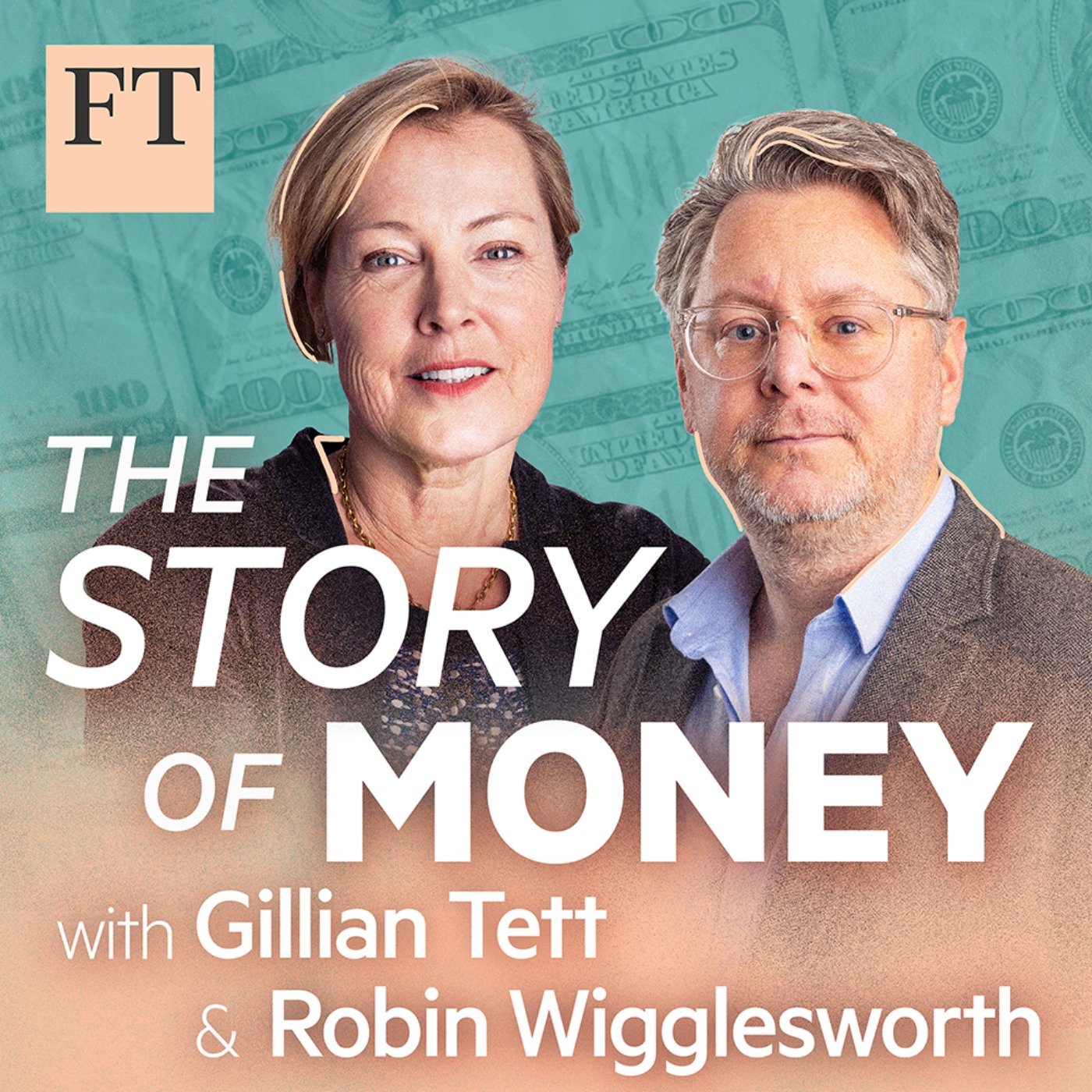
Ed Conway, economics editor at Sky News and author of The Summit (a book about Bretton Woods). Hosts: Gillian Tett and Robin Wigglesworth (Financial Times).
Guest backgrounds
Conway is a long-time business journalist and specialist in how the global economy works; he focuses on the “human story” behind monetary policy.
Key claims
Bretton Woods was “monstrous monkey house” chaos (drinking, espionage, heart attacks). Keynes pushed for a global clearing union with a neutral currency (Bancor) and symmetrical adjustment; the US (Harry Dexter White) pushed a gold-backed exchange system anchored on the dollar. The dollar’s central role was inserted late—Keynes reportedly didn’t fully grasp it until after signing. Two institutions were created: IMF and World Bank, but they didn’t serve original purposes.
Notable examples
Keynes’ fight over shutting the Bank for International Settlements; his collapse and heart attack; the “Tower of Babel on wheels” train with 44 allied nations; Lydia Lopokova translating for Russian delegates; Soviet delegate Nikolai Chichulin (NKVD) meeting White; Russians signing at the last minute; later US political shifts undermining Bretton Woods.
Written by AI. May contain mistakes.
Chapters
0:29
The Bretton Woods Agreement Explained
Learn how the Bretton Woods Agreement established the US dollar as a global reserve currency.
“Today on the story of money, the origin story of what is perhaps the most important monetary agreement in modern history.”
1:31
The Context of Bretton Woods
Explore the chaotic environment and key figures involved in the Bretton Woods negotiations.
“although he was supposed to be one of the most brilliant economists in the world.”
3:05
The Legacy of Bretton Woods
Discover the significance of Bretton Woods in shaping the post-war financial system.
“Visit nuveen.com slash future to learn more.”
4:39
Keynes and His Vision
Understand John Maynard Keynes' motivations and personality that shaped his contributions.
“So Ed, before we dive into things, I just have to stress to viewers that we have not kidnapped you.”
6:33
Keynes' Post-War Monetary Plan
Examine Keynes' plans post-World War I and how they influenced Bretton Woods.
“That's a good moment to bring in two of the star characters in this story.”
11:21
The Concepts Behind Keynes's Plan
Learn about the main concepts of Keynes's monetary plan, including the clearing union.
“But his first plan to sort of address this, like a big master plan for a new post-war monetary system, I think came to him in 1940.”
14:01
Keynes vs. White: Divergent Monetary Visions
Explore the contrasting monetary proposals of Keynes and White during post-war negotiations.
“So at the heart of this was the idea that at the centre of the international system, there should be something called a clearing union.”
18:06
The Build-Up to Bretton Woods
Learn about the buildup to the Bretton Woods conference and the dynamics between Keynes and White.
“He was spotted by Henry Morgenthau, who became the Treasury Secretary in the US, who basically made him his protege.”
24:38
Arriving at Bretton Woods
Discover the atmosphere and significance of the Mount Washington Hotel during the Bretton Woods negotiations.
“Well, the train has reached its destination, Bretton Woods, and it has disgorge these hundreds of delegates from the US, the UK and 42 other allied nations and including Norway I have to add.”
28:00
The State of the Hotel in 1944
Discover the conditions at the hotel during the Bretton Woods Conference.
“And when I went there, I was thinking, God, this place, it's the perfect setting for some sort of suspenseful drama, which is exactly what happened there.”
Show all 21 chapters
28:50
Delegate Accommodations and Atmosphere
Learn about the unique accommodations and social dynamics among delegates.
“Yeah, apparently they told these, the POWs, they gave them 25 gallons of white paint and told them to paint anything that doesn't move, essentially.”
30:31
The Party Atmosphere at Bretton Woods
Explore the mix of work and leisure during the conference amidst high tensions.
“some fraternising, womanising that happened as well.”
32:24
The Dollar's Central Role in Negotiations
Understand how the dollar was established as the cornerstone of the new monetary system.
“And of course, there are those extraordinary verandas, like many Gilded Age mansions, where people held meetings and would have been nice and cool in the summertime in Bretton Woods.”
34:31
The Fate of the Dollar and Bretton Woods
Examine the consequences of declaring the dollar as the linchpin for international economics.
“And actually, in one of the meetings, there was a UK delegate called Dennis Robertson, kind of very well regarded economist who had worked actually quite extensively with Keynes on the general theory.”
35:22
The Involvement of the Soviet Union
Investigate the role of the Soviet delegation and their complicated negotiations.
“That was the demise of Bretton Woods later on.”
36:58
Harry Dexter White and the Russian Delegation
Delve into Harry Dexter White's controversial interactions with Russian delegates.
“They, as always happens with Russian negotiators, were playing hardball.”
41:07
Keynes' Health and the Conference Outcome
Learn about Keynes' health issues and the final moments of the conference.
“Yeah, I think that's probably a generous assertion.”
42:00
The Tension at Bretton Woods
Explore the dramatic moments leading up to the Bretton Woods agreement.
“And part of what the Americans wanted, they thought it was semi-corrupt and they kind of wanted it to be shut down immediately.”
43:54
Aftermath of the Agreement and Reactions
Understand the immediate reactions and consequences post-Bretton Woods signing.
“There was just reams and reams of paper being churned out by the conference.”
45:56
Keynes' Struggles and Political Changes
Learn about Keynes' challenges amidst political shifts in the US and UK.
“I mean, a lot of particularly the detail on the dollar being inserted in there explicitly came as a complete shock to him when eventually he discovered it.”
50:42
The Legacy of Bretton Woods
Discover the long-term impacts and the irony of Bretton Woods institutions.
“And then shortly afterwards, on the train back to Washington, He has a heart attack and then very shortly afterwards he dies.”

Ask about this episode
Get the gist, explore an idea or ask about something said.
 Claude
On The Story of Money, what are the key points of this episode?
Searching your listeningTranscript
Automatic transcript. May contain errors.
0:00He has this big argument with the American delegation. It was actually over whether the Bank for International Settlements should be shut down. And part of what the Americans wanted, they thought it was semi-corrupt and they kind of wanted it to be shut down immediately. Keynes did not want it to be shut down immediately and they were fighting over that. Keynes got very angry about it. He's running upstairs for a meeting and then has a heart attack.
0:29Today on the story of money, the origin story of what is perhaps the most important monetary agreement in modern history. And yet, ironically, it was birthed in a remote and dilapidated New England hotel with a leaky roof, broken furniture and really bad paint job. Ah, well, then I think I know which agreement you're talking about, Gillian. It's the one that arguably provided the foundations for three decades of booming trade, economic growth, all that good stuff at the end of World War II. And yes, this agreement actually came out of three weeks of rushed negotiations among hundreds of delegates who I gather, frankly, spent more time drinking than sleeping.
1:12Absolutely. But the point is, it formally enshrined the US dollar as a new global reserve currency, knocking the pound out. And at the same time, though, the talks were so chaotic that Britain's lead negotiator didn't even grasp this fact until he'd already signed it, although he was supposed to be one of the most brilliant economists in the world. It also produced two of the world's most important financial institutions, and we still have them today, the International Monetary Fund and the World Bank. And yet, neither of these institutions actually ended up serving the purposes for which they were originally set up.
1:51And here's the crowning irony. At the time, John Maynard Keynes, a British economist who was at the college, which I oversee today, King's College, Cambridge, and his US counterpart, but Harry Dexter White thought this was the crowning achievement of their careers. And yet they would soon be dead. And in fact, it would contribute to the undoing of both of their reputations subsequently. So if you hadn't guessed it already, we're obviously going to be talking about the Bretton Woods Agreement, which was signed on the 22nd of July in 1944. So standby is coming up here on the story of money from the Financial Times with me, Gillian Tett.
2:35And me, Robin Wigglesworth.
2:42In 1898, John Nuveen had a vision to underwrite municipal bonds that would propel American infrastructure into the 20th century. More than 125 years later, that vision lives on. Today, Nuveen has grown into a leading global asset manager with expertise spanning public and private markets, still investing with a future in mind. Nuveen. Invest like the future is watching. Visit nuveen.com slash future to learn more. Investing involves risk. Principal loss is possible.
3:20So Gillian, I think it's fair to say that most people these days, if they think about Bretton Woods, the words Bretton Woods really, what comes to mind is the architecture of the entire post-war financial system, right? Absolutely. In fact, it's a bit of a modern monetary meme, if you like, because it's used as a shorthand for the system of fixed exchange rates that the agreement ushered in for the first 25 years after the end of World War II. And even today, people use that meme to talk about the IMF and World Bank, calling them the Bretton Woods institutions because they came out of that conference in 1944.
3:58Yeah, but what people don't always realise or appreciate is that Bretton Woods, the conference, was possibly one of the maddest episodes in all monetary history. Keynes called it the most monstrous monkey house assembled for years. I mean, it had everything. It had drunkenness, debauchery, espionage, a heart attack, famous economists. and you know I like famous economists and all my good stories. And it was set in the final months of the Second World War in this remote decaying hotel that sounds frankly a little bit like the Hotel of the Shining with Jack Nicholson. As luck would have it, we have the perfect person to tell us that story who actually came up to Cambridge, Keynes' stamping ground recently, to talk about his book, Ed Conway.
4:45Ed, welcome to the show. It's an honour to be here. So Ed, before we dive into things, I just have to stress to viewers that we have not kidnapped you. Because it looks like we're holding you hostage in some horrible, dingy room. I know it probably is one of those soundproof booths that you have at Sky News, but it does kind of look like a prison cell or something, right? My panic room. Now, Ed, you're a long-time business journalist, currently working as the economics editor at Sky News. So many of our listeners will have seen you on television. But you've also got a reputation as an author of some really important books about how the modern global economy works, including the one about Bretton Woods conference, which gave birth to all this, which is called The Summit.
5:31Sounds a bit like a John Grisham novel. Well, I should say thank you, Gillian. That's kind. And yeah, I mean, I was drawn to this partly because this is like a really good story that as you were both laying out, It's kind of got the drama. It's got the mise-en-scene of this extraordinary hotel in the middle of nowhere. And the stakes were so high. So the stakes both in wartime, when the British delegation and the European delegation left Europe, it was as D-Day was happening. So you have all of the drama lining up and the stakes for the global economy, again, are extraordinary. And as you say, Bretton Woods has become this kind of meme that every time people have some sort of gripe about the structure of the global international monetary system, we need a new Bretton Woods is the phrase that always comes up.
6:19And so when I kind of went to it, it was partly to try and understand what would that actually mean in practice, but also partly to understand the kind of cauldron in which this was forged and to try to tell the story, the human story of it as much as the specific economics of it. That's a good moment to bring in two of the star characters in this story. And every great story, even in economics or especially in economics, needs colourful people. So let's start with the most famous of the two men who were really at the centre of it. John Maynard Keynes, who's somebody who hangs over me every single day at Cambridge University because he was at King's College, Cambridge.
6:57He dominated the college for many years. his portrait and his bust is everywhere. But what kind of man actually was Keynes? And how did he end up at the Bredenwood Hotel leading the British delegation? He was a Renaissance man. He was, I mean, obviously, we know him as this famous economist. But his interests kind of were spread across all sorts of different disciplines. I mean, he was obsessed with the arts, he was obsessed with literature. He was a part of the Bloomsbury set. So, you know, in the kind of 1910s, the 1920s, this group of people, Virginia Woolf, Vanessa Bell, E.M. Forster, Lytton, Strachey, he was part of that kind of that club.
7:39And it was a club that was very liberal, very much part of the establishment, but they were fixated with intelligence. And I suppose that's kind of this kind of key strength and weakness of John Maynard Keynes. He had this extraordinary intellect and from his early days regarded as a prodigy, essentially. But he was also massively intellectually snobbish. And so that meant whenever he would have meetings with people, if he didn't intellectually respect who he was talking to, he would treat them like dirt. And that's not great politics at all. Now, we have the archives of Keynes at King's College.
8:16And one of the most moving part of the archives was Keynes' trip to Paris in 1919 after World War One, when he fell, as he wrote in letters to his mother into a deep depression about what was happening. And that's absolutely critical to why he fought so hard years later in 1944 to try and create Bretton Woods. Explain to us why he was so depressed after World War One and why in many ways what happened in Bretton Woods was his second attempt to fix it. The starting point for all of this was that throughout this period there was a fixation with the state of the international monetary system which in a way like to the modern mind feels quite foreign because we're used to this era of exchange rates that float against each other.
9:02We're used to the fact that a country like Britain or the US has this enormous deficit in its current account and its budget deficit. Back in that world, there was this kind of obsession with trying to maintain some degree of stability in the monetary system. So maintaining the fact that exchange rates were going to be fixed with each other, maintaining the notion that countries shouldn't have enormous deficits or enormous surpluses against each other. And a lot of that kind of went back to the old idea of the Victorian gold standard, so that there was this notion and a system whereby if you were kind of trading with another country, that gold would be this kind of anchor that would keep your exchange rates fixed with each other.
9:41And often when you would kind of trade with each other, gold would be there somewhere in the middle. And that entire system, that Victorian gold standard, basically broke down in the face of the First World War. And when the First World War came to an end, obviously, there was this effort to try to create some sort of a settlement between both sides. And that happened at Versailles. But what was first of all, what was never done at that point was to really try and make a kind of a more functional version of what had broken before. And secondly, so much of the onus of reparations was put on Germany in the Versailles kind of treaty that Keynes saw that this was going to be such an inordinate burden on Germany that it was basically going to consign the world to another likely war and wrote about that at the time.
10:31And that was his brilliant book, Economic Consequence of the Peace, which basically is a howl of despair against the triumph of revenge politics and anti-globalisation politicians who wedded to populism, protectionism and extreme nationalism. Sounds familiar? It was an extraordinary bestseller. That's the thing about economic consequences of the piece, such a bestseller that he was a household name because it did foresee what eventually happened with the kind of the breakdown of the international monetary system in the years that followed, the rise of Hitler. But his opportunity, I guess, from 1919 onwards, he had had in his head that the global monetary system and just the economic set of rules that defines the relationship between nations had never been properly fixed after the First World War and that everyone suffered as a consequence.
11:20And so the 1940s and what would eventually become Bretton Woods, he saw as this is my opportunity to put right what went wrong in 1919 and I couldn't really do anything about. But his first plan to sort of address this, like a big master plan for a new post-war monetary system, I think came to him in 1940. What was that plan and what prompted him to sort of start sketching out the contours of it? The Allies had discovered that the Germans had a plan for how they would arrange the New World Order under the Nazis if they won the war. And there was a guy called Walter Funk who drew up this big monetary plan.
11:59And he was essentially, Keynes was given a copy of the Funk plan, the German plan, the Nazi plan. Can we call it a funky plan? Is that too much as a funky plan? It was a funky plan. Yeah, funky. He was given it by Harold Nicholson, so another part of the establishment elite at the time. And he said, well, be a good chap and explain why this is not a good idea. And Keynes went away, read the plan and said, well, actually, and I've got the quote, he said, in my opinion, about three quarters of it would be excellent if only the name of Great Britain was substituted for Germany. And that's classic Keynes in a way.
12:37You know, when the facts change, I change my mind. I mean, one of the things that's fascinating about Keynes is that he was quite flexible and adaptable to changing circumstances. And not afraid to say something controversial if he had to. Part of the personal backdrop of Keynes, he was homosexual in an age where that was, you know, tacitly not acceptable. I mean, it was legal, but he was not ashamed of it. And then later on went to marry Lydia Lopakova, who was one of the world's most famous ballerinas. But throughout this period was a flamboyant person and so intelligent that very few people would ever challenge him.
13:14And so when it came to the Nazi plan, he kind of basically said, actually, this is pretty good. And it's worth pointing out that because he was so hard to define intellectually in many occasions, today he has bipartisan interest from people on both right and left. I mean, yes, the left often talk about his vision, but I was in Washington just recently talking to people in the Trump administration, some of whom, like Jameson Greer, are great fans of Keynes because of what he said about international imbalances and are looking to that history for how they fashion policy today. So history is very relevant in that sense.
13:51that's so interesting and actually so much of what was discussed at Bretton Woods was tantalizingly you know analogous to what we're living through right now and there's still a lot of people who say if we had had the Keynes plan versus the White plan then how different could history be and what could we do to try and adopt it these days um before we get to the White plan can you tell us what were the key points of Keynes's plan the one that you kind of took inspiration from this funky plan that a Nazi German official had done. So at the heart of this was the idea that at the centre of the international system, there should be something called a clearing union.
14:33And basically, when you're trading with another nation, all of that exchange of your money to their money needs to go via this institution. That's kind of the key thing. and this union would have its own currency which he called Bancor although he did try and come up with other names. Bancor was the one that he eventually ended up with. It's French for gold. Yeah French for gold but he also came up with unicorn was another one. Ahead of his time. But the key thing is international currency right in the middle of things and then the other kind of key thing is that there had to be symmetrical adjustment okay So basically, if your country had a big deficit, so basically you're importing lots more from the rest of the world than you're sending out to the rest of the world, which is kind of basically that's the UK today.
15:20That's the US today. If you had a deficit, you got penalised by this clearing union and had to try and kind of gradually reduce your deficit. it, but symmetrical. Also, if you had a surplus, in other words, you're like China today and you're exporting far more out to the rest of the world than you are importing, you also got penalised by the clearing union. And so it was really radical. And a lot of people read this at the time and were just blown away. I guess the other kind of bit of background and why this was attractive to the UK at the time was that the UK was a deficit nation. And Keynes was very conscious that if all of the onus of trying to sort out your own kind of affairs was put on to deficit nations like the UK, he was aware that Britain was in trouble.
16:08On the flip side, America was a surplus nation. So America was very similar back then to China today. It had enormous exports. And lo and behold, when the American plan came out, there was nothing like that. It wasn't that you had to suddenly adjust if you were a surplus nation. And it's worth pausing on that because Robert Skidelsky, Keynes' great biographer who sadly passed away recently, always argued that this was one of Keynes' most important insights, right? Keynes wasn't just trying to help deficit countries like Britain. I mean, he wanted a system that would force surplus countries to adjust, to force them to stop hoarding surpluses and pushing all the pain onto everybody else.
16:51but now let's turn to Keynes's American counterpart Harry Dexter White who's the chief undersecretary of international finance at the U.S. Treasury and he's the opposite of Keynes right he was definitely not a celebrity he was a brilliant person very clever person very impressive person to a lot of people but clearly he wasn't even a famous economist let learn the kind of incendiary celebrity that Keynes was at that point. So Harry White Harry Harry Dexter White is kind of the exact opposite to Keynes. He was short where Keynes was very tall. He was a self-made man. Keynes came from the establishment.
17:27Harry Dexter White was working class, genuinely working class. He was the son of Lithuanian Jewish immigrants. Keynes was anti-Semitic in that way that many people of the British establishment were at that point. In World War I, Keynes was sent out. He was a conscientious objector, but he was sent out on tours to tour the battlefield and understand the economics. Whereas White, he never quite made it to the trenches, but he was out there. as a volunteer. And he kind of scrambled his way up to the top and gradually worked his way both into Harvard and then joined the US Treasury. But he was never someone who stuck out.
18:04He was just a hardworking guy. He was spotted by Henry Morgenthau, who became the Treasury Secretary in the US, who basically made him his protege. And the upshot of that was that by the time they were coming to try and negotiate, so the British and the Americans to negotiate what the post-war settlement was going to look like. White had risen from obscurity, and Keynes was this enormous kind of figure. And so there was a massive imbalance in terms of the personalities of the two figures. But by the same token, that was completely offset by the imbalance between America, which was the obvious coming superpower, and Britain, which was diminishing enormously and was basically, you know, close to bankrupt.
18:44But I remember there's this great quote in your book that you had that talks about the different stature of the men in celebrity terms that, you know, some friend of Harry Dexter White said the happiest day in his life when he was on the first name basis with Kane, which shows just how much of a humble person he really was. Yeah, he was a fanboy. And just to be able to play on the top table like this had always been his dream. But then by the same token, you know, he was smart. He was opinionated. And also, Also, he was probably, I would say, more political than Keynes. He was part of this democratic tradition that was, by today's standards, really quite left wing, which would later come to haunt him, but wasn't totally unconventional in the Democratic Party of the time.
19:30And he also had, White, a plan for how he wanted to organise the global monetary system, didn't he, which was different from Keynes. Give us a quick summary of how he saw the best solution to these problems unfolding. So White's plan was far less revolutionary, far less radical than Keynes'. Basically, it involved somewhat refashioning the old pre-war gold standard and replacing that with, he called it gold-backed exchange. And the idea was that all countries around the world would have their exchange rates fixed with some sort of gold-backed exchange, which was ultimately going to be the dollar.
20:06And there would be the stabilisation fund, which eventually basically became the International Monetary Fund, which would provide kind of, you know, emergency help for countries that needed it. And the flip side, you would also have a bank that was going to kind of help with the post-war reconstruction. And this is kind of basically what happened in the end. Right. So just to recap, we've got these two brilliant men made for Hollywood kind of scenario, very different characters with countries in radically different circumstances coming together. One of them wants a global currency. The other one wants a dollar.
20:41One wants to give trade deficit countries a break. No surprise there, given that Keynes came from Britain, which was a deficit country. The other wants to let the country with the world's biggest trade surplus, which back then was America, not China, call the shots. So you've got this inbuilt tension between their visions and between the men from the get-go. Did they try and thrash out their differences at all before Bretton Woods or was Bretton Woods the first time they really clashed? A lot of the pre-summit stuff happened in the intervening years. So both White and Keynes were charged with coming up with their vision of how the global international monetary system would look around 1940, 1941.
21:28That basically kick-started a set of different meetings. and you've got White and you've got Keynes meeting time and time again throughout this period. Initially, Keynes doesn't know who the hell White is, and he is massively dismissive towards White in so many of these initial meetings. And he is convinced that his plan is genius and that White's plan is disastrous. And the meetings go on and on. And initially, as you're saying, Robert, you know, for White, it was just such an honour to be there on the top table. But that very quickly broke down and the two of them had kind of shouting matches with each other.
22:00as the 1940s go on. And so you have something kind of meeting after meeting, all of which culminates in 1944 with, right, OK, we know that we're kind of winning the war at this point. Now let's actually have the official meeting, which is going to happen in Bretton Woods. In practice, by the time Bretton Woods comes around, you kind of already have a decent sense that this is the broad plan. And the broad plan at that point is basically White's plan. Keynes' plan has been suppressed and suppressed and ignored and ignored. And by the time 1944 comes around, the only person who kind of believes he might have a chance of getting the international currency like Bancor and his clearing union instituted is John Maynard Keynes.
22:42Everyone else has seen the writing on the wall and it's going to be America's century. And America is going to be the architect of what happened to Bretton Woods. OK, so by now it's June 1944. They've had all these meetings leading up to Bretton Woods. but they still have to get all the allies on board, right? Because this was basically the UK and the US trying to thrash things out. And then they have to get, frankly, the rest of the world to agree to that. And to do that, they had to get them all together. And that brings us to one of my favourite scenes in your book, which is what you call the Tower of Babel on wheels.
23:17Because it was summer, it was hot. And so Keynes and the others decided to head to the mountains up in New Hampshire. and hundreds of delegates from 44 different allied nations all got onto a train together to go up to Bretton Woods and to try and thrash out the agreement, speaking lots of different languages, which is why the Tower of Babel. In fact, Keynes' wife Lydia is pressed into service as a translator between the Russian delegations and the Americans, which turns out to be crucial. But off they go up to Bretton Woods. and after the break we will hear about what happened next
24:01the future of fixed income investing will continue to blur the lines between public and private markets nuveen's credit platform was built to navigate this shifting landscape channeling capital toward the businesses infrastructure and energy solutions that are shaping tomorrow's economy all while aiming to deliver the resilience and returns that portfolios seek today. Nuveen. Invest like the future is watching. Visit nuveen.com slash future to learn more. Investing involves risk. Principal loss is possible.
24:37Welcome back. Well, the train has reached its destination, Bretton Woods, and it has disgorge these hundreds of delegates from the US, the UK and 42 other allied nations and including Norway I have to add. So they've all come up there to negotiate a new post-war monetary system based on this outline plan agreed between Harry Dexter White and John Maynard Keynes and the talks will take place at this Mount Washington Hotel in Bretton Woods. Ned, it's a pretty special venue, not just because of its historical significance. Can you tell us a bit about it? What was it like at the time? Yeah, I don't know.
25:25Have either of you been to it? It's an extraordinary place. I have been there a few times. And in fact, I once took my kids there when I was a juggling single mum to an economics conference where they ran around the lawn. They managed to dive-bomb George Soros in a swimming pool and practically rugby tackle Paul Volcker. So I have very fond memories of how beautiful the hotel is in the middle of the mountains and the woods. But in those days, it wasn't quite so beautiful. And they've refurbished it since, haven't they? Yeah, it's kind of very nice now, actually. And you wouldn't have guessed that at various periods in its existence, including in 1944, because a lot of the time it was on the brink of literal and metaphorical collapse.
26:07And it's worth saying, you know, the reason that they chose to do this in New Hampshire is obviously it was summer. This was before the days of very widespread air conditioning availability. And Keynes in particular was not a well man, even though he was still relatively young by today's standards. He'd had heart problems for a long time. And he had basically begged the US Treasury, please do not have this in Washington, D.C., where it gets incredibly swampy, as everyone knows, in the summer. Do it somewhere. Do it somewhere where it's cool. in fact a fun little aside you know the the federal reserve building or the the main meeting place where the fed governors and and uh reserve presidents get together to decide that's where d-day was planned because it was one of the few rooms in dc that had air conditioning oh that is interesting i did not know yeah but because of the air conditioning that's fascinating so partly it's because it's because of the air conditioning thing but partly also i think there was some senator or congressman from New Hampshire who needed a favour done.
27:06And so having this within New Hampshire, it's always the way. Sounds very American, right? Yeah, exactly. So everyone was more or less happy with this compromise. And so up they went on the train. And the hotel is an extraordinary place, as Gillian was saying. The landscape around there is stunningly beautiful. And the hotel is in this kind of nook, this valley in the middle of the mountains, but just by Mount Washington, as the name would kind of imply, which is famous for having the worst weather in the world. I think one of the fastest wind speeds ever recorded was on the top of Mount Washington.
27:37And it's worth going up. If you ever go around there, you can take a little train to the top and get blown away by the wind. And it's pretty cool in every sense of the word. The hotel is kind of one of these gilded age, enormous structures, all made of wood. I think And these days, I can kind of imagine your children running around, because I think if I was a kid running around those long corridors, it has these incredibly long corridors that are a bit like in The Shining. And when I went there, I was thinking, God, this place, it's the perfect setting for some sort of suspenseful drama, which is exactly what happened there.
28:17And actually, there was one newspaper reporter who wrote this is the perfect setting for a murder. and indeed you know I don't know if that did happen this time but there was lots going on. So obviously the hotel is really nice now but what was it like when these delegates all poured in in 1944? Yes it's in total disrepair no one is going on holiday there at this point during wartime and so you've got kind of holes in the roof broken furniture it had recently kind of gone bankrupt and then it had a new owner in there who was desperate to try and rejuvenate it and just in order to to kind of make it vaguely livable um you had kind of people u.s army people and also german pow so so german prisoners uh rushed in to try and fix it up and to paint everything everything gets painted white to like to the great to the to the horror of the new owner because there are if you go there these days you'll see there's lots of beautiful glass work including tiffany's stained glass windows and they painted everything including these stained glass windows.
29:18Yeah, apparently they told these, the POWs, they gave them 25 gallons of white paint and told them to paint anything that doesn't move, essentially. Yeah, exactly. And so there's kind of hundreds of rooms, but nowhere near enough rooms to accommodate all of the delegates. So you have delegates kind of sleeping in linen cupboards and a load of them are kind of shunted off to another place, you know, guest house around the corner. And everyone kind of congregating on this place. Keynes was terrified that the longer this goes on, the more likely it is severe alcohol poisoning is going to set in because he's concerned about the stakes being so high.
29:54And there's a bar, right? There are several bars at the hotel as well that were unusually well stocked for wartime. Yeah, there's several bars. There's one called the Moon Room. And these were kind of prohibition era bars or bars that had kind of certainly continued serving through the prohibition. One of the trains kind of coming in, one of the characters was completely full of alcohol just to the rafters. So, of course, one of the not so secret aspects of Bretton Woods was that whenever you put lots of people under huge pressure together at close quarters with lots of alcohol, there was inevitably some fraternising, womanising that happened as well.
30:35How bad was it? I think it was by today's standards, it was pretty damn bad, to be honest with you. You had lots of people, should we say, I mean, secretaries who may not have been secretaries who were drafted in there. I mean, it wasn't all womanising. There was just lots of straightforward drunkenness at the same time. They brought in one of the world's most famous magicians called Cardini was brought in to do tricks for some of the delegates. And so you can still see photos of him doing card tricks. There was golf tournament tournaments and there was a volleyball contest as well where Harry Dexter White actually took part.
31:09He was photographed diving for a volleyball at one point. But for the most part, it was negotiation. It was drunkenness. And there was lots of womanizing going on at the same time. If you look at any of the photos from this conference, there's this suspicious preponderance of very glamorous looking women alongside these not very glamorous looking finance ministers. Are finance ministers not glamorous, Ed? How dare you? I mean, you know, these days it's changed enormously, but back in the day. Well, there's even this famous drinking song, the Bretton Woods song, right? Where I think I have it here.
31:44And when I die, don't bury me at all. Just cover my bones with alcohol. Put a bottle of booze at my head and feet and pray the Lord my soul to keep. And that was the Bretton Woods song. And that probably sums up a little bit what the zeitgeist was like. And I think for a lot of the delegates, you know, who were used to war and they were used to rationing. and many of them had come across from Europe. They came to places like Atlantic City and New Hampshire and thought to themselves, my goodness, it's like there's no war. You know, you can order food and it comes. You can order a burger, you can order a lollipop, and here it is, you can order ice cream.
32:17And so there's this strange kind of surreal holiday-like atmosphere that precludes throughout this entire period. And then at the same time, everyone is just absolutely working, you know, kind of 18-hour days, just trying to draft the quite complex legal agreement that constitutes the Articles of Foundation for Bretton Woods and for the Bretton Woods institutions. It's a carnivalistic atmosphere. Right. And of course, there are those extraordinary verandas, like many Gilded Age mansions, where people held meetings and would have been nice and cool in the summertime in Bretton Woods. And that's where a lot of the conversations actually took place alongside the indoor actual conference rooms.
32:58So how do the negotiations actually go once they all got over their hangovers? So it's a bit it's kind of a bit like, you know, Davos or the IMF. A lot of the actual kind of action is happening outside of the official kind of negotiation rooms. There's a famous moment where the French delegate tries to collar. I think it's one of the Americans and is absolutely furious that the articles that are being negotiated are not going to be put in French as well as in English. It's the main thing that upsets the French representative. I hope I'm not going to offend any French listeners to say that town's extremely French.
33:33Plus ça change. Yes. Yeah, plus ça change. But also, I mean, the other thing that everyone is trying to negotiate desperately is what their quota is going to be at the International Monetary Fund, which is also how much voting power is each nation going to have? How much influence are they going to have in the future? So what about the dollar? I mean, how did the dollar end up being put at the centre of this new global monetary system? But within the white plan, there was always this kind of strange thing, which there was a euphemism in the middle of it, which is that if you're making a transaction with another country, that had to go via something that they called a gold convertible exchange.
34:13I mean, basically, the only gold convertible exchange in the universe at that point was the dollar. And so it was kind of a statement of the obvious that that should be the dollar. But at no point up until then had been formally written into any of the articles that this was the dollar at the linchpin of this new system. And actually, in one of the meetings, there was a UK delegate called Dennis Robertson, kind of very well regarded economist who had worked actually quite extensively with Keynes on the general theory. And so very smart, quite diffident character who was given the responsibility on behalf of the Brits to do negotiations on the fund.
34:55So he was in that while Keynes was working on the World Bank, Robertson was working on the fund. And he said at one point, well, why are we going to just keep going on about gold convertible exchange? Can't we just call a spade a spade and put dollar in there? And that's basically what happens. And then lo and behold, the dollar was officially at the centre of the international monetary system. And everything then depends on the fate of the dollar, which is kind of, you know, part of the later story about what happens with Bretton Woods and its breakdown. If you don't have the dollar being a relatively stable currency in the middle, which you can assume will always be convertible into gold, then you've got problems, which, you know, spoiler alert, is kind of that's what happened.
35:35That was the demise of Bretton Woods later on. Yes. And that is another great story and one that I promise we will cover in another episode. But for now, can you tell us a little bit about the Russian delegation? Well, the Soviet Union delegation, really. And Harry Dexter White's, shall we say, controversial relationship with them? Yeah, well, it is interesting, shall we say. And it's still a matter of debate and speculation even now. He was having a series of meetings, most of which were undocumented, with members of the Russian delegation. So basically the Russians arrived, enormous delegation.
36:16There was this determination which really came from the top, which came from FDR, that the Russians were going to be involved in Bretton Woods and that it wouldn't be a success if the Russians didn't sign off on it. And there were wartime allies at the time, right? They were the ones who were winning the war in Europe, at least, you know. And if you looked at some of the polling in America at the time, the Russians were much more popular than the British because they were seen as heroes. They were seen as the ones who were, you know, who were actually driving Hitler back towards Berlin. So the Russians were there and FDR was determined that they were going to be at the heart of this.
36:52But the extent to which they were dedicated to Bretton Woods, it's not altogether clear. They, as always happens with Russian negotiators, were playing hardball. Many of them did not speak any English. And that's why Lydia Keynes' wife was being pulled into Actors Translator. She was no fan of the Russian regime at that point. And she's a ballerina, by the way, as well. I mean, you know. An incredibly famous ballerina, one of Dagilev's Ballet Russe. So an icon, actually, of ballet at the time. And yeah, she's called in to do translation. But one of the delegation is a man called Nikolai Chichulin.
37:31And he is quite a suave looking man. And he's a member of the, I think, the central bank at this point, the state bank. And it later transpires that he is a member of the NKVD. So he's a secret agent. That's the precursor to the KGB, basically. The precursor to the KGB. And he, Chachulin, meets White a succession of times, both at Bretton Woods and prior to Bretton Woods, which then later comes out. This is kind of after 1945 when suddenly the Iron Curtain has fallen and there is a lot more kind of Soviet phobia in the United States. Later on, White is accused of being a spy who has sold out America and has passed secrets to the Russians and is basically a traitor and is called before the House Un-American Activities Committee, has to testify, and essentially his reputation is totally trashed.
38:35And, you know, it's worth just underlining, this is the main American negotiator. This is the man who has derived the plan that we now have in existence, that created the IMF, that created the World Bank. And it transpires that he is accused of being a Soviet spy. Well, obviously, Harry Dexter White was very close to the Soviet delegates. And, you know, we do know that the conference ended in, frankly, the US giving the Russians pretty much everything they wanted. But on the other hand, you know, Roosevelt wanted to keep the Russians close. He was telling Harry Dexter White to be close to them, to be friendly, to keep them on board, because that was one of the main goals of this conference.
39:17So I'm curious whether you think, having read both the US and British and Russian sources on this, whether you think Harry Dexter White really was a spy for the Russians. I would tend to the view that he was doing his own private diplomacy with a country that was at the time an ally, not involving the State Department. But then the Treasury hated the State Department. You know, there's this other kind of bit of drama here. The Treasury hates the State Department. And then later on, I think that White, you know, he went further than he should have done. But was he actually a spy who wanted to try to further Russia's kind of status at the detriment of America?
40:00I'm just not convinced that there's enough of a smoking gun on that. I don't think, having read a lot of his own writings and having looked in his archives, I don't think there's much in there to suggest he was particularly sympathetic to the communists. He was definitely a lefty. I think he was a redistributive, democratic ideologue at the time. But was he a communist? No. And I don't think he was thinking in those terms. I think he was just thinking, how can I make this happen? And what can I do behind the scenes to make it happen? But as I say, views vary on this. And I suspect it's going to be one of these things that people debate for a long time about White and about the Soviets at the time.
40:37Yeah, the Soviets did, of course, get an inflated IMF quota. They got reduced gold obligations and control over the exchange rates. So if there were winners from the conference, then it would arguably be the Soviet Union. Ultimately, irony of ironies, they never actually signed the agreement. That's the critical thing. They never even signed up to it in the first place. They saw it as this diplomatic kind of win. But then when push came to shove, was a communist regime really going to be able to function as part of this? It seemed unlikely. I guess it's what people might call today a case where Harry Dexter White was perhaps a useful idiot rather than an asset.
41:13Yeah, I think that's probably a generous assertion. Yeah. Right. Well, let's come back to that later. Before we do, how did the conference actually end? Because we have Keynes getting increasingly unwell. But did they actually sign an agreement there? So Keynes, while White is having his secret meetings with the Russians, Keynes has his own issues, which is that his heart is kind of failing at this point. and at one point he has this big argument with the American delegation. It was actually over whether the Bank for International Settlements should be shut down, which might seem kind of slightly obscure, but the Bank for International Settlements was set up to basically manage the system of reparations after the First World War and it had somehow transmogrified into this club of central bankers, which is what it is today.
42:02And part of what the Americans wanted, they thought it was semi-corrupt and they kind of wanted it to be shut down immediately. Keynes did not want it to be shut down immediately, and they were fighting over that. Keynes got very angry about it. He's running upstairs for a meeting and then has a heart attack. He kind of collapses. He's taken to his room. This starts to filter out. Reuters reported that Keynes has died. The von Stauffenberg assassination attempt on Hitler was reported on the same day. So in this strange moment, you have reports that Hitler has been killed and that Keynes has died, neither of which actually turn out to be right.
42:41So because Keynes does recover in his rooms, he's shaken by it. He just about makes it to the final dinner of Bretton Woods. And at that final dinner, the great moment of suspense towards the end of this conference, it's not really about whether the dollar is going to be in the centre of it. It's kind of about whether the Russians are going to sign up to this and what the quota arrangements are going to be. How much power are they going to have? And the Russians are playing hardball all the way to the very end. And then finally, at the very last minute, literally the last day of this conference, and it's already been extended long beyond what it was supposed to take.
43:16At the very last day, finally, the Russians sign up to it. And then there was this big dinner and everyone celebrates. And it is a moment where I think they are quite ecstatic. Because if you think about this, what was the main thing that prefigured World War II? It was the breakdown in the global economy. You know, it was the rise in protectionism and this suspicion that if we didn't resolve those problems, then there'd be another world war. If you look at all of the documentation and all of the pamphlets that are published around this time, it was saying Bretton Woods is there to prevent World War III from happening.
43:50and so when they finally have this dinner at the end and and everyone has signed up to it there is this total extraordinary relief that they feel this is one of the single most important things that they've achieved in this war that wasn't achieved in the previous war so ed i mean i hate to shoehorn norway into absolutely everything but i have a golden opportunity here because there was a norwegian delegation there and at the final signing ceremony the the head of the delegation stood up and thanked the conference for being such an enormous consumer of Norway's biggest export at the time, which was paper.
44:23There was just reams and reams of paper being churned out by the conference. But what was the finals of day like? What was, you know, the final donor and more of the conference? Well, I mean, it was very rushed, to be honest with you. Everyone was totally exhausted at that point. and the owners of the hotel had another conference that was booked in to finish basically the minute Bretton Woods had finished, which was a conference for the American Bankers Association. And the irony of this is that if there was one group who were most set against what was agreed at Bretton Woods, it was the American Bankers Association.
45:06And why was that? It's because one of the parts, you know, the key parts of Bretton Woods was to regulate flows of capital around the world. And if there's one thing that particularly international investment banks do not like, it is restrictions on the flow of capital because that is basically their business. And so you have this kind of amusing pastiche, this moment in history where the finance ministers and the negotiators are kicked out. And then all of a sudden, the American bankers get in there and start to work on dismantling Bretton Woods, the thing that has just been agreed in the same rooms they were in only a moment ago.
45:42A lovely example of how American domestic policy always trumps international commitments and responsibilities. They got kicked out of the hotel and they signed the agreement so fast that Keynes didn't even read it properly, did he? Yeah. I mean, a lot of particularly the detail on the dollar being inserted in there explicitly came as a complete shock to him when eventually he discovered it. And he was furious with Dennis Robertson, who had done this. And I think a lot of the delegates just spent the following weeks and months kind of realising, in some cases with horror, what they had actually just signed up to and then had to actually implement it.
46:20So let's recap. The delegates get back on that train, going back from Bratton Woods down to the hot and humid climes of Washington or New York and beyond are going back to their home countries. The dollar is set to reign supreme. You've got two new institutions, the IMF and World Bank have been created, at least on paper, it will take a while till they actually exist in practice. But the story doesn't really end there because what happens next is that the US President Franklin Roosevelt, FDR, died in April 1945, and his famously blunt Vice President Harry Truman comes in. And then three months later, the UK also changed its government with Clement Attlee's Labour government coming into power.
47:05So tell us what happened to the Bretton Woods Agreement under the new US president and what happened to Britain? Well, it's a massive sea change, both in the UK, but even more so in the US. Just in as much as, you know, Roosevelt had just been this linchpin of the kind of diplomatic relations for such a long time. He had been the one who had wanted to keep Russia as close as possible. He had been the one who had pushed through lend-lease when most people, I think a lot of people within the administration and within Congress, wouldn't have supported Britain throughout that period. And suddenly he was gone.
47:42So Britain's relationship with the US Treasury, it started off quite frosty between White and Keynes, But it had become closer and closer as the years had gone on. But then suddenly, Morgenthau, who's the Treasury Secretary, is chucked out. And then you have a new Treasury Secretary, Fred Vinson, who doesn't really care much about the UK. All of a sudden, all of the Lendley support for Britain is just stopped abruptly, leaving Britain in a kind of, you know, real trouble. and while Bretton Woods is pushed through Congress, support from the US administration for it has diminished enormously. At the same time, because the Iron Curtain is falling and Russia is, or the Soviet Union is seen as a potential enemy rather than ally, there's a mistrust that falls into both relations internationally and internally.
48:35And so anyone who was previously quite close to Russia is viewed with great suspicion now, including Harry Dexter White. And so Harry Dexter White is called up for the House Un-American Activities Committee. And that goes kind of pretty badly for him. And Britain, well, it's left in a pretty parlous financial condition. Keynes continues to serve under the Labour government. And he gets sent back to Washington to try and come up with a post-war loan for Britain, because Britain's economy has been left in terrible condition by this. It was in terrible condition after the First World War. It is an even worse condition at this period.
49:11The empire is kind of disintegrating. There are many people, Keynes included, who want to try and keep it all together. And as a result, in order to facilitate that, they want a post-war grant, actually, not just a loan. They want a grant from America. And so Keynes is sent to Washington to negotiate this grant. He is in even worse physical condition than he was last time around. And yet, for some reason, he's asked to lead these negotiations. I mean, whoever did that was, I think, desperately regretting that very shortly afterwards, because he then conducts some of the worst economic negotiation known to humanity and basically shows his hand right from the start.
49:51It later transpires, by the way, that he was on a type of medication called sodium amytol, which was kind of a drug that was there for his heart, which taken in large enough quantities actually is a truth serum. So that might explain partly why his negotiation is so bad. But nonetheless, he totally flunks it and goes in there hoping for a big grant from America to set up Britain to repair some of its problems during the war and ends up with this loan and a loan on quite harsh conditions that involve having to allow Sterling to be freely convertible much sooner than he would have liked, which is ultimately what sets Britain on the road towards kind of decades of economic kind of crises in the following years.
50:33That post-war loan is like incredibly consequential. And that was Keynes's last act, really, because shortly after that, he attends the kind of inaugural meeting in 1946 of the International Monetary Fund and just makes it through. And does a beautiful speech there. And then shortly afterwards, on the train back to Washington, He has a heart attack and then very shortly afterwards he dies. And Harry Dexter White, this is the thing, their fates are somewhat intertwined. Harry Dexter White, at around about the same period, has to testify before the House Un-American Activities Committee. He goes in and launches an impassioned defence that he's an American, he's proud to be an American.
51:16and then a day or two later he's found dead at home of I think a heart attack as well. So the two men who were the protagonists of this story, they die in very similar circumstances, you know in ignominy when it comes to Harry Dexter White, in disappointment when it comes to John Maynard Keynes but even so they've kind of forged together something that if not perfect in any kind of way, was at least an attempt to go one better than what happened after World War I and to try to repair some of the problems, the economic problems that led to war. Wow. So that's basically Keynes getting his second attempt to fix the mistakes he saw back in 1919.
52:00And in many ways, that illustrates one of the key twists of the story, which is that, yes, Bretton Woods helped to destroy the two men who created it, but their sacrifices in some ways weren't in vain because actually the Bretton Woods system itself, the institutions, the meme, ended up being very influential, many would say a roaring success, because it birthed the IMF and World Bank and it did stitch together the post-war global economic system that didn't just perhaps helped peace, but sparked a lot of growth after World War II. Although, ironically, neither the World Bank nor the IMF ended up serving the purposes for which they were originally set up for.
52:45The World Bank was supposed to finance the post-war reconstruction of Europe, but that role got usurped in 1948 by the Marshall Plan, named after Harry Truman's Secretary of State who proposed it. And as for the IMF, well, that was supposed to be the referee for the system of fixed exchange rates that Bretton Woods ushered in. But by the early 1970s, that system was also going, well, pretty much pear-shaped, right? Absolutely. And that's a story that we're going to be picking up in a future episode of The Story of Money, because sadly, very sadly, this week's episode is drawing to a close. But there is, thankfully, just enough time for us to say thank you to Ed Conway.
53:27Ed, thank you so much for being here and making the time for us. I promise to views we haven't actually kidnapped him and stuck him in some some cell, even though it looks like that's where he's sitting. But Ed, thanks so much for being here today. And I loved the summit. I thought it was a fabulous book. Thank you so much. No, it's a pleasure to be able to discuss stuff that is incredibly important. And also it's a great economic story. Very true. Well, that's it for this episode of The Story of Money with me, Robin Wielswerth. And me, Gillian Tett. We'll see you all here next week.
54:22The future of fixed income investing will continue to blur the lines between public and private markets. Nuveen's credit platform was built to navigate this shifting landscape, channeling capital toward the businesses, infrastructure and energy solutions that are shaping tomorrow's economy, all while aiming to deliver the resilience and returns that portfolios seek today. Nuveen. Invest like the future is watching. Visit nuveen.com slash future to learn more. Investing involves risk. Principal loss is possible.
From the publisher
Take 730 delegates from 44 countries, plus another 2,000 or so hangers-on. House them in a remote, dilapidated hotel with holes in the roof and broken furniture. Deliver a train wagon filled with alcohol. Throw in some Russian spies, German prisoners of war, a troupe of bombshell “secretaries” and a magician. And then have the lead protagonist, the world’s most famous economist, almost die of a heart attack. What does that give you? Only the most successful international monetary negotiation in history. This is the story of the Bretton Woods conference of 1944, as relayed by journalist and author Ed Conway to hosts Gillian Tett and Robin Wigglesworth. The three weeks of chaotic talks would deliver three decades of postwar peace and prosperity, and enthrone the US dollar as the global reserve currency. The discussions also nearly killed Britain’s lead negotiator, John Maynard Keynes, and would later disgrace his US counterpart, Harry Dexter White.
Further reading:
The Summit, by Ed Conway (2015)
The Economic Consequences of the Peace, by John Maynard Keynes (1919)
John Maynard Keynes, biography by Robert Skidelsky in three volumes (1983-2000)
Treasonable Doubt: The Harry Dexter White Spy Case, by R Bruce Craig (2004)
Credits: King’s College Cambridge, the IMF, Dreamstime, Getty Images, the Hulton Archive, Ullstein Bild, Bettmann, Shutterstock, the LIFE Picture Collection, Thomas D McAvoy, Alfred Eisenstaedt, and the Darling Archive.
To enjoy future episodes, be sure to subscribe to The Story of Money wherever you get your podcasts, also on the show's dedicated YouTube channel here: https://www.youtube.com/@FTTheStoryOfMoney
Hosts: Gillian Tett and Robin Wigglesworth
Producer: Laurence Knight
Executive Producers: Flo Phillips and Manuela Saragosa
Original music: Breen Turner
Broadcast engineers: Bianca Wakeman and Petros Giuompasis
Podcast Development: Laura Clarke
Video editor: Kristen Kenyon and Josh Divney at Podcast Discovery
Learn more at ft.com/tsom or get in touch at [email protected].
Love listening to FT Podcasts? Join us live on Saturday June 20 at our inaugural NYC FT Weekend Festival at Spring Studios. Put your questions directly to our experts, experience your favourite podcast in person, and see the FT come to life. Register now and enjoy 10% off with code FTPodcast — this is one Saturday you won’t want to miss.
Hosted on Acast. See acast.com/privacy for more information.
More from The Story of Money
All episodesWe use cookies.They keep VO running smoothly and help us improve it. Privacy policy