
 Ask ChatGPT

- Podcasts
- The Story of Money
- The financial crash that created Britain’s first prime minister
The Story of Money15 Jul 2026 · 39m · 14 chapters
The financial crash that created Britain’s first prime minister
In short
The aftermath of the South Sea Bubble (1720–1721) and how Robert Walpole helped Britain stabilize its economy, reshape public finance, and become the effective first de facto prime minister.
Guests
Thomas Levinson, author of Money for Nothing: The South Sea Bubble and the Invention of Modern Capitalism; he studies the South Sea Bubble and modern capitalism.
Key claims
The crash drove political restructuring and the start of a “financial revolution,” especially by converting South Sea shares into tradable government bonds, creating a liquid national bond market. Walpole refused to unwind the transactions back to before the bubble, preventing sovereign default and national financial collapse. His control of Parliament and finance made him “first among equals,” effectively prime minister.
Notable examples
South Sea stock rose from ~100–110 to ~1,000 by August 1720, then fell to the low hundreds by December. Walpole tried a Bank of England bailout first (failed), then reduced the South Sea Company and reset terms (e.g., layaway payments not compelled; share price set below original). The Duke of Portland lost his fortune speculating and later died in Jamaica. France’s Mississippi bubble is contrasted: Britain “got it right,” France restored the status quo ante.
Written by AI. May contain mistakes.
Chapters
0:45
The South Sea Bubble Overview
Explaining the South Sea bubble and its implications on Britain's economy.
“Today on the story of money, we're going to be looking at how Britain's economy bounced back after Britain's first huge financial crisis in the 1700s.”
2:00
Walpole's Rise to Power
How Robert Walpole capitalized on the financial disaster to gain power.
“Because Robert Walpole's rise to power is not just one of those curious outcomes of the South Sea bubble.”
3:30
Walpole's Political Maneuvering
Analysis of Walpole's strategies during political turmoil post-bubble.
“So, Tom, thanks so much for being here today again.”
6:30
Walpole's Governance Style
Insights into Walpole's governance and financial policies.
“But what was different about the South Sea Company and the South Sea Bubble is you had people who would rarely, if ever, been exposed by their personal decisions to these wildly gyrating financial moves.”
8:00
Public Sentiment and Political Alliances
Exploring public opinion and political alliances during the crisis.
“Yeah, we think politics is pretty rough today.”
10:00
Walpole's Immediate Actions
Detailing Walpole's initial actions to stabilize the economy.
“And because he was so thoroughly out of power, he was just he was not worth bribing.”
14:01
Walpole's Initial Strategies Post-Crisis
Learn about Walpole's early actions to prevent a national financial collapse.
“government, to be impeached and condemned and taken to the tower.”
18:08
Transforming Debt into Bonds
Discover how the South Sea bubble led to the creation of modern bonds.
“And what came out of it was actually the beginnings of the structure that created, you know, enormous amounts of human well-being.”
18:52
Public Reaction and Walpole's Management
Examine how Walpole handled public anger and the restructuring of the debt.
“The public is furious, but most of that anger is directed at just a few people.”
24:45
Comparative Analysis of Financial Bubbles
Explore the comparison between the South Sea bubble and the Mississippi bubble.
“who actually were the maddened crowds themselves.”
Show all 14 chapters
28:00
The Diverging Financial Paths of Britain and France
Explore how Britain and France responded differently to financial crises and the implications of their choices.
“what is the right way to respond to financial disaster.”
30:00
Walpole: The First De Facto Prime Minister
Learn about Robert Walpole's rise to power and his impact on Britain's government and financial system.
“Well, so Walpole's approach largely worked.”
33:20
The Legacy of the South Sea Bubble
Understand the South Sea Bubble's influence on modern financial capitalism and its lasting effects on the economy.
“He was there at critical moments in the formation of both, you know, Britain's political system and its financial system.”
36:20
Innovation and Regulation Cycles in Finance
Discuss the cyclical nature of financial innovation and regulatory responses, and the potential for future bubbles.
“And maybe, you know, we will certainly see in the future.”

Ask about this episode
Get the gist, explore an idea or ask about something said.
 Claude
On The Story of Money, what are the key points of this episode?
Searching your listeningTranscript
Automatic transcript. May contain errors.
0:00If you do see him as the first Prime Minister of Britain, he is, I believe, the longest serving Prime Minister ever. He was there at critical moments in the formation of both Britain's political system and its financial system. And yet I think his reputation is mostly of being this fat, autocratic, corrupt guy who fell upwards. I mean, yeah, he was overweight. But other than that, I think he was a remarkable figure in British history. I gather that prime minister was actually initially an insult. Absolutely. And Walpole explicitly rejected that. I'm not the prime minister. Well, yeah, but, you know, if it walks like a duck and talks like a duck, you know, maybe it's a duck.
0:48Today on the story of money, we're going to be looking at how Britain's economy bounced back after Britain's first huge financial crisis in the 1700s. and how just one man rode the path of success to become Britain's first de facto prime minister. And if you're wondering what this is, well, it's the South Sea bubble. And the man in the frame who helped great Britain out of the disaster was Robert Walpole. Yeah, so it's April 1721. Robert Walpole has achieved something unprecedented. He's taken control of the three most important positions in Britain's government. The first time in history one person held all three of them.
1:33He has control of policy, finances and law. He would go on to rule Britain almost single-handedly for the next 20 years. And it was the collapse of the South Sea Company which didn't just topple Britain's economy, it also helped him to get there. Yeah. And if you want to hear about how the South Sea bubble happened, you can go back to our previous episode on the formation of the South Sea Company and how crazy things got. But today we're going to be talking specifically about the aftermath. Because Robert Walpole's rise to power is not just one of those curious outcomes of the South Sea bubble.
2:09It kind of shows how finance and financial events can have a huge impact on the fate of the world. In this case, well, reshaping the entire British political system and triggering the start of its new financial order as well. Absolutely. So what we're talking about today is how did Britain clean up its economy after this financial disaster, but also how we can spot bubbles, what we need to do to avert them, and above all else, why the aftermath of bubbles, which is so often ignored, matters enormously. True. Welcome to the Story of Money with me, Gillian Tett. And me, Robin Wigglesworth.
3:14markets still investing with a future in mind. Nuveen. Invest like the future is watching. Visit nuveen.com slash future to learn more. Investing involves risk. Principal loss is possible.
3:33And we are once again joined to talk about the aftermath of the South Sea Bubble by Thomas Levinson, the author of Money for Nothing, the South Sea Bubble and the Invention of Modern Capitalism, a killer title, among many other books, frankly, Tom. You've written quite a lot. So, Tom, thanks so much for being here today again. Thank you for having me. I was worried you might get tired of me. It's great to be here. So, Tom, I mean, can you give us a quick recap of the South Sea bubble? For listeners that might not know, what was the South Sea Company, and why did it cause such a gigantic disaster?
4:07Sure. So, the South Sea Company was, you know, Now, in one way familiar, it was a joint stock company. There were plenty of those around, the East India Company being the most famous. And it was set up in 1711 to basically, from the government's point of view, just take care of some of the government debt, take the debt, turn it into equities, and put that onto the market in the form of South Sea shares. And the people involved in the South Sea Company were not boring people. They were buccaneers, and they wanted both the thrill of the ride and to get, you know, obscenely rich, which they achieved briefly in 1720 when they performed essentially the same function, taking in now much more government debt and turning it into shares and putting it out on the market.
4:52But this time there were flaws in the structure of the deal. And boy, did it turn out that the South Sea Company leaders were incredible hype men, make Elon Musk look like an amateur. You know, the result was the stock shot up in 1720 from, you know, 100 or so, 110 at the beginning of the year up to 1 ,000 by August and back down to the low hundreds by December. It was epic, you know, from a distance. It's an enormously fun ride to watch. But, of course, it ruined an enormous number of people and it ruined new sorts of people who hadn't previously been deeply involved in the financial markets.
5:32You know, the baker and the hairdresser and the stagecoach builder, you know, were investing as well as the smart money boys. You could be a 17th century yeoman farmer and never, ever think about a bank or, you know, who was in and who was out at court and all that. You know, there were really distinct spheres of life. The South Sea Bubble was one of those sort of watershed moments, not just financially but culturally, because it really did, you know, it didn't encompass the whole nation. But it sucked in a lot more people than previously would have had any connection to or exposure vulnerability to the financial markets.
6:11So to use kind of an American metaphor, is this the first time Main Street or Wall Street really collided, essentially? Yes. I mean, the short answer is yes. In the UK, absolutely. I mean, sure, you know, bad financial management could affect the whole country and people would feel the feel the constraint. But what was different about the South Sea Company and the South Sea Bubble is you had people who would rarely, if ever, been exposed by their personal decisions to these wildly gyrating financial moves. And now they were. Now a bunch of people were vulnerable. Except there was one person who wasn't.
6:56and this is where Robert Walpole comes into play. Let's talk a bit about him. If we go back to 1720, what was happening then? What was Walpole up to and why wasn't he sucked in? He had been a very powerful senior Whig politician. He was chancellor of the Exchequer in the mid-1710s. He was with a colleague, one of the leaders of the two major factions within the Whig groupings. It wasn't fully realized as a political party yet, but it was sort of heading that direction. And had he stayed inside the government in those positions of authority, he almost certainly, I think, it's really fair to say, would have been bribed by the South Sea Company and maybe extracted a fortune, maybe seen his shares ride down, who knows, and been fully implicated in both the cultural and explicit governance disaster that happened when the crash.
7:55reverberated through Britain. But he had a pretty colorful background as well, right? He was at one point imprisoned in the Tower of London, convicted for corruption. Yeah, we think politics is pretty rough today. It was genuinely a blood sport back then. So yeah, he was a rising Whig politician in the first decade of the 18th century. But he was, yeah, I mean, he was very much a man of his time. He was ordinarily corrupt. You know, there was a certain amount, you know, It was understood that government posts brought with them benefits, and he certainly exploited them. He was no more loyal to his spouse than he needed to be, which apparently wasn't very much.
8:34He was once even accused of pimping his wife out to, I think, the Prince of Wales. Yeah. Yeah. A colorful guy. Yeah. Yeah. All right. Sorry. It is. There's no evidence that it happened, but that's a measure of the viciousness of political maneuvering then. I mean, it's like this is what they – in American politics, you had accusations of presidential illegitimate children and so forth. Politics is not beanbag and never was. Wow. So Walpole was this very colorful figure, but he was also very, very clever. And he was, I think, distinctively amongst his parliamentary colleagues, really dedicated to the work of governance.
9:17Over the course of his first 10 years or so in the commons, he really mastered how the commons worked. He became one of the most effective leaders on the floor. And he was economically sophisticated as well. He actually cared about what was becoming the field of economics and kind of was interested in these things, financial matters. He was. In his early, more junior posts, he handled a lot. He was the paymaster general at one point, and that sort of got him involved in how government money was spent. And then he became chancellor of the Exchequer and was one of the first people really systematically to confront the fact that British government debt had just gotten out of control.
9:56But he was bounced out of power before the measures he proposed in the 1717 period could be adopted and not present when the South Sea Company deal that led to the crash was being set up. He had nothing to do with it. And because he was so thoroughly out of power, he was just he was not worth bribing. So the bubble comes along. He has some South Sea shares that he'd bought just in the course of his own investing. and he sold out too soon and like a lot had had sellers remorse and tried to buy in again at the at the peak. And his man of business was, you know, more prescient than he was and slow walked the orders to the point where he couldn't place it.
10:39So he didn't get sucked into the the worst of the bubble. And then when the crash happened, happened, he was basically the only leading financially sophisticated politician in Britain who was untouched by the scandal. By 1720, the stars had completely aligned for him. I mean, not only was he financially illiterate, he was politically rehabilitated. He was partly outside the ruling faction. He was a stabilizer, if you like, in a system under great strain. He'd even been warning, I gather, about some of the risks in the South Sea bubble. Is that true, that he's actually warned against the South Sea bubble at some point?
11:19Yes, it is. It's absolutely true. It's interesting. His role in the parliamentary debate that actually established the South Sea Company deal that led to the bubble, he made two major interventions. One was to say, you know, we shouldn't just hand this, you know, valuable franchise to the South Sea Company. Let's get others to bid on it. And that set off a bidding war that actually was one of the things that helped drive the bubble up. But the other important thing he said is, and that was entirely accurate, was that the structure of the deal being proposed for the South Sea Company would lead directly to exactly what happened.
11:57The South Sea Company's interests required them to pump up the stock, to push into meme territory. And he was, you know, he said this before the bubble happened. He said this before the deal went live. He was absolutely right. So he basically suddenly looks by 1720, accidentally brilliant. And as we all know, looking accidentally brilliant at the right moment can sometimes be something that turbocharges not just your career, but the changes the course of history around you. So let's go to 1720. The South Sea bubble has popped, the economy's in freefall, everyone's upset and in disaster. How is the government feeling at that point?
12:39And why does Walpole matter so much? The government is feeling incredibly nervous. Walpole was brought back into government during the bubble year, before the bubble blew up. But he obviously had had no responsibility for setting it up. So the two factions were in reluctant alliance. But when the bubble crashed, you know, the all the people associated with the non Walpole faction were implicated and everybody knew they were, you know, again, it was widely understood by the public that these people had not only made a terrible error, but had personally profited from it. And that was the context in which Walpole was able to consolidate his power as sort of the last both competent and clean by 18th century standards politician around.
13:32And he consolidated his hold over the Whig Party in part by very judiciously managing the parliamentary trials that attempted to condemn the people who had been involved in the bubble. He cleverly got one of the other top leaders acquitted, thus earning debt from this opposing faction, while allowing some of the most notorious figures, also, again, quite senior figures in that government, to be impeached and condemned and taken to the tower. He manipulated those trials, I think, very cleverly. He used his control of the commons developed over many years to help manage the votes. I mean, he got one acquittal of this very powerful person by just three votes, but he was good.
14:18You know, he could count. Well, just returning to the economic side. So when he comes into government as the saviour, somebody who is untainted by the crisis and more than usually financially literate and economically literate, I assume that the first priority is not just these trials, but just preventing a national collapse. Right. So what is his first action? What's the priority number one when he gets into government? Walpole's actions in the fall of 1720 and into 1721 are really interesting because they show that he was clever, that he understood the gravity of the situation. But it's a reminder that in the midst of a crisis, you don't necessarily know what the right answer is.
14:59You kind of stumble through different moves. His first move, right in September of 1720, right after the crash, was just rolling down the hill. He tried to set up a deal between the Bank of England and the South Sea Company, where the Bank of England would lend money. And there were a variety of transactions. He tried to get the Bank of England to bail out the South Sea Company. That was like his first move. OK. Absolutely. Right. And the bank, you know, clear eyed folks realized that, you know, there's no reason to sort of like ride down the slope with the South Sea Company. So that negotiation fell apart.
15:40And after that, he kind of retreated up to Norfolk and, you know, sort of got out of the way and came back to town in November and started putting together more sophisticated and more plausible solutions. So what are these more plausible solutions? So this is November 1720. The Bank of England bailout has not worked out. Understandably, the bank, which is still a private company in theory at this point, does not want to touch the stinking carcass of the South Sea Company. But what are these more sophisticated measures that you said he tried to introduce? Basically, what he did is he tried to reduce the size of the South Sea Company.
16:21So he was able to persuade the bank to take on at a particular share price a certain amount of the debt. I mean, there were a whole series of measures that were all designed basically to untangle what had been done. And most importantly, he managed to turn the South Sea Company shares into one of the early forms of government bonds. You know, these became rather than a speculative ticket on trade plus a share in a financial company. Instead, they became a simple, uniform, wholly tradable form of government debt. So unlike previous forms of debt, which were untradable, often irredeemable, had all these terrible terms, all of a sudden, Britain had almost all of its outstanding debt transformed into shares of the South Sea Company, which were then transformed into the first major supply of bonds, thus creating, we talk about the financial revolution, what you have out of the South Sea bubble as the first modern bond market.
17:31Which actually had liquidity. Absolutely. And it was transformative for the British government because it meant, you know, Daniel Defoe had been bragging since early in the 18th century about how brilliant the British financial management was and what a great weapon it was in its competition with other nations. And that was sort of true when he first wrote it, but it was genuinely true. This is one of my big themes in talking about the bubble is the bubble is presented as this moral disaster and this sort of, you know, the insight into the fundamental evils at the heart of capitalism. And it certainly gives you insight into human nature.
18:06But the thing that's always sort of missed about it is it was a watershed moment in financial history. And what came out of it was actually the beginnings of the structure that created, you know, enormous amounts of human well-being.
18:27Fixed income investing will continue to blur the lines between public and private markets. Nuveen's credit platform was built to navigate this shifting landscape, channeling capital toward the businesses, infrastructure and energy solutions that are shaping tomorrow's economy, all while aiming to deliver the resilience and returns that portfolios seek today. Nuveen. Invest like the future is watching. Visit nuveen.com slash future to learn more. Investing involves risk. Principal loss is possible.
19:01OK, so we're now in early 1721. The public is furious, but most of that anger is directed at just a few people. South Sea directors, corrupt insiders, ministers tied to the scheme. And quite a few of those, you know, happen to be Walpole's competitors in the Whig Party, which was convenient. And Walpole is the man. He's not the prime minister yet. We don't have that title, but he is first among equals, as it were. And he's in a position to restructure the public debt. And, you know, the whole reason why the South Sea Company was first set up. And he wanted to keep that on track, essentially. Right.
19:41He wanted to maintain the system, just fix it of its infirmities. What exactly did he do, though? I mean, this is where Walpole's, I mean, genius may be too strong a word, but his smarts and his skill at managing the immediate political situation really shined through. The most important decision, in some ways the only decision that mattered in the wake of the bubble, was whether or not those transactions would be unwound, whether it was such a horrendous fraud that, you know, despite the fact that people were, you know, not coerced into making stupid financial decisions, that you should just, you know, undo it, set the clock back to, you know, January 1720 and keep on going as if nothing happened.
20:23And Walpole explicitly and consistently refused to entertain that idea. I mean, there was a lot of pressure for it. There were even near riots in the streets. But from the government's point of view, and especially from his point of view, was that the whole point of the transaction and then bubble was to take the inchoate mass of British national debt and turn it into this simple, manageable, cheaper pile of South Sea stock, this one consistent instrument. And that was achieved. Debt was all traded in. The South Sea stock went out and formed the basis of the emerging bond market and all that. And there was no way that Walpole was going to allow British government finances to return to the unmanageable and, you know, genuinely national power-threatening situation it had been in, you know, before the bubble happened.
21:22Yeah, because he did cancel some loans, right? Walpole did take some of Britain's debts and say, actually, that we're not going to pay. No, it wasn't the loans he canceled. What he did was he, there were a number of things he did to sort of reset some of the terms of really, egregious South Sea company manipulation of the stock market. So people were allowed to, there was no compulsion to keep paying for shares that you'd bought on the layaway plan. People were allowed to buy shares. The price for outstanding shares was set above the stock market price, but well below the originally agreed price, 400 quid, I think, instead of the thousand that the last two subscriptions sold at.
22:05And there were a number of moves like that. And the other thing they did is as different directors and leaders of the South Sea Company were convicted in parliament, their fortunes were seized. Sometimes much of it, sometimes basically all of it. And that money went into a pool that went back to shareholders who had lost their shirts. The best that people could expect was 60 % on the pound. And some people, you know, another class didn't get much above 30 percent, but it wasn't, you know, like. They weren't zeroed, essentially. They didn't get a donut. Yeah, exactly. So he did things to sort of nibble around the edges of the investors' harms.
22:50But the critical thing he did was to ensure that, you know, whether or not, you know, people, individuals were thrown into the poorhouse or worse, the nation still got what it wanted out of the original deal. And of course, he also managed to avoid an outright sovereign default, didn't he, which was very important. Yes. And in fact, the structures that were starting to take shape in the decisions that the Whig government led, you know, Walpole was in charge for 21 years. And, you know, the financial apparatus he was building evolved over that time to create an ongoing stable capital market to which the government could return at regular intervals, borrowing money at ordinary interest rates and lower interest rates than they'd seen before the bubble.
23:39And that was critical because, you know, up till then, one of the reasons the debt was so onerous was that Britain would go to war. It would be very expensive. And in the midst of a crisis where, you know, literally revenue was just sort of, you know, wholly inadequate to the expenditure, you know, the government would turn in desperation to the financial markets with some, you know, Rube Goldberg borrowing scheme. And, you know, ultimately the nation as a whole got stuck with this misery. That was what the bubble got rid of. And that was what the developments over the next 20 years, really 30 years, following after Walpole, resulted in this extraordinarily robust British financial market in which the government could get a hamburger today and pay for it on Tuesday on a systematic national scale.
24:31And in terms of actually evaluating this, because it was quite remarkable, it sounds like the immediate impact was pretty effective. So who actually lost out from all this? Who were the losers? The losers were people who could not fathom the madness of crowds, who actually were the maddened crowds themselves. And those losers extended over the full range of society. The person who was the richest man in England in January of 1720, the Duke of Portland, was a wild speculator. And he bet his entire fortune and more on forward contracts at outrageous prices, prices far beyond what the market ever achieved.
25:13Crash comes, he's completely bankrupted. And so he's still a Duke. He's still got connections. He wangles a minor colonial post, the governorship of Jamaica, which was advantageous to him, desirable to him for two reasons. One, you can be corrupt in the colonies and try and rebuild your fortune. And two, as an official representative of the crown, he couldn't be thrown into debtor's prison. And he was hugely in debt. So the gamble, you know, he was a terrible gambler. I mean, he'd gambled on the South Sea bubble. He continued to gamble. The gamble in choosing to go to the Fever Islands, Jamaica, was that you would live long enough to make your fortune while dodging yellow fever.
25:56And he lost that bet too. He caught the yellowjack. He died in Jamaica a couple, three years after the bubble. I'm not going to cry too much forever. That sounds a little bit spivy, I think. And I won't say anything more, but I imagine some people think somewhat the same of our current crop of extreme billionaires. And I'm sure I wish nothing bad to happen to any person, but I can't imagine that human nature has changed all that much that we don't enjoy other people's misfortune from a safe distance. But, you know, that's sort of, you know, the elites, but the bubble extended everywhere. And it reached out into English society in a way that I think no previous sort of financial disaster had ever done.
26:42So, Tom, I'm curious, How do you think the South Sea bubble compares to other bubbles throughout the ages? Because we don't even have to look that far. We can just look across the challenge of France, because at the same time as all this is going on, there's obviously a similar phenomenon happening in France known as the Mississippi bubble. That was orchestrated by just an incredible character called John Law. And Gillian, we are definitely going to do a John Law episode. The guy is incredible. But Tom, how does the South Sea bubble fall out, you think, compare to what happened in France with the Mississippi bubble?
27:19The Mississippi bubble and the South Sea bubble are really kind of linked. To some extent, the South Sea transaction was inspired by what John Law was doing in France. It was more complicated than the South Sea bubble. But at its core, the idea of creating a company that traded on the stock market whose capital and wealth sort of underpin the entire economic system, certainly entire, you know, debt of the Kingdom of France. That was common to the South Sea bubble. And, you know, what's great about that is, you know, the British and the French responded to their respective crashes quite differently.
27:59So as you have so rarely in economic history, you have kind of a natural experiment about what is the right way to respond to financial disaster. and the britains got it you know the british got it right and the french got it wrong um as you know some folks at versailles found to their sorrow in 1789 but how did it get it wrong because my understanding was that the french you know they did actually sit down and run up tables collect all the data from like hundreds of thousands of people to see who had exchanged french debt for shares and the mississippi company and they were kind of people that were victims and swept up in the scheme, but they also differentiated those from speculators that just bought the shares later on.
28:39That sounds to me like a better approach than the British one. Well, with hindsight, we can say clearly the great mistake the French did was essentially restore the status quo ante, the situation before the bubble started. So yeah, they did an investigation. They tried to make the people who traded the debt in whole. They reversed those transactions. They didn't show any particular pity to those who were just gambling to get rich. But they reset the old tax collection system. They eliminated the fiat paper money. And they made it – they left the way the French crown had to raise money, basically similar to, again, the system that the British and the French had used before their respective financial experiments.
29:25So the French government through the 18th century had a series of financial embarrassments that had to be responded to with these sudden expedients and enormous immediate loans with bad terms and all this kind of stuff. By the 1780s, France's finances were in genuinely convoluted shape. And that was one, you know, that was the context, part of the context in which the French Revolution, you know, then took place. Okay. So it's quite interesting that basically the diverging fortunes of France and Britain around this point, to an extent at least, boils down to the different approaches to very similar kind of financial manias.
30:09Yeah. It's kind of fascinating. I think that's right. Well, so Walpole's approach largely worked. I think we can agree on that. And it set the seat for Britain being the new seat of financial power in Europe and therefore really the world. But it worked out well for Walpole as well. He becomes the first de facto prime minister, as we put it. But obviously that title doesn't really exist. This is in April 1721. What does it actually mean? How does he become what we now think of as the first prime minister? He becomes the effective prime minister because he controls two separate elements of government as no one has previously.
30:52He is the absolute master of the financial departments of the government. So basically, if you think of government as basically a way of extracting money from the nation and then spending it on behalf of the nation, as the primary and greatest part of what government is all about, Walpole's in charge of that for Britain. He was the master of the commons. He was the leader of the Whigs. His power, his ability to make policy decisions turned on his ability to basically muster Parliament in support of those decisions whenever it came to a crux. He's clearly, in many ways, a great survivor. So I'm curious, how do you evaluate him today?
31:39Was he effectively just a big political operator who slid his way up the pole of politics through luck or through brilliant manipulative skills? Or was he actually a really effective financial manager who, in some ways, saved the country's bacon? The answer to your two questions is yes. He was a brilliant climber of the greasy pole. There's no question about that. But he was also, you know, you kind of, you know, even though you can't say Walpole figured it all out and made all the right decisions himself, you kind of have to look at what actually happened. And he really did take Britain from the brink of, you know, multiple paths to financial ruin.
32:28You know, there are a lot of different ways the South Sea bubble could have ended in many more tiers, national, structural tiers. And he led the government through that. He avoided it. He kept the government, you know, he kept Britain largely at peace. There wasn't a whole lot of peace in the 18th century, but most of what there was happened under Walpole's time in power. And he left the country with a financial system that still required a few pieces to sort of come together. But he left it with a financial system that was capable of supporting the national endeavor, the national enterprise, at a time when Britain was just, you know, really beginning to demonstrate its globe-spanning power.
33:13You know, there isn't a contemporary good biography of Walpole. If you do see him as the first prime minister of Britain, he is, I believe, the longest-serving prime minister ever. He was there at critical moments in the formation of both, you know, Britain's political system and its financial system. And yet he's, you know, largely lost to history. And I think his reputation is mostly being, you know, this fat, autocratic, you know, corrupt guy who fell upwards. And I think nothing could be further to the I mean, yeah, he was overweight. But other than that, I think he was he was a remarkable figure in British history.
33:51And I can't imagine why there's been so little, at least public interest in him. Well, let he who is not carrying an extra few pounds through the first stone. I certainly won't. But I'm fascinated. And I think, like, Gillian, one of my favorite things about Brits is obviously their insult. And I gather that prime minister was actually initially an insult. That's how Walpole's enemies refer to him. That's how the term happened. I love the way that we think of the apex of British political life. The term for it actually comes from an insult. Absolutely. And Walpole explicitly rejected that. I'm not the prime minister.
34:26Well, yeah, but, you know, if it walks like a duck and talks like a duck, you know, maybe it's a duck. What actually happened to the economy? And what did the South Sea bubble aftermath actually leave us with more generally? The most important result of the South Sea Bubble was the creation of a national bond market first in England or Great Britain. And then as the innovation, its value was seen spreading around the world. What was interesting about Britain is, yes, Britain got a lot of things right. Walpole got a lot of things right, but didn't get all of them right. One of the things that happened was the access to capital markets in Britain was quite severely restricted for the first century of this era.
35:17The national bond market was available only to the nation. Private companies were not raising money there. Joint stock companies were severely restricted. Directly, that was what the Bubble Act did. country banks other than the Bank of England were restricted to partnerships and with, you know, constraints on how much capital they could raise. So, you know, the British started the financial revolution, but they didn't perform all the steps of it. And one of the things that, you know, then drove change was when, you know, Britain's colonies in the New World decided, you know, enough with rule from London.
35:53One of the first things that the nascent United States did was create a much more open set of financial markets, which led to all kinds of issues. But certainly the ultimate result, if you take the sort of biggest historical view, because of the South Sea bubble, and especially because of the British government led by Walpole's response to it, you have the essential foundation of modern financial capitalism. With all of its woes, the regular crashes and enormous disruption that we have seen ever since. And maybe, you know, we will certainly see in the future. We don't know how near that future is, but also the extraordinary power it has given us by using tomorrow's, you know, the future's economic possibilities to pay for enterprises now that create the basis of future economic growth.
36:44You know, it wasn't until 1870 that the world escaped the Malthusian trap. You know, every economic advance was matched by a growth in population that kept most of the world at a subsistence level. You look around us now and there are, you know, an infinite number of problems, but most of the world is not, you know, in subsistence, is not on the edge of one bad season to death by famine. And, you know, there are lots of reasons for that. There's scientific advance, technological advance. But the financial ability to create new human inventions now based on promises that extend in the future, that is the singular gift the South Sea bubble helped give us.
37:30And it's one of the big reasons that we live in the kind of unprecedented well-being that we see. Well, that's an incredibly powerful point to make, because, of course, we are looking right now at a number of potential bubbles in the global financial system and an endless discussion about whether things like the AI bubble are going to end up with disaster or by leaving behind a legacy that really changes us. And of course, another point is that whenever you get a bubble after the crash, you get a clampdown. But a clampdown that's very tough regulations always means that somebody else somewhere starts to try and skirt those regulations in newly created ways.
38:12So you have this permanent cycle of innovation clampdowns, innovation clampdowns going back and forth. But I'm curious, Robin, what do you think about, you know, where the next cell seed bubble is going to be or where we should be looking for? Oh, we have so many options, right? But I do like, I mean, I think this reappraisal of the South Sea bubble is so fascinating, right? Rather than seeing it as another debacle in the long list of debacles, financial debacles we've had in history, it kind of is the start of modern capitalism and financial capitalism and, frankly, benefits that have accrued to all of us because of that.
38:47Because, Gillian, you and I know well that finance gets a bad rap, but, you know, finance is also an essential technology that's powered where we go. And maybe these bubbles, whether it's AI or, you know, perish the thought crypto, maybe they will end up being genuine debacles. But maybe something good comes out of it as well. I mean, I feel it's a bit of a running theme, right, that a lot of these disasters have often left something positive behind them. It seems like a wonderful point on which to end this week's podcast. Thank you very much indeed for joining us. Really appreciate it, Tom. Been absolutely fascinating.
39:23So that's it for this week's edition of The Story of Money. I'm Gillian Tedd. And I'm Robin Wigglesworth. And we'll see you here next week.
39:53Nuveen's credit platform was built to navigate this shifting landscape, channeling capital toward the businesses, infrastructure and energy solutions that are shaping tomorrow's economy, all while aiming to deliver the resilience and returns that portfolios seek today. Nuveen. Invest like the future is watching. Visit nuveen.com slash future to learn more. Investing involves risk. Principal loss is possible.
From the publisher
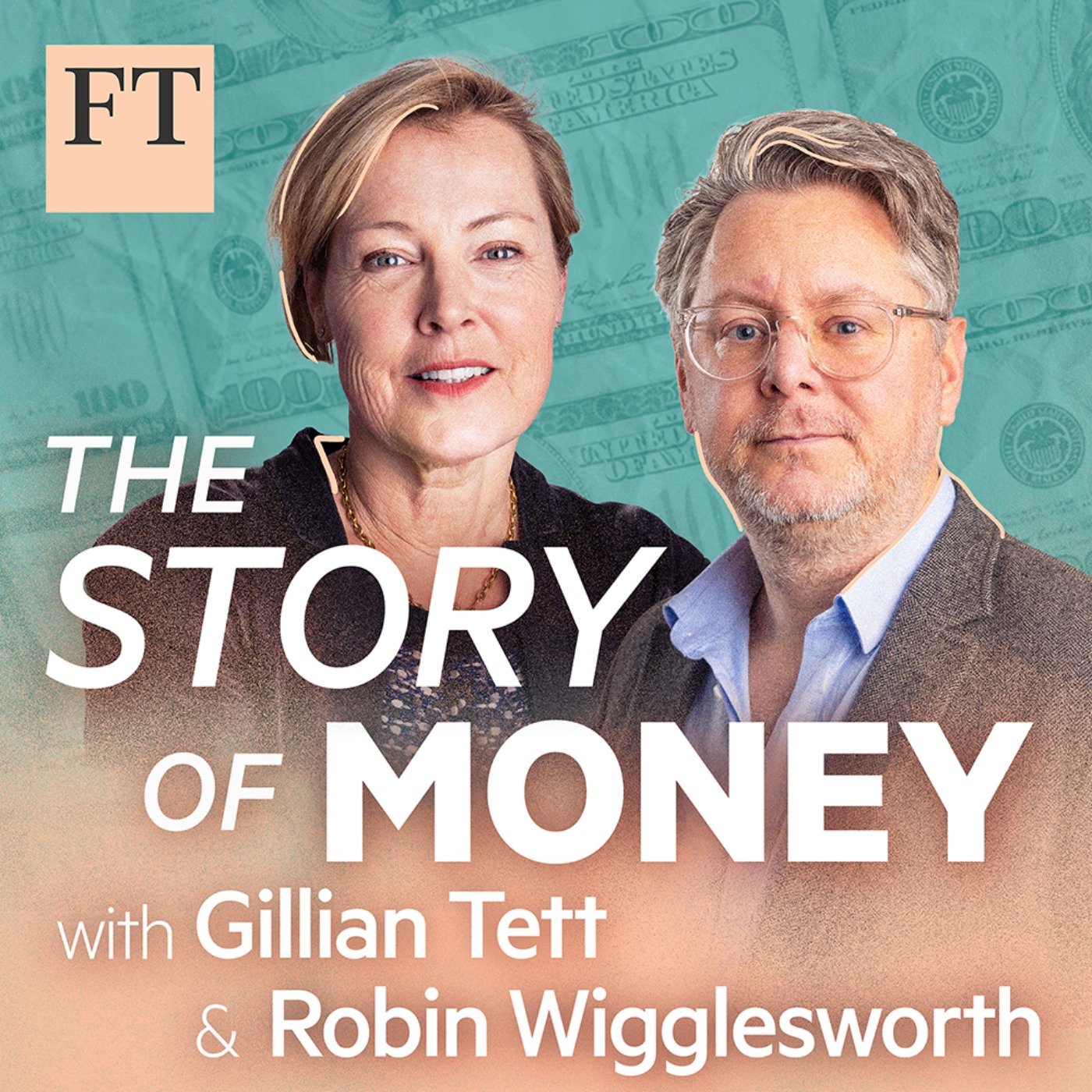
When the South Sea Bubble burst in 1720, it wiped out fortunes and plunged Britain into its first great stock market crisis. The collapse of the South Sea Company, a government-backed scheme that promised to turn national debt into riches, left the country's finances in disarray and threatened the credibility of the British state itself. Into the chaos stepped Robert Walpole. Charged with restoring confidence, he restructured the government's debts and laid the foundations for Britain's emergence as a financial superpower. In doing so, he became the country's first de facto prime minister, a title he rejected initially because it was widely used as an insult. In this episode, Robin Wigglesworth and Gillian Tett explore Walpole’s rise to power with Thomas Levenson, professor of science writing at the Massachusetts Institute of Technology.
Further reading:
Money for Nothing: The South Sea Bubble and the Invention of Modern Capitalism by Thomas Levenson
To enjoy future episodes, be sure to subscribe to The Story of Money wherever you get your podcasts, also on the show's dedicated YouTube channel here: https://www.youtube.com/@FTTheStoryOfMoney
Hosts: Gillian Tett and Robin Wigglesworth
Producer: Lulu Smyth
Senior Producers: Michela Tindera and Laurence Knight
Executive Producer: Manuela Saragosa
Original music and sound design: Breen Turner
FT Head of Audio: Flo Phillips
Learn more at www.ft.com/tsom or get in touch at [email protected]
Read a transcript of this episode on FT.com
Hosted on Acast. See acast.com/privacy for more information.
More from The Story of Money
All episodesWe use cookies.They keep VO running smoothly and help us improve it. Privacy policy