
 Ask ChatGPT

- Podcasts
- The Story of Money
- They are history’s geniuses. But were they any good at investing?
The Story of Money22 Apr 2026 · 39m · 15 chapters
They are history’s geniuses. But were they any good at investing?
In short
Whether historical “geniuses” (high IQ, scientific brilliance, artistic genius, political skill) were good investors; compares outcomes and argues investing needs more than raw intellect—especially risk control and timing vs. bubbles/momentum.
Guests
Gillian Tett (Financial Times; anthropologist turned FT columnist, hosts). Robin Wigglesworth (FT journalist; editor of Alphaville, hosts). Toby Nangle (FD Alphaville reporter; analyzed portfolios/returns of historical figures).
Key claims
Newton profited from the South Sea Bubble by buying early and cashing out near the peak, but later YOLO’d and lost ~40% after re-entering at the top. Churchill was a high-turnover, margin-trading “meme/day trader,” wiping out a massive book advance in nine days of trading. Darwin appears to have achieved ~8.6% annual real capital growth over 42 years via asset allocation (railways then gilts), avoiding the 1873 crisis. Turner exploited a mispriced long-annuity bond in a 1829 debt exchange for ~340 bps “free money.” Keynes ran King’s College endowment, shifting from short holding periods to long-term investing and outperforming UK stocks by ~5.2% annually (with caveats about inherited assets and later real-estate choices).
Notable examples
Newton’s “madness of men” quote; Churchill’s margin trading during a US book tour; Turner’s “long annuity bond” arbitrage; Keynes’s style change; Darwin’s mid-1860s switch to gilts.
Written by AI. May contain mistakes.
Chapters
0:45
The Question of Brilliance and Investing
Exploration of whether brilliant individuals make better investors.
“Hello and welcome to the story of money, the brand new podcast from the Financial Times where we rummage through the past to make sense of the financial present, and sometimes the future too.”
2:34
Historical Context of Investing Geniuses
Discussion on the historical records of notable investors like Churchill and Newton.
“In other words, does brilliance really mean higher returns?”
4:04
Introducing Toby Nangle
Introduction of Toby Nangle and his insights into historical investment returns.
“Yes, I hope we'll have slightly better records in the future.”
5:21
Isaac Newton's Investment Journey
Detailed analysis of Isaac Newton's investments during the South Sea Bubble.
“Okay, so let's start with the ultimate brainiac, arguably.”
10:47
Newton's Downfall and Lessons Learned
Examination of Newton's investment failures and the emotional aspects of investing.
“But you said that then something went wrong.”
13:35
Winston Churchill's Chaotic Investments
Insights into Winston Churchill's tumultuous investment history and behaviors.
“I'm guessing he wasn't a super conservative, sober, careful kind of person, right?”
14:00
Winston Churchill's Chaotic Investing
Explore Winston Churchill's tumultuous financial journey and his risky trading experiences.
“And I have to say, I mean, I'd heard that he was a little bit chaotic, but it really kind of makes your skin crawl some of the things that he got up to along the way.”
17:24
Charles Darwin: An Unexpected Investor
Learn about Charles Darwin's surprising success in the investment world and his strategies.
“this advance that was worth close to, you know, well, over 7 million pounds in inflation adjusted or close to£80 million in GDP-adjusted terms.”
22:40
J.M.W. Turner: The Financial Artist
Delve into J.M.W. Turner's unexpected role as a financial arbitrageur in the 19th century.
“It's a fascinating topic we're digging into.”
28:12
Keynes as an Investor: A Deep Dive
Explore John Maynard Keynes's investment strategies and performance compared to modern benchmarks.
“but also he managed the endowment at King's College Cambridge and he was what we call the bursar, the chief treasurer.”
Show all 15 chapters
30:14
The Evolution of Keynes's Investment Style
Discover how Keynes transformed from a high-frequency trader to a long-term investor.
“What he inherited, as I understand it, was an endowment which had real estate and then pretty much exclusively gilts apart from that.”
31:44
The Challenges of Modern Institutional Investing
Learn about the difficulties faced by institutions trying to replicate Keynes's investment approach today.
“What I find fascinating, though, is that he went from being basically a day trader to being a very long term patient investor in just a few stocks, which he analyzed bottom up, if you like.”
33:08
Brilliant Minds in Investing: A Historical Overview
Examine the investment habits of historical figures like Einstein and their financial outcomes.
“Keynes in his lifetime was lucky enough that almost nobody was scrutinising what he was actually doing.”
34:11
Do Geniuses Make Great Investors?
Investigate whether brilliance in one field correlates with success in investing.
“I mean, there's a lovely story of the 1921 Nobel Prize money being wiped out by piling it all into stocks.”
36:15
Investment Lessons from Historical Figures
Discuss the broader lessons for modern investors based on historical data and insights.
“And that matters enormously for investing too.”

Ask about this episode
Get the gist, explore an idea or ask about something said.
 Claude
On The Story of Money, what are the key points of this episode?
Searching your listeningTranscript
Automatic transcript. May contain errors.
0:00I want to talk about Winston Churchill. What kind of investor was he? It really kind of makes your skin crawl some of the things that he got up to along the way. He was given this advance that was worth close to over£7 million in inflation-adjusted or close to£80 million in GDP-adjusted terms. He'd lost it all. Oh, wow. He lost it all in the crash in the stock market? No, no, just trading. There were these nine trading days ending the 18th of October where he really went into overdrive. He traded$620 ,000 worth of stock,£80 million worth adjusted for contemporary exchange rates. And that trading activity just saw him completely wiped out.
0:51Gillian Tett: Hello and welcome to the story of money, the brand new podcast from the Financial Times where we rummage through the past to make sense of the financial present, and sometimes the future too. Yep, because if there's one thing that finance has taught us, it's that people keep making the same silly mistakes. And these days we might use Bloomberg terminals, spreadsheets and special purpose vehicles, but you can get into just as much hilarious trouble with a simple abacus. I'm Gillian Tett, an anthropologist turned FD columnist, And that means that I love to look at all the hidden rituals and occasional historical absurdities of the financial world and show you why they matter so much today.
1:35And I'm Robin Wigglesworth. I'm also an FT journalist. I'm editor of our finance blog, Alphaville, and someone who has spent far too long staring lovingly at charts.
1:44Gillian Tett: So together, we're going to tell you the story of money, how it's shaped empires, toppled economies, and occasionally made some completely nutty ideas seem very brilliant, at least for a while. Yeah, I mean, this is going to be a finance podcast for history geeks and a history podcast for finance geeks. Well, if you're sadly neither of those two, we're going to try to make you one. So whether you're a finance fanatic, a history buff, an investor, a student, a wannabe banker, or anybody else, this is going to be the podcast for you to help you understand what's really going on. Today on the story of money, do people who have off the charts IQ, an artistic flair to die for, or generational political skills make good investors?
2:34In other words, does brilliance really mean higher returns?
2:37Gillian Tett: Wow, that's a really big question, Robin. And it's a very relevant one for anyone listening, because whether you're managing your own pension investments or a smartphone app, or you're a recruiter for a top tier Wall Street firm, the reality is that we tend to be obsessed with brain power. Finance firms tend to go out and recruit the smartest physicists, mathematicians, and quite literal rocket scientists from the universities, including and Cambridge one, and they hope that their ultra-high IQs will crack the code of the markets and enable them to make loads and loads of money. What they really want are high achievers, people who are in the top 1 % of the 1 % of the population.
3:18Gillian Tett: But there's a really interesting question. Does being a brainiac actually make you a good investor or not? Well, there's only one way to find out, right? Well, actually, look, realistically, there's probably lots of ways to find out. But this is a finance history podcast. So we're going to trawl through the portfolios of some of history's most talented people, from Winston Churchill to Sir Isaac Newton, to even the painter J.M.W. Turner. And yes, these are all white Western men, mostly middle-aged men. We know that. But that's because history tends to be written by white men. And these are the people that we actually have the historical records for.
3:58Gillian Tett: And as a result, we've got data on their investment returns that we can actually go through. Let's hope in 500 years' time, we can do the same for women as well. Yes, I hope we'll have slightly better records in the future. We also handily have with us today someone who actually has gone through the portfolios and the investment returns of some of these great men, Toby Nangle, a reporter for FD Alphaville, a colleague of mine. And Toby, fantastic to have you here today. It's really great to be here. Thanks very much for having me. Well, I think technically, Robin, you're his boss, aren't you? On Alphaville, I think boss and underling are very technical terms for various anarchic reality.
4:36Gillian Tett: It's an intellectual collective. But anyway, great to have you both here in your intellectually collective way. And let's crack on with the show on the story of money with me, Gillian Tett. And me, Robin Wigglesworth.
4:54Gillian Tett: What happens next in the story of money? Nuveen has spent over 125 years helping clients answer this question. By investing in the growth of businesses, real estate, infrastructure and natural capital, we continue to deepen our expertise across income and alternatives so investors can confidently write the next chapter of their own portfolio stories. Nuveen. Invest like the future is watching. Visit nuveen.com slash future to learn more. Investing involves risk. Principal loss is possible.
5:30Okay, so let's start with the ultimate brainiac, arguably. Sir Isaac Newton. This is a guy that invented calculus. He laid out dominant scientific theories and consensus for centuries. He's Mr. Gravity. He's the laws of motion. He was even, incredibly, the master of the mint, which kind of meant that he oversaw coin production in England in the early 18th century. He's kind of a pseudo finance minister at the time.
5:57Gillian Tett: He was also at Trinity College in Cambridge, which is just next door to where I'm recording this at King's College. I'm provost at King's College, and I'm delighted to say that Isaac Newton tried to become provost all those centuries ago and got turned down. So I had the job that Isaac Newton couldn't get. What a loser that guy was, really, you know. I mean, he dreamt of following in the future footsteps of Gillian Teth, I think. Hardly. In those days, he had to be a priest. And they've changed the rules since then. You wouldn't have a woman in the role either. Not quite the first, but almost the first.
6:30OK, so turning to Isaacs and his money, basically. Toby, was, I mean, clearly Isaac Newton was a brilliant person by any definition. One of the greatest people to ever live. Was he any good as an investor? Well, there's some amazing work that's been done by Andrew and Lidsko on his finances. And it turns out, actually, I mean, he was investing at a time of the South Sea bubble, this huge thing that really dominated the early part of the 18th century.
7:02Gillian Tett: What was the South Sea Company and the South Sea Bubble? The South Sea Company was founded in 1711, and it was kind of given a trade monopoly on trade with South America. A big land of unknown. A lot of this was, I think, slave trading, but there were thought to be riches across South America. So I always think the South Sea bubble is a bit like the subprime mortgage bubble or even the AI bubble today in that you have something dramatically big happening, whether it's a technology breakthrough or a new area of the world that's being explored that everyone gets wildly excited about. No one really understands because it's halfway around the world or basically very geeky and scientific.
7:45Gillian Tett: And so this wild mania starts to emerge that infects everything, even though the actual workings of it are completely misunderstood. Yeah, I always thought of the South Sea Company is the OG meme stock. It'd be definitely something that people on Reddit would be all over if it existed today. Tell us a bit more about how Isaac Newton traded the South Sea Company then, Toby. He was phenomenally rich by today's standards. And he was buying in the footholds of the bubble. And by 1720, he'd amassed around 10 ,000 shares, which is worth around about 300 million pounds a day on top of his guilt portfolio.
8:25It's worth another sort of 600 million pounds. Wow. I mean, so he's a wealthy guy. He was super, super wealthy. And what's more, he completely cashed out in April and May 1720, really quite close to the peak at a kind of a stock valuation of about 600 million pounds, making worth about 1.2 billion at the time. So, you know, this is amazing stuff. Over 100 % return in those last portion of his investment career up until the peak of the South Sea bubble. And so he did really, really well. Let's just pause for a second. I think we probably need to explain how we got that's 1.2 billion pounds, the 300 million pounds, because obviously there are different ways of calculating what something was worth then and what it's worth now.
9:09um so if you enter 20 000 pounds which is what it held in south sea shares uh in sort of 17 20 pounds which is when the bubble was at its worst bank of england actually has a calculator you can put that in and that works out to be around 3.6 million pounds today which is obviously a lot of money but not some dynastic wealth uh as we'd understand it uh we think that actually underestimates how wealthy he is. The best way to do this is by adjusting relative to GDP, because it's wealth, right? That's the way that we've done it through the analysis. And it's something that's quite common amongst financial historians who do that.
9:47And some people say that's cheating, because you end up with huge, big numbers. But I mean, if, for example, you inflation-linked the 1720 UK economy, the total value of that economy today comes to about 17 billion pounds. So, you know, is it fair to sort of think of that 3.6 million inflation adjusted or that 20 ,000 non-inflation adjusted as a share of GDP or as something of like how many cups of tea and toast does it buy you? I'm team GDP adjustment personally, Toby, so I'm fully on board. Yeah, when you're buying acres of farmland or acres of Mayfair real estate, I think it's probably fairer to kind of get like for like by GDP adjusting.
10:30And that's kind of what you find in literature. And that's what we've done in our analysis here.
10:34Gillian Tett: So whatever measure you want to use, he was mega rich on the back of what seemed like a very canny investment during the South Sea bubble. But more importantly, he got the timing right in terms of getting out, which is always one of the hardest things in any kind of bubble. But you said that then something went wrong. In many ways, it's the oldest story of fear and greed. And greed looks like it got the better of him. So just a couple of months after completely cashing out, he went all in, not only back in with that stock investment, but he also liquidated all his guilts, put all his cash as well and poured it all in, in absolutely the peak, peak moment.
11:17What were you doing?
11:18Gillian Tett: Was that a case of FOMO or YOLO? You know, you only live once or FOMO, fear of missing out. Was he just looking at everyone else getting rich and thought, I want to be even richer? Why did he do that? We can only speculate, but I mean, there was a lot of it about. There was a lot of people getting fantastically rich and even richer. He went all in. And, you know, a year later, he'd lost about 40 % of his fortune. So, you know, a real burnout. And do we have any indication in the records of how and why he felt about all that? The analysis that I've seen doesn't go into it amazingly well, but there is a really famous quote that he's associated with.
12:01I calculate the movement of stars, but not the madness of men. Including himself. Yeah, I usually see that as associated with the downfall, like what happened afterwards, some kind of inner remorse or regret or introspection. But actually, it turns out that he was asked a question basically at the peak. How high can it go from here? And that was his answer. You know, so that seems to suggest he understands it was a bubble. But, you know, you've got to keep dancing. You've got to stay in for as long as it's rising. And it looks as though he thought he could time that last lift up. It's a bit like George Soros always said that, you know, when I see a bubble, the first thing I do, I jump in with both feet.
12:46right? It actually makes rational sense to try and ride a bubble up, obviously on the proviso that you can get the hell out of Dodge before it implodes. If you can get out, absolutely.
12:56Gillian Tett: And if he'd actually been provost for kings, as he had tried to be, maybe it wouldn't have happened. He probably wouldn't be allowed to do all that. So isn't that ironic? Yeah, the only time that he'd been in academia would have actually paid off financially. Exactly. How to not succumb to too much YOLO and FOMO. I'm personally a little bit hearted knowing that even a brilliant person like Isaac Newton is such a slave to his emotions that he can get sucked back in and sort of get wiped out. So I assume he still retired a pretty wealthy guy, right? I mean, he died in today's money, essentially a billionaire.
13:30So, yeah, we shouldn't shed too many tears for poor old Isaac Newton. No, no, I think that probably sounds like a pretty decent retirement, given by 18th century standards. What about somebody a bit more recent? I want to talk about Winston Churchill. What kind of investor was he? I'm guessing he wasn't a super conservative, sober, careful kind of person, right? So, yeah, David Lau has written an amazing book about Winston Churchill's financial affairs. And I have to say, I mean, I'd heard that he was a little bit chaotic, but it really kind of makes your skin crawl some of the things that he got up to along the way.
14:10When I was sort of researching his finances, one of the things I was looking to do was to sort of think, you know, which hedge fund would hire which person? And from a trading turnover perspective, he was citadelian. I mean, there was just phenomenal amounts of turnover that was just flowing through his portfolio. There was this trip that he took. Back in the day, you'll be envious to hear, journalists got paid phenomenally well. I mean, like crazily well. You're making this up, Toby. I don't believe you for a second now. That can't never have been true. In the 1920s, Churchill's per article going rate was about£750.
14:49Not in today's money, but in 1920s money. If we whack that through the Bank of England's inflation calculator, that gets to around about sort of 43 ,000 pounds on CPI linkage or 200 ,000 pounds on a wage linkage or 480 ,000 pounds on a GDP linkage. I mean, he was making serious, serious mint. And he also made huge amounts of money as a book writer. I know that you both have got very successful books, but the kind of advances he was getting, if you CPI linked them, were over 7 million pounds or GDP linked, you know, close to 80 million pounds. And so he had this income and he actually retired from cabinet.
15:34Some say because he wanted to re-up his finances by going off and writing more journalist articles and books. And he saw that money that was going to come and just, you know, absolutely seemed to go on a bender when it came to investing. There was this four-month book tour he did where he went around the States and he just picked up different stocks along the way, speculative things. Like what? Would you have any good examples? In terms of actual companies, I don't think these things really exist anymore, unfortunately. I think they all went bust. Basically, every city he went to, he'd hear about some company and he'd go off and buy it.
16:11And he discovered stock margin trading by accident. Can you explain what's stock margin trading then? So if I have£100, I can go out and buy a stock for£100. And the most I can lose£100. But if I buy, let's say,£100 of stock on margin, I might only need to put up£2 or£3 and then basically borrow the whole of the rest of it. and then if the stock, let's say, goes up 5%, I might double my money or if the stock falls by 5%, I might lose all of my money if I'm trading on margin. And he started trading on margin on this book tour without really understanding what he was doing.
16:55Gillian Tett: And there's quite a wonderful passage in Andrew Ross-Aurton's book, 1929, where he talks about this and says there's a part of Winston Churchill falling in love with the go-getting, risk-taking, bold, ambitious spirit of America. And he actually criticised the UK for a while for being so timid and passive, as opposed to being so risk tolerant, like the Americans he kept encountering on his book tour. Yeah, although I mean, his book tour didn't end well for him financially. He was given this advance that was worth close to, you know, well, over 7 million pounds in inflation adjusted or close to£80 million in GDP-adjusted terms.
17:34And by the time he'd come back, he'd lost it all. Oh, wow. He lost it all in the crash in the stock market? No, no, no. Just trading. I mean, the stock market crash didn't help. But I mean, his trading volume was sort of just so intense. There were these nine trading days ending the 18th of October where he really went into overdrive. and he traded$620 ,000 worth of stock, £80 million worth adjusted for contemporary exchange rates and inflating with UK GDP of stock, just back and forth and back and forth. And that trading activity just saw him completely wiped out.
18:15Gillian Tett: So he was like the worst of the meme traders or day traders, that kind of equivalent back in the 1920s. We can call it Winston Churchill, the meme trader. Yeah, absolutely. And something that you'll both understand, he came back not only with no money, but he also had a book to write as well, which is the killer. So he wasted his entire book advance, this massive, gargantuan, envy-inducing book advance on trading stocks and margin, lost all the money and then still had to write the book, basically for free, I guess, almost. That's right. That's right. And just was perpetually in debt afterwards, yeah.
18:47Gillian Tett: So Memo, being a day trader is not always a very good idea. So let's turn to somebody who actually did crush the market rather than Winston Churchill or Isaac Newton. What about Charles Darwin? He's the father of evolutionary biology, but was he actually any better at doing financial investments? The records aren't entirely clear on this. As a retired professor, Professor Janet Brown, who did a lot of investigation into Darwin's finances, and he looks like he was a phenomenally good investor. But the thing which is a little bit tricky to tease out of it is how his various inheritances he made along the way compound into his investment return.
19:32Because he started off pretty rich with marriage bonds associated with his wife. And it looks as though he was writing mortgages, he was riding the wave of railway companies, which were all the rage in the 19th century. And then really importantly, it looks like he flipped his portfolio into gilts, into UK government bonds in the mid 1860s, completely missing the 1873 massive financial crisis, which wiped out a lot of those railway bonds. So that was a great, great move. And we can see over the course of his career that he achieved an annualised real growth of capital of 8.6 per annum over 42 years, which is an astonishingly good record.
20:19That's incredible, really. So he was trading both stocks and bonds. This wasn't him just buying, going all risky investments. He generated 8.6 % annually for four decades by being quite conservative still. Yeah, I mean, he was your classic asset allocator, making these switches between asset classes, but also doing stock selection on railway stocks and the like. And if we could really understand the timing of those inheritances, we could maybe find out that he was one of the greatest investors, not only amongst sort of famous geniuses, but perhaps of all time. If we could really tease out, you know, where the inheritance is like.
20:58But as it is, you know, I think the jury's got to remain a little bit out on how much of it was purely his investment skill and how much was bequeathed to him. Let's now take a quick break. And when we come back, Toby, you are going to tell us about a wild card you found. And this one I'm quite excited about because I thought it was just frankly just delightful from top to bottom.
21:57We'll be right back.
22:10Gillian Tett: Generate ideas in seconds. Import your brand and create full campaigns with simple prompts. Send personalized messages backed by real-time feedback, smart segmentation, and effortless reporting that tracks every win. Let's redefine what's possible together. Get started for free at ActiveCampaign.com.
22:40And we are back. So Toby, thanks again for being here. It's a fascinating topic we're digging into. The track records are some of the best known people in history, or at least those we have the trading records and data for. But I know you found a wild card, somebody really, maybe you might not have expected being a bit of a financial genius. So who was this sort of a hidden gem in the archives that you stumbled across? First of all, I should say I wasn't doing the archival research, but I found amazing paper, again, by Andrew Odelizenko, who wrote this incredible paper about J.M.W. Turner, the great British artist.
23:22And rather than going out and thinking, oh, here is a wonderful company, I'll invest my money into it, he was a fixed income arbitrage guy. And that was a complete surprise to me. Proper geeky stuff as well.
23:35Gillian Tett: So can you just unpack what it means to be a fixed income arbitrage in the early 19th century? Yeah. So, I mean, back in the early 19th century, bonds were big, really big. So debt to GDP in the wake of the Napoleonic Wars were around about 200 % of GDP. So, you know, far, far bigger than they are today. And back then, the government and various critics of the government were getting worried about debt sustainability, which again sort of sounds a little bit familiar. So there were all these debt exchanges and kind of rinky dinks that were going on that were pretty well priced. And in 1829, what happened was that some debt hawks persuaded the government to issue a debt swap and new issuance of dated bonds.
24:28So what usually happens with bonds is that you lend money for, say,£100 for 10 years or 20 years, and you get the£100 back and coupons along the way. But back in the early 19th century, almost all of the debt was in perpetual format. That is to say, you lend£100 and you just get the coupons every year and year and year, and that just goes on to infinity. Normally, the government redeemed it afterwards, right? They'd eventually buy back the bonds, but it might take a long time, especially after the Napoleonic Wars. Yeah, I mean, there weren't very many bonds being bought back then, and debt was just going one direction.
25:03So in one of these debt exchanges, the debt hawks said, you know, we should only sell dated bonds because that way there's a sort of Damocles hanging over the British exchequer that will incentivise them towards debt reduction. But as well as issuing new bonds, they said, and also we want anyone who's got undated bonds, they can exchange them in for these new defined bonds to increase the issuance size. Now, one of the bonds that was deliverable into this debt exchange was a so-called long annuity bond. And Turner worked out that you could deliver this long annuity into the debt exchange and make around 340 basis points of free money.
25:50So it was slightly mispriced. That's around three percentage points, basically, for people that don't have to deal with basis points in their lives. Yeah. Those happy people who've never had to deal with basis points. Wonderful. Yes. But yeah, you could make 3.5 % of free money. And not everyone spotted this, but Turner, he put through tens of thousands of pounds, millions of pounds in today's money through this arbitrage and walked away slightly richer. I mean, it didn't make his fortune, but it was a kind of fixed income arbitrage trade that might only exist today for seconds in a very stressed environment.
26:31But back then, it took a little bit longer and Turner was right in there in that trade. So, Toby, tell us a little bit about Turner the man. What was he like? Was this out of character for him, being sort of a pseudo fixed income arbitrage guy? There are some wonderful quotes from contemporaries at the time, giving a flavour as to what he was like. So, contemporary artist John Constable, he wrote of Turner that he is uncouth but has a wonderful range of mind. And Sir Walter Scott, the Scottish poet, wrote to a friend that, and I quote, Turner's palm is as itchy as his fingers are in genius, and he will, take my word for it, do nothing without cash and anything for it.
27:13He is almost the only man of genius I ever knew who is sordid in these matters. It's wonderful stuff. Yeah. Well, I mean, it sounds a little bit reproachful as in this isn't the done thing for gentlemen of the era, as it were. No, no, absolutely. In fact, even this particular arbitrage, I mean, Turner spotted it, but it was something that apparently other people knew about and it was seen as a very uncouth thing to do. So the fact that he jammed through£10 ,000 of trades, despite the potential reproachful looks of his contemporaries, I think is sort of interesting as well.
27:53Gillian Tett: Well, at least he got a painting of King's College out of it all, I guess. I mean, we have quite a famous watercolour of that as well. And while we're talking about King's College, there is someone else we have to talk about as well, which is John Minna Keynes, who was the father of much of the modern macroeconomic analysis that shapes us today. but also he managed the endowment at King's College Cambridge and he was what we call the bursar, the chief treasurer. How did he do given that he's so well known for his brilliant economic insights? King's was an incredible investor and I think is quite widely known for being an incredible investor.
28:33He outperformed UK stocks by over 5 % a year. Wow, that's incredible. five years, which is just astonishing. And that kind of outperformance of the stock market, if you compare it to Warren Buffett, who I think is an investment genius of the modern era, Warren Buffett's Berkshire Hathaway fund has outperformed the S &P by 138 basis points, 1.4 % over the past 25 years. Compare that to Keynes of 5.2%. I mean, it's just incredible, astonishingly good.
29:10Gillian Tett: But there's two things that I as I understand it from college law and I should say I actually have this portrait hanging up on my wall it's actually of John Mennecain's because he dominates King's College and we have his letters and diaries in the archives here but there are two caveats firstly as I understand it he kind of blew up a bit in the 1920s and so the fact he outperformed later was partly as a result of having messed up the 1920s and learned the right lessons. And then secondly, he had a huge aversion to real estate and got the college out of some of its real estate, which at the time, most of the other colleges in Oxford and Cambridge were still invested in, which looked kind of good for a while.
29:54Gillian Tett: But if you fast forward 100 years, some colleges like Trinity, just near King's College, hung on to their real estate portfolio and are actually a lot richer than any other college today as a result. Is that right? I think, to be honest, it's a little bit harsh to judge Keynes by the investment activities after he died. What he inherited, as I understand it, was an endowment which had real estate and then pretty much exclusively gilts apart from that. And by ditching the gilts and going into stocks, he made a really great trade. And then the other thing that you said, that was the other thing I found really, really interesting, was that he didn't start off being a great investor.
30:38He started off actually being quite a high frequency investor. His average holding periods were less than six months for the first few years of his investment career as bursar of kings. And then that just evolves over time. And in the latter part, those investment holding periods are over seven years. So he really has this huge stylistic change and takes on lessons, which is one of the hardest things to do as a professional investor, to kind of take on lessons and change your style. And it looks like he did it with a plan. I've always thought this is the most impressive thing. I've never been an investor like you, Toby, but changing your style, I know having talked to so many, is incredibly hard.
31:23And there are some people that have a phenomenal track record because their style just happens to work in the market environment that exists. And then the environment changes and they're not able to adapt. And they, you know, the careers end badly. So I thought that is, with Keynes, is the most fascinating thing, that he was able to adjust and adapt so brilliantly. What I find fascinating, though, is that he went from being basically a day trader to being a very long term patient investor in just a few stocks, which he analyzed bottom up, if you like.
31:56Gillian Tett: And, you know, I am now overseeing a committee that looks at the endowment at King's College a century later. It's quite hard for any big institution today to actually copy that style because the pressure from almost everybody advising you is to go into exchange-traded funds and try and mimic the market. And that's quite a shift, isn't it, Toby? Yeah, I mean, first of all, I guess, as Robin's book's catalogue, exchange-traded funds didn't exist. There was no such thing as passive investing. And even the idea of passive investing or the market didn't really exist. And I guess maybe the other thing which is whispered from time to time is that pre, I think pre 1980s, there was no such concept of insider trading.
32:41And the degree to which Keynes was able to use informational advantages, which would today be impermissible, is something that I think, you know, I've seen people squabble about, because he certainly was extremely well connected.
32:59Gillian Tett: in some senses we should say a big thank you to john mary canes here at king's college because at least he did create an endowment um i just wish that we'd managed to keep it going in the subsequent years but there we go but jillian have you ever been tempted to try and take over the endowment yourself i'm very keen to see what a jillian tech portfolio might look like what do you think your day trading style would be well i think that today what's different is that of course if i was to suddenly go mad and start day trading you'd know that on social media it would be instantly reported and there'd be an outcry and a lot of transparency.
33:30Gillian Tett: Keynes in his lifetime was lucky enough that almost nobody was scrutinising what he was actually doing. So he could lose all that money in the 1920s, learn the right lesson and then pick himself up and try again. Okay, Toby, I know you came across quite a large number of other brainiacs and brilliant people when you were doing research. We don't have detailed data for all of them, unfortunately, But let's do a quick roundup of some of the others of the historical heavyweights he looked at. The one I was keen to hear about was Albert Einstein. I mean, he probably must have been a brilliant investor.
34:03Was he sort of a slave to his emotions, just like Isaac Newton? I was really looking forward to digging into Einstein's finances. I couldn't find some good data, though, to be honest. I mean, there's a lovely story of the 1921 Nobel Prize money being wiped out by piling it all into stocks. and then the Wall Street crash coming along. But that seems like it's an urban myth. What does seem a bit more apparent that you can actually ascertain with records is that he gave most of that money to his ex-wife as part of a divorce settlement and that she used it to buy a five-storey apartment block in Zurich, which is today an Einstein museum.
34:42Gillian Tett: Probably tends to pay off in the long term, doesn't it? But what about some other people? I'm particularly curious about Jen Austin because she used to write a lot about economics. in the sense of domestic management. Of course, the word economics comes from the Greek oikonomia, meaning household stewardship. So she wrote a lot about home economics. Was she any good at economics herself? She might have had the chance to have been the greatest of them all, but we'll never know because she was given just so little for her wonderful works of fiction that she never had enough to invest, unfortunately.
35:17She didn't get Churchill-like advances? No. What about other brilliant scientists then, you know, the quants of the world, like Marie Curie? Was she any good? Do we know anything about her? We know that Marie Curie gave all of her money away to advance scientific research rather than just buy flashy toys or that sort of thing. And when I tried to look for data on Leonardo da Vinci, we couldn't find any documentation for his finances. Goethe seemed pretty happy to just sort of spend his inheritance rather than invest it. I mean, I get that. yep it didn't seem to do his legacy much harm to be honest okay so let's turn to the final discussion i mean we asked you know do brainiacs do brilliant people do beautiful minds make great investors and well it seems anecdotally from the people we looked at that the answer is meh uh they don't really right uh at least not definitively right guys well it seems to be the
36:21Gillian Tett: issue is whether someone has two skills not just one skill when you're investing because on the one hand if you're a brilliant mind you might be able to spot amazing arbitrage opportunities you can sit and do the maths around fundamental value assets and see whether they're worth what is quoted in the markets or not so you can go back to first principles and treat finance as really an extension of maths or physics but if everyone else around you has a different way of looking in the world and you have the madness of crowds getting more and more mad, then just using fundamental analysis won't explain momentum.
36:59Gillian Tett: And that matters enormously for investing too. What about you, Toby? I mean, you were an investor before you got cool and became a journalist. So, you know, what do you think? Brains, does it help or is it helpful but not enough in isolation? I think I'd be very wary of correlating brainpower with investment prowess. Although there are some great examples of people who have recorded enormous fortunes by employing their brainpower in investment. I mean, like John Maydard Keynes. Yeah, I mean, there's a great quote for him, actually, that I've dug out here that kind of actually sounds incredibly contemporary.
37:40You could almost hear Buffett say it. As time goes on, I get more and more convinced that the right method in investing is to put a fairly large sums into enterprises which one thinks one knows something about and in the management of which one thoroughly believes. Totally Charlie Munger, isn't it? Yeah. So Gillian, do you think there are any lessons here, modern day lessons for Wall Street and recruiters working in big hedge funds and banks?
38:06Gillian Tett: Well, I think one thing we can see very clearly is having math skills is not the only tool you need to be a good investor at all, although that's been very dominant in recent years. and of course with the advent of ai many of the big recruiters are rethinking what they actually want and they want essentially critical thinking as well as facility with numbers and being able to understand the quantitative aspects of markets so to me that's one message and another one is that you need not too much risk taking otherwise you can really blow up but also not being too risk averse because otherwise you just do nothing so finding that sweet spot between taking on just enough risk to make some returns but not be so full of arrogance and risk-taking that you end up speculating crazily like Winston Churchill.
38:54Gillian Tett: That's the elusive sweet spot people need to try and find. What about you, Toby? Do you have any big takeaways from your big dive into the historical trading patterns of famous people? I find it fascinating that throughout history, some of the same mistakes come back again and again. The long-run successes are are really about doing your work, you know, reinvesting, time in the market rather than timing the market. Some of the hackneyed and cliched thoughts on markets and investing turn out to be pretty sound, really. And don't succumb to FOMO. Yeah, don't succumb to FOMO. Well, Toby, thanks so much for being here with us today.
39:36It's been an absolute delight. And I really look forward to the next round of deep historical research you're going to be doing with us later this year.
39:45Gillian Tett: And thank you also, Toby. And I'm never going to think about John Menor-Caines or Isaac Newton or Turner in the same way again. But that's it for this week's episode of The Story of Money. I'm Gillian Tett. And I'm Robin Wigglesworth. And we'll see you next week.
40:39Gillian Tett: Thank you. to learn more. Investing involves risk. Principal loss is possible.
From the publisher
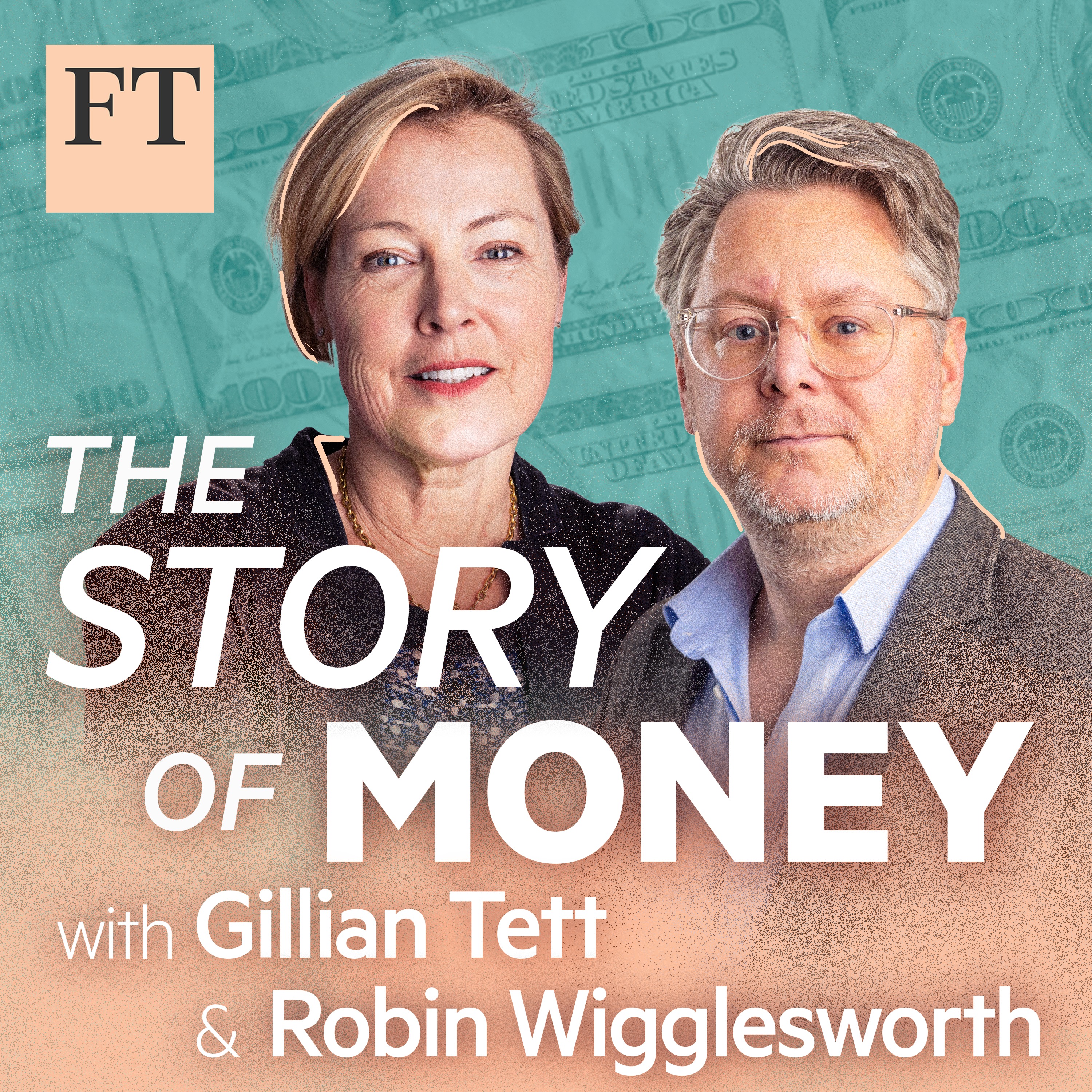
Does scientific, artistic or political brilliance translate into investing success? It’s a topical question with hedge funds today accused of sucking talent away from the rest of the economy. So, the FT’s Gillian Tett and Robin Wigglesworth sat down with reporter Toby Nangle, who has dug into the archives to assess the investment portfolios of Isaac Newton, Charles Darwin, Winston Churchill, John Maynard Keynes and other widely regarded geniuses of the past. What Toby found may surprise you, as will the historical wildcard he’s unearthed.
To enjoy future episodes, be sure to subscribe to The Story of Money wherever you get your podcasts, also on the show's dedicated YouTube channel here.
Learn more at ft.com/tsom
Want more?
Read Toby’s full FT article here.
Toby’s sources:
On Churchill: https://www.amazon.co.uk/No-More-Champagne-Churchill-Money/dp/1784081817
On J.M.W. Turner:
https://papers.ssrn.com/sol3/papers.cfm?abstract_id=5718586
On John Maynard Keynes:
https://papers.ssrn.com/sol3/papers.cfm?abstract_id=2023011
https://papers.ssrn.com/sol3/papers.cfm?abstract_id=2287262
On Einstein:
On Jane Austen:
https://jasna.org/publications-2/persuasions-online/vol36no1/toran/
Hosts: Gillian Tett and Robin Wigglesworth
Guest: Toby Nangle
Producer: Lulu Smyth
Senior Producers: Michela Tindera and Laurence Knight
Executive Producers: Flo Phillips and Manuela Saragosa
Original music: Breen Turner
Broadcast engineers: Bianca Wakeman and Petros Giuompasis
Podcast Development: Laura Clarke
FT Global Head of Audio: Cheryl Brumley
Video editor: Josh Divney at Podcast Discovery
Read a transcript of this episode on FT.com
Hosted on Acast. See acast.com/privacy for more information.
More from The Story of Money
All episodesWe use cookies.They keep VO running smoothly and help us improve it. Privacy policy