
 Ask ChatGPT

- Podcasts
- The Story of Money
- When Nixon put America first and took the dollar off gold
The Story of Money10 Jun 2026 · 41m · 16 chapters
When Nixon put America first and took the dollar off gold
In short
The August 1971 “Nixon shock” that ended the US dollar’s gold convertibility, pressured allies to revalue currencies, and temporarily stabilized the Bretton Woods system—before it ultimately unraveled.
Guests
Jeffrey Garton, former financier, government advisor, and international economist; author of Three Days at Camp David. He interviewed participants and was close to the administration as a junior official.
Key claims
The crisis was driven by insufficient US gold to honor the $35/oz promise, prompting a slow-motion “bank run” by foreign central banks. Nixon’s Camp David package combined domestic stimulus (tax incentives, R&D breaks), inflation control (wage-price freeze), and currency moves (suspending gold redemption, floating). Leverage came from a temporary 10% export/import surcharge. The Smithsonian Agreement (Dec 1971) succeeded briefly but failed because US inflation control collapsed after wage-price controls ended; OPEC shocks worsened conditions.
Notable examples
Connolly’s hard-line meetings with European finance ministers; Kissinger’s role in forcing agreement; Azores summit with Pompidou; Smithsonian revaluations (Germany ~12%, Japan ~17%) and US devaluation (~8%); import surcharge removal after the deal.
Written by AI. May contain mistakes.
Chapters
0:00
Nixon's Currency Negotiations
Learn about Nixon's attempt to persuade trade partners to renegotiate exchange rates.
“What Nixon actually does is he sends John Connolly to try and persuade the same trade partners who are feeling so bruised to renegotiate their exchange rates with the dollar.”
2:24
Nixon's Currency Negotiations
Learn about Nixon's attempt to persuade trade partners to renegotiate exchange rates.
“In 1898, John Nuveen had a vision to underwrite municipal bonds that would propel American infrastructure into the 20th century.”
3:08
The Dollar Crisis Unfolds
Understand the challenges faced by the dollar and the Bretton Woods system.
“So we begin this week's episode with a US dollar on the ropes.”
5:02
Key Players in Nixon's Team
Meet the key figures involved in the Camp David meeting and their roles.
“So the key question now is, will Richard Nixon and his team head off this imminent disaster?”
7:45
Objectives of the Camp David Meeting
Explore Nixon's objectives for the Camp David meeting amidst economic challenges.
“And I understand he was over in Paris negotiating with the North Vietnamese at the time.”
13:14
Volcker's Plan for the Dollar
Learn about Paul Volcker's detailed plan to address the dollar crisis.
“So if this was a movie, we'd have lots of spooky, dramatic music at this point with this cast of characters.”
14:00
Nixon's Economic Plan at Camp David
Learn about the main components of Nixon's plan to address the dollar crisis.
“and he started to examine Volcker's plan.”
17:30
Internal Debates on Economic Measures
Discover the varied opinions within Nixon's team regarding economic reforms.
“and using that to threaten and force allies to negotiate, to force them to revalue their currencies, to play along with the Americans.”
23:00
The Nationwide Announcement of the Nixon Shock
Explore how Nixon prepared and delivered the announcement affecting the dollar.
“I think that he wanted to make it a big, big leadership issue for him.”
25:50
Reactions to the Nixon Shock
Analyze the immediate reactions to Nixon's announcement both domestically and internationally.
“And of course, what would America's allies make of it.”
Show all 16 chapters
28:00
Fear and Dismay: The Initial Reaction to Nixon's Decision
Learn about the immediate global reactions to Nixon's import surcharge and currency policies.
“They were fearful because for the previous 25 years, they had lived with this idea that the dollars were exchangeable into gold.”
29:00
John Connolly's Hardline Approach
Discover how Treasury Secretary Connolly's hardline negotiations impacted international relations.
“How did Connolly handle things and how did that go down?”
31:12
The Azores Summit and the Smithsonian Agreement
Explore the pivotal Azores summit and the resulting Smithsonian Agreement's implications.
“devaluation so they realize we're going to do something on our part and to tell them that the end is in sight for the import surcharge.”
33:18
Challenges to the Smithsonian Agreement's Viability
Understand why the Smithsonian Agreement failed to sustain long-term stability in the monetary system.
“The future of gold, what would happen to floating exchange rate.”
35:54
Lessons from the Nixon Shock for Today
Reflect on the major lessons from the Nixon shock relevant to contemporary economic challenges.
“would finally have been shattered, essentially.”
37:55
Modern Parallels and Future of the Dollar
Examine the potential future challenges for the dollar and the influence of nationalism.
“When you think about the August 15 decisions and the kind of people that were behind them, the Arthur Burns, the John Connellys, the Paul Volkers, all of these people were extremely capable.”

Ask about this episode
Get the gist, explore an idea or ask about something said.
 Claude
On The Story of Money, what are the key points of this episode?
Searching your listeningTranscript
Automatic transcript. May contain errors.
0:00What Nixon actually does is he sends John Connolly to try and persuade the same trade partners who are feeling so bruised to renegotiate their exchange rates with the dollar. How did that go down?
0:11Jeffrey Garten: He basically said it was their problem to figure out. And he told them basically, you guys have to revalue your currencies. And they said, why is all the adjustment on our side? And he said, basically, it's your fault. We have been subsidizing you left and right in all kinds of ways for 25 years. You owe us. We are not devaluing. You're going to revalue. And that first meeting was a total stalemate.
0:46Today, in the story of money. 2.30 on Friday the 13th. Ooh, ominous. On August 1971, the presidential helicopter Marine One is preparing to take off from the South Lawn or the White House in Washington, D.C. On board is the President of the United States, Richard Milhouse Nixon, along with a select group of his most trusted economic and financial officials. They're heading off for a make-or-break meeting. The agenda? Secret. The destination? Also secret. In fact, the very existence of this meeting is very secret. so secret that even officials as important as Nixon's own Secretary of State didn't know about it at the time.
1:32This is a meeting that will decide the future of the US dollar and with it the Bretton Woods system, which has been in place since World War II, knitting together the global economy seemingly so successfully. Get this decision wrong and Nixon risks triggering a collapse of the dollar's value and raging America's closest allies. or worse of all, at least for Nixon, losing his re-election bid the following year. But if he gets it right, and he knows this, he could head off an imminent financial crisis, cement the dollar's hegemony for years to come, and walk away looking like a hero. So Nixon has everything to play for here.
2:14But there's one thing that we know for sure. When he announces the decision made at this secret meeting, they're going to shock the world. So that's all in part two of The Nixon Shop, here on the story of money from the Financial Times with me, Gillian Tett. And me, Robin Wigglesworth.
2:40In 1898, John Nuveen had a vision to underwrite municipal bonds that would propel American infrastructure into the 20th century. More than 125 years later, that vision lives on. Today, Nuveen has grown into a leading global asset manager with expertise spanning public and private markets, still investing with a future in mind. Nuveen. Invest like the future is watching. Visit nuveen.com slash future to learn more. Investing involves risk. Principal loss is possible.
3:16So we begin this week's episode with a US dollar on the ropes. As we heard last week, the greenback is being pummeled by speculators who think, probably quite rightly, that it's massively overvalued. And now it faces a possible knockout blow from foreign central banks, some of whom are quietly calling up the US Federal Reserve and asking to exchange some of their dollar hoard for gold. So for the last 27 years, yes, 27 years, America's Central Bank has faithfully honoured a solemn promise made by the US to its allies at the end of World War II that it will always exchange their dollars for gold at$35 an ounce.
4:04But remember that that pledge is the linchpin for the entire post-war monetary order. Really, the whole international order, when you think of it. This Bretton Woods system, as it's called. All of America's allies agreed to peg their currencies to the dollar, and in return for that, the US promised to sell them gold on demand. But the core problem is that the Fed simply doesn't have enough gold in its vaults anymore to actually honour that promise. If you like, it's running the financial equivalent of a Potemkin town, which looks great on the outside, but doesn't actually have real substance behind it.
4:42And as a result, the other central banks who know this are starting to engage in a very slow motion bank run. This is a crisis that threatens not only the dollar's future, but the entire Bretton Woods system. And the failure of that can enrage allies and cause unknown economic and financial shocks. This is really one of the signature moments of the post-World War II era. So the key question now is, will Richard Nixon and his team head off this imminent disaster? Well, to answer that question, we're joined once again by the former financier, government advisor and international economist, Jeffrey Garton, a man who was almost in the room as a junior official in the next administration that time.
5:27Jeffrey, welcome back to the show. Thank you.
5:30Jeffrey Garten: Thank you very much. And we should probably mention your book again because it is the book on the whole affair, Three Days at Camp David. And we're finally going to find out what happened in those three days, because that's where that Marine One helicopter was actually heading that day in August. So imagine the scene. The helicopter's taken off. It's cruising low through the suburbs in northern Washington, on its way to Camp David in not-so-glamorous Maryland. So, Geoffrey, tell us, who else is on board that helicopter, Marine One, with Richard Nixon, the president? Who are the other key players in the meeting that's about to start?
6:08Jeffrey Garten: Well, there was the helicopter and there was also a sedan that was driving up there. So I'll tell you the whole crew. The most important of the people there was John Connolly, who was the secretary of the Treasury and former governor of Texas. And a supreme politician, a nationalist, someone who didn't care a whit about the global economy, but really wanted Nixon to emerge as a great statesman and also ensure his election. But aside from Connolly, the other people there were really focused on the global economy. There was Arthur Burns, who was a renowned economist and who was then the chairman of the Federal Reserve.
6:59Jeffrey Garten: There was Paul Volcker, who was the undersecretary of the Treasury and someone who really knew everything about the way the global financial system worked. There was George Shultz, who was head of the Office of Management and Budget. Schultz, who eventually went on to be one of America's great statesmen. There was Peter Peterson, special advisor to the president, who had been a major figure in the business community. And there was Paul McCracken, who was head of the Council of Economic Advisors, plus one or two speechwriters. They were all going to camp. So what you've got is really the A-team.
7:43The only person who's not there is Henry Kissinger. And I understand he was over in Paris negotiating with the North Vietnamese at the time. But everyone else is on the helicopter or in a sedan. And what's striking is that they were really experienced, both in domestic economic matters and political matters, but also the global economy, which is a bit different to where we are today with the current administration, isn't it?
8:06Jeffrey Garten: I think that if you looked at the economic and financial teams of President Kennedy, President Johnson and President Nixon, you would find uniformly, extremely high quality, experienced, knowledgeable public servants. It is night and day from what we have today. So, OK, say they land or they arrive at Camp David, this famous presidential retreat in Maryland. And it's a fairly auspicious location to be holding this meeting. Geoffrey, I've sadly never been invited by any US president to Camp David. Do you know what it's like? What kind of a venue is it? Have you ever been there yourself? Well, I've never been there, but for my book, I interviewed a lot of people who had been.
8:53Jeffrey Garten: It's a retreat, really, in the Maryland mountains. It is reminiscent of a summer camp, sort of log cabins, lots of trees, lots of places to walk. It is a place where presidents went to make really big decisions, where presidents entertained their counterparts from other countries. Eisenhower invited Khrushchev there. It's really a sort of a storied place where officials got away from Washington. They didn't bring their staffs. So the ideal place to have a very serious discussion and arrive at some decisions. So basically a summer camp where you play statecraft on a global level rather than skip or anything like that.
9:45Let's talk about Nixon's objectives for this meeting, because obviously his immediate priority, is to stop this drain of bullion from the country. From the United States, the gold is slowly seeping out and bringing the system under strain. But he also is facing re-election the next year. So how does that affect how we approach things?
10:08Jeffrey Garten: I think it's fair to say that Nixon didn't care that much about the global financial system. his concern was u.s domestic policy that it was failing and that he didn't want a international crisis to come on top of that and so he was convinced by john connelly that the only way he was going to get out of this and get out of it uh with a big bold stroke was to combine the domestic and the international together in one big package that would say to the world, the U.S. economy is going to recover and the global economy is going to be stronger. And I, Richard Nixon, President of the United States, have a plan to do both at the same time.
11:03But I think Nixon's greatest motivation really was the upcoming re-election in 1972, the upcoming election, he was very concerned that the combination of domestic and international
11:17Jeffrey Garten: problems on the economic and financial side could really jeopardize his chances of being re-elected. Yeah, I mean, it's quite telling that they didn't actually invite any sort of foreign policy types to this meeting, right? It was all domestic people, really, maybe apart from Volcker. Well, I think that Nixon felt he was the foreign policy guru. First of all, Kissinger was negotiating with the North Vietnamese in Paris, so he couldn't have been there. Nixon didn't think very much of Rogers as Secretary of State. But beyond all that, Nixon didn't want some foreign policy person there putting a monkey wrench into these initiatives on the grounds that the Europeans and the Japanese were going to be upset.
12:06Jeffrey Garten: He, Nixon, felt he could handle that. So obviously the immediate task they face is what to do about the dollar. And bringing home just how urgent this job was, just before they headed to Camp David, they'd heard some shocking news from London. Is that right? Right. The Central Bank of Britain made a request to the Federal Reserve to ensure part of its dollar holdings. no one was quite sure what this meant and in this fraught environment of crisis there was a misinterpretation that the british asked that all their dollars be guaranteed in the event that the dollar would be devalued and this really was a shocker because if britain was turned down that could be a crisis but if the if the offer was accepted obviously everybody else would want that.
13:03Jeffrey Garten: And this was sort of one of the precipitating events of everyone running up to Camp David that weekend in order to basically get a hold of the situation. So if this was a movie, we'd have lots of spooky, dramatic music at this point with this cast of characters. I don't know if anyone has made a movie about this. They should. I'd watch that. Exactly. Two of the characters, Paul Volcker and John Connolly, have turned up with a big dossier with them. What's in that dossier? Well, Paul Volcker had been working on a plan to deal with the dollar for about two years. At first, nobody really wanted to look at it.
13:49Jeffrey Garten: But Conley became Secretary of the Treasury in early 1971. And Conley, he realized that this crisis could bring down the Nixon administration. and he started to examine Volcker's plan. And this plan was very, very elaborate and it had different options. Should the dollar float? Should the dollar be devalued? And then it had domestic policies that would support whatever we did with the currency. And that weekend at Camp David, this plan became the blueprint for what Nixon would do. So in terms of what that meant for actually tackling the dollar crisis, what was actually the specific elements in that?
14:39Well, the main bullet points that was decided at Camp David and that became part of Nixon's shock announcement at the end of the weekend fell into about four categories.
14:52Jeffrey Garten: The first was ways to get the U.S. economy going again. And that was a series of various tax incentives. Plus, very importantly, the U.S. automobile industry had an excise tax, and the tax would be removed only on American automobiles, not on foreign automobiles. So it was very discriminatory. So that was sort of the first bucket. The second was how to restrain prices and thereby get a hold of inflation. and there Nixon did a 180 degree turn from what he had been espousing all along and he agreed to a wage price freeze. That is, all prices and all wages in the U.S. would be frozen for some indefinite period of time.
15:46Jeffrey Garten: The third element was the dollar. Nixon would announce the dollar was no longer redeemable in gold and he would basically say, let currencies fluctuate and let's see where they go once the dollar is not exchangeable into gold. And the assumption was the dollar was overvalued and therefore the dollar would depreciate and that would make the U.S. exports much more competitive. And then the final point was, how are we going to get the Europeans and the Japanese to actually listen to us? Because since all the currencies were actually linked to the dollar, if the dollar depreciated, we wanted the other currencies to appreciate.
16:38Jeffrey Garten: But we had no way to make them appreciate. And so they came up with an idea of a 10 % tariff on all exports. And that tariff was a lever, and it would only be removed when the currencies were freely floating against one another. Just to clarify, that was a 10 % tax on their exports coming into America, so 10 % tax on American imports. Exactly. Across the board, every single country. Again, once again, sounds horribly familiar. But the big difference was it was designed to be temporary. And it was stipulated that it would be removed as soon as the currency started to float. OK, so essentially they are, to put it maybe in tabloid terms, they've got a gun to the head of the Bretton Woods system.
17:32and using that to threaten and force allies to negotiate, to force them to revalue their currencies, to play along with the Americans. I'm curious, what did the Count David team make of this? Was everybody happy about suspending the convertibility of gold, for example?
17:52Jeffrey Garten: No, actually, there were a lot of different views at Camp David. And I think one of Nixon's great accomplishments was that he got everybody behind the whole package. The first part, the tax incentives, there wasn't much debate about that. Wage and price controls, George Shulster, the head of OMB, was a very free market guy. He had come from the University of Chicago where he had been the dean of the business school there. He really didn't like the idea of wage and price controls, and neither did Nixon. But they felt it was the only way they could control prices. And they fooled themselves into thinking this would just be temporary when it eventually turned out to be much more than that.
18:40Jeffrey Garten: In terms of suspending the gold, Arthur Burns, head of the Federal Reserve, he was really against it. He thought that the other measures would be a demonstration to the rest of the world that the U.S. was serious. And for the time being, that would be enough. So what about the 10 % tariffs? Wasn't anybody concerned about that? I imagine people like Volcker wouldn't have supported a tariff regime, right? I think that was very controversial. Connolly was the major proponent of it. And he felt that without the tariff, you would have no leverage over other countries to revalue their currencies. Volcker didn't like it.
19:24Jeffrey Garten: He thought it was not necessary. And I think that even Nixon was a little nervous about it because he was at heart a free trader. But at the end of the day, they realized they needed it for leverage. There's one option that doesn't seem to have been on the agenda at Camp David at all. And it kind of baffles me. Why not just raise the convertibility price of gold. The US could just tell countries that, you know, we can't redeem gold at$35 an ounce. That's unsustainable. Everybody basically agreed it was unsustainable. Let's do it at$40 or$50 or$100. Why not just do that? Wouldn't that have helped?
20:08Jeffrey Garten: Well, that would have been a formal devaluation, successive presidents, Kennedy, Johnson, Nixon himself, had made very public commitments that the dollar would always be worth a certain amount of gold. So that 35 was basically sacrosanct. So it was easier, politically more palatable to end the convertibility than keep the convertibility at a different rate. They didn't want to have a formal devaluation. What they were basically saying was, the dollar is overvalued. This is in no one's interest. Let's see where the dollar should really be, and then we can talk about gold again. But the key thing is that they weren't trying to smash up the Bretton Woods system per se.
21:00They actually thought that they were trying to keep it going. But what's very clear is that they had no chance of doing that unless they actually tackled some of the underlying imbalances, which had created all these strains and stresses in the first place. So in the last episode, we talked about how the US government was trying to curb its spending and get inflation back under control. What did Paul Volcker actually have to offer in terms of ideas about how to actually do that?
21:30Jeffrey Garten: Well, the tax incentives that Nixon proposed were seen as basically enhancing American growth and competitiveness. There was a tax break, for example, for R &D, which was the first time the U.S. had done something like that. And I think that what Volcker's hope was that the U.S. would basically get a hold of its domestic economy and after Camp David pay much more attention to the international dimension of their policies. That's what he had hoped. But in private moments, he basically told others he just didn't think the U.S. was capable of that, in large part because so little of the U.S. economy, relatively speaking, was exposed to the international economy.
22:25Okay, so in the end, after hours and hours of debate, which, look, for some people might sound a little recondite, but I would have killed to have been a fly on the wall at Camp David that weekend. Nixon and his team finally thrashed out some sort of agreement. And there's only one thing left to do. Nixon has to announce that to the world. And that took the form of a nationwide TV broadcast the following Sunday night, which we heard a few snippets of at the start of last week's episode. So, Jeffrey, how did Nixon feel about this speech? Because it's a huge moment, right? There was a ton of stuff riding on it.
23:02I think that he wanted to make it a big, big leadership issue for him.
23:11Jeffrey Garten: And he had in mind shocking the nation in the same way he had just two months before when he announced that he was going to China. Yeah, he liked these big, grand announcements and moves and decisions, right? Right. He really wanted to shock the nation and to show that he was one of the countries great historic leaders. And so he spent an inordinate amount of time obsessing about how he would approach the country in terms of communications. So I would say that a good part of that weekend was really revolved around not only what he would say, but how he would say it. And he was particularly concerned about talking about the currency, because he felt that if he gave any indication that America was in retreat, that would be a real negative.
24:09And so he really wanted to get around the idea of devaluation, depreciation of the American
24:18Jeffrey Garten: currency. And instead, he created an enemy, the international speculators, and put all his energy into saying America would not allow this. This all sounds so unbelievably familiar in the sense of having a very dominant president who wants to be disruptive and dramatic, who wants to look as if he's being decisive as well, who loves to blame other people, even creating, you know, straw men to attack in order to do that, and is determined to make this stunning announcement to the nation and to essentially show that he's in charge. There is one big difference between Nixon and Trump when it comes to communications.
25:00Jeffrey Garten: Nixon's speech was based in large part on this elaborate study that Paul Volcker had done on discussions at Camp David. It was fact-checked by bureaucracy in Washington. There is no comparison between the professionalism of giving a talk to the country between Nixon and Trump. The difference between this speech and a tweet is unimaginable. But having put all that work into preparing his speech and broadcasting it to the nation, the question facing Richard Nixon back in 1971 was, of course, how would it be received? How would the voters respond? What about markets? And of course, what would America's allies make of it.
25:53We'll talk about that in the next part of the podcast after the break.
26:39It's Monday, the 16th of August, 1971, the morning after the night before. And the big question is how the Nixon shock announcement has gone down with everyone, especially with voters the people that Nixon frankly really cared about. Jeffrey what did everybody make of it?
26:59Jeffrey Garten: It was a smash success in the U.S. Stock market jumped I think at one of the most rapid ascensions in one day in American history. The business community was delighted because they felt there would be some stability in the international financial system eventually And in any event, the U.S. had grabbed hold of it. It exhumed leadership. It was no longer benign neglect. Labor was happy because of the wage and price controls. Actually, everybody was happy with the import surcharge because there was a fear about U.S. competitiveness generally. But the difference between the domestic reaction and the foreign one was quite dramatic.
27:45I can imagine.
27:46Jeffrey Garten: The evening after the speech, I think it must have been about 11 or 12 o 'clock at night, Paul Volcker was dispatched to go to Europe and to meet with his European counterparts the very next day because they were in a state of shock. They were fearful because for the previous 25 years, they had lived with this idea that the dollars were exchangeable into gold. And so there was enormous fear. Well, what does this actually mean? But I think the thing that got them the most was the import surcharge. They had identified the U.S. as being a free trader. The U.S. had leaned on all these countries to open their markets further.
28:29And here it was putting on an import surcharge. So there was very, very great dismay.
28:36Jeffrey Garten: And they focused on that. They wanted that removed right away before they would even talk about the rest of the stuff. Right. Right. I mean, this all, again, sounds very familiar. I mean, what Nixon actually does is he sends John Connolly, his Treasury Secretary, out to try and persuade the same trade partners who are feeling so bruised to renegotiate their exchange rates with the dollar. How did Connolly handle things and how did that go down? He took a very hard line. He basically said it was their problem to figure out what to do. And he told them basically, you guys have to revalue your currencies.
29:16Jeffrey Garten: And they said, why is all the adjustment on our side? And he said, basically, it's your fault. And this echoes it today, of course. We have been subsidizing you left and right in all kinds of ways for 25 years. You owe us. We are not devaluing. You're going to revalue. And I think it's fair to say they were extremely angry and extremely upset. And that first meeting was a total stalemate. But did Connolly manage to break that deadlock at all? Well, the deadlock wasn't broken until two months later. The Europeans were screaming all along the way, and Henry Kissinger finally emerged from the shadows in November, and he was really afraid that the anger among the Europeans would spill over into political and military relationships and that the alliance would come apart.
30:18Jeffrey Garten: and he went to Connolly and he said, you, John Connolly, have done something no politician would ever have done. You had the courage to basically force a change in the system. That country will be forever indebted to you. But a time comes when you really need to be a statesman and we've got to bring this to some conclusion. And Kissinger basically told that to Nixon. So Nixon called Kissinger and Conley together and Conley sensed how the winds were blowing and he said, I'm going to meet with the finance ministers again. This was now in November and I think I can solve this problem by opening the door a little bit to a U.S.
31:18Jeffrey Garten: devaluation so they realize we're going to do something on our part and to tell them that the end is in sight for the import surcharge. So essentially the U.S. blinked a bit. Kissinger forced the U.S. to blink on foreign policy grounds a bit, yes. And so they ended up with some kind of big summit in the Azores, didn't they, with the French president, Pompidou. Yes, it was quite interesting. Nixon was meeting with Pompidou. It was a meeting that had been scheduled a long time in advance. And he said to Pompidou, let's see if we can't iron out the exchange rate issue. And it was a funny thing. What happened was that Pompidou's finance minister, Giscard d 'Estaing, was also a political rival of Pompidou.
32:09Jeffrey Garten: and he didn't want she scarred in the room. So if she scarred couldn't be in the room, Connelly couldn't be in the room for protocol, but nothing stopped Kissinger from being in the room. So Connelly was feeding Kissinger with information and Kissinger actually negotiated with Pompidou that the U.S. would devalue. And they came up with a number of around between 8 % and 9%. And that led to a big summit meeting in Washington in which the whole thing was settled. So this is the Smithsonian Agreement of December 1971, right? Right. And at that meeting, Conley managed to get the Germans to revalue, I think it was about 12%.
32:57Jeffrey Garten: The Japanese, too, revalue close to 17%. And when all the exchange rates were finally pegged to different values, the U.S. had devalued by 8%. And at that time, they removed the import surcharge. And so a lot of issues were not handled. The future of gold, what would happen to floating exchange rate. All of that stuff was put off for another time. But they declared success. And I think it's fair to say they went away feeling pretty good. So, you know, problem solved. Huzzah. Bretton Woods is saved. They can have a round of Harvey Wallbangers or glasses of wine if you're French. But we, of course, like you say, we know the Bretton Woods system does unravel finally.
33:51The Smithsonian Agreement didn't stick. So I'm curious what you think went wrong. Why couldn't they adhere to the Smithsonian Agreement? Why are we now talking in past tense about the Bretton Woods system?
34:05Jeffrey Garten: The major reason why the Smithsonian didn't stick was that the U.S. didn't enforce its own obligations. It was really obliged to keep inflation under control, and it didn't. Because once the wage and price controls ended, the prices soared back up to where they were. All the critics of wage and price controls were right. There was no way to do this temporarily without just building up all kinds of price pressures. And at the same time, Nixon wanted the U.S. economy to grow very fast. He leaned on the Fed. Arthur Burns was as concerned about being a friend of Nixon as he was chairman of the Fed.
34:56he did not raise interest rates. And as a result, inflation in the U.S.
35:04Jeffrey Garten: just got way out of hand, and that distorted the dollar and other currencies. And then there was the OPEC embargo and the price increases, which basically threw the entire global economy into a tizzy. And I think it became obvious that countries needed to focus much more on their domestic policies. They were all in different positions. And the notion of adhering, of gearing their domestic policies to an international agreement, it just became unpalatable. And by 1976, we entered a new kind of international monetary system in which gold was no longer an issue and all the exchange rates started floating against each other.
35:53The cross of gold, the infamous cross of gold, would finally have been shattered, essentially. Yes.
35:58Jeffrey Garten: So how did Bretton Woods actually finally die? In my view, I wouldn't say it died, because I think in the spirit of Bretton Woods, which was international cooperation, more trade, all of that was sustained. Actually, trade really started to increase. There were more trade negotiations. There was the Tokyo round. There was the Uruguay round. The G7, the G20, all of those really came into their own. So that Nixon didn't smash the Bretton Woods system. It was just a part of it. But what was really important about Bretton Woods, I think, was the overall framework for international finance and international trade and international cooperation.
36:46And actually, after the shock, all of that was sustained. Jeffrey, you wrote the literal book on this episode, and you actually lived and worked through it all as a junior official in the administration then. When you look back at that period today, what do you see as the major lessons for our modern world from the Nixon shock and the challenge to Bretton Woods. I mean, do you see parallels with our modern era?
37:17Jeffrey Garten: Well, the modern era is much more complicated. I don't think there would be a scenario in which the U.S. would be able to call the shots the way it did then. I think that power is much more distributed. And while the dollar is still the preeminent currency, There's a lot of nibbling at the edges. So I don't think we can take a lesson about how you make change from what Nixon did. I think the second thing that's really important, though, is that the quality of the public service is really important. When you think about the August 15 decisions and the kind of people that were behind them, the Arthur Burns, the John Connellys, the Paul Volkers, all of these people were extremely capable.
38:09Jeffrey Garten: And they were really dedicated to the public interest. And I think that is really crucial or else we're going to fester in the kind of confusion that exists right now. Absolutely. I mean, I knew Paul Volker well. And just before he died, I remember him telling me with a sense of absolute heartbreak that we needed more public servants with a very strong sense of public interest. And the current system, educationally and societally, just simply wasn't producing the kind of reverence for public service, or even one might say the awareness of the international role of the US and respecting that. But I'm curious, because one of the things that emerges from this whole saga is the rise of this America First attitude on the part of President Nixon, which is so similar to what we're seeing today in President Trump, in some ways, even more so.
39:05And the other thing we're seeing is also that the system, Bretton Woods system, seemed very strong and everyone assumed it was going to last forever until suddenly it cracked. Do you think we can imagine a world today where America first nationalism leads to a serious unraveling of the dollar as a reserve currency?
39:24Jeffrey Garten: I think one of the real danger points that we have now, which did not exist in 1971, is the denigration of the institutions on which the dollar is based, the disregard for public gathering of statistics, the attacks on the Fed. The reason the dollar stayed strong even after August 1971 is that it was really based on international confidence in U.S. institutions and the U.S. rule of law, all of that is under great threat right now. And unless that changes, I would say that that in conjunction with the overuse of American sanctions and the disregard for relationships with allies and partners. And then the new technology as well that underlies stuff like stablecoin, the rise of China and alternative settlement systems.
40:33Jeffrey Garten: All of this is going to put enormous amount of pressure on the dollar. It won't disappear as a major currency, but I would be very surprised if it was five or 10 years from now, if the dollar is anywhere near as central as it is today. And that, of course, is one reason why talking about this history is so potent when trying to make sense for the current situation we're in. So thank you very much indeed, Professor Garton, for joining us today. I really appreciate it. So thanks for coming on, Geoff. Pleasure. Twice, in fact. And that's it for the episode of The Story of Money with me, Gillian Tett.
41:10And me, Robin Wigglesworth. And we will meet again here next week.
41:31The future of fixed income investing will continue to blur the lines between public and private markets. Nuveen's credit platform was built to navigate this shifting landscape, channeling capital toward the businesses, infrastructure and energy solutions that are shaping tomorrow's economy, all while aiming to deliver the resilience and returns that portfolios seek today. Nuveen. Invest like the future is watching. Visit nuveen.com slash future to learn more. Investing involves risk. Principal loss is possible.
From the publisher
Today, when people hear the name Richard Nixon, they probably think of Watergate. Few remember another one of his most controversial acts – his suspension of the dollar’s convertibility into gold. The “Nixon Shock” as it became known was a quintessentially America First policy, which shattered the postwar global monetary order. But the US president was far more concerned about juicing the US economy and winning re-election than he was about upsetting America’s closest allies. In this second episode about Nixon’s pivotal decision, Professor Jeffrey Garten tells the story of its aftermath, while hosts Gillian Tett and Robin Wigglesworth explore the parallels with the present-day America First presidency.
Further reading:
Three Days at Camp David: How a Secret Meeting in 1971 Transformed the Global Economy, by Jeffrey E Garten (2021)
Gold and the dollar crisis, by Robert Triffin (1960)
Our Dollar, Your Problem, by Kenneth Rogoff (2025)
Credits: Getty Images, Associated Press, the Richard Nixon Presidential Library
To enjoy future episodes, be sure to subscribe to The Story of Money wherever you get your podcasts, also on the show's dedicated YouTube channel here: https://www.youtube.com/@FTTheStoryOfMoney
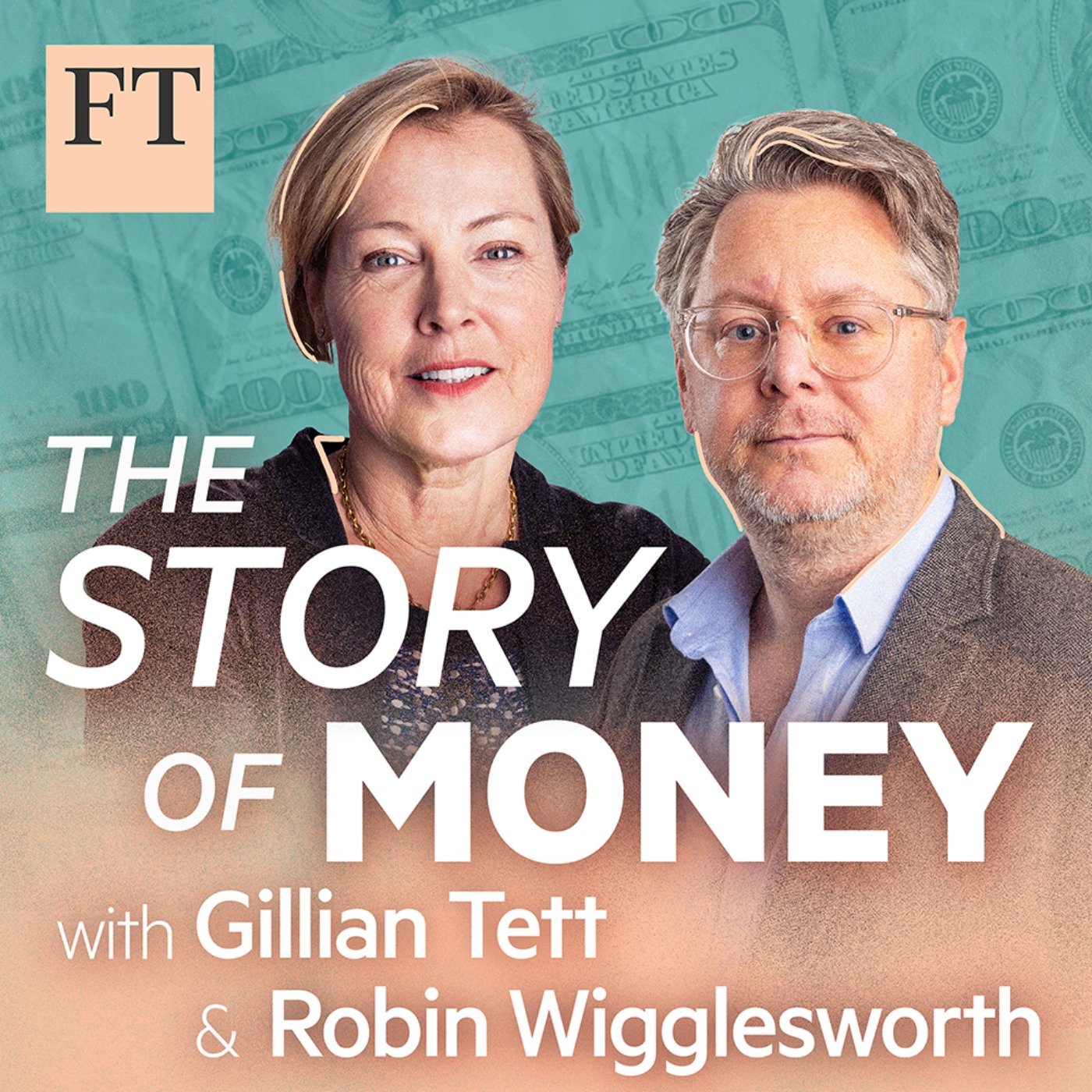
Hosts: Gillian Tett and Robin Wigglesworth
Producer: Laurence Knight
Executive Producer: Manuela Saragosa
Original music: Breen Turner
Broadcast engineers: Bianca Wakeman and Petros Gioumpasis
Podcast Development: Laura Clarke
Video editor: Kristen Kenyon and Josh Divney at Podcast Discovery
Learn more at www.ft.com/tsom or get in touch at [email protected].
Read a transcript of this episode on FT.com
Hosted on Acast. See acast.com/privacy for more information.
More from The Story of Money
All episodesWe use cookies.They keep VO running smoothly and help us improve it. Privacy policy