
 Ask ChatGPT

- Podcasts
- The Story of Money
- Why Richard Nixon torpedoed the global monetary system
The Story of Money3 Jun 2026 · 39m · 14 chapters
Why Richard Nixon torpedoed the global monetary system
In short
The “Nixon Shock” of Aug 15, 1971—why US President Richard Nixon ended the dollar’s convertibility into gold, undermining the Bretton Woods monetary system.
Guest backgrounds
Geoffrey Garton, managing director at Lehman Brothers; worked on sovereign debt restructuring; worked at Blackstone; academic economist focused on international trade/finance; Dean Emeritus at Yale; US government roles including under Secretary of Commerce (Clinton), and earlier work for Carter, Ford, and the Nixon administration (Council on International Economic Policy).
Key claims
Bretton Woods relied on other countries trusting US gold redemption; US gold coverage fell from about 165% (1955) to about 25% (1970/71). US deficits (trade and Vietnam spending plus Great Society programs) increased dollars abroad, while inflation fears and eurodollar capital flows strained the system. Nixon blamed “speculators” and acted to defend the dollar, aiming to adjust rather than destroy Bretton Woods.
Notable examples
Germany reportedly had more dollars than Fort Knox gold; eurodollar market in Europe; May 1971 dollar inflows to Germany; France removing gold (Pompidou’s battleship headlines).
Written by AI. May contain mistakes.
Chapters
0:00
Introduction to Nixon's Economic Policies
Explore the shift in US gold reserves and the concerns leading to Nixon's decision.
“In 1955, for example, the US had 165 % more gold than it needed to redeem all the dollars outside the US.”
4:19
The Bretton Woods System Explained
Understand the Bretton Woods system and the US dollar's pivotal role in global economics.
“More than 125 years later, that vision lives on.”
6:40
The Strains on the Bretton Woods System
Examine the economic strains that led to the unraveling of the Bretton Woods system by the early 1970s.
“So we're actually going to split it over two episodes, because frankly, Gillian and I have been looking forward to this one.”
12:23
Concerns Over US Dollar Convertibility
Discuss the fears surrounding the US dollar's lack of gold backing and its implications.
“What were the main fault lines on the financial side of things then?”
14:00
The Decline of the Dollar's Value
Learn about the factors contributing to the decline of the dollar's value and the U.S. trade deficit by 1971.
“and actually in other countries too, that they would come to the U.S.”
15:00
The Triffin Dilemma Explained
Understand the Triffin dilemma and its implications on the dollar's international status.
“The US was not managing its economy well.”
18:00
Speculators and Nixon's Anger
Explore Nixon's perspective on international speculators and their impact on the U.S. economy.
“And certainly, it meant that the dollars could not be redeemed in gold.”
21:03
The Prelude to Dollar Crisis
Examine the events leading to the dollar crisis during Nixon's presidency.
“Well, I have, Jeff and Jillian, I have a confession to make.”
24:05
Nixon's Presidency and Economic Background
Discover Nixon's background and the political context of his presidency regarding economic policies.
“The dollar's position is beginning to look decidably wobbly.”
28:00
Nixon's Approach to Bretton Woods
Learn about Nixon's strategies and intentions regarding the Bretton Woods system.
“That was a big, big move, and Nixon just delighted in shocking the audience.”
Show all 14 chapters
30:04
Global Reactions to Nixon's Policies
Discover how other countries perceived Nixon's policies and their implications on the global economy.
“And this infuriated the Europeans and the Japanese because they at least wanted the U.S.”
33:37
The Dollar's Deteriorating Position
Examine the factors contributing to the dollar's decline in the early 1970s.
“So the whole system was under great strain and the US basically was confronting a lack of competitiveness, a lot of the same issues that we have now.”
36:52
The Imminent Crisis of Bretton Woods
Uncover the mounting pressures on the Bretton Woods system leading to its crisis.
“And so the central banks were actually in very close coordination.”
40:08
The Imminent Crisis of Bretton Woods
Uncover the mounting pressures on the Bretton Woods system leading to its crisis.
“The future of fixed income investing will continue to blur the lines between public and private markets.”

Ask about this episode
Get the gist, explore an idea or ask about something said.
 Claude
On The Story of Money, what are the key points of this episode?
Searching your listeningTranscript
Automatic transcript. May contain errors.
0:00In 1955, for example, the US had 165 % more gold than it needed to redeem all the dollars outside the US. But by 1970, 1971, it only had 25%. There was a fear in the U.S., and actually in other countries too, that they would come to the U.S., say, here are dollars, we want gold, and the U.S. wouldn't be able to redeem it. Germany alone had more dollars than there was gold in Fort Knox. So, drumroll. I have directed Secretary Connolly to suspend temporarily the convertibility of the dollar into gold.
0:46Today on the story of money. What happens when the president of the United States of America makes a shocking unilateral decision to torpedo the entire post-war global economic order? And nope, this time we're not talking about Donald Trump. Let us take you back instead to 9pm East Coast time on the 15th of August 1971. US President Richard Milhouse Nixon is making a surprise appearance on the major TV networks, elbowing aside a scheduled viewing of Bonanza. That was then the biggest TV show in America at the time. American audiences had actually grown pretty used to these kind of unscheduled addresses.
1:30Nixon typically used them to explain his latest moves in Vietnam, for example. But this time, he had a very, very different subject on his mind. The time has come for a new economic policy for the United States. Its targets are unemployment, inflation and international speculation. Unemployment and inflation are big concerns for American voters. These are the early days of 1970s stagflation, and both are on the rise. So Nixon lays out a radical set of new measures to tackle this stagflationary problem. That's when inflation is really high and growth is stagnant. And these measures included investment subsidies, wage controls, price controls, almost$5 billion worth of spending cuts, which was quite a big deal back then.
2:21So, drumroll, then he turns to the international speculation bit of his address. In recent weeks, the speculators have been waging an all-out war on the American dollar. So, unknown to his audience that Sunday evening, or indeed, frankly, most of his own government, at the end of his address, Nixon is about to fire that torpedo that we mentioned. I have directed the Secretary of the Treasury to take the action necessary to defend the dollar against the speculators. I have directed Secretary Connolly to suspend temporarily the convertibility of the dollar into gold or other reserve assets. Now, the dollar's value is tied to gold and every other major currency is tied to the dollar.
3:04So by cutting that link, Nixon is threatening to set adrift not only his own currency, but all of his allies' currencies as well in a chain reaction. This announcement would become known as the Nixon shock. In a single, seemingly innocuous sentence, Whether he realised it or not, the US president had just upended the entire post-war global monetary system that underpinned a quarter century of rapid economic growth. And the thing to stress is until that afternoon, nobody knew it was coming, apart from Nixon and a tiny band of his very closest political allies who just spent the weekend together holed up in a secret meeting in a forest retreat in Maryland.
3:51So how did it all come about? How did it go down with America's allies? What would the consequences be, not least for the US dollar? And these are questions that keep reverberating through history. And we're going to be talking about this now in the story of money from the Financial Times with me, Gillian Tett. And me, Robin Wigglesworth.
4:18In 1898, John Nuveen had a vision to underwrite municipal bonds that would propel American infrastructure into the 20th century. More than 125 years later, that vision lives on. Today, Nuveen has grown into a leading global asset manager with expertise spanning public and private markets still investing with a future in mind. Nuveen. Invest like the future is watching. Visit nuveen.com slash future to learn more. Investing involves risk. Principal loss is possible. So in today's episode, we'll be combining high finance with international monetary policy and the sometimes grubby inner workings of the Nixon administration.
5:01And to tell this amazing story, we have the perfect guest, Geoffrey Garton. Geoffrey, welcome to the show. Thank you. It's a pleasure to be here. We're so pleased to have you. Yeah, I mean, Geoffrey, you personally embody three different strands of this story because you worked in high finance as a managing director of Lehman, long before it went bust, of course. You worked on sovereign debt restructuring, a subject close to my heart. You worked at the Blackstone Group. And you're also an academic economist with a focus on international trade, finance and business. And you're currently Dean Emeritus at Yale.
5:33If that wasn't enough, you've also found time to do a lot of work in the US government. You were under Secretary of Commerce under Bill Clinton. Before that, you worked for the Carter administration, the Ford administration, and believe it or not, the Nixon administration. Is that right? You actually worked for Nixon? I was very young, but I did. And what was he like to work for? Because, of course, history hasn't been that kind to him. I was nowhere near him personally, but I was on something called the Council on International Economic Policy, which was the equivalent of the National Security Council in the White House.
6:10And I was at least exposed to all of the economic and financial issues of the time. Well, that sounds unbelievably relevant to what we're talking about today. I mean, you also wrote, obviously, the book on the subject of this episode. It's called Three Days at Camp David. And Camp David, of course, is the Maryland retreat where the secret meeting took place in 1971 that thrashed out this Nixon shock policy announcement. So, Geoffrey, I mean, this is a big story. So we're actually going to split it over two episodes, because frankly, Gillian and I have been looking forward to this one. And you're going to be our guide through both of them very kindly.
6:49Well, I hope I can do it. So let's get started. As Robin mentioned, that TV broadcast by Nixon in 1971 torpedoed the post-war global economic order. And that post-war global economic order in question was the same one that we looked at in a previous episode with Ed Conway, the so-called Bretton Woods system. As a reminder, back in 1944, in the final months of World War II, the US organised a massive summit for all its allies at the Bretton Woods Resort in New Hampshire. And for the US, this conference was actually another front in its emerging post-war hegemony. So whilst the US military was conquering Germany and Japan on the battlefields of Europe and the Pacific, at Bretton Woods, the US dollar finally and comprehensively conquered the British pound to become formally enshrined as the world's leading currency.
7:48And what that meant in practice was that all of America's trading partners fixed their currency's exchange rates to the dollar, and the US in turn pegged the dollar's value to gold. So, Geoffrey, the dollar became the linchpin of the global monetary system. So can you explain how and why, what that really meant in practice to have the dollar as a centre of the Bretton Woods system? Well, the people at Bretton Woods, especially the US and the UK, wanted to make a new monetary system that would avoid the problems of the 1930s a time in which there was enormous amount of protectionism. And so they decided that there should be one stable currency in the middle of the whole system.
8:35And that was naturally the dollar because the U.S. currency was so strong and basically everybody wanted it. Yeah. And the U.S. had all the gold at the time as well, right? And the U.S. had about 60 percent of the world's gold. And the U.S. basically said, anyone who wants to redeem their dollars in gold, we will give you$35 per ounce of gold. And the idea was the dollar would be the central stake in the system. It would be like the planet around which all the other planets revolved. And everybody at that moment had confidence that the U.S. could pull this off in large part because it had so much gold that anyone who wanted to exchange their currency for gold was given a commitment that the U.S.
9:30would do that. And so this was seen as a very, very stable system. And the objective was that monetary stability would lead to more trade. The whole focus really was on the expansion of trade. Well, that's a great point. I mean, one of the consequences of this, from what you're saying, is that it meant that the system was totally asymmetric. I mean, essentially, other countries were dependent on the U.S. and its promises to convert dollars into gold. Is that correct? Absolutely. And I think it's hard for us to conceive today, but the U.S. was so preeminent at that moment. It was not only the world's most powerful military machine, but it was the only country in the world that came out of the Second World War stronger than when it went in.
10:24And so the amount of confidence that other countries had that they could lean on the U.S. and that the U.S. was their only hope was really palpable. and there really was no alternative because the US basically was calling the shots. Okay, so this is the monetary system that Nixon would eventually inherit a quarter of a century later when he became president in 1969. The same system he would go on to wreck with that TV announcement in 71, ending the convertibility of dollars into gold and of course with everybody else pegged to the dollar, that was a big deal. But it was kind of surprising because in economic terms, the Bretton Woods era seemed to be resounding success, right, Jeff?
11:09I mean, those 25 years before Nixon came to power have been called sort of a golden age of rapid and stable growth and booming international trade. I mean, the French, who like to complain as much as we Brits do, they call it the tronc glorieuse, right? How much credit does the Bretton Woods system deserve for delivering that economic record? It deserves a lot of credit. The thing is that the system, it worked, but it was under a lot of strain right from the beginning because the task of helping Japan and Europe recover was much, much bigger than anyone envisioned. And so it was at first really the U.S.
11:54that supplied all the funds, not the International Monetary Fund, which itself was a creation of Bretton Woods. And if you looked at the Eisenhower administration, and then the Kennedy administration, and then the Johnson administration. There were great strains on Bretton Woods, and the strains got bigger and bigger. But it held until the Nixon administration. Let's discuss those strains. What were they? What were the main fault lines on the financial side of things then? Well, the key strain was this, that the whole system depended on countries outside the U.S. accepting the dollar, using the dollar, and knowing that if they ever wanted to, they could take the dollars they were using and exchange it for gold at a fixed rate.
12:51At first, nobody denied that the U.S. had enough gold. In 1955, for example, in the middle of the Eisenhower administration, a calculation was made that the U.S. had 165 % more gold than it needed to redeem all the dollars outside the U.S. But by 1970, 1971, it only had 25%. So over the period, it became clearer and clearer that the basic commitment of exchanging the dollar for gold was not credible. And the big strain came because there were so many dollars in circulation that countries felt they didn't need all those dollars. and also they were very worried about the way the U.S. managed its economy and they were afraid that inflation in the U.S.
13:53would actually reduce the value of the dollars they were holding. So all through this period there was a fear in the U.S. and actually in other countries too, that they would come to the U.S. and say here are dollars, we want gold, and the U.S. wouldn't be able to redeem it. At this stage, I think even Germany alone had more dollars than there was gold in Fort Knox, right? That's probably true. The amount of gold relative to dollars outside the U.S. became lower and lower and lower. And it wasn't that people didn't know this because the U.S. published statistics. But they simply didn't want to abandon the system.
14:39the Bretton Woods system for fear that they didn't know what was on the other end. Okay, let's pause and unpick that a little bit. Because these dollars were flowing out of the US because it had switched from having a gargantuan trade surplus after World War II to actually having a trade deficit by 1971. And partially that was because the Kennedy and the Johnson administrations in the 1960s had brought in all these new welfare benefits, the so-called Great society programs things like medicare medicaid food stamps great stuff right cool things that we think of now but all this government spending helped push the u.s economy into a trade deficit and then on top of that the u.s government was also spending a ton of money on the vietnam war as well so you suddenly had a country with a big trade deficit a big budget deficit more and more government debt and more and more dollars flowing out of the country suddenly.
15:38The US was not managing its economy well. Its trade competitiveness was declining as Japan and Germany and other European countries were recovering. And so there were more and more dollars in circulation. So in practical terms, that meant the dollar was massively overvalued. People could see that or sense it. And of course, one of the big problems is that when you have governments that are trying to manage the value of a currency, what's happening with inflation matters enormously. And that was starting to go wrong as well, wasn't it, Jeff? Yeah. The thing is that all the trade for the United States, exports and imports, was only about 7 % or 8 % of the GDP.
16:27So from an American standpoint, they simply couldn't manage their economy to satisfy international requirements. It was a domestically based economy. But from the standpoint of other countries, they were very, very concerned because U.S. economic management was so domestically oriented. And Jillian, as you said, it led to a lot of inflation. It meant that the fiscal and monetary policies were all about the U.S. and U.S. growth, and the rest of the world was a secondary consideration. Well, all of this doesn't sound horribly familiar, I must say, but there was also the argument that was put forward by Robert Triffin in 1959 that it was actually the international demand for dollars that was the key factor driving things, wasn't it?
17:23What was the so-called Triffin dilemma that lots of economic students have to study? Basically, what Triffin said was, if the dollar is going to be the international currency, you would need more and more dollars to finance what was an ever-growing global economy. There was more and more trade, more and more need for dollars. But that meant that the U.S. had to run deficits in order to supply those dollars. And at some point, the size of the deficits would be so great that it would cast doubt on whether or not these dollars were worth what everybody thought they should be. And certainly, it meant that the dollars could not be redeemed in gold.
18:12I don't think anybody anticipated how quickly Europe and Japan recovered and how much the dollar was in demand until it wasn't. So you take the 1950s, people talked about a dollar shortage. There wasn't enough dollars to finance all the increase in global trade. But by the 1960s, they talked about a dollar glut. There were too many dollars. And so the Triffin dilemma was basically indicating that at some point this system had to be totally restructured. And of course, that shows once again, in a way that's very relevant today, that things can seem incredibly stable and secure and fixed and permanent until suddenly they're not.
19:04Exactly. There's just one other thing from that Nixon announcement in August of 1971 that I'm really curious to hear your thoughts on. He talked about these international speculators in the TV address. And it's very vague and oblique, as it were. Who were these speculators? What were they getting up to? Why was Nixon so angry at them? If I could take one moment for history. During the Bretton Woods discussions, it was all about stable exchange rates and the expansion of trade. And there was no contemplation of private capital and its importance. In fact, the Bretton Woods officials, they didn't like private capital crossing borders.
19:51They thought that was one of the reasons why there was such a collapse in finance in the 1930s. But capital will come when it comes and it will go where it goes. And by the late 50s, early 60s, it was clear that private capital was moving across borders in ever greater amounts and with ever greater speed. And there emerged a capital market in Europe called the euro-dollar market. These were dollars in European banks that were not regulated by either the Europeans or by the U.S. And so what Nixon was talking about was there was a massive amount of capital that was available for speculation. and he attributed this speculation to a lot of the financial crises that occurred in the 60s.
20:47The valuation of the British pound, revaluation of the German mark. He called them financial speculators because he was trying to make them the enemy and therefore justify all the other measures he was talking about on August 15th. Well, I have, Jeff and Jillian, I have a confession to make. I've actually visited the previously Soviet-run bank in Paris that apparently gave the name to Eurodollars. So this was a state-run bank from the Soviet Union in Paris on the Haussmann Boulevard. And its telegram name or address was Eurobank. And apparently a lot of dollars that the Soviet-owned bank had accumulated through exports were held there, sort of away from seizure from the Americans.
21:37And that's how Eurodollars became known as Eurodollars. And it's a very geeky thing, but I visited that bank and took a selfie outside it because I thought it was quite a cool little moment of financial history. It was a big thing. It was a big thing in the 50s and 60s, and it was something never contemplated at Bretton Woods. Exactly. Well, I would say that The beginning of the dollar crisis, the very beginning, was actually, I guess it was 1960, very end of the Eisenhower administration. The Secretary of the Treasury, he made a trip to Germany, twisted Germany's arms, first of all, not to redeem dollars into gold, but also to accelerate the repayments of the Marshall Plan to pay more for the American troops in Germany.
22:24And that was the beginning of the recognition that there had to be a big change. And all through the Kennedy administration, there were efforts to control the outflow of dollars from the U.S. And those efforts got more intense during the Johnson administration. And along the way, Great Britain devalued, I can't remember how many times, I think it was twice. And that created shivers through the system because the found sterling was seen as a major currency. And it made others look at the dollar and say, are you next? So by the time Johnson came in, he put controls, he put real controls on outflows of dollars.
23:10But it still didn't work. So the crisis just got bigger and bigger. and when Nixon was elected, it was about to burst open. And we are going to find out just how much peril the dollar was in and what kind of difference this newly elected President Nixon was going to make after the break.
23:36The future of fixed income investing will continue to blur the lines between public and private markets. Nuveen's credit platform was built to navigate this shifting landscape
24:05Well, welcome back. So just to recap, it's 1969. The dollar's position is beginning to look decidably wobbly. The dollar's reserves piling up in the foreign central banks are already worth two to three times the value of US Federal Reserve's entire gold reserves. So the question is, will the US be able to honour its pledges or is something going to crack? And this was the moment that Richard Nixon stepped onto the stage. He'd won the 1968 election, ending eight years of democratic rule. So, Jeffrey, these days, the Nixon presidency is obviously overshadowed and severely tarnished by the Watergate scandal that came later.
24:50But can you tell us a bit more about the man that was inaugurated as president that January in 1969, when Watergate was frankly still just an ugly hotel in Washington? What was Nixon's background? What kind of values did Nixon bring to the White House at the time? And what was he like to work for? Well, the Nixon that actually took office was a respected, experienced public figure. He had been the vice president for President Eisenhower for eight years. He was acknowledged to be a very sophisticated strategist when it came to foreign policy and international affairs. He was welcomed because after JFK and the Johnson administrations, there had been so much spending on social programs.
25:46And a Republican administration coming in was seen as really necessary to pare back these very, very lofty ambitions, many of which didn't really pan out. Nixon also surrounded himself with an extraordinary group of people, particularly in the finance and economic realm. So I think that in 1970, when he took office, there were really high hopes that he was the right person. Do you see any similarities between Richard Nixon and today Donald Trump? They both saw themselves as political outsiders. They despised the East Coast elites. They had these incredible political comebacks after they'd been written off.
26:32And obviously, they were both more sort of nationalistic figures, if I can use that phrase, than their democratic predecessors had been. I wondered how long it was going to take you to get to the T word, the Trump word. Yes, exactly. And it's indeed a question I think many people would ask immediately. First, let me talk about the distinctions. Nixon was very experienced as a public figure. He was a political heavyweight, right? He was a political heavyweight. He had been in the Congress. He had been vice president, as I said. He had traveled the world. He knew a lot of statesmen. And actually, he also had a very deep knowledge of public policy.
27:16He was into budgets. He also did things that were not expected of him. For example, the conservative administration set up the Environmental Protection Agency. And so for all those reasons, I think he is very distinguishable from Trump. Where they sound very similar is they're both very revengeful. They are looking for the big grand gesture. The height of Nixon's fame was really Nixon going to China. Nixon, who had been a highly anti-communist public figure, going to China. That was a big, big move, and Nixon just delighted in shocking the audience. He was not a nationalist in the way that Trump is.
28:13In fact, one of the major things about the Nixon shock is that it was designed to make an adjustment in Bretton Woods, but in no way was it designed to wreck Bretton Woods. In fact, Nixon kept emphasizing that he believed in free trade, he believed in free flows of capital, that there had to be an adjustment so that the system could endure. It was no question about the Nixon administration's wanting the spirit of Bretton Woods, the multilateralism, the economic liberalism. They wanted all that to continue. They just said there was an imbalance at the centre, whereas Trump basically has totally disrupted the global economy.
29:07And I don't think anybody can say that he has a vision for where it should go other than that the US should be the big beast in the jungle. But obviously Nixon was quite different from some of his Democratic predecessors, right? How quickly did America's allies realise they were dealing with somebody fundamentally different in the White House? Someone who, while maybe not intending to shatter the Bretton Woods system, was at least willing to take radical steps that could put it at risk. When did the rest of the world realise that something was afoot? Well, I think what really disturbed other countries was that the strains on Bretton Woods were getting bigger and bigger.
29:52And when the Nixon administration came in, Nixon had a policy of what was called at the time benign neglect. They just didn't want to deal with it. And this infuriated the Europeans and the Japanese because they at least wanted the U.S. to be trying. And so as these strains built up and as Washington basically said to the rest of the world, In fact, the Secretary of the Treasury, John Connolly, said this. It's our dollar, but it's your problem. This really got other countries worried that the U.S. was going to allow the system to collapse and not do anything about it. So when Nixon announced his series of measures in August 1971, it came as a great surprise.
30:44But Nixon may have shown benign neglect, as you put it, towards the international monetary system. But he wasn't afraid to take an aggressive stance towards US allies and other foreign policy domains. I mean, there was the Nixon doctrine, of course. Well, the Nixon doctrine was very important because what Nixon basically said there, 1969, He was really talking about Vietnam, but he said that the U.S. would no longer supply soldiers and weapons to every country that was fighting communism, that they would only do this for their close allies. But the Nixon doctrine was interpreted as meaning the U.S.
31:28cannot shoulder all these burdens. And in fact, that's exactly what was happening in the financial arena. that Nixon was saying, we need more burden sharing, a term we hear a lot about today. We need other countries to expand their defense budgets. We need other countries to contribute more to the World Bank and the IMF. We just couldn't afford to do it all. And this question about the dollar in gold was really a major part of that. Just to recap, you've got a dollar that's looking increasingly overvalued, and you've also got these swelling trade imbalances, where essentially Japan and West Germany are running huge trade surpluses, getting loads of dollars as a result, and the whole system's looking more and more potentially strained, if not unstable.
32:26As I understand it, one of the things that Nixon complained a lot about was the idea that Germany and Japan weren't opening up their markets enough, and that was very unfair. Again, that's got echoes of today. I'm curious, from the perspective of Germany and Japan, though, or West Germany as it was then, who did they blame for the system coming under strain? Well, they certainly thought the U.S. was mismanaging its economy. And they felt that there was too much inflation in the U.S. For example, we had a lot of collective bargaining between labor and business, driving up wages and driving up prices.
33:08But I think, you know, looking at it dispassionately, everybody was to blame. The Germans were mercantilistic. The Japanese were really mercantilistic. They were super, super competitive. I'll give you just one number. Between 1965 and 1970, America's exports of goods increased 100%. Germany's increased 200%. And Japan's increased 400%. So the whole system was under great strain and the US basically was confronting a lack of competitiveness, a lot of the same issues that we have now. Okay, so we're now in a situation where the US economy is huge and dominant, but maybe a little bit less dominant than it had been.
34:01The Bundesbank in West Germany, the Bank of Japan in Tokyo, all these foreign central banks are accumulating massive hauls of dollars but they're becoming quietly more and more concerned about how convertible these dollars will be into gold because the system was just not looking as sustainable the u.s gold reserves just weren't what they once were but of course everybody wanted to keep the bretton wood system alive i mean even nixon as you said jeffrey didn't actually want to demolish it But of course, you also have these speculators to contend with, these evil money men, right? Eurodollars sloshing around, capitalizing on the devaluations of the pound, the franc in the 1960s.
34:45And by May 1971, things really start coming to a head for the dollar, right? So tell us what happened that month. The dollar started to flow into Germany. There was a sense that Germany was going to have to revalue its currency. And the speculators were betting that it would, and so they wanted to get in early. And massive amounts of dollars flowed into Germany, such that it had to basically stop accepting dollars altogether. And it was really clear. The U.S. was petrified that now countries were going to come with all these dollars and ask for the gold, and there wasn't enough gold. And so if there had been this gold rush, so to speak, the U.S.
35:35would have de facto defaulted on a treaty commitment. And they were not only worried that this would be disastrous for the global financial system, but that it would call into question all other U.S. commitments on the security side. So by the end of May, Nixon and his close advisors really began to think through what they had to do. Apparently in the newspapers at the time, there was fear of the French. So the French had been pulling their physical gold out of the United States for a while and keeping it in Paris. But in the summer of 71, President Pompidou sent a battleship to collect the last remaining French gold that was held at the New York Federal Reserve.
36:20And that made headlines. And obviously it was just physically moving gold from one place to the next. It was France's gold, but there apparently was part of this general feeling that things were fraying and maybe about to unravel at that time. Probably so. But countries were holding off for the most part because the Bretton Woods system had been so successful, there was enormous fear about what would happen if the system cracked. And so the central banks were actually in very close coordination. They were not going to make the decision to take their currencies and exchange it for gold. But they didn't have control over their governments who might do that.
37:13They also, I think there was a fear, especially Germany and Japan. And here's where the foreign policy stuff comes in again. The U.S. was their protector. The U.S. was the country that was basically supplying the military protection. And so while on economic and financial terms, they might want to exchange their currency for gold, they were quite uncertain about what the United States' reaction would be in the foreign policy and defense. arenas. So there was kind of a standstill, except every once in a while, France would come in and want some gold. Belgium would do that. They were not great amounts, but they were enough to really worry the U.S.
38:08What if Germany and Japan actually changed their mind? Because U.S. policies were failing. As Gillian said, there was more inflation. There was more unemployment. The collective bargaining system was out of whack. The balance of payments deficit was getting bigger. Robin, I think you alluded to this, that in 1971, for the first time since 1893, the U.S. ran a deficit on the merchandise trade balance. That was a real shocker because up until then, there were sufficient trade surpluses to pay for a lot of America's overseas expenses. But when the balance of trade turned negative, it really appeared that the game was up.
39:00So the pressures are building. Things are looking increasingly unsustainable. Something's going to have to give. The question is what? So that's our cliffhanger. And you will find out in the next episode what happens to the dollar, what happens to the Bretton Woods system and what happens to America's position in the world as a whole. Part two of the Nixon Shock here on the story of money with me, Gillian Tett. And me, Robin Wigglesworth. And Professor Jeffrey Garton, thank you so much for being with us here today. We're really looking forward to having you back on the show next week. I look forward to it too.
39:39We'll meet again here next week.
40:08The future of fixed income investing will continue to blur the lines between public and private markets. Nuveen's credit platform was built to navigate this shifting landscape, channeling capital toward the businesses, infrastructure and energy solutions that are shaping tomorrow's economy, all while aiming to deliver the resilience and returns that portfolios seek today. Nuveen. Invest like the future is watching. Visit nuveen.com slash future to learn more. Investing involves risk. Principal loss is possible.
From the publisher
A century ago, when depositors lost confidence in a bank, they’d rush to withdraw their cash. In 1971, US president Richard Milhous Nixon faced a similar dilemma. But his problem wasn’t ordinary citizens fearing for their savings. Instead, it was America’s closest allies who were nervously eyeing the dwindling supply of gold in Fort Knox at a time when the dollar’s value was tied to gold and allies’ currencies were in turn tied to the dollar. And just like a beleaguered bank manager of yore, Nixon chose to shut America’s doors to further withdrawals. His decision threatened to pull the plug on the entire international monetary system established at Bretton Woods in 1944. It was so unexpected and outrageous, it became known as the “Nixon Shock”. In the first of two episodes on the topic, hosts Gillian Tett and Robin Wigglesworth get the story from economist and ex-financier Jeffrey Garten – a man with a CV so long that he once even worked for the Nixon administration himself.
Further reading:
Three Days at Camp David: How a Secret Meeting in 1971 Transformed the Global Economy, by Jeffrey E Garten (2021)
Gold and the dollar crisis, by Robert Triffin (1960)
Credits: Getty Images, the Richard Nixon Presidential Library
To enjoy future episodes, be sure to subscribe to The Story of Money wherever you get your podcasts, also on the show's dedicated YouTube channel here: https://www.youtube.com/@FTTheStoryOfMoney
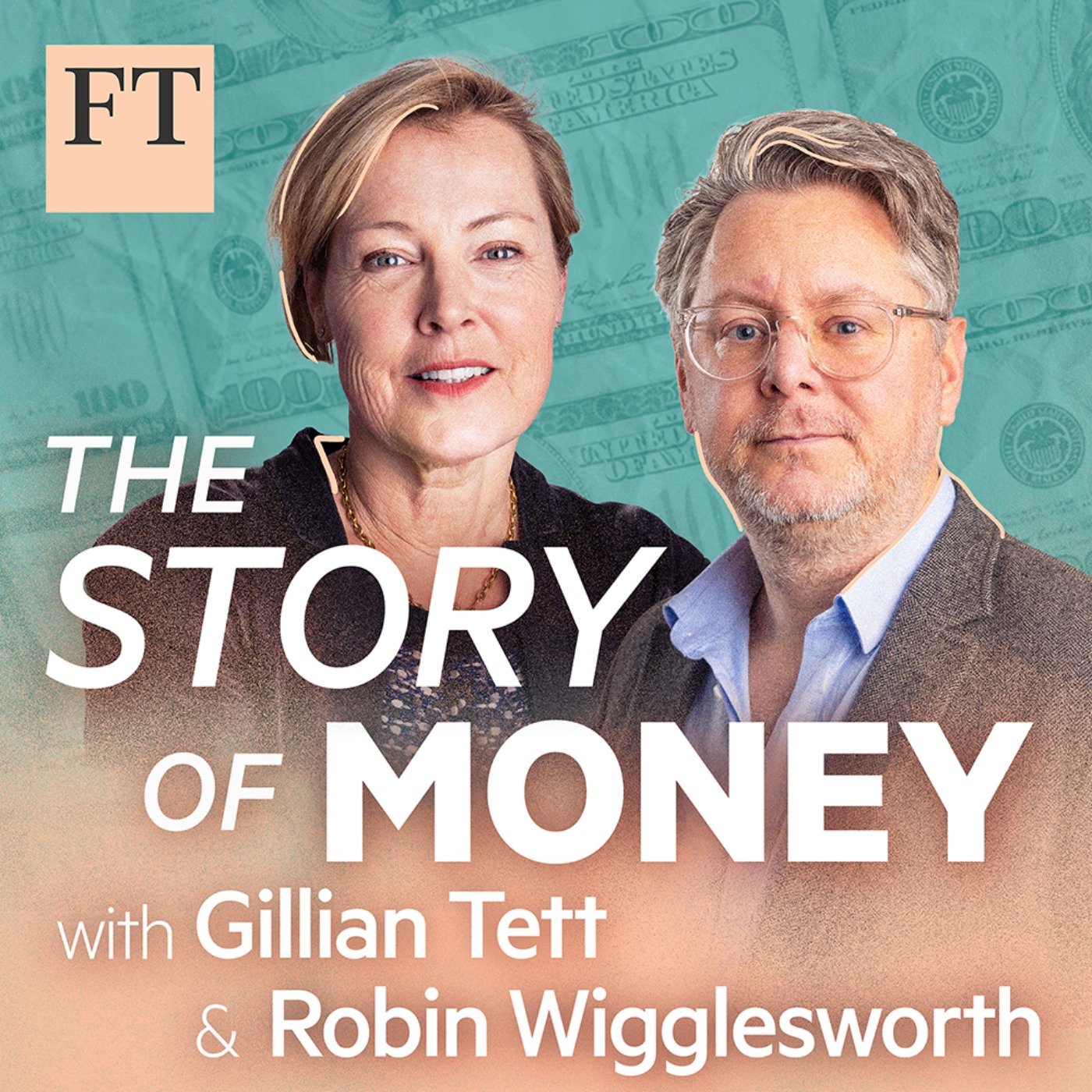
Hosts: Gillian Tett and Robin Wigglesworth
Producer: Laurence Knight
Executive Producer: Manuela Saragosa
Original music: Breen Turner
Broadcast engineers: Bianca Wakeman and Petros Gioumpasis
Podcast Development: Laura Clarke
Video editor: Kristen Kenyon and Josh Divney at Podcast Discovery
Learn more at www.ft.com/tsom or get in touch at [email protected].
Read a transcript of this episode on FT.com
Hosted on Acast. See acast.com/privacy for more information.
More from The Story of Money
All episodesWe use cookies.They keep VO running smoothly and help us improve it. Privacy policy