
In short
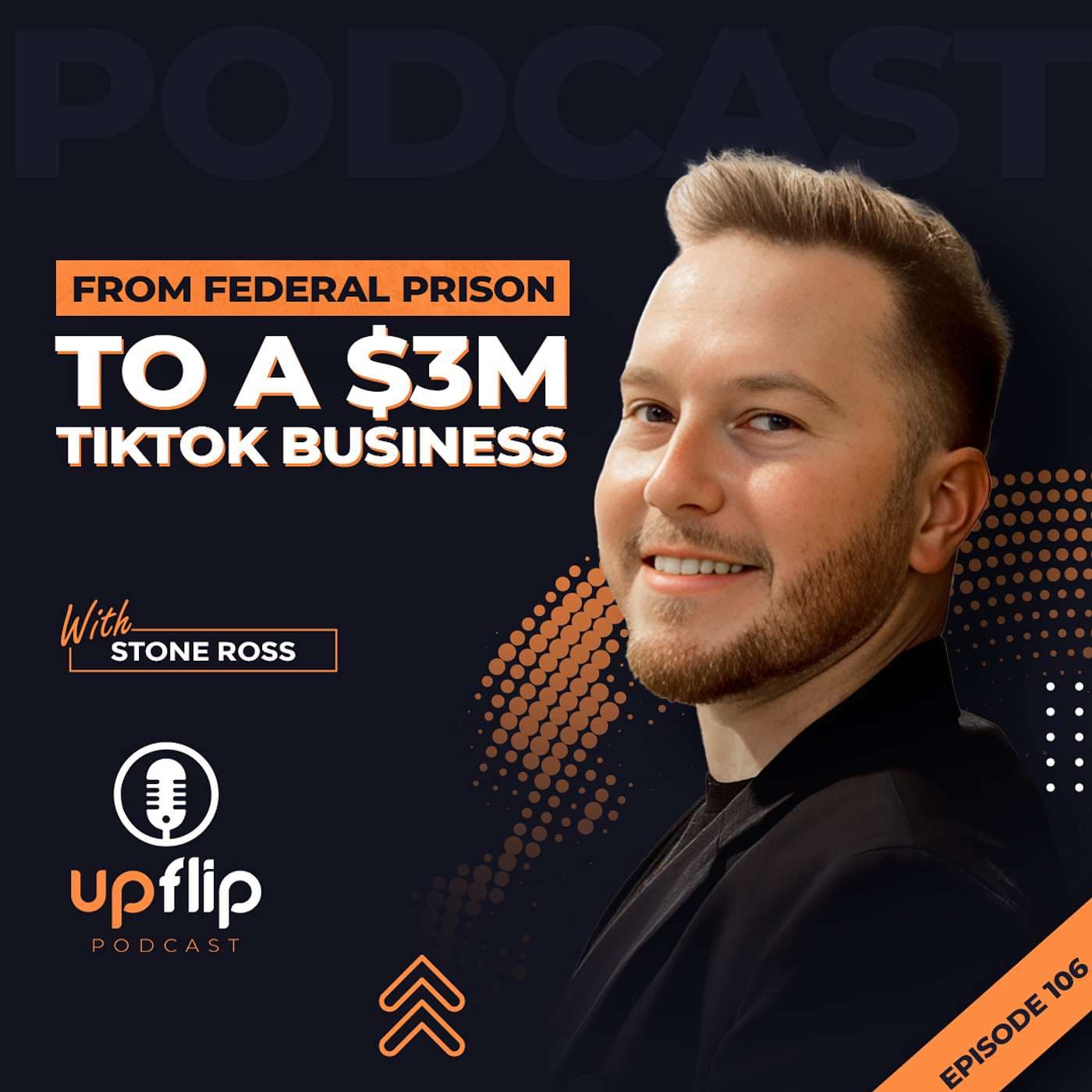
UpFlip Podcast Episode 106 Summary: How to Start a $100K/Month Dropshipping Business
Podcast Overview The UpFlip Podcast aims to explore how successful businesses are constructed and managed, providing listeners with actionable insights into entrepreneurship. With a focus on the American Dream, it offers practical advice and strategies for aspiring business owners.
Episode Details
- Title: How to Start a $100K/Month Dropshipping Business
- Guest: Stone Ross
- Background: Stone has over six years of experience in dropshipping, generating more than $3 million in sales. He transitioned from cryptocurrency trading to e-commerce and emphasizes TikTok dropshipping as a lucrative opportunity.
Key Concepts Discussed
- Stone Ross’s Background
- Entrepreneurial Beginnings: Dropped out of college after realizing traditional education wasn't for him. He was introduced to cryptocurrency and began trading Bitcoin, which laid the groundwork for his future businesses.
- Transition to E-Commerce: Started with Facebook Marketplace dropshipping before focusing on TikTok.
- TikTok Dropshipping
- Why TikTok?: Viewed as a new frontier for dropshipping, with far fewer sellers compared to platforms like Amazon, making it more accessible.
- Dropshipping Model:
- List products from suppliers on TikTok without holding inventory.
- Customers purchase from the TikTok store, and orders are fulfilled by sourcing from suppliers like eBay or Amazon.
- Getting Started
- Education: Understanding dropshipping fundamentals is crucial.
- Setting Up: Suggested to register as a business (LLC), understand tax implications, and comply with TikTok’s requirements.
- Influencer Marketing: Important for gaining visibility and traction without needing a hefty marketing budget.
- Common Pitfalls for New Dropshippers
- Registration Issues: Ensuring compliance with business setup to avoid deactivation.
- Supplier Reliability: Quick fulfillment is vital as delays can lead to customer dissatisfaction.
- Financial Considerations
- Startup Budget: Recommended to start with $5,000 to $10,000, whether in cash or credit.
- Revenue Expectations: New dropshippers can realistically generate a few thousand dollars per month with initial effort.
- Revenue Maximization Strategies
- Niche Products: Focus on items that have utility rather than one-off products.
- Adapting Pricing: Initially price lower to gain traction, then gradually increase based on demand.
- Building an Audience
- TikTok's algorithms provide organic reach, allowing sellers to succeed without extensive social media marketing.
- Risks and Compliance
- Deactivation Risks: Compliance with TikTok's policies is essential to avoid being blacklisted.
- Capital Management: Ensuring sufficient funds are available to fulfill orders is critical.
- Community and Mentorship
- Importance of joining supportive communities and having access to mentorship for guidance and accountability.
Conclusion Stone Ross emphasizes the importance of taking risks while ensuring compliance and leveraging available resources. His experience highlights both the opportunities and challenges faced by aspiring dropshippers on platforms like TikTok.
Additional Resources
- [Stone’s Course in UpFlip Academy](https://bit.ly/4hjjCLg)
- [UpFlip Podcast Episode 101](https://podfollow.com/upflip/episode/25da60a3ab81becc9fd02db1833ab2ca97acf483/view)
- [Franchise Guide](https://bit.ly/4aWuGvc)
Connect with UpFlip
- [YouTube](https://www.youtube.com/@TheUpFlipPodcast/)
- [Instagram](https://www.instagram.com/upflip/)
- [Facebook](https://www.facebook.com/upflipofficial)
- [Twitter](https://twitter.com/upflipofficial)
Final Thoughts For anyone interested in dropshipping and looking to tap into the potential of TikTok, this episode provides essential insights into the foundational steps, challenges, and strategies for success.
Written by AI. May contain mistakes. Listen to the episode to check what was said.
Transcript
Automatic transcript. May contain errors.0:00TikTok dropshipping may be the best way to make money online in 2024. and Stone Ross is an expert in maximizing its revenue potential. He's managed hundreds of e-commerce stores, generating over$3 million in revenue for himself and his students and clients. His proven techniques can do the same for dropshippers in any niche. This is Alex Freeman, and you're listening to the Upflip Podcast, where we uncover how great businesses are built, how they run behind the scenes, and how you can replicate their success. Stone got started with Shopify e-commerce in 2017, developing surefire sales funnels and marketing strategies that can grow an online business in any niche.
0:37He then applied that expertise to TikTok and Facebook dropshipping, helping to launch dozens of successful stores. In today's episode, we'll hear how Stone identifies and attracts the right customers for his clients, stores, and his advice for online entrepreneurs who want to maximize their revenue this year. Stone, welcome to the show. Hey, Alex. Yeah, thanks for having me. So to get started, can you tell the viewers just a bit about your background and how and why you started done for you? Yeah, of course. So I'm 29 years old. I'm from Pennsylvania. And I would say my first foray into entrepreneurship was shortly after I was a freshman in college at Penn State.
1:13For whatever reason, it didn't resonate with me and ended up dropping out early, for better or worse. But from there, I got first exposed to cryptocurrency, namely Bitcoin. And this whole notion of everything that cryptocurrency means in the world and our financial sphere really kind of changed my mind and kind of sent me down this rabbit hole of understanding alternate ways of generating income. And it definitely fueled more of the rebel side of me, once again, for better or worse. But all of these things ultimately led to where I am today. I mean, ultimately, it comes down to trading Bitcoin.
1:45I had created a course. I found this very interesting little arbitrage where you could buy and sell and make, I don't know, 5%, 10%, 15 % a day. Ended up scaling a community where I would teach everyone how to replicate this. And that taught me so much about online business. And that's when I got into Instagram, marketing, using softwares to grow. And then like you said, e-commerce came into my view in 2017, where I was learning about Facebook ads, the concept of dropshipping. If you remember those fidget spinners, when I first heard those, I was like, how are people selling these and making millions of dollars?
2:18It's crazy. So from there, it just sort of moved along wherever the wave of e-commerce went. So I then got into dropshipping on Facebook Marketplace and ultimately where we are here today with TikTok. Incredible. I love it. It's definitely been quite a journey for you. And I want to kind of go back to that beginning moment of your stepping out into entrepreneurship when you kind of made the decision to drop out of college. Was it a decision that was, hey, I'm going to go do this thing or college isn't working out. I'm leaving. What am I going to do next? Yeah, that's a really good question. It stemmed more from me going based on a momentum of my peers and also my family.
2:57It was the unspoken known that, yes, go to college, get your degree, get a job and align with this traditional American dream modality. But it just didn't vibe very well. Now, I definitely believe I was led astray by a myriad of factors, but it definitely sat in me that I wanted to do something non-traditional. I could barely even rouse myself out of sleep. And I was always a 4.0 student, took AP classes. It just didn't resonate. Yeah. And I think that we're going to touch on this point multiple times throughout this conversation. But obviously, there's when you diverge from the traditional path, there's both cultural resistance, but then there's also just like that kind of like internal fear, potentially.
3:41How much of that did you feel and how much of that do you feel on a regular basis? Because obviously, that's one of those big leaps that many entrepreneurs have to get over at some point? Yeah, I would say it's the prime foundation of, you know, it's our own mind. Our own mind is really our, you know, grandest nemesis or grandest ally. And it does go back to that. It definitely was scary. I mean, had I known that my passion was something that required a degree, of course I would have gone to it. But I had really needed a few years to really explore and develop myself and find out what my purposeful, you know, point was in life.
4:14So it does impact me slightly today. I mean, I would say no, because I've been so in this world of generating income and making money outside of our traditional societal job thing. But back then, it definitely was a major factor. It was a big leap to take. Are there any regrets that you have for not finishing your degree? Somewhat. I would say 50-50. If I would go back, I would have taken a couple of years before even going to school, I would have gotten whatever job I could have and just taken really time to explore my newfound mental thought processes. Our prefrontal cortex doesn't even stop developing until we're 25.
4:51So it's really a lot of pressure to put on someone who's 18. You're still a baby, even though you're 18, legal and whatnot. But I definitely would go back if I knew that it would help me get better. So I'd probably go back if I could and do finance or entrepreneurship or some major aligned with that. So after leaving college, you step out into what a lot of people might describe as the Wild West of Bitcoin. I'm curious what lessons in marketing or advertising that you learned during your time trading Bitcoin that ultimately helped you in the dropshipping business. Yeah, that's a tremendous question, Alex.
5:26So that actually has multiple rippling effects that I still align with today. So mainly it was Instagram marketing. I would use this follow Laker software back then where it would do this typical follow unfollow. And this was back when, oh man, Bitcoin was like 20, 30,$40. And there's a lesson right there. I mean, all the things I've done in the past 10 years, I could have just thrown everything away, taking the Bitcoin that I had back then, which by then was only a couple thousand dollars, just gone on some island and just screwed off for 10 years, just enjoying myself. And I'd be in a way better position.
5:59So first off, never sell your crypto, put it that way. But secondly, it exposed me in excitement to where I'm like, oh, wow, you can actually generate money a different way. And it It was just the most mind-blowing concept ever. And expounding on that, I was promoting just number one, what cryptocurrency was. I was kind of obsessed with it. And then number two, I made a little PDF course with my business community called Bitsclusive. And we would market it. We would teach people how to buy and sell Bitcoin. And through the FollowLaker software, I used to describe it as the most amazing law of attraction machine ever.
6:34Because through this little simple follow and follow thing, which Instagram doesn't even let you do now, I attracted the most amazing people into my life. It was the first time where I was meeting people, not from college, not from my community, but from all walks of life that I actually vibed with on a level I never thought possible. It's really hard to find people that you resonate with in your community that really think the same way. Of course, maybe one or two, but I was meeting dozens and dozens of people. I was hosting Zooms and really built this community and the camaraderie and being able to show and help everyone and for everyone to be able to co-create together something that can help all of us benefit our lives.
7:10I mean, then the vehicle was cryptocurrency. Now it's obviously e-commerce. That changed my whole perspective on life number one, but in business number two, it was the steady posting of content, leveraging automation technology to attract people to you and also saying yes to taking that phone call. Yes to getting on that Zoom call because you never know where it will take you. Let's talk about kind of that getting started into TikTok dropshipping. So if somebody is listening today and they're saying, okay, what is this? What is this TikTok dropshipping? What are those steps that they should be taking to get started, especially for somebody who maybe has zero experience in e-commerce?
7:44So first off, I would say educating yourself on what the concept of dropshipping is, number one, because there's many different ways to sell things online, dozens really. But understanding that the easiest way to get started with e-commerce is by finding items that people are currently buying, downloading the photos and descriptions and making an account on TikTok's seller center, because TikTok's the vehicle that's kicking butt, and reposting these photos. This is the most watered down version. Reposting these photos and listing these items, but you don't have any inventory. When you're listing it on your store and exposing it to people that are on TikTok, when they purchase from you, you go ahead and take your own money, order it on wherever you found that product from, whether it's eBay, Amazon, what have you, and ship it directly to them.
8:30That's the entire model. That seems fairly straightforward on the simple side of things. What are some of the common pitfalls that somebody maybe would fall into if they start dropshipping that you might advise they avoid? There's a myriad of them. There really is. Now, that's the most basic understanding of what dropshipping is, of course, but one has to understand that it's not in a vacuum. In order to sell on TikTok, you must have a business. Now, you can do it just with your social security number and register as an individual, but it's highly recommended that you start as a business. So, you know, one must understand what the business foundations of having an LLC is, having a business bank account, an EIN, maybe some of the tax incentives of it.
9:10But properly registering is number one. Properly understanding how to list products. And there's a whole compliance side of it that is masterful. And it may seem complex, but it is navigatable. And then number three, it is how to find proper influencers to sell your items. because this TikTok opportunity is very, very exotic and bizarre in that unlike traditional e-commerce stores, you don't need to pump a ton of money into ads. You don't need to make a website and learn how to do graphic design and make it all beautiful. You don't even need to have any online presence whatsoever other than a TikTok seller center account and products on the store.
9:49But besides that, you must get exposure somehow. And the weird part is you can actually create, and I'll show you guys very successful TikTok stores just by posting products and not even reaching out to anyone at all. But understanding that, you must understand the fulfillment process. And if you want to scale, you'll want to start networking with influencers and getting them to promote your products. So there's a whole lot of things that I teach within the mastermind group that I brought. You know, it certainly has been sold many, many times. The idea of dropshipping as being something that you can start with absolutely no money.
10:20I mean, obviously, at some point, someone's going to make that first order and you have to order the products. So you probably need some form of capital there to make that happen while the fulfillment occurs. But what is kind of the ideal startup budget? You mentioned you probably want to get an LLC, do all of those things, which costs some money. So what is that kind of ideal startup budget somebody should have? Yeah. So to get an LLC, it's a couple hundred dollars. It takes like a week or so. But I would recommend having anywhere from$5 ,000 to$10 ,000. It doesn't even have to be cash. I mean, frankly, I use all credit cards and just rack up the airline mileages and cash back.
10:57I mean, there's a whole little trick there you can do. But it's kind of funny. I would probably say minimum$5 ,000. But the challenge you'd run into is when an item takes off, you're going to run out of money. For me, it was three weeks after I started the first TikTok store in August. And And I was just learning how to do this model. I was very used to it. It's very similar to dropshipping on other places. But it was three weeks in, I was maybe doing$20 or$30 a day. Out of the blue, some influencer, this chick I had never known, never talked to, she bought a pillow from me, one of these memory foam pillows.
11:28And out of nowhere at midnight, my phone started blowing up with sales. So much so within 45 minutes, I maxed out the 200 orders that I could do in a daily period back then. So it was just the most mind-blowing thing ever. went from nothing for three weeks to$11 ,000 in sales overnight with one influencer. So it's proved the concept with a few thousand dollars, but the second it takes off, I would be searching far and wide for more capital. And is that something that you can foresee in any way? Or is that just, you know, at some point, one of the early products that after you've proven the concept, it's going to take off and you just got to be prepared for that moment to happen at some point in the future?
12:06I would say be prepared for sure. We were doing very basic daily algorithm of action where we would list 10 items a day. We were getting the items from Amazon. So we weren't even doing any ordering wholesale or using warehouses at this time. And just by doing that, working a couple hours a day, after three weeks, that's what happened. And it's since been duplicated multiple times. And for me, my challenge was always running out of capital or I had a credit card that was frozen and it created a headache. That always seemed to be it. But also, you can manage it. You can always manage and increase your price if capital is a problem.
12:39But it's kind of funny that the challenge here is not exposure, it's capital. It's a really funny and probably solvable problem. What do you think it is about TikTok dropshipping in particular that kind of leads itself to this great problem to have? And why maybe is TikTok dropshipping the best way currently to make money online? Because it's so new, Alex. because this is something that I see as akin to getting involved in Amazon several, several years ago, when it first moved outside of books. I was looking at the statistics. There's only around 30 ,000 people selling on TikTok, at least as I checked a few days ago.
13:18And you put in perspective, the resellers on Amazon, there's over like 2 million worth. So number one, it's very nascent and very new in the United States. Now, I know people have been selling items on TikTok for some time using things such as Shopify and running ads, but they just officially announced the launch of their TikTok shops section back in November. So we're two months into what their official launch in the US is. And even on a weekly basis right now, both Thailand and the Philippines surpass the amount of monthly revenue that they generate on TikTok shops, more than the US. So we know our position in the world is like the largest consumers ever, but that's how tiny this is right now.
13:57It is brand spanking new. Listeners, if you're looking for more advice on how to get started in e-commerce, check out the Upflip blog post, How to Start a 750K a Month e-commerce Business, where we share some insights from Ecom Crew co-founder Michael Jackness about how to make seven figures from an online business. Stone, you know, because it is so new, I'm curious what the expectations of a TikTok dropshipper should be in sort of maybe first year revenue. do? I am about five months in right now, and I can speak upon my own experience as well as seeing the other sellers that I've been communicating and networking with on the platform.
14:35It comes down to, I would say, what you actually want for yourself, like what your goals actually are. If you do want to build it into a seven-figure income, you most definitely can do it, but it's going to require definitely some out-of-the-box thinking. Now, if you're someone that's brand new with e-commerce in general, and you just want to make an extra thousand or a a couple thousand dollars a month, it is absolutely, positively something you can accomplish with this just by spending a couple hours a day, I'd say. Maybe three, four hours, but then you can hire out and outsource the work for$10,$20,$30 a day and have someone else do it on your behalf.
15:07I would say you can accomplish what you want with this platform. I have netted in the last five months around$70 ,000 after cost of goods on just one of my stores. Now, of course, I have prior experience and I do show step-by-step how to do all of this. And I hold everyone's hand that works with me. I'm a very transparent, open book, but it comes down to what people believe is possible within themselves. I don't even think I'm prepared for what's possible on this platform over the next couple of years. Using kind of your experience from other platforms and your five-ish months of experience on TikTok, like what are you finding are the best strategies to maximize revenue and scale the store?
15:47And how are those kind of differing from your past experience and other platforms? So the prior platforms I've done, I've done things from using chatbots back in 2018 to sell on Instagram for dropshipping. I've done tons and tons of Facebook ads for my Shopify stores. But what's very different here is it's very social-based. TikTok is kind of decentralizing marketing. It's a pretty beautiful thing that's happening, despite what listeners might have any skepticism regarding TikTok as a company as a whole. I think it's beautiful how they're allowing any person from any walk of life to empower themselves and generate income by helping brands.
16:25So the mindset shift of understanding that is the biggest thing, but there's a lot of tricks. There's a lot of tricks on what products specifically. We have number one, proprietary software we use for finding it, but then there's a couple others that you guys could even search and find that show us exactly what winning products are going, how much they're selling, what creators are promoting them. So we kind of ride the coattails, at least when starting out of what's already selling on there. And then we try to find suppliers that allow us to put, I don't know, I would say a 25 to 40 % margin and have us appear on TikTok shops like we're undercutting or very close to the competition.
16:59Because when products take off, other content creators will want to mimic the success of the larger content creators that are selling thousands of items. So they'll pick the other similar, if not the same items listed on shops. So by doing this strategy, and I call it kind of a shotgun blast strategy, if you will, where you just throw so many things at the wall and you see what sticks, that does work pretty well. And you keep the prices very, very low when you start. But when you start getting momentum, you can start raising the prices up incrementally so as to increase your profit margins. And I actually did that by mistake when I was first selling this pillow.
17:31I didn't realize that after the affiliate commission, man, I was losing a couple of dollars per. And so I was like, oh, okay. But besides that little blunder, it actually ended up being something great because that is the strategy that I'm seeing works super, super well. How important is it to niche down in a TikTok shop or is it that you want to kind of start out with as many kind of varied products as possible and see what takes off? How does that play out? So first you had seen how I had gotten, I don't know, very meager results enough to buy a cup of coffee a day, which, Hey, that's something.
18:01But once the product took off that one pillow and I sold like three or 4 ,000 of them, I noticed that my store started getting more organic sales. It seems to me like once you get one influencer to just promote one product, however you do it, TikTok will then prioritize your store. And it does seem that that first product that gains headway will be that inclination for what organic traffic TikTok sends you. So mine happened to be in the home supplies category. So now I'm selling all sorts of storage containers, LED lights, like any little thing that actually provides utility in people's lives.
18:34It's not one-off crud that we're selling. It's things that actually help people, which I can ethically get behind. So from there, that's basically how you niche down. And I will mention something here. My store, this store right now, it's a little slower after the holidays or around, I did around 40 ,000 in sales on this one. So it's funny because this store itself is number 20 in the US for home supplies. And the number one store in this niche is doing around 2 million a month. There's not many above me if that gives perspective of what's possible. And talk to me about building the audience. You know, you talked about the kind of the pricing strategy, but then is there also, do you need to be doing a lot of the like social audience building stuff that goes along with maybe a social media type influencer business, or is it get the products out there and they'll kind of exist in the marketplace?
19:22I would welcome whoever's listening to actually try that out because I hadn't even made a single video or made a post on TikTok and was still able to do this. Wow. Yeah, it's weird. It's weird. But I look at what would TikTok want? Like TikTok would want me to use their shipping methods. So we may be pivoting to that and doing wholesale. They may like if we have certain brand authorizations or especially if we use their platform. So I bet it would help, but I haven't really seen a need for it myself just yet. So that's interesting because when I've talked to people that have businesses that heavily rely on maybe Google SEO, you know, you talk about the ever evolving algorithm, like since this is so new, like what has been your experience with how much the algorithm maybe tweaks on TikTok and how aware of a change are you beyond like looking at the sales numbers?
20:09Every day, every single day it changes up. They're rolling out new policies and it's, it's a constant game of cat and mouse. Like I've been just testing so much that I've had so many stores shut down. And like right now I don't want to scare anybody, but right now I'm trying to figure out how to keep these stores open long term. Now, this method works beautifully. Not saying that, but I've been trying out so many things. I've been figuring out what has not been working. So what we're currently doing is because they'll roll out something new and they'll instantly deactivate you. And it's weird.
20:38There was a period of two weeks where we start a new store, list 10 products, and they would instantly shut you down. I'm like, really? Like for what? They don't even tell you why. And then you submit your documentation, just showing that you're legitimate business doing good, they'll bring you back up. So we've been trying to figure out what these kinks are. It's like they launch, but then they're trying to retroactively go back and legitimize. It's weird. But yeah, it's an ever-changing thing. But like most dropshipping, it's always like this. And we always find a way to come out on top. Yeah.
21:08With that in mind, how does somebody diversify the risk of the potential of like, they made a change and now I'm shut down and I got to figure out how to be not shut down? When they deactivate a store, it's similar to Amazon, if anyone is familiar with how that whole thing works, but you're more or less blacklisted. So you don't want to get deactivated. But what really leads you to being deactivated is if you're listing, let's say, counterfeit products or products that require authorization, and there's thousands of products that don't. So you want to make sure of that, or you want to make sure that you're very quick.
21:39You don't let items go a long time without shipping. A lot of people run into challenges because they have to ship items out within two business days. So you must make sure that you have a really good supplier that can ship quickly. But other than that, the main risk with this is, let's say, worst case scenario, TikTok does not like you and they shut you down. They can hold your revenue for up to three months. That happened with one of my stores, but they paid it out one week later. It's not like you can lose money in this, at least in my experience. So this is going to bring us to a section of our show that we call our Fan Blitz Questions.
22:10These questions come from our YouTube community. Listeners, you can go over to youtube.com slash upflip and post questions to future podcast guests. Stone, I've got five questions here for you. We're going to try and do in about a minute. Are you ready? Let's do it. All right. First one comes from at W7. What are those most profitable niches? Are they the most accessible niches for lower budgets? Home supplies all day. At Stanislav G. Nianov 7337. We talked about this a little bit earlier, but what's a realistic starting budget? I'd say between$5 ,000 and$10 ,000, whether in money in your bank or credit cards.
22:45At Malith Balasuria wants to know, what's the best way to do that market research and validate a product or an idea? Multiple ways. You can just pick your favorite items and list. You can use certain product research sites or just search keywords on TikTok or just go see what's best selling on Amazon and put those puppies up there. At DJ Wash X, is there a way for two to three people to do this together, pool their funds to get started. Oh yeah. And when I say five to 10 ,000, I don't mean that's, you can start with a couple hundred dollars if you want. I'm just saying to get meaningful results, but yeah, you guys can form a limited partnership or a partnership legal entity and go into business together.
23:22Absolutely. Last one here, sort of a piggyback on that question. This one from Shooter Shot Down, how to find investors in the most practical way. Interesting question. Different ways, I would say family and friends or posting on your social media showing what you're doing, showing results and attracting people to you that are interested. And when you get people interested and you help them solve a need in their own life, maybe you help them start a store, they'll conspire to help you out. I would say use your community. That's going to do it for the FanBlitz questions. If you're a return listener, you know that our audience for the Upflip podcast grows through word of mouth.
Read the full transcript
23:56Getting ratings and reviews from our listeners is the best way for us to help as many entrepreneurs as possible, and we are always grateful for them. And for any new listeners, welcome to the show, and I hope you're enjoying it. If you've learned something from this episode, it would mean the world to us if you could leave a quick review or rate the episode, and you just might help someone else out there who's struggling to find the knowledge they need to thrive. Stone, just a few more questions from me. I kind of want to widen out our conversation and talk a little bit more broadly about e-commerce, and obviously we can stay talking about TikTok as well, but obviously some of these questions will get a little bit wider.
24:30But I'm curious about what are some of those key things that someone should set up from the beginning, whether it's a certain system, maybe software you recommend or whatever for a new e-commerce shop to make sure that they're optimizing themselves for conversions? Yeah. So no matter where you're dropshipping and there are other places that are somewhat friendly. I know Facebook Marketplace is still pretty good. The Facebook shop side is shut down. And I know on Amazon and Walmart, you can, but it is against terms of service. Now, doing it traditionally with ads, the biggest thing I would say, whether it's with ads or doing it organically our way, is product research software.
25:07It all comes down to the product research. The one I would recommend getting the most is this one called Fox Lister. You can find it on fbmfox.com. Shameless plug, you can even do promo code stone and save 10%. But all aside, it is a perfect way to automatically list because you want to, number one, minimize the amount of time that you're spending and maximize the value that you're getting out of your time. Because most people starting, we already have a nine to five job, a life, a family. So leverage existing tools like Fox Lister and other product research softwares. I know Kipa is very good.
25:40You can use many integrations with Shopify, mainly things that take the manual work out. And then, of course, chat GPT, I would say, for if you're writing ad copies or descriptions. Leverage technology. Biggest thing. On that front, obviously, you just mentioned some really great tools for kind of getting the listings up. What about the sales funnel and kind of automating the sales side of the dropshipping business? What tools exist that you might recommend for that process? Oh, man, I've been a bit disconnected from the dropshipping as a whole outside of TikTok and Facebook. You really don't need much.
26:13their own native platforms provide such organic reach, we really keep it simple. There's really not much else other than things that can automate the listing and finding what sells. Are there any tools available to automate the purchase process or does that still need to be manual from somebody? That is more or less manual. I haven't seen anything that automates the selling process unless you're using like a third party integration through Shopify, but more or less the posting is automated. The only thing you have to do is manually just order the items on whatever your supplier site is. It's the only thing you have to do manually right now.
26:45And either we will solve it or someone will solve it very shortly. More specifically to TikTok, what would you say is that kind of amount of time that someone should expect to be devoting to running their store? Obviously, you mentioned that it can exist alongside a nine to five, but there are still some hours to put in. What should they be expecting? When you're first starting one to two hours a day, maybe it takes like five minutes to list something or if you're using software, you could list 50 items in about five minutes. So when you first start, really nothing. Maybe it takes an hour to set it up if you're new for your first store and then five, 10 minutes a day.
27:16But when that thing's cranking out$500 or$1 ,000 a day in sales, you'll expect to work four to six hours, maybe even more. But it's mainly that if you're doing it yourself. I would say, is there any way to get this set up as more or less passive income? And then at that point, how passive is it? So we do that. We have a starter package that we offer on our site. It's tiktokdropshipping.com. It's a funny domain, legacy one. But yeah, we do that where we help people get their legal entities, get their EIN. The only thing they do is set up their business bank account and tell us what they want their store to be called.
27:53We go ahead and start the whole store. And then we provide them with one of our trained and qualified virtual assistants that do all the work for them. And all they have to do is maybe direct the virtual assistant, their worker. If they have specific products they want listed or they have questions, we have everything in a Slack channel. And then they pay their VA biweekly. They can either do hourly or profit split. That's the more hands-off method. But of course, it's hands-on to a degree. It's still your store. You just mentioned that VA package that you offer. What other packages are you offering to potential customers who are maybe interested in learning more?
28:27It's three right now. So the first one is the course. I mean, the main overarching product is our mastermind. We have a Facebook group now, Slack channel, as well as we do weekly live Q &As, which all of these products that we offer pertaining to TikTok gets everybody access in. So the course itself, that is 10 full modules, me and my business partner, Dan, who actually runs the Fox Lister software, we have over, oh man, like 50, 60 some modules. And we're putting more where we show everything A through Z. I show all the products I sell, exactly what I'm doing, and essentially how to do exactly what I've done to get the over 200, close to$250 ,000 in sales.
29:07So I'm an open book with it. But the main value besides that is we have a virtual assistant package where you will have to learn to do it yourself. So maybe you buy the course, but we provide a VA that can do all the work for you. And all you have to do is pay them. And the third being that startup package where we more or less do the whole thing, but you still have to oversee. But the main value behind it is our mastermind group where I'm on it 24-7. I'm pretty obsessive with it because I love the community side. I love helping people and I love the fact that we all kind of co-create it together.
29:36We're all learning and testing different things. And we get on once a week on Wednesdays for an hour or two and discuss everything. We talk about everything together. So it's very tightly knit. What are some of the most common questions or issues that are coming up for your students as they come into the course and are first getting started that you're kind of regularly experiencing? The most common questions are in the setup process. And because everyone's different, everyone's setting up LLCs and either sole proprietors or whatever they're doing themselves. It seems sometimes people have challenges in getting the stores approved.
30:10Maybe they will do it too hastily or they didn't properly align their residential address with what their address actually is, it's usually really silly little startup things is the challenge. After that, it's more so supplier challenges. So it's, oh man, these products are out of stock. Where do I get it next? So it's mainly those two things. They're both preventable because we have a core team that helps everyone. But the first one's probably the largest thing, just people making sure they do it right the first time with their setup. And how are the students doing? What are any of your kind of big success stories that you might be able to share with us?
30:43Yeah, sure. So we are still small. We haven't done too much marketing just yet because I've been really wanting to figure out the kinks and then go gung-ho once we have a whole plan in place. But we have a student named Sherman. He just did his first$500 day yesterday, and he's been going for about a month. So that's pretty awesome. Everyone else is pretty new. We have other guys getting sales, but we're already starting to see some really, really good traction because it does usually take around two, three, four weeks to see a product pop off. So one thing that I think has hopefully become clear to listeners as we've been talking is that you are wired in a way that you are able to see an opportunity and go after it.
31:22Another way to describe that might be you're impulsive at times, which can be both, you know, definitely a double-edged sword. Impulsivity. Talk to me about your feeling on the pros and cons of being impulsive. I think impulsivity is one of my better traits as well as one of my potential major pitfall traits? And that's a great question, man. I think seizing an opportunity and also taking massive action is what creates what people call luck. It is what creates what people define as overnight successes because there's very limited opportunities that pop up where trends are changing or society is changing and things come out and oftentimes people will scoff at it.
32:00But those that are like, hmm, I see something here and they just jump on it instead of just having that classic analysis paralysis. Take cryptocurrency, take, oh man, different companies going public like Apple back in the day or the internet in general. Now, the same wave is being evolved, well, also into crypto, but now TikTok, the shift in consumer sentiment and going more towards the everyday person to figure out where to buy their goods or the rise of artificial intelligence. Whenever these waves start coming out, if you just jump on it and take massive action, figuring it out, even if you're failing forward.
32:34I didn't get to where I was today by knowing the magical formula. I just made a ton of mistakes. Some of those mistakes I've paid pretty dearly. But because of doing this, I figured out what hasn't worked. And by figuring out all that hasn't worked, what's left over is what does work. And that's where impulsively jumping into things can actually really help you. And I know that the risks that come along with impulsivity go beyond financial risk. There's obviously a lot of personal risk and potentially legal risk in there, which also cropped up in your experience in cryptocurrency. I'm curious if you can kind of talk about that experience and what maybe you learned from that and how it got you to where you are now.
33:10The number one biggest thing that I tell any aspiring or current entrepreneur or I tell myself is it's okay to go for your dreams. It's okay to fully go gung ho despite what anyone around you thinks, but just make sure that you're compliant because a lot of these things are very new. And it's also new to the point of regulation with the government. Despite what you think about the government, they ultimately want to protect certain aspects of business to prevent bad things. So for me, my big lesson in this was when I was Bitcoin trading, I found a method that worked really well. I was trading probably around over half a million dollars a month worth of coin, making like 5%, 10 % on it.
33:49So that was pretty cool for being 22, 23 years old. That was pretty big for me back then. But what I failed to realize is I needed a money transmitter license to do this. I didn't think I needed it because I was using a website called LocalBitcoins. It was kind of like a Craigslist or a marketplace of any sort where people would list crypto that they want to sell and other people could buy it. It was an unregulated crypto exchange, basically. So I was selling on there. I thought it was no problem. I'm like, it's just like me selling a couch. What's the big deal? And it's even more silly or funny that I was teaching people to do this.
34:18And I had attorneys that said, oh, what you're doing is on the up and up. No big deal. But for me, being naive, I let the greed of money get the best of me. And I did not realize that what I was doing was actually illegal. And Homeland Security actually posed as Bitcoin buyers on multiple occasions. I met up in person with them and all I did was send Bitcoin to them and they gave me cash. That was all that we were doing, just trading. Lo and behold, they end up arresting me on a big, big trade, raided my house and slapped me with a federal felony of being an unlicensed money transmitter of all things.
34:52Crazy. It blew my mind. I didn't realize. I was like, oh my God, I had no idea what else. I was so shocked. I was like, wait, this is illegal? Really? Oh man. And that really started, that was a really rough period of life because I was facing three years in federal prison for that. And having to number one, you know, dust off and stand back up and live a semblance of a normal life for the two years that it took before the sentencing. That was quite an impressive period because it really showed me what I was capable of. It was very hard. And I ultimately got sentenced to a year and a day, stayed on this military base that was converted to a federal prison out in New Jersey.
35:29It's called Fort Dix. And I was there for about seven and a half months. And that was quite an experience. I would say quite an experience. I will never forget that one. As you kind of look back on your 29 years of life that has obviously led you to here, and I know that there ultimately you've been led to what seems like a great place through some hardships, but is there anything that you might've done differently in hindsight? Oh, yes. Yes. This is one of the best parts because number one, I would have taken time after high school to keep working on myself, keep working on my fitness, my health, and really figure out what it was I wanted to do.
36:05And I probably would have happened on all these things organically. Number two, I would never have sold all of the crypto and all the Bitcoin that I would just blow playing poker back in 2013. I would just keep cost averaging in. Even now, with everything being high as it is, I would say just every month, figure out a budget, figure out what your disposable income is after savings, after taxes, and just tranche in a couple hundred dollars a month or a thousand or whatever you can and just always, always hold it. That's the biggest thing. And don't trade Bitcoin for cash. Do not do that. Very bad.
36:36Government does not like that. If you could pick the one thing that listeners take away from this interview, what would it be? I would say, don't be afraid to jump into something new. Make sure you do it properly and make sure you have the right mentors that actually want to help you. And make sure you join a community of people that really care, that you can get FaceTime with and that are all co-creating and figuring it out. That's what I would say. And don't be afraid to take the risk. What's your favorite business book and why? How to Win Friends and Influence People by Dale Carnegie. absolute best one out there I've ever read.
37:07Great, great book. Stone, where can people connect with you and learn more about Done For You? Oh, I'd love to meet everybody. That'd be really cool. You can find me on Instagram at OfficialStoneRoss. That's R-O-S-S as in Sam, OfficialStoneRoss, as well as our website is TikTokDropShipping.com. Pretty hard to mess it up. It redirects to my site, Done For You Strategy, where we have our course. You can see a deep dive where I talk about the results and we talk about what everyone gets. And if you so like to choose and have us as your mentors and join our community, you're more than welcome to. We'd love to have you in there.
37:42I'd love to meet each and every one of you. That is going to do it for this episode of the Upflip Podcast. Listeners, you can find more advice on how to start a business the right way on the Upflip Hub. And make sure to listen to podcast episode 101 to learn how Kaida Dervisci grew her e-commerce store, Soulmate Customs, to more than$1 million in revenue in just 11 months. Stone Ross of Done For You, LLC. Thank you so much for joining us. Yeah, thank you, Alex. It was a blast.
From the publisher
Stone Ross has been helping dropshippers grow their businesses for more than 6 years, generating more than $3 million in sales for himself and his students. Lately he’s focusing his attention on TikTok dropshipping, and you’ll learn why in this episode.
Stone Ross got his start making money online with cryptocurrency. He was among the first to promote bitcoin on social media in 2013 and taught a range of celebrity clients how to trade. He was also an early leader in Facebook Marketplace dropshipping, managing more than 160 stores for clients since he got his start in 2020.
Now, Stone sees TikTok dropshipping as the best way to make money online, and is teaching others how to take advantage of this opportunity through his TikTok Dropshipping course. In this interview, we’ll hear about that and his other tech ventures, along with his tips for other online entrepreneurs who want to take advantage of this profitable opportunity.
Resources
- https://bit.ly/4hjjCLg Take Stone's course in UpFlip Academy
- How a 19-Year-Old Generated $1M in Just 11 Months - UpFlip podcast episode 101
Ready to be your own boss without starting from scratch? Grab our FREE Franchise Guide and unlock the secrets of proven business models that have already created thousands of success stories.
Connect with UpFlip:
- On Youtube
- On Instagram
- On Facebook
- @UpFlipOfficial on Twitter
For more insights to start, build, or grow a business, check out the resources on UpFlip.com or head to the UpFlip YouTube channel to see more interviews with business owners and experts.
Thanks for listening!


