
In short
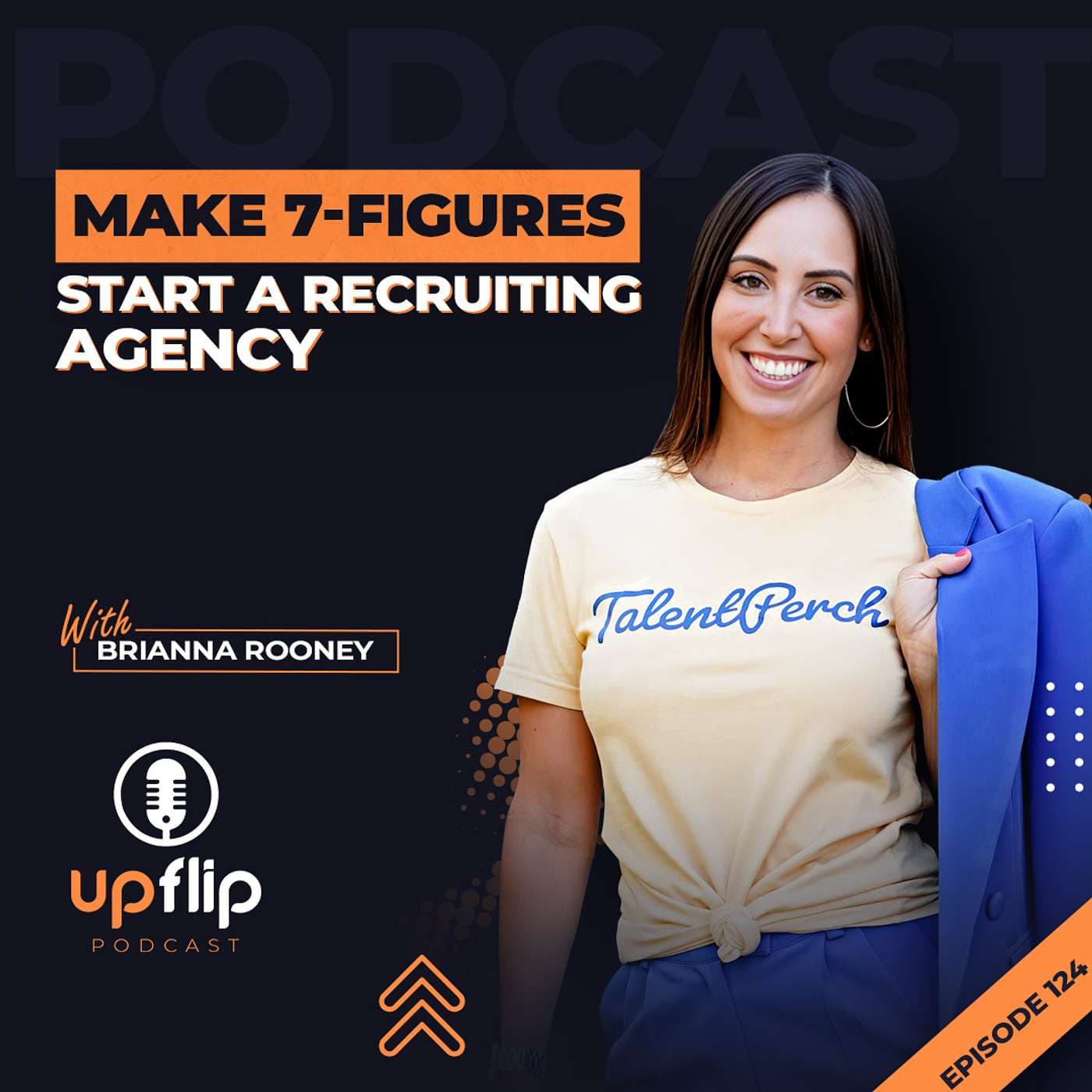
The UpFlip Podcast - Episode 124: Start Your Own Staffing Agency: Blueprint from The Millionaire Recruiter
Podcast Overview Podcast Title: The UpFlip Podcast Description: The UpFlip podcast unravels the intricacies of successful businesses, sharing practical insights and advice to help recreate that success. With a substantial following and a wealth of content, UpFlip aims to make entrepreneurship accessible.
Episode Title: 124. Start Your Own Staffing Agency: Blueprint from The Millionaire Recruiter Description: This episode features Brianna Rooney, who launched her tech recruiting agency at just 24 years old and has since established two more companies. She shares actionable insights on starting a staffing agency, potential pitfalls, and necessary mindset adjustments.
Key Takeaways
- Initial Focus: Target smaller clients who need your services before attempting to land larger contracts.
- Self-Worth Distinction: Separate your self-worth from your business's success to maintain a healthy entrepreneurial mindset.
- Hiring Approach: In the early stages, prioritize finding clients over hiring staff to avoid unnecessary overhead.
Episode Highlights
Brianna Rooney's Journey
- Early Inspiration: At 24, Brianna had a pivotal conversation with her stepdad, encouraging her to take control of her destiny.
- Starting Out: She identified her existing skills in business development, registered her LLC, and quickly gathered essential resources to begin her agency.
Challenges in Starting a Business
- Sales Cycle: The lengthy sales cycle in recruiting can be frustrating. A deal may take weeks to finalize, and payments often come long after a placement.
- Self-Advocacy: Brianna emphasizes the importance of seeking recommendations and advocating for oneself in a competitive market.
Mindset Shifts
- Views on Failure and Success: Understanding one's relationship with both failure and success is crucial. Fear of success can be just as paralyzing as fear of failure.
- Imposter Syndrome: Brianna discusses how she only began facing imposter syndrome after selling her successful company, highlighting that such feelings can emerge even at the peak of success.
Practical Advice for Entrepreneurs
- Confidence and Resilience: Confidence is essential for success, and entrepreneurs should be prepared to face and overcome numerous challenges.
- Soft Skills in Hiring: When hiring, focus on candidates' soft skills and their ability to communicate effectively, as technical skills can often be taught.
Hiring and Employee Management
- Cultural Fit: Look for candidates who have a strong work ethic and have had to overcome challenges in their upbringing.
- Advocating for Team Members: Encourage your employees to pursue their own entrepreneurial aspirations, potentially offering support as they transition.
Resources Mentioned
- Brianna’s Course in the Academy: [UpFlip Academy Course](https://bit.ly/3YzGDT0)
- Related Podcast Episodes:
- [Episode 114: Easy 800% Revenue Boost Entrepreneurs Overlook](https://theupflippodcast.buzzsprout.com/1812063/14659262-114-easy-800-revenue-boost-that-entrepreneurs-overlook-how)
- [Waste No Day Podcast](https://podcasts.apple.com/us/podcast/waste-no-day-a-plumbing-hvac-and/id1543265737)
Conclusion Brianna Rooney's insights into starting a staffing agency illuminate the complexities of entrepreneurship, from the initial steps to the significant mindset shifts required for long-term success. The episode encourages aspiring entrepreneurs to embrace their unique journeys and navigate the challenges with confidence and resilience.
Connect with UpFlip
- [YouTube](https://www.youtube.com/@TheUpFlipPodcast/)
- [Instagram](https://www.instagram.com/upflip/)
- [Facebook](https://www.facebook.com/upflipofficial)
- [Twitter](https://twitter.com/upflipofficial)
For more insights into building or growing a business, visit [UpFlip.com](https://www.upflip.com/). Thank you for tuning in!
Written by AI. May contain mistakes. Listen to the episode to check what was said.
Transcript
Automatic transcript. May contain errors.0:00No matter how good your product is, without the right team to back it up, you'll never succeed. Companies are willing to pay a premium for the best talents and to those agencies who can find them. Today, we have with us a guest who knows everything about recruiting and how to make it work for you. This is Ryan Atkinson, and you're listening to the Uplit Podcast, where we uncover how great businesses are built, how they run behind the scenes, and how you can replicate their success. Brianna Rooney started her own tech recruiting agency at 24 years old. Since then, she started two more companies in the field, staffing some of the fastest growing companies out there.
0:32In today's episode, Brianna will share with us how to start your own recruiting company. What are some common pitfalls in this industry? What mindset tweaks do you have to make in order to make it succeed? Brianna, thank you so, so much for being here. Thanks. Gosh, I love your intro. It's like way more professional than my own podcast. I got to re-listen so I can, you motivated me. Oh my gosh. Well, I'm blushing from that, but I want to turn it towards you though, because I think you have a really cool and fascinating story. And it starts really when you're 24 years old. You have a conversation with your stepdad that changes really the trajectory of your life.
1:01So let's go back to 24 Brianna and have you in a conversation with your stepdad? Like what's going on here? Yeah, because I'm now 39 year old Brianna. So him and my dad, both entrepreneurs, I just assumed that I was going to be too. I don't know. Like I wasn't really taught to be an employee, which I think is kind of its own separate thing. But he simply said, what is your boss do for you that you can't do for yourself? And being 24 and not knowing anything, really, I was like, nothing, nothing at all. And he was like, what's the worst thing that could happen? You can always make more money, right?
1:33And I was like, yes, I didn't have anything to lose. All I had was to gain. And again, it kind of went to like, what's the worst thing that could happen? I go get a job. Like, OK, let's do it. But like, let's just take my own destiny. Let's get all of my hard work is now going all into my pocket. And that was like just super motivating and exciting. That is super interesting. I think it's an interesting perspective, too, because when you're 24, like you really don't have a whole lot to lose. Nothing. And having that mindset of like, I don't really have a whole lot to lose. What's the worst thing that happens?
2:00I can get a job. I think it's a really important step. If like you are going to start your own company, it sounds like that was true to what you did. So I want to talk about that next step then that you do though. So you're just saying, I don't have anything to lose. What's that next step in identifying like the first agency you want to start? So I just really thought about like, what tools did I have where I was? How can I replicate exactly what I was doing? And in theory, I was doing biz dev. I was doing all the candidate an outreach. I was doing all of this stuff. And so I feel like the hardest thing is like picking your business name, right?
2:28So picking the name, making sure it's not trademarked, make sure it's not on LinkedIn and make sure you have the URL. And I was just like, bam, like set, did quick LLC paperwork, because that's, in my opinion, the easiest way to set up your business, especially when you really don't know what you're doing. And I just jammed. I put everything on credit cards, my Macy's credit card. I got a job board at the time because recruiting was done very heavily by job boards. LinkedIn didn't really exist back then. Well, LinkedIn existed, but LinkedIn recruiter didn't, which is a significant difference. And so I just got that.
2:57And then I got the same exact database that I used at my agency because I already knew it. So I was just basically thinking, what can I do really quickly to get up and running? I don't have to learn anything. I already know it. So I think that was like something that was really powerful to me. And then I always felt like your value was based off of your candidates. So in recruiting, like there's that battle, like what's more important, clients or candidates. In my opinion, even though the clients pay you, candidates are more important because you have a really good candidate, you're going to grab really good clients.
3:26So that was my thought process. So what I did is I spent days, like probably three solid eight hour days of going on dice, pulling all of the resumes that I possibly could, not even really looking at them too much and just putting them into my database. So I went from having no data to just tons of candidates. And then at that point, I can sit back and I can, you know, then source that way. And like, I felt like I had a base and I felt like stable. Interesting. So when you started this, did you leave like your current company and just jump out and be like, I'm going to do this on my own? Or did you work this on the side for a little bit?
3:59No, no, no, no. So there was something that happened internally at my company. I didn't like it. I butted heads with my current manager, told my boss it was unacceptable. And I just walked out. So I actually didn't leave to start my own thing. I left out of principle. So like that was a Friday. I celebrated it, of course. And everyone was like, oh my God. And then Sunday, I'm at the Laker again with my stepdad because I planned on going back to my agency, actually. I planned on going right back. He was going to call me on Tuesday. But on Sunday, the seed was planted. Why don't I start my own thing?
4:28Tuesday came and went and he didn't call me. So Wednesday morning, I'm like, shoot, all right, I'm going to start my own thing because I can't wait for someone to call me. And what's funny is, so that was like, what, seven, eight o 'clock in the morning. He called me at noon on Wednesday. And I'm like, sorry, I already started my own thing. That was it. Oh, that is so, so cool. I like how you just like did it. Like you just took action. I've talked about a lot on this podcast and like a ton of conversations is like the difference between like a wannabe preneur and like an actual entrepreneur is that first set of action and you took action right away.
4:57By the time he calls you at 12 o 'clock that Wednesday, it's like, sorry, like I kind of have my own thing already. Yeah. It's like, I think that's the difference between like you're saying, like the thinking and doing. So even anyone that has ever worked for me will know that I told them stop thinking like when When you come to my company, I don't want you to think I want you to do. And they're like really wide eye looking at me like I've never been told to not think before. And I'm like, look, we're not going like all willy nilly, right? Like there's some thought process. But at the end of the day, like doers are the ones that win.
5:25So I like the wannapreneurs. I haven't heard that before. Oh, my gosh. That is not trademark. So if you want to start another company with that domain. Maybe. I love that, though. So you look internally, you identify the skills that you have, you grab all these resumes. and basically you just start sourcing and going, going, going, taking a ton of action. But let's go to like those early days of it. What were some of the obstacles that you had to overcome? Just so like people thinking like, oh, I want to start an agency. Like, but what are some obstacles that are going to happen? Like, what are two obstacles that you ran into and how did you overcome them?
5:56I would say, especially for recruiting. So our sales cycle is long and people don't really, I think, grasp that because they think, oh, you have a client, they sign a fee agreement. That can all happen within 24 hours. But there's two sales cycles that happen. And you need to then find the candidate. The candidate has to go through the interview process, which can be two to three weeks. Then they have to start, which is what, two weeks notice. And that all depends on if they're a vacation or whatever. So in reality, even if things go perfectly, that's still a month and a half. Then you get paid in 10 to 30 days.
6:27So realistically, like there's like a waiting period. So my first deal, I actually got my first deal really, really, really fast. I was used to recruiting for gaming companies. And so I had a good network there. I got some like super small startup gaming company. And that's the thing too. I think when you first get into business, don't go for the big fish, go for like the little ones that need you the most, go for who needs you essentially, and then work your way up. Right. You know, so it's like, you have to just get paid. Like that's like the bottom line. So you can breathe, like just even talking about it.
6:55I'm like getting anxious, you know? But yeah, so I got really lucky. I made my first deal in the first month, but in reality, I didn't get paid till three months later. Oh man. Because of how the turnaround goes. So it's like, you can't stop. Like you can't have fat cat syndrome. To me, fat cat syndrome is like, you know, if you're like making all these deals and then all of a sudden you just like sit back, you know, you coast, you just can't. Because also what if that deal would have fallen out? Like what if the guy got fired? What if he didn't like the company? What the company lost funding?
7:20Like there's so many things that can go wrong when you work with people. So it's like you got to just train that thing. So I definitely think that that was something that was definitely hard for me because if I was working internally, like I would have been paid a lot sooner. I wouldn't have had to really wait, you know? So that was something. And then something that actually took me a while to overcome was getting recommendations. So and like referrals and stuff like that. So I always felt like if I did a really great job, people would just naturally talk about me. Okay. Hey, go to this. Yeah, exactly.
7:51She's so great. And so something I didn't realize is you have to advocate for yourself and you have to go hunt out those recommendations and reviews, referrals, whatever you want to call it. Right. Because no one's just going to do that. Like think about Yelp, like how awful Yelp can be or even Glassdoor, right? People are more likely going to go talk about a bad experience than a good experience. So you really, as a business owner, can't just put your head down there. You have to really put your head up and not be afraid to ask for a good review. Because also, I think that was a little hard to like asking people, hey, can you do me a favor?
8:22But it's like, no, I did a really great job. Tell the whole world, you know? Yeah. I was reading something very recently about like if you're going to be an entrepreneur and especially for starting your company, you have to be the biggest advocate for yourself on social media. You have to ask for those reviews because a lot of times, like if you're not going to advocate for yourself, there's no way the Wall Street Journal is going to come after your one person company and advocate for you. So you have to do it yourself. And that's like a really big key that I'm understanding as I'm building up space for our visuals.
8:47It's you have to truly advocate for yourself if you're trying to grow anything. And I will tell you, it's hard. Like I even have a hard time like asking my friends and family because I'm not someone that ever asks for help. I'm the first one to give help, but I'm not one that asks for it. And so I think as an entrepreneur, you have to like, kind of say like, it's not necessarily help as if you can't do it yourself. It's just really standing strong and be like, no, this is my business. I think of it as like, you know, a kid, right? So it's like, I'm definitely going to make sure I tell the teacher to take care of my kid, right?
9:17Exactly. And I feel like advocating for yourself comes back to like imposter syndrome. I don't know, like when you were 24, 25, 26 building this, maybe you still have imposter syndrome. I have a ton of imposter syndrome building space bar visuals, but I'm just curious, Like when you were just starting this, did you have imposter syndrome or? Oh, you're giving me the chills right now. I never had imposter syndrome until I sold my company a couple of years ago, which is crazy. And that's why I like to talk about it a lot. So I like that you brought that up because everyone thinks that imposter syndrome happens early on.
9:43It happened to me when I was at like the height of my success. Interesting. Yeah, I know. It's because you sell something and I had it for 12 years, right? So you sell something. I had employees for 6, 7, 8, 9, 10, 12 years as well. And then it's not there anymore. And then you're like, okay. And as the entrepreneur in me, I started two more companies, like literally before the ink was dry, you know? Yeah. Which that's its own separate thing. I totally want to talk about a founder's break and something else. Maybe we'll do a webinar or something. But yeah, afterwards, I went through probably the hardest year and a half of my entire career.
10:14I made tons of bad mistakes. I was like drowning like mentally. I had my first full-blown panic attack. Like it was crazy what happened to me after the sale. Like crazy. We love partnering with other podcasts and we have a great one for you. Are you in the home services industry and looking to elevate your sales game? Then you need to check out the Waste No Day podcast. This powerhouse podcast is specifically designed for professionals like you aiming to boost their sales. Each episode is packed with actual tips, industry insights, and sales training techniques from the top salespeople and trainers in the world that are easy to understand and implement.
10:47From mastering the art to the upsell to navigating customer objections and everything in between, Waste No Day has you covered. Tune in now to transform your approach to sales, exceed your goals, and take your business to the next level. Subscribe to Waste No Day today, wherever you get your podcasts, or use the link in our show notes and start turning those cold estimates into huge jobs. So you grow the millionaire recruiter for 12 years. You sell it. And now you're at the peak of your success, but you're having these panic attacks. You're mentally drowning. And a lot of people are thinking, you just did this successfully for 12 years.
11:16What is happening? I don't want to ask, what is happening? But what was spurring those panic attacks and that mental suffering? I'll tell you what was happening. I was nervous that I wasn't going to be able to do it again, that it was a fluke, that I built this thing. And then also the reason why I think it happened is because my definition of success, I didn't like update myself on what I decided was successful. You know, it sounds so silly, but it's like, I think about like when I first started my agency, first started, my definition of success was literally about proving everybody wrong. It was proving that I could do it.
11:47And then it got to, okay, cool. I'm going to make more money than all of my other friends. I went to college. All right, cool. Now I want to travel. Now I want to buy a house before everybody. So it was like kind of like this internal competition that I just kind of manifested inside. And I was just super, super, super money motivated. And then it's like I had kids and I'm like, oh, wow, actually, I'm now motivated by time. Now I want to work less. And then it was like, oh, no, now I want to be challenged because now it's kind of easy. Like I built this business. I've got it going. And this is crazy, too.
12:15I know to say it was easy, but it felt easy, right? I had put all these things in place. I had great employees. I trained. I did all the things I was supposed to do. Then it's like you leave it and you're kind of just like empty. You're empty and then you don't really have like a purpose anymore. So I think that what happens is you attach your success to your company. I even had the name of my company, Techies, was even on the back of my car. So it's like everything I did was Techies. I still to this day have Brianna Techies email because I can't let to go. I'm like, no, it's my entire identity.
12:48So, you know, just as you're building your business, like you have to be somebody else. You can't just be the CEO of this one company. I was actually driving from Houston area last week. And that's actually what I thought about is like when you're building a company, like you are going to take punch after punch after punch after punch, but it's separating like the success of your company from like your own personal success. And like, sure, it can maybe intertwine, but like you don't want to be down because space for our visuals is down. You don't want to be up. It's just natural human emotions, but like separating yourself and like your self-worth from like your company's worth, I think is like a very hard thing to do because especially when you're like, oh, I want to have the nicest car.
13:21I want to travel. I want to have the first house. It's like so, so hard, but yeah, it is a very unexpected challenge of entrepreneurship. What I do now just to help all the listeners here, and I would have started this day one, right? Maybe even before that, but I have a growth and success journal. And the way that I look about goals, I don't look at my goals of just my career goals or my money goals. You know, I look at all of the facets of my life. So it's family, it's friends, it's health, and that's mental and physical, right? And it's also like how I want to eat, all of those things. So I have all these different goals and all of these different buckets.
13:53And I write them every like three months or so, depending on how I feel, to be totally honest, you know? And then whenever I write in my growth and success journal, which I try one to three days, three days is like typically the longest. And I find wins, doesn't matter how big or small, in every category if I can. And if not, then it's like, all right, maybe I'm not focusing too much on my mental health right now. Like what's going on there. So any, anything small is super important. I really, really like that. And I do something similar of like, I'll have like my goals, like what are my goals for like the quarter essentially.
14:21And it's like, where did I put effort in towards that day? Where did I put success? Where did I make progress at? I think it's really important to actually be able to write down your goals and subconsciously, I feel like you're like building your confidence up and like, oh, I'm actually moving towards those goals and confidence in entrepreneurship is a huge thing. And I'd be curious, like, yeah, did you feel confidence right away starting your company? I know you had experience like within recruiting, but like early on, like, did you have that self-belief, that confidence that like, oh my God, I'm going to be able to sell this thing in 12 years?
14:47I did. I was really lucky. And it actually goes into how I teach my kids today. But my mom was really, really, really big on confidence, especially from like in a woman's perspective. I feel like she really like honed that in on me more than probably even my brother. So I was for sure like my shit didn't stink. Like I was like, all right, I'm really good at this. I can really do this. I can jam this out. And I was kind of on like a high for a couple of years. And then, you know, you get employees and you're like, okay, this is challenging. So I think for my entrepreneur spirit, I like challenge.
15:18I like to tackle it and move forward. And like, that's kind of my high of the roller coaster of things. So that was all good for me. I didn't struggle there. But I will say like, I like that you do your journal because you are building like that muscle of being like, hey, good job, because entrepreneurship is lonely. Like it is very lonely, you know? So it's like, who are you going to talk to? Who are you? You know, like, that's why I love coaching so much, because I felt like my coach kind of saved me there and like, you know, really shot my career in a different level. I'm curious. I want to ask like mindset stuff.
15:48So what are like three things if someone's like just starting an agency or like I want to start an agency, I'd say like one, you have to be confident. You definitely have to be confident in your abilities. But what are like two other things you have to like believe or like think about it's early on, especially in those like early days of starting a company? I think that you have to think about what your relationship is with failure. You know, are you someone that like can't do it, feels guilty about it, like just crumbles? Because I would say I think most people feel failure. But there's another aspect to that is do you fear success?
16:15So I've actually trained a few recruiters, but one person stands in my mind and she was really good at what she did, but for some reason couldn't make it rain. I would never say she was my overachiever. She was not a top biller or anything, but she put in the work and she cared and she had passion. So there was something to me that wasn't aligning properly. And I really wanted to figure it out. So I finally said, how much money do you want to make this year? And she got really uncomfortable. And in sales and entrepreneurship, you really can't, right? Like you have to just kind of guns a-blazing, right?
16:46And I started digging a little bit and I said, what if, because she's like, oh, maybe 100K. I'm like, that's not what we're going for here. But I said, OK, what if you made$300 ,000 this year? And you could tell visually very uncomfortable. I go, what are you uncomfortable about making$300 ,000? And it ended up coming out that it would be her family. It was almost like she'd be embarrassed to have made that much because of how she was raised and what they taught her about money. So that's the fear of success kind of coming out, which is really interesting because no one really talks about that because I think it's almost like shame.
17:17Who is shamed for making money, you know? So I definitely think that's like a big deal. I feel like that's a really interesting one because a lot of people, Like when they think about the next six months, they're like, oh, what's the worst case scenario that could happen? But a lot of times you need to flip it. What's the best case scenario look like? And like, how can we actually get there? I feel like that's an interesting mindset shift from a very scrappy entrepreneurial. What if we actually do hit it? Like what else can we do? That's a very interesting mindset shift for sure. Yeah. How are you going to keep moving the needle?
17:42Like that's super important too. Cause it's like, oh my God, I hit my goal. Cool. Like now what, you know? And that's what I think why I got imposter syndrome because I did not seek out to go sell my company. Like I was asked several times from different companies if I would sell. And I just kept saying, no, like, no, it's my baby. I don't need to sell. Like, no, you know, I never thought of selling. What made you want to sell that? Was like the deal like that good? Or like, what were some variables that came into actually selling? The deal was good. It wasn't great. Like I would definitely go back on a couple of things, but I will say it was like the time.
18:11It was probably the timing. It was the me kind of having an itch to do something slightly different. But yeah, I would think it's more timing in the market. Like it was definitely at the tippity top of the market. Like one other company sold in my space. I saw who they sold for and I was like, well, I don't know. I'm getting all these offers. Maybe that's just time to go. Interesting. So it was time to go and it was like, I'm going to sell this. And then it sounds like you were onto your next thing, like very shortly after that. Yeah. Literally, as I'm talking to them about selling, which by the way, is a long process for everyone that doesn't know.
18:40It's like a good six months. Like it doesn't happen, you know, overnight, that's for sure. So it's a big six month process, really long, drawn out, super exhausting, too many lawyers, too much money as far as that goes. You're definitely pushed around a lot because you're typically the little fish, right? Like you're the little fish if you're getting bought. They'll tell you what to do. Totally. And it will go right up into like literally the seconds before you sign, which is its own separate conversation, I think, too. But even when I started the talks, I already built my other company. So I was already running another company while I was in negotiations of selling mine.
19:12So yeah, there was no breaks. I think what is super interesting as well, we talked about it before the show, is like this is not easy starting your company and like building a company. Space Star Visuals is probably the most challenging thing I have ever done. I'm sure with just your experience, it's probably one of the most challenging things you've ever done. What to you are like unexpected challenges people come across when it comes to just entrepreneurship and like getting started? What are some of those unexpected challenges? I was immediately thinking before you said getting started was employees.
Read the full transcript
19:38I think that a lot of entrepreneurs are like, oh, I'm immediately going to hire because that's how I make more money. And that is so not true. Actually, your startup can die pretty quickly if you hire too fast or if you hire the wrong person. I think that that's something that they really, really, really think about. And then how are you getting them up and going? And then as an entrepreneur too, when you're hiring, are you really going to let go of things? It's like there's so many like things there. I think employees don't get talked about enough because it will make or break you. It will drain your soul.
20:08It can be soul crushing, especially because, you know, sometimes you can't even do enough for your employees. So like there's that whole separate like ballgame. But I would say when you're first getting started, know why you're doing it. I know we talk about goals, right? But like, let's really get nitty gritty with it. Like what does success look like for me in three months? Am I going to be upset if this doesn't happen in six months? What are you really doing? Because I think a lot of entrepreneurs think, oh my God, I can work whenever I want. I got work-life balance. This is great. What's like, you don't understand, you actually have to grind out to get the work-life balance.
20:37Like I didn't have a work-life balance my first year. Like no way. The seed for me was planted very young as well. I grew up with like entrepreneurial parents. So I always knew I wanted to be an entrepreneur because my three W's and I've talked about it on your last episode is like I get to work like when I want, where I went with who I want. But at the same time, I still talk to clients daily. Like there's stuff that just always needs to be done. And so it's very hard to have that work-life balance, but you need to actually carve out time to be like, okay, I'm actually taking like today off, but you get those three W's but at the same time, like you are always on, you are always building, you are always talking.
21:04I think that is something that is to always know, like there is work-life balance, but at the same time, for a lot of time, there's not a work-life balance. It all depends on, honestly, the industry that you're in. And can you sit on something? You know, so I also think that's its own separate thing. It's like, could you have work-life balance or do you choose not to? You know, so that's the thing. But what I really like is you get to choose who you want to work with, because honestly, that is still what gets me excited. I always choose who I want to work with. And that is, I think, feels so good.
21:33It's like you're freed. That has to be such a powerful thing. At Spacebar, I'll say like, we're not to that point yet where we will turn away a client. But like in a few years, it will be the best thing in the world where it's like, and this actually isn't like a great fit. So we're not going to work together. But this time, we'll take anyone. Yeah, no, I hear you. I will never forget when I fired somebody. Like when I fired a client. Oh, my God. Oh, I stood up. I rejoice. I have a gong in my office. Like I hit the gong. Like almost like I sold something. But I was like, bye. Bye. And I will tell you, I always make sure that my employees earn their stripes.
22:03And I go, it's time to fire because you can get caught up in bad business so easily because it's like there's this need. But it's like, do you want to put out that desperate air? You know, but I will tell you, there is a little bit of a desperate air there. And then when you say no, it's like the universe is like, oh, OK, I got you. You have to trust it. Deciding who you work with is incredible. And I want to kind of rewind that back as well, because deciding who you work with, that also goes back to hiring and having employees. When you are hiring people for your specific businesses, what are some key things that you are looking for?
22:32because hiring to me was an unexpected challenge, how hard it is to, everyone's like pretty good. And like, there's some people that are excellent, but like who is actually gonna succeed? So I'm curious, like, how do you hire successfully? Oh my God, I just focus on soft skills, like nobody's business. You know, like I'm not doing anything insanely technical. And it's like, for the most part, people can be trained, you know, if they're hungry enough. So I would say it's the soft skills, it's the communication skills. So one, can they carry like an actual conversation with context, okay? I know it's kind of crazy, right?
23:02That is huge. But I also, during the interview process, I email a lot because I want to see, can they conversate during text as well? Because like, you know, especially if you're hiring remotely, you know, we got Slack, we got tons of emails, like we don't always want to have a meeting, right? You know, so I think that's really important. Like, do they grasp that for sure? And then a couple of things, especially because I'm an entrepreneur, right? I actually like to ask them how they were raised a little bit. So I'll be like, hey, you know, did your parents buy your car and everything? Like what was their stance there?
23:31You know, depending on how young they are, of course, I'll ask that question. You know, if they're like 50 years old, probably not, right? But if they're in their 20s, I'll totally jam on that. Sometimes I'm not as direct. I'm just kind of like doing like this roundabout way to get there. And then I always ask too about how they find out information. You know, if they have a question, what happens? Do they come straight to me? Do they Google it? And how long is that process typically? You know, where I'll have someone go like, oh my God, no, like I would never bother you. I'm always going to like figure that out myself.
23:58I'll be like, that's great. How long does that take? Like, will it take a day? Is there a time period that you're like, oh, you know, I'm just going to ask. And there's some people that will just not ask questions. The way I get to that, and this is actually from my old boss, so I'll give him some credit here, is he asked me, if you have a drink or food that's gross or it's not the way you want it, are you going to send it back or are you going to eat it? And I'm like, I send that stuff back all the time. He's like, hired. So like, I'll ask that question because it's like, are you going to just sit there and like, you know, kind of try to smile through it?
24:25Are you going to go get what you want? I want people who go get what they want and they're not afraid to do it. I like that. I really, really like that. So when you're asking about like how they're raised type of questions, what are you specifically looking for? Are you looking for people that like had to build it up on their own or like what are you specifically looking for there? I want people that have had to build it up on their own or that at least had a job really early on. I find typically, and sorry, this is controversial, I'm sure, but I have found that people who did not work in high school because their parents wanted them to focus on grades typically have not done well.
24:58So I was like, I need people who have worked and understand it. I'm curious because at our hiring process at Space Pro Visual, it's a huge thing for us to look for people that want to be entrepreneurs someday. I think just that entrepreneurial mindset, I'm sure you can relate to that. I'm sure a lot of people can relate to that. It's a different type of mindset if you're entrepreneurial. Is that something you look for in your process? Totally, absolutely. Yeah, and I make sure that my employees know that if and when it's time for them to do that, that I would love for them to come to me first as possibly an investor or a supporter, you know?
25:25So I set the scene and really only one of them has ever done that because they were able to build such a great life here, you know? Because like we said, it is hard to go do it and pull off the bandaid and, you know, the benefits. Oh my God. I think about someone paying my health insurance. I'm like, please.
25:44I really, really do. Like that's what we do here at SpaceR Visuals as well as like, if you want to start a business, like, please let us know, like, please let us know how we can help. And it's such a different mindset to have, like when you're taking on work, like you are going to go get what you want. You're probably ambitious. So I really like that. But unfortunately, we have to go down to our last. I'm really enjoying this conversation, but we're going to go down to our fan blitz questions, which people submitted from our podcast at www.youtube.com slash upflip podcast. So are you excited for these last six questions here?
26:11Yeah, let's rock. Sure. Awesome. So this comes from our community, a little bit technical here, but is your agency able to procure government contracts from federal, state, and or local government agencies? Yes, but you have to be SAM certified. SAM.gov, I believe. So I am certified. I'm also a certified woman-owned business. So I did that together. And so that's when you can go get government contracts. I love it. How do you get paid after a successful referral? So you get paid essentially 10 to 30 days after the person starts. And it is typically 20 to 25 percent of the first year salary. Good to know.
26:47I like this question a lot. What are the skills most in demand from your customers? Well, I do tech. So it's a lot of like AI, people that can build back end scalable systems. So I work with a lot of, you know, clients that like if you're on your phone, like Tinder, for example, Tinder was a really big client of mine. Okay. That's a lot of data, a lot of, you know, moving parts. So I would say that, I mean, engineer wise, that's what's in demand and more on a staff level. So staff level is essentially the most senior individual contributor. Something I have noticed is that managers and like higher up from that is not wanted or needed as much as more of like the just the hardcore doers.
27:24So I find that to be super interesting. Are the employees under the agency's contract or companies? It's completely the client's employee, not my employee at all. But there are staffing firms. I'm not a staffing firm. I'm more of a recruiting agency. A staffing firm would actually own the contract of the candidate and then they would charge the hourly plus the markup rate. So yeah, it's this whole back office thing. Honestly, it's a really amazing business. It's just for me, headache wise, I chose a different way. I like that. We don't like to have headaches as entrepreneurs, even though we get a lot.
27:57Okay. Last question for you then. Can you start an agency as yourself being the only employee, a one person business? Of course, all the time. I absolutely suggest it. You need to rock and roll by yourself first and then maybe even grab contractors in the beginning. Actually, I would say other agencies you trust. So network, network, network is really important. Get on the phone, start relationships, you know, 15, 20 minutes, doesn't hurt anything. I love that. And lastly, could you please plug your UpFlip Academy course that you have? I would love if people are interested in learning more about it.
28:28Can they just get a little glimpse of like what you have in store for them? Yeah. So, I mean, I started my agency 16 years ago. And so throughout all of that, I trained tons of employees. And so I would say about two years ago, entrepreneurship really came, you know, coming in hot, right? And so there were so many people that wanted to start their own agency. And I had been asked for years, ever since I started the Millionaire Recruiter YouTube, can you help me? And I'm like, no, but here, no, I can't. I'm doing my own thing. So it's actually over the course of several years, I have developed not just a course to make you an amazing recruiter because here's the bottom line.
29:02If you are not an amazing recruiter, your agency is not going to soar. I mean, it's just not. You have to be the doer in that and then you have to train your employees, right? So the course from start to finish, regardless of what you're in, it'll make you an amazing recruiter. Okay. And then in that though comes, how do you actually even start the agency? How do you know what your brand is, your brand tone? It comes with sales. It comes with, you know, tons of templates on how to get business, tons of templates on how to get candidates and stuff, how to negotiate a fee agreement. What What is a fee agreement?
29:30What's the importance of a fee agreement? What do you need? You know, so it comes with absolutely everything from start to finish. Everyone, thank you so much for tuning into today's episode. I thoroughly enjoy speaking with Brianna just about the mindset and what it takes to be an entrepreneur. Really cool episode with her. And guys, her Upflip Academy course is awesome. Definitely check it out with the link below or at upflip.com slash academy to learn from Brianna on how to be an entrepreneur and how to start your own agency. Would highly recommend. She is amazing, guys. Thank you so much for tuning in today.
29:58Brianna, thank you so, so much. You were incredible today. I so enjoyed this conversation. Thank you so much for the opportunity. Thank you. Appreciate that. Thanks, everyone.
From the publisher
Brianna Rooney started her own tech recruiting agency at 24 years old. Since then, she started two more companies in the field, staffing some of the fastest-growing companies out there.
In today’s episode, Brianna will share how to start your own staffing agency, what are some common pitfalls in this industry, and what mindset tweaks you have to make in order to succeed.
Key Takeaways:
- When you first go into the business don’t go for the big fish. Go for who needs you the most.
- Don’t attach your success to your business. Separate your self worth from your company.
- Hiring for a new business is not how you make money. When you are just starting out, don’t think you have to hire to scale.
Resources:
- Take Brianna’s Course in the Academy: https://bit.ly/3YzGDT0
- Episode 114: Easy 800% Revenue Boost Entrepreneurs Overlook: https://theupflippodcast.buzzsprout.com/1812063/14659262-114-easy-800-revenue-boost-that-entrepreneurs-overlook-how
- Waste No Day Podcast: https://podcasts.apple.com/us/podcast/waste-no-day-a-plumbing-hvac-and/id1543265737
Ready to be your own boss without starting from scratch? Grab our FREE Franchise Guide and unlock the secrets of proven business models that have already created thousands of success stories.
Connect with UpFlip:
- On Youtube
- On Instagram
- On Facebook
- @UpFlipOfficial on Twitter
For more insights to start, build, or grow a business, check out the resources on UpFlip.com or head to the UpFlip YouTube channel to see more interviews with business owners and experts.
Thanks for listening!


