
In short
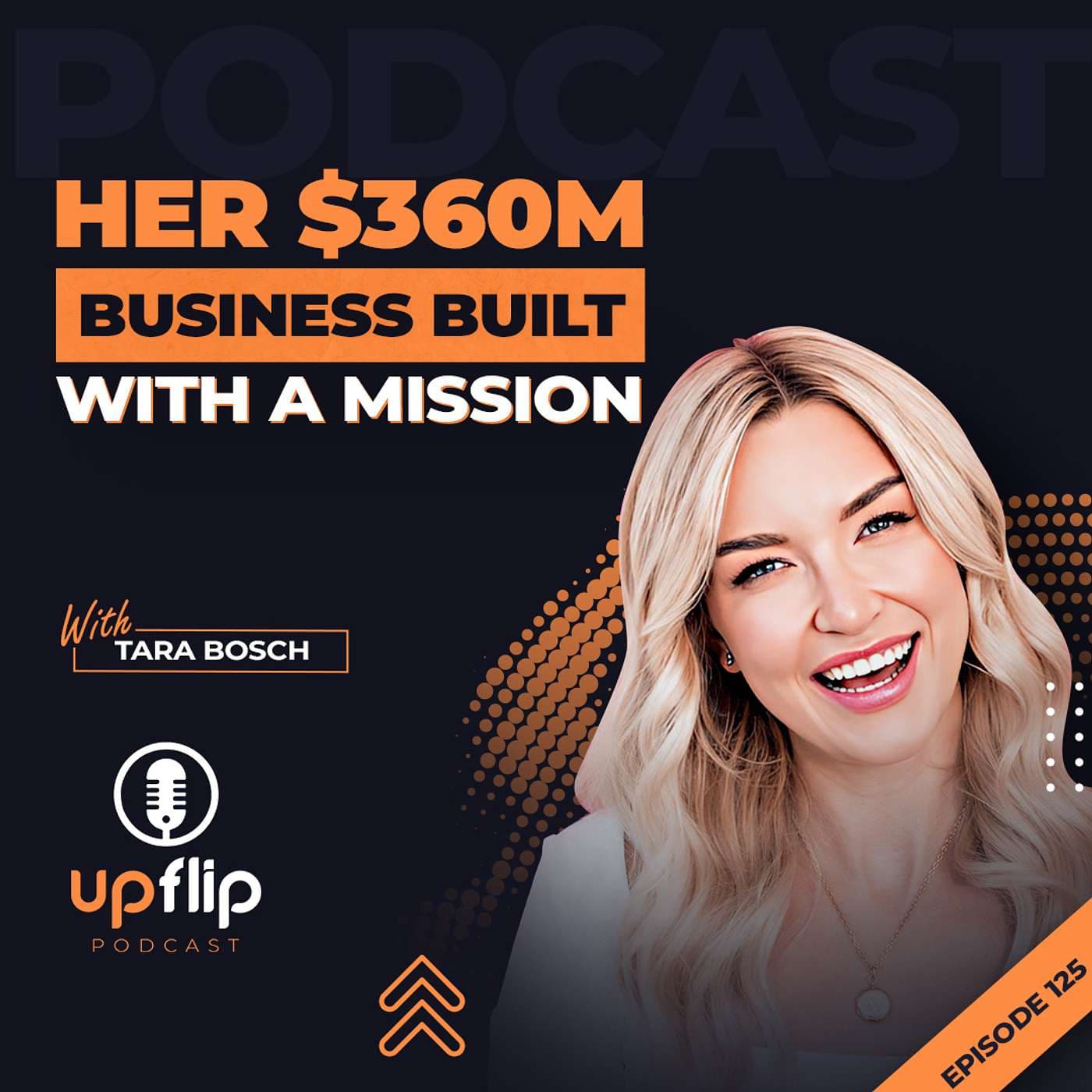
Podcast Episode Summary: The UpFlip Podcast - Episode 125
Episode Title
125. Can Your Business Have a Mission and Be (Insanely) Profitable?
Episode Guests
Tara Bosch - Founder of Smart Sweets
Episode Overview
This episode features Tara Bosch, who shares her entrepreneurial journey in creating Smart Sweets, a candy company dedicated to reducing sugar consumption. Tara recounts her personal experiences with sugar addiction and her mission to revolutionize the candy industry while promoting a healthier lifestyle.
Key Themes
- Purpose-Driven Business: The episode delves into the importance of having a mission that goes beyond profit, exploring how a genuine purpose can enhance business success.
- Authenticity in Branding: Discusses the distinction between companies that genuinely embody their stated purpose versus those that use it as a marketing strategy.
- Entrepreneurial Journey: Tara's path from a kitchen experiment to a multi-million dollar business exemplifies the challenges and breakthroughs of starting a company.
Key Takeaways
- Understanding Your "Why"
- Knowing your purpose helps maintain focus and commitment to your business goals.
- A clear mission can inspire both the entrepreneur and the consumer.
- Building Relationships
- Expressing gratitude can attract mentors and create a supportive network in the industry.
- Genuine connections lead to valuable insights and guidance.
- Authenticity Matters
- Consumers are adept at recognizing genuine brands versus those that are merely performing authenticity for marketing.
- The emotional connection with consumers is rooted in a company's true values and mission.
- Self-Discovery in Entrepreneurship
- Finding your purpose may include exploring what you are not passionate about.
- Self-check-ins and being open to serendipitous events can guide you toward your true calling.
Episode Highlights
- Tara's Inspiration:
- Her journey began with a conversation with her grandmother about health and sugar consumption, sparking the idea for Smart Sweets.
- Initial Steps:
- Starting with gummy bear molds in her kitchen, Tara tested recipes and eventually took the leap to launch her product.
- Growth and Impact:
- Within four years, Smart Sweets expanded to over 100,000 retailers, achieving significant sales and positively impacting consumer health by reducing sugar intake.
- Challenges Faced:
- Tara discusses the normalization of success and the ongoing challenges of entrepreneurship, reinforcing the notion that passion for a purpose can sustain motivation despite difficulties.
Reflection on Purpose
- Companies that prioritize purpose over profit create deeper emotional connections with consumers, leading to a loyal community that supports the brand's mission.
Resources Mentioned
- YouTube Video: [Turn Everyday Ideas into a $1.2M Biz](https://www.youtube.com/watch?v=5AM0enVHhVs)
- Join UpFlip Academy: [UpFlip Academy](https://bit.ly/4hhbyLd)
- Candy Business Name Generator: [Business Name Generator](https://www.upflip.com/business-name-generator/candy)
- Connect with Tara Bosch: [Instagram](https://www.instagram.com/tarabosch/)
Conclusion
The episode concludes with a reminder for entrepreneurs to be aware of their purpose and to embrace the journey of discovering it. Tara’s story serves as an inspiring example of how passion and mission can lead to substantial business success while positively affecting the community.
---
For more insights, check out the [UpFlip Podcast](https://www.upflip.com) and explore additional resources to help start, build, or grow a business. Thank you for listening!
Written by AI. May contain mistakes. Listen to the episode to check what was said.
Transcript
Automatic transcript. May contain errors.0:00Welcome to the UpFlip podcast where we flip the script and ask successful entrepreneurs questions that all those other podcasts out there aren't asking, but probably should. Simply put, our goal is to get to those themes and those topics that aren't typically talked about and discussed, but are still important for entrepreneurs and founders to learn about. I'm your host, John Palumbo. And look, we all know that there are always new themes and topics that become almost buzzwords in the business community. Ones that it seems like every company and every leader is talking about tossing around. And a lot of times they really are just words.
0:39And I'm not saying that they don't mean them or they don't care about them, but they just aren't all that invested in them or maybe I should say as invested in them as they want us to believe. And one of those themes is purpose or let's say being purpose driven. I mean, think about it. How many times a day do you open up LinkedIn and see someone posting about purpose or hear a leader talking about purpose in an interview or on a podcast? And you can just tell that they have to get their message out there or they're just checking that purpose box. But every once in a while, I mean, you do come across a leader who you can tell truly is purpose driven and has created a company and a culture that has real purpose.
1:18Someone who is truly committed to doing some good for the world outside of their four walls. And of course, the example everybody loves to use and tops all the companies with purpose lists is Patagonia. And rightfully so, because they do walk the walk. They say that they're in the business to save our home planet and they do things that meet that promise. But the thing about those lists or those companies that are purpose driven is that we always immediately think of the big names, Patagonia, maybe Tom's and so on. In other words, you rarely hear about the entrepreneurs or startup companies that are purpose driven and why having a purpose is so important to them and even how being truly and genuinely purpose-driven has ended up, often unexpectedly, benefiting their company.
2:04But today, you're going to get that opportunity because I have with me someone who truly embodies the concept of being purpose-driven, and that's Tara Bosch, the founder of the candy company Smart Sweets. Hey, Tara. Great to meet you, and thanks for coming on. Ditto. Yeah. Honored to be joining you. Happy Tuesday. So, Tara, like I mentioned, the goal of the podcast is to ask successful entrepreneurs like yourself, the questions that all those other podcasts out there aren't asking but should. But of course, I do still want to ask you some of those questions that you've probably answered lots of times just to familiarize our listeners with you and your business.
2:39So that said, maybe you could take a minute just to tell our listeners maybe a bit about yourself and of course your company Smart Sweets. For sure, yeah. My name is Tara and I founded a company called Smart Sweets where we're really on a mission to kick sugar and keep candy. So for me growing up, I was obsessed with candy. It brought me so much joy and happiness and I slowly stopped eating it because of all the excess sugar, how it was impacting my body image and my self-esteem. And then many years later, I had a conversation with my grandmother who shared with me that she regretted having so much excess sugar over the years because of how it impacted her health.
3:20And candy was something that her and I enjoyed all the time together. And it was the first time for me that I really paused and was like, wow, you can go your whole life feeling bad about yourself because of what you're putting in your body. And then also asking myself the question, you know, in a world where there's self-driving cars and robots and all sorts of things like that, why can't you feel good about candy. So that really inspired the vision for a company that could become the global leader in not only revolutionizing candy, but moving the needle on the global sugar reduction movement.
3:55Wow, that's great. And did you always want to be an entrepreneur and start your own company? Growing up, my dad worked in a lumber mill and my mom was a stay-at-home mom. And really no one in my world was an entrepreneur. And the idea of that, I really didn't learn about until I was in my teenage years and started watching Shark Tank and Dragon's Den religiously. I wrote down my own ideas, but I never had the confidence or self-belief to believe that I would ever be capable of actually acting on one. And so I never really fathomed that I had the ability to act on an idea, but I became obsessed with watching other people act on theirs.
4:34And then what gave you that confidence? It was really through my own journey of first finding a healthy relationship with food and really learning it's not about giving up your favorite foods like candy. It's about finding smarter choices. And that's what Smart Sweets is. And then also really just looking at my life, you know, when I was 90 years old on my rocking chair, not wanting to live with any what ifs and the fear of being that age and living with what ifs is what allowed me to begin to push through my own imposter syndrome and self-doubts and the battles in my own brain. I think a lot of entrepreneurs feel that same way.
5:13They don't want to be sitting there saying, coulda, shoulda, woulda. So Tara, if you don't mind, can you take a few minutes? You kind of alluded to how it started and you were kind of talking to your grandmother and those things, but I wonder if you could walk us through the SmartSuite story or kind of the history from how you came up with the idea, right? And then, which you kind of touched on, but then take us even through starting out in your kitchen, maybe that first big sale up to now? Yeah. So the moment I decided I was going to act on the idea, I got a gummy bear mold online, began raspberry testing in my kitchen.
5:44And it was the first thing in my life that I felt like a visceral calling to. I was never athletic. I was never academic. I was never really good at anything throughout my life. It was the first time that I felt like, wow, I have a sense of purpose in the world. And I felt so grateful to somehow have this idea. And so I began recipe testing in my kitchen, made the decision to drop out of college. And just under a year later from that choice launched on my very first door shelves via deliveries from my trusty Honda Fit hatchback. And I remember going in donuts in the parking lot in my car because I was so nervous and filled with fear and who am I to be doing this before going in and handing that very first box over.
6:36And from that day forward, fast forward to four years later, we were in over 100 ,000 retailers, we had helped people kick over 3.6 billion grams of sugar, which we held an impact report that allowed us to track that and really empower ourselves and the team to see the impact we were making in the world. We had amazing retailer partners like Costco and Walmart and Target, and we were doing over 125 million in annual sales. That's unbelievable. It was quite the journey. And although it sounds, when I say that, like it was a really fast, fast journey from the kitchen to that point, and it was, it also was filled with feeling like I was rolling a giant ball up a hill that could come down and crush us at any time.
7:23We get tired way through. Are you blown away by your success? Do you sometimes sit down and go, I can't believe this? You know, I think the really cool thing that I learned through that journey about life is that everything normalizes. So that's great. Yeah. When you start, it's like, for me, it was like, when we get in our first retailer partner, then that would be amazing to have that accessibility for people. Then that normalized. And I was like, okay, when we're in 10 ,000 retailers, then we did that. Okay, that felt normal. And slowly, you realize there's like truly no limit to what you can create.
7:57And so it like really, for me, at least, broadened my ability to think big and actually believe that I was capable of whatever my mind could think up in terms of nothing was too big. So in reflection, I'm like rooted in gratitude. But at the same time, I'm like, wow, like no, truly anything is possible. I always like to ask guests this next question, because it typically leads to some pretty insightful responses, as well as ones that a lot of the listeners can relate to. Is there something that when you first started out, you thought was going to be really hard that turned out to be easy? And then I want to flip that and maybe talk about something that you thought was going to be really easy, but actually turned out to be really difficult or challenging.
8:36I thought it'd be really hard to get people who had been on paths that I aspired to go down to help me to lend their golden nuggets of wisdom. And what I found actually was when I reached out to people, usually on LinkedIn or that sort of thing, people were really receptive to hopping on a 15-minute call with me and lending their golden nuggets. And I quickly learned that if I showed up with like an extreme amount of gratitude for someone's time and then followed up with them so they could see the follow-through that I had taken on the golden nuggets they had shared, how willing people were to support the journey and how invested they were and just even the joy it gave them and seeing perhaps what felt like a younger version of themselves and then being able to contribute to that.
9:25So that was a lot easier than I thought it would be. Anything you thought was going to be easy, but turned out to be really hard or really difficult? I mean, everything, everything else, everything else. I think one of the beautiful things about like entrepreneurship is like when you have that visceral calling towards an idea that's so much larger than yourself and that you really see how this can impact people's lives in a positive way that the hardness, you always have that to fall back on. But if that's not there, I think the journey is just so hard that you just would give up if you're in it for reasons like money or ego or whatever it may be.
10:04Hey, everyone. If you're enjoying our podcast, you'll probably be interested to know that we're launching UpFlip Academy, a premium membership program where you'll find things like comprehensive courses and complete business blueprints created by industry leaders, a vibrant community of entrepreneurs, both eager novices and rugged veterans, workshops dedicated to mastering very specific skills where in four weeks you'd learn what would have taken you months if you were doing it all. alone, and a whole lot more. Now, to celebrate our launch, we're offering a pretty amazing early bird price that will never change if you sign up.
10:43So follow the membership link in the description of this episode to sign up and enjoy the benefits and lock in that price. I want to get into this theme of purpose and this idea of a purpose-driven company. And I'm sure you know this is a very hot topic these days. I mean, a lot of companies are out there weaving the purpose flag. And I have to tell you, personally, it kind of drives me crazy that everyone is jumping on the purpose bandwagon. And I think I feel that way because I don't believe a lot of the companies mean it, like I kind of referred to a little earlier. In other words, I think they're using purpose as a marketing strategy or a PR hook versus it really being something that is truly ingrained in their culture.
11:19I mean, they're talking the talk, but they're not walking the walk and it just doesn't feel genuine. And I'm not just talking about large corporations here, although they're probably the biggest culprits. There are lots of startups that are guilty of this as well. I mean, there's times like when I'm watching Shark Tank and an entrepreneur comes on and tosses out their quote unquote give back strategy or what have you. And maybe I'm a cynic, but I sometimes think I don't know if they really care. I think that's just a hook to get, you know, to get a shark to invest in them. But that said, as the leader of a company that's genuinely purpose driven, and we're going to get into your company's purpose in a minute.
11:51I'm curious if you're seeing this as well. And if so, how does it make you feel? I mean, are you seeing that as well that a lot of companies might just be saying it, but not really meaning it? Yeah, to your point, I think there's definitely the part of just like putting on the front that's needed in hopes of connecting with consumers in the way that is most authentic, which is going to drive sales. I think a lot of people see what authenticity can do and then try and hop on the bandwagon. But to your point, also, I think consumers can see through that and you can really feel the heart behind a company when it's there in all facets of the company, everything from, you know, if you're reaching out to someone on their customer service team, how they show up, which is a reflection of how they're empowered and the values that the company holds in turn, like all the things.
12:37And so, yes, I agree with you. And I feel like those companies do tend to get naturally filtered out through kind of the test of time. Yeah, good point. I mentioned that your company is one with a genuine purpose. I mean, you are truly purpose-driven, but if you don't mind, maybe tell us a bit about your company's purpose. You kind of alluded to it, but tell us what it is, how it's ingrained in the brand and even your company culture, even to how it potentially guides some of your business decisions. So when I had had that conversation with my grandmother, after that conversation, I went down the rabbit hole of excess sugar consumption, how it's really this silent epidemic.
13:15and how it's affecting us, and how it's affecting the kids in North America specifically. And I learned about things like, you know, the bliss point, which is what manufacturers use to say how much sugar and fat and salt do we have to add to this to make a product as addicting as possible. Products like Fruit Loops were created from that philosophy. And then I also learned about just how powerful sugar is. And there's a study where they give liquid cocaine to rats and liquid sugar and the rats began choosing liquid sugar over the cocaine. And really just how there's no limits on what sugar can be added to and how it's this silent thing that is impacting our lives in such a profound way.
13:57So that really rooted the purpose of the why, because inherently with smart sweets, where we're innovating low sugar candy, the thought was if we can successfully kick sugar out of the most sugar packed aisle in the grocery store, it's making a much larger statement about why is so much sugar in our foods today. And so that really is the rooted down purpose, like in its simplest form of smart sweets. And in executing on that, the impact report that we would create internally became a really important metric for us to be able to see from like a quantitative perspective, okay, how much sugar are we actually helping to kick?
14:36And then qualitatively, it was really, really moving because we'd get people all the time reaching out to us saying, you know, I was in the candy aisle and I started breaking down and crying because it's the first time I've been in the aisle for 20 years, have been able to enjoy candy and not feel all the feelings that I felt about myself because of all the sugar. So yeah, really at its simplest form, kicking sugar and keeping candy is the purpose of SmartSweets. Yeah, I mean, it's such a great story. I did go on a whole rant about how some companies are leveraging or using purpose for marketing or PR benefits, but I want to kind of put them aside for a minute and talk about the benefits of having a true purpose.
15:16I mean, how has it helped or even benefited or even contributed to your success? Yeah, I think what's so powerful when you have that purpose is that your entire company is rooted in the why, not the what. And Simon Sinek has the really great TED Talk, the power of why on that. But what it really created was such a deep emotional connection with our consumers. And so we would have people going and stocking store shelves, really feeling emotionally invested in smart sweets and growing it in their communities, not because of product, but because of the emotional connection they felt to kicking sugar and the impact and personal connection that had in their lives.
15:57So that was really the most profound part of having that purpose was really that it just connected to every single one of our consumers' individual purposes in a way where they felt really lit up and they felt almost a sense of responsibility to like helping this company grow. God, that's so rare. When you talk to a retailer and you're selling in your product, there's got to be somebody in the room always that's just like, yes, even that number. 3.6 billion. Yeah. That's just insane. I mean, that's got to just resonate with retailers and have them say, yeah, we have to do this. Yeah. It's interesting because I think in that whole lens of centering on purpose, one thing that I found really important to do with smarts, which is always to be speaking to in the different lens, whether it's a manufacturer, it'd be different versus a retailer, the what's in it for them.
16:50So with retailers, it was interesting because in the candy industry, like sugar is candy. It's 99 % of candy. It just is what candy is. It's synonymous. So for a lot of them at first, it was actually like a big downside that we didn't have sugar because they just didn't get it. And so for the Lenser retailers, they didn't really actually care so much of like the impact. They were like, that's nice, but like what's in it for me type thing. Right. I always kind of focus those conversations on, you know, we're going to be like a higher dollar ring per bag than the other bags in your candy category, painting the vision of like low sugar is here to stay, whether you like it or not.
17:27And so if you come on the bandwagon with this now, we'll scream from the rooftops that were in Target. So it was really focusing on kind of like the what's in it for them. And sometimes that did mean like actually not leading with the impact metrics, but just knowing that if I got them on board, that would feed into the overall impact. Yeah, that makes sense. And that kind of leads to my next question. I'm curious to know, how important is it for you to promote or communicate your company's purpose? I mean, I'm assuming you do want people to know about it, right? From consumers to customers. I mean, even when it comes to the retailers, you kind of went through that, but to potential, maybe even potential candidates, maybe even potential investors.
18:04And on top of that, I'd love to know, and I'm sure the entrepreneurs out there listening would love to know, how do you go about doing it? How do you go about promoting it? Yeah, I feel like so many things in entrepreneurship like can feel so overcomplicated. And it's sometimes like the really simplest principles that are ones that actually work the best and just peeling it back to the simplicity of things. And so for me, with Smart Suites, like really what we did, starting from the beginning, it was just me on my phone. We really found niches that Smart Suites was creating the most radical value for.
18:38And so that looked like me on my phone in the beginning. the Weight Watchers community was a really, really powerful niche because many of those people hadn't had candy in years and experienced that joy through the limitation of the kind of lifestyle choice that they were making for their own health reasons. And so it was me on my phone looking up all the other hashtags, authentically connecting and asking if I could send them product. And we just really scaled the whole company off of that strategy. But then broadening that to the first it was Weight Watchers, that it was low carb, that it was keto, that it was overall moms who were wanting healthier choices, but it was nothing complicated.
19:16It was really just scaling the team to be able to execute on authentically connecting with people in those niches. Are you ever hesitant to promote your purpose because maybe you're concerned that you might be seen as just another company waving the purpose flag because it's kind of the flavor of the month? And if so, do you do anything to navigate that or do you just believe that, like you had said, if a company is truly genuine and authentic in its purpose, people are going to see it? Yeah, that really never crossed my mind. I mean, I think if you have a really clear why, if you have a radical value proposition where you're truly creating new value for the consumer that has not existed before, and that's creating authentic, positive impact in their lives, and you have the vision of where you want to go.
19:59For me, it just never crossed my mind. And that might just be like, perhaps one of those like tests internally for like, is your why authentic? Because if it is on your mind, then maybe there's something in you where it's like, it feels like it's a more strategic decision that you're leading with a certain purpose or that sort of thing. But there were definitely people along the way, a lot of people, a lot of the time, retailers, manufacturers, consumers that were just like, I don't get it. This makes no sense. Like it's why not just have candy less often or challenging the purpose and saying something like, you know, well, isn't this just feeding into diet culture?
20:35Why not just have full sugar more often. And so there were a lot of people, naysayers in that way, but I felt clear on our purpose and where we were going and what impact it could hold. So those people just kind of was like water rolling off a duck's back. Right. Obviously, Tara, we have a lot of entrepreneurs out there listening to this and some of them, they might be in the process of trying to discover or define the purpose behind their own business. Not everybody has it. And they genuinely want to discover that and find it. And it's not just for the PR and the marketing purposes. What advice would you give to them to help them?
21:11Yeah, to people who haven't necessarily felt that purpose yet, but that are really wanting to. What I would say is one of the best ways, and I wasn't even doing this consciously at the time that led me to feeling that sense of purpose with SmartSweets. One of the best ways I feel like to find your purpose is by also finding out what you're not passionate about. And just like following the flow of things that you're naturally pulled to. I would kind of like form a hypothesis in my mind and test it on a small scale or just lean into trying something and just seeing like how checking in with yourself.
21:46And then I think there's also something much larger than ourselves in the universe and serendipity kind of became like a swear jar at SmartSweets because we'd use it so often. But I think like where you're meant to go, the universe will guide you to also. So just like not putting too much pressure on yourself about like, why don't I have that feeling? Why don't I have that call? Just like knowing that exactly where you are is exactly where you're meant to be on your path right now. And where you are headed will unfold exactly how it's meant to. That's great advice. So Tara, I mean, this has been fantastic.
22:20Thank you so much for the time. We appreciate it. Oh my gosh. Thank you so much. Thanks for all the thoughtful conversation. It's been great. And to all of you out there listening, I hope you enjoyed this conversation with Tara and it inspired you maybe to consider defining your company's purpose or like Tara said, even to just sit back and just be in the moment and know that it's coming. And of course, make sure you head over to smartsweets.com and grab some treats. I can tell you this, they have a build a box feature that I know I'm going to be all over. Thanks again, Tara. And thank you to everyone listening.
From the publisher
Tara Bosch set out to create a company with a purpose after realizing her unhealthy addiction to sugar. After a talk with her grandma, Tara embarked on a journey to revolutionize candies, kick sugar, and build a $360 million business at the same time.
Key Takeaways:
- Knowing your “why” will help you to stay focused on what you’re seeking to do.
- Having an extreme amount of gratitude helps you to gain free mentors in your industry.
- Consumers can see through fake authenticity. Actions speak louder than words.
- Find your purpose by finding what you’re naturally pulled to. Do self check-ins to see what fits.
Resources:
- Turn Everyday Ideas into a $1.2M Biz : https://www.youtube.com/watch?v=5AM0enVHhVs
- Join UpFlip Academy Today: https://bit.ly/4hhbyLd
- Name Your Candy Business: https://www.upflip.com/business-name-generator/candy
- Connect with Tara: https://www.instagram.com/tarabosch/
Ready to be your own boss without starting from scratch? Grab our FREE Franchise Guide and unlock the secrets of proven business models that have already created thousands of success stories.
Connect with UpFlip:
- On Youtube
- On Instagram
- On Facebook
- @UpFlipOfficial on Twitter
For more insights to start, build, or grow a business, check out the resources on UpFlip.com or head to the UpFlip YouTube channel to see more interviews with business owners and experts.
Thanks for listening!


