
In short
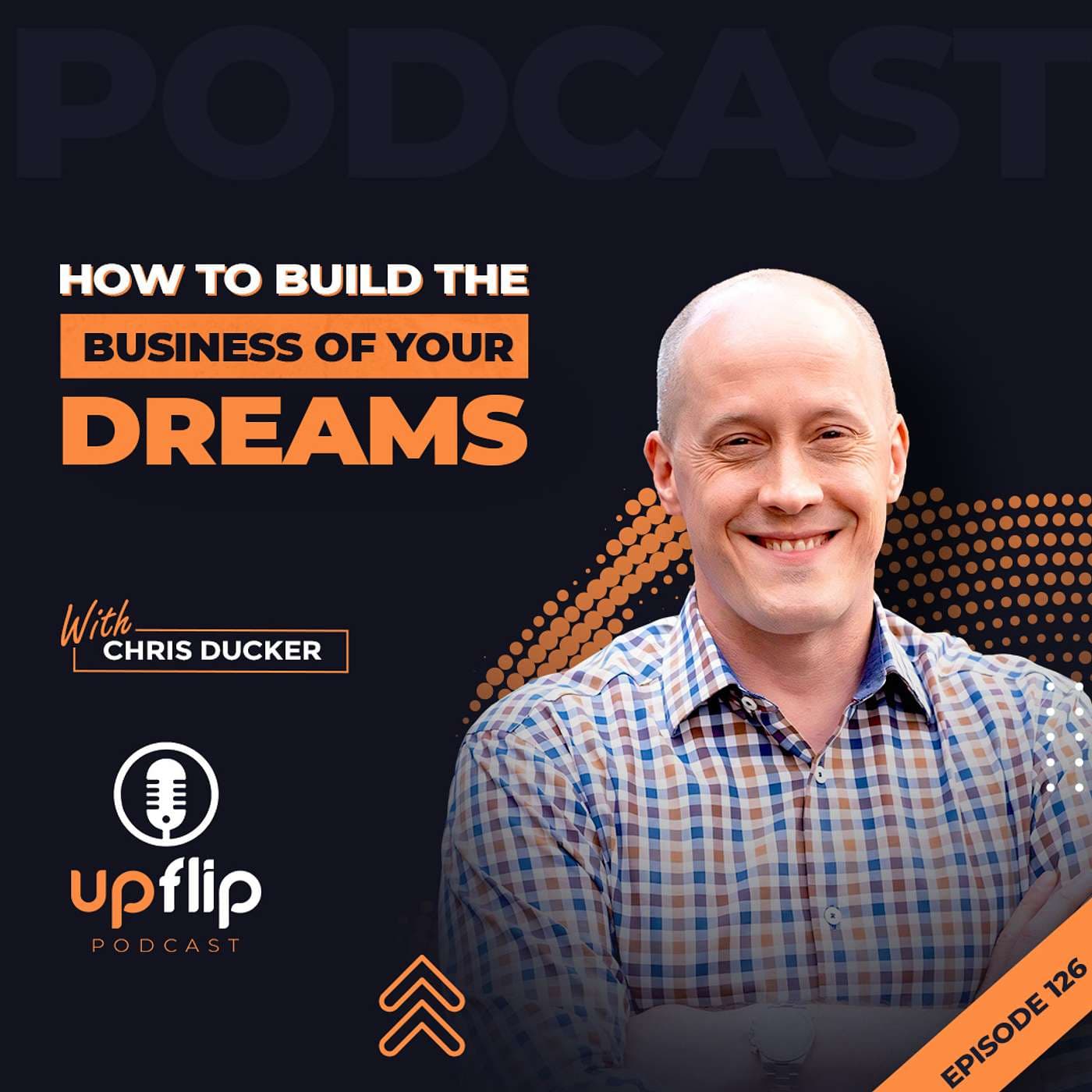
Notes on The UpFlip Podcast Episode 126: Serial Entrepreneur's Guide to Build the Business of Your Dreams
Episode Overview
- Host: UpFlip Podcast
- Guest: Chris Ducker
- Main Topic: How to build a personal brand and the business of your dreams.
- Key Themes:
- The importance of niching down.
- Consistency in content creation.
- Measuring success beyond financial metrics.
---
Key Concepts
Building a Personal Brand
- Focus on a Niche:
- Identify what you want to be known for.
- Avoid trying to appeal to everyone; this dilutes your message.
- Consistency is Key:
- Stick to one product, one audience, one marketing tactic for a year to build traction.
Redefining Success
- Beyond Financial Metrics:
- Success should also encompass personal fulfillment and well-being.
- Chris emphasizes that health and happiness should take precedence over money.
Health and Well-being
- Listening to Your Body:
- Entrepreneurs should pay attention to their physical and mental health and recognize signs of burnout.
---
Personal Stories
- A Pivotal Moment:
- Chris discovered Zig Ziglar's work via a stolen cassette from a library, which profoundly influenced his entrepreneurial journey.
- The Importance of Validation:
- Shared a personal failure with a business that didn't validate its model before launching, leading to significant losses.
---
Practical Takeaways
- Building Your Brand:
- Focus on a specific niche and provide consistent value.
- Understanding Your Audience:
- Conduct customer discovery to learn what your audience really needs before creating offers.
- Monetization:
- Aim to monetize from day one but validate your ideas through audience feedback first.
- Email List Over Social Media:
- Prioritize building an email list for direct communication over social media followers.
- Mental and Physical Health:
- Recognize the importance of maintaining health while pursuing business goals.
---
Resources Mentioned
- [UpFlip Academy](https://bit.ly/3YBuiO1) for insights from successful entrepreneurs.
- [Youpreneur](https://youpreneur.com/) for connecting with Chris Ducker.
---
Final Thoughts
- Entrepreneurial Journey:
- Emphasizes the importance of being true to oneself and trusting one's gut feeling in business decisions.
- Community and Support:
- Encourages seeking mentorship and learning from peers to navigate the entrepreneurial journey effectively.
---
Connect with UpFlip
- Follow UpFlip on:
- [YouTube](https://www.youtube.com/@TheUpFlipPodcast/)
- [Instagram](https://www.instagram.com/upflip/)
- [Facebook](https://www.facebook.com/upflipofficial)
- [Twitter](https://twitter.com/upflipofficial)
---
Conclusion This episode underscores the significance of personal branding, the importance of mental well-being, and the necessity of validating business ideas with real-world feedback. Chris Ducker's experiences and insights provide a roadmap for aspiring entrepreneurs to navigate their journeys effectively.
Written by AI. May contain mistakes. Listen to the episode to check what was said.
Transcript
Automatic transcript. May contain errors.0:00Today, we're talking about how you can escape the soul-sucking corporate world and build the business of your dreams, how to find confidence when you're feeling overwhelmed and the best practices that will make the best you're not to be a good for you're not to be a good for a good. who built three seven-figure businesses. But before that, Chris worked in corporate America. At one point, his burnout was so severe that doctors ordered him to take medical time off. Now he's a successful writer, podcaster, blogger, and business owner, all while maintaining a healthy work-life balance. Chris, welcome to the show.
0:39Super excited to have you on. Yeah, bummed to be here, man. Thanks for inviting me. You have done a ton of these podcasts and you were an expert in all things, podcasting, personal branding, blogging, all of this good stuff. I was listening to an episode with Ali Abdaal where you said it is doable within two years to build a six-figure personal branding business. So on listening to that, their eyes might light up and say, I want to learn more about that. Can you take us to those early steps on like what it takes to build a personal brand as a business? Yeah, I mean, and also to clarify, you can do it faster than that, depending on where you are on your current journey when you start focusing in on it.
1:16You know, I often say that if you're kind of coming into things green and you just, you know, if you're still particularly if you're still relatively young, and I don't mean that in a bad way. But I mean, if you don't have, you know, 10, 15 years of industry experience under your belt, some people might see you being a little wet behind the ears still. It might take a little longer for you to get up to that six figures and beyond just because you got to earn your stripes, man. Like that's what it comes down to. Right. You've got to earn your stripes and you've got to build that reputation up. So the majority of people I work with will come to me after they've already been growing their business for a certain period of time.
1:52Usually anything between kind of two or three or four years, right up to 30 years, right? So I have clients in my private mastermind who are in their early 30s and I've got clients who are in their early 60s, believe it or not. Interesting. And so depending on where you are on your journey, that timeframe will switch up slightly. But the bottom line is, if you focus in on building a personal brand and then you focus in on creating marketing and monetization assets around that personal brand, there's absolutely no doubt in my mind that you can build a six -figure business relatively quickly. But you've got to stay consistent and you've got to stay focused on it.
2:32Too many people get that squirrel syndrome, that shiny object syndrome, particularly when they're just starting out, where they see other people doing cool stuff and they're like, oh, I want to do that. But you've already started doing this. That's not even up and running properly yet. Why are you switching things up? And so the rule of thumb is you're selling one thing in one way to one group of people at one price for one year. I like that. It's the five ones. If you do that, you've got much more opportunity ahead of you than you do if you try and flip things around and go for different niches and all the rest of it.
3:04I like that. And I like that you broke that down in like five steps and like staying consistent, like the thing that sticks out to me there. But I want to take one more step back before I do that. Someone's like, I want to build a personal brand, but I don't know what I want to do it on. And they come to you. What advice are you giving to that person? Yeah, I mean, really, at the core of it, a personal brand is what people say about you when you're not around. around right like it's your reputation it's your word so the first question you've got to ask yourself is what do i want to be known for you know what am i passionate about what do i have a certain amount of experience or expertise in and if that's something that still fires me up at this point in my journey and i want to go all in on that then that's what you do the whole thing is that i think a lot of people fail when it comes to building a brand around themselves because they don't ascertain early enough on exactly what it is they want to be known for.
3:53And they try and be everything to everyone. And we know you can't please all the people all the time. It doesn't work that way. And I know that I'm certainly going to turn people off at the same time as turning people on. And I'm absolutely fine with that because what we want to do is market like a magnet. You want to attract the right people. And the exact same time you're repelling away the wrong people, the people you don't want in your ecosystem, right? And so step one, figure out what it is you want to be known for. And if you struggle with that, another question you can ask yourself is, well, what do people come to me for help on, on a regular basis, right?
4:30My friends, my family, my peers, people in the local community, whatever it is, what do they come to me for on a regular basis for help with? And the chances are there's probably going to be some sort of connecting factor between all these different individuals, that's a great place to start. You can be known for that to begin with. But also I want to caveat all of that by saying, just because you start becoming known for one particular thing doesn't mean that you can't pivot at some point in the future if your interests and your desires and your dreams change at some point further down the road.
5:05But when I say further down the road, I mean like three, five years. I'm not saying you try it for a year and then give up. It doesn't work that way. Yeah, yeah. I am curious. I want to not play devil's advocate here, but I want to just ask this question. In some areas, some people let's use productivity. I want to be known for productivity. And there's probably a ton of people out there that are in productivity. Would you advise them to go against that because it's like a saturated market? Or would you still advise them to go towards it because like they're interested in people go to them for advice?
5:32They don't go against it. I mean, you know, you brought up my buddy Ali there, right? At the beginning of the chat. So Ali grew as quickly as he grew on YouTube in the world of productivity because he niched down to helping medical students be productive in their studies. And then he kind of pivoted out slightly to just students. And then he pivoted out even further to just young people and then even further to just humans. And that's obviously where you get that broader approach. But the bottom line is he started right the way down here and he slowly but surely made it broader and broader and broader.
6:09And I know Ali well. We're in a peer-led mastermind group together and I know what he's got planned for the next three to five years from now. And it doesn't actually revolve around productivity. He's growing, he's evolving, he's pivoting, just like all of us do, right? But ultimately he started by niching that all the way down. It's kind of like saying, well, I want to be known as a health coach. It's so vanilla. There's a gazillion health coaches out there, right? So why not be the health coach that works with men in their 40s recovering from surgery? Be that health coach. I like that. You'll get way more traction going after that smaller subsection of that larger niche than you would do trying to go out and get everybody attracted straight out the gate.
6:51Okay. That makes a ton of sense then. So really, really niche down. And if you think you've niched out enough, probably niche down even more. Once you identify that niche, okay, I got that. I'm going to go after 40 year old males who just had surgery, for example. How do you then start to monetize actually building your personal brand to that niche? I don't want to jump too far ahead, but like, how would you actually monetize that once you identify it? Well, I mean, the first thing you've got to do is figure out what people need help with, because you can't just create a digital course or make an offer of some variety if you don't know what people want or need.
7:23So, you know, just start from scratch, start creating content, start getting yourself out there, start spreading your message and your ethos and what you stand for. And slowly but surely, people will start gravitating towards you. At that point, you can then get to the point where you're then having discussions with those people in DMs or comment sections or whatever it might be. And you can ask questions. Hey, what's your biggest struggle right now? What's the one thing that if I could wave a magic wand for you and fix for you, what would that be, et cetera, et cetera. And you collect all these things together.
7:52And I'm talking about like, you're going to have like four or five dozen conversations like that. Sounds like a lot, but in today's world, you can do that in one morning, right? So you have all these discussions, you collate all of the information, and then you start kind of tagging things together. Oh, this one's got a problem with personal productivity. Okay. This one has got a productivity problem as well. This one doesn't know how to delegate effectively. Okay. So this one has been dreaming of building a team and you start kind of curating everything. And then before you know what's happening, you've got two or three different potential offers that you can make that you start putting that into a digital course or a membership site or an affiliate offer or a live event or a coaching program or whatever the case may be.
8:31But you must make sure that you're validating what people's struggles are first. Otherwise, what you're doing really is you're just throwing a whole bunch of spaghetti up against the wall, hoping that some of it's going to stick. You know what I mean? And chances are most of it probably won't. Most of that's not going to stick. So definitely doing those customer discovery calls, I think, is important. And a question that did pop up to mind, though, when you were talking is like, how do you know when you're ready to monetize? It's one thing to say, I'm ready to do a personal brand. I'm going to go do customer discovery.
8:56But like, how do you know when you're actually ready to monetize your personal brand? You should want to monetize from day one. Like it should be a major focus, right? Chances are you probably won't be able to straight away, but you should want to straight away. But I think, you know, people will start telling you what they need. Like I remember one of my companies is a company called Virtual Staff Finder. And what Virtual Staff Finder does is it's kind of like match.com for busy entrepreneurs and virtual assistants in the Philippines. And we connect them together, right? So back in 2010, which makes me feel very old saying that now, but back in 2010, I was hardcore blogging.
9:34Like I was writing three or four blog posts every week. Blogging was kind of like the podcasting thing of that era. And one of the blog posts I wrote was in regards to building a virtual team and hiring VAs. And I never forget this guy. It was this guy called Stephen who put a comment on that blog post and his avatar photo was Johnny Bravo, the cartoon character. I'll never forget this dude because Stephen has helped make me millions of dollars because his blog comment was, Chris, this all sounds great and everything, but finding a good VA out there is like fishing, you know, in the ocean. Like, you know, they're out there, but finding a good one is really, really hard.
10:12If only there was a source that I knew already, that I trusted already, and I could get a VA from that source, that would be a no-brainer for me. Two weeks later, we opened the doors to Virtual Staff Finder because I was known in the industry and I did have a reputation in the outsourcing world. And first day we put the website live, we were getting orders. So, you know, Steve told me what he wanted. He told me what he needed. Like, give me, you know, please give me an opportunity to give you money, please. And I did. and he was happy. I was happy. The VA was happy. You know, game over. Thanks for playing.
10:46Right. Yeah. And next thing you know, you're now a world renowned expert in entrepreneurship. So shout out to Steven on that one. I'm curious reputation. So it sounds like when this launch, you built that reputation up to basically where two weeks later, you're opening a website, you have orders coming in right away. When you think about reputation now, I think of LinkedIn, I think of Twitter followers, LinkedIn followers. Is there a certain threshold kind of going back to the question of like, people should feel comfortable like monetizing. I know you just said the customer discovery, but like, do I need 20 ,000 followers to do this on Twitter?
11:18Definitely not. That's one of the things that drives me nuts about the online business world is people are preaching the fact that you got to have an email list at 20 ,000 people got to be verified and have the blue stamp and spend a stupid amount of money on Facebook ads every month and all this kind of stuff. Do you know how much money I spend on Facebook ads each month? zero, zip, nada, nothing at all. And I have no problems making money by selling my offers and creating opportunities for people to invest in me. So the fact of the matter is the quantity is nowhere near as important as the quality.
11:53You know, if you had a hundred people giving you a thousand dollars every year, there's your six figure business, right? Whereas a lot of people be out there saying, you've got to have 10 ,000 people on your email list. No, you don't. You You just need to have the right people in your ecosystem and the right offer that obviously solves a problem for them, for them to go ahead and make a buying decision. I think that's super interesting. And I want to talk about like that quantity base because you have over 50 ,000 followers on Twitter. I'm curious just from your perspective, what's been the difference between having like a thousand to 10 ,000 Twitter followers, 10 ,000 to 30 ,000, 30 ,000, like 50 ,000.
12:29What has been the biggest difference at like those different stages? Honestly, not that much. Really? Oh, interesting. Yeah. If I'm to be very frank, I mean, I spend very, very little time on Twitter. In fact, I spend very little time on social, period. I'm never on Facebook. I am on Instagram and I am on LinkedIn. And I mean, LinkedIn brings around a certain amount of leads for us on a pretty regular basis because of, you know, the high level of reputation that I've got. But even Instagram is great for our lower end products and offers and e-books and courses and memberships and all that kind of stuff as well.
13:03Again, I don't think the quantity really makes all that much shift. And not to mention the fact that I've been on Twitter since 2007 or something like that. And I would say 80 % of the people that follow me on Twitter haven't seen anything from me on Twitter for years, just like anybody else's account, right? So it's just one of those things. I think it's these vanity metrics, and please don't take this the wrong way, but the younger generation of entrepreneurs, such as yourself, you are 100 % getting it wrong when it comes to these vanity metrics. You're 100 % getting it wrong, all of you. And I've had these discussions with some of my younger clients as well, because they think, oh, you know, my goal is to be at a thousand followers on Instagram by the end of the year.
13:44And I'm like, well, okay, that's great, but let's switch it up. Let's put a goal in place to make$100 ,000 from now on the end of the year. How about that for an idea, huh? You like that idea? Oh yeah, I do. Right. Screw the followers, man. You know, you've already got 20 ,000 on there. Let's work on getting money out of them before we tracked any more, right? So I just feel like the whole kind of hustle culture mentality, and we've got to be careful here because I'll get on the soapbox, but the hustle culture that is out there is very toxic. It's very, very wrong, particularly with our younger entrepreneurs.
14:15And we need our younger entrepreneurs to come up and create great companies to fuel our economies, right? I'm worried. I'm worried for, you know, my younger kids. I'm worried for younger entrepreneurs anywhere in the world, quite frankly, because they're looking at the wrong metrics. These vanity metrics mean nothing at the end of the day. You know what really matters for a business? Your profit and loss statement. That's what really matters. What metrics when it comes particularly to building a personal brand do you look for? Revenue, I'm assuming, is up there, but what are some other numbers that you're looking for?
14:48If someone's like, I'm ready to have my course, I'm ready, I have my niche, what numbers should I be looking for here? There's a couple. So the really big one for me, and when we talk about personal brands online specifically, the one, probably the one big metric that I look at above and beyond anything with any currency icons next to it is email subscribers. That for me is the first thing I look at. But more importantly to the number of subscribers is the open and click-through rate on those subscribers. Because if I had 50 ,000 people on my email list and my open rates were only 5%, I'm losing.
15:22Plain and simple. I'm losing. But if I've got 3 ,000 people on my email list and my open rates are 50%, 60%, my click-through rate is 5%, 6%, 7%, 8%, 9%, I'm winning. You see where I'm coming from? So those are the things. I don't really obsess over these things as much as I used to because I've got people on my team that track them all for me and just give me reports on a monthly basis now. But back in the day when I obsessed, boy, did I obsess over the open rate and the click-through rate. And, you know, I feel like the other thing that I really look at also are my podcast listener numbers and download numbers as well.
15:56Because unlike social media, where I don't own that platform, I don't own YouTube or Instagram or LinkedIn, but I do own my podcast, right? And so when I see that, you know, a new episode has come out on a Tuesday or whatever, and that day we've had 15 ,000 downloads of that episode, I know I've got roughly 15 ,000 people tuning in to my podcast week in, week out. Do you know how many people that is? I mean, I've keynoted huge conference facilities in Vegas in front of like two, three, 4 ,000 people. And that's a massive crowd. You try to get 15 ,000 people in there. It's a whole different ballgame, right?
16:33So that's the stuff that excites me the most. Like where am I dropping value? How am I serving people? And how excited are they to hear from me when a new piece of content from me comes out. I love that. And I think that speaks to like owning the media channels that you're going after. If it's you own your emails, subscribers, if you own your podcasts, you can have 50 ,000 followers on Twitter, but you know, you don't own that. Bring it down to like raw essentials, right? Like if we can get really real for a minute, raw essentials. If every social media platform in the world died tomorrow and all we could do is publish an audio podcast and build an email list on the back of it, me and my clients would be just fine.
17:13That leads me perfectly to my next question here, because I want to talk about the podcasting and newsletter. So if someone's just getting started, they're ready to build their personal brand. And which one would you advise someone to go to start with first? Obviously, you want to do both. But is there one that you would advise someone to go to earlier if it's podcasting or if it's newsletters? Email all the way, because there's no point in starting the podcast unless you've got someone or somewhere rather to lead them to. Right. So it's great that someone's tuning into your show and that you're providing value and that you're helping them.
17:40But if you've got no way to be able to get them off of Spotify or Apple podcast or wherever they're tuning in and onto your email list, then you're losing. You don't know who they are. You don't know who they are. You don't know where they are. You don't know what needs they have just because they're tuning into your show. But if you can get them on the email list and you can start conversing with them, that's a whole different ballgame. So I would definitely start with building my email list first, and then I would offer some sort of rich media content thereafter. And I was probably looking back, like when I started getting really active online in like 2007, 2008, the big thing for me, the big mistake I made was that I was blogging and doing SEO and all that fun stuff for like two years before I started growing an email list.
18:24And to this day, I punch myself for that because I went two years of creating like three posts a week. And I know people loved it because they're in the comments section, but there was no way for me to be able to converse with them other than in the comments section because I wasn't collecting their email addresses. When someone's ready to launch that newsletter, then what ways do they go about marketing this? How do they get this in front of more viewers? Obviously, it's not just post-handling. Start with the people that you know, genuinely. Like start with your friends. Start with your family.
18:50You go to a local library, you know, those big buildings with books in them that people never visit anymore because we get everything we want on the Google, right? Like start with that stuff and put a little sign up in your local library. You know, are you a man in your 40s recovering from surgery? If so, here's my six step cheat sheet to recovering faster. Just visit this website. Bosh, get them on the email list, right? Like just do what you got to do to get, you know, as many decent people on the list as possible. And understand that, you know, for the first three to six months or so, it's going to be slow.
19:20It's not going to blow up. You're not going to go viral. Just focus on it and stay in your lane. And eventually things will then start happening because a couple of things happen. Number one, people start sharing a newsletter. So if you write a good newsletter and it's valuable and it arrives in my inbox and I like it and I know somebody else that would like it, I'm likely to send it to them. I'm going to forward it on to them, right? And then they're going to go ahead and subscribe. And likewise, once you start hitting people up regularly and they're getting stuff back to you on a regular basis, they're going to reply.
19:48They're going to tell you that they liked it or they didn't like it or what they really want to hear from you. And then that just fuels more growth from a content framework standpoint. And before you know what's happening, you're knocking out so much great stuff. People just love you. I love that. So it sounds like we put together like a pretty good plan here on like how to, one, identify what you want to do, get your niche, build and how to market it, the courses and whatnot. I am curious then. So the newsletter component comes in and then the podcast component you layer on top of that. Obviously, this varies a lot, but when do you know then to add that podcast if we're doing step by step here?
20:16I mean, I don't think there's any like true trigger to a certain degree. Like I don't think, oh, when I hit a thousand email subscribers or something like that. I don't think there's like a line in the sand that you've got to kind of draw and say, right, now's the time. I think you'll probably know. I would say, you know, people ask me a lot. They say, you know, what's the one thing if you could change anything as an entrepreneur, if you could go back to your younger self, what would you do above and beyond everything else? And I always say the same thing. And I say, I would learn how to trust my gut a lot earlier on than I actually did.
20:49Because looking back on it throughout my entire entrepreneurial career, which is 20 plus years now, retrospectively, every time I followed my gut, it's very rarely let me down. And so when you've been writing emails for a while and you're growing that list and you're getting some good feedback and you're having great conversations with your subscribers, you'll know, how can I take this to the next level? I know, I'll start a podcast. And what's great about podcasting is that although we're still, you know, it's 25, 30 years in now as an industry, but we're still in the infancy. This is the bonkers part of it all.
21:23It's still very early days, you know, like Joe Rogan only started a podcast, what was it, seven years ago or something, right? Like, and it's been around for a long, long, long time, longer than that, right? So we've all got time to start our own shows and to gain traction doing so. You know what is super funny about that? People will always say like, oh, I don't want to start a podcast because everybody has a podcast. But it's like, think of like a hundred people you know, and there's probably one person that actually has a podcast. Ultimately, what will happen is you will get to the point of, if you're thinking about starting the show, the chances are you are a consumer of podcasts.
21:59And therefore, if you're consuming a whole bunch of shows, you think that there's a whole bunch of shows out there from all these different people. But the chances are, like you say, if you're at a dinner party and you've got 25 people in the house, anybody got a podcast, put your hand up. You'd be lucky if you get two people, let alone one, you know? So yeah, I think that is super funny. But we are kind of winding down on time here. I want to take a quick pivot here before we go to our fan blitz questions. And I'm just like super curious. You have been a successful entrepreneur for over 20 years.
22:25Is there a story you have of like something that was just like total like grind, like a story that you have if like that was a total 16 hour sprint? Just as I think I'm going to mind, I'm just super curious. The one really big failure I've had in terms of, and I've started businesses, I bought them, I've sold them and all that sort of fun stuff. But the one big, horrible, nasty, hairy failure was I started a business called Your Web PA. And the concept of it was to ultimately kind of take what you see on like Freelancer and, you know, Odesk and Elance and all these other freelancer sites and kind of like capitalize on the gig economy, so to speak, but have it all in the house.
Read the full transcript
23:05We're going to have our designers, our developers, our editors, content writers, all in the house. And we're going to kind of take whatever the market value is, but 25 % on top as our markup and we're all going to get rich. It's going to be great. But the fact of the matter was six months after we opened the doors to that, probably about 70, 80 grand in, we were still struggling. We were still struggling to make money with it. And although we were making some money, It was nowhere close to what we put into it. And I just had to call it. You know, I had to throw the towel in and just say, you know what?
23:33People aren't willing to pay 25, 30 percent above market value. I've drunk my own Kool-Aid. I'm not that impressive. People really, truly maybe don't like me that much. I need to close the doors of this business. Otherwise, I'm just going to keep hemorrhaging cash. And so that was tough. That was like a six month grind with a big reality check at the end of it. And going back to what we talked about at the top of the call in regards to validation, I did not validate that business model and it failed horribly. I want to ask right off of that question, how do you know when it's time to shut down a business?
24:08Your body will tell you. Your body? Okay. Yeah, your body will tell you. I don't do woo-woo. I'll leave that to Tony Robbins. But I'm a big believer of listening to your body. If you're not sleeping properly, if you're eating crap, if you haven't got the motivation to move your body every day, if you are generally just not looking forward to the day ahead and you're not swinging your legs off the bed when you wake up, there's a massive problem. Something is horribly broken at that point. And I was just reading the other day, actually, a pretty well-known entrepreneur in the online business space, very, very successful dude, like super successful business, multi-seven figures coaching company on an annual basis, throwing the towel in.
24:48I'm not happy. I told all my clients I'm closing the doors. I'm taking a break. For the first time in my life, 25 years of being an entrepreneur, I don't want to run a business right now. I will be back. I don't know what that's going to look like. And I will be back. But right now, I don't want to do anything. And he just shut the doors down. I have such massive amounts of respect for making that kind of call. I feel like, yeah, listening to your body is like one of the most important things. I'm reading the George Lucas book right now about like how he built Star Wars. And a lot of times like he suffered through building Star Wars because he just like did not take care of his body.
25:18He was drinking like Coke. Yeah. I've seen him talk in interviews. I'm a big Star Wars, in fact, actually. Okay. Check it. No. I'm a big Star Wars fan. So I've seen him talk about that in interviews before. You know, if you're getting headaches all the time and you can't focus and you're not excited, there's something broken there, right? Yeah. But there's a difference between, of course, like there's stresses of building a business. Like there are no doubt stresses of like you're going to be stressed, but there's a breaking point, right? Where it comes like, is this actually worth it? Like it's, this isn't actually financially healthy and mentally it's not healthy as well.
25:51Yeah, exactly. And you know, the other thing is if I'm not making any money, then what's the point? Like it amazes me how many people continue out of ego or because of what people might say about them if they quit or, you know, like nobody likes you that much. Like I'm not going to go all Gary V right now, but like nobody likes you that much. You're not that important. Other than your mom and dad and siblings, like you're not that important. Yeah. Right. So why are you worrying about what other people think about you? I don't get it. But I think also that comes with the age. I think 20 years ago, I probably would have thought a little bit more about what people think about me.
26:29But now I just don't give a damn. I'll just do what I want. Yeah. That's why I think it's super interesting because like as a young entrepreneur, like I'm 25, it's like a lot of times like there is external validation that like comes with it, even though you like to say like, oh no, like I don't really care what people think. At this age, like there is a little bit of that. We all like to be liked. Don't get me wrong. Like we want to be liked and appreciated. But what I'm saying here is from a visceral perspective, we allow it to chew into our mental bandwidth way, way, way more than we should.
26:58And that's where the problem lies. And you know, you're 25, dude, you're younger than both of my eldest kids, right? So like, I see it. Trust me, I have these conversations with them. I'm not going to go all dad mode on you right now. But my mom used to tell me this one thing, and I've said it to my kids on a number of occasions. And I'll say to you and your listeners now, you shouldn't be worrying about something until there's something to worry about. It's pretty hardcore value right there. So yeah, don't sweat the small stuff too much. I like that. Let's go to our last segment and hear our fan blitz questions because we have some very eager listeners that submitted questions want to hear from you.
27:34And if you guys are listening, you guys can go to our podcast page and submit questions there. We've got five questions here and we'll end the segment if you are ready for these. OK, we'll go rapid fire. Let's do it. I like this. At this stage of success, what advice would you give to your teenage self? Teenage self. God, girls aren't going anywhere. Focus on school. Just keeping it real, dude. I like it. Let's go to our next question. What's the best part of being an entrepreneur? The freedom. Be able to try things out. Any crazy ideas. You know, I like the whole Richard Branson, screw it, let's do it mentality.
28:09The idea of being able to get up and go for a walk in the woods on a Wednesday afternoon if I've got nothing planned. I like that. The freedom. Yeah. Another great book, Richard Branson, Losing My Virginity. Phenomenal book. You haven't read it. And listeners, please read it. It's so good. What is something that most people believe about success that you disagree with? I like this question, whoever submitted it. that money equals success. I disagree with that wholeheartedly. Now don't get me wrong. I love making money. There's nothing wrong with it at all, but it shouldn't be at the detriment of your health or your own personal mastery or your relationships or the impact that you have in the work that you do, the people that you serve.
28:45I have a client right now in my round table membership and she does like 600 grand a year. And she said to me in January, you know, Chris, I think I'm, I've hit my ceiling. I'm good. I'm good. So now I want to go from 600K a year working five days a week, 600K a year working two days a week. Can we do that together? Of course we can. Let's do it. So we put a plan in place. Oh man, that is the dream of being an entrepreneur right there. Oh, I think a lot of people resonate with that one. How did you come up with the name Youpreneur? Oh man, this is a whole story. I won't bore you with the entire thing, but I was around my best buddy's house.
29:19His name is Pat Flynn, pretty popular podcast, Smart Passive Income. It was July 4th. We just had a water balloon fight in his backyard and we were in his office drying off, having a cup of coffee. And my book, Virtual Freedom, had just come out that year. And he was like, so what's next, bro? What's the next thing? And I said, you know, I really feel I'm starting to feel called based on questions I'm getting from people about like how to build a personal brand. I think I'm going to teach people how to build a business around themselves, not just a following, but like a real business, like how to monetize stuff.
29:49And he was like, oh, cool. So it was kind of like personal brand entrepreneurship. I said, yeah, yeah. Well, what are you going to call it? And about 30 minutes later, we had the word Youpreneur written on the whiteboard and I grabbed the domain name. Perfect. That's all you need. Buy the domain. Next thing you know, you've got it all going. Yeah. You need a good buddy, a water balloon fight and a whiteboard and you're good. Yeah. The good cup of coffee. All right. Then last question for you. This has been so, so phenomenal. So I want to thank you even before this one. So yeah, thank you for the opportunity today.
30:16What was your most bizarre business encounter. Encounter. Okay. So I don't know whether this class is as an encounter per se, but I mean, I've had things like where I've been at conferences and people have come up to me and say, oh, you changed my life and you read your book and made a million dollars and all that kind of stuff, which is great and everything. But I remember when I was 15 years old, I was at the local library in Wimbledon in London, where I'm from originally. And I was at the audio book section, which were on cassettes. Just shows you my age, right? So these things were on cassettes at the time.
30:48Chris, I thought you were 30. Yeah, thanks for that. You're my new best friend. But I saw this cassette and it was this old white dude on the cassette, probably like, you know, at that time, 50 was old, right? You know, and it said, see you at the top. And the subtitle was, it's a checkup from the neck up. And it was an audio book by a gentleman by the name of Zig Zig Ziglar. Now, if you don't know who Zig Ziglar is, he's a phenomenal, phenomenal motivational public speaker, sales trainer, et cetera, et cetera, back from the 60s, 70s and 80s. And the issue was that I was not allowed to take out audio books because I was under 16, but I really wanted to listen to this cassette.
31:29And so I stole the tape from the library and I took the tape home and I went up to my bedroom and I played it on my stereo system. And you could hear Zig's kind of, you know, docile kind of Southern tones coming out over the speakers. And he was like, you're going to have anything in life that you want. And I was like, oh my God, I freaking love Zig Ziglar. This guy's awesome. I never met Zig, but I have met and spoken to his son, Tom, on a few occasions. And so it was a nice kind of full circle moment to go from stealing a cassette from the library, which by the way, my mother found out about and frog marched me back to the library and announced to the entire building that I was a thief and I needed to be punished.
32:15And so I had to go after school every day for a month to get all of the index cards in order, in alphabetical order. Brutal. Absolutely brutal. But worth it. But worth it. And I have now a copy of that book on my shelves behind me, which is an original hardbound edition from like 76 or whatever it was when it was written. I bought it in an auction. That is a really, really cool story, actually. Maybe he taught you discipline, so. Taught me not to steal stuff and get caught, that's for sure. Exactly. I know you had good intentions to return it though, Chris. I did, I did. I want to thank you so much again for coming on the episode today.
32:51If someone was listening, I'm sure a lot of people will be thinking this. I want to learn more about Chris. Like, holy heck, this dude's amazing. Where can they learn more about you and follow you? Just go to my website, you know, chrisducker.com. Hit me up on Instagram at chrisducker. Don't follow me on Facebook because I'm not there. And yeah, you know, LinkedIn as well. Search my name, find me on LinkedIn. And I'll be happy to answer any questions if they want to punch me a DM with the word UpFlip so I know where they came from. Ready to take the first step towards building that business you've always been dreaming about?
33:20Head over to upflip.com slash academy right now to grab new business ideas, learn from the experts with our courses and join a community unlike any other. Everything you need to kickstart a successful business is just a click away. Chris, thank you so much for the opportunity again today. It's seven o 'clock your time. So go enjoy that bourbon now. You deserve it. You're the man. I appreciate you, man. Thank you very much for having me on.
From the publisher
Chris Ducker discusses building the business of your dreams through a personal brand. He emphasizes consistency and focusing on one area to attract the right audience. Niching down in the right ways to grow your business successfully.
Chris shares the common misconception that success is solely measured by money and stresses the importance of prioritizing well-being. He shares a pivotal and comical moment when he discovered Zig Ziglar’s work through a cassette tape stolen from the library, which influenced his entrepreneurial journey in a big way!
Takeaways:
- Building a personal brand as a business requires focusing on a niche and consistently providing value to your audience.
- Success should not be solely measured by money, but also by personal fulfillment, well-being, and impact.
- Listen to your body and prioritize your health and happiness as an entrepreneur.
Resources:
- https://bit.ly/3YBuiO1: Learn right from incredible entrepreneurs at UpFlip Academy
- https://youpreneur.com/: Connect with Chris
Ready to be your own boss without starting from scratch? Grab our FREE Franchise Guide and unlock the secrets of proven business models that have already created thousands of success stories.
Connect with UpFlip:
- On Youtube
- On Instagram
- On Facebook
- @UpFlipOfficial on Twitter
For more insights to start, build, or grow a business, check out the resources on UpFlip.com or head to the UpFlip YouTube channel to see more interviews with business owners and experts.
Thanks for listening!


