
In short
UpFlip Podcast Episode 138 Notes
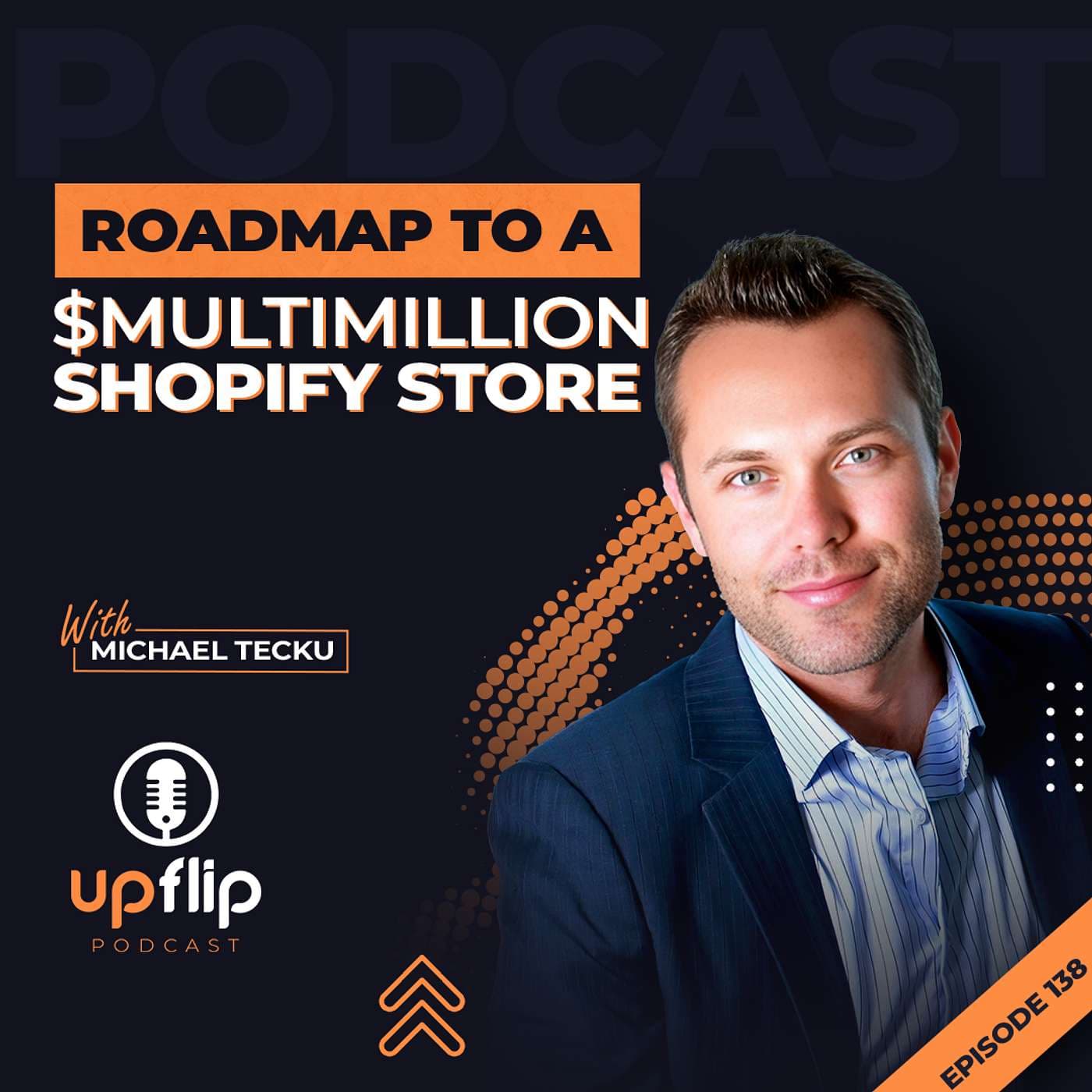
Podcast Title: The UpFlip Podcast Episode Title: My Blueprint to Build a Million Dollar ECommerce Business with Shopify Guest: Michael Tecku Host: Ryan Atkinson Release Date: [Date Not Provided]
Episode Overview In this episode, Michael Tecku, an entrepreneur and e-commerce expert, shares his journey of scaling a new online store to $1 million in under a year. He discusses critical aspects of launching and operating a successful e-commerce business, focusing on niche selection, marketing strategies, logistics, and product validation.
---
Key Themes and Insights
- E-commerce Market Potential
- E-commerce sales are projected to hit $1 trillion by 2025.
- The episode emphasizes the vast opportunities in starting an online business, particularly through platforms like Shopify.
- Choosing the Right Niche
- Importance of self-awareness: Entrepreneurs should assess their strengths and weaknesses.
- Emphasizes starting with service-based businesses to gain experience before moving into product sales.
- Suggests identifying gaps in the market by analyzing customer feedback and reviews.
- Building a Shopify Store
- Shopify is presented as a user-friendly tool for building an e-commerce website.
- Tecku shares that starting with a simple concept and gradually adding complexity can create a scalable business model.
- Business evolution should follow a path from service to product-based models.
- Marketing Strategies
- Inbound Marketing: The importance of generating demand organically before investing in paid advertising.
- Testing Product Demand: Utilize personal networks to gather initial feedback on new products.
- Ad Strategy: Focus on platforms that provide the best return on investment (ROI) and control over the marketing process (e.g., Meta platforms).
- Logistics and Operations
- Discusses the complexities of supply chain management in e-commerce, emphasizing the need for control over logistics to avoid stock issues.
- Highlights the importance of having reliable shipping partners to enhance the customer experience.
- Stresses minimizing logistical issues by simplifying supply chains and focusing on core products.
- Product Development and Validation
- Advise on the importance of thorough testing and validation of products before launching to ensure customer satisfaction and demand.
- Tecku shares his process of iterating product ideas based on user feedback and market demand.
---
Practical Takeaways
- Start Small: Begin with a service-based business to learn entrepreneurship basics.
- Self-Awareness: Know your strengths and areas for improvement as an entrepreneur.
- Niche Identification: Analyze customer feedback to identify market gaps.
- Test Before Invest: Validate product ideas through personal networks before scaling.
- Marketing Focus: Prioritize inbound marketing and utilize paid ads only when a product has proven demand.
- Streamline Operations: Simplify logistics and supply chains by working with fewer suppliers and focusing on core products.
---
Additional Resources
- [Learn more from experts like Michael](https://bit.ly/3YDyYmO)
- [Connect with Michael on Momentum Shake](https://www.momentumshake.com/)
- [UpFlip Franchise Guide](https://bit.ly/4aWuGvc)
Social Media Connections
- [YouTube](https://www.youtube.com/@TheUpFlipPodcast/)
- [Instagram](https://www.instagram.com/upflip/)
- [Facebook](https://www.facebook.com/upflipofficial)
- [Twitter](https://twitter.com/upflipofficial)
Conclusion The episode provides valuable insights for aspiring e-commerce entrepreneurs, focusing on practical strategies for building and scaling a successful business. Michael Tecku's experience underlines the importance of product validation, niche selection, and effective marketing in achieving entrepreneurial success.
Written by AI. May contain mistakes. Listen to the episode to check what was said.
Transcript
Automatic transcript. May contain errors.0:00Ecommerce sales are projected to reach a jaw-dropping$1 trillion by 2025. If you ever dreamt of having a thriving business, your own Shopify store may be the way to go. In this episode, we cover how to pick the right niche for your online store, the formula for setting up your Shopify store in a matter of days, and which marketing channels are a must if you want to grow. This is Ryan Atkinson, and you're listening to the UpFit Podcast, where we uncover the secrets of building and scaling successful businesses. Michael TechU comes back on the podcast to unveil his formula for e-commerce success in today's episode.
0:32Michael is an e-commerce expert who has scaled his new store to$1 million in just under a year. His knowledge of e-commerce and marketing is unrivaled. And if you want to launch and scale a successful Shopify store, this is the episode for you. Michael, welcome back to the show. Super excited to have you. Ryan, it's great to be back. Thanks for having me. I am super excited to have you because I kind of alluded to it in that intro, but your new company, Momentum Shake, you guys built your new store to$1 million in just under a year, which is totally incredible. That's the dream for any entrepreneur.
1:02But before we do that, can you kind of like talk to us what led up to Momentum Shake? Started out, I was a musician on food stamps for years, sold all my guitars and furniture, started a photo booth company that we turned into a franchise, had a thousand franchises around the world, got really into learning about entrepreneurship and got into some great masterminds and learned about launching stuff on Amazon way back in like 2012 when people weren't really doing it yet. So got to be one of the first people there in the Wild West, launched 20 different products, different brands. Most of them failed because business is hard.
1:33Some of them turned out to be top 1 % products on Amazon, which I think in the end we were doing 8 million a year in some of them. Then we sold all those companies in 2019, perfectly timed before the coronavirus. And then I took the next three years to kind of figure out who I wanted to be, what I wanted to do next. And in that time, I got really fascinated about the concept of longevity and just for my own personal curiosity and spent three years researching and developing this product called Momentum. It's an all-in-one longevity shake. So I took the top 20 things that are declining in us as we get older and I put them all into one shake.
2:09I wanted it to be the absolute highest quality thing on the market. So that's what I shot out for. So I went out and individually sourced from manufacturers from around the world, tested everything, and then now we manufacture it here in Madison. So I can say unequivocally it's the highest quality protein lifestyle shake on the market, but it's also very effective at what it does because it's focused on trying to provide real value, both in the quality of it, but just the way humans work. I was taking all of these supplements separately. It was like four or 500 bucks a month. Took me 20 minutes every morning.
2:40Now it's$150 a month for people and it takes 30 seconds and it's delicious. So that's what we do. That's super interesting. You're in Madison right now, but during the winters, you're also in Austin. I feel like that's like a perfect Austin business to start just with like the health movement that's here and like how interested people are in health. One of the tricks, I think, for entrepreneurship is to be able to see around corners. So in 2020, health was on everybody's mind, right? But longevity was not on every podcast and influencers' lips. It was just the beginning of people like, oh, you could get younger this year?
3:10That's a bizarre concept. But that was my goal for the year was to try to figure out how to get younger. So I'm taking all these different blood tests and doing all these biomarkers. And everyone I talk to about is like, what are you even talking about? So when you want to try to make something great, you don't want to be learning about it from your Uber driver or from your dad. Those are the signs. You know, I remember timing exactly when Bitcoin would crash in the beginning because my dad started asking me about it. I was like, oh, this is over. You got to know about the stuff years in advance and then be right that it's going to hit, that it's going to be a cultural zeitgeist, you know, in a few years.
3:43That way you're prepared. So now it's a big thing. And I had three years of getting prepared and building something of value. So when we launched, people were ready for it. And I think that's just a big determinant in success is timing. And so are you late, early, or are you right on time? I love that. And you've been right on time a lot. You've had a lot of successful business. You've been early on a lot of stuff. And Shopify has been like a main driver for you to help you get to where you are. So let's go to Shopify because I want to make this super technical for the people that are listening.
4:12They're like, I want to do an online business. How the heck do I do this? Before that, just so they know about your Shopify experience, like what motivates you to start like your first Shopify store? Sure. Well, let's start by kind of demystifying what Shopify is. It's just a tool to build a website and manage e-commerce sales way easier. I made my first website back in 2010 and it was not easy. You know, like it was technical. You had to piece together both just how to design a page, but also the shopping cart. All these experiences were piecemealing to put together. What Shopify does is make it really easy, relatively easy.
4:43So it's not a platform like Amazon where it's going to drive traffic or that, you know, a place where people would go to. It's just a way to build your website that is foolproof and makes it professional and easy and all centralized. Everything you need is within it. Absolutely. And so how has that helped like grow like some of your businesses or someone's wanting to say, let's take a step back. If someone's like, okay, let's use Shopify as my website and they want to start an online business, what would you advise someone early on to start thinking of those first ideas that they can then host on Shopify?
5:13How do you know what an idea to start with when getting an online business is? Sure. A really important thing for all entrepreneurs is self-awareness, both of who you are and where you are on the journey of being an entrepreneur. I feel like this is the thing that even in my peers and people I admire, a lot of people just aren't self-aware of what they're really great at and what they aren't. And there is a prototype of an entrepreneur that if you see it, and I can see it now when I invest in companies, either they are or they aren't, all the tools and all the education in the world don't matter if they aren't the person.
5:43That's going to be the biggest predictor of the thing. So are you okay with risk? Do you have a growth mindset? Because all entrepreneurship is, is you run into a problem and then you either give up and accept the status quo or you're just like, oh, I can figure this out. No problem. I'll overcome it. So that's every day is I run into a thing that can't be solved and then I go solve it. Steve Jobs always talked about his reality distortion field and like drove his employees nuts because like, or Elon does this all the time, Jeff Bezos. Like here's an unreasonable goal and I know you think it's impossible, we're going to do it.
6:12And it's always on the other side of that wall that all the opportunity and profit lies. So just to get started there, are you that person? And if not, be real with yourself and then go join somebody else who is because you don't have to be the leader all the time. And then the second part is, do you know anything about this stuff? So just like you, Ryan, when I started, my first company was a service business. We had the photo booth company and we were here in Madison, Wisconsin, and we were only competing against other photo booth companies in Madison, Wisconsin. So it was really simple. It's the best place to start.
6:40So entrepreneurship is a ladder. You start with the service business and it's just you running it. And then you come in once you systemize it and then you put employees underneath you and now you run a service company and you can scale that and have multiple photo booths or whatever your thing is. And then after that, it's products because it's an order of complexity up. So you have a single product that you run, you do everything, and then you can have many products, right? Then after that, it's investing and you can own all the companies or you can raise money and give it. But that's the order of magnitude harder where you give money to other companies or you own companies that make products.
7:12So you got to figure out where you want to start. So that's why I always tell people to start with a service business. You start in first grade and you don't start with trying to get your PhD, right? Yeah. And let's take that a step further. Why I think service businesses are so great and why I like SpaceR Visuals is you can be cashflow positive in less than a month, definitely two months. If you just learned sales or you know sales and marketing, you're basically just selling your services. And I feel like you talked about that beautifully. My next business that I want to start is definitely a product-sized service.
7:40But before I do that, I definitely want to know how do you run a service business and put those systems in place to actually grow? That's why I think service businesses are a great place to start if you are wanting to get started with your first business. Yeah, you're going to learn everything about business in there. You're going to learn about marketing and sales and product market fit to set way lower stakes with lower competition. But to get back to your original question, how do you find the product? So you've graduated to that next step. What you want to do at that point is be completely focused on customers and opportunity and problem solving for other people.
8:09So where is there an outsized demand with undersized supply? Where is there people providing solutions that people need, but they're not great. You can go in on Google or wherever, and you can see where there are problems in the reviews, and you can focus specifically on negative reviews, three-star reviews, like this is the problem, and then go solve those problems. That's the easiest way to design something. But your question was, how do you pick, right? At this level, it's got to be all about somebody else. And then the next level up where I'm at right now, there's a Venn diagram that overlaps, whereas I have an incredible interest in this, a passion, a technical skill that I've developed, and it overlaps with a super strong demand and a big problem that people are willing to pay for.
8:52The reason I don't think you should go there right away is because that's where really experienced people want to go, right? So where there's low passion, there's low competition. When I wanted to be a musician, so did every other 20-year-old guy, right? So when you're making a product, picking unsexy things is a great place to start because the problem is just as real, but there aren't really experienced people with a lot of passion trying to solve them. So that, for me, my second phase from photo booth to products was we started an anti-fatigue mat, which is like the most boring product you can possibly think of, right?
9:23But we sold six, 700 of them a day at 70 bucks a piece, right, because people were actively every single day going on Amazon and searching for comfort mat, something to stand behind the kitchen. They were tired of doing their dishes on the hard floor. So it was a real problem. We provided a real solution, better than everybody else because we designed the thing around all the negative reviews that were out there. So that's capturing demand, right? People were already looking for it. Here's a better mousetrap. And the requirement, I think, for moving into Shopify is that you're no longer capturing demand, you're creating demand.
9:53And that is an order of magnitude harder. So that's where you have to have an overlap of passion and demand. And this is where you have to start seeing around corners because you have to be innovative in this space. You can't just provide another thing that you could go get a copy of on Amazon. It's got to be a unique thing that solves a real problem in an innovative way that you can educate people on. It's expensive enough that it can pay for the ads that you have to use to generate demand. I think Shopify is the tool for creating a website. So let's just say for creating your own website to sell your own product, you have to have graduated and be evolved into an entrepreneur that has learned all of these skills, not just in how to sell and do logistics, but like really understand humans and psychology and solving problems and innovating.
10:37And that's, I think, the highest order of entrepreneurship. I want to take a minute to thank one of our listeners who left us this review. They said, I love the content and simplicity of the show. I watch on YouTube and listen to the podcast. Somehow, I feel motivated watching others succeed. Thanks for Uplit for doing this. But thank you so much for listening and reviewing. We appreciate you so much. And guys, if you want to leave a review, you can do that wherever you listen to your podcast. You can also do that on YouTube. Can I get a drum roll, please? because we are giving away a free lifetime access to the Academy for one lucky listener.
11:09And it's super simple to participate. All you need to do is leave us a review on Apple and then send us a screenshot as proof. Takes five minutes for lifetime access to the Apple Academy for free. So two steps, leave us a review on Apple Podcasts, send us a screenshot, and the link to participate is in the show notes below. If you are a wannabe entrepreneur, the courses in there are so invaluable for you to actually get that first business idea off the ground. And then for the current business owners that are looking to sharpen their skills, there are a ton of courses in there for you. And the best part, you're gonna be able to connect with other top-notch entrepreneurs in your field to network with them and learn from them.
11:44The winner will be announced on July 26th. All you need to do, leave us a review on Apple, send us a screenshot of proof, and you guys can find more details in the show notes below. Let's talk about that. Once you do get to that stage then, and you just talked a little bit about how to actually create that demand and captivate that demand, And what are some like marketing strategies that you have used successful that someone listening, they could be like, oh, I can implement that as well. So let's stick with like a little bit more of those lower budget marketing strategies that has helped really like ignite your businesses.
12:11So the way we started at Momentum is the way I'd recommend anybody to start anything is you create something and then you bring it to people and see if they're interested. And I mean, like your friends or friends of friends, not people that aren't going to tell you the truth, right? But people that don't have a vested interest in you. But just like, I'll go to a cocktail party or something, or I went to a poker game. This was the perfect example. And, you know, there's like 10 dudes, all my target audience, and they're all entrepreneurs. Hey, what do you do? What do you do? And then, you know, I tell them, and then the poker game stops for the next 30 minutes.
12:41And everybody leans in like, wait a minute, I do all those supplements already. You put this all into one shake. When does it come out? And it was just me being peppered with questions. And so that's a strong indicator of interest, right? I was like, okay, great. I'm going to put the order for the first thousand bags in. And that was, you know, know, a$300 ,000 bet or whatever, right? But I wouldn't have done that if there hadn't have been real demand shown from the people that I want to sell it to. I've done this enough where I can tell, but if you're just beginning, like you want to have money in your hand, someone is willing to pay you, not just to say nice things, but willing to pay you.
13:10And then after that, you're looking for a flywheel. So like I gave away the first couple hundred bags to those guys and anybody that I thought would be interested and be like real potential customers, not just people that were like, well, that looks nice, but like, do you actually have the money to pay for this? Are you going to be the kind of person that will recommend this to other people? Do you have other people to recommend it to? So I gave like the first hundred bags away, got a bunch of feedback about it, a lot of it really positive because I've been working on it for so long. And then they started recommending it to other people.
13:36And so just a couple hundred bags and you're seeing if you have a product that's worth putting more effort into. So if you don't getting people to give you positive feedback, to buy it again, to recommend it to other people, when I see those things, then I start looking into paid advertising. But if you don't have that stuff figured out, there's no point in moving forward until you do. It's like, don't pass go, right? So that's where you're starting out at. And then you can graduate into paid ads and worrying about social media. And I think people do it in reverse. They immediately start doing paid ads or they start doing all this content on Instagram.
14:08And it's just like throwing letters into the ocean and hoping somebody sees it. Not what you want to do. Fix the product, fix the offer until you have inbound. That's the best marketing is creating inbound. Inbound is like so important. Like at Space Start Visuals, like that's like something we're trying to fix. We have a pretty good outbound system. And obviously it's different with like services and products. Maybe it's not, but inbound is like where it's going to be found. And like, what I really like about your point is like finding your target audience and like, who's actually going to be buying this thing and then getting into their hands as much as possible to actually get that feedback from them.
14:37Right. And then the next step is to start testing actually paid ads because everything we're doing, everything I try to do now is like 10 year chunks. I can't predict what's going to happen 10 years from now, but I'm thinking about building things that are going to last 10 years. So if I want to make a hundred million dollar company, which is the minimum goal I'm trying to shoot for right now, paid ads have to work. So if they don't, I don't want to move forward on anything. I want to fix the product, fix the offer until paid ads work. So what I mean by work is like, does the model become profitable?
15:07Because a lot of products I see out there, they don't provide enough value to charge enough that they will cover the costs and be profitable with ads, or they only sell one time and there's no, lifetime value to the customer. I think over the last five years, we've seen a ton of companies raise millions and millions of dollars. And it only works because they're subsidizing the price of the product. And it only works because they're doing so much advertising. And as soon as real economics get put into it, the thing falls apart. Those bird scooters are an incredible example. It was super fun for a minute and it was cheap.
15:40But when they were charging what it actually costs to be profitable, nobody, you don't see them anywhere. They're just lying on streets. Yeah, I feel like paid advertising is like a huge key play. But what about organic social media? Someone's like really bootstrapping this budget. And like, obviously, you need to put money and you need to take the risk to like actually do it. Can you talk about or give any examples of like how organic social media can play? Does it work early on? Or how would you advise that? Social media is like all social interactions. It completely depends on status. And nobody cares if you have anything to say if you're a nobody.
16:11So I see companies just posting tons of content and getting like four likes on it because they don't have an audience and they think that the algorithm is going to blow them up. And so I have maintained the philosophy for basically everything in my life that if it doesn't have inbound, I'm not doing it. So I think a key to success in general is the 80-20 rule, like remove 80 % of the stuff and get the 20 % to work and then you can add other stuff later. But I came out of the gate like, oh, I got to create demand. I should do social media like everybody else is doing. I personally don't really like it that much.
16:41And so we don't really do it. But my plan was like, okay, I'll go hire all these influencers because I didn't want to create my own content because I see so few people being successful at that in a meaningful way. I was like, I'll go hire all these influencers. So we were reaching out to people and like sending them product and that didn't work at all. So now I literally just wait for influencers who have bought the product and like it to reach out to me and say, hey, I would like to promote this. Yeah, sure. Here's a code. And I give them an affiliate fee, But now there's zero outbound. And I would say if your product isn't interesting or, you know, good enough, be real with yourself.
17:16Like, hey, maybe this isn't good enough yet that I'm not getting inbound. The social media works because it works a little bit. You know, we have doctors and fitness gurus and those kinds of people, and they are like real raving fans of momentum. And then they'll go share it with our audience. And sometimes they get people to buy it. But if we depended on that, that would not be a very good company. So I always want to focus on things that I have control over. And with paid ads, I have control over that. I just spend more or spend less or change the ad. I don't have control over how often an influencer posts or what they say or who their audience is.
17:48So I have control over ads. I can predict into the future, okay, we're converting customers at$30. So 100 people see the ad, 2 % of them will go to the website, 5 % of those people will buy, and then 50 % of those people will buy again. That math is really easy for me to spread out and extrapolate over five years. I'm like, okay, so that means I need to be spending$5 ,000 a day to get this many sales that will recur this much and have this many subscribers in five years. And that's how I can make a game plan and work backwards from my goal of making it into a$100 million company. All that other stuff is like hoping for luck.
18:21And we don't do that. That's not what professionals do. You take things that you have control over and you make those numbers work or you go back to the drawing board. I love that. Let's talk about paid ads and where you guys are being most successful? Is there one platform where you guys are like really doubling down on for paid ads? Because I want someone to be able to, if they do have the money to spend paid ads, like they should look in the right areas. And I don't want to give away all the secrets at Momentum, but like, can you shed a little bit of light of like where you guys are really doubling down on for ads?
18:48Yeah, I think the secret thing is something that a lot of new entrepreneurs are afraid of, like really guard their ideas. But if you have to depend on secrets, you don't have a business because someone will figure it out, right? Your moat has got to be your product and your brand. they are better. You are solving a better problem at a better value than anybody else can do. So when you look at like really successful companies, look at Tesla, right? The car is better. He doesn't do any advertising. You've never seen a Tesla ad. His car is better and he can make it cheaper than every American car company there is.
19:19Every other American car company, they make like Ford and GM, they make electric cars, but they lose money on them. He has a 30 % profit margin. So his product is better, his manufacturing process is better, and his whole system is lean. So they're making better cars for less. That's the formula for success, and it's not a secret. So to answer your original question, where are we advertising? To be quite frank, for the last year, we have had a very difficult time making enough momentum to stay in stock. We've been out every single month. So over the last year, I've only been able to advertise for six weeks.
19:50I've spent maybe$10 ,000 or$15 ,000 on ads over the last year because we always have to turn them off because we've run out. It's super frustrating. So we're building our own manufacturing facility right now so we can make the best product in the world at an untouchable price because I'm removing every single cost factor that isn't an ingredient. Right. We're going to spend the absolute most more than anybody else on ingredients and everywhere else like marketing and the cost of manufacturing. I'm going to own the whole supply chain so we can remove middleman costs because there's a lot there and then pass that on to customers.
20:20So when people see it, they're like, wait a minute, I was spending$500 on all these supplements and now I can spend 150. Oh, this is a no brainer. That's the kind of offer you always want to be creating. And when you can do that, advertising becomes super easy because it's just like, oh, take my money. Thank you very much. Take my money. You don't have to convince anybody. So every time you learn a new advertising platform, there is a tax, a mental tax. You have to go learn how to do it. You got to go be bad at it for a long time. So there are hundreds of platforms and ways, email marketing, text, you can be on Pinterest, you can be so many ways, Snapchat.
Read the full transcript
20:55We just focus on Meta, Instagram and Facebook, because there are so many customers there that I can be a half a billion dollar company before we max that out. So I'm just focusing on that because over the next 10 years, is there enough room for me to scale in this? Every year I get better at it. So I want a returning investment of my time and education that lasts me the longest. So a lot of people are doing TikTok right now. Cool. Will that still be here in a year? Maybe. Will it still be cool? No idea. There's just so many people right now and the advertising platform is so good on Meta that we're just starting there.
21:30I know the metrics. Those can scale. I have a bunch of questions there. One question I want to start with particularly is on like building a brand that is like reputable and people love. You go to your website. Like it's an amazing website. like you have the video, like, you know, right away, like what you're doing here. I'm just curious, like, what is a hard part about building a brand that like people love that like people probably don't actually expect? The hard thing for me to learn over the last 10 years and in building this website was to ignore all the experts on everything. We had hired Facebook advertising companies and I had hired, you know, consultants on websites and things like that.
22:06And what really stuck out to me is these guys were running service companies that were doing, half a million to a million dollars a year. And I was taking advice from them. And then it just hit me like, wait a minute, these guys have made a$10 million company before I have. I'm trying to make a$100 million company. Why am I listening to anybody who hasn't made a$100 million company before? So I just stopped doing that. I fired everybody. And I learned how to do each of those things. And I only started talking to people that had made really large companies to take advice from. So if you go on MomentumShake.com, you won't see pop-ups, you won't see a place to get a discount, you won't see a place to put your email in, there aren't like fly-by things and radical claims.
22:46It looks like if you went to a luxury anything product, right? A hundred-year-old company doesn't have any of that nonsense. That's all like young dude internet marketing bullshit. So whenever I had a choice, I did the opposite of what I saw all over, right? So that's why it's like that. And I think subliminally people see that if you went to a Rolex, right? Like they're not going to have any of that stuff. They don't need to. They're a luxury brand. So there's a confidence that you are trying to portray when you're making a luxury product. Like our stuff is very good. Here it is. It's obviously good.
23:18You are an educated customer. You know what this stuff means. This is what you've been looking for. We don't have to sell you on it. Thank you. You're welcome. So that's the brand I'm trying to create and portray is like a very strong confidence that we are the best and we mean it and we take it very seriously. Yeah. And I think that like definitely pulls through like as I'm like looking at right now, like there are no pop ups and there are no like sign up for a newsletter here. Like it is like you get on here and it feels like it's a high quality website, especially with like some of the videos that you have on here.
23:46And I feel like that is, as you said, that is such an important part of building a brand is like having that luxurious component to it where like we don't need to have these pop ups because like we're confident like who we are and like you guys are going to get the best product out there. Yeah. And you do have to invest in things like that. I remember asking my girlfriend, she was like pointed out that some other girl had a fake handbag. And I'm like, how do you know that? I was like, look at her shoes. And I'm like, what? She's like, someone with a$5 ,000 handbag isn't wearing those shoes. And I go, oh, that's a really interesting insight.
24:15So if you truly have a luxury product and you've got like a video made on an iPhone, you know, and it's like shaky, like it just kind of screams like this probably isn't that good, is it? or like the photography's bad or there's typos or like just overall website development looks, you know, really do it yourself. And you didn't bother to learn the skills or like work with experts. You didn't invest the time and money. So how you do anything is how you do everything. So you pick a standard and there's nothing wrong with, you don't have to be a luxury product. You can be a mass market thing. Then look like a mass market thing.
24:45If you're gonna be a luxury, you gotta be throughout, everything has to be luxury. I love that. So we've really hammered home marketing here, but I don't want to forget about ops here. and we are a little bit short on time here, but I do want to ask some like ops questions here. So you talked about it, you guys are like out of stock and supply chain inventory, like that's a very hard thing to figure out. But for someone that's like just getting started grassroots here, like what do they need to know about supply chain and like logistics when it comes to actually fulfilling orders? The thing that has destroyed more of my companies and my friends' companies is not being able to do logistics.
25:15And it's not an intuitive thing for most entrepreneurs. It's very math heavy, right? And it's so difficult to predict. So with momentum, it's insanely hard to predict because there's like 40 different ingredients that are coming from all around the world with massively different lead times, environmental factors. Like whey protein is one of the things. We get it from Ireland, which is one of the best places in the world to get whey protein because we can have a certification that these cows are getting grass 95 % of the year. You and I are from the Midwest. It snows here during the winter. Things are not grass fed in the winter.
25:44They are in Ireland. But there's a drought in Ireland right now. So they produce less whey protein. So like, oh my God. So we had to like, you know, start predicting two, three months in advance to be able to secure. We had to buy way more in advance and pay more. There's this massive juggling act. The more that you can control, the better off that you'll be. And the more that you're at the whim of other people and the smaller you are, the harder it is. So that's why we've been building our own manufacturing facility. We had a great partner who was making momentum for the first year. And I think that's how you should start.
26:11You should work with other people and not make these massive bets without a lot of evidence. But as soon as possible, transition to where you have as much control as possible and you can shorten the window for having to predict inventory. So we're going to try to do like two week inventory stunts. And before we're doing like three month. And it's just impossible to guess three months in advance how much demand there will be. So when we were doing the Amazon companies, that's what we'd have to do because things were coming from China, right? So there's three months. You order it in China. Three months later, you'll get it in America.
26:41And in that three month period, there's holidays and sales. and you know, like you sell out and you're like out for a month or it's very difficult. So the shorter the window you can make, the easier it is to predict. And it's super important. Yeah, I think that's why you like, you talk about like the service businesses. Like I don't need to do like fulfillment or like logistics or anything, but like those productized like businesses, it's like a whole new ballgame because you're figuring out like places from like China to ship from, from Ireland to ship from, from Europe to ship from. I feel like that's just like a huge step up with that.
27:10So like, how would you advise someone and to like figure out logistics early on? What is like even that first step? The solution to almost every problem is to remove as many problems to solve as possible, simplify. So in the case of Momentum, there's like 40 different things to go into one product. And then you have to like make the product and that's its own supply chain. And there's bags and there's like 70 things that we have to calculate for. So you want to remove as many of those factors as possible because there is no magic to systemizing things. It's hard. and you only can do it when you get better at it.
27:43So if you're just beginning, you want to make it as simple as like one thing, get one thing right, and then have one manufacturer, one thing to source from. And you're going to work with people. So we were doing the mats. We had one manufacturer. They went and got all the materials for it, put it together, and then we took care of it from China. And then we were able to get into Amazon warehouses. So it simplified a lot of things and we could focus on all the other stuff. It's only now in my evolution as an entrepreneur that I can take on all these exponentially more complex tasks because I've mastered the other things.
28:16This is my system called Learn, Create, Systemize. And this is how you build a foundation as an entrepreneur. You master the fundamental skills and then you systemize them and then move up to the next level, systemize those, and then you stack and you become the asset. You become something that is truly valuable. You can take all my companies away and I have built up a level of experience and knowledge and confidence that I could go not just rebuild all this stuff, make something even bigger next time. So for me, the whole point of entrepreneurship is going to the gym for my mind. Like I go lift weights to build my muscles.
28:47I build companies to build my mind. And that is always the end goal for me is to become a more valuable person in the world. The$100 million goal for me is not because I need more money. I've got two homes, everything I need. The goal is to become greater. And so I have to put more weights on to take that challenge on. All right, Michael, now we're going to move to our FanBlitz questions. And guys, If you want to join world-class entrepreneurs and join this conversation, you can go to www.youtube.com slash upflip and join in on the conversation there. You can submit questions that we are going to ask during this show.
29:19And we've got a few questions here that was actually asked from our community. So Michael, you ready to hit these last three out? Hit me. Number one, how do you keep shipping and return costs in check? There's two questions there. Keeping returns in check is having a great product, period. The second part of that is removing opportunity for error. It is dumbfounding. If you're an entrepreneur, you're probably an intelligent person. I've never met a stupid entrepreneur. It's so difficult. So it's very hard for you to wrap your mind around what an unintelligent person is going to be experiencing your product like.
29:49And that was a real insight for me when we were making Amazon products is what are the opportunities for failure here? So I made things that people couldn't screw up. It's very hard to screw a mat up. You stand on it. The other products we made, there were opportunities for people to, I was dumbfounded. People were so creative and hurting themselves and breaking things and not following instructions. So when you make a thing, design it to be idiot proof. And then in any possible place that people screw it up, design it out so it's not an option. MySpace, if you guys, you probably don't even remember this, Ryan, you're too young.
30:19A Microsoft computer and an Apple. You're probably too young for that. But the difference was in both of those cases is one gave you all the creativity and opportunity to do whatever you wanted, which was just a huge surface area for stupidity to win. and the others gave you zero option. You can't do much on an Apple computer. You have one setting, which means you can't screw it up, which is why people say it's intuitive. So that's how you want to design your products is make them incredible and then design out every time someone would screw something up. And if you can't undesign it, make the instructions bulletproof.
30:50And then shipping, you want to simplify that as much as possible too. So in the beginning, we were using the post office because it was the cheapest, but their failure rate was very high. They would just lose packages and it would take, sometimes they'd be lost in the mail or they would leave them out on the street instead of by the door. So it was cheaper up front, but not cheaper in the long run. I'm trying to run a luxury company here, right? Like that was short-sighted, right? So now we use FedEx two-day shipping and it's more expensive, but they don't ever lose packages. Guy hands it to them and they sign.
31:21So, and we just have the one option. We've removed, like I see on a lot of companies, like you can do fast shipping short and you give customers a bunch of options. No, it's free and it shows up in two days. That's your option. There's no choice because I want you to get it. I want you to get it quickly and be happy and have an amazing first experience. And it ends up costing like an extra two bucks up front or whatever. We negotiated a deal with FedEx to get the two day one rate is what they call it. And I would super recommend it for everybody. It makes it very simple. It's going to get to Alaska in two days or it'll get down the street in two days and it'll just show up every time perfectly.
31:55Perfect. Next question for you. how much money is needed to start an e-commerce business? And what are some great resources to get one started without knowing anything about it? The answer to that question is very tricky because it depends on what you're making. To start Momentum, it cost me like$1 ,000 to buy the first ingredients to start doing the iterations myself to see if there was a product there. I was really just buying it for myself because I was trying to solve my own problem when it was such a pain in the ass to do this every morning. I was like, why isn't this a shake? That's an interesting idea.
32:25What would go into making a shake? And that was the next two, three years of my life. So you should be doing as much testing as possible and with as little risk as possible. Entrepreneurs get dubbed as being major risk takers, but they should always be super calculated and you do not pass go until the first step is achieved. And that should be done with as little money as possible. So I was doing a lot of questioning. I was having people test it and try it way before I put a ton of money into it. And I made sure that there was demand first. Then after that, I tested the solution. Then after that, I tested the marketing and the brand.
32:57And you go in that order. And if you think that it's not going to work, you don't bet. You know it's going to work and you make an appropriate bet to test that next step. So the difficult thing with, say, Amazon is that there are minimal order quantities for a lot of stuff. But you're getting samples done. You're testing it. What we did with the photo booth company, I had no money. I can't express to you, I made$4 ,000 a year before. I literally sold my musical instruments to buy the equipment to make the first photo booth company. And it still wasn't enough. We needed like$10 ,000,$15 ,000 to hand build this first one and make the website.
33:30So what we did to simultaneously test and to raise some money is we did a Groupon, if you remember that, where we pre-sold a bunch of photo booth events. And we sold like our first 20 events in a weekend through Groupon, which gave us like$10 ,000 or$15 ,000. And it showed us like, oh, hey, we have a business here. Amazing. So I would really do that, like get the product as close as you can to where you think it's great and then start putting up ads, make a website, put it up for sale. Are people buying it? If they buy it, say, hey, we're out of stock. We so appreciate it. Here's your money back or you'll be first in line.
34:02It'll be ready in two or three months. But now you've verified that people are willing to give you money. Strangers are willing to give you money through the Internet, which is a miracle, right? I remember the first time that happened to me. I just like my mind blew out the back of my head. I was like, oh, my God. I can't believe this happened. It's such an incredible feeling. It never gets old. You'll never forget that first dollar you make starting your own business. I will never forget it. It is a crazy feeling. It's like, oh, this is actually like legit. Like, let's go. Yeah, you feel like you're like, really me?
34:28You're going to, really? So as little money as possible to begin with. And then if you were going to work with a manufacturer, like their minimum order quantity, you can get better prices if you order more, but that can be on your second order, right? So maybe it's 1 ,000 units of whatever, and that's going to be$5 ,000,$10 ,000,$20 ,000 after shipping. That's what I think you should be looking at to legitimately do that step. But that's like step five. If you enjoyed Michael's interview on starting a Shopify site, then be sure to check out his past interview with us, episode 115, where he discusses the principles he used to scale his business to$1 million in less than a year.
35:05Michael, this was an amazing conversation. I took a ton away, especially the luxurious brand stuff. Yeah, this was awesome. So thank you so, so much for joining us today. Ryan, my pleasure. You were great.
From the publisher
Michael Tecku is an entrepreneur and e-commerce expert who scaled a new online store to $1 million in just under a year. He return to the channel to sit down with Ryan and shares how to find the right niche for your online store and the ultimate formula for success in e-commerce.
Michael discusses the significance of inbound marketing, creating a product worth advertising, and focusing on what you can control in your business. He also provides advice on how to simplify the processes of logistics and supply.
Have a seat and learn about the investment it takes to start an ecommerce business and the high importance of testing and validating your product beforehand.
Resources:
- https://bit.ly/3YDyYmO Learn from experts like Michael
- https://www.momentumshake.com/ Connect with Michael
Ready to be your own boss without starting from scratch? Grab our FREE Franchise Guide and unlock the secrets of proven business models that have already created thousands of success stories.
Connect with UpFlip:
- On Youtube
- On Instagram
- On Facebook
- @UpFlipOfficial on Twitter
For more insights to start, build, or grow a business, check out the resources on UpFlip.com or head to the UpFlip YouTube channel to see more interviews with business owners and experts.
Thanks for listening!


