
In short
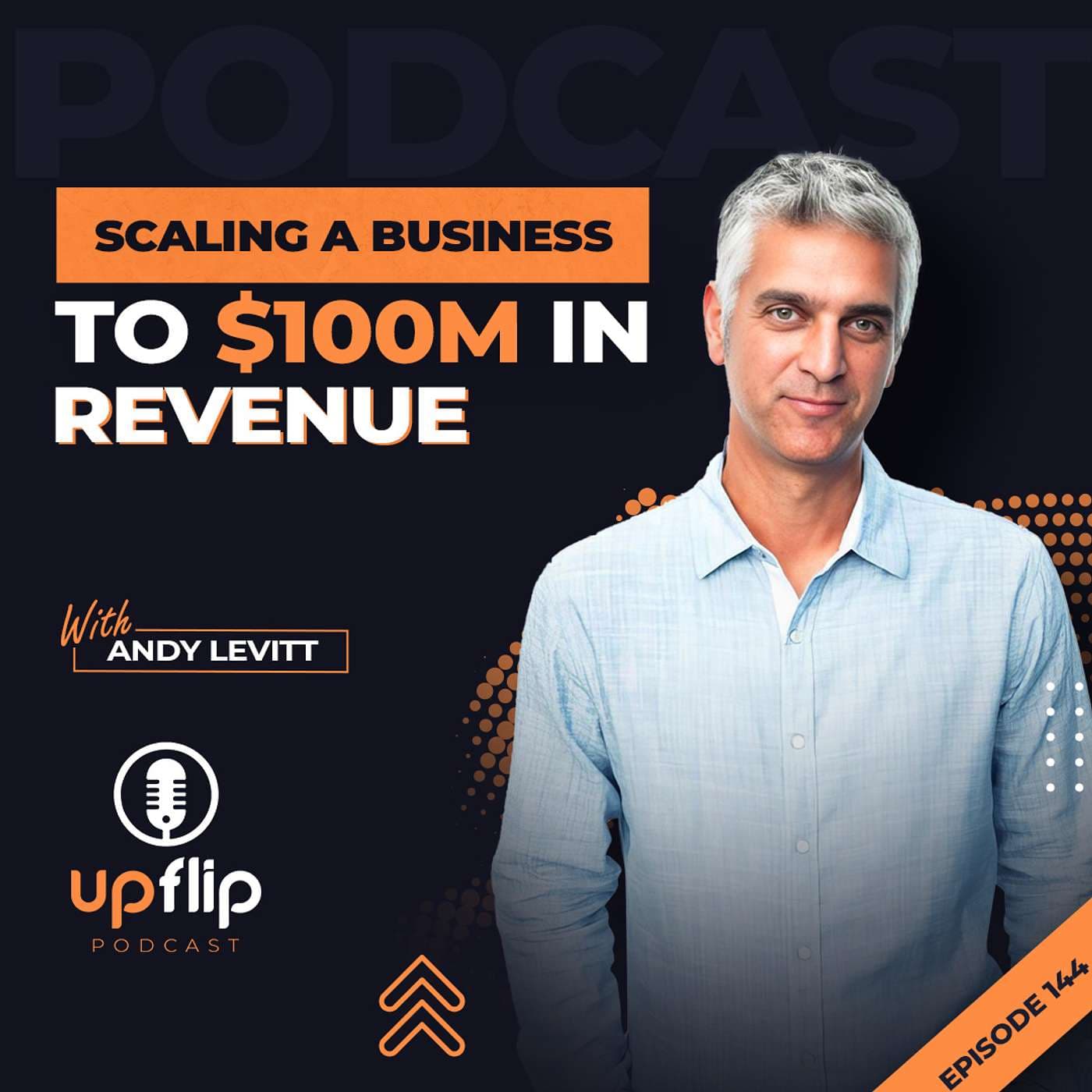
The UpFlip Podcast - Episode 144: What Does It Take to Reach $100 MILLION in Revenue? Andy Levitt Shares His Secrets
Episode Overview In this episode of The UpFlip Podcast, host Ryan Atkinson interviews entrepreneur Andy Levitt, the founder of the sustainably focused companies Health Talker and Purple Carrot, and his new venture, Brightly. Andy discusses the marketing strategies that propelled Purple Carrot to $100 million in annual revenue while maintaining an ethical supply chain and shares insights on finding your "why" in business.
Key Takeaways
The Journey of Entrepreneurship
- Andy Levitt began his entrepreneurial journey after being laid off from Genzyme Corporation in late 2006.
- Inspired by Guy Kawasaki's book "The Art of the Start," he founded Health Talker, a word-of-mouth marketing company for the pharmaceutical industry.
- Health Talker was cash flow positive within the first year, primarily due to its asset-light business model.
Transition to Purple Carrot
- Levitt identified an opportunity for a plant-based meal kit service while watching the documentary "Forks Over Knives" in 2014.
- Unlike competitors focused on a general meal kit market, Purple Carrot targeted non-vegans looking to incorporate more plant-based meals into their diets.
- The initial success was attributed to its unique positioning as the only 100% plant-based meal kit available at the time.
Lessons in Scaling and Logistics
- Discussed the challenges of scaling Purple Carrot, especially in ensuring food quality during transportation.
- Emphasized the importance of customer service in addressing delivery issues and maintaining customer satisfaction.
Launching Brightly
- After selling Purple Carrot, Levitt sought to create a more impactful venture focusing on carbon credits from food waste.
- Brightly partners with food rescue organizations to convert food loss into carbon credits, addressing food insecurity and environmental sustainability.
Finding Your "Why"
- Andy stresses the importance of identifying your “why” as a key component of business success.
- Suggested that entrepreneurs should focus on authenticity and developing a sense of purpose that resonates with their values.
Marketing Strategies
- Product-Market Fit: Start small, gather feedback, and evolve your offerings based on customer responses.
- Metrics for Success: Monitor churn rates to gauge product-market fit; low churn indicates strong customer loyalty.
- Referral Programs: Utilizing free trials or gift boxes as a means of customer acquisition proved effective for Purple Carrot.
Challenges and Resilience
- Levitt shared insights on the operational complexities of managing a meal kit service versus a marketing agency.
- He discussed the necessity of being resilient in the face of logistical hurdles and customer service challenges.
Conclusion Andy Levitt's journey illustrates that entrepreneurship is not only about financial gain but also about creating meaningful impact. He encourages aspiring entrepreneurs to take action, identify their unique value propositions, and build businesses that align with their passions and values.
Resources
- [Join UpFlip Academy](https://bit.ly/3YCKMpc)
- [UpFlip Blog](https://www.upflip.com/blog)
- [Connect with Andy Levitt on LinkedIn](https://www.linkedin.com/in/andylevitt/)
Fan Blitz Questions Recap
- Finding Your Niche: Be aware of trends and align them with personal passions.
- Net Cashflow for Investors: Show traction and progress rather than just focusing on immediate cash flow.
- Luck vs. Skill: Successful businesses often require a combination of hard work and favorable circumstances.
- Advice for Young People: Engage with the real world and pursue personal passions instead of following peers.
- Endless Ideas: Start with one idea, commit, and don’t hesitate to iterate based on market feedback.
---
This episode emphasizes the importance of mission-driven entrepreneurship and provides practical advice for building successful businesses while making a positive impact on society.
Written by AI. May contain mistakes. Listen to the episode to check what was said.
Transcript
Automatic transcript. May contain errors.0:00It's hard to believe that new businesses scale to$100 million in annual revenue, all while maintaining an ethical supply chain. The founder of this company knows how to do this arguably better than anyone else. This is Ryan Atkinson, and you're listening to the Upflip Podcast, where we uncover how great businesses are built and the secrets to replicating their success. Today, I'm getting all of the secrets from Andy Levitt, who started two extremely successful companies, Health Talker and Purple Carrot. He's now onto his third company, Brightly. He always had a goal of launching companies that value sustainability and healthier products, both of which saw rapid growth.
0:36He shares how to have a vision and see it through, including what it takes to get an idea off the ground and running and how to scale so fast that you not only compete in the marketplace, but beat out your competitors. Andy Levitt, so glad you're here today. Thank you so much for being here. Thanks, Ryan. It's great to be here with you as well. It's going to be awesome because you've already sold two very successful companies, as we alluded to that opener. Now you're onto your new venture. And I know a lot of people as entrepreneurs, they're like, I have this idea, but I don't know how to execute on it.
1:01So we're going to talk about that today. But let's start with that first idea that you executed on in 2007. This is when you really take that first chance as an entrepreneur. Can you kind of take us back to 2007, the first company you started, Health Talker? Yeah, thanks, Roman. I guess the precursor to starting it was reading a great book by an author named Guy Kawasaki. He wrote a book called Art of the Start. And you're nodding your head, you know the book. And for your listeners who may not, Guy Kawasaki started out as the chief of vandals for Apple Computers many years ago. He since has moved on to be a great venture capitalist and he was famous for top 10 lists.
1:35And that book, Art of the Start, was something that I read in like December of 2006. And the first thing that Guy talked about in his top 10 lists was make meaning, right? It wasn't make money, which one might have imagined a VC would direct someone to do. And instead it was about make meaning. And that lesson and that directive has really stayed with me for all these years as an entrepreneur. I had been laid off a month earlier in November of 2006 by Genzyme Corporation. It was the last real job I had in corporate America, having spent 13 years in the pharmaceutical industry. And I now found myself in that moment thinking, okay, should I go get another job somewhere or I'll bet on myself?
2:16And I'd had this entrepreneurial itch since when I was a little kid, I would do different entrepreneurial ventures and had a teacher business in college and was always hustling for one thing or another. And so I felt like it was kind of the universe's way to say, go scratch that itch and go do this. And having spent 13 years in the pharmaceutical industry, I felt that I really understood the challenges that marketers had in effectively marketing prescription drugs. Interesting. At the same time, I was seeing the growth of my friend Dave Balter, who had a really cool company called BuzzAgent. And I effectively built a model that was very similar, which was tapping into the trust that consumers place in their friends and the people they know to influence the decisions they have.
2:57And no one was doing it for the pharmaceutical sector to recommend a prescription drug that someone could take to treat a chronic condition that was affecting them. And so nobody gave me permission to do it, but I just said, hey, I'm going to go figure this out. And I came up with the name Health Talker, and I thought I can go and create a novel marketing technique that would sort of complement existing direct-to-consumer efforts that pharmaceutical companies had. I was really fortunate 10 years prior in 1997 to be at the forefront of direct-to-consumer advertising for pharmaceuticals. I was the brain manager for drug Claritin, which used to be a prescription drug, and we were the first product that was really heavy in the direct-to-consumer space.
3:35And I would argue that that was novel in 1997 for a prescription drug to be on TV and for a consumer to be empowered to challenge their doctor's recommendation. And that grew an entire category over the next decade or so. But by 2007, it was pretty boring. The ads on TV probably still is today, if not worse. And what I created was just a novel approach to tap into the power of a consumer communication and the trust that people have to encourage a consumer who's had experience with the drug, tell their friends about the drug to encourage them to ask their doctor. And I built a business out of that, even though most people said I was crazy to do that.
4:10I love that. I want to ask about you got laid off and then basically the next month, like you started this company as well. When did you start becoming like cash flow positive? with Health Talker. So, you know, the business was incredibly asset light. And my wife's cousin used to joke that I was just selling air because I would enroll consumers to be a part of these Health Talker programs. I didn't spend any money to enroll them because I was working with pharmaceutical companies and their existing database of consumer emails that they would have, they would give to me as their service provider.
4:43And so it was really the cost of goods were remarkably small. So I didn't have to raise a lot of capital. I only raised$300 ,000 for the whole business and scaled it quite significantly over the years. And so even after probably the second deal that I secured, so within probably the first year of operations, I was cashflow positive and stayed that way for the duration of the five and a half years I ran the business before selling it. Yeah, that's super interesting because I feel like a lot of people, they want to start companies, but it's also identifying those companies that are going to be cashflow positive within obviously the shorter, the better timeframe, but it sounds like for you is like under a year, but like with that initial like$300 ,000 investment, like you're starting to be cashflow positive.
5:20And maybe you're looking back and saying like, oh, this was the right idea to start my own business and not go another corporate route. Yeah. Well, certainly it was the right decision not to go the corporate route. I just, I'm wired as an entrepreneur and for better or worse, you know, it's not for everybody, but for me as an entrepreneur, it's all I know now. And I could never really go back into that space. It was a great training ground for sure in corporate America for 13 years, but I've loved the last 17 years far more as an entrepreneur continuing to bet on myself. The unit economics of that business, Health Talker, were really compelling.
5:52And I think I'm replicating something similar in my current business, which we can talk about as you wish. But in the second business, Purple Carrot, there was a ton of overhead and ton of OPEX that we had to manage to scale that business. So that was a very different sort of journey. And I know the listeners are going to be curious about Purple Carrot. Obviously, is a widely successful business as well from a social proof. You guys have over 22 ,000 followers on LinkedIn. Let's actually start with starting Purple Carrot. How did you identify the opportunity for Purple Carrot to actually get started with this one?
6:21Yeah. So again, having spent effectively 20 years in the pharmaceutical sector where 13 of it was on the corporate side and then six and a half years running Health Talker, which was again, a word of mouth marketing company for pharma, it was all about promoting the value of Western medicine. So if you sort of find the thread in my career, it was 20 years about saying Western medication and Western medicine is the cure for everything, right? And in January of 2014, at the recommendation of an ethically vegan friend of ours, my wife and I watched a documentary called Forks Over Knives. And it kind of blew me away.
6:55So it's this storyline for those of you who haven't seen the movie. It's a documentary about these two physicians who both grew up independently on dairy farms in the Midwest, become physicians and recognize that the value of a plant-based diet over the standard American diet as effectively the cure for most chronic health conditions. And it introduced me to this idea of food as medicine instead of drugs as medicine. And I was so taken by this approach. I literally turned to my wife at the end of that documentary and I said, that's what I'm going to do. She's like, what are you talking about? And I said, I'm going to start a plant-based meal kit company because more people need to know about plant-based eating.
7:29Now I had the ability to sort of make that statement because just a couple months earlier, I learned this great company called Blue Apron that had kind of innovated and started here in the United States. And they were a very well-funded venture-backed company. And there was a company called Plated and HelloFresh, which is still in existence today. And they were sort of all creating this model of introducing the world, or Americans certainly, to a meal kit. But I looked around and I didn't see anyone doing anything around the plant-based space. And so I thought, that's my opportunity. I'm going to follow this existing path.
8:02Now, granted, I knew nothing about what it would take to create a successful meal kit business, which was probably to my benefit because if I knew all that went into it, I might have not chosen to do this. But I went after it thinking, okay, I'm going to go to the edges and I'm going to be different with a plant-based meal kit because at the time, 2014, plant-based foods were not anywhere where they are today, 10 years later. And I was betting on the fact that people are going to pay for convenience. People are going going to be curious about how to eat more plant-based foods. And if we could do it well and build a brand, I could be successful.
8:34So it sounds like the first company that you started, is it fair to say it kind of came out of, not necessity, but like you're kind of like laid off and you started HealthOcker. You know, look, I got laid off right around Thanksgiving. And so December, January, it didn't feel like a great time to go look for a job. And I'd had this idea. I actually mentioned to my friend Dave and I tried to partner with him to sort of say, let's do this together. And it wasn't the right fit for his organization at the time, which I fully respect. And I thought, well, then I just better go pick myself here and I'll just, I'll go figure it out on my own.
9:01And so that was kind of, that was a really seminal moment for me to realize, hey, well, you know, I've got to just go pick myself here. And if I do, I'm the only one I got to answer to here and let's go figure it out. And I knew I wasn't going to let myself down. So that was important to go ahead in that direction. Interesting. So yeah, Purple Carrot was started because you identify this opportunity basically from like a documentary and you're like, hey, people are going to pay for convenience. I'm an early player in this space. Let me actually go start this company. That's kind of how the two businesses first formed.
9:28Yeah, it was uncovering this idea that I certainly hadn't heard about was plant-based eating, which again, 10 years later, seems pretty commonplace. But in 2014, there was very few plant-based vegan options that were available. Nobody was really talking about that. The big incumbent brands that you see today, like the Impossibles and Beyonds of the world, they didn't exist. And the main large venture-backed firms were going after a land grab for just the consumer who wanted to cook food, but they weren't differentiating at all. And, you know, where I felt like Purple Care could be a unique product offering because we were the only 100 % plant-based meal kit on the market.
10:04And that was going to be our DNA. But the key trick there was that I wasn't going after vegans who only represent about two to 6 % of the population, at least back then they did. Maybe it's slightly higher now, but it was more about creating what I, in my early days, defined it as sort of vegan food for non-vegans, right? Because that's the bigger market. And so I was trying to sort of go to the edge to differentiate my brand, but then appeal to a wider segment. And if I could just get a wedge in there and appeal to those people who would say for three days a week, just eat plant-based food for those three dinners.
10:32I like that. It wasn't like, hey, go be a vegan and preach vegan. I'm not vegan and I eat a pretty plant-forward diet today, but I am an omnivore and that is the market. So I had the approach was to get started and jump in knowing far too little about the space, but just go and get started and build a brand and start something and test out a product market fit. And then, you know, I started to scale. But at the beginning, we were just a regional service only available in the Northeast and mid-Atlantic. And we only offered dinners for four people, two meals per week, and you had no choice. And, you know, the meals were pretty terrible.
11:06and it wasn't well packaged. It wasn't well branded. It was just so JV and early on, but I had to start JV, right? Because if I allowed myself to say, well, let me hide behind, you know, what's not perfect and not do this, I would never have done it. Or somebody else would have certainly come and done it before me. And so I think what I'm proud of is the ability to sort of take that risk. People said, you are crazy to start a plant-based meal kit. Like, why doesn't Blue Apron just do this or HelloFresh? They're going to knock you right out. And I just thought, well, they would have no need to do this because they would go after a vegan audience and that's not big enough for them to try.
11:39So rather than worrying about them stealing my market share, I was just going to go steal theirs. Can I get a drum roll, please? Because we are giving away a free lifetime access to the Academy for one lucky listener. And it's super simple to participate. All you need to do is leave us a review on Apple and then send us a screenshot as proof. Takes five minutes for lifetime access to the Uplip Academy for free. So two steps, leave us a review on Apple Podcasts, send us a screenshot, and the link to participate is in the show notes below. If you are a wannabe entrepreneur, the courses in there are so invaluable for you to actually get that first business idea off the ground.
12:16And then for the current business owners that are looking to sharpen their skills, there are a ton of courses in there for you. And the best part, you're going to be able to connect with other top-notch entrepreneurs in your field to network work with them and learn from them. The winner will be announced on July 26th. All you need to do, leave us a review on Apple, send us a screenshot of proof, and you guys can find more details in the show notes below. Let's talk about finding that product market fit as well. Can you talk about someone that's listening right now and they're like, okay, I have some ideas that I want to start executing out, but I want to see, get that product market fit.
12:46What advice would you have for someone that is looking for that product market fit? I would say start and don't over analyze all of your choices for how to attack the market, but start really small and try to get 10 of your friends to say, I'll do this. And then ask them to tell five of their friends. And all of a sudden you've got 75 people or so who are going to be working with your product and you're going to get some really clear and honest, candid feedback about the product market fit. And you've got to start really small like that because that's the only way you're going to get going. And as you continue to evolve, you can start expanding and expanding more and more.
13:20And so So I think, you know, listening to your early customers is really helpful to ensure that you do have a solid product market fit. But, you know, recognize you're probably not going to get it right on that first try and you will need to continue to evolve and tweak and tweak and tweak. And whether that's the features you're offering, the way you're positioning it, whether it's the price point, your delivery options, any of those kinds of attributes that you can, you know, continue to tweak and test until you sort of land on something. And then I think it becomes very apparent when you know you are on it and people are repeating and ordering in and telling their friends about it.
13:51And that's where things can really get interesting. I want to ask, what's like a key metric there that you would look for? Is it like people like coming back again and again, or like, what are some key metrics when you know that you have found that product market fit? Yeah. So again, in our first year, we didn't offer choice. We were also a pay as you go service. I was too afraid, frankly, and didn't have the confidence in our product to make it a subscription product, right? Everybody else was a subscription product and ours was a pay as you go. So you sort of had to start every week. I would watch my numbers go back to zero every week.
14:21And I knew I was onto something when people were writing in saying, wait a minute, where's my box this week? Shouldn't I have gotten it? Because they sort of were expecting it, but we're like, actually, we're not yet a subscription. And we then sort of moved into about a year into it. I expanded to the West Coast and I introduced a two-person plan and a four-person plan, and then soon added choice and some improvements to our site and the overall user experience of it. And the metric to answer your question directly was those repeats, right? And the lack churn. And if we could then hold on to a customer for, you know, five weeks or so, you knew that they're going to stick around.
14:56And so the difference between the cohorts who are sort of the one and done wasn't for them. Two to six or two to five orders, you know, they were okay. And you sort of break even on them. It was really once you got someone to commit and order your product six or more times, week after week after week, you knew that they were going to be your high value customers. And they're the ones who then would really spread the word to others and sort of back to my word of mouth marketing days, that was a key driver of our success. For Purple Carrot at the time, one of the best acquisition channels was sort of a free box giveaway that you as the customer could gift a box to a friend at no charge to you or to them.
15:33And that proved to always be the most reliable channel to acquire customers. Yeah, because basically you're mixing in one like a referral, which is one of the most powerful acquisition strategies out there, but like also to like a free box and like, it just gives them the taste to get a little bit of a sense. Be like, oh, I actually really like this. Like, let me actually place my order. And then, and then they become those customers for you. Yeah. And that customer's on the hook because they've recommended it to their friends. They don't want to look like a fool. So they're hoping that, you know, their friends are going to love the box and they might talk about it.
16:01Now they're talking about it and other, you know, so it's sort of a way to also stimulate some additional word of mouth and get that loyalty and reward the people who've been your customers. But that metric of customer churn, that was a a key driver for what became a very successful company. Yeah, absolutely. And I want to talk about that expansion as well, because it sounded like you're basically in that Northeast, like mid-Atlantic region. And then after a year, you started offering more products and you guys moved to the West Coast. What were some of those difficulties going to the West Coast from like the East Coast?
16:28How long do we have? Yeah, there could be a whole podcast about this. And what I'm thinking about when I asked this is like when Phil Knight and Nike like expanded and like all the difficulties they had. So that's honestly, I've tried to distill that as well. Yeah, well, I think Shoe Dog is one of the best business books out there. It's a great business book. Yeah. I saw a lot of my experiences in his journey. Oh, I'm sure. You know, I brought in a bit of a celebrity endorsement at the time, expanded to the West Coast, introduced subscription, introduced two-person plan. There was a lot of sort of moving parts all at the same time, which was an intentional decision.
17:00I think quality control and consistency, that was a challenge in addition to just being able to sort of scale up and meet that demand. And, you know, soon, you know, within maybe another year, we added the middle part of the country and then had the 48 states that we would service with one or two day delivery. And, you know, it was just, it became a, it was a significant logistical challenge. And I am so grateful to the incredible staff of people that were working at Purple Carrot and the operations roles in particular, who could sort out and manage the various complexities of having three different distribution centers around the United States with different meals and choices and preferences and having to sort of start out.
17:37every week over and over and over again with new meals, new ingredients, new booklets. It was an exhaustingly complex and tiring business. And so when I compare it to both Health Talker before it and what I'm doing today with Brightly, the operational challenges at Purple Care were immense. And again, I'm so grateful to the team of people that I worked with and our team who was able to scale a very complicated business and do it while protecting some really strong margins that allowed us to be very successful as we scaled in the latter half of that timeframe. Yeah. I feel like the logistical aspects of I just work like agency work, so I don't have to figure out shipping.
18:11I don't have to deal with the USPS, FedEx, all that stuff. But I feel like the logistical challenges, especially with only three facilities has to be immense. And like, you have so many different problems that like figure out for that one to two day delivery to actually get them a product that they do love. I'm curious when I say this now, a question that comes to mind is how did you guys ensure the quality of like the food was okay once it was like being shipped? Oh, it's a great question. And it is almost like an act of God to get a perfectly packaged box to a consumer because, you know, you've got human involvement on the front end taking, you know, and ours was all plant-based.
18:43So you've got a lot of produce that some which is highly perishable and sensitive to either extreme heat or extreme cold. And whether you're, you know, when you're shipping, you know, 52 weeks out of the year and you can use all the insulation and gel packs you can to protect what's there. But, you know, those UPS or FedEx trucks get exceptionally hot in the summer and a box might be sitting on a doorstep for longer than it needs to or should be or someone's away. And so not only do you have to worry about the perishability of the product that was there, just the logistics of even that last mile delivery could sometimes fall short and fall through.
19:17So there was a significant emphasis from customer service that Purple Carrot had. Again, I'm no longer a Purple Carrot, but during my tenure there, we had to heavily staff up our CX team and provide varying levels of support back to the customer. And it led to a significant amount of rebates and discounts and refunds back because some people would get upset and you wouldn't want to lose that customer over either a bad meal or a damaged product or something that was left out of their box, which also would happen. And it was just, again, so many human logistics made that business exceptionally difficult to run week after week after week without fail.
19:53Yeah, that's what I think is the hardest thing, because you can control your own boxing, your own gel packs and everything, but you can't control how FedEx is going to actually ship this. Like you said, that last mile, they could be sitting in a 120 degree FedEx vehicle in the middle of whatever Texas in the middle of summer. I feel like a lot of times it comes back to that great customer support that you do provide to actually make them feel like, hey, we did mess up, but we will correct this. Yeah, that would often go a long way and it was a necessary step to retain those customers. Look, I was really proud of the brand that I built and the team that I had and the impact that we had on both people's health and the health of our planet, which was sort of the two central drivers for the rationale and the mission going back to Kai Kawasaki, you know, make meaning.
20:32It was having people eat more plant-based meals for their health and health for our environment. I love it. Let's talk about the next meaning of your life. Let's move to Brightly. So how did you identify? Can you kind of first give a background of what Brightly does? And then also like how you identify this idea as well. Talk about all three business ideas and how they started. I love that. Yeah, for sure. So Brightly is a service business that creates high integrity carbon credits from avoided food loss and waste. Most people might hear that and say, what the hell did you just say? Effectively, we're in a two-sided marketplace and there's supply and demand like any marketplace.
21:06And our supply all comes from nonprofit food rescue organizations. And that's who I built Brightly for. So Brightly is for nonprofit food rescue organizations who are in the business of recovering food that would otherwise get thrown away and end up in a landfill. This is generally perfectly edible food, but might be short on expiration dates. It might be a little bit damaged or bruised, but it is certainly edible and healthy for people to consume. So rather than that food ending up in a landfill where it would otherwise decompose and release toxic methane gas, which is leading to our warming planet, these organizations do great work of diverting that food and recovering it before it ends up in a landfill.
21:43And they go and they bring it out to pantries in their network to feed people who are experiencing hunger. There's about one in eight Americans live in a place of food insecurity where they don't know where their next meal is going to come from. But at the same time, there's about 80 billion tons of food ending up in a landfill every single year. So there's this whole mismatch between quantity of food we produce in this country and the number of people that are living in hunger. So there's also this introduction or the creation of something called the voluntary carbon market, which is where corporations have raised their hand voluntarily to say, we want to be a sustainable company and we are going to get our emissions down to zero.
Read the full transcript
22:15So we will be a carbon neutral or net zero company by a certain date in the future. And while these corporations will try to change some of their supply chains and their operations, which is a very good start to take, most every company out there is going to likely need what are called carbon credits, which is what we're creating, which is the equivalent of a ton of carbon dioxide or a CO2 equivalent like methane gas that is either removed or avoided from the atmosphere. And so these corporations who have a big carbon footprint through their general working business that they have, they can purchase carbon credits to then offset their emissions with those credits.
22:50So again, we're taking the good work that food rescue organizations are doing by avoiding methane escaping into the atmosphere. And we're turning that into a carbon credit that we can then sell to corporations who use that to reduce their own emissions. And we give the majority of that money back to the food rescue organizations to help sustain their operations, recover more food and feed more people. and ideally keep more methane gas out of our atmosphere. So let's talk about how did you identify this business opportunity, the other necessity, identifying it from like a documentary. How did you identify the opportunity with Brightly and that one that you actually wanted to like execute on?
23:23Yeah. So I sold Purple Carrot to a Japanese company in 2019 and stayed on for a three-year earn out. And by the last year, I was pretty bored and I just felt like this wasn't my company anymore. And I'm a zero to one kind of guy and it was a lot of lock and tackling. And so I was trying to find some way to be energized by what I was doing still. And I wanted to create a corporate social responsibility program. The business was really, really successful. We had huge revenues and I wanted to give back in some way. This is sort of, you know, through COVID and I thought this is the right thing to do.
23:53And so I partnered with a group that I learned about called the Farmlink Project, which was a group of students largely from Brown and Stanford who started this really innovative food rescue organization that is now one of the fastest growing ones in the country. And I picked them as my corporate social responsibility partner while at Purple Carrot. And I gave them some money and some mentorship. So I was leaving Purple Carrot. They said, hey, why don't you join us? I said, you know, I'm really humbled. I'm not sure if I'm ready to work at a nonprofit just yet, but maybe there's something we can do in the for-profit space.
24:22And so I ended up working with them for about eight months as a consultant. And that opened my eyes up to this whole connection between food waste and our warming planet and this idea of carbon credits and how it could all work together. And so at the end of my eight month engagement with them as a consultant, a lot of this work was just kind of sitting there and it was done and I was done too. And so I spent, I don't know, another couple of months looking around for a job because I thought, I guess I got to get a job now. And I just, that's not me. I'm just the entrepreneur guy, you know, and starts companies.
24:51And I watched a webinar by my friend, Seth Godin, and he talked about his upcoming book and it was all about sort of doing the important work and making meaning. and I closed my laptop. I walked into my kitchen, said to my wife, I'm gonna start another company. And I just felt like what I'm doing with Brightly was too important to not do again and not do. And so there's just so much opportunity here, I think, to both do good and do well at the same time. And I just said, I'm gonna go figure this out. So I literally started right then and there and said, I'm gonna go do this and build a team and figure out funding and product market fit and go make it happen.
25:20You decide then there that you're gonna go start Brightly. Like, take me through that step that you did because I want people that are listening that are like, okay, we've been through two business ideas. You're on your third one now. And it's going to be successful like the other ones. But like, what was that next step that you took to actually get it going then? Yeah. So, you know, I looked at the market, right? And I could see that nobody was doing anything with carbon credits from avoided food loss and waste, right? So there was sort of a white space to what I was doing. There were other decarbonization schemes, if you will, in terms of, you know, there's people that you can use forestry to decarbonize.
25:52You can use soil. You can use the oceans and a variety of ways that we can help try to take carbon out of our atmosphere and cool our planet, but nobody was doing anything within food waste. I knew that from the work I'd done, there was a great opportunity here. I had a huge level of empathy for the food rescue organizations who do this work, who don't get paid for what they do, but they have all the data of the food that they recover. In thinking about sort of the operational complexity of Purple Carrot versus the operational elegance of my first company, Health Talker, rightly felt a lot more like that because we have no overhead.
26:22We have no OPEX. I can get by with a small team and a technology platform that we've built, and we can serve some really incredible people who recover food on behalf of people who are hungry. And we can service corporations who are going to need to use these offsets to reduce their emissions to a place where they can be sustainable and meet their promises to their constituents. So I had two friends of mine who I wanted to reach out to, who I've been speaking with about the idea of doing this together. And I said, hey, I'm going to do this. You want to come join me? And I named the company and we just got going with it.
26:50It sounds like a lot of like your meaning of like why you do business is like actually being able to make like impact on the world and kind of leave it in like a better place than you found it. Essentially, it sounds like for basically all three business ideas that you've had. Yeah, thank you. I mean, the first one, Health Talker, was sort of a, I think, a novel idea to be an entrepreneur and start a company that led my experience as a pharmaceutical marketer and now do something that could create a business in the B2B space. But certainly with Purple Care, that was very mission-driven about people's health and the health of our environment.
27:19But I was selling abundance. Whereas now with Purple Care, I'm sort of focusing on the scarcity that exists and the people who don't have the ability to get food on their table every night, certainly not a meal kit, which is this elegant, beautiful solution for people to have pre-pushing ingredients ship right to their door with a step-by-step way to make a delicious meal. So I have thought a lot about my kids and my wife and I are very blessed. We have a nine-year-old, 11-year-old, 13 and 15-year-olds. vision. And so I think about the world they're going to inherit and what can I do as a human being to positively alter the trajectory of our planet.
27:51And I felt really good about the mission I had with Purple Carrot. And I love it the way my kids understood what plant-based eating is and what it means and why I was doing that. And now with Brightly, I feel like they're really mindful of food waste and our warming planet and the way I can service and support these food rescue organizations. And I really believe that if and as we are successful, we have the opportunity to affect the lives of millions and millions of people. And that gives me so much pride and reasons to get out of bed every day and go after this. I love that. I feel like having your reason why as a business owner is so important to have.
28:22And that's going to be our last question before we get to the fan blitz questions. How should someone identify that why? And I'm sure we could be able to talk 20 minutes after about that why, but can you kind of sum up how should someone find their why when starting a business? I think it's a very personal decision or personal question. and I would say there should be no judgment to what that why is as long as it's authentic to you. That's going to motivate you and get you going because it is not easy to be an entrepreneur. It's certainly not for everyone, but for those of us who want to be entrepreneurs who are entrepreneurs, you've got to set that North Star and purpose and why you're doing that.
28:56If it's just about chasing money, it's not going to work. You'll be lucky if it is, but if you really have a sense of purpose and passion, that's going to, again, be very specific and unique to you as an individual, I don't think it really matters what that is. And if there's a purpose to it and a sense of good, that to me is going to stand out most and be the most important thing someone can keep in mind. Well, I've kept a lot in mind this podcast episode. This has been great. But we're going to go down to our last segment here. And these are FanBlitz questions. And these are questions submitted from our community.
29:23And if you want to join in on world-class entrepreneurs and ask them questions directly, listeners, you can go to www.youtube.com slash upflip and submit your questions there. But Andy, ready for our last five questions? Ready to go. Awesome. Number one, I just kind of asked this, we're going to kind of reiterate it here, but how can I find out what my niche is, what I'm passionate about, and then use it as a business? You've got to be really aware of the trends that are out there in the world. And I was seeing trends with Health Talker about the decline of direct consumer advertising, how boring it was becoming.
29:55And I tried to find something novel. With Meal Kits, I saw the growth of the category, but nobody was doing anything with plant-based. I was intrigued by that idea of plant-based having watched this documentary, and I saw that as a growing trend, that Meal Kits were going to be a thing for a period of time, and they certainly grew into that and have sustained itself. With Avoided Food Loss and Waste and Carbon Credits, I never would have thought that would be of interest to me. But as I tapped into sort of this personal passion around what food banks do and what food rescue organizations are doing and the people they serve, that felt really personal.
30:23And I've donated my time for several years delivering food to people on Sundays. And that's been really meaningful. So it's attaching to, I think, sort of what you care about and the trends that you see to then recognize how can I make a business out of this? Because then it doesn't be like work, it's just fun and what you do, it's how you live your life. Oh, yeah. Good stuff. Number two, is a positive net cashflow still relevant for investors in 2024? Like, I think the investment dynamic over the last 12 to 18 months has been very, very difficult for early stage companies and even later stage companies for that matter.
30:53in that there was a huge rush to invest in companies during the sort of frothy COVID days. And I think a lot of investors suffered from FOMO and investors who probably shouldn't have been investors were investing in companies at insane valuations for that fear of missing out. And I think that spooked a lot of people and it changed the relationship that VCs have with businesses. And there's been this big pullback. So I think my advice for an entrepreneur thinking about positioning their business and how important positive cashflow is, I don't think that that's that critical. I think it's about showing traction, showing progress, doing what you say you're going to do and continue to show up and communicate in the right way, focusing on sort of a, you know, if you can, a novel solution to a problem that really does exist and at least having a path to how you can be cashflow positive, recognizing that businesses will take time to grow.
31:42But I think as long as you can paint a clear picture that you believe in, that they can believe, that's going to be more important than getting positive cashflow that quickly. That's a very, very good answer. So kudos to you on that one. Number three, do you think finding a thriving business is luck? I think luck plays a really important role. I was just talking with a dear friend of mine about this the other day that it's sort of a baseline. You've got to be good. You can't just be lucky. You've got to be good, right? But just because you're good doesn't mean you're going to win. And so I think you've got to be really good and get pretty lucky.
32:13And when those two things line up, you just might be successful. You can't be bad and benefit from luck. I just don't think that happens. I think that you've got to have sort of this baseline level of competence and then hope that the hard work you've done and the opportunity you've set yourself up for comes to fruition when the moment hits. That's great. I a thousand percent agree. Number four, what is the best and worst advice for young people? The best and worst advice for young people. The best advice for young people is to get off your phones and get out the real world and pick your head up and notice things and learn how to communicate with other human beings and not rely on just text and screens.
32:53The worst advice for kids would be to think that they have to do what their parents did or what their friends are doing. Maybe that's even more appropriate, not so much the parents, not to get influenced by what their friends are doing, right? And that they need to learn to follow their personal passion and do what lights them up because of their life and they had to go figure that out. And if they're swayed by what their friends think is cool instead of what they really believe in, I don't think the outcome is going to be so great. That is very good advice. Number five, last one for you. I have endless ideas, but I don't have a clue as to where I would begin.
33:26What do you recommend? Start with one of those ideas and don't ask your friends which one they should tell you to do. Just do it and commit and lay out the path of how you're going to go after it and put all of your energy into it for as long as you can sustain it. And until you figure out to have the right market signals here that are telling me this is, I think this might work or this probably doesn't look like it's going to work, but also not give up too quickly. There's a great book by Seth called The Dip about knowing when to quit and when to stick with it. And that's a great book I might recommend to your listeners, but don't use the number of ideas that you have as a place to hide, pick one and go after it and forget about all the other ones until you've really exhausted what you think is the best choice on your list.
34:06I love that. And it was a great choice by us to bring you on this podcast, Andy. This was awesome. So thank you so much for being here. Just last question for you. People are like, oh my gosh, this was an amazing episode. I want to learn from Andy. I want to ask him questions. Where can they learn more about you and connect with you? Oh, thanks, Ryan. This was a pleasure. I'm on LinkedIn and my email is andiedjosbrightly.com. So feel free to reach out directly if that's your interest. And I'm happy to be a resource or help to anyone I can be. Three quick takeaways from this episode with Andy Levitt.
34:33Number one, if you guys are looking for a KPI and if you have product market fit, look for your churn rate. Do have a very low churn rate. If so, people probably love your product. And that means you need to start expanding and building up those operations. Number two, arguably the biggest takeaway from this was find meaning in your work. All three companies Andy started, he had meaning behind his work. He wanted to make an impact on the world and leave it a better place than when he found it. Find meaning in your work. Number three, lastly, if you guys are wanting to have a business idea, you could have thousands of business ideas, but you just need to get started.
35:04You need to build out that business plan and then just start moving on it. You're going to make mistakes, But that is the fun of being an entrepreneur. You have to take action to go from that wannabe-preneur to an actual entrepreneur. So take action. And if you enjoyed this episode, be sure to check out episode 129, where I sit down with Shan Gregg, a Simply Sense Candle Co., discuss how she went from laid off to making$85 ,000 per month. It all started from her home kitchen. This was a super fun episode to record from her, basically going from the lows of lows to the highs of highs, all in a kitchen.
35:33Amazing episode. Definitely check out that one as well. Awesome. You're the best, Andy. Thank you so much for being here. Thanks, Ron.
From the publisher
Andy Levitt is an entrepreneur and founder of two sustainably focused companies, Health Talker and Purple Carrot, and now focused on the next venture, Brightly. The crazy part? While both companies are extremely successful, Andy also managed to scale Purple Carrot to $100M in annual revenue while maintaining an ethical supply chain. In this episode, he sits down with Ryan to spill the unconventional marketing strategies that have brought his businesses great success.
Andy explains that finding your “why”, being authentic in your business goals, and focusing on selecting key metrics for a product-market fit are all vital components of a successful endeavor. He also discusses the logistical challenges of scaling Purple Carrot while ensuring the quality of food during the shipping process.
Have a listen and learn why a genuine connection to your business aims and objectives will create long-term success and fulfillment.
Resources:
- https://bit.ly/3YCKMpc Join UpFlip Academy
- https://www.upflip.com/blog Delve deeper into the world of business with more strategies and how-tos on the blog
- https://www.linkedin.com/in/andylevitt/ Connect with Andy
Ready to be your own boss without starting from scratch? Grab our FREE Franchise Guide and unlock the secrets of proven business models that have already created thousands of success stories.
Connect with UpFlip:
- On Youtube
- On Instagram
- On Facebook
- @UpFlipOfficial on Twitter
For more insights to start, build, or grow a business, check out the resources on UpFlip.com or head to the UpFlip YouTube channel to see more interviews with business owners and experts.
Thanks for listening!


