
In short
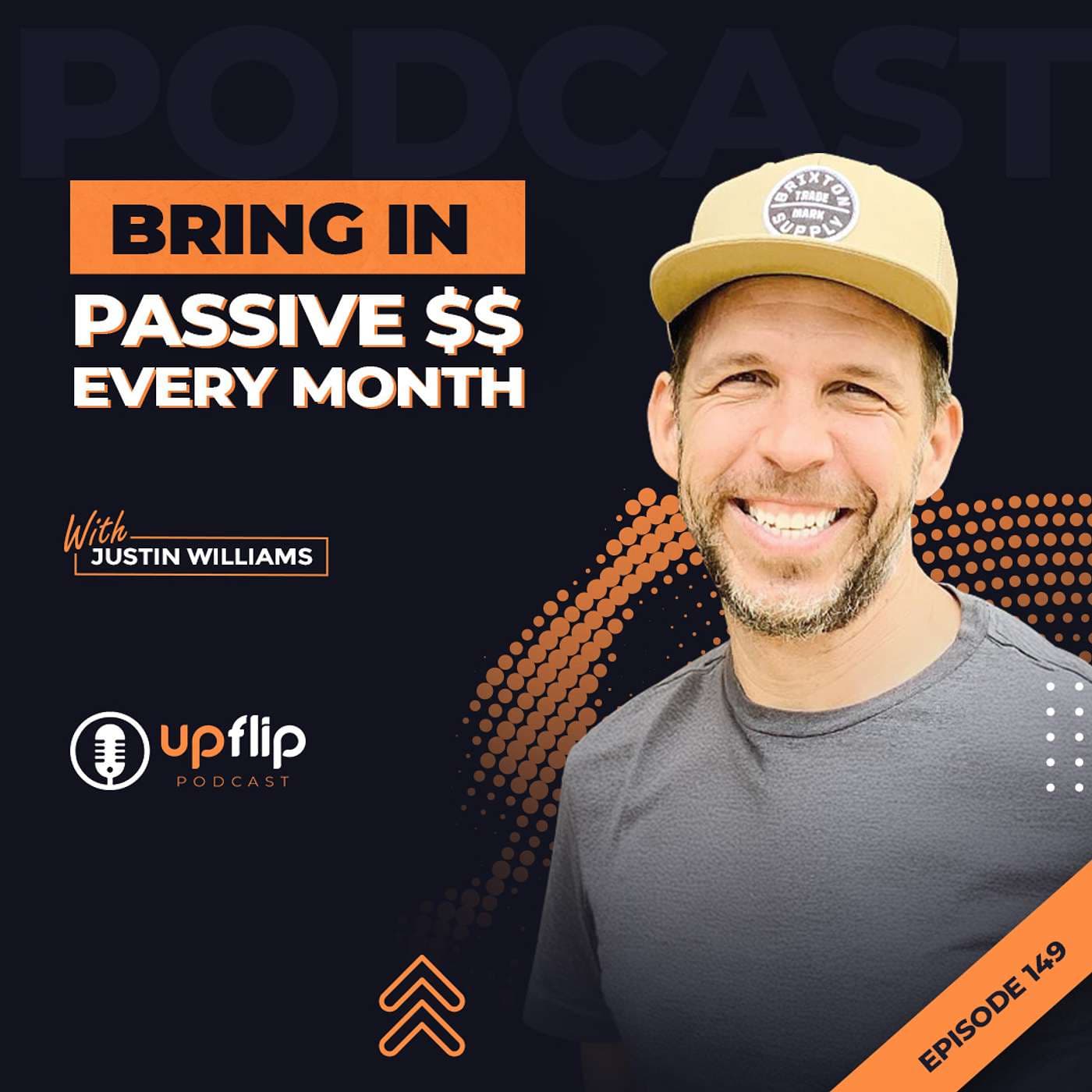
The UpFlip Podcast: Episode 149 Summary
Episode Title
How to Get BIG Passive Income Payouts — Real Estate Investing 101
Guest
Justin Williams
Episode Overview In this episode of The UpFlip Podcast, host Ryan Atkinson speaks with Justin Williams, a successful real estate investor who generates over $40,000 monthly in passive income. Justin shares his journey into real estate, the lessons learned from failures, and strategies for achieving financial independence through property investment.
---
Key Concepts and Discussions
- Justin's Background and Initial Struggles
- Entrepreneurial Spirit: Justin's desire to own a business began in childhood, influenced by his family's financial struggles.
- Initial Business Failure: His first venture resulted in a loss of $120,000, but it provided valuable lessons that shaped his future decisions.
- Partnership Dynamics: Issues with partners and team members taught Justin about accountability and the importance of having standards in business.
- Transition to Real Estate
- Wholesaling to Rentals: Justin started with wholesaling short sales and later transitioned into rental property investments.
- Learning Curve: He learned the ins and outs of real estate during a tumultuous period in the market (2007-2008).
- Risk Mitigation: Wholesaling allowed him to mitigate risk, making it easier to enter the real estate market without significant upfront investment.
- Building a Real Estate Portfolio
- Initial Success: After overcoming early struggles, Justin began to acquire rental properties, focusing on cash flow and scalability.
- Systematization and Efficiency: Justin emphasized the importance of establishing systems to streamline operations, including:
- Standardizing contractor prices.
- Training agents to handle various tasks to reduce workload.
- Mindset and Personal Growth
- Overcoming Fear of Failure: Justin discusses the psychological barriers entrepreneurs face and the importance of shifting mindset towards viewing challenges as learning opportunities.
- Action Over Inaction: He stresses the need for taking action, stating that successful business owners learn and adapt as they go.
- Advice for Aspiring Entrepreneurs
- Start Small: Begin with a service-based business to quickly generate income, rather than jumping into high-risk ventures.
- Research and Passion: Identify what you enjoy and analyze how others are succeeding in that space.
- Take Action: Encourage listeners to act quickly and not get bogged down by excessive planning.
- Investment Strategies
- Passive Income Investments: Justin currently invests in commercial properties and enjoys the tax benefits that come with real estate investments.
- Private Money Lending: He lends money for house flipping, earning attractive returns without the hands-on involvement.
---
Key Takeaways
- Importance of Resilience: Failure can lead to growth; Justin's early debts motivated him to push harder.
- Real Estate as a Path to Wealth: Properly managed rental properties can provide significant passive income.
- Systematization is Key: Streamlining processes in business can lead to greater efficiency and success.
- Mindset Matters: A positive and proactive mindset is crucial for overcoming obstacles in business.
---
Resources Mentioned
- [Millionaire University](https://www.millionaireuniversity.com/)
- [UpFlip Podcast](https://www.upflip.com/podcast)
- [Join a Community of Entrepreneurs](https://bit.ly/3WNvcVL)
---
Conclusion This episode of The UpFlip Podcast highlights Justin Williams' inspiring journey through the ups and downs of entrepreneurship, emphasizing real estate investing as a viable method to achieve financial freedom. His practical advice and insights can motivate aspiring entrepreneurs to take action and familiarize themselves with the real estate landscape.
Written by AI. May contain mistakes. Listen to the episode to check what was said.
Transcript
Automatic transcript. May contain errors.0:00We all know the power of passive incomes, but there's a way to effectively bring in tens of thousands of dollars each month. Our guest today proves this possible through the power of real estate investing. He started flipping and owning rental properties and now makes over$40 ,000 per month. This is Ryan Atkinson and you're listening to the Outfit Podcast, where we uncover how great businesses are built and the secrets to their success. Justin Williams mastered the art of flipping and owning rental properties and scaling his portfolio so that he can live more than comfortably off his passive income.
0:31In today's episode, we talk about how to own and manage properties most effectively, the mindset required for success in real estate investing and how to make owning properties as hands-off as possible. Justin, I am so, so excited to welcome you to the show. Thank you so, so much for being here. Hey, Ryan. I'm pumped to be here. Thanks for having me. Yes, I'm super excited to have you. Let's kind of rewind the clock back on your career. Can you share what inspired you to leave college and pursue entrepreneurship despite having all of your expenses fully covered? Yeah, for sure. Yeah. So I've always wanted to own my own business.
1:00I remember when I was young, I was born in 1980. And if anyone knows anything about that time, interest rates were insane. My dad graduated the same year from college to be a project manager and just couldn't get work. I just remember for the first few years, people say like people don't usually remember like when they were like below four or five. And memories that I have is like each night, like hoping that my dad won't lose his job, hoping that we can pay. Like I remember those things. So I remember as I got older, just always like working hard, trying to make money. and we would literally like go to the grocery store and take candy bars that were, you know, supposed to be the world's finest.
1:33I don't know, you might be too young. Maybe you've never heard of those, but they were like fundraising candy bars. We'd have cases in our house and we'd just sell those and try to make money. My parents were involved in a lot of MLMs, like multi-level marketing groups, and they didn't really make money through them. But I think I got exposed to other people that were making money and read Rich Dad, Poor Dad when I was 18 years old, but just always wanted to make money. Didn't really know a lot of people that had money or had businesses, but I had a football scholarship as well. And I wanted to play football and, you know, meet girls and all that stuff.
2:01And so I had a full ride football scholarship. And that's what everyone said. You got to go to college. So I did that. And I just remember being there and being like, I'm not really like learning how to start a business or how to make money here. And then I had a shoulder injury, had like one semester left. And I was like, I'm done with football. I could still like go to practice and go through, but I'm not going to go anywhere as like a career in football and be this like all-star football player. And once that hit me, I was like, I could not go to one more single class, even though I was literally being paid to go to school.
2:28You could have paid me. And some people thought I was crazy, but I didn't care. I convinced my wife to quit her job as a teacher. And I was like, yeah, we're going to go make a million dollars within a year. At the time, I was selling satellite dish door to door and making decent money, like $50 to$100 an hour doing that. And 20 years ago, that wasn't bad. And I was like, I can do$300 an hour and then we can hire other people and all this stuff. And so anyway, we within a year, that million dollar dream turned into one hundred and twenty thousand dollars a day because I brought on a partner, brought on like recruiting managers, like got an office and like, oh, yeah, we're going to.
3:00It's OK if we invest a little bit of money here and borrowing money for like friends and family to keep growing and just had more going out than in. And then at the end of the day, the recruiters didn't recruit. And looking back, I take full responsibility. But like partner was lazy. He was like waking up at like 11 o 'clock and sleeping in missing meetings. And then the recruiters like he brought on, like didn't recruit anyone. And anyway, we backed up. We moved to Bakersfield, California, where Tara's brother and my brother were installing for us. And we had like some sales guys, a couple of sales guys there.
3:29But the sales guys weren't doing a whole lot either. And we moved in to what we call the bachelor pad with like a bunch of guys and Tara's brother's girlfriend at the time. And our six month old son by now slept in the closet. it. And I just went out every day in the 110 degree heat and hustled and made it happen, paid off the debt within six months. And then we got into real estate. So sorry, I kind of threw a lot out there quickly. It can be a long story. I was trying to get it out there. No, that's perfect. And we're going to talk about that journey into real estate, but I want to rewind the clock when you told Tara like, hey, I know you have like a teaching job or you're about to have a teaching job, but you should actually quit and like, let's go sell satellites.
4:05Did she like think you were crazy when that happened? Or like, what were those conversations like? Oh, I think I had brainwashed her enough by then to where she was all about it. Looking back, if she would only seen parts of our life, like the next year or two, she would not have been all about it. Now she's all about it. But you can't connect the dots looking forward, only backwards. So there are definitely times. But also, that's what put like I was against the wall. I knew that I had gotten her to believe in me and believe in the situation. And so that's what got me out every day in the 110 degree heat, like waking up early, taking care of admin, taking care of our son.
4:40And then just when you're like drenched in sweat and you're in the shade of a tree, but you do not feel the shade and no one else is outside. But you just got to knock that next door because you can go home to face your wife and your kid knowing and the rest of the company, our brothers were installing for us like so much motivation to get out of that hole that I feel like it just catapulted us to the rest of everything we did. Like losing$120 ,000 is probably the best thing that we have ever done financially. It sounds crazy, but... It does sound crazy, but it makes a ton of sense because I've never been that much in debt, but I'm sure that is a very scary situation to be.
5:13But like you said, as you use it, it was actually motivation for you to actually climb yourself out of debt. How did you guys navigate those challenges of debt together,$120 ,000? What did that teach you essentially? I think, I mean, first of all, we got rid of the bleeding, right? We let go of all the people that weren't doing anything. And we should have done that way sooner. I was a pansy back. And that's what I learned. As a business owner, I used to be my personality was a lot more. I didn't want to hurt anyone's feelings. I won't step on any toes. But what I realized is when you and your family, your livelihood is on the line, there are no toes.
5:47And it doesn't mean that you got to be a jerk and tell people off or anything, but you've absolutely got to have standards. And if people aren't living up those, you got to part ways. I love it. Let's jump back to that part where you said Real estate was kind of that natural next progression for you. So can you walk us through your journey into real estate and basically how you entered the industry? Yeah, I was always interested in real estate, but I don't know. It sounds so weird. Like, I don't know if people actually would teach you how to make real estate or anything in business. This was like 2007, which if anyone knows their real estate history, like not a good time to get into real estate.
6:17Right. But I knew one guy that like he was telling me about this like seminar, he was going to an Atlanta, George. I'm like, some guy is going to let me go to his seminar and teach me how to make millions of dollars? Are you kidding me? Let's go. We're all in. So I hightailed it to Atlanta with Tara and ended up joining this guy's like$12 ,000 thing. And it's like, we were going to win a new car. And I'm like, dude, we can win a new car. It's like a$20 ,000 car. And it only costs us 12. Let's do this. So anyway, got involved in that. It was like wholesaling and short sales, which don't even get me started.
6:48I'm sure we were doing all kinds of illegal things. Like we didn't know we didn't know. This guy was teaching us his system, which later on I realized he wasn't actually following and it was outdated. And anyway, it took us eight months to get that first deal. But then after that, we started to get, you know, a couple more close and we were doing wholesaling Fortune Links in 2007. That was right before the big crash. So because we were wholesaling, and this is something I often talk about is like risk mitigation. We didn't have a whole lot of risk. So we were getting the houses under contract and then selling the rights to that contract to people who would then go and put the money in and flip those.
7:21So it ended up working out pretty well for us, took a little bit to get going. But then that first deal was like, I think we made like 18 ,000. And then it took two months instead of eight months to get the next one. And then we started to do these deals like almost on a monthly basis. And it was amazing. I remember when we had like 30 grand in our bank account, we thought we were rich. And we took both of our families on this like trip down the coast and paid for everything, man. Like we were just like, yeah. Anyway, good times. That's really good. So can you share with us like how many properties did you guys have like year one, year two?
7:51And like what did like the revenue look like for you? So the first, like I said, it took about eight months to get going. And then like year two, like we started to get to that like six figure, like$150 ,000 mark. And this is like pretty much profit because we were wholesaling. We weren't like putting a lot of money into fixing things up. There's a little bit of money into like getting signed and stuff like that. Right. So that was cool. But then a few things happened. It was like the perfect storm. At this time, like short sales were really big. And then short sales, they kind of started to go away a little bit, but it was more like Like the regulation was changing and kind of some of the stuff we were legit having people like deed their house over to us.
8:29And then we would negotiate with their bank and anyway, all kinds of crazy stuff. Right. Like I said, no one come arrest me. You know, I claim ignorance. I don't know. So don't do this. But it was just a wild, wild west crazy time. So three things happened that kind of jacked up where we were. Like we didn't intend to be on Bakersfield for a long time. Like we just went there to like get things established with our satellite dish business. But then we kind of end up being there for a couple of years. But we're like, OK, like we can go now. So we went and we moved to Mission Viejo, California. So Orange County, California.
8:57And we're like, we're ballers now, right? Like, let's go. Let's do this. And so three things happened, though. It was short still. The industry started to change. We now no longer had all the same connections that we had. I kind of underestimated that. And we still are doing some things in Bakersfield. But I was starting to taper off and things were kind of getting different now. But basically, like things were changing. Things were different. It was harder to get deals. So we lived there for a year. And then it was like, oh man, like this is a struggle, right? Like, so I don't want to say we shouldn't have moved.
9:25Like I'm glad we did, but there were moments where like, what did we do? So we ended up moving a little further inland in California. Tara's brother had bought a house in a place called Menifee for like 200 grand, like this sick house. And we're like, what in the world? I just want to take a minute and ask you, our listeners, how we can help you get started on your entrepreneurial journey. What are you struggling with? Why haven't you started your own business or begun investing in real estate? I'd love to know what challenges you're facing and how our team at Uplift can help. Email me directly at podcast at upflip.com.
9:53And I promise to read every single email. We'll get back to you guys on that. But email us with any questions that you have around entrepreneurship. So we moved all in once we could like save a little money and kind of like reinvent ourselves a little bit. And I knew some friends that were doing rentals and I didn't know a lot about rentals and the numbers, but started to learn from them. And actually a little bit before that, we were like, OK, let's actually like flip some houses because there's a lot of regulations around the short sales and flip this one house. that wasn't very much money, but I was so afraid because I was borrowing someone's money.
10:22And I was so afraid. Yeah, so afraid of losing their money. And I was just stressed every day, right? And this leads to like the rest of the story. So then we got into rental properties. Ended up making a little bit of money on that house. Did like probably a couple flips, but I was like, this is stressful. Got into rental properties. And within a three month period, this was by now like 2011, we ended up buying like 12 rental properties after I learned all the metrics. And because it didn't scare me because I knew the numbers And I was like, OK, like these are going to cash flow. And the problem with that.
10:51So this was late 2011 was it was 2010. Within like a few months, we had all these properties and some of them were done. Some are fixed up. Some are rented out. There was a handful that weren't, but we couldn't pay our bills. We're in this situation with the changes and stuff that all of a sudden we found ourselves back to where like we couldn't pay our bills. And that was stressful. We had baby number three on the way. Now, I remember going upstairs one night and Tara was just in tears on the bed because She was like reaching out to credit card companies and dang, man, like that got me. Like once again, I felt like I had let her down, let my family down.
11:24And we were struggling a little bit. Our marriage just because it's stressful with three little kids and no money. And it's like, man, this sucks. Like what? What was I thinking? And I had like these doubts come in. But once again, like had to roll up our sleeves. I knew I was unemployable. What we did was we're like, OK, we have to sell some of these houses. Kicking and screaming because we wanted to get to 100 so we can be like financially free. It's funny, back then, I thought$5 ,000 a month would be financially free. It's funny how your goals change. So sold those. And the crazy thing is, even though they were meant to be rental properties, we sold them within a month or so, right?
11:56And in that one month, we made more money than we would need for the next year. And so we felt this insane sense of relief, which isn't like, I mean, you know, flipping four houses. Yeah, you would think that that would pay for a year's worth of expenses, right? And so it was this amazing feeling. And then this light bulb went off. It's like, what if we did that every month? What if we made more money than we needed to live for an entire year every month? And so we just kept buying these rental properties because we knew we could buy 12 rental properties in three months. So the psychology had changed because I was no longer afraid of losing the money because I was looking at them as rental properties.
12:32So like worst case scenario, we don't now have these rental properties, but we just kept doing that. And so we got to the point where we were buying multiple houses per month. We were taking the money from our money partners, reinvesting that eventually got to the point where I met this guy that had really deep pockets and he saw some of the returns we were doing. And I was like, hey, we're getting an annualized return. You know, we're getting like 20 percent on each one of these deals and we're turning that money three times a year. So the annualized return is like 50 to 60 percent. He's like, I'm all about that.
13:00He gave us all the money. We split the profits, which meant hopefully I'm not talking over everyone's head here. But that means he was making 25 to 30 percent on his money annualized. we were like making money off of his money, which was great for us. And the more of these we did, we just started to put together systems and processes. I started to see things that were happening on every house that we could automate a lot of this. And yeah, so we ended up doing 60 houses that following year. And then the year after that, we did 100 houses. And then we did 100 houses a year for three years. And anyway, that first year made over some figures net profit, not the first year, not the 60, that wasn't quite there.
13:35But that year that we did 100 houses, made up over seven figures. So it was wild. We went from when we went to buy our house, we showed our tax returns to our lender and they looked at how to like do some investigating and stuff. Like, how'd you go from making like$40 ,000 this year to like seven, like one year, then you had like a decent six figure income, multiple six figure. And then you had over a million dollars net income to you. And they were just like beside themselves. But that's a great story. And it shows the scale that can happen with it. So you talked about systemizing your business and how that like really helped you scale.
14:09What advice would you give to someone looking to like automate their operations? Yeah, definitely. So I'll kind of try to drop a few nuggets here. So as far as the real estate goes, there were a few things. And I think most people know about this, but it's like we're doing so many houses. And every time we were trying to figure out what color paint should we use and what we just decided, what's the stuff that we want to use on every house? And it was kind of like there was like an A and a B type thing. and we just used the same stuff. So we took out the thinking work. We didn't have to, and every once in a while, like the next year we would maybe change it up and then we'd change up everything.
14:44Another thing we did that was huge was with our contractors. What I was finding is we were getting like two to three contractors for every house and they would go and bid the house. And then we were haggling back and forth on what the price was going to be. We were wasting like weeks before we'd even get these projects started. So what we did is we found the best contractors that we liked the most. and we just worked with the general contractor and we said, okay, here's the deal. At the end of the day, after all this haggling, we were spending about the same amount of money. So I'm like, how can we get there a lot faster?
15:13And we came up with a price sheet and we figured, okay, how big is the house? If the house was like 2000 square feet, for example, how much are we gonna pay you to paint? The inside, the outside, same with flooring. Like what is the exact amount that you typically, where do you wanna be? Where do we wanna be as far as carpet and flooring and all these things? And we came up with this pre-agreed price sheet, just like when you go into a store. Like if you're going to a store and you got to haggle over everything that you buy, like in some countries you do, but you'd be there forever. It'd be a huge pain.
15:43You're going to be drained. We didn't want to deal with any of that. So they agreed to this. We agreed to it. And then when we said, we're like, hey, here's the deal. You're going to give us great pricing. You're going to get every job. Like you're never going to have to look for work again. You're not going to spend half your time bidding property. So it's all about coming up with a win-win, right? So we came up with this win-win that worked for them. It worked for us. We did the same thing with our agents. We asked our agents, you said, you need to go above and beyond. What we need you to do is they would go and look at the property.
16:08So I essentially, out of the several hundred, you know, I've probably done six to 700 deals, real estate deals. I've probably seen about 50 of them. So it got to a point where I wasn't seeing any of these houses. So we just break down everything that you had to do for each house. We had the agents go and they would do this initial walkthrough. They would do the final walkthrough after the contractors did it. And they would do evictions for us. Just train them to do everything. I said, look, you get all the business, but we are going to ask you to do some other things. And some agents were not cool with that.
16:37They weren't OK with that. And they missed out on a lot of commissions because the people that did work with us, specifically just a couple of agents, they started getting like awards. Like one guy got like 30 under 30 award. And it ended up just being this big win, win, win for everyone. So another huge thing that you want to do in any business that I found across all the businesses that we've started and clients that we've worked with, there's really only two to three things that take up about 75 to 80 % of man hours or woman hours in any business. So for us in real estate investing, one of those things was making offers.
17:11And because we wanted to make offers on tons of properties to find the properties that met our criteria, right? Buy low, sell high. And I was spending tons of times making offers. So one of the things that we did was we hired an assistant who we just trained how to make offers. And then we trained our agents how to make offers. So it was kind of like instead of me sitting there holding the fishing pole, we had several people out there just casting fishing poles. Right. And we trained them how to make these offers. And each offer had like a contingency that we were able to inspect the property and whatnot.
17:40And we actually gave them authorization to sign on our behalf. I filled out a form called authorization to sign form or whatever it was called. And people like, oh, isn't that scary? It's like, no, because we had contingencies. And besides, we taught them what we were looking for. So a lot of people think that other people can't do what you can do. And it's just not true. Like anything in my business, there are people out there that are significantly better than I am. And even if they're not better at the beginning, like eventually they will be better or they will be just as good or they'll be good enough.
18:09Right. So we had all these offers going out and then I would only hear about them if we were getting really close to getting accepted or if we did get it accepted. And then And I would kind of give the final approval, run the numbers, just make sure it was everything we were looking for, sign off on it, and then we're off to the races. But doing these things save you so much time. So in any business, you want to look at all the things that you're doing with all of your time, write them all down, keep a time log, and then take all the things that take the most time and are the easiest to have someone else do.
18:37It's like a combination of how much time does it take, how easy is it to have someone else do, and then you outsource everything that you can. So we have this assistant also like doing lockboxes and just all the things that took a lot of time. And then making the offers, it took a little longer to train. But that was literally what we spent 50 % of the time in our business doing. Yeah, I think that's a really important part. It's like SpaceR Visuals. Like we now have like account managers and I used to do like all the client account management. And oh my God, it took so much time. And we identified, oh, let's actually hire for this.
19:06And it has been a huge lift for us to actually be able to do that. I want to talk about your mindset on here as well. Like what about your mindset, like allows your businesses to succeed? Oh, man. Mindset like mindset is everything in a business. Making money like starting a business isn't it's not hard per se. It's hard on the mind because we go into this like reptilian brain, like fight or flight. And we're like, oh, no, what are people going to think of me? What if I fell? Like so you got to get rid of all that. I mean, people go to school for four years, eight years. And as they're taking these classes and going to school, they don't finish with their pile of debt.
19:40and are like, I'm a huge failure. You know, they celebrate, they're excited. And so I think if you can hack your brain to look at your business as the world's best university, millionaire university, or same with you guys, right? Like if you can look at that as the world's best university and so what, maybe you don't make a ton of money right out of the gate, right from the get-go, but you're learning and you're growing and you're progressing. Granted, just how I talked about earlier, try to put things in place that mitigate risk. Like I'm not saying go borrow like half a million dollars from Uncle Bob, his retirement or whatever, and just like roll the dice and throw it out there.
20:18That's not what I'm saying at all. You want to be smart. You want to mitigate risk. But a lot of people think that owning a business is like this huge risky thing. Like for me, it's a lot riskier putting my future and destiny into like someone else's hands. Right. Then they control the outcome. So, yeah, I can talk about mindset all day long. It is scary. I feel like mindset is like one of the biggest things. I talked about on a podcast recently where it's like you are only limited to like the limitation that your mind puts on yourself. So if your mind only thinks you can do a thousand dollars a month, that's all you're going to be able to do.
Read the full transcript
20:47But like if your mind thinks you can do a million dollars a year, like that is something that like you then can't accomplish. But the first step is being able to actually think that that is going to be true. Yeah. And the more you take action, the more information you get, the more you learn and everything becomes exponential. Like I have no doubt in my mind that if you were to give me three years, I could pretty much any industry. Tell me the industry. Tell me what has to be done. Like I'll create a seven figure business within three, maybe four if it's like. But it's because the truth is, like, I don't know a whole lot.
21:15Like, you know, like I couldn't even get the audio set up on this thing. My wife isn't here today. Like I was a mess. I've never fixed. OK, I've attempted to fix up a couple of houses. That was bad. I don't know how to like barely can screw in a light bulb. Right. But I've flipped hundreds of houses and taught people how to flip houses. I'm not techie, but yet I run a business that is online, right? Like you don't have to know how to do everything. All the information is out there. You just got to be willing to learn and apply and learn more and apply more, right? And just keep going, keep reiterating, keep improving it as you go.
21:48I really like that. And so I want to ask, what would be your key then? Like if you could do seven figures in three years, what like truly is your key then? Is it learn and apply? Like what would be your key to actually get to seven figures a year in any industry within three years? Okay, so any industry, like first you got to pick your idea, right? I mean, there's like, I have a whole like seven step framework to this, but you got to pick your idea. What are you passionate about? What do you enjoy? Like, what are you good at? And then also you got to know your situation. Like for me, I'm currently in a situation where we don't even make money.
22:16So as we started Millionaire University, we haven't gone into it with, we need to make money from day one. If you got to make money from day one, then you got to find something to sell, like a service business. And you got to go, like if you're going to clean cars, you know, car detailing business, It's like go talk to everybody, you know, who has a car, which hopefully, you know, a lot of people with a car and just hustle and make it happen. Right. But if you want to do like an online business, like and you got maybe you have the time, maybe you have the money. So you got to know your situation.
22:42You got to know what you enjoy. If you see a problem, go for it. A lot of people all the time, I'm sure you see this, too. Like, oh, I got this idea. I got this business idea. And they kind of like all the time. Random idea. Maybe it's a good idea. Maybe it's not a good idea, but it might be super high risk. It's like the next Facebook, like this major tech startup. I'm like, what do you think? I'm like, well, number one, it's all about execution. And number two, it's like, what are your goals? Is your goal to be like the next Facebook? Because the odds of making that happen, and that's what you hear about startups that like fail all the time, right?
23:11Like it's high risk, high reward, high risk. But there are millions of business opportunities that you can go start making six figures. Like we talked about earlier with you, Ryan, like you can do that within a year. You can do it within a couple of years, right? Service-based type businesses, go make it happen. If you're gonna do like an online, like we're gonna create a platform and a YouTube channel and all that, you better be ready for that to take a lot longer, right? That's what service businesses are so great for. Like an agency model is like you can be cash flowing in less than a month if you pull the right levers and have a good strategy.
23:41So that's really good. What advice would you give to someone who's tired of being broke and wants to change their life but doesn't know how? Kind of sticking with that mindset area. Someone who's tired of being broke, wants to change their life and doesn't know how. Well, I know people like that. So let me think of them. First, I would say like super basic, like get a job if you need to get a job, right? Like what is your struggle? Do you struggle with work ethic? I've got a son who I love and adore, but he's turned 18 recently. And for him, it's like you need to work, you know, and he broke his legs for some.
24:12And he has other things that he's done. Like he knows how to fix cell phones and things like that. But some people like they just got to work some more and create those work habits. Other people, once again, I just see what are you passionate about? What are you good at? And then I would do some research online and I would see what are other people doing who are making money doing this thing that I'm passionate about and good at. You can take a piece of paper on one side, write your passions and interests. The other side, write your skills and abilities and then see where the things intersect and then go do some research.
24:43And literally, I'm telling you, like, don't take more than a day on this because some people will spend six months. And then Ryan's out there making like six figures and that same amount of time. And you're just like duly bopping around. Right. Like give yourself one day, write it down, decide what you want to do, do some research on people who are making money in that industry and or just go listen to 100 of either one of our podcasts or maybe not 100, like 20, you know, do that over a day and you will get so many different ideas. Successful business owners are detectives. All the information is out there.
25:14Like it's not rocket science. You'll get so many different angles. And all you got to do is you got to decide what is going to be the thing that I'm going to do. And then how am I going to sell that product or service? And then you get to work and you're going to fail. You're going to struggle. It's going to be hard. Plan on it. Expect it. You don't have to lose a bunch of money, but you got to get rid of that feeling of I'm such a failure. I can't believe I. So just take action on that thing. And then action leads to information. And then you adapt and you pivot. Do more of what's working well.
25:44Don't do what's not working that great. wake up every day and get after it. Give yourself, you know, timelines like entrepreneurs were funny because we either want to be working four hours a week or 80 hours a week. Right. But the truth is the ideal amount of time is probably about 40 ish and your seasons. Right. Like if you got to make it happen, you know, when we were in Bakersfield trying to sell, like I was putting 60 because I had to pay the bills, you know, like it's what they call it. Maslow's law. If you got to eat, like you got to do what it takes, whatever it takes and you can make it work.
26:11But if you're, you know if you are doing okay and you want to take a little more time and enjoy your life i also see entrepreneurs that are working 80 hours a week not seeing their family i'm like what are you working for and they have money and i'm like what is your purpose what's your end goal and it's just this like it's the same thing it's all limbic brain right like they get into this mindset of can't see the forest through the trees don't even see what they're doing it for so you gotta be aware like where are you at in that spectrum are you just going to grind it out and take action and do whatever it takes or do you want to plan it out a little more methodically maybe do something on the side.
26:40Depends on your situation where you're at, but it's all about taking action and not worrying. The biggest thing that holds people back is they're worried about what other people are going to think of them. They're afraid of that sort of thing. If you do some risk mitigation steps, you can't lose money that you don't spend. And if there's so many businesses you can start where you don't spend a lot of money, create the revenue, then reinvest what you can, spend what you need, and build from there. I love the whole comprehension here of take action. I always say that is going to be your biggest difference maker as an entrepreneur is the people that have the ideas, great.
27:10But the people that actually have the ideas and then take action on it, those are going to be the winners in any space, really. I want to move to our last segment here, the FanBlitz questions. And these are questions submitted from our community. And guys, if you want to join in on world-class entrepreneurs, you guys can do so at www.youtube.com slash upflip. But just ready for our last five questions here? Let's do it. Number one, what do you feel like you've mastered and what do you feel like you're still learning? Everything of both of those. No, not everything. I haven't mastered everything for sure.
27:40I feel like I've mastered very few things. What's the song? The more I learn, the less I know. Oh, yeah, yeah. I've been doing business for 20 years now, and I know that I can go out and start any business in any industry. But I also know that it's going to take me months to get any traction. I know that it's going to be incredibly painful to get there. And I've learned that. It was like our fourth or fifth business we started at Millionaire University. And I keep thinking it's going to be the next one's going to be easy and it's not. But man, if it was easy, it wouldn't be fulfilling. It wouldn't be very fun.
28:09Like business is a game. It's the funnest game you'll ever play. And it gives you real money and real freedom when you win and you will win. The only way you lose is if you quit. Exactly. You have to stay in the game. The winners stay in the game and they take action. Number two, what do you hope people say about you when you're gone? Oh, this is so interesting. Like I claim that I don't really care and I'm sure I do. Like I know a lot of people are really into it's important, like the legacy, what they leave behind. I would like to think that I don't really care what people say about me. I'm a person.
28:39I'm not leaving my kids any money. Like, no, if they think they're getting money, they're going to not work hard. Right. Like I would leave them knowledge. It matters to me. I care a lot about people, obviously. I mean, I would hope most people do, but I care what I have done that has impacted them. And I care what they think about me when I'm alive, because I think the gratitude is important for them. Like when I think about my kids, like it's important that they're grateful because I know they'll be happier. But I don't care if I have like a statue of me or like a building with my name on it.
29:12I just care that I impacted people for good. Not so much that I get that like praise or glory, but they're better off because I mean, not worse off, if that makes sense. So I know that wasn't a grandiose of an answer, but it's kind of my thoughts. Oh, no, I love it. That's good stuff. Number three, I feel like you'll have a great response. If you have six months to get rich, How are you doing it? I am going to find something that can be sold that I will make the most money per hour selling. I'm going to sell the heck out of it. I mean, I assume you're saying if I had to start over and didn't have like my own product.
29:42Here's the thing. Business, the cells is the lifeblood of a business. So many people are looking for the secret. If I was a dictator and or like someone, you know, could force somebody to do stuff, they would all be rich. Like within a couple of years, everyone would be rich. because all it is is sell. That's all business is. You got to figure out what you want to sell and then how do you want to sell it? And the game is to make it to where you can sell as much of it as possible, make as much as possible without it being that painful because calling people on the phone, grinding like that's not fun.
30:13Knocking doors like I've done a ton of. It's hard. It sucks. But if you're willing to do that, you'll kill it in anything. Not saying that you should keep doing that or need to keep doing that, but you got to have the mindset of what am I going to sell and how am I going to sell it? But it could be literally anything. And I think that's always been my fallback. I always know I'm willing. I'm not a great salesperson, honestly. Like I just ramble, but I know I'm willing to do what it takes. And so I think that's just a mindset of running your business. Like a lot of people want to get cute with all the different things they don't like sell, like ask, ask, ask.
30:42How many people can you ask? How quickly can you ask them? Do you need other people to help you ask them? Great, but just ask. Number four, then if there was a movie made about your journey, what would the title be? Oh, man, I should have got some of these questions. I think the title would be something along the lines of he doesn't know how to do anything, but yet he figures it out somehow. Like, I'm pretty sure I have every mental illness there is. So many days I'm just like, screw this. I want to do this. This is done. What am I doing? And then I think a key to being successful as an entrepreneur is how long do you stay in that state?
31:18And then my personal is like, I just get right back in the saddle. So I don't know. I'll probably think of a good title after this and let you know. But yeah, if you watch the movie about me, just be this guy that like not making light of this for people who really struggle with this, but like bipolar is what it would feel like for lack of a better word and just kind of all over the place. But just keep going, you know. I love that. That's good. What is the best investments that you have made? Oh, man, I got really lucky. I bought Bitcoin at$75. But there's a huge story to that is because I got my business going and worked really hard in cash buys cash flow.
31:54And so we had these cash flow things going, but also I was watching Shark Tank and I was like, I want to invest in some things that might have some really big returns. So it was actually intentional. I didn't know it'd be that big, but I didn't know anything about Bitcoin. I don't know anything about investing. So we've actually invested. We currently have like 40 to$50 ,000 of true passive income. So that doesn't include like where we're at with like the Bitcoin that That helped us buy like houses and stuff like that. And we still have a decent amount of that. But one of my favorite things is to invest in commercial property apartment through other syndications, through other people who have these.
32:24Because what's cool about that is you can own 70 % of it, 60 to 80%. They all run it a little differently. So if you invest like$100 ,000, whatever percentage you invest, you own 70 % of that percentage, if that makes sense, of that property. But you don't have to do any of the work. Like other people are taking care of the work for you. We also love the tax benefits from it. Like we are currently paying very little taxes because there's a lot of tax law right now that really benefits those kinds of investments. So we have a lot of money invested in that. I do a lot of private money lending, meaning people will pay me interest on the money that I lend them so they can go flip a house or get a rental.
32:59And the money that we invest, we currently make about 15 to 18 percent annualized return on. And those are the kind of things I like. So I can go into details about that, but I know that we're short on time. You're good. Yeah, thank you very much for that. And last question for you. People are like, hey, I want to check out Millionaire University. And Justin, where can they connect with you and learn more about you? Yeah, so first of all, millionaireuniversity.com. Check out the podcast, wherever you listen to podcasts. Go there, follow, listen, subscribe, all that good stuff. You can go to millionaireuniversity.com slash training.
33:29We have a free business course on there that we do for anyone looking to get started in business. And yeah, those are the main spots, I would say. Awesome. Thank you so, so much for being here today, Justin. Thank you, Ryan. Thank you.
From the publisher
Justin Williams proves that having a side hustle can bring in way more money than the average pocket change. And he demonstrates this by investing in real estate and making over $40K per month passive income. Justin shares what led him down the path to real estate investing and starting his very own company, Millionaire University.
Justin discusses how he began with wholesaling short sales, and how he pivoted into rental investments. He also talks about the fact that success didn’t appear for him overnight. Justin’s first business failed, leaving him and his wife in over $120K of debt.
Resources:
- https://www.upflip.com/podcast Check out other episodes for more real business insights
- https://bit.ly/3WNvcVL Join a community of like minded entrepreneurs for free
- https://www.millionaireuniversity.com/ Connect with Justin
Ready to be your own boss without starting from scratch? Grab our FREE Franchise Guide and unlock the secrets of proven business models that have already created thousands of success stories.
Connect with UpFlip:
- On Youtube
- On Instagram
- On Facebook
- @UpFlipOfficial on Twitter
For more insights to start, build, or grow a business, check out the resources on UpFlip.com or head to the UpFlip YouTube channel to see more interviews with business owners and experts.
Thanks for listening!


