
In short
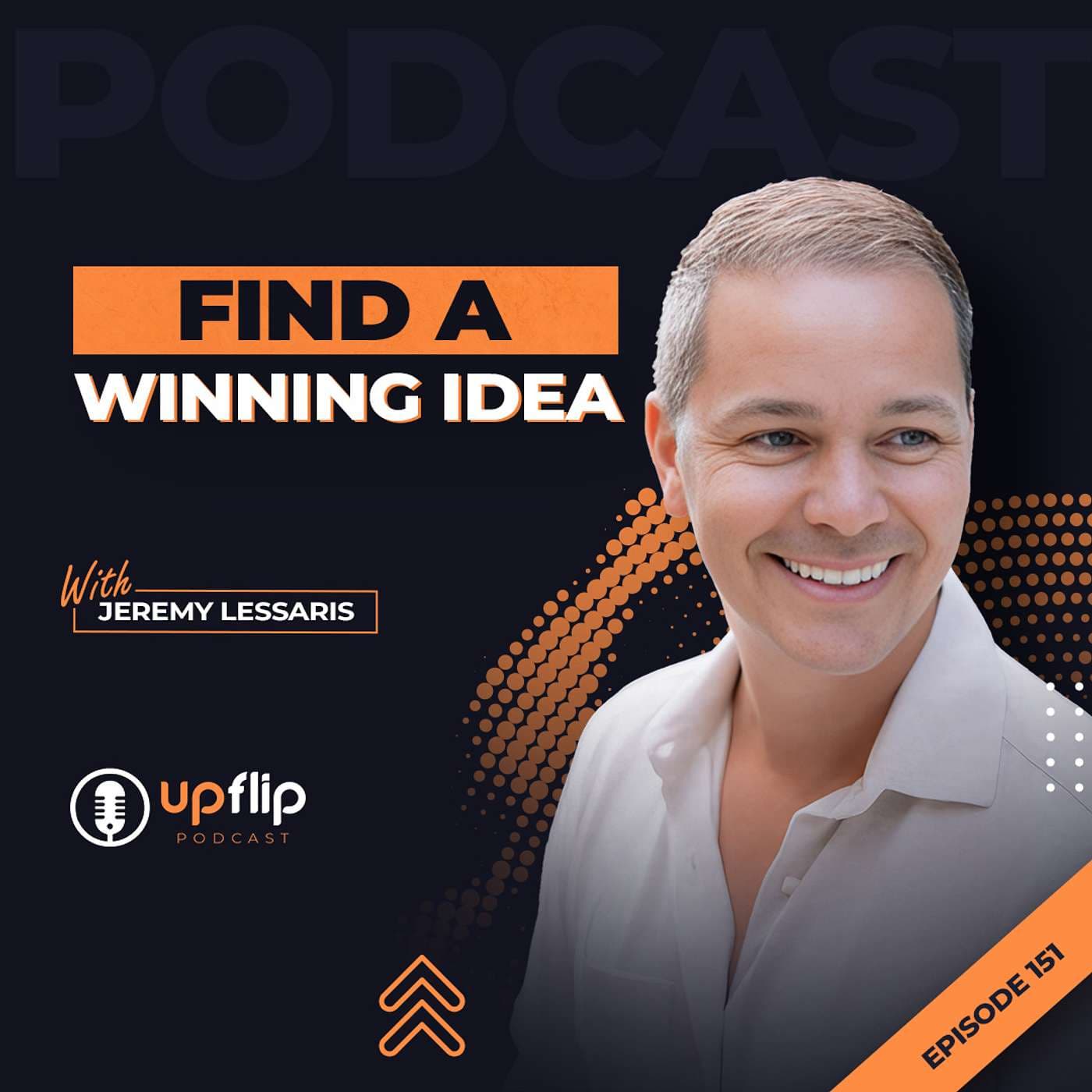
UpFlip Podcast Episode 151: How to Find the RIGHT Business Idea for You
Episode Overview In this episode of the UpFlip Podcast, host Ryan Atkinson interviews Jeremy Lessaris, a seasoned entrepreneur who has successfully started and sold eight companies. Currently, he co-founded Verifee, an AI tool designed to detect misinformation in text. Jeremy shares insights from his entrepreneurial journey, including identifying viable business ideas, the importance of bootstrapping, marketing strategies, and navigating failures.
Key Themes Journey of an Entrepreneur
- Early Beginnings: Jeremy's entrepreneurial spirit started young with a lemonade stand, generating over $7,000 in revenue.
- First Business: He launched FurnitureStock.com, an e-commerce furniture business, which taught him critical lessons in e-commerce and operational challenges.
Identifying Business Ideas
- Finding Gaps: Jeremy emphasizes the importance of recognizing unfilled niches in the market. Entrepreneurs should constantly ask themselves, "Why isn’t anyone doing this?"
- Survivalist Mentality: Early in his career, Jeremy was focused on survival and profit rather than passion, which shaped his approach to identifying opportunities.
Key Considerations for Entrepreneurs
- Lifestyle Alignment: Understanding how a business fits into one's desired lifestyle is crucial. Considerations include work flexibility and personal interests.
- Fast Start and Adaptability: Entrepreneurs should be willing to pivot based on customer feedback and market demands.
- Advisory Support: Seek out mentors and advisors early on to guide decision-making and avoid costly mistakes.
The Importance of Testing Ideas
- Jeremy stresses the need to validate business concepts before full launch. This includes:
- Financial viability analysis
- Understanding regulatory requirements
- Gathering feedback from potential customers
Actionable Advice for Aspiring Entrepreneurs
- Don’t Wait for Perfection: It’s crucial to act rather than endlessly refine your idea. The path to success is often about learning from mistakes.
- Bootstrap Where Possible: Jeremy advocates for bootstrapping businesses to maintain control and focus on profitability.
- Create a Minimum Viable Product (MVP): Launching a simple version of your product can help gauge market interest and inform future developments.
Listener Engagement
- Ryan encourages listeners to reach out with their entrepreneurial struggles and inquiries via email to help facilitate their business journeys.
Fan Blitz Questions
- Real Estate for Quick Wealth: Jeremy recommends real estate as a viable option for making quick money through buying and flipping properties.
- Teenage Advice: He would have advised his younger self to shift focus from a scarcity mentality to mission-driven entrepreneurship.
- Business without Time or Money: Jeremy suggests that if you lack both, you should reconsider starting a business altogether, but can start small with value creation (e.g., eBooks).
- Support from Family: He notes that external support varies, and entrepreneurs shouldn't rely on validation from family or friends.
Conclusion and Resources
- Listeners are encouraged to explore UpFlip's resources, including a free franchise guide and a wealth of business ideas available on their website.
For more insights and to listen to the full episode, visit the [UpFlip website](https://www.upflip.com).
Connect with Jeremy Lessaris
- For those interested in contacting Jeremy for business advice or mentorship, he is active on [LinkedIn](https://www.linkedin.com) and has a personal website at [jeremylaceres.com](http://jeremylaceres.com).
Key Takeaways
- Embrace Mistakes: Learning from failure is a vital component of entrepreneurial growth.
- Bootstrapping Benefits: Keeping control of finances can lead to greater profitability and sustainability.
- Market Testing: Validating ideas and understanding customer needs before a full launch can save time and resources.
This episode serves as a valuable resource for anyone looking to embark on their entrepreneurial journey, offering practical advice from a seasoned veteran in the field.
Written by AI. May contain mistakes. Listen to the episode to check what was said.
Transcript
Automatic transcript. May contain errors.0:00Coming up with a business idea is hard enough, but feeling confident in your idea is another level of business savviness that can take your startup to the next level. Today's guest is here to help you find your niche and make the most out of any idea. This is Ryan Atkinson, and you're listening to the Outfit Podcast, where we uncover how great businesses are built and the secrets to replicating their success. I am so, so, so excited for today's episode with Jeremy Lasarius. He is the co-founder of Verify. He is here to break down finding your successful business idea and the most important steps as an entrepreneur to get that business idea off the ground.
0:30Jeremy, so excited to have you on the show today. Thank you so, so much for being here. Likewise, really excited to be here. You are gonna be great. we're talking about it. I'm very bullish on this conversation. And your entrepreneurial journey started at a young age. And we're talking six years old when you started your first lemonade stand. And people might be thinking, oh my God, lemonade stand. I did that too. But no, you did a$7 ,000 plus by mid-summer when you're six years old. Let's talk about this lemonade stand, actually. Can you wind us back to six-year-old Jeremy getting this lemonade stand off the ground?
0:56Sure. I love talking about this. It's a really great story. So my father owned a detail shop And I was like really, really hyped about helping him. I would clean cars and do all sorts of odds and ends jobs. I used to make paper flowers for his customers and spray them with cologne and sell them for 25 cents. Like I think they early on indoctrinated me into being an entrepreneur, even in the crib. I was in a stroller at multi-level marketing meetings while my parents were being driven down this path of like, you know, buy low and sell high. It's actually my siblings would tell you my first words were like buy low, sell high.
1:29That's a true story. So this lemonade stand was, I saw these building blocks on a commercial. They were like Tinker toys, but life size. And I wanted to make this, I don't know, lemonade stand. And my father was like, Hey, I'm going to borrow you the money. You're going to pay me back with interest. We're going to go get all the materials. I didn't know what he was talking about. I just wanted to put lemonade. They had just invested in a, like a copy machine, which back then was like, it was a big deal to have one. And so I made copies on a blue piece of paper, had handwritten out this really horrible menu of lemonade and something.
2:00Across the street, there was a big construction site, which is now a big housing area, and there was a car wash across the street. So where we were, I would just go over there and, you know, hey, buy my lemonade. And it went from lemonade to getting a microwave, hot dogs, hamburgers. Then I got a grill and a pizza oven and it started stacking up. And I was outpacing the local hot dog place and they actually called the health department on me. So that's why I got shut down. I got to learn entrepreneur, you know, 101. I also got to learn like regulatory and compliance right away. So it was a unique journey.
2:35I made some money and I took a hundred percent of that money. And my father's like, what are you going to invest in next? What's the next thing? I didn't have any ideas, but I bought an arcade, a big standup arcade and put it in the shop thinking all these kids would comment. I was my only customer. So So it went from real success to quick failure in a matter of a year. It was awesome. A really great experience. But it was just kind of the beginning journey, immediately trying to figure out, okay, and also I had to pay him back. And I was like, wait a second, that's my money. He's like, yeah, plus you have to pay interest.
3:04And Uncle Sam, like, we don't have any, I don't have an uncle named Sam. So I think that was the early kickoff to me being a serial entrepreneur. Yeah. And like ever since, like being a serial entrepreneur is correct. Like you've exited like eight different companies. You're working at another company now. But you really got started with FurnitureStock.com, which you started in 2002 and then sold in 2005. I'd love to talk about FurnitureStock and kind of what led up to FurnitureStock in that moment and how you thought of this business idea. So I'm the king of side hustle. I always had a job. I always had a really good job.
3:33Really early, really young. Took on sales roles and sales management roles. So I think I always had some kind of side hustle, side thing. And I had bought some furniture from a guy. and he was like, I work at this manufacturing firm and it's just across the street from where you're working. Why don't you come and take a look? And I was like, you could buy a whole leather living room set for 500 bucks. And he's like, well, we make it in China. It's not 100 % like the front's leather, but the back isn't leather. It's called the leather match. And I was like, okay, I could sell this. So I remember getting a catalog and showing friends and family and people like, okay, I'll order this, I'll order that.
4:07And on the weekends, I go rent a rider truck and throw one of my friends in the back and like, hey, you want to make some money this weekend? let's go deliver all these orders, go to the manufacturer, pick it up. I didn't have a warehouse yet and made a ton of money doing it. You know, I'd make 10,$12 ,000. And I was like, wow, built a website, which, you know, if you go look at way back machine, you'll see. I love way back machine. Oh my God. It's so embarrassing. You know, I was learning to code. So I was using very, very rudimentary tools. And at the time, Dreamweaver started to become a thing.
4:35So I was like developing these pages and putting up the site. It turned into a real business. I started selling on eBay. And back then that was a big deal to be able to move a lot of product. But I was getting crushed. I was getting crushed by credit card fees. I was learning that you have to have a warehouse and it was a good experience. The company was a horrible failure. The exit was a necessity more than it was a positive. It was, I just couldn't maintain or hold it up anymore. And I think in general, the company that acquired it wanted to just shut it down because they were a local furniture store that we were just decimating them because we didn't need the margin that they had.
5:09It was a one man show. So, so I think the exit was there and then they just turned it off and wrote off into the sunset. But I think for me, it was a good experience to learn where I fit in the mechanics of building those companies and how to roll them out. Then that was an early e-commerce company. I mean, online furniture wasn't really a thing. So I was kind of getting involved in these categories that weren't really there. And it helped me learn how to identify what businesses fit for me for the next turn. And so, you know, along the way, I identified a gap of credit card processing. I identified a gap of e-commerce applications.
5:46I built an e-commerce development company because I had learned how to effectively create an e-commerce company up from scratch. So, I mean, all of these things were crafted from either the successes or failures or gaps that I identified along the way. And so, as I went from one venture to the next, people would say they're just super random. So if you look at them, like, you know, marine technology and one is alternative medicine and one. So I was in so many different facets and concepts. Most of them were just things that I saw needed to be filled. Right. So I identified it either for myself personally or as a consumer of that service.
6:24And I was like, I can do a better job. Yeah. I want to talk about that as well, because I think it's super interesting that you have been in so many different industries. Furniture, I don't know if you're passionate about furniture, but you identified a gap in the market and took advantage of that. Can you talk in depth about a common thread through the eight businesses that you've built and how you've identified those opportunities to build a company? Because I want to paint the picture for people that are listening. They're like, okay, I want to start a business, but how do I identify those gaps?
6:49What are some things that you did to identify those gaps? I mean, the thing is they identify them every day. I think you naturally go, how come no one's doing that? You say it out loud all the time. You're working on something and you're like, hey, I need something that connects QuickBooks to automate, blah, blah, blah. And you're like, OK, it's out there and you start seeing somebody doing it, but they're not doing it right. You can do it better. You know, that's how a lot of these things came about. Right. In my early entrepreneurial life, it was and I talk about this a lot on every podcast I've been on.
7:17It was survivalist mentality. I was just worried about money. I didn't care what business it was. I didn't care if there was passion behind it. I didn't care if there was a mission. All I cared about was, can it turn a profit? Can I make money doing it? And as I had success, small ones, and you talk about furniturestock.com as my first company. I probably had 25 before that were just absolute horrible failures. So you have to just go for it, right? Because people will get analysis paralysis, what's perfect and what's going to be exact, what is going to make me the most. That's not how you get this off the ground.
7:53You get it off the ground, you got to do some research. You got to do some homework. You do have to think from the end result of what you're building. And unfortunately, there's plenty of industries where people invest so much time and effort and energy and then five years into it or seven years into it, they're committed. This isn't a dating game. This is a marriage. And now they're stuck in it and they can't get out of it because they didn't think through what their lifestyle was going to be like or how the recurring revenue is going to work or what real money was attached to it and everybody's looking for a magic bullet, but there isn't one, right?
8:25You have to get started, get into the middle of it to really learn what those are about. And you know, you get blinded by the excitement along the way and everything looks like a massive opportunity until you're in the meat of it. And then you're like, this is a lot of work. It takes a lot of people. There's a lot of tech or cost structure around it. There's a lot of regulatory or compliance hurdles that you have to jump over. And so you really start to learn, is this really for me? I just want to take a minute and ask you, our listeners, how we can help you get started on your entrepreneurial journey.
8:52What are you struggling with? Why haven't you started your own business or begun investing in real estate? I'd love to know what challenges you're facing and how our team at Uplip can help. Email me directly at podcast at Uplip.com. And I promise to read every single email. We'll get back to you guys on that, but email us with any questions that you have around entrepreneurship. I want to ask about that, that end result, because I think that's always like a good thing when you're developing goals of like, when this is all said and done, like what should my lifestyle look like? And of course, like you said, there's regulatory things.
9:18Are you a project base? Are you monthly recurring revenue? There's a lot of things to consider with a business and there are stressors with any lever that you pull when it comes to business. But what are two or three questions you should ask yourself when thinking about that end result about what type of company should I build and what should that lifestyle look like? Yeah, that's a tough one because I say this a lot. Every deal is like a snowflake. I think everybody's going to be different, right? So there's no one size fits all for every person. For me, if I could just go back and talk to myself years ago, I probably wouldn't have listened.
9:47So that would be the first problem. I was too passionate and too head down. I'm right, you're wrong. One is having advisory upfront to help craft your direction. So invest in that upfront. I didn't do that. I thought I had all the answers. It turned out to be a much more expensive education for me to learn through failure, but be prepared for that. You should expect to fail. And the more you get good at failing, the faster you're going to get to the thing that you want to be. So you got to go into it, head down. Don't expect failure, right? Don't be like, well, this is going to fail, but I'm just going to go for it anyway.
10:26That's not what I mean. Just be prepared for it, right? So that's the first thing is you got to get thick skin. The thicker the skin, the better this becomes, right? So stress, dealing with stress, managing stress is probably more important than coming up with the idea. I agree. So I do have some questions that I ask myself in terms of the business. And that's today. So years ago when it was about money, I didn't care about these things. Today, I do care about how am I going to be involved in this business long term, right? Is this something I want to be known for or operate? and who are the most successful people in those roles in that venture in similarly sized companies or industry peers?
11:09Does that fit exactly the persona and work and I guess, and work product that I want to be involved in? And does that align with the lifestyle that I want to live every day? So you got to kind of map out what that looks like, right? So I get up early. I like to go, you know, I meditate, I go to the gym, I cold plunge. This is my mornings today. I go down to the beach every morning or I go swimming. Sounds amazing. It's great. This is all before eight o 'clock for most people. I mean, for me, I'm up at 5.30, six o 'clock. I go through my routine. And by the time most people wake up, I'm sitting at my desk already, you know, halfway into the day.
11:44So does that fit? I like to travel. Can I do this remotely? Can I take calls remotely? Where am I going to travel? Can I do this 12 hours ahead? So I know this sounds ridiculous because you're just trying to start a business. Yes. So these are a lot of big considerations that you have when you have some success and you have the ability to do that. But I still think people should take the time and just spend some time on what is the lifestyle that this business may afford me or not afford me. You are going to burn through a ton of hard work. So those people who think they can drain their company day one and that's going to immediately have a today lifestyle, there's no such thing.
12:23There are definitely unicorns and I'm sure there's a lot of false profits of people out there telling you that they have a magic bullet that you can just run a faceless YouTube and make$400 ,000 a month and blah, blah, blah. It's not real. It takes time, effort, energy to build these types of things. Don't get me wrong. There are definitely lottery ticket winners every day, but it's not realistic. And if everybody could do it, they'd all be doing it. So it's more important to, like I said, having good advisory or advice to direct you down the right path as you have to make those decisions. So who are the advisors around you that you can tap on for those types of things?
12:59And then being able to identify the alignment with your lifestyle and how that would really impact you on a day to day. And that could be financially or, you know, lifestyle or whatever it might be. And then I think the third one is how fast, how fast can you go? The sooner people get started into something, the faster they decide whether it is or isn't a fit. So I hate, you know, ready, fire, aim. Yeah. But that's kind of where most successful businesses land. Yep. I want to hit on the second point real quick before I hit on that third point. When you're thinking about like your lifestyle, I think it's really important to do that because like some businesses that we've had on here, they need to be in person like oyster farm.
13:34I mean, that's someone that was an oyster farmer. Phenomenal episode. I love that episode, but like he needs to be in person for that versus someone that's like an agency owner that can basically do their job around the world. So it's thinking about travel for me is also like very big. So it's thinking about like, can I do this remotely? Can I not do this remotely? And like aligning the business there. And that third point, I always say on this episode, the difference between an entrepreneur and like a wannabe from Uber is like the entrepreneur took action. And like you said, it's fire. Ready, fire, aim.
13:57Yeah. You got to do some prep. Then you got to pull the trigger. And then after that, you can start aiming. But it's important that you just keep pushing, you know, move forward, keep going, like execute the next decision. Because what ends up happening is people back themselves into a corner of, oh, it's not going to be perfect or it's not going to be 100%. I'm guilty of this still. Even today, I'm always trying to be a perfectionist at something that doesn't really require it. In the development world, MVP, minimum viable product is so important to startup community that they just need to get enough out there to make the next move because people want to have an idea and then they want to go raise capital.
14:37It's not a great idea. Take your idea and find the smallest point in which you can make revenue and profit. Sometimes it's not the business you want to be in, but oftentimes it's what gets you to be successful in the business you're trying to build. And businesses morph. Like, you know, you start doing one thing and the voice of the customer and the money or profitability changes the direction and even concept of the thing you originally started. So it's very important. Like you go into it thinking it's going to be one thing, but it's going to change. And it's always going to change. It's going to continue to change in a direction you cannot predict.
15:11You know, okay, maybe some kind of math-focused business is going to be pretty predictable. I don't know. But I'd say 99 % of them are going to change. So they have to be able to ebb and flow with that change and be able to make decisions quickly, effectively, and you're going to make mistakes. So it's important to be prepared for those failures along the way. I think my biggest lesson from building space for our visuals, and honestly, the best lessons that I've learned from building my own company has been through failure and being like, you know what, if I was in this situation again, I would do something completely different.
15:40And I have made a thousand mistakes building space star visuals, but that is truly how you learn and truly how you get better as an entrepreneur. You just have to be in it, doing it, making mistakes and learning from it and then being able to build on that. Or like I said, get good advisory. You know, people skip a lot of things when they have trusted advisory that they actually believe in because they've had successes or whatever it might be. And so I believe that that's a really good investment up front because failure is expensive, often more expensive than what people can afford to make. Right.
16:07So you can only make so many big mistakes. So sometimes it's better to get advice from people who've already made those mistakes if you can find the right ones, because there's also, like I said, there's a lot of false profits of people that like, hey, I'm making millions of dollars flashing, you know, rented Ferraris. And yeah, it's hard to weed through what's real anymore. And now it's just made it so much more aggressively hard to figure out because people can write, you know, these hugely well-written articles on things that they're not really a thought leader about anymore. So it's getting more and more difficult for people to call that out.
16:40But like I said, one thing you didn't hear me say is follow your passion, right? It's not that you shouldn't find something that you can be passionate about. And I'm not saying that people shouldn't take what they're passionate about and turn it into a business. They can, and sometimes that's successful. But I think you have to look at the thing holistically, right? You can't just go, well, I like sports and I'm gonna make sports my business. You can do that. But you also have to look at like the bigger picture. All the things you just said. Plus, I think for me, when I changed the direction from this money-focused idea, this scarcity mentality, this like I have to work super hard to just survive, so I call it survivalist mentality, to more of a mission-driven, impact-focused ideology, things dynamically changed.
17:27The businesses were successful quickly. I had more passion about what I was doing for people. You end up building these raving fan customers who become really socially influencing of all of their peers. So I think in general, those businesses tend to have way more success early on. But for some people, that's just not their first out of the gate may not be that they might want to just jump into real estate or things that are low lift. And they'll figure that out as they go along. And for some people, like, I don't care. I just care about the money. Yeah. For your first business, I want to ask, so should someone, when they're building their first business, do you still get that advice about doing something that you're passionate about knowing what you know now?
18:06Or would you still say, if you see an opportunity, a gap, kind of exploit it to make money to get your first business off the ground? Or how would you coach that? I guess it depends on the level of complexity and the goals of the entrepreneur. If everybody's like, hey, I need money tomorrow, go get a job. Yeah, literally. Go get a job and take that money and invest it and side hustle your way into a much larger thing. But most people are like, no, I want a business tomorrow. It's going to make me replace my current job and build this lifestyle that isn't normally realistic. It's just not real.
18:34So I think I look at the investment of time, effort, and energy to build something and the outcome of what that might be over a period of time. So if people are looking for more of a quick fix, I just say work on your business should be you sell yourself better, get a better job, make more money and start learning how to invest what excess capital you have into things that can grow and give you that lifestyle quickly versus, hey, let's build something from scratch because entrepreneur life is time and a lot of energy. And so I always try to figure out where that falls in for somebody before I say, yeah, go do something you've never done before.
19:11Learn a totally new industry from scratch. And then, you know, you also have to look at the complexity of that industry. Like, hey, I want to learn how to build AI from scratch. like, oh, OK. Have you ever programmed for it? No, I've never done it. We got a little bit of time here. Yeah. You know, or heavy capital raised focused businesses or really human capital intense companies that you need a ton of staff for. So, I mean, as you look at that, you say, does that actually fit into who that entrepreneur is trying to evolve to be in the time frame that they want to be there? Because then they'll just give up really quickly.
19:43So I've always been a bootstrap founder. So it's always been my money. I don't raise capital. I have. I've done capital raises, significant capital raises. But I think in general, 99 % of what I've built has been my own personally financed things. And I think that's really important because it makes you so much more sensitive to the spend profitability of the company. And I'm a bottom line builder. I don't care about sales. I care about profitability from day one. I'm like, how do we get to profit fast? How do I make this sustainable? The word runway should not exist in of companies that I build.
20:14Don't get me wrong, they have them, but they're very short term because my goal is just purely profit. So for really startup world environments, the first thing you could do is try to find the micro businesses within your company. So I want to build this software and it needs to have all these features and it's going to deliver this value. It's like, that's great. Can we write an ebook and sell that ebook about that topic and make$9 and get that thing going to be able to fund the next phase of development? because I think everybody immediately goes, I'm going to write a business plan. Like they go to this SBA school of, I don't know what it is.
20:48And you know, I'm going to write this great business plan and put together a pitch deck. I'm going to go meet all these investors, which never invest in it. I mean, it's one in a billion, they get a hundred million pitches a day. And if you've never been through this process, it's grueling and it's super expensive. I mean, if you do it right by the end of it, you've spent 30, 40,$50 ,000, the same 30, 40, 50, $50 ,000, that would have changed their life. I think a strategy that I like to give people, especially if they're still in a job and a corporate gig, is people know from a intuitive, they want to be their own entrepreneurs.
21:21I always say, set money aside for that startup capital that you need. Try to get to$10 ,000,$20 ,000 saved up. And when you're ready to go, you have those funds allocated for your business, for the marketing, for the app, just to get it off the ground. And that's one advice I love to give to people is put money off to the side, basically, like you're saying for a house, but it's for your future company. And sales cures all things. So I am a huge proponent of beta. And so it's very easy to make a proof of concept, create an insanely cool video that explains what you do, get people to be able to adopt that concept and put up a coming soon invite only beta tester, you know, like some kind of fight club scenario where people are like, how do I get that?
Read the full transcript
22:06It doesn't exist yet. But that list, that customer list is if you had 50 ,000 people sign up for something that doesn't exist and it's 50 bucks a month, you know how easy it is to go raise that capital? There's a ton of small angel investors. If you said, look, I invested in all of the marketing front for this business. We bootstrap marketed it. We got it in front of all these people. We have this huge list of people that signed up and I need$10 ,000 to get it off the ground. I'll write you the check because you went through the phases of things that I think are important to be able to test the market.
22:35So I think making that investment is worthwhile if it's a bigger concept and you need to raise capital. Right. And in saying that, like, I think sales cures everything. You know, hey, I pre-sold X. I mean, that's why Kickstarter is so successful. People are selling the dream. This is what I want to build. I'm passionate about it. I know it. I'm learning all of the ins and outs of it. We're going to have some hurdles along the way. I've done a ton of research to know how much I need to get this thing off the ground and you can easily raise capital that way. So I think there's a ton of opportunities that I wish I had those when I was younger.
23:07They didn't have these types of things back then that I would have definitely taken advantage of. But, you know, leveraging what you do and others, I think there's a way to get people to adopt your idea early on enough where they're even willing to prepay for something. And I've had software companies that I built, by the way, don't do this, but we had credit card numbers before the software was even built. People were like, well, yeah, I'm in. Like, okay, I'm going to charge you one year up front and you'll be the first to get it once it's live. Once it is live, I promise. By the way, don't this, I'm not endorsing that at all.
23:37I'm just saying you can garner enough interest before you build it. Don't do the build it and they will come thing, especially in the really early stages of startup. It's just not healthy. So go start selling the concept. You'll get people on board or you'll learn early on that people aren't willing to pay for it or it's a much charter sale. One of the things I learned about selling software, even we had a company called iReview, which we sold, I don't remember 2018 or 2019. And it was an online reputation management software. It was like$99 a month. Do you know how many sales you have to make at$99 a month?
24:10It's a lot. And it was, you know, an hour long or two hour long call with every customer and the category of customer. We thought it was slam dunk. Everybody would buy it. It would just, people would just lay down. And that's not that long ago. So for me, even in my career and journey of building things, you learn after you talk to the customer. So having built all that and then having to go back to find out, it's like, it's a lot of work and maybe not worth the$99. Yeah. I want to ask, we are kind of winding down one time here, but I do want to ask just a follow up question to that one. So test the market.
24:40I'm definitely hearing to validate, do you have a good business idea or not? What are like two other indicators you would give someone to see like This business idea actually has some merit behind it. So this is an idea that I have for everybody, and that's dream crushing. Like you got to get it in front of people that can test and validate what you're saying. And I don't mean that, you know, you want bad feedback from everybody. You want to hear like, OK, this can be really challenging. What about accounting? Who's going to how is this going to work out? So financially testing the business, regulatorily testing the business, legally testing the business.
25:09I have so many business ideas and I'm like, you realize that's full on illegal. You can't do that. Don't get me wrong. businesses are built on it all the time. Look at what's happening with AI right now, where they took all this data from YouTube and others. Like there's a lot of hurdles of, does it make sense as a business? Financially is a big one. You got to do some real number crunching and do a real financial needs analysis of the company and have somebody really sit down with you and bet that out. Because most people don't know all of the things that are going to come up. And so they don't plan for these things upfront and they don't really budget it and they just run.
25:42And I really think that's when they run out. That's why a lot of small businesses fail because they're not prepared. And organizationally, can you operate the company cost effectively? So people do it with their time. It's like, can you replace your time with somebody at a reasonable salary and still maintain the company? So those are things that you should test and validate early on. Perfect. I love that. Yeah. We had someone recently on the podcast talk about like, you might profit 50 cents exactly on like a product that you sell, but it costs you 75 cents to get customer, like your business is going to fail.
26:12So actually being able to run those numbers is really big. Yeah. CAC and LTV and those acronyms seem like jargon only for investors. It's not. And you should really tailor that dashboard that you build for yourself to hit these KPIs that actually matter to you, not ones that matter to the investment community, but they actually do matter and they're easy to calculate. So there's something to be said to have that kind of metrics for your business day one. I love it. Last question before we get to our fan blitz questions, Kind of want to switch gears here for a little bit, just real quick. When you talk to new business owners, just general advice, what's your biggest words of advice that you give to someone that's at that very early stage and wanting to start a business?
26:50Don't give up. I always talk about why I don't do operations and why I have all these exits because I'm not a good operator. And look, you'll find where you fit best in your own organization. I think people are scared not to be the CEO. It's like, it doesn't matter. At the end of the day, you have to find where you fit and there's going to be hardships and hurdles along the way. They're just speed bumps. And most people look at them as like massive undertakings. So I would just say, just keep pushing forward. Don't let something hold you back. Don't let a small failure shut the whole thing down.
27:21You really have to be resilient through that stuff. The lows of entrepreneurship can be very low, but the highs can be very high. But let's move to our Fan Blitz questions because these are questions submitted from our community. And guys, if you want to join in on world-class entrepreneurs, join in on these fun discussions. You guys can go to youtube.com slash upflip and submit your questions there. But Jeremy, ready for our last five questions here? Let's go. Number one, you have six months to get rich. How are you doing it? Real estate. I like it. It's really, really simple. I mean, if you really need to quickly make money buying and flipping, investing in a decent rental, you can do that quickly and turn that rental into an investment flip.
27:57I mean, there's all sorts of things you can do in real estate, low lift, but you have to have money to do it. So I mean, there's definitely ways to get into it with zero in, but it's really difficult. But there's a lot of other wholesaling and other things that can be done with very minimal effort. And you can make a lot of money doing it pretty quickly. I like it. Number two, now at this stage of success, what advice would you give to your teenage self? Yeah, that's what I said earlier. Moving my brain away from the scarcity mentality and focused on just purely profit and focusing more on why and the mission of the thing that you're building.
28:28I wish I would have done that sooner, but I mean, I needed to go through what I went through, but I see them more successful now than my previous things. And also I'm just more excited about it. It just fits my lifestyle better. That's awesome. Really good advice. What was the biggest motivating factor for you in starting a business? Money. I hate to say that. Like I said, I was trying to just make ends meet. I moved out when I was really young, I had to figure out financials really quickly. So it was purely money in the beginning. And then I actually enjoy the thrill of building. So it started with money.
29:01But then when you got into it, it was like, I actually like this. Yeah, it is quite the roller coaster in mountains and peaks and valleys. It is quite fun. I want to ask this question. This is a really good one here. If you don't have tons of time or money, what types of businesses make the most sense to start? Time or money? Well, if you don't have both, you shouldn't start a business. That's also fair. You got to have time and money. I mean, at that point, I would just say don't start a company because it takes time and it takes money. So if you don't have a ton of time or money, I mean, the thing you can do is value create.
29:29Right. So at that point, you can create micro value things that don't take a ton of time, effort or energy. And you can invest a little bit here and there to build that up. I mean, I just use an ebook as an example. I wrote one years ago and sold thousands of copies of it about how to get unbanned from Amazon. It's a long story for another time. But I sold thousands of copies at$20 a piece. It was a 20 page thing that I put together. And yeah, and I just so happened to find this little niche. And I was like, OK, I'll put this out. And it did work. But, you know, you have to have that knowledge base up front to be able to do that.
30:00And you still have to take time to do it. Last question for you as we wind down this episode. Has your family been supportive of all your different business ventures? No, no. No. Look, you shouldn't look to somebody outside to validate what you're doing. You're going to get pushback from all sorts of people, friends, family. The last thing you need is outside influence telling you you can't do it. It's not bad to have advisory. It's not bad to get advice from them. But I would say when it comes to family, I tried to keep them on the outside of many of the companies that I was involved in. What are you doing?
30:34What's your new thing? It started turning into like, I wasn't in one industry or doing one thing. So at some point, they're like, oh, another one of Jeremy's ideas, right? So they weren't really super supportive. My parents were early on because they were entrepreneurs. Beyond that, my family was just like, what are you doing? Just go get a real job. Like I had a good job too, but it was like, just go focus on your job. So not a good metric to whether I should have done it or not. Honestly, one of the best privileges that I can resonate with you here is both my parents were entrepreneurs as well.
31:05And that shaped my lifestyle growing up and what I wanted to do. And they're incredibly supportive because they get the jump that you take here. But Jeremy, I want to wind us down here. If someone's like, oh my God, this is an awesome episode. And actually, I want to run some business ideas by Jeremy. Where can they contact you and learn more about you? I'm actually pretty active on LinkedIn. You can see a lot of what I'm doing on my own personal website. It's jeremylaceres.com. So yeah, I mean, I can give you that link and that's a good way to reach out to me. Everyone, that was an amazing episode with Jeremy.
31:34three quick takeaways for you. Number one, the way to learn as an entrepreneur is to make mistakes. I have made thousands of mistakes with SpaceRarVision rules. And Jeremy talks about how those mistakes that he's made with his own companies have propelled him forward. Number two, he was bootstrapped for all eight businesses. And being bootstrapped compared to like capital raise with like VCs, all that good stuff. There are pros, there are cons, but definitely at the end of the day, you're only calling to yourself. And we talked about that in the show. Number three, before you launch an actual idea, throw money into it, test the market out.
32:04See if people are actually willing to pay for your business idea. If they are, great, you know you have a business and then launch, but also run the financials of it or the regulatory legal implications of you starting that exact business. So super fun episode. Hope you guys enjoyed it as well. And for more ideas for starting your own business the right way, check out the Academy. We have close to 500 business ideas with startup cost estimations, market size, annual revenue, and so on. visit upflip.com slash academy or click the link in the show notes below. Awesome. Jeremy, you are the man. Thank you so, so much for being here today.
32:35Great to meet you.
From the publisher
Jeremy Lessaris has started and sold 8 companies during his career as an entrepreneur. In his latest business venture, he co-founded Verifee, an AI tool used to detect misinformation in text. Now between every company he’s founded, Jeremy is bringing in several million per month. He sits down with Ryan to discuss his journey in the world of entrepreneurship as well as how to navigate business failures.
Jeremy talks about knowing when a new idea for a business is a good one, the benefits of bootstrapping when first starting out, and tips on marketing strategies that he’s applied throughout all of his businesses. He also talks about his mentoring and help with other startup communities.
Resources:
- https://bit.ly/3T9k98a Get 500 business ideas for FREE
- https://www.upflip.com/blog Read more business success stories and tips on the blog
- https://verifee.ai/en.html Check out Verifee
Ready to be your own boss without starting from scratch? Grab our FREE Franchise Guide and unlock the secrets of proven business models that have already created thousands of success stories.
Connect with UpFlip:
- On Youtube
- On Instagram
- On Facebook
- @UpFlipOfficial on Twitter
For more insights to start, build, or grow a business, check out the resources on UpFlip.com or head to the UpFlip YouTube channel to see more interviews with business owners and experts.
Thanks for listening!


