
In short
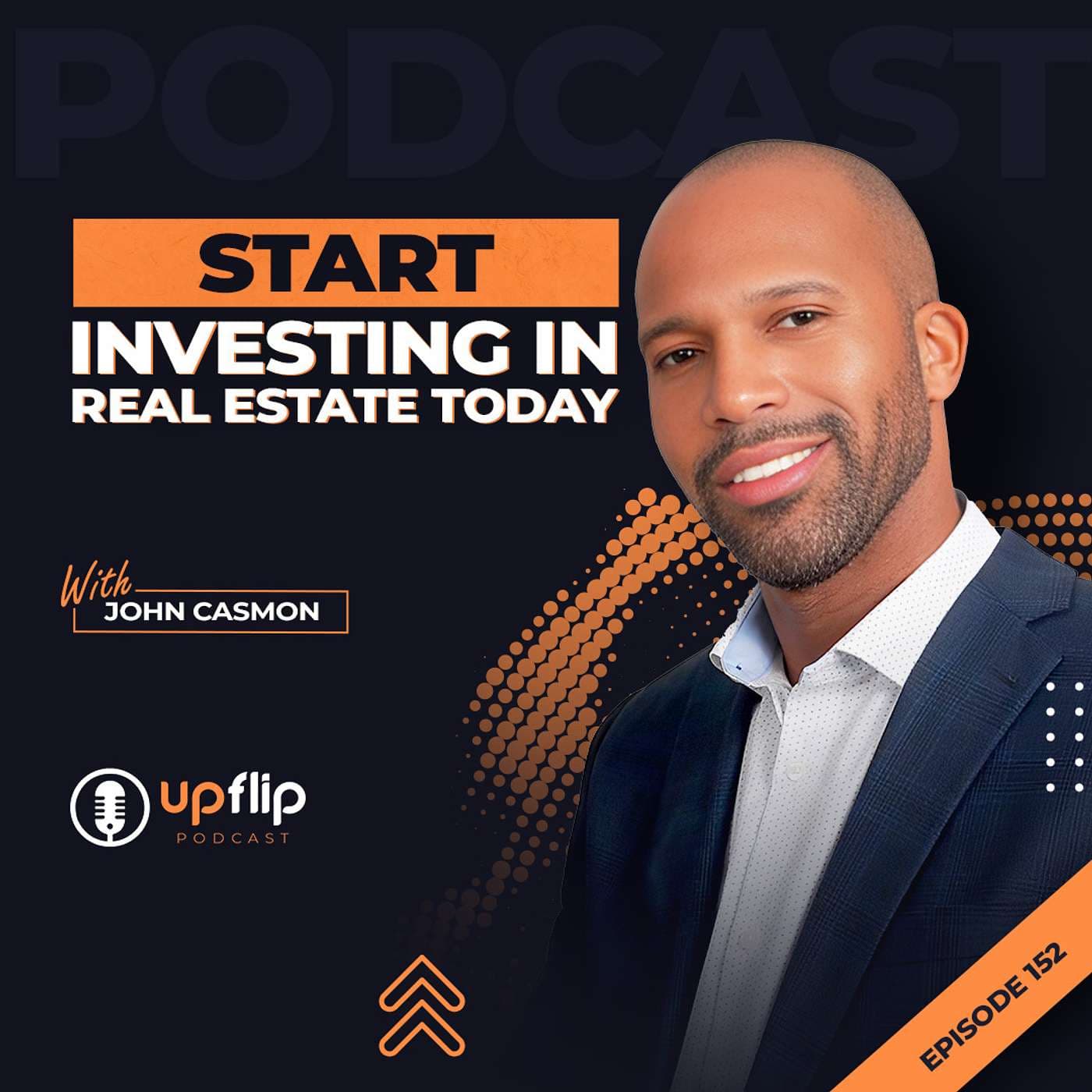
Podcast Summary: The UpFlip Podcast - Episode 152: Passive Income EVERY Month - Real Estate Investing Strategy
Overview In this episode of the UpFlip Podcast, host Ryan interviews John Casmon, an established real estate investor who transitioned from a corporate marketing career to real estate investing, amassing a portfolio worth over $147 million. The conversation centers on strategies for creating passive income through real estate, especially for busy professionals.
Key Themes and Discussions
John Casmon's Background
- Transitioned from a 15-year corporate marketing career to real estate investing for financial stability.
- Started with a duplex, living in one unit and renting out the other.
- Emphasizes the need for a "Plan B" to insulate against job loss, inspired by witnessing colleagues struggle during the 2008 recession.
Learning and Resources
- Starting with Free Resources: John advocates for utilizing free resources such as books, podcasts, and networking events to learn about real estate.
- Networking: The importance of building a tribe of like-minded individuals for support and knowledge sharing.
- Investing in Education: After building a portfolio, he later invested in mentors and coaches.
Strategies for New Investors
- Understanding Different Real Estate Strategies: From single-family rentals to multifamily units, flipping properties to wholesaling.
- Choosing the Right Events: Start with local meetups before attending pricier conferences to ensure alignment with personal investment interests.
Market Evaluation
- Key Metrics: John emphasizes the importance of evaluating population growth and job availability in a market.
- Recession-Resistant Industries: Focus on investing in industries like healthcare and logistics which are less affected by economic downturns.
Investment Tips
- Cash Flow is Critical: Prioritizing properties that generate immediate cash flow, especially B class and C class assets.
- Utilizing Other People's Money (OPM): Explains the concept of syndication for pooling resources to invest in larger deals.
- Equity vs. Cash Flow: Importance of understanding stabilized cash flow when evaluating investment risks and returns.
Overcoming Fear in Investing
- Acknowledges the fear of losing investors' money and encourages embracing that fear to make informed decisions.
- Discusses the significance of confidence, credibility, and connections in raising capital.
Community Engagement
- Encourages listeners to reach out with questions about entrepreneurship and investing.
- Invites them to connect with professionals in the field for mentorship and collaboration.
Key Takeaways
- Take Action: John repeatedly emphasizes the need for action in entrepreneurship. "The biggest difference between a wannabe entrepreneur and a successful one is action."
- Evaluate Markets: Look for vibrant job markets and population growth as indicators of a good investment opportunity.
- Educate and Network: Build relationships with experienced individuals in the field and continuously educate oneself through available resources.
Resources Mentioned
- [UpFlip Blog on Real Estate Investing](https://www.upflip.com/blog/how-to-invest-in-real-estate)
- [UpFlip Academy](https://bit.ly/4hitVPU)
- [Casmon Capital Group](https://casmoncapital.com/)
- [UpFlip Newsletter](https://www.upflip.com/newsletter)
Conclusion John Casmon's insights offer valuable lessons for individuals looking to create passive income through real estate investing. By leveraging education, networking, and understanding market dynamics, aspiring investors can successfully navigate the real estate landscape.
Written by AI. May contain mistakes. Listen to the episode to check what was said.
Transcript
Automatic transcript. May contain errors.0:28You hear it time and time again. the market in real estate investing. He's here on the podcast today and explaining exactly how to get started with real estate investing, finding the right properties and making smart decisions, and the business structures that will give you the best tax breaks and loans when starting out. Your next property is waiting and you'll know exactly how to act on it after listening to this episode. John, I am so excited to welcome you to the podcast today. Thank you so, so much for being here. Hey, Ryan. Thank you for having me, man. Excited to be here today. Yes, you're going to be great.
0:55You are a guru when it comes to all things real estate. And let's kind of like lay that foundation before we get started. Can you briefly share your background and how you transitioned from a corporate marketing career to real estate investing? Yeah, absolutely. So my background is in marketing. I did marketing and advertising for 15 years. And a couple of things happened to me where I realized, you know what, I better have a plan B. So I started to learn about different investment strategies and vehicles. Real estate kept popping up and realized that, you know what, real estate seems like a great way to make money.
1:27Lots of people obviously invest. I didn't feel like I was savvy enough to be the next great stock trader. Couldn't think of the next great tech widget or application or whatever. So I was like, you know what? Let me learn about this real estate thing. And I spent a lot of time educating myself and ultimately started with a duplex. Bought a two unit building, lived in one unit, rented out the others. And from there, just continued on my journey to build a portfolio. And fast forward over time, as you said, we've invested over 125 million, actually$147 million dollars worth of apartments up to this point.
1:58That's amazing. And I want to ask plan B, you said you wanted to have a plan B. Was that because you just wanted supplemental income or is this something where you saw it's like, I have a corporate job, but I know I should be building on the side here. It's a great question. So in theory, I think everyone realizes that, hey, I should probably have like, you know, some savings and, you know, some passive income. Like we all love passive income, right? You mean to tell me I can get paid and not have to work? Of course, I'm up. So it's great in theory, right? And eventually I'm like, yeah, one day I'll do that.
2:24Well, one day doesn't come unless there's a trigger to take action. And what happened to me was I was working at General Motors back in 2007, 2008, 2009. So when the economy took that big shift and we had our recession, I saw that firsthand. And I watched a lot of people who had invested their lives into their career who had no plan B and they were literally let go scrambling. And I didn't want that to be me. So in that moment, I realized that this idea I had of passive income or real estate investing, it couldn't just be an idea. It had to be something I had to figure out a way to implement. So that's exactly what I did.
3:01And that led me to that first investment, right? The two unit. From there, we bought a three unit building and slowly started to scale. But what I realized is I was on the right track, but it still wasn't enough income to insulate me from complete job loss. Another incident happened with another company where I really decided to take things in a different way. I also want to ask about this learning journey that you went on, because obviously you're like, hey, I need supplemental income. I'm seeing what's happening here. Can you share with us how you use free resources to learn about real estate and investing when you're basically going from zero to 100?
3:38Yeah, listen. So I've invested tens of thousands of dollars into mentors and coaches and training and education, but I only did that after I had a portfolio. I already had a multi-million dollar portfolio before I spent a dollar on those kinds of trainings. So I tell everyone, start with the free stuff. There's a ton of free information, right? Start with books, podcasts, attend events. Events are huge, right? And I love events in particular because you get to see other people. You get to make connections with other people. And when you're new or trying something different, you have to build a tribe of people that are in that space.
4:13And getting around other people who understand it, you're not the crazy one. There's a bunch of other crazies like you, like that starts to make it feel tangible. Because when you talk to your friends and family or people who know you, they typically just see the risk, right? They just know their cousin invested in a house. Oh, they had these renters who squatted and couldn't get them out. You just hear these horror stories, right? So people get scared off from that. And you have to seek out the folks who are doing it the right way because they're going to protect you and teach you how to do it the right way as opposed to the person who's just scared.
4:43So we know that people have made money in real estate. Don't talk to the person who never made money in real estate because they're just going to tell you how scary it is. Talk to the person who's been able to retire, to walk away from that W-2 job, to create passive income and learn from those individuals. So networking is absolutely key. It's a great resource. And then on top of that, I would just say, read articles, get active in online communities, whether it be a Facebook group or BiggerPockets. There's a ton of great resources out there. I would start with those resources to get a sense of what you want to do, to learn a little bit more about investing.
5:16And then once you have a sense of where you specifically need help, then I would look to either partner or invest in direct coaching, mentorship or an educational program. I love the advice of being able to like ask the people that have done it successfully, because as like entrepreneurs, like you're going to get a ton of advice on people that have never even left their corporate gigs. So it's like being able to sift through advice for people that actually know what they're talking about and like have experience in what they're talking about. And I also want to ask real quick before we move to our next question, what are two resources or two events you would advise someone that's getting started to look into to go to?
5:49So I would say it helps to figure out what you're interested in investing in. The beauty and the curse of real estate is real estate's really broad. You could do pretty much anything in real estate depending on your background, but you can invest in rentals, right? So single family rentals, multifamily rentals. You can do flips where you're buying a property, fixing it up and selling it. You could do wholesaling. wholesaling. You could buy land. You could do Airbnbs or short-term rentals. You could do commercial. So there are a lot of different avenues you could go into. You could be a hard money lender, right?
6:19You could just trade notes. So figure out what you at least are interested in, figure out the pros and the cons of the different strategies, which ones might suit your background, your skillset, your appetite for risk. And then once you have a sense of that, then I would look to attend the events that focus on those specific approaches or strategies. If you don't know, start with just a general event. Start with general real estate investing event. BiggerPockets does a conference. Now, I will say some of those get pricey. So if you don't know, you shouldn't go out and spend$1 ,000 to realize you have no idea what you want to do.
6:51So I would start with something local. Start with a local meetup. Go to a real estate meetup or something like that. Just talk to folks, connect, see what they're doing, read books. Start with those things so you can start wrapping your head. But what you really want to do is invest in an event. Pay for a ticket. go to a conference where it's about that strategy that you want to do, whether it's multifamily investing, note investing, whether it's land flipping, whatever it is, figure out that, find some events that are tailored towards that. And two things are going to happen. One, you're going to get great content from the speakers on stage, but two, you're going to connect with other folks in that space.
7:25And that is going to allow you to accelerate your learning curve, potentially partner up with these individuals and maybe even find a mentor if that's something you're looking for. So being in an environment where those are the people, that's key and not to belabor this point but the reason it's important is I used to go to meetups and I was like the only person who was interested in multifamily and I would drive out for 40 minutes to go to these events and everybody else was doing either single family rentals or single family flips so I didn't really grow very much because everyone I'm talking to like I'm not learning from them because they don't know I'm not networking or connecting with people in there so there's like one dude who used to buy apartments so if he was there I would like flock to them because I'm like, okay, great.
8:03Here's somebody else who actually can tell me something. I can get some value here. So you don't want to go to these events if you've invested the time, right? And let's think about it. You're at a minimum sacrificing the time. For me, I had my small child, if not children at the time. So I got to get a sitter. I got to drive out 40 minutes. I got to be at this event for 90 minutes. I'm driving back for 40 minutes, right? So you start looking at the overall investment of time, money. It is a big investment. And I'm making that investment because I want to learn more about this business. And to go out there and to not get that knowledge or get that education, it was a letdown.
8:37So that ultimately led me to launch my own event. But that's why I tell you, find the event, try to find your tribe before you really start to invest in the events. Because you don't want to go to something where every month you're like, oh, this is a waste of time where I didn't grow. Because that's going to hurt your momentum and your psyche. And early on, you want to keep getting wins under your belt so you can build off that momentum. I just want to take a minute and ask you, our listeners, how we can help you get started on your entrepreneurial journey. What are you struggling with? Why haven't you started your own business or begun investing in real estate?
9:07I'd love to know what challenges you're facing and how our team at Uplip can help. Email me directly at podcast at upflip.com and I promise to read every single email. We'll get back to you guys on that, but email us with any questions that you have around entrepreneurship. I love that. That's a really, really sound advice. I got to asked, so you had a great corporate career with GM, very stable company. General Motors is a world-renowned company here, yet you wanted that more financially stability for your family. I have to just ask, has real estate provided that? And can you talk a little bit more about how much you invested early on, as well as the number of units you invested in?
9:40Absolutely. So the thing about it is, I don't care what your job is or what your career is. In any case, when you work for someone else, that job security is somewhat fickle. And it could be for political reasons. I literally just talked to one of my coaching clients two days ago, and he was telling me he was a VP at his firm. He got let go because there was a power struggle above his head for the CEO position. His guy lost that power struggle. And when it was time to, you know, clean house a little bit, he was an easy cut. If his guy wins that power struggle, he's in there. I saw the same thing when I was in corporate, right?
10:15Mike, I was playing this game to be someone's guy, but not so close to being that person's guy that someone else knew I was his guy where I couldn't be their guy. You know, it was just crazy. Right. So that's part of it. You know, when you're in corporate, you know, there are folks who maybe are in the medical profession. What if something happened? Like my brother's a surgeon. He broke his hand playing basketball, you know, and like you don't think about these things all the time. But OK, he could still practice and do other things, but clearly he couldn't do any surgeries at that time. So we don't control everything.
10:43So what passive income and investing allows you to do is take more control over the things you can't control. If you can have some extra income coming in, If something does happen or you just decide you're done, great, you've got a plan B. For me, the big risk was bankruptcy. I went through bankruptcy at GM when the company went under. Again, I did well. I didn't lose much, but I saw a lot of other people who did lose their job. But that pushed me to say, you better don't get too comfortable. You better take action. I actually left in 2011 and joined a smaller advertising agency because I wanted a little bit more pressure and I wanted an opportunity to grow and expand.
11:17And we did great. I worked on Nike, Coors Light, Mountain Dew, a host of other brands, but that company also went into bankruptcy. So I told you earlier, I bought that two unit building. I'm building up my small portfolio. I got the eight, three unit building and eight unit building. This eight unit building, I put down six figures on a down payment, right? So my wife and I are doing well. We make a big investment on this property, our largest property to date, first commercial multifamily deal. And about maybe 90 days later, agency I'm at goes from big celebrations and everything going great to complete collapse, complete collapse.
11:50And this, I mean, I don't know, in my world, it happened in like a week in just one day where, you know, they literally came in, they'd be in the bank. Like they came in, they started seizing laptops and other materials, and they literally locked inside of our New York office. And I'm in Chicago and I'm calling up the CEO like, hey, I just got to call this. This happened in New York. Like is somebody about to bust through my doors with this? And he's like, what? Huh? What? And he had to hang up. And then he didn't know. He was completely shocked. So I remember sitting in my office. It's like 930 in the morning and I'm just thinking and processing.
12:23And I told you, like all of this was supposed to be to insulate me from this kind of loss. And in the agency world, that stuff like that, not that, but job loss happens, you lose accounts. But I just remember realizing that I had this plan. I was working the plan, but the plan hadn't really insulated me from this situation. And now I've got two small children. Whatever savings I had, I just invested into this down payment as property. So I have very little money in my name. I've got some equity, but I don't have cash flow coming through. And I remember thinking that I have to have a different strategy.
12:57I learned about what they call OPM or other people's money. And I didn't think it was for me. I really didn't. So I thought more about it and learned more about OPM. And And because I was in that situation, I just decided to take action. And I decided to learn, educate myself. We talked about mentorships and investing. I decided to invest in my education to learn how to appropriately raise capital for deals. And that's exactly what I did. So, you know, your question was, was I able to create this freedom I was looking for? Absolutely, man. My son's in the other room right now. He's at, you know, a summer camp.
13:29He's home a little early, so he just had a great soccer practice. He's chilling. He and I are going to hang out a little bit after this. And I love the flexibility that it brings. I love the lifestyle that it brings. But more importantly, I love the fact that I can help other people because there's two ways to invest in real estate. You can do what I was doing initially, which is build up your own personal portfolio, get enough money, fire mentality, right? Get financial independence, and now you're set. Now you can do whatever you want to do. And that's great for you as an individual or you and your family, but are you impacting other people around you?
13:58And what we do is a little different because we try to expand that to other folks to join them and give them opportunities to invest where maybe they wouldn't be able to invest the time, energy, or money if they did it all by themselves. Yeah, absolutely. And I want to start pivoting into people are probably licking their chops like, oh my gosh, I'm ready to get started with real estate investing. Please drop all the secrets. And here's where we're going to do that. So let's talk about the concept of using other people's money, OPM, to invest in real estate. Can you explain that concept a little bit further?
14:26Absolutely. OPM, as you said, is other people's money. What it really boils down to is many people want to invest in real estate and the biggest hindrance they have is they don't have enough money. And maybe you have enough money for a smaller deal, but maybe not the kind of deals you want to do. And what you may not realize is that most deals that are done, especially in commercial real estate, they're done using other people's money. And I'll give you an example. If you drive down the street, you see an apartment building, especially anything 100 units and up, that apartment building is more than likely owned by a company and a group of individual investors.
15:00Now, it could be a private equity fund or something like that. But a lot of times those private equity funds are made up of pensions. They're made up of people with retirement dollars. So again, you might be investing in these kinds of things, but not getting the direct benefits because you don't really understand them. But regular everyday people like you and I, we can invest in these kind of assets and it's done using something we call syndication or other people's money. And what that simply is, is we're going to tap into other people to scale up, partner up and go out and buy these assets.
15:30And the thing that's key is you can use opium with different strategies. You can do it from a loan perspective. So let's just say if you want to flip a house, then you could go partner up with somebody, borrow their money, use that to flip the house, pay them an investment, a return on their money. And, you know, that's a great investment. We do it a little bit differently where we do what's called a syndication, which is we're pooling all the money together. So let's just say, you know, me, Ryan, and eight other people, we all have$100 ,000. We all want to go invest in real estate. Well, I got$100 ,000.
15:59I could probably buy maybe a$300 ,000, maybe all the way up to a$400 ,000 property, right? It's good. Not great, but good, right? It's still significant. But together, if we pull all of our money together, now we've got a million dollars. Well, for a million dollars, we can go get a three or$4 million property. And for that, we might say, hey, well, all 10 of us don't need to do all the work. Maybe just me and Ryan do all the work. and everyone else, they just get a return. Ryan and I will take a little bit more off the top for profit since we're doing all the work, but everybody else gets to just be a true investor.
16:29Just like you can invest in Apple shares or Tesla, you can invest in these deals in the same capacity. So that's exactly what we do. And it's a great strategy where it's a win-win, where you can invest in real estate without, you know, spend all the hours, learn about investing, driving all the meetups and wasting your time. You just kind of have to take time to get to know different people and operators and invest that way. I like it. I want to talk about like other ways people can get started as well. So for listeners who don't have like a huge pool to get started from, essentially, would they get started using other people's money like their 401k or like what would you suggest for people to get started with?
17:03Yeah, that's the beauty of real estate, right? There's so many different strategies. Whatever challenge you face, I promised you somebody else has faced that challenge and figured out a solution. So, you know, when you talk about, okay, I don't have a whole lot of money. Yes, you want to use other people's money in. That's a great strategy. You can use, you said a 401k, I would think of it this way. You may have money, you just may not have access to that money the way that you would typically want to use it. So that's where that 401k, that old retirement account comes into play. What most people don't know is you can use that old 401k to invest in the deals that I just mentioned to you.
17:36Not just in my deals, but also to loan money if you want to be a private lender. So you have money, the problem is maybe in your retirement account, you can't touch that until you're 65 and you're trying to figure out how to get started. So that is absolutely a strategy that we've used and we have investors that use as well, where you would go out and open up what's called a self-direct IRA. If you have your own business, I know we got a lot of entrepreneurs, you would open up maybe a solo 401k. And in that instance, what you do now is you can roll over your old IRA or your old IRA or your old 401k into this account.
18:06And now you select where those dollars go. You're not limited to just the stock market. You can invest in real estate. You can invest in crypto, if that's what you want to get into. You can invest in cattle, stock. I kid you not. Interesting. People invest in animals. There are a lot of different things. There are some regulations, but you have a lot of flexibility in what you can invest in. So if you really want to get in, that's a great way to put your money to work, but also learn while you're doing it. So if this is something where you feel like, hey, I want to be more active, well, you can invest this way.
18:37Use that as a vehicle to learn, ask questions, educate yourself, and then ultimately, transition into more of an active role. But that's one way to do it for sure. I think the other issue people have is time. So if you have a lot of time, not a lot of money, wholesaling is a strategy a lot of people like to use. You're going to go out there and look for deals, get them under contract, and then find investors who can take down those deals and cut you in on a little bit of profit. Partnerships, JVs obviously make a lot of sense. If you're in the other world though, where you have money but no time, you're a busy professional, you're an entrepreneur trying to at this business off the ground.
19:11You like this notion of real estate, but man, I can't dedicate 10, 20 hours a week to try and do this thing. I'm already trying to build up this thing. Well, that's where passive investing comes into play. Again, you can invest in deals like ours. You could be a private lender. You could look into note investing, which is like you and I might have a home. There's a mortgage on a house. You could buy the mortgage and you could literally become the bank on a property. So there's different strategies like that you can get into as well. Absolutely. I want to ask a question, deals, like sourcing and finding good deals.
19:39What's like one or two pieces of advice you'd give someone early on to a source and like find good deals? Well, I think the most important thing is to really understand what a good deal is. A good deal to you may not be a good deal to me. And that just comes with expectations, risk tolerance and preferences. So be really clear on what you're looking for. The other thing I would say is when you're starting out, that first deal is really important because you're probably going to be working with more limited capital. So you really need to see a return on that deal. So you should manage the risk tolerance accordingly.
20:16You have very little experience in that first deal, right? If you were to take yourself out of this and just look at it on a piece of paper, you're going into this with zero experience. You have limited capital and you're going into this deal. So don't go out there and find a deal that already has a high level of risk unless you have that skill set. That's different. If you come back from construction or you're a project manager or property manager, that's one thing. But if you're normal every day, working professional, just getting excited for more conversations and wanna get into real estate, find a deal that is just a single, okay?
20:46It's not gonna be the home run deal, but it's a quality deal. It should make money. Use that to learn. Once you get a couple of those under your belt, now you'll have a better sense of what you really like, what you don't like and go from there. I think too often when we get into acquisitions, people try to buy based on what I buy. Well, don't do that. You don't have my experience. You haven't been through what I've been through. You don't have the skill set. So you need to buy based on what you can do, based on your knowledge, your relationships, your team. Focus on that and use that to build out your buy box.
21:15Has there been, in general, since your experience with real estate investing, has there been one piece of advice that you received that has changed your business? Oh, that's a great question. One piece of advice that has changed my business. this. I don't know if I would say it's advice, but it's definitely a mindset. And I'm sure I've been given it as advice, but essentially think big. And what I mean by think big, I don't necessarily mean just like big hairy goals. What I'm saying is don't limit yourself based on your current situation. Let me give you an example. I told you I bought that two unit building, three unit building, the eight unit building.
Read the full transcript
21:52Well, the very next deal we did was 192 units. In what world does someone go from buying a two unit, a three unit, an eight unit to 192 units? Oh my gosh. Right? So that wouldn't be feasible unless you change your mindset and your perception, right? That reality was that John absolutely could not buy a property like that, right? There were so many limitations, but I didn't have to do it all by myself. It's a team sport. So I actually hired that mentor. You know, by working with that mentor, I expanded my network. I went to one of his conferences. I connected with the group that was up and coming.
22:26We had great connection. Fast forward six, seven months, I launched my podcast, had them on the show. They told me they were going to do this deal and they invited me to join them on this deal. So we closed that. That was 192 units, right? None of that happens if I don't take action. First action was getting that mentor. Second action was going to the conference. Third action was connecting with these individuals. Fourth action was launching my own podcast. Fifth action, having those guys on and building on that relationship, right? And then saying yes when that opportunity was presented to me.
22:55So I didn't know that I could do those things, but you kind of have to say yes if it's something that's going to move you closer to your goals and then figure it out. I think too often, if we can't see the finish line, well, we don't want to take action. And the truth of the matter is every successful investor I know, they focus on taking action, understanding the risk, mitigating risk as much as possible, but ultimately they've got to take action to move the business forward. So that mindset of thinking big, taking action is absolutely critical if you want to grow and succeed. I love that. I say it all the time on the podcast, the listeners will ruin their eyes listening to this.
23:31The biggest difference between a wannabe for new and entrepreneur is those that take action. And I like the piece about thinking big. You're only really limited to the expectations that you put on yourself. I want to move to talking about finding properties. People are like, okay, I have an idea, but now I need to know how to find properties. You focus on B class and C plus type properties. What makes these types of properties attractive investments to you? Yes. I love these properties because they, first of all, they deliver cashflow and cashflow is absolutely critical to real estate investing.
24:00And I'm actually working on an article right now. It's so simple and everyone hears this, right? We were starting out, but people tend to forget, but cashflow is absolutely critical because if you don't have the cashflow, then you're playing this game where it's almost like a flip project. And to give you a better sense, what most people do in my space is we buy a property, we call it value add investing. We buy a property, we invest some money into renovations. And then by doing that, people pay more in rent. Because of that, the value of the property goes up and that's how we end up making the big returns.
24:30However, in order for all that to play out, it's got to cash on and make money in the short term, even before we do all of our renovations and push rents up. What's happening with some people is they're going out there and the property is not making money, but they're saying, okay, well, it will make money when we're done and then we'll be fine. Well, something happened. In this case, interest rate shot up and they weren't able to do the work they thought they were going to do, or they weren't able to push rents as much as they thought they were going to push rents. And now they have a challenge on their hands.
24:57So when it comes to acquisitions, the first thing is I'm looking at cash flowing deals like B class, C plus assets for that reason. I also like to invest in markets where there's strong demand. Demand is driven really by both population as well as jobs. People move where jobs are. So you want to understand where that's going. I want jobs that are recession resilient. We don't want to be in industries where when times are great, they're great. But when they go down, people leave. I think the tech industry is one that is always interesting to watch and monitor. We've seen some yo-yoing there in the tech industry, but you think about healthcare, logistics, those are industries that are recession resilient.
25:33When COVID hit, those are essential workers. We need our packages. You need to go to hospital. So those are places or industries that I'm looking at where we're going to focus. When we talk about metrics people should look at or things people should look at or how to find deals, I think we always want to start with the industry experts, which are going to be agents and brokers. They're in the industry every day. From an acquisition standpoint, the crux of their business is talking to owners, figuring out who wants to sell, and finding them a seller or buyer for that business. So you certainly want to build relationships with those individuals.
26:04If you're on the smaller side, let's say, you know, residential real estate or smaller multifamily, you can try to work with wholesalers or go directly to those owners. Those are great strategies. The only caveat I will give you is they require patience because you're going to talk to a lot of people who are not interested in selling. Remember, that's what agents and brokers do, right? They talk to these people to figure out who's trying to sell. You're going to be doing the same thing. And a lot of those conversations will not end up in you getting a deal. The other thing is you have to have a real problem to solve because ask yourself, if you're an owner, why wouldn't you go list it with a broker instead of trying to sell it to somebody below market price?
26:44So sometimes I see people say they want an off-market deal and they spend all this time and energy trying to find something off-market, but they really haven't thought through like, yeah, so is everyone else, right? So, you know, there's got to be a reason or problem you're looking to solve. And that goes back to what's a good deal? What's your buy box? If you're not willing to deal with the problems, then you probably are better suited going directly with brokers or agents. I like that. That is really good advice. And I want to stick with identifying good markets and desirable outcomes. I'm hearing population and jobs are the two things that you really look for.
27:15Holistically speaking, in the United States, is now a good time to invest? If so, what are some markets that you guys are really evaluating right now? Yeah, it's a great time to invest. And I'll tell you why. There's a little bit of friction in the marketplace. And friction is great. As investors, we want to find opportunities. Typically what we're looking for, we're trying to find properties or any investment where it's undervalued, right? The market thinks the value is here, but we know all the data is showing that the value should be higher. That's what we're trying to do. That's purely what investment is, right?
27:46We're finding undervalued assets. And then for whatever reason or whatever our strategy is, at some point, they're going to become more valued and that's where we make our profits. So we think it's a phenomenal time to be investing. I think many markets are ripe for investing. We focus more on the Midwest because I'm here. I live in Cincinnati and I like a two hour radius of Cincinnati, but the data is supporting us. The Midwest has seen the most rent growth over the last year or two, partially because we have not seen the explosive rent growth that many other markets saw. Now we did have rent growth, to be clear.
28:18It just wasn't 15, 20, 25 % like some of other markets saw. The other thing that's happening is we've seen a huge influx of supply come online over the last year, and it will continue through the next year. But that's going to slow down after 2025. So in some of these markets, if you're paying attention to the data, you'll identify where there's going to be opportunities in those sub markets. Generally speaking, in the Midwest, we don't see the overproduction. And think about it, if you were going to build a brand new apartment building, it's going to cost you pretty much the same amount no matter where you do it, right?
28:50The supplies are the supplies. Do you want to build in, you know, Florida or do you want to build in, you know, Iowa? I know we were joking about that earlier, right? Most people say, oh, let's go to Florida. We'll have more international investors and California people and New Yorkers will go buy that from us. I'll make money. So the Iowa doesn't see as much. It's seeing development. It's just not seeing the same levels of development that they're seeing in Florida or Texas where you're at, right? So for us, that supply constraint is still huge. We are still seeing a housing shortage despite all the new supply that's coming online.
29:20So all we have right now is a very temporary market correction, whereas some of these markets, because they've had so much new supply come online and pretty much all of it has been either class A luxury housing or affordable housing, they really haven't catered to this, again, class B, class C plus type resident who is what we call workforce housing. That just means these are regular everyday people, your teachers, your police officers. These are folks who have good quality jobs. They're not living in luxury housing and they're not affordable in a sense that they need government assistance. They have jobs.
29:52They could pay the rent, right? But this is the backbone of America. We call it workforce housing for that reason. Those are the apartments that we like to target. We want to rent to those individuals because no one's catering to them with anything new. So we can go in and buy an existing asset, renovate it so that now it fits what this person is looking for, and we've created some value for everybody. So that's where I think the opportunity is. I think there are a ton of markets that are available. My markets are, again, Cincinnati, Columbus, Louisville, Kentucky. We have assets in the Southeast as well.
30:22So like Atlanta, Georgia, North Carolina, Greensboro, Triad area. So there are lots of markets that I think are right. Just like everything with real estate, it's local. So you really have to dig into that sub market, understand what's going on, and then identify how do you leverage the current trends to find a value or find an opportunity for your own investing needs. John, will you just hit on my next question that I'm about to ask? Because I'm curious, how do you identify, what are the quantifiable metrics that you look at to determine demand before you invest into a market? Yeah, it's awesome.
30:54So I've been doing this for a dozen years now and I consider myself still a student of everything and just talking to super smart people all the time, right? Which is one of the reasons I love hosting a podcast. Well, you're a smart guy, John. Well, you only get smart by hanging around with other smart people, right? Yeah. And just soaking it all in. So what we always do to try to identify the right trends, first of all, we're trying to understand what's the rent story, okay? And when I say rent story, I mean, are rents growing? Are they flat? Are they declining? And what's driving that? So in some markets right now, you're seeing rents are either flat or declining.
31:29And what's driving that is the amount of supply that's coming online. So once we know that, the next step is, okay, well, what's the supply look like for the future? And in most cities, it's going to dry out. Like there's very few starts. As a matter of fact, I think I read something that said this was the first time that new starts was less than completions in like 20 years or something like, or maybe 30 years since 1978. So 30 years, it's like 40 some years. But nonetheless, that's a metric that you're like, oh, okay. Well, if this is a thing that's making rent growth negative or slow in your market, but we see the future outlook is pretty much zero, then this should change during that timeframe as well.
32:07So that's something you pay attention to when you're looking at your trends. The other thing for me though, beyond just the rent story, I want to understand the population. Again, are people moving here? Are they moving for jobs? What jobs are they moving here for? How's that company doing? Is that company stable? Is that company growing? Are they looking to expand? as a university, as a healthcare system, you got to dig into all that, right? So I want to see, hey, what's the health? Are the trends moving in the right direction or what? I want to see, is this a place where it's business-friendly?
32:34And the way we look at business-friendly, I want to see, are they actively promoting partnerships, public-private partnerships? Is their funding? Is it grants available for businesses to open up and launch? Do they have an economic development council? Can I read some of their policies on the website? So I'm looking at those kinds of things, because that helps me understand like, yes, they are going to support new businesses. They're going to support development and growth. Going back to the rent growth side of it, one thing we're also paying attention to is what's called, absorption is what it's called.
33:04So there's something called net absorption rate. And all that means is when you have new product that's coming online, how fast is it getting rented? Because we want to see where the demand is. And that's the metric the industry looks at. They don't necessarily look at how many vacant units and how many rented units. They look at supply and how fast that new supply gets filled up. So that's something we're paying attention to as well. I mentioned being a student. And this is crazy because I just sat down with a good friend of mine who is a commercial broker for 13 years. And we did this webinar.
33:35And I learned so much from this guy on the webinar, stuff that I wasn't expecting. I just expected to teach other people. And he talked about the velocity of a market. And he got into how many trade, they call it trades, but how many deals happen in a market. So he says, hey, for instance, I'm going to look and see, let's just say you want to buy five to 50 units, right? So your buy box is, hey, I want to buy five to 50 unit property, whatever it is, right? Well, you go in there, well, how many five to 50 units even exist in your market? So he starts with that. And then he says, all right, well, how many of those units actually traded or sold in the last 12 months?
34:10And then he looks at it for the last six months. And based on that, he's got a rate now or velocity rate of how much the sales transactions are. So he'll compare that to different markets and say, okay, hey, we had a 2.5 % velocity here. So this is a hot market. Or if he's like, hey, we got a 1 % velocity here. I'd rather go in a market where there's more transactions happening. There's more velocity. That means there's more opportunities to get a deal. And I joked with him because I'm like, dude, where were you when I was starting out? Because I was looking for a product that didn't exist. I was looking for like a 50 to 100 unit property in Cincinnati.
34:44And if you know anything about Cincinnati, it's an older city. So you don't have as many of those properties. And then I was like specific to this section of the city or this portion of this neighborhood. And I'm like, oh man, that probably would have been smart to look and see how many of these properties actually exist before I finalize my criteria. So stuff like that, I think is always really cool because you can tweak and learn from other folks and adjust kind of your approach. Nice. Yeah, I absolutely love that. I want to ask a question that just comes to mind. Obviously, there's a thousand equations that go into real estate investing in business, in life in general.
35:14Is there one equation that you really look for now when you're looking at deals or investments? It's a huge question. You're asking the money questions. You're asking the money questions, man. This is great intel, right? There's two things that... Well, one thing for an investment decision. I pay strong attention to stabilized cash on cash. and the reason I'm looking at the stabilized cash on cash is to me, that's a better indicator of the strength of a deal. Now, if I find a deal, let's just say it's being completely mismanaged, right? If I only focus on the current cashflow, then I would have to pass on that deal, right?
35:52Because I'm like, oh, well, I can only buy it for 12 bucks and it's like, well, he's not gonna sell it to you for that. So I wanna look at it to see, okay, hey, once I finish my business plan, what's the stabilized returns? What does that look like? I'm not talking about the sale proceeds because the sales environment can be impacted by a lot of factors, timing, interest rates, cap rates. I don't have as much control over that, but I do have a lot of control over the operations. So I focus on the stabilized cashflow. That's going to be the number I really lock in on when I'm putting together my business plan.
36:22Nice. I really like that. That is really good stuff. Let's go to a question. I feel like a lot that you've talked about in this podcast is like, you know, like a lot of great people in this space out, like you have built that tribe of people around you to like really elevate you? Like, what's your take on when people say like, is your network actually like your net worth? Like, what's your take on that? There's some phrases that become cliche and there's a reason things are cliche, right? Like it's because there's a lot of truth to it and it's happened over and over and over. So I absolutely believe that.
36:53And I go back to the mindset conversation we were having earlier and thinking big. Like if you would ask for that, I probably like, sounds like some mojo, you know, just like somebody puts in a little book, a little self-help therapy book, man, and sell some like, nah, I don't believe. Right. But the truth is yes. Like, yes. Like my mentor, the person who taught me about multifamily investing, you know, this guy in Cincinnati when I was like, kind of luck, you know, I was just looking to connect with other people in Cincinnati and I was on bigger pockets using a free resource and a bunch of people tagged this guy.
37:24And I said, awesome. So I'm like, Hey man, I'm looking to connect with Cincinnati investors. Bunch of people tagged you. I'm going to be in town this day. Would love to buy you lunch or coffee. He says, great. I got this podcast. You should come on it. And I'm happy to meet you. And I'm like, okay, it's weird. Do the podcast. I come down, I meet him. Happens to be Joe Fairless. At that time, he had done one big deal. He had a couple of houses and he did one apartment deal. He bought a property for like$7 million, raised a million dollars for that deal. And I was like, wow, what people really do.
37:54Remember, I had heard about OPM. I didn't think it was for me until I talked to him. And when he told me he did it and he had a similar background, he was at an advertising agency. So we connected over that. And that was the first time I said, well, maybe it is for me. And we talked a little bit more about it. I ended up hiring him to be my mentor. And I may not have mentioned this yet, but he has a 2.7 billion with a B billion dollar portfolio today. Sheesh. Okay. So I watched this dude. I still had no aspiration. I didn't know what syndication was, none of this stuff, right? I just hired this guy because I was like, all right, I just put$130 ,000 down on my last investment.
38:30I would like to do like 50K next time so I can still have some money in the bank. And maybe if I get another deal, I can do two or three deals instead of just the one and praying, right? That was my whole vision. And then I watched this guy buy 130 unit apartment building. And I was like, wait, what? And then I watched him buy like two months later or three months later, another 150 plus unit apartment building. And they bought another building for like$20 million. And I'm like, wait, what are you doing? How do you know this many people who like, so that's when I was like, oh, there's a thing I thought I was going to do.
39:00And then by watching him, it actually opened up my eyes to a whole other approach. So again, that first deal I did really directly through him. We both had the same coach. The guys I partnered with were also coached by him. You know, like today, I literally just released my podcast episode with him today. Now, Joe's a great guy, good friend of mine. He charges a lot of money now for private one-on-one coaching, but I got a little bit lucky, but I also took action, right? I took the action when I had that opportunity and the network is absolutely critical. So you have to do that. You have to connect with people.
39:30And even if you go back, I was networking intentionally before I even met him. If I wasn't going to these meetups, if I wasn't active on BiggerPockets, I wasn't asking. I mean, how many of you would be going to a city you're thinking about investing in, or you just know there might be properties and are actively trying to build connections with those people? I made it a point to reach out, not just to him, he just happened to be the big one connection I made, but I was reaching out to brokers every time I came to Cincinnati. I was reaching out to property management companies, other investors, because I knew at some point we would probably move here and I wanted to start investing here, but I need to learn the city.
40:04I need to learn how to, like I didn't know how to invest in Cincinnati. So that was my way of trying to figure out, okay, this side of town, not that side of town. This is a good deal. Trying to figure out my buy box, right? All the things we talked about, that's what I was doing. And I just so happened to meet the person who became a mentor and taught me how to invest in real estate in a way that changed my life. And having mentors is like great. It definitely like puts you a few years ahead to having mentors that you can go to questions to ask for advice from. But still, like the first time you invested people's money, like were you fearful of like doing that initially?
40:32And like what were some of those unexpected challenges? Yeah. I mean, listen, if you're going to raise money, I would really hope that you're fearful of losing their money. Fear is a good thing in this case, because it's going to force you to ask tough questions, to make good decisions, to go through some risk analysis. Absolutely, I was fearful. My brother was one of those investors in that first deal. Scared the crap out of me. Scared my wife too. But we went through that process. You have to trust the process. There's nothing wrong with the fear being there. The key is to take action on that fear.
41:07Address it and lean into that fear. Why am I scared? Well, I'm scared I might mess up. I'm scared the deal might go wrong. Okay, well, let's lean into that. Well, why might the deal go wrong? How might you mess up? How can we alleviate that? Okay, well, let me get a good team around me. Let me get people more experienced. Let's get an experienced property manager. Let's get a mentor on our team, right? How could the deal go wrong? Okay, if the deal, again, doesn't cash flow, right? If we don't have enough money to pay the bills, the deal could go wrong. That's why I focus on stabilized cash flow.
41:33Maybe we don't have enough money to fix it up. Okay, we need to actually go get some real quotes for the renovation budget and probably raise a little bit more than what they're telling me because I'm sure they're going to miss something, So you got to lean into that fear so you can still take action. You can't just let that cripple you. So I didn't think people would want to invest with me. Start with that. Talk about losing their money. I didn't think people would want to invest. So I had to start with that. Well, who the hell would want to invest with me? I'm at this company that's going through bankruptcy.
41:59I just want my money down to this last property and I got to focus on that. I don't know who'd want to invest with me. I've never really done this with other people, certainly not at a large scale. So I didn't know if people would want to invest with me. So that's something I had to get through, right? And what really helped me was recognizing there were people who wanted to get the benefits of investing in real estate, but they did not want to be a landlord themselves. They did not want to be flipping themselves. And they would rather invest with someone like me that they knew, they liked, they trusted, they knew I would take care of them.
42:29They knew I would do everything I could to take care of them as opposed to some random stranger that they had no connection to. So that was really helpful. And you only got that once you started having conversations with people and learning a little bit more about what they were trying to do. So it's really important to recognize that fear, lean into that fear. It's a common fear that all of us have. But if you are being honest with yourself, the best way to do this is to serve other people. Sometimes people aren't fearful because they're being selfish. If you're looking to raise money just so you can make money on your own deals, that's a different approach.
43:01That's not really what we do or what we teach. We focus on trying to help the people around you get the same benefits, right? And the only way you can do that and take care of them is if you believe in these deals, you're doing everything you can to learn, to educate yourself, to build a winning team. That's what's going to build that confidence. If I could have another minute, what I'll say is, I tell everybody there are three C's to raising capital, confidence, credibility, and connections. Confidence comes from preparation. I'm not talking about faking it till you make it. I'm talking about be prepared, know your numbers, know how to analyze a deal, know what to look for in these markets and these opportunities.
43:34It doesn't matter if you've never done it, you at least have to know it and be prepared. Credibility. Have you done this before? If not, what's in your background that lets you know that you can be successful? Where's the team you've built? What's their experience, right? But you got to have that experience, that track record to lean on to know that you have a credible team in place to do these deals. And then connections. I'm not asking you to call your aunt or your uncle and hope they invest their life savings with you. You got to expand your network. You have to find the people who need and want these kind of opportunities.
44:01You may not believe it, but there are truly people who want and need these investment opportunities. I go back to my brother-in-law and he was facing a pretty large tax bill. So when he learned of the tax benefits of investing, not so much the cash on cash, which is great too, but when he learned of the tax benefits and why so many millionaires and rich people invest in commercial real estate, that's what got him sold. So when he invested with me, the first thing he said was, thank you. Thank you. Because I helped him with a problem he was trying to solve. And that comes back to service. If you focus on the service of this business, if you treat it like a business, you're focused on service and helping other people, then you will protect them and they will know that, right?
44:40I'm not saying you'll have every deal be perfect, but if you're coming from that place, that fear of losing someone's money kind of goes away because you're actually going to work really, really hard to protect their money and only do deals where you feel confident that you will be able to protect their money and you'll learn and grow from every experience you have from there. I've learned and grew a lot during this podcast episode. So I want to thank you, John, for coming on. And we're going to go to our Fan Blitz questions here. And these are questions actually submitted from our community. And guys, you want to join in on world-class entrepreneurs like John and get part of the conversation, you can go to www.youtube.com slash upflip and submit your questions there.
45:12But John, ready for our last five questions? Let's do them. Let's do it. Number one, are some states better than others to begin your real estate journey? Absolutely. You want to look for landlord-friendly states, particularly if you're doing any long-term rentals. A couple of states to avoid. I know folks who make money in every state, so this isn't a blanket statement, but some are absolutely easier. California is notoriously challenging for investors. So that's a tough state to be in. Texas is generally investor-friendly. Florida is generally investor-friendly. Kentucky is investor-friendly.
45:42Illinois is another challenging state. So there's actually a list that I can try to share with you, but there's some states that are absolutely great for investing and others that most people tend to avoid. I like it. Great advice. Should you start as an LLC or other business structure, or can you be a sole proprietor? I think that question is overblown. What you're ultimately getting at behind that question is from either a protection standpoint from liability or from a tax standpoint from accounting. So I think you need to talk to your CPA about that question. To me, it really doesn't matter.
46:10We invest directly in our deals through our ownership shares. You're going to have protections from the LLC if you create that. But if you're worried about a lawsuit or something like that happening, your insurance is going to be kind of the first thing you need. A lot of times people create these LLCs and an opposing attorney is just going to pierce the veil. So that's the term they use. If you're not truly running it and operating it like an LLC, they're just going to cut through it and go to you directly anyway. So I would really dig a little bit deeper about what are you trying to do? Are you trying to protect yourself from an insurance and a liability standpoint?
46:40Or are you really setting this up as kind of asset protection or what? If you're looking to do this as estate planning, then you may want to set it up in a way where it's easy to hand off any of your assets to your heirs. Great advice there. Number three, are FHA loans the best option when you're starting out? So I started with an FHA loan. So I bought that two-unit building. We got an FHA loan with just three and a half percent down. I think it's a phenomenal product depending on your living situation. And I think it's the best, but you have to do what you want to do. If you have a house, that may not be the investment you want to use.
47:13But I definitely think if you're looking at small multifamily in particular, it's a product you should absolutely consider. Number four, without having partners, is having just enough for the down payment enough or do you need extra capital set aside? I would always have extra capital. First of all, you want reserves. You want to have some money just in case you close on a property and day one the roof goes out or the furnace goes out, you have no money. On that eight unit property I had, one of the mistakes we made is we just did not have enough in savings. We planned on doing renovations through cashflow.
47:41So when money came in, we would just save that money and use that to renovate the property. But we kept running into issues where we never had enough cash flow to do the renovations. So we were never able to create the kind of value we wanted. So one thing we do now as a hard rule, whatever renovation budget we need, we call it capital expenses, but that CapEx budget, we have that day one sitting in the account ready to go so that we can run and really drive the business plan. But you always want more than just a down payment. You want your capital expenses and your renovations as well as your reserves.
48:13Number five, last question for you. Do you recommend hard money lenders or using your own money? It depends on the situation. I would say, listen, using your own money is going to cost you less money, but also leave you exposed. If something goes wrong on a deal, you have nowhere else to turn. You got all your money tied into this deal. With hard money lenders, typically they understand they're going to make a stronger term. So they understand the risk that they're putting into the deal. I would say it really comes down to your business plan, your experience. But anytime you're doing all the work, you've got all the money into the deal, that's a lot of risk.
48:45And when we talk about risk profile, look at it both ways. Don't just look at it from your partner's standpoint. Look at it from your standpoint too. If that deal goes wrong, that could cripple you if you've got all of your life savings invested in this deal. So make sure you're just looking at it from a high level, not just using hard money versus using your own money. John, this was an amazing episode. I want to thank you again for coming on. If someone's like, holy smokes, there's a lot here and I need to ask John 50 more questions. Where can they contact you and learn a little bit more about you?
49:13Yeah, check out our website. If you want to hop on a quick 15-minute call, there should be a link on our website there that you could click on and book a little consultation with me. But casmincapital.com is the site. We do have some resources on our website, including a sample deal package to help you wrap your head around what some of these deals look like. And then we also have a link to our podcast. So if you love podcasts, love learning about multifamily, you can check out our show called Multifamily Insights. Hey, everyone. That was an amazing episode with John. Super excited that we could get him on here and talk about real estate investing.
49:42Three quick takeaways for you. Number one, when you're evaluating different markets, look at the population and the job growth. If they're both trending up, you may have a market that is going to be a winner. Number two, an important metric that I learned today was absorption rate. How quickly are they getting on the market and how quickly are they being absorbed and actually bought? Super interesting metric, I thought. Number three, John talked about it throughout the whole thing, but take action, take, take, take action, action, action. He really honed this in. I really love that. I always love that advice, especially when it comes to entrepreneurship.
50:09And listeners, if you want to know how to turn a tiny investment into a massive real estate empire, check out our blog post to discover how Thatch transformed less than$100 into a$100 million portfolio. Learn his top tips on creating passive income, investing smartly, and making a great living without being a finance guru. Check the link in the show notes below to get started today. John, thank you so, so much for being here today. Absolutely. Thank you for having me.
50:38Aspen
From the publisher
John Casmon made the switch from a corporate marketing career to real estate investing in order to create passive income and have financial stability. And now he's invested over $120M worth of real estate and is the founder of Casmon Capital Group, a resource that helps busy professionals invest in real estate without the need for a second job. John sits down with Ryan to share insights about investing in the right real estate and achieving success in the market.
John discusses the best investing strategies when you have limited capital or time, how to invest in recession-resistant industries, and the importance of thinking big and taking action in this kind of industry. He also answers key questions regarding FHA loans, reserves, and hard money lenders.
Resources:
- https://www.upflip.com/blog/how-to-invest-in-real-estate Learn how to invest in real estate
- https://bit.ly/4hitVPU Join UpFlip Academy for free
- https://casmoncapital.com/ Connect with John
- https://www.upflip.com/newsletter Sign up for our newsletter today
Ready to be your own boss without starting from scratch? Grab our FREE Franchise Guide and unlock the secrets of proven business models that have already created thousands of success stories.
Connect with UpFlip:
- On Youtube
- On Instagram
- On Facebook
- @UpFlipOfficial on Twitter
For more insights to start, build, or grow a business, check out the resources on UpFlip.com or head to the UpFlip YouTube channel to see more interviews with business owners and experts.
Thanks for listening!


