
In short
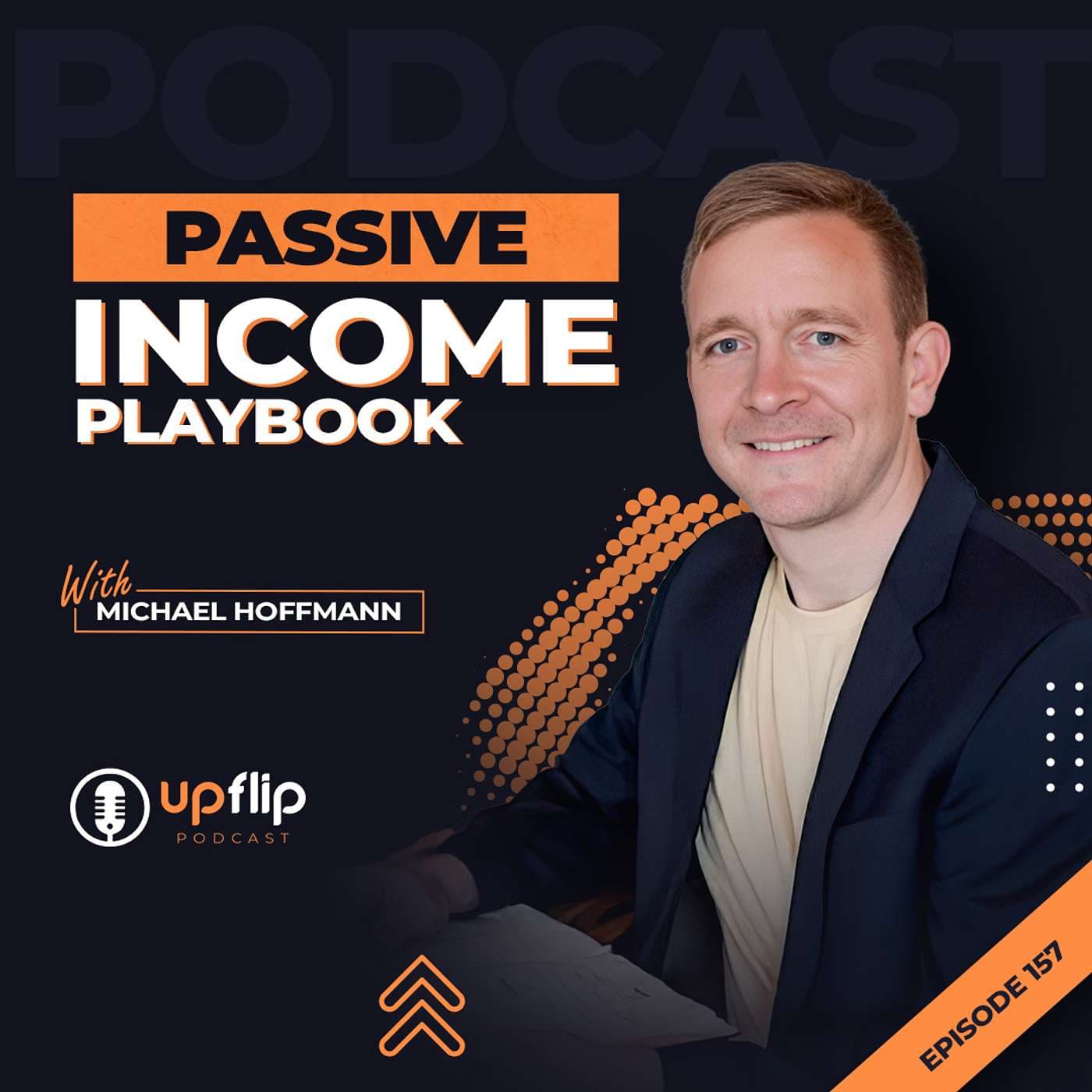
The UpFlip Podcast Episode 157: The Power of Passive Income - How He Built a $75K/Month Vending Empire
Episode Overview In this episode of The UpFlip Podcast, host Ryan Atkinson interviews Michael Hoffmann, a successful vending machine entrepreneur generating over $75,000 monthly in passive income. Hoffmann shares his journey from being a college strength training coach to becoming a thriving entrepreneur, revealing key strategies for building a successful vending machine business.
---
Key Themes and Takeaways
- Transitioning to Passive Income
- Background: Hoffmann began as a college coach earning $2 per hour. He felt the strain of his job and sought alternative income streams to achieve financial freedom.
- Initial Steps:
- Started in real estate by purchasing rental properties using his savings.
- Emphasized the importance of passive income and how it can be pursued with limited resources.
- Discovering the Vending Machine Business
- Why Vending Machines?:
- Hoffmann was inspired by observing high-profit margins on products sold in vending machines, realizing they required minimal operational time.
- Noted the potential for scaling and passive income through vending.
- Key Strategies for Success
- Finding Locations:
- Emphasizes securing high-traffic areas such as college dorms, offices, and medical buildings.
- Conducted direct outreach to property managers to propose vending solutions.
- Cost and Financing:
- Initial costs are relatively low, with many vending machines available for no money down or low-interest financing plans.
- Typical upfront costs include $500 for initial stocking and minimal machine financing payments.
- Product Selection:
- Importance of offering products that cater to the target audience (e.g., healthy options in gyms, snacks in office buildings).
- Discussed the shift from traditional vending machine items to more varied product offerings like incidental items and healthy meals.
- Operations and Logistics
- Streamlining Operations:
- Hoffmann hired staff to manage stocking and maintenance, emphasizing the need for efficient systems to reduce manual labor.
- Discussed the use of gig workers and how technology can enhance operational efficiency.
- Revenue and Profit Margins:
- Discussed achieving 50% profit margins on sales, with effective pricing strategies.
- Highlighted the financial benefits of offering new tech-forward vending options (e.g., AI machines) that enhance customer experience and increase transaction values.
- Marketing and Growth Strategies
- Referral Programs:
- Creating incentives for locations to refer other potential vending sites.
- Leveraging second-degree connections for networking and business expansion.
- Cold Calling and Pop-ins:
- Advocated for face-to-face interactions rather than relying solely on email communication.
- Discussed building personal relationships with property managers to secure contracts.
---
Conclusion Michael Hoffmann's journey and insights provide a clear pathway for aspiring entrepreneurs interested in vending machines as a source of passive income. By focusing on high-traffic locations, offering relevant products, systemizing operations, and employing effective marketing strategies, individuals can replicate his success. The episode serves as a motivational guide for those looking to step into the vending business or explore passive income opportunities.
---
Resources Mentioned
- Vending Course: [Free for 30 Days](https://bit.ly/3Nm6VSg)
- Connect with Michael: [Instagram](https://www.instagram.com/mikedhoffmann_/)
- Franchise Guide: [Free Download](https://bit.ly/4aWuGvc)
Connect with UpFlip
- [YouTube](https://www.youtube.com/@TheUpFlipPodcast/)
- [Instagram](https://www.instagram.com/upflip/)
- [Facebook](https://www.facebook.com/upflipofficial)
- [Twitter](https://twitter.com/upflipofficial)
---
The conversation with Michael not only sheds light on the mechanics of a vending machine business but also inspires listeners to think creatively about entrepreneurship and passive income streams.
Written by AI. May contain mistakes. Listen to the episode to check what was said.
Transcript
Automatic transcript. May contain errors.0:00Passive income. It's the entrepreneurial mantra we've heard time and time again. But for the vast majority of us with limited resources, is this dream attainable or just pure fantasy? Today's guest is here to reveal the shocking truth. Not only is passive income obtainable for anyone and everyone, but unlocking it requires far less than you think. And he's here to show you exactly how it's done. This is Ryan Atkinson and you're listening to the Outfit Podcast, where we uncover the secrets of building and running successful businesses. Today, I am ecstatic for this episode. We are here with Michael Hoffman, the entrepreneur and wealth expert who went from making $2 an hour as a college strength training coach to starting a vending machine business that generates over$75 ,000 a month in passive income.
0:42He's helped thousands unlock financial freedom, and he's here to do the same for you. Michael, thank you so much for being here. I am so, so excited for this episode. Ryan, fired up to be here and excited to dive into some of this. Yes. And let's give the audience a little bit of background on who you are. Can you share us that background of who you are and how you transitioned from being a college coach to pursuing passive income? And was that a hard transition to make? Yeah. So, you know, a background for me was I started as a classic farm boy in Iowa that had two parents that were entrepreneur spirit and I had a lemonade stand growing up.
1:14And so I had that kind of entrepreneur component. And then I went to college and really got down this path of human performance and coaching. So I got into that with collegiate football and athletics. And I kind of had an aha moment when I was coaching back in the Midwest when, especially in the fall, there's no days off and you're playing on Saturdays, you're back in the office on Sundays. And it just starts to wear down and you start to think about like, what are other ways to make money that don't require my time? And that's when I kind of went down this path of looking at passive income streams to really build some wealth without requiring as much time as my day job at the time.
1:53So you went down this path of passive income. What were some of those first passive income ideas that you had way back when? Yeah. So when I was a young coach, I didn't know a whole lot, but I did. One of my mentors in the coaching business actually got me on to trying to find these long-term rentals in the Midwest that you buy for$70K and you rent out for$1 ,000 and you're well over the 1 % rule. So no matter what mortgage rates are or anything, you're going to come out ahead. And so I literally took my emergency fund that I had built up from coaching and bought my first rental. And it became kind of addicting.
2:28I was making $400 or$500 off of tenants. And I hired a management company that I literally said, if it's not more than$500, fix it and don't even tell me about it because I want it to be as passive as possible and parlayed that into a second property and then 1031 that into a short-term rental and just went down the path from there. Interesting. And you said the emergency fund aspect. I want to ask, how much did you take out of an emergency fund to fund that first part of real estate? Yeah. So the first rental was$70 ,000. So 20 % down was$14K. So it was when you're making, I think at the time I was making$1 ,200 a month as a coach.
3:07So it's not like I could just make up for it in a couple months. Yeah. Were you scared to put all that money down? Because you're making$1 ,200 a month and that's not a whole lot of money here that we're playing with. I mean, were you scared? Absolutely. And that's the entrepreneurial DNA is like you run towards or makes you uncomfortable. And looking back on it, I was probably scared as heck. And it was one of the best decisions of my life. Absolutely. It's kind of like the army. We run towards the sound of chaos, as we like to say. Exactly. And I want to ask then, so you're in real estate, you're doing some long-term rentals, 70K house, doing all this stuff.
3:44How did that kind of lead you to explore like vending machines of all things? It seems like two very different things there. So how did you fall upon vending machines? Yeah, I think a lot of it, Ryan, was I couldn't keep coming up with the down payments for more rentals. And you're kind of capped out at what the market rates are for rent and what you have locked in through. There's not a lot of growth potential there with that asset you already got. So for me, I transitioned from coaching to working for a tech startup that required a lot of travel. And I'd be in these airports and I would see these old school vending machines that, one, I knew people were making 10x off of me because that bottle of water that I bought, I knew was 10 cents at Costco and I'm paying four bucks for it.
4:29And then two, there was no one selling me that it was a machine. So that person's time that was running that machine was literally limited. So I was just fascinated by that whole concept. And I just kind of went down this rabbit hole of vending. And that's when I really learned actually Warren Buffett's first investment as a teenager when he was 17 was a pinball machine route and that he had built. And at the end of the day, it's all unintended retail. I think that it's really interesting. You're thinking about it in a very entrepreneurial way, honestly, where it's like, well, I know it's going to cost them 10 cents to this water bottle.
5:04They're going to charge me$4. They don't have anyone selling it. So I think that speaks to your entrepreneurial mindset of starting to figure this out even when you're not in the industry yet. Yeah. And then you think about the friction. Think about you go to the grocery store and you don't want to have to wait in line to check out. You naturally just go over to the self checkout kiosk. And that's where like the future of all of this is going. Now you go like I literally just landed in Denver last week. I went up to this micro market in the terminal, didn't talk to a person, grabbed all my items.
5:33There's AI cameras above me, checked out, got my stuff and walked out without waiting in line, without the whole nine yards of dealing with a customer service rep that was mad and hated their life for any of those kind of friction points. I'm also someone that will go to self-checkout if I can, just because I just want to do it. I get to bag all everything, get myself there. But what timeframe was this? Because this isn't before people are really thinking about self-checkout. This is 2014, 2015? Yeah, it was right before COVID. So it was more around like 2018 time. So yeah, it was probably six, seven years ago, kind of exploring this a little bit.
6:07Let's go to that time then. So it's around this timeframe, you're starting to realize, okay, this vending machine thing might have some traction behind it. How did you start to take that first step to actually investing in vending machines? Yeah, so it's a really good question. It was a classic thinking about how would you make money with a vending machine? It all starts with foot traffic. And so I actually, living in a college town, I went to a college dorm right next to campus. And I walked in and was like, hey, you guys have vending machines? Do your residents have to walk across the highway at 10 p.m.
6:44and deal with kind of things that happen at night trouble wise? Or do you actually provide this amenity to your residents? And they were like, no, we don't have this. We'd be interested in what you have to offer. Send us a proposal. And this is pretty Chad GPT. Yeah. So it was just door knocking, literally. and I googled vending machines online and there was only one company that wasn't from Alibaba or China and it was a company out of Iowa and it was amazing I was like oh my gosh they have no money down your first payment isn't due for 90 days after the machine's delivered so you have 90 days of sales and they had a ton of YouTube videos on how to how to get the machine through a doorway how to set the prices like how to turn it on I was like all right and then being from Iowa like you.
7:30I was like, I trust these guys. So right away, I got the first machine and self-taught myself. That's really interesting. I love that they had the blueprint essentially of this is exactly how to do it and how to price your products. I am curious. So finding your first vending machine, it sounds like, so you're able to put it in the dorm. What was that timeframe? You sent the proposal. What did you include in this proposal? You're not trashy if you'd seen it. What did you include in that proposal? And what was the timeframe from actually getting set up just so people have this in the back of their mind as they're listening?
7:58Yeah. So I think the first thing with regards to kind of that starting your business is you got to find the right locations that has foot traffic. So that was the first thing with this apartment complex. And then, you know, a typical machine takes 48 weeks for delivery. And so you kind of use that timeline to your advantage with getting the proposal signed. And then in this case, this proposal, I didn't want any revenue share. In fact, they asked if I would donate a percentage to a nonprofit so they could put a sign up next to the machine. And so the portion of your proceeds would go to X nonprofit.
8:30So I was like, absolutely, I'll totally do that. And that was 2%. So it was very minimal. And yeah, it was just kind of growing from there. You know, the classic commercial real estate type expansion where they have three other properties they manage in town and you do a good job with the first one. And we were fortunate to get the others right after that. I love that. What were some of those upfront costs? Because I really want to speak to the audience here that they want to be entrepreneurs. They want to get in this business as well. What type of money should they be thinking about, about setting aside to actually get this business started?
9:01Yeah. So if you think of vending and the minimal capital relative to real estate, most machine manufacturers are in, whether that's micromarkets, the more frontier forward machine type setups or the old school machines, most all manufacturers are similar to car dealerships. So they'll do like, Ryan, do you want to do pay in cash or do you want to finance? And then you say, oh, maybe I want to finance and save some capital. So 95 % of companies will do no money down or, you know, at max 10 % down on a, let's say a 6k machine, you're looking at 600 bucks. Or if you're like me in that first example, I use that at no money down.
9:40And then they had a financing plan of 60 months. So my monthly payment was$117. and it wasn't my first month's payment wasn't due until 90 days after the machine was delivered. So I had done 90 days of sales before my first$117 payment. And then as far as like stocking that machine, usually budget for around$500. And then they'll also put a credit card reader on the machine for you and wrap that into the financing costs of the machine. So you're looking at, let's just be conservative. the product to put in the machine the first time is 500 bucks and then maybe a hundred dollars for other ancillary things like insurance whatever else do you think of you need to get started that is really interesting and are you paying a fee to these locations that you're actually placing i'm sure like varies but i know the apartments one they didn't pay anything but do some have like where you need to pay a fee to actually have your vending machine there some do but most don't that's kind of a common like oh you need to so we actually have the other side of that, we have two businesses that will pay us because they don't want their workers to go to the 7-Eleven or we work for a roofing company that literally will pay us every month for 50 % of all the products sold in our micro market.
10:57And what we do is we set the prices half off. So if it's like a, let's say a$2 water, we set it to a dollar. And then every water we sell for a dollar, we invoice the company. So at the end of the month, we do a thousand dollars in sales. We invoice the company for the other$1 ,000, but he wants his employees to get cheaper products. And he literally calculated all the costs of time going to the store, gas using the work trucks to go to the store, all the store prices to justify putting this into his budget. So you think of like, oh, you're going to rent this space. But I think we, I don't even know how many locations we're up to now, but we probably pay a revenue share for one fourth of them, 25%.
11:42That is a super interesting business model. I really, really like this. And I love how low those upfront costs are. You're basically looking at the$500, that$100 or so. I want to go back a little bit here. Identifying high traffic locations, what are some try and true high traffic locations that are easier to get and find than others? Yeah. So there's kind of two trains of thought there. And both of them revolve around one thing, and that's a full parking lot. So you think of one train of thought for high foot traffic is going to be high employees. So anywhere that has a lot of employees that has a full parking lot is kind of where you can target.
12:20And then the other side of it is anywhere with literally high unit count. So whether that's apartment complexes, whether that's condos, what have you, anything that's going to have high unit count. And at the end of the day, you're just trying to quantify foot traffic. And when you think of unit count, don't just think of an apartment complex. Think of that medical building where you go see a doctor and you walk in and there's the CPA office on the first floor and the dentist on the second floor. And that parking lot is always jam-packed and everyone has to follow through that lobby. That kind of place is where you want to be.
12:55Do you want to build a vending machine business of your very own? The very first step to unlocking passive income like never before is easier than you can imagine. And at the Elphap Academy, we're here to prove that. Everyone, I am in the Elphap Academy and I'm your community manager there. And I can promise you the programs that we have in here are amazing. We have detailed step-by-step guidance from successful entrepreneurs who've been in your shoes. You guys will be able to learn how to get started, attract your first customers, and set up your vending machine operation to grow. These are all proven strategies from active business owners and experts like Adam Hill, whose vending machine strategies help and bring in over$58 ,000 a month.
13:32Yes,$58 ,000 a month. If you're ready to learn, then the Uphlip Academy has the tools to help you succeed. Click the link in the description below and gain free access today. Everyone, I will see you in the Uphlip Academy. One question that comes to mind for me is let's just use the high unit. Some of them already might have a vending machine. So are they only having one vending machine or only using one supplier for their units, whatever, or there's room for two suppliers, two vending machines in one location. Yeah, it depends on how niche you want to go. There might already be the old school machines in there.
14:04And now the baby boomer generation is in there and they have the old school Coke and Pepsi machines. So you might come in and pitch them on these new micro market concepts with salads and subs and factor meals and crumble cookies in your kind of smart machine. So So you can displace those people. But then you also got the other side of where you're at in Austin. You know, Farmer's Fridge has a really big footprint. That's a very niche vending machine that you see in like the Austin Airport. But, you know, you're dealing with literally only salads and shelf lives in seven days. So you better sell a lot of them or you're going to have a lot of spoilage.
14:41That is super interesting. Yeah. When you said the Farmer's Fridge, I was thinking of that exact location in the Austin Airport that you were mentioning right there. I want to ask then from that. So you talked about two different products there, your Coca-Cola's that you're selling and your farmer's fridge, two very different markets that you're selling to. Are you primarily focused on one more than the other? Or how are you deciding which products go where? Yeah, it's all about what the clientele is, you know, and that's where understanding, again, putting yourself in their shoes. So if we're going into a YMCA or a gym, you might do healthy only protein shakes, you might do like protein chips and protein bars, but you're not going to put Snickers and Twix's in there or Diet Cokes, it's going to be a lot of like Celsius, Alani and then protein shakes, muscle milk, etc.
15:28And then the other side of it is you think of places in downtown Austin that might be a commercial office building that had a Walgreens or CVS and then Walgreens or CVS pulled their retail space out during COVID. and now they have a bunch of office tenants, even at 50 % occupied, they might have 1200 people in that building that were used to getting incidentals from Walgreens or CVS. So they might want a lot of your over-the-counter meds like Tylenol and Advil and all your hangover type stuff and kind of that, like we call them incidentals, you know, makeup wipes. And we have a property that's half Airbnb rentals, half apartment complex, and we have an entire shelf that's incidental.
16:10We have phone chargers, we have condoms, makeup wipes, all the way to smart waters and the cooler. It's really interesting because it really expands vending machines. It's kind of like when people think of like franchising, like fast franchising, they only think of fast food places. And I feel like vending machines maybe sometimes only think of like Coca-Cola, but vending machines go way beyond just your Coca-Cola. Absolutely. I mean, anything you want, people are going to pay for convenience. Yeah, exactly. Let's talk about strategies you have used to secure vending machine placements. Anything specific that you have used to get these placements in apartments or offices?
16:44Yeah. So there's a couple strategies we use. We have full-time cold callers on our team. We have email SDRs on our team. And then we do a ton of pop-ins. So for me, I'm super bullish on face-to-face because usually the competition is lazy and we'll hide behind an email address. And if you put yourself in a property manager's shoes, whether it's literally an office building or an apartment, they're putting out fires all day. So they're not just checking their email. So I love doing just kind of swing buys and just checking in and being kind of the front of their brain and saying hello, dropping off a four packet crumble cookies or something just to try to keep the ball moving down the field a little bit.
17:25So you guys have full-time cold callers, STRs. I absolutely love that. I know you said competition behind the computer, but I still believe cold calling is not dead. Cold emailing is not dead if you do it in the right way. So how is your team sourcing locations or finding people? You don't have to give away all the secrets here, but how are you guys finding people to actually call? We have a couple of data sources we use and we have some criteria around some foot traffic algorithms. I mean, we have, I don't even know how many, probably 900 properties now we found off market. Because where we're going is we want to build the Zillow's estimate for vending revenue.
17:59What's this type of property going to bring? So yeah, we have some data sources that we will pull. And then yeah, we just pick up the phone and start dialing away. Interesting. So are you just saying like, hey, this is Mike. I'm calling if you guys have any vending machines. What's the amount of time that people say yes, no, interested? Yeah. A lot of times you'll find the baby boomer machine that's broken or, oh yeah, we have a Coke machine, but it takes cash only. Or, oh yeah, we're hitched to Pepsi's wagon with the bottling service here and we actually want to add some Coke products like Monster.
18:36So there's kind of objection handling. There's a hundred ways you can go with it. Kind of back to the incidentals example was the one property group we got with that micro market. That micro market did$18 ,000 in August. Wow. We sold 589 smart waters, but we also sold a ton of makeup wipes and paper towels and laundry pods. So for us, we were going in there like, hey, we can actually be a full on market for you. And this property is up in the northwest and a very high visibility city. And they didn't want their residents going across to Whole Foods at 10 p.m. when there's homeless outside. Like, that's just not what they wanted to do.
19:15So for us, it was kind of a simple value prop. Yeah, I want to emphasize that to the audience, 18 ,000 with one mini market. That is insane numbers. Can you talk to us specifically about the margins on that vending machine, the mini markets? With that one, we're about 50 % all-in profits. With that one market, we pretty much normally do around 3x on our COG. So we try to aim for 67 % to 73%. Like the smart waters are a little bit different because, you know, we can get those for a dollar or a little bit less and get away in this market with selling them for four bucks. So those are on the higher end.
19:54And then food is a little bit lower around two to three X. So yeah, we're profiting about 50 % on that one. That is insane. With this one specifically, because I know with your very first one, you had like a full playbook on how to like price everything. Are you still using something similar to that? Or how are you deciding on how to price these products then? Is it based all on margins or following best practices? Yeah. Yeah. So this one we were talking about with the 18 grand in August, we actually priced our smart waters at 350. This ownership group has multiple properties in LA, the Northwest, Chicago, Canada.
20:28So we negotiated a revenue share for their whole portfolio properties and gave their owners dashboard access to the sales reports. So they had kind of some skin in the game to help market the markets. And so it's funny because we actually got an email within the first two weeks that were like, hey, will you raise your prices? Which usually it's the opposite. It's like we got residents complaining that you're charging too much. So we actually bumped our prices up a little bit, which has only helped our margins, obviously. How are you then refilling these vending machines? Can you talk to us about the logistics that happened there to actually make sure these are fully and properly stocked?
21:06There's kind of two trains of thoughts with this. And I'm kind of on the how do I make this as systemized as possible because I want things to be passive and my time's worth more than stocking Doritos. So I kind of clearly self-taught myself, you can't delegate something unless you know what you're delegating. So I stocked our machines probably for the first six months by myself. And then I posted that under Chrysler's gigs, which was their gig section is brilliant because it's all the door dashes, the Ubers. So in a college town, it's like you can stock these machines if you're an early riser, if you're a night owl, if it's Sunday or Wednesday, I don't care.
21:44It just needs to be done once or twice a week, depending on sales volume. And so I hired someone at$20 an hour and I just put in there, hey, if you do a good job, I'll raise it up to$25 an hour after three months. And then long term, I might give you a 5 % profit share. And that's just worked ever since. So now that person came on full time. We just hired our third person this week for that route. So we just kind of really build the systems and let it kind of run itself. I want to dive into that though. So you have three people that are working on logistics and everything, but you have 900 different locations.
22:19How many markets are you in? And how does that math essentially? I want to dive deeper into that. So I'm talking about our Eugene route here. So our route here is probably 25 locations. Usually one staffer can take on about 15 to 20 if they're really efficient. You know, usually 10 locations a day. If you have good locations, you usually have to go by twice a week. And then you might have a day in the middle of the week, like Wednesday as a floater, just in case something comes up. But yeah, you usually try to scale that. And a lot of people, they'll get one or two locations doing, let's just say,$2 ,000 a month.
22:55And so you got, or even less, let's be conservative, say$1 ,500 a month. So you got two locations doing$3 ,000. They're profiting$1 ,500 minimum. And if they're doing it themselves, they're probably spending three hours a week. I mean, you factor in, that's 12 hours a month. That's a pretty solid return. For sure. What are some other costs that comes with the vending machine business? I feel like we've talked about a few like stock and obviously you have payroll, you're using technology, you have SCRs. What are some other typical costs that you're seeing within the vending machine space? Just so people can understand it may be a smaller upfront cost, but there are costs actually running this.
23:32Absolutely. Yeah. So there's all kinds of things that definitely add up. So you got insurance. So normally machines insurance costs is about 15 to 20 bucks. And then it kind of plateaus at a hundred bucks for your route that's per month what else you got you got like transaction fees so a lot of these micro markets and kind of smart coolers are credit card only so you got the merchant service fees you got the software fees from that machine company because they're trying to like get you for oh we're going to take five percent of revenue because we're providing software updates and the whole like sas model of that so you know you got another 10 % there.
24:10So if you think about a 50 % margin, you got about 30 % for COGS, 10 % for those kind of transaction fees and software fees. And then another 10 % for the ancillary, you might hire a part-time stalker or the insurance fees or what have you. That's super interesting. I didn't even think about the insurance costs, but I mean, that's like a no-brainer. Of course, you guys have to be insured there. I want to pivot to then also asking about how are you finding these vending machines? And what are the benefits of buying a new vending machine versus a used vending machine? Yeah, this is a loaded question.
24:45So we'll just go through what happened with me. So my first location, I was like, oh, I'm going to save a couple thousand dollars. Or no, it was actually my second location. I was like, I'm going to save a couple thousand dollars and buy a machine off Craigslist. So it was a refurbished machine from a manufacturer that gets these old machines and refurbishes them, whatever. And so I kind of trusted them at the time. And sure enough, that machine broke after six months. And I realized real quick, being Mr. Passive, I was like, yeah, no thanks. So ever since then, I've never gotten to use machine again.
Read the full transcript
25:23There's definitely some people that I know very well that thrive on getting great deals on Marketplace and Craigslist. And they have 10 machines torn apart in their garage and they've just turned into like machine mechanics basically, but they're getting them for$500 and they probably got mine for a screaming deal too. But yeah, now I get new machines that are under warranty and if something's broke, I just call them. They either send out a rep or our team has to FaceTime them when we're at the machine to troubleshoot it and then they overnight the part that's needed. Yeah. Interesting. I want to hit on that troubleshooting piece as well.
25:58How do you maintain and troubleshoot these? It sounds like you're doing it remotely because obviously these things are going to break down. So how are you maintaining it? And can you also quickly answer how long these machines typically last? Yeah. So machines are built to last. Where it gets a little iffy is you go to a Jiffy Lube, you see that machine that's sitting over in the corner that the mechanics use to get their 75 cent soda. And that thing's probably been in there 30 years. That thing is built to last. Now, these new machines with the AI cameras and doing all the AI software tracking of what you grab out of the micro market and things like that that's going to be interesting to see because it is such an interesting and disrupting market right now like i mean there's companies coming out every single week of drills like that or hit me up about hey check out this new ai camera and system that you can at the end of the day you're just plugging them into smart fridges and yeah throwing a point of sale device on the door you know so i'll be really curious to see kind of what that looks like with longevity.
26:59But as far as I'm concerned, like the commercial fridges and stuff, I mean, we have typically what maybe a five year warranty on most parts. And then, you know, I think for us, yeah, you can factor in that depreciation costs into your budget as well. I think that is super interesting. What does like an AI vending machine cost that has like all the fancy features? Yeah, it's around$5 ,000 to$6 ,000. So it's not bad. I was gonna say, yeah, when I hear like AI vending machines, I'm thinking like$20 ,000. And it sounds like this is where the market's going, is these AI vending machines that companies want.
27:30Maybe even a city like Austin, they're probably more bullish on those than other cities as well. Well, and it's all about the user experience. So back to the self-checkout thing, you don't want to have to enter in a code into a machine for every single item. With these AI machines, you put your phone on the door, it unlocks, or Apple Pay or credit card on the door, it unlocks once it's verified. whatever you grab out of that machine you're not even scanning any of the products or barcodes you walk away and that card gets charged based on what you grab so you want to talk about less friction rather than like i got to enter in b17 for dr pepper and then b19 for a snickers and b34 for a bag of gummy bears i mean ryan we started with the old school motor machines and locations and we swapped them out with these smart machines and our transaction values have 3x like we have literally tripled revenue and that's the exact same location just a different type of machine because now you got people that are crazy oh i opened the cooler i'm gonna grab a bag of chips i'm gonna grab laundry pods which i can put it in the vending machine anyway yeah initially so like it's just wild it went from average transaction being seven dollars to twenty one dollars well that's 3x in your revenue just by a modern machine.
28:49It's crazy. That is absolutely crazy. And everyone, we're going to dive into the marketing side of this real quick. Before we do that, Mike, I want to have you speak directly to the audience here. If someone wanted to start a vending machine business in 30 days, what are one or two steps you'd give them right out of the gate before you move to marketing? First thing would be go find a place with high foot traffic that has a big parking lot and just go in, ask for the manager and give them the sales pitch that you're going to provide some type of modern machine that's not going to be the old school machine they're going to think of when they hear the V word.
29:20I like it. Let's switch to that marketing piece because I know the audience absolutely loves marketing sales. They love just digging this all up. So what strategies have worked well for you when it comes to marketing? For us, we try to create incentives for warm intros. So whether that's, hey, we'll add a second machine at your location if you enter us to your three sister properties, whether that's, hey, we'll double your revenue share if you interest your five sister properties. So we're big into a warm intro is a lot better than 10 cold intros. And then we also tap into network. So it's kind of like when you go to LinkedIn and you type in the search tab and it's like, oh, I'm second degree connection from Ryan Atkinson because we both know someone from Iowa.
30:03Well, it's like leverage those second degree connections to actually get to that person. And so we do a lot of that type of second, third degree connections to get to properties we think are going to be high revenue generating. It sounds like there's a really good opportunity once you get into one location, there's a really good opportunity to expand into all the sister locations. Oh, it's getting the first one is how you break the dam. That's always the hardest part is getting that first fish in the boat. But once you get the first one in, it's like, okay, now you got the credibility, you got the referral, you got all the things to scale.
30:39That's really interesting. Are there any levers you're pulling? How do you negotiate with these locations on revenue sharing or other incentives to secure those first locations? Yeah, there's definitely levers. I don't like to use revenue share as a lever because at the end of the day, what we pay them is never going to be enough to... Let's say it's a commercial office building. We're never going to cover the open space. They couldn't fill in our upstairs tenant they can see. But for us, it's all about the amenity that they don't have. So for them, whether that's, hey, we'll give you a$5 credit.
31:11So every business you tour this office building, you can take them by the market and get a free salad and drink as part of their tour, like the whole kind of athletics recruiting pitch. We want them to bring their 35 employees into your office anyway to drive more foot traffic. So of course, we're going to give you credit to bring them by the market and get whatever they want. Interesting. I want to go back a little bit to that marketing piece as well. We talked about cold calling earlier. And you guys are running email marketing campaigns over Zoom. What's that SDR strategy that you guys have?
31:44I'm assuming cold calling, emailing the same people. Can you talk a little bit specifically about that? We do have an email SDR campaign for what we offer. A lot of it will start out with an intro, It's usually an eight email sequence ranging all the way through from intro to a free site visit to come see what you currently have to maybe we'll drop in like different machine examples into different kind of strips. And then, you know, we might pull out the revenue share card if they're still unresponsive. It's really cool because like when I'm thinking when I got on this podcast, honestly, I was like, OK, like this is probably like a solo operation.
32:21But this is like a full-fledged team with payroll, with expenses, with everything. This vending machine business is a very legit thing. Yeah, it's definitely a business for sure. We're learning how to fly this thing as it goes down the runway. Yeah, absolutely. But that is to say someone could run a much smaller operation on the side. Would you advise that? Absolutely. I think it's such a great side hustle because at the end of the day, think about it. I got into this when I found out my wife was pregnant. And so what's kind of the trigger in your life? Is it your kids are about to go to college and tuition is expensive?
32:56Is it paying for daycare? Is it you want to join your country club? Like all those different expenses, one or two machines can take that expense right out of your worry bucket. And it's taken one or two hours a week. I would go stalk the machines. I literally would look at my phone and be like, okay, I need to eat Snickers, 10 Diet Cokes. I'd throw them into a bucket, and I'd go stalk on my way to hit balls or on my way to the gym. I wasn't doing this as my full-time job. I was still a tech executive out of Menlo Park at the time. So I think it's a perfect side hustle. It's literally supply and demand of you buy a product after it sells, and you resell it for 3x what you bought it for.
33:39It's simple economics like that. Yeah. Like seriously, we literally have friends in our group that will give each one of their kids a vending machine and say, you pick the product. Like we're talking teenage kids. You pick the product, you set the prices. Like they're living a economics one-on-one class as a 14-year-old competing against their siblings. Like how could you not think of a simpler way to teach someone supply and demand in a vending machine. Yeah. Mike, I always leave fired up from upflip conversations, but I know I'm going to be leaving this one extra fired up. I'm going to be looking at a vending machine is way different because of this conversation.
34:19So I want to thank you for that because we are going to move to our fan blitz questions. And these are our last five questions that submitted from our community. And guys, if you want to join in on amazing entrepreneurs like Mike, go to www.youtube.com slash upflip and submit your questions there. But Mike, ready for our last five questions? Let's rip it. But number one, how hard is it to repair machines? Can I do this on my lunch break? It's not hard at all if you get a new machine because they're typically under warranty. There you go. Number two, what's something you wish you knew before you started?
34:47It's not get rich quick. How long did it take for you to move to Vennie machines full-time? I should ask that. I don't even know. Probably three years, but that was never the goal. I wasn't hating my W-2 and trying to go full-time in this right away. It was more of a, I want to kind of test this out at a low investment, kind of low capital and see where it goes from there. But I think some people think of it as like Amazon e-commerce where it's like, oh, we got to get ready for Q4. And it's like, no, it's a numbers game. You do 10 pop-ins, you get three proposals out there and you're going to get two that sign it.
35:21You know, it's like simple math. That is simple math. Number three, how do you stand out from your competitors? We're always pushing innovation. So whether that's the type of machines, whether that's the type of products, we're not going to compete on revenue share of Snickers and Diet Cokes. Like right now, I'm having meetings with all these manufacturers of homemade meals and things that, you know, we want to kind of put in the machines for the convenience factor. And even back to, you know, in the airport last week, I was flying through Denver and I was looking at the Bose machine there and what are they charging for Bose?
35:54And they had an over-the-counter drug machine in Denver that I thought was really interesting and definitely relevant here in Eugene. So just kind of always looking at what are those other niche items we can be adding. I like it. Number four, what are you most proud about in your business? That I can do with my kids. I think it's such a simple concept. My daughter and I, we go to Costco every Saturday. And she just gets... She loves it. She's over there counting what we have for supply and inventory. And she gets a smoothie at the end of it when we check out. So it's kind of created like a daddy-daughter day to go get our vending product.
36:28That's awesome. And hopefully$1.50 a hot dog as well. Exactly. She's not big enough, though. She's only three. So I'm like, that hot dog's bigger than your head. Yeah. But you can't beat that deal. Last question for you. Do most vending machine businesses have websites? Are they more old school? Nowadays, they definitely have websites. Yeah. If you go down to Google and just type in vending machines or micromarkets, you're going to have a whole hour of a round to hold that. you're going to go down and get fascinated with. I absolutely love it. Well, if someone wants to check out your website and connect with you, Mike, where can people learn more about what you're doing and what you're building?
37:05Yeah, probably simplest place is mrpassive.com. I'm most active on Instagram, I would say. So Mike D. Hoffman underscore is my handle, or you can find me as mrpassive on Twitter. But I love to share kind of everything because that's just the coach in me is build once and share to everyone. So I don't hide anything and like to share everything as we build it. Guys, that was an amazing episode with Michael. Three quick takeaways for you. Number one, when you're evaluating where to put your vending machine, number one, of course, look at the foot traffic. Look at places like apartment complexes, office buildings, places that have a lot of foot track and full parking lots.
37:43I love that point that Michael hit on. Number two, a great strategy to get people in this industry is cold calling. Cold calling is not dead. Email marketing is not dead. So be making those calls, emailing those people and getting your foot in the door to open up those opportunities. Number three, you could run this as a side hustle, but you could also run this as a full-time business. It's amazing what Michael has built with full-fledged payroll systems, logistics. Everything is so cool, but you could just run this as a simple side hustle with one or two machines, which I think is amazing. If you love this episode, don't forget to leave us a review.
38:15Your reviews help us reach more aspiring entrepreneurs just like you. Our goal is simple, to inspire and equip you on your entrepreneurial journey. Thanks, everyone, for listening. Well, thank you so much for sharing all the insights today. Generally, I'm leaving this conversation with a new perspective on Vending Machine. So that's when you have a great interview. Mike, thank you so, so much for being here today. Ryan, thanks for having me. This was awesome.
From the publisher
Mike Hoffmann is a vending machine entrepreneur generating over $75,000 a month in passive income. Mike breaks down how he transitioned from real estate to vending machines, shares key strategies for finding high-traffic locations, pricing products for profit, and scaling the business.
He also covers why new machines are better than used, how to systemize for true passive income, and tips for streamlining operations by hiring staff. If you're interested in turning vending machines into a serious income stream, this episode is for you.
Resources:
- Take our vending course (free for 30 days): https://bit.ly/3Nm6VSg
- Connect with Michael: https://www.instagram.com/mikedhoffmann_/
Ready to be your own boss without starting from scratch? Grab our FREE Franchise Guide and unlock the secrets of proven business models that have already created thousands of success stories.
Connect with UpFlip:
- On Youtube
- On Instagram
- On Facebook
- @UpFlipOfficial on Twitter
For more insights to start, build, or grow a business, check out the resources on UpFlip.com or head to the UpFlip YouTube channel to see more interviews with business owners and experts.
Thanks for listening!


