
In short
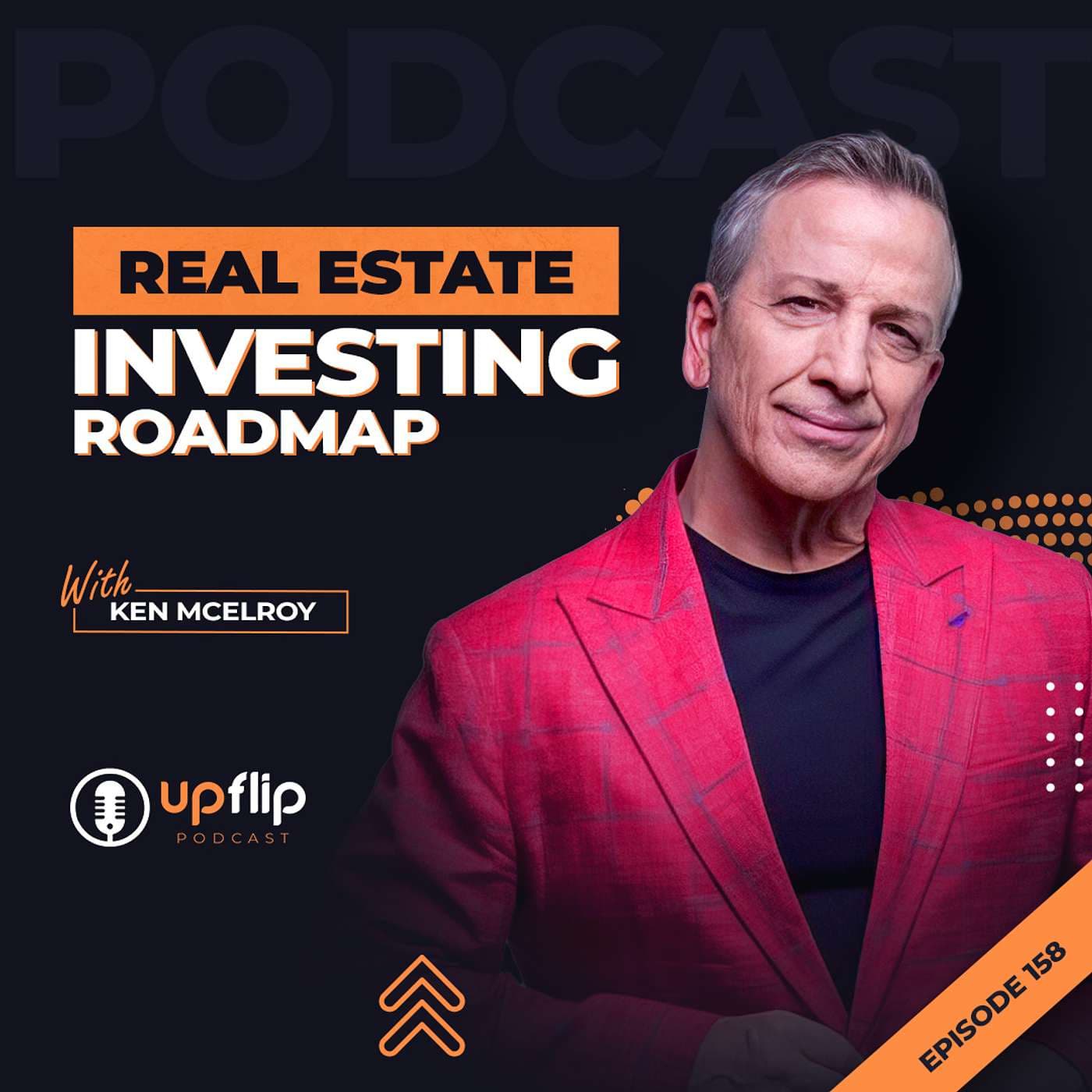
The UpFlip Podcast Episode 158 Summary: $2B Investor: Anyone Can Build Wealth with Real Estate
Episode Overview In this episode of The UpFlip Podcast, host Ryan Atkinson interviews Ken McElroy, a real estate expert who has amassed a portfolio valued at $2 billion. Ken shares his journey from managing properties as a college student to becoming a top investor. He discusses overcoming fears, spotting lucrative deals, and building long-term wealth through real estate.
Key Themes
- Accessibility of Real Estate: The belief that anyone can enter the real estate market, regardless of financial background.
- Learning from Experience: Ken emphasizes the importance of experience and learning from mistakes in the real estate space.
- Long-term Investment Strategy: The conversation stresses the significance of viewing real estate as a long-term investment rather than a quick money-making scheme.
Key Concepts Discussed
Ken's Journey
- Background: Ken grew up in a modest environment, which made him determined to seek financial stability through real estate.
- First Investment: He bought his first rental property after years of managing properties and learning the business, which gave him confidence in his skills.
Building Confidence
- Property Management Experience: Ken's years managing properties helped him understand the market, expenses, and tenant dynamics, thus building his confidence to invest.
- Recognizing Good Deals: He learned the importance of saying "no" to bad deals, a skill hone through experience in property management.
Learning Curve
- Continuous Learning: Ken emphasizes that the learning curve in real estate never truly flattens; constant learning and adaptation are required.
- Risk Management: He discusses the necessity of understanding risks and mitigating them, especially as one’s portfolio grows.
Cash Flow Importance
- Cash Flow as King: The discussion highlights that consistent cash flow is critical for long-term success in real estate, allowing investors to withstand market fluctuations.
- Resilience: Properties that generate cash flow can help investors weather downturns in property values.
Market Analysis
- Identifying Good Markets: Ken advises that potential investors should look for markets with population growth, which indicates increased demand for rental properties.
- Sub-markets: He suggests looking beyond major metropolitan areas to suburbs that are experiencing growth due to rising costs in city centers.
Creative Investment Strategies
- Seller Financing: Ken mentions creative financing strategies such as seller financing, which can make it easier to enter the market without substantial capital.
- Finding Value: He underscores the importance of seeing potential in properties that others may overlook, often through better management or repositioning.
Key Takeaways
- Long-Term Perspective: Real estate should be viewed as a long-term investment strategy and not a get-rich-quick scheme.
- Saying No: The ability to say no to bad deals is crucial for success in real estate.
- Market Dynamics: Understanding local market dynamics and population migrations is essential for making informed investment decisions.
Additional Resources
- Ken McElroy’s Website: [Ken McElroy's Company](https://mccompanies.com/)
- Join a community of entrepreneurs: [UpFlip Community](https://bit.ly/4h64QHX)
- Previous Episode Highlight: Interview with John Casmon on generating passive income through real estate (Episode 152).
Conclusion This episode of The UpFlip Podcast serves as an insightful resource for anyone interested in real estate investment, providing practical advice and encouragement from a seasoned investor. Ken McElroy’s journey illustrates that with the right mindset, knowledge, and strategies, building wealth through real estate is achievable for everyone.
Written by AI. May contain mistakes. Listen to the episode to check what was said.
Transcript
Automatic transcript. May contain errors.0:00What's one of the best ways to build wealth, even if you're not rolling in cash? The answer is real estate, but don't tune out just yet if you think it's out of your reach. Today, we're busting the myth that real estate is only for the wealthy and showing you how to get started no matter your financial situation. This is Ryan Atkinson and you're listening to Help Fit Podcast, where we uncover the secrets of building and running successful businesses. Today, we're joined by Ken McElroy, a real estate expert with over$2 billion in assets and a track record of turning beginners into property pros.
0:31Ken's going to share the insider secrets that helped him acquire over 10 ,000 properties and build a real estate empire. Stick around because this episode could change your financial future. Ken, welcome to the show. I am so, so excited to have you on today. Thank you so, so much for being here. Absolutely, Ryan. I love what you guys are doing. Thanks for having me on. Well, I know our guests love what you are doing and we're going to wind back the clock on how you got started to what you're doing today. So what motivated you to invest in your first property? And did you have any prior knowledge before you got started with real estate investing?
1:01No, I probably grew up a lot like a lot of people. You know, I had student debt and my mom was a hairdresser. My dad was in construction and they were great. But we were bumping up on the environment that I grew up in, you know, which is like a lot of people. Like sometimes you're like, how did that person get that? And, you know, how are they driving that? Like, you know, as a young person, those are the things that go through your head and you don't really understand why. And so that's how I grew up. And so for me, most of my life, I had to get out of my own head what I learned when I was young and what my parents taught and the environment I was in.
1:35And I think that's the case for a lot of people. And so I was managing a property in college. I wrestled in college. And so that got me into college. And that was good. And all of a sudden, I was in a new circle, to be honest. I was like, wow, these are smart kids. I'm glad I'm here. I better step up my game. And then I started meeting mentors and coaches and things like that. And I started managing property because I couldn't afford college. I needed the rent free and I didn't know how to manage properties. And that's what I did. But then what I realized, Ryan, was the power of property management, the power of understanding how those investments work, how tenants work, the operating expenses.
2:15That gave me the confidence. I was basically just collecting rent, paying bills, keeping the property clean, just like what a normal property manager does. But I was doing it for survival at the time. And then when I got out of college, I got my real estate license and I started doing that as a living. And then I was managing properties for all these people that were buying real estate. And I was scared to death though. I was not going to do it. I was like, I had anxiety. I had stress just like anyone. I don't know if I deserve to be on the other side of the desk, you know, and I'll just continue managing these.
2:47And then one day I just got the courage. It was about eight years later, I bought my first rental. It just cash flowed$100 a month. But because I knew I had the confidence, I knew I could keep it full. And I also knew I could manage it. And I understood the numbers and the math. And so what I realized, it's a bit of a science. It's a system. And the people that were managing properties for, I was like, I don't know how this person, you know, how are they even doing this? You know, and so that's all. I just being in the property management business, I got to see ownerships, partnerships. partnerships, people that were coming to me.
3:19And I was like, man, if they can do it, I can do it. That's what I wanted to ask. So how did that previous experience of managing properties for eight years, how did that help build your confidence into investing in your first real estate property? And would you recommend everyone to kind of follow that same way to do it? Well, there's a lot of ways to get into the business. I will tell you, it gave me the confidence to be able to say no a lot. So I mean, and that's part of it. You have to be able to recognize something and say, that's a bad deal. That's a bad deal. That's a bad deal. And when you manage stuff, you can do that.
3:49You can look at stuff and go, you know what? The rents don't support it here. The expenses are high. The broker's full of it. The seller isn't giving me accurate numbers. All those kinds of things you learn when you're managing. But you don't have to start there. But that's what happened was when I finally got the courage, which took forever, in my opinion, I was like, I go, how am I going to do this? I don't have any money. I don't know how to buy anything. I know how to manage. I don't know. I've never really spoken to any lenders. I don't even know how to look. But I did have that, what I felt was an incredible skill.
4:20And it was actually, a lot of people wanted that. A lot of people that were buying properties need property management before they buy it and after. And so I didn't realize the industry I was getting into was going to set me up for what would later be my career. Interesting. I want to talk about finding those properties, saying no, identifying what's a good deal, bad deal, learning about expenses, rent, cashflow, all that stuff. Let's talk about the learning curve. How steep of a learning curve was it for you way back when? And is it still that steep of a learning curve today? Yeah. I think it's there all the time.
4:53I'm not kidding. I mean, if you're not pushing a little bit, you're not really growing. And so for me, the first thing was just unlearning and relearning from my parents, my mom, bless her heart. She's still alive. She's like, we can't afford that. We can't afford that. And that is how I grew up. I mean, to go from there to actually buying real estate that, you know, investing in it and cash flowing. And it was a huge step. That was the first huge step. And then once I did that, I realized, okay, it wasn't a straight line for sure, but it worked. And then I was like, okay, I'm going to do this again.
5:27And I just replicated what I had done. And I, each time I got a little smarter, a little better, a little wiser, my network grew. And I realized that the future really is uncertain. I mean, it is like, let's just, whether you're buying a stock or you're buying real estate or whatever, it's just purely uncertain. But there are things, and that's for everyone. There are things that you can do to reduce that uncertainty. There are things that you can do to manage risk. And I'm telling you, you know, one of them was, for me, was developing that new skillset of property management, understanding what I should buy and what I shouldn't buy.
5:59And if I got something, how to manage it. And then two was building my network, which I didn't have of people. And three is just taking action. And that's what a lot of people do, one or two, and then never three. And I got to tell you, I was scared to death. And each time I buy something, even today, I mean, even as big as we are now, we just hit about 2 billion in assets, which is hard for me to even believe. But I'm like, okay, what am I not seeing? What mistakes am I making right now? because now I'm using other people's money too, which I know we're going to talk about because you quickly run out of money and sometimes you don't have any at all.
6:34But for me, my first deal was just what I saved. And I bought a two bedroom, two bath that cash flowed$100 a month. And it was like 150 grand and I used my own savings. But after that, you start to run out of money and then you have to realize, okay, now I'm in a different arena here. I want to talk about that first investment that you made, that$150 ,000. It was going to cash flow right away. Take me to that moment. me. Like, tell me a story about, you know, like, I'm actually going to like buy this. Like, what is there to learn? Like, what was your mom saying, especially like, I'm curious. Yeah.
7:02It's a great question. Like, I don't think anybody's asked me that. Let me tell you, you can imagine, I want to say I had 40 grand in savings or something at the time. Right. And I needed like almost all of it, you know? So, so you go from taking all the savings that you've fought and clawed for and like, you know, like moving it over somewhere else and then, And, you know, closing your eyes and, man, I sure hope this works. You know, to go to zero and not really have much of a cushion, take some balls and some faith. And so that I still remember to this day. And so what happened is I'm super motivated to keep a renter in there because I know with a renter, cash flow.
7:40Without a renter, I'm screwed. I remember just like it was yesterday, that first one. And then what I realized was the tenant was paying off the mortgage, which was huge. The rent was covering all my expenses as long as I treated the renter well and did things that they ask us, things come up, manage it well, which was my skill set. They stayed for a long time. And then all of a sudden, three, four years later, it starts to become less and less of a scary and you're realizing and you're kind of also monitoring. A lot of people monitor equity as their net worth, which is not necessarily a good thing.
8:17But in this case, it was going up every year. And I was like, oh, this is good. I've got 10 ,000 more in equity or whatever, you know, next year, next year, next year, next year. Then I sold it, which I just look back at. I was like, oh my gosh, I wish I wouldn't have sold it. I sold it for, I think about in the summer between 180 and 190. So I got all my equity back plus that extra bit. And now all of a sudden I almost doubled my money and a cash flow and the tenant paid it off and all that kind of stuff. And I was like, okay, that worked. It wasn't so bad. And there were all kinds of lessons there, but I still remember it was like it was yesterday.
8:48Oh gosh, that is a crazy story. And I'm going to ask a question in the future about this, but I want to ask going right off of that topic, how long did it take you to make enough money to start doing real estate investing full time? Oh, forever. Yeah. I got to tell you, one of the problems of this business is that when people believe you get rich quick or all this kind of stuff. That's all BS. Like I'm telling you, you know, the real estate should be do what you love, first of all, number one, and then do it on the side for a while. Like, you know, slowly chip away, make mistakes, keep it local, you know, build your network, you know, your neighborhoods, you know, the stuff it's, you know, make sure that you can manage it.
9:26Make sure you understand all that stuff. Cause even if you manage it yourself or turn it over to somebody, you have to know how to do it. So if you don't know how to do it, you can't even manage somebody who does it. It's a slow process. And I tell everybody, you can be wildly successful, but it's probably going to take a good 10 years now. And I mean that. I mean, to do it well, because I started with just buying one. And then the next year, I just wanted to buy another one. And then the next year, I just wanted to buy another one. Well, what happens is that's only three places in three years.
9:58So you can do it that way with your own money. But if you're going to scale it and turn it into a business, then you actually, it's a different skill set. You have to go out and try to attract investment from other people and convince them that this is a good path. And there's so many things. And I always use my sister as an example. My sister was a bookkeeper at a medical clinic in Everett, Washington, where I grew up. And she made whatever, a bookkeeper salary, like 40, 50 grand. And she ended up with 25 houses over a long period of time and just slowly chipped away, slowly saved her and her husband together.
10:37So it wasn't just her salary, but he worked in a very blue collar scenario as well. So the point is it can be done. It can be done really slow and methodically over time. When she retired, she had a sizable net worth because the tenants had paid those off. And she was calling me all the time with all these management things that were going on. And I was trying to help her the best I could. But the point is it doesn't have to be quick. I don't actually think it should be unless you're really going to dedicate like I've been able to do. I've been able to jump from property management. My first 10 years was a property management business.
11:08That's what I did. And then I got the courage and I was buying small stuff during that period of time. Then when I got the courage to buy big projects, that's when I formalized the business, had property management as one of the services, and then it became an investment business and then became a construction business and then became a development business. So, you know, those are all businesses I have inside of my company now is that we have a full development and construction. We're doing 400 million right now in construction and development. We have a property management company. We have all these different verticals inside of there, but it all started from that one two bedroom, two bath project that was a unit that was 150 ,000 total sales price.
11:48Yeah. I'm curious, the question that I want to ask you're like when it comes to risk and obviously you just laid out like how you guys are scaling like$400 million a year is mind blowing numbers there. Are you more risk adverse now than when you got started. Oh, for sure. Yeah. Talk to us about that. How do you manage risk in real estate now? Another incredible question, a very insightful question. When you start to grow your net worth and you start to grow your equity and all that kind of stuff, the last thing you want to do is pledge it to the future, right? Period. Everybody thinks the same way, right?
12:19So you're always hedging what you have, but you also have to be a little bit proactive and you have to read the tea leaves, I guess, on things. And so that's exactly it. So when I'm getting a development loan or construction, I'm pledging my assets, assets I already own, assets that have lots of equity for the next asset. So every single time, man, you can't take this lightly. I will tell you, it's not confusing either. It's the exact same model over and over and over. If it's a two-bedroom, two-bath, that's$150 ,000 or it's a$100 million project, I'm telling you, it's the exact same math every single time, the exact same process.
12:59However, obviously the numbers are bigger and the scale is bigger, but it's the same. It's literally who pays all this back are the renters. So whether it's one renter or 300, it's the same. You know what makes this podcast so amazing is listeners like you who leave us great reviews. One Upflip fan said, Upflip has given me so many different options to explore while I've been searching for a business I can be passionate about. Thanks, Upflip. If these entrepreneurial deep dives are hitting the spot, do us a favor. Let the world know by leaving a quick review. We love hearing your thoughts and it helps us find your content to ensure we're bringing you valuable insights, stories, and convos like the one you just heard.
13:41It only takes a second and we're so thankful for those who have already shared a review. Like Michelle, who said, such a great podcast for any aspiring entrepreneur. You're guaranteed to learn something new. Your feedback and support keep us going. So thanks again and hit that review button to share the love. When you are making like those decisions, especially as you like scale up and you're saying like the process is the same, you're just building smarter numbers. How are you making these smart calculated decisions on like what to invest in? Cause they obviously are bigger numbers here. It's all math.
14:07So let's just be clear, like candid. When the T bill one month T bills went up over 5%. And you know, right now in our lifetime, we've never seen savings rates like ever before at the banks. Okay. So it makes more sense sometimes to actually keep your money in government-sponsored T-bills at 5%. And I did that for the last three years. I didn't buy real estate. I was like, this is great. So for me, I'm always looking at inflation, interest rates. I'm always looking at return. So if I'm going to invest a million bucks somewhere, I'm going to want north of a 5 % cash on cash because I get that in a one month T-bill.
14:48So you always have to take a look at the pros and cons of moving money into stuff. And you should never, ever do an investment deal just because you can't. So there's a time to do this and a time not to do this. And there's so many variables that I learned from that one time. Because when I bought that$150 two bedroom, two bath, I wasn't thinking any of this. I was just thinking, how do I just keep a renter in here, you know? But now it's like my mind's going a zillion miles an hour trying to think of, you know, and you start to learn too, as you buy things, you learn, oh gosh, I made a mistake there.
15:21I should have done this. I should have thought that I missed this. So you don't learn ever, Ryan, if real estate goes up and the investment does really well, you actually learn nothing. Like it's like when it goes sideways or down, that's when you actually, if you're reflective And if you're smart, and if you actually are conscious about that, you really need to dig in deep and say, okay, what did I miss here? What mistakes did I make? And that's actually where, to me, that's where the fun is because you just sharpen that saw for the next one. As an entrepreneur, I can speak to that myself. Like, cool, it's always great when you're crushing your numbers and you're closing deals and everything.
15:58But there is so much to be learned in those failures and those setbacks. But the only way you learn from those, if you're reflective on those and you actually change your course of action. I think that's been, for me as an entrepreneur, one of the biggest lessons is there are lessons in the mistakes. And that's actually where the money is made, is learning from those mistakes. Yeah. And that's where the opportunities are too. Because there are people like you know. When I watch the real estate, like right now, we're seeing all the mistakes in the real estate field. Higher interest rates, higher cap rates, higher expenses, all that stuff, slaughtering people.
16:29I knew that was coming because I had been through it in 05, 06, 07, 08, 09, 010. And so the folks that are getting slaughtered right now are the ones that didn't stick to the fundamentals. So you start to see those things and then you back off. And the hardest thing to do ever is when I have the ability to buy anything and I don't, it's tough. You know what I mean? You're like, oh my gosh, you're watching people overpay and you're watching people make bad decisions. And so now to your point, when that starts to show up with the lender, when that starts to show up with the occupancy and the property starts to make itself on the, let's say, the loan watch list or something like that, that's when I'm going to go in and I'm going to take advantage of that.
17:12So as people make mistakes in this cycle, whatever it is, whatever business it is, that's the time to go in and look at the opportunities. Absolutely. A question that comes to mind is the lessons that you've learned, obviously, when you're doing like$100 ,000 a month or something like that. But the lessons you're doing when you're doing$400 million a year, you have now over a$2 billion valuation. The question that I want to ask is like, how much bigger or amplified are the mistakes at a$2 billion mark compared to like a$100 ,000 mark? If you kind of get what I'm trying to ask here. Yeah. Well, it's a lot less painful, believe it or not.
17:47So in other words, imagine this when I use in that example, when I took 100 % of my money and put it down, I have zero safety net. Safety net's gone. So at least now I have lots of projects, lots of things going on, lots of revenue, lots of money coming in, lots of different things. So believe it or not, it's still painful. Things happen, things go sideways, projects get delayed. There's all kinds of things that go on every single day in our firm, but it doesn't show up like it does when you're betting it all on black. Yeah. Like at the roulette table. You know what I mean? So it's still painful.
18:25The numbers are bigger. Nobody wants to walk away from investments, but I have. There's nothing good about it. That was the question I also want to ask. Can you share a moment when an investment didn't go as planned? And what lessons did you learn? And how did you recover from that? Yeah, so many. And I tell you, this was a big one. So back in 05, again, just like we just went through, real estate was on fire. And I was like cranking. I was like, oh, look how smart I am. You know, I'm buying all this stuff, blah, blah, blah. I swear to God. I was like, okay. Now I look back, I would just shoot my younger self.
18:59And I was like, I got into the condo conversion business and I started buying apartments and converting into condos. And here's how simple it is. I remember I bought this 300 unit project in Scottsdale, Arizona for 30 million bucks. And this was an old five. So, and I know condos were selling in that neighborhood for about 200. Okay. So it's a$30 million purchase and a$60 million exit roughly. Right. So I'm like, there's 30 million of profit in there. I'm good. Right. You know, like big pictures you can be. Well, we get into this project and we sell about 120, 130 units and things are going pretty good.
19:34And then the world shut down, you know, with a great financial crisis. And all of a sudden there were no lenders. You know, the people couldn't buy our units because, you know, the lending collapse. I'm talking about Countrywide Mortgage and a whole bunch of groups, Ohio Savings. We were using all those groups and those groups were actually supplying our investors. So I was taking the units, converting them to condos, selling them to investors, and then they would just buy them and rent them out. And it was a nice little double for me, right? 30 to 60. That's not what happened. All of a sudden, we were sitting on about 200 units of product.
20:08All of a sudden, we didn't have the cash coming in. We'd have sales coming in. And things just went sideways really quickly. And so when the lights flipped off in about 2007, 2008, things stopped. It stopped. And all of a sudden, our equity was gone. We were sitting on all this excess inventory. We still had the collateral, which was good for the loan, but we were done. We were not selling condos anymore. We went from selling 25 a month to basically none. And so when that happens, it could happen to a home builder. It could happen to anybody that is reliant on the system working. And we had to shut that thing down.
20:45We ended up having to give the keys back to the lender. There was a huge, huge year-long workout with the lender that actually worked out pretty well because of the other holdings we had, but we lost all our investment. We lost investors investment. Ross and I personally lost half a million each. So a million together, my partner, Ross, and we lost other people's money and it was painful and horrible. And so I had to get on the phone with those people, explain what happened, man. And so the big miss was I was completely reliant on these takeout loans with these individual investors and the economy and everything going one way.
21:21And that was it. I mean, I was like, okay, that was a big miss and a mistake. So when you reflect on that, what is your biggest lesson learned through all of that then? Several things. One, the government and the tax law is set up for long-term hold in real estate. And in other words, one of the things that I learned was when you buy something and sell it fast, it's basically a big flip. So this is a capital gain versus cashflow problem. Most people buy real estate, they buy it like a stock. I'm going to buy it low, sell it high. And that's what this project was. It was basically 300 units of flip in one location.
21:58And what I realized, Yeah. Like I realized, oh my gosh, my tax bill was crazy. By the way, I had already done this successfully in Vegas and in Tucson and some other markets. So, and Portland, and this was not my first one. So this was not a new thing. I'd been doing it for a couple of years, but when that stopped, it stopped. And so that was the first thing is that real estate is really meant to be a couple of things. One, the government gives you huge tax breaks because you're providing shelter. So that's a massive tax break. They give you depreciation, cost segregation, and all these things that you can do to minimize your tax.
22:32Two, the tenant pays down your mortgage. That's another huge one. You've got appreciation, you've got cash out refi, you've got all these things. So real estate is meant to be a long-term hold, not a short-term deal. Yet everyone treats it as a short-term, you know, like a stock. And so that was one of my biggest lessons. If I would have kept that property as apartments, it would be worth so much more money right now. That exact property would probably be in the$70,$80 million right now today as an apartment building full of tenants paying much higher rent. I wouldn't have had any of these problems.
Read the full transcript
23:07We would have done cash out refis a couple of times. And it would have been part of my passive income long-term strategy instead of a short-term capital gain strategy, which is extremely short-term in thinking. So we completely went away from a short-term hold model to a long-term hold model that benefits the investors and takes advantage of the tax loss. Yeah, absolutely. There's a lot of lessons we learned there. And that's a very expensive lesson, obviously, but obviously it makes you better for who you are today and makes you better suited to make decisions based off of those experiences. And you threw out a lot of terms there that people are going to love to hear.
23:43And people are probably thinking right now, and I'm like, you know what? Twist my arm. I'm ready to get into real estate investing. So for the listeners that are listening right now and they want to get started, what are some of those essential steps to take before they buy their first investment property? I've given this a lot of thought. I really believe that people should go through your traditional real estate school for the education, not necessarily for the license. So, I mean, I'm not saying that you shouldn't do the license, but what I'm saying is that's like a, you know, fire hose of information.
24:13Let's just break it down. You got property management, you got commercial, you got residential, you got land, you got title, you got legal, you got appraisal, you got all the stuff being thrown at you in a short period of time. Now, there's only one reason that you want to do that. And that is just purely so you know the lingo, you know what to ask. You might only partly know, but you know, if you're going to immerse yourself in this business and you're going to lock horns with some investor or you're going to try to raise capital or you're going to invest with somebody, you actually need to know this stuff.
24:44Otherwise, you're basically taking money out of a stock market and giving it to somebody. You don't even know what to ask them. So I just believe that it doesn't take long. You know, I mean, we're talking about four or five weeks of immersion. Then from there, you can decide, OK, I want to be an appraiser. I want to be a land developer. I want to be in property management. I want to get into the commercial office or the retail or industrial or apartments or whatever it is. I also recommend you do it in person because what you're doing is like, I still am friends with people. I went to real estate school years ago.
25:18I did it in Washington, Nevada, and Arizona because I wanted my broker's licenses in those markets. Now, oddly enough, I got rid of my licenses. I actually don't need them to do business. I just wanted to know what the state laws were, the property management laws, the landlord-tenant laws. Those are important things if you're going to be a property manager. So what that does, Ryan, is it just establishes the base. And it's no different in your world if you're going to one of these tech conferences annually and you're sitting in there for two days, just pouring yourself into your craft. It's the same.
25:50But to be able to just to say, hey, I've got some money, I'm going to invest it without that backbone. It's really, really not smart. And then if you want to make it into a career, then the next step, of course, is just to pick a lane. And it doesn't have to be a lane you stay with either. Like you could say, I'm going to be a residential realtor. OK. And then from there, I'm going to get on MLS and I'm going to start buying fourplexes or whatever. And then you start there and then become an investor and then you get into wholesaling and then you get into whatever. And that's all I'm saying. You just got to get yourself into the right environments, the right circles, but you have to start with a base of knowledge.
26:23And that's actually, you're not going to get that anywhere else than those basic local schools. I want to be mindful of people listening that are trying to decide on what lane that they should choose. Is there one that you think is best for, let's just say someone doesn't know anything like a just typical beginner? Yeah. Is there one that's better? Okay. So here's what my experience has been. Like when I went, there was probably a hundred people going through this at the same time, let's say, and I've still in touch with a fair amount of them. And we all went so many different directions. And you know why?
26:54It's because it's like, this interests me, I'm going to go this way. And this interests me, I'm going to go that way. So what I always tell people is that's why I like this. You're going to be exposed to 20, 30 subjects. Go find a mentor, or a coach. You don't have to pay for it. Just go through the knowledge, start your network, get in those arenas. The best thing you could do is this is why internships are so important. My kids, when they went into university, like I had one son that was really interested in advertising, you know, marketing. And so as a junior, he went to go work at an internship for free at an advertising agency.
27:27And after that three month period, he said, you know, it's not a business I want to be in. That's actually the most important thing. It's really about saying, no, I'm not interested in that. I don't want to do that. I don't want to be an appraiser. That's boring. I don't want to do this. I don't want to. And so you can decide. And that's why I think it's a personal. Some people are going to want to quit cash. That's unfortunately, that's not, in my opinion, that's probably not the way to look at it, but that's going to be in the commercial arena, right? You're going to get the bigger commissions, but it's a long process.
27:56If you're going to jump on board with a company like CBRE in their beginning program, which is phenomenal, they're going to train you, you're going to be 10, 15 years before you're in the big money. And so there are really, really, really good set paths. And I just suggest everybody go in first and then do what they want to do and then be quick to say, okay, I don't like this. I'm going to move on. What I've started reading between everything that you're saying is one, real estate is truly a long-term game, both from an investment perspective, but also a career perspective as well. And there's a lot of value in saying no, especially to a lot of different things.
28:31Yeah. On deals and everything. I love that. Let's talk about deals. How do you determine whether a potential property is a good deal? Are there any specific metrics you're looking for or red flags you look for? Oh my gosh, so many. Probably so many. Yeah, there's so many. I'd like the no guy in our office, believe it or not. I mean, you go on the internet and you look, oh my God, he's got all these assets, I've said no a hundred times more. So as an example, over the last three years, we probably looked at, gosh, at least a hundred deals and we bought two. So I think that you really, really have to get in the game, process them.
29:09And then the criteria, my criteria to answer your question is super tight. So if I'm taking my own money and putting it into a deal, it better well cashflow. There has to be a story too. There has to be some kind of story because stories are, easy to figure out. So I'll give you an example. I bought 182 unit building in a senior market years ago. And it was 80 % occupied and the expenses were high and the ownership was frustrated, the management was frustrated, and they couldn't do anything with it. So I went to them and I took a look at the deal and I'm like, okay, I'll buy it. Because one, I'm buying it based on the current operations, which is 80 % occupied, barely cash flows.
29:51And so I got it for a really, really good deal. But I had a plan before I bought it. My plan was simple. The issue was, it's super simple, common sense. And this is the story. Seniors didn't like walking upstairs. That's it. They just did not like. So the downstairs were 100 % occupied and the upstairs were in the 60s. So the upstairs were vacant. The downstairs were full. That was it. Okay. So again, that's the story. So now when I'm going to raise money from a lender or from whatever, I'm like, listen, here's what I'm going to do. I'm going to make the downstairs more expensive. And I raised them$75.
30:29That's it. So every downstairs, now there was a price difference, which is exactly the mistake that this owner had made. So now the upstairs was less. So now people were saying, you know, for$75 less, I can live upstairs. And so the upstairs started to fill up. The downstairs always stayed full. And all of a sudden, it took a while. Don't get me wrong. It took well over a year, almost two, because people are on six months to year leases. Now I'm in the 90s. And my cashflow went up several hundred thousand dollars. I also did a couple other moves. I added a activity director and I bought a 26 passenger van.
31:04That's awesome. To take them to all these places. Now this is a senior community. The cool part about it is the seniors don't like to move if they're treated well. That should be exactly what you do for every single thing. Every property you manage should be the same way. But the seniors particularly, they're not people that are, you know, they're picking up their bags and going across town because they got a new job, right? And so the thing is, is once you're full, it's a nice little cash flowing project. I still own the property and I was able to grow the value of that property by seven or eight million bucks.
31:34And I knew that before I bought it. So when I look at something, I look at, okay, sometimes there's a management underlying problem like this one. Sometimes there's a change of use issue. Sometimes the lender owns it. Sometimes it just needs a tenant and you can immediately increase the value. So I always look at that. Then you drill down into some of the smaller things too. And that is what I think people, I think the most overlooked thing with real estate is that it doesn't actually work at all without people. I know that sounds so obvious, but let's take a look at commercial office buildings right now and with the work from home.
32:15Okay, it's getting clobbered. Okay, three years ago, wasn't a problem. Now that's changed. So you start to look at people when they leave an area, when a big employer or let's say a military base redeploys or shuts down or whatever it is. As people move around, it affects real estate significantly. And so those are the bigger picture things that you got to pay attention to. You want to be where the market's headed. You want to be where people are going to be because you'll always be better there. Those would be good deals, whether it's retail, industrial, office, multifamily, single family, land development.
32:50It always works in markets that are growing. How should a new investor choose the right market for their investment property? Should they stick to a market that's close to them? Is it the ones that are growing? How should a first beginner side? Another great question. So I get this a lot. If you're in a market that's dying on the vine, I like to pick on Detroit. Detroit was the fifth largest city in the country, right? Now it's less than half, okay? And there's a bunch of reasons. But now you're starting to see it in San Francisco. You're starting to see it in Portland. You're starting to see it in Chicago.
33:23So why is that? It doesn't really matter. Like, honestly, it's irrelevant. The reality is, is people are moving out for whatever reason. And not to get political, they just are, period. So how do you check? Well, there's a bunch of ways. So Ryan, when you moved from Iowa to Texas, you got a new driver's license. And that's a data point. Okay. You probably moved your stuff, you know, from Iowa to Texas on a rider truck. That's a data point or a U-Haul or a moving truck or United Van Lines or whatever it is. So those are all data points and they're available online. All you got to do is Google this stuff.
33:58And you'll see, especially pandemic, there's migration patterns of people moving all over the place for work from home. And so these are very important things. Like, as you know, we do business in Austin. Austin is on fire, right? It's hard to get a house. It's hard to get a restaurant reservation. It's hard to get your kid in a school. It's hard to get a doctor's appointment. You know, some of these like veterinarians and doctors are not even taking new patients. Why is that? That's because a lot of people move to an area with a current infrastructure and it's putting a lot of pressure on this place and it's driving prices up, period.
34:33And everyone who can charge more is charging more. Okay. The other thing happens where they're moving from, right? So I grew up in Seattle, north of Seattle. And that's a very different scenario. You know, there's people that don't want to live in downtown Seattle. So therefore, you have the opposite effect. And so you start to look at where people are going, back to my people comment. And so when you are looking at where to invest, always look at, you know, what's going on, Like what's going on here? Like what's going on with college campuses? Are they trying to do the, you know, teach from home?
35:08You know, what's going on with the dorms? What's going on with the housing around there? Every single college has a story, right? And so you look at that and then you start to look at the tech business, like where you are, like why is UT on fire? Well, Michael Dell probably started it and then the whole bunch of other people started it. You know, it's kind of the new Silicon Valley. You know, there's a lot of reasons to be in Austin. And so you start to look at these things that way, and then you start to realize the impacts that it has on the surrounding economy. And then you just try to put yourself in the right place.
35:39For someone that wants to invest in a super hot market like Austin, Miami comes to mind as well, but they might have limited capital. What are some creative strategies can they use to get into real estate investing in these hot markets then? Well, there's a lot. First of all, those would be two very hard markets to get into as a beginner, just to be blunt. But like, I'm not saying you shouldn't try, but what I'm saying is when you're talking about it and I'm talking about, it's game over. What you want is you want the town 30 minutes from Miami because Miami is too expensive. What you want is you want Dripping Springs, you know, instead of Austin.
36:14You know, you want like, what are the little suburbs, you know, like out by the domain, like out by in Austin. You know Austin well. Yeah. So those are markets that blew up as a result of the unaffordability of a downtown. That's what you want. And so you can still look at those markets, but you got to think of the people, right? So, okay, why are people driving an hour, 45 minutes one way to work? It's because they can't afford to live there. And so that's the hidden sauce, secret sauce. That's what you want. You want to drill down to Austin, drill down to Miami, and then you want to look at what's going on in those individual sub markets.
36:50That's actually where the real money is going to be made because you got these little bedroom communities in the little suburbs that are getting overrun with people because affordability problems. So the question is what you do there is first you do all that homework. The second thing is, is then now you go and you find a deal. And one of the quickest, easiest ones is just seller financing. That's a really, really good one. I was playing golf yesterday with my son and a young man who's 22 years old that just bought a home less than a year ago with seller financing in Tempe, Arizona. And I asked him, is it cash flowing?
37:23And he's like, yes, barely, but it is, you know, but it's all seller finance. And I asked him what rate and we got into all the details. But the point is, is the seller financing is a big deal, especially now with these higher rates because the banks aren't really helping people. You know what I mean? Like these rates are high. So if a seller can offer 5%, which they can, seller could do whatever they want. They're selling their property. And also sometimes they can defer their tax. A seller, if you're paying them over time, it helps them on a tax standpoint. So there's lots of ways to slice real estate.
37:55There's lots of ways to get into the game. I'm a big believer that you actually don't need money. Every single deal we find, we don't have the money before. We just bought a building in Vegas two weeks ago, actually. Low 90s, 90 million. Our loan, we got a loan for in the 50s. So I needed like 40 million. We don't have 40 million sitting in our bank account. here at our office, right? Now I'm heavily invested in this too. So as my partner, so are other people that I know. But the point is we put it out to our database. You don't have to have the money. You have to have the deal. You have to find the right deal that cash flows, makes sense, has the story we talked about.
38:34So if you find something in Miami or in Austin that has a great story, like as an example, let's say you guys find a vacant building down the road and your company, the one you've grown masterfully, you need 30 ,000 feet. Okay, you find a building and they're everywhere that's vacant. And you say, you put it under contract for a vacant price and you move your business into it. All of a sudden, you create a lot of value. So it's what you think. It's what you see. That's a good way to think about it. How do you create value in real estate? What do you see that no one else sees? That's a really actually interesting way to build.
39:08I love the point of building that story into that. Two more questions about this. Number one, you've talked a lot about cash flowing in business or in real estate investing, give us a reason, of course, why is it important, but how can beginners focus on it from the very start? Yeah. Well, because everything doesn't always work out. I mean, seriously, what saves everybody? Cash and savings. And you never want to have to dip into it, but it's the truth. So if everything's based on tomorrow getting more expensive or more value and you're creating, you know, I'm going to sell for X more later, or I'm going to buy a stock for a hundred and sell, you know, in a year for one 50.
39:47You can't, that's gambling. Yeah, that is. You have to have the cushion, you know, like my partner and I, Ross, I mean, we are like 50 % loan to value. Like we're in the low fifties, our whole company. And so there's a lot that has to happen, you know, for us to actually ever default on rent. And, you know, we can get into good debt, bad debt, and all that kind of stuff. But I think the real point is cash flow is king. So when I bought in Austin and the market turned and it did turn, the value of the property went down. So what I paid was more than it was worth two years later. What saved my butt were my tenants.
40:27I still could pay the mortgage. I still could pay the expenses. My cash flow was way down from what I thought it was going to be, but I was never in trouble on that property ever, even though the value was less. We held it for a longer period. It came back. You know what Austin did after that. And we ended up actually selling it and 1031-ing into something else. But the point is I could have never predicted. The future is uncertain. And so you have to have that cash flow. You have to have the reserves. You have to have, you know, all these safety nets to do this business because there's always, you know, something coming.
41:09There's always something that knocks you off your feet, man. I tell you, you can never, ever anticipate it. And it's never the same thing. And, you know, it's again, I'm like, okay, I missed that. But now put that in the wisdom column, you know, okay, now I'm going to make sure I don't make that mistake next time. So that's why what happens is when you've been investing for 30 years like I have, you've seen a lot. And so you're trying to mitigate risk the whole time. I want to talk one more question. We've talked a lot about real estate. We talked about different markets, hot markets. Is now still a good time to invest in real estate?
41:41Or does it kind of depend on the market and the area you're in? How would you advise? I always think it is. And it's not just because I'm in it. But we're investing right now. We got one. We just closed in Las Vegas in the area called Green Valley. We're buying another one. in Tempe. We're actually building a bunch. I told you about that. We have one leasing up right now we're putting new debt on. We have another one about 25 % occupied and we have another one breaking ground on in January. And so, yes, we believe strongly. And here's why. Again, now, a lot of people put commercial real estate in one big category.
42:14I'm in multifamily. Big difference. Okay. People move from my properties to buy houses. Okay. So I compete with home builders, Right. Even though we're real estate, we're the same industry right now. So when housing prices are high and interest rates are high, it forces people into rentals. Period. It's significantly cheaper to rent today than it is to buy. And that was not always the case just several years ago. And there's all kinds of reasons why. And we don't need to go down that rabbit hole. I think people figure that out. The point is, so right now, if you're looking to be a landlord and you're looking to have cashflow, it looks pretty favorable if you own stuff.
42:56The fact that you're going to have renters is probably pretty high and not in every market and not in every case. So if you just look at the 30 ,000 foot view, I think you'll find that it is a good time based on whatever's happening. Sometimes it's not a good time. When interest rates are low and housing prices are low, it's the hardest time to be in my business. Absolutely. Well, I know that this has been a good time. So we are going to wind down with our five fan blitz questions. And these are questions submitted from our YouTube community. And guys, if you want to join in on amazing entrepreneurs, you guys can go to www.youtube.com slash upflip and submit your questions there.
43:30But Ken, ready for these last five quick questions? Let's do it. Number one, how has your business changed the person who you are today? Oh, so many ways. Like when I was in my twenties, I was surviving. Honestly, I was just trying to pay off my student debt and all that. And then in my 30s, I started scaling my company and I started to support other people. And then you start to realize huge responsibility. And then in my 40s, I started raising money and now I'm investing other people's money. And then you start to realize when you're at that point, you have to have everything firing. So I had to really dive into my employee culture.
44:07I was looking at long-term legacy. I was looking at succession plans. I was looking at how I am as a manager and all the people. So our company has really, really moved to more of a, we have a full-time director of philanthropy on staff. Oh, that's amazing. Yeah. But again, I didn't realize the importance. So I think in order to be sustainable, you have to have an incredible culture. You have to attract the best people. The best people want to work at the best places and the smartest people look for that. So that's probably a huge, huge learning lesson over time. I love that. Number two, who are your heroes?
44:46Wow, that's a good one. Well, I want to say that, tell me your heroes and I'll tell you your values. So I think everybody has a different view on that. I'll tell you who mine are. Mine are first responders, military, really, truly. I think that they do so much. They don't ask for much. and my parents, of course, are in that category just for giving me the character and the values that I have. But I will tell you that people that have a strong moral compass, it's not actors or athletes or anything like that. It's everyday regular people. I know you talked about it, that real estate investing is not a get rich quick scheme, but if you have six months to get rich, how are you doing it?
45:28Well, again, I think what it boils down to, Ryan, is exactly what you guys have done. I would step back from it and I would say, okay, what problems can I solve for other people today? And that's actually it. And so I start with that. And so the first thing that I would do is I would get rid of anybody inside of my circle that doesn't support my future. And by the way, there's a lot of people that have toxic people around them. It just makes things a lot more difficult. Get a new circle. Mine is YPO, EO, those kinds of organizations have helped me realize that there's a lot of people out there that will support you because there are very down moments.
46:09But then you find your niche and go hard on it, like what you guys have done. And then I think that another one is just eliminate any high cost of capital. Anything that's a credit card debt, any hard money, any of that stuff, don't do that stuff. Do not leverage your future that way. And then the third thing is learn to use OPM or other people's money. So what I've realized, especially in this business, and I've had lots of different companies that I've started over the years, Wall Street wants Main Street's money, period. They do. They've created products like insurance policies and pensions and 401ks and all kinds of stuff.
46:46And anybody that's putting a fund together, that's Wall Street trying to get Main Street. So even banks, like when you put money into a bank, the bank's a Wall Street company. They're holding your money. And then you have to beg them to get it back. So the whole system is set up that way. Now, I'm not bashing the system, but once you understand that they need you to place it. So I'm getting the money from pensions, insurance companies, retirement plans, and banks to invest. So all these folks that are putting money into these policies and all these different things, those companies come to groups like me and they say, we're going to give you a hundred million for this, or we're going to give you$200 million for this.
47:23Once you understand the system, I would plug right into that because there's so much money looking for a home, especially for a good operator. I love that. Real quick, these last two, what's the most expensive property you've ever purchased? Gosh, well, over$100 million. Back 10 years ago, we bought eight properties. And I can't remember the price of that. It was somewhere between$100 and$200 at the time. That's crazy. That one freaked me out because I had to put a million dollars hard day one. So I had to put a million bucks up before we even looked at the numbers, but I knew the deal. So that was probably our biggest one at the time.
48:00That was the one I still remember. I was like, I better not screw this up. But now, you know, the thing with inflation is everything, you know, we'll do 150 million in the fourth quarter. Oh, wow. That's a good quarter ahead for you guys. Sounds like a good Christmas coming your way. Yeah. And then last one for you, what are the unwritten rules of your workplace? We actually have core values in our company and they're super basic. By the way, these have been beat up for years. We always seem to go back to them. But one is to be open-minded. Two is to be kind. Three is to be respectful. We navigate with a moral compass.
48:35So do what you should, not what you can. And so especially today, it's hard to call people out. I have no problem doing it. You have the right to. Yeah. I think we just got to get back to respecting each other and stop fighting and treat people with empathy. Absolutely. Well, Ken, throughout this whole podcast, you were so, so amazing. And if someone's like, oh my gosh, I need to learn more about real estate and Ken is the person for me. Where can they learn more about you? Please plug your YouTube channel, LinkedIn, all that good stuff. You've got some great stuff. Oh, sure. Yeah. Thanks, That's right.
49:09Well, KenMcElroy.com is a great place to start. Our company is MC Companies, but we've got the Ken McElroy Show, which is a podcast. We're doing a couple million views a month on our YouTube channel, which is the Ken McElroy YouTube channel. So there's lots of ways to get bits and pieces. Awesome, everyone. Amazing episode with Ken. Three quick takeaways for you. Number one, real estate is a long-term game. If you're looking to invest in properties or make a career. It is a long-term game. There is no get rich quick schemes. There's a ton of value in saying no. That is our second point. Ken has said no.
49:44He said like a hundred times more than he has said yes. And I think he gave the example of last year, they had like a hundred potential deals, but they only said yes to two. So there's a lot of value in saying no. Number three, if you guys are looking for markets to invest in, look at population growth. We talked a lot about it in Austin and Miami, but look around for those suburbs because with people moving to Austin, moving to Miami, the prices are going to shoot up and they're going to move actually outside, 30 minutes out and commute in. So that is where the money is going to be made. And if you're looking for more great insights, don't miss my interview with John Kassman.
50:16He breaks down how to generate passive income each month through real estate investing. Catch episode 152 on your favorite podcast platform in that he gives a great equation on how to get started. So be in tune with that. Everyone, thank you so much for joining today. Ken, you are the absolute best. Thank you so, so much for being here today. Thank you, Ryan. I appreciate your time.
From the publisher
Ken McElroy pulls back the curtain on how he went from managing properties in college to becoming a top investor with a portfolio valuing $2 billion. He shares the secrets to overcoming fear, spotting the best deals, and building long-term wealth through real estate.
Want to know how to create cash flow like a pro and navigate today’s tricky market? Ken’s got you covered with practical strategies and game-changing advice that will have you rethinking your approach. If you're ready to dive into real estate, this is the episode you can't afford to miss!
Resources:
- Join a community of successful and newbie entrepreneurs: https://bit.ly/4h64QHX
- Episode 152 with John Casmon: https://bit.ly/4fb64zB
- Connect with Ken: https://mccompanies.com/
Ready to be your own boss without starting from scratch? Grab our FREE Franchise Guide and unlock the secrets of proven business models that have already created thousands of success stories.
Connect with UpFlip:
- On Youtube
- On Instagram
- On Facebook
- @UpFlipOfficial on Twitter
For more insights to start, build, or grow a business, check out the resources on UpFlip.com or head to the UpFlip YouTube channel to see more interviews with business owners and experts.
Thanks for listening!


