
In short
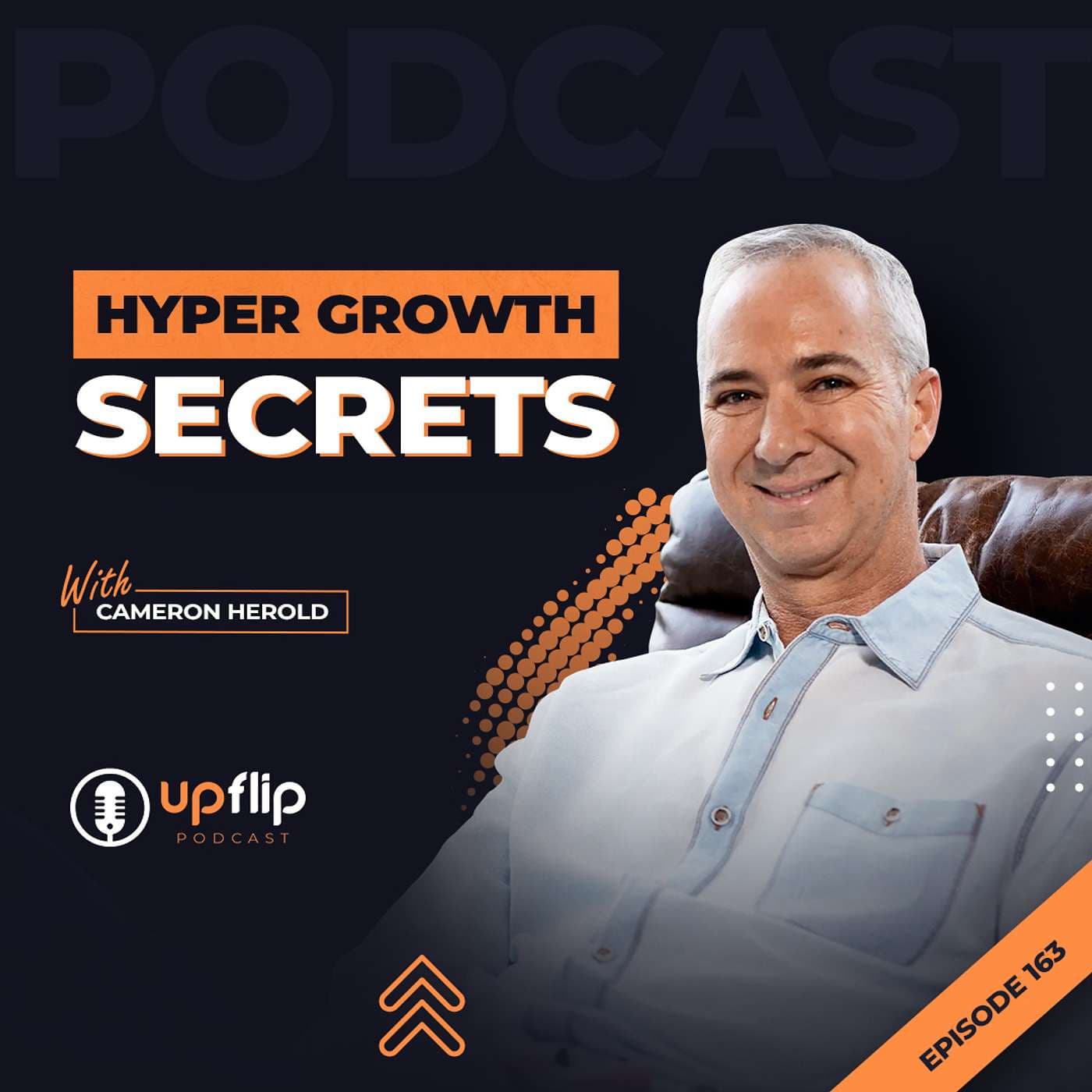
The UpFlip Podcast Episode 163: Put Your Business in Hypergrowth Mode from Day One - His Secret Formula!
Overview In this episode, host Ryan Atkinson interviews Cameron Herold, the former COO of 1-800-GOT-JUNK? and founder of the COO Alliance. Cameron shares his insights on achieving hyper-growth in business, discussing his past experiences and strategic approaches that led to significant success at 1-800-GOT-JUNK?. He provides practical advice on building effective teams, marketing strategies, and elements of company culture.
Key Themes and Concepts
Introduction to Cameron Herold
- Background: Cameron is known as the "CEO Whisperer", with a wealth of experience in business leadership and coaching.
- Early Entrepreneurial Spirit: He started his first business venture at just 7 years old and had multiple businesses by age 16.
Achievements at 1-800-GOT-JUNK?
- Rapid Growth: Under Herold’s leadership, the company grew from $2 million to $106 million in revenue in six years, expanding from 14 to over 3,000 employees.
- Strategies for Hypergrowth:
- Price Adjustment: Raised service prices by 40% to attract better talent and position the brand as a premium service.
- Building Culture: Focused on creating an engaging and passionate company culture that resonated with employees and customers alike.
- Public Relations: Leveraged free publicity, resulting in over 5,200 unique media stories about the company.
Hyper-Growth Strategies
- Vivid Vision: The importance of having a clear, detailed vision of the company's future that excites and aligns everyone.
- Core Values: Instituted strong core values that guided hiring, firing, and company direction.
- Cultural Fit: Focused on hiring individuals who fit the energetic and driven culture of the company.
Actionable Insights
For Entrepreneurs and Business Leaders
- Set Clear Goals: Establish realistic yet ambitious growth targets.
- Say No More Often: Prioritize critical initiatives and reject distractions that do not align with the vision.
- Practice Gratitude: Acknowledge and praise employees and partners to foster a positive work environment.
Key Metrics to Monitor
- Return on Ad Spend (ROAS): Track marketing effectiveness by understanding the profitability of customer acquisition efforts.
- Cost of Client Acquisition vs. Lifetime Value: Ensure that the customer acquisition strategies are profitable in the long run.
Essential Advice for Early-Stage Entrepreneurs
- Focus, Faith, and Effort: Cameron proposes a formula for entrepreneurial success:
- Focus: Assess your dedication to your product and market.
- Faith: Maintain confidence in your vision and capabilities.
- Effort: Commit to hard work and resilience.
Learning and Growth
- Continuous Learning: Engage in coaching, read relevant literature, and join mastermind groups to refine skills and knowledge.
- Real-World Experience: Cameron suggests that aspiring entrepreneurs consider working for startups to gain hands-on experience.
Conclusion Cameron Herold's insights provide a blueprint for entrepreneurs aiming for hyper-growth. With an emphasis on strong vision, disciplined execution, and a vibrant company culture, businesses can replicate the success that 1-800-GOT-JUNK? achieved under his guidance.
Resources
- Connect with Cameron: [CameronHerold.com](http://cameronherold.com)
- Free Business Ideas: [Get 500 FREE Business Ideas](https://bit.ly/49aoMWn)
- Invest in Your Leaders Course: Available on Cameron's website for those looking to develop management skills.
For more entrepreneurship resources and episodes, visit [UpFlip.com](https://www.upflip.com).
Written by AI. May contain mistakes. Listen to the episode to check what was said.
Transcript
Automatic transcript. May contain errors.0:00When people think of junk, they think of worthless garbage, not a multi-million dollar opportunity. After all, it may be hard to believe that a junk removal business could rake in 106 million annually. But 1-800-GOT-JUNK did just that after only six years. This is Ryan Atkinson and you're listening to the Outflip Podcast, where we uncover how great businesses are built and the secrets to replicating their success. Today, I had the extreme pleasure of sitting down with Cameron Harreld, former COO of 1-800-GOT-JUNK and the founder of an international coaching business, Koo Alliance. Cameron is a bestselling author, a highly awarded speaker, and he coaches hundreds of COOs all over the world.
0:39He's referred to as the CEO whisperer and started mastering business at just 20 years old. In this episode, he reveals hyper growth strategies that will skyrocket your business. We dive into his best tips for building a team to create maximum growth and his most sought after marketing strategies. There's a lot of useful information in here, so get ready to take notes. Cameron, thank you so much for being here. So, so excited to have you on. Hey, Ryan. Thanks for having me. I really appreciate it. It's going to be a great episode. You have such a great background. I know our audience is super excited for this, but I want to kind of reel it back here a little bit because you had a father and grandfather that were both entrepreneurs.
1:12And at age 20, you had your own company. Let's go back to age 20. Cameron, what are you doing? And what's your first company like? I think it actually goes back to age seven. I had my first entrepreneurial venture at seven years old. I was doing coat hanger arbitrage. I was collecting coat hangers in the neighborhood and taking to a dry cleaner. and I'd negotiated with the dry cleaner to get a little bit more than they were willing to offer. But I probably had about 15 different business ventures by the time I was 16 years old. I'd hired my first employee when I was 10. I had a neighborhood kid delivering newspapers for me.
1:44I delivered half the route. I paid him half. I had somebody cutting grass for me when I was a teenager and was paying somebody. So I was always kind of in that entrepreneurial bent. My first real company, I was 20 years old. I had 12 full-time employees. I remember being in second year university and sitting in a classroom where the professor was talking about organizational behavior and interviewing and hiring people. And I put my hand up and I said, have you ever interviewed anyone? And I was actually just trying to understand from a practical perspective versus a theoretical perspective. And he goes, no, but have you?
2:13And I went, well, yeah, I have 12 employees. And the whole class turned around. I'm like, oh my God, I've become that guy. And that was in an era when being an entrepreneur was not cool. You know, today entrepreneurship Entrepreneurship is taught at almost every university. There's high school classes. But back in kind of 1986, when that happened to me, like, you know, 30 years ago, gosh, almost 40 years ago. That's ridiculous. Being an entrepreneur, you were vilified. You were a greedy capitalist person. So I grew up in a family where it was okay and it was cool, but societally, it was not actually that cool, which was a different thing to have to wrestle with.
2:48Interesting. Yeah, I feel like the perception of entrepreneurship has changed where it's now like a sought after. Like, everyone wants to be an entrepreneur. like, oh my God, it's so cool that you have been an entrepreneur. That started in the rise of the first dot-com era from around 98 to 2006. In the rise of the, even with the crash in 2001, where the NASDAQ fell by 78%, being an entrepreneur was still cool because the internet was around, people were hearing the stories. And there was, it wasn't so much the get rich quick schemes, but these entrepreneurs were kind of profiled as being cool and hip and fun and real.
3:18And they weren't the guys sitting in the corner office with the tie, smoking cigars, being jerks. They were running cool companies with really interesting cultures. They were embracing core values. And there was something that changed in the workforce around that. I want to go to this hyper growth as well, because obviously you experienced hyper growth with 1-800-GOT-DRUNK. And basically, to give some context here, you grew from 14 employees to about 230 employees within six years. So we went from$2 million to$106 million in revenue in six years. We went from 14 employees at the head office to just over 3 ,000 employees system-wide and 248 at the head office.
3:57And then, yeah, with 13 operating P &Ls operating in four countries, we had no debt. We gave up no equity in the company, and we were very profitable. So when you say hypergrowth, I usually consider hypergrowth as 100 % revenue growth or more annually. We had 100 % revenue growth six consecutive years in a row. So anything less than that, I consider fast growth. You know, 25 % growth a year is kind of glacial growth to me. Interesting. So you say 100 % like year over year over year, essentially here. I don't want to start with such a big question, but like... How? Yeah, yeah. A few words like that come to mind when you think about like the growth that you experienced.
4:36It was by design. Because when we were at the end of the first year that I was there as the COO, Brian and I had gone from$2 million to about$5 million in revenue. and we were sitting with our lawyer at the top of the Vancouver Hyatt. And he said, where do you want to be in five years? And Brian and I, without looking at each other, without skipping a beat, both said a hundred million. And I kind of looked at him to go, where did that come from? And he looked at me to go, where did that come from? But because we both said a hundred million, our lawyer, Andrew Sherman said, well, let's figure out what that looks like.
5:05So at that little dinner, we reverse engineered a hundred million and saw that it was plausible. And then we figured out how to execute that growth. So we didn't just end up there. We actually decided we'd go from five to a hundred million in five years. And we actually got to 106. So there was a couple of things that we did to make that happen. Number one, I raised our prices by 40 % within about a week or two of being at the company, because I knew that we couldn't get to the growth that we wanted without great employees, without great teams. And we were never going to get there by being a lower priced product.
5:39So we positioned ourself as the FedEx of junk removal or the Starbucks of junk removal. Nowadays, we'd grow more like the hipster coffee place of junk removal, right? Like premium product, premium service. Secondly was we built a little bit more than a business and a little less than a religion. We tried to get into the zone of a cult and we created the systems to become a little bit culty inside of the business. And then third, we had no money for marketing. So what we did was we leveraged free publicity or free PR. And we reached out to newspapers, magazines, TV journalists, radio hosts, anybody that would cover us.
6:15And we landed 5 ,200 individual unique stories about the company in six years. And that was before social media existed. So there was nowhere to actually amplify the message. You know, Facebook didn't exist until a couple months before I left the company. So other than emailing it out to our list and being able to have people locally see it. But we were on Oprah. We were in every major publication. And by focusing on those three flywheels, that's what really propelled the growth. I think the last one, sorry, would be, I really obsessed about growing the skills of people inside of the company. So I had 12 core leadership skills that I made sure that every franchisee was good in, anyone inside the company that was managing people was good in, all of our leadership team were good and certified in the skills.
6:58And we really obsessed about growing the skills of our team. Interesting. I want to ask, give us the landscape here because we're going to hit on this flywheel. I'm especially curious about like the culty perspective of it. But give us the landscape of like competition. Was there other competition out here where you just kind of. Oh, yeah. Blue ocean in it. No, no. There were 17 ,000 independent junk removal companies the day that I joined to start working with Brian. Now, it was very fragmented. There were no brands. Oh, there was one. There was one called the Rubbish Boys. They were in seven cities and Brian was in 12 when I got there.
7:29When I left, we were in 330 and they were down to two. So there was really one other competitor who was in multiple cities, but there were 17 ,000 independent junk removal businesses. We actually lobbied with the Yellow Pages back in the day to get a Yellow Pages category because there was no category for junk removal. There was no SIC code for junk removal, but there were all these men with trucks out there. It was just very fragmented. So we professionalized it. We branded it. We built a culture machine around it. So yeah, it wasn't like a new idea. We didn't invent something new. We just professionalized something that had been around forever.
8:02Okay, perfect. I wanted to ask that just to lay that groundwork for people. Let's hit specifically on the culty aspect. What were some intentional, mindful decisions that you guys made to make this kind of like a culty brand? So the first big one was in alignment with what I call a vivid vision. It's probably my best-selling book of my six books, and it's the concept of describing your company in such vivid detail three years ago that every employee, supplier, customer, potential employee can see what the CEO can see. So Brian wrote a description, what I call a vivid vision. He used to call it a painted picture that described 1-800-GOT-JUNK in such a way that everybody got excited.
8:40So it was an alignment with vision. Secondly, it was an obsession around core values. So we fired people if they broke the core values. We lived the core values. We interviewed and hired people who already lived the core values. We celebrated core values. We talked about core values and they were non-negotiables. They weren't like, oh, well, maybe they'll work harder. It's like, no, if you break the core values, you don't get to come to work anymore. So it was that obsession around core values, different kinds of behavioral personality profiles, but everyone that cared about the core values was number two.
9:11Number three was we hired people that vibrated like we vibrated. We actually studied quantum mechanics and quantum physics to understand energy and like attracts like. So we hired people that were excited, that were good energy people, that were athletes, that were goal-oriented, that were tenacious. And by teaching people internally what to interview for and how to find those people, that was one. Number four was an obsession with our BHAG, our big, hairy, audacious goal. So our BHAG was to create a globally admired brand. And everything we did was building this globally admired brand. I could give you a number of awards in so many different areas that were all lined up with that.
9:46And then I think the last one was because we kept telling the media about how good our culture was, it kept pushing people away who weren't like our culture. And it attracted like a magnet everybody who was. So, you know, we talked about this goal oriented, high driven, high tenacious, work hard, play hard, but results first culture. You know, the obsession with core values. And there were people who were like, oh, I would never want to work there. Great. I don't even want to interview you. But there were other people that were like, oh, my gosh, that's where I need to be. And at one point we had someone picketing outside of our front door saying, please interview me.
10:20Like our culture had gotten so strong and the press writing about us had gotten so strong. We were doing tours of our head office, 30 to 35 business people every Friday for three years. People coming to go for a tour, for a 90 minute tour. So that kind of permeation of culture. And then the last part was firing the cultural cancers. You know, if you went to a doctor today and the doctor said you have a cancerous tumor on your lung, how long would you leave it there? I mean, that sucker's gone, right? We had someone internally that was negative or toxic or an underperformer who was not going to get the results.
10:54We got them out. And by getting them out, by taking cares of our A's and B's, they felt really good. But when companies spend so much time with their C players, you're doing that by not loving on your A's and B's. Because we got rid of the C's and loved on our A's and B's, everything just kind of went to the moon. Loving the insights and stories on our podcast. If you're feeling inspired by our interviews with incredible entrepreneurs, we'd love to hear from you. Please take a moment to leave us a review. Your feedback not only helps us grow, but also lets us bring more amazing content your way.
11:27I want to ask specifically for our audience here, especially on like this core values aspect of like developing the core values. Someone like a solo entrepreneur that does have plans to grow up to five to 10 to 15 to whatever, however many employees, how early on should they be doing their core values? Is it right away or do you need a team first? No, absolutely right from the beginning. You need to sit down and understand as the CEO, what's so important to you as a CEO that's non-negotiable. And then those core values are something that you hire and you live by. The CEO also is not allowed to have an out, right?
11:59The CEO doesn't get to say, oh, well, the core values are for everybody else. I don't want to live them. It starts with the CEO, right? So if one of your core values is respect the individual or pride in all you do or deliver what you promise. You know, those were three of our core values. That means showing up for a meeting is a non-negotiable. You don't get to show up late for a meeting and go, yeah, well, I'm glad everyone else is waiting. No, that means you're being a jerk. You didn't respect the individual. You didn't deliver what you promised. You know, the core values have to become almost permeating from the inside out.
12:30Yeah, I feel like there's no early time to do it. We did it as a team when we were like three people, just kind of like, what are some of the things that we want to live by? and it's been really nice. So for someone listening that is going from zero to 100 ,000, you know, 100 ,000, 300 ,000, can you talk to us? What are those different things that they can expect just at a very high level? We don't need to get into the whole thing, but high level. Really, it's all about very, very specific focus because your distractions are gonna come from everywhere. So staying hyper-focused on the critical few things versus the important many.
12:58Number two is really starting to work on your general skills around project management and time management and probably delegation early on to start delegating to a fractional assistant or freelancers so you get back the work that you're looking for. And then I think it probably stays in that zone for the first, like until you're a million bucks in revenue, it's all about focus, faith, and effort. It doesn't matter how cool your idea is. See, here's an issue. Because entrepreneurship has gotten cool, a lot of really smart A students think they should be an entrepreneur, but they don't have the entrepreneurial makeup.
13:31They're not used to failing. When you fail as often as I did in school, which was like every test, every exam, I'm totally good with failure, man. Every report card has said, you know, you're not going to be anything. You can't focus. You don't pay attention. You're too distracted. So I'm used to people saying you're horrible. When a really solid, you know, 4.5 GPA student comes in and struggles, they beat themselves up too much and they can't get through that adversity. So I think it's hard for them to go through adversity. In the early stages, it's about minimum viable everything, not just minimum viable product, but like get it done and get it out the door, which for an A student is hard.
14:07because they always want it to be more perfect. There's no such thing as perfect. Momentum creates momentum. What I absolutely love about that is I resonate with that so much. Like when I was in college, one, I got denied from the business school the first time I applied. Second, I got the lowest grade in an entrepreneurship class, but that just builds resilience. And like, I'm so used to failing on a test. Like it just builds that muscle though, like failure, but picking yourself up and keep going. Yeah, and I think that's where the whole focus, faith and effort comes in. I'll give you a formula that I think will be really powerful for everyone listening.
14:35True entrepreneurial success in that startup era comes from focus times faith times effort. So F times F times E equals success. So anybody who's listening, you can do this as well. How focused are you? What percentage grade would you give yourself? Somewhere between one and 100%. How focused are you on your product, in your market, with your plan, on a day-to-day? Or how distracted are you with all the stuff and distractions? Give yourself a percentage rating of somewhere between one and a hundred percent. Do this for fun for yourself. Just do this for fun. Give yourself a percentage rating. So that's focus.
15:11And then how about faith? How much faith do you have in yourself, your team, your plan, the economy? Are you complaining about the financial meltdown or the election when really that doesn't do anything because you're running a million dollar company? So how much faith are you doing and what are you doing to protect your confidence? You give yourself a percentage rating on faith and then effort. Like, are you really, really working hard? or you're trying to live the entrepreneur lifestyle, pretending to be an entrepreneur, not realizing that it takes a long time to get to the night before you're the overnight success.
15:37Like you are grinding it out, right? And give yourself a percentage rating on effort. Most people will come up at about 50 % focus times 50 % faith times 50 % effort. If you multiply 0.5 times 0.5 times 0.5, it comes out to a 12 % chance of success. Horrible odds. Oh man. Even if you're at 80 % focus times 80 % faith times 80 % effort, that's 0.8 times 0.8 times 0.8. That's a 51.2 % chance of success. That's 50-50. You might as well go to Vegas and put it all on red. If you get to 90 % focus times 90 % faith times 90 % effort, it's still only a 72.8 % chance of success. So to really, really be successful in that startup entrepreneur stage, and even kind of to get to about 100 million in revenue, you've got to get 98 % focused times 98 % faith times 98 % effort, that gives you a 94 % chance of success.
16:30Those are reasonable odds. That is, Cameron, we have had a lot of stuff on our show before, but that formula is actually so amazing. I'm like, right now my numbers, I'm like, oh, I have a lot of room for improvement, quite frankly, honestly. But once you see it like that, that's why you do that type of stuff. And so here's what I do is I grade myself daily, weekly, monthly, quarterly. I'm I'm like, all right, just quickly today, what was my focus, faith, and effort today? Well, I hiked, and I went for breakfast, and I had a lunch, and I had a medical appointment. You know what? I haven't been that focused today, right?
16:59Or I haven't had that. Or yeah, I slept in. I wasn't really feeling good. I was woe is me. I'm not protecting my faith, right? Or I went to the gym. I worked out with a trainer. I hung out with inspiring entrepreneurs. I did my morning affirmations. All right, faith is good. If you can grade yourself and look at yourself in the mirror, that's what's going to get you successful. It does not matter how good your idea is. I told the founder of Uber in the summer of 2008 at Burning Man, he was in my camp. He was pitching me on the idea of Uber and I told Garrett Camp six months before he hired Travis, I told Garrett it was one of the dumbest ideas I'd ever heard.
17:35Five of us said no to investing. Tim Ferriss, who was also in my camp, was the only person who said yes. It didn't matter if the idea was good. Garrett was a monomaniac with focus, absolutely protected his faith, put in the effort of like freaking, again, a monomaniac, right? That's why it was successful. When you say faith, what does faith mean? Does that mean like belief that company is going to succeed? Yeah, it's faith in yourself. It's faith in your market. It's faith in the economy. It's faith in your idea. It's kind of protecting your confidence. So here's what happens on social media. No entrepreneur is going to come out and tell you the tough story that they had yesterday or this week.
18:13We'll tell you the story from five years ago. I'll tell you about almost bankrupting 1-800-GOT-JUNK in 2006, but I'm not going to tell you when I had to borrow money a week and a half ago, right? So what happens is no entrepreneurs tell the hard story, the truth story. So everybody thinks it's easier, which beats you up or you're trying and you're trying and you're trying and everybody's saying no, saying no, saying no, that's hard. Or two employees that quit on you when you were really relying on them or the employee who said, yes, they're going to join you. And the day before they're supposed to start, they're saying, yeah, my boss gave me more money.
18:45I'm not coming. Like all of these things can destroy your confidence. So you can almost replace faith with confidence, right? How much confidence do you have in all of the things that you need to be successful when everyone is telling you you're not going to make it? That is a great, great advice right there. I just put a bunch of stars in my little notepad, writing that one down. By the way, and on that, I think I cover that formula in the book, The Miracle Morning for Entrepreneurs. I co-authored that with Hal Elrod. Pretty sure that in one of the last two chapters of The Miracle Morning for Entrepreneurs, I cover the success formula of focus times faith times effort.
19:18I love it. That's a great resource for people. And I'm looking for my new entrepreneurship book. So that could be it. With hyper growth as well, we just talked about like successfully as an entrepreneur, like how you can kind of faith focus and effort. I hear that as well. What are the first like three steps a business should take when like aiming for hyper growth? Like how do you prepare for that? One is to set a big vision for yourself that is a stretch and is fast, but is realistic or reasonable. you're not going to build SpaceX in three years. So stop pretending you're not going to have a million customers in three years to stop lying.
19:52So really set like a reasonable, realistic stretch goal. Number one, number two is really, really, really say no or not now more often than you say yes. You can't build the perfect anything and achieve hyper growth. Apple is on version 15 of their iPhone. And it launched 17 years ago in 2007. If they'd waited five years to get the iPhone out until it was more perfect, they never would have launched. So minimum viable everything, get it done and out the door. Momentum creates momentum would be number two. And then number three, I think is really practice gratitude and praise to really thank your suppliers, thank your customers, thank your employees, thank your freelancers, you know, praise them for living the core values.
20:40If you can show up as a leader and praise people to success, and if you can treat your freelancers and kind of outsource people the same way, you'll win. Because you're going to create this positive energy loop and this positive momentum in people. If your people are really happy, they're going to go through brick walls for you. Yeah, absolutely. And I'll speak to this as like a failure story, honestly. It's like we hired a freelancer recently to help us with some business development work. And like I knew from the start, I was like, you know what? I just like don't know if this is going to be successful.
21:08I just had like a weird gut feeling for it. And it kind of primed my mind to like not put my best foot forward with them and like make sure he's successful. And like, you made it happen. Yeah, exactly. I forget who it was. They said, if you think you can or you think you can't, you're right. It might've been Ford and that's protecting your confidence, right? If you're shaky, oh, I don't think this contractor is going to do well. Oh, I'll sit back and see. That isn't going to work it. But if I know they're going to do well, we're going to go for it. I'm going to give them everything we got. Or you would reinvent the process and you'd hire better going forward, right?
21:36you wouldn't recreate those mistakes. Exactly, it is a learning process. One more question on hyper growth. For someone that's just like just getting started early on, less than$100 ,000 in revenue, or maybe even like pre-revenue, what's like one or two marketing or sales strategies that they should be pulling to really get off the ground? Let me first speak to hyper growth. Make sure that your hyper growth is profitable. There's very, very, very, very, very few companies, like Amazon is the exception, And there were a gazillion others that went build or bust that went bust. The even venture capitalists and angel investors in the Bay Area, like PE firms, they all want profitable growth now and profitable business.
22:17So make sure that you build a company that has the proper gross margins, the controls overhead, proper net margin, proper cash conversion cycle, like really, really focus on that and you'll be successful. I guess the two big things I would say for marketing. Wow. one I think it's more about branding than marketing like you really have to know who you are what you stand for who your avatar is and make sure that your branding and positioning is kind of aligned I love the book the 22 of the laws of branding by Al Reese I think it's still very very applicable today so I'd really focus on that and then I think the second one is to really truly understand your cost of acquiring a client your lifetime value of a client in the gross margin perspective if you get a million dollar or let's say$10 ,000 client, but your cost of goods sold is 4 ,000, you're only getting gross margin of 6 ,000.
Read the full transcript
23:07Think about your gross margin you're generating, lifetime value gross margin against your cost of acquiring a client. And then what's your cash conversion cycle of that? How fast can you turn buying somebody into that positive revenue loop? As long as you can do that and you're getting a 250 to 400 % return on ad spend, then you keep dialing it up. So I would look at your return on ad spend, magic number for marketing, and really make sure that you're measuring return on ad spend with gross margin. A lot of marketing agencies will tell you, oh, you got a$10 ,000 client. Yeah, that makes it sound good.
23:39But if it cost me$4 ,000 to get a$10 ,000 client, I really only got$6 ,000 to start covering my overhead. So compare your cost of acquisitions against your gross margin lifetime value. Perfect. I love it. That is all really good stuff. And I just have kind of a selfish question I want to ask. Do you feel like there's a natural progression for entrepreneurs to learn? Is there any way to fuel fire on that natural progression of learning? Yeah, I think there's a couple. Like, you know, the ascension would be, you know, read books that are appropriate for what you're working on right now. Listen to podcasts that are appropriate for what you're working on right now.
24:12You know, get into some group coaching for the level that you're at right now. Start joining mastermind communities, like keep working, you know, to always grow yourself. I've been in seven or eight different masterminds over the last 30 years. I've read countless books, done countless courses, had coaches, still have a coach to this day. You know, all of those things are what you're going to skill yourself up with. And I think that's kind of the ascension is people have to always be growing. I absolutely love that. Well, I feel like I grew a lot on this podcast and we're gonna wind it down with our five fan blitz questions.
24:42So these are questions submitted from our community. And guys, if you're interested in joining on world-class entrepreneurs, leaders, go to www.youtube.com slash upflip and submit your questions there. But Cameron, ready for our last five questions here? Let's do it, yep. Number one, what advice would you give to someone who wants to validate a product or service if it's profitable before going to market? Well, as long as you know that it's going to be profitable, what I would do is try to get someone to pay for it. It's incredible how often people will go to their friends and say, what do you think?
25:09Would you buy? Oh, I totally buy it. It's amazing. That's not true. Your friends are just saying that because they like you. If you can get someone to put a check down, then you know that you're getting validation. So I actually like doing some pricing surveys first of my target clients to say and kind to qualify. I'm going to ask you this. And when I build it, I'm going to want you to cut the check. So please be honest. You know, at what price is this too expensive? At what price is so cheap? There's kind of four good questions you can ask around pricing. I would do a little bit of pricing surveys first.
25:37Perfect. Number two, how do you overcome the pressure of what people think and the possibility of failing? I mean, I don't like failure. So what I try to do is surround myself with coaches and experts and do what they did. If I do what the experts are telling me, I'm going to succeed way more often than I fail. Failure is just part of growth. I mean, you're going to fail and you got to get back up. There's a lot of people, sadly, who don't want to see others successful because they don't want to put in the work. They don't want to put in the determination. But once you're successful, you'll be inspiring to other people anyway.
26:03So just enjoy the ladder, enjoy the climb. I think that's a key part too, is enjoy the journey, right? Don't only be successful when you get there. You have to enjoy the journey to success. Exactly. You have to be okay with getting the lowest grade in entrepreneurship class. Number three, does age matter in business? Does age matter? No, not at all. I've seen plenty of entrepreneurs that have started companies in their 60s that crush it and that are 18 and crush it. There's lots of stories all over. Again, it goes back to focus, faith, and effort. I really like this question. What are the dangers of having a bad investor in your company?
26:34Oh, it's like a cultural cancer, right? So you have to bring in the right money, patient money, strategic money, and also try to build a company that you don't need investors for. There's many companies out there. If you focused on how do I build a profitable company, you might not have to raise money by giving away equity. Raising money by giving away equity is the most expensive form of the ways to raise money that's out there. So yeah, I would only bring in money if it's the right money for sure. If you absolutely need to, yep. Last FanBlox question for you. What advice do you have for someone still in college and who wants to start a business?
27:05Drop out of college, for real. I would drop out of college. I would go work for two or three different entrepreneurial companies for six months to a year each and try to learn anything you can for whatever amount of money they'll pay you. Work for minimum wage if you have to, but make the agreement that you're there to kind of intern and learn and grow. And you want to spend about five hours a week sitting on different meetings, sitting in on board meetings, sitting in on marketing meetings, sitting in a finance meeting, in the corner of the room. If you can do that, you'll learn way more than being in a university class for sure.
27:34That is phenomenal advice. And we are actually hiring someone right now that's in college. And I told them that exact thing, like you will get an experience here that you will not get a corporate role because you can be exposed to whatever the heck you want here. You'll finish the three years not in debt, having money saved with just as much experience and a resume that's built. I think these days, the university is really dead unless you want to be a lawyer or a doctor or an engineer, because for the most part, you can learn all that information online on YouTube and Google chat CPT in an hour more than sitting in a classroom for a month.
28:04I absolutely love that. Well, I know I just got about three months, three years of knowledge here, I should say. So Cameron, thank you so, so much for joining us. If someone's like, oh my gosh, this Cameron guy is awesome. I want to connect with him. Where can they do so? Where or can they learn more about you? Yeah, if they go to CameronHerald.com and it's H-E-R-O-L-D, so CameronHerald.com, all of my resources and tools are all there. All six of my books are available on Amazon, Audible, and iTunes. They can listen to the Second in Command podcast on anywhere you listen to podcasts. And then check out the Invest in Your Leaders course.
28:35I think that's a huge opportunity for anyone starting in business, early stage in business, or anybody who's managing people today. Everyone, that was an amazing episode with Cameron Herald. I absolutely love chatting with him and he gets a ton of good takeaways, but here are three for you. Number one, focus, faith, and effort. Those are the three things you need as an entrepreneur. When you multiply all those together, there is your potential success rating. Number two, set a vision that is reasonable and say no or not now to a lot that gets thrown your way. As an entrepreneur, so many things are going to be coming your way and you need to set expectations that are real, but you also want to make sure that they are stretch goals for your team to actually be able to go after.
29:11Number three, the most important metric that matters as a marketer is your ROAS, return on ad spend. You need to be able to quickly identify what your ROAS is so you can know what to invest in and what maybe not to invest in. And if you're looking for more inspiration on growing your business, check out episode 128, where we go over the easy sales strategy that grew Neil's Cleaning business to$125K a month, all while traveling the world. This was an amazing episode with Neil. I really enjoyed interviewing him. He's an awesome guy, so definitely go check out that episode. Awesome. Cameron, thank you so much for being here.
29:40Thanks, Ryan. Appreciate it.
From the publisher
Today I have the extreme pleasure of sitting down with Cameron Herold, former COO of 1-800-GOT-JUNK? and the founder of an international coaching business — COO Alliance.
Cameron is a bestselling author, a highly-awarded speaker, and he coaches hundreds of COOs all over the world. He’s referred to as the “CEO Whisperer” and started mastering business at just 20 years old.
In this episode, he reveals hyper-growth strategies that will skyrocket your business. We dive into his best tips for building a team to create maximum growth and his most sought-after marketing strategies. There’s a LOT of useful information here, so get ready to take notes …
Resources:
- Get 500 FREE Business Ideas: https://bit.ly/49aoMWn
- Episode 128: https://www.upflip.com/podcast
- Connect with Cameron: CameronHerold.com
Ready to be your own boss without starting from scratch? Grab our FREE Franchise Guide and unlock the secrets of proven business models that have already created thousands of success stories.
Connect with UpFlip:
- On Youtube
- On Instagram
- On Facebook
- @UpFlipOfficial on Twitter
For more insights to start, build, or grow a business, check out the resources on UpFlip.com or head to the UpFlip YouTube channel to see more interviews with business owners and experts.
Thanks for listening!


