
In short
UpFlip Podcast Episode Notes
Podcast Title
The UpFlip Podcast Description: The UpFlip podcast reveals the insights behind building and running successful businesses, emphasizing that entrepreneurship can lead to achieving the American Dream. With a large following, the podcast shares practical advice to make business knowledge more accessible.
---
Episode Title
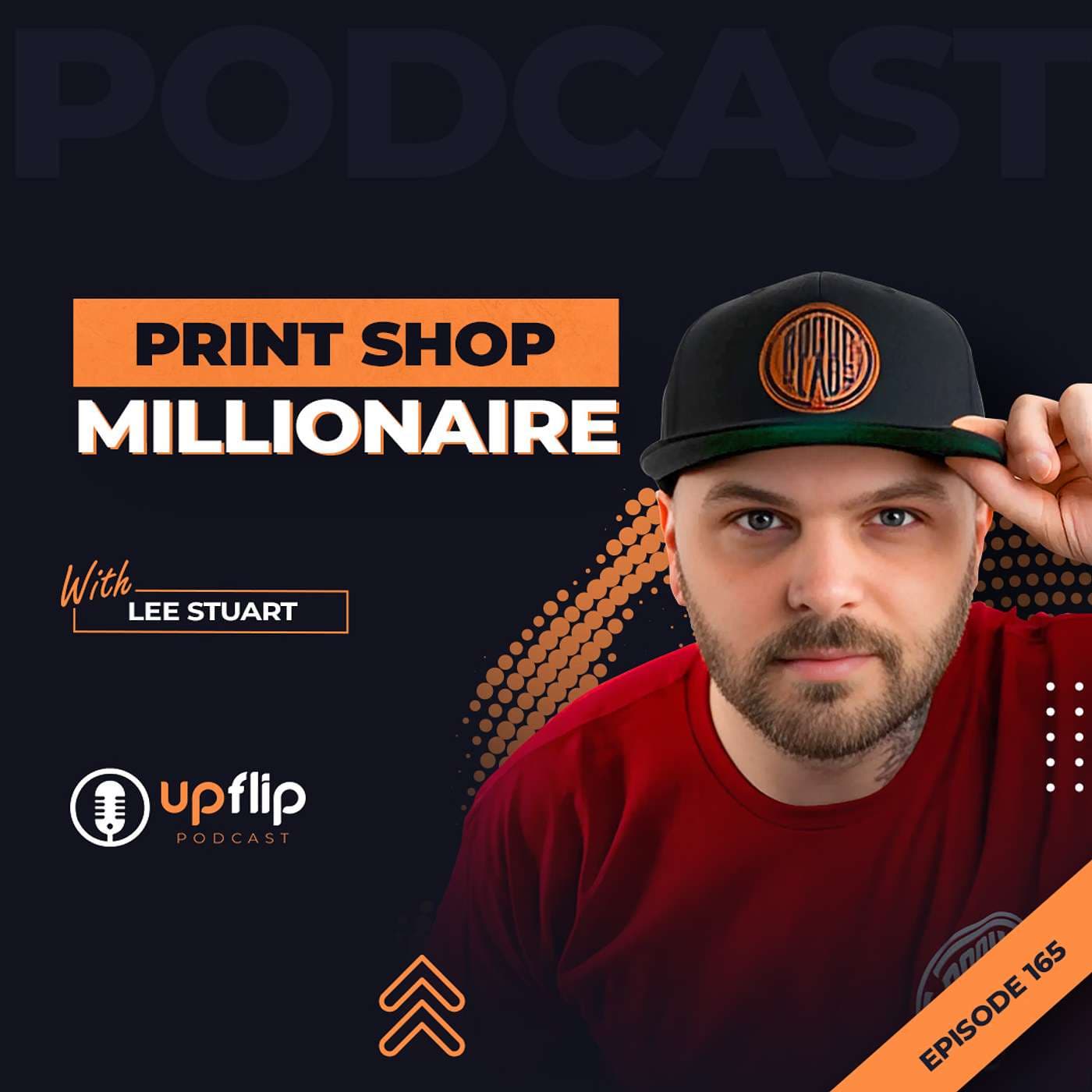
165. How to Start a Million-Dollar Print Shop: From Broke to Boss Description: Lee Stuart, founder of Rogue Lab, shares his journey of transforming his last $300 into a successful screen printing business generating over $1 million annually. He discusses starting a print shop with minimal capital, effective marketing strategies, and the importance of originality in a competitive industry.
---
Key Takeaways
Lee Stewart's Background
- Former professional rider in freestyle motocross and snowmobiling.
- Transitioned to entrepreneurship after retiring due to safety concerns and a lack of financial reward.
- Initially built a YouTube audience by performing motorcycle stunts and sharing content related to his riding career.
The Leap into Business
- Faced with financial struggles, Lee used his last $300 to start a clothing brand targeting his YouTube audience.
- Encouraged by early success, he sold out of his first clothing run and reinvested profits into the business.
- Realized the importance of quality production and service after facing issues with third-party printing shops.
Transition to Rogue Lab
- After a viral moment on YouTube where Lee's frustrations with poor service were shared, he decided to create his own printing operation.
- He equipped his home basement for screen printing, stressing the need for quality and reliability in production.
- The name "Rogue Lab" symbolizes his aim to break away from conventional practices and provide superior services.
Marketing Strategy
- Initially relied on organic growth through word-of-mouth and high-quality service.
- Utilized local Facebook groups to engage the community and attract customers by providing value rather than direct promotions.
Revenue Growth Insights
- Year one revenue was a small six-figure income, which has consistently 2-3X'ed each subsequent year.
- Emphasizes the importance of customer service and product quality as key drivers of growth.
- Noted the common entrepreneurial challenge of managing multiple business interests, ultimately advising to focus on one core area for success.
---
Practical Advice from Lee
- Passion vs. Profit: Start with a genuine passion for your business and entrepreneurship. Financial motives alone may not sustain you through challenges.
- Community Engagement: Join local Facebook groups to build relationships and establish credibility before promoting your services.
- Customer Experience: Cultivate excellent customer service to drive referrals and repeat business; a satisfied customer is your best marketing tool.
- Embrace Feedback: Use critical feedback to improve your service and focus on core competencies, ensuring quality over speed.
---
Personal Development Insights
- Lee discusses the importance of mental and physical well-being in entrepreneurship. Regular fitness and a healthy diet have significantly improved his productivity and stress management.
- He believes that effective leadership comes from experience and understanding the technical aspects of the business, which strengthens his ability to guide employees.
---
Fan Blitz Questions
- Did you read a book or take a course before launching your business?
- Lee dropped out of high school but emphasizes the importance of continual learning through reading and watching educational content, citing "Extreme Ownership" by Jocko Willink as influential.
- Can someone with no prior experience successfully launch a clothing line?
- Absolutely, with grit and determination.
- How do you generate original ideas or focus mostly on customer products?
- Focus primarily on customer products but engage in creative brainstorming for original designs.
- What’s the biggest purchase you’ve made?
- Lee is in the process of acquiring a larger facility to expand his operations, which represents a significant investment.
- What advice would you give your teenage self?
- To prioritize financial responsibility and focus less on partying and distractions.
---
Conclusion
- Lee's journey from financial struggle to successful entrepreneurship highlights the importance of resilience, community engagement, and a focus on quality and service. His story serves as an inspiration for aspiring entrepreneurs to pursue their dreams with dedication and passion.
Resources:
- [Download Lee's Checklist for Starting a Print Shop](https://bit.ly/3OQVhPS)
- [Start Your Business Today](https://bit.ly/3ZHOUVt)
- [Rogue Lab Website](https://roguelabmfg.com)
Connect with UpFlip:
- [YouTube](https://www.youtube.com/@TheUpFlipPodcast/)
- [Instagram](https://www.instagram.com/upflip/)
- [Facebook](https://www.facebook.com/upflipofficial)
- [Twitter](https://twitter.com/upflipofficial)
Thank you for listening!
Written by AI. May contain mistakes. Listen to the episode to check what was said.
Transcript
Automatic transcript. May contain errors.0:00Picture this. You've got$300 left in your bank account, no backup plan, and a burning desire to create something big. That's exactly where our guest found himself. Instead of playing it safe, he threw everything into starting a print shop. Fast forward to today, and that$300 risk has grown into a screen printing business that rakes in over$1 million a year. This is Ryan Atkinson, and you're listening to the Upflip Podcast, where we get inside the minds of successful entrepreneurs to reveal how they built their businesses from scratch. Today, we've got Lee Stewart, founder of Rogue Lab, sharing his journey turning a few hundred dollars into a thriving screen printing empire.
0:41Stick with us as Lee breaks down how you can start a business with little cash, his top marketing secrets, and why staying original is the key to surviving in a crowded industry. Lee, thank you so, so much for being here today. So, so excited to have you on. You have a great background. So I was super excited to dive into this. Yeah, thanks for having me on, man. That was a hell of an intro. Oh, well, you're gonna be a hell of a guest. So I'm excited for this. We have to lay the baseline now, like who you are as like the core person, because you're the founder of Roguelabs. But before that, you're doing something just a tad bit different than screen printing that listeners should know about.
1:12So let's rewind back the clock here. Talk to us what Lee Stewart was doing before Roguelabs. Yeah. So before Roguelabs, I was a professional freestyle motocross and freestyle snowmobile rider. I turned pro when I was 15 years old and traveled the world doing crazy stuff for about 10 years or so. And then I ended up retiring somewhat early, somewhere around the age of 25, 24, something like that, which is really early for that sport. But I just kind of lost the edge that I had for it. That was kind of the time when the real backflips were becoming a thing. And that was something where the danger factor really started going up and up and up and the money wasn't going up along with it.
1:49And I had seen a lot of people get seriously hurt permanently for the rest of their lives and stuff. And it shook me a little bit. And I was like, you know what, I just, I don't think I have this in me anymore. Once you start feeling that and you have that doubt, you can't be putting your life on the line. Right. So I shut it down relatively early, started working a normal job, realized I hate that. And, uh, you know, it took a few years to find my path and then ended up starting a YouTube channel eventually right around the age of 29. I think it was doing Harley stunts. I was like, you know what?
2:18I got a solid motorcycle background. I'm going to put this on the internet and maybe people can watch this and I can maybe make money off it. I gained a good following. Didn't really make much money. Ended up kind of driving myself from the ground doing that. And yeah, it took my last ditch effort. I had like a couple hundred bucks left in my account. I was like, I'm going to start a clothing brand to sell to my YouTube audience. And hopefully that works. And thankfully it did. All right, let's start there. I think that's a perfect point to start out because you're doing this YouTube thing at 29.
2:42You've now grown to this channel to over 124 ,000 subscribers on YouTube. But talk to us about taking that last couple hundred dollars and how did you decide you guys were going to sell clothing and how did you decide like the design and style and all that? Honestly, I don't know how it happened exactly. It was just like it popped into my head. It was always something I wanted to do when I was a pro rider for a living and I never did because back then, like we didn't have social media promote it and all this other stuff. It was, you know, it was the old school way. You would have had to promote magazines and all this other stuff.
3:08So I just never did it. But it was always something that was on the back of my mind. And for some reason at that point in time, I was like, this is something I feel like I need to do right now. Like this is what's going to save me. And everyone around me told me that was a terrible idea. They were like, that's the worst idea you could ever have. And of course, me being me, I was like every person that told me that made me want to do it that much more. So yeah, I just scraped together the last little bit that I had and started my little brand, which was called 38 Ride Company. Took a little YouTube hiatus to kind of learn the aspects of putting a business together and whatever else.
3:36I convinced a bank to give me a credit card, which was, I can't believe they did. And I maxed that thing out in like an hour and set myself up with a bunch of gear and was like, man, let's hope this works. I had a little bit of clothing. Obviously, I didn't have a huge budget for it. So I had just a little small amount of stuff and put out a YouTube video about it. And within the weekend of that launch, I sold out of everything within the first day. Wow. All right. There's a lot there. Let's kind of go through that. So you have about$300 left. You're spending all on equipment to print these shirts, I presume.
4:09Yeah. At that point, I wasn't even printing my own stuff. I had hired print shops to do it. That's what actually led me to printing over the years. But yeah, I just, I I farmed it out, got it done, made more money in one day than I had ever seen, even in my pro riding career. I was like, this is something. So I just doubled down, bought the same run of clothing again, sold it all again in the first day, like a couple of weeks later. So I just kept doubling down every time I ordered something and it just kept gaining more and more momentum, which was pretty awesome. But the one thing that I was running into was dealing with these print shops in places that were just producing like really, really terrible quality, like something that was not up to my level.
4:42I'm a very meticulous person and they just were not producing when I needed them to produce. Their customer service was terrible. They were late on deadlines and stuff like that. And like, I couldn't be late on deadlines. I was poor. This is my entire livelihood. If they missed a deadline, I'm not paying my bills and keeping a roof over my head. And like, there was times where it got grim and eventually just like I had had enough. I'd gotten the business to a point where I could afford like a tiny little hat heat press. And I was like, I'm going to start buying equipment with every bit of money I can make.
5:10and I'm going to figure out a way to do this myself. So how did that experience kind of like then parlay into starting like roguelabs? Like take us through that like timeline of like printing your own clothing, having to deal with external printers and eventually like starting like roguelabs. Like take us through that timeline then. Yeah, it happened in one of my YouTube videos. Actually, you can literally watch it happen on camera, which is crazy. I watched this video, I think like a month ago, and it was kind of cool to see it back again because somebody showed it to me. There was a moment where I was unpacking one of our newest drops or whatever.
5:40And this guy had already been, I missed Christmas, which was like obviously the biggest sale time ever. He was like three, four weeks late and I'm unpacking all these boxes and I unpacked this one box and it's full of blank shirts. He didn't actually even print them. And you literally in that video, my exact response, I just like, I freaked out. I was like, what the f***? And I just was like so mad and I just ran up to the camera. I was like, I even said right there in that video, I was like, this is the turning point where I'm going to decide that I have to do this myself. And I disappeared off YouTube after that video for nine months and no one ever saw me.
6:08and I came back with the next video and I had a full-blown print shop in my house. I invested every penny I had and lots of them that I didn't have into, I turned my basement of my house into a commercial screen print shop. It wasn't like a little, just get a little screen print press or anything like that. I dumped a significant amount of money. I got a full-blown professional setup down there and I'd never printed a shirt in my life. And again, this was another point where people were like, you're nuts. Like, what are you doing? You're spending money you don't have on something you've never done that's incredibly difficult.
6:34And I was like, watch, watch me. And yeah, it all kind of came together that way. It was really cool. It was very quick and very short, but thankfully due to my riding career and dealing with some of the stuff I dealt with there, I was very smart with my money and how to invest in how to handle myself in a business type of situation. And it took off pretty quick. And then yeah, nine months later I started Roguelab and that was kind of the, again, the turning point was the name came up with me like immediately because I was just like, the word rogue to me is like someone who's going against the beaten path and the beaten path was all these terrible print shops I was dealing with.
7:05It's like, I got to be different than these people. I got to be better. I got to be faster. I got to be more efficient. I got to produce better quality. I got to just be better all around. And that the word rogue just stuck in my head. And I was like, rogue lab, like lab is where something's created. Rogue is this other thing. These words go together. They sound cool. I'm starting this. Let's do this right now. Lee, what I really like about that, there's, I feel like a mantra when it comes to like entrepreneurship is like, when everyone says your idea is crazy, like that's when you actually know you have like a very good idea and one that can take off.
7:31And that's true. And basically you're in sense of what you saw. Yeah, absolutely. Because most people either don't want to see you go through pain of some kind. They're trying to save you from that or whatever. So they're trying to make you go down the safe route. Or they don't want to see you do better than them. One way or another, it's one of those two things that they're telling you not to do it. And every time since then, when I hear that, it's now I know better. I'm going to follow my gut and I'm going to double down on this thing and I'm doing it. And I've done that now since this business started about four times.
8:01and every single time it has been greatly successful for me. Yeah, absolutely. I feel like there's a huge advantage in like taking risk at a younger age where you're a little bit more like willing to take risk as you get older. And as you know, as an entrepreneur, like you need to be able to take risks like on yourself, on your business. You need to bet money, real money to make it succeed. This episode is brought to you by the Uplip Academy. If you're serious about launching your business, we invite you to join our exclusive program. Inside the Uplip Academy, you'll find over 11 courses, each led by real entrepreneurs actively building their own ventures.
8:32These aren't just lessons. They're step-by-step guides that get you from idea to launch, then help you scale to six figures and beyond. Plus, you'll join a supportive community filled with like-minded individuals to help hold you accountable and keep you motivated. So if you're serious about launching your own business, start your 10-day free trial of the Elphaba Academy by clicking the link below. I wanna hit on that nine-month piece because I think that is super fascinating. You quit YouTube, nine months later, you have a full-blown operation. What happens within these nine months? Let's give a little bit of practical advice as well.
9:00for listeners that are interested in like doing some of their print shops similar to this. So let's kind of give some advice for those nine months of what happened. Yeah. So for that nine months, like when I dropped that last YouTube video, originally, I thought like, I was just going to quit YouTube right there. That was going to be the end of it just because I wasn't going to do the motorcycle thing anymore. I'm going to go down this new path, whatever. So I bought this little hat heat press and I took that and I started making hats for my brand myself. So I was able to kind of make a much better margin on my own stuff right there out of the gate.
9:26But also as I was doing that, other people were asking, hey, can you do stuff for me too? So I started making hats for other people. And eventually, you know, this little hat he pressed, like at the time for me to spend, I think it was like 1200 bucks or something like that. And at the time for me, like that was a load of money. I was like, I can't believe I'm dumping this much money on this piece of equipment. Like that was a big risk at the time. And it ended up paying for itself like within like two weeks. And I was like, all right, cool. I'm going to keep doing this. And I saved up enough money to buy.
9:52The next thing I bought was a vinyl cutter because with the vinyl cutter, I was able to do like some, a little bit of different designs with hats and I was able to make like die cut stickers, things like that. So I bought that thing and then I started doing that for other people. And then I used that equipment, doubled down again, bought a large size heat press. Then I was able to start doing like screen printed heat transfers on shirts and things like that. And I used those three pieces of equipment in tandem to build up enough revenue and build up enough savings to start dumping money into a real screen print shop.
10:18So first thing I did, I ripped apart my entire basement. Like I gutted it, pulled the flooring up. And this is a video of it too. Like you can see I'm on my hands and knees, like hand grinding all this glue off the floor and stuff like that. Like it was a mess. It was one of the hardest probably months of my life doing this thing. And I made it look beautiful down there, like all new lighting, epoxy floors. It looked amazing. It was absolutely unreal. And then I went to a company called Rionet, who is now one of my biggest supporters, bought a screen printing package from them. It was all like, you know, the best, the best manual gear you could get.
10:48I went above and beyond. And again, on the, I started posting this stuff a little bit on my Instagram at the time. And people are like, I can't believe we're spending money on all this stuff. You don't even know how to print a shirt, blah, blah, blah, whatever else. And, you know, I started hearing all this, the comments like, oh yeah, it must be nice spending daddy's money and like that. Meanwhile, I'm just like, I'm struggling. I'm eating mac and cheese every day because I can't afford anything else. It's just fueling my fire to keep going and going. And so eventually, yeah, I built out this whole print shop and as the equipment started to arrive, because I finished like the space and got most of the stuff done.
11:17And then I ordered the equipment, the equipment was going to be like eight weeks out. And during that little eight weeks, I started thinking in my head. I was like, you know what? I got nothing to do right now. The clothing brand's on hiatus because I'm obviously not going to send an order out to someone else when I got this gear coming in. Maybe I should revisit YouTube. I started really thinking about it. I started thinking like, you know, maybe I should make YouTube videos about this stuff. And then I had a video go, not viral, but like I got like 450 ,000 views. I did a little tour of my basement shop after it was finished.
11:42And that video took off and it was immediately, I jumped up to like 50 ,000 subscribers and 60, 70. And I was like, holy ****. Like, okay. So who's laughing now to the guys that said, Hey, this, the death of this channel. And, uh, it's a crazy story. How it all happened, man. It was, it was really, really fast and really, uh, just kind of out of nowhere. What I really like about this is like, you kind of identified an opportunity and ran with it as entrepreneurs. Like we sometimes have to deal with like, Oh, like do what you're passionate and like you'll make money or like sometimes like just see the opportunity, like run with it.
12:11It sounds like more like, I don't know, you might be passionate about screen printing now, but like the time you like really saw the opportunity of bad service, not a lot of competition on YouTube and ran with it. I love the story of how you got started and everything in those nine months as well. Let's talk about how you got your first customer. Because obviously, this is a legit business. You need to land customers somehow. How did you land your first customer in those first nine months? And what advice can you give to people that are trying to land their first customer in this specific industry?
12:37One of the most valuable tools that I have found so far, and one of the easiest, it's free, costs nothing, is to use Facebook to get your first couple orders in. And this is a weird little thing that I stumbled upon and tried that I haven't seen anyone else do. So wherever you're at in the world, it doesn't seem to matter. Every town, every municipality, every city, whatever suburb, like every single area has a Facebook group dedicated to it. Like there's definitely going to be a city Facebook group. There's going to be a group dedicated to your specific neighborhood. There's always a Facebook group for something.
13:09I started going in these Facebook groups and checking them out and like going into the ones, especially in my area and kind of just leaving some stuff in there, like commenting, being a member of the community, not just going in there and be like, Hey, I print shirts, come to me for printing shirts. Like those posts, nobody cares. But once you start engaging and becoming a member of that community kind of thing, and then you're able to start telling people what you do, then they take you a little bit more seriously and they're more likely to feed you business. So I started telling my coaching clients that are coming up from zero doing this kind of stuff.
13:35Like literally every single one has been a hundred percent success rate. They've gotten business from these things. So what are you doing in this Facebook group? So how are you end up like promoting like your own stuff to land your first customer then? So the biggest thing is to go in there and not promote yourself. That's the key, right? In lots of those groups, that's what a lot of people do. They just go in there and promote themselves. And like those posts, I noticed get zero engagement on them all the time. You got to go on the post and provide some kind of value. You got to give people value.
13:59You got to engage. You got to be a real member of that community. And as soon as you're able to do that and people start kind of recognizing you, then you can start dropping that kind of stuff out there. Like, hey, this is what I do. Maybe we can help you out kind of thing. And then that's when people are going to come to you and be like, okay, yeah, let's see what you're about. So it sounds like that's how you landed like your first couple of clients. But how has your strategy shifted? I don't know if it's still all Facebook groups that like talk to us about like how you're currently landing clients, like some of that's what that's what she looks like and how it's progressed.
14:25So for us, we have not done up until the last, I'd say month, we have not done a single piece of marketing, outbound sales, nothing. We've done absolutely. It's been 100 % organic word of mouth. We're so good at what we do that the word is spread on its own, which is absolutely unreal, especially considering the amount of business that we do now. And the big part was moving to my new space that I'm in now. When I was in my basement, I was trying to keep it under wraps in terms of local business because what I was doing in my house was technically not the most legal. And I didn't want to have people coming from my house every single day because that would have started raising some flags.
15:00So I was mainly trying to do online orders and ship things out. Once I moved into my new space, however, I was able to take on local customers. And originally, when I was in my basement shop, I would say it was 85 % international or national business and 15 % local. And now that is completely flip-flopped. Now we're doing probably 90 % local and just a small bit outside of here. now because we start bringing customers in and because most of the customers that we have now we're dealing with those shops that I used to deal with that I had so many problems with. As soon as they found out we exist, they're like, holy, this is much better.
15:31And so our business grew exponentially. But now I have a team, which is cool. I was always doing everything by myself for a long time. Now I've got people who are competent and who are great members of the team who can handle a lot of the stuff and I'm training them to the level that I expect them to be at. So they're able to kind of take a lot of stuff off my plate now and they're kind of running a lot of the production on their own, which is amazing. So now I'm trying to step out and instead of being an employee of the business, I'm trying to be a real business owner and I'm trying to look at the big picture stuff.
15:56And now I'm starting to do outbound sales and things like that to get us to that next level. Cause I wanted to get us to that next, you know, like two, three, four or 5 million kind of range. Yeah. And we're definitely gonna talk about like that revenue, like what revenues people can like expect and like profit margin and all that stuff. Before you do that though, I do have a lot of listeners know if you guys are interested in starting a business like Lee's, you guys can download our print shop checklist that Lee himself actually put together by clicking the link in the show's description. But Lee, let's jump to that revenue perspective.
16:21What did the revenue look like in year one? How has it kind of grown since? What can people generally expect? Talk to us about the potential of this. So I got pretty lucky again, because I had that YouTube channel that really kind of kicked things off in a big way. I was still kind of operating the clothing brand and the print shop at the same time. So that was one thing that was kind of shaky when it came to I did that for probably the first two years. One thing that I will say, this seems to be very common in the print industry where people will try and they'll either start off with a clothing brand and start a print shop or vice versa.
16:53I will tell you right now that that's not a good idea. At the beginning anyways, because there's an old saying that the man who chases two rabbits catches none. Your tension is too divided. And that was one thing that I thought I could do at all. And now looking back on it, I could not. I could have grown so much more if I had focused on just one of those things. And it took me probably three years to figure that out. And then once I got to this building, I decided I'm going to shut these clothing brands down and focus on the print shop because this is the long-term play. And as soon as I did that, it was just an immediate hockey stick spike, which was very cool.
17:22But first year, I did six figures my first year, a small six figures, but I hit six figures, which was from being a broke guy eating mac and cheese every day to that. It was awesome. I went from mac and cheese to steaks and stuff. It was fantastic. I could afford to pay the bills and buy cool s**t. So that was pretty cool. And then we just started growing year after year. It started just kind of 2x in every single year since, which is pretty cool. It was either 2 or 3x every year. What do you contribute to that? Was it just that word of mouth of providing excellent customer service? Is there more to that, more product offerings you had?
17:54Or what would you contribute your success to? It's a little bit of both. It's really the quality and attention to detail because a lot of people really, they noticed that in our work for sure. I took the time to really get good at this. And that's where kind of like the first couple of years of revenue took a hit because I was kind of like turning down a lot of stuff just because I wanted to make sure I could do the jobs that were coming in. Or sometimes I was taking too long on a job. I'd ignore people, whatever. So I was just so focused on the craft and getting good at it. And I obviously had like something to prove because I started putting myself on the internet doing this.
18:22And of course, you know, you put yourself on the internet and the public eye. A lot of people have bad things to say about that. So I was like, I got something to prove to people here. And I definitely did that. But once I got good at it, I started kind of putting my focus more into the customer service and sales part. And that's the part that the customers really, really care about, obviously. And that's where I saw the biggest spikes happen. Once we start really focusing on that end and providing a better experience compared to the next shops, that's where the real growth came from. The quality was cool.
18:47And it's definitely like kind of a trademark of ours, but the real growth came from the customer service. Yeah, I absolutely love that aspect because I feel like people honestly overlook customer service. It's something that's based on visuals for our Q4, like one of our big highlight items, I guess you can call it one of our rocks if you want to get to the actual terminology is like, go over the top for your customer attraction. action. Yeah. Yeah. Like you have to be over the top to provide over the top service and customers can feel that. And you think like, oh, I always need new revenue, but honestly, like your existing customer base can drive revenue for you.
Read the full transcript
19:19And so that's been a really big focus point is delivering amazing customer service and giving that amazing customer experience. Yeah. And that's exactly how our business has grown so much because all those customers we made so happy have sent so many more people our way. And it's kind of a weird balancing act because like you do have to be really good, especially in this industry, like it is an art form for sure. It's a craft. You got to be good at it, but you have to know the limit of good. Right. So for me, I'm, I'm a crazy person, borderline. Like I will sit there and get like down into the minute details.
19:49I will go after, like, if I can make something a half a percent better, I will spend the next month making that happen. If somebody lets me, but like, I have to get reined in sometimes. Like I got to have people check me and be like, Hey, like calm down. And so it took me a long time to learn this. Like for the first like three, four years, if I would have told myself this, like there's no way I would have listened. But now I've learned that one thing is, you know, to chase perfection, but to settle for excellence. And as soon as I was able to kind of wrap my head around that, that's when we were able to, because like when we're thinking about customers, right?
20:21Like as printers or whatever you're into, you're into carpentry, whatever. If you're one of those perfectionist type of people, you're going to just like scrutinize every little detail that you possibly can to perfect this thing is you want to be the best or you want to prove something to yourself or someone else, whatever it is, right? When it comes down to the customer, those little five, 10 % improvements that you're making, they do not notice and they do not care. They have like not even a little bit. And I proved this one day, we were talking about this in my shop one day and I was like, you know what, I'm going to print a shirt as I possibly can.
20:50And I'm going to hand it to one of our customers that walks in the door and just ask them what they think about it. I guarantee you, they're not going to know the difference. And like, to me, this was something that's like a fireable offense in my shop, the print that came out. They grabbed the shirt and they're like, oh, this looks great. And I was like, no, no, no. These are your actual shirts. But it just proved my point right there that they don't notice and they don't care. So I was like, okay, now I can maybe back it off 10 % of what I'm actually putting into this, make the business run a little bit smoother, a little bit faster, be a little bit easier on my employees and still get the same level of stuff done and make our customers that much happier.
21:19Because now I can take that extra time and put it into them. I am curious. You obviously have a lot of experience in this, but how do you like gauge and keep your employees accountable? It's one thing to be a solopreneur and keep yourself accountable. It's one thing to have five employees, 10 employees, 15 employees and keep them accountable to that certain standard. Are there metrics that you track to make sure they're hitting that level of excellence you want? How do you kind of leave that and coach that? For me, honestly, it's just down to the level of quality they can produce. I always just tell them like, you know, perfect it first, then make it fast.
21:50Because a lot of times like Like in print shops, especially speed is everything. A lot of shops are just concerned with how fast they can get things in and out the door. And I tell everyone, including our customers, like, hey, we might not be the fastest turnaround time, but we will give you the best possible product. And the same thing with my employees. I tell them the same stuff. Like, if you guys are trying to rush through this, do not. Get good at it, then get fast at it. And that's literally a sign on the wall in our shop. Get good, then get fast. And they kind of latched onto that pretty quick, I think, because they were so used to working with me when I'm training them and seeing just like how.
22:21detailed I can get on things. And it kind of just rubs off on them. It's not something I really had to train. And then whenever they do come up with stuff, if I do catch something, I'll stop them. And I'll be like, hey, this could be improved here. Or maybe you can go a little faster here. Or maybe you can do this here. And this is why. And this is how. And I'll kind of walk them through it a little bit versus the type of boss that's just like, hey, do this better. That's the one nice thing is in my shop, I'm a boss that has done everything and has done it at a very high level. A lot of people listening probably know what it's like to work for someone who tells you what to do, but doesn't actually know how to do your job.
22:51I am curious as like an entrepreneur, you have experience doing this. I can speak personally. I like space for visuals. Like when we cold call and stuff, like I have experienced cold calling so I can actually help them. I still cold call for agency. I feel like it's very important. How do you view that? Like being a leader that has actually like done the work and can give advice, like how much more in depth can you really get as leader from that? Oh, it's endless, really. I mean, like leadership, there's definitely no end of learning when it comes to that stuff. You can always get better. And it's interesting because I'm learning the exact same thing you're just talking about.
23:21I'm just learning cold calling. I'm just learning how to cold email and like reach out doing like sales outreach type of stuff. And like, dude, it's a reality check for me because I'm so good at the internal part of the business. Now when I'm at the sales portion, it's like starting at square one again. But I mean, this is again, going to make me a better leader in the long run because once I'm able to start hiring a sales team and whatever else, now I can take all this knowledge I'm learning for the next little while and dump it into them. And then they're able to teach the next guy and so on, right?
23:45So that's probably my favorite part about entrepreneurship in general. is that it's just, it's a nonstop challenge that never ends. Like I'm the most competitive person ever. Hence I was a professional athlete. That's a competition that never ends and it's a competition with yourself. So it's like the most fun thing ever. You could never win. You could never beat them. You're just always trying to get better. I love that. It is entrepreneurship. One is the hardest thing I've ever done. But like two, like if you want to go on a crazy personal development journey, get into entrepreneurship because your learnings will just, you learn every single day.
24:16for me what i've experienced is you learn when you're down like you can learn when you're up but the real learnings happens when you're in the trenches getting beat up you're worried about cash flow you're worried about all of it that's when the true learnings actually happen in entrepreneurship absolutely and i'm learning that again right now like i deal with mental health problems things like that like depression panic disorder stuff like that i just made a video all about that recently and i'm going down this path right now trying to correct some of this stuff and figure out my way through it and one of the things that i've been doing i'm putting heavy focus on is like my fitness, my diet and things like that.
24:45And it's interesting how that kind of stuff affects the entrepreneurship in a huge, huge way. I'm probably like three months into this program now. And the level of output I'm able to do at work now because of all this other stuff I've been doing and training and whatever else has significantly improved. And my mindset has improved. I've been able to tackle challenges a lot easier. Stress is getting a lot easier to deal with. And just all the day-to-day of being an entrepreneur is probably like 50 % easier now all a sudden. It's crazy. Because you're taking care of your body, you're training, you're eating healthy and all that stuff.
25:17Yeah. Like you're, you're taking care of your body. And of course, it's taking care of your mind at the same time when you're taking care of your body and it's, you know, got that mental clarity going on, you got those endorphins pumping and things like that. And just, it's amazing. And then the cool part I noticed too, is something that just happened recently is probably the best ideas I've come up with have been when I'm just hanging out, working out in down here because I built a gym in my house. I've got my own little setup. I don't have to deal with any people and I can just sit there and focus on the task at hand.
25:41So I'm just sitting there working out and I'm in my own head and I've just been bombing ideas like crazy lately and I've been doing sales techniques and whatever. I'll sit in the treadmill and I'll watch videos on just like how to do this, this or this and I'll go apply it immediately when I'm done and see the results, which is pretty crazy. There has to be something with your mind. I'm sure Andrew has a whole podcast on it's about like exercising, like learning at the same time because there has been stuff where like I'll be like I'm a Stairmaster, like the treadmill and like I'll be like learning something and I feel like it sticks so much more for whatever reason.
26:09Sure, there could be a whole episode on that. But just personal question, honestly, do you listen to headphones when you work out or is it just all silence and the ideas hit you? It depends. I usually work out twice a day. I'll do a small little thing in the morning. So I got a little routine going. I do about 20, 30 minutes on the treadmill in the morning to wake up and I'll have my iPad in front of me. I'll be watching YouTube videos on whatever I want to learn that day. So usually it's like some sort of self-improvement or educational stuff. And right now I'm learning how to do real estate investment and things like that because obviously I'm making money these days.
26:37I want to be smart with it, you know, that kind of thing. So I'll do that. And then I'll immediately jump in my ice bath after I'm done, which is like that absolute shock. And for some reason, whatever I learned on the treadmill, when I sit there and I'm in that ice bath, like it just like it locks into my brain because I'm just focused on that, not how cold and whatever else is going on. And then, yeah, then I'll do my work for the day. And then afterwards, I'm in the gym for like an hour, hour and a half in the evenings doing all the lifting and stuff like that. And that's straight up like I got thrash and death metal at full volume going on.
27:07That's more like that's Spartan time when I'm really throwing down. I love it. We're going to jump into our fan blitz questions here in a sec. Real quick, last question for you here on practical advice. What advice do you have for someone listening right now who's hesitating to start their own business? What's that first step they can take today to start building their dream? Well, the first thing is definitely you have to have the passion and the drive for it. That's the biggest focus is that like, it doesn't matter if you have a passion for the exact industry you're going into like myself like I didn't have a passion for printing shirts yet because I'd never printed one before but I did have a passion for entrepreneurship and like making garments and things like that because I did have a little bit of experience from selling clothing so I had a passion for the clothing in general and just the entrepreneurship side so I was like cool this is what I'm going to latch on to and that's what drove me through like all the hardest times and all the learning and whatever else if you get an entrepreneurship for an opportunity to like make money if that's your main goal nine times out of ten you're going to fail because that's just not how it works.
28:00Or you're going to quit because like there's times where you're not making money or you're losing money. And that's where I see everybody back off. For me, I've been in those positions, but I had like such a passion for what I was doing. And especially once I started printing shirts and realized like how much I actually love this industry. That's what got me through it. What gets me through entrepreneurship is a lifestyle that I get to have of deciding when I work with who I work and what I work on. Those are the three things that keep me driving. But Lee, this has been phenomenal advice. We're going to move to our fan blitz questions.
28:26And these are questions submitted from our community. And listeners, if you want to join in on world-class entrepreneurs and submit your questions, you can do so at www.youtube.com slash upflip. But Lee, ready for our last five questions here? Absolutely. Number one, did you read a book or take a course before you did this? I did not. I actually didn't even graduate high school. I dropped out of high school in the 10th grade to become a professional snowmobile rider and never looked back. But I am very well read. That's one thing as an entrepreneur you should do and make time for every single day.
28:56I usually try and carve out about like 20 minutes a day to either watch educational content or read a book. And that's like a hard, you know, I have to do that every day. But yeah, things like that. Probably the one that kicked it off for me, though, because I'm sure people are going to ask what book was like the one. The book called Extreme Ownership by Jocko Willink and Leif Babin. That's the first one I read about entrepreneurship and leadership that like sunk in big time. And I've read that book, I don't know, six times now. at least. And I still go back to it. Once a year, I just go and reread that thing because there's always something I pick up from it.
29:27I love it. Yeah. And that's a great book. That's a book that I actually listened to on the Stairmaster and a lot of that has stuck with me. Yeah. I would never be able to be an entrepreneur without that book, or at least be a leader without that book because who I was before I read that, I would have never been able to manage people. Not a chance. I love it. That is really good advice there. Everyone, Extreme Ownership by Jacko Willick. Number two, can someone with no prior experience launch a clothing line successfully? Absolutely. You're looking at them. It's just a matter of grit and determination, right?
29:53And having a good idea that people connect with. Number three, how do you come up with original ideas or are you mainly printing your customers' products? So nowadays, we're definitely more printing our customers' products than our own. We still cook up tons of artwork. I have a full-time artist here and just I'm always spitting ideas at him 10 times a day for our own stuff. So we do a big mix. But as far as our production is concerned, it's I would say 99 % our customer product. Love it. number four what's the biggest purchase you've ever made i would say i'm about to do it right away i haven't purchased it yet but i'm literally doing the deal right now to build a brand new building and move us into a building that's about five times the size that we have right now and really expand the team and it's going to be millions of dollars and a big investment and i'm scared but it's another one of those times where i'm like i know i need to do this oh my god i was just asking if you're scared about that i'll be excited to hear how it goes i know it's to go great.
30:46Number five, last fabulous question for you at this stage of success, what advice do you have for your teenage self? Oh, my teenage self was an idiot. So I mean, there's, I could give, I could, we could do a whole podcast on this back then. I mean, like, you know, I was living a lifestyle that was what you'd expect of a professional motorcycle rider, right? I was partying nonstop and whatever else. Once I got into, I think it was around like 30 or so, I quit drinking, I quit smoking weed and like focused on, you know, myself and growing things and things like that. And if I could go back in time, I would say like, that's the first thing to quit, like quit chasing all the girls around, quit partying nonstop and be smart with your money.
31:19Because I used to make lots of money back then and I had nothing to show for it when I retired. If someone had pulled me aside and told me how to actually manage my money, like invest it properly or put things away, I'd be 10 times further ahead right now. So be one of those two things. I like it. That's really good advice. And it's been phenomenal advice throughout the whole episode. So Lee, I want to thank you so much again for coming on here. Where can people learn more about you, connect with you, learn a little bit more. Yeah, you can find me on any social media platform, just at Lee Stewart 38.
31:44I'm on all of them. And you can find more about my shop, Roguelab, RoguelabMFG.com. And yeah, you can find us on the internet pretty much anywhere. We're easy to find. Everyone, that was an amazing episode with Lee Stewart. Just a phenomenal story on$300 going over to a million dollars in revenue a year. So phenomenal episode, three quick takeaways for you. Number one, when people think it's crazy, that is a good thing. Lee talked about it a few times about how everyone said it's crazy that he's doing. He's taking these big risks, but they always paid off. And I see that's a common theme in entrepreneurship.
32:13When everyone thinks it's crazy, it may be a good thing. Number two, I like the actual advice he gave of getting your first customer by using Facebook groups. Go find local Facebook groups, comment in there, become an active member, and land your first customer that way. And then number three, provide amazing customer service. I think that was one of his biggest takeaways is how he got ahead and how he's continuing to grow his revenue is by providing great customer service so you can get those referrals and continue to grow your business. If you love this episode, don't forget to leave us a review.
32:39Your reviews help us reach more aspiring entrepreneurs just like you. Our goal is simple, to inspire and equip you on your entrepreneurial journey. Thank you for listening. Lee, thank you so much again for joining us. Thank you.
From the publisher
Lee Stuart founded his company, Rogue Lab by turning a few hundred dollars into a thriving screen printing empire. He took his last $300 and turned it into a print shop doing $1 million per year.
Stick with us as Lee breaks down how you can start a print shop with little cash, his top marketing secrets, and why staying original is the key to surviving in a crowded industry.
Resources:
- Download Lee's checklist: https://bit.ly/3OQVhPS
- Start your business today: https://bit.ly/3ZHOUVt
- Lee’s Store: https://roguelabmfg.com/
Ready to be your own boss without starting from scratch? Grab our FREE Franchise Guide and unlock the secrets of proven business models that have already created thousands of success stories.
Connect with UpFlip:
- On Youtube
- On Instagram
- On Facebook
- @UpFlipOfficial on Twitter
For more insights to start, build, or grow a business, check out the resources on UpFlip.com or head to the UpFlip YouTube channel to see more interviews with business owners and experts.
Thanks for listening!


