
In short
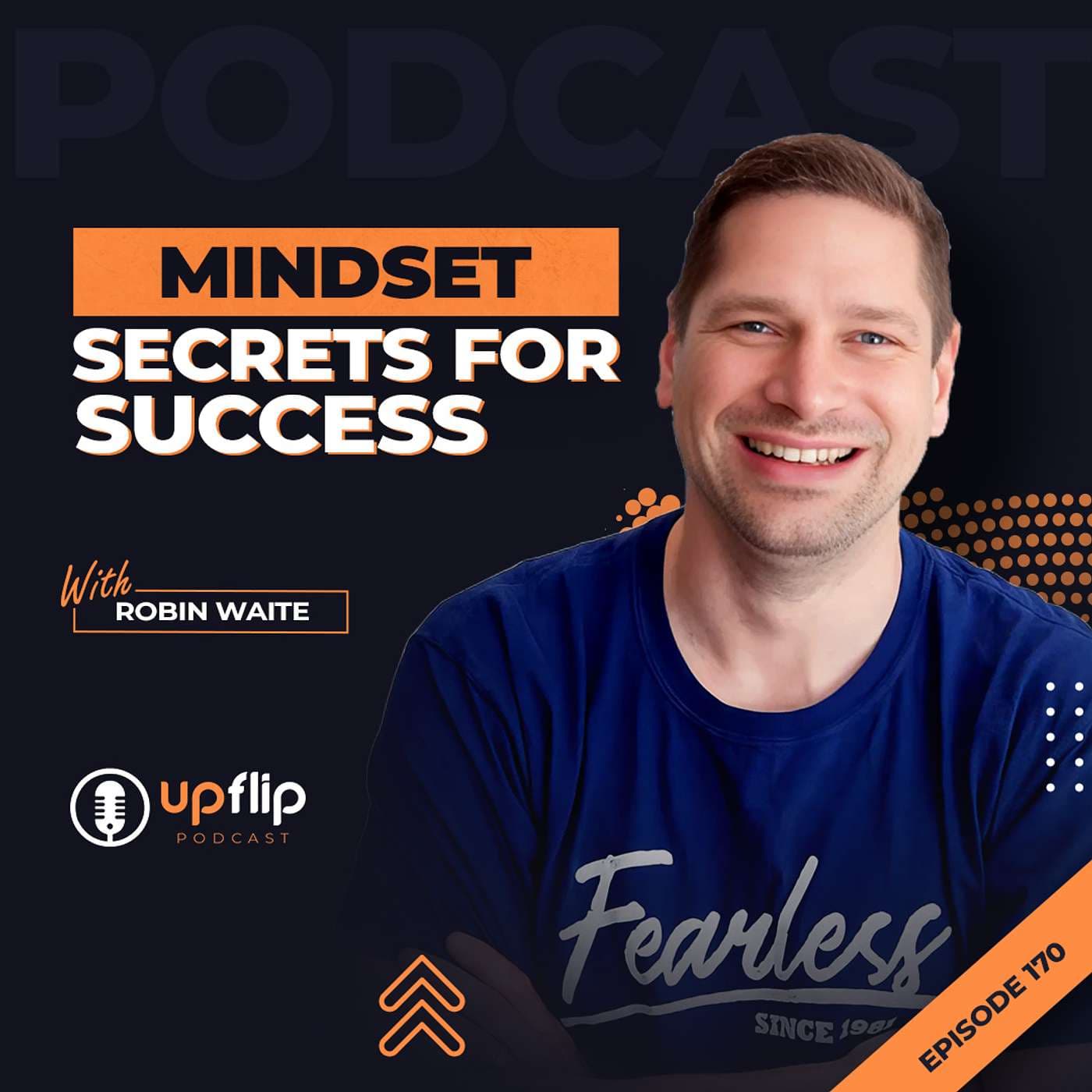
The UpFlip Podcast Episode 170 Summary
Podcast Overview Title: Think Bigger: The Mindset Shift to Unlimited Business Growth Guests: Robin Waite (Bestselling Author, Speaker, Business Coach) Host: Ryan Atchison Main Topic: Strategies for overcoming mental barriers and creating a fulfilling business.
---
Key Themes and Takeaways
- Overcoming Mental Barriers
- Identify Internal Barriers: Recognizing fear, self-doubt, and perceived limitations as barriers to success.
- Shift Your Mindset: Understanding that these barriers can be overcome through a change in perspective.
- Importance of Fulfillment in Business
- Beyond Financial Gain: Emphasizing that fulfillment in business is as crucial as profitability.
- Personal Experiences: Robin shares his moment of realization about unfulfillment after years of running a marketing agency.
- The Value of Planning
- Business Planning Essentials: Highlighting the necessity for a solid business plan, which many entrepreneurs neglect.
- Setting Clear Goals: Establishing tangible objectives to guide the business journey.
- Effective Pricing Strategies
- Reflect Value in Pricing: Pricing should reflect the value provided, not just market competition.
- Confidence in Pricing: Higher confidence in pricing can enhance client relationships and overall profitability.
- Raising Prices: It may lead to fewer clients but can increase overall revenue through better client engagement and service.
- Setting and Achieving Goals
- Setting Realistic Goals: Encouraging entrepreneurs to set specific, achievable goals for their business growth.
- Long-Term Vision: An emphasis on acting today for the future self, motivating current actions for future success.
---
Detailed Discussions
Pivotal Moments in Entrepreneurship
- Robin's Transition: He describes a turning point where he decided to close his unfulfilling marketing agency to pursue more meaningful endeavors. This transition showcases the importance of aligning business with personal values.
Planning and Pricing
- Two Main Business Levers: Supply and demand are critical for business planning. Robin explains how to calculate necessary sales to meet revenue goals.
- Pricing as a Growth Tool:
- He illustrates a method to assess pricing and suggests starting from a lower price point and gradually increasing it as confidence and value proposition improve.
- The discussion highlights the psychological aspects of pricing and the fear associated with raising prices.
Mindset and Confidence
- Building Confidence: Robin encourages a gradual approach to increasing prices and developing confidence in selling, noting that many entrepreneurs struggle with self-worth tied to their pricing.
Audience Engagement
- Interactive Game: Ryan and Robin engage in an interactive pricing game to illustrate how to approach pricing strategically, making it relatable and practical for listeners.
---
Conclusion The episode wraps up with Robin offering valuable insights into the importance of mindset, planning, and pricing in building a successful business. It reinforces the notion that overcoming fears and embracing a growth-oriented mindset can lead to significant business success.
Resources Mentioned
- 10 Day Free Trial of UpFlip Academy: [UpFlip Academy](https://bit.ly/4hchkwF)
- Robin Waite’s YouTube Channel: [Robin Waite on YouTube](https://www.youtube.com/RobinMWaite)
- Franchise Guide: [Franchise Guide](https://bit.ly/4aWuGvc)
---
Connect with UpFlip
- YouTube: [UpFlip Podcast](https://www.youtube.com/@TheUpFlipPodcast/)
- Instagram: [UpFlip](https://www.instagram.com/upflip/)
- Facebook: [UpFlip Official](https://www.facebook.com/upflipofficial)
- Twitter: [@UpFlipOfficial](https://twitter.com/upflipofficial)
Thank you for tuning in to this episode of The UpFlip Podcast!
Written by AI. May contain mistakes. Listen to the episode to check what was said.
Transcript
Automatic transcript. May contain errors.0:00What's the biggest thing holding you back from building the business of your dreams? Is it fear, self-doubt, or maybe you think you need more money to get started? Well, today's guest is here to show you that none of those barriers are as big as you think. This is Ryan Atchison, and you're listening to the Uplift Podcast, where we uncover the secrets of building and running successful businesses. And oh my gosh, am I excited for today's episode, because today we are joined by Robin Way, a best-selling author and speaker who has built and sold his first business with zero, yes, zero outside funding.
0:30Robin's gonna break down how you can overcome your mental roadblock, shift your mindset and take practical steps to start and grow a business with confidence. Plus, you'll learn how to raise your prices, stop trading time for money and finally create a business that works for you. Robin, I am so, so excited that you've been on so many good podcasts. I'm so grateful to have you on this one here today with us. You're not as excited as I am, Ryan. I can't wait to dig into everything today. I love it. And I want to dig in right away for our audience. I want to just start down with the questions here.
0:56What has been like one pivotal moment in your journey that defined your growth as an entrepreneur. There was a period just before I ended up ultimately selling the agency and it became the catalyst for about nine months of turmoil for myself and the business. So I won't tell you all the dark side of the story because there's a twist to it, but my first business was a marketing agency. So we primarily did web design and branding. And to paint a picture, I'm about 11 years into that business. And we had a small team of four people. We had about 150 clients. Things on the outside are seemingly going incredibly well.
1:31I had so many compliments from people saying, oh, you've made it. You're like, this is incredible. And making good money from it. I was able with a lot of the profits from those three years and the run up to it to be able to renovate my first ever house. So it's like a real turning point in my life. And then one morning, as you do, you go out with your buddies. I was out cycling with them. We hit this categorized climb in the local area and we're coming down it. I managed to hit 52 and a half miles an hour on my little red push bike my specialized bike and got to the bottom of this hill and i broke down like me not the bike and my mates are like because we cycle together but we're not like we don't go out drinking and stuff like that it's just like it's a cycling club and so oh my goodness what's up with rob you okay what's going on i said don't worry just go and get me a coffee and some cake i'll be all right i'll meet you with a cafe in a bit and i realized in that moment, I was just having done this thing for 11 years.
2:23I was just so unfulfilled by this business that I'd created. And like, don't get me wrong. There was some brilliant times in that business. It was so much fun. I made so many great friends through it, you know, achieved so much through it. But just in this one moment, everything came out that I was just massively unfulfilled. And I kind of had to make a decision. I was near a railway line. I didn't go there on purpose. It was actually just one of my favorite spots where I could just enjoy the countryside and I liked train. So I wasn't planning on doing anything nefarious, but train went flying by.
2:53And in that moment, I thought, well, I'm not going to jump in front of it, but I do need to change something. And went back to my wife, who at this point is eight months pregnant with our second child. And I think this was all of this was sort of happening when I was between children and family growing. And I just said, darling, I finally made a decision what I'm going to do. So that's the good news. The bad news is on Monday, I'm closing my agency. Huge decision. And she did like the international sign of distress that I showed you when we were off there. And, uh, you know, big bum, but she was brilliant.
3:23So supportive as well, my team and literally I went into the office on the Monday and I said, Hey guys, look, I'm really sorry, but you know, this is the end. I've decided that I want to move on now from the agency land and it's, it served me well, but this is it. Anyway, somebody got wind of the fact that I was kind of winding it up and they came in and made me an offer, not for much, but it was modest enough. Some money that I was able just to take my foot off the gas a little bit, overcome some of the burnout I was experiencing, and then, you know, enjoy my paternity leave and start to think about what my future looked like.
3:52And I'm glad I made that. It was a very difficult decision, but I'm glad I made that decision. Yeah. I want to talk about fulfillment when you're starting a company. What you know now, if someone is wanting to start their first company, how do you advise it? There's two ways that I look at it. Tell us if there's more. There's one where it's do something fulfilling and learn how to make money later or see an opportunity as an entrepreneur, you might not be fulfilled, but you'll make money. How do you advise it from what you know now? Yeah, I had a side hustle at university. I used to buy and sell, they called it grade two listed laptops, basically.
4:23And I bought one for myself. It was this beautiful little Toshiba thing. You swizzle the screen around, it became a tablet. It was a wonderful machine. Bearing in mind, this is like 20 plus years ago, right? I thought, oh, these are fun. I reckon other people would like these. So I ended up buying four or five of them on my egg credit card and put them on eBay, like an early version of eBay then and um they sold immediately but they didn't sell for a small amount of money they sold I bought them for about 500 pounds so six seven hundred dollars and I sold them for 10 times the price and it transpired these were really in demand from construction businesses because you could put them in a tough case drop them off a five-story building and they would bounce so they were in massive demand so I just started doing that and the money was great but then what was interesting about eight months into that the bottom dropped out of the market and i think probably other people saw what i was doing and copied it on ebay and so all of a sudden these things i could sell for five or six k were now selling for just under a thousand you know like one k so i could still make profit but for me when you're making loads of money and then all of a sudden you don't make so much money i just lost interest and i started looking at other things it's when i took up sort of programming and started building websites and doing projects for other people so money was fine for a short period of time but it didn't give me that sustainable, like fulfilling, hey, I love this thing.
5:40It was just fun for a little bit as like a spotty 21 year old, right? But then conversely, my business, which I ultimately ended up starting up in 2004 with my business partner, it was great fun. He was the loveliest guy. We had the really great clients, like literally we took it from zero to 250 ,000 pounds. So 300K, you know, in a relatively short space of time, but there were also some dips like through that process. Businesses go on this cycle every sort of two to three years where you consolidate, and then he kind of gets a bit boring and stale and it dips and then you have to have a breakthrough and you you know you have to come up with creative solutions to solve problems then all of a sudden you have that big growth spurt and then you consolidate again so we went through that sort of dip in consolidation phase you know like three times the 11 years i ran it but it was the because i was passionate about building i love building websites i loved seo it was just like coding i don't know why you know it's a bit geeky but i loved it and so even through those dark times i I knew that business was going to work out.
6:37The laptop one, I was like, no, I'm done now. Maybe it didn't work out. I was done. But the other one, like, no, I'll stick at it. So how would you advise it then? Because like, I definitely agree. Like, even as face to our visuals, like I love video marketing and like, I love just being an entrepreneur, honestly. Like, that's the best part of what I do is like, I get to control my schedule, work when I want with who I want. And I know that'll push me through the long time. So I'm doing something that I'm passionate about entrepreneurship and that'll get me through. But for someone that's just starting out, would you tell them, go get that money?
7:05or go chase your passion? I think in this day and age, things have changed when I run that first business. So 2004, in the UK, there was half a million registered businesses in the UK. Today, there's 6 million. So there's 12 times the number of businesses registered that every industry is competing against. Not only that, but because of social media and the internet, you've got this global marketplace at your fingertips. So there's so much opportunity out there that you can pretty much make money out of anything these days so if it aligns with something you're passionate about then i would suggest if you can spend at least 90 days you know three to six months putting everything into your passion and seeing if you can monetize it i mean get this there is a facebook group which is dedicated to people who collect the stickers on fruit and there's 15 000 members in it right if people can make money out of collecting stickers on fruit you can sell ice to an eskimo You can sell anything that you're passionate about.
8:02This episode is brought to you by the Uplip Academy. If you're serious about launching your business, we invite you to join our exclusive program. Inside the Uplip Academy, you'll find over 11 courses, each led by real entrepreneurs actively building their own ventures. These aren't just lessons. They're step-by-step guides that get you from idea to launch and help you scale to six figures and beyond. Plus, you'll join a supportive community filled with like-minded individuals to help hold you accountable and keep you motivated. So if you're serious about launching your own business, And start your 10-day free trial of the Elphaba Academy by clicking the link below.
8:32Let's start with that. Someone's like, okay, you know what, Robin? I'm going to listen to you. Six months, I'm going to dedicate my passion. But you know what? I'm a little scared. What mind shifts have helped you push past limiting beliefs and take bold steps towards your goals? I'm probably a bit of an outlier, Ryan, because I'm just a bit stubborn and pig-headed. You don't spend 20 years running businesses. I actually think that people who run businesses for that long are possibly like sociopaths. There's something psychologically wrong with them because like the stuff that we have to put ourselves through, the late nights, the trauma of unhappy customers, you know, when it does happen and inevitably clients not paying, when you realize that like for a job, you turn up and you do one thing, but as a business owner, you're a marketer, you're a sales person, all of the hats.
9:18right so i think there's a certain like mentality as a successful entrepreneur where you are stubborn and you're going to make it work no matter what like you're just going to outlast all of your competitors so that like last man standing is going to be the most successful it's reasons why you know 50 of businesses have gone out of business by year three and only five percent make it to year 10 but a lot of that is down to mostly i would say poor planning so they don't really think through their business model, they kind of have a good idea and just launch it without any kind of planning. Obviously, we're going to dig into pricing.
9:51They don't get their pricing model right. They think they've got a great product, but they're not able to stimulate the demand for it. So there's certain things like conditions which have to happen in a business in order to make it successful as well. It's not just down to the entrepreneur, but I'd say that just, you know, you've just got to have like be really pigheaded and just have really solid focus on the direction you're heading in or be willing to head in a direction and then course correct as you go, knowing that things are probably going to go wrong along the way. Yeah, absolutely. I echo that so much.
10:21I want to know the two pieces that you just talked about planning and pricing, and we're going to hit on pricing right after planning. So stick around for that. Planning, give us a quick, people know how to do a business plan, kind of. What's like two essential things you need to get into that planning phase? Now we're going to jump into pricing. Yeah. For context, I did a study early on in my coaching sort of career. So I pivoted in 2016 into sort of mentoring and coaching. And I used to do a questionnaire where we would ask, like, it was like your mother-in-law where she would ask you 20 questions, right?
10:48So, but the first question was rate your business plan on a scale of one to 10. So 10 being it's brilliant. We check in with it every day. We measure and test against it. And one being it's either rubbish or non-existent, you know, we don't use it. And 76 and a half percent of people who took that out of 200 people, 76 and a half percent rated there's four or below. So it was poor or non-existent 25 rated it once they didn't even have a business plan right there's a good indicator as to why businesses struggle i'll give you an example of one very simple way to sort of start to come up with a concept for a plan and i'll round the numbers and make it really easy and what we're looking at here is the two main levers in business supply and demand so initially we're going to focus on the supply side of things so imagine as a business owner you set out in the goal, right?
11:36Year one, we're going to do$100 ,000. And in terms of our product or service, our widget that we're going to sell, you might be thinking about pricing it at say$1 ,000. Now what you do is you take the big number, divide it by the little number, and we end up with 100 units that we've got to sell over the course of the next 12 months. It's a really simple exercise. I even do this with loads of very well-established business owners as well. And you can watch their eyes pop out of their head or through their glasses, right? Because they go, oh my God, a hundred units. I can't possibly deliver that many things like this year.
12:09Don't have the capacity for it. So what we're looking at is just by planning the numbers a little bit, we can start to interrogate them and figure out whether the business model actually stacks up or not. So in this instance, that person might turn around and say, well, actually my capacity is maybe 20. I could sell 20 of those things to two clients a month. That's relatively straightforward. Okay, great. And then we take 100k divided by 20 clients now and actually our product needs to be sold for 5k so five times the price i'm not a fan of just 5xing your prices and doing nothing extra unless you drastically undervalued yourself but what we look at is how can we stack as much extra value within that to deliver really remarkable results to the clients they get that solid roi but you have to essentially look at selling your products at five times the price at that point in order to kind of start to achieve your goal.
13:00It's one of the hardest things. And that's going to jump right into my question about pricing. So when you're thinking about pricing, then part two of that plan, you had your planning done. Let's talk about pricing because pricing to me is like a very hard thing to like really nail down. How do you coach how first time entrepreneurs should price their products? Well, do you want to play a game? I could demonstrate this and potentially this could be quite good value if you're open. I love playing games. Let's play a game. So Ryan, if you've got a real scenario, you're welcome to use that. It depends on whether you're open to sharing that sort of real scenario with all of your listeners out here, or if you'd rather not, if you'd want to come up with something that is kind of realistic, but it's, you know, you make up a product or a service which you want to sell.
13:42So, but what I want you to do is I want you to think about a product or service that you would like to sell. So, and share it with me, let everybody know what it is so we get a picture of it. You know what? We're going to have a real authentic conversation here. I'm going to sell video marketing for spacebar. Okay, great. And give me an idea of like, how is the package structured? What is it that you will actually, you're thinking about selling and roughly what sort of price point would you attach to it at the moment? So we do about three videos for$9 ,000, five videos for$12 ,000, and then 10 videos for$20 ,000.
14:16So more videos you get, the cheaper it becomes. Okay. And just out of curiosity, more videos that a client has, do they get better or worse results typically? That's a good question. I know our margins go down per video, obviously, but I actually don't know that answer. That's an answer I should know. So let's assume they get worse. That's surprising. I would have thought if your clients had more videos, I would have thought they would have got better results from that in the long run. No, no, no. They get better results. I was just felt that content funnel like, yes, you get better results with the more videos that you get.
14:48Yeah. So why do they pay less for it if they get better results? Budget? I don't know. So this is slightly on a different tangent to where I was heading. We'll come back to that. It's quite common for especially people in the service sector to think that, all right, a way to stimulate demand. Remember, we talked about supply just now. So now we're into demand. We'll introduce some kind of a discount on bulk buy in order to stimulate demand. So they buy more of the stuff. Kind of the logic makes sense. However, somebody who is going to buy one video, they're 17 times more likely to buy more videos than somebody who hasn't bought a single video from you, right?
15:26So they don't need an extra incentive to buy. So if they're already at a point where they're going to commit, actually you want to build something that has more value, not less, if that makes sense. So there's no discount in there. And the reason your margins get hit as well. And again, this is a really common mistake, which small business owners make. There's an assumption that if we discount by 5%, we've only got to sell 5 % more in order to achieve the same net profit margin. But actually, as the money trickles down through the profit and loss account, there's this like compounding effect, which happens.
15:58So actually a 5 % discount on the average business means you've got to sell 14 % more videos to make the same net profit. a 10 discount means you've got to sell 25 more videos to make the same net profit by the time you get to 20 of a discount you've got to sell nearly double in the average business to make the same net profit so imagine working twice as hard for the same money do you fancy that yep i i get you that actually it it does i'll let you keep talking here but yeah it kind of is like a light bulb moment like if you are getting results throughout the whole thing like why do we actually cheapen the product when it's still going to deliver you're just getting more of it at the same price.
16:36So that does make a ton of sense. Yeah. Out of curiosity. So in your industry, let's just focus on the three video pack for now. So which I think you said was 9K. In your industry, who's the most expensive in the market? Oh, there's so many video marketing agencies out there. But commonly, we are a little bit more price friendly to startups where even today I heard one video cost someone$6 ,000. I literally just had that conversation. Okay, great. So what we've created there is what I call price increasing bandwidth, right? So you're doing 3K per video at the moment just for that initial package, right?
17:12Could you see in your future, there's a future version of Ryan and your agency where you're selling that three pack for 18K, for example? I don't see why not. No, you didn't really hesitate, right? What about 25K at some point in the future? It's hard to imagine getting to three videos for 25K, but like I would, our product would definitely need to improve. There's room for improvement, but we're talking like maybe two, three, four years out in the future at some point. For sure. Yeah. So what we've got here is we've now created this pricing bandwidth between the 9k that you're currently selling that package at and 25k potentially in the future, right?
17:50Most people see pricing, for example, as binary, too cheap or too expensive. Yes, no, I'm in or I'm out. That's how most of us think about it. It's why we face rejection and we fear it. And when we get into sales conversations, because we attach this negative to the no and this positive to the yes. And so, and actually most businesses, there's like this inherent amount of failure built into it. I quite a lot of the time, we get a lot more no's and we do yes's. So we get a lot more disappointment, which we're creating for ourselves. Right. And we'll come more into like the demand side of things in a second.
18:20But if we think of it more as like bandwidth between 9k and 25k, well now there's like 16 ,000 numbers between those two. Right. But what's quite interesting about pricing is that quite often when we set our prices, we try and set them intellectually, but there's actually two sides to pricing. There's the intellectual side of it, the mindset side of it, but there's also the heart side of it. How much do I believe in my value? What's my level of confidence and my ability to deliver remarkable results and all those sorts of things. So we're going to try and explore for you where if there's a disparity between those two things, okay.
18:52So you don't necessarily need to say anything to me at this point, but when I start saying some numbers, bring it to the present day as to how much you could charge today for these products okay knowing the upper limit is 25 okay so we're going to start at 9k i'm just going to jump straight into 12k 15k 18k 21k we had a little bit yeah there we go so between 18 and 21 for those who may be listening to the audio i'll just explain so ryan kind of had a bit of a half smile i could see there was a little bit of tension in like he's gone red now as well so yeah what that told me was around 18 was just inside his comfort zone at 21 and we were just outside his comfort zone would you say that was fair i would say that's fair yeah once he started getting 20s yeah so intellectually you priced it at nine your subconscious just priced you at 21 one yeah yeah it's quite surprising do you want to try and explain like what you're thinking what's going on for you at the moment just so people get a feeling for it yeah this is a crazy game i'm not gonna lie i kind of have my hands sweating over here so listeners if your hands are sweaty i'm right there with you i think it comes down to my confidence and being able to sell it going to 18k like i'm very confident i could sell a three video package there once we get into like the 20s my confidence dwindles like a little bit on that i'll be very transparent for you and listeners like we have a 43 % win rate.
20:19We have an 86 % win rate if they get on proposal with us, which is great numbers here. The hesitancy from going to 18 to 20, it seems like a different ballpark in my mind going in the 20s. And also like at my core, like I love helping startups when I want them to get video. So I don't want to like just capitalism on capitalism and just price gouge the heck out of them. I do want to make startups win. So that's kind of like the hesitancy to go from teens to 20. okay there was something which you shared there which is quite important so there's always two sides to any transaction so product market fit so in this instance you're the product and then your market is your customers right and we've got to see both sides of the coin in order to be able to get that to work really well together because if you price too low you're going to end up getting resentful because you're not making the margins you're not making the income that you want to generate you're going to start to resent your clients right because you can't deliver as much value that affects the results then your client starts to maybe get a little bit resentful and i've experienced that in my agency days you know and we made several pricing decisions which we were able to sort of you know eventually get ourselves out of that sort of place and move more into more abundance but there's this thing which i call the sales cycle of doom right which most small businesses experience it goes like this sell deliver sell deliver sell deliver sell sell, deliver, sell, deliver, sell, deliver.
21:38Oh, I've burnt out. I'm ill. I'm on holiday. Deep breath, sell, deliver, sell, deliver, sell, deliver, sell, deliver. And what it's fed by is the fact that because we're not charging enough, we've constantly got to recharge and get more clients through the books. And then we've got to rush to deliver that because we've got to get more clients in to get the product and the money. And so we're kind of just rushing all the time. So a dream business in my perspective is one where you have double the income by half the clients. So imagine it's like a gravitational field. And so at the center of our planet, at the center of this is Ryan.
22:09And we've got cell cycle of doom gravitating around you, cell deliver, cell deliver, cell deliver, not necessarily directly around you. This is just the royal you. Now what we do, we increase our prices. It's like we've just expanded our gravitational field a little bit. So everything slows down when gravity expands, right? And so we have more time now because we're charging more to deliver a better quality product or service to our clients, which gets them better results, which makes you more referable. It makes your products more sticky. So there's more money to be made on the backend and you need fewer clients because the clients you've got to stick around.
22:43So you're not constantly having to feed and do more marketing. In fact, you can do less and more strategic marketing. So it's a really virtuous cycle by increasing your prices. Don't get me wrong. The fears you've got around raising your price totally normal everybody experiences those but it's knowing like which levers you're pulling right so a good analogy i like to use is imagine the rev limiter on a car so when you're like sold to the cell delivery like you're like in the rev limiter you can't push the accelerator any harder you can't go any faster because it's at max revs right it's just bouncing off the rev limiter we take our foot off the gas a little bit we charge a bit more our conversion rate in this instance that's what this represents our conversion rate will come down even to as low as like one in five you know so four out of five clients are saying no and that's or you're disqualifying four out of five clients you're in control as you get better at selling that high price product your conversion rate starts to rise you artificially reduce it back down by increasing your prices you're back in that one in five sort of sweet spot you're cruising down the highway or the freeway at like 1500 RPM, you know, windows down, just enjoying the view, right?
23:57Nice drive. Maybe some external circumstances kind of kick in around, I don't know, a new president comes in and it disrupts the economy. And so then everybody's a bit hesitant about where they spend their money. So our conversion rate drops a little bit. Oh, now we've got feedback here. No feedback. We can't go any faster here. We get feedback whether we increase or decrease our conversion rate so we can pull those levers in order to make that work better. And it's all led by pricing primarily. It's really interesting because like pricing is like, it's so hard to do and like it kind of like really people always say it's that mindset shift of like charging more, you're going to lose on more deals, but it actually kind of evens out where your margins are better.
24:38You're able to serve clients better. I feel like that for me is a very hard thing to shift. And for a lot of entrepreneurs to shift as well as like that concept, it's really hard to drill in your brain? So here's a better way to look at it, right? So there's these really dumb rules that I don't know who made these up in the world of businessdom, right? People are all doing up dumb rules. I know. Take this dumb rule, for example, you can only put your prices up once a year in January and you can only do it, be conservative and do it by five or 10%. Who made that dumb rule up, right? And that's what most businesses operate around, okay?
25:09Because they have this natural fear that clients are going to leave. Well, look, I've got a good case study of this actually. So So this is a long time ago and I was a little bit naive at the time and didn't know what I know about pricing now. It's like we're talking 15 years ago. So when we first started offering hosting services for the websites we built, we were charging like£10 a month initially. And we had all these customers on it and it was just frenetic. And I eventually had a conversation with my business partner and it was around about the 2008 financial crisis. And everybody was competing.
25:40They were pushing prices down. It was a bun fight to see you could sell it for the cheapest to win the business. And I said to my business partner, we need to zag. Now everybody's in. We need to go up, not down, because we need to increase our margins. We can't do it by decreasing our prices. So he thought I was just going to put it up by like to 15 pounds or something a month. And we 5X'd it. We went to 50 pounds a month. We stacked a load of extra values. We included some extra support time. We increased our service level of green and a few other things. And what happened was really fascinating.
26:08So we did lose 40 % of our clients. Remember, this is like a 500 % price increase. So we did lose 40 % of our clients. And my business partner's immediate reaction was like, oh my God, that's just a terrible decision, Robin. We need to undo this. And I was like, no, just have faith. 30 days later, when I checked our profit and loss, our revenue on hosting fees had gone up two and a half times. So we had fewer clients, but our revenue had gone up two and a half times. And then there's the Brucey bonus. And this was brilliant. It blew my mind. Our support calls dropped by 80%. Go figure. Because all of those 40 % of clients who left, who didn't value us, who were just bitching, whining and moaning about not getting exactly what they wanted, they left and took all of their problems with them.
Read the full transcript
26:52And the few clients that we had, you know, the 60 % who were left, they got great value. Many of them we didn't hear from from one year to the next because we did a really good service for them. And actually we looked at the clients who left and realized they probably just weren't best fit either. We got them just for the money, but actually now on principle, it was probably best that they left. so yeah there's some really cool stuff that comes out of like that simple pricing decision and i was going to say to you as well like i'm not a fan of doubling prices and not adding any extra value you double your prices because then you get to stack extra value do more for your customers that's why you do it it's a win-win for everybody but you starting at nine and ultimately you want to get to like 18 i would say at least and just inside your comfort zone we don't just go from nine to 18, what you do is right.
27:41You make a commitment to yourself, right? I've undersold myself to this point. Next 10 prospects will pitch 12. We'll win a couple of clients. Remember one in five, get two clients. Next 10 prospects will pitch 15. You'll win a couple of clients. Next 10 prospects, we pitch 18. You'll win a couple of clients. So as your confidence grows and you learn how to better articulate your value around the offer and stack more value in it and get better results, then you can gradually increment the prices. But you could be probably in 12 months, go through those three or four price increments to get to 18, you know, quite straightforwardly.
28:18Robin, you're the absolute man. Like what I love about this is like, you're being mindful of the fact that you do need to build confidence. I think it would be very unadvisable for someone to say, double your prices tomorrow, like just go do it. But you're saying stack your confidence. And I love that when it comes to like goal setting as a whole. And we are winding down on time here, but I do want to talk about one goal that someone could set. You recently went on a podcast and said, the future you in 12 months or 12 years out needs the current you to do something now. What are you going to do?
28:47Yeah. So there's always something on everybody's mind, something that they're planning on doing, whether you're a new business owner or an established one. And my advice is always just do it. Cause like, again, And I'm a big fan of knowing what the outcome is. Like I said, I'm pigheaded and stubborn, but I know the downside is often small. The upside is often big and far outweighs it. So I'm the type of person I would rather just know what the outcome is. So at the moment, I've been sat on writing my next book for quite a long period of time. And it transpires. Interesting. I met with one of my mentors earlier on today, and we were discussing this exact topic because I've just sat on it for about nine months on 30 ,000 words, not finished it.
29:26And she said, well, what's distracting you? which is a really interesting question because I was using every other thing to distract me from finishing the book. And I said, well, actually there's this other idea I've got for another book I want to do that's shorter and much more powerful. And she went, your eyes just lit up when you said that you should probably write that book instead. And I was like, wow, okay. So for me, that's my thing, which I'm just going to, I have to knuckle down and do basically. My future version of me, I'm doing a speaking event, actually not in 12 months, but in June next year and the book needs to be ready for that that's the plan is to double up as a launch thing there's 1500 people at that event so it's a great platform to be able to get it out andrew heberman is releasing a book like next time i guess it's actually written or is it just like something that you want to have a goal but phenomenal advice a stupid amount of good value within this podcast but we're not done yet because we have five more questions and these are our fan blitz questions and these are questions submitted from our community and guys you want to join on world class, entrepreneurs, mentors, coaches, go to www.youtube.com slash upflip and submit your question there.
30:27But Robin, ready for these last five questions? Just real snappy, snappy, snappy. I'll be snappy. I'll do my best. Let's do it. I love it. Number one, what's a lesson that took you the longest to learn? Oh, with the pricing thing. I mean, it was like, you know, granted several years, but like eight years before I really understood like pricing and the impact it can have on business. And I going back day one now, I would be like, right, triple your prices that you started off at, Robin. I love it. That's good. Number two, what are the subtle, unobvious reasons that have made you successful? I alluded to that one as well, like stubbornness, basically just, you know, a pigheaded, I'm going to succeed at this, like no matter what, nothing will stop me and I'll just carry on.
31:06So that's not for everyone. It's probably not good advice, but it worked for me anyway. Oh, it's so good. Number three, what do you know more about than most people? Oh, that's a good question. So something which I've got into now is partnerships, finding or creating partnerships with people who, one, I vibe with, they're just great fun to hang out with, but already they have large numbers of their audience. I mean, this is another podcast in its own right, but I spent, to give context and I'll keep it short, I spent four years doing marketing the traditional way with social media and email lists and all the rest of it, all the stuff the experts say.
31:40And I'd say I managed to get probably like three and a half thousand leads into my email list. I went on one podcast last year after putting this new partnership method into practice. And I got 3000 leads just from that one podcast. It was Ali Abdal's deep dive. And it blew my mind. I was like, wow, like one two hour thing is just Trump's like four years worth of hard work. So partnerships are incredibly powerful. And I'm starting to teach people about that as well and share that message. Now I've sort of understand the framework. Oh man, that's amazing. And partnerships are something that we are trying to unlock here as well number four what are you obsessed with right now uh camera gear i've just got a new camera looks really good i was going to comment on that earlier well i've got my dslr is kind of like my home studio sort of set up here i like getting a little bit creative so this one i got just so i can get out like put it on a tripod and do some different like more artsy shots i've got some beautiful countryside here so i want to get out my little mic and just do a couple of sort of bits of like outtakes of me out and about for my youtube channel i love it very last question for you rank the following money fame and power money fame that's got me you need passion in there as well because i would always lead with passion but that's a boot i'm not allowed to say that okay i think i'd have to go with money because that gives you security no no i'm going to go the other way around, actually.
33:04I'm going to go fame first because that feeds your ego and finds the thing which lights your fire. So that's linked to passion. From that, if you can build an audience with that message, you can generate some money from it. I think power possibly comes last anyway. How many powerful people do we look up to and go, wow, I really admire them? You'd have to define power for me, what that actually means. In entrepreneurship, I don't think power is important at all, actually. I love it. Well, this has been a powerful conversation. I feel empowered, honestly. This has been so good. So much value in here.
33:36If people are like, oh my gosh, I need to learn about Robin. I need to reach out to him about pricing. Where can they do that? Where can they learn more about you? So I mentioned the YouTube channel. I'm trying to grow that at the moment. So head on over to YouTube, search for Robin Waite with an E on the end of it. And also I've got a gift as well for all of your Upflip listeners and subscribers. So I'm gifting some signed copies of my book, Take Your Shot as well. So you can grab that at fearless.biz forward slash T-Y-S for Take Your Shot. And literally, one of my things, just very quickly, Ryan, is I want to democratize good quality business advice.
34:09It's why I do podcasts and give away the books and things like that. And genuinely, there are people out there who would love to break out of the system, out of a job. Maybe they don't have much money. So there is an option to cover postage, but it's totally optional. And if you just put your address into that, I'll ship it literally anywhere in the world. I sent one last month to Mongolia, which is pretty cool. But yeah, I want that's like five really simple business principles in there, some of which we've discussed today. But you can get that in the book. And I just want more people to have access to it.
34:38Everyone, I just got off the episode with Robin. I'm still buzzing from that episode. That game was so much fun. Obviously, I'm going to love it. I got great advice. I know you guys got great learnings from that. Three takeaways from that podcast. Number one, he talked about it early on, but try monetizing your passion early on. Give it six months. Just see if you can monetize that passion and then really build something you're passionate about. Number two, if it's not obvious, raise your prices. And he gives really actual advice on how to raise your prices in a way that builds confidence for you.
35:06Number three, that goes in my third takeaway. Have confidence. When you're selling this, don't raise your prices up 100 % right away. Build up to raising them 100%. Maybe you raise them up 25%. Get really good at selling at that 25 % margin. amazing episode super excited that he was on here and if you love this episode don't forget to leave us a review your reviews help us reach more aspiring entrepreneurs just like you our goal is simple to inspire and equip you on your entrepreneurial journey but we need to get as many years as we can on this one because this was a super fun one thank you for playing that game thank you for taking me through that so robin thank you so much for being here today i appreciate you so much oh it's my pleasure thank you ryan !
From the publisher
Feeling stuck, like your business is running in circles? Frustrated with trading your time for money but not seeing the growth you deserve? It’s time for a mindset shift.
Joining us is Robin Waite, bestselling author, speaker, and business coach, here to break down the mental barriers holding you back. Discover the game-changing strategies and actionable steps you can start using right now to finally unlock your path to financial freedom. Don’t miss this!
Key Takeaways
- Overcoming mental barriers is crucial for entrepreneurial success.
- Fulfillment in business is more important than just making money.
- Planning is essential; many entrepreneurs lack a solid business plan.
- Pricing should reflect the value you provide, not just market standards.
- Confidence in pricing can lead to better client relationships and profitability.
- Raising prices can lead to fewer clients but higher revenue.
- Setting clear goals can help guide your entrepreneurial journey.
Resources:
- 10 Day Free Trial of UpFlip Academy: https://bit.ly/4hchkwF
- Follow Robin on Youtube: https://www.youtube.com/RobinMWaite
Ready to be your own boss without starting from scratch? Grab our FREE Franchise Guide and unlock the secrets of proven business models that have already created thousands of success stories.
Connect with UpFlip:
- On Youtube
- On Instagram
- On Facebook
- @UpFlipOfficial on Twitter
For more insights to start, build, or grow a business, check out the resources on UpFlip.com or head to the UpFlip YouTube channel to see more interviews with business owners and experts.
Thanks for listening!


