
In short
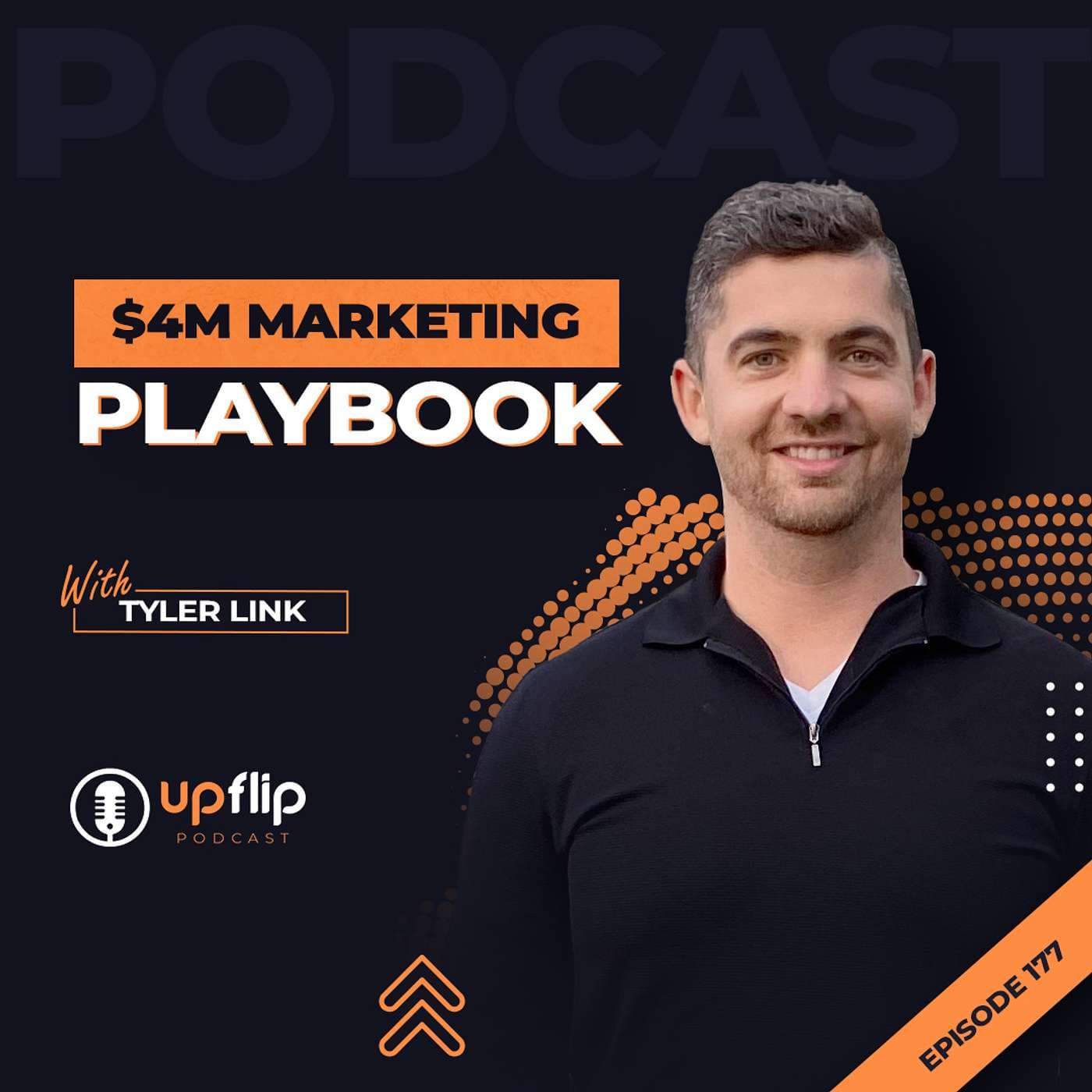
UpFlip Podcast Episode 177: Marketing Strategies to Get You to $4M/year
Episode Overview In this episode of the UpFlip Podcast, host Ryan Atkinson interviews Tyler Link, who successfully scaled his concrete side hustle into a thriving $4M/year business. Tyler shares invaluable insights into effective marketing strategies, operational practices, and the personal transformation that comes with entrepreneurship.
Key Themes and Takeaways
Business Journey
- Starting Point: Tyler began in the concrete business as a side hustle with his father-in-law.
- Initial Success: Within the first year, Tyler scaled the business to $700,000 through effective marketing and sales strategies.
Core Marketing Strategies
- Digital Marketing Mastery: Tyler emphasizes the importance of SEO, lead generation, and Google Ads in driving business growth.
- Consistency in Follow-Ups: Building trust with customers through consistent communication is crucial for long-term success.
- Referral Partnerships: Tyler discusses how he leveraged partnerships with other local businesses to generate leads without upfront costs.
Financial Management
- Understanding Costs: Tyler highlights the significance of differentiating between gross profit and net income, and the importance of knowing overhead costs.
- Setting Accurate Pricing: He stresses the need for precise project pricing to avoid losses.
Personal Growth & Mindset
- Entrepreneurial Mindset: Tyler’s journey reflects a personal transformation characterized by overcoming challenges and gaining freedom through entrepreneurship.
- Action over Perfection: He advocates for prioritizing action and speed over perfection when starting a business.
Advice for Aspiring Entrepreneurs
- Focus on Leads and Sales: Tyler advises new business owners to prioritize generating leads and closing sales.
- Utilize Referral Strategies: Building relationships with complementary businesses can significantly boost revenue.
Discussion Points
- Marketing as a Foundation: Tyler underscores that effective marketing is foundational to business success.
- Emphasis on Trust: Early hires should focus on building trust over technical skills, which can be developed later.
- Financial Literacy: Understanding one’s financials is critical to sustaining and growing a business.
- Competition Insights: Having competition can be a positive sign of market demand rather than a deterrent.
Resources Mentioned
- [Start Your Business Today](https://links.upflip.com/3XHcn7J)
- [Tyler Link on Instagram](https://www.instagram.com/itstylerlink/)
Social Media Connections
- [UpFlip YouTube](https://www.youtube.com/@TheUpFlipPodcast/)
- [UpFlip Instagram](https://www.instagram.com/upflip/)
- [UpFlip Facebook](https://www.facebook.com/upflipofficial)
- [UpFlip Twitter](https://twitter.com/upflipofficial)
Key Quotes
- "Just because there's competition doesn't mean you shouldn't enter the market. It can be a sign that there is demand."
- "Action and speed are more important than perfection when starting out."
Conclusion Tyler Link’s story is one of rapid growth and personal transformation in the world of entrepreneurship. His insights on effective marketing, financial management, and the entrepreneurial mindset provide listeners with actionable strategies to replicate his success.
Listeners are encouraged to take the leap toward entrepreneurship, focusing on leads and relationships as the foundation for their business journeys.
Written by AI. May contain mistakes. Listen to the episode to check what was said.
Transcript
Automatic transcript. May contain errors.0:00If you've been kicking around the idea of starting a business for a while now, but just haven't taken the first step. Today, you're going to be inspired to do so. If you want to start a home service business this year, you need to first learn marketing and sales. I scaled my business to$700 ,000 per year simply by getting in front of people who were searching for the service that I had to offer. Anyone can do this. All you have to do is start. This is Ryan Atkinson, and you're listening to the Upfoot Podcast, where we uncover the secrets of building and running successful businesses. Our guest today is Tyler Link, who took a weekend side hustle in Concrete and scaled this to$700 ,000 in his first year.
0:35Tyler knows what it takes to get started in home services, and he's here to share his secrets with us today. From mastering marketing and pricing to realizing that busyness doesn't equal profit, Tyler will show you how to attract the right clients for your own business and the mindset shift you need to just get started. Tyler, I'm so excited to have you on today. Thank you so much for being here. Yeah, heck yeah, Ryan. Thanks for having me, man. I'm super pumped. Yes, and we're gonna talk about a lot today. Margins, revenue, marketing, all that stuff, but we got to rewind the clock and go to the very early beginnings.
1:04How did you join your father-in-law in the concrete business? Man, it's kind of funny. I don't think anyone ever like is growing up and is like, I'm going to be a concrete business owner. Maybe some people, but that was like absolutely not me, which is like so funny. Basically, long story short, I was like the kid that was like always selling stuff. So I used to like basically steal my dad's energy drinks because he worked for an energy drink company. I would take them and I would sell them at school. And I always knew that I wanted to be in business. But the thing is, like, I watched Shark Tank and I was like, man, but I don't have any ideas.
1:33Like, I was like, I don't know anything. So I did basically like the second closest thing you could do. And instead of starting a business, I went and worked for a marketing company so I could help other business owners scale. And then one thing kind of led to another. And I met my then girlfriend, my now wife. And I remember because like after like six or seven months, I was over at my girlfriend's house and her dad had like just gotten home and it was a Saturday. I was like, oh, what were you doing today, Cesar? He's like, oh, I did a patio. I was like, what do you need to do a patio? I was like, oh yeah, I have this little side business and I do concrete on the weekends.
2:02And I was like, me being my fascination, I was like, whoa, that's pretty dang cool. I was like, do you mind me asking? I was like, what did you charge for that patio? And he was like, 6 ,000 bucks. It was like, 6 ,000? And I was like, why don't you do more of those? And he's like, I don't know how to get the work. And so basically, long story short, over probably the next six months after that, I was just constantly in his ear. I was like, hey, I could help you get more work. Let me come into the business. I could help you get more work. Let me come into the business. So six months after that, finally ended up partnering together and the rest is history.
2:33So yeah, it's been a journey. Yeah. Let's talk about that though. So we're going to be talking about concrete today and this is going to be new for the episode. So listeners, stay dialed in for this one because this is going to be a good one. But I want to talk about like, what is Contractor CEO? I see on the hat there, you got the great background. I'm sure you come from marketing, so you know the branding, but like Contractor CEO, if you had to sum it up, like what do you guys do? Yeah. So Contractor CEO, that's my marketing agency to help other concrete companies scale. So because I got into concrete and like I love concrete, don't get me wrong, but that was like my entry into the business world after I started figuring some things out about marketing and sales and pricing.
3:07You know, it's a lot more fun for me to sell a business owner to help them grow and scale than it is to sell a driveway. So there's nothing wrong with that. That's just like it fits me. So I'm kind of a serial entrepreneur myself. And it's a way for me to like basically practice what I absolutely love. It's like my passion is all business. It's like, how do I lead? How do I take those leads? And how do I sell them? And that's what Contractor CEO allows me to do, not only for my own business, but for others in concrete. I love it. I want to jump back to joining because it took about six months.
3:37You know, you're in his ear. Hey, I can help you. I can help you. I mean, for you, like, what was the biggest mindset shift you had to make when you joined the business? Oh, man. I mean, for me, it was about just about income, right? Like, because I had saved up a little bit of money as an employee. But it was like, I remember because, you know, my girlfriend at the time, I like, remember I called her up one day. I was like, Hey, like I'm actually joining your dad. Like we're going to do this. And she was like, what are you doing? Like, you don't even have any jobs lined up. Like, cause I had a house, I had a car and I had bills and I just like threw myself at it.
4:10Basically the second that my father in law, like, I think he had a bad day at work basically. And he called me up. He's like, Hey, are you sure we could do this? I was like, I'm sure. And so we both put our jobs the same day, walked out with no stable income and we just like sent it. So it was a very stupid, but you know, we made it. So it's okay. Oh my God. All right. Well, let's talk about that then. Let's go to like day zero, essentially of quitting your job, no stable income. You guys are like, screw it. Let's do it. I mean, what do you do next? Like you guys obviously have to get leads. Talk to us about how did you guys get leads in this business and talk a little bit more about what the services you guys were providing as well.
4:45Yeah, sure. So as far as like the services, when I say concrete, it's more what we call flat work in the industry. All that really means it's like patios, driveways, sidewalks, and we sell it to residential homeowners. So we don't do too much like commercial or anything like that. But yeah, as far as men, when we left, I mean, luckily, I mean, and that was like one thing that really helped me is because I worked at a digital marketing company and I already was like there witnessing other businesses grow. That was like one of my superpowers. So for me, it was about like, okay, I need to get a website and I need to release ads as soon as possible.
5:17So like the whole first week, it was about getting a website, launching Google ads, launching Facebook ads. And I just went around like blasting everyone. I mean, trying to create as much noise as I possibly could, whether it was friends and family, going to networking events. I just realized that because my father-in-law, he knew how to do concrete in my only job, which I was lucky with that, was go get us work. Like that's my 100 % focus. And that's what I did like basically all day, every day. Oh, that's so cool. I want to talk about the lead generation part of this because that's what our listeners love to hear.
5:47cool. You can talk about finance. You can talk about opts. At the end of the day, what we care about is lead generation here. So you're running a lot of Google ads. You're getting the website up. I'd love to hear how long did it take for you guys to get that first lead in? Man, I got my first lead, I'd say about a week and a half after basically going full time. And the way that I bought my way into the business was I had about, like I said,$10 ,000 saved up, but I had really no way to pay bills. But I basically said, hey, because we didn't really have any equipment or anything, I basically took all of that money and I dumped it into ads.
6:17and all at once. But I think right away, like we were spending like$3 ,000 a month on Google ads. And yeah, just like a week and a half in, we started like basically getting leads, which was basically like a couple days after I launched the campaign. That's so interesting. So basically, the leads you handed over to Cesar, who said his name was? I did the sales too. So I would like customer acquisition. So I was in charge of like getting a lead, selling the lead, scheduling the lead. And then at first too, because it didn't take all day to sell stuff. When I would sell stuff, I would still go with Caesar to the job site.
6:49And because I didn't know how to do concrete, I was just a laborer. So yeah, I was doing a little bit of everything. Nice. That is so cool. So you're like really ingrained. I'd love to hear like what that sales process was through. Okay, someone's interested from a Google ad. What happens next? I want to get like really tactical here for like our listeners. Like, what did that sales process look like? Yeah, sure. And maybe, and I'll tell you how it started, but then we might want to talk about how it progressed because - Yeah, I'd love to hear that. Because we started somewhere, it was not technically right.
7:16Because it was funny because when I got the first lead, you know, they filled out a form and I like called Cesar. I was like super excited. I was like, oh my God, we got a lead. And I was like, so what do I do now? Because I was just like, oh, he's like had his business. He's like, okay, well, what you got to do is you just like go look at it. You measure and then you multiply it by the industry standard, like cost per square foot. And that was literally it. So I like went out there. I didn't really give a sales presentation. I just went out there. I would be like, okay, customer, you know, what do you want?
7:42And they're like, oh, I want, you know, a 10 by 10. And so I'd measure it. And I'd say, okay, it's a 10 by 10 times our square foot. Your price is gonna be a thousand bucks or whatever that was, which come to find out was like very, very stupid. But that's like how much I knew when I first got started. So there really was no selling. I would just provide a price and then look at them if they would want to do it. That was my sales process. Interesting. Why do you say was it stupid? Were the prices like, were they so low? Or like, I love to hear like, why was it stupid in Tyler's eyes? Well, you know, I really learned a hard lesson because one of the very first jobs that we sold was this like big staircase going down the side of a hill.
8:16And I went out there and it was like 40 feet long, but we had to go down like 20 feet down this really steep hill. But I was like, oh, 40 by three. And I was like, that seems a little bit harder. So maybe I'm going to raise up my cost per square foot a little bit from six to like 10. So I charged, I can't remember what it was. It was like 1500 bucks. And that job literally took us a week. And that's when I really realized because I went, Caesar's like, well, hey, I did exactly what you said. like what happened because we got killed on the job and he's like oh well i guess we have to charge a little bit more and that's when it really resonated in my mind that there has to be a different way other than just pulling out like a cost per square foot because jobs are so different right because some job that are super big might only take a day and some jobs that are really small like that one because they're so nuanced and detailed it takes forever and so i had no idea how to actually like price anything but i learned the hard way after like doing a couple jobs and realizing that we just lost bad.
9:13Interesting. Yeah. What does that process look like today? And to get tactical, like how do you guys price projects today? Yeah, sure. So long story short, what we basically do is I have a spreadsheet and I know my numbers really well, but I take what's called business overhead, which is basically what does it cost me to run my business? And for me and my business, it's about$1.2 million. So it's basically, you know,$100 ,000 a month. That's what it costs me to run my business. But then what I do is I take how many people that I have working for me and I figure out how many hours that they're going to have to work.
9:42So I look at my business kind of like a rental business because I'm basically renting out my skilled labor to my customers for a price. So what I do is I take all of my guys, I multiply how many hours they're going to work for me. So for me, I have about 20 ,000 hours to sell per year. I take that, I divide that by my overhead, or I take my overhead divided by those hours. And now I know how much overhead costs me per man hour on a job. So when I go now, Now I estimate based on basically how many man hours I'm going to have on this project. What's my labor cost? What's my overhead cost? And then I put my profit on top of that.
10:14Does that make sense? Yeah, yeah. No, that definitely makes sense. It's interesting like how companies like how they get to that number that they do. It sounds like you like have a whole like technique here. I'm like how exactly you do it. I want to ask about margins here or numbers here in general because you just said about$100 ,000 per month. but you scale this business from about$70 ,000 to$100 ,000 per year to just$700 ,000 in one year. How did you make that happen? I'd love to hear more about that because that's quite the jump. That's a 7x growth essentially in one year. Yeah. So basically before my father-in-law, he was doing work just on the weekend.
10:47So it wasn't like a full-time business. But the one thing that was holding him back was like, he just didn't have the work in the volume. And then basically what I knew about marketing and how I knew how to go create noise in a market, which was everything from Google ads, SEO, reviews, referrals, Facebook ads, etc. Basically, we had more work than what I could even possibly know what to do with. So the only reason we only did 700 ,000, I'm not trying to say that to brag, it's just because that was kind of like what I knew. I think at one point that first summer, I had us booked out for like three months.
11:17And I like went and told my father and I was like, you have to stop whatever you're doing. Because we actually have to like go do all the stuff that you promised we're gonna do I was like, oh yeah, I guess that's true. What? So, I mean, it really is like once you understand, right, how to get leads and how to sell, for the most part, at that point, you're gonna have a different bottleneck, which is like, oh man, now we actually have to go produce all this stuff that we promised people. That is so crazy. Yeah, so it was basically just turning on the marketing and the sales fountain was the key.
11:45Guys, if you're enjoying today's episode with Tyler, you're gonna wanna check out his course in the Academy. Here he dives more into the marketing, exactly what you need to get starting in a very engaging way. If you're interested, click the link in the description to join for free today. I'd love to hear about the market you guys are in here as well. Like there was there a lot of competition in your guys's area? So funny story about this. So when we were about to start the concrete company, my father and like, he pulls me aside. And he goes, Tyler, I don't think we should do concrete. And I was like, what do you wait?
12:15Why? I was like, you already know how to do concrete? Like, what? What do you mean? He's like, I don't think you understand. He's like, there are so many concrete contractors in our area. He's like, I think we should start a moving business. And long story short, I kind of like convinced him otherwise is like, no, no, no, it's okay. It's not a bad thing that there's competition. Actually, sometimes it's a good thing when there's competition, because what that means is there's a market for it, right? Oftentimes, if there's no competition, that's actually a huge red flag that no one wants what you're buying.
12:41So that's kind of how I looked at it. I was like, man, just because I think just in my area, like for sure, there's 50 to 100 other people at minimum of what I can do. There's probably a lot more than that because a lot of people, because they don't know anything about marketing, they're not known, but they probably still have a concrete business. How do you stand out in the competition? Was it truly like the marketing that got you guys there? Or like, how did you stand out in such a competitive field? Well, you know, a lot of it is just speed and action. And yeah, I mean, it's marketing, it's whoever can generate the most noise and the most tension almost always wins, right?
13:12So it was just about like, okay, how many people can I get in front of? And then I was always about speed because I had no type of sales process, like literally none. I was basically a McDonald's drive-thru window, except instead of that, I would do that at my customer's house. Like, hi, what would you like to order today? Here's your price. Like that was my sales process. But I did that super fast. And what's nice about in the home service industry, like I would encourage if people are on the fence, take the leap in the sense that like at the end of the day, we're not competing with Apple. We're not competing with Microsoft.
13:43Like we're not competing in super professional people. So if you could just like look like a halfway, you know, put together person and you just do what you say you're going to do, that's like 50 % of the battle right there. You know what I mean? So it's actually not that complicated. It's pretty simple. Yeah. That's what I love about the home service industry. We've heard so many times in this show is like to really stand out here, just have like some pretty good marketing and show up on time. Like that's how you really stand out in the field. It sounds like true to even what you're saying here as well.
14:10Yeah. Just realizing that it's not like you have to capture the whole market, right? Because I mean, how much concrete is done in my area? I mean, even now we're doing $4 million a year, but I guarantee you there's at least$100 million being done in my local market. So even me being like a basically still a small fry in our industry, it's like just realize you don't have to be a big fish in a big ocean. You could be a tiny fish in a big ocean and you could still have a very good business and a very good life. So just realize you don't need all of the work. You just need some of the work and you'll have a business and you'll be up and running.
14:44Ah, that's so good. And you just hinted at it. So you guys are doing about$4 million a year. You're overhead to what? 1.25. So these are like pretty incredible margins that you guys are like dealing with specifically for this business, it sounds like. Yeah, because we shoot for about 45 to 50 % gross profit, meaning that that's how much our labor and our materials cost us. So say, for instance, just for simple sake, if we have a great year and we estimate properly and we stay efficient, then out of that$4 million,$2 million of that will be gross profit. My overhead is 1.2 million. So in theory, if all things go well, and in reality, there's going to be things that happen where it's not probably going to be that good, but we could net like 800 ,000 from this business.
15:22Oh, dude, that's so, so crazy. Yeah, I love that. I want to talk about, obviously, though, you don't want to be working on the business, I imagine. You don't want to be the one having to do all the concrete and stuff. So hiring is an important part of that. How did you guys hire? What's that process look like? I'd love to talk about that. Yeah, very important. And a lot of people, when they actually ask about my overhead for my business, comparatively to my competitors, it's actually extremely high. And that's for the exact reason of what you're talking about, is because we have a back-end team, right?
15:49I have a project manager, an office manager. I have three salespeople. I have people that are helping me run the business, which is very expensive compared to when you're just starting out. As far as I went about hiring, again, I don't know if this was the right way. It's just what I did. I've since changed my model a lot. But when I first did it, I just wanted people that I could trust. So I looked more for people that I could trust and that I wanted to work with them over their talent and their skill set. The very first person that I hired was actually one of my best friend's wives and she's still with me today.
16:19So man, she's been with me now for like five years. That's nuts. And for me, I just literally went out to like friends and family. I was like, hey, I need someone who could do this. Is there anyone who's interested? And because I already had that connection with someone that I personally knew, at minimum I felt like I could trust them which for me was like half the battle now a little bit more complicated than that but that's the thing is when you're first starting in business you don't need to be perfect it's more about action and speed over basically being perfect if that makes sense so for me it was literally just about who I knew and if I could trust them and if we could basically come to an agreement like hey this is how much money you're gonna make and this is your rough responsibilities and if we just went at it I love it I'm literally taking notes during this, the action is beat over perfection, especially when you're starting out is so important.
17:04Like some people get so caught up in like the business plan, like, oh, we need to do this, this, this, this is how it's going to work. A lot of times you just take action. That's like the first step and like truly getting a business off the ground. But the hardest step to take is actually taking action. It is. And I don't really like doing that because I think what a lot of people don't realize if you're trying to start and let's just say if you're creating a business plan, and you're thinking about steps like A all the way through D. You're like, okay, first I'm going to do A, and then B, and then C, and then D.
17:32But oftentimes what happens is in the middle of step A, you realize that step B is actually wrong, what you were thinking. And so oftentimes, and this is why they call like, imagine running a marathon in the fog, and you could only see like 10 feet in front of you. But when you go 10 feet, well, now you could see the next 10 feet. And then you do that 10 feet, and then you could see the next 10 feet. And what I've realized is if you just start going, the path will make itself clear and you can't actually see what's in front of you 10 feet past in the fog. But when you're at that 10 feet, then you can.
18:06Oh, so good. Yeah, that is great advice. I haven't heard that analogy before though. So I really like that. We've gotten super actionable here and I want to keep going down this trend of actual advice here. So let's talk about marketing avenues right now of what you know, been in the industry, whatever, five years now, I mean, you know digital marketing, you know it all. What marketing avenues have you found to be the most effective in your industry today? So yeah, it depends if you're going to go paid or free. So the way that I like to think about it is if you have money, you could basically pay to gain back your time.
18:37So if you were going to pay, I would say at a minimum, you want a foundation. And what's nice is I'm in concrete. So for all my concrete guys, they're going to understand this. But if you're going to build a house, you don't just build it on dirt. You build it on a really solid foundation first. And that foundation to me is things like reviews, website, branding, logo. And that is the type of stuff that you want to have as a foundation to then leverage into things like Google ads, Facebook ads, SEO, email, text marketing, etc. But for a lot of people who are just starting out, even that might even be a little bit too complicated.
19:11And for me, one of the ways that I learned how to do marketing when I first started beyond just like the money side, because I didn't really have that much money. So for me, like I had to figure out other ways. And so there's a couple different strategies that I love to recommend. And one is called my referral partner strategy. And so that's something that I'd love to share with the audience because this could honestly be like out of my$4 million, I get about$800 ,000 of revenue just from this and it's free. But what I basically do is I will call people who are in opposite markets, but we're around the same type of customer.
19:43So say, for instance, I'm in concrete and I would call a pool builder. And what would be nice about a pool builder is they would go and install this beautiful pool for this customer who just spent like$60 ,000 on this pool. Well, what's next after they need a pool? Well, they need a nice pool deck or a nice pool patio. And so I would call these pool contractors. I'd say, hey, my name's Tyler. I'm with Caesars Concrete. We love doing pool decks. We can do beautiful pool decks. If you send me some jobs with pool decks, well, then I'll throw you a referral fee. And so now we have like pool companies.
20:13We have landscaping companies. I have pergola companies. I have GCs. I have all all these people who are out there selling their own work and they're around my dream customer and then you partner with them right and all that takes is effort and not necessarily money so a lot of people if they're starting they don't have money you would be surprised how much work is out there if you could already like think about it like a train all of the energy that it takes to start a train so that's kind of like your own marketing but there's other trains that are already running and you could literally just run next to the train and jump and hop on it and catch some of the things that they're leaving behind that they don't do.
20:46And so no matter what market you're at, right, if you're a painter, then maybe get around a window washer or vice versa, right? Or if you are doing siding, maybe get around a roofer. There's so many different businesses where they coincide together. And it's just about going out and building that relationship with other people who are already running. You're basically jumping on their marketing engine. So that's one of my first ways to start if you don't have money. That is very, very good advice there. So thank you for breaking that all down for us. I want to keep like going off of that though.
Read the full transcript
21:16So when you're building these relationships, I mean, take us through a little bit more like the playbook. Do you just call them, say, hey, like I'm offering this, you offer this, like let's make a deal, I'll cut you a referral. Exactly. And so for a lot of people, they want different things. And I'm actually excited because this is going to be my first year where I actually have an outbound sales rep. This is going to be their whole job. In the past, I just did this like literally on the side from maybe like 10 to 40 hours a year. Like if I was ever slow in one afternoon, I would just take 30 minutes.
21:43And I basically just made an Excel sheet of all these people that I want to be relationships with. And I would just go through the list. And a lot of times I would call them. I'd say, say, for instance, if I called a GC and I would introduce myself, say, hey, I'm Tyler. You know, we do concrete work. And the GC would then fire back to me. And he'd say, you know what, Tyler, I'm actually good right now, but thanks for calling. Well, I would note that, hey, I had a good connection. His name's Doug. I would take some notes on him and I'd call him again in three months. And again, this doesn't have to take very long.
22:09It's just two minutes. I'm like, hey, Doug, you know, this is Tyler. We talked three months ago. And at the time you said that you're good. I just want to check in. Is there anything that I could do to help out? And oftentimes just the fact of like staying, it's kind of like if you want to go to the gym and build muscle, you don't want to go do like a 12 hour day. It's much more beneficial to do 12 one hour workout sessions. And I would say this strategy is very similar where it's just about touching base. And you don't have to have like this elaborate plan of a sales pitch. It's just about connecting with people.
22:37and then when they actually are interested in you like being able to help them, some people want a referral fee. Other people want basically you just to take care of their customer because like, for instance, some people are like, hey man, if I'm going to refer you work, I just want to make sure, will you make me look good? Will you do good work and not have my original customer call me back saying, why the heck did you recommend Tyler? They ruined my house. And that's all they want. So it really just depends on the person. And once you have that relationship, you just kind of talk about, hey, here are the things that they want out of you.
23:08and you can kind of make a custom deal. So like almost no two people are the same, but we do referral fees. We could give their customers discounts or some people just want to throw the referral over the fence and just say, just take good care of my customers. So those are like our three avenues. That's so good. Yeah, I think the whole referral strategy is one that like we're trying to also unlock. I think it's such an easy way to get customers referrals or definitely. Are you guys doing like any SEO though? Are you guys still running paid ads? We'd love to hear that, yeah. Oh man, so yeah, as far as SEO, I mean, that was actually one of my bread and butters when we first got started.
23:38And if anything, I actually, like my typical self, I took it way too far. I actually hire a full-time SEO person and he was working for me for 60 ,000 a year. And what was funny is it worked so well, it was actually a problem because all of a sudden, we were getting so much traffic in our area. And I was like, oh my God, this is amazing. We're getting all of these leads. But then what was funny is that we kept doing SEO and more and more SEO. And then all of a sudden, I was getting calls from people in like Texas. And they would call and say, hey, I want my driveway done. I'm like, well, you realize I'm in Colorado, right?
24:06They're like, oh, no, I just found your website. It would be like New York and all over the United States. So there was at one point we were generating like 15 ,000 unique website visitors per month. Wow. Like over half of them were not from our state. So just like anything else, you actually don't want to go too overboard with it, which I know most people will never do. And that's when I really realized I'm like, oh, you can actually just get to the top of Google and then you don't actually just get more searches because I can't make people search about concrete. So once you show up number one already, well, then you're kind of capped.
24:39So what a what a problem to have. I'd love to hear like what went into this SEO like strategy. I don't want to get the secret sauce. No, I want to give the secret sauce. Yeah, yeah. Well, then give us the secret sauce. Like what went into like this SEO strategy? I'd love to. Yeah. So actually where I learned a lot of this from was actually I went and I learned some marketing sales techniques from a guy named Tom Reber. He does a lot of content, too. And he has a business called The Contractor Fight. So I was in one of his seminars and there was a guy that gave a presentation there by the name of Marcus Sheridan.
25:07And he gave a presentation all about SEO and he wrote this book. This book is awesome. I recommend it for anyone. It's called They Ask, You Answer. And the whole premise of the book is he's like, hey, at the end of the day, SEO actually isn't that complicated. All our job is, is when our customers ask a question, we just have to answer that in the form of content on our website. And so just like the super fast story of Mark Sheridan is he actually had a local pool company. And back in 2008, he was not getting work. And so he started this blog all about pools with that theory that they ask you answer.
25:42And then over time, his website became the number one trafficked pool website. And then he actually stopped installing pools and is now one of the largest manufacturers of pools in the US, strictly based on SEO. And so the premise of it, he calls it the core five. and I can't remember them off the top of my head, but it's something like price, comparisons, the negatives, et cetera. But all that really means, let's just go to price. And a lot of our customers, like in my area, they might type in something like concrete driveway cost Loveland. And a lot of people, they're afraid to talk about price because like, oh, I don't want my competition to know about my price.
26:17I don't want my customer to know about my price until I talk to them. But if you go and you just produce content on your website for things that are people that are searching, specifically in like these really big, like in the book, he talks about it again, the core five. But if you do that, then Google sees that content and that's actually what makes you rank up. It's just about producing valuable content that people want to read. Yeah, that is so, so good. I think you've covered like a great marketing strategy from referrals to like SEO. Are you guys still doing paid ads and everything as well?
26:48Yeah, so out of my$1.2 million in overhead, about 240 ,000 of that goes to marketing. So, yeah. And so the way that that breaks down is about$5 ,000 a month of that is for basically I pay my own marketing agency. I know that that's like kind of cheating, but I pay my own marketing agency$5 ,000 a month. That's to manage my paid ads to do SEO. And then the rest of that is going towards paid ads. So whether that's Facebook ads, Google ads, I do some ValPak as well. So yeah, we're still doing a ton of that. I'm happy to give some pointers there too, if there's specific like areas that you wanted to talk about.
27:21Specifically when it comes to paid ads? Sure. Yeah. I'll just start from a very high level. Like if people are deciding between, by the way, Google ads or Facebook ads, the big difference is inbound versus outbound marketing. So Google ads is all about getting in front of people who are already searching for you. They want your service. Facebook ads is all about pushing your message in front of people who you think would actually be interested in your service, but they're not necessarily looking. So Google, if you think about it from that perspective, where we're just trying to get in front of people who are searching, basically the way that it is, it's a little bit technical.
27:52All it really is, is we're just creating certain ad groups around what people are searching for. So say for instance, I have an ad group for driveways because I want to get in front of people when they're searching the keyword driveways. I have another one for patios. I have another one for stamped concrete. And the biggest thing that I've really found is there's like a three pillars of success within Google. There is visibility. So it's like, okay, is my ad actually visible for the people that I want to see? And then it's clickability. So that's pillar two. Basically when someone sees my ad, How enticing is it for them to click my ad over my competitor's ad?
28:25And then it's all about convertibility on the backend, which is pillar three, which convertibility, what that really relates to. Like there's a couple pointers that I'll give. Number one, I always run traffic to a landing page over a website because I'm trying to get people to focus in on what I want them to do, which is to fill out a lead form. So I don't wanna send them somewhere where all of a sudden they get distracted because we all know in today's era, no one has attention. and so you're just trying to send them for exactly what they're searching for. So if someone types into my area, concrete driveway replacement near me, well, then they go to a landing page and it is all about driveways.
29:00It's all about, hey, we do driveways. Do you want a quote? And then it's like, hey, here's what's cool about our driveways. Here's how our replacement works. And it's just all content just about concrete driveway replacement, trying to convince people that we're the best company to basically give them or like work with them essentially. It's so, so good. I love the specific landing pages. We're doing like a lot of outbound sequences here at Spacebar Visuals. And basically, like in all of our messages, we'll include like a calendar link, like, hey, if you want to chat, like, here's our calendar link on that calendar link.
29:28We're not sending them to like a Calendly page or like a HubSpot meeting link. We send them to an actual like specific landing page that is built out that outbound sequence to make it a little bit more on brand. We've gotten like a ton of compliments on that. So it talks about creating specific value, especially on those landing pages. Yeah. And I'd say that's great. And I would also say like something we've done that ourselves, too. Another big tip is like what we do actually for our customers is when they hit get a quote, we actually give them the option. Hey, what's the best for you? Schedule a time to talk to us or we're going to call you as soon as possible.
29:56Or do you just want us to text you? Because what we've actually found is about 70 % of the people now actually choose that they just want to be texted, which I thought was fascinating. And our conversion rate went up by like 10 % when we gave someone the option because a lot of people, they want to talk to you as the end. They're not really ready because a lot of people, they're just trying to find out information. They're like, oh man, is this for me? Is this not for me? And I think a lot of people, when they're marketing, they assume that if someone calls them that they're ready to give you money today.
30:27But a lot of people are like, they're more in research mode. So they're like, hey, I'm just trying to see, like, they might have some weird question. Hey, just what's a rough price range? Because I got 500 bucks and I don't know if that's going to be enough. And you know what I mean? So for a consumer, it's a lot less scary to be texting someone over like, oh my God, someone's sitting in front of me and I'm like kind of embarrassed. I don't want to tell them I have 500 bucks. So we tried to meet our customers where they're at and that's helped our conversion rate a ton. Yeah, I think that is so, so good.
30:58I've actually never heard that advice. So that is really, really good. I think we've covered a lot about marketing. I do want to hit on like managing costs as we wind down here, but I'd love to hear like what advice do you have about managing costs and like knowing your numbers. Sounds like you have a whole spreadsheet, like you know everything down to the numbers. So I'd love to hear that advice you have. Yeah, and I want to keep it as simple as possible. I mean, step one is just to work with like a professional CPA and accounting firm because your numbers are so important. And I actually, I went through my first two years in business and what was crazy is I was like, man, all I ever wanted to do was have a seven figure business.
31:30And after two years, I had a seven figure business, but I didn't really have money. The crazy part was I didn't know why and because I didn't understand my numbers at all, it was very frustrating. And basically, it almost caused me to shut my business down because I was working 70, 80 hours a week. We were doing seven figures and I was making money, but I was going to make more money literally just at a sales job than what I was doing, like having all this stress running a business. And so for me, one of the biggest turning points of my career was learning my numbers. And step one of learning your numbers is just proactively record them and a good CPA can do that for you and they should be able to help you understand your numbers.
32:08And the biggest thing I think is understanding the difference between gross profit and your actual net income. Because I used to think gross profit was net income. And all that really means is if I do a job for 10 ,000, and what I used to think is, man, if I'm doing a job for 10 ,000 and 8 ,000 in labor and materials, and I'm making 2000 bucks, like I'm going to crush it. But I just didn't understand how much my business costed me, which is where I was losing all of my money, which was basically my overhead. Because everything adds up, right? Your equipment, insurance, marketing, gas. I mean, it just goes so fast if you're not watching it.
32:41Interesting. So would you advise people if they, of course, like get a CPA, but like know your numbers weekly, like know exactly how much you paid for that week, how much exactly paid for like gas for payroll, just know those specifically. Yeah, exactly. And basically, if you're just looking at it, and like what I did, and this was a huge mistake is I kind of just assumed that I was doing good. If you're literally just like starting, and even if you have a basic Quick book's account and a rough idea of like, hey, where is my money coming from? And where is it leaving? And as long as you're looking at it, like where focus goes, energy flows type of deal, right?
33:13So if you're focused on it, you'll start noticing, hey, oh man, like per month,$10 ,000 is leaving that account. And I don't really know where that's coming from. But then you're like, oh yeah, gas. Oh yeah, insurance. Oh yeah, like all this stuff that's kind of adding up. And then you'll start changing your pricing strategy naturally if you're just paying attention to it. So for me, because it was a weak point of mine, I just basically ignored it, just expecting it to work out. And as long as you don't do that, you just pay attention to it. You look at your books, like say weekly, like what you're saying, how much money came in, how much money went out, where to go.
33:47Like, that's a great start. I think that is a phenomenal advice here. Last question before we get to our family's question. Like if someone wanted to replicate your success, what steps should they take in the next 30 days? Well, just realizing that businesses, is at the end of the day, you could be really good at the skill that you're selling. But the biggest thing that you need to get first and foremost is leads and then sell them. So don't overthink how you're actually going to do the service. Don't overthink the product or anything like that. Just start to get your name out there and let people know that you exist and you're willing to help and focus on the leads and the sales.
34:23That's like by far the biggest thing because the rest you will figure out. I mean, man, business gets a lot easier if you have people who are asking you to do a service for them. So that's like by far step one. Instead of going out and spending your money on like equipment or anything like that, which is all potential money, you wanna spend it on people who will find you to know that you exist. Nice, I think that is so, so good. The life level of any organization is leads and revenue. Tyler, let's go to our Fan Blitz questions. These are questions submitted from our community. Guys, if you wanna join in on amazing entrepreneurs like Tyler, go to www.youtube.com slash upflip and submit your questions there.
34:56But Tyler, ready for our last five here? Let's do it. Cool. Number one, how has running this business changed your life, both personally and professionally? Oh, man, that's a good question. You know, I would say like on all fronts, I mean, number one, just from the financial, like making a lot more money than I used to has changed my life. I mean, even just recently, I don't want to get too deep into it, but I have some family dealing with some depression problems and basically just being able to be there like a rock for my family. Like I love having money for me, but having money to support my loved ones, to support my friends and all that, that's like everything that I've ever wanted.
35:32So like, it's amazing to be able to give back. Like I just donated say$1 ,000 to one of my neighbor's school programs for the kids. So it's just like cool to be able to actually like make money, make a difference. And it like makes you feel good about yourself and that you're spending your time. So like that part is great. And then I would say from the other perspective for me is I love having control. And when I say control, I'm not necessarily a control freak, but I like being in control of my destiny. And before, when I was an employee, actually one of the things that really made me want to quit is when I was a salesman, they changed my commission structure overnight and it radically changed my life.
36:06And it felt so unfair that someone else can make that decision and it affected me. And so just having the ability where it's like, hey, win or lose, it's my fault. Like to me, that is so freeing because it feels like you can control your destiny. I love that. That's a lot for an entrepreneur right there is why we become entrepreneurs. or try your own destiny. Number two, what's one thing you wish you knew before you started growing this business? Oh man, I mean, here's the thing is I would say that I wish that I knew how hard it was gonna be in all these things, but part of me is glad that I didn't because then I might not have ever started, if that makes sense.
36:41So, you know, but if I were to go back and say, the biggest thing was I had a tendency, I think all of us do, where we have a strong suit. So your strong suit might be the product or it might be the marketing or it might be the numbers, but probably you're not good at everything. And what we have a tendency to do as people is we avoid the things that we're bad at because it's very uncomfortable. So if I were to just go back and restart, what I would tell myself is every single morning before you do anything else, focus on the thing that you really don't want to focus on because that's actually probably what your business needs the most in order to grow.
37:16For me, it was numbers, right? I avoided numbers because they scared me. And going back, like if I would have got that out of the way in the morning and just always did that, it would have been so helpful. Nice. I love that. That is really good advice there. Number three, is starting as a side hustle what you would recommend for someone getting into home services? Oh, man, starting a side hustle. Man, there's so many different things. I mean, say, for instance, my first business that was really good is I did bounce house deliveries for kids' birthday parties. So I went and I bought like five bounce houses.
37:44And then I threw up like a really basic website and some Craigslist ads. And people would basically call me to rent out what I had for bounce houses at kids parties. And that took no skill. It just took like a little bit of hustle and basically purchasing an asset that other people wanted. So again, I don't think you have to overthink it. I mean, I know millionaires in painting. I know millionaires that are doing window washing. I know millionaires doing about everything. The biggest thing is just like coming up with some type of service that other people want to pay for because they don't want to do it.
38:14And they're just finding where those customers are. And man, there's just so many different ways to do it. I don't want to name one is like the best because to me, it's possible to make money in any of them. Yeah, I think that's so good. Number four, what's the biggest purchase you ever made? Oh man, probably a piece of equipment. I have like a$250 ,000 dump truck. Oh gosh. But beyond that, it feels a little bit different because you make payments. I have purchased coaching programs for$50 ,000 where$50 ,000 leaves your bank account like today. That feels a little bit more painful because you're not paying over time.
38:45you're just like, oh man, I had this money and now it's gone. So for me, it's been coaching information. Oh man. Wow. That is nuts. $50 ,000 for coaching is crazy. What is the most enjoyable part of this business and the least enjoyable part of this business? Yeah, I would say the most enjoyable part is getting to work with my family. And lucky for me, I run a small family company. And so what I've noticed is I've really built deep bonds. I work with my brother-in-law. I work with my brother. I work with my father-in-law. I work with my best friend's wife. It's just been cool because you get to know people on such a deeper level and you like feel this sense of camaraderie where you're like trying to accomplish a goal as a team with people who you love and who are close to.
39:26So that was the first part. And what was the second part of your question? The least enjoyable part. Oh, man. I mean, stress by far. I mean, when you're managing, you know, I have a concrete company. I have my marketing company. We have a lighting company, which we didn't really even discuss, but it's kind of part of the company. And there's just a lot of things going on. And especially when you're the one at the head of the ship, you feel a lot of responsibility, right? Because I mean, we have over 20 employees, sometimes over 30 in our busy season. And you just feel that responsibility because you want to take care of everyone.
39:57And so sometimes that creates like the pressure really rains down on you. But what I will also say is that pressure has made me so unbelievably strong that I'm so thankful for it. So I wouldn't ever trade it away for anything because like, it's what makes you grow as a person. but there are days that I wish that would be a little bit easier. So, so good. Well, Tyler, this has been an easy podcast episode. You have been so great. Thank you so much for joining us. If someone's like, oh my God, I need to learn more about Tyler, where can they connect with you? Just go to Instagram and look me up, Tyler Link.
40:26My handle is itstylylink and yeah, I'm down to answer like any questions, whether it's getting started or marketing or whatever. Just shoot me a DM. I'm like super responsive there. Everyone, that was an amazing episode with Tyler. Three quick takeaways for you. Number one, it's good to not have competition. I thought this was a really good tidbit. A lot of times we hear, go in industries that don't have competition, but it could actually be a red flag if you don't have competition. Number two, just show up and have good marketing. That's what it comes down to in home services. If you really want to get ahead, just show up and have good marketing.
40:56You're 50 % of the way there. Number three, he talks a lot about marketing, but his referral strategy I thought was so, so good. He's making over like 500 ,000,$700 ,000 a year just on this referral strategy alone. So definitely dial in for that. If you've been enjoying this podcast, please don't forget to leave us a review. Your reviews and feedback allow us to bring more amazing podcast guests like Tyler onto the show. Awesome. Tyler, thank you so much for joining us today. You were amazing. All right. Thanks, Ryan.
From the publisher
Tyler Link started his concrete company as a side hustle, and in just a few years, he transformed it into a $4M/year business. In this episode of the UpFlip Podcast, Ryan sits down with Tyler to uncover the strategies and mindset that fueled his incredible journey. From his roots in digital marketing to partnering with his father-in-law in the concrete industry.
Tyler reveals how he built a strong foundation for business scaling by focusing on SEO, lead generation, Google Ads, and innovative digital marketing strategies. He also emphasizes the value of consistent follow-ups, building trust with customers, referral partnerships, and financial management as key drivers of success.
Tyler’s story is not just about growing a business—it’s about personal transformation, overcoming challenges, and finding freedom through entrepreneurship.
Takeaways
- Tyler Link scaled a concrete side hustle to $700,000 in one year.
- Understanding marketing and sales is crucial for business growth.
- Lead generation is key; Google Ads and networking were essential.
- Pricing projects accurately is vital to avoid losses.
- Competition can indicate a healthy market for your business.
- Building trust is more important than hiring for skill initially.
- Action and speed are more important than perfection when starting out.
- Referral partnerships can generate significant revenue without cost.
- Effective marketing requires a solid foundation of branding and reviews.
- You don't need to capture the entire market to succeed. Building relationships is key to successful sales.
- Follow-ups should be simple and consistent.
- SEO can drive significant traffic but needs to be targeted.
- Paid ads should focus on visibility, clickability, and convertibility.
- Understanding financials is crucial for business sustainability.
- Leads and sales should be the primary focus for new businesses.
- Control over one's business leads to personal freedom.
- Avoiding weaknesses can hinder business growth.
- Investing in coaching can yield high returns.
- Stress can be a catalyst for personal growth.
Resources:
- Start Your Business Today: https://links.upflip.com/3XHcn7J
- Connect with Tyler: https://www.instagram.com/itstylerlink/
Ready to be your own boss without starting from scratch? Grab our FREE Franchise Guide and unlock the secrets of proven business models that have already created thousands of success stories.
Connect with UpFlip:
- On Youtube
- On Instagram
- On Facebook
- @UpFlipOfficial on Twitter
For more insights to start, build, or grow a business, check out the resources on UpFlip.com or head to the UpFlip YouTube channel to see more interviews with business owners and experts.
Thanks for listening!


