
In short
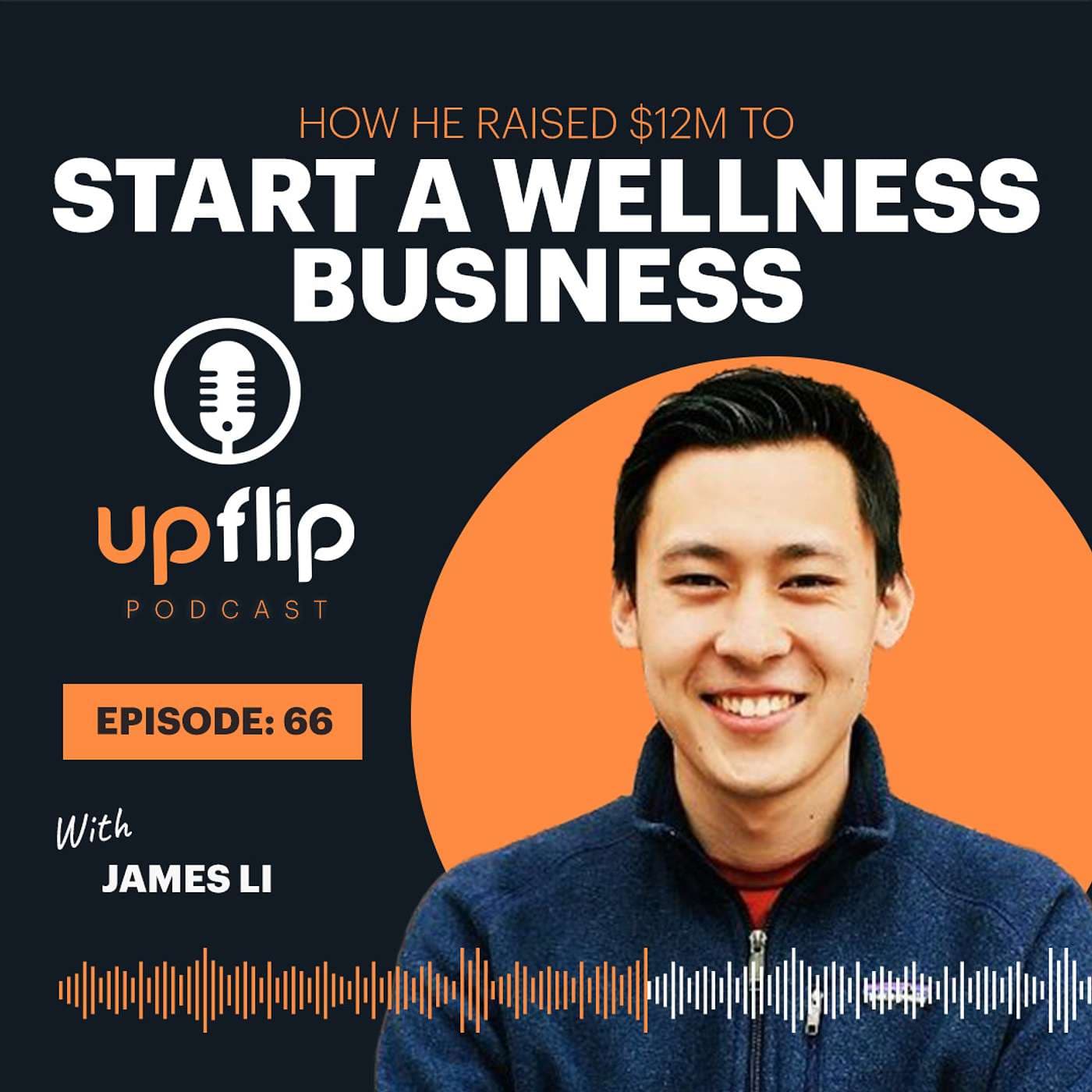
The UpFlip Podcast - Episode Summary: How He Raised $12M to Start a Wellness Business
Podcast Overview The UpFlip Podcast explores the intricacies of building and running successful businesses. The host, Alex Freeman, interviews entrepreneurs and business experts to share practical insights and advice with a growing audience of over 700,000 listeners.
Episode Details
- Title: How He Raised $12M to Start a Wellness Business
- Guest: James Li, Founder of Mighty Health
- Release Date: [Date not specified]
Episode Description James Li discusses his journey of raising over $12 million in funding for Mighty Health, a wellness platform designed for people over 50. Inspired by his father's health struggles, Li's venture aims to provide tailored wellness solutions and has attracted over 220,000 downloads since its launch.
---
Key Themes and Concepts
- Inspiration and Motivation
- James Li's motivation to create Mighty Health stemmed from a personal family health crisis involving his father's heart surgery and subsequent lifestyle changes.
- The mission of Mighty Health is to empower individuals over 50 to improve their health through personalized coaching, nutrition plans, and joint-friendly exercises.
- Challenges in Starting the Business
- Industry Entry: Li and his team were not traditional healthcare experts but leveraged their unique backgrounds to identify problems within the healthcare system.
- Building Connections: They faced hurdles in establishing relationships in a tightly-knit healthcare industry, emphasizing the importance of networking and authentic curiosity.
- Time Investment: The startup process required significant "sweat equity," consisting of research and testing concepts before launching the app.
- Funding and Financial Strategy
- Mighty Health raised $12 million over three funding rounds.
- Li provided insights into the types of startup expenses they faced, emphasizing the importance of strategic investments and testing concepts on a small scale before full launch.
- Initial Testing: Conducted early tests through manual coaching, which informed the development of the app.
- Adapting to Market Changes
- The COVID-19 pandemic prompted Mighty Health to expand its services beyond cardiac rehabilitation to address a wider range of chronic diseases affecting the older population.
- Growth led to partnerships with insurance companies to improve accessibility for users.
- Emerging from Accelerators
- Li discussed the benefits of startup accelerators, highlighting their role in providing mentorship, resources, and credibility needed to attract investors.
- Successful fundraising involves meeting multiple investors, often necessitating a structured approach with a focus on discipline and process.
- Investor Relations and Pitching
- Li emphasized the significance of storytelling in fundraising, noting that founders should share their authentic motivations and mission.
- He advised new entrepreneurs to focus on building relationships with investors and preparing for rigorous questioning during pitches.
- Common Pitfalls
- Founders are cautioned against signing NDAs with investors and advised to focus on presenting polished pitch decks.
- Li highlighted the importance of understanding the dynamics of fundraising and being prepared for the emotional toll it can take on entrepreneurs.
---
Key Takeaways
- Personal Motivation: Understanding the mission deeply can resonate well with both users and investors.
- Networking is Key: Building authentic relationships is crucial in the business and healthcare industry.
- Adaptability: Being able to pivot and broaden the scope of your business can open new avenues for growth.
- Process Over Results: Focus on creating a disciplined process for operations and fundraising rather than solely fixating on outcomes.
- Market Validation: Crowdfunding can be a useful method for validating product demand without giving away equity.
---
Resources Mentioned
- Mighty Health: [Mighty Health Website](https://mightyhealth.com/)
- UpFlip Community: [Join UpFlip Community](https://bit.ly/3NGQnoe)
- Franchise Guide: [Franchise Guide](https://bit.ly/4aWuGvc)
Closing Remarks The episode concluded with Li sharing personal insights on self-care and the importance of a supportive network as a founder. He invited listeners to connect on LinkedIn and explore Mighty Health’s resources.
---
For further insights on starting and growing a business, visit [UpFlip.com](https://www.upflip.com/) or check out the UpFlip YouTube channel for more interviews and advice.
Written by AI. May contain mistakes. Listen to the episode to check what was said.
Transcript
Automatic transcript. May contain errors.0:00I want to work with people who have a great heart, who understand the mission, and understand that, you know, yes, we want to make a ton of money with this company, but just as importantly, if not more importantly, we want to make a really incredible impact on people's lives. And we want people to understand that that takes time and it takes a lot of experimentation, takes a lot of patience, takes a lot of hard work. And we want to work with folks that actually appreciate that. Hello, and welcome to the UpFlip podcast. I'm your host, Alex Freeman. And on today's episode, I'm talking to James Lee, founder of Mighty Health, about the best ways to raise money for a business.
0:36James started Mighty Health in 2019 to fill a gap in the healthcare and wellness market. It was an ambitious goal and required an equally ambitious startup budget. They've now raised nearly$12 million in funding and he's gonna share how they went about it in this interview. Let's dive in. James, thanks so much for joining us on the show. Thanks so much for having me. So to get things started, can you just give us a little bit of an overview about Mighty Health and what prompted you to get the company started? Yeah, absolutely. You know, when we're growing up, we often think of our parents as, you know, these invincible people who are always going to be healthy and be there for you forever.
1:10But, you know, a few years ago, my dad actually called me one morning and it turned out that he had been showering and suddenly felt some sharp chest pain and that the major blood vessel near his heart actually burst. So he was rushed to the hospital for an eight hour open heart surgery, which he very, very luckily survived. When he came out of that procedure, I had never seen my dad so weak and so vulnerable before. and basically the doctor said, Mr. Lee, you've got to change your lifestyle. You've got to eat healthier. You've got to sleep more. You've got to exercise more. He kind of just got up and walked out the door and so really the reason we started Mighty Health was really to be kind of a all-in-one home for healthy living for 50 on up and essentially we have things like joint-friendly exercises, personalized coaching and a customized nutrition plan that we designed for our members to help them be their healthiest self and help them tackle the chronic conditions that they have in their daily life.
1:59Wow. I mean, just an incredible response to a terrifying and life-changing situation there. Yeah, definitely a silver lining that came out of the challenge. And I'm happy to say my dad, he's been on the program now for three years or so, but he's a lot healthier now than he even was before the surgery. So I think it just goes to show that it's never too late to get started on your health and start getting yourself on the right track. What was the biggest challenge you faced once you'd made the decision to kind of start Mighty Health? What was the biggest challenge that you faced and how did you overcome it?
2:29Well, I think that, you know, we are outsiders to the healthcare space. We do have an amazing medical co-founder who is the, you know, vice chair of research at Columbia University. And so he's very well respected as a physician, but my CTO and I actually had previously started and sold a company that was in an adjacent marketing analytics space. So I think it was both a plus and a minus for us, you know, in joining this industry with fresh eyes and be able to see many of the problems with the industry and how we could take a fresh approach to it. But also, of course, not having a lot of the initial connections needed to start the company in the space, especially in an industry where it feels like everyone knows each other.
3:06And as big as healthcare is, it's actually also very small as well. Yeah. How did you go about, you know, obviously, fresh eyes being a major advantage to you, but potentially a disadvantage as well in terms of just like understanding the healthcare space? How did you go about finding the experience and knowledge you needed to enter into a new business? I think it was all about being authentically curious. We really benefited from being able to speak to lots of other health tech founders, investors, folks that worked in health systems and hospitals, health insurance companies, and basically just go out and ask them if you can grab coffee with them and sit them down for 30 minutes and explore the different areas of need or different pain points that they have in this industry.
3:50I think that most people, if you're coming at it from a very authentic, genuine way, you're not trying to sell them anything right off the bat, they're more than happy to share their stories and their experiences with you as well. And so we really, in the initial days, I would say talked to upwards of 200 to 300 people about the problems that they faced. Many of them were actually heart patients, just like my dad, who had faced very, very similar struggles. And we just really got to know them, their lives, what they were dealing with in their day-to-day, and just really understood the problem more deeply through these conversations.
4:20Now, to me, that sounds like a tremendous amount of what we'll call sweat equity, just in the research and the understanding of what the space needed. But obviously, there are probably other expenses involved. So, I mean, what are those startup expenses for a membership-based health service like Mighty Health? Well, initially, you know, we always knew that we wanted to build this into becoming a tech platform. But the startup expense for doing so, you know, and especially having a CTO, which, you know, is a big help from the start is actually knowing what to invest in building and what to hold off on.
4:52So initially, when we started Mighty Health, we actually tested this concept of what we have today through just doing some manual coaching. So initially, we had recruited a number of different members to join us from Craigslist of all places. and we gave them my personal phone number and I was just texting with them every single day, serving as our health coach and seeing what types of prompts, what types of advice and guidance, what types of resources that we could share with them would actually resonate. And then we do these periodic surveys afterwards to see what stood out to them and then what wasn't as useful.
5:23And then we'd have a roadmap based off of that to know what to build first and what to invest for time. Because I think, you know, going back to your question about the most significant expense, I think the most significant expense is your time, right? Initially, when it's just you and your co-founders, and you mentioned just putting in sweat equity, you can really spend months or even years going down the wrong track versus really being smart about being lean and making the right decisions around what to build, what not to build, how to get out into the market and test with customers before sinking in half a year or a year into the wrong product.
5:56What was that kind of timeline from initial meetings to this group of beta users that you were, you know, just operating with via text message to kind of what you might call, okay, Mighty Health is now truly open for business. And now we're actually signing up members in sort of a more traditional way. Yeah, I mean, everything takes always a little longer than you hope it does. But, you know, initially, our industry conversations took about six months just to even get to the idea of, okay, we want to build this type of platform specific for members. You know, you can imagine we explored tons of different ideas around, you know, even helping insurance companies with claims processing, all the way to having VR solutions for surgery, right?
6:36Lots of interesting ideas in the healthcare space, lots of opportunity, obviously, in this massive market. So even the first six months we spent really trying to hone in on what is the Venn diagram of things that are important to us. We figured out that it was important to us to have a member-facing solution because we wanted that direct impact on people's lives. We knew that would be a mission that would keep us excited and give us sustained energy, even in the tough moments down the road. So that process took about six months. And then that's when we started doing the coach testing, actually texting with our members and recruiting them, running this initial beta.
7:11of about 50 to 100 members, again, very, very manual. And that we did for about three months or so before we even started coding what would now be the core part of the platform. And then actually building the initial MVP of the app itself took another six months or so. So we had begun exploring many of these ideas sort of in late 2018. And then we officially launched what is MightyHealth today in the early part of 2020, just as the pandemic was starting. Oh, a very interesting time to be launching into the space. How did the pandemic influence that launch? Well, the biggest thing was that we had initially started Mighty Health just based off my dad's story only for cardiac patients.
7:49So if you go back and find a lot of old press pieces on us, Mighty Health is described as a cardiac rehab platform. And what happened with the pandemic was that we noticed that a lot of folks that were of a similar age, in their 50s, 60s, 70s, and beyond, but weren't cardiac patients, had all these other chronic diseases as well. You could call it joint pain, obesity, pre-diabetes or diabetes, hypertension, all of these different chronic diseases. More than 80 % of folks in this age range have at least one chronic disease and more than 60 % of them have at least two. And so what we decided to do, and that was kind of impacted by the pandemic, was that we actually decided to broaden Mighty Health to become a platform for healthy living and tackling chronic diseases for all folks in this age range and not just cardiac patients.
8:36And I think that was a fundamental change for our business. Completely, obviously, not only changed the narrative and the marketing behind the business, but also the product itself as well. We made it much more generalized, but again, still very specific and age appropriate. Now, from that kind of early 2020 to now, how has growth been? What is the current membership of Mighty Health? Well, yeah, so we have now grown to now have served over 200 ,000 members through the platform. And as of this year, one of the biggest updates or biggest announcements that we've had is we've begun partnering with insurance companies because we know that unfortunately here in the US, a lot of folks that tend to need this type of healthcare or support the most can often be the ones who least afford it.
9:19And so we have now partnered with a number of different health plans, including Medicare Advantage plans, and now cover Mighty Health for 9 million Americans. So there are now 9 million folks that can access Mighty Health for free, and then we get reimbursed by their insurance company. A quick reminder for our listeners, you can get more advice on starting a business on the Upflip YouTube channel. Check out our podcast episode 27 with Ed Warren to hear more insights on how to start a software company from scratch. And if you have been enjoying this podcast, either this one or previous episodes, make sure you leave us a review on Apple Podcasts, Spotify, or wherever you're listening to this podcast right now.
9:55Those reviews really help us grow our audience and provide even more high quality business knowledge. James, I want to shift a little bit to a little bit more broader general startup questions here. I understand that you've worked with a startup accelerator. Can you explain what that is and how you worked with one to jumpstart business growth? We've actually, as a team, collectively been through at least three major accelerators and a number of different incubators going back to our last company. And an accelerator essentially is a program that is usually about three or four months. You typically go through a pretty highly selective process to actually get into the program.
10:29So you have to fill out an application and do sometimes a series of interviews to get in and get chosen. Depending on the accelerator that you are going for, they have different acceptance rates. So some of them take 5 % or 10 % of the applicants, and some of them take less than 1 % of the applicants that apply. So sometimes it can be even harder to get into an accelerator than getting into some of the more elite colleges in the US. And then some of the accelerators are more general, so they can take all types of venture-scale companies. And then some of them are more specialized. So you have accelerators for different industries.
11:01For example, in our industry, there are ones for healthcare, specifically health tech. And typically they'll invest some money as well. The check sizes will range anywhere between 50K to 200K in exchange for somewhere between 5 % to 10 % of your company. It is a quote-unquote more expensive deal from a founder's perspective. But in exchange, they add a lot more value than typically what a venture capitalist would. They put you in a program that's very structured. typically is a mentor or an advisor that is assigned to you that understands your business deeply. There are usually weekly, if not more often, speakers that are coming in and speaking as well.
11:38And then finally, there are typically peer groups as well that you can share advice with other companies that are in a similar stage or industry as you are. And it all culminates at the end of those three or four months in a demo day, where typically you will be showing off all attraction that you've had with your business so far and with the hopes of attracting investment. Typically, they'll bring in thousands of investors, hopefully, to listen to your two or three minute pitch. And if the investors are interested, they can set up a follow up meeting with you as part of your fundraising process.
12:08Now, how can one of our listeners, maybe they're out there, they've got an idea and they're like, oh, yeah, that's the thing. That's exactly what I need. I got to get into an accelerator. How do they go find one? Well, there are some accelerator databases and rankings out there that actually list out a lot of the top accelerators out there, as well as what their follow on funding success rate is, which I believe is quite important. Because if you're giving up that percentage of your company to be a part of this type of program, you want to make sure that they have a strong track record of being able to get companies to the next stage to actually bring them the awareness or the investor activity that they promise.
12:44So there are a couple of sites. One of the ones I used back then was called SeedDB. And it's just a little bit of a ranking of all the different accelerator programs that are out there. I would also do a specialized search, you know, again, for whatever industry you're in, plus accelerator, just see where some of the top accelerators are out there. There are FinTech accelerators for, you know, finance companies, health tech, even as something as niche as InsureTech, there's accelerators just for that as well. And those accelerators can sometimes give you more industry and strategic connections than some of the more generic ones, Ken.
13:15Shifting more a little bit directly towards the funding question. How does the industry of your business affect how you go about finding that funding? Are some funding approaches better for certain niches than others? Yeah, absolutely. I think that there are certainly many different types of funding, and venture capital is just one of them. And typically, for folks who want to raise money from angel investors, from angel groups, accelerators that we just mentioned earlier, and venture capitalists, you're typically looking to start a company that is what we call quote unquote venture scale, meaning investors are expecting anywhere between 20 to a hundred X return on their money, if not more, especially at the early stages.
13:56And so typically you're looking at companies that have an ambition to want to grow and achieve that within five to 10 years. Now, obviously we all know that usually that's not what happens, but that's what the ambition is, and that you have also what they call essentially software-like margins, meaning that you're not producing typically a physical good where you're selling it, you produce it for a dollar, and you either sell it for less than a dollar or maybe you sell it for $1.10. Usually, your costs are typically from 15 % to 50 % of the gross revenue, and then you can actually reinvest those profit margins into growing that business at that scale that we had said earlier.
14:34For other types of businesses, you can consider things like carrying on debt or taking convertible debt and things like that. That might be a better fit if you're not seeking that venture scale type of business. And again, that's not what everyone is looking for. So I think that is the first checkpoint before deciding whether or not to go after investors is if you're deciding to build a venture scale company or not. Can you talk about some of the best ways to attract investors to a new business? So I mean, if you feel like you have the venture scale idea, how do you then go about attracting that investment dollar?
15:04That's a great question. I think the first thing really that I hear a lot is how do I actually meet investors? A lot of folks are like, you know, they think of themselves as I don't have the network needed to actually do this. Where do I start? And the best way to meet investors is always through warm introductions, wherever you can get them. And the people who can make the best introductions typically are as follows in kind of this order. Number one is founders of companies that have done really well for a certain investor. You know, they have the most respect from those investor networks. Second one might be other founders who maybe are just getting started out and still have a decent track record or a decent relationship with those investors.
15:42The third is other investors and advisors. Again, maybe they aren't existing investors already in your business, but maybe they've indicated that they're willing to put in a small check and they're willing to have some skin in the game. And then they're now introducing you to their friends who might be also interested in this industry as well. The fourth one is actually platforms like AngelList and also crowdfunding platforms. So there might be a looser tie there to the investors, but those investors are also more likely to put in a smaller check and also make it a faster decision as well. And then the fifth one is through lawyers as well.
16:15So a lot of companies will have lawyers who have investor networks and can make those introductions. Those tend to be weaker ties just because lawyers are obviously serving a large number of clients. So they're a little indiscriminate. And then finally, cold emails and using databases like the NFX signal database, where you can actually do your own research, filter a list of thousands of investors by industry, by average check size, by how often they're writing checks, frequency. And then you can actually start seeing if you can either find an intro path directly to that person, or the very worst case, reach out to them cold.
16:50So again, there's just an exhaustive list of ways you can meet investors. And I would really encourage listeners to really sit down and take an inventory of their existing network because a lot of folks just kind of forget who they've met in the past or who they already know. Going through LinkedIn, creating your own CRM of all of the people who might be able to make intros for you and using those people as a starting point. Now, getting the meeting can be one thing. Then, you know, closing the deal is a different thing. What's one thing that new entrepreneurs do that might scare away potential investors and how can they avoid making that mistake?
17:23One thing that a lot of new entrepreneurs do is they think that they need to sign an NDA with investors. And that might've been the case maybe 20 years ago when meeting investors that before that you had to sign an NDA, a non-disclosure agreement. But nowadays, I think investors basically see so many different ideas and companies every day, and this is their job and to be professional about the way that they go about these meetings. So NDA is not required. The one big thing I would say that, I often encourage entrepreneurs that are just starting out to do is to really spend a lot of time on their deck.
17:55That is essentially your first and last impression when you meet an investor. They often ask for your deck ahead of time. You'll obviously send them a deck after your meeting as well. It's what they'll share with their colleagues. It's what they'll use to sell up to their partners. And so having really polished deck you've gotten a lot of feedback on and spent a lot of time iterating on is really critical at this juncture. Now, let's say that the investor's interested, they start to go down the road of actually writing the check and investing in the company. Are there any common pitfalls that entrepreneurs should be aware of as that process is unfolding that maybe could cause them massive headaches down the line after the investment's made?
18:34Yeah, typically in the first stages of your company, you're going to want to use fairly standard documents such as a safe note, which is a specific type of promissory note essentially that is being created as a standard in the venture capital industry. And it contains standard terms so that you as a founder can know that venture capitalists or angel investors at that stage are not trying to take advantage of you or add any kind of founder unfriendly terms that might, as you just mentioned, mess with you down the road. So typically, I would encourage founders to look up the standard safe notes.
19:11There are a few versions of them, but again, most of them are pretty standard and utilize that to actually do the investment so that the investor doesn't get any additional rights that they haven't negotiated down the road. I would say that the broad advice of investors and you being in a marriage is right. If it's a smaller investor who's putting a very small check, they can still actually give you a lot of headaches down the road because they could be asking you for financial statements or hounding you for your cap table all the time We're constantly trying to give you advice. So I would really see that pitch process as a mutual dating process and not just a pitch process.
19:46I think there are shows like Shark Tank that kind of characterize investor pitch as almost like begging for money kind of deal. You go on there and you pitch these sharks who are sitting up in their high chairs and they're judging you and how good your company is. But oftentimes with raising money, you actually want to be more of a mutual dating process where you're getting to know them as much as they're getting to know you. And if you feel that anything is off, maybe they're being rude to you, maybe they're being overly invasive, maybe they're spending more of the time trying to give you advice about your industry that you should know better than time getting to know you and your business.
20:21Then those are typically yellow flags to stay away from taking their checks. On that note, I'm curious why you chose the investment firms that you chose to work with. Why Will Ventures and GFT Ventures and what advice do you have for an entrepreneur as they kind of go into that, as you said, dating relationship? Yeah, I mean, I think it's a bit of oversimplification, but sometimes you can look at the person on the other side of the table. And again, the best outcome here is that your company does incredibly well and then they do incredibly well as a result of it as well. So sometimes it's actually as simple as, do you want to make this person rich?
20:57I know it's kind of a really funny and weird question to ask, but ultimately what that helps filter for is genuinely good people. That's what I look for. I want to work with people who have a great heart, who understand the mission and understand that, you know, yes, we want to make a ton of money with this company, but just as importantly, if not more importantly, we want to make a really incredible impact on people's lives. And we want people to understand that that takes time and it takes a lot of experimentation. It takes a lot of patience. It takes a lot of hard work. And we want to work with folks that actually appreciate that.
21:30And so Jay and Jenny from JFT Ventures and Isaiah and his team from Will Ventures, along with all of our other investors, dating back to when we went through our first accelerator, Y Combinator, to even strategic investors like AARP, are all folks that deeply understand the mission and what it takes to get there and are also just incredibly kind and thoughtful people who we love working with. So this is going to bring us to a section of our show that we call our Fan Blitz Questions. Again, these questions come from our YouTube community. You can go to youtube.com slash upflip, join the community and post questions to future podcast guests.
22:03So James, we're going to try and get through about five questions in like approximately a minute. We'll see how we do. Okay. All right, here we go. First one, if something happens to you, what happens to the business? The business will be in great hands. My team is excellent and would carry on the mission. What's the biggest purchase you've ever made? The unconventional answer is not just one thing, but it's all my self-care. So things like spa days, investing in a personal trainer, having massages, anything to help de-stress and care for myself. What's the biggest purchase that you regret? I think regret is a strong word, but oftentimes we feel that investment in some of the agencies that we've worked with, some marketing agencies, some outside agencies haven't panned out the way that we've wanted and sometimes it's just easier to do it ourselves.
22:46If you could sell the services of Mighty Health to one celebrity, who would it be? Oprah. Oh, I love that answer. Last one here. If there was a movie made about your journey, what would the title of it be? This is a bit of a funny one, but I title it Hitler and Cockroaches because the first startup house that my co-founder and I ever lived in together was cockroach infested and also was run by a house manager who is obsessed with Hitler books. Definitely a humble beginning for our first company together. Wow. Yeah. I mean, I feel like there's like a full hour of interview just on that. So unfortunately, that is the end of the FanBlitz questions.
23:21Yeah, that's a very different podcast. Yeah, that's a different episode. That is the end of our FanBlitz questions. Again, those come from our YouTube community. You can go over to youtube.com slash upflip, join the community, post questions to future podcast guests. James, a few more questions from me. I'm curious, as you kind of go into the fundraising process, how do you determine how much you're going to need to raise? Yeah, that's actually interesting because the answer isn't actually as clear as a lot of people make it think. You know, you think that if you look at entrepreneurs who raise a certain amount of money, you're like, wow, they had this perfect plan A that they executed on and they got exactly what they wanted, the valuation they wanted, and everyone's happy.
Read the full transcript
24:02But actually, there's a bit of math involved. And there's also a bit of just the general dynamics of fundraising involved. The math basically is, you want to raise enough money to help you achieve your next set of milestones to help you raise your next round. If you are taking the venture path, typically, you'll raise an angel round or a pre-seed round, then a seed, then a series A, series B. Each of those rounds tend to have a certain number of milestones. To give a broad example, the prevailing series A milestone has been a million dollars of annual recurring revenue. So say that you're raising your seed round and you're trying to get to your series A, then you kind of have to create a model where you have to figure out how many, you know, what you would need to do to achieve a million dollars of ARR and also how many months it would take you to get there.
24:45And then what your average burn, your net burn, which is the amount of money that you're spending would be on that monthly basis. And then as a result of that, you can back into how much money you need to raise. And then the second piece of it, as I mentioned, is the dynamics, which is there's sort of this industry accepted, unwritten rules of baseball, if you will, around what the size of each round might look like. And that really changes from year to year, depending on what the economy looks like. Certainly in last year's economy, we look very different from this year's economy. But roughly speaking, pre-seed rounds, we would see typically in the 250 to 750K range.
25:20Seed rounds are in that million to$5 million range. Series A's are in that$7.5 to$12.5 million range, and so on and so forth. And again, the reason for doing that is, typically speaking, that is the amount of money that you would need to last about 18 to 24 months before you go out for your next raise. And then second aspect of that is, when you're going into an investor pitch, there are patterns that they look for. And so if you're wildly out of that range, sometimes they won't maybe openly laugh at you, but they might judge you for not having done some of that prep work or understanding what that round size might look like.
25:52So those are just some benchmarks in general for folks to take a look at. Now, if you were to go back and start the fundraising process again, is there anything that you do differently? Yeah, I think a lot of, again, folks think of fundraising as this sexy tech crunch announcement that comes out at the end of it. And it says, you know, so-and-so raised money, raised, you know, led by Sequoia and Dreesen and all of the top 10 firms. And for most 99 % of entrepreneurs, which I would include myself in that bucket, that is just not what fundraising really looks like. The biggest piece of advice that I give about fundraising is to actually be focused more on the process than the results.
26:29Meaning it's more about the unsexy discipline of the day-to-day of the process of fundraising rather than just purely that goal that we just discussed earlier. What that typically looks like is I ask entrepreneurs typically to put together, as we mentioned, their deck ahead of time, but also start setting up meetings through those intro paths that we talked earlier. and how those things come together is basically you want to get to the point where you are doing anywhere between three to five pitches a day every single day. Where that all comes together and you put the deck as well as the intro pads together is you want to get to the point where you're doing three to five pitches a day, upwards of getting close to 20 pitches a week and having that discipline process where you can do that for four to six weeks.
27:12So if you do that math, you're talking to anywhere between 80 to 120 investors. and what you really want to focus on is organizing your process to make sure that you actually can schedule all those meetings in ahead of time and be able to be prepared with your deck so that when you hit day one, you can iterate on the fly, but you have your core story that you've gotten feedback on along the way. And I think a lot of first-time founders or more inexperienced founders, the mistake they'll make is they'll schedule one meeting here, one meeting there, and as a result, after they start getting their first no's, which inevitably, when you're just starting your raise, you'll typically get a lot of no's or you'll get ghosted a lot, you want to be able to have a full slate of meetings ready to go.
27:57And so again, those entrepreneurs will tend to get discouraged when they start hearing their first no's or they get ghosted. And so the process itself of having all those meetings scheduled is more important than just having a specific goal that you're focused on because you can control the process, you can't control the results, And ultimately, fundraising is incredibly hard, especially in this environment. So having a process to fall back on to encourage yourself and you know that you have more meetings coming up is the most crucial part of fundraising. More than I would say setting evaluation or having just the star names on your cap table, the discipline is the most critical piece.
28:32What are some of those, obviously the deck being so central and key and important to this process, but what does an entrepreneur need to have in place before they start that seeking funding process? Maybe even before they actually start setting up the meetings, what needs to be ready to go so that when they have those meetings, it's all there and ready for them? Yes, even with the deck, you have a couple of different versions of the deck as well. You have a shorter version that maybe is between five to seven slides that you can send ahead of time to an investor that doesn't give away too much about the narrative.
29:05It kind of is a bit of a teaser, if you will, or a trailer. And then you also have the full deck that includes potentially appendix slides, things like competitive breakdowns, any financial projections, if you have any, I would say at the earliest stages precede an angel round, you typically don't even need those types of financial in depth financial projections. but for the appendix, you'd want to include some of these, any testimonials that you have, anything that didn't make it into the main deck, essentially. You also want to have practiced your pitch with friends. You know, it sounds kind of cringe or awkward.
29:34You're just like, okay, well, you know, am I doing this mock pitch with my friends? Who wants to do that with me? But typically what will happen when you're pitching, especially founder friends or friends who have done some angel investing is that they will surface up the most common questions and the highest risks. I do a bit of angel investing as well. And the benefit of doing so is I can see companies more objectively and say, okay, if a friend is about to go fundraise, I can see usually what are the two or three biggest questions they're gonna get. Okay, Travis, you're probably gonna get a lot of questions around competitive landscape and how you're different from XYZ.
30:06You're also potentially gonna get a lot of questions around team and where are you gonna find your CTO, et cetera. And again, it's gonna be very different for each business, but having folks who can call out those questions ahead of time can help you anticipate those questions, build them back into the deck So you can basically address those questions head on before they're even asked. And then even prepare some backup slides and appendix slides, answer those questions as well and make sure you're getting ahead of that. And then finally, the last thing that I would say is what we call intro blurb, B-L-U-R-B blurb.
30:36And so what you want is you want to pithy three or four bullet points about your business. So typically it's a one-liner about the company. It might be another one line about the problem or the opportunity or the industry and why it's such a big opportunity to go after. Another line about your traction so far, any customers you have so far, any numbers, revenue, funding, et cetera. And then finally, your team. This is why you're qualified and you're the best founder. Folks talk about founder company fit or founder industry fit, founder market fit. Talk about why you're the right person to go build this as well.
31:09So you'll want a four bullet point summary that you can share with all those intro folks that you mentioned earlier. That way they can forward that email along very easily to their friends without having to rephrase what your company does, and then they can set up the introductions for you. Can you talk about the difference between working with individual investors versus investment firms? I mean, do you have a preference? And like, is there a key difference that people should know about? As a founder, typically, the answer you'll get is anybody who gives me money. But there are some key differences to be aware of.
31:39You know, on the angel side, obviously the check sizes are much smaller, but the good news is that typically they will make a decision much faster because there are fewer other stakeholders involved in the decision-making process. And also typically angels will sometimes be more willing to be more hands-on because if they're investing in your company, they either will have a affinity to your team or an affinity or experience in your industry. And some of that industry experience is so crucial in the early days. They could be the ones introducing you to your first customers, to other strategic investors, to industry advisors that we mentioned earlier, and just give you a take from mistakes that they've made in the past.
32:16I really love working with angels for that reason. That said, it is really hard to raise a sizable round with just angels alone. If we're raising more than say 500k, it's really, really hard to put together a party round. If you're thinking about the average check size being between 10 to 50k, then you're talking about upwards of closing 25 to 100 angels. And that is a lot of work, not just the pitching work, but also the administrative work to put together that cap table as well. So in that case, when you're raising, let's say, more than 500K, that's when you want to start focusing on venture capitalists who could be leading or writing a sizable check in that round.
32:53Sometimes between 30 to 60 % of the round, they can cover with just one check alone. And they will have a much more involved process that will involve more due diligence on your industry, on the history of your company. They might be the ones asking for more of the financial statements. Again, angels won't really want to be looking at that unless they're a high net worth individual is cutting one to two million dollar checks. And in those cases, the advantage of working with those firms, not just the larger check size, but they are a little bit more professional in the way that they go about doing things, meaning they're less likely to bother you because they have a reputation to uphold amongst the industry and other founders.
33:28They don't want to be perceived as a bad actor. And they have a lot more pattern recognition with other companies that they've worked with in the past. So they tend to be really great folks to go to with questions like, and how much should I be compensating my first few hires? How should I be building my sales team? They have a lot more experience with those. You've gone through multiple rounds of funding. As we mentioned in the intro, nearly$12 million raised in total. Can you talk about the process of going through multiple rounds? And is there any general advice you can offer on things you should make note of in the early rounds that will help you in later rounds?
33:59Yeah, I think one of the biggest lessons that we've learned along the way is the story is incredibly important. You could talk about the same exact company. You could put the same company in front of me and I could tell the story in 10 different ways, right? You could tell it from a very heartfelt manner. You could tell it and sell it as a huge vision. And I think that founders are really good at being authentic to the type of founder that they are. Different founders will talk about their companies in different ways. And I think that's one of the key learnings is learning about what is the way that you want to talk about your company in the early days.
34:32With Mighty Health, as you can tell from just the way I introduced the company from the beginning, I tend to talk about it from a very heartfelt way. You know, I talk about the authenticity of the mission and why it's so important that this thing exists in the world. There are other founders who don't do that at all. And they specifically talk a lot about financials and the industry as a whole and why this is such an important industry to go after. So as a result of that, I think it's more about shaping your narrative and figuring out what are the parts of what makes you a great founder turn into what makes this a great pitch for your company.
35:03At any point, did you feel overwhelmed by the thought of the fundraising process for Mighty Health? And how'd you overcome that? Well, hopefully this will be solace to many of your founders or listeners who are also working on fundraising as well. fundraising is universally one of the most challenging things about building a venture-backed company. It is very, very, very, very rare to meet a founder who actually enjoys fundraising. Because I think we all start building this company because we believe in the mission or the problem that we're solving. And we love either serving customers or we love building amazing, wonderful products.
35:39None of us get into it because we love fundraising. And so again, And it can be very, very overwhelming. I can say that some of the toughest times in my founder journey, going back to the theme of self-care, have been around fundraising psychologically and even physically, taking the largest toll on myself when doing fundraising. Nobody likes to hear someone say no, let alone dozens of no's from investors, but that's just the reality of fundraising, unfortunately. And for better or worse, that's just the way that the industry works today is that that's how you are able to resource your mission and your vision.
36:15And so again, that's why I've come back over and over again to not just personal self-care and taking care of yourself throughout this process, but also the discipline of focusing on the process and not the results. Because if you're focused on just the results, that can be the beginning of a really easy downward spiral in terms of your mental health and just your motivation. But if you're focused on the process and you're trudging along and you're going through those 80 to 120 meetings, maybe you will get a term sheet a little earlier in the process and you don't need to do 80 meetings. That's fantastic.
36:46It's great. Maybe it'll take even longer and having that process in place will really help give you even keel and make sure that you're level-headed as you go through this. Now, if somebody is interested in founding a company that has maybe lower startup costs associated with it, are there other financing options that you might advise them to explore instead of investor? financing? Yeah, I think there are lots of different options. One of them certainly is crowdfunding. If you are producing a product or service, usually a physical product that can be shipped directly to consumers, then crowdfunding, the classic Kickstarter, is an amazing way, not just to fund your business, but honestly, the biggest way to view things like Kickstarter is pre-selling.
37:30You are actually being able to validate the market demand from consumers and their ability to want to buy something. I just bought from my dad for Christmas an expensive coffee machine that is just being shipped out into the market for the first time. And my dad obviously loves coffee enough to want to pay hundreds of dollars for a fancy espresso machine because there's product market fit there. So it's a validation sign for the founders that people want your product and are willing to pay for it. And it's also non-dilutive as well. So you're not giving up pieces of your business, any ownership as well.
38:02For folks who also need a little bit less capital, I would also encourage folks to look at just raising only money from angels. The typical quote unquote friends and family round where you can use a similar safe note, that same instrument we talked about earlier, and you can close anywhere between 25 to 100K just to get started. That safe note will convert into ownership or equity at a later event, either when you raise more money in the future, or if you get acquired or you have some kind of liquidation of that as well. And then if you watch Shark Tank, you can see that there's a number of other types of solutions as well, where you can even do things like affiliate fees or royalty fees.
38:40So there might be an exchange where someone gives you 10 to 50k upfront, but then you pay it back over time by giving them a percentage of your sales. And again, you don't have to give up any ownership there as well. So those are just some of the examples, but there are a multitude more out there. But those are some of the more common ones that we see for folks that don't go to the venture path. Now, before we wrap this up, James, I want to take a little detour into some of the partnered organizations that Mighty Health works with, AARP, GymPass, Forma. Can you talk about how those partnerships came about and how those have factored into business growth for you?
39:10Absolutely. Many of your listeners will probably empathize with the fact that over the last year or so, it's become a lot harder, especially for direct-to-consumer companies, to run Facebook ads because of a lot of the changes in the privacy tracking and ad tracking for iOS 14. So as a result, not just Facebook, but many of the other advertising platforms, the cost effectiveness has decreased tremendously in the past year or so. And so a lot of the types of D2C businesses that you would see in the past that we can all name ones like Casper or Warby Parker, and that were taking advantage of pretty cheap advertising five to 10 years ago, it's really hard to build those businesses now.
39:47So the reason why we partner with other organizations like AARP and GymPass is to be able to reach large swaths of our target demographic. In AARP's case, for example, there are 18 million members across the US over the age of 50 and be able to spread the message about Mighty Health to them without the use of paid performance ads. So in those cases, those organizations are essentially partnering with us to help either cover the cost or spread the word of Mighty Health. And GymPass, for example, is the world's largest employer fitness network. So when you use Mighty Health and you're an employee that is part of the GymPass network, you can get your Mighty Health essentially reimbursed or covered by your employer as a benefit.
40:26And again, makes it more cost effective and accessible for folks as well. So through those two organizations, again, we have an aggregate reach of close to 30 million people that we can reach that we wouldn't have been able to reach without the support of those organizations. Now for a new company, how do you go about and actually make those connections to establish those partnerships? Yeah, a lot of it is through the similar types of warm introductions I mentioned earlier. A lot of it is just, we call it network mapping, but basically the understanding who can get you to your dream organization.
40:58In the United States, for example, for us, there's no better organization than the AARP to partner with because of that reach. But for every company, there might be three to five firms or partners that are the quote unquote dream partners. And you might find someone on LinkedIn that has the right title, you know, is either a director of partnerships or innovation or strategic innovation who might want to partner with, you know, new innovative products and solutions like yours and figuring out, you know, basically what is the correct path through an investor, through an advisor, through a friend, through other founders who've worked with them in the past is the way to go.
41:31But the other piece of it is also, you need to bring something to the table. You know, one of the things we struggled with early on was when we had no customers back Back when we were texting strangers on Craigslist through my personal phone, we didn't have the credibility or the track record to approach a lot of these larger organizations. They would ask us, how many users do you have? Or, you know, what's the, in our case, what's the clinical research that, you know, your system, your platform works? And so a lot of it is doing the prep work of being able to have the right mix of credibility.
42:01It could be users, it could be testimonials, it could be positive app reviews on the app store. It could be the advisors you surround yourself with who have that credibility. They can lend you that essentially by proxy. But building that story as you're approaching these partners to let them know that out of the dozens or even hundreds and thousands of tech companies or young startups that are trying to meet with them, here's why you stand out. Here's your track record. And here's why they should work with you. If you could pick the one thing that people take away from this interview, what would it be?
42:32The number one thing that I would focus on is that startups is not a sexy journey. It is all about your weekly, daily discipline. For us as a company, not just in fundraising, but as a whole, the way we build our product, our sales team, etc. We have very regimented weekly processes, monthly, quarterly processes that we put into place to make sure that we are getting that 1 % incremental improvement every day. There's that great quote from James Clear in Atomic Habits that if you improve yourself 1 % a day, you can improve yourself 37x at the end of the year. And so it's oftentimes not that huge win.
43:09Obviously, you will have the wins from time to time. But sometimes even those huge losses that change the game, a lot of it is iterating on your processes, your conversion rate from install to converting into a trial, your blog posts and how you're producing content, how you're reaching out to partners, those types of things. It's iterating on those things relentlessly day after day that will get you to that. And fundraising is no different. My favorite book as a founder is actually this book called The Great CEO Within from a startup coach named Matt Moshari. And basically, he has outlined just in plain detail a lot of these day-to-day processes that you can put into place with your team.
43:48And I think that ultimately, that is my number one takeaway for folks is to focus on the process, not the result, really on that 1 % improvement every day. James where can people learn more about you and what you're up to and Mighty Health itself? Yeah you can connect with me on LinkedIn I'm just at James Lee my last name is spelled L-I at Mighty Health I'm at James at MightyHealth.com if you have any questions I'd love for you to check out MightyHealth.com either for yourself or for a loved one we do have a bunch of free content on our YouTube channel as well for Mighty Health in case if someone's not ready to pay you can try out a ton of our free resources we have exercises nutrition plans and cooking lessons Q &As with doctors, all on our YouTube channel, Mighty Health.
44:25That is going to do it for this episode of the UpFlip podcast. Again, a reminder to our listeners, you can find more advice for how to start a business the right way on the UpFlip Hub, or you can take one of our classes on starting a business to get up and running the right way. James Lee of Mighty Health, thanks so much for joining us on the show. It was a pleasure. Thanks for having me.
From the publisher
James Li knows a thing or two about how to raise money for business startup expenses. He raised more than $12 million in three rounds of business funding to start Mighty Health. Since the app’s launch in 2019, it’s been downloaded by more than 220,000 people, and the funding they raised helped to drive that success.
James wasn’t a healthcare expert before launching Mighty Health. He was inspired to start a wellness platform after watching his dad struggle to find fitness and wellness services designed for modern people over 50. The funding he raised helped him build a board of advisors with the expertise they needed, in turn building Mighty Health into the successful platform it is today.
Entrepreneurs looking for small business funding usually don’t need the kind of capital required for Mighty Health, but that doesn’t make finding it any less of a challenge. James’ insights can help you overcome these challenges and secure the funding you need to hit the ground running with your new business.
Resources
- https://bit.ly/3NGQnoe Join likeminded entrepreneurs in the community
- Mighty Health - Learn more about the company at their website
Ready to be your own boss without starting from scratch? Grab our FREE Franchise Guide and unlock the secrets of proven business models that have already created thousands of success stories.
Connect with UpFlip:
- On Youtube
- On Instagram
- On Facebook
- @UpFlipOfficial on Twitter
For more insights to start, build, or grow a business, check out the resources on UpFlip.com or head to the UpFlip YouTube channel to see more interviews with business owners and experts.
Thanks for listening!


