
In short
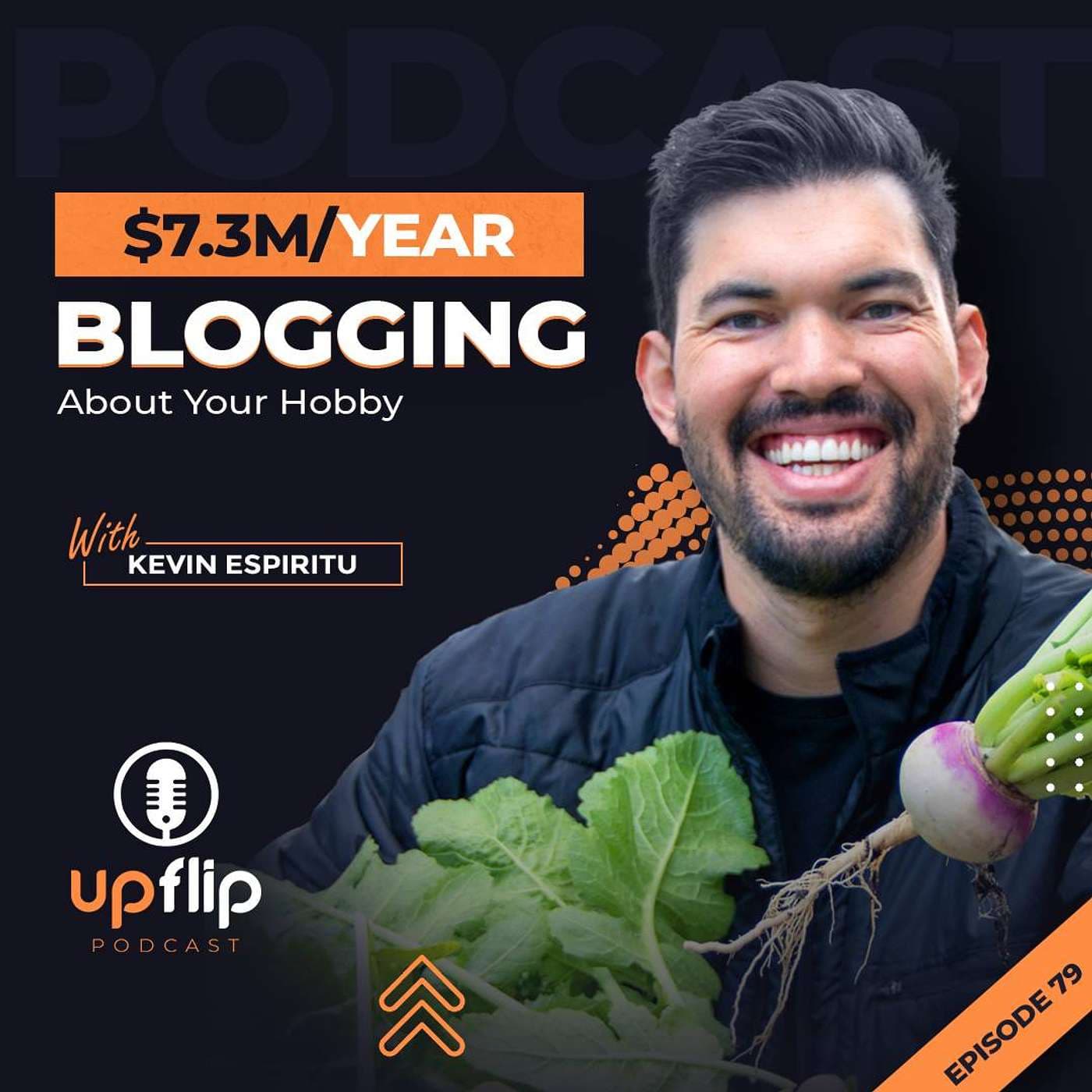
The UpFlip Podcast Episode 79: How to Make $7.3M/Year Blogging About Your Hobby
Episode Overview In this episode of the UpFlip Podcast, host Alex Freeman interviews Kevin Espiritu, the founder of Epic Gardening, who transformed his passion for gardening into a successful online business generating $7.3 million annually. Kevin shares his journey from a side project to a full-time venture, discussing strategies, challenges, and the lessons learned along the way.
Key Themes and Discussions
1. Beginnings of an Entrepreneur
- Early Hustles: Kevin discusses his early experiences in entrepreneurship, including selling CDs in middle school and playing online poker to pay for college.
- Poker Lessons: Kevin reflects on how poker taught him important business lessons about risk, decision-making, and managing imperfect information.
2. The Transition to Epic Gardening
- Starting the Blog: Initially began as a side project while working at Scribe Media, Kevin used Epic Gardening as a portfolio piece for his web design skills.
- From Hobby to Business: Kevin shares how he moved from gardening as a hobby to establishing a stable income through the blog, reaching about $3,000/month before going full-time.
3. Growth Strategies
- Content Scaling: Kevin elaborates on his content strategy from 2016 to 2019, emphasizing the creation of blogs, YouTube videos, and podcasts to reach wider audiences.
- Content Diversification: Transitioned from a written blog to video and audio platforms, capitalizing on different media.
- SEO and Marketing Approach: Kevin explains how he leveraged his background in SEO to drive traffic to his blog and later to other platforms.
4. E-Commerce Expansion
- Product Sales: In 2019, Kevin began selling physical products through his blog, which led to a significant increase in revenue.
- Pre-Order Strategy: Discussed the advantages of selling products on pre-order, allowing for a cash-rich position before delivering goods.
5. Impact of the Pandemic
- Surge in Interest: During the pandemic, Kevin experienced a massive increase in subscribers and product sales as people sought gardening as a hobby during lockdowns.
- Adapting to Challenges: Kevin had to manage supply chain issues while capitalizing on the increased demand for gardening products.
6. Lessons Learned and Advice for Entrepreneurs
- Risk Management: Kevin does not believe in the idea of passive income; he emphasizes the need for active involvement and strategic decisions to build a successful business.
- Hiring and Delegation: Shares insights on when and how to hire team members to focus on high-leverage tasks.
7. Transition to a Multi-Revenue Model
- Acquisition of Botanical Interests: Kevin discusses his recent acquisition of a seed company, emphasizing the importance of diversifying revenue streams.
Key Takeaways
- Persistent Learning: Businesses evolve, and staying adaptable is crucial for long-term success. Kevin highlights the importance of learning from both successes and failures.
- Building a Community: Engaging with your audience and providing value is essential for growth. Kevin built his brand by prioritizing his audience's needs.
- Diversification: Expanding revenue streams can protect against market volatility, as seen through Kevin's transition from ad revenue to selling physical products.
Resources Mentioned
- [Epic Gardening Website](https://www.epicgardening.com)
- Kevin's Website: [kevinespiritu.com](https://www.kevinespiritu.com)
- [Franchise Guide on UpFlip](https://bit.ly/4aWuGvc)
Conclusion Kevin Espiritu’s journey exemplifies how passion can be turned into a lucrative business through strategic planning and adaptability. His insights provide valuable lessons for budding entrepreneurs looking to transform their hobbies into successful ventures.
---
For more insights, connect with UpFlip on [YouTube](https://www.youtube.com/@TheUpFlipPodcast/), [Instagram](https://www.instagram.com/upflip/), [Facebook](https://www.facebook.com/upflipofficial), and [Twitter](https://twitter.com/upflipofficial).
Written by AI. May contain mistakes. Listen to the episode to check what was said.
Transcript
Automatic transcript. May contain errors.0:00$7.3 million a year. 300 % revenue growth year over year and more than 20 employees all from a single gardening blog. I just made 50 % of my whole revenue for the year in a month doing the products. If you can sell everything that you buy on pre-order, then you're cash rich before you deliver the product. I was at 183 ,000 subscribers, I think. And then I woke up the next day, plus 15K. Next day, plus 15K. Next day, plus 15K. And I'm like, oh my God, like what is going on? If you're the only person to have a video on the topic, it's still going to hit. You know, it's the whole logic of how we got on TikTok and that sort of blew up.
0:41I would say if I could do it based on some of the stories you heard and the clownish actions I've taken, certainly if you're listening, you can do the same thing. I'm your host, Alex Freeman, and I'm joined by Kevin Espiritu. Let us show you exactly how to turn a hobby into millions of dollars online. Kevin, thanks so much for joining us on the show. Hey, thanks for having me, Alex. I appreciate it. So I want to get started with the story, which I know goes back before Epic Gardening. So can you kind of talk us through your beginnings as an entrepreneur? Yeah. I mean, if you want to go all the way back, it's that classic story of like hustling in middle school, right?
1:19Selling, the lemonade stand. I think back in my particular day in sixth, seventh grade, it was Napster had just come out. And so I'd take customer requests and I would burn CDs, mixtapes, I guess, and sell them for like$10 or$12. That's where I sort of first realized, oh, you can make money on your own, right? Instead of someone having to give it to you. But really, I would say where it kind of developed was in college, playing online poker to basically pay for my four-year degree out of UCSB, University of California, Santa Barbara. And that really just taught me like, hey, there are other ways to generate income for oneself.
1:51Now, poker is sort of a high paying job. If you think about it, you got to play to actually earn. But during poker, I realized I could also invest in players or what's called stake other poker players. And that would generate an income while I wasn't playing. And sort of that was like a breakthrough moment for me of not necessarily passive income. I'm not a big believer in that philosophy, but a way to generate income that was decoupled from my time. There's definitely a couple of things that I want to dive into a little bit more, but I guess I want to start with something you just said, which is that you're not a big believer in the passive income philosophy.
2:22Can you unpack that a little bit for us? Yeah, sure. I mean, I think it sort of gets sold a lot online of, hey, you know, make passive income doing X, Y, or Z. The truth is sort of, it's never that way, right? I mean, work has to go in at some point to develop an income or to build a business. It just so happens that some models have that income streaming in when you're not physically working on the business. That's what I mean by that. It's just decoupled from direct time, but it's not really passive in a true sense. And then obviously, let's get into poker a little bit. I'm also a poker player, and I think that so many of the lessons in poker mirror such important business lessons that you can learn elsewhere and you probably learn in an MBA, but it's such a much more real and immediate example right in front of you all the time.
3:09What for you were some of like those big takeaways from poker that have helped you in your entrepreneurial journey? I would agree. I mean, I'd go more extreme and say you actually probably don't learn some of that in an NBA. Not that I've taken one. So kind of making that take up right there. But the thing about poker is it's a game of imperfect information, right? So you know the cards you have. If you're playing hold them, you know what's on the flop turn in the river. You know, to some degree, what people have done in the past. but you don't know what they're holding and you don't know exactly what they're going to do next.
3:39And so that's basically how the real world works. You know the information that sort of is circling around your own life and experience. You know the market maybe you're in if you're talking about a particular business, but you don't know a lot of other stuff and you just have to make informed decisions based on sort of probabilistic thinking and good strategy and tactics. So to me, I've always felt that poker was like a microcosm to train decision-making in the real world. And that's what it ended up being for me. I mean, there's obviously a lot more that you can go into with poker with bet sizing, bankroll management, those sort of things also apply to how you might allocate expenses in a business or investments in a business.
4:14So there's just so many ties that I don't even know that I fully explored every way that it relates, but it was certainly very formative for me in developing the way of thinking about business. You know, obviously you're accustomed to taking a risk as both an entrepreneur and as a poker player. How do you tolerate risk management and kind of stepping out on that ledge and taking a swing to further the poker analogy? Like how do you size your bets correctly? Yeah, to be honest, one of my weaknesses when I played poker was I could never really divorce the true monetary value from the game itself.
4:45What I mean by that is, you know, when I played a$200 buy-in, that was fine. I sort of was like, okay, that's actually not that much money to me. But when I was playing a$1 ,000,$5 ,000 buy-in, I would think that that was real money at the time. Obviously it was, but it's not helpful when you play poker to think that way. You should really just, the theory is more or less the exact same, regardless of the stakes you're playing at. That was always a weakness of mine. I could never really fully divorce it. And I think that just speaks to my general level of risk tolerance. I'm not one of those entrepreneurs that's like, you know, I quit everything.
5:16And with my last$100, I went into credit card debt and built this whole business. I've just never been that way. And so when I started Epic, it was really quite inexpensive. I mean, you register a domain, you start a blog, and really the only costs are your time. Now, obviously, as things have scaled up, we've made larger and larger investments and thus larger and larger sort of business mistakes and monetary losses. But I think what's been helpful for me in business is poker is so immediate, right? You know if you won or lost the hand, buy the end of the hand. In business, the results are a little more divorced for real time.
5:48And to me, that actually helps me, like say my emotional state of winning or losing in business. In poker, it was much more difficult. So that's a pretty distinct difference I would say I have. That's a really interesting perspective on that in terms of finding that right level of risk tolerance and the reward timeline for you. So talk us through your journey, I guess, after poker. Where do you go from there after you've kind of gone through school and start to dabble into other entrepreneurial ventures? Yeah, so I gave poker six months or so post-graduation to try and see if that was something I wanted to do for a longer period of time.
6:22And I think pretty quickly, I realized that I didn't want to for a couple of reasons. Number one, I was friends with a lot of really skilled players. I'm talking top 1 % or half a percent of the poker population on the internet. And I just was not at their level. And I did not think that I had the skill set to be at their level in any reasonable amount of time. So I knew it wasn't something I was going to be world class at. And then number two, when I looked at the people who were playing poker five, six years older than me, I was maybe 21. They were 26, seven. I just didn't want to live the way I saw them living, kind of like partying and then sitting behind a computer and then partying and sitting behind a computer.
6:59It's fine for some people. I just wasn't interested in it. And so I figured, you know, I need to figure out a way to make some income that number one does not require me to go get a job. More of that later, it probably would have been smarter if I just got a job. But number two wasn't poker. And so I started messing around with web design at the time and started building WordPress websites, did some local web design stuff for clients. And then again, realized, okay, well, once the client has been serviced. Once I gave them their website, I've got nothing else to sell them and I got to go find more clients.
7:26So just a service business model. And then that's what got me into learning SEO and sort of some of these online marketing principles. And so then I started selling that to the local businesses. Oh, hey, you know, we'll improve your local search results. And then of course you get a monthly contract in that situation. So I was basically like stumbling my way through the building blocks of trying to come up with business models that actually made sense. If you want to fast forward really quickly, and we can jump into any of these that you want, was doing that, tried to do a startup, was sort of like a machine learning relationship assistant in 2014, which was a bit early for that type of model.
8:00Yeah, that's kind of way ahead of the curve there. Yeah. Yeah, it was a little early. We were using machine learning to try to recommend if your partner, let's say, liked, I don't know, The Strokes, the band The Strokes, and her birthday was in August, it would know, hey, well, these seven bands are like The Strokes, or maybe the strokes are actually playing. And it's a week from her birthday at this venue, so maybe you should go get that ticket for her, that type of thing. Just didn't execute it super well, to be honest with you, mostly on me. My co-founder was doing a great job. So tried that, that failed.
8:30And then finally decided to humble myself and go work for someone, which I, in my early 20s, always thought I was like, oh, it's such a failure if you work for someone else. What a disgrace. It means you can't make it on your own. I was one of those, almost like the trope of the people that you see that's like, if you're not working for yourself, you're just a loser, like that kind of mentality, which is like such a terrible way to think. So I decided to work for a company because I was like, look, clearly I don't know how to get things past a certain level. So maybe I'll go work for somebody who actually knows and work for a company called, it's called Book in a Box at the time.
8:59It's now called Scribe Media. It's become one of the premier sort of hybrid traditional self-publishing companies out there. Done some books that have gone New York Times bestseller, et cetera. So I was a second employee there and learned a ton. I call it, I learned how to think about business. And then when I left there, went full-time on Epic. I think let's start with your time at Scribe Media. I do want to also kind of ask you some reflective questions about your failed business venture, but how did you go about learning a new way to think at Scribe Media? I don't know how to describe it in ways that I'm a pretty like pragmatic guy, right?
9:31I don't exactly know how to describe what happened there in a way that makes total sense to me, except for the fact that when I went in, I simply could not see very clearly about literally how the world worked, especially how the world of business worked. I just was sort of operating on a lot of other people's opinions, things I read in books, things I heard from some person on the internet or a friend, but I wasn't really filtering it through like a core logic of my own, right? My own sort of intuition and sensibility. By the time I left Scribe, I could do that. I sort of had the ability to think in first principles.
10:06And I don't know exactly what chain of events happened there that caused that to be the case, except for the fact that the founders were very much that type of person where they would say, look, let's break this all the way down to the bare bones logic of it and see if this makes sense. And this, when I say this, I mean, sort of like any business problem we might've been facing or any business sort of goal we might've had. And watching them do that in real time, I think made me understand, oh, you really need to come to the table of life with your own perspective that is sort of checked by the logic of others or the wisdom of others.
10:39But you really do need to trust your own ability to think and make decisions. And that's sort of how I came out of Scribe, sort of armed with that ability, I suppose, and allowed me to grow Epic, I think, much more quickly. So do you think that spending that time working for someone else in someone else's business is a step that more would-be entrepreneurs should take? Or are there other ways to kind of learn that lesson. I certainly think there's other ways to learn it. I mean, I brute forced a lot of those lessons, but I don't think it's smart necessarily to brute force if you don't have to, right?
11:09And so to me, working in person with people who were building a business at a level I had never gotten to before was think about your, like, how does information come into your brain? It's the senses, right? Like all of them, eyes, ears, sound, all of that stuff. So in person with skilled people who are doing and or have already done exactly what you want to do, the earlier you could do that in your life, I would imagine the better off you should be. And so if I was smarter, I would have found a scribe media like opportunity. The second I came out of college, the problem is I wasn't smarter than I thought I had things figured out.
11:43And that was a critical mistake that I made. I want to kind of look at the failed business venture. I believe great mate is what it was called. Is that correct? That's it. Yeah. Yeah. I'm curious with all of this experience post that and with such hindsight, where do you think things went wrong and what advice can you offer to an entrepreneur to maybe avoid that fate? Sure. So there's like a hundred things that went wrong there and you'd have to almost try to sequence them in order of their level of wrongness, I suppose. One would be you should ideally try to market validate the idea before you even raise any money for it.
12:17We raised some money for it from sort of like these rich guys that lived in like Newport Beach or something. They weren't even, quote unquote, real investors. I mean, they were businessmen, they were successful, and they were investing in sort of the real world, restaurants, car dealerships, that kind of thing. I think they just wanted a little taste of something in the tech world. And obviously, they don't have the deal flow to get those types of investments in the circles that they travel in. And so I think that was the arbitrage of how we were able to get some funding, is it seemed attractive to them.
12:45Not that we swindled them or anything like that, as we thought it was a good idea too. But we didn't really test if anyone actually cared about a relationship personal assistant app before we even set out to raise the money. That's classic like lean startup methodology. Just go validate the products. We didn't really do that. We built a desktop instead of mobile, which I think in 2014, there's an okay case to do that, but you still should have just gone mobile first. I was the non-technical co-founder. So what I should have been doing is running around literally outside talking to couples and seeing if this was an interesting thing.
13:16And if it was having them test the product over and over again and getting rapid iterative feedback and delivering that to my co-founder so that he could have improved the product further and further. I think we should have underwritten the actual business itself. Okay, in perfect success, how much money does this business actually generate? And the answer, I actually don't even know today, but it probably wasn't enough to be investable. It might've been a really cool sort of like affiliate traffic kind of app play, but maybe it wasn't investable. You know what I I mean, so there's like so many different problems.
13:47I could do a full postmortem. I probably should at some point just for my own benefit, but those are some of the bigger ones. Reminder for our listeners that you can find more advice on how to start and grow a business on the UpFlip website, which has proven blueprints to build a business from scratch. Just head over to upflip.com to check those out. Okay, so Kevin, now let's get to Epic Gardening. How did that idea come about? Where did it come from? And what was your process in getting that business started? Yeah. So that one, weirdly, in some of the stories that I've already shared, technically existed.
14:17So there was a blog at the time. I was using the gardening blog as sort of a calling card for my local web design business. I say, hey, look, here's a sample of a blog that I've built. So you can see, you know, this guy knows what he's doing. He can actually build a website. But I just enjoyed gardening at the time. And so I was using it as like a hobby blog and kind of practicing my writing skills, practicing my blogging skills, how to do SEO, how to build a link to a website, all that kind of like classic early days SEO stuff. And it just existed as a hobby blog for many, many years until 2016, when I eventually left Scribe Media to at least what I thought I was going to do is farm, actually literally farm people's front yards and like sell the produce to restaurants.
14:57But I said, you know what? I have this blog. It's making a couple hundred bucks a month. There's some traction there. Maybe I'll just get it to a stable point where it makes two or three grand a month so I can just pay my bills. I don't have to waste my money, draw my savings down. And so I kind of hit the computer and started blogging like crazy. And I got it there. I got it to about two or three K a month in a few months. And I was like, okay, that happened a little faster than I expected. I was excited because I was like, whoa, my skillset I learned in Scribe, aka how to think well about business, has now sort of been validated.
15:30I know I wouldn't have been able to do that if I hadn't worked to Scribe. So I was like sequencing, I was identifying the right problems, sequencing the right actions and building in the right way to deliver the result that I wanted. And so I said, you know what, let's see how this goes. I think I could grow this a little bit more. By December of that year, it was at five or six grand a month. And I said, number one, I actually really enjoy this. I love consuming information that's interesting to me and distilling it and then sort of repackaging it into content that I think more people could find palatable, aka taking like a university PDF on hydroponics and translating it into a great article and video.
16:05So to me, that was very valuable just for my own interest. And of course, you know, the market showed me that everyone else was interested in that as well. And so I said, you know what, I'll put the farming thing on hold and I'll just go full time on Epic. So that's really interesting. You didn't leave Epic necessarily. You left Epic with one idea and kind of landed in a slightly different place, only really thinking, and maybe this is just a misunderstanding on my part, but only really thinking like six-ish months ahead and not really being like, okay, here's the 10-year plan for Epic gardening.
16:33name. Is that an accurate kind of representation? I mean, I would say I didn't even think six months ahead, to be honest with you, dude. I was maybe at two or three months. I said, can I get this to stable income in two or three months? Yes. I didn't really have a care in the world after that because if you have something that's generating enough for you to live on, then my logic back then at least says, well, then you're done. You actually don't need anything else. In a way, that's true. Obviously, businesses decay and there's risks and maybe you want to spend a little bit more money until later on you go in life, you get married, these sorts of things.
17:04So obviously it was a bit naive, but it certainly helped me get to action, which is I think the most important part. Are you still setting business goals kind of in that way of like, okay, well, we've arrived at this spot. Where's the next thing? Like, how do you think about goal setting now versus then? Yeah, these days, definitely not. And we can get to the end state or the current state of Epic. But you know, these days Epic is a multiple tens of millions of dollars a year business in revenue. We're in wholesale, we're in retail, we have a content business that makes revenue as well. And so, you know, we're making our own physical products and then distributing them to our wholesale partners as well as retail.
17:38The timelines for businesses like that, it just stretches out quite a bit. I mean, you're talking about developing new product, physical product from scratch, you're looking at a year and a half minimum, if not a little bit longer. And so, yeah, unfortunately I can't just run and gun as much as I used to, but it's a different skill set. It's also fun to learn this level of operation. So yeah, walk us through that evolution from you running, gunning the blog to try and make a sustainable monthly income to where things are today. How did that evolution happen? Sure. So 2016 to 2019, call that the content scale up years.
18:12I try to kind of break this down into phases so people can understand how it happened and the logic of how each step went to the next step. So content scale up years is you You start out with a blog, you go, okay, well, the blog has strengths and the blog has weaknesses. There's no video, there's no audio. And these other platforms seem to be doing quite well, like YouTube or any sort of podcast. So I said, okay, well, let's get a YouTube channel going. I kicked that off by just making videos about my best blog posts. So sort of using one source of traffic to build the next platform, right? So YouTube starts getting off the ground.
18:442017, we start a daily podcast. The logic there was, well, if you're gardening, just by default, you're not watching something and you're not reading something, but you can listen to something. So I should be in my audience's ears delivering as much value to them as possible that way. So I did a daily show. The reason I did the daily show is because I looked at the landscape of podcasts, at least in my space, and I said, no, it's great to have a 45 minute guest interview. That's a classic format. We're literally doing it right now. However, if you're in the garden and you just want to know how to prune tomatoes, why don't I just give you a five minute little podcast on how to prune them and then just move on with your day?
19:17And so that was the logic on the podcast, which again, I launched by making a podcast episode about my top 50-ish videos or articles and then just linked the podcast there. So I sort of built the audience that way. And then of course, getting into some social media as well. So this was the evolution of like a guy who was traditionally considered like an SEO or a blogger, becoming a YouTuber, becoming a podcast or becoming sort of like multimedia creator. That's from 2016 to 2019. So I'll stop there if you have any questions, but otherwise we'll get into the next phase. I think that there's a lot of our listeners definitely that are interested in that progression.
19:51And I think that one of the things that I definitely want to pull out from what you said is the using one channel to drive traffic to another channel, and then obviously finding further audience at that new channel. So can you talk us through kind of your content creation process, even like going back to starting at the blog, you know, you have an SEO background, were you specifically creating SEO articles? Or was it articles that like you as a gardener knew that you were looking for and then going back during the SEO into it from there? How was that process? Because I came from building the websites for clients, as well as marketing their businesses locally and doing local SEO, I had an SEO brain is what I like to call it.
20:26And some people, they get their SEO brain, they never lose it. You see that where people are like, you know, they have these anonymous websites with some sort of pseudonym and they only blog. And it's the only thing they can ever think of. They could never imagine any other business model. And I was like that for a little bit. And then I realized, look, like, you got to get into these other forms of media. But as far as creating content for the blog itself, yeah, it was heavily SEO based because I wasn't really having a lot of success getting traffic in another way, like posting it on Reddit or a Facebook group or whatever.
20:55And to be honest, from an efficiencies perspective, if another website, aka Google, gives you people that keep typing in how to prune basil over and over and over again, you might as well write the article called How to Prune Basil, just let them come. And so that's how we did it. I mean, we just sort of came up with these templates. There'd be a plant guide, there'd be a pest guide, there'd be a listicle, these sorts of common content formats, use that logic of sort of systemizing the production, the content to get into the podcast and get into YouTube and all the other platforms. Now, utilizing your SEO brain for your expertise here, how does SEO differ from the world of blogs versus YouTube versus other social channels and other ways to get the content out, including podcasts?
21:35Are the SEO principles the same or do they differ somehow? Yeah, I would say, you know, on YouTube, obviously Google owns YouTube. And so there is a level of YouTube SEO. If you think about it that way, though, you probably will fail. So generally speaking, you could bucket YouTube content into search intent based. So something like how to prune basil and then suggested or algorithmic based, which would be something like we just did a video called he farms 35 hours a week on his one acre plot and makes 100K a year. Right. A story of my friend Andrew, who that's exactly what he does. No one's searching that, right?
Read the full transcript
22:09And so that has to live and die on the algorithm and on the recommendation engine of YouTube. Whereas sometimes, you know, we will post some videos like how to grow squash, the ultimate guide. And it's just us growing squash in the real world from seed to harvest. And we anchor that more around just describing exactly what the video is because we know people will type how to grow squash in YouTube. So I would say a little bit of SEO as far as YouTube goes, but YouTube's algorithm is so sophisticated that it knows what your video is about without you having to just tell it. It'll auto transcribe your video.
22:39It knows exactly what semantically you are saying. And it sort of triangulates around what that video is about. And so even if your SEO is somewhat bad, but you do somehow have the best video on making squash and you just missidled it or misdescribed it, it still knows. And if it really is the best and the audience is responding to it, it will still recommend it to the audience. So yeah, I would say SEO is a great way to think on the blog. Every other platform, it sort of hampers you. So your advice would be not to worry so much about keyword research in terms of the other avenues and worry about making great content.
23:12Yeah, pretty much. In my world, an example might be, should I make a video on growing marjoram or should I make a video on growing ginger? Well, if I just type marjoram in YouTube, it has way, way, way less videos and views per video than ginger. So if we're talking like that level of keyword research, to me, that's not even really keyword research. It's just like basic logic. Like this is a more popular plant. I should make it about this instead of the other one. But yeah, I would just focus on the content on YouTube because the optimization of the content, if you come from the world of blogging, you're way better at optimizing stuff than creating stuff.
23:45In my opinion, YouTube's different. You actually have to be really good at making engaging, informative, valuable content. And then the optimization part sort of comes after the fact with the exception of titles and thumbnails, which is a whole beast on its own. Where did you learn how to make engaging YouTube content? I really didn't, dude. I mean, if you look at our content from the early days, it was bad. I mean, it was really bad. It was bad for like way too long too. The way I'm saying not to be is how I was. Dude, honestly, this is embarrassing. You can see it on our channel. If you go on our channel, you sort by oldest, you'll see videos where I literally screen recorded a blog post and then read the blog post as a YouTube video.
24:23It's so dumb. Like it's so bad. Nevertheless, this is another lesson as far as platform sort of theory. if you're the only person to have a video on the topic, it's still going to hit. So I have a video where I read an article about plant nutrients. There was just not one on YouTube at the time, literally. And so that accrued a ton of views. Now it would have made even more if it was actually a better video, but you get my point. It's the whole logic of how we got on TikTok and that sort of blew up. How do you balance that? The marjoram ginger example, right? Should I make this video on the more popular plant?
24:54There's more videos with views. How do you balance, maybe I can be the only video on this topic versus entering into a spot that maybe is oversaturated? How do you kind of suss that out as a creator? Yeah, it's not easy, right? I mean, if you're looking for channel growth or platform growth, you should go for the bigger topic because it has more reach. It has more potential eyeballs. You're going to get someone to watch it, hopefully if it's valuable, and then they'll subscribe. as your catalog sort of deepens, you might say, you know, I have done 12 videos on tomatoes, pruning them, staking them, planting them, starting the seeds, problems with them, all these sorts of different angles on tomatoes.
25:33Maybe I'm going to go make the best video on marjoram. And yeah, it's not the most popular plant, but we'll still have the best video on the internet about marjoram. And that's a win. I think people like look at video creation across the board. Like there's on YouTube, there's just like one through 10 ranking that YouTube actually will give you about your videos. A one is great, a 10 is bad. And so it's basically just pinging off of your last 10 videos. So this is the 10th best video of the last 10, or this is the first best video of the last 10, right? And so a lot of people live and die by that number.
26:01But the truth is, let's say I make that marjoram video and it's eight out of 10. It's the eighth best video of the last 10. But in the panoply of marjoram videos on the internet, it's actually the best one. That's actually still a win, right? It's just that the potential reach of that topic wasn't very large, but I still did it. I don't know if that's even answering the question, but it's just sort of how I think about content decisions. No, that was really useful. So just sort of in the interest of time here, let's move forward in the company where you've now built this kind of like content empire and it's time to start expanding out.
26:32So what I realized in 2019, as these platforms had expanded is I said, you know, I've stabilized the content business. If the blog goes down, at least YouTube exists. If YouTube goes down, at least the podcast exists, et cetera, et cetera. But from a revenue perspective, it really was still just as risky as it was before because the money that was coming in was any sort of advertising like ads on YouTube or ads on the blog, some sort of affiliate commission, whether it's like a gardening company paying a cut of a product sale or Amazon, which is the big one, and maybe a little bit of brand dollars here and there.
27:04They want to do a sponsored video or something. So I said, okay, well, the podcast isn't really generating too much. And YouTube is basically the same mix. It's just ad, affiliate, and brand. It's the same thing. And all those, if you trace the source of where that money's coming from, it's coming from a third party, Google or Amazon or another company. Those companies could decide to not work with you. Google could change their algorithm. YouTube is Google, so that algorithm could change and be unfavorable for some reason. So I said, well, what's going on here? I'm not as protected as I thought I was as a business.
27:31And so what I should do is, what are all these people paying me for? Well, they're paying me to put things in front of the audience that I built, right? So why don't I just put stuff in front of the audience that I built? Really sort of obvious conclusion, but it took me a while to get there. And the way I went with that is I said, okay, well, I'm a gardening company or I'm a gardener. We have a lot of physical products that we need to do our jobs in the garden. So I'll just offer some of those to the audience. And the way I did that is, you know, you get sent stuff all the time as a creator, especially if you're a gardener.
27:59There's like tools come in and raised beds come in and these raised beds came in, these little bent metal raised beds, and everyone loved them on the channel. I loved them first and foremost, but everyone else loved them too. And so I hit the supplier up once a quarter. They kept saying no to me. They're in Australia. I was like, can I sell these somehow in America? And they're like, nah. And they kept doing it, kept doing it. It took until 2019. And they said, yeah, you know what? We actually, our distributor decided to stop distributing. You can do it if you want to. Here's how much a container of product costs, on and on and on.
28:26And so it was like$30 ,000, $40 ,000, which was a lot of money at the time. And I was like, okay, am I really going to do this? I'm basically buying like a car's worth of inventory and shipping it across the Pacific Ocean. And somehow it's got to come through the port. It's got to land here. I have to figure out how to like take it out of the container and get it to the customers. And then I have to be afraid that I might not even sell it. So what I did is I slapped up a simple Shopify store, tried to de-risk before the product even came to America. I said, Hey guys, you guys keep asking me where these beds are.
28:55Well, guess what? I just brought them to America for you. I only have 400 in the first batch. So if you want one, go ahead and reserve it right now. You'll pre-order it and I'll just ship it out to you when it gets here. And in two weeks that sold out. And so I said, okay, well, there goes the risk. That's gone. So you sell the$30 ,000 out, you have 90, you got to pay off the 30 and you got to buy another 30. So already you can see how the inventory game starts to play. And this is the struggles of an e-com business. But anyways, I wired them another 30K, got another container that sold out on the way.
29:25And I said, okay, well, actually I thought I was running this creator business. But it turns out that's really just the supplemental income because I just made 50 % of my whole revenue for the year in a month doing the products. So that was the phase two was scaling up the products. Obviously setting all this up before 2020, which who could have known that was happening, was a really, really smart move. I just couldn't have known that that was going to be as smart as it was. Talk to me about how the pandemic impacted your business. Obviously, simultaneously supply chain issues probably came into play, but also seemingly a lot more people got into gardening during the pandemic.
30:00So how did that play out for you as a company? Yeah, it was wild, man. I mean, it was absolutely wild. I think it was like the 29th of January of 2020, where I started reading about the pandemic. And I was like, oh, shoot, if you understand how viral coefficients work, you could see how big of a deal this might be, right? And so I hit my supplier up and I was like, hey, I'm just going to need product. I just don't know what's going to happen. And so I just want to have a little extra, you know? So I got some more. And then when we locked down in, I think it was March 12th of 2020, I was at 183 ,000 subscribers, I think.
30:36And then I woke up the next day, plus 15K, next day, plus 15K, next day, plus 15K. And I'm like, oh my God, like what is going on? Well, it's because everyone got locked down. They probably Googled what to do at home, hobbies for the house, you know, and gardening is obviously one of them. And so I texted my video editor at the time. And I said, look, I know we do like a video basically whenever I get one done. We're going to go Monday, Wednesday, Friday. We're going to do three videos a week this year until the end of the year. And same on the blog. Everything, I just ratcheted up immediately.
31:05And then I just sold as much of the products as I could get in. And of course, you start running out of supply. I mean, most of 2020 product wise, I was selling completely on pre-order because I didn't know when things would come. But then again, no one knew when things would come. And every customer in the world at that point was sort of getting accustomed to just like buying stuff and it getting there when it got there, you know, but it was really favorable time to be in obviously for the growth, but also for the cashflow position. Because if you can sell everything that you buy on pre-order, then you're cash rich before you deliver the product.
31:34Now, of course, from an accounting perspective, that's actually a liability, but it helps you when you're growing the business because your cash comes in before you deliver, right? So it's really favorable from a cashflow perspective. And that just happened to be the case because of the way that the shipping and logistics world was at the time. So this is going to bring us to a section of the show that we call our Fan Blitz Questions. These questions come from our YouTube community and listeners, you can join the YouTube community, go into youtube.com slash upflip, where you can pose questions to future podcast guests.
32:01Kevin, we're going to try, we're going to try to do about five questions in maybe two minutes here. And some of these I know are much bigger answers than I'm going to give you time to answer, but we'll see how we do. Sure. Let's do it. Starting off with Shea Brown and Drew Poland both want to know about your acquisition of the seed company Botanical Interests. Sure. Yeah. I mean, that happened in November of last year, 2022. And it's weird because that was the first seed I ever grew. The first company I ever bought was Botanical Interests. And obviously, to own the company now is a wild feeling.
32:30But yeah, the owners wanted to sell and they were looking to retire. And we threw our hat in the ring, obviously, with some capital that I raised from investors. And they said yes to us. And they didn't have to because they had better offers, to be honest with you. But they wanted it to go to a good home. And we felt that it was a fantastic business, as well as just from a raw sort of safety perspective, you have a different stream of revenue coming in. You have wholesale revenue, as well as seeds, which we simply could not have built ourselves, a business you would have had to have bought because it takes a while to get the infrastructure up.
32:58So super excited about that business. Related to that, Camille Boomer wants to ask about diversifying revenue streams of your company. Now that you have been doing it and in the process of doing that, how do you think about diversifying your revenue streams? I would say you basically shouldn't want to until you have such a good revenue stream that it would actually really hurt you to lose it, right? So a quick example would be in 2020, all the good things happening on the e-commerce side of the business. Well, Amazon, you know, daddy Jeff Bezos cut the gardening commission from 8 % to 4%. And I was going to make 80 grand a month on Amazon affiliates.
33:31And immediately that went to 40 grand a month, right? So what if my business was spending 40 grand a month? I would have been cashflow neutral or negative if I had not built another stream of income, right? And so I looked at that 80 grand and I was like, okay, I know I can't control if that commission tier changes. So I have to build something that will de-risk the business at that point in time. But if I was trying to diversify it, like making 2K a month, that would have been a waste of time because it wasn't even making enough to be dangerous to lose. You know what I mean? CJ2K wants to know about what courses or mentorships did you use to learn along the way?
34:06I would say almost none, except for the fact that the guys from Authority Hacker are friends of mine. So Gael and Mark. So I was actually early in their Authority Hacker program, kind of like when it was in the beta phase. But really, it was just like friends on the internet. I met a lot of folks in online forums and just talked to people on Skype back in the day and tried to soak up as much knowledge as I could. It was mostly through those types of networks and less through like a dedicated course or a program. Nakthula Matando would like to know, When did you know it was time to start hiring and what was that process like?
34:38The first hire I made was a writer off of Upwork who is now our staff horticulturist at Epic full time. And really it was just, I had written the first three, 400 blog articles on the blog and I was like, okay, I think I know how to do this and I can teach someone how to do this. So maybe I should go promote these blog articles, right? I should go figure out how to actually get some traffic to these, or maybe I should spend time on YouTube. It's really just an analysis of the leverage on your time. So me writing the 300th article is obviously less valuable than me writing the first one. And so you have to be able to step out of the business and kind of zoom out and say, if I could only spend, you know, 10, 12 hours a week on this business, where would I allocate those hours?
35:18And then try to spend 40 on those things and not do any of the other things. So you have to hire or delegate out the rest of those tasks. And last blitz question here from Bernard Parker. What's your average day like running the business? These days, it's pretty damn flexible. So some days are a full content day where I'm recording a podcast or I'm filming out in the backyard, making some short form content. Some days it's just all meetings, right? So like team meetings, one on one meetings, that kind of thing. Some days I go to Colorado and I visit the seed company and we hang out there and talk about how to grow that business.
35:51Sometimes I'm at a conference or something like I actually missed VidCon this year. I would have loved to go, but I'd be at something like that. So it really, really depends on the day, but I try to batch the days. So I'm only doing one type of task. That's going to do it for the Fan Blitz questions. Listeners, make sure you let us know what you think of the Upflip podcast by leaving a rating and review on Apple Podcasts. Really helps other people find the show and unravel how great businesses are built. Kevin, just a few more closing questions from me here. How has the online business landscape changed in your time navigating the world of online businesses?
36:25Yeah, I would say quite a bit. I mean, blogging really was the way that most people got started when I kind of came up, so to speak. These days, certainly still possible, but you're seeing a lot of guys and girls go to something like Beehive or they're running a newsletter instead of a blog, right, or Substack. And so that's an interesting switch. You're also seeing a lot of people come up in short form video content and then translate out to long form video content and then perhaps build a newsletter or podcast underneath that. And so I would say the entry points are completely different from what they used to be.
36:57Also, the general level of savviness is much, much higher. I mean, when I was starting, I don't even know. Twitter had like come out two years before that. You know what I mean? So a lot of it was being built on the fly. Still is today, but there's more of a science and more knowledge about how to actually build a business on the internet these days than there was. So you're seeing people who were my age when I came out of college, like 21 to 23, building incredibly powerful businesses online these days. And it just blows my mind because I'm like, man, if I knew what I knew now when I was that old, I would have just crushed.
37:27But unfortunately, that wasn't the case. Do you utilize automation in your business? Yeah, to some degree. We have some processes that help with podcast video stuff. Besides that, I would say not a whole lot, but everyone at the company, everyone in their role has some level of automation in what they do. Our video editors have different tricks for helping to sequence video. We have templatized stuff for our blog and all that kind of stuff. How do you go about determining that something should be templatized or does it sort of just emerge organically? I would say it's just inflection points. Like when you tip over the edge of, I've done this the fifth time, maybe I should systemize it.
38:04You just have to be able to realize stuff like that. And are those things coming from the top or is that like every kind of employee in their space is saying they're empowered to build their templates as they need them? I would prefer it to be that way. You know, I think there's a level of cultural shift you have to make in the team to say, hey, look, systemize everything. Because some people just, their brains don't quite work that way sometimes. Maybe they're a more creative mind or whatever. And so sometimes we have a woman on our team who's a business operations specialist and her job sometimes is to just go see what people do and say, actually, we can automate that part of your job so that you can actually focus on the higher leverage stuff.
38:40Kevin, if you could pick the one thing that people take from this interview, what would it be? I would say if I could do it based on some of the stories you heard, some of the clownish actions I've taken, certainly if you're listening, you can do the same thing. And what's your favorite business book and why? Well, I have to go with the most trite sort of cliche answer of all time, which would be the four-hour work week. And the reason why is because it made me realize I could even do anything at all. So in that case, it's the best one ever because if I hadn't read it, who knows where I'd be today.
39:09But I know it's probably the most popular recommendation of all time. Kevin, where can our listeners find out more about you and Epic Gardening? So if you want to find out about me specifically, you can go just Twitter, Kevin Espiritu. And then on YouTube, I have a personal YouTube channel I'm building. So it's pretty young right now. And that's just Kevin Espiritu. But if you want to find out about Epic, of course, you can just type in Epic Gardening literally on any platform and we'll be there. That's going to do it for this episode of the UpFlip podcast. Listeners, you can find more advice for how to start or grow a business the right way on the UpFlip hub.
39:38And if you liked this episode, make sure you let us know by leaving a review on Apple Podcasts or wherever you are listening right now. Kevin Espiritu of Epic Gardening. Thank you so much for joining us. Hey, thanks for having me, man. Transcription by CastingWords
From the publisher
Kevin Espiritu turned his expertise in web design and passion for gardening into a $7.3 million a year online business. He shares how to start an online business with huge growth potential in this interview.
Kevin started Epic Gardening as a side project while working in marketing at his friend’s startup, Scribe Media. After leaving that role, he quickly built that side hustle into his full-time job, growing revenue by 300% per year for three years straight. This set Epic Gardening up to start selling physical products in 2019, just in time for the pandemic—and when interest in gardening skyrocketed world-wide among people stuck at home.
Today, Kevin talks through how he built his site from scratch and grew it into a 7-figure business. He’ll explain what he learned from his past work in marketing and web design that helped him hit the ground running with Epic Gardening, along with the strategies and tools he uses to manage his business today. You’ll also hear about what missteps he’s made along the way, what he learned from them, and how other entrepreneurs can avoid making those same mistakes in their new online business.
Resources:
- https://bit.ly/4hg4Gxv Start your online business
- Kevin Espiritu - Learn about Kevin’s other projects on his website
Ready to be your own boss without starting from scratch? Grab our FREE Franchise Guide and unlock the secrets of proven business models that have already created thousands of success stories.
Connect with UpFlip:
- On Youtube
- On Instagram
- On Facebook
- @UpFlipOfficial on Twitter
For more insights to start, build, or grow a business, check out the resources on UpFlip.com or head to the UpFlip YouTube channel to see more interviews with business owners and experts.
Thanks for listening!


