
In short
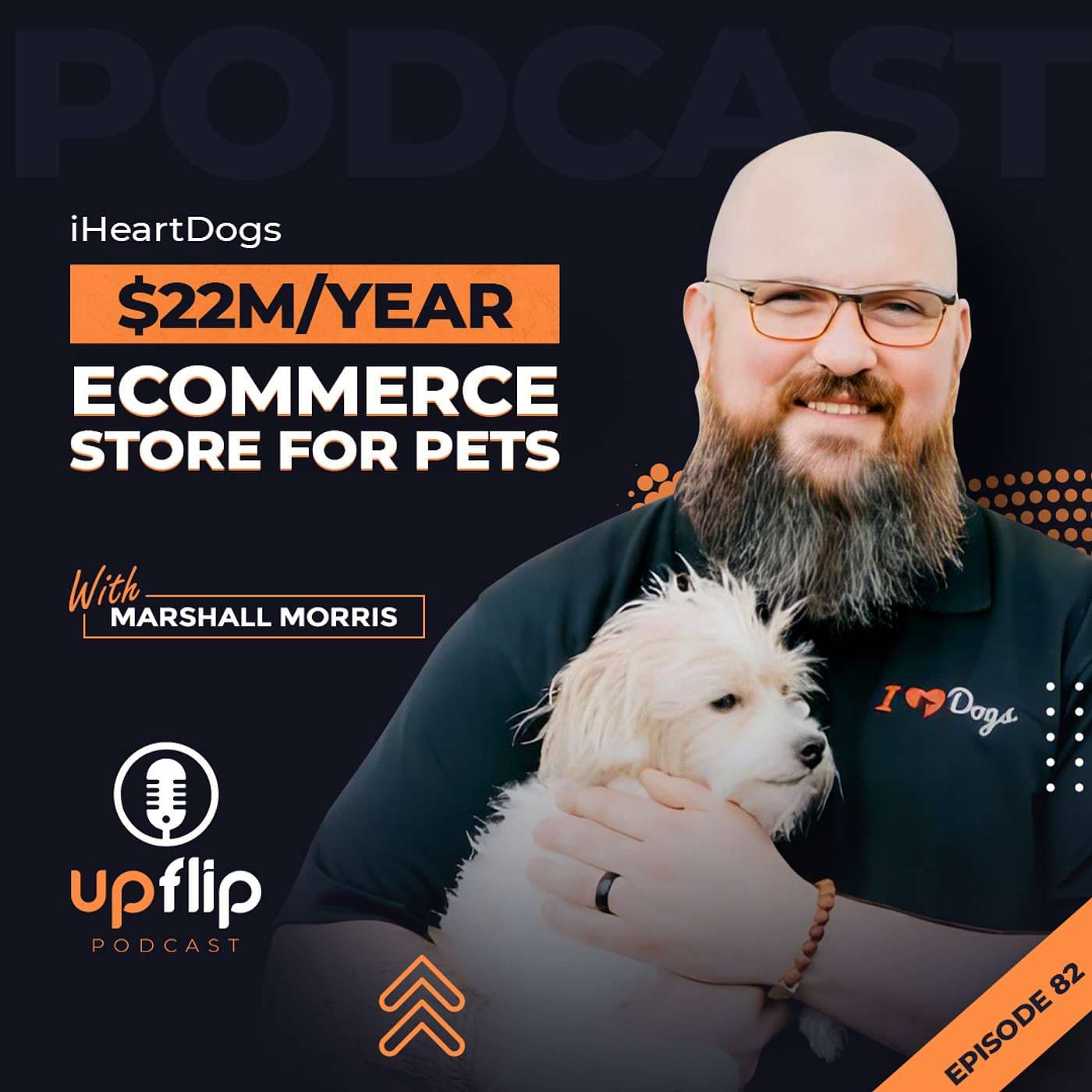
The UpFlip Podcast - Episode 82: How to Make $22M/Year With eCommerce
Episode Overview In this episode of The UpFlip Podcast, host Alex Freeman interviews Marshall Morris, CEO of iHeartDogs, a thriving eCommerce business focused on pet health and wellness. Starting with a mission to save pets, iHeartDogs has grown over ten years to a business generating $22 million annually. The discussion delves into the strategies utilized to build a global community of pet lovers, marketing approaches, setbacks faced, and lessons learned along the way.
Key Highlights
Introduction to iHeartDogs
- Mission: Focus on saving pets in shelters and enhancing the quality of life for pets through health and wellness products.
- Community Building: Aimed at creating online communities around the joy of pet ownership and sharing valuable education.
Growth Strategies
- Community-Centric Approach: Engaging with existing pet communities to foster loyalty and enhance brand longevity.
- Incremental Reciprocity: Emphasizing the importance of giving value before expecting returns, thus nurturing relationships with customers.
Challenges and Adaptations
- Initial Learning Curve: Marshall admits they launched without prior knowledge in logistics, finances, or product shipping.
- SEO and Email Strategy: Reflecting on the importance of starting email marketing and SEO earlier in the business. Currently focusing on increasing content output from 20,000 pieces to 1 million over the next decade.
Marketing Tactics
- Social Media Engagement: Utilizing multiple Facebook pages and Instagram accounts to target niche communities within the pet space.
- Content and SEO: Creating relevant and valuable content that answers customer queries, thus driving organic traffic and conversions.
Importance of Direct Communication
- Email and SMS Marketing: Gaining control of customer data to maintain connection regardless of changes in social media algorithms.
- Value-Driven Communication: Employing free resources to build email lists and engaging customers through personalized SMS messages.
Financial Complexity
- E-commerce Financial Management: Discussing the challenges of managing tax complexities due to varying state laws and the need for robust financial understanding as the business scales.
Resilience in Business
- Adapting to Economic Changes: Emphasizing the importance of adaptability and tenacity in navigating the e-commerce landscape amidst changing consumer behaviors and economic conditions.
Key Takeaways
- Build Around Community: New businesses should focus on identifying and engaging with communities relevant to their products.
- Value First Approach: Prioritize providing value to customers before attempting to push products.
- Continuous Learning: Invest equally in personal development and product development to ensure resilience and adaptability in business.
- Be Proactive with Financial Management: As businesses grow, understanding the financial complexities becomes crucial for sustainable growth.
- Focus on Relationship Building: Establish trust and loyalty with customers through consistent and meaningful engagement.
Conclusion Marshall Morris shares invaluable insights into building a successful eCommerce business centered around community and service. By focusing on customer engagement and adapting to challenges, iHeartDogs has achieved remarkable growth while fulfilling its mission to improve the lives of pets and their owners.
For more information, visit
- [iHeartDogs Website](http://iheartdogs.com/)
- [UpFlip Hub](https://www.upflip.com)
---
Connect with UpFlip:
- [YouTube](https://www.youtube.com/@TheUpFlipPodcast/)
- [Instagram](https://www.instagram.com/upflip/)
- [Facebook](https://www.facebook.com/upflipofficial)
- [Twitter](https://twitter.com/upflipofficial)
Thank you for tuning in!
Written by AI. May contain mistakes. Listen to the episode to check what was said.
Transcript
Automatic transcript. May contain errors.0:00Every pet owner in America has a 1 in 17 chance of lining Marshall Morris' pockets with money. But as the CEO of iHeartDogs, Marshall's mission goes beyond just profits. And then in addition, they're getting to see kind of like our servant's heart, right? Like how we operate, what we believe in, and what we're doing together with the community. Just traffic itself, it means nothing. You want to attract the people that have the right profile, searching for the right things that are the highest probability user of your product or service. From a content perspective, an SEO, right now our strategy is we're going to have 10x the amount of content we put out.
0:35So in the past 10 years, we did 20 ,000 pieces. You know, in the next 10 years, we want to have a million. You have to be adaptable and you have to be tenacious. You've got to be able to overcome. You've got to think through problems and not be stopped by them. You don't want to reinvent the wheel. You want to keep refining and building your process. So as new platforms come out, as new technology advances, it's really great to see kind of battle-proofed or battle-tested results. and then being able to apply that to your business. I'm your host, Alex Freeman. Join me as we delve into the inner workings of this$22 million a year e-commerce giant, from their genius marketing strategies to their unique community-centric approach.
1:13Marshall, thanks so much for joining us on the show. Yeah, I'm excited to be here, Alex. For those that are on the YouTube channel, they know we have featured iHeartDogs recently on the YouTube channel, but for those that haven't encountered that video yet, can you briefly explain what iHeartDogs is and how you got started in the business? Absolutely. iHeartDogs or iHeartDogs.com, we're a pet health and wellness company. We create products and services to help us live the longest, best life with our pets. From our genesis, we started 10 years ago building online communities around the joy of having a pet, sharing education, and helping others in their pet journey.
1:45And then from there, we looked at the needs of our community and we decided we're going to start solving those one by one. And we've done that for the past 10 years and here we are. Amazing. Amazing. So before you got into the business, what kind of planning did you do? Research did you do? And is there anything that you didn't plan for that you wish that you had? Always. I think there's always look back as an entrepreneur figuring, hey, I could have done this better. But honestly, this was the quintessential build the parachute after you jump launch. We didn't know how to build a company. We didn't know how to run financials.
2:14We didn't even know how to ship products. But what we did know, what people needed, what people wanted. And that came from the communities. So that was key. And so for us, knowing what people want, we were able to go figure out the rest of it out. Now, on the question of what did we plan or what we could do differently, I think if we could do it all again, we would start building email lists and really focus on SEO sooner tactically because we've seen we're a very heavy social company. We've seen that change. You've had to adapt and we've still done it well. But earlier on, if we had to kind of push a little bit harder into those channels, I think we would see an impact because those channels tend to compound over time.
2:48So while we're really big into those now, if we had started earlier, looking back, we probably would have seen even more growth. I want to ask you about tapping into that community. I guess we'll start from the perspective of you as a brand new business and what advice you might have for brand new online businesses to identify and connect with the broader community for their product. When we're building products or brands, what we found is that the communities that have a passionate base of people who self-identify and self-collect, meaning they find a way to get together somewhere, some way, tend to have a lot more longevity long-term for a myriad of reasons.
3:25for when we look at a product itself or a brand itself, one of the first questions is, is there a community existing or is there a community we can build from this? And the reasons why, there's a tactical reason why, ultimately, when you have the right products in the right place, you start generating sales just from association. A community shares it, the community engages with the brand and things like that. And you see that across the board. If you look at Nike, Nike started really in the fitness space, right? Track and field. And so there were communities there. And so it started, oh, what are you wearing?
3:52Hey, what is that? Where'd you get that? those kinds of things that happen organically and those push brands further because you're not just relying on paid spend, meaning you're paying to introduce your property to someone and hoping that they'd buy it. So community is a really important factor. And so when you're evaluating any type of business, a product, a product extension, anything like that, I think one of the best things that an entrepreneur can do is pull back and say, okay, is there a community that can serve while I'm building this? Because not only will it help your marketing costs ultimately, because that is important, you're going to get a lot of idea and a lot of feedback.
4:23and that itself will help you make better decisions. I'm curious about walking the line as you enter into some of these communities with entering with a servant's heart, I guess, to actually like create something that is useful versus coming across as somebody who's just like pushing a new product to be sold. There's this concept that we've embodied since day one and there's a phrase, it's called incremental reciprocity and it's kind of like you give me something, I give you something. Like we're wired like that, right? And so from a servant's perspective, what you want to do is either you're building a community, you're creating a place and you're honoring that and your audience, the way they want to connect and what they want to see and how they want to engage each other.
5:00It's like you're being a steward of that community or you're going to an existing one and you're serving, you're finding how to plug in and serve, find a way to create value. And this is beyond just, Hey, I have a product you should try. Right. You see this in brands, especially one space that is probably really examples in the fitness space. Right. So a lot of brands, fitness brands, but their workout gear, for example, right? Whether it be like shirts and shorts and all these kinds of things. If you notice the strongest brands aren't just saying buy this stuff, they're actually showcasing, they're showing their community how to work out.
5:30They're showing their community how to connect. They're showing their community, they're supporting the community and events, things like that. They're sponsoring key people in their community. And they're also inspiring and motivating the community. And you see a lot of that. And so that's an example of like brands who said, okay, hey, like there's going to be people that get together and work out across all of the world. How do we create a space for ourselves to fluently engage in that in a way that doesn't sound salesy. And there's definitely strategy and tactics, but when you do it well, it's a harmony almost, right?
5:58You just seamlessly fit. What's one mistake that you made when you were building the iHeartDogs community? And what did you learn from that experience? When you're running a company like any kind of online company, ultimately sales solve problems, right? Like you've got to sell products to keep the lights on and things like that. And there were times where we may have leaned a little bit too hard into it. We're like, hey, let the product first and then we kind of had to auto-correct in a way like, all right, hold on. Let's rebuild the strategy from the ground. Meaning like, let's not just push product.
6:27Let's figure out how to get in people's hands. Maybe we can select 100 people to send product to and just get their feedback. It's an UGC, those kinds of things. We learned that lesson too. I mean, is that when you're managing a community or you're part of one, it's a delicate balance because you don't want to take more than you give. That's the ultimate and send and that will kill you. We've certainly had that challenge as well. And it's a real one. It's hard. It's hard out there to do that. But when you do it right, it's one of those powerful things you can build. Listeners, you can find winning blueprints to start an online business on upflip.com.
6:57Check out the site for actionable advice and expert insights from real world entrepreneurs that can help you start your own business today. Marshall, I feel like we've been dancing around the social networks here. We haven't really engaged it directly. So I want to ask, how do you like social media platforms play into this? and what are some of the best platforms for building that community? Yeah, that's a great question. So we're very heavy social. We run 100 Facebook pages, 100 Facebook accounts, dozens of Instagrams. Like if you can imagine, we try to find every single niche in the pet space and build a community around it, whether you own a big dog or whether you own a German Shepherd, right?
7:32Those kinds of things. Or you rescue your dog. There's a community for you. So we're very heavy into this. And that's not going away. So from a social perspective, it really depends on the demo of your audience and where they naturally connect. And this ultimately is one of the biggest failures I see is that people want to build a community where they want to build it. So like, hey, we're going to create this community over here. But the rest of the people who are interested in that topic or that passion are over somewhere else, right? And so the key is you want to figure out where your people are and where they're at.
8:00And then that's where you want to build the community. It tends to look like, now in the landscape today, you've got Facebook groups, typically Facebook groups for certain things. Instagram is really great. It's a personal community, especially sit in these things like that where it's very visual, right? And they want it in the audience, different type of experience. TikTok is one that's emerging too. People are learning how to manage trends there. Ultimately, you're going to have to find and figure out a way to, we use the word acquire, but really opt in to connect with people via SMS, email, like directly.
8:31Like the direct connection is absolutely key. So all those social platforms really work well for different reasons. We're seeing emerging ones and we're learning a lot from an organic presence in a community. People just show up naturally and are drawn into those kind of communities. It tends to be Facebook or Instagram. And then obviously TikTok is emerging too. And they're kind of trying to figure that out as well. The other ones that right now, there's two more that really you see a lot happening on Twitter. One, it's a different type of community. Again, it depends on who your target is and where they naturally connect.
9:03And another one that's really surprising us lately is Reddit. So the Reddit thread from people who follow these Reddit threads, I'm seeing a lot of opportunity in supporting the community and adding value because there's, again, 90 % of people or more just instantly think about the transaction. Buy this, take my stuff, buy my stuff. I want this. But if you go in and try to add a lot of value and you do that consistently, you can be successful across any platform. Now, you mentioned that it was important to move those potential customers and eventual customers off of the social platforms into email lists, SMS marketing.
9:34I want to get into the how, but the first question there is obviously that why, why is that important? All these platforms ultimately are run based on the economics of revenue, right? At some point in time. So like they're sure with Facebook in any public company, like Twitter's private now, right? But there's forces that drive their decision-making that's not necessarily community minded. The forces that drive it tend to be based on revenue, tend to be based on shareholder value, tend to be based on other things, right? So when they decide that, and we've learned this, because remember, this is only 10 years old.
10:07We've learned a lot through these platforms, that ultimately you could build in one platform and it could be in your favor. And then this happens quite a bit where they change something in the algorithm, because remember, they're all algorithm driven to some extent. And ultimately, all that work kind of changes, right? Like you're getting a ton of traffic or a ton of people seeing your posts and all of a sudden they're not, right? You've got to hedge your bets. This is very similar though to the retail concept. So if you have a retail store near a Starbucks, right, bar none, you're going to get a ton of traffic.
10:35Starbucks just brings in a ton of traffic. If that Starbucks is gone, right, which you don't control, all of a sudden your foot traffic can rapidly decrease, right? So it's a similar model of like, okay, how do I make sure that I can reach my people regardless of what happens on the platform? And that's where acquiring email and SMS, we're getting people to sign up. There's a few different ways you can do that too. It's extremely important for the longevity of the business. Just to give you guys an example, kind of behind the curtains. So we started this, we really started ramping up email about four or five years ago.
11:02We have probably 5 million emails across our whole infrastructure. If Facebook goes down, we can still make money. So it certainly is advantageous to hedge your bets, even though sometimes you feel like you're really winning. That's great. But ultimately, you want to control your destiny. That does bring us to the how. How do you then move them either off the social platforms or acquire them in other ways to get them onto your email list? How do you start that process and how do you make sure that they don't subscribe and cancel immediately? Right. So there's a couple of different ways. One is when you're thinking about acquisition or acquiring new users, there's the transactional component.
11:35That's what most people think about. Subscribe, meaning pay me something, right? Or buy a product. Obviously, that's going to happen there, right? You're getting data. There's got to be a top funnel. And I think that's really where a lot of brands miss. For example, we'll do in the pet niche, we may do a training guide for free, 100 % free. Ton of value. We invest in it. You're the best trainers in the country or in the world. Put together a course, right? Roll it out for free. Hey, it's free, right? We're at a ton of value. People who sign up now are acquiring their email. We also know more what they're interested in, right?
12:04We do the same thing actually in multiple different ways. So we'll do one, for example, maybe there's natural remedies. People are looking for things, high search demand. People are looking to solve the dog's allergy, their dog's itching, things like that, right? We'll create resources for them that they can access via an email. And then that allows us to organically, we have this thing for you. and it's zero charge for our community. Zero. Awesome, I'm in, right? Email, boom, now we know who they are. We know about the tool that we offer. Also, we try to create them in a way that that itself creates information that we can then use to better understand who they are.
12:36So like, it wouldn't be like, we wouldn't do something really general. It's like, oh, how to be happy with your dog. This too general. It'd be very specific, right? So like a training guide may have a few key components in it. We know who take that guide, they're interested in those things, right? If it has to do with itch, allergy, something like that, like your dog's itching a lot or you're having issues with that, it'll be specific. So we create free resources and we've done this for years and it's worked really well. And we do digital, which is awesome because it's free. And we're actually set up to do physical.
13:02So we have our own fulfillment center that we built from the ground up. So like we can run free stuff where people actually just pay a couple bucks for shipping and they get something free. But it's an acquisition tool because now we know what they're interested in. We get their information. Now I have a way to connect with them outside of social or outside of pay. Once you've got the list, How are you then taking advantage of that? You've brought them in with this great value proposition, and then now they're there. How do you nurture them and get the most engagement from those subscribers? The technology platforms, especially email providers, have gotten far more robust.
13:34And especially with AI, it's been an incredible journey in the last six months, just to say the least. So what we're doing is when they come in the funnel to a specific funnel, they're going to get tagged. There's a topic they're interested in, right? That they've engaged a resource around free. And so digital or paid, right? So they're going to go into a funnel, they're going to get tagged based on that stuff. And then we're going to actually build an automation sequence via email. So it automatically goes out with specific information that's relevant to that. So can we add more value? So they come in for one thing, then we add a ton more value through automations.
14:03In that automation sequence, there are opportunities, there are soft asks where they can say, hey, look, here's how to solve X, Y, Z. Here's what other owners are doing. Here you go. Oh, and by the way, if you want to try this, it's 20 % off. We'll weave those in there in a non-salesy way. And so for us, it's two things. One, it's, hey, we want them to know us as the expert for this condition because that means that they're going to trust us when we make recommendations. So it's filled our expertise. Our brands specifically also have a very heavy give back program and everything. We're one of the top fundraisers for animal shelters in the country consistently.
14:37So like we'll weave that in as well. So someone who comes in for one thing, they're getting a ton of value. They recognize that we're the experts in an area because we've hired the best minds in the world to write content. And then in addition, they're getting to see kind of like our servant's heart, right? Like how we operate, what we believe in and what we're doing together with the community. And usually through that process, they get to know who we are and they actually become connected to us in a deeper way than just a transaction, right? So like we're able to warm that up. Again, that happens because we're getting fighting something up front that's a tremendous value for them.
15:10It solves a problem. It solves a need. And then they're willing to lean in as we connect with them more. So tactically, you're looking at your top funnel is, you know, free resource or digital physical product, something that gets in the door, identifies who they are. And then you're going to basically create, build an automation sequence that supports them at 10 years to add value. Right. And then kind of introduces your brand in a really unique way that it's one all one. So how does your email strategy differ from your SMS marketing strategy? You know, obviously they feel similar in some ways in terms of ways in which you're communicating.
15:41You know, they're obviously different platforms, different ways you're reaching somebody. So how do the strategies differ? So SMS, it's a great question because SMS is very personal. If you think about it, like email at this point in time, we get tons of email, right? Like it comes in, we get a whole load of email. SMS is very personal. So it takes a lot more tactful approach when we're doing that. We don't have automations for SMS per se the same way. So like an email automation, we may create a timing sequence based on what we see as optimal time to connect the amount of information that we deliver at a certain period of time.
16:11And the data will tell you that, right? Like, hey, you know, an email every three days or two weeks works really, really well, right? Where one every day is too much, those kind of things. SMS, though, is a different beast. SMS is very personal. And so when we're SMS, we tend to use, you know, 20%. So from our marketing perspective, you know, I would say that email comprises maybe 80 % of what we're doing. And maybe SMS is 20 % because you have to be a lot more tactful. We all sign up and get SMSs from brands and we've all gotten way too much. So you've got a very, very selective with SMS. We tend to use more of a personal approach, meaning it'll come from me personally.
16:49So like the first SMS might be a note for me. That's it. There's no link. There's nothing. Just literally saying, thank you. This is what we're doing. We appreciate you. That's it. And so you try to continue that cadence because again, it is a very personal medium. You don't want to blast it the way you do email. So we just have a strategy depending on how people respond. And we tend to take way more personal approach with SMS. How do you go about building an SMS list? Is the top of the funnel look the same for email? It does two different ways. I mean, you can actually, when you're doing acquisition, you can have people opt in via SMS and email as well.
17:22Some people do both. So it's very much fundamentally the same, but the way we communicate with it, again, like I said, it really does take a different strategy to do it well. It's the same top funnel. We do run some campaigns where it's specific SMS. Like, hey, if you want this, like drop your number, we'll text it to you. right that's another way you can do it versus like hey go check your email it's like hey we'll send it to your phone right it depends on the product too because like if it's a product they're going to if it's like ebook or something they may not want to read that on the phone per se right because it's in the talks and stuff so we might default to email and have SMS as an option we're rolling out this new pet rx card which stakes 90 on their pets discounts pharmacy up to 90 that's a physical card like a cost card kind of thing right so like we'll just SMS that to them it's free and they save up to 90 % on their pets meds.
18:06And we'll just literally push it on there, boop, and your car shows up on your phone. You could save it. So it depends on the offer. But again, with SMS, we're a lot more tactful about how we use that because it's a very personal medium. We've covered the social side of getting folks to your site. We've talked about some of what's going to happen when they actually land there. But I'm curious how organic search plays into your strategy as well. Can you just kind of talk about that initially and then we'll dive into some kind of hows and what's involved there? We're really excited about organic search.
18:33Even now, a lot of people have mixed feelings about it because it's one of those things, again, like anything else online where you can run a strategy, it can change based on an update or things like that. We found that for us, we've been writing content for 10 years. So we have probably 20 ,000 pieces of written content that we've written, like not AI, like had an expert write. And so we have a high rate in Google. So when we tend to create content, it sticks faster than a site has a lower kind of domain authority, right? So for us, SEO has become more and more a channel and a focus for us, especially when it comes to our niche.
19:06Some niches have very high search volume because there's so many questions. Those tend to be around, if you think about it, anything around health, a pet's health, your health, right? Those kinds of things tend to have a lot of search volume because you're looking for information that you just don't have in your circle, right? Like expert stuff. And so for us, we look at searching, great opportunity to introduce people to the brand. We run our acquisition through that too. And then also we help people find products. So we'll look at the way people are searching for certain things. Because people are using the search to solve problems.
19:37They're getting information, they're solving problems. That's typical legal search. So we're writing content nonstop around what we're finding, branding searches, those kind of things, to help answer those questions. And I have to give them options to take action. So if they're looking to solve problems with the pet, write around this thing, like, here's what you need to know. Here's everything to make you as informed as possible. And then, by the way, here's some options you can jump into right now, whether it's go to Amazon and buy that from us or whatever. One of your choices. So we try to be very neutral in how we write content, meaning that it's not just about us.
20:09We're trying to give them as many options as possible. If you channel a product in there, if you can't, that's fine, too. But search is a powerful tool. And it's just built in. And people are like psychologically ingrained to search Google. And so you can't ignore that. We don't feel like we can. So we do that. The other thing we've been doing this year, which is really big for us, is using AI as a way to generate content that then goes to our writing team. We think that big picture AI and writing is a perfect fit, especially from a just from getting ideation of ideas to core content to research analysis, like stuff that's kind of really would take some hours you can get in seconds.
20:46and then we have a team that goes over that. So for us, from a content perspective, SEO, right now our strategy is we're at 10x the amount of content we put out. So it's in the past 10 years, we did 20 ,000 pieces. You know, the next 10 years, we want to have a million, something like crazy like that. So that's more than 10x, but like we feel like we can do that with a combination of writer talent and then AI. And so for SEO, again, SEO is all about finding people where they're searching that have relevancy to our brands, which is pet health, pet health and wellness, and then getting them engaged there.
Read the full transcript
21:16So they land on a page. It's well put together. It's well informed, right? Has options. They feel like they got everything they need and they could take action if they want to. And then in that itself, we will also run top funnel offers. So if like you're looking up, for example, again, pet health, because that's our niche. And at the end of the content for SEO, so you come from SEO, which you have high intent, we may actually have some guides there as well that are relevant to that topic, right? So like natural bathing solutions for a dog with skin allergies, right? It's a guide of some sort.
21:48And then you can drop an email or SMS, right? And you can see how that kind of all kind of goes together. I think you just laid out a really nice roadmap for a lot of people that they just kind of copy that. They're probably off to at least a decent start in terms of setting up their e-commerce business. I'm curious if there are any don'ts that you would like to get out there that maybe you see as being bad advice out there on SEO. I think every brand is different. Like there's obviously things that are 100 % no. Like one of the big ones we're seeing is like people are like, hey, I'm just going to write AI content.
22:20That's it. Right. It's getting better and better and better. As long as the value is there. One case you made is like, well, if it served the consumer in the best way possible, provides the best information, then like is an issue for Google. Right. And then the other side of it is, well, someone scales 10 million pieces of content in 30 days, you know, like how does Google absorb that in these things. There's a lot we don't know. I don't know if I'd say that I don't know. What I would say more is like, just make sure whatever you're writing is not just to write it. It's actually moving someone through a process so that they're getting the information they need from the intent.
22:52Because otherwise you're going to have really high balance rate, right? Like if you're running content towards a search term, say someone's looking up the best exercise for, you know, legs or something, I don't know, right? Something, right? Whatever that is. They get in there and it's just literally doesn't solve the problem and doesn't completely answer that, they're going to bounce pretty quickly. And so you want to make sure whatever content you put out, it's less about volume and it's more about value. And so if you can do value and volume, do it. If you can't do value and volume, then just do value.
23:20Because those pieces, you're going to have so much more weight and so much more longevity for you than stuff that you just rapid fire. And again, we know this because the very beginning, we're just like, get it out with what we saw in volume, not value. Not that they didn't have value, but you really weren't taking intently about how people consume and apply the things that we're putting together. And it was short-lived. And so we ended up having to rewrite all that stuff again. Like all of it had to be rewritten. So we kind of had to do the work two, three times over, right? Where I think if you create value online, there's always going to be an opportunity.
23:50There's less staying power when you create a really good piece of content. So, and again, you're going to be rewarded. People go there and that stay, that's a signal. And that signals get rewarded by Google, for sure. So you've got all these things working, got a lot of inbound traffic coming to the site. How do you make sure that what you're attracting are high quality leads for the business? Well, there's two over exciting house. There's organic and that's where SEO and content goes into play. So the content you're doing is you're looking for search terms that are relevant to the problem you're solving.
24:21So if you're selling running shoes, writing content about the best running half may or may not match. Now, you may find a runner who then goes, well, I need shoes. you could win there, right? Alongside of that, if you're writing content about the best running socks, that's kind of a lot closer, right? Because like, if you're actually looking up what the best socks are, you're probably a performance-based runner in some way, shape, or form, right? Like you're going in deeper, right? And so if you're doing that, you're probably doing the same thing with shoes, you know? And so like, you want to make sure that no matter what content you're creating, it's really highly relevant for the brand.
24:49And so the leads that come in are, you're attracting the right person. And so there's some thought and strategy around like what people are looking for. Just traffic itself, it means nothing. You want to attract the people that have the right profile searching for the right things that are the highest probability user of your product or service. That itself is super important. Now on the paid side, when I say paid, I mean, we're paying to promote product or paying to promote a piece of content. So an article, a listicle, a guide, like we're actually paying to put that. And then we're running targeting to people who we feel like that.
25:20So going to the runner analogy, right? So if I was running, I wanted to get ahold of runners, well, I can actually find those segments, find those groups, do that targeting. I'd make sure whatever I was creating to generate leads inbound or traffic inbound, like the guide itself was super relevant to them. So it could be the top 10 running shoes ranked by elite peers, whatever it is. The paid side is easier because it's targeting. That's inbound. When you're creating SEO content based on interest, you just want to make sure the dots are connected. Whatever you're writing is highly relevant to the brand.
25:48Traffic by default, again, doesn't really mean much. You want the right traffic, right? You have a thousand who have no clue what you are offering, have no desire for it. We've talked about kind of already some of the ways that e-commerce has changed. Google has changed. SEO has changed. AI is changing things. How do you stay on top of changes and trends in the e-commerce world? What news sources or resources might you recommend? Yeah, there's a handful. One is Twitter. If you're in e-commerce and you're doing D2C or B2B, if you're selling directly to people through a channel Amazon or you find new businesses, you've got to be on Twitter for that.
26:24There's so much amazing content and creators who are just open and honest about what they're doing. There's a lot of value there. And it can be a lot, but that's part of the process of just inbound. So I spent a lot of time in this kind of analysis of what's going on, the state of e-com, the state of the economy in the US, the state of the economy globally, right? And then also our consumer segment, where they are financially and those kind of things. The other one I would say is a big win is like, if you're building a business, NACOM, or any business in general, you absolutely need to be in a mastermind with people who are building similar things in different spaces or in the same space.
26:57There's a mastermind that I'm in called Hamptons. And I've been there for, this is my second year, and it's been absolutely incredible because the guys in their building are builders, and they're learning the same time I am. And so sometimes they'll figure something out before I would, and then I'm able to fast track my team into the success, right? Like, hey, no, actually, let's try this. This works for them. It'll work for us. And that has been absolutely incredible. Like, I could probably put a dollar amount on that. And I mean, we probably millions of dollars just from wisdom or input from builders in a community or on Twitter, just from helping us connect the dots, because like there's so much intel out there.
27:32You don't want to reinvent the wheel. You want to keep refining and building your process. So as new platforms come out, as new technology advances, it's really great to see kind of battle-proofed or battle-tested results. and then being able to apply that to your business. So those are the two places I feel like I get the most value. As those changes and trends dictate that your business needs to evolve or adapt, how do you make those changes without wholly disrupting the business? That's a great question. I think that any type of change is going to cause some disruption. From the beginning of starting iHeartDogs, one of our core values is tenacity.
28:09We actually have four, humility, tenacity, adaptability, and generosity. And we've told people from day one, like, you're going to have to be adaptable in today's shifts, period. Like, we hire and fire in those value principles. So from day one, that's it. So like, when something is really challenging, it's like, well, that's what we do. Like, we have a mantra, we eat challenges for breakfast. Literally, we say that all the time. We knew from the beginning that if you're building online, it's probably one of the most challenging places to build. It's very much like building a ship at sea, right?
28:34Where there's so many factors that are influencing your business based on the government, based on the economy, based on regulation, based on location, based on location, based on shipping, like UPS just almost went on strike, right? These kinds of things, like you can't control the pandemic, right? You have to be adaptable and you have to be tenacious. You got to be able to overcome. You got to think through problems and not be stopped by them. For us, building the culture was a key part of that. And that's something that I always encourage other entrepreneurs too, is like, you chose a business that's extremely challenging and you have to be adaptable because you cannot control so many variables.
29:09And some businesses, we like I think we can control them. If you're trucking stuff, right? Like you get a load, you drive it, you drop it off. You know, it might feel more straightforward, but there's obviously a lot of variables in that. In the internet, it's like far more complex. So adaptability is key. You got to have a team that's on board that really is like, all right, today everything just blew up and we got to change it. And so sometimes we're able to kind of walk these changes through and say, hey, you change that, you do this, then everything else functions. And sometimes you got to just throw a stick of dynamite in it.
29:38Just be like, all right, it's time. we just exploded it. Now we got to put it back together. So having people that have that mindset is critical, is really critical for that. What is the most challenging part of scaling revenue for an online business? I think it's managing the complexities of the finances, honestly. So remember, you're selling online. So about a few years ago, the Supreme Court overturned the Wayfair versus some state's tax thing, meaning that every state can collect tax, every jurisdiction can collect tax, essentially from the econ business. Then there's thresholds. So literally overnight, an e-com business selling a line has over 9 ,000 tax jurisdictions in the US that they have to figure out.
30:17And so that's a financial impact. So you got all this complexity. Then you have different payment systems and what they're charging, what they're doing and how they're paying you. Then you're actually having suppliers. So I think the biggest challenge is actually financial complexity because the internet also doesn't sleep. It's not like you open the doors from nine to five and you just have sales from nine to five. You have sales every single hour of every single day. right? Non-stop every day of the year. I think one of the biggest challenges is really understanding that. That's a very difficult thing, especially you scale.
30:46Because if you're doing a few hundred thousand, it's not much. A couple million, you can manage that. Once you're doing 10 million plus, it's very complex. And you deal with a cash flow. So you get the cash flow game, which is like, I'm making money, but is my money inventory or is it in the bank? And can I make these investments and those kinds of things? That is the biggest challenge. And then also managing marketing because you can make sales come in and lose everything. But you can actually be selling product and lose everything because the online system will just keep finding and expire regardless of what the idea of like measuring after the ios update the idea of measuring your success your transactional success and where it came from and how much you're spending is still convoluted right like it's very difficult to really read like conversion data now because of apple and jacebook and these things i think financials though the one thing that i always tell people it's absolutely critical is like as you're scaling your business you want to grow it You've got to get your financial chops in order.
31:38That doesn't mean you have to know it. Some people are inclined. I'm not. You've got to get someone who can really help you understand what's going on because there's so much noise that it's very easy to get lost and not be able to make the correct decision. So I think that's one of the hardest things is there's just such an enormous amount of financial complexity in econ at scale that it really does require a discipline to manage it. What's the biggest challenge your business is facing today and how are you planning to tackle it? I think the biggest challenge we're facing today is I think the economy itself.
32:11So like we're going to have another just rate hike soon, right? We've had those hikes. Consumers have been very, very resilient. So remember, we spend on two things. We spend on things we need and things we want. When we have more money, we spend on more things that we want. When we have less money, we focus kind of on our spend on things we need. And also there's population shifts. So you have people who are 45, 50 plus, you know, they're the way they manage their income because they tend to be at the tail end of their earning, right? Like they're not necessarily their highest earning. Most people aren't.
32:36They're either retirement or they're kind of posting towards retirement or there's something, right? And so like if your audience is in an older segment, right, then they're going to respond differently to the economy. If they're seeing rates raise and seeing stock market challenges that they're going to feel like they have less money because they're going to see their 401k shift. They're going to feel like they do, even though they haven't sold, they haven't lost. There's a feeling of loss. So you got to basically figure that out. So for us, like we found that people, our audience tends to be, we actually have an audience all across the board.
33:04We do a lot in the segment of 45 plus because they tend to be a lot more serious about their pet purchases and they've entered multiple life cycles with pets, meaning they've more to pet and then they've gotten another one. They said, OK, I'm going to do better. Like I now I know it really matters. Like I make sure that they take this and like all this other stuff is just fluff. Like that's cool. But I want to make sure that the core stuff they get. The economy plays a big part in that. Right. So like how they're feeling and their disposable income, people on fixed income, Social Security, things like that.
33:29They're buying pet supplies all the time. right? What they're spending and how they're shopping will change depending on how much money they have, right? If inflation creeps up, then what they're making social security doesn't necessarily reflect that right away, right? So they're going to feel like they have less money. So for us, it's like really building a defense. So the best defense that we build in is we have a consumables business that solves ongoing problems for pet health and wellness. And then once pets are on it, we build the best product in the world. And then we know that if they're on it, they're going to see results.
33:56If they see results, they're going to stay in, right? So for us, it's doubling down on that. Now that part of the business, when you're selling supplements, there's different considerations. So you actually have to have physical inventory. You have to keep the inventory controlled. You got to make sure it ships to them in the frequency they need it. So there's a lot of other considerations that actually suck up more cash. So running a consumable business takes a lot of capital. And so for us, it's managing spend from consumers, managing where they are in the economy, right? figuring out how our pricing lays into that, how we maintain our margin and all of that, but also how we go deeper into the consumables business and serve customers there, which is more defensive spending.
34:31They're going to spend it regardless because they want their pet to feel better. So for us, the biggest challenge here is managing their complexities and then that cash flow. We're a privately funded company. So we took a dollar and we turned it to the next dollar, right? We got to where we are. So just like we run our own households, our own finances, their own budgets. We had to do the exact same thing internally. So when we have one area we want to invest in, from a financial perspective, we have to engineer that to work. And so I think that's the challenge. The consumer right now is unsure.
34:57This also happens during different political cycles because it does impact things as well. But, you know, the U.S. consumer is so resilient. It's incredible. And globally, I'd rather be here solving this problem than in any other country solving this problem. So it's just a normal challenge. It's just another day in the office, I guess, right? So we signed up for it. We're happy to do it. We love it. We love what we do. One of the big themes that we've definitely talked about throughout this conversation is solving problems and making sure that you're there to solve problems for your potential customer.
35:25And I'm just curious what advice you might have for somebody who's listening that wants to get into the online business space, wants to do it, but they're not quite sure what problem they should be aiming to be solved. How should they go find those problems that still need solutions that they could maybe bring to the marketplace? Well, first of all, I think I love building things in a community. I think we've found success with that. So I would say, really, there's two things. This is what advice I'd give right now, because advice I would give five years ago, 10 years ago, is probably different than what I do now, just based on how everything is played out.
35:55One is you want to find a community that you can really understand and you can lean into if you have a product and really start trying to introduce it. We're all big fans of building an MVP or trying to figure out how to MVP a product. You get to get the fans as soon as possible. There's a lot of people who build an amazing product with an amazing brand. They invest. They put a ton of time and money into it. When they launch it, they just miss it. Right? They just missed what you needed. It wasn't solving a big enough need, right? Or they couldn't demonstrate it well enough, right? Or explain it well enough.
36:22So I think that you want to figure out who is your intended user and figure out how to get close to them and build alongside them, right? Like, hey, I'm trying this out. One really good way to do that, Kickstarter or refund, or some kind of mechanism that allows you to test it before you're fully invested in it. So I think that's the way that I would do it. Now, as I build a product, just really validate it, validate it, validate it early, early, early. and make sure it solves a big enough problem and enough people get excited about it, not just you and your family. Because you and your family are always going to be excited about it.
36:51The last thing I would say is that this is, and this is the case now, when we started the business, we took a dollar, turned it into other things. That's not where the world is, the reality of what things are now. Things have gotten more expensive. So really what you want to do, the best way to build now is in a community, just like what you guys have, where you're plugged into resources, you're getting, you're really investing in yourself. So say you're going to launch a business and it's all about the product. You want to spend 50 % of your investment on yourself as a builder and 50 % on the product.
37:21That's how I would do it because you're going to have to build your runway. You have to build your knowledge, your expertise. You're going to have to become an expert in an area. And not only that, expert marketing, an expert in user-generated content, expert video. That's the world we live in. And so you want to find what you guys have at Uplift is perfect for someone who's like, all right, I want to start a business. Well, you got to invest in yourself at the same time investing in your thing. And that's absolutely critical because you're going to get so much further and faster. So that's my second piece of advice is like, don't think about it just as the product itself.
37:52You are the product as well as whatever you're building. So you want to invest in both of those things. Our favorite closing question, what's your favorite business book and why? Recently, I've been reading, and this is a biography of Tesla. And it's such a powerful book because you have a guy who had the most amazing concepts. I mean, he was an absolute pioneer in this day. And he knew and he was a genius from what he created so many things, but he died broke and alone. And his business acumen was very poor, but his genius and his invention was extremely high. And it kind of goes to what I just said, right?
38:27Like you can have the greatest ideas, but if you don't have a concept of business or don't have an idea or how you're going to build yourself in the structure to support this thing, it can be all for naught, right? And so anything on Tesla has been fascinating. But lately, that's been the read that's been sticking to me because the greatest idea doesn't necessarily win. It's really the greatest execution. Marshall, where can people learn more about you and iHeartDogs? Go to iHeartDogs.com. You can check me out on LinkedIn. I do a lot there. I'm Marshall Morris. And those are probably the best places to connect.
38:55That is going to do it for this episode of the UpFlip Podcast. Listeners, you can find more advice for how to start or grow a business the right way on the UpFlip Hub. And if you like this episode, make sure you let us know by leaving a review on Apple Podcasts or wherever you're listening right now. Marshall Morris of iHeartDogs, thank you so much for joining us. It's been a pleasure.
From the publisher
iHeartDogs started with the mission of saving pets in shelters. Ten years later, it’s grown into a $22 million a year online business with a community of nearly 50 million followers.
We recently interviewed Marshall on our YouTube channel to hear how he started and grew his eCommerce business (link to that episode below). In this podcast episode, we’ll go into more depth on how he built a global community of animal lovers around the iHeartDogs brand–and helped to feed 30 million shelter dogs in the process.
iHeartDogs’ growth has been phenomenal, but like any business they had their setbacks along the way. You’ll learn how they bounced back to achieve sustainable and scalable growth with their online store in this interview. You’ll also hear how they built a community around passion and purpose, along with the strategies they use to connect with that audience and how they’ve improved that approach over time.
Resources:
- https://bit.ly/3A9s92T Take our Etsy course and launch your ecommerce store today!
- iHeartDogs - Learn more about the company on their website
Ready to be your own boss without starting from scratch? Grab our FREE Franchise Guide and unlock the secrets of proven business models that have already created thousands of success stories.
Connect with UpFlip:
- On Youtube
- On Instagram
- On Facebook
- @UpFlipOfficial on Twitter
For more insights to start, build, or grow a business, check out the resources on UpFlip.com or head to the UpFlip YouTube channel to see more interviews with business owners and experts.
Thanks for listening!


