
In short
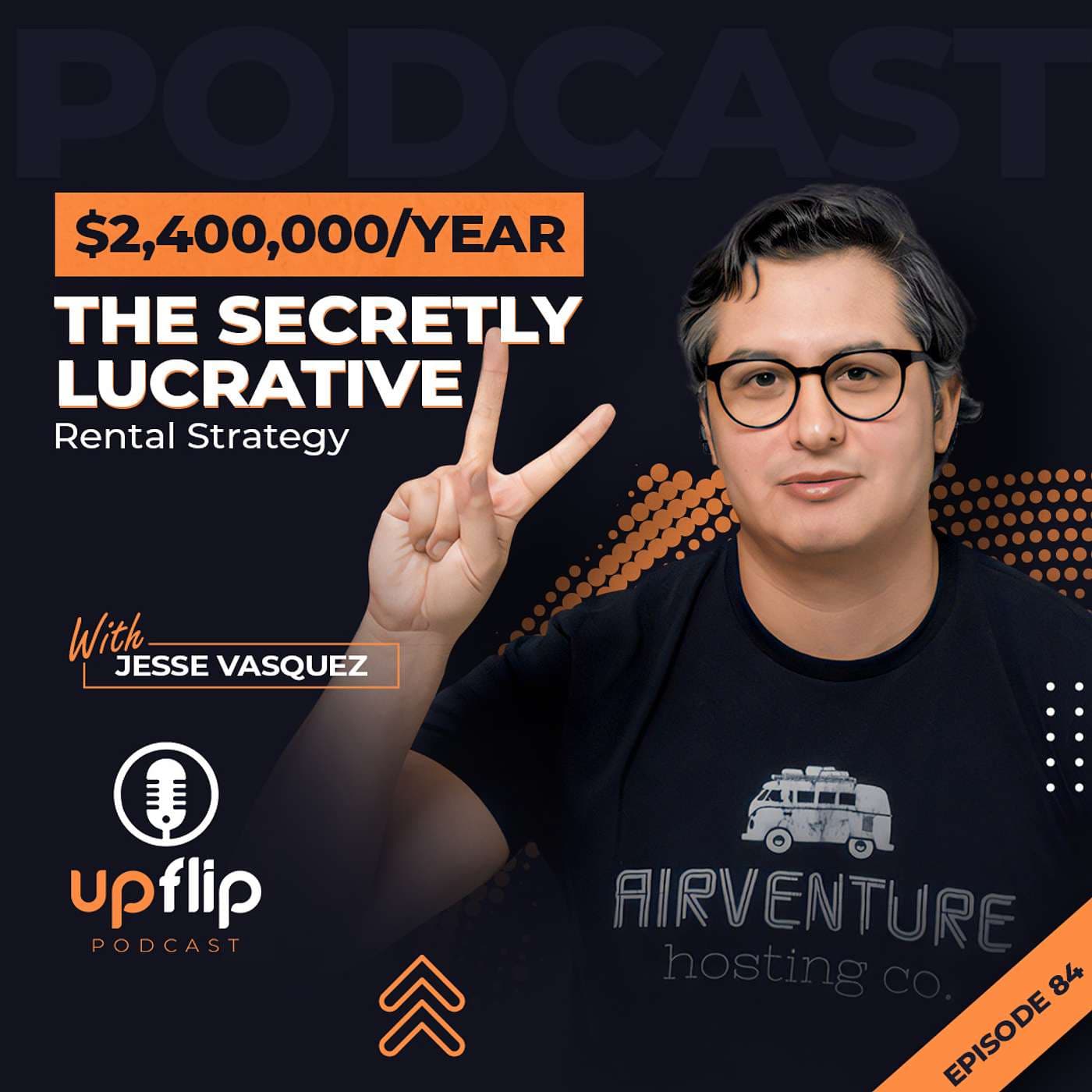
The UpFlip Podcast - Episode 84: The Secretly Lucrative $2.4M/Year Rental Strategy
Host
Alex Freeman Guest: Jesse Vasquez, founder of AirVenture Hosting
---
Episode Summary In this episode of the UpFlip Podcast, host Alex Freeman interviews Jesse Vasquez, a former healthcare corporate trainer who transitioned to a successful rental property management company specializing in mid-term rentals. Jesse shares insights into his journey from leaving a stable job to building a real estate portfolio worth over $5.8 million, generating $2.4 million annually, leveraging unique rental strategies aimed at healthcare professionals.
---
Key Concepts
Transition from Corporate to Real Estate
- Background:
- Jesse spent 18 years in corporate sales training in healthcare.
- He started a side hustle in 2015 focusing on mid-term and short-term rentals.
- Initial Inspiration:
- Encountered a travel nurse paying $3,000/month for a motel, recognizing an opportunity for better housing solutions.
Mid-Term Rentals
- Focus on Healthcare Professionals:
- Specialized in providing housing for traveling healthcare professionals.
- Mid-term rentals usually involve longer stays (around 3 months).
- Business Model:
- Hosts typically have only four guests a year, leading to less turnover and more flexibility.
Growth Strategy
- Networking and Relationships:
- Leveraged connections with hospital case managers and recruiters to secure contracts for housing clinicians.
- Scaling the Business:
- Started co-hosting other properties, earning 20% of their income, which significantly increased his revenue.
Challenges of Managing Properties
- Dealing with Vacancies:
- Emphasizes understanding market demands and potential vacancies when underwriting properties.
- Building a Reliable Team:
- Focused on hiring an investor-friendly agent and building a network of reliable contractors for maintenance and cleaning.
Opportunities in the Market
- Diversification Beyond Healthcare:
- Expanded into insurance relocation claims and corporate housing for construction companies.
- Identifying Trends:
- Recognized the potential growth in the mid-term rental market as a response to shifting economic conditions.
---
Key Takeaways
- Start Small but Think Big:
- Jesse suggests starting with a duplex or triplex rather than single-family homes to maximize cash flow.
- Importance of Relationships:
- Building strong relationships with agencies and companies is critical to sustainability and growth in the rental market.
- Understanding Market Dynamics:
- Investors should remain aware of economic trends and the specific needs of their target market to adapt their business strategies effectively.
- Operational Strategy:
- Use technology (e.g., cameras, cleaning services) to monitor and maintain properties effectively, even from a distance.
- Mindset and Adaptability:
- Emphasizes the necessity of having a growth mindset and being open to adapting business strategies based on market conditions.
---
Resources Mentioned
- Connect with Like-minded Entrepreneurs: [UpFlip Community](https://bit.ly/4hd7PhP)
- AirVenture Hosting Website: [AirVenture Hosting](https://www.airventurehosting.com/)
- Franchise Guide: [Franchise Guide](https://bit.ly/4aWuGvc)
---
Conclusion Jesse Vasquez shares an inspiring story of transitioning from a corporate job to successfully managing a rental property business. His insights into mid-term rentals, networking, and adaptability provide valuable lessons for aspiring real estate entrepreneurs. The episode encourages listeners to think creatively about their business models and to leverage relationships for growth.
---
For more insights and resources to start, build, or grow a business, visit the [UpFlip Hub](https://www.upflip.com/) or check out their [YouTube channel](https://www.youtube.com/upflip).
---
Thank you for listening to the UpFlip Podcast! If you enjoyed this episode, please leave a review on Apple Podcasts or your preferred platform.
Written by AI. May contain mistakes. Listen to the episode to check what was said.
Transcript
Automatic transcript. May contain errors.0:00Just seven years ago, Jesse Vasquez was in the midst of selling his truck for a$10 ,000 down payment on his first property. Today, he controls over$5.8 million worth of real estate with a whopping$2.4 million in annual income. Yep, you heard that right. His unique strategy earns him what takes others hundreds of properties to earn. Everybody getting into this, like it's going to take time and energy, but trust me, if you do it the right way, it can be very lucrative and it can help you in fact, leave your W-2 job if that's what you're looking to do. I mean, imagine just having, you know, three properties that are cash flowing you, 3K each.
0:32I mean, And that's$9K a month that you could potentially use to live off of. When you start seeing smart money, which is Wall Street money, make moves like this, typically the general public doesn't take notice of this for three to five years. But luckily now we have the internet, right? We can see what they're doing. If we got like a$10 ,000 booking, I would take 20 % of that. So I would make$2K. So my business just automatically started growing. I think anybody can do this. It's just putting yourself in the right spots, being around the right people, surrounding yourself with community and really building ideas and creating something outside of what we're traditionally used to.
1:03I'm your host, Alex Freeman, and today we're exploring the secretly lucrative market of midterm rentals. Jesse, welcome to the show. Hey, Alex. Thanks for having me, man. I appreciate it. I'm excited to be here. So to kind of just like get us started, how did you get involved in rental properties and how did that eventually become AirVenture Hosting? Yeah, that's a good question. So just to give context for everybody, I worked in the healthcare industry for 17 years. I was basically a business development manager. And that's just a fancy way of saying sales rep. So my job was to connect with hospitals and have what are called case managers head over and send us referrals.
1:40So I was basically going into all these hospitals, checking to see if folks that were discharging needed like physical therapy or occupational therapy or nursing at home, which it's very common these days for folks that fall or get hurt or are sick. And in 2015, I started noticing a trend specifically with travel healthcare clinicians. And I remember being in a dimly lit hospital that almost has a yellow tint to it. I'm sure some of you have seen that before. And I was standing at a nursing station. All of a sudden, I hear this beautiful voice. And it was a woman named Barbara. And she was saying, don't you know?
2:09And isn't he a doll? And I was like, instantly drawn to her. And I was like, you know, what are you doing here? And she said, I'm a travel nurse. And I was like, oh, that's awesome. Where are you from? And she said, Fargo, North Dakota. And I remember I watched that movie as a younger guy. And so the accent always drew me. But then I asked her where she was staying. and Alex, you're not gonna believe what she said to me. She was staying at a Motel 6, which was on 9th Street in literally one of the worst areas ever. And I asked her how much she was paying a month for that motel and she told me$3 ,000.
2:40And this is back in 2015. And that's when I instantly had a light bulb that went off and I'm like, holy smokes, there's Barbaras that are all over the place because as I was going to all these different hospitals in Central and Bay Area and Los Angeles, I noticed that there was clinicians. So my immediate goal was how do I find out how to get these Barbaras or these travel nurses to stay at properties? And at that point, I didn't own a home yet. And that's when I instantly realized like, holy crap, I'm onto a business idea. And that's, you know, kind of how everything started. We can jump into the weeds on how I connected with the agencies and things like that.
3:10But that's kind of a nutshell on how I got started in real estate and housing travel nurses. Wow. We definitely will get into that. One of the things I want to get into first, though, is you started before you left your full time job. So I'm curious about how you managed to get started while still working full time. How did you juggle that? That was a tough part. So as you mentioned in the intro, I had about$20 ,000 saved up. And for me to buy a property to furnish everything, it was going to cost right around 30K. I was going to need about 30 grand. So I ended up selling my truck that I had, my only vehicle that I had.
3:42Granted, I did have a company car. That truck was a Toyota Tacoma. And those Toyota Tacomas, for those of you that know, they keep their resale value. Even to this day, they're worth a ton of money. So I had a 2012, sold it in 2015, made an extra 10K. But the way that I juggled work in this is that my work environment was already kind of attached to healthcare already. I was already in these spaces. So I just leveraged my time in the hospitals with my work. So it was basically being able to do both things. But the other thing to note about this is that the midterm rental space, it's not like Airbnb where you typically have guests that are there.
4:12You know, you have day turnovers, weekend turnovers. With midterm rental guests, at that time in my life, I was hosting travel nurses. And they typically have assignments for 13 weeks, which is right around three months. So you only have four guests a year and that's only four turnovers. So it allows you to have a little bit more flexibility, not a little, a whole lot more flexibility in time. But that's where I started to build the business is where I had the guests that were staying that long. I was able to go out and connect with these companies and build relationships and relationships, as you know, take time.
4:39How did you kind of make those first relationships to get started, especially when you've got one property in the beginning? So how do you make sure you get that property filled? Yeah. So I talked to Barbara. I talked to all the clinicians that were on the hospital floors, and this is going to be a little actionable step that everybody could take right now, especially if you work in a hospital or have connections with people that are in hospitals. So I'll give you an example. With Barbara, I asked her who her recruiter was, what agencies she was working for, and I then just picked up the phone and called the recruiter.
5:05And it was a gentleman named Michael that worked for a company called AMN Healthcare. And I said, hey, Michael, I house travel nurses. This is the market that I'm in right now. I currently know that there is a problem with clinicians. They're not able to find housing that is safe and credible. In fact, I just talked to Barbara and this is the important piece here. I now married the name Barbara who worked with Michael. And just so you guys know, recruiters are super connected to the travel nurses during the first beginning of their assignment. So instantly I, it was a warm lead. It wasn't just like a cold call.
5:33I had a name of a person that gave me that information. So everybody, if you get that opportunity to just be able to name drop somebody, it opens the door tremendously. So Michael had told me, you know, they were connected to, it was called doctor's hospital and they were working on a contract with the hospital. So that's when I decided to go into the HR department of the hospital. Alex, this is going to be a quick, funny story. Have you ever watched a movie before where there's a door open, then all of a sudden it's closing and then it pans in on the bottom and you see a foot that stops the door before it closes.
5:59So it's basically. Yeah. So that's exactly what I did. A clinician went into the HR department and I saw it. I just was like, I don't know if I should do this or not. And all of a sudden I stuck my foot in there, be right about three inches before the door shut. And I opened the door and I went into the HR department. I said, Hey, I talked to Michael. I know Barbara's on Tele floor three. She's a travel nurse. She's staying at Motel 6. And I explained the whole situation. And that's where the hospital was like, we've been looking for somebody like you for years. Like we have had these clinicians that haven't been able to find housing that's safe and comfortable.
6:26They're staying in these crappy motels and hotels. And we want to connect with you. How do we do that? And that's where it all kind of started for me. They asked me how much I would charge for a three bedroom, two bath house. And I just randomly said$4 ,500. And they agreed to it. They're just like, Okay, perfect. This is great. We can have three clinicians staying there. We'll rent the property from you for a year at the $4 ,500 rate. And just so you guys know, for context, I bought that house for$320K. My mortgage payment was about$1 ,700. So I was automatically making over$2 ,000 a month just on housing, travel medical professionals.
6:56And this is guaranteed money, Alex. The hospital, they put me on a tier where they pay every month. They were renting the house from me, whether it was vacant or not. And they had their clinicians that were staying there. And that's how this business really got rolling for me where I was making, you know, almost 3x what long-term rental rates were, which is unheard of, especially back in 2015 when people weren't really using Airbnb and it wasn't as popular. So it really was a door opening opportunity that a lot of us have in our own backyard and might not necessarily know about how to do it or how to go about doing that.
7:25Once you kind of like have that first one started, where do you go from there? What's the next kind of step? I mean, eventually you're going to leave the full-time job, but I'm curious, one, how long was that period where you were doing both? Yeah, I did both for, so I started in 2015. I did not leave my job until 2020, like a lot of people during the great resignation of COVID, right? I stuck with both. And the reason why I did is because I had a super high earning. I live in central California, a little place called Modesto, and I was making$200 ,000. And just to give you guys context, folks that live in Modesto, like$200 ,000, you're like in the 1 % to do that.
7:57So my brain was like, I can never leave this job. This is the best job ever. Granted, it wasn't Kush because I was driving to the Bay Area. For anybody that knows it's in the Central Valley, Alex, it's about a three and a half hour drive sometimes both ways. So I'd go three hours one way. And if traffic was really bad, I could be in the car for three hours. So technically, I was driving or working more than 12 hours a day. Granted, I wasn't in the Bay Area every day, but about three times a week I was heading out there. And that just sucked the soul out of me to have that drive and that commute.
8:23I did it because again, I call it and a lot of people understand this reference. It was golden handcuffs. I was tied to that job because of income. And it wasn't necessarily a job that I was happy at, but it did give me a ton of skills in the sales department and the communication department and being able to connect with people, having them know, like, and trust me, because that's what I had to do essentially when I was connecting with folks. So I took those same concepts that I learned at my W2 job and I just applied them to the real estate sector, specifically in the B2B, you know, business to business connection with these agencies.
8:51And that's how I was able to grow a pretty substantial business just by doing that. And how much did it grow in that five-ish years from when you started to when you ultimately make the decision to leave the job, but how much had you grown the business? I started hosting other people's properties. And this is where it really kicked off for me is when other people were asking me like, how the heck are you doing this? Like, how did you connect these relationships? And how are you doing this? And at the time I had one property and I was buying one property every year. So every year I just buy another property.
9:17I would not spend the money that I was making from that contract at all. In fact, I didn't spend anything. I kept it in a separate account and I just bought new properties every year with that money. But I started co-hosting in about 2017 or 2018. And once I started co-hosting, that means I was taking other people's properties, housing travel clinicians or insurance relocation claims or business travelers. And that's where I started making 20 % of the income of those folks that were coming. So let me give you an example. If we got like a$10 ,000 booking, I would take 20 % of that. So I would make 2K.
9:45So my business just automatically started growing because these folks that had property that would typically only make about$1 ,600 or$1 ,700 through long-term rental rates, they were now getting, you know, four grand, three grand, which is way more than they typically would get. And I was getting a cut, you know, a piece of their pie. So that's how I started to grow was just by other people asking how I did it. And then me just saying like, hey, I can help you do that. And that's where these agencies and these companies looked at me as a solutions provider, because I was not only, you know, I didn't just have one house anymore.
10:13I had multiple different properties all across Central California, the Bay Area. And then I ended up doing the same thing over in Texas. So it just exponentially grew over time and it grew organically. It wasn't like I was pushing to do this. It just wasn't really a word of mouth kind of thing. I had physicians that were working in the hospitals that heard about what I was doing. And as you know, physicians have quite a bit of money. So they were, you know, had properties already and they were wanting to invest in these specific types of things. So that's where it really just started to snowball for me.
10:40And again, it was organic. It wasn't like I was out pushing to do this. It just happened naturally. You did ultimately join the great resignation, as you said. So what was the sign that it was finally the time to leave. You know what, Alex, I remember sitting in, I was sitting on the Bay Bridge. And for anybody that knows, it's the car ride, it's a beautiful bridge that goes into San Francisco from Emeryville or over from Oakland. And I was in dead stop traffic and it was about 6.30 PM on a Friday. And I knew it was going to take me about three and a half hours to get home. I remember thinking, this is the last time I'm going to do this.
11:10Like I'm making pretty decent money, you know, working on the side. Granted, this was during COVID, you know, I worked in healthcare, so we didn't have the luxury of working from home or anything like that. So I remember sitting in that traffic, there was an accident that happened on that bridge. And I remember just sitting there just thinking like, this is the last time I'm going to do this. So I just had this epiphany that came over me. And that next Monday that came in, I sent my resignation letter and I just said, Hey, I'm not going to do this anymore. And that was the best decision that I ever made because in 2020, I went official, I created a company, I was already doing these things as a side gig.
11:39But that's when I created a company and really started to grow my business and really focus on that. And my 100 % undivided attention was to the business. And I created a YouTube channel, I created an Instagram, and then everything just took off. I mean, COVID was rampant. We saw, you know, all over the US, there was so many clinicians that were burnt out that were traveling all over the US because of COVID. We know that this, the healthcare system in the US just sucks. There's not enough clinicians in a lot of places to meet the demand for patients. And COVID really highlighted that not only in the US, but all over the world.
12:10So that's really where I was kind of in the right place at the right time. In 2020 and 2021 were the most lucrative years that I ever had on the healthcare, you know, housing clinician sector. But also the cool thing about that is that we were able to help clinicians coming into these markets. We helped the owners of the properties make more money. We helped a lot of Airbnb owners that did not have, you know, Airbnb just shut down. There was travel wasn't working, you know, what happening anymore. A lot of people that had Airbnbs reached out to me and we turned to their properties that were sitting there into little areas for these clinicians to go stay.
12:39So it really just revamped the idea that I already had. And people have been doing this for years, but it just really accelerated the idea of how this is possible, how it can work, being at the right place at the right time, and just being able to tap into a market that was really underutilized and not many folks were going after this sector. Ever wonder how top investors consistently beat the stock market? It's simple. They jump in on opportunities before companies go public. But investors like you and me are typically left out of these lucrative opportunities. Today, it's all changing. StartEngine, led by Howard Marks, previous co-founder of Activision, which was acquired later by Microsoft in a record$67 billion acquisition, is now democratizing investing.
13:18On StartEngine, you can invest alongside 1.7 million other users, where you can potentially be investing in the next Uber or Airbnb for as little as$100. And here's the best part. Not only are you invited to invest in startups, but as an Upflip viewer, you also get to join StartEngine's live fundraising route. This gives you the opportunity to own shares of this revolutionary platform for as little as$500. With$1.2 billion raised, including$71 million for themselves, StartEngine is reshaping what's possible in startup investing. Click the link in the description to jump on board before their investment round wraps up.
13:52Jesse, I want to ask about the growth of the business a little bit more specifically here. So today, how many properties do you have in the portfolio? And are you still acquiring one property a year? Is it much more? How does that break down? Yeah, it's much more now. Well, in the last couple of years, my income has gone a lot better. I'm making over$2 million a year now just on the clinicians, the agencies. And it's outside of healthcare now. We're not just in the healthcare sector. We could talk about that a little bit more. But yeah, that's kind of where we're at right now. I'm still purchasing property.
14:22And what I did wrong, Alex, all the listeners right now, I really encourage everybody. I bought a bunch of single family homes when I probably should have diversified a lot earlier and bought multifamily because the more doors you have, the better opportunities you have in this space because you are able to house more clinicians. So for me, now I'm buying multifamily properties, you know, 30 doors, 20 doors, bigger size properties. Right now we have a portfolio of about 33 doors, which is fantastic. And then we're co-hosting about 20, 22, somewhere right around there. So we have quite a bit of properties that we have under our umbrella.
14:50And, you know, I think that I want all the listeners to understand that you don't have to have, you know, these huge amount of doors. You can have a small but a very powerful package of doors if you go about things the right way. But one of the things that I want to make sure that I add a caveat to is that this is a business. You know, I think a lot of times with real estate, people expect to just get a tenant in and not think about it anymore. But what I'm doing particularly is really not passive in any sense at all, especially when you first start off, you're connecting with companies, you're calling, you're doing data research, finding out how many agencies are in certain areas, How many hospitals are there?
15:21Are they hiring? So it's a lot of connecting with companies and how to solve problems. And I think, you know, that's one of the most important things that I learned over the years is if you look at these super successful, ultra successful people like Jeff Bezos or Elon Musk, you know, they solve a billion problems, which is why they're billionaires. But if we're able to niche things down and solve problems like on the healthcare sector, and just to give context to this, Alex, the travel nursing sector is a$30.2 billion industry. It is massive. And most people don't think about it in that degree.
15:47That's a lot of money. And it's a huge sector that has a lot of opportunity. And not only that, but on the healthcare side, Forbes just released an article about three months ago, and you guys can all Google this. One in four clinicians is expected to leave the healthcare industry by 2025. So that's going to create even a bigger gap. Not only that, but the age of, you know, the baby boomers, right? That a lot of people are aging faster right now. So with the higher age and the increase in age is going to need more clinicians. So that sector is going to continue to grow. In fact, a lot of these states like California, Illinois, North Carolina, Florida, and Texas are some of the states that have the lowest amount of clinicians per patient.
16:24And they don't expect, and when I say they, this is the SIA, which is an analyst company. They are determining that by 2030, we're still not going to have enough clinicians, especially in those markets. So if you're in one of those states, you do have a tremendous opportunity and a long roadway to build a business if you're looking at the healthcare sector. I guess this is a good time to pose this question because I know you have property in multiple states. And so obviously you're not there every day by every single property that you own. So talk to me about the challenges of like managing properties across state lines.
16:53And, you know, as the portfolio has grown, making sure that you're keeping an eye on the properties. Yeah, that's a good question. And I can tell you this, I just actually had somebody ask me this yesterday. I have properties that are 10 minutes for me and I haven't been in them in years, like literally years, because we're able to create a solid team. And I can give you this, If anybody's investing out of state, you want to connect with an investor-friendly agent. And typically, those investor-friendly agents, which are geared towards investors, they usually have a pretty good Rolodex of handymen or electricians, plumbers, and even cleaning crews.
17:25So that's pretty much how I did it. We have cameras that are on the front of all of our properties so we can see who's coming in and out. We have resources that come in. A lot of the properties that we have will have monthly cleaning as part of our package. So our cleaners will go in. They'll report back to us and say the property looks good. It doesn't look damaged. It doesn't look like it's overworn or there's more people in there that expected. So they'll give us kind of a report. But we're consistently always managing and updating, connecting with our crews, with our teams that are out there.
17:51And I think that's where we're really able to build a sustainable business. But when I first started investing out there, I use a company called Angie's List, which you might be familiar with. And there's a company called Turno.com. And that's where you can source cleaners. So it's not as difficult as people think. you know, I want to make sure that everybody knows that, you know, investing out of state can feel scary. But once you do it, and you kind of get your feet wet, and you learn from mistakes of not having a handyman available, or, you know, having to call somebody right away, or picking up a phone and just dialing, you know, Houston handyman, like you'll learn how to adapt to those things.
18:21But once you find a team that you feel comfortable with, it's there, and it's consistent with you, you'll be able to build something. So again, our teams now are pretty solid, where we don't necessarily, I don't have to worry about sending somebody out, we have teams that are lined up, and we have backups to backups, which is essentially what you want to have in a lot of these markets. And then you also mentioned, you know, having moved beyond just dealing with the healthcare space and moving into other kinds of areas. Can you talk about different ways that you've diversified the business as it's grown?
18:45Yeah, Alex, I've really learned a lot from what I did. In fact, in 2016, I received a booking from Airbnb. It was a booking. I had my properties listed on Airbnb at outrageous prices. I had this property listed, the same one that was renting to travel nurses for 4 ,200. I had that listed for$7 ,000 on Airbnb. And there was a booking that came over for six months. It was this beautiful$49 ,000 booking. And here's where I want everybody to realize what I did wrong. Hopefully you guys don't do this. It was actually an insurance company that booked for me. It was a company called ALE Solutions. And somebody in my market in the Central Valley lost their home due to a fire.
19:20And it was going to take six months for that property to be rebuilt. And this insurance adjuster went on Airbnb, booked the property, had the family come out, look at it. They liked it. They ended up staying. They paid, like I said, through Airbnb,$49 ,000. And what I was doing with the healthcare sector, where I was going in, introducing myself, connecting with people, having them know, like, and trust me, I got this$49 ,000 booking. And I was like, this is amazing. Like Airbnb is cool. And then all of a sudden that time period ended and I didn't go back and try to create a relationship with that company.
Read the full transcript
19:49So in 2018, I realized I got another booking, very similar thing, but somebody reached out to me via Furnish Finder, which is also a place where you have travel clinicians searching for properties as guests and they're looking for landlords. So for those of you that might want to look into that, I got this reference from Furnish Finder and it was another person from ALE Solutions and I created a relationship with them. We ended up getting a booking for a four bedroom, two bath home. Same situation, a family lost their property. They were staying in three different hotel rooms because they had seven people in their home.
20:19They had four adults, two children that were over the age of 18 that were living with them and then two kids that were younger, plus the husband and wife. And just so you guys know, the nicest hotel in that market at the time was a double tree and it was$200 a night. So 200 times three, right? That's$600 a night times 30 nights. So you do the math on that. They were spending quite a bit of money to stay in these hotels. And that's where I realized like these agencies, when folks lose their properties, insurance companies need to pay, you know, they need to pay quite a bit of money to have these families, you know, relocated into a house that's same and similar.
20:49And a lot of the times these insurance companies will take a percentage of what their house is worth that is lost. And part of that income, it's called loss of D coverage. That coverage will now say it's$7 ,000,$10 ,000. Again, they take about 10 % of the portion of the property that's lost and they'll allocate that to them staying in homes. So for me, I realized that the insurance agency adjustment relocation claims paid 2x what the nurses agencies were paying. So instead of getting$4 ,000, we are now getting $8 ,000 of property. So I started creating relationships with these insurance companies like ALE Solutions, Dan Housing, there's CRS Housing.
21:21I started creating relationships with the relocation specialist, the same exact thing that I was doing before. And now instead of getting paid$4 ,000, we're now getting paid$8 ,000 per property. And just so you guys get context to this and going back to the initial conversation that we had, my mortgage payment, let's just say I was all in at$2 ,000. We're getting an$8 ,000 claim. I was making$6 ,000 and I'm making$6 ,000 and plus some change per door. And that's where everything really changed for me, where I'm just like, holy smokes, there's so much opportunity here to build in this space. And it's just by being creative, by connecting with companies, by looking at how I can house people.
21:53So over those years, I've really started looking at different ideas on how I can connect with companies. In fact, I don't know if you've heard of Extended Stay America. Have you heard of that at L. Alex? Yeah, yeah, I have. Yeah. So I started driving. This is going to sound creepy, but I want everybody to listen to this real quick. So I started driving by those places at night, 7 p.m. at night, and I would take a picture of every single work truck that was outside. And the reason why I did this is because these companies are paying thousands of dollars to have these folks staying in these properties.
22:19And I'm giving an example here in a second. You know what Dave & Buster's is, Alex? Have you heard of that? Yep. So there was a Dave & Buster's being built in my market. And I went and I saw a work truck that was out there and had plates from South Carolina. And I took pictures of the truck. I called the company and I said, Hey, I saw that you guys are, there's a work truck out here. You guys are from out of state. Can you tell me where your folks are staying? I own multiple properties. We can help your folks stay in a place that's comfortable and literally three minutes from the job site. And this lady named Misty on the phone, she had told me that they were staying in a hotel and they had six engineers that were going to be there for six months.
22:52Going back to the same situation that we talked about with the insurance carrier, the family, they're paying $200 a night for six guys. So now we do the math on that. So they're paying literally$30 ,000 plus to have these guys staying in a hotel. And that's when I said to them, like, we can house all your guys. I have a six bedroom house. You know, our premium is going to be$10 ,000 a month without even batting an eye. She said, great. Like we'd love to do it. We'll have one of the foremen go walk the place if they're okay with it. So that's when I realized like, I can now go to these extended stay Americas because they have the biggest contracting companies.
23:20They're the biggest contractors in the US with these agencies that do construction and engineers. So I started that same exact formula, which is the same thing that we talked about in the healthcare sector, but now with the construction side. And that's how I was really able to dive in and find all these individuals, all these companies and start building an actual business that's based off of, you know, connecting the businesses. And again, at the end of the day, how we talked about Jeff Bezos and Elon Musk, how they solve a bunch of problems. Well, I'm niching things down and solving problems specifically for these companies.
23:46And again, all of us, most of us have an extended stay America in our backyard. A lot of us have healthcare clinicians that are in our backyard through to hospitals and things like that. So it's really just focusing on the business and creating a niche and finding that idea and then really capitalizing on it. And that's how it's evolved since travel nurses. Now we have multiple different sectors. In fact, we have contracts now with a company called Gallo. They have the biggest wine industry in the US and they're based out of Modesto, California. So we have a contract with them. So anytime they have any folks that are coming from Europe or from other places in the US for their wine or their engineers that come in, they stay at our properties because we have a contract with them now.
24:22So again, it's just thinking outside the box, think about different ways and ideas on how you can help companies save money. And that's how you build a business. So this is going to bring us to a section of the show that we call our Fan Blitz questions. These questions come from our YouTube community. Listeners, you can join the YouTube community by go to youtube.com slash upflip and you can post questions to future podcast guests. I have five questions for you here, Jesse. We're going to try and do them in like a minute. Are you ready? I'm ready. All right. First one from Danny boy. What type do you recommend as your first rental property, townhouse, single family, et cetera?
24:52I would do it backwards. Like we were mentioning before earlier, I think if you're able to get a multi-unit, like a duplex or triplex or something like that, that's how I'd start now. So I'd really focus on that. But again, if you find a deal, it's a single family. I do think that those are a lot of opportunity in single family as well. But personally, I would probably start with a duplex with one or more bedroom. In fact, if you can get a two bedroom split duplex, that's like the perfect scenario. The more heads in beds, the better. Danny Boy is asking if he should start with his dad who has traditional residential landlord experience.
25:18And so I guess I'll frame that question as, is it useful to bring in a partner who has that landlord experience? I don't necessarily think so because again, I mean, it's going to help no matter what, because that landlord experience I believe is helpful. But the business, I think the business side of things is way more important, is being able to connect on the business level. So if you have somebody that has any sales experience or business background, I believe that's going to be so much more helpful than just traditional landlord experience. Because again, at the end of the day, getting forms and all that stuff, that's pretty easy to do.
25:46But building a business, that's a different kind of acronym that you're going to have to understand. I feel like that would be more important. But yes, anybody with landlord experience is great. You're going to want to have that. Saiji Hatch would like to know how you would go about finding your first property to MTR in the current economy and interest rate environment. Yeah. And this is one of the things, Alex, I'll be short with this. I think right now, the midterm space is probably one of the better ways to be able to cash flow positive in the interest rate environments. In fact, right now we're still buying property and cash flowing, you know, over 15 % cash on cash returns based off the midterm model.
26:18But here's where we need to make sure that we're careful. You have to make sure your numbers pencil in that are at least going to cover your long term. For whatever reason, if you have to pivot out, you would do that. So I would personally be looking on the MLS for properties that are sitting over 30 or over 90 days or getting ready to expire, reaching out to owners, seeing if you're able to subject to or get creative financing or see if there's a way that you can work the rates, work the price of the property lower. Because again, you want to have the lowest possible price that you can, you know, principal interest, all that stuff.
26:43So acquiring the property now is going to be important at a lower price point. And this one from Lashana Jackson, can you pull equity out of your current home to MTR a new property? Yes. Yeah, we've been doing that. The thing with pulling money out right now is that the interest rates are so high. So we've been actually doing a lot of HELOC loans on the existing properties that we have. But yeah, you can do that just right now. Like if you bought a property a couple of years ago, your rates are low. You probably don't want to refi out and pull cash out at a 6 % rate. And last one, if you could change one thing about your business, what would it be?
27:11If I can change one thing about my business, it would be to have incorporated into a business model earlier. I was a sole proprietor for until 2020. So for five years, I operated by myself and I didn't necessarily create a business out of it. Again, granted, I did have a W-2 job and it was very, you know, taxing to do both. But I would say that I wish I would have started earlier and created like a COO to help me earlier, especially when we started making, you know, six figures in the business, which is a couple of years after opening up. And I was doing a lot of it myself. So I think we would have been able to grow a lot faster if I would have brought somebody else in to help.
27:42Those are our fan blitz questions. Listeners, let us know what you think of the Upflip podcast by leaving a rating and review on Apple Podcasts. It helps other people find the show and unravel how great businesses are built. Jesse, just a few more questions for me before I let you go. I want to talk about the properties themselves and finding those properties. How do you go about sourcing the new property that you want to buy and determining that it is going to be a good investment? Yeah. So the buy box that I have is typically in a B minus neighborhood or B plus or C plus neighborhood. So I look for properties that are within a 15 minute drive and that's including traffic to a hospital.
28:18So I typically like to be, you know, one hospitals. They are typically what you see on like Grey's Anatomy, where they have multiple different clinicians that are on site sleep at the hospital or on call at the hospital. Those level one hospitals typically have a lot more beds, a lot more high acuity patients, which typically has a lot more travel nurses. So I try to formulate myself or put myself into a property that's nearby one of those types of hospitals. So again, just a B class neighborhood near a hospital. Usually I look for three bedrooms or more. I do believe that having bigger bedrooms allows you to have more flexibility.
28:52And granted, I don't want to just put all my eggs in the healthcare basket. So just as we talked about a minute ago, housing clinicians is fantastic. Housing companies and folks who have lost their properties due to fire flood, that's the typical home is a three bedroom, two bath. And then again, for the relocation of these folks that are working for construction companies and things like that, they have more than one individual that's working at a time. So being able to house more people gives you more flexibility and also offers an exit strategy. And I think for me, that's where it's really important is having multiple exits.
29:18The flip side of that, what are some red flags of a property if you're looking at it that make you kind of go, oh, we are not going to do this deal? Yeah, some of the flags are, this is why I like to buy in B-class neighborhoods. So if you are in a market that has a lot of like transient folks that are walking by, if you're housing clinicians, a lot of them will get worried about, you know, they leave at 7 p.m. at night and arrive at 7 in the morning, they typically work 12-hour shifts. So if they're uncomfortable or don't feel safe, I've had a property that was in a probably a C-plus area, but it was near a bus stop, which had a lot of transient folks that were walking by and the clinicians didn't feel comfortable.
29:50So for me, that's a red flag is really understanding the market, really knowing what times and this is where you drive by at certain times at night and kind of see what's going on there. You know, you want to make sure you piggyback on a realtor to give you insight on what that area is like. And I think those are really important for especially for housing travel nurses and things like that. That's going to be important. So again, they need to feel safe and comfortable in the environment they're in. And then looking for a little bit of advice for somebody who wants to get into this, what's something that they should be thinking about that they're probably gonna miss as they look at getting their first property?
30:19Yeah, I think the first thing that somebody should think about when they're getting into this business is really understanding this is a business at first. I think when I talk about this or people watch me on YouTube, it sounds easy, but in reality, it takes a lot of time and energy to build these things. So you really have to have that four set of understanding that this is gonna take time and energy. But the great thing about this, Alex, is that when you create a business like this and you're buying real estate, you have two separate businesses. So I can eventually sell my real estate and I can sell my business.
30:46And that's the thing that's the most valuable to me is that that's an exit strategy. So everybody getting into this, like it's going to take time and energy. But trust me, if you do it the right way, it can be very lucrative and it can help you. In fact, leave your W-2 job if that's what you're looking to do. I mean, imagine just having, you know, three properties that are cash flowing you 3K each. I mean, that's 9K a month that you could potentially use to live off of. You've talked a lot about the ways in which you've gone about building relationships with the various recruiters and agencies and other businesses.
31:13What kind of marketing are you doing for the business kind of on any side of the equation? Yeah, so we're doing a lot of outreach, outbound phone calls. We're on LinkedIn a lot. We are scouring Furnish Finder, as I mentioned a little bit ago. Furnish Finder is a, well, it used to be a market specifically for housing travel nurses, but ever since probably the last couple of years, it's evolved and changed a lot of people like digital nomads, people that are traveling all over the US that are now searching for it. In fact, I just had a midterm rental summit in San Diego in April and the CEO of Furnished Finder, his name is Brian Payne, mentioned during that summit that 50 % of folks looking on there are not in the healthcare sector.
31:48So we will actually call, they're called unmatched leads. So you can actually see all the people that are searching for properties on there. So we'll reach out to those individuals on there, find out where they're coming from, what agencies are working with. We really understand by keeping our ear to the ground what's happening in our market. So that gives us better flexibility of knowing like, okay, hey, here's who we can serve. Here's the type of clients we can go after. Here's what we're seeing right now. Here's the trends. So again, like it's a lot of detail, just like if you're searching for a property, but this is what it takes to build a business is understanding all those little nuances that will eventually pay off in dividends over time.
32:18I do want to ask you about the midterm rental summit. What kind of made you want to put that together? And what were some of the bigger challenges of making it happen? I'll break this down as simple as possible. There's regulations that are happening to folks on the Airbnb side all over the US. In fact, in Modesto, where I have a lot of my property, we all received a cease and desist letter, which obviously means we need to shut our Airbnbs down. And right now you're not allowed to Airbnb in 3 % of the US. More and more states, Dallas just got hit with short-term rental regulations. They're not allowed to short-term rent single family homes anymore.
32:47So we're going to start seeing more of this happen. A lot of those folks bought property just to specifically short-term rent. And now the other pivot to that is midterm rentals. So for me, I just realized that there's such an opportunity here. And again, COVID hit, it really shed light on midterm rentals. And And just to give a little bit more context to this, so you guys understand this, Alex, you know who Blackstone is, I'm assuming, right? It's a big, big, giant company. So they just raised, and you guys can all Google this, they just raised$30.4 billion for their latest real estate fund. And what they're doing is they're actually focusing on midterm rentals.
33:16They're focusing on getting away from traditional assets like commercial buildings, which aren't doing well at all. When you start seeing smart money, which is Wall Street money, make moves like this, typically the general public doesn't take notice of this for three to five years. But luckily now we have the internet, right? We can see what they're doing. When you start seeing smart money make moves like this, we know that the writing's on the walls and that's where we skate to where the puck is going. So I think in the next three to five years, we're going to see a tremendous uptick. So everybody that's listening to this right now, you're going to want to get into this space now because again, in the next three to five years, you're going to have a tremendous opportunity to build a business.
33:46In fact, I look at it like short term rentals are, you know, Airbnb is like in the seventh inning in baseball terms, right? I'm a big baseball fan. So imagine there's not really many places for Airbnb to go. They've created experiences. They are now focusing on rooms and the midterm rental space is going back to baseball terms, I feel like we're just chalking the field. Like the umpires are barely just getting out, grounds crews out, they're barely taking care of stuff. So if that gives you context to even if midterm rentals become half of what Airbnb is, imagine getting in in 2007 and being able to ride that way for years.
34:14I do believe that there's a lot of opportunity that will be coming to people. In fact, I think that smart, intuitive investors will start looking at contracts more because real estate, Alex, has been easy for the longest time. It really has. For the last 10 years, real estate, you just buy a property, fix it up, put it on the MLS or put it on the, you know, for rent and you can make money from it. Now, that's not the case. We have to be creative. And I think this is where investors are going to start thinking we need to figure out additional ways to make money. And then it would be difficult to have a conversation about the rental industry without talking about tenants and dealing with tenants.
34:43And I guess to start that conversation, what types of problem tenants have you run into and how do you avoid having problem tenants in the first place? That's a really good question. So typically when I work with these agencies, they're the leasees on the property. So no matter what, these are multimillion dollar companies. These agencies are the leasees. So whoever's there, they're actually, we have a lease agreement with these companies. So those companies are assuming responsibility for the guests. And just so you guys know, just to give everybody context, most travel clinicians and most people that are working, they're there for an assignment.
35:13They're not there to stay. They're not going to eventually get evicted or not move out. I've never had that happen to me one time. I have had like, you know, say construction guys like drinking beer and leaving beer outside and being loud. Those are simple things that we've had before that we can address very easily, but never had any tenants that, you know, extended their stays or anything like that. Again, these agencies are majority of the time taking responsibility for the tenants that they have in our property. So I feel comfortable knowing that these multimillion dollar agencies are going to be footing the bill for these folks at the end of the day.
35:39And I think that that's where you really want to make sure that you have your leases tight. You have, you know, letters of intent and letters of responsibility stating that that's what's going to happen, that if these tenants were to ruin the property or whatnot, these agencies that are worth literally millions of dollars are going to cover the losses. In fact, Most of the times that does happen where they cover anything. But again, most of these folks are business travelers. You know, they're for assignment. They're not there to mess around. Have you ever lost faith in the hosting business? You know, I mean, listen to the way you tell the story and it sounds like it's all just been up and to the right the whole time.
36:05What have been some of the low points for you and how did you get through those? Yeah, some of the low points. I mean, sometimes you're going to have vacancy. I think for me, you know, not underwriting properties with vacancy, especially when I first started off the first two years where, you know, we'd have people stay for, you know, I got that first contract for a year and then I ended up getting a contract again, but they did a month to month, a month, whenever they had clinicians that were staying. So we'd have vacancies for say 30 days or even 45 days. So for me, you know, that's where it became kind of cumbersome.
36:31And that's where I actually got into Airbnb is to fill in the gaps between the folks that were staying midterm. So I didn't necessarily lose confidence in it, but I just started realizing that I have to make sure that I underwrite these with vacancies. So right now we still underwrite properties at a 15 % vacancy rate, which can happen. And again, granted, you have to make sure that you're paying attention to, you know, what the markets are doing. If If there's clinicians that are coming, like I know now about seasonality with travel nurses. And then when it comes to the insurance relocation claims, those are very sporadic.
36:57It's kind of like you have to be in the right spot at the right time. It's very circumstantial. If somebody is a loser property, you know, you have a place that's nearby and in your zip code or a family wants to stay in the same school district is where their kids are going. So it's very circumstantial. But that's also why I talk about going deep in a market. And this is one of the things that I wanted to bring up. Instead of buying property that are just sporadic all over the place, I think it's most important to, if you're focusing on one market, to buy property that are in multiple different zip codes in that same market and go deep in the market.
37:22And I think for me, when I first started, I only had one property. I was on one spot, one zip code. But now I realize, like, you know, over time that you want to spread your properties out. That gives you more potential to bring on, you know, relocation claims and things like that. So definitely underwrite with a 15 to 20 percent vacancy rate. What's the most valuable piece of business advice that you've ever gotten? The most valuable piece of business advice that I've ever gotten is don't think that everything I had one of my really good mentors. His name's Aaron West. You know, he had said to me, you know That you don't want to necessarily worry about what other people are thinking And the reason why i'm bringing this up is because when I first started this business My family didn't agree with me.
37:58Nobody agreed with me They're like, why would you buy a property to house travel nurses? Granted, I bought my first property Not even to live in it but to house people to start a business And everybody was telling me out that I was an idiot that I was dumb and this is stupid and I was by myself So I think the best advice I ever got from him early on was to, you know, focus on what you believe in, surround yourself with people that are going to encourage you and uplift you. And granted, a lot of times our families aren't necessarily going to understand that. In fact, everybody now in my family is like, oh, my God, you're a genius.
38:23Like, that was the best move ever. But in 2015, they were like, what are you doing? We're going to be bankrupt. We're going to be losing everything. So I believed in what the ideas that I had are. And again, if I didn't have mentors that were, you know, encouraging me, I probably wouldn't have continued to push forward. If you could pick the one thing that people take away from this interview, what would it be? Yeah, the one thing that I would want somebody to take away is I'm positive this is happening, that people are looking at real estate in a different way. And I think right now is the most important time.
38:48As I mentioned a little bit ago, real estate has been the same for, you know, hundreds of years, right? For hundreds of years, it's been the same. And now, you know, these concepts and these ideas, things are changing. You know, COVID kind of revamped the way that people are staying in properties. You know, when you start seeing smart money make moves like this, we know that there's ability to look at things in a different way. And there's always going to be people traveling. There's always going to be healthcare clinicians that are looking for jobs. I talked about earlier how we're expecting to lose more clinicians, and that's going to be a bigger detriment to folks here in the US on the healthcare sector.
39:18So I really am banking on, and I think that this is going to happen where people are going to start looking at real estate in a different way. And that's what I'm looking for, is that people to have a different idea and a different way of viewing real estate. And again, the great thing about this is that you're able to build a pretty substantial book of business with not a lot of properties. And I think that's where the gold is at, is being able to build something that's going to pay you dividends that you're building relationships with. And for me, relationships are the new currency. They're going to go a lot further than a dollar today.
39:44And I'm just happy to be able to express what I've been able to do over the last... I'm not a super genius guy. I'm a pretty humble, regular, normal guy. I think anybody can do this. It's just putting yourself in the right spots, being around the right people, surrounding yourself with community, and really building ideas and creating something outside of what we're traditionally used to. What's your favorite business book and why? Favorite business book, I'm going to have to say, I don't necessarily know if it's a business book, but this is more of a mindset book. It's called The Gap and the Gain by Dan Sullivan.
40:11I'm not sure if you've read it or not, Alex. But for me, that book really opened up the idea of, I've always been chasing something. This is me maybe opening up. Alex, you're my therapist right now. But I want everybody to realize this. When you become successful in something, especially for me, I'm a former athlete and I've always hit a certain thing, a certain level, and I've always wanted more. You know, the next thing, the next thing, what's the next thing? So you hit your first hundred thousand. Okay, now I want two hundred thousand. And the gap in the gain really defines the gap mentality, which is always wanting something more.
40:39And then the gain mentality is like, look at how far I've come. So it really shifted my mentality to being an entrepreneur, being thankful and grateful for where I am and the opportunities that I have. And, you know, really looking at how far I've come rather than the next milestone to hit. So for me, that's a book that if anybody is an entrepreneur or wanting to get into something or is always looking for the next success that are not necessarily getting fulfillment from, that book is fantastic to help you in your mindset and also talks about business quite a bit. Jesse, where can people learn more about you and AirVenture Hosting?
41:08Yeah, so you can follow me. I have a YouTube channel. If you just type in Jesse Vasquez, I should pop up there. And I also have an Instagram channel that's pretty active. So at The Real Jesse Vasquez on there. And you guys can find me on Facebook too, which is at TheRealJesseVasquez as well. That is going to do it for this episode of the UpFlip Podcast. Listeners, you can find more advice for how to start or grow a business the right way on the UpFlip Hub. And if you like this episode, make sure to let us know by leaving a review on Apple Podcasts or wherever you're listening right now. Jesse Vasquez, thank you so much for joining us.
41:37Yeah. Hey, thanks, Alex. I appreciate it. And hope everybody has a wonderful day.
From the publisher
Last year, Jesse Vasquez left his 6-figure job to go all in on his rental property management company. We’ll find out if that risk paid off in this interview with Jesse.
Before turning his attention to real estate, Jesse spent 18 years building a career in corporate sales training in healthcare. He started a side hustle as a mid-term and short-term rental operator in 2015. He found his niche in unique rentals for traveling healthcare professionals, and that proved a solid foundation to grow his portfolio. Today, he operates more than 20 property listings in 2 states and teaches other property managers how to follow his blueprint.
In our interview with Jesse, we’ll find out why he focuses on mid-rentals and what strategies he’s used to grow a recession-proof portfolio. You’ll also hear how he made the transition from a W2 job to focusing full time on his real estate business and what he did before that to set himself up for such impressive growth.
Resources:
- https://bit.ly/4hd7PhP Connect with likeminded entrepreneurs
- AirVenture Hosting - Find out more about AirVenture on their website
Ready to be your own boss without starting from scratch? Grab our FREE Franchise Guide and unlock the secrets of proven business models that have already created thousands of success stories.
Connect with UpFlip:
- On Youtube
- On Instagram
- On Facebook
- @UpFlipOfficial on Twitter
For more insights to start, build, or grow a business, check out the resources on UpFlip.com or head to the UpFlip YouTube channel to see more interviews with business owners and experts.
Thanks for listening!


