
In short
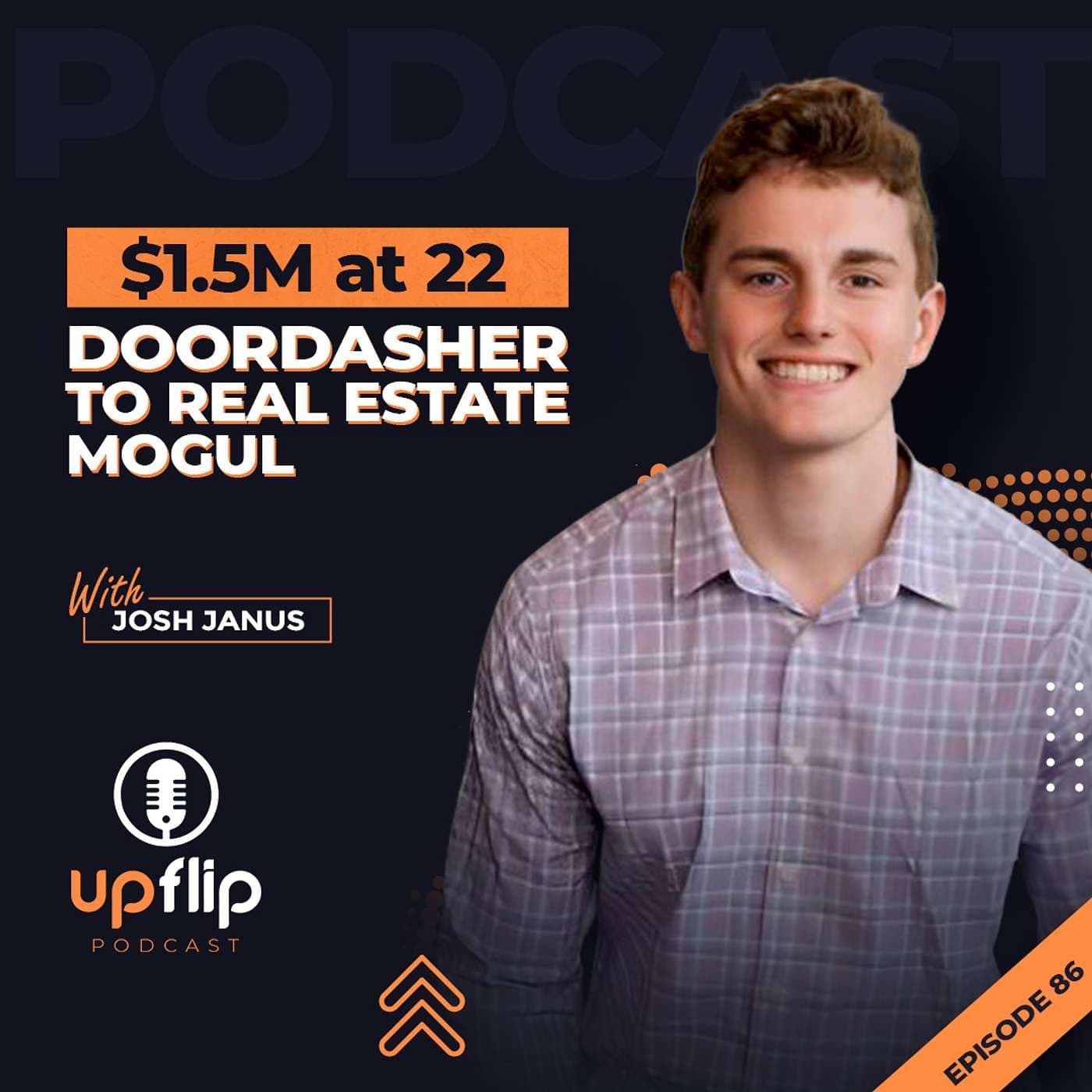
UpFlip Podcast Episode 86 Summary: $50K/Month at 22… Doordash Meals to Property Deals
Host: Alex Freeman Guest: Josh Janus Duration: Not specified Date: Not specified
---
Episode Overview
In this episode, host Alex Freeman interviews Josh Janus, a 22-year-old real estate agent who achieved remarkable success in his first year, selling over 100 properties totaling more than $17 million. Josh shares his journey from a teenager focused on financial planning to a successful real estate investor, detailing the strategies and methods he utilized to build a portfolio of 10 properties with minimal personal investment.
---
Key Concepts and Strategies
Early Financial Planning and Entrepreneurship
- Background: Josh began planning for his financial future as a teenager, saving money from a sneaker resale business he operated in high school.
- Goal: He aims to retire by age 30, demonstrating a clear long-term vision.
Real Estate Investment Strategies
- BRRRR Method:
- Buy: Purchase properties at a low cost.
- Renovate: Improve property value through renovations.
- Rent: Rent out the property to generate cash flow.
- Refinance: Refinance the property once it appreciates in value.
- Repeat: Use the profits to invest in additional properties.
- Real Estate Wholesaling:
- Josh discusses identifying and securing deals directly from sellers, emphasizing the importance of finding undervalued properties to maximize profit.
Building a Real Estate Business
- Focus on Revenue-Generating Tasks: Josh prioritizes activities that drive income, such as contacting motivated sellers and buyers, rather than getting caught up in repetitive tasks.
- Learning and Adaptation: He stresses the importance of learning from mistakes, such as his first property deal where he overlooked significant issues.
Overcoming Challenges as a Young Investor
- Age as a Factor: Josh shares how he navigated skepticism from other agents due to his age but focused on his ability to find valuable deals for clients.
- Financing Challenges: He discusses the use of hard money loans and private financing due to his lack of conventional lending options at such a young age.
---
Advice for Aspiring Investors
- Financial Preparedness: Save enough money to invest before diving into real estate.
- Property Evaluation: Learn to analyze properties using platforms like BiggerPockets, and ensure clear financial contingencies in contracts.
- Cold Calling: Josh emphasizes the effectiveness of cold calling for securing investment properties and suggests starting with volume and consistency in outreach.
Common Mistakes in House Flipping
- Poor Contractor Management: Josh highlights the risks associated with trusting contractors and emphasizes the importance of maintaining controls over budgets and payments.
- Lack of Due Diligence: Ensure thorough inspections and due diligence checks to avoid unexpected costs.
---
Conclusion
Josh Janus' story exemplifies the potential for young entrepreneurs to succeed in real estate through a combination of strategic planning, risk management, and a strong work ethic. His experiences underscore the importance of education, mentorship, and adaptability in navigating the complexities of the real estate market.
Resources Mentioned
- [BiggerPockets](https://www.biggerpockets.com)
- [ReafCO Real Estate](https://www.reafcorealestate.com)
Connect with UpFlip
- [YouTube](https://www.youtube.com/@TheUpFlipPodcast/)
- [Instagram](https://www.instagram.com/upflip/)
- [Facebook](https://www.facebook.com/upflipofficial)
- [Twitter](https://twitter.com/upflipofficial)
For more insights on starting and growing a business, visit [UpFlip.com](https://www.upflip.com).
---
Key Takeaways
- Discipline and Consistency: Essential qualities for success in real estate.
- Goal Setting: Clearly defined goals and structured time management can lead to significant achievements.
- Networking and Community: Engaging with like-minded entrepreneurs can provide support and resources.
This episode is a testament to the idea that with determination and strategic thinking, achieving financial success through real estate is possible, even at a young age.
Written by AI. May contain mistakes. Listen to the episode to check what was said.
Transcript
Automatic transcript. May contain errors.0:00They say with no money or connections, real estate is a tough industry to start. it. But the 22-year-old Josh Janis proved them wrong. 125 properties sold$17 million in transactions and a$1.5 million real estate portfolio. It's safe to say this 22-year-old knows something we doubt. Focusing on the tasks that actually make you money. Calling motivated sellers, calling motivated buyers, sending deals to people that actually want to offer versus like sitting on long phone calls or doing repetitive tasks. On the deal side, I would always try to figure out what the property is going to be worth when it's fully performing.
0:34Because the better the deal, the quicker it's going to go. And if you're finding things direct to seller, there's a lot less people that have seen it. So I think that's something that separates me from other investment friendly agents is I try to find those uncommon deals and present them to people. You only live once, you might as well try to be the best you can. That's my main motto. I'm your host, Alex Freeman, and I want to know exactly what it is. Do you? Josh, thanks so much for joining us on the show today. Of course. Thanks for the opportunity. With this episode, we did something a little bit different than our norm.
1:04A lot of these questions came from our YouTube community. So excited to kind of pose these listener questions to you as we go through. Listeners, if you're out there and you haven't joined the YouTube community, make sure you go to youtube.com slash upflip and you can also pose questions to future podcast guests. But Josh, to get us started, let's start with your story. How old were you when you first started investing in real estate and why did you start? For sure. I started when I was 21. I just turned 23. So I'm getting close to doing it for two years. And I always wanted a house hack, which is basically living in one unit and renting out the other.
1:38I wanted to do like a duplex or something when I was in college. So that's kind of how it started. Incredible. And, you know, I don't know a lot of 21 year olds walking around with real estate investing levels of money. How did you first come up with the cash? Yeah, I had a sneaker resale business in high school that I ran for three to four years. And instead of blowing my profits on my own shoes, I did that a little bit. But for the most part, I saved it and wanted to use it for something in the future. Now, that's interesting. Are you wired to save money? How did you kind of like break? Because that's also another like trait not associated with young people is the ability to actually save money and start to build wealth.
2:16Yeah. So like when I was selling shoes, I would go to shows and I would see a bunch of people making money, flipping them, but they would immediately take their profits and put it into something that they would wear. And then I would, you know, whenever you wear clothes or shoes, the value goes down pretty significantly, kind of like a car. And I just was like, why would I work so hard for this? And then immediately it goes down in value. I didn't really know where to put it yet. So my goal was let's just try to make as much as I can doing the side hustle in high school and eventually I'll learn where to put it.
2:46From that sneaker business, what lessons did you learn there that have helped you as you've gone down the real estate investing road? Yeah, I think scheduling my time was huge. That's one of the big things that I learned because I was juggling high school, basketball, football, and running this business. I had to figure out what my goals were over the course of a week, month, or year, whatever time frame, and then schedule all my hours so that it can meet what I'm looking to do. And how did you go about learning those skills? Did you have a mentor, somebody kind of helping you along the way? Where did you turn to learn how to manage that busy of a schedule?
3:19My mom was a project manager and she was in some ways a single mother. So I got to see her juggle all of that. And I think I probably got a lot of skills in the beginning from her. Josh, I want to kind of get into some of these listener questions here. Musna Ahmed wants to know, how did you find the first property that you invested in and how much did you put down on that investment? So I found it through calling listings on the MLS, which is properties on the market that had a lot of days on the market. And the seller said that or the listing agent said that the seller has this one and another one.
3:54And if you can purchase both of them at the same time and close quick, you can get them at a discount. And the price made sense for me. So I pursued it. I ended up putting like$15 ,000 down for that property. Did your age present any kind of challenge in that first deal? Yeah. A lot of agents in the beginning, they'd be like, oh, you sound young or you look young or you just got your license or things like that. But, you know, you can kind of focus on finding deals in the beginning versus dealing with authority when you're young. Yeah. What kind of advice might you give to someone who is maybe around the same age as you who says, hey, I want to get into this too?
4:26Yeah. I mean, first off, I would suggest saving money, making sure that you have enough money to purchase your first property or whatever investment tool you decide to go. And once you get that, start learning how to analyze properties. I used websites like BiggerPockets to do that. And when you look back on that first deal, what mistakes do you feel like you made during that time? And what did you learn from those mistakes? So I bought it remotely and my contractor walked it. I don't think he paid attention to the attic as closely as I wish he did because there was a bunch of live electrical wires sitting on wood, like the wood floors, which that's a really big fire hazard.
5:03I'm surprised the thing didn't burn down, but that ended up costing my renovation budget a few thousand dollars more than it was supposed to be, which didn't make the deal as good. But luckily, if you add in a contingency when you're running your numbers, you can usually account for something stupid like that. And after you closed that first deal, what did you do with the property? Yeah, I ended up renovating both sides. It was already vacant. It was a duplex. And then eventually I refinanced it to keep it. Do you still have it today? Is it still in the portfolio? Yep. Yeah. It's rented out both sides and it's cash flowing.
5:32Incredible. I love that. And have you brought in other investors or financing into it or has it always been kind of like cash generative for you? So most of the deals that I acquire, I'm getting through hard money. I'm starting to get some private money now. So, you know, I'll offer people a return on their money. Of course, not anybody are not really supposed to do that, but people that I have relationships with. And as you kind of like started getting through that, did you have issues with the banks also having people take you seriously with your plans? Yeah. I mean, to this day, I'm still not lendable like via conventional.
6:04So like when people normally buy a house, I can't do it because I don't have two years of the same income. I will in six months or whatever. Yeah, I always had to go non-conventional debt, hard money, DSCR, commercial, any of those more expensive debt products that people in situations like me rely on. For someone who might be in a situation like you, can you kind of give us a breakdown of what those different debt products are that they should perhaps look into if they want to make this move? Yeah, if you're not in a position where you're lendable yet, I would probably try to focus on properties that cash flow.
6:32So meaning every single month you have some extra income after you take into account all the expenses and reserves. And you can use debt products like a DSCR loan, debt service coverage ratio loan. It's essentially just a ratio of the income on top and then the PITI payment down below. As long as that ratio meets like 1.1 to one and a quarter, you're lendable as long as you have like a 600 credit score at least and enough money for the down payment. Now, as you start to look at properties to buy, can you talk us through your steps in evaluating both the property and perhaps the seller? Yes. So on the deal side, I would always try to figure out what the property is going to be worth when it's fully performing.
7:13Sometimes when you find it, it already is. So then you can kind of figure that out. But if it's something that needs some work or needs a whole bunch of work, don't do too much research until you're confident knowing like, hey, if I get this to where it needs to be, it's going to be worth X. And then making sure that there's enough margin between that number and everything that it's going to take you to get there so that you have enough room for error and enough profit for going through all the headache. And how did you kind of develop that screening process? Yeah, it's pretty much just the Burr method from David Green, a BiggerPockets author, and he runs it over there.
7:46But yeah, that book is sweet and it's a really good method to use when you are trying to get into real estate with not a ton of money. And then what about on the buyer side? Are you doing anything to make sure that a buyer is somebody that you do want to get into business with and go through the deal process with? Yeah. So like as an agent, I'm going to make sure that they're pre-approved or they're at least seriously in the process of wanting to get pre-approved, number one. Number two, I'm going to make sure that their criteria is clearly identified. And if it isn't, I can help them do so. But if they end up saying they want to do, you know, I want to do BRRRRs, flips, spine holds, creative, like if they say they want to do everything, they're probably not going to do anything and you can allocate your energy to someone who's actually set on a goal.
8:27Of all the business models we've covered, one of the most profitable is software as a service, also known as SaaS. With SaaS, it's possible to build a fast-growing multi-million dollar startup without venture capital. And over on the Startups for the Rest of Us podcast, our friend Rob Walling has been showing up every week for 13 years, sharing the strategies and frameworks that helped him start, grow, and eventually sell his SaaS for a life-changing amount without taking on outside investment. In addition to sharing his own best practices and mental frameworks, Rob brings successful founders on the show to share their shortcuts to building incredible companies.
9:01Finding a great SaaS idea and building a profitable company isn't easy, but if you're thinking about launching a startup, you'll want to check out episode 628. Rob breaks down his framework for idea validation. Look for the link in the show notes or check out Startups for the Rest of Us, wherever you get your podcasts. Once you've got a property that you're looking to sell, how do you go about finding high quality buyers to the property? Yeah, the traditional route is to have a reputable agent listed for you and get the most exposure and get the most offers. But making sure that your buyers are, again, pre-approved, they have the money, maybe they already have experience.
9:36I mean, don't hesitate to call their lenders and dig some more. You can learn a lot by doing that. And what kind of questions would you be asking if you're trying to dig more? You'd ask about their investment history, if it's an investment property. You'd also want to do some screening on their buying agent if they have one, make sure that they have experience, they actually know what they're doing, try to figure out if they know the area because there's a lot of out-of-state investing these days, which is cool, but there's a part of it where a lot of agents or buyers don't really know the areas.
10:02And sometimes there's common problems with the properties that they should be aware of, but they're not. And that can end up terminating your deal and you got to put it on the market again and historically end up getting less money when it falls out the first time. And then say somebody is starting to get into this, they find themselves looking at a real estate contract for the first time. What are some of the key things that they should be looking at and making sure are included? So number one, if you haven't done your physical due diligence, meaning your inspection or a walkthrough or a general contractor walkthrough, make sure that that contingency is in the contract.
10:32That's huge. That's your immediate out if the deal isn't what it was supposed to be. Number two, make sure you have some form of marketable title, a contingency relating to that. That way you don't have a property that has mechanics liens and double mortgages and all these problems that you end up assuming, which can end up having the property be upside down. You don't want to get into that. And then number three would just be contingencies related to your financing, whether it requires like an appraisal or a certain debt service requirement. So making sure that those three things are kind of all lined up so that you can get the deal done if everything makes sense.
11:05Let's talk about growing the portfolio. And this is also another fan question from Danny Gigi wants to know kind of like the step-by-step framework that you used in your first year to kind of build the business from start. Delegation is a big part of it. So when I had one to three deals going on at the same time, the things that I'm involved doing on a day-to-day basis, I can't do those if I have 20 or 30 or 40, which is where I'm at now. So focusing on the tasks that actually make you money, calling motivated sellers, calling motivated buyers, sending deals to people that actually want to offer versus like sitting on long phone calls or doing repetitive tasks.
11:43And then you mentioned it earlier, you mentioned the BRRRR method. Can you give us a little bit more information about what that is and how you utilize it? Yeah. So it's buying a property, renovating it. So getting it to where it needs to be, whatever the market standard is in that area, renting it out at market rent and then refinancing. And hopefully your all-in costs, like your purchase renovation holds and interest, all that stuff equates to, you know, 70, 80 % of the market value, which is the new appraisal price. And then once you're done with that, you can repeat it. Now that you're a little bit more established in the game, has that changed how and where you're looking for properties or is that method more or less the same as it was when you got started?
12:19So I don't do as much cold calling specifically myself now, but I have people do it for me and I kind of follow up with their warm leads. But other than that, everything else is fundamentally the same. And where should somebody be looking to find great investment properties that they're going to actually have good value in the deal. So you can source them directly through marketing, calling, emailing, texting. That's one route. And then the other route is you can just go to the people that already have them. You might not be able to get the best, best deals, but you can still get good deals. So like top agents in your market, top investors in your market, wholesalers, those two routes.
12:51And when you first got started, my understanding is you were door dashing. Is that correct? Yep. And so how long did it take you to grow the portfolio to the point that you were no longer door dashing? I stopped door dashing because I was making money as a realtor, but my realtor side took like six months from the day I wanted to do it until the day that I decided let's do this full time. And how'd it feel? Sweet. It was cool to bet on yourself and have it go well. You also flip houses as part of the investment strategy. When did you start doing that? And tell us about the first house you flipped.
13:20For sure. The first house I flipped was last September and it was a duplex. I evicted both previous tenants, renovated both units, filled them with market rent, and then sold it to an investor that wanted a turnkey asset that produced cash flow. So I did it, not really thinking much about it. And then I was like, oh man, we should probably turn this into a business model. There's a need for it. And I do a lot more than I did then. Now I'm curious there, because obviously you could have just kept that as a cash generating rental property at that point. And so I'm curious, are you looking for certain properties when you're like, okay, we need some more in this kind of like revenue stream or are you, okay, this property is presenting itself.
14:00It's probably going to play out this way, but maybe it doesn't go that way. How are you thinking about finding properties that match the different ways in which you can make money as part of the strategy? Yeah, I'm very focused on flipping right now because I can get a higher return on the capital that I use versus buying something and holding it. That's the main thing. And I can only do so many flips at once at every level of scaling. So I basically just hold certain ones. There isn't that much of a difference between what I'm holding and what I end up flipping. You mentioned a better return on the capital as obviously one of the pros of flipping.
14:31What are some other pros and what cons exist in the house flipping model? There's many cons. It's not easy. The biggest one is probably contracting management. And I do most of mine remote. So dealing with that, making sure they're actually rent ready, that's rent ready or turn ready or whatever the case may be. There's always little things that pop up. And then the other side of it is the taxes. So it's a lot of short-term capital gains taxes and you have to make sure that either you just cough them up and pay them or there's other strategies you can utilize that I use like cost segregations, but just managing all that and all the bookkeeping and such.
15:04And talk me through the process of kind of like budgeting out the house flip and how someone should be thinking about making sure that they're thinking about the numbers correctly before they enter into what they hope is going to be a profitable flip. Yeah. Look at what you want the house to be when it's done and then look at where it is now and then have a contractor bid it all out, review the materials and make sure it's up to standard. Some areas need granite countertops and really nice stainless steel appliances and things like that. Other areas you can get away with, you know, vinyl countertops, things like that.
15:32And just making sure everything lines up, making sure that your scope of work you're getting from your contractor is everything that's actually needed. And then don't pay all the money right away. Do some draws. What's probably the biggest mistake that you see people make when they try and get into flipping houses? I'll just say my own. I gave this one contractor three different down payments for three new projects because we had done one, which went decent. But I had some weird confidence in him for some reason, and he ended up running away with all the money. So don't over leverage yourselves for sure.
16:02That's a big one. So this is going to bring us to a section of the show that we call our Fan Blitz questions. Again, these, like some of the other questions throughout the show, come from our YouTube community. Listeners, make sure you head over to YouTube.com slash UpFlip to join the community there. Josh, I got five questions for you. We're going to try and get through in about a minute. it. Are you ready? Let's do it. Anti-toxic for you wants to know, did you do or have you done deals with friends and family? My stepdad lent me money for one. So yeah. Driven interaction. We'd like to know, how do you make yourself stand out in a saturated market?
16:31You need to do volume and you need to find the best deals. Cloud LOL asking what tips you have to help other young entrepreneurs better manage their money? Make sure you know exactly where your expenses are and where they're going. Avakita asks, what motivates you to be successful and what do you recommend that they do to be like you? You only live once, you might as well try to be the best you can. That's my main motto. Love it. And last one here from Havoc. What are the three main skills, qualities, or tasks that give you 80 % of your results? Discipline is number one. Number two is consistency.
17:05Number three is improving upon past structure. So like micro improvements. Fantastic. So those are the FanBlitz questions. Listeners, let us know what you think of the Upflip podcast by leaving a rating and review on Apple Podcasts. It helps other people find the show and unravel how great businesses are built. I want to kind of go into the cold calling, which I know you said you don't necessarily do much of yourself anymore, but obviously you did initially and you have people now doing it. Why is cold calling an effective way to secure investment properties? And what is your kind of advice for an investor pulling out that phone and making that first cold call.
17:41Yeah, I think it's like the most personal way to connect to someone when it's cold, right? If you're texting or emailing or sending a mail, like something in the mail, it's just, it's hard to make a connection. If you're calling, if you're driving home from work and I call you and I'm asking you about something you're interested in or, you know, that's a really good way of kind of getting yourself in there pretty quickly. My biggest advice when you're starting out doing it is volume, do it a ton. And then number two, don't just like, be like, oh, you want to sell? Do you want to sell? Like try to learn something.
18:08These people have a ton of these investors that you're calling in your areas have a lot more experience than you and they know a ton about your local market that you probably don't. And you can ask them about it, ask them how they got the property. Antitoxic for you wants to know a little bit more about that volume question of cold calling, like how many hours a day or days in a week should somebody be like, okay, I want to get into this. This is the amount of time I should allocate to making these cold calls. So I was in college, not taking too many classes, and I stopped doing DoorDash, saved up money for like three months of expenses.
18:42And then I was doing it nine to 11, one to five, I believe, five days a week, and then another four hours on Saturday. And I blocked those hours off. And that's what I was doing during that time. I wasn't answering phone, you know, going on Instagram or anything like that. That was my main focus. Justin Nowak, one of our listeners, wants to know about getting over the fear of picking up the phone and just calling people. How did you overcome that anxiety? Or maybe you didn't feel that anxiety, but how did you ultimately gain confidence in your sales skills? Just try to have fun with it at the beginning.
19:11You're going to get yelled at and sweared at, and you got to try to just make it entertaining. Some people are having bad days. Some people are having good days. But if you really get a ton of volume in right away, you get so much more comfortable with it. And then even if you do volume, and then you go like a month without doing very much of it and you try to get back into it again, you're going to feel rusty. So just staying consistent helps a lot. Where are you sourcing the leads to call? Yeah. So I go on PropStream to pull the lists of property owners associated with the addresses and areas I'm targeting.
19:39I make sure they've owned them for at least two, three years to make sure they have some equity. And then I go on sites like Fast People Search, True People Search, Forewarn to actually search their phone numbers. And then once I have a spreadsheet of all that, then I start calling. You've alluded to the real estate side, your life as a real estate agent as well. How has being a licensed real estate agent helped the investment portfolio? It's helped tremendously because I can build the same systems that I am using to scale up as an agent as I am as an investor. And you can also use your license to write offers for sellers you're calling and you can apply your commission as down payments.
20:16There's a ton of really unique things you can do with your license. And what is your main niche as a real estate agent? And how did you come to choose that? I focus primarily with investors from out of state all across the country that want to buy cashflow properties for the most part in Ohio. So I help them and it's the same asset class that I wanted to buy my first deal. So that's kind of how those got intertwined. And what does it mean for you to be investor friendly and kind of be focused on that? What does that mean that you maybe do differently from another realtor that they may just like do a quick Google search and find a realtor in your area?
20:49Yeah. So I would say it's focusing on finding properties that make sense as an investment. And a lot of those tend to be like off market, right? Because the better the deal, the quicker it's going to go. And if you're finding things direct to seller, there's a lot less people that have seen it. So I think that's something that separates me from other investment friendly agents is I try to find those uncommon deals and present them to people. Josh, your goal when you were in high school was to retire by the age of 30. Is that still your goal? Yep. Still my goal. I'm fortunate that I technically could next year, but you know, I really like what I do and I'm working on building bigger goals.
21:23I love it. How are you going about building those goals? How do you think about goal setting in your life? Having achieved more than many people, certainly at this stage in life. It's been weird the last six to 12 months, but I'm trying to just rely on the mentors that I have that have done far more than me and talk to them about when they were at my stage and just step by step. It's no different than when I was, you know, selling one home a month. How has rising home prices and the rising interest rates impacted the business? Yeah. So I've been focusing on lower class value adds. It's like C-class, more the bulk of the run of population is usually.
Read the full transcript
22:00I'm focusing on that for my own investments and being an agent because the nicer properties right now really aren't cash holding at all. They're losing money every month. If you could pick the one thing that people take from this interview, what would it be? I would say schedule your time based on what your goals are and stick to it and it'll get you where you want to go if you plan it out right. What's your favorite business book and why? Rich Dad, Poor Dad, because two things roughly. When you have a lower income, do everything you can to lower your expenses so you can save up your money for doing something with it that you don't know what to do with yet.
22:31And then the other one would be focusing and acquiring assets that pay dividends or cash flow either today or in the future. Josh, where can people learn more about you, connect with you, and follow what you're up to next? You can follow me on Instagram at Josh Janus. My last name is J-A-N-U-S. I'm also on BiggerPockets and feel free to message me. That is going to do it for this episode of the Upflip Podcast. Listeners, you can find more advice for how to start or grow a business the right way on the Upflip Hub. And if you like this episode, make sure to let us know by leaving a review on Apple Podcasts or wherever you're listening right now.
23:02Josh Janis, thank you so much for joining us on the show. Thanks for having me.
From the publisher
In his first year as a real estate agent, Josh Janus sold over 100 properties totalling over $17 million and built his own portfolio of 10 properties—and he only invested a small amount of his own money to do it. He shares how to start a real estate business using his strategies in this interview.
Josh didn’t start investing in real estate until he was out of high school but he started planning for his financial future as a teenager. He had $10,000 in the bank account by the time he started college, a first step toward his goal to retire by age 30. Now, he’s well on his way to achieving that goal thanks to his impressive success as an investor-friendly real estate agent with ReafCO.
Josh grew his portfolio using the BRRRR method and real estate wholesaling. He’ll explain what’s involved in that investment approach, along with his tips on house flipping, property management, and other core concepts for those who want to build a career in real estate.
Resources:
- https://bit.ly/3AaOxsE Connect with likeminded entrepreneurs
- ReafCO - Learn more about Josh and his business on his website
Ready to be your own boss without starting from scratch? Grab our FREE Franchise Guide and unlock the secrets of proven business models that have already created thousands of success stories.
Connect with UpFlip:
- On Youtube
- On Instagram
- On Facebook
- @UpFlipOfficial on Twitter
For more insights to start, build, or grow a business, check out the resources on UpFlip.com or head to the UpFlip YouTube channel to see more interviews with business owners and experts.
Thanks for listening!


