
In short
UK households’ energy bills rising 13% from 1 July due to the US-Iran war and Strait of Hormuz disruption, with delayed effects from February market shocks; outlook for autumn/winter and ways to reduce costs.
Guests
James Sillers, Sky’s business and economics reporter; provides Ofgem price-cap mechanics and market outlook.
Key claims
Ofgem’s energy price cap (set by Ofgem, updated using supplier costs) is a safety net for default-tariff households; the July increase averages about £18/month (£222/year) because wholesale gas prices spiked after Gulf infrastructure attacks and Hormuz closure. Cornwall Insight expects the cap to fall ~0.5% from early October unless tensions worsen. Household energy debt is ~£5bn, potentially rising to ~£7bn.
Notable examples
petrol/diesel pump prices falling while energy-bill impacts arrive later; “social tariff” proposal for financially struggling households; fixing vs staying on the cap.
Written by AI. May contain mistakes. Listen to the episode to check what was said.
Chapters
Tap a time to open that second in VOEnergy Price Cap Overview
0:45 to 3:00
Discussion about the energy price cap and its recent increase.
“This is not a war that we started, nor is it a war that we joined.”
Impact of the Iran War on Energy Prices
3:00 to 4:52
Analyzing how the US-Israeli war with Iran affects UK energy prices.
“Households, luckily, because it's summer, won't be paying or using so much energy or electricity, gas at the minute, just because we're not basically using gas to heat our homes.”
Delayed Effects of Price Cap Changes
4:52 to 6:48
Exploring why the effects of energy price changes are felt later.
“The war started in February, but we are only feeling the impact now.”
Future Predictions for Energy Costs
6:48 to 11:18
Predictions on energy prices for the upcoming season and strategies for consumers.
“This is this is a strange thing about energy markets.”
Government's Role and Support Options
11:18 to 14:00
Discussion on the government's potential interventions in energy pricing.
“Something quite clearly has to be done because there's only one way energy debt's going in this country and it's up.”
Transcript
Automatic transcript. May contain errors.0:10Despite the Iran war beginning in February, energy bills are only just going up. And this is why.
0:24I'm Mari Arora. Welcome to This Is Why. The off-gem energy price cap went up by 13 % on the 1st of July. That amounts to an average of£18 a month more on energy bills. This is almost entirely due to the US-Israeli war with Iran and the blocking of the Strait of Hormuz, driving up gas prices because of oil supplies not being able to pass through the vital shipping route. This is not a war that we started, nor is it a war that we joined. But it is a war that will have an impact on our country. But due to the price cap, we're only beginning to feel the impacts on our bills now. I can confirm to the House that contingency planning is taking place for every eventuality.
1:12so that we can keep costs down for everyone and provide support for those who need it most. I'm joined by James Sillers, Sky's business and economics reporter. James, thank you for being with us. Start us off with what is the energy price cap and how much are bills going up? Okay, so a bit of a history lesson. The energy price cap was first introduced by the government of Theresa May, so quite a while ago. And the idea was basically stop rip-off bills. So a lot of households in the UK are on what's called default tariffs. So they don't make any intervention on their own behalf to try and keep their own bills down.
1:54They are just quite happy to sit on the default tariff. So this default tariff, energy price cap, it's set by the industry regulator, Ofgem. They look at all the different costs that providers and other operators in the market need. And the idea is to make it fair so that nobody is overpaying for their energy bills when they're on the energy price cap. It's a bit of a safety net and most UK households are still on them. Okay, put that into coal hard cash. So 13 % bill increase. What does that look like in a year or a month? Okay, so what the energy price cap does, it's a measure of how much suppliers can charge per unit of energy.
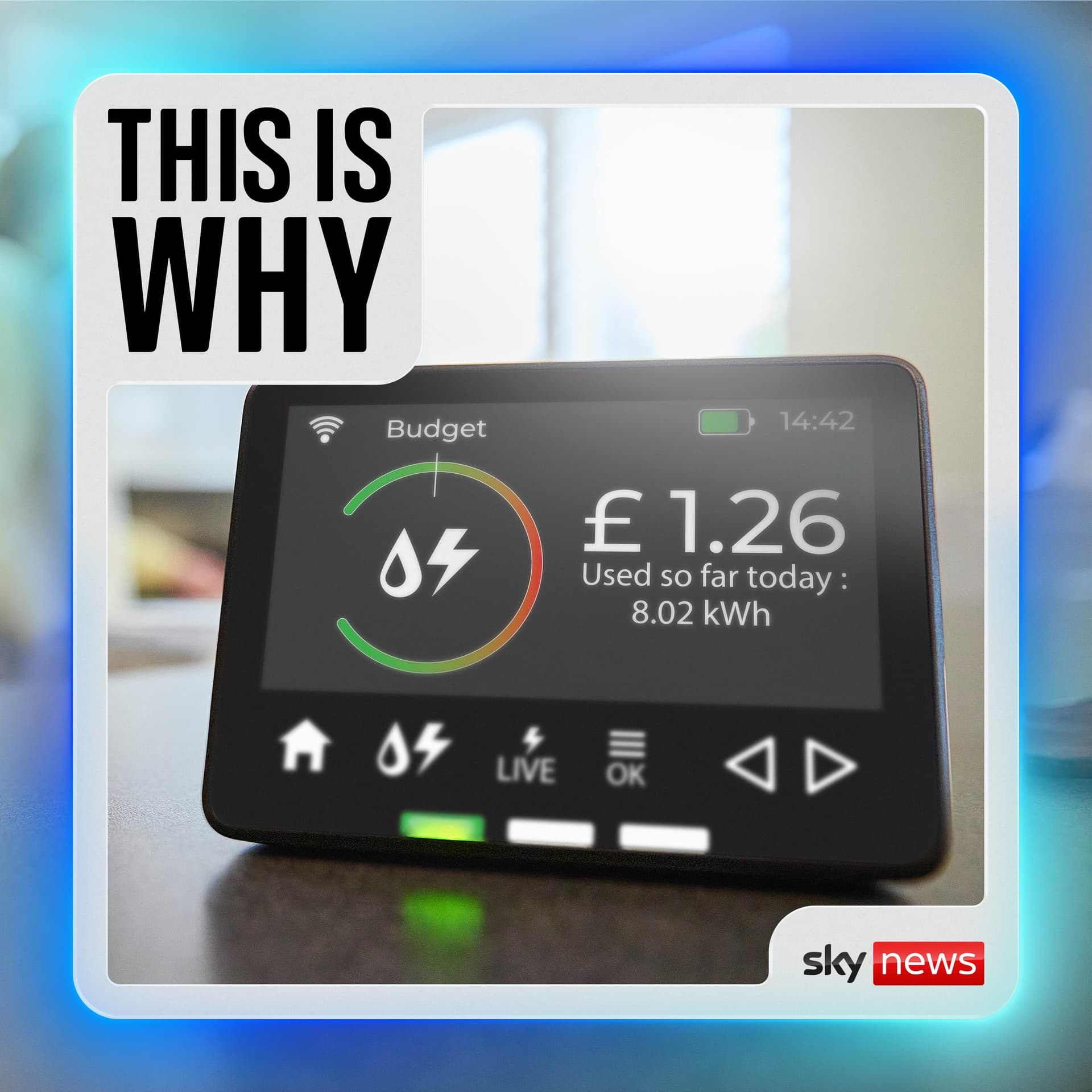
2:34So that's electricity, gas. So for a dual fuel household, paying by direct debit, you end up paying an average annual sum. So they look at the average amount of energy that the household uses, and that's every three months that figure gets updated. So at the minute, I think it's 1 ,865, something around that area, as you say, a rise of 13%. Okay. So it's going to work out about£18 a month more than before. Yeah, so£222 per year. Households, luckily, because it's summer, won't be paying or using so much energy or electricity, gas at the minute, just because we're not basically using gas to heat our homes.
3:16Where it starts to get a bit more tricky is what is to come and the outlook for energy prices. So what are we expecting for autumn, for winter? Are we expecting them to go up, to go down? Luckily, I don't have to crunch the numbers. And there is a well-respected forecaster. It's called Cornwall Insight. They provide figures every so often over the course of the year. And they give us an idea of the outlook for the energy price cap. So what they have said was that the price cap should go down by all of 0.5 % from the beginning of October as things stand. So yeah, we've seen that big spike in wholesale energy costs being reflected in the increase that has taken effect today.
4:01Looking at the market data, because this has all been driven by US-Iran war hikes to natural gas prices. Is that everything? Is the entire reason bills are going up purely because of that war? Yeah, in this price cap, it's reflecting hugely the impact of the war and what it's done to UK natural gas costs. So all the time, there are these conflicting factors that just sort of get behind what will drive an energy bill in the months and weeks and days to come. And it changes all the time. And this is the thing with the energy markets at the minute. They've been very volatile since the start of the US-Iran war and all the attacks that took place on Gulf energy infrastructure, the closure of the Strait of Hormuz, all those deliveries of natural gas in particular have taken their toll on global prices.
4:51But let's talk about the timing of that. The war started in February, but we are only feeling the impact now. So why? This is the weird thing. Last time the energy price cap was set, it was set just before the war. It was days, actually, before the missiles and drones started to rain down in the Middle East. So when it came to the price cap between April and June, it went down. And that was largely actually because of the policy change that Rachel Reeves had announced. So when you then set the price cap, and I would say that was towards the end of February, the price cap was set. It was lower.
5:28It was going down. We had bills falling between April and June, as you would generally expect at the end of winter. You'd normally expect bills to come down. But of course, then Ofgem then looks at all the data and the market data. So all that energy price increase that we saw in the market right from the beginning of March when the markets opened for the first time after the war began, they're then taking in all that data. And then the first time that Ofgem is able to reflect those price increases was from the beginning of July from this price cap. So we were shielded from that. Drivers weren't.
6:08We paid high prices at the petrol pumps for many months. Those prices are coming down. But the impact on households in terms of their energy bills was delayed. So we always knew that there was this shock coming. And that's what's happened today. Right. Now, you said that we are expecting bills to maybe go down in the autumn. We obviously don't know for sure. By 0.5%. I think we're talking a few quid here. Nothing dramatic. Hey, as my dad would say, better than a poke in the eye. But if things start to heat up again in the Middle East, if tensions start to rise, if the ceasefire doesn't last, if they don't manage to get a deal with Iran, could that change?
6:44And could we then see a price cap going up in the autumn? Absolutely. This is this is a strange thing about energy markets. It's all about supply and demand. So what I think has been surprising for me during this is that we've been able to get sufficient supply to meet demand. And a lot of extra supplies come from the United States. So, hey, you know, America has done quite nicely out of this war in terms of its energy sales. So that has managed to offset a lot of the worries that there were in the market about, you know, if you lose 20 % of global supply, you've got to try and make that up from somewhere.
7:19So that seems to have actually happened fairly well. And you see that as well in fuel, you know, petrol, diesel as well. We were thinking about shortages. Remember, for weeks we were thinking, are summer holidays on? Well, they certainly are. Yeah, okay, stockpiles aren't what they should be, but everything's still functioning the way it should. So that's all good news. Where we start to get into trickier and much stormier waters as we head towards autumn and then winter is demand in the Northern Hemisphere, obviously because of winter goes up. Is it still sustainable? The price is where we are right now.
7:55They are still elevated, but they're manageable. They're not, there's nothing like the energy price shock we saw after Russia's invasion of Ukraine. I think it's too early. It's watch this space. I think it's very frustrating for a lot of people that, you know, we keep having these on-off peace efforts. Is a deal happening? Is the Strait of Hormuz open? Yes, one minute it is, then the next minute it isn't. You know, the Iranians want quite clearly to charge shipping tolls, which breaks international law. That is something that has not been agreed. And obviously, those tolls would realistically be passed on to consumers, right?
8:31Exactly. So it means higher shipping costs, you've got higher insurance at the minute as well. Of course, the fuel that goes into those ships to take deliveries, that also goes up. So you've got a lot of these other things that will eventually determine how the market will respond. And obviously, if the war in the Middle East is still ongoing and there is still a threat to energy supplies, then that will be reflected in the market prices. And we could then see, you know, costs continue to go up through winter. But it's very, very early days and it's very difficult to forecast because so much depends.
9:08It's in the gift, isn't it, of Donald Trump. Let's go on to some practical tips of how people can try and save themselves some cash when it comes to these energy bills. people are going to be really stressing out. What are your top tips to help? If you listen to a lot of the consumer groups now, they're saying fix. It's a hedge, but you have to work out, can you safely afford to fix? Can you afford to lock in that price over an extended period? Because remember, the energy price cap was designed to be that sort of to sort of make you feel that you weren't overpaying and that you weren't being ripped off.
9:50So there are savings out there if you fix, and it's about 200 odd quid at the minute versus the price cap at its current level. So here's the thing. What you've got to do is work out, am I worried about the Iran war still raging? Do I really want to face the prospects of paying even bigger bills going into winter? And remember, the forecast at a minute is it's going going to be fairly flat going into winter. So we're not going to see, as things stand, a big spike. I think you have to weigh up the options. Could I afford to pay this rate over the course of the winter? And there's a really, for me, some really worrying stats out there in terms of energy debt.
10:32According to the latest official figures from the regulator, you've got, I think it's just under£5 billion worth of household debt to energy companies in this country currently, which is a pretty staggering figure. And I was speaking to the industry lobby group, Energy UK, a few weeks ago, and they believe that potentially by the end of this year, we could see that level hitting£7 billion. If we can't bring bills down and people's ability to pay isn't improving dramatically, which of course now we know it isn't because pay is rising at around the same sort of level as inflation, more and more households are going to get into energy debt.
11:15And it's a huge problem. Something quite clearly has to be done because there's only one way energy debt's going in this country and it's up. So what is a social tariff? For people who've never heard of it or don't know what that is, what's a social tariff? So social tariff is effectively, it would identify through your financial circumstances, ability to meet energy bills and the likely path of energy bills. It will look at income, the benefits that potentially you're on, and it will determine whether you then are able to pay this social tariff. So it's a bit like that done with the water industry as well.
11:50So I think what you need is a standard universal social tariff for households that are not going to be able to meet their energy bills and the rise in energy bills because 13 % today, okay, yeah, it's summer and we're not using a great deal of electricity, but 13 % is a big old leap in the context of where we were just yesterday. It is a problem. And we've heard so much over the last few winters about people making choices between heating and eating and energy bills are one of the big problems when it comes to cost of living, household finances, because it's been so up rather than down. Now, let's talk about the government for a second, because people often say the government needs to help, the government needs to help.
12:35Of course, the government to an extent is only able to do so much when global energy prices are dictated by things like wars in Iran, right? But there is talk about whether there might be some kind of government intervention, maybe in the winter or the autumn. Rachel Reeves suggested there might be some targeted support. We've had the hint. We've had the hint. I mean, she might have been a job very soon, so that might all fall apart. I think, you know, we had the universal support for energy bills after the war in Ukraine when they had that peak in inflation at 11%, the energy price cap above£4 ,000.
13:06You know, we've had the universal support and that was widely welcomed at the time. But there was always going to be a price to pay at the end of that, which is someone's got to pay the bill. And we're still paying the price in the public finances for the COVID shock, that energy-led cost of living shock. And it will fall to whoever is chancellor when we assume Andy Burnham becomes prime minister in a couple of weeks' time. But I think it would be a pretty heartless chancellor who was to sit at number 11 and say, oh, you know what, we can't do any help for energy bills, because it's quite clear that it's still the big cost of living pressure.
13:45You know, this government has made a play with several priorities. You know, one of them was tackling the cost of living. And Andy Burnham has committed to that manifesto with obviously ideas of his own. I think it would be unlikely that he would row back on that idea of targeted support for those struggling the most heading into this winter. James, thank you so much. Get in touch with your ideas for future episodes by emailing us at y at sky dot UK. And this is why we'll be back tomorrow.
14:38I'm Ed Conway and in each episode of my new podcast Stuff Matters I take an object crack it open and reveal the world-shaping forces hidden inside This is economics told through the things we think we understand Search Stuff Matters on your podcast app to listen and follow
From the publisher
Whether you’ve been enjoying or enduring the summer heatwave, running that new air-con unit has just got a whole lot more expensive.
For millions of people across England, Scotland and Wales the cost of household energy has soared by 13% from the 1 July – following the latest rise in the energy price cap.
The war in Iran is largely to blame, thanks to the closure of the Strait of Hormuz and subsequent spike in oil and gas prices.
But Donald Trump’s military action began at the end of February, so why are we only beginning to feel the impact now? How long will the current high prices persist and are there any tricks for reducing those domestic bills?
Mhari Aurora is joined by Sky’s business news reporter James Sillars.
Have you got a question for the podcast? Email us: why@sky.uk