
In short
Podcast Summary: This Is Why - Will the Iran War Worsen the Cost of Living Crisis?
Podcast Details
- Podcast Title: This Is Why
- Host: Niall Paterson
- Expert Guest: Ed Conway, Sky's Economics and Data Editor
- Release Frequency: Weekday afternoons
- Audience Contact: [why@sky.uk](mailto:why@sky.uk)
Episode Overview In this episode, hosted by Niall Paterson, the conversation centers on the economic implications of the ongoing conflict in Iran and its potential to exacerbate the cost of living crisis in the UK. The episode highlights concerns over rising oil and gas prices, inflation, and the overall economic outlook in light of geopolitical tensions.
Key Topics Discussed
Economic Forecasts and Uncertainty
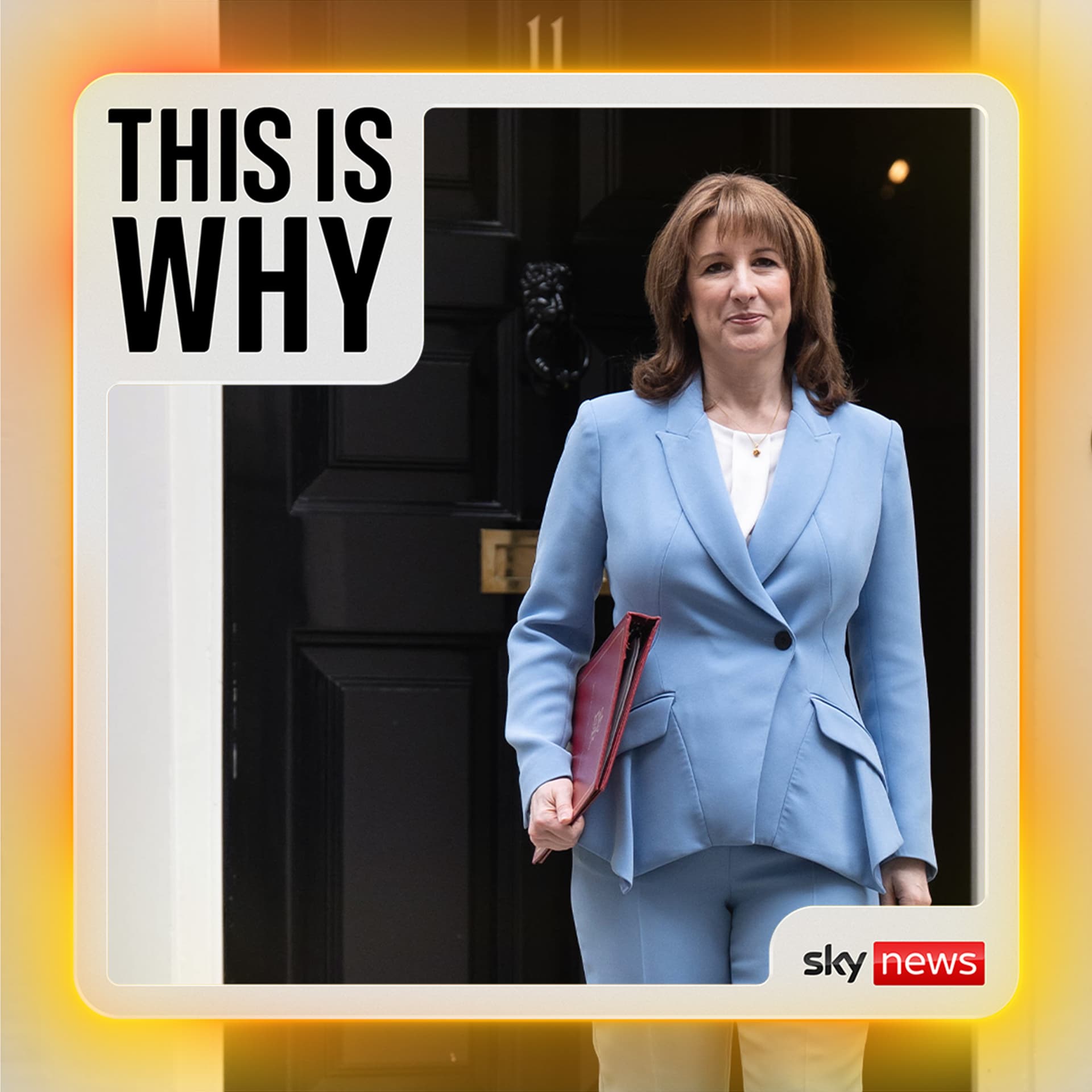
- Chancellor Rachel Reeves' Spring Forecast:
- Presented with optimism about reduced inflation and improved living standards.
- Forecasts were quickly undermined by the escalating conflict in the Middle East.
- Impact of the Iran Conflict:
- Predictions about the economic landscape soon becoming irrelevant due to international turmoil.
- The conflict in Iran threatens to disrupt global supply chains, particularly in energy.
The Role of Energy in the Economy
- Oil and Gas Prices:
- Significant increases in global oil and gas prices linked to instability in the Middle East.
- Importance of the Straits of Hormuz: A strategic chokepoint for oil transport, with a large percentage of the world’s oil and gas passing through.
- Dependency on Fossil Fuels:
- Despite a shift towards renewable energy, fossil fuels remain the primary energy source globally.
- Rising energy costs will have cascading effects on other sectors, increasing prices for goods like food and consumer products.
Inflation and Cost of Living
- Inflation Predictions:
- Rising energy prices can lead to higher inflation rates, contradicting recent predictions of economic stability.
- The Bank of England's assumption of cutting interest rates may be jeopardized.
- Social Implications:
- The impact on consumers is palpable, with many facing increased prices for everyday goods.
- Historical context provided, comparing potential outcomes to the previous energy crisis during the Ukraine conflict.
Broader Economic Implications
- Stock Market Volatility:
- Current market conditions are characterized by speculative investments, particularly in AI.
- The war in Iran adds uncertainty to already volatile markets, potentially leading to a sell-off or further instability.
- Energy Security Concerns:
- Europe’s dependency on Middle Eastern and Russian energy sources raises questions about economic resilience.
- Discussion on the need for governments to bolster energy security and mitigate future crises.
Key Takeaways
- Uncertainty in Economic Forecasts: Major events like international conflicts can rapidly alter economic forecasts.
- Energy as a Fundamental Economic Driver: Energy prices are closely tied to the overall economic environment, affecting inflation and consumer costs.
- Potential for Increased Dependence on the U.S.: As Europe seeks alternative energy sources, reliance on American energy may grow.
- Cascading Effects of Conflict: Events in one part of the world can have significant and far-reaching consequences on a global scale.
Conclusion The episode highlights the interconnectedness of global events and local economies, underlining the delicate balance that exists in economic forecasting and planning. As the situation in Iran develops, the implications for inflation, energy prices, and overall economic stability remain uncertain, emphasizing the importance of vigilance in economic policy and consumer awareness.
Remember to reach out to Niall with any questions or suggestions for future episodes at [why@sky.uk](mailto:why@sky.uk).
Written by AI. May contain mistakes. Listen to the episode to check what was said.
Chapters
Tap a time to open that second in VOEconomic Forecast Amidst Crisis
0:46 to 2:15
Discussion on the Chancellor's economic forecast and its uncertain foundations due to the Iran conflict.
“Well, that's exactly what Rachel Reeves had to do.”
The Importance of Energy
2:16 to 3:49
Exploration of the significance of energy sources and their impact on economies amid global conflicts.
“You know, even if it weren't for what's happening right now in the Middle East, I think they still would have succeeded because the numbers aren't dramatically different.”
Straits of Hormuz and Global Supply
3:50 to 5:37
Deep dive into the significance of the Straits of Hormuz and its role in global energy and food supply.
“Just explain the significance of it, because we've been hearing an awful lot about it in the news.”
Consequences of War on Prices
5:38 to 8:09
Analysis of how the ongoing conflict could lead to widespread price increases and inflation.
“A lot of it goes to China, but a lot of it comes to Europe as well.”
Potential Market Reactions
8:10 to 10:46
Discussion on how market volatility may be influenced by the ongoing geopolitical tensions.
“to future-proof or indeed to kind of war-proof our economy.”
Market Volatility Amidst War
14:02 to 14:28
Learn how the war impacts stock markets and economic confidence.
“Whenever a stock market is very expensive, then it tends to be quite volatile.”
Economic Forecasts and Risks
14:30 to 14:58
Discover the implications of the Iranian conflict on economic forecasts.
“This was never going to be the best day for the Chancellor.”
Transcript
Automatic transcript. May contain errors.0:02Niall:Sky News, the full story first.
0:13Niall:The Chancellor's spring forecast might not be worth the paper it's written on, and this is why.
0:30Niall:Hi everyone, Neil here. And I'm wondering if you might just feel a little anxious. After all, the war with Iran is threatening to push the global economy off a cliff. But can you imagine having to stand at the dispatch box right now and deliver an economic forecast?
0:45Ed Conway:We now come to the spring forecast. I call the Chancellor of the Exchequer.
0:54Niall:Well, that's exactly what Rachel Reeves had to do. And to be fair, she certainly talked a good game.
1:00Ed Conway:Today, the new forecasts from the Office of Budget Responsibility show that our plan is the right one. Inflation is down. Borrowing is down.
1:12Niall:Living standards are up and the economy is growing. But for how much longer? Those forecasts from the OBR didn't consider any knock-on effects from events in the Middle East. The Chancellor spoke with certainty, but thanks to Iran, the world's only getting more uncertain. We are seeing oil and gas prices spiral, chaos on the currency and stock markets. So how exposed is Britain's economy to a war thousands of miles away? And how quickly could today's forecast be overtaken by events? Sky's economics editor is Ed Conway. Ed, look, do you have a degree of sympathy for Rachel Reeves? I mean, the phrase, you know, events, dear boy, I mean, they do come along.
1:54Niall:But this spring forecast is practically not worth the paper it's written on.
1:59Ed Conway:Yeah, but the irony, Neil, is actually they were quite keen. They wanted this to be a low grade event, just I think because they were so haunted by previous budgets and events, each of which has had this kind of roller coaster in the build up where everyone's been like, oh, what's the number? What are the numbers going to show? They were desperate that this time around, actually, there wouldn't be that degree of drama. You know, even if it weren't for what's happening right now in the Middle East, I think they still would have succeeded because the numbers aren't dramatically different.
2:27Niall:Well, let's talk about the big story. I mean, obviously, you've been keeping an eye on the economic end of the conflict in the Middle East. But you're pretty worried. I mean, you think this could be rather consequential indeed.
2:37Ed Conway:Yeah, I mean, like with the proviso that no one knows what's around the corner. But we easily forget just how important physical things, in particular energy and chemicals, we forget about how important they are for our lives and our livelihoods. Even if you're working in some sort of field that's not related to it, even if you think AI is the most important thing in the world, AI is massively energy hungry. You still need a lot of energy for it. And where does most of our energy in the world come from? Well, it would be nice if it all came from solar panels and from wind turbines. And definitely an increasing proportion is coming.
3:10Ed Conway:from renewables. But still, the vast majority of energy in the world is provided courtesy of fossil fuels. And the majority of those fossil fuels are oil and gas. And the biggest concentration in the world of oil and gas is in the Gulf. In the Persian Gulf, you've got enormous gas fields. In fact, the single biggest gas field in the world, the single biggest source of energy anywhere, the North Field, which is actually the gas field right in the middle of the Gulf, which is shared actually by Qatar and Iran. Nothing else is close to that. And indeed, about kind of between 20 and 30 % of the world's oil comes from that region and has to pass through the Straits of Hormuz, which is this narrow choke point in the south of the Persian Gulf.
3:55Niall:Just explain the significance of it, because we've been hearing an awful lot about it in the news. So where are the Straits of Hormuz then?
4:01Ed Conway:And the Straits of Hormuz is basically the southern end of the Persian Gulf. It is between Iran on the north and then you've got the Gulf states like Amman and the UAE and others are on the south side. And Iran, of course, is the important one because they, if they wanted to, they could pretty much shut the straits if they wanted to. And for a long time, that's been the sword of Damocles hanging over this entire region is if Iran really wanted to cause havoc and destruction, including, by the way, on themselves, They could say, basically, we are just going to bomb any ship or attack any ship that tries to come to the ship.
4:36Ed Conway:That is what they're saying, isn't it? And that is the noises they're making. And they've made those noises before, but this time around, you know, bombing of ships is actually happening. And as a result, the traffic passing into and out of the Gulf has gone down by, you know, 75 % when I looked at the numbers last. It's probably even more than that since then. And the reason that matters is partly because of oil. Oil and gas are the bedrock for activity around the world, even today. But it's partly also other things as well, like petrochemicals, like ethane. You don't really think about them much.
5:08Ed Conway:You don't really think about urea and ammonia all that much. But urea and ammonia are basically fertilizers. And if you want to eat, if we want to have food, we kind of need fertilizers because we couldn't support the global population without fertilizers. Like it or not, if we tried to turn organic, half the world would die. That's how serious this is. But here's the key thing is I think it's kind of like between 30 and 40 percent of the world's fertilizers pass through the Straits of Hormuz. They come out from there around the world to feed the rest of us. A lot of it goes to China, but a lot of it comes to Europe as well.
5:45Ed Conway:And that is the point. We are talking about a war where so much of the world's life support system basically derives from. And that is why it is having all of these knock-on consequences. And the scale and shock of that is really great right now. We just don't know what's going to happen tomorrow with this conflict. And if it's short-lived, and if things calm down, then we could return more or less to normal. And the spike that we've seen in the last couple of days would be this interesting historical curio.
6:14Niall:Well, when you say short-lived, I mean, be specific, because we've had Donald Trump talking about a timescale of four or five weeks. What would a world look like if the Straits of Hornets are closed for that amount of time, if the gas extraction and refining isn't taking place, if the oil isn't coming around the Straits of Hornets? I mean, four to five weeks of that, what would it look like?
6:35Ed Conway:there would be an impact. You would have higher inflation around the world because everything gets more expensive. All the assumptions that the Bank of England was about to cut interest rates, and actually a lot of people thought they might cut interest rates as soon as like this month, maybe next month. All those assumptions are basically out of the window.
6:51Niall:Isn't it the case that when you have a conflict of this nature, everything, and I mean literally everything, becomes more expensive?
7:01Ed Conway:Yeah, and I think it does because everything is energy. Energy is everything. Doing any kind of activity in the economy involves, to a greater or lesser extent, the use of energy. You know, even services, even AI, well, AI especially, it's super energy intensive. It depends on a lot of energy to run those server farms, even when you're, you know, running a hairdresser. We underestimate the extent to which higher energy costs dribble through to every part of the economy. pretty much any kind of products you're talking about. And the cost of tomatoes goes up because in order to make a tomato, you need fertilizer.
7:39Ed Conway:In order to make a tomato, you need to run a greenhouse. Well, guess what? That greenhouse is usually heated by gas and the fertilizer is made of chemicals that are derived from gas. And so in all these strange, unexpected ways, one is the kind of chaos effect of something happening on the other side of the world pushes up a price. and that price feeds into everything.
8:02Niall:If energy is everything and everything is energy, where is our energy security? Surely we could say with hand on heart that a couple of governments could have done a lot more to future-proof or indeed to kind of war-proof our economy.
8:15Ed Conway:I'm a bit frustrated about it because a lot of us have been banging on about this for quite some time and saying that stuff matters and physical things matter and energy matters. and in order to sustain the living standards that most people in this country have come to expect, it is worth just thinking about where stuff comes from and ensuring there's security over it. And I think there's been lots of good talk about that in Whitehall, but not much action. And this is not just a kind of, you know, this particular government, it's previous governments as well. It's worth just saying, you know, it's not like the UK and Europe have this very fortunate endowment of lots of energy in the ground.
8:58Ed Conway:We do have the North Sea, but it's kind of declining. There's a genuinely interesting conversation we can perhaps have about the speed at which it's declining and we could keep getting more out of it. But despite all of that, you do kind of feel like there's more that could have been done. We're back in the situation where Europe is going to be in the crosshairs of this economic challenge because we are big importers of all the stuff that is being produced in the Middle East and for that matter in Russia. And having spent years dealing with the consequences of not being able to get gas from Russia, we're now going to potentially have a struggle in terms of the other gas that we thought we're going to be able to get from elsewhere.
9:40Ed Conway:And the great irony of this with Europe's quite tricky relationship with the United States is all of this will make Europe even more dependent on America. So if we can't get our gas from the Middle East anymore, then we're going to be much more dependent on getting it from the United States.
9:57Niall:Do you think that featured in Donald Trump's calculation when it came to beginning this conflict? I mean, because America is, of course, I mean, they're not affected by what's going on in the Middle East to the same extent because, of course, they can produce their own energy.
10:09Ed Conway:No, if you look at American gas prices, you know, they're not quite flat, but they're not going up at the same rate as the gas prices in the UK and Europe. And I mean, perhaps that played into his mind. It's very hard to know with Donald Trump, isn't it? I think there are still many paths this could take. And, you know, if it does resolve in a matter of weeks, and it resolves in a calm way, then it could well be that those prices start to come down. I'm a bit nervous because I have never seen the scale of increase that we've seen. I mean, none of us have. It's totally unprecedented to see the speed with which those prices are going up.
10:44Ed Conway:And if they carry on going up, then that is a massive return to an energy crisis. And it's just as we thought we got out of the last energy crisis. Gosh, we might be back in one again, which frankly, it's the last story that I want to report on. It's the last thing anyone wants to hear. But this is the way the numbers look like they're stacking up at the moment.
11:03Niall:I don't want to be selfish, but what does that mean for me?
11:07Ed Conway:Inflation might be about to go up again. Things might be about to get a bit more expensive. I mean, I really hope this doesn't all come to pass, but we saw it happening with Ukraine. Right now, wholesale gas prices, they've gone through the roof. They've gone up really fast. In fact, just looking over the last two days, they have basically doubled. Not since 1997, which is when the data began. Not since 1997 can I find another two-day period where gas prices have gone up as fast as they've just gone up. The sudden change we've seen recently is a bigger sudden change that we've ever seen before.
11:41Ed Conway:However, the absolute level of those prices, so just how high they are, they're still a lot lower than they were back in the Ukraine period. And that's partly because in the build-up to the invasion of Ukraine, a lot of people, they were expecting what was going to happen. And gradually, you saw gas prices go higher. And actually, it wasn't down to Ukraine. There were all sorts of other things going on in the gas market that meant the gas prices were kind of gradually ratcheting higher. So it started from a high point. This time around, it's starting from actually quite a low point because gas prices had come down quite a bit.
12:09Ed Conway:They've gone up at this crazy rate, but they haven't hit the highs that they were back in 2022. But those wholesale prices, you have the price cap that we're all familiar with, which is what then determines what we're actually paying in our bills. Well, the latest price cap has already been set. That's been locked in from April to, I think, June. However, the next time that comes to be calculated, that could go up. And it could go up quite a bit depending on how long these wholesale prices say high for. That is only the start of it. The government and the Bank of England are very keen to say, look, inflation is low.
12:43Ed Conway:So the cost of living crisis, that's kind of in the past tense. But actually, in reality, for lots of us, it doesn't really feel that way. It still feels like we are living through a high inflationary environment, partly because when you go to the supermarket, you're often struck by something you haven't bought for a while. And it used to be two quid. And all of a sudden, it's four quid. And you're like, oh, how did that happen? You know, if we're about to embark down another resurgence of energy costs, it could mean a bit of a rehash of what we went through in 2022 and 2023, which no one wants to go through right now.
13:15Ed Conway:The positive kind of interpretation is, well, maybe this doesn't last long and maybe actually there's a more stable government comes into play in Iran. What we do know is that those prices are going up now and if they stay high, then we're in trouble.
13:28Niall:Can we just talk about a couple of other knock-on effects or potential knock-on effects from the conflict in the Middle East? The stock markets are going doolally at the moment. What am I to make of that?
13:37Ed Conway:The markets have been quite frothy, is perhaps the word for it, because of AI recently. I mean, I don't know if it's a bubble or not, and that's a whole other podcast. There's extraordinary amounts of money going into AI and being spent by AI and being made by AI companies, and extraordinary valuations that put on these various companies and extraordinary question marks about whether any of that money is actually going to be able to be made. And so this crisis, this war is happening at the same time as you have a stock market, which by certain metrics looks pretty overvalued. Whenever a stock market is very expensive, then it tends to be quite volatile.
14:14Ed Conway:There are question marks about whether gravity is going to kick in at some point. And what's going on right now in the Middle East is going to kind of definitely will underline those question marks. But, you know, these markets aren't always rational, dare I say.
14:28Niall:Ed, thanks very much indeed.
14:29Ed Conway:Thank you.
Read the full transcript
14:32Niall:This was never going to be the best day for the Chancellor. And this is why. The forecasts made by the OBR before the Iranian conflict predicted rising unemployment and flatlining growth. But if the conflict with Iran continues and energy prices surge, the assumptions underpinning even those projections could shift dramatically. In the end, economics isn't just about arithmetic. It's about confidence. And there's never a surplus of that in times of war. Remember, you can get in touch with your ideas for future episodes, topics that you might want us to cover, email me direct, why at sky.uk. We're back tomorrow.
From the publisher
Rachel Reeves may have delivered her Spring Forecast – but have events in the Middle East made the chancellor’s announcement redundant?
With President Trump predicting the Iran conflict could continue for a further four to five weeks, the world is starting to realise the economic consequences.
Global oil and gas prices are spiking and fuelling the threat of higher inflation and interest rates.
Niall is joined by Sky’s economics and data editor, Ed Conway, to discuss the effects on the UK economy – and why you might be feeling the pinch.
Have you got a question for Niall? Email the show – why@sky.uk