Ask ChatGPT


Whether AI can help people live healthier lives by shifting healthcare from reactive treatment to prevention, and what’s required to make it work in real systems (data integration, incentives, regulation, and equity).
Professor Sebastian Orsela, Director of the London Institute for Healthcare Engineering at King’s College London; leads research on medical devices and digital health, and works on scaling health AI. Emil Stipp, Chief Executive of Vitality AI; runs Vitality’s prevention-focused insurance using lifestyle data and incentives.
Hospitals struggle with AI adoption and interoperability; prevention needs reimbursement/incentive reform and patient-controlled data pathways. Vitality links records and uses wearables/app data to reward healthier behavior, arguing transparency builds trust. AI can personalize actions/rewards and potentially extract causality from longitudinal data.
Wimbledon’s AI match chat and win-likelihood predictions; Vitality example: ~4,000–7,000 steps/day “four events a week” linked to up to ~60% mortality reduction; GLP-1 weight-management drugs combined with lifestyle coaching and rewards; outdoor exercise associated with better mental health than indoor.
Written by AI. May contain mistakes.
Discussion on the evolving role of AI in healthcare and adoption hurdles.
“Hello, and thanks very much for joining me.”
Examining how AI can aid in preventing health issues before they arise.
“How is it being used there to stop people coming to hospitals, coming to see doctors in the first place?”
How Vitality uses AI to promote healthy lifestyles and preventative care.
“But could you start by just describing what your job entails and where your focus on AI is at Vitality?”
Exploring the dynamics of patient data sharing for health benefits and transparency.
“I do think the issue though is that almost everybody has a phone and you know what we enable is any device.”
Discussion on the importance of data transparency and trust in healthcare.
“because we haven't really built the regulatory and the information governance environment and the policies to enable the company to get access to those data.”
Exploration of how AI and treatments like GLP-1s can improve healthcare outcomes.
“And if they can also feel that they're getting healthier, if it's relevant to them and they're getting rewarded, you have no problem.”
Emphasis on preventative care and the need to engage diverse communities in healthcare.
“than obviously if they don't exercise, but even relative to indoor exercise, there's all of these things that you can observe in the data.”

Get the gist, explore an idea or ask about something said.
 Claude
On Times Tech, what are the key points of this episode?
Searching your listeningAutomatic transcript. May contain errors.
0:00Emile Stipp: This episode of the Times Tech Podcast is sponsored by IBM.
0:04Professor Sébastien Ourselin: Wimbledon is one of those rare events that feels steeped in tradition, but behind the scenes it's also a huge data operation.
0:11Emile Stipp: Millions of fans follow the tournament across time zones, devices and platforms, and increasingly they want highlights, stats and personalised updates in real time.
0:20Professor Sébastien Ourselin: IBM has worked with Wimbledon for more than 30 years, using data and AI to help create digital experiences for fans, including match chat, which can answer questions during play and likelihood to win, which uses live match data to offer near real-time predictions.
0:36Emile Stipp: It's a useful example of AI being applied in a way people can actually see and understand.
0:42Professor Sébastien Ourselin: To learn more about how IBM helps create smarter business, visit ibm.com slash Wimbledon.
0:48Emile Stipp: This episode of the Times Tech podcast is sponsored by KPMG. Katie, we've been tracking the AI surge for a while, but some of the latest data is pretty striking.
0:59Professor Sébastien Ourselin: It is. KPMG's latest quarterly AI pulse suggests that 7 in 10 UK business leaders still see AI as a top investment priority, even if the economy slows down in the next year.
1:10Emile Stipp: But turning that investment into tangible value is another question.
1:14Professor Sébastien Ourselin: And so a lot of organisations are still figuring out how to move from endless AI pilots to something that works across the business.
1:22Emile Stipp: KPMG's focus is on that gap, helping organizations scale from the pilot phase to AI-powered transformation they can trust.
1:30Professor Sébastien Ourselin: To find out more about how KPMG can help your organization make the difference, you can visit kpmg.co.uk forward slash AI.
1:40Emile Stipp: This episode of the Times Tech Podcast is sponsored by ServiceNow.
1:44Professor Sébastien Ourselin: Danny, one thing we keep hearing from business leaders right now is AI sounds great, but how do you actually make it work inside a company?
1:52Emile Stipp: Exactly, because most organizations aren't neat, shiny systems. They're layers of software, legacy tech, and teams all doing things slightly differently.
2:01Professor Sébastien Ourselin: ServiceNow sits across all that, acting as a control tower for making work move seamlessly through the organization.
2:08Emile Stipp: Connecting people, systems, data, and increasingly AI agents so that things don't happen in silos.
2:14Professor Sébastien Ourselin: Learn how ServiceNow puts AI to work for people at servicenow.com.
2:23Professor Sébastien Ourselin: Hello, I'm Katie Prescott. This episode of Times Tech is brought to you in paid partnership with Vitality. And on this show, we often talk about AI in the context of business and tech, but increasingly it's becoming part of something much more personal, how we understand and manage our own health. There's a growing idea that healthcare needs to shift from reacting to illness to preventing it in the first place. And AI is often presented as a key part of that shift, helping people access information, track behaviour and make more informed decisions. But how close are we to that reality? And what actually works when you try to apply these tools in the real world?
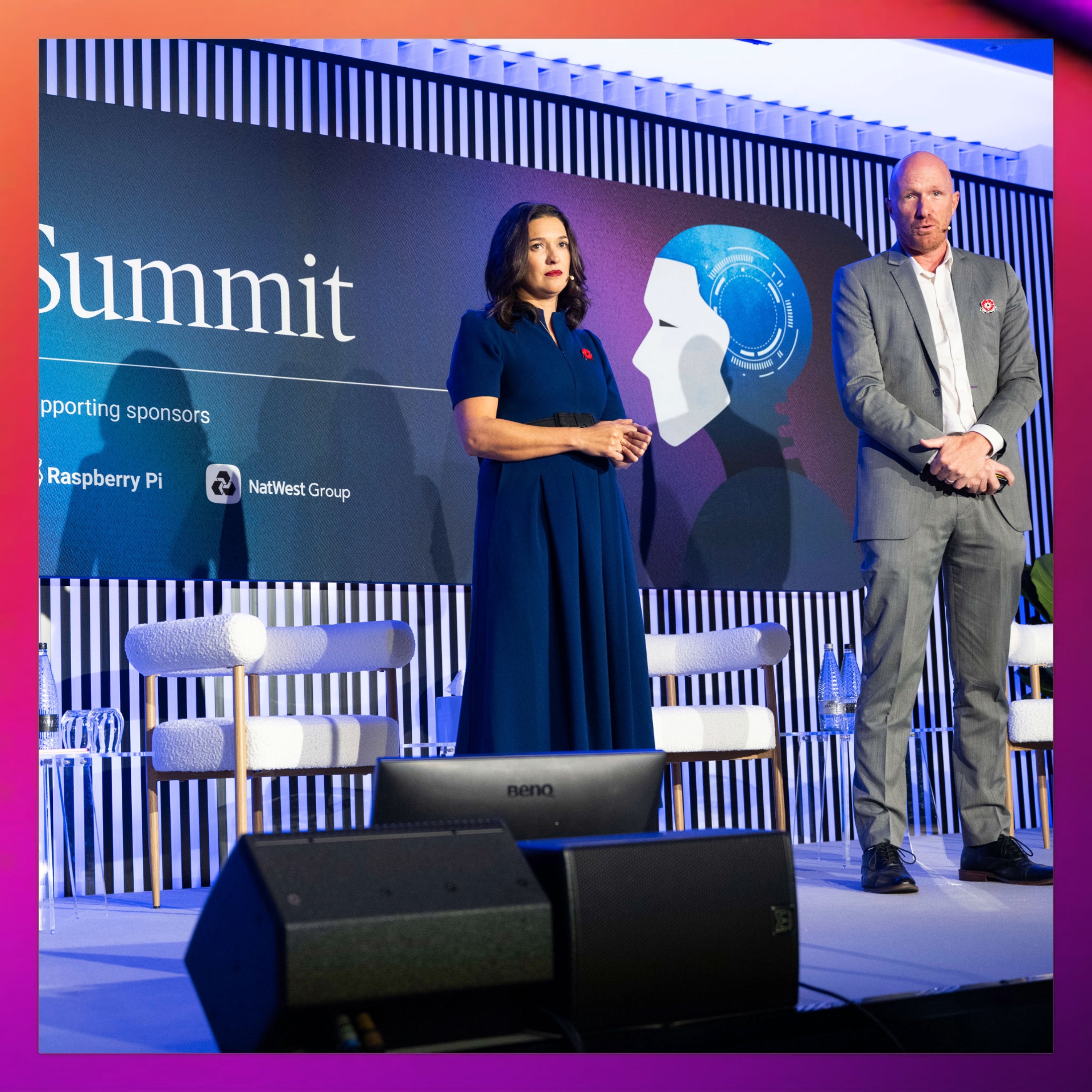
3:04Professor Sébastien Ourselin: Well, today we're looking at those questions from two perspectives, the broader research and clinical view, and how one company is trying to apply these ideas in practice. To help us understand that, we are joined by Professor Sebastian Orsela, who is Director of the London Institute for Healthcare Engineering at King's College London, and Emil Stipp, the Chief Executive of Vitality AI. Hello, and thanks very much for joining me. Sebastian, if I can start with you. Just tell us a little bit about what you do at the Institute.
3:38Emile Stipp: So I'm Professor of Healthcare Engineering at King's. So my day job those days is not only to do research as well to lead strategic development. So the Institute is really focusing on medical device and digital health, where AI is really a strong component, and supporting our academics and our researchers to become entrepreneurs, to support them into their journey of scaling up.
4:00Professor Sébastien Ourselin: You've been doing this for a very long time. For years, we've been talking about the importance of AI in healthcare. Have you seen any big shifts in the last five years, particularly driven by generative AI? What do you think is changing in the space?
4:14Emile Stipp: So we started the London AI Center for Value Basel Care, which now became a national activity, started in 2019. Right. So pre-Chat GPT. Exactly. And we've been able to see really how now people understand much better what AI is on one hand, but people are restricted in their understanding of AI. And when you think about generative AI, they mostly think about language and text. Now it's starting to evolve and ambient voice is becoming very important and is becoming ambient scribing is becoming an important part now of a daily usage of generative AI.
4:52Professor Sébastien Ourselin: Which means what AI is recording information and voices.
4:56Emile Stipp: Which means that AI recording what you're saying now and avoiding you to spend too much time writing your clinical notes, spending more time with the patients. But if you look really at the daily basis of a person working into the healthcare workforce in the UK, you will not see AI much. So unfortunately, quite often when people ask me what has changed, I will say the knowledge and the understanding have changed. The public opinions have changed. But the adoptions, unfortunately, hasn't changed. So we've got this fantastic technology, which we know can help. But then when you want to integrate them into an hospital, which is 300 years old, under the lack of guys' hospital, then you end up really in a very big challenge of adoptions and interoperability.
5:40Professor Sébastien Ourselin: So that's AI in the front line of hospitals. But if we take a step back and look at the preventative side, which people are very excited about and want to push, How is it being used there to stop people coming to hospitals, coming to see doctors in the first place?
5:56Emile Stipp: Well, given the crisis we have right now in the healthcare system, it's one of the core foundation of the NHS 10 years plan. If you look really at what's happening on the ground, I would say very little has been done. There is an issue of reimbursement. There is an issue of incentives. At the moment, the system is not based on how do you prevent, it's based on how do you treat and what is the cost of treatment. So if we want to implement this, we need to move away from looking at the disease. So basically a pathway to a personalized pathway, which is it's your own health and we are able to connect your whole activity.
6:36Emile Stipp: And if you talk about AI, we're talking about data driven technology. It means as well more integration of what we have today, having really an understanding of our data, of your data, having yourself being in charge of your own data, being able to have those data being used on your own app, on your own environment, linking your health ring with your mobile phone and your GP record. And then you can start to talk about prevention. Yeah.
7:02Professor Sébastien Ourselin: Amir, I'd like to bring you in now just to talk about that prevention side and what you're doing about it from an insurance point of view. But could you start by just describing what your job entails and where your focus on AI is at Vitality?
7:16Emile Stipp: Thank you. So I'm the CEO of Vitality AI, which is a new venture that we've launched. We're in partnership with Google, but it is really the combination of work that we've been doing for many years. So many of the problems that Sebastian has highlighted in private insurance, we've sort of dealt with it in a sense. We can link records. We can also build in the right incentives. And that really is what the business of Votat is all about. Because what we can see from our data is that lifestyle is such an important factor in long-term health and in preventative health. So how you exercise, how you sleep, what you eat.
7:50Emile Stipp: If you have that sort of data and you also have, over time, you can track the outcomes of people who change their habits, you can see how important it is. And we're talking enormous differences. So for instance, somebody who hasn't exercised all their life, if they start doing just four events a week of about 7 ,000 steps, mortality reduces by up to about 60%. So that means a much longer life, but also years spent in much better health. and the data is really compelling. So what that allows us to do as a private insurer, we have an incentive for people to be healthier because if they are, then they claim less, right?
8:30Emile Stipp: Whether it's health insurance or life insurance, that means there's economic value there. So what we've done since 1998 is to say, given this economic value, we will return some of that value to people in the form of rewards. It could be a coffee, a free coffee every week, encouraging them to walk, to sleep better. It's a discounting premium in the markets where we're allowed to do that. And this idea has really captured the imagination, not only of the industry, but also of customers. So we're currently in 38 countries in the world where this concept is running out and it generates an enormous amount of data and keeps on reinforcing the basic premise that lifestyle is the most important thing that you can do together with how you navigate the healthcare system.
9:16Emile Stipp: So that's also part of where we use AI. And that's about, for instance, doing your cancer screenings when they do, if you're a chronic patient, actually taking the medicines, visiting your doctor frequently. We can see again in the outcomes what a difference that makes to diabetics and to people with high blood pressure. So the opportunity is to bring all of that together, use the amazing capabilities of generative AI now, but really its ability to reason. and if it reasons with the benefit of this data and with the interpretation that we put on the data with longitudinal analysis of better outcomes, that's when we see the magic happens.
9:54Emile Stipp: Because then we can personalize both the actions that people should take, but also the rewards that they get if they do.
10:00Professor Sébastien Ourselin: And how much are you using wearables for that? How much is that being done through an app on someone's phone?
10:06Emile Stipp: So wearables are absolutely a critical part of it. It's also very exciting. There's more and more that you can track with wearables like sleep now. But we have this sort of global system where basically all available wearables link into it, whether it's Garmin or Apple Watch or, you know, Fitbit or any of these devices that people wear can link with Vitality and they navigate it through an app. And the app is a simple user experience, very intuitive. It focuses on what you should do next. And by keeping it simple, we keep people engaged in it as well. And they see the rewards coming through in that way.
10:39Emile Stipp: On one hand, I love the idea and how the future looks like. On the other hand, I'm actually very concerned that we're going to create even a further cleavage in our society when you've got the wealthy warrior being able to afford wearables and the rest of the community who will be left behind and where we'll really end up in a society when the quality of your health and the care you will actually have will really depend on your wealth. I do think the issue though is that almost everybody has a phone and you know what we enable is any device. So and I think that's the opportunity in the NHS as well.
11:16Emile Stipp: It's just a matter of linking the data because you can track steps on the phone. So what we try and do is to make it accessible to people. In other words there's discounts available on the devices. It's an enablement thing. Makes it more affordable. But I think the other thing, which is a very interesting dynamic here in the UK, where you have private health insurance together with the NHS, is that even though private health insurance covers only part of the cost, it means that the benefits of a change in lifestyle actually flows through to the whole system, right? Because the healthcare cost goes down for everybody.
11:50Emile Stipp: And that's why I think, Ford, to the extent that one can influence behavior almost wherever you are, it becomes more and more possible with AI to do so. and it is really a matter of saying let's transcend some of the constraints that we have with systems in the past. That's really where AI is powerful because you can introduce it without necessarily having to re-engineer an entire system, build those barriers across different data sets and actually do it in practice in a much quicker and easier way than was the case even a year ago. So I think there are many opportunities to bring these two worlds together and actually reduce that divide rather than sharpening the divide, which I think is an important objective.
12:30Professor Sébastien Ourselin: All of this, though, requires people to share very personal data. And that's with you or with NHS organisations that are also collecting data of patients, you know, towards research ends, for example. What sort of reassurances do you give people about sharing that data? And how willing do you find, Sebastian, members of the public are to sort of give up their information when it comes to healthcare?
12:56Emile Stipp: Okay, so that's been an extremely sensitive, I would say, overhype challenge. We've done a lot of patient engagement to really understand from the community, from different backgrounds and societal environment, why or why not they will share the data. And I think it's very clear that the public opinion on this is as long as this is going to create benefits to the society, to their loved one, they're very happy to share the data.
13:23Professor Sébastien Ourselin: So as long as it's not for commercial ends.
13:24Emile Stipp: Well, actually, I will counter that. It has to be for commercial hands. Right. Because we live in a world which is heavily regulated. If you are using AI, not from an operational management point of view, but from an intervention or prevention point of view, you will end up having a medical device in your hand. Yeah. So you will end up in a bar by saying, okay, I'm giving you access to those data for research, but I'm not giving you access to those data to create a product. And to me, that's really self-defeating. because you end up having amazing potential just living in a lab while it could really make a difference to patient because we haven't really built the regulatory and the information governance environment and the policies to enable the company to get access to those data.
14:10Emile Stipp: And I think that's an important conversation and we see more and more this conversation coming and data access has been one of the more important conversations we've been having within the NHS. Yes.
14:21Professor Sébastien Ourselin: Absolutely. And some of the challenges you spoke about earlier as well. Emil, what have you found at Vitality in terms of the data sharing?
14:29Emile Stipp: I think we actually don't have a problem with that, but there's a very simple reason for it. We focus on the customers and what they get out of it. So they understand they're sharing their data with us. You tell us you went for a run this morning. We told you that you told us that you went for a run. And we say, here's your free coffee. So when people see what the data is being used for, if it's transparent, if they can see the benefits that they get out of it, then you have no problem. Then people would share it. And in fact, as Sebastian says, they expect you to link the data and to give them personalized advice on the basis of what data we have collected.
15:05Emile Stipp: Obviously, one has to be very careful with how you build it to keep the data secure. There is cybersecurity risks arising with AI. All of those sort of issues are very relevant. And it is very important for us to maintain that trust. But at the same time, it's all about what people get out of it. And if they can also feel that they're getting healthier, if it's relevant to them and they're getting rewarded, you have no problem.
15:29Professor Sébastien Ourselin: Let's end on an optimistic note then. If we look ahead to the next five or ten years, how do you think something that we're looking at today in terms of how people manage their healthcare will stick and improve things?
15:42Emile Stipp: It is truly exciting. Let me just say that. Generative AI, you mean? No, I think how all of this comes together. So think about GLP-1s as an example.
15:52Professor Sébastien Ourselin: When you say GLP-1, you mean the weight management drug?
15:55Emile Stipp: Exactly. If you have struggled with your weight all your life, and it's so difficult to start exercising, and you also don't sleep well, you end up in a position where actually you are now unhealthy with multiple chronic disease. If we bring GLP-1s into the equation, and at the same time we try and encourage people to change their lifestyle and we reward them for it. It is amazing what it does for them. Everything changes. They sleep better. Their life expectancy improves. Everything becomes better. So I think there's an absolutely enormous opportunity to think about how we use this technology to engage people in language that they understand, to track how they're responding to the messages and to the rewards, and then to do that for the benefit of society.
16:39Emile Stipp: We can see from the data, for instance, if somebody exercises outdoor, it's better for their mental health than obviously if they don't exercise, but even relative to indoor exercise, there's all of these things that you can observe in the data. And the power of it is that we can extract causality from it. So we can tell what behaviors cause what outcomes. And with that knowledge, bringing it to AI and its reasoning capabilities, we can have a truly big impact on people's lives.
17:07Professor Sébastien Ourselin: Sebastian, you've got a very interesting perspective on this sitting where you do it at KCL, but also understanding the complex British medical landscape. What are you excited about over the next decade and what do you think is going to change for us?
17:19Emile Stipp: So on one hand, what I'm excited is the potential of going towards prevention and community care service is not only now a wish, it's a must. We must do it. We cannot really afford to continue to spend 10-11 % of our GDP in healthcare. we have to find a way to get out of this spiral. Generative AI, ambient documentations, the usage of this as a potential well-being coach of some sort, I think is very likely to become a reality at some point. I totally get the vision that this can be really transformational. But at the same time, I am very aware, and I think it's a fair point, that we can still create inequality.
18:01Emile Stipp: And a lot of what we discuss about here is really for people who worry about their health. And we need to catch the other part of the community, the one actually which costs a huge amount of money. And unfortunately, there is a huge correlation between comorbidity and multiple morbidity and your social demographic information. So we need to make sure we dialogue, we talk with those communities, we find a way to interact with them and to bring those technologies. And we have to go to communities. That's the only way we will solve the healthcare problem. And I think AI has a huge potential to help to solve this.
18:39Professor Sébastien Ourselin: Sébastien Ossola, Emile Stipp, thank you so much for joining me. Well, my thanks to our guests, Sébastien Ossola and Emile Stipp. This episode of Times Tech was brought to you by Vitality, a health and life insurer focused on prevention and encouraging healthier lives. If you'd like to learn more, you can search Vitality Health or Life Insurance.
19:06Professor Sébastien Ourselin: This episode of the Times Tech Podcast was sponsored by KPMG.
19:10Emile Stipp: One of the themes we keep coming back to is the gap between AI ambition and real world application.
19:17Professor Sébastien Ourselin: And that's where KPMG is focusing its work, helping organizations move beyond pilots and think about how AI can change the way the business operates and how it fits into wider processes and decision making.
19:29Emile Stipp: You can find all their insights and how they can help your organization make the difference through successful AI workforce adoption. Visit kpmg.co.uk slash AI.
19:42Professor Sébastien Ourselin: This episode of the Times Tech podcast is sponsored by ServiceNow.
19:47Emile Stipp: There's a lot of excitement around AI right now, but the problem is what happens after the demo.
19:52Professor Sébastien Ourselin: When you have to plug that technology into a real company.
19:55Emile Stipp: Different clouds, different data, different systems that were never designed to talk to each other.
20:01Professor Sébastien Ourselin: ServiceNow's platform is designed to help people by connecting these pieces, enabling organizations to coordinate work across departments, tools, and increasingly AI agents.
20:11Emile Stipp: In fact, the company says more than 80 billion workflows run on its platform every year.
20:16Professor Sébastien Ourselin: Which gives you a sense of the scale of operations it's designed to handle.
20:20Emile Stipp: Learn how ServiceNow puts AI to work for people at servicenow.com.
20:28Emile Stipp: Here's a tip for you.
20:29Professor Sébastien Ourselin: There's a podcast out there with fans waiting to be your next customer. They tune in every week. They trust the host. And that host wants to talk about brands like yours in their own words to their audience. The problem is you just haven't been introduced yet. We're Acast, where that introduction happens. As the world's largest podcast marketplace, we let you browse shows, see who's listening, and book host-read sponsorships or run your own ads all from one platform. Transparent pricing, real-time data, complete control. Start advertising on podcasts by visiting acast.com slash advertise.
This episode of The Times Tech Podcast is in paid partnership with Vitality.
AI is already changing medicine. But could it also change the everyday choices we make about our own health?
This bonus episode asks whether AI can help shift healthcare from treating illness to prevention – from wearables and personal health data to personalised advice and AI-powered wellbeing tools.
With Professor Sébastien Ourselin, Director of the London Institute for Healthcare Engineering at King’s College London, and Emile Stipp, CEO of Vitality AI, we ask whether technology can help us live healthier lives and what happens to our most personal data along the way.
Hosted on Acast. See acast.com/privacy for more information.