Ask ChatGPT

 Times Tech
23 Jan 2026 · 37m · 17 chapters
This episode discusses the geopolitical implications of technology in light of current events, particularly focusing on the relationship between Europe, Silicon Valley, and the influence of U.S. politics. The conversation explores the notion of "tech sovereignty" in Europe and concerns over dependency on American tech giants. The hosts engage with guest Hany Farid to delve into these issues, examining the risks associated with a potential "AI kill switch" and the broader landscape of digital autonomy.
Written by AI. May contain mistakes.
The hosts discuss the current geopolitical climate, including Trump's actions and their implications.
“confusing the names of Greenland and Iceland.”
Exploring how dependency on Silicon Valley tech giants raises concerns for Europe.
“Could Donald Trump start to use your power in technology as even more of a weapon in the trade wars?”
Discussion on the potential for a 'kill switch' that could affect countries' access to US tech.
“It sounds completely nuts, but it's the idea that the White House could lean on US tech companies to switch off their services to other countries.”
Evaluating the implications of cloud services being dominated by US companies and calls for European sovereignty.
“But also, I don't think it's a total like non zero chance, which again, is just speaks to the moment we're in.”
Hani Farid shares insights on the trustworthiness of big tech and its implications for the future.
“Where your president has been speaking about his bid for Iceland, Greenland.”
A deep dive into the implications of AI development and the competitive landscape between nations.
“Because everybody's, you know, part of the, one of the big themes is like, we've had 25 years of the internet.”
Explore how nations are regulating technology amid fierce global competition.
“not just within Silicon Valley, but across nation states, right?”
Discuss the importance of nurturing local talent and innovation in Europe.
“And you've seen that, for example, with this latest nonsense from Grok AI and Elon Musk, where they're creating child sexual abuse material and non-consensual intimate injury.”
Understand the changing job landscape for computer science graduates due to AI.
“If you go to academic conferences today as compared to 10 years ago, completely dominated because they are pouring hundreds of billions of dollars into research and academics when this country here in the U.S.”
Learn about AI independence and the challenges of developing local solutions.
“And the combination of those three things are what are contributing to this.”
Examine the risks of dependency on US tech companies amid political pressures.
“But the other answer is as you add your own guardrails and you fine tune it and you add data over time, you can overcome if there are biases or if there are issues in there.”
Discover the importance of protecting digital communication from AI threats.
“And on this other notion of responsible AI, because we've been talking for a while now, we've neglected to mention you have your own company called Get Real.”
Discussing the failures of capitalism in the tech industry and the emergence of a tech oligarch class.
“It's sort of like, when do you fix your roof?”
Exploring Europe's potential to catch up with big tech amid concerns over technological and financial gaps.
“I think this is a failure of capitalism.”
Analyzing how talent is shifting in response to power dynamics in the tech industry.
“I think that could be actually quite consequential, especially as we look back, I don't know, three, four or five years from now.”
Debating the prospects of Europe establishing its own strong tech identity independent of US influence.
“So I think that that was really interesting just to hear his perspective again, seeing like who his students are, how they're feeling, what's happening in terms of funding.”
Discussing the role of technology as a geopolitical force in the age of AI and its implications.
“So you're all of them are like kind of playing the same game with, you know, just immense financial stakes.”

Get the gist, explore an idea or ask about something said.
 Claude
On Times Tech, what are the key points of this episode?
Searching your listeningAutomatic transcript. May contain errors.
0:04Hello and welcome to the Time Stack Podcast where every week we unpack how technology is reshaping business, culture and everyday life. I am Danny Fortson here in Silicon Valley. And I'm Katie Prescott here in London. Danny, we are neither of us at all for once where the action is. Are you sad? I am actually. The action, I would say this week, is in Davos, where all the world leaders are gathered together in the middle of what feels like total chaos. And actually, I'm not normally jealous about people who go to Davos, but I do feel a bit of FOMO. Seeing your esteemed president confusing the names of Greenland and Iceland.
0:50They both have land in the name. I guess. Both cold places. In front of such an extraordinary audience of tech leaders and business leaders and government leaders while all of this is exploding would be really cool. Well, so should we just set the scene? What is exploding? Because I think this kind of gets to the big question that we're going to try to talk about this week. So your esteemed President Donald Trump wants Greenland, or Iceland, and has been threatening tariffs on European countries that don't agree with the plan. He now seems to have rode back on that idea. Maybe, who knows. But I have to say, it has made a lot of big players here in Europe incredibly nervous.
1:38Well, so yeah, so I think obviously this is a tech podcast. So what does that have to do with the price of tea in China? I think this debate around geopolitical uncertainty is kind of colliding with the very uncomfortable reality for many people outside of where I sit in Silicon Valley that the world's digital infrastructure, that power over that sits here in a handful of Silicon Valley tech giants. And the question is, should the world worry about that? And will or can Donald Trump, Washington, D.C., the White House, use that power as a kind of point of leverage over others to get what he wants?
2:22And that is exactly the conundrum that we want to explore in the podcast today. We want to ask, does the world's dependency on Silicon Valley matter? Could Donald Trump start to use your power in technology as even more of a weapon in the trade wars? and following on from that how realistic is the idea of any sort of european or british ai or digital independence which is often called sovereignty so to your point around whether we uh you're saturday not there or not i think there has been some interesting discussions particularly from a friend of the pod satya nadella who said this week something along the lines of the kind of prosperity the power of country x or y your country will in the future depend on the price of tokens the price and tokens of course are this kind of the the core commodity of the ai revolution you know they are the measure of you know how much intelligence is going what your question's going in and the answer's coming back and he's kind of equating it to oil or another commodity that kind of makes the world go around and how cheaply you can secure and produce ai tokens is going to be kind of the determinative of your power on the world stage which goes back to this core question whatever it is half a dozen big u.s companies really kind of control the stack and are building it very very quickly and in the context of a very erratic president who has shown himself willing to kind of flex his muscles in all kinds of unexpected ways, it's making a lot of people really uncomfortable.
4:18And I will say, and this is a question for you, this idea of a kill switch, like this is something that's being talked about, I gather, over there, but not here. So what's that about? It sounds completely nuts, but it's the idea that the White House could lean on US tech companies to switch off their services to other countries. If you take something like cloud services here in Britain, about 80 % of the cloud, on which sit all of our services and businesses, right? Government services, banks, the whole financial infrastructure, everything, yeah. Are with Amazon and Microsoft, with about 10 % on top of that held by Google.
5:10And that's been looked at by competition authorities here as should there be more competition in the sector. But people are also talking about something far more sinister, which is should there be more sovereign ownership of the cloud by British companies because of this potential danger that's being talked about more and more that tech could be used as a political tool. So the notion that a president will lean on them and successfully get them to be like, hey, switch off Britain. They're not being nice to me. That doesn't feel realistic. However, I will also just say, and I don't think that will happen, but it's worth pointing out that it's been pretty incredible how supine a lot of these companies have been when you have Tim Cook of Apple going to the White House and giving Donald Trump a golden trophy and funding the new ballroom along with Meta and Google and all these other big guys.
6:14And they've really kind of bent over backwards to just basically do what the president has asked in exchange for very light touch regulation and basically taking all the guardrails off of AI and how it's developed and everything else. So who knows, we're living in a kind of upside down world right now. So I, but in some of the notion that the White House is going to force, you know, some kind of kill switch as a as a lever of power, seems crazy. But also, I don't think it's a total like non zero chance, which again, is just speaks to the moment we're in. And I think it's really striking that the companies themselves have spoken out against this in the past year.
6:54So Brad Smith of Microsoft back in June held a press conference in Europe where he said, we are committing that if any government issues an order that seeks to compel Microsoft to suspend or cease operations and support for Europe out of our data centers here, we will go to court. And so, you know, six months ago, the president of Microsoft has come out and said, hey, we know you're really worried about this, Europe, but, you know, don't worry. we promise we're not going to do that is groundbreaking, isn't it? I mean, it's unprecedented. Yeah, exactly. And I think that kind of really speaks to two things.
7:32One is just the importance of cloud infrastructure as like a utility like water or electricity or whatever. The internet and increasingly access to AI tools is like they say is table stakes out here. It's just like you just need it. and that's in the hands of a very small group of companies. It leads to this question around AI sovereignty, which has been a big talking point in Davos this week and will continue to be, especially in Europe. And so we are looking today at what countries are doing to try and protect themselves and what more they could be doing. And we're going to explore that with a fantastic guest for the pod today.
8:13He is Hani Farid. He is a professor of computer sciences at the UC Berkeley School of Information. He is a leading expert in digital forensics. He's also a founder of Get Real Security, a startup that helps people and companies separate AI fakery from genuine content online. And I would say he is one of the most clear-eyed critics of Silicon Valley's move fast and break things approach to these very powerful technologies that they're developing and putting out there in the world. Really looking forward to hearing his take on all of this. Let's bring on Hani Farid, who's been on the pod before, went back when it was Danny in the Valleys.
8:52Welcome back to the show, Hani. Great to see you again, Danny. Great to be here. And Hani, help us over here in Europe. Yeah, I don't think I can, but OK. Where your president has been speaking about his bid for Iceland, Greenland. And one of the things that people are starting to talk about more and more, which might have seemed crazy a year ago, is the total dominance of US tech companies over critical digital infrastructure and playing into that AI sovereignty. and so if we if we start with that from where you're sitting on the other side of the world to me at the moment should we trust big tech to build out this very very powerful technology responsibly which is one of the themes of davos by the way i assume that's a rhetorical question first of all i would say it's not five big tech companies five individuals and those five individuals were sitting in the front row of inauguration and they are inextricably linked with this administration.
10:02And please understand that, that five of some of the richest human beings in the world who control five of the biggest tech companies in the world, you cannot separate them from the current administration here in the U.S. And that, I would say, is concerning, number one. Number two is when I say you cannot trust these five people and these five companies, it's not because I don't like them. It's because I've been watching the tech industry for the last 25 years, and nobody is looking at the last 25 years of tech and saying, these are the five people who've done a great job and have consistently been honest and decent.
10:35They've not, right? It's been a disaster for the last 25 years. Not to say not lots of great things have come out of tech. They have, but they have run alongside, as we have talked on this podcast many times about, horrific things around child sexual abuse, non-consensual intimate imagery, frauds and scams. We learned, by the way, a couple of weeks ago, that 10 % of Facebook's revenues, Meta's revenues, are from frauds and scams, and they know it. It was from a whistleblower report. That's insane. That's billions of dollars that they know human beings are being cheated of and they are laughing to the bank.
11:08This all came up in documents that were seen by Reuters in 2025. In response to that, in a statement, a Meta spokesman said that 10 % figure was actually rough and overly inclusive. So back to your question, Katie, and it is absolutely true that the U.S., 5 % of the world's population, is going to dictate the future of every country in the world the way we did for the last 25 years of the tech revolution. And to those countries, including the EU, I say to you, envision the future you want and move in that direction. Because if you remain passive the way you did for the last 25 years, that future will be dictated by the likes of Elon Musk and Mark Zuckerberg.
11:49And I don't think that's a future that you want. Are the stakes higher this time? Because everybody's, you know, part of the, one of the big themes is like, we've had 25 years of the internet. Social media has dominated for the past 20. Now we have this new magic machine that, you know, this new kind of digital God that, that OpenAI and everybody else is chasing. Do you think the stakes are higher this time? I do think the stakes are higher for a couple of reasons. One of them is, as you very nicely said, Danny, is that this thing is not just connectivity. It's not just a pipe that connects people in the world.
12:22It's not just I can talk to my friends. It's going to change education. It's going to change the economy. It's going to change the nature of work. It's going to change everything. It's going to change content creators, people like you and people like me on the education side. So I do think there is something transformational coming. I don't know if we will see that full-blown transformation this year or next year. Bill Gates always has this great line, which I like. It says that we tend to overestimate what technology will do in one year and underestimate what it will do in 10. I think, by the way, that 10 in the AI revolution is closer to 3 to 5.
12:54But I think that's probably true here. Something very dramatic is happening. I don't think we have a full picture of it yet. Now to your question. We always talk about how technology moves really, really fast. But if you look at the last waves, let's do the personal computer revolution. That was roughly starting in around 1950, the beginning of the computer revolution. took about 50 years for roughly half of Americans to have a personal computer. Five decades. The internet revolution, as you said, took about two, two and a half decades. The mobile revolution took less than 10 years. And the AI revolution is, we can now count this in a handful of years, right?
13:28Open AI went from zero to a billion users in a relatively short time. So things are accelerating. And of course, they're accelerating because once we have personal computers, once we have internet, once we have social media, the AI is a natural integration point. And of course, this technology is very different. It's not just about handing you information. It's about doing the hard work that we're used to doing. And it's going to fundamentally change everything. I think the stakes are higher. And if you also, if I can say the last thing about this, there are many reasons why the stakes are higher.
13:55One is the core technology. But the other is if you look at now the hundreds of billions getting on trillions of dollars that are being poured into these tech companies, it is a fierce, fierce battle for the future, not just within Silicon Valley, but across nation states, right? China is now competing. And so now you're looking at a fast race. Nobody wants to pause and take a breath and ask, should we be doing this? How do we do this safely? And when that race is as fierce as it is, I think this is when we start to make mistakes the way we've done in the last two decades. I think we want to get onto the danger of the dependency of the world on these five companies, as you said shortly.
14:32But to your point about saying Europe needs to move towards the future at once, I think it's a phrase you use. How do we do that? I don't think there are easy answers here. So some of them are already being done, right? You are seeing the UK and the EU regulate tech in a way that you are not seeing in the US. You're seeing the Australians do the same thing. The Canadians are making moves. So you are seeing nations outside of the US being like, wait a minute, you don't get to export all the nonsense just because you're one of the richest people in the world. So I think that kind of regulatory pressure is smart and it's good.
15:05And you've seen that, for example, with this latest nonsense from Grok AI and Elon Musk, where they're creating child sexual abuse material and non-consensual intimate injury. And Elon Musk is saying, oh, that's just because you don't like this because you want to quench free speech, which is complete nonsense. And the EU and the UK said, no, no, no, no, no, no. And they've opened investigations. And I think that's part of a solution, number one. And it must be said, by the end of that photo editing scandal, X said people would no longer be able to edit photos of real people to show them in revealing clothing.
15:38Okay. Number two is you need to start innovating. It's great for the EU and the UK to regulate. It's good. It's important. And they have done really good things from GDPR through the DSA and the DMA. But you need to start... And one of the great things about the assault, by the way, on the American universities is a lot of talent is now staying in Europe and abroad. That's true. I feel like there's a reverse brain drain to us at the moment. It absolutely is. And you need to harness that. Bad news for me, good news for you, But you have to harness that. Right. And that means putting a lot of money into academia, into research, into startups.
16:13Don't turn this over to Palo Alto and Silicon Valley. Homegrown. Right. You can do this. Here's the great thing about the world today is, you know, look, this technology is incredibly complicated, but we know what to do. Right. The number. First of all, you use AI to write most code these days. Right. You can empower people in a way that you couldn't do 20 years ago. And so I'm all for countries starting to harness that talent that is now staying abroad and building their own solutions that work for them and within sort of the norms and the decency that they want to see and not be vulnerable to what Elon Musk and Mark Zuckerberg are exporting.
16:49You can innovate. And look at what China is doing. They are dominating in this space. If you go to academic conferences today as compared to 10 years ago, completely dominated because they are pouring hundreds of billions of dollars into research and academics when this country here in the U.S. is doing exactly the opposite, a complete and utter assault on the academy. Well, I was going to say, because you have a unique perch, because you obviously you're at Berkeley, which is one of the top computer science schools in the world. So, and you mentioned like this idea of like some, something like a reverse brain drain.
17:22What, what are you seeing actually in the classroom on campus? And if you could talk a little bit about that China piece, because I think that's also interesting and perhaps not fully appreciated by people. Yeah. Well, there's a couple of things I'm seeing, which are fascinating. Because if you would ask me two years ago, I wouldn't have predicted this. So one is UC Berkeley is one of the top three, let's say, computer science programs in the world. over the last two decades, students who graduated here with computer science degrees had a run of the place. Five, six job offers,$100 ,000,$250 ,000 starting salaries at all of 22 years.
17:56It was amazing. They could do whatever they wanted. That's not true. I have students in my office bawling their eyes out because they can't even get an interview after sending out 100 resumes. Really? It's happening at Stanford. It's happening at MIT. And there's a number of things at play here, by the way, the story you're seeing in the press is AI is taking jobs. That's actually not true. Two things are happening. One is, first of all, the tech companies were bloated to oblivion. We know this, right? They were overhiring as a way of starving other companies and startups from talent. So they would hire people not because they needed them, because they just wanted to starve the rest of the industry.
18:32So they were all bloated, number one. Number two is AI is making jobs more efficient. But number three is these companies know that something big is coming. We are going to change the way we work in the coming year or two. And what they're doing is they're ripping the place down to the studs. And then when this technology really hits, agentic AI, full-blown AI assistance, they're going to rebuild. And so there's this sort of preparing for the winter, if you will. And then when it really breaks, everybody rebuilds. And the combination of those three things are what are contributing to this. Just circling back to the conversation around AI sovereignty and like what you can build and kind of develop on your own shores, so to speak.
19:13Yeah. So first of all, please understand that I think AI chatbots are going to replace everything. They're already replacing search. I don't remember the last time I've done a Google search, to be honest with you. I think they're going to change social media. If you look at Sora's app, it wasn't just a generator. It was a feed, right? They're coming for it all. They're coming for porn. They're coming for social media. They're coming for search. And of course, they're coming for learning, education, and for work. This is it. You know how this goes, too. Google was the winner in internet search, right?
19:44And so people, there will be a number one and a distant second and third. And everybody's vying for that top spot because it will have everything. And so, but think about the power of that. At least with Google, at least, yes, they could put their thumb on the scale with what they surface. but you had a chance to go to page 10 and find something that maybe was hard to find. When you ask Grok or Claude or Chad GPT something, everything is being filtered through this one company's view. But think about the power you have if everything is being filtered. And I will tell you, for example, that my students, kids who are now 18, 19, 20, 21 years old, they talk to it as if it's a therapist.
20:24They talk to it as if it's a teacher. They ask advice about everything. It's everything. It's just a stream of consciousness of talking with it. And imagine that your entire world starts getting filtered through and guided by this one thing. Think about that power. Okay, now, how do you get sovereignty? Here's the bad news and the good news. The bad news is, you know, these systems are really, really hard to build, very expensive. But the good news is there's foundation models out there. There are models that are pre-trained, basically understand how large language models work, right? We have a pretty good understanding of the underlying technology.
20:57And so companies can start doing this. They can take foundation models and start fine-tuning them with the rules and the types of data that they want to be relevant to them. And so you're essentially starting 10 rungs up on the ladder. You don't have to start from the bottom of the ladder. And does it matter, though, that those models that another company would create are still underpinned by, as you've described, three American businesses? The answer is yes and no. I mean, to some degree, yes. You're inextricably linked to that. But the other answer is as you add your own guardrails and you fine tune it and you add data over time, you can overcome if there are biases or if there are issues in there.
21:38Not entirely. I mean, ideally, you would start from scratch. But starting from scratch is incredibly difficult. And here's why, by the way. Because the winners from the last two decades of social media are the winners in AI because of the data. So because the Europeans didn't build their own social media site or large scale one, they don't have the data. So to some degree, they are vulnerable here. But having said that, foundation models are pretty good. And you can take it and take things out that you don't like and add things that you do like and create a different type of experience for users that is privacy-preserving, doesn't push disinformation campaigns, doesn't create child sexual abuse material, and so on and so forth.
22:24can i ask about the extreme fear of european dependence on on us tech and it's not just about ai but it's also about things like cloud services when people talk about the idea of donald trump putting pressure on tech companies to potentially switch off their services to other countries. Do you think that is total pie in the sky? Or do you think people are right to be worried about it? You're shaking your head. There is nothing that starts with the sentence, Donald Trump might, is that pie in the sky? I mean, look, I mean, this is not a partisan issue. I mean, this is a president who has shown quite clearly that there is no more lines in the sand.
23:05So is this a president who would say to one of the big tech companies, do this or else? And will they do it? Yes and yes. And we've already seen this. We've already seen the big tech companies equiace and take a knee to this administration. And that is really disconcerting. And it's coming back to something we were talking about at the top of the hour. You cannot separate out big tech from politics. And it's not just a Donald Trump issue. When Joe Biden was in the office, they cozied up to Joe Biden. I mean, they may have their own political views, but they also know where the seat of power is and they are willing to cozy up.
23:35And when the U.S. did a hard right with Donald Trump, every tech company went right with him. And when we went left with Joe Biden, they moved further left with Joe Biden. So I think they're just following the winds. They're just doing what they do to protect their shareholders. That's all. But yes, I think that is a legitimate concern. I'm concerned about conflict zones like Ukraine, like Gaza, like Venezuela, soon to be Greenland, I'm told. But I'm also just concerned that look at the fight right now with Europe over Greenland and look at the threats that Donald Trump has been saying. Is Is there a scenario here where he says, all right, turn off Starlink, turn off Google search, turn off AI, everything off, off, off, off, off.
24:14Think about it as sort of terrorists, but in the reverse, right? We're just going to take this away from you. Is that a possibility? Sure. And I think that should worry Europe for being this dependent on the Americans. Think about, as you said, cloud, email, social, mobile devices, now AI, everything. It's everything. I know. I'm thinking about more and more. Yeah. Yeah. And on this other notion of responsible AI, because we've been talking for a while now, we've neglected to mention you have your own company called Get Real. Get Real Security. Get Real Security. So I'd love to, if you could just briefly describe what that is and what you are seeing on that cold face, because I think it speaks to kind of the broader theme we're talking about.
24:58I co-founded Get Real Security just about three and a half years ago. I'm the chief science officer right now. And we are developing technology that can look at any file, image, audio, video, or any stream like this call we're on right now in real time and tell you if you are talking to a human being, if that human being is a deep fake, if they're an agent, are you actually talking to a real human being? And if you think about where we have been going for the last 25 years, the amount of our personal and professional lives that is done on this square 18 inches on my screen is phenomenal. right everything we do just remote work interviews personal connections and suddenly you can't really trust this anymore i mean a couple years ago danny you and i've had many conversations about this all right we stopped trusting what you see on social media for the most part we know a lot of nonsense fake content but i got a video call with danny i know it's danny but not so much anymore so what we are in the business of doing is developing technology that can protect the streams and the files.
25:58And what we are seeing in terms of threats of AI is bad guys from state sponsored actors to cyber criminals are leveraging deep fakes and generative AI to do imposter hiring. The North Koreans have perfected getting jobs in IT companies and sending those checks back to the government to fuel the North Korean government. I have not talked to a single Fortune 500 company in the last year that has not been impacted by this in one way or another. Imposter hiring. Imposter hiring. So it falls into three categories. The North Korean state-sponsored actors that are getting jobs in American companies and stealing intellectual property, planting and malware.
26:35But in most cases, just collecting a check. And that's what is fueling the North Korean government. It's fascinating. You are also seeing people hiring people to do interviews for them. So you hire somebody who's really good at interviewing, they get a job. And think about this. If you interviewed somebody for a job and they start your job a month later, Is anybody connecting the dots between those identities? The identity of who interviewed and the identity of who showed up at work? No, they're not. The other thing we're seeing is we were just talking to a very, very large tech company. Every time they do a password reset or a credential reset, you got to verify identity.
27:04How do they do that? They usually get on a call and be like, oh, that's your face. That's your voice. That doesn't work anymore. So we are trying to build, it's essentially the anti-AI technology. It's the flip side of this coin, which is how do you protect against large language models deploying agents who show up on your calls and God knows what they're doing. And what I'll tell you, because you asked the question, Danny, is so when we started the company a little bit more than three years ago, you knew something was coming, but we didn't quite know what it was and when. And I will say just in the last six months, so from roughly mid-summer of last year to today, the tenor of the conversations that we are having with Fortune 500 companies here in the U.S.
27:46and abroad is amazing. Like suddenly this has gone from a hypothetical, this may happen, to, oh, this happened, we need to fix it. And, you know, this is cybersecurity. So everybody does nothing until they can't ignore it anymore. They get hit hard and then they come in and fix it. It's sort of like, when do you fix your roof? When the rain starts coming in. So we're building those technologies to protect institutions. Do you get invited to any dinner parties out here, given your views of Silicon Valley? Are they like, oh, God, we can't have honey here. It's not Scott. Not anymore. Not anymore, Danny.
28:21Thanks in large part to you, by the way. Look, I mean, there was a time where I thought reasonable people could have reasonable conversations. I don't see that right now in Silicon Valley. I think this is not a failure of tech. I think this is a failure of capitalism. This is capitalism run amok. And look, capitalism is good. It's brought phenomenal advances to our society. But there's got to be some reasonable guardrails. And we have not put those guardrails on. And it's getting harder and harder to put the guardrails on because we've gone from multimillionaires to multibillionaires to soon to be multitrillionaires.
28:58And the power that comes with that at the geopolitical level is phenomenal. And that I worry that we've essentially created a tech oligarch class that gets to decide what 8 billion people in the world see, read, hear, believe. And I don't think this ends well for us as a society. so despite all the negativity from him and you know he he completely seemed to back the idea that your erstwhile president could switch off tax services to europe there was actually quite a lot of positivity too i mean i was really heartened by the fact that he thought that europe could catch up in many ways with big tech yeah i think that's what so many people are worried about actually is that the advantage that the the um gap the technological gap and financial gap is so vast that it's kind of impossible and i do think you know this reminds me of um this little inside the forts and household perspective at the at dinner every night we do rose bud thorn rose is the best thing that happened but is the thing you're most excited about and thorn is the worst thing that happened oh that's sweet yeah with kids go around we blah anyway but there's like real rosebud thorn here where it's like obviously the thorn is very obvious which is just like these companies are so powerful they're operating virtually unencumbered and just going a million miles an hour and operating most important technology everywhere correct correct so big thorn But the rose around, you know, the havoc that has been unleashed in academia, in institutions all over the states is actually leading to a kind of redistribution of talent or a kind of talent staying home or talent leaving and going to other places.
30:51I think that could be actually quite consequential, especially as we look back, I don't know, three, four or five years from now. If you're having like, you know, a lot of the best and brightest being like, you know what, I'm not going to build this in America or I'm going to build an alternative because I'm deeply concerned or whatever it may be. So I think that that was really interesting just to hear his perspective again, seeing like who his students are, how they're feeling, what's happening in terms of funding. All of that stuff is very real. And that's, you know, that's a bit of a slower burn.
31:24And that works in so many directions with bright students here or elsewhere, not necessarily wanting to go to the States. But also we are seeing a lot of very bright academics and business people actually in the US who want to come over to Europe. And just anecdotally, I was speaking to someone who was involved in headhunting the new boss of ARIA. do you remember the uk's version of darpa yeah and they said they'd never seen such an extraordinary candidate list of americans before in any of these searches yeah because it was like this opportunity to run a very cool tech institution maybe not doing frontier tech yeah yeah frontier tech in london english speaking but in europe and away from and this notion of just being proactive right of like don't just sit by and let this all happen again what's the last 20 years of social media have been be like actually you know regulate also innovate actually be like be active to have a seat at the table because i think you know if you listen to jd vance or trump or any of these guys are like oh europe all you do is regulate while we innovate and i think there's some truth to that but also i think it's it's right there should be more regulation but i also think again we tie that to the redistribution of talent i do think there's a real opportunity to be actually you know what we're gonna we're gonna build something that is on our shores that is powerful that serves us and is not wholly dependent on those five dudes that he referred to yeah but i tell you what sitting here it does feel like sisyphus pushing a boulder up for sure how on earth you even start to get independence from yeah any of these companies if you know we believe this idea that that we need it how you reverse decades of infrastructure i just don't know and i also i just again i come back to that just a financial imperative pushing all of this along again especially like open ai is the big is the big one but even you know google with gemini whatever like they're losing open in open open ai's case set to lose you know a hundred potentially hundreds of billions of dollars you know anything that puts a break on closing that gap and breaking into the black, I can't imagine they're going to do, you know, so it is just, and it's them and it's Anthropic and it's Google and it's meta and it's XAI.
34:10So you're all of them are like kind of playing the same game with, you know, just immense financial stakes. And we know how that goes, just as, as Hani said around kind of capitalism, we know how that works. I have to say, I've never seen so much patriotism in European tech before. I speak to tech founders here all the time who do speak about this as a race, right? To develop AI, to develop their businesses. And they don't want to sell out to US tech companies. It's a sort of badge of honor. Yeah. I mean, do you remember when we had Anton from Lovable on? So the enormous vibe coding business here in Europe, Swedish company valued at about six and a half billion dollars.
34:59he said it is harder for me to be in Europe but I want to be here yeah and it feels like his generation really really do and I don't know maybe I'll be eating my words when they sell out to Anthropic or whatever but yeah but it does feel like it's a change happening yeah and I think there's a it kind of makes me think of NATO that's not too much of a stretch but like you know there was the whole u.s security guarantee where it's like okay we have all the big ships and all the big guns and we're going to pay for it all and kind of create this you know juggernaut that provides security for everybody and then trump was like we're not going to do that anymore you're on your own pay your own way all the and like you saw all these european nations kind of react and i'm not saying it's good bad or indifferent just like factually like defense spending has gone up there's a complete rethinking of this dependence on america and it's like it feels similar in tech that there's this moment where like people are stopping and being like whoa what are we doing here and again it feels very very hard to stop that super tanker but it does feel like especially in davos this week it feels like it's very much kind of of the moment which is really interesting to see how it plays out so there we have it we've just solved the world's problems but tech is a weapon it's a geopolitical force it sure is particularly in the you know in the era of ai yeah so dear listeners we're gonna leave you with that hmm leave that to chew on yeah so i don't know if we answered our big question but i think we certainly added some layers to the answers some food for thought yeah exactly exactly nom nom nom that is it i'm afraid for this week's episode of the Times Tech Podcast.
36:48Not from Davos. Not from Davos, but, you know, maybe happily so. If you are enjoying the show, please follow or subscribe or do leave us a rating or a review because it helps other people to find us too. Yes, indeed. And thoughts, suggestions, compliments, comments, complaints, whatever, techpod at thetimes.co.uk. Reach out. Let us know what you're thinking. See you next week. Bye-bye.
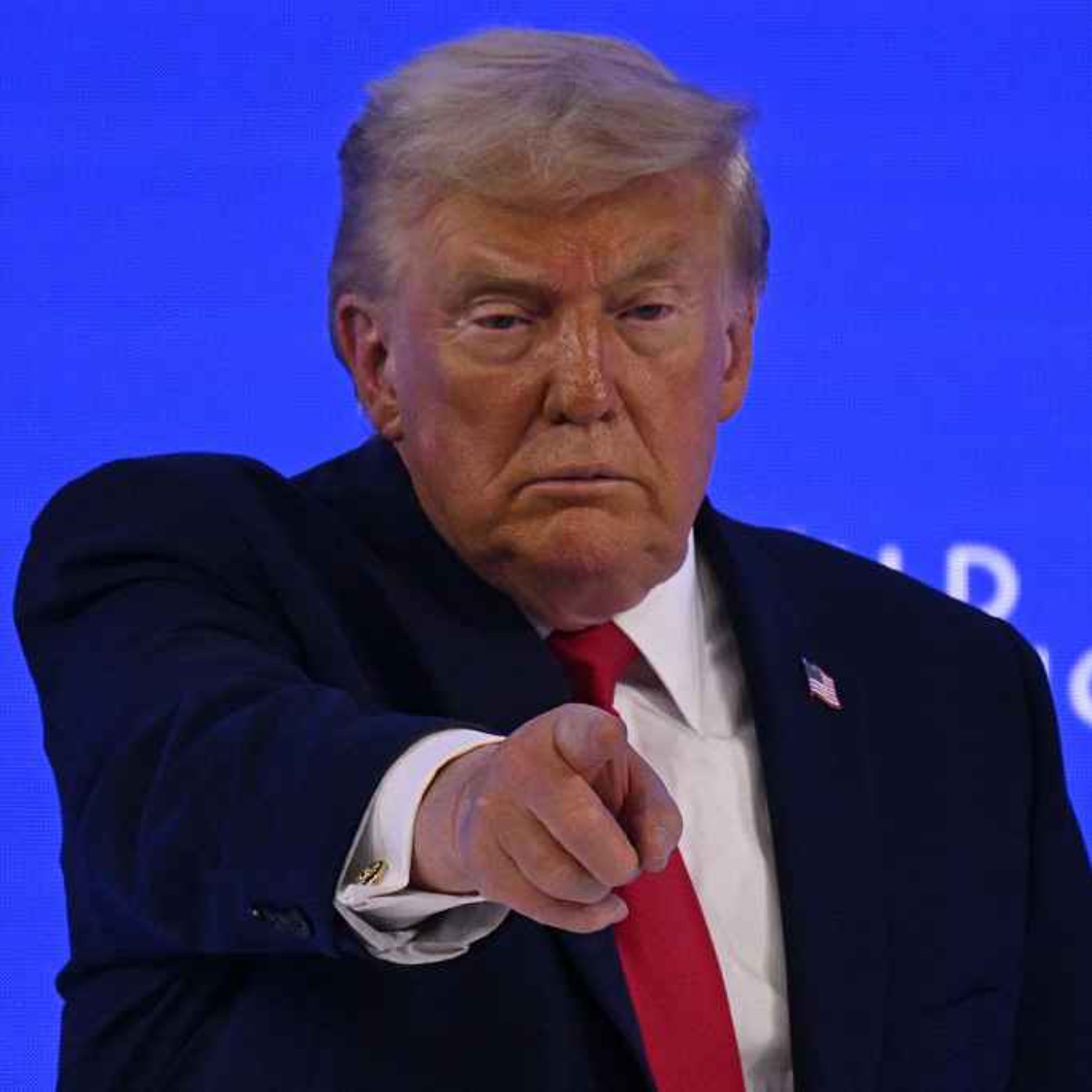
World leaders in Davos are talking about 'tech sovereignty', but can Europe or the UK really achieve digital autonomy when so much of the AI and cloud infrastructure is controlled by a handful of US firms? Danny and Katie talk to Hany Farid about the geopolitics of tech, and the fear of an 'AI kill switch' - is this scaremongering or a real concern?
Guest: Hany Farid, UC Berkeley professor and Co‑Founder & Chief Science Officer at GetReal Security.
Image: Getty
Hosted on Acast. See acast.com/privacy for more information.