 Ask ChatGPT


The episode features discussions on the UK's Advanced Research and Invention Agency (ARIA), which aims to replicate the success of the US Department of Defense's DARPA. CEO Ilan Gur shares insights on ARIA's mission and vision.
Written by AI. May contain mistakes.

Get the gist, explore an idea or ask about something said.
 Claude
On Times Tech, what are the key points of this episode?
Searching your listeningAutomatic transcript. May contain errors.
0:02Hey, everybody. Just a quick note before we get into today's show to say that we recorded before a very big announcement in tech land, which was of the design firm. founded by Sir Johnny Ive, the creator of the iPhone. Now, we will get into the nitty gritty of it all next week, but the idea is very big here. It is potentially, you know, a moment for the tech industry because the conceit of them getting together is that the iPhone is nearly two decades old and Ive and his team have been working on something that is entirely new, a new piece of technology that is purpose-built for these new AI systems.
0:44They have a prototype that's working and potentially we're going to have something entirely new, except maybe that successor to the iPhone that people have been trying to figure out for years and years and years, which is, of course, the most important product of one of the largest companies in the world. So if they can pull it off, this new piece of tech could change the way we interact with technology. So a lot to unpack, which we look forward to doing next week. But until then, please enjoy this week's episode, which is very good fun.
1:20If you see something and you do not like it, is it good, quite good, or quite good? Like, how do you use the word good? It's quite good, or generally all right. All right is bad. All right could be good or bad. How does one know, though, if you are not from these shores? I think there's just this sort of implicit understanding. If something is bad, you just say it's bad in America. And if you say it's good, it's awesome. Yeah, I mean, that's because you're an amazing, straight-talking American. One of the things I've learned from you is to, I think, be more enthusiastic and present my offerings to this podcast in a more optimistic fashion.
2:04This is a British thing, though. This is a British versus American thing. Exactly, because I think British people in general are worse at blowing their own trumpets. Do you say I'm blowing my own trumpet all the time? Oh, my goodness. Or just generally being positive or enthusiastic, which is why we always say that Silicon Valley is so much more successful than the tech scene here because you tend to be more ambitious, more forward-thinking and less all right. Yeah, it's all right. How was your invention? How was your invention, Mr. Nobel Prize winner? Quite good.
2:49This is the Times Tech Podcast and I'm Katie, Katie Prescott, and he is Danny, Danny Fortson. Today, Katie has been speaking to the CEO of the UK's answer to DARPA. And this is more exciting than the acronym sounds. DARPA is the US Department of Defense's Defense Advanced Research Projects Agency, which was responsible for, you know, creating things like the internet. I've heard of that, yeah. So what is the British DARPA called, Katie? It says the Advanced Research and Invention Agency, or ARIA, and it's sponsored by the Department for Science, Innovation and Technology, created by an act of parliament and the promise of£800 million a few years ago.
3:33so aria the a-r-i-a was created by the d-s-i-t which was actually created by an aop act of parliament did i get that right you did yeah yeah yeah exactly thank you well very cool so what where is this where is the what is aria and where is it where does it come from it was created by dominic cummings you remember him yeah arch brexit here a couple of years ago and it And the idea was to mirror the success of DARPA. So he thought, OK, we're going to try and put some money, 800 million pounds. We're going to establish this body with an act of parliament and its job, which is so weird for a government backed body in the UK, is to use taxpayer money to place bets on tech that might not come off.
4:27Well, we were speaking earlier about kind of the difference between the US and UK. I don't think that that's that is that weird. It was really, really controversial when it was set up because the idea of just investing money in things that might not result in anything at all that the government doesn't get a stake in feels incredibly nebulous. You'll hear in the interview that I did with the boss, Ilan Gers, as a sort of alchemy. And it's quite hard to create the sort of innovation that they're looking for. But what he's done is he decided to approach this by picking great scientists and great technologists.
5:06So rather than thinking, what are the projects that I want to focus on? He went and appealed for great people and 400 people applied for eight places. And these project directors, and they have picked to look at things like brain chips, synthetic plants, and trying to make the compute for AI a thousand times cheaper. So these are the sort of moonshots, and they're working on those in all sorts of different ways. And it's just got its second cohort of directors. And some of the things that they're looking at are perpetual flight. Can we get machines to fly longer than birds? Why does one want to perpetually fly?
5:45I don't know. That could be useful. We'll table that, but that just feels like an obvious question. Don't you ever want to land? Maybe it could be incredibly useful. You never know what these things will lead to. Extending our perception and looking at what if AI could map every scientific argument. Oh, God. Those are the sort of mind-bending things that people are looking at. Anyway, I went along to their offices in King's Cross, which has been rebranded the Knowledge Quarter of London. No, it hasn't. Yeah, yeah, yeah. Come on. It's now, you know, Old Street is Silicon Roundabout. King's Cross is the Knowledge Quarter.
6:27Google's building a land scraper there. They're in the knowledge quarter next to DeepMind and, you know, all the other big tech companies that are meta in a co-working space. So I went along to meet the chief executive who's an American guy called Elon Gurr, and he worked at eARPA, which was the energy version of ARPA. And he also founded something called Activate, which is a US nonprofit helping scientists to turn their research into products and commercializing their science. So he has got the job of building ARIA from nothing. The reason I said that the idea to me isn't that weird is like, you know, DARPA has been around since 58, 1958, post-Sputnik.
7:12And that was the impetus was like, oh, my goodness, the Soviet Union has sent Sputnik into space. We're far behind. We need to fund moonshots, literally. But it's been about a hundred billion dollars since then. and basically there would be no silicon valley without the pentagon and darpa in particular because from darpa came as you say the internet the earliest kind of self-driving car technology they've also put a lot of money into brain computer interfaces so all these like really wild ideas that hey let's connect every single human being on the planet that's a good idea we should totally do that yeah you know there's a huge synergy between the universities in Silicon Valley government funding government projects government defense projects and all these smart researchers coming out of these um universities as well as some of the companies so I think it's actually you know it's surprising it's taken this long if you look at it in those terms absolutely and as always with these things right it depends who you talk to about it so certainly people in the tech community here and also in the USA, it's made Britain's technology scene far more rich.
8:27And it looks like we're taking tech far more seriously to have something like ARIA in place, particularly when you look at the amazing people who are involved with it. So on the board, you've got Sir Demis Hassabis, you've got Patrick Collinson from Stripe. So there's sort of very, very credible people who are involved and backing it. But with all these things, when you're talking about taxpayer funds, people want to know how the money's being spent. And when you're talking about something that is, to use that word again, nebulous, that becomes quite difficult. Right. Fascinating. Let's hear it.
9:03My first question is, for someone like you who's working out in the States and had a family out there, what was it about the job description of an organization that didn't yet exist here in the UK that made you think, right, I'm going to up sticks, change everything, uproot my family and move here?
9:26You know, Katie, there are some times in life where sort of an opportunity presents itself, where you dig into it a little bit and it quickly becomes clear that the question is not, should I do this? It becomes, how could I possibly not do this? And if I'm honest, I think that's what the RE opportunity was for me. And it kind of makes sense if you hear a little bit about my background. So I'm a trained scientist. I got into science for the reason many people do, which is just I loved science and math, and I thought it was cool. And then I got to university, and it became much more profound for me.
10:05I basically started to recognize that all of the things we care about in life, health and prosperity, even entertainment, you know, the way we engage with those things, the way they serve us is really downstream of scientific discovery and invention and innovation. And I realized I was studying the thing that enabled that and allowed that to happen and then started thinking about, well, what are the big challenges and opportunities that we need to solve for the future? I was studying material science and just learning about climate change and realizing, actually, to solve climate, we're going to have to, like, reinvent the physical infrastructure of the world in a lot of different ways.
10:46Like, I can do that with what I'm learning here. I was doing research in academia, and the hard, brutal lesson was it's nice in stories to hear about science translating into these technologies to change the world, but it's really, really hard. and I sort of got set off on a quest, you know, the next couple of decades. I, in retrospect, think of it as a quest to think about how do we get science out of the lab and changing the world. And I've had the privilege of doing that across a number of different dimensions. So probably been involved with about a hundred different projects that are trying to move scientists, cutting edge scientists, discoveries into new technologies in startups, in universities, in academia, government labs.
11:32And there was one big takeaway, which is, it turns out we actually have a lot of amazing ideas on new science that can change the world. And even though a lot of times you talk about, is there enough resources and funding? I don't think that's the bottleneck either. Of the hundred projects I've been involved with, some have ended up being unicorn companies, billion dollar companies, some have created in entirely new sectors or fields, a lot of them went nowhere. And for me, one of the biggest differences was, were we able to find a set of people, the right set of people at the right moment and empower them to go after something ambitiously that most people thought would never happen?
12:13So that was sort of the mental model that I had. And then I get a call from the UK government saying, we're thinking about setting up a new R &D, not we're thinking about, we're setting up a new are a defunding agency. And basically the premise is we have all of this incredibly rich scientific talent and research capacity. We want to find ways to find the right people, connect the dots in new ways so people can go after ambitious things that can really change the world. And I thought, oh my goodness, like, you know, when do you have a chance to do that from scratch? And, you know, I've shared otherwise.
12:48I was pretty skeptical, honestly, because I've heard this story from governments around the world before. And normally you dig into it and you say, all right, well, actually, they don't really have as much of the deep bench of science you need to do this, or the government's just stumbling over themselves in terms of how to set something like this up. And I dug deeper into the ARIA story and realized the intention was really clear. The structure and the policy around it was really robust. And so I think I was appointed in June of 2022. And by August, I was here with my family, ready to start. Amazing.
13:27And it makes sense with your experience in the States, because you were at DARPA-y, that's ARPA-y, is that right? Yeah. And I don't know how much your listeners know about DARPA, but DARPA is, interestingly, one of the ways we talk about ARIA is it was, if anything, just set up to be an agency that funds R &D in the UK differently. You know, if we want different outcomes, we need to do something different in how we stimulate the research and specifically doing things differently with an eye towards how do you get not just incremental improvements and discoveries, et cetera, but really world-changing transformational results and impacts and technologies.
14:07And if there's one existence proof in the world of a funding agency that has done things differently and gotten world change results it's darpa so darpa is an agency that was set up in the 50s in the u.s in response to sputnik really thinking about how do you activate technology to give the u.s a competitive edge in technology relative to the russians at the time so that's a history but they started as funding agency that just funded research in a totally different way much more risk-taking and ambitious, a lot of things would fail. But the things that succeeded were meant to change the world.
14:39And their track record has been over time. The entire computing industry sort of came out of DARPA's early funding, the internet, GPS technology, parts of mRNA vaccines. And so one of the interesting things about ARIA was, OK, great, actually you have this proof point that something like this can work. But what should it look like for the UK at this moment in time? because this is not the 1950s, you know, and it's not the US. And probably the most intimidating thing for me as an American coming to do this was, you know, how am I going to figure that out? I was going to say, no pressure. Yeah. The founding of the internet.
15:17Luckily, I found some great people to help figure that out. And we had some great people here. Can we talk about the nuts and bolts of how it works? Because you, it seems to me, you choose a few areas you're going to focus on. You've chosen project directors. Is that what they call program directors? Yeah, yeah. And you then, how does that work? So you choose certain areas and you think, right, these are what we think are going to be interesting. So we said, rather than top down, do what most organizations would do, run a strategy process, say, here are the areas we want to invest in. We said, basically, we need the right leaders to shape these things for us and to do it in a different way.
15:58So we had this idea of a program director, someone who would be really scientifically deep and technically excellent so that they can see where these opportunities are. You know, not anyone can do that. You have to really be in the technology depth. And ask them to do something that actually you don't have a chance to do in any other organization, which is if you're a great researcher in a university, you're thinking about what's the next paper I'm going to write, discovery. If you're in a company, you're thinking about the next earnings call. We said, we're going to give you a different job. Come to ARIA, and your job is to pick up your head, look across everything that's happening, and ask one simple question, which is if we could direct 50 or so million pounds of UK funds, of taxpayer funds, with the goal of catalyzing something that isn't going to happen anyway, but if it works would be absolutely transformative to the future of the UK, really at the intersection of quality of life and economic growth, what would you do?
16:52and stop and think about that. And that's your only incentive when you wake up. And we actually ended up doing something that felt risky at the time is we just put up a wide open call. And we said, we're looking for the first eight people to do this. And that's going to shape what Aria does first. We got, I want to say we got about 400 people from around the world saying that in a few months, if we gave them the job, they would, whatever great career trajectory they would on, they were on already, They would step away from that, come into this agency that didn't exist because that is such a, you know, it's again, it's one of these jobs where how could you say no given that opportunity?
17:33And if you look at the first eight program directors that came in, they're all technically brilliant, but they're from different disciplines. They're from different backgrounds. Some of them are academics. Some of them were startup founders. One of them was the youngest, one of the youngest graduates ever from MIT. Graduated the master's at 15. He's a mathematician. And they each had a different idea. And what was really important is we told them, you know, we actually, once you get here, you'll think about what you want to do. And ultimately, they shaped seven areas that we have now, we've now funded almost 200 different projects up and down the UK, some of them actually outside the UK, pushing forward seven areas where we believe these are areas that are massively consequential.
18:21If true, they change the entire future of the UK and they're consequential to the world. And yeah, some people are skeptical on some of them, but these are things that otherwise would not be pushed forward. And they cover the realm of what matters to basically you and me and taxpayers and families, right? So it's, you know, we have some around health. We have some around productivity and robotics and growth and AI, a couple related to climate, food security. And, yeah, now we're starting to see the impact of that. And when the programs are presented, do you feel like they are on paper impossible?
19:01I mean, things like just one of them is about making compute, isn't it, cheaper, far, far, far cheaper, a thousand times cheaper? Yeah. And another one I think you've got on robotics, dexterity. When they come to you, do you sort of shake your head? I mean, is that part of the criteria you want someone to present something that feels impossible? Yeah. So we have this line on our website, which is reaching for the edge of the possible. And I think one of the things that's really important for us is, and it's our mandate, actually, from parliament. We have an act of parliament that says you're meant to do things that are risky, that may fail to meet their objectives, because we want you to build a portfolio where one or two of these things really does change the game entirely.
19:41So actually, part of the structure we set up here, actually, all of the structure and the culture and the mindset we set up here was to recognize that our job is to do things that are uncertain and speculative. And the question is, how do you do that sensibly? I've now been in the UK long enough where I can use this word sensible, how you do that sensibly. And I can share a little bit about that. But the short answer is, yes, I often get things where I go, oh my goodness, that is wild. And there's no way that's going to work. But because of the way we've set up the framework here, we can make an informed bet on, is that worth pursuing as a research project?
20:25And do we think that by pursuing this, we increase the expected value of a portfolio that can change the world? Where are you on the development then of ARIA? Because you're still very, very young as an organization, a couple of years old. Yeah. So we are still very young as an organization. One of the key pieces, and again, this is sort of in our act from parliament, is we're not meant to be working on quick wins. These are ideas that should be profound enough and big enough and at the edge of the possible enough where it's going to take time to figure out if it works. One of the stories I tell, one of our advisors for ARIA is a woman named Aslam Turechi, who you may have come across.
21:08She's one of the founders of BioNTech. And what she talks about is how, you know, they had this idea of mRNA as a new way to treat cancer. Maybe it could also be used for vaccines. You know, a decade into that project, it still wasn't clear. People still questioned, is this valuable? Is this worth doing? And then it turns out to be one of the leading vaccine solutions, you know, mRNA vaccines. You think of Ademis Hassabis, another one of our advisors, you know, the time where he had to go through people saying, what are you talking about with AI and super intelligence? And then all of a sudden it is the biggest thing.
21:46So we're really in the stage where I mentioned, you know, we have these seven areas. And each of those areas, what we've done is we found, we think, the right collection of people from across the UK, connected in the right way, amplified with our funding, working on really bold, ambitious things to plant those seeds. Some of which, you know, I'd say our hope, it's really our plan and our mandate is that some of those things in the course of a decade or so turn into the things that, you know, we say, oh my goodness, thank goodness we made that investment.
22:28What do you think the argument is for a government agency doing this rather than the many VC funds that there are around the world? I mean, what's the difference to you? Oh, I think that one's simple, which is VC funds are looking around and saying, where is there an entrepreneur building startup that I can go fund and make money, you know, feel pretty good that I'm going to make money in this area based on what's happening right now. What we are saying is, where are the areas that in a few years, all of those VCs should be funding? They just don't know it yet. So it gives you a freedom, perhaps, that you're not tied to the commercial.
23:10It gives us a freedom, but it allows us to be much more speculative. I mean, one way I put this, and I know a lot of venture capitalists, and as do you, right? Like one of the games of a venture capitalist is to figure out, like, how do I time it so I catch the wave? And if I catch the wave, I make my investment right at the right time. Then when the wave goes, you know, that's going to appreciate enormously, and I'm going to ride that wave. What we're doing is not catching waves based on what's happening right now. We're looking out into the ocean of what's happening in science and in the UK landscape.
23:42And we're saying, how can we generate a new wave? Right. So if you think about scalable or precision neurotech, if you think about our program looking at, you know, a thousandth the cost of AI, it's wait a second. And everyone's missing that if we put these pieces together and it works, it's going to be the wave that every VC in the world wants to catch. And if we do that here in the UK with UK researchers and UK entrepreneurs, like there's no question the benefit will accrue. Let's talk about Aria's funding. I think you've got 800 million pounds over five years. Was that right? And then the next tranche, well, that ends at 2025, 26.
24:23Are you still, and ARIA was set up under a conservative government. We've had a change of regime since. Is that going to change your funding going forward? Have you got any sense of what happens next? Yeah. So I think one of the important things about a project like ARIA is unless you're willing to do it with the right ambition, you probably shouldn't do it at all. And funny enough, when ARIA got launched, the government set the intention of for the first four years, they should allocate 800 million pounds. And if you go back and read the responses to that, you had some people say, wow, that's a lot of government funds.
24:55And you had other people say, DARPA is at$6 billion a year. Is this enough to do this right? And actually, we felt like actually it's a good start. And the initial funding was meant to ramp up to roughly 350 million pounds a year. I got here and the beginning was, as we talked about, like, how do you create the model? And so we built a model to say, what is the robust portfolio that matches that original intent from government? And what that's allowed us to do is create first these seven spaces that I talked about. We just brought another set of program directors on and they're creating a handful of new spaces.
25:34And our view is like, that's then the right scale. You talk to any seed investor and you say, well, how many seeds do you have to do to hopefully get one that hits? And if you're not doing 10 to 20 seeds, you're probably not doing it right. So we're going to end up with 10 to 20 areas that we're exploring and we'll be able to adapt and double down. And then you're waiting to hear from the spending review whether that will continue? Well, the new government has come in and actually Aria was not yet really in fully fledged mode. What's been great is the new government has as its biggest priority, you know, how do we drive economic growth for the future of the UK?
26:11And but with a real strong tie to social impact and quality of life. And that's exactly our mandate. And so there's been a lot of great support from the government, not just for the idea that this can be a powerful level for growth, but for the idea that ARIA was set up to be really independent, to have this portfolio of really bold bets. and actually what we need to do is let that run. We've geared up, the way I tend to think about it is, you know, what's our job here as a team? Our job is to build a machine that we think can accomplish the mission parliament set out. And now it's going to be the government's job to decide how much fuel to put into that machine for the next stretch.
26:49But so far, so good. And you were set up for 10 years, is that right? The ARIA Act said you've got to exist for 10 years. Yeah, this was, honestly, it's these small things. I told you before, I dug into ARIA and I assumed actually this won't work. And then I kept uncovering these things that they intentionally set up. I said, actually, this is signaling that they know what they're trying to do here. And one of them was our act from parliament says that the government cannot shut down ARIA for 10 years without going back to parliament. And obviously, you know, practically the government could decide to defund this and whatever else.
27:26But it's a signal of recognition. You know, the Oslom story, the Demis story that I told. It's a signal of recognition that for this type of work, you might not know until year 10 whether you've hit it. And you need to be able to build that portfolio and stay bold. So we're trying to do that. Yeah. Over your career working through Arpere and Activate and now here, if you had to pick one of your favorite projects that you've worked on, like picking between your kids, like what have you found the most interesting or can you single one out to tell us about? But I, yeah, it's very hard. What I'll say is, you know, the thing that we're all really excited about here now is we have a new set of program directors who just came in.
28:19We brought in eight program directors. Six of them come from really entrepreneurial or industrial backgrounds. And they're thinking radically differently about what's possible beyond what we've already done. So I'll give you one example of something that has me really excited. One of our program directors, Claire, is just wrapping up her job leading an AI research group at AstraZeneca. And she actually has an experience looking at AI in a number of different industries. and she comes into ARIA and we're saying, great, you have all these ideas around how I can move health and other things forward.
28:57How do we push you to think differently and bigger? And what she came back with, I just can't stop thinking about, which is if you look at AI, so much of the value creation right now in AI is how are we gonna collect the data to train the systems to do what we want? Claire has made the point that all of the training data we're building is really biased towards humans. We think about data, we think about language, speech, video. It's all connected to our sight, our sound, our brains. And she said, but if you think about AI, what we know about AI is that it can find patterns in the world and in nature beyond what we can comprehend.
29:42Like that's the powerful part. And so she started to ask the question of what would it look like to start trying to collect data sets that are beyond our perception. And maybe that's going to unlock the biggest impacts from, so what are we talking about? Right? So I said to her the same thing, like, what are we talking about? And then I stopped and I realized Vicky, one of my colleagues here, she told me something interesting recently, which is when she got pregnant, the first way she knew she was pregnant. It wasn't the test. It wasn't anything else. It was her dog started acting very differently well before any other indicators.
30:22And Clara said, yeah, that's the sort of thing I'm talking about. You know, we don't quite understand the olfactory systems or the molecules that dogs are sensing, but we can probably build sensors that are looking at that stuff and are understanding those correlations that we don't. And she's basically said, you know, imagine we could develop a set of sensors that seem foreign or alien to people right now, but are the things that tell you before you get sick that you're sick. So that's one example, you know, and obviously my favorite example is a forward looking one, not a backward looking one, because that's part of the job.
30:57You go, is your mind bent? It is. It is. I hope the structure that they have put in place holds because as you say in all these fraught times where you have everything from the nhs to pothole roads and all that stuff you know the first time there's a you know a negative report or a massive failure that's when the rubber meets the road and there's that's as you said that's the nature of it most of the stuff isn't going to work and there's the rub right it's the bundle of contradictions because you know two years in everyone wants him to be able to say well we've you know done this and we've succeeded in this and actually they may well have done but as he described it they've been planting the seeds and they're not going to reap that harvest for potentially a very very long time and hearing him say that stuff at the end about the dog knowing about the pregnancy you can hear some cynical brits just rolling their eyes like really I could hear some of our audience rolling their eyes.
31:56Yes, totally. But that's not at all to undermine what they're doing. But I just think it's a really interesting cultural experiment as well as a scientific one. And it will be fascinating to see next month whether it does continue to get the funding at the sort of levels that it has before. You could almost hear him crossing his fingers, couldn't you, at that bit when I asked him about the funding? Totally, totally. And the thing is, like, you know, UK has Cambridge and Oxford and all these amazing universities and all this amazing research. Like the raw material is there. And people seem to want to do these jobs as well.
32:29That's really interesting. You said people would just chuck their incredible careers as he did and throw themselves into this. It'll be interesting. Like I said, I wish him luck. But the question is, like, what's the missing bit for the UK ecosystem? Is it an organization like this? Is it attitude as we talked about? Is it the city and just lack of like, you know, that scale up funding? Is it the stock market like we talked about with Deliveroo and others of just like that real inbuilt skepticism and just lack of scale to back these companies that take a long time to, you know, sort out because it's, it'll be a decade before, you know, if any of this stuff really works.
33:14I would say that the UK has always been very good at that early stage tech, which is what they're developing. So they managed to galvanize that. It could be really interesting. Now let's look to something that we think is going to be the future that came out of Google and Microsoft's developers conference this week, which I know you're as excited about as I am. AI agents, the open, agentic web. I am genuinely excited about this. So it's like, I know you love chatbots. Why are you excited? Because I feel like the idea of having an agent, so this is something that can do really complex tasks and you can just send it out to do things.
33:54And that can be personal. So it could be arranging for you and I to go and have lunch somewhere. Or it could be, you know, a little bit more complicated, like some sort of HR task within a company. But the idea is that, you know, rather than you kind of having to type things into software, where you'll just tell one bot and it'll go off and do loads of things. It'll be like a really souped up chatbot. And Microsoft and Google are just piling into this. Yeah, they both made a very big show of it in the past several days. Google at its developer conference talking about, you know, just how capable these agents are and all the things they're going to be able to do.
34:32For me, the way I kind of think about it is, and I may have used this before, but it's kind of like AI's self-driving moment. Yeah. You know, where you're kind of like, oh, this thing can go off and like, this can take control of your, some part of your life or some task and just go off and do it. And it'll just be done. Exactly. And then, and it can engage with other agents. Yeah. You know, I talked to one of the, one of these agent startup companies and he's like, pretty soon there's going to be more agents, more AIs on the internet than humans. Because it's going to be so trivial for you or me or anybody to spin up, not one agent, but maybe a hundred, like doing all these different little things for us.
35:08or companies or whatever. And that pretty soon, you know, it's going to be more machines on the internet talking to each other, doing stuff on our behalf, hopefully on our behalf and not in spite of us or not in our interests. That's the kind of the dark side of it. But it is interesting and it does feel like that's the agent piece of it, as we've talked about before, is the thing that all of Silicon Valley is focused on. Because if you can kind of make this work, that is a revolution in terms of a productivity revolution is the way they're selling it. That is quite profound and can affect everyone.
35:52Morgan Stanley put out a research note. And usually these research notes are so boring. But one of them, they just recently did a survey of 2 ,000 people, 16 years or older. And just asked them about their use of generative AI. so 2 000 kind of normal folks 16 or older 40 percent of americans now so about 100 million people are using gen ai tools that's amazing at least once a month 14 are using it every day that's amazing because i always wonder with these things how how much it's you know we're so in the weeds of it that you know are we are we reflective of everybody else that's just fascinating younger Younger people, not surprisingly, are leading the charge.
36:38So 20 % of 16 to 24-year-olds are using this stuff every day. That is what a revolution looks like. From zero, two and a half years ago to 20%. I canvassed some PR firms the other day about how much they were using it. Oh my God, why would you do that to yourself? I feel more sorry for them, actually. because I met the boss of Raspberry Pi who said that he'd put his results through it to check for tone, right? Because results were being looked at by hedge funds through ChatGPT, you know, like almost sort of what's the vibe of this company? So he was like, ha ha ha, I'm going to play them at their own game.
37:19So I was like, hang on, how many, you know, surely PR companies are using this? And actually you're right, generationally, it sounds like the older people are still really, really squeamish about it. But all the young kids are just using it all the time. Totally. and you can only tell because there's sort of americanism in there and those kind of long m dashes which which are the giveaways but you know i love an m dash i try not to use them now because i'm paranoid people will think it's just come straight out chat gpt it's like meaty m dash the future no that's very yeah that's very i don't know if That's the right use of an M-dash, but that's my problem.
38:00But anyway, so I just think it's really interesting times. And Microsoft says there's going to be billions of these things in the next couple of years. I mean, OpenAI launched them, didn't it? Was it earlier this year, at the end of last year? Operator. But it's still a little bit glitchy. But they're here already. Yeah, and can I say one other thing before we go today? So Google had this developers conference where they're talking about AI, AI, AI. They're integrating AI into everything, AI search, everywhere um but they're also talking about xr glasses ar glasses in other words google glass is back son of google glass is here again so i just see yeah speaking of getting it wrong they're trying again and they showed a demo where it's like you're wearing these glasses you're walking through the world and like you speak to somebody who's speaking a different language and there's like a real-time translation that shows up in your field of view and then you can talk to your glasses and it will either respond verbally or again in your field of view they didn't say when these are going to be available but again at a certain point one of these glasses whether it's metas or theirs is going to do something that actually clicks and and the glasses aren't going to look terrible that you're going to start to see them out in the world but whether this is just google glass 2.0 and then everybody's gonna be like no thank you you know like mark zuckerberg wearing them all the time i just wanted to note that the google glass is back son of google glass has returned so we're all going to be walking around wearing those glasses and sending out our bots to do our shopping exactly question is what do we do then at that point yeah well we should mention a new podcast from the times and the sunday times before we go which launched this week yes that's the general and the journalist in which general sir Patrick Sanders and Tom Newton Dunn offer their unique insights into the causes of war, how they end and the human stories behind them.
40:01I make my warring children listen to this. Yeah, each week they'll tackle key conflicts like Ukraine, Gaza, Iran and Sudan alongside the broader themes of diplomacy, politics and history. And I hope as well a bit of defense tech, which we should get too soon as well. Do listen and follow The General and The Journalist wherever you get your podcasts.
40:47you
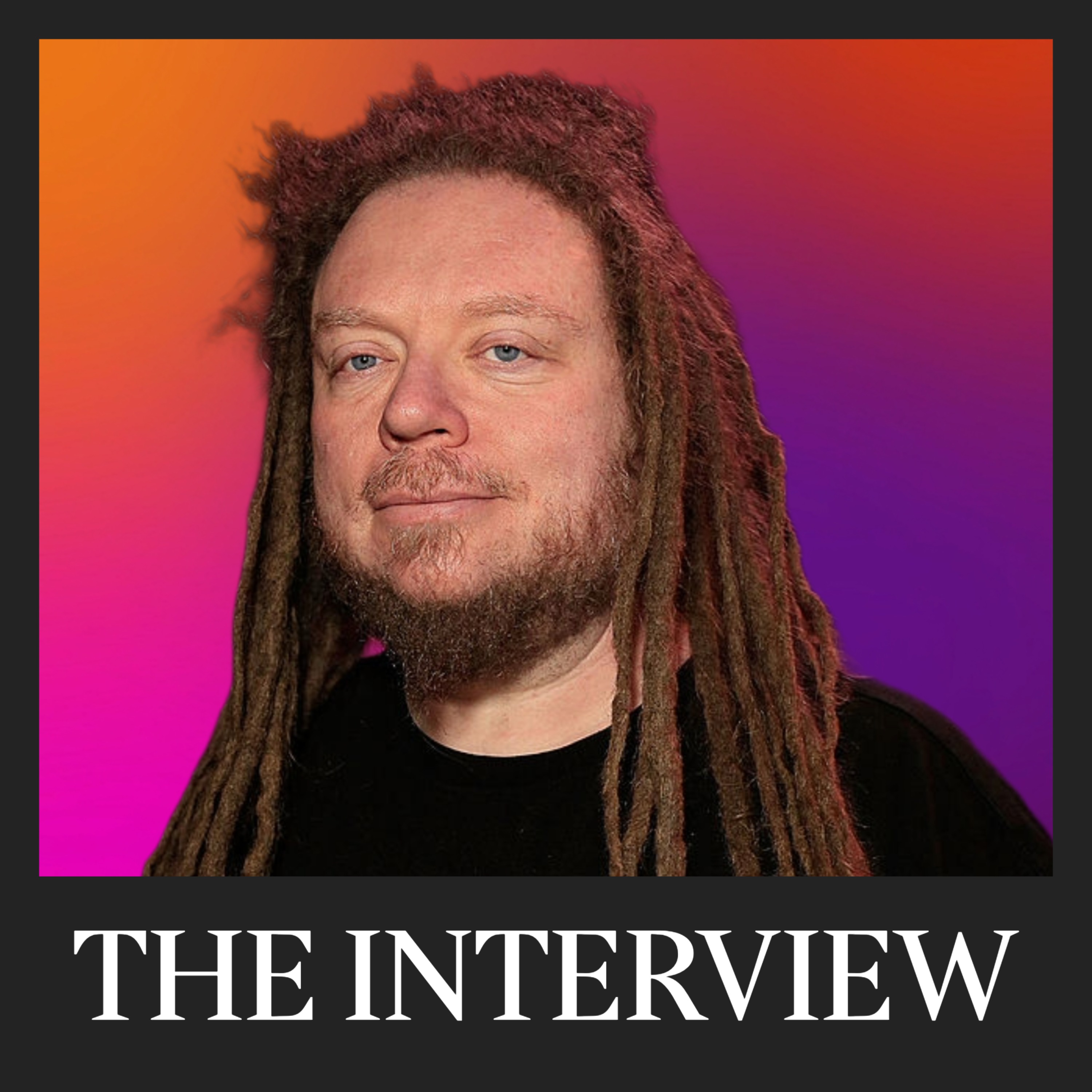
The internet, GPS, autonomous vehicles... they all have one thing in common: they're existence is in large part down to the DARPA (the US Department of Defense's Defense Advanced Research Projects Agency). And the UK is trying to repeat the success of that agency with its own: ARIA (the Advanced Research and Invention Agency). The organisation's CEO, Ilan Gur, joins Katie to discuss how.
Any thoughts or questions, get in touch - [email protected]
Hosted on Acast. See acast.com/privacy for more information.